By Matthew McKenzie – Carer activist
As I continue developing my poetry collection Unpaid, Unseen and Yet Unbroken: Poetry about Ethnic Mental Health Carers, I wanted to share another poem from the collection called Language as Comfort.
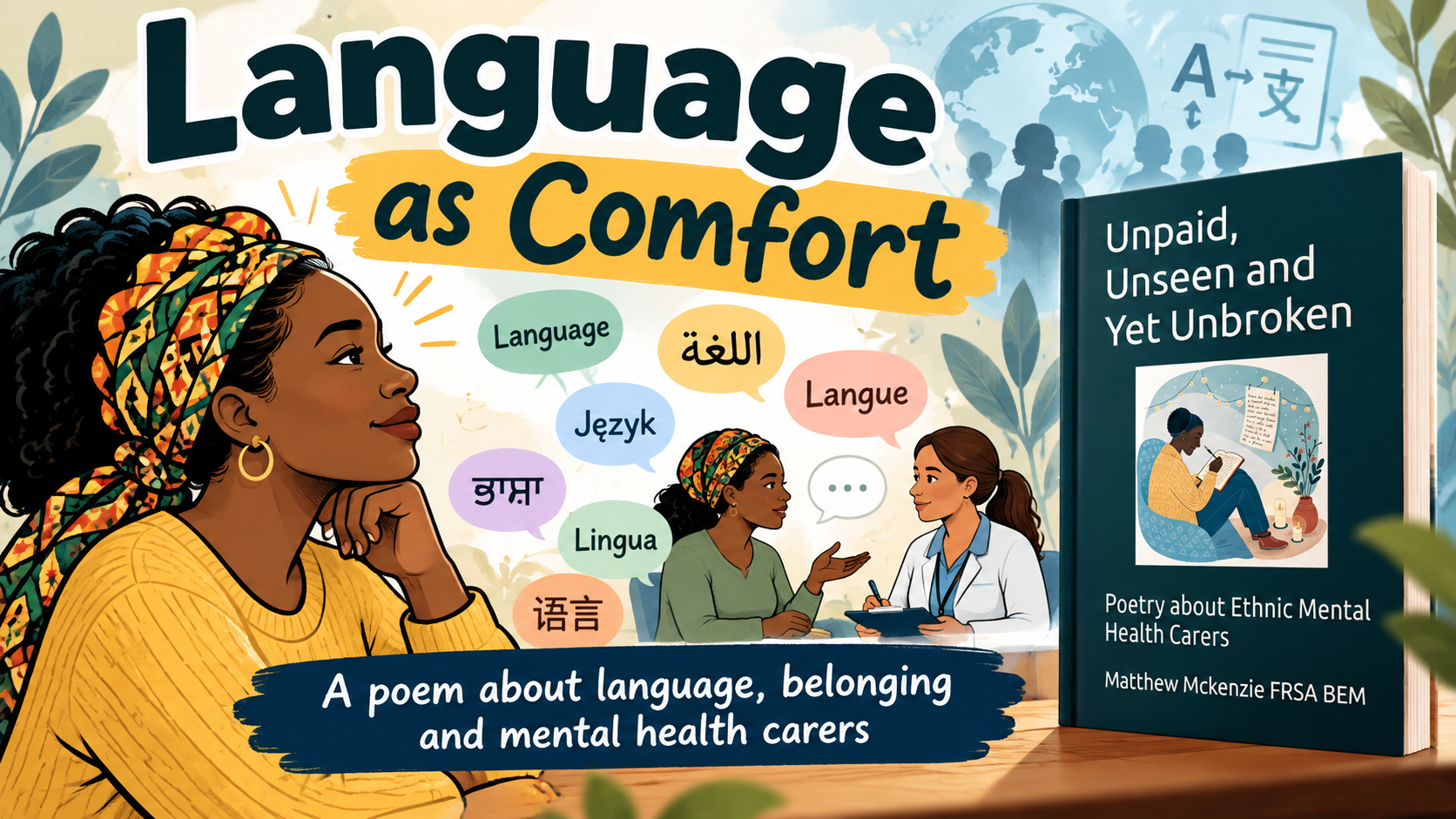
This is Poem 30 and explores something that can easily be overlooked when we talk about involvement in mental health services: the comfort and belonging that can come from being able to communicate in your own language.
Watch the poem below.
For many ethnic minority carers, language is about much more than translating individual words. Our mother tongue can be connected to family, culture, identity, memory and a feeling of safety.
When language becomes part of carer inclusion
Language barriers can affect how confidently carers participate in assessments, consultations and discussions about the person they support.
This is why one part of the poem asks services to record a carer’s language needs:
A carer should not have to start again at every appointment, repeatedly explaining how they need information to be communicated.
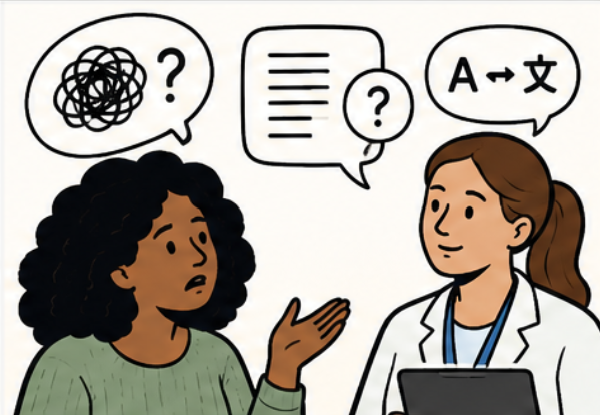
This connects strongly with the Patient and Carer Race Equality Framework (PCREF). If we want meaningful involvement from diverse communities, we need to think about whether our usual ways of communicating actually enable people to participate.
The poem ends with the idea of language helping someone to “break free from this cage”.
For me, that is the central message of Language as Comfort. Being understood can create confidence. Being able to communicate can create involvement. And recognising someone’s language can help create a sense of belonging.
Language should not be another barrier between carers and mental health services.
It can instead become part of the bridge.
Poem 30 from the developing collection Unpaid, Unseen and Yet Unbroken: Poetry about Ethnic Mental Health Carers.