Tag Archives: minority ethnic carers

Language as Comfort – A PCREF Poem About Language, Belonging and Being Understood

By Matthew McKenzie – Carer activist

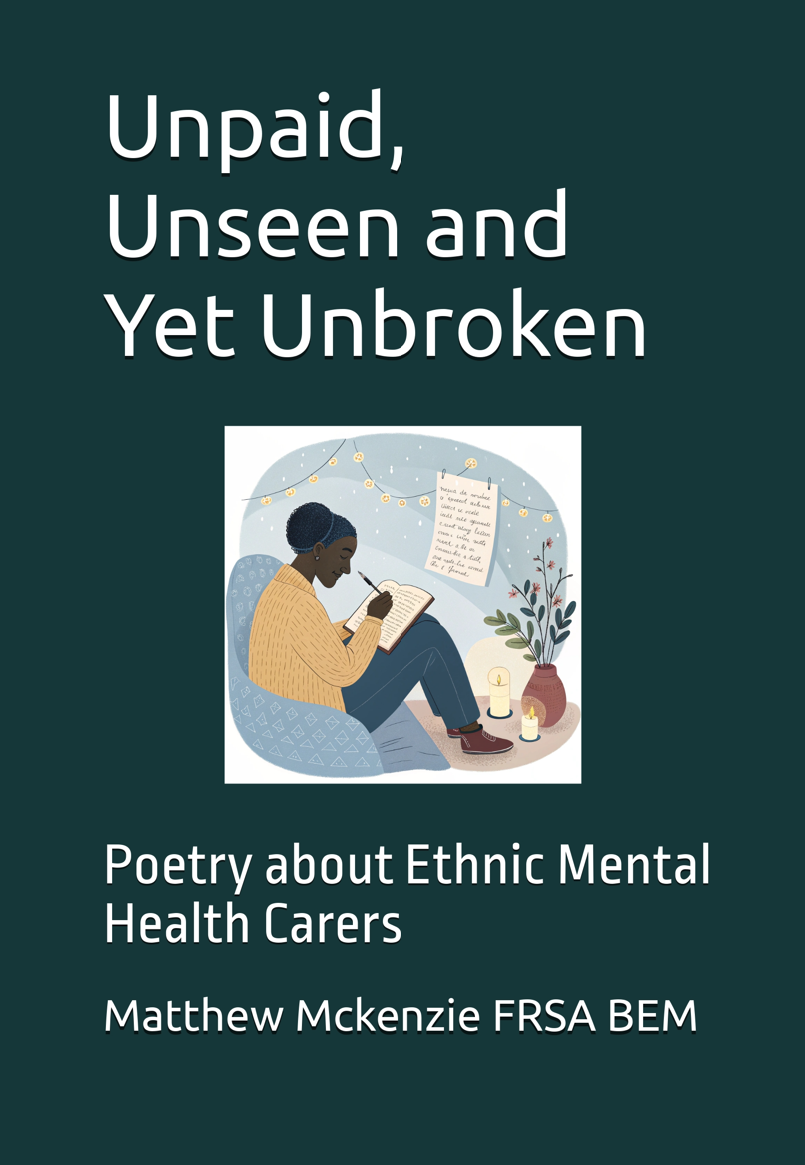
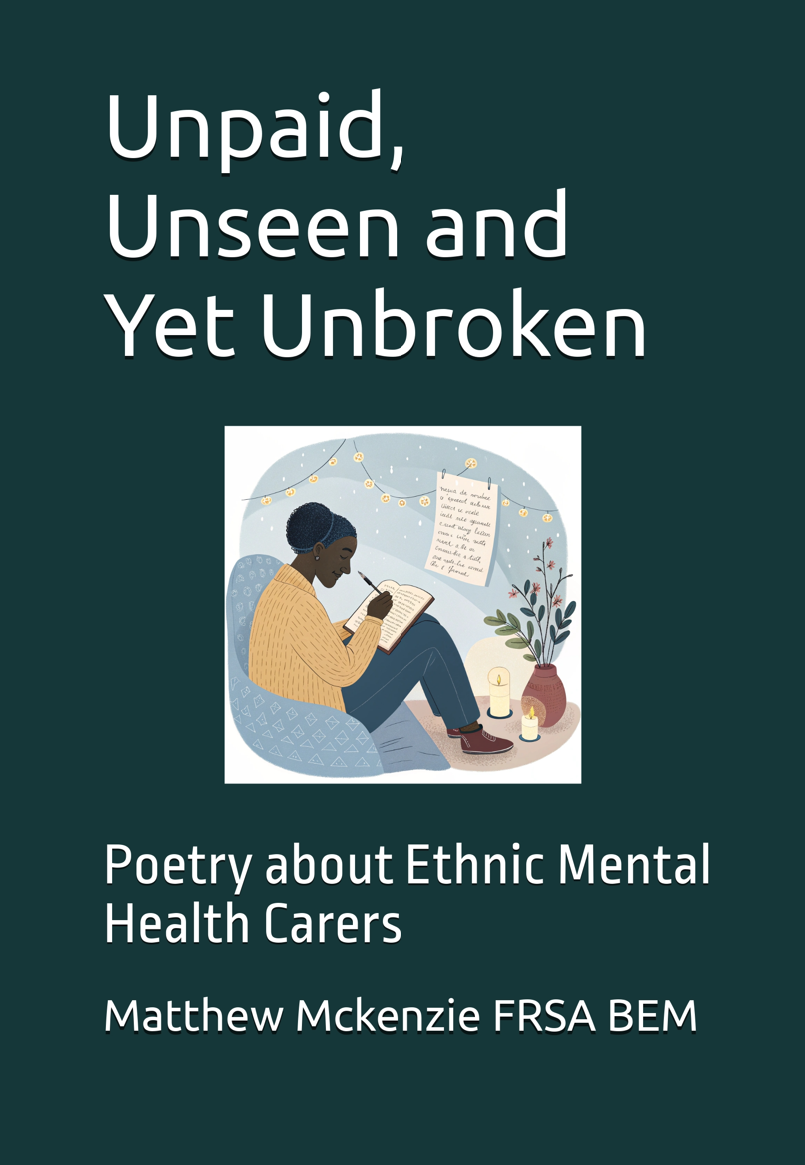
As I continue developing my poetry collection Unpaid, Unseen and Yet Unbroken: Poetry about Ethnic Mental Health Carers, I wanted to share another poem from the collection called Language as Comfort.
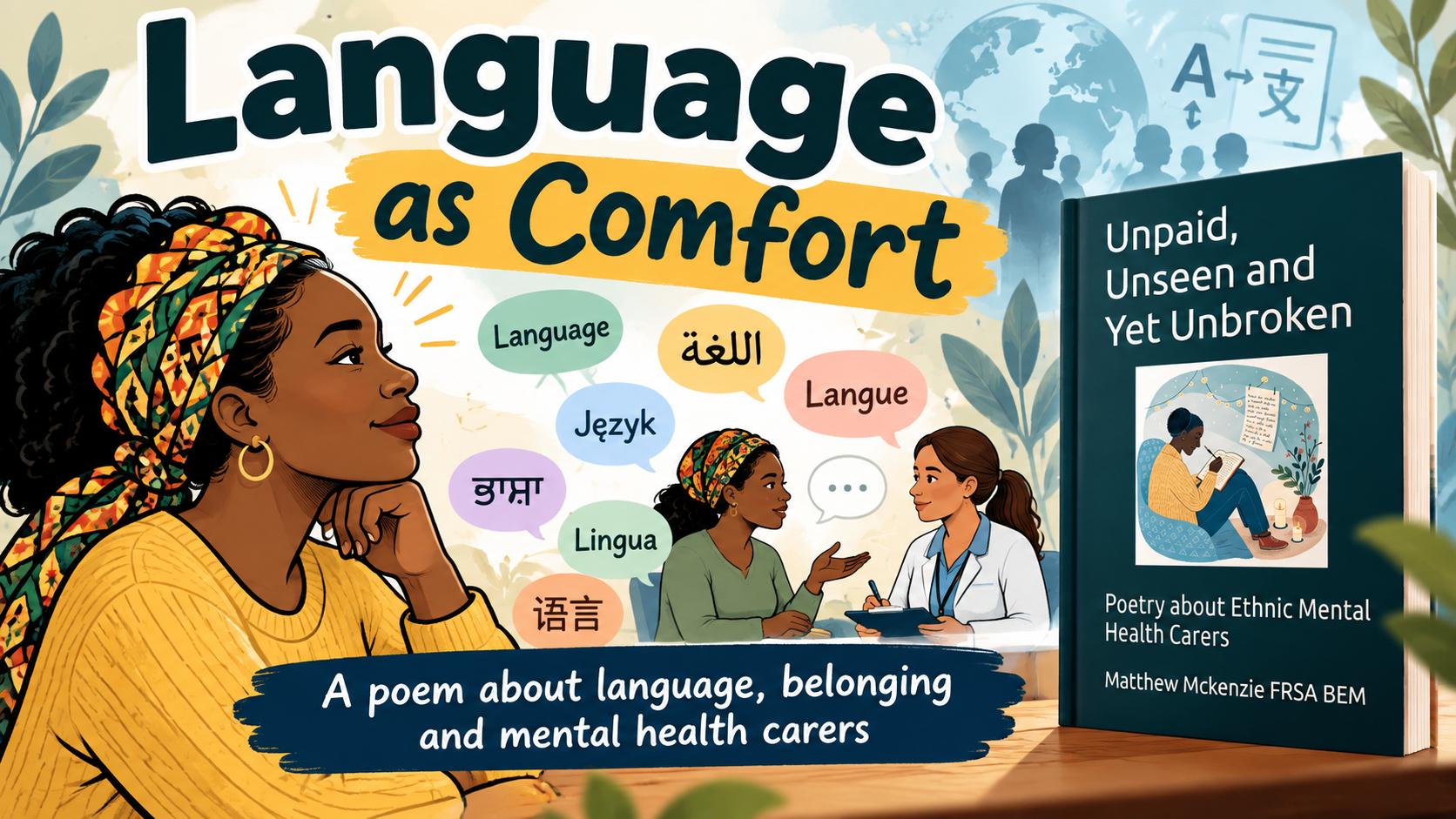
This is Poem 30 and explores something that can easily be overlooked when we talk about involvement in mental health services: the comfort and belonging that can come from being able to communicate in your own language.

Watch the poem below.

For many ethnic minority carers, language is about much more than translating individual words. Our mother tongue can be connected to family, culture, identity, memory and a feeling of safety.

When language becomes part of carer inclusion

Language barriers can affect how confidently carers participate in assessments, consultations and discussions about the person they support.

This is why one part of the poem asks services to record a carer’s language needs:

A carer should not have to start again at every appointment, repeatedly explaining how they need information to be communicated.
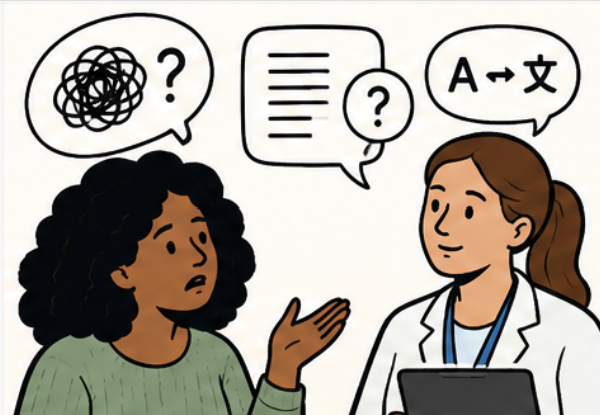
This connects strongly with the Patient and Carer Race Equality Framework (PCREF). If we want meaningful involvement from diverse communities, we need to think about whether our usual ways of communicating actually enable people to participate.

The poem ends with the idea of language helping someone to “break free from this cage”.

For me, that is the central message of Language as Comfort. Being understood can create confidence. Being able to communicate can create involvement. And recognising someone’s language can help create a sense of belonging.

Language should not be another barrier between carers and mental health services.

It can instead become part of the bridge.

Poem 30 from the developing collection Unpaid, Unseen and Yet Unbroken: Poetry about Ethnic Mental Health Carers.
Fear Has Roots – A PCREF Poem About Mistrust, Discrimination and Unpaid Caring

By Matthew McKenzie – Carer poet & Carer Activist

As I continue developing my poetry collection Unpaid, Unseen and Yet Unbroken: Poetry about Ethnic Mental Health Carers, I wanted to share another poem from the collection called Fear Has Roots.

The poem explores something I feel mental health services need to understand more deeply: mistrust does not always begin with the person standing in front of you.

Sometimes it has a history.

A carer may have experienced years of being dismissed, misunderstood or having their concerns minimised. They may have watched other carers from their community struggle to be heard. Experiences of discrimination can also travel through families and communities, influencing how safe people feel when approaching services.

Fear Has Roots explores what happens when those experiences begin to change the way a carer communicates.

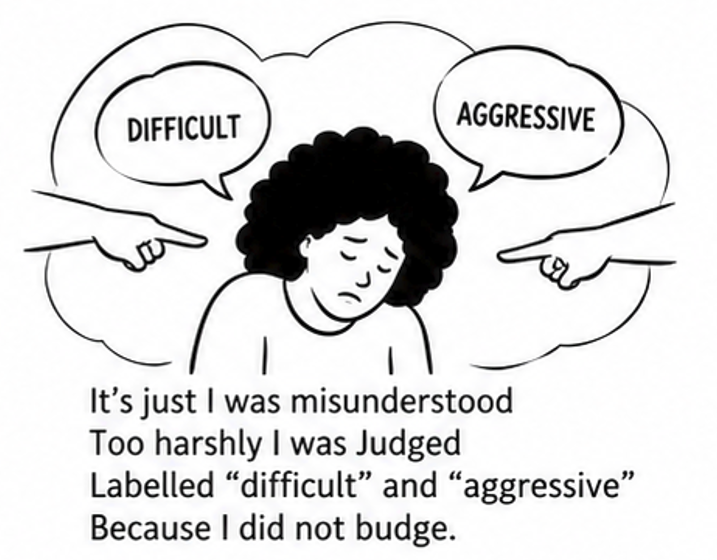
The carer starts choosing their words carefully. They worry about appearing angry. They fear being labelled “difficult” or “aggressive”. Even when trying to advocate for someone they love, they may feel that one wrong word could change how professionals see them.

One section of the poem says:

For me, this is particularly important when thinking about ethnic minority carers and the Patient and Carer Race Equality Framework (PCREF).

If services want to build trust with communities, it is not enough simply to ask why somebody mistrusts the system. We also need to ask what happened before that mistrust developed.

Listening to what sits behind the fear

The poem is not anti-professional. In fact, its opening line deliberately makes that clear:

“Fear has roots, I am not anti-professional.”

Instead, it asks professionals and services to become curious about the experiences behind a carer’s behaviour.

Repeated dismissal can wear somebody down. Discrimination can leave lasting memories. Feeling judged when advocating for a loved one can make a carer more cautious the next time they enter a meeting, ward or assessment.

This is why culturally responsive carer involvement matters.

We should not only hear what carers are saying. We should also understand the history, culture and experiences that may sit behind their words.

Fear has roots.

Mistrust has a history.

And perhaps listening is one of the places where rebuilding trust can begin.

Fear Has Roots is part of my developing poetry collection Unpaid, Unseen and Yet Unbroken, which explores race, culture, identity, inequality, resilience and the experiences of ethnic minority unpaid mental health carers.

National Cancer Caregiver Forum – August 2026 update

By Matthew McKenzie – Facilitator of Cancer Caregiver group

It has been a long while since I published a full update from my National Cancer Caregiver Forum. Although I have continued working to raise awareness of unpaid cancer caregiving, this latest meeting reminded me why the forum remains so necessary.

The National Cancer Caregiver Forum provides an online space for people caring for someone affected by cancer, former carers, researchers and organisations interested in improving support. It combines peer support with engagement, research and opportunities to influence cancer services.

Why cancer caregivers still need a voice

I opened the forum by reflecting on the shortage of dedicated groups for unpaid cancer carers. There are many services and support groups for people receiving cancer treatment, as there should be, but far fewer spaces focused specifically on the partners, relatives and friends supporting them.

Continue reading →

Gatekeeping Care – PCREF Poetry on Minority Ethnic Mental Health Carers

By Matthew McKenzie

My latest poetry video, “Gatekeeping Care,” explores the barriers minority ethnic unpaid carers can face when trying to navigate mental health services.

This is where unwritten rules, complicated medical language and unexplained carer rights can leave people struggling to understand how to obtain support.

Unpaid carers can also have their concerns not taken seriously.

The poem also reflects on what it feels like when decisions are made without carers and their cultural or religious beliefs are overlooked.

Through this poem, I want to raise awareness of why the Patient and Carer Race Equality Framework (PCREF) matters to carers and families.

I feel mental health services must listen to carers, communicate clearly and recognise them as equal partners rather than leaving them feeling judged, invisible or powerless.

Latest poem from my book – Unpaid, Unseen and Yet Unbroken

By Matthew McKenzie, facilitator of National ethnic mental health carers forum

Welcome to my first blog for 2026.

I am working on a new poetry project linked to my forum and poetry groups. This poem turned into song is written from the perspective of an unpaid ethnic mental health carer, and explores identity, pride, self-worth, and refusing shame in systems that don’t always listen or recognise lived experience.

The poem is taken from my forthcoming poetry book in development,
Unpaid, Unseen and Yet Unbroken (due 2026), which centres the voices of ethnic mental health carers and aligns closely with the aims of PCREF (Patient and Carer Race Equality Framework), particularly around listening, inclusion, and lived experience shaping systems.

I’m using poetry and creative formats as another way to:

  • amplify carer voices
  • explore race and care with honesty
  • support conversations about equity, culture, and confidence in mental health services

If this resonates with your work, community, or organisation, please feel free to share.
Listening is an act of care.