Category Archives: Philosophy

Reviews of the philosophic study of mind and also branches including knowledge

Why Unpaid Carers Must Be in the Lecture Theatre – Not Just the Waiting Room

By Matthew McKenzie, A Caring Mind (Carers UK Ambassador)

As an unpaid mental health carer, I have spent years navigating hospital corridors, GP practices, care plans, juggling crises, and long silences where carers are too often left out. I am sure unpaid carers are expected to hold families together, while notice early warning signs, and keep loved ones safe. Still I always mention most of us receive no formal training, and our knowledge is rarely recognised as expertise.

That is why recently teaching a module for the Masters course to mental health nursing students at King’s College London felt so important. Not after they qualify. Not once they are overwhelmed in practice. But before they step out into the field. The session took place 15th of January.

Why carer-led teaching matters

Unpaid carers sit at the sharp edge of the mental health system. We see what works, what harms, and what gets missed when professionals don’t fully understand the family context. When students hear directly from carers, learning moves beyond textbooks into real life into the emotional, practical, and ethical realities of care.

Training mental health professionals without carer voices is like teaching navigation without a map.

What I taught: lived experience as learning

The session I delivered was built entirely from a carer’s perspective and centred on one core message: you cannot deliver effective mental health care without working with carers.
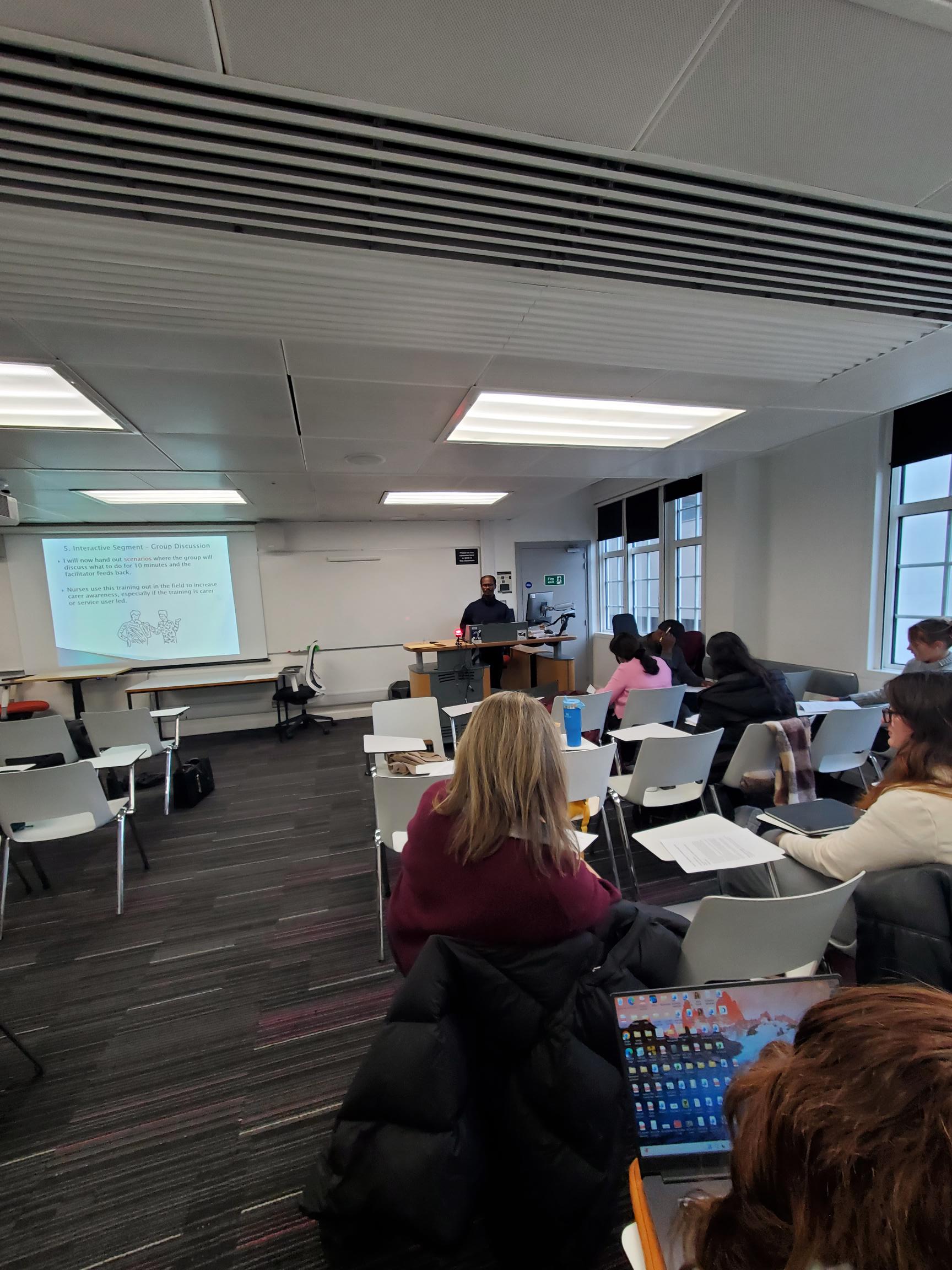
The module covered:

  • My lived experience as an unpaid mental health carer
    How I became a carer, the emotional impact, the daily responsibilities, and the toll caring can take on mental and physical health.
  • The hidden impact on carers
    Burnout, stigma, isolation, guilt, and the reality that many carers are supporting professionals while receiving little support themselves.
  • Carers as partners, not problems
    Exploring what happens when carers are ignored – and how outcomes improve when they are listened to, informed, and included.
  • The Triangle of Care
    A strong emphasis on the Triangle of Care framework: the partnership between service user, carer, and professional. I challenged students to see carers as a vital link in the chain, not an optional extra.
  • Carers UK and carer identification
    Highlighting the role of Carers UK in advocacy, rights, resources, and why professionals must help carers identify themselves early so they can access support.
  • Practical skills for future nurses
    Listening without defensiveness, sharing information appropriately, involving carers in care planning, and understanding when carers need support themselves.
  • Interactive discussion and reflection
    Students worked through real-life scenarios, asking: What would I do differently now that I understand the carer experience?

The shift we need in education

Most unpaid carers are not trained for their role. We learn through crisis, exhaustion, and trial and error. Mental health professionals, however, are trained, which means universities have a responsibility to ensure that training includes those of us living this reality every day.
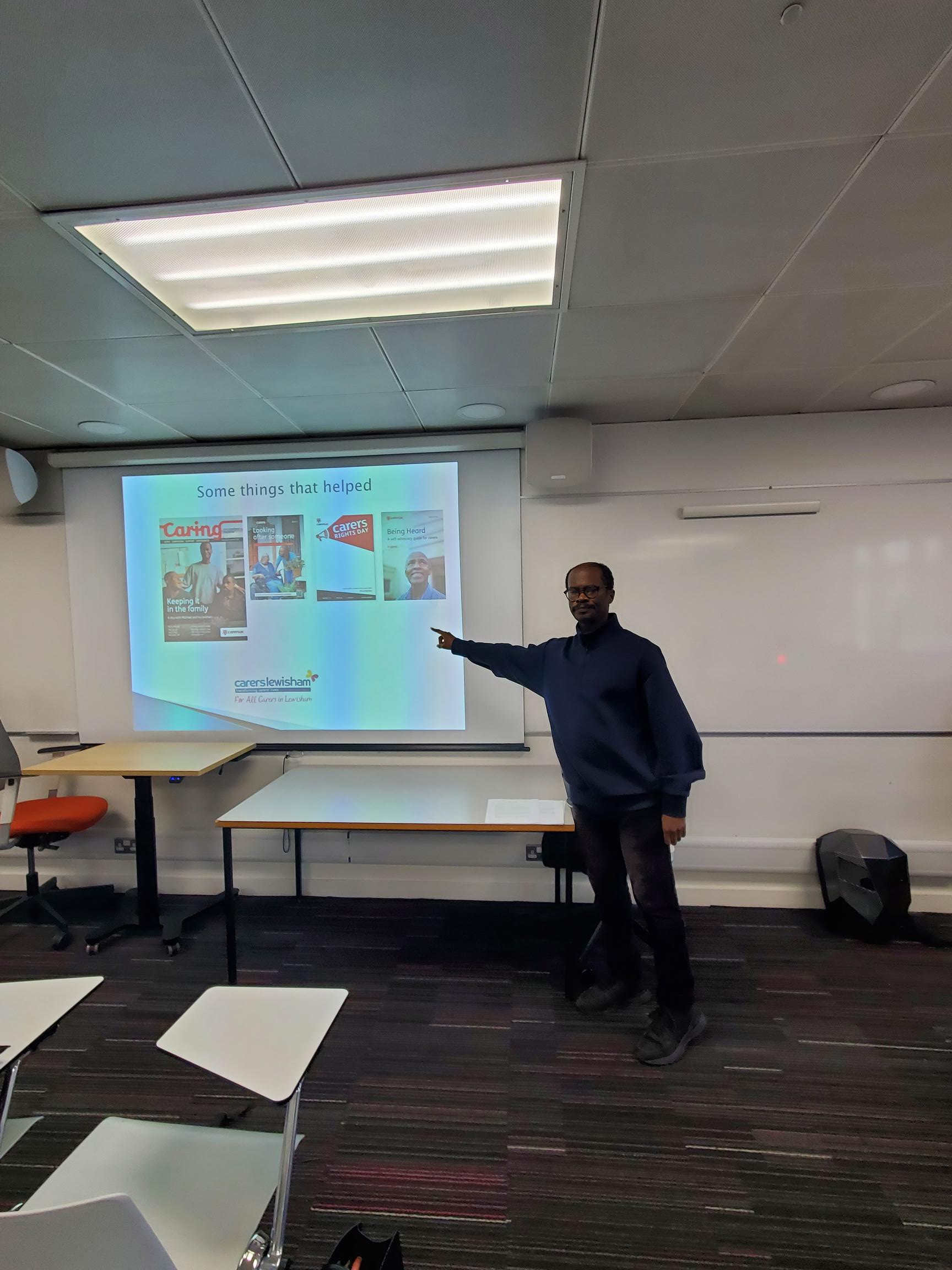
Carer-led teaching builds empathy, improves communication, and ultimately leads to safer, more effective care. When students learn early that carers matter, they carry that mindset into practice.

A final thought

Unpaid carers are already part of the mental health workforce, it’s just the title unpaid, unsupported, and often unheard. So I feel bringing carers into universities is not a “nice extra”. It is absolutely essential.

If we want a mental health system that truly works, we must start by listening to those who never clock off.


15 Differences Between Free Will vs Determinism

Welcome back to another blog post by Matthew McKenzie. This time it is awareness of social science time. Most of the time I raise awareness of unpaid carers, especially when it comes to caring for someone with mental ill health.

As a carer of lived caring experience, being involved in the mental health system exposes you to psychology, psychiatry and even philosophy, although I was always a philosopher anyway.

It was only a matter of time before I wanted to blog about the human condition and how our environment influences our actions, especially if it comes to our mental wellbeing. Are we actually responsible for our choices? Or are these our own actions.

Check out my video on the 15 Differences Between Free Will vs Determinism

The debate between free will and determinism centers on whether human beings have genuine control over their actions or if every decision and event is predestined by prior causes. Free will emphasizes individual autonomy, proposing that people have the capacity to make choices independent of external forces or causal chains. This perspective supports the idea of personal responsibility and moral accountability, as it assumes individuals can act in ways that are not entirely dictated by genetics, upbringing, or circumstances. nature.

In contrast, determinism argues that all actions and events are the inevitable result of preceding conditions, governed by laws of nature, genetics, or environment. From this viewpoint, human behavior can be understood as the outcome of a causal chain, much like a domino effect, where every decision is shaped by prior experiences, biological factors, and external influences. Determinism challenges the notion of true autonomy, raising questions about the fairness of moral and legal judgments.

Health and Well-being in the community

Family

Welcome back to another blog post by unpaid carer Matthew Mckenzie. I am happy to have been able to write up some posts, despite being fairly busy. I want to put a thought in your head, I know in this society, we do not often have time to stop and reflect. Living in this fast paced life it is so important to stop and think ever now again.

The thought I want to put into your head is this. “Have you thought about where you live”? Is it in the city or suburbs? Maybe a village or town. Perhaps this is not even a deep thought when you step back and observe, but it does not end there. When you look around, what do you see? Are those around the area as busy as you are? Or perhaps do they seem to be more relaxed? Maybe they are letting the world go by.

Embed from Getty Images

Now think about your health and wellbeing, are you lucky to have good health? It is not as easy as everyone thinks, because we are so busy, it is hard to find the time to eat well, exercise or even get a good nights sleep. We all know what happens if we cannot look after our health and wellbeing, but if you are curious then I will explain later.

Continue reading

Mental Health Activism

20141107_143004_2Welcome to another blog post from Matthew Mckenzie a carer over in South London. On this blog I want to talk about activism. When you think of mental health problems or those who might be vulnerable due to capacity issues then human rights is not far behind. The way how society treats those suffering mental health issues can speak volumes. Mental health affects us all, that being caregivers or carers, mental health survivors and society at large.


 

Continue reading

The Philosophy of Carers

Hello fellow carers and all,

matthew mckenzie

It has been a while since my last blog post. I guess its because I have been so busy on so many things. One of my tasks is attending awareness events and also helping at events, especially mental health and carer events. Still, one task that can take quite a bit of time is providing care or support to my close relative.


There is one problem though when talking about being a carer, let alone a mental health carer. This would be down to understanding the carers world, it goes far deeper. Perhaps much more deeper than I could try to explain. I want to blog abit about the idea of being a carer, especially experiencing the task becoming a carer where you feel you have lack of knowledge about the situation.

Continue reading

Carers Week 2015 – Building carer friendly communities

Matthew Mckenzie (2)This blog post centres on carers week 2015, which runs from 8-14 of June. Carers week occurs each year raising awareness of carers or care givers. Carers week in the UK also has many supporters and collaborators ranging from CarersUK, Carerstrust, Macmillian Cancer support, AgeUK, Sainsbury and so on.

If you ever happen to visit the Carers Week website, feel free to make a pledge on
their pledge wall.

The cost of caring

CG9L0NCWgAA-RC8

There are many carers and organisations that have contributed to carers week
2015, I as a mental health carer I feel I should at least add some of my own views.
Interestingly enough I have noticed that the theme of Carers Week 2015 is on building carer friendly communities and of course this is a good thing. There are in the UK around 6.5 million carers. It is a fact that Carers provide help, support and care not only to family members, but also to close friends or neighbours. Without that much needed support from carers in the UK, then the UK’s National Health Service would collapse.

Continue reading