Tag Archives: NHS

Empowering Caregivers: Engaging with Integrated Care Systems

Another blog post by carer activist Matthew Mckenzie on how caregivers can engage with Integrated Care Systems to ensure their voices are heard and needs are met. A way to discover the power of feedback in improving local Health Services.

To watch the video version of my blog, click below

Integrated Care Systems (ICS) have been shaping the landscape of healthcare in the UK for several years now. These ICSs are designed to ensure that health services meet the unique needs of local communities, ICSs are evolving frameworks within the National Health Service (NHS). They aim to promote a more collaborative approach to healthcare by engaging with everyone involved in the health service delivery—including professionals, patients, and carers….yes, thats right! Unpaid carers, but how can unpaid carers get their voice heard?
Well if you are caring for someone unpaid with a long term illness, then understanding how these systems work is crucial for anyone reliant on or working within the NHS. This article delves into what ICSs are, their importance, and how carers can make their voices heard within these systems.

What is an Integrated Care System?

As noted in my video. An Integrated Care System (ICS) is essentially a model used within the UK’s NHS to better structure how health services are commissioned and provided. Before ICSs were implemented, health services were commissioned in a somewhat isolated manner, which often didn’t fully account for the comprehensive needs of the community. There were other reasons for the change to ICS, but that would be for another blog post.

The Need for Engagement

At the heart of an ICS is the concept of engagement. For an ICS to be effective, it must listen to the very people who use and provide the health services. This involves unpaid or informal carers, patients, and other healthcare providers all collaborating to ensure that the healthcare services are as effective and efficient as possible

The Role of Commissioning

Commissioning still plays a central role within ICSs. Commissioners work to ensure that the right health services are provided, but their decisions must be informed by feedback from carers as well. This is where the role of carers becomes critical. By participating in the engagement process, carers can help shape the nature and delivery of healthcare services to better meet their needs as well as those of the patients. Carers should have a seat at the table.

Local Healthwatch

One of the most effective ways to engage with an ICS is through your local Healthwatch. Healthwatch organizations are pivotal stakeholders within ICSs. They gather insights from patients, carers, and the general public to inform health service delivery.

  • Find Your Local Healthwatch: Simply type “Healthwatch” and your local area (e.g., Healthwatch Kent, Healthwatch Lambeth) into a search engine. This will provide you with details on meetings, agendas, and how to participate.
  • Attend Meetings: When possible, attend local Healthwatch meetings to stay informed and voice your concerns.
  • Provide Feedback: Whether through surveys, forums, or direct communication, your feedback is invaluable.

Speaking Up

Even if you can’t make it to meetings, there are other ways to ensure your carer voice is heard. It could be as simple as sending an email or filling out a survey provided by your local Healthwatch.

  • Importance of Feedback: Your insights are gold in terms of showing what works and what doesn’t within the current healthcare framework. Sharing your story—whether it’s good, bad, or ugly—can spotlight gaps and prompt necessary changes.

Advocating for Transparency

As mentioned in my video, one crucial area carers should focus on is advocating for transparency in the ICS decision-making process. Are carers and caregivers’ experiences included when tailoring health services?

  • Be Specific: When you provide feedback or attend meetings, be specific about what issues need addressing. Whether it’s concerning mental health services or care for chronic conditions, specificity helps stakeholders understand and prioritize your needs.
  • Persistent Engagement: Continuously engage with the system. Don’t just provide feedback once and assume your role is done. Keep track of the outcomes and ask for updates.

Building Alliances

Another vital strategy for making an impact in an ICS is building alliances. Networking with other carers, healthcare providers, and advocacy groups can amplify your voice.

Learn From Others

Engage with other carers and learn from their experiences. Information sharing can be incredibly powerful.

  • Caregiver Forums: Joining caregiver forums can be a great way to share information and strategies. These platforms often have tips on how to engage effectively with healthcare providers.
  • Collaborative Effort: Remember, you don’t have to do it all alone. Partnering with others in similar situations can be a massive force for change.

Continuous Learning

Attending meetings and reading through reports can seem daunting, but they offer a wealth of information. One thing noted about ICSs is the amount of reports. Those reports should be held to account regarding jargon, although being relistic, there is no quick escape from Jargon.

  • Stay Informed: Regularly check for any updates or meetings concerning your ICS.
  • Form Networks: Building a network of support can be incredibly beneficial. It not only alleviates the feeling of isolation but also helps in sharing the workload of participation.

The Importance of Carer Input

ICSs are designed to be collaborative, ensuring that health services are well-rounded and holistic. However, this is only possible if carers, who are often the hidden backbone of healthcare provision, speak up and engage.

Carers As a Link

Carers are the crucial link between the healthcare system and the person being cared for. Without their input, ICSs may second guess the needs of the community, leading to services that do not fully meet those needs.

Avoiding Isolation

One of the worst outcomes for any carer is isolation. Engaging with ICSs not only helps improve healthcare services but also connects carers with a supportive network of individuals who hopefully can understand their struggles.

The Bigger Picture

Beyond the immediate benefits, carer input helps create a more responsive and effective healthcare system. This leads to better outcomes for everyone involved, from the patients to the healthcare providers. Caring for someone should not always remain an isolating experience. As a carer use your experiences to ask for better support from the healthcare system.

In Summary

Integrated Care Systems represent a significant step towards more inclusive and comprehensive healthcare in the UK. They aim to mesh the various elements of health service provision into a coherent whole that genuinely meets the needs of the community. Carers have an indispensable role in making this vision a reality.

By engaging with local Healthwatch, providing persistent and specific feedback, advocating for transparency, building alliances, and staying continuously informed, carers can significantly influence the effectiveness of these healthcare systems. Remember, as a carer, your insights are invaluable.

So, don’t be silent. Speak up, engage, and help improve local health services today. Together, we can achieve more adaptive and efficient healthcare systems that better serve everyone.

Understanding the Patient Care Race Equality Framework: Challenging Mental Health Disparities

Welcome back from another blog post by matthew McKenzie.  In today’s blog post, we’ll delve into a significant yet often overlooked initiative in the mental health sector—the Patient Care Race Equality (PCREF) Framework. Introduced by the NHS, the PCREF Framework is a pioneering approach to addressing racial inequalities in mental health services.

I have made a video (unfortunately not so short) drawing from my lived of a carer and activist. In the video I explored the core goals, benefits, challenges, and the broader implications of this framework. The video is coming from a carers pespective.

Understanding the PCREF Framework

 What is the PCREF Framework?

Basically, the Patient Care Race Equality (PCREF) Framework, developed by NHS England, aims to address racial disparities within the mental health system. Data shows that racial minorities are disproportionately affected by inequalities in mental health care. The PCREF Framework seeks to improve access, experience, and outcomes for racialized communities, pushing for modernization of the mental health act and the elimination of institutional racism.

Things need to change

Mental health services have long been riddled with systemic biases and inequalities. The Mental Health Act of 1983, has aged and requires significant updates to reflect equity in care. The PCREF Framework is a part of broader efforts to reform the mental health act and address the institutional racism that has led to difficult experiences and outcomes for patients from racialized communities.

Goals of the PCREF Framework

The primary goal of the PCREF Framework is to reduce racial disparities in mental health care. This includes:

  • Improving Access: Ensuring that racialized communities have equitable access to mental health services.
  • Enhancing Experience: Improving the overall experience of patients from these communities within the healthcare system.
  • Better Outcomes: Aiming for equitable health outcomes by addressing systemic biases and inequalities.

 Benefits of the PCREF Framework

Targeting Inequalities

The Framework is designed to specifically target racial inequalities in mental health outcomes. For instance, racialized communities often face higher rates of severe treatments such as restraint or use of strong medications that inhibit functionality without offering therapeutic benefits. By targeting these disparities, the PCREF Framework aims to provide more equitable forms of treatment.

Improving Experiences

Another significant benefit is the enhancement of patient experiences. Historically, racialized patients have reported poorer experiences within the mental health system. By acknowledging and addressing institutional biases, the Framework seeks to transform these experiences positively.

Promoting Institutional Reform

The PCREF Framework advocates for institutional reforms to dismantle systemic barriers faced by racialized communities. This includes educating mental health professionals on cultural competencies and biases, and promoting anti-racist and anti-oppressive practices.

Enhancing Community Involvement

One of the standout features of the PCREF Framework is its focus on involving patients and carers in the decision-making process. Engaging with the communities directly affected by mental health services ensures that their voices are heard and considered in policy development and implementation.

 Challenges of the PCREF Framework

As addressed in the video, there are challenges, which are listed below.

Lack of Resources and Funding

One of the most significant challenges facing the PCREF Framework is the lack of resources and funding. The NHS is already stretched thin and requires substantial investment to ensure the long-term success of this initiative. Historically, previous racial equality initiatives have failed due to insufficient financial support, and there is a risk that the PCREF Framework could face the same fate.

Risk of PCREF Being Sidelined

The PCREF Framework requires a considerable amount of commitment and resources. There is a real risk that it could be sidelined if the requisite financial and human resources are not made available. The initiative demands a comprehensive approach involving medical professionals, community workers, and continuous community engagement.

Consistent Implementation

Inconsistent implementation across different regions is another significant challenge. The success of the PCREF Framework heavily depends on effective leadership and engagement at all levels. If some NHS Trusts are more committed than others, the disparities that the framework aims to address could inadvertently be exacerbated.

Cultural Shift within the NHS takes time

The cultural shift required to fully implement the PCREF Framework is considerable. Such a shift is often slow and can be met with resistance. While the framework provides a structure for reducing racial inequalities, changing long-standing biases and practices within the NHS will require time and sustained effort.

Staff Training

To effectively implement the PCREF Framework, staff need to be adequately trained in anti-racist practices (This training should involve patients and carers) . However, current constraints such as lack of time, staff, and resources can make this a daunting task. Without proper training, the framework risks being ineffective.

Risk of Becoming a Tick-Box Exercise

One of the most critical challenges is the risk of the framework becoming a mere “tick-box” exercise. If the framework is not implemented in the spirit it was intended, it could fail to bring about meaningful change. Robust monitoring and evaluation mechanisms are essential to ensure that the framework is genuinely making a difference.

Moving Forward: Steps to Take

Community Engagement

Continuous community engagement is crucial. Mental health trusts should run engagement events and stakeholder groups to reach out to marginalized communities, understand their concerns, and incorporate their feedback into service delivery.

Tracking Progress

Regular tracking of progress and measuring the impact of the framework is vital. This involves collecting and analyzing data to assess whether racial disparities are being truly reduced. Transparency in sharing this data will help build trust and ensure accountability.

Leadership

Strong leadership is fundamental to the success of the PCREF Framework. Leaders within mental health trusts must be committed to the initiative and work towards fostering a culture of inclusivity and equity.

Education and Training

Ongoing education and training for staff on cultural competencies and anti-racist practices will help in addressing biases and promoting equitable care. As a reminder this should involve patients and carers in training programs to provide real-world perspectives and insights.

Policy Development

Ensuring that the voices of marginalized communities are heard and represented in policy development is essential. Mental health organizations must prioritize inclusivity in their policy-making processes to reflect the diverse needs of the populations they serve. The problem is things can be rushed to meet targets.

Conclusion

As I have mentioned in my video, Patient Care Race Equality (PCREF) Framework represents a significant step forward in addressing racial inequalities within the mental health system. While the benefits of this initiative are substantial, the challenges it faces are equally significant. Overcoming these challenges requires a effort from all stakeholders involved, including mental health professionals, community leaders, patients, and carers.

By fostering a culture of inclusivity, investing in resources, engaging with communities, and continually tracking progress, the PCREF Framework has the potential to bring about meaningful and lasting change. It is an ongoing journey, but with sustained commitment and collaborative effort, we can build a more equitable mental health system for all.

AWP #LetsHearCarers – A celebration for unpaid mental health carers

Welcome back to another blog post from carer activist Matthew McKenzie. I am involved in quite a few things to raise awareness of unpaid mental health carers. One of them is Carers Trusts Triangle of Care Framework.

Triangle of Care is a framework developed to improve collaboration between mental health services, service users (patients), and carers. It was created by the Carers Trust in the UK, focusing on involving carers (family members or friends who support individuals with mental health issues) in care and treatment decisions, while ensuring they receive the support and recognition they need.

We have many mental health trusts who are members of the Triangle of Care. One of them is Avon and Wiltshire Mental Health Partnership NHS Trust or AWP for short.

Avon and Wiltshire Mental Health Partnership NHS Trust (AWP) is the lead provider of healthcare for people with serious mental illness, learning disabilities and autism across Bath and North East Somerset (BaNES), Swindon and Wiltshire, and Bristol, North Somerset and South Gloucestershire.

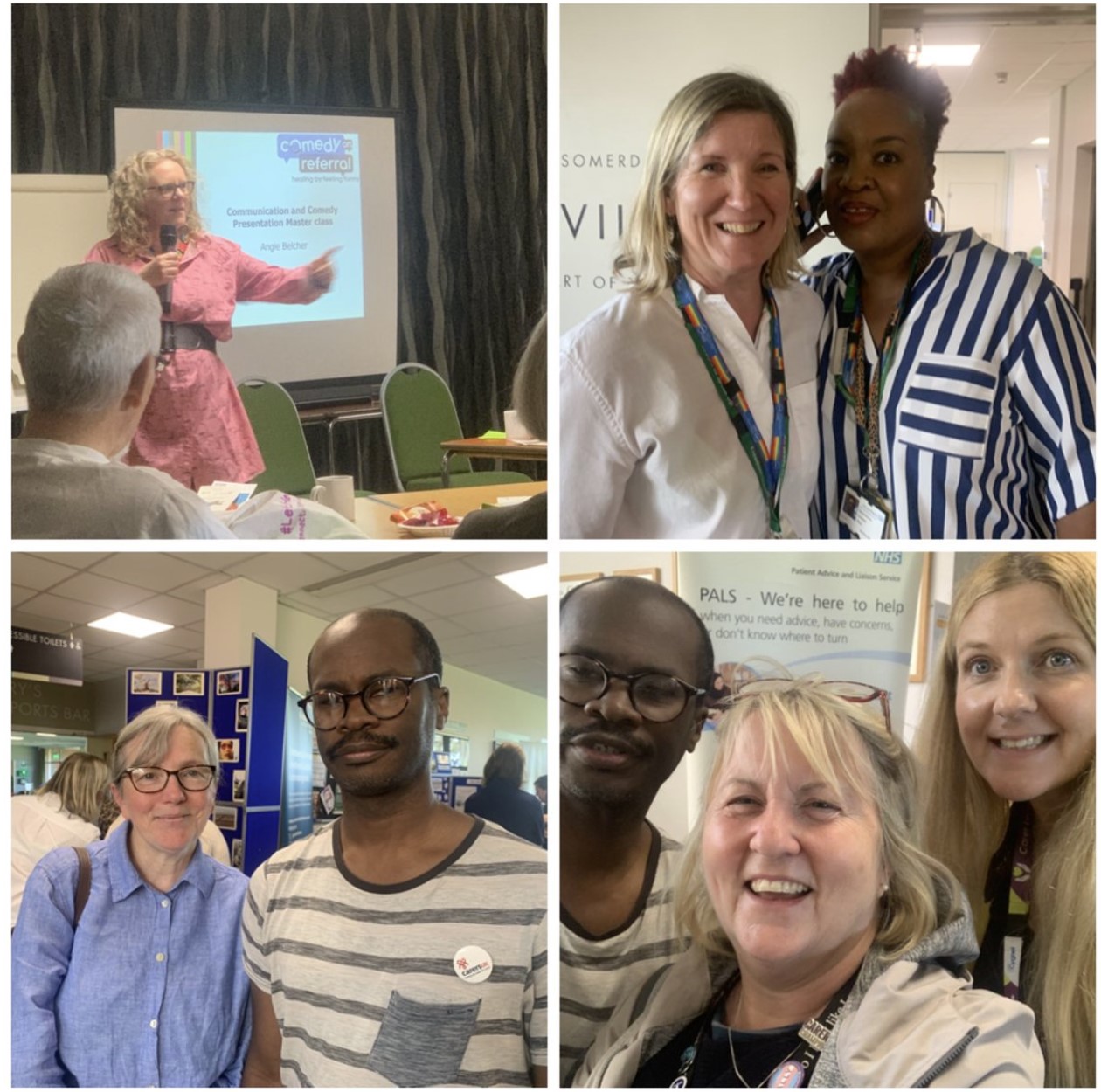
With support from Laura Sheridan who leads on carers at Cygnet. We both attended and supported the event at the mental health partnership trust. I took the time to explore the wonderful area of Bristol. Everyone I met was welcoming and friendly.

AWP have taken up the challenge to implement the Triangle of care and listen to carers. One of the best ways to listen to carers is through engagement and celebration events.

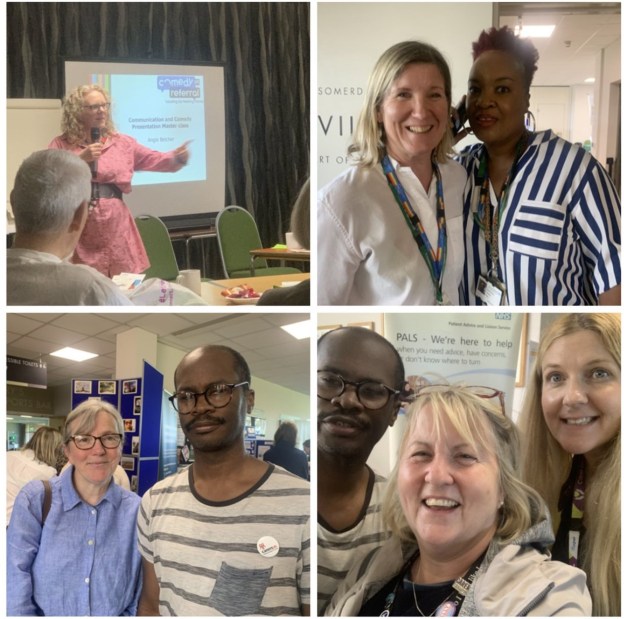
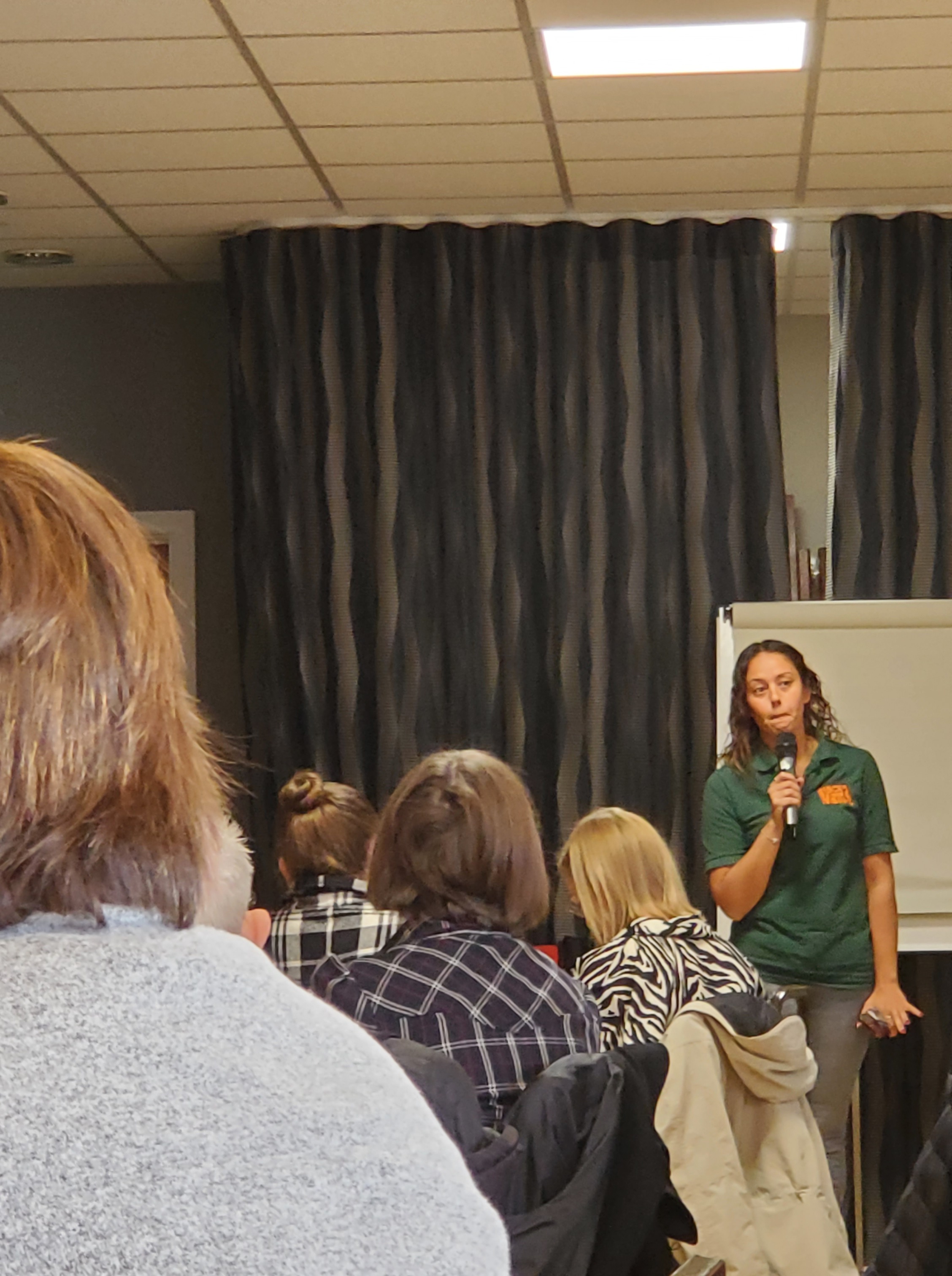
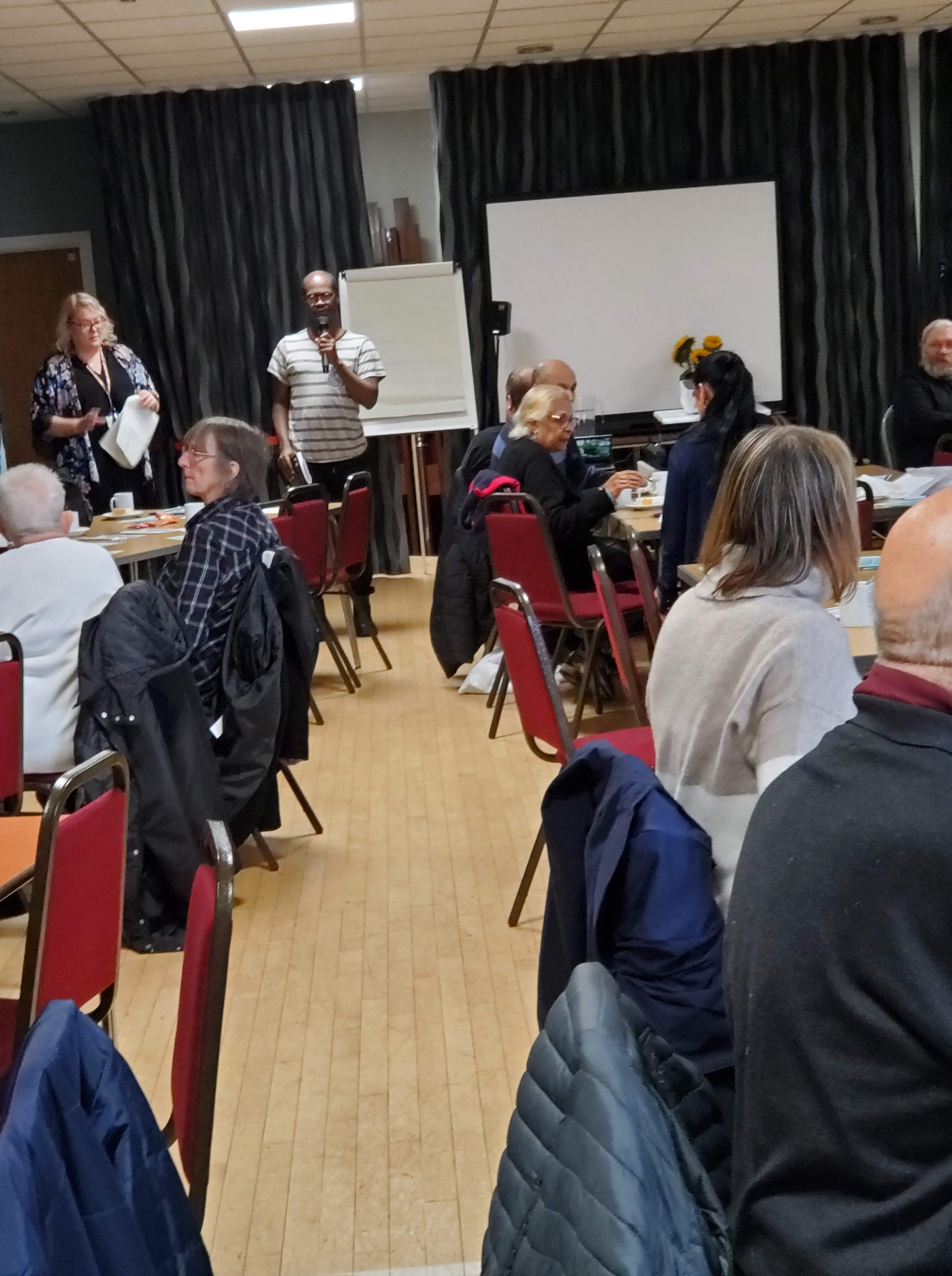
So on Thursday 3rd of October Avon and Wiltshire Mental Health Partnership NHS Trust (AWP) ran their #LetsHearCarers event. The event was held over at Somerdale Pavilion, Keynsham.

The day started off with a welcome from Sarah Jones, Director of Nursing and Quality at AWP.

We then got to hear from Ayesha Ahmed-Mendoza on the Black2Nature campaign to enable minorty ethnic children to have better access to nature camps. Next I was impressed with the presentation from Elaine Bennett regarding experiences of deaf carers.

Then we had the panel of carers giving their experiences of involvement at the NHS trust. I personally feel involvement of carers shaping services is a powerful way of allowing carers to have their say.

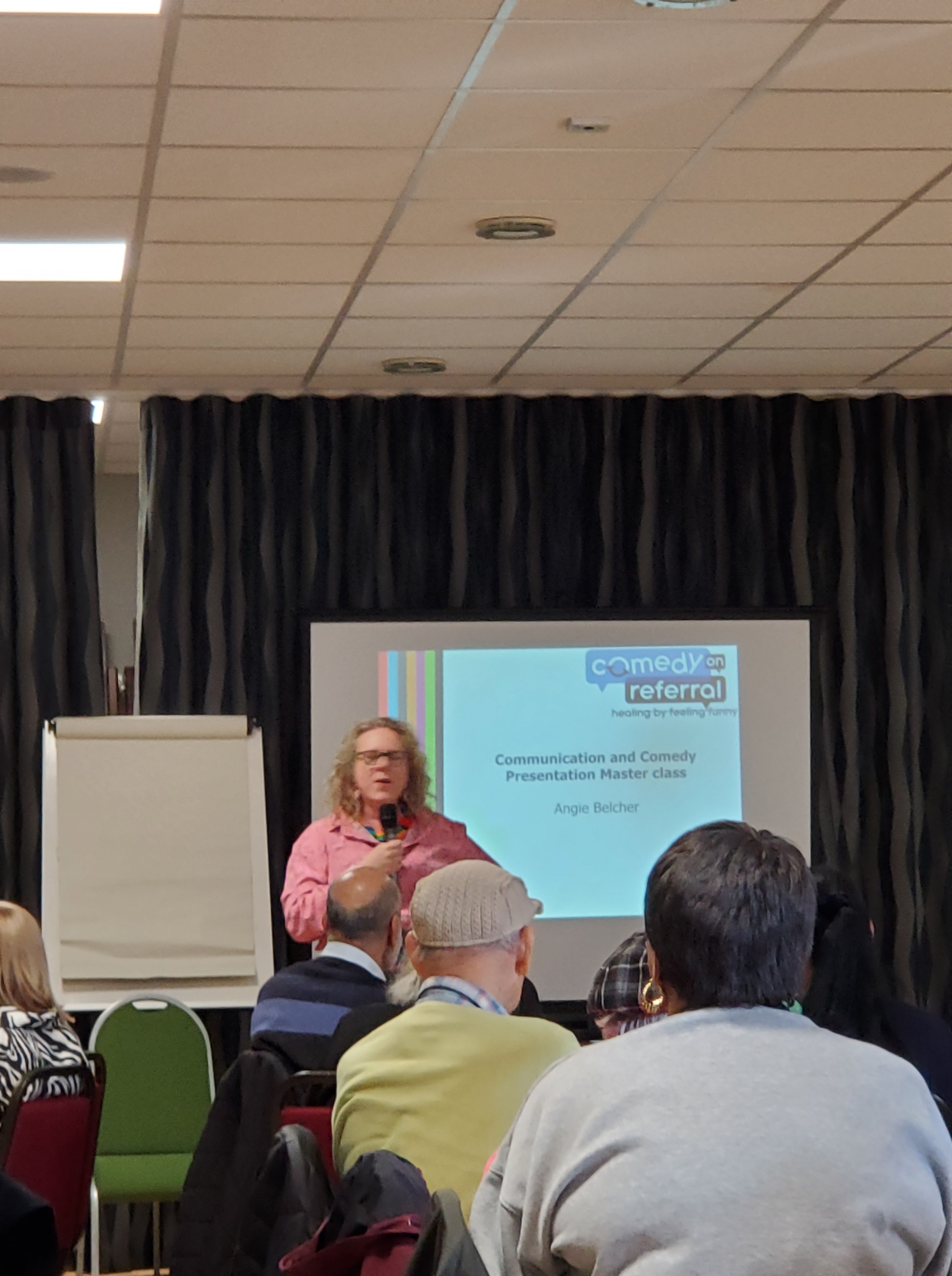
After the break, we got to hear from Debbie Hustings who is the new Triangle of Care lead for Carers Trust. Debbie used to be the former NHS England carers lead for London and has a wealth of experience when it comes to unpaid carers. Debbie presented on carers rights as she presented with her carers hat on. Next there was a comedy session from Angie Betcher who is a comedian at Bristol university, she is also skilled as a poet as well as a comedy performer.

Next was Lunch and workshops to cater for the wellbeing of carers who attended.

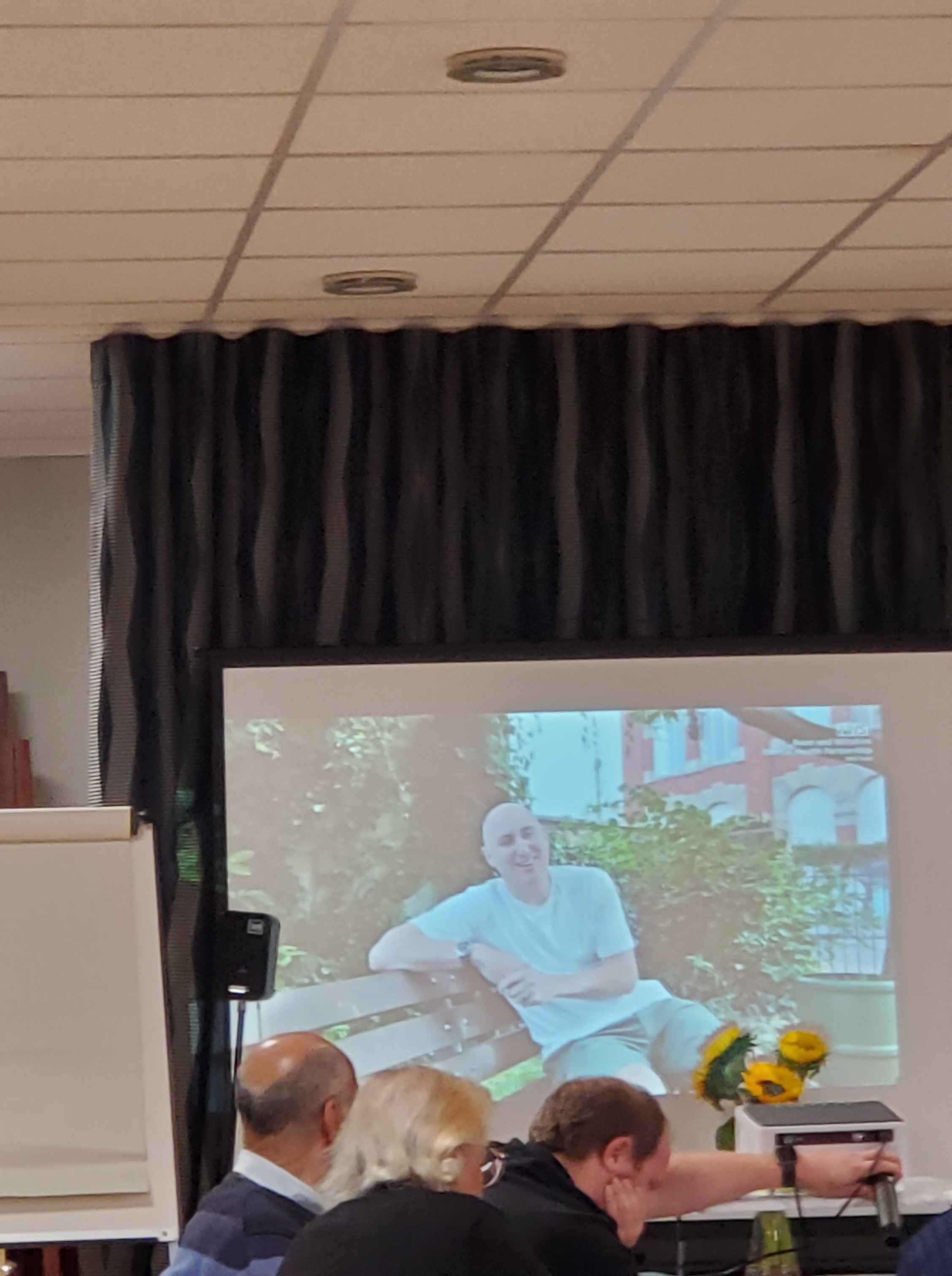
Have lunch I was up to read out 2 poems. One of the poems you can see from Avon and Wiltshire Mental Health Partnership NHS Trust’s video of the carer event below.

After more performances and networking with carers, I headed home. I would like to thank Avon and Whiltshire for the excellent event they put on for the community. Everything was planned brilliantly and I did not hear any grumbling from carers. I look forward to more events in future.

Top 10 ways to hold the NHS to account as a carer

When caring for someone, it is only a matter of time before you use the NHS. The National Health Service was set up to provide health no matter what your background. We all deserve the best healthcare provided for us.

Times have changed and feedback regarding the NHS is very important. This is especially important if you are an unpaid carer. You will have a different perspective when it comes to hold the NHS to account.

I have made a short video on ways to hold the NHS to account. It is not about always complaining, it is about helping to steer the NHS to include the carer’s voice.

We are all in this together although I do understand that there will be times you cannot feedback. The NHS is a massive complex set of systems, but we have a duty to be vocal because we deserve the best. Be that change and use your voice. As a carer it is your right.

Cancer Care – Left Behind

Welcome back to a quick blog from Matthew McKenzie – Carer activist. What is a carer activist you may ask? Basically, I campaign to raise awareness of unpaid carers caring for someone going through long term illness. The bonus is that I have lived experience of providing unpaid care and support to someone close with mental illness.

I also provided care and support to a dear old friend who I have known for many years. He suffered from cancer in the later stages of his life and when he passed away, I was left with a gift to raise awareness from writing books.

Just last week I came across a report on how UK cancer care ‘lags behind’ other countries.

Taken from the sky news report “The latest figures for NHS England show that some 76.3% of patients urgently referred for suspected cancer in June were diagnosed or had cancer ruled out within 28 days – above the target of 75%.”

You can read the report below.

https://news.sky.com/story/uk-cancer-care-lags-behind-other-countries-as-experts-highlight-ticking-time-bomb-13200322

As facilitator of the London Cancer carer forum, it is depressing news to hear the UK lagging behind. While the someone living with cancer is desperate for treatment, the family or close friend are also anxiously waiting.

It is important the Department of Health and Social Care reform their 10 year plan for the NHS and be inclusive with patient and carer voices.

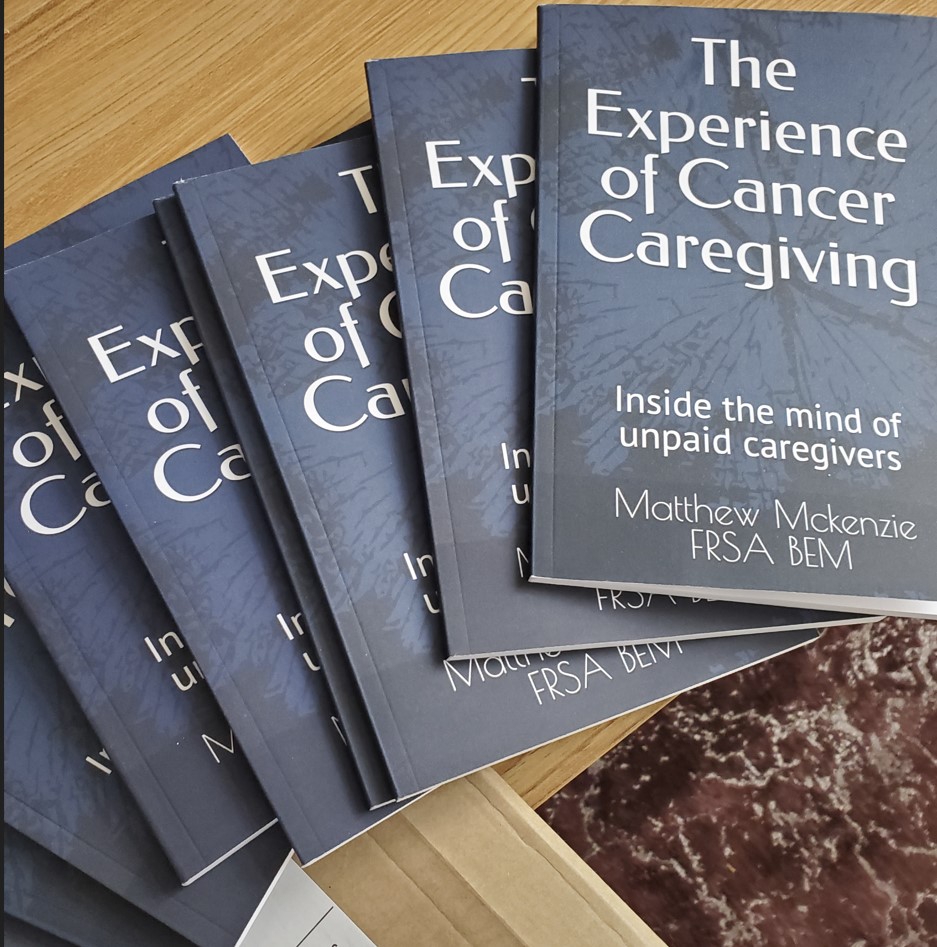
Going back to my books. I have just published my first book on the experience of cancer caregiving. The book focuses on the following chapters.

Chapter 1: The experience of cancer caregiving
How carers may feel when they find out that someone close has been diagnosed with cancer

Chapter 2: The battle begins
What is expected of the cancer caregiver

Chapter 3: Battling for you
Avoiding being lost in the maze

Chapter 4: Getting involved through lived experience
Inspiring cancer caregivers to get involved in shaping health services

Chapter 5: Looking back
Not caring forever, so we eventually have to look back.

The book will be promoted slowly as you never know I probably will have to adapt or change a few things. You can get hold of the book on Amazon.

August Monthly Carer & Health News Updates 2024

Here is the latest carer and mental health news for the month of August 2024 by carer activist and author Matthew McKenzie.

SIGN UP TO NEWS SITE HERE

August 2024 Carer and Mental Health news <- Read more news items here.

For the August edition on unpaid caring and mental health we have the following news items.

Carer Videos

  1. Carer Learning Set – Presentation from Liz Carter – Carers Support West Sussex
  2. Unpaid carers in Swindon: their stories – Swindon Carers Centre
  3. Young Adult Carer of the Year: Caleb Tracey – Carers Talk Episode 8 – Solihull Carers
  4. HMRC Errors and Carers Allowance – Wendy Chamberlain
  5. Carers Strategy – Cllr Paul Cole – Sutton Council
  6. Jointly session – Carers UK
  7. Young carers share what they would say to the Prime Minister | General Election 2024 – Carers Trust
  8. Jaycee’s message to the future Prime Minister – Carers UK

Triangle of care news

  1. Triangle of care newsletter – June 2024

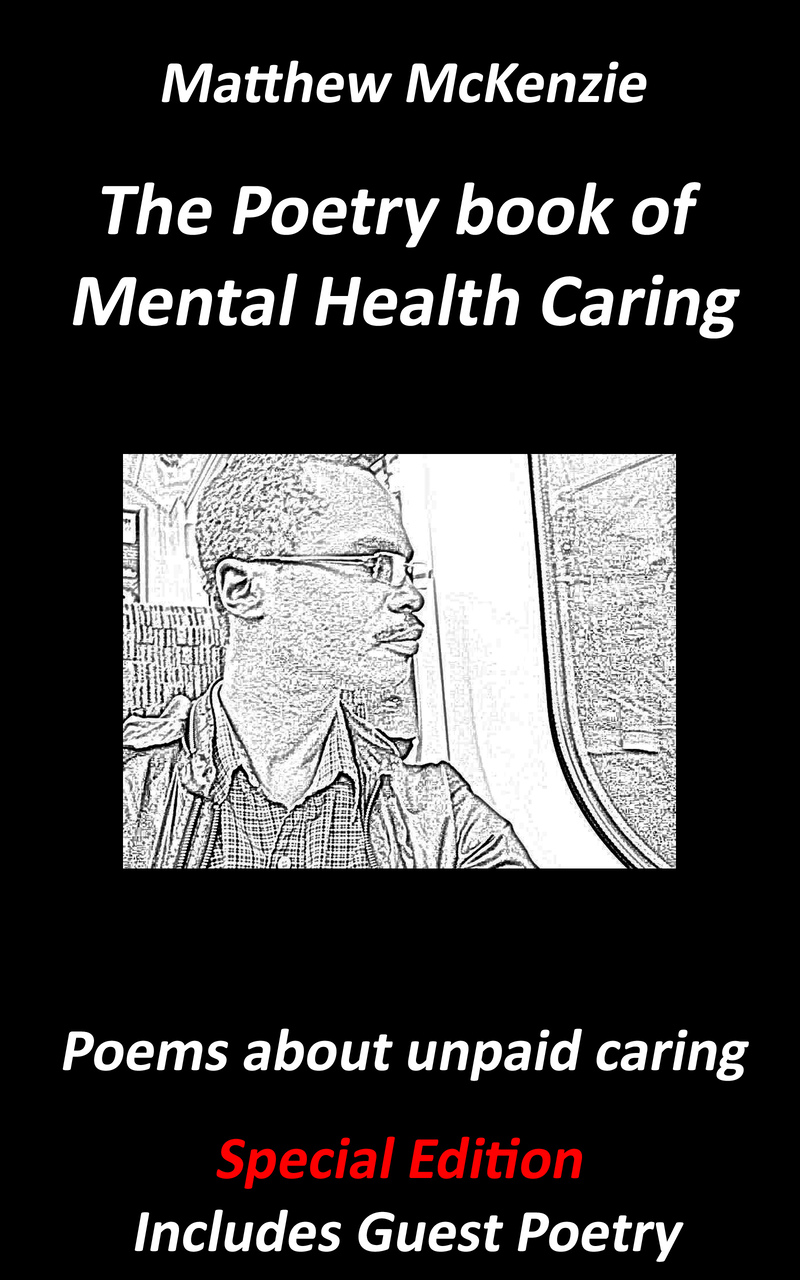
New Audiobook release – The Poetry book of Mental Health caring 

This special edition includes poems from unpaid carers across the country.  View more details of the audibook in the link below

The Poetry book of mental health caring: Special Edition

Latest Carer news items

  1. Camden Council launches new plan for unpaid carers
  2. Five-year strategy for unpaid carers across West Northamptonshire to be rolled out
  3. What pushes unpaid carers into poverty?
  4. Encapsulating the tough reality of family caregiving: Lost Memories 
  5. Recognising and supporting carers across our hospitals
  6. Swindon Carers Centre to close at the end of the year
  7. Caring for someone with cancer by Matthew McKenzie
  8. Join our Building Together forum to have your say on shaping adult social care in Worcestershire
  9. City & Hackney Family carers hub opens in Homerton
  10. Four in 10 parent carers have thought about suicide, study finds
  11. ‘I didn’t realise I was a young carer until my late teens — then felt I had to keep it a secret’

Ethnic carer and minority news updates

  1. Carers UK  good practice briefing for supporting Black, Asian and minority ethnic carers
  2. Advancing mental health equalities – PCREF
  3. Black Mental Health Manifesto
  4. Narrowing health inequalities: why the NHS can’t shoulder the burden alone 
  5. UN – fight racism 
  6. A caring community by Matthew McKenzie
  7. Maudsley Anti-Racism Action plan
  8. Statement from the Mayor of London on Londoners standing united against racism and Islamophobia

March Monthly Carer & Health News Updates 2024

Here is the latest carer and mental health news for March 2024 by carer activist and author Matthew McKenzie.

March 2024 Carer and Mental Health news <- Read more news items here.

For the March edition on unpaid caring and mental health we have the following news items.

Carer Videos

  1. This Morning – Kate Garraway Opens Up On Telling Derek’s Story and Fighting For Carer Support | This Morning
  2. Carers in Hertfordshire – MolyFit Exercise
  3. Sutton Carers Centre – This Ol’ Money by Sutton Young Carers
  4. Carers Trust – Young adult carers support in employment | Fair Futures for Young Carers | Young Carers Action Day
  5. The Health Media – CEO of Carers UK: Tackling stigmas, providing support and recognising the important role carers
  6. Carers Whiltshire – Military Carer Awareness Training

Latest Carer News

  1. Carer’s Leave Act 2023: UK carers’ entitlements from 2024 
  2. Young Carers Action Day To Highlight “Fair Futures For Young Carers”
  3. Young Carers Action Day – how to support young carers – Hertfordshire Partnership University NHS Trust
  4. ’15 months since he left that room:’ Carers urge support amid Govt push for National Care Service – ITV
  5. New short breaks service available to help unpaid carers in Ealing
  6. The right to an education is fundamental to a Fair Future – it’s time for the Government to level the playing field for young adult carers
  7. Older people receiving social care and their family carers set out the problems they face and how to fund a better system – Age UK

Carer Research Papers

  1. Do people with dementia and carers get what they need? Barriers in social care and carers needs assessments 
  2. Carers and empowerment in the UK: a critical reflection
  3. We care but we’re not carers: perceptions and experiences of social prescribing in a UK national community organisation 

AHPs news updates

  1. British Association of Art Therapists – Spring online Magazine
  2. Royal College of Speech and Language Therapists – Long COVID guidance
  3. A systematic review of dramatherapy interventions used to support adults with psychosis

Cancer Awareness updates

  1. 22 cancer warning signs you need to know with symptoms affecting your mouth, tummy and skin
  2. This is what not to say to someone dealing with cancer – and what to say, instead
  3. Princess of Wales diagnosis leads to increased visits to NHS website
  4. Cancer Experience of Care Recognition Event – 2024

Ethnic carer and minority news updates

  1. ‘We need to tear up the idea of BAME’
  2. Is the Gypsy Traveller community’s ethnic minority status under threat?
  3. Discrimination in NHS: extent of staff bullying revealed
  4. Study finds racism contributes to high suicide rates among Black men
  5. NHS: inequality and incorporation
  6. ‘If you prick me, do I not bleed?’: Antisemitism, racism and group analysis —some thoughts
  7. Racism as a Cause of Depression

Ethnic mental health Carer Forum Update January 2024

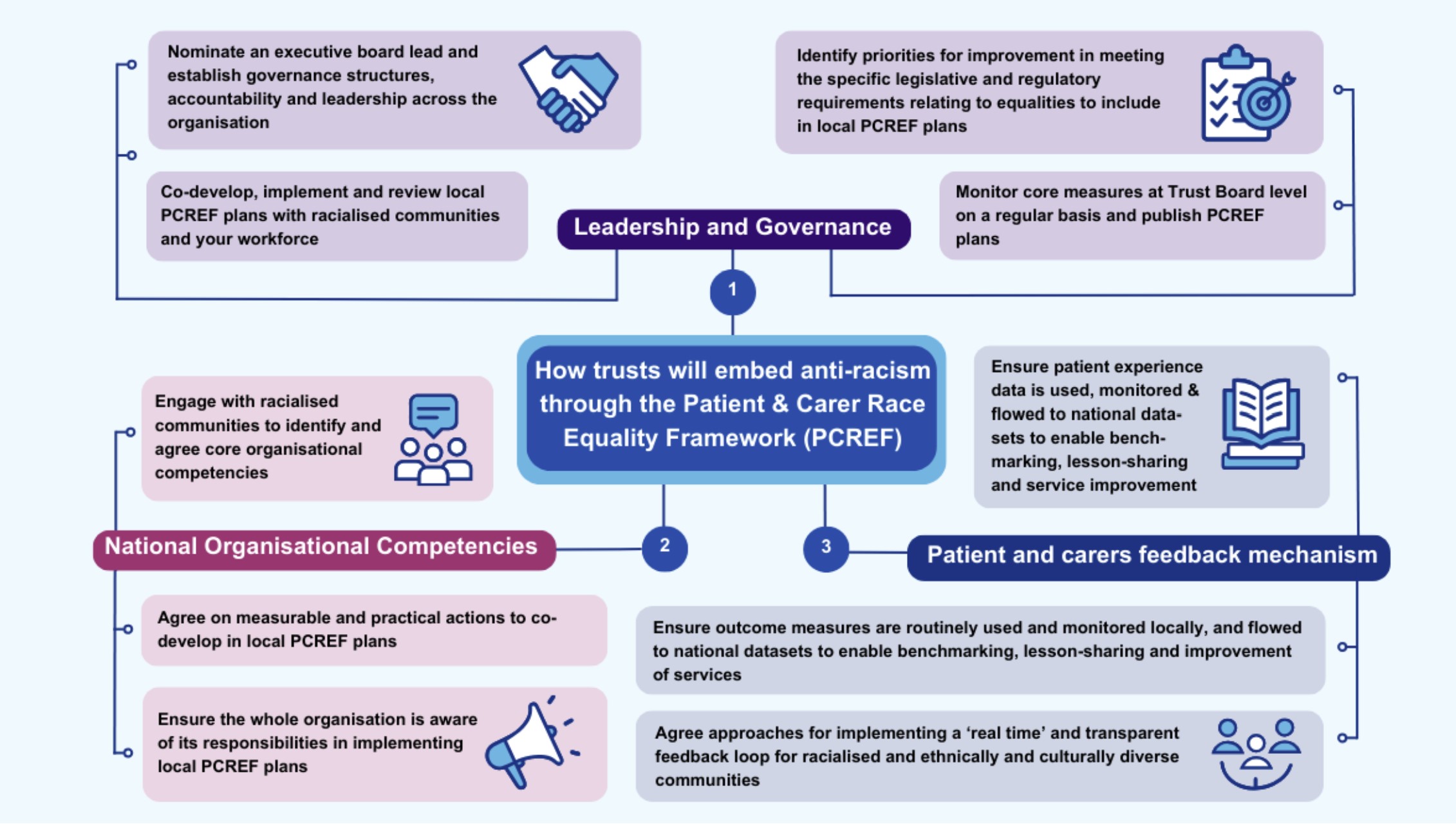
Welcome to a brief update of my ethnic mental health carers forum. This is the January 2024 update where the forum focused on updates from mental health NHS trusts. The update was specifically on the new equalities initiative from NHS England, which is the Patient Carer Race Equality Framework. (click on picture below to zoom in)

As of 2024 the mandatory framework will support NHS trusts and providers on their journeys to becoming actively anti-racist organisations by ensuring that they are responsible for co-producing and implementing concrete actions to reduce racial inequalities within their services

Usually for my ethnic mental health carers group, I focus on things outside PCREF, but since PCREF has a heavy focus on minority voices, my group looks to engage with NHS trusts and their PCREF ambassodors on updates. A special note is the group is interested on how minority carers are being identified and included.

I am aware many NHS mental health trusts learn from each other so for the January group we had the following attend and present

As usual I brought in a special guest speaker from Middlesex University to speak about the following topic which she published in The Practising Midwife for the 2023 edition in November. Kristina spoke about “Mental Health Context for Minoritised Ethnic Individuals” and was specifically interested in why Perinatal birthing minoritised ethnic women and people suffer from poorer outcomes. Just to note, Krishna is not a mental health nurse, but a nurse under midwifery at University College London Hospital. She also teaches Midwifery at Middlesex University.

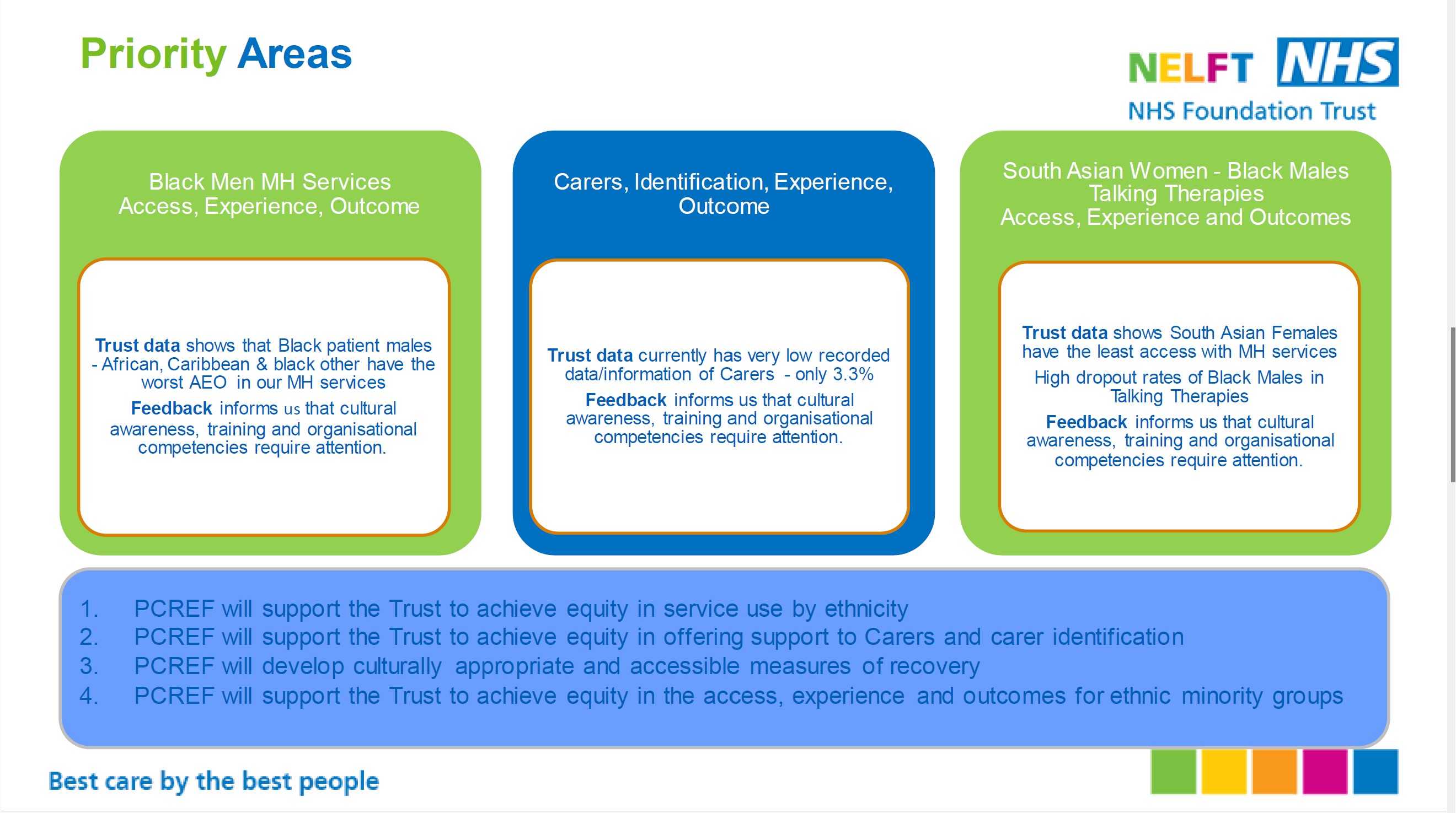
NELFT PCREF Presentation

Before we move onto Kristina’s presentation, the ethnic carer forum opened with a presentation from Asia Zaman who is the Transformation Project Manager for PCREF at North East London NHS FT. She was joined by Tarek Seeraullee who is the Havering Carers Lead at NELFT.

NELFT NHS has taken strong steps to not only incorporate PCREF, but also align it towards the hospitals carers strategy. The NHS trust presented that they admit their patients and carers have poorer outcomes, but things will improve through the following drives and more.

  • Upcoming workshops and events (increase cultural awareness) – carer led, to understand further about needs, perspectives etc.
  • increase Staff Knowledge and Awareness) – Develop workshops carer led, to share knowledge and awareness.
  • Increase Partnership Working – Task and Finish group- carer led, Havering best practice example? NELFT to consider aspects across all directorates.
  • Co-production – Carers group NCV-NELFT CarersVoice has been set up andrunning, for adults and young people.Workstreams in progress.

Presentated was 10 PCREF competencies where the carers strategy was aligned. We then had a Q&A session from attendees some carers were also from NELF.

SWLSTG PCREF Presentation

It was kind for South West London & St George to attend and present their focus on PCREF. This section was presented by Tom Carter who is the Peer Involvement Coordinator, Involvement Team. I know SWLSTG NHS trust fairly well as I have been hosting a carers peer forum for 4 years. My carers group in SW london covers the same areas as the MH trusts being Sutton, Merton, Richmond, Wandsworth and Kingston.

Tom presented the focus for PCREF at the NHS organisation, however we did have a few attendees from the area interested in the focus on ethnic minority carers. This is because they saw the presentation from NELFT and did not wanted to be left out. There was specific interest from Wandsworth carers centre and a few others.

On a side note, the mental health trust has developed a new induction video, which you might want to view below.

  • Kristina Goh presents on Mental Health Context for Minoritised Ethnic Individuals

As mentioned earlier, I was joined by Kristina to talk about her publication on why minorities groups giving birth had poorer outcomes. The group cannot always restrict itself to mental health NHS services as the equality challenge is presented in all other health sectors include acute services.

Kristina presented that one of the leading causes of maternal death antenatally and postpartum is mental ill health (10-20% of women).

Kristina mentioned that poorer outcomes could be challenged with the following.

Cultural competency training for healthcare professionals
Cultural competency vs cultural humility
Workforce needs to be reflective of the population we care for- think outreach, retention, development opportunities
Non-pharmaceutical interventions

You can view Kristina’s article from the following site. https://www.all4maternity.com/mental-health-context-for-minoritised-ethnic-individuals/

  • Kent & Medway Primary NHS Trust presents on PCREF

I have been involved at Kent & Medway for a long time and sit on their triangle of care steering group (see below).

https://www.kmpt.nhs.uk/carers/triangle-of-care

KMPT were very kind to engage with the ethnic MH carer forum to update us on their progress. We were joined by a number of Kent & Medway presenting their focus although time ran out before CNWL presented on their drive to include the Patient Carer Race Equality Framework.

CNWL, South London & Maudsley, plus Oxleas NHS and NHS England will update in February.

This concludes my brief update for the Ethnic mental health carers forum January 2024.

There is no shame in the caring role by Matthew McKenzie

No one rushes to be a carer, usually most people plan to care for loved ones when they are much older, but life is not often like this. Life is complex, unexpected and has its ups and downs.

You did not expect this day to happen, but here it is. The person close to you has suddenly become unwell, it could be a close relative, a lonely neighbour or a dear friend. It’s different for everyone depend on the relationship, but no matter what the definition is going to be the same. You have become a carer.

What next? What will you do?

There is no hard and fast guide, a lot depends on your resources, support or connections. Caring for someone even depends on knowledge and information, but most of all caring depends on the care given. You know you will probably have to do this, there still is a choice, but are you prepared to live with the consequences?

No one should be forced into the caring role, no one should be that reluctant carer, but that day has arrived. Depending on that relation, you want to be there for someone, you feel you have to try. It might be out of duty, it might be out of love or sympathy. You want to care and you have made that decision.

You are going to care…..

Yet you are not fully aware what you have prepared yourself for. Until you and the person you care for know what the diagonsis is. You are hoping and praying that it is nothing too serious. You have a lot on the line. You do not want that person to suffer their quality of life. You also have plans, dreams and ambitions. All this has been sudden and you just do not feel prepared. You feel anxious on what the future brings, but you want to be there. You want to be there for that special person. It is all up to you because there might not be anyone else around to step in.

Then it suddenly happens.

You are told that diagnosis by a health professional. It does not sink in right away, for some the diagnosis brings relief. Some people know what they must tackle and this is all information. For other people the diagnosis could being heart felt grief and sadness. The diagnosis of the medical illness could be life threatening. It could be a demanding role, but you have already made your decision. You are going to be there, you are going to stay with the ‘cared for’ until as far as you can go.

It is just you still are not fully aware. No one has told you that you are now defined a carer. You think it might be a paid care worker, or a professional carer. You think that you are not doing anything special. You might be the husband, wife, daughter or son. You are just doing what is expected of a close relation, but it is hard.

It is so difficult….

You have to advocate and chase up information for your loved one. You have to cook and clean, check and double check that the ‘cared for’ health is not deteoriating. It is like a juggling act, you are careful not to upset the person you are caring for. They are emotionally struggling with how their life has turned out. They maybe upset that they have to rely on you, then again they cherish that you are standing by and ‘caring’ for them. Yet day by day, month afer month and onto the years, it could get harder. It takes around 2 years before many know they are a carer, but should it take that long?
Should you step back and focus on your own health and wellbeing needs?

Other people are telling you that you need a break, others say you need to know more about what you are caring for. Some people say you should join a carers group. Whatever others say, you being to feel guilty. Is it that bad to focus on your own needs once in a while?

No it is not bad to take time to focus on you.

We cannot care for others if we neglect our own health and wellbeing needs. There is stigma in the caring role, we can all agree on this. Many do not want to be defined as a carer, but that is ok. What is more important is that we get the help and support we need to provide the best care possible. It is not always about caring for others, it is also about caring for ourselves.
If you have found out that you are to do that caring role, ask health and social care services what support you can get as a carer.

Carers need that support as well.

Thank you for reading.

December Monthly Carer & Health News Updates 2023

Here is the latest carer and mental health news for December by carer activist and author Matthew McKenzie.

December 2023 Carer and Mental Health news <- read more news items here

For the December edition on unpaid caring and mental health we have

Carer Videos

Preventing trips and falls – Carers UK

How to solve a problem like hospital discharge – The Kings Fund

What are all these assessments? – Carers Support Merton

Saul Becker Keynote on Young Caregivers | 2023 Quebec Symposium on Young Carers

The Triangle of Care explained – Carers Trust

Latest Carer News

The Carers Leave Act received Royal Assent and will be enforced in 2024

The new immigration rules will pile more pressure onto unpaid carers – Emily Holzhausen

How can we better support unpaid carers? – Age UK

Carers Championed at Cygnet

NELFT publishes carers report findings as part of PCREF

Young carers across Northants launch new film to have their ‘voices heard’ and to show the reality of daily life

National Organisation updates

Book a coronavirus vaccination if you are a carer

What can we learn from the Can You Tell We Care report? – Carers Trust

Give feedback on care – CQC

Benefit and pension rates 2023 to 2024

Find your local Healthwatch – Healthwatch England

Volunteer with us – Carers UK

Ethnic carer and minority news updates

Carers UK  good practice briefing for supporting Black, Asian and minority ethnic carers

Advancing mental health equalities – PCREF

Ethnic Inequalities in Improving Access to Psychological Therapies (IAPT)

Racial inequalities in maternity must be addressed

NELFT publishes carers report findings as part of PCREF

Racial trauma has profound mental health consequence – a Black clinical psychologist explains and offers 5 ways to heal

AHPs news updates

Occupational therapy interventions for informal carers and implications for carer support: a systematic review

Physiotherapy in the media – 2023 highlights

Cancer Awareness updates

Looking after someone with cancer

Caring for someone with a terminal illness

Risk of dying from cancer in some poorer districts of England over 70% higher than wealthy districts

Join the London Cancer Community