By Matthew McKenzie – Carer activist and facilitator of the group
The group is a community of carers in Lambeth, Southwark and Lewisham that exists to provide support, advocacy, and connection for people looking after loved ones living with mental illness. It brings together unpaid carers of all ages and backgrounds to share experiences, learn from one another, and build confidence in dealing with health and social care professionals. A core part of its mission is reducing isolation by creating a safe space where carers can speak openly, develop skills, and access practical resources like advocacy services.

The meeting began with introductions and updates from various participants, including myselff where I discussed work with London Hospitals and the NHS app, while other carers introduced themselves to the group. In attendance was Tama from PohWer presented information about carer complaints and support services across different regions, including discussions about the potential impact of Healthwatch’s dissolution on patient and carer support services.
The group then ended with myself presenting strategies for developing confidence as a carer, followed by participants sharing their experiences and challenges, particularly regarding mental health conditions, and discussing upcoming events for carer support and connection.
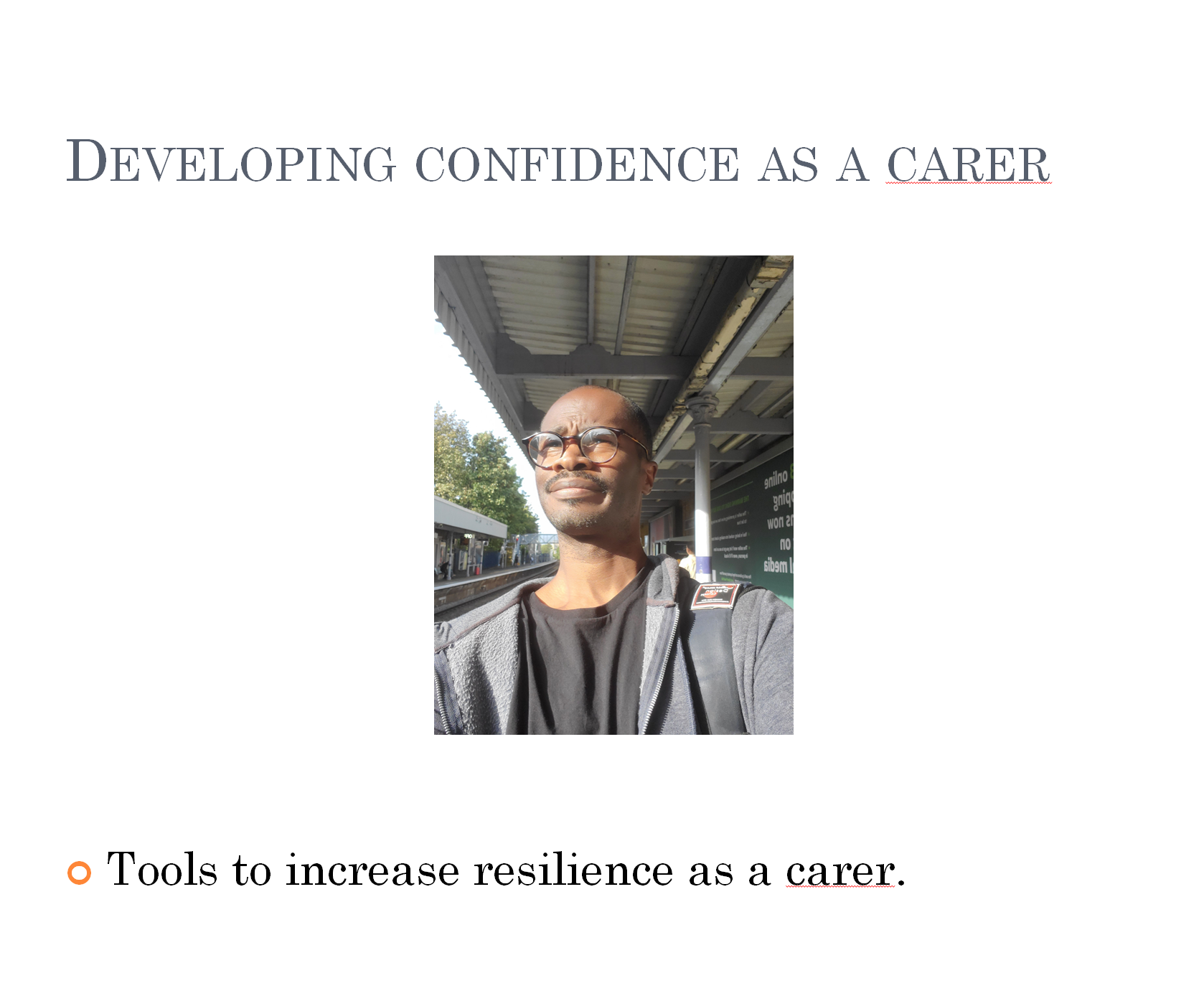
At the meeting I shared a presentation focused on developing confidence as an unpaid carer, particularly when dealing with health professionals. From my experience working with carers and from my own lived experience, I know how overwhelming it can be to care for someone with a mental health condition as it often feels like being on a rollercoaster, with good days followed by sudden setbacks. My aim was to show carers that they do have insight and knowledge that professionals need to hear, and that building confidence can help ensure they’re fully involved in their loved one’s care.
I spoke about some of the challenges carers face when engaging with health professionals, that being the jargon, the time pressures, and sometimes being excluded from conversations, especially if the cared-for person doesn’t want them involved. That’s why confidence is so important: carers know their loved one best, and their perspective on day-to-day behaviours, symptoms, and treatment side effects can be vital in shaping care plans. I reminded everyone that carers have legal rights, such as the right to a carer’s assessment under the Care Act, and that understanding these rights is key to feeling empowered.

I also stressed that advocacy is a big part of what carers end up doing, even when they don’t think of it that way. Whether it’s pushing for better communication, raising concerns, or helping their loved one navigate services, carers often take on that role. But alongside this, I reminded the group how important it is to look after their own well-being. Caring can drain you emotionally and physically, and I used the analogy of a cup you can only pour out so much before you need to refill.
Finally, I linked this to upcoming events like Carers Rights Day in November, which is another opportunity for carers to learn more about their entitlements and strengthen their confidence. My overall message was that while caring can feel like a constant struggle, developing confidence, knowing your rights, and valuing your own voice are essential for both carers and the people they look after.
Carer Support and Advocacy Challenges
Tama, representing Power, gave an overview of the organisation’s role and responsibilities in supporting patients and carers through advocacy. She explained that Power mainly deals with complaints, often about NHS services, but their work can also extend to social care depending on the contracts they hold. This includes services such as NHS complaints advocacy, Independent Mental Health Advocacy (IMHA), and Independent Mental Capacity Advocacy (IMCA). She stressed that which organisation provides support depends on the client’s address rather than the service they are connected to, which can sometimes cause confusion for families living in different boroughs.
She highlighted that, in most cases, the client is considered the person receiving care, even when a family member is the one raising the concern. Advocacy, therefore, is centred on protecting the rights of the client, ensuring their voice is heard, and supporting them in navigating complaints processes. Tama noted that this can be complex in situations where carers are acting on behalf of loved ones, but the principle remains that advocacy must be client-focused.
Finally, she spoke about the wider importance of advocacy in giving carers and patients confidence to raise issues without fear of being dismissed as complainers. She emphasised that advocacy aims to step in before situations escalate, ensuring people feel supported, empowered, and able to access fair treatment and accountability from health and social care services.
Healthwatch Changes and Carer Concerns
Several participants discussed the role of Healthwatch and the uncertainty about its future. It was noted that Healthwatch currently provides an overarching community voice, holding events, gathering views, and supporting carers, but does not hold NHS complaints contracts in some areas. In Lewisham, for example, Healthwatch Lewisham covers this space, while in Southwark, Healthwatch plays a strong role in community engagement but not in direct complaints advocacy.

Concerns were raised about the possibility of Healthwatch being dissolved under upcoming changes, including the new ten-year plan. Some felt that if Healthwatch were dismantled, many patients and carers (particularly in the mental health space) would have to rely more heavily on advocacy providers such as Power. This sparked discussion about whether services and carers’ voices would be adequately protected in that scenario.
Members also highlighted the uncertainty and frustration surrounding the changes. Questions were asked about why Healthwatch might be dissolved, whether due to funding, performance issues, or other factors, but there were no clear answers. Carers expressed concern that the very purpose of Healthwatch was to provide independent accountability and ensure that patients’ and carers’ voices were heard in relation to health services. Losing it, they felt, could remove an important safeguard.
Updates from Carers Hub Lambeth
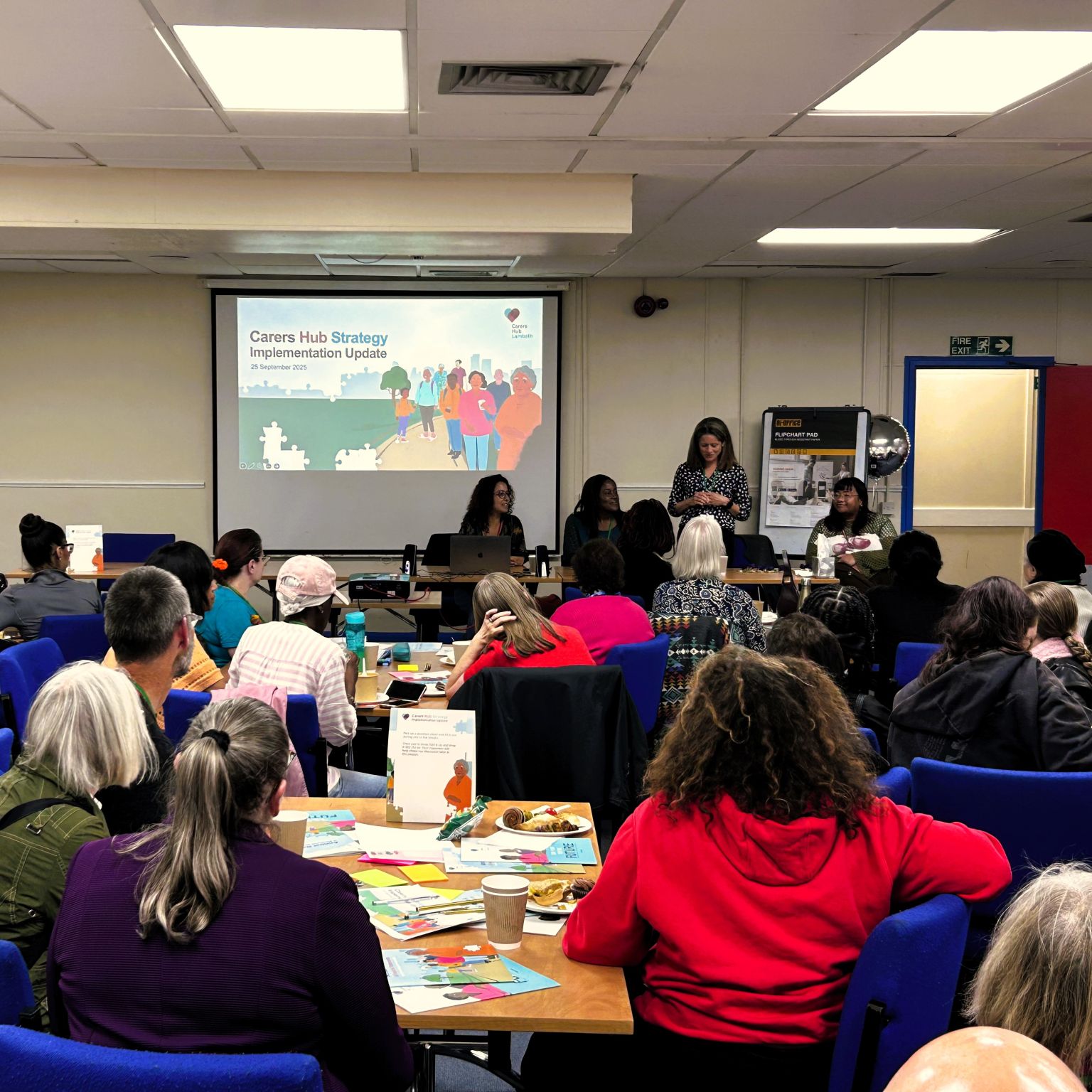
Updates from Carers Hub Lambeth focused on the organisation’s recent strategy event and ongoing work to support carers. The strategy event, which I also attended, held at the Brixton 336 building, featured a film about both young and adult carers and included case studies showing the challenges they face and the support they receive.

Carers who attended described the event as well-run, with plenty of opportunities to connect with the local caring community. It also outlined the Hub’s plans for the next few years, giving reassurance that the resource would continue despite the usual funding pressures.
One of the key points raised was the importance of involving carers in shaping future strategy. Attendees valued being asked for their input and recognised that their voices and lived experiences are central to the success of the Hub’s work. Several carers also reflected on how vital Carers Hub Lambeth has been in reducing feelings of isolation, with one describing the Hub as “like my wingman” in helping provide care and resources.
Another update emphasised the Hub’s commitment to supporting young carers, including children as young as five, as well as adults. Staff have been working in schools across Lambeth to identify and support young carers, with projects expanding from secondary schools into primary schools. This development was highlighted as an important step in recognising the responsibilities many children carry and ensuring they receive the right support early on.
The Hub also continues to host regular groups, such as the monthly mental health carers group, which provides peer support, creative activities like poetry sessions, and opportunities to feed back to social workers. These sessions are designed to give carers space to connect, share experiences, and access practical advice. Overall, the updates from Carers Hub Lambeth underlined the organisation’s ongoing role as a vital resource, offering both strategic leadership and day-to-day support for carers in the borough.
Updates from Southwark Carers
Southwark Carers provided updates on their current work and recent activities. They explained that the organisation had recently secured its contract again earlier in the year, which gave some stability moving forward. As part of their ongoing efforts, Southwark Carers continue to be involved in strategy discussions, with an emphasis on ensuring that carers’ voices are included in shaping future plans and services
The update highlighted their participation in events that showcase the experiences of carers, including films and booklets featuring both young and adult carers. These case studies were seen as a valuable way to raise awareness of the challenges carers face and the impact of support services. Southwark Carers also used these events to connect carers with one another, helping to strengthen the sense of community.
Carers at the meeting reflected positively on these developments, noting that Southwark Carers plays an important role in advocating for recognition and ensuring carers feel supported rather than isolated. The updates also linked into wider conversations about funding and sustainability, with participants recognising the importance of securing resources so that Southwark Carers can continue delivering long-term support.
 A Caring Mind