Tag Archives: southwark carers

South London Mental Health Carers Forum – August 2026 Update

By Matthew McKenzie – Carer forum facilitator

On Monday 24 August, I facilitated another meeting of the South London Mental Health Carers Forum. The forum brings together unpaid carers and carer representatives from Lewisham, Lambeth, Southwark and Croydon, giving people a space to share experiences, learn about their rights and influence the development of local mental health services.

We welcomed carers with many different experiences, including parents supporting adult children with serious mental illness, autism and substance misuse, as well as people involved in advocacy, peer support, staff training and service development. Some members had been navigating the mental health system for many years, while others were newer to caring and looking for guidance.

A powerful message emerged from the introductions: even experienced carers can struggle to understand how different parts of the mental health system fit together. Services can feel fragmented, with carers passed between teams or excluded from discussions despite holding important information about their loved one’s history, warning signs and support needs.

Supporting the Supporters research

We were joined by Carol, an unpaid carer and postgraduate student studying psychology and neuroscience of mental health at King’s College London.

Carol introduced her research project, Supporting the Supporters: Professional Perspectives on Integrating Informal Care into the Mental Health Ecosystem. The study explores how professionals understand the contribution made by unpaid carers, how information and support could be improved, and how carers could be more meaningfully involved alongside mental health professionals.

As part of the research, Carol is interviewing people with professional or advocacy perspectives, including psychologists, psychiatrists, GPs, commissioners, teachers, service providers and carer advocates. I have already taken part in an interview, and several forum members expressed an interest in contributing.

The discussion highlighted why it is so important for carers’ experiences to be represented in academic research. Research can help shape future policy and practice, but carers also stressed that participants should be kept informed about what happens to the findings. Too often, people share deeply personal experiences with research projects and never hear about the outcome.

I also informed members about a separate University of Oxford study exploring wellbeing and social-group attendance among people caring for someone with a serious mental illness. We hope to hear more about this opportunity at a future meeting.

Triangle of Care: more than an accreditation badge

The main presentation focused on the Triangle of Care, a framework developed by Carers Trust to improve cooperation between the person receiving mental health services, the professionals supporting them and their unpaid carer.

As facilitator, I explained that the framework should be something carers experience in practice, not simply an accreditation badge displayed by an organisation.

South London and Maudsley NHS Foundation Trust has achieved Triangle of Care Star 1 for inpatient services and Star 2 for community services. With this work now being reviewed, there is an important opportunity for carers to help examine whether the standards are making a noticeable difference across local services.

Carers should be recognised and recorded, listened to when they provide relevant information, given clear explanations about confidentiality, offered appropriate information and support, and involved at important points in care and discharge planning. Staff should also understand that carers have needs and rights of their own.

Confidentiality should not become exclusion

Confidentiality produced one of the most detailed and passionate discussions of the meeting. Several carers described situations in which confidentiality had been used to shut down communication completely.

Respecting the service user’s privacy is essential, but confidentiality does not prevent professionals from listening to a carer’s concerns. A carer may hold vital information about changes in behaviour, medication, relapse indicators, risks or what the person is like when well.

Even when professionals cannot disclose personal clinical information, they can usually provide general information about how a service works, explain how a carer can submit concerns and signpost the carer towards available support. Carers should not simply be told, “We cannot speak to you,” and then left without guidance.

Members also discussed situations where a person experiencing a serious deterioration may withdraw consent for family involvement. These cases require careful professional judgement, particularly where there may be questions about safety, insight or decision-making ability. Carers felt that staff need more confidence and training to manage these situations without automatically treating the family as a problem.

Carers were encouraged to ask whether their role has been recorded, how they can share information with the clinical team, how they will be involved in care and discharge planning, and who they can approach if their perspective is being overlooked. Where serious concerns are ignored, carers should raise them in writing so there is a clear record.

Carer involvement in discharge

The discussion then moved to hospital discharge. Carers can sometimes be contacted shortly before someone returns home, without a proper conversation about whether they are able or prepared to provide the expected support.

A safer discharge should include an early discussion with the carer about the help they can realistically offer. Information about medication, warning signs, follow-up arrangements and points of contact should be explained clearly. Professionals should not assume that a family member can take on intensive caring responsibilities simply because they are related to the person.

Carers also need to know that they can request a carer’s assessment from their local authority. An assessment can help identify the effect caring is having on their own wellbeing and what support may be needed. Existing assessments should be reviewed when circumstances or caring responsibilities change.

What carers raised during the forum

A substantial part of the meeting was led by carers sharing what they had experienced while supporting relatives through mental health services. Although everyone’s circumstances were different, many common concerns emerged across Lewisham, Lambeth, Southwark and Croydon.

Several carers described the mental health system as fragmented and difficult to navigate. Families may deal with inpatient wards, community mental health teams, crisis services, supported accommodation, GPs and social care, but these services do not always appear to communicate effectively with one another. One carer reflected that even after years of involvement, it can still be difficult to know whom to contact when a new crisis develops. This raised concerns about how much harder the system must be for people who are new to caring.

Carers also felt that decisions made at senior levels do not always reflect what happens in practice. Policies, pathways and strategies may appear clear on paper, but families can experience delays, poor communication and a lack of coordination. Members wanted more people with direct experience of using or working within mental health services to influence decisions at the highest levels.

A major concern was the failure to listen when carers report early signs of deterioration. Carers often recognise changes in sleep, behaviour, medication use, substance misuse or communication long before a situation reaches crisis point. Some members described situations in which their warnings were overlooked, only for the person’s condition to worsen later. Carers felt that their observations should be recorded and considered as part of risk assessment and relapse prevention, even when professionals cannot share confidential clinical information in return.

Confidentiality was one of the most strongly debated issues. Carers understood that people using mental health services have a right to privacy. However, they felt that confidentiality is sometimes interpreted too rigidly and used to exclude families from almost every conversation.

The group stressed that professionals can still listen to information provided by a carer. They can also explain how the service operates, receive concerns, provide general guidance and direct the carer towards support. Saying “we cannot tell you anything” should not bring all communication to an end.

Some carers described being excluded after their relative had withdrawn consent for family involvement, sometimes during a period of serious illness or limited insight. Members questioned how consent is considered when someone’s mental state or decision-making ability may be changing. They felt staff should look carefully at the individual circumstances, risks and history instead of applying confidentiality as an automatic barrier.

The inconsistency between professionals was another concern. Some staff members communicate sensitively and recognise the value of family knowledge, while others refuse even to listen. Carers felt that the quality of their involvement should not depend on which professional happens to answer the telephone. Better training, management support and accountability are needed so that good carer practice becomes consistent across services.

There was also discussion about inaccurate or outdated information remaining in health records. Carers described how an early diagnosis, allegation or misunderstanding can continue to influence future treatment long after it has been challenged. Correcting such information can be extremely difficult, yet it may affect how professionals view both the person receiving care and their family. Members wanted clearer ways to challenge inaccuracies and ensure that corrections or alternative professional opinions are properly recorded.

Carers raised concerns about attitudes towards families. While relationships can sometimes be complicated, relatives should not automatically be viewed as interfering or obstructive. Where disagreements arise, members suggested that an independent person, advocate or senior professional could help everyone understand the different perspectives. Completely blocking communication can damage family relationships and may also undermine the person’s recovery and safety.

The experiences of carers from racialised communities were also recognised. One member spoke about the fear and mistrust that can develop when Black men repeatedly come into contact with mental health services or the criminal justice system. The forum acknowledged the importance of culturally responsive services that understand how race, stigma, previous experiences and unequal treatment can affect whether families feel safe seeking help.

Hospital discharge was another prominent concern. Some carers reported being contacted too late, with an expectation that they would immediately resume significant caring responsibilities. Members felt carers should be involved early enough to discuss what support they can realistically and safely provide. They should receive clear information about medication, warning signs, follow-up arrangements and who to contact if the person’s condition deteriorates.

Carers should not be treated as an unlimited resource. Being a parent, partner, sibling or other relative does not automatically mean someone is physically, emotionally or practically able to provide the level of support being assumed. The carer’s own health, employment, family responsibilities and wellbeing must be considered during care and discharge planning.

Members also discussed the importance of carer’s assessments. Some people had received very few assessments despite caring for many years. Carers were encouraged to request an assessment from their local authority and to seek a review when their responsibilities or personal circumstances change. An assessment creates a formal record of the caring situation and may identify support needed to protect the carer’s wellbeing.

Another recurring issue was accountability. Guidance about involving carers may exist, but families are not always sure what to do when services fail to follow it. Members were encouraged to put important concerns in writing, keep records of correspondence and ask for matters to be escalated when necessary. A clear written record can become particularly important if warnings have been ignored or a serious incident later occurs.

Despite these difficult experiences, the conversation also demonstrated the strength of peer support. Carers shared knowledge, validated one another’s concerns and helped newer members understand that they were not alone. The group strongly encouraged carers not to remain isolated, even when their loved one appears relatively well. Joining a carers’ centre, peer-support group or advocacy forum can provide information and connections before another crisis occurs.

The overall message from carers was clear: they are not asking to take over clinical decisions. They are asking to be recognised as people with valuable knowledge, their own support needs and an important role in safer care. The Triangle of Care will only have meaning if carers can see and feel these principles operating in their everyday contact with services.

Turning shared experience into influence

This meeting demonstrated why independent, carer-led forums remain so important. They reduce isolation, allow newer carers to learn from those with longer experience and help identify patterns that may otherwise be dismissed as individual incidents.

Members involved in SLaM meetings and the forthcoming carers’ listening event were encouraged to raise the Triangle of Care and ask how carers will contribute to its review. I will also seek to invite representatives leading this work at SLaM to a future forum so that they can update carers directly and respond to questions.

Our next South London Mental Health Carers Forum is due to take place on Monday 28 September 2026. We will continue examining the Triangle of Care, with a stronger focus on carers’ experiences and the practical changes they want to see across mental health services.

I would like to thank everyone who attended and spoke so openly. The experiences shared were sometimes difficult, but they reinforced an important principle: carers should not have to fight simply to be recognised, heard and supported.


Carers Connect Southwark: Why Your Voice Matters More Than Ever

By Matthew McKenzie – A Caring Mind

If you’re an unpaid carer in Southwark, chances are you’re used to putting everyone else first. You support a loved one day in, day out, emotionally, practically, often invisibly. And too often, decisions about “support” for carers are made without carers truly being heard.

Southwark Council is developing its Unpaid Carers Strategy, and they are inviting unpaid carers to take part in upcoming focus groups to share real experiences, which are your lived reality.

As an unpaid carer myself, I know how rare and valuable this opportunity is.

Why having your say is important because

Policies and strategies shape:

  • What support is available
  • How easy (or hard) it is to access help
  • Whether carers feel recognised, supported, and understood

When carers don’t speak up, systems are built around us, not with us. When we do speak up, its a chance to make change becomes possible.

This isn’t about complaining.
It’s about being honest: what works, what doesn’t, and what would genuinely make life easier for carers in Southwark.

Your voice could help shape:

  • Better access to information and services
  • More flexible, carer-friendly support
  • A strategy that reflects the real pressures carers face

A safe, non-judgemental space

One of the most important things about these focus groups is that they are designed to be:

  • Non-judgemental
  • Inclusive
  • Open to carers with any level of responsibility

You don’t need to have all the answers.
You don’t need to be an “expert”.
You just need your experience.

Whether you care full-time, part-time, occasionally, or don’t even label yourself as a “carer” your perspective still counts.

Focus group dates and details

In-person focus groups
📅 24th February
11am – 1pm and 2pm – 4pm
📍 Harriet Hardy Community Centre
Harriet-Hardy Building, Aylesbury Estate, Albany Road, Walworth SE5 0AH

Online focus group
📅 25th February
7pm
💻 Virtual session via Microsoft Teams

How to get involved

You can:

Even attending one session can make a difference — not just for you, but for other carers now and in the future.

A personal note from me

As unpaid carers, we are often exhausted, overlooked, and expected to “just cope”. Opportunities like this don’t come around often.

Lewisham, Southwark & Lambeth carer forum update September 2025

By Matthew McKenzie – Carer activist and facilitator of the group

The group is a community of carers in Lambeth, Southwark and Lewisham that exists to provide support, advocacy, and connection for people looking after loved ones living with mental illness. It brings together unpaid carers of all ages and backgrounds to share experiences, learn from one another, and build confidence in dealing with health and social care professionals. A core part of its mission is reducing isolation by creating a safe space where carers can speak openly, develop skills, and access practical resources like advocacy services.

The meeting began with introductions and updates from various participants, including myselff where I discussed work with London Hospitals and the NHS app, while other carers introduced themselves to the group. In attendance was Tama from PohWer presented information about carer complaints and support services across different regions, including discussions about the potential impact of Healthwatch’s dissolution on patient and carer support services.

Continue reading

Lewisham, Southwark & Lambeth carer forum update August 2025

The meeting facilitated by Matthew McKenzie began with introductions from participants and updates on various carer support initiatives, including forum mergers and NHS plan changes.

Local council strategies and initiatives were discussed across different boroughs, with particular focus on Lambeth and Southwark’s carer support plans and the development of a carer’s forum in Lewisham. The group explored challenges faced by carers, including access to primary care and the need for better coordination, while discussing recent conferences and upcoming events aimed at supporting and advocating for carers’ rights.

Lewisham Carers Strategy and Service Updates

Lewisham is currently refreshing its Carers Strategy to strengthen support for unpaid carers and improve access to local services. The focus is on ensuring carers are included in decision-making through co-production and collaboration with the council, health providers, and community organisations. A major priority is improving well-being services, providing better information, and ensuring carers know their rights under the Carers Leave Act.

As part of wider NHS reforms, Lewisham is moving towards a neighbourhood-based care model designed to bring services closer to local communities. While this aims to make access more seamless, carers raised concerns about inconsistent GP access, gaps in communication, and challenges navigating between boroughs when supporting loved ones. The forum highlighted the importance of better coordination between primary care, hospital discharge planning, and mental health services to ensure carers are recognised and supported.

Lambeth Carers Strategy Refresh

Lambeth is currently refreshing its Carers Strategy with the aim of improving services, increasing visibility, and ensuring carers have a stronger voice in decision-making. The updated strategy focuses on key priorities such as well-being, access to assessments, respite options, and workforce training for those supporting unpaid carers.

There was a particular focus on improving support for mental health carers in Lambeth. The Carers Hub Lambeth team continues to facilitate peer support groups and collaborates closely with the South London and Maudsley NHS Foundation Trust to ensure carers are recognised as partners in care planning. Initiatives like Triangle of Care are gaining momentum, emphasising better communication between professionals and families while creating pathways for carers to get involved in shaping local mental health services.

Carers Hub Lambeth also celebrated the growing range of community-based activities available for carers and families in Lambeth. Over the summer, there have been several events designed to support young carers, including trips, tours, and group workshops aimed at helping them connect with others and access emotional support. These initiatives are part of Lambeth’s broader goal to make sure younger carers, who are often overlooked, receive the help they need both at home and within education.

One of the key upcoming events for Lambeth carers is the Lambeth Carers Strategy Event taking place on 25th September 2025 at 336 Brixton Road. The session will bring together carers, professionals, and decision-makers to review plans, share ideas, and set priorities for the future. Carers are strongly encouraged to attend to ensure their voices are heard and to take part in shaping the borough’s action plans moving forward.

Southwark Council Carers Support and Strategy Group

Matthew fed back on how Southwark Council continues to strengthen its approach to supporting unpaid carers, with a growing emphasis on improving access to information, assessments, and respite services.

The Unpaid Carers Strategy Refresh is a project running from August 2025 to April 2026, led by Southwark Council in collaboration with Adult Social Care, the NHS, local voluntary groups, and unpaid carers themselves. The plan focuses on improving support for carers by updating evidence on local needs, strengthening engagement with seldom-heard groups, and mapping gaps in current services.

Key priorities include better access to respite care, enhanced referral pathways, stronger partnerships with health services, and improved inclusion of young carers, carers with disabilities, and LGBTQ+ carers. The initial phase, from August to October, involves reviewing existing strategies, mapping current services, gathering insights through focus groups and surveys, and benchmarking against national policies and neighbouring boroughs.

The forum highlighted the importance of co-production, ensuring that carers are actively involved in shaping local strategies and service priorities.

Update on Key Themes from the final NHS England Carers Conference

Matthew highlighted that the 2025 NHS England carers conference placed a strong emphasis on recognising unpaid carers as essential partners in delivering effective healthcare. The NHS stressed its commitment to involving carers in shaping services and policies, ensuring their voices are reflected at every stage of decision-making. There was a clear acknowledgement that without unpaid carers, many health and social care systems would face significant pressure.

You can watch the conference below.

A major focus was on the NHS’s shift towards neighbourhood-based care models designed to bring services closer to communities. Matthew explained that this change aims to improve coordination between GPs, hospitals, and mental health services, but he also highlighted concerns raised about fragmented communication and the risk of carers being left out of local planning. Carers at the conference called for better access to information and more joined-up pathways across boroughs.

The conference also featured interactive workshops and discussion groups focused on co-production, digital innovations, and addressing inequalities among carers. Specific sessions explored improving support for young carers, carers from minority backgrounds, and those supporting loved ones with mental health needs. The event closed with a call to action for stronger collaboration between carers, NHS teams, local authorities, and community organisations. Attendees were encouraged to get involved in upcoming forums and engagement opportunities to help shape future services and ensure carers’ voices are at the heart of decision-making.

Matthew shared updates on national policy developments discussed at the conference, including the Carers Leave Act and commitments to expanding access to respite, assessments, and flexible working rights. There was also a discussion about new digital tools and support platforms designed to make it easier for carers to connect with professionals and access resources. However, many attendees expressed concerns that these initiatives need proper funding and training to work effectively in practice.

Lewisham, Southwark & Lambeth Mental Health carer forum – July 2025 update

By Matthew McKenzie

LLS Carers Forum – July Update: Voices, Concerns & Community Strength

Welcome to the July update for the Lewisham, Lambeth, and Southwark Mental Health Carers Forum. This month’s meeting, chaired by Matthew McKenzie, provided space for powerful updates, critical reflections, and a sobering insight into national developments affecting carer support.

🔸 Growing the Carers Voice

Our forum continues to evolve, bringing together unpaid carers from across boroughs. It remains a space for empowerment, where carers can speak openly, challenge services, and influence support structures. Several attendees introduced themselves and reflected on their caring roles, often crossing borough boundaries and facing ongoing questions about their own place in the system.

🔸 Spotlight: Healthwatch Update

One of the major concerns raised was the planned abolition of Healthwatch England and its local branches, which is a development that has deeply unsettled many in our community.

Anna from Healthwatch Lambeth joined us (on her day off—thank you, Anne!) to explain what’s happening:

  • Healthwatch functions—listening to service users, signposting, and enter-and-view visits, which are set to be absorbed by local authorities and ICBs.
  • As a statutory body, Healthwatch cannot be dissolved without legislation, so operations continue for now.
  • Carers voiced serious concerns over the loss of Healthwatch’s independence and trust, especially as a safe channel for feedback.

Anne reminded us: Healthwatch is still active and listening. A final report on black men’s experiences in Lambeth mental health services is due by mid-August.

🔸 Key Questions Raised

  • How will services preserve independent feedback mechanisms once Healthwatch is gone?
  • What accountability structures will replace them?
  • What are the implications of the broader wave of health service body consolidations?

🔸 Updates from the Ground

We also heard from other carer members:

  • A carer from Lewisham shared feedback she submitted to the Lewisham Unpaid Carers Forum regarding carer engagement, with little response so far unfortunately highlighting an all-too-common issue.
  • Other Carers reflected on Lambeth’s carer engagement structures, noting some decline in carer-led decision-making over the years.
  • Another Carer emphasized the importance of real, consistent carer champions within NHS teams particularly in mental health crisis services.

🔸 Carers Forum Reflections

Matthew provided a helpful comparison between Lewisham and Lambeth carer engagement models. While Lewisham has a formal Unpaid Carers Forum, its independence is limited. Lambeth’s model leans more on the collaborative network and carer support groups. Both boroughs face challenges in consistency, clarity, and co-production.

A concern raised repeatedly: carer champions are often named but rarely visible and sometimes, not even known by their own teams.

📅 Next Forum: August 25 or 26

Due to the bank holiday, the next forum will likely be held on August 26. We’ll aim to have a guest speaker and will explore new ways for carers to hold services to account especially in light of the potential Healthwatch closure.


If you’d like to contribute to future discussions or attend the next forum, please reach out. This is your space.

📣 Let’s continue to speak up, stand together, and push for better mental health support for all carers.

Lewisham, Southwark & Lambeth Mental Health carer forum – June 2025 update

About the Forum:
The Lewisham, Lambeth & Southwark Carers Forum is a collaborative online space that brings together unpaid carers, carer leads, mental health professionals, and support organizations to share experiences, raise concerns, and influence change. Focused primarily on mental health caregiving, the forum serves as a platform for peer support, policy updates, training insights, and service development. Led by carer advocate Matthew McKenzie, the group fosters empowerment through regular discussions, creative expression, and co-produced solutions, ensuring carers’ voices are heard across local systems and beyond.

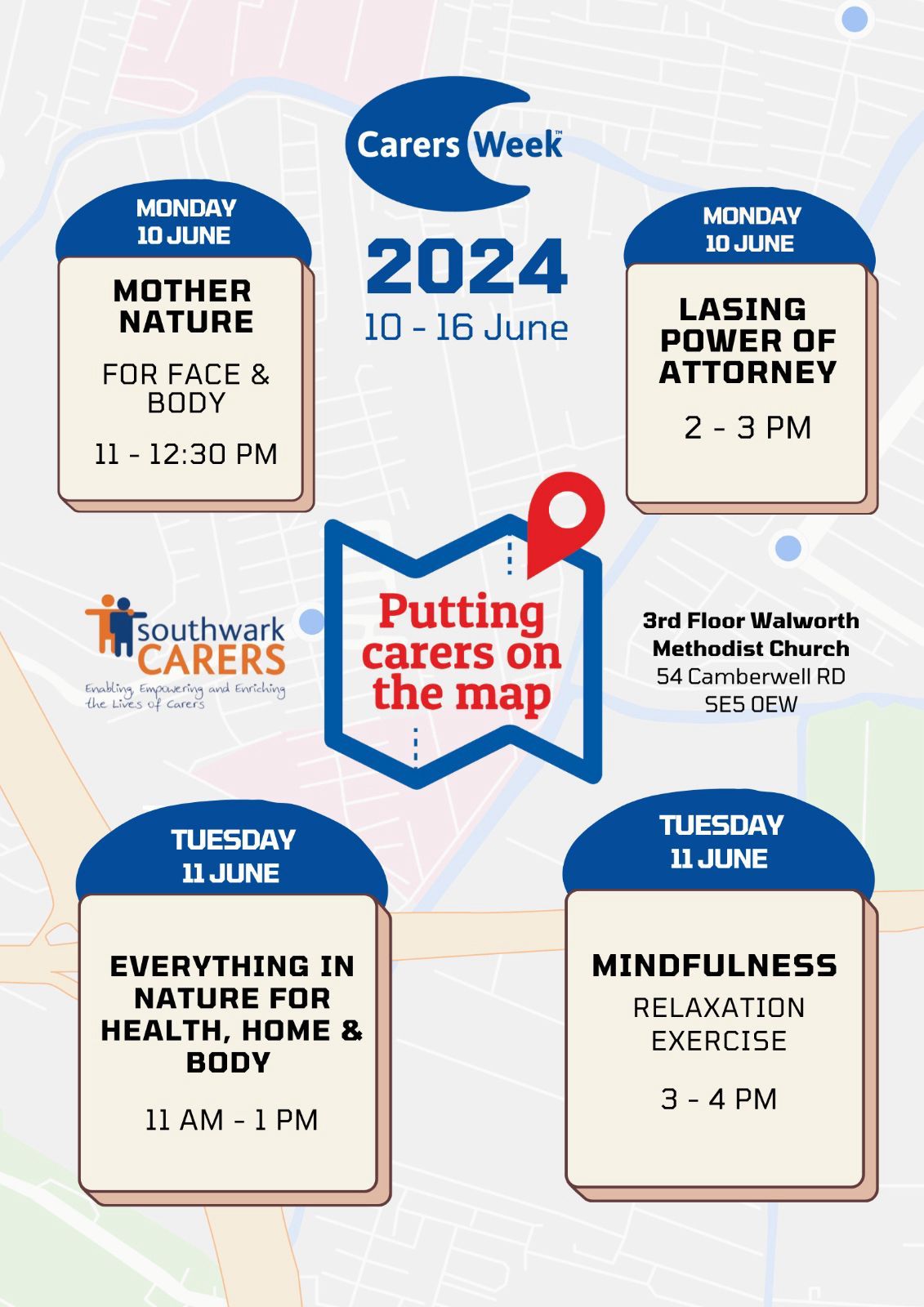
Carers Week Collaboration Discussion

The meeting began with introductions from Matthew McKenzie, who leads a merged online carers group, and other participants including Yvonne, a carers navigator at Southwark Carers, and Margaret, a carer representative with the Royal College of Psychiatrists. The group discussed Carers Week activities and their various roles in supporting carers across different organizations. Karen Hooper, connected with the Lambeth Living Well Collaborative, while Lee Roach, the carers lead for South London & Maudsley in Lambeth, shared his involvement with the Trustwide Family and Carers Committee.

Continue reading

Social workers & Managers Away Day event – Unpaid carers in Southwark

On February 25th, 2025, carers, professionals, and support organizations gathered at Tooley Street for a Carers event provided by Southwark Council. The event was developed by Sarah Bullman, Senior Policy and Strategy Lead for Adult Social Care over in Southwark. The event, hosted by Simon Rayner, provided an opportunity to connect, share updates, and explore ways to support carers in the community.

Key Highlights from the Event:

🔹 Carefree – Presented by Salil Meech Mazumdar, Carefree shared their work in providing much-needed short breaks and respite opportunities for unpaid carers, ensuring they have time to rest and recharge.

🔹 Southwark CarersSarah Bullman introduced Southwark Carers including Verinder CEO of Southwark Carers, an essential organization offering tailored advice, practical support, and advocacy for carers in the borough of Southwark.

🔹 Mobilise – A digital-first platform supporting carers, Mobilise was discussed in depth, highlighting how online peer support and coaching can help carers navigate their roles more effectively.

🔹 Imago – Known for their work in youth and adult carer services, Imago shared updates on their projects that focus on young carers, connecting them with resources and professional guidance.

🔹 Carers Hub/Centre – Southwark council focus on a new Carers Hub set for next year, where updates on focus groups and workshops on how the carers centre will be used for supporting unpaid carers.

The last section of the event was below

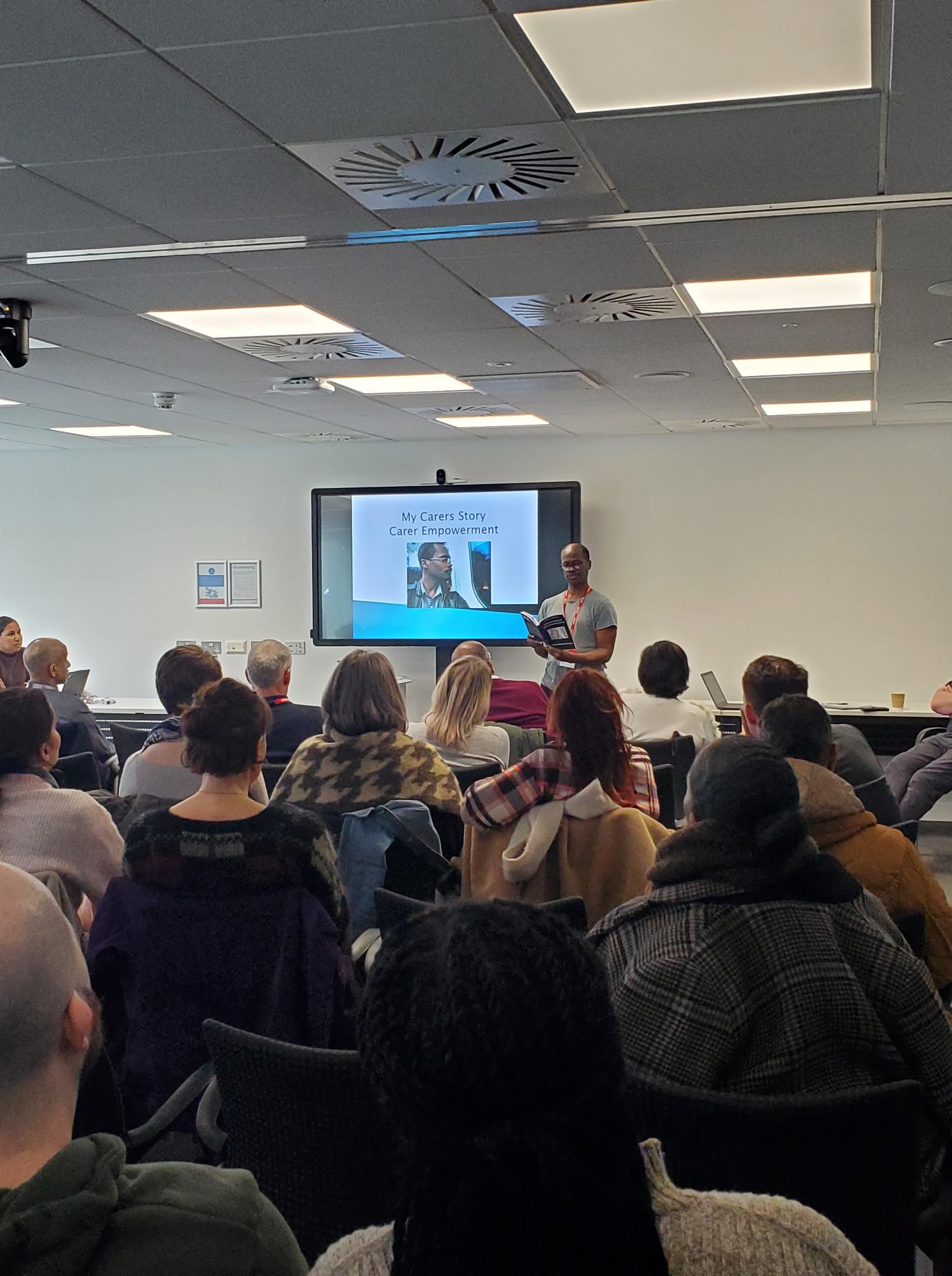
🔹 Voice of the Carer & Carer EmpowermentChloe Harvey and Sarah Bullman provided updates on Southwark’s Carers Strategy, reinforcing the importance of carer voices in shaping policy.

Plus Matthew McKenzie, a well-known carer advocate, spoke passionately about listening to carers, empowering them, and ensuring co-production in decision-making. He also read moving excerpts from his book, The Poetry of Mental Health Caring, which resonated deeply with attendees.

The event concluded with a networking lunch, allowing attendees to connect, share experiences, and strengthen their collective efforts in supporting carers.

This forum was a powerful reminder that carers should never feel alone—there is a strong and growing community dedicated to uplifting and advocating for them. 💙

Southwark MH Carers forum September 2019

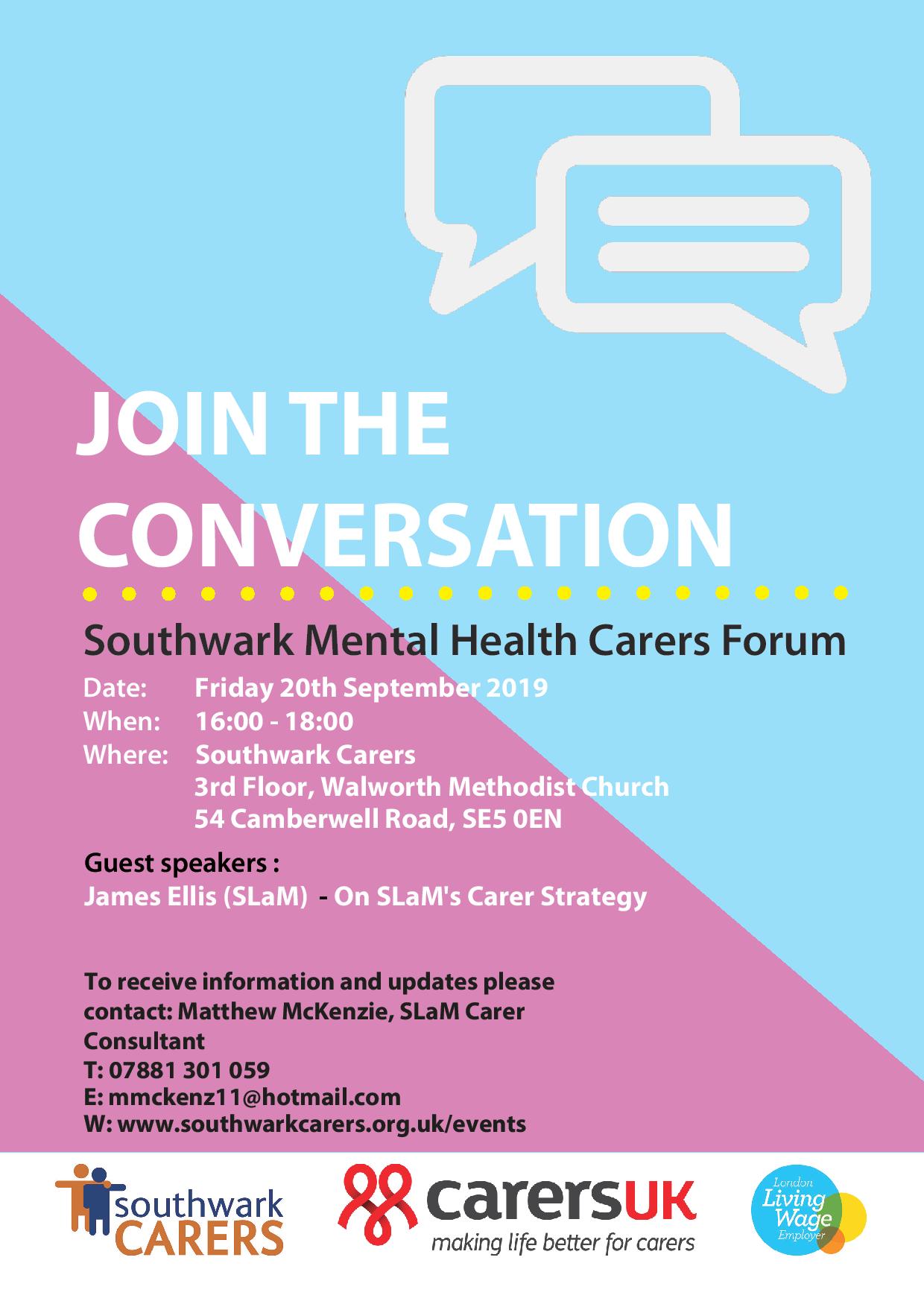
MH Forum 20-09-19-page-001Welcome to the September 2019 update of the Southwark Mental Health Carers forum. The forum is aimed at unpaid carers who carer or support those with mental health needs. For example as in a relative or friend suffering schizophrenia, bipolar, ADHD, serve depression, self harming and so on. We even have families attending supporting someone with learning disabilities.
The forum runs once every 3rd thursday month from Southwark Carers. Southwark Carers is a carers centre that Enables, empowers and enriches the lives of carers in the London borough of Southwark.

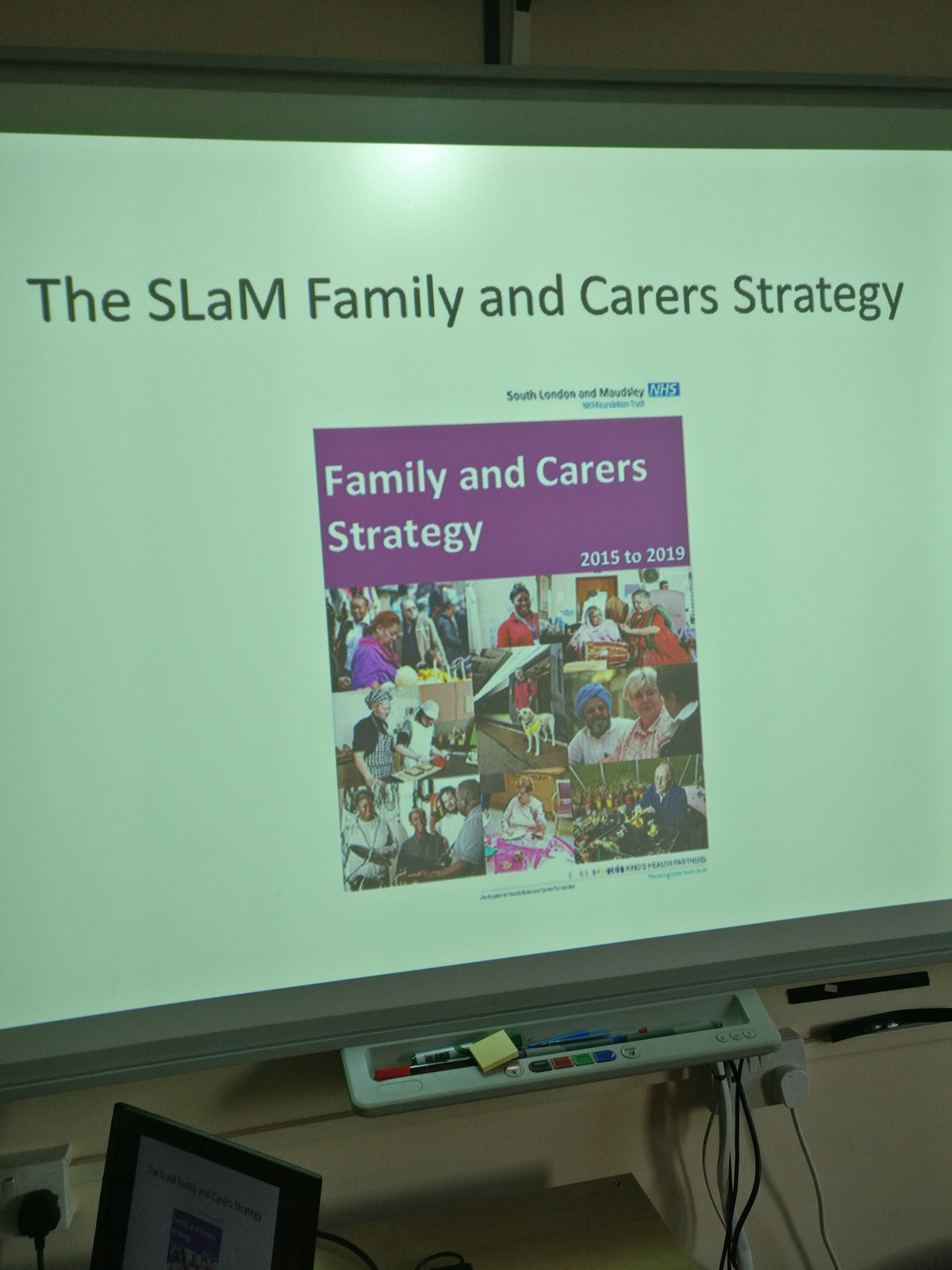
For the September forum there was a push to get carer members to understand Maudsley’s Carer Strategy. Just like over at the Lewisham MH Carers forum, we hope carers can understand what a carer strategy means, how it could help them as a carer and why NHS trusts work towards a carers strategy. Still, its no good having a strategy done in isolation. Mental Health trusts need to listen to those supporting patients in their services. Carers need to feel valued by being listened to, even if some issues cannot be resolved.

IMG_20190920_174952

Unfortunately the SLaM member of staff could not make it, but I managed to go through the strategy some weeks before and developed a presentation on it. Oddly enough, we could not fit in as much about the carers strategy and I am hoping we could cover the rest in October.

I did break down a few things regarding what South London & Maudsley regards as a carer, the issue of identifying carers and training SLaM staff to be carer aware. There are other queries from carers especially about the Triangle of Care policy and also the impact of the Care Act 2014 and if it has done any good for families and carers.

I also presented the new Physical Health project from KingsHealthPartners, which focuses on improving mental and physical well-being for people with mental illnesses. There was excitement that a focus group looks to be developed involvement patients, doctors, researchers and carers on the new a high intensity interval training (HIIT) program for inpatients with mental illnesses.

IMG_20190920_175430

Carers are understandably upset that their loved ones are being given medication that although controls the mental illness, can add physical weight to the patient. It can get so bad that it could contribute to the 20 year Mortality Gap in service users. It is about time there should be a controlled exercise program in conjuction with mental health treatment. King’s Health Partners is an Academic Health Sciences Centre where world-class research, education and clinical practice are brought together for the benefit of patients. They bring together a world-leading research led university and three successful NHS Foundation Trusts.

You can find out more about them on the link below

https://www.kingshealthpartners.org/

Talking about NHS trusts. It was good to at least have South London and Maudsley NHS Trust work to engaging with carers regarding its carers strategy, we also had Kings College NHS Trust getting views from carers over in Lambeth and sometimes Southwark, but there still needs to be an update from Guys & St Thomas on their Carer’s policies. We had an update on progress regarding engagement.

I updated the members on the new Carer support group, which I aim to set up in Southwark. The group needs to be carer-led and will receive funding from the mental health organisation Mind. I am awaiting peer support training, since it is a new avenue for me being a peer supporter, but I have unfortunately have carers chat with me regarding serious NHS incidents and they are not so trusting of NHS staff due to being so distruate if their ‘loved one’ has died or come to serious harm. The carer peer support group, will need to have protected space for carers where we can support and learn from each other.

The forum members also discussed several exciting events, one of them being the Celebrating the role of carers across the Capital festival held over at Bromley by Bow Centre. The festival was organised by LondonADASS and the festival was being hosted over in London Borough of Tower Hamlets, East London. More on that festival later in another blog post.

london-carers-festival-2019-final-print

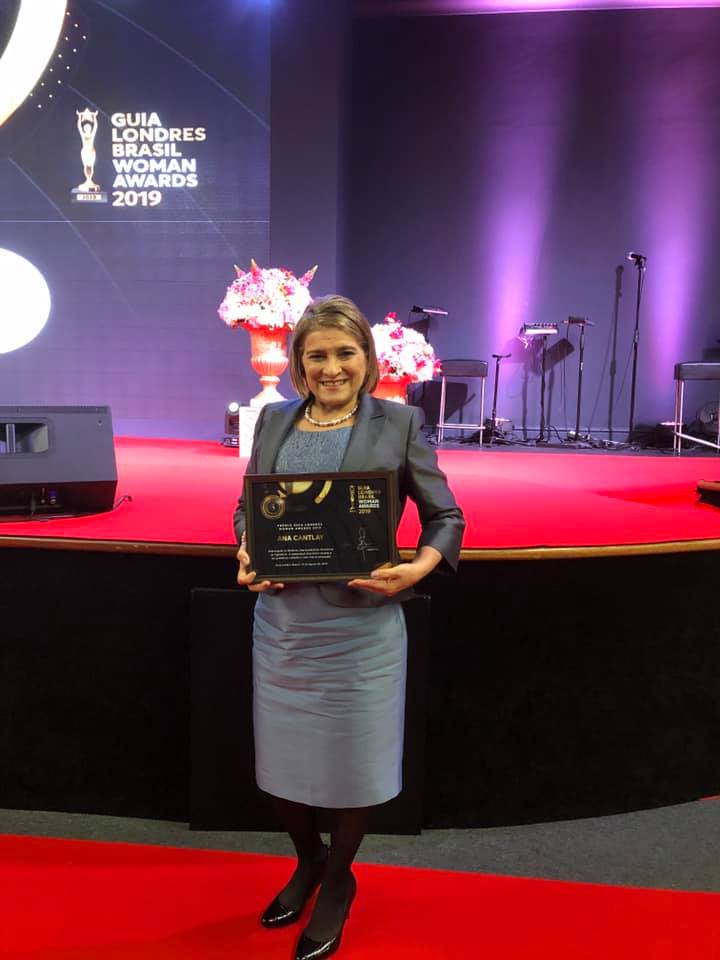
At the Southwark forum we celebrated the update of Carer member Ana who is developing her skills as a therapist. She has been nominated for awards by The London Awards Brazilian Guide 2019 which is intended to support and support projects and initiatives that empower entrepreneurs.

Ana

Ana has several projects that help those in the Latin community and has set up a project that helps hundreds of children over in Brazil. The members of the Southwark Carers forum are aware of the contribution the Latin community make and are aware of how communities feel pushed out by development in the area.

https://brasileirosnainglaterra.com/eventos/guia-londres-awards-woman-2019/

Ana invited members of the carers forum to the Brazilian embassey for a wellbeing festival and we look forward to being part of how the Latin community are inviting of others even if they are feeling welcomed.

I will update the Southwark Carer members on how the Carer festival went in October.

Southwark MH Carers Forum September 2018

untitled-2
Welcome to the September update of the Southwark mental health carers forum. Out of all the mental health carers forums, this forum was the last carers forum to be set up throughout South London. The forum is held over at Southwark carers.

Southwark Carers provides information, advice and support to carers across the borough of Southwark, they also aim to raise awareness of the rights and needs of carers. One of the aims of the Southwark mental health carers forum is to raise awareness of mental health carers. That being families and carers who care for someone close suffering mental health needs.

Continue reading