Author Archives: mmckenz11

Unknown's avatar

About mmckenz11

IT Officer for London School of Osteopathy and a Carer representative for Maudsley. As you can see, I have many interests shown off my blog. I hope to keep it updated with posts and more things to come soon.

Understanding ADHD: Tips for Supporting Those with Attention Deficit Hyperactivity Disorder

Welcome back to another blog post from carer activist Matthew McKenzie. Did you know it is ADHD Awareness Month?

To watch the video of the blog, please view below.

Understanding ADHD: An Overview

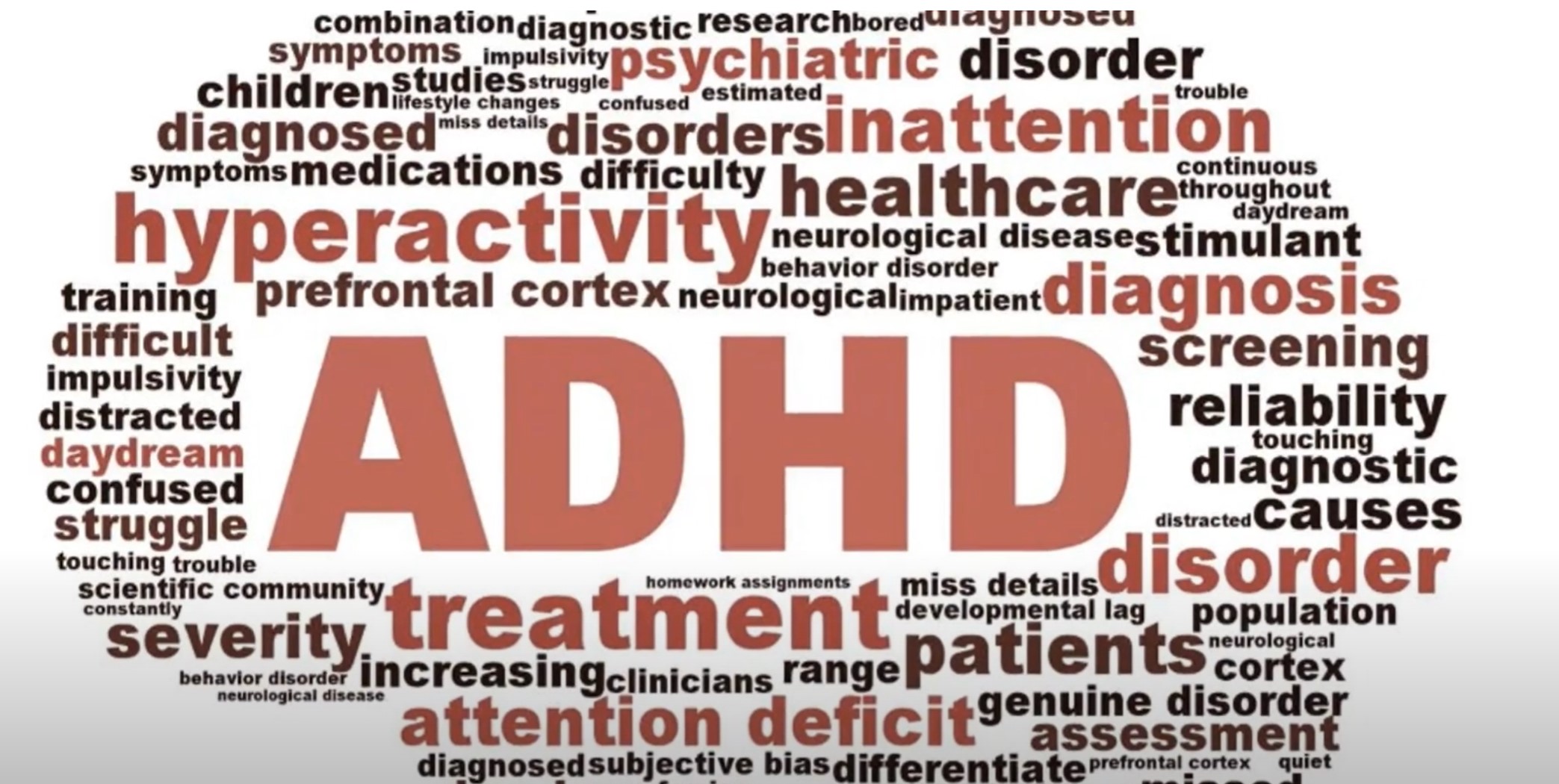
Attention Deficit Hyperactivity Disorder (ADHD) affects millions of individuals worldwide, impacting not only those diagnosed but their families, friends, and caregivers. ADHD is characterized by symptoms of inattention, hyperactivity, and impulsiveness, which can significantly impair daily functioning in various spheres of life, including school, work, and relationships. Every October, ADHD Awareness Month is observed to shed light on this condition, promote understanding, and advocate for better support systems. The theme for 2024 is “Awareness is Key,” emphasizing the importance of knowledge in fostering support and empathy.

The Importance of Education

Empowering Through Understanding

One of the most crucial steps in supporting someone with ADHD is to educate yourself about the condition. Understanding ADHD, its symptoms, and its challenges can foster empathy, patience, and a supportive attitude. Knowledge truly is power. The more you know about ADHD, the better equipped you are to provide the necessary support. This includes learning about common behaviors, the impact of ADHD in daily life, and effective management strategies.

Promoting a Learning Culture

Families, schools, and workplaces should prioritize awareness and education about ADHD. Regular training sessions, workshops, and informational resources can significantly improve how people understand and interact with those affected by ADHD. When communities are informed, they can collectively create more supportive environments.

Creating Structure

The Power of Routines

Establishing routines and daily schedules offers predictability and stability for individuals with ADHD. Structure can provide a sense of security, helping to manage time more effectively and reduce feelings of overwhelm. Visual aids such as calendars, planners, or to-do lists can be extremely helpful in keeping track of tasks and responsibilities. These tools can serve as constant reminders and help individuals prioritize their actions.

Breaks Are Essential

Regular short breaks are crucial during tasks. These breaks allow individuals with ADHD to recharge and maintain their focus. It’s not about working less, but about finding a balance that promotes productivity and reduces fatigue. Identifying the optimal schedule for breaks can make a significant difference in performance and overall well-being.

Effective Communication

Concise and Specific Instructions

When giving instructions to someone with ADHD, it’s important to be concise and specific. Using clear and simple language, avoiding unnecessary details, and breaking tasks into smaller, manageable steps can make a huge difference. This approach ensures that instructions are understood and followed more easily, leading to better outcomes.

Minimizing Distractions

Creating a calm and focused environment is paramount. Reducing noise, limiting visual distractions, and providing a quiet space can significantly improve the ability of individuals with ADHD to concentrate. Environmental modifications might include soundproofing a room, using noise-canceling headphones, or setting up a dedicated workspace that is free from interruptions.

The Power of Personal Stories
Insights from Lived Experiences

Personal stories are incredibly powerful in understanding ADHD. Hearing from individuals with ADHD and their caregivers can provide valuable insights and foster empathy. These stories highlight the real-world challenges and successes of living with ADHD, offering practical advice and hope.

Case Studies

  • Sarah’s Story: Sarah struggled in school until she found a teacher who understood ADHD and adapted her teaching methods. This timely intervention made all the difference, helping Sarah excel academically and boosting her self-esteem.
  • Jake’s Journey: As a carer, Jake found solace in a local carer support group. Connecting with others who understood his challenges provided him with coping strategies and a sense of community. This network of support was instrumental in helping him manage his caregiving responsibilities.

Advocating for ADHD Awareness
Community Engagement

This ADHD Awareness Month, let’s commit to raising awareness and advocating for those with ADHD. Small actions, such as sharing information, participating in community events, and supporting advocacy groups, can lead to significant changes. Community engagement helps build a support system that is informed, compassionate, and proactive.

Educational Campaigns and Resources

Supporting ongoing educational campaigns and providing resources can help spread awareness and understanding. Schools, workplaces, and community centers can play a pivotal role by organizing seminars, distributing literature, and facilitating support groups.

Conclusion

ADHD Awareness Month serves as a crucial period for promoting understanding and support for individuals with ADHD. By educating ourselves, creating structured and supportive environments, and listening to personal stories, we can become better allies. Let’s take this opportunity to make a positive impact. Awareness indeed is key—it opens doors to empathy, effective support, and advocacy.

If you found this content helpful, consider sharing it to spread awareness further. By working together, we can make a significant difference in the lives of those affected by ADHD.


Black History Month 2024

Welcome back to another blog post by carer activist Matthew McKenzie. Since I run an ethnic carer group, I wanted to promote Black History Month. Black History Month is celebrated in both America and UK, although the UK promotes Black History month in October.

There are 2 themes for Black History month one being “African Americans and the Arts”, the other being “Reclaiming Narratives”. I decided to go for the first theme, but did a mention on how the UK celebrates Black History Month.

Here are the highlights of my video.

  • 🎨 Black History Month 2024’s theme is “African-Americans and the Arts.”
  • 🌍 Celebrates the impact of African and Caribbean heritage in British history.
  • 🏛️ Encourages exploration of Britain’s colonial past and migration.
  • 🎶 Highlights the influence of black Americans on music, especially jazz.
  • 📚 Black History Month aims to educate about interconnected histories of Britain, Africa, and the Caribbean.
  • 🏢 Calls for action from governments and institutions to embrace diversity.
  • 🤝 Stresses that these stories are part of everyone’s history, not just black history.

If you are interested to watch my video please via the view below.

Thanks for dropping by my carer blog site. For those interested I am doing a Black History Month event with Carers UK. This will take place October 16th at 4 pm via zoom

The Link to sign up is below.

https://us02web.zoom.us/meeting/register/tZYtcOCtrD8tHNH8VQpLitUXVy2lGGRY6Omq#/registration

Top 10 ways to hold the NHS to account as a carer

When caring for someone, it is only a matter of time before you use the NHS. The National Health Service was set up to provide health no matter what your background. We all deserve the best healthcare provided for us.

Times have changed and feedback regarding the NHS is very important. This is especially important if you are an unpaid carer. You will have a different perspective when it comes to hold the NHS to account.

I have made a short video on ways to hold the NHS to account. It is not about always complaining, it is about helping to steer the NHS to include the carer’s voice.

We are all in this together although I do understand that there will be times you cannot feedback. The NHS is a massive complex set of systems, but we have a duty to be vocal because we deserve the best. Be that change and use your voice. As a carer it is your right.

Top 10 ways to care for someone with breast cancer

As a carer of lived experience, I have always found it important to seek information to help my caring role. My caring duties are not so heavy now, but there is expectation to share knowledge.

I helped and supported a dear old friend living with cancer and since it is Breast Cancer Awareness month. I want to support those caring for someone with Breast cancer.

October is Breast Cancer Awareness month and being part of the Macmillan Cancer Support network, I want to raise awareness.

Obviously my focus is on cancer caregivers and I have included the video below to provide “Top 10 tips for supporting someone with Breast Cancer”.

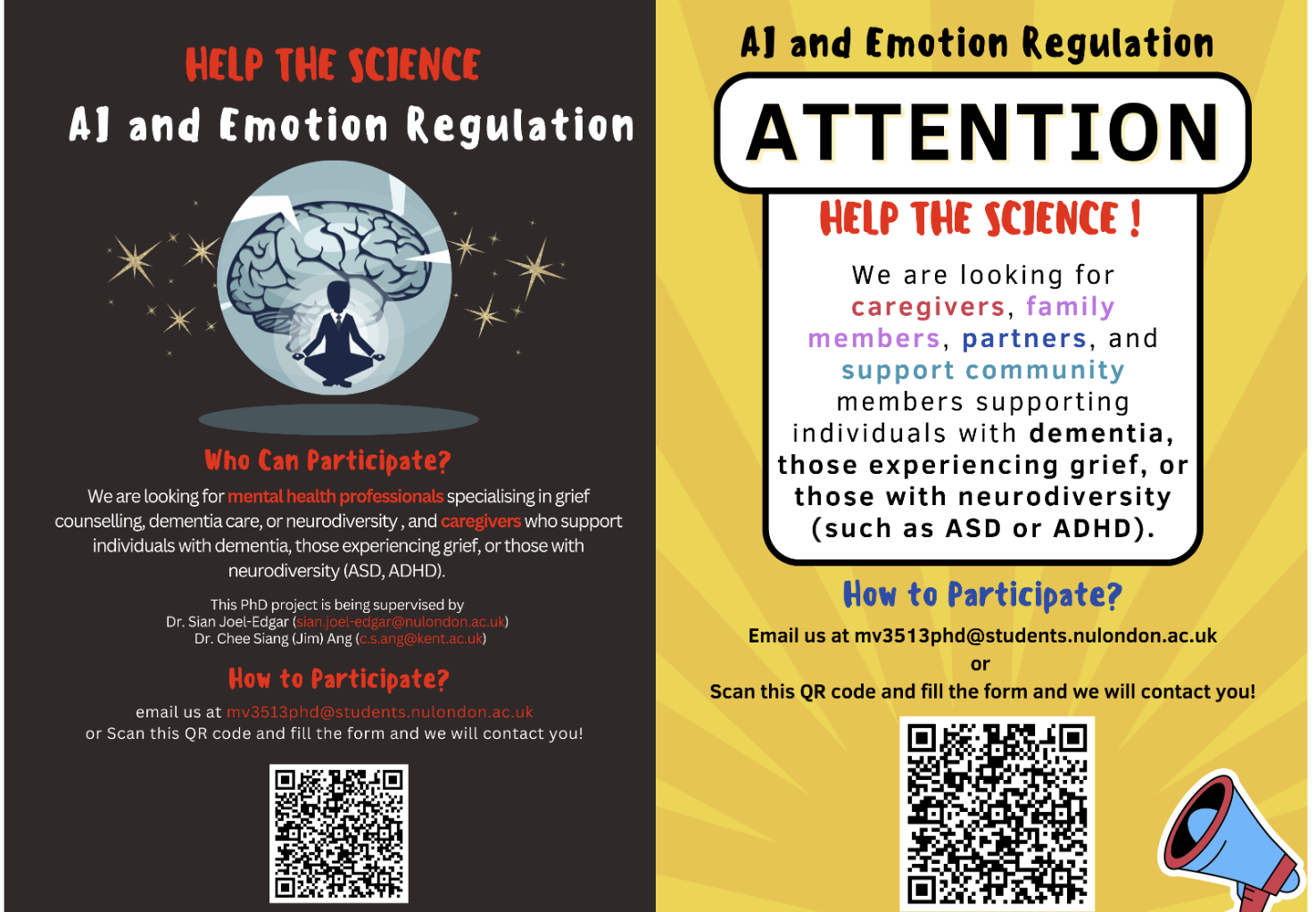
AI-facilitated emotion regulation Research

Welcome back caregivers. I have some exciting research involvement for you.

Melika who is a PhD student at Northeastern University London & University of Kent. Is currently conducting a study on AI-facilitated emotion regulation, which focuses on co-designing AI prompts with input from clinicians, developers, and support community (caregivers).

click on the posters below for more details about the study

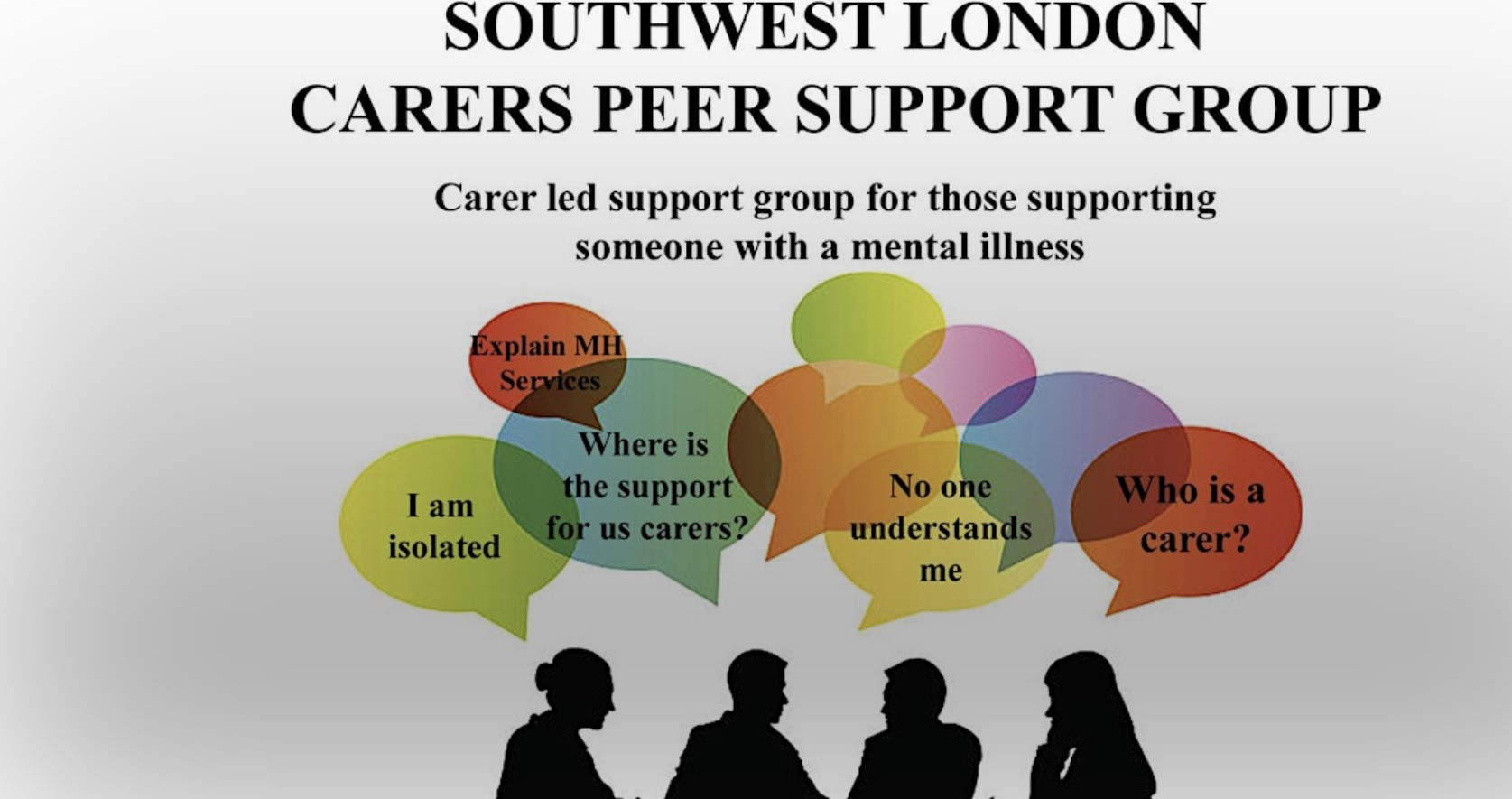
South West London Mental Health carers September 2024 update

Here is a brief update of the South West London mental health carers forum. The runs once a month.

Quick recap

The South West London Mental Health Carers Forum was established as a carer-led group for connection and learning, the group is co-facilitated by Ava. We also had two speakers for the month of September. The meeting covered various topics such as the role of administrators in mental health services, the importance of involving carers in patient care, the Patient Care Race Equality Framework, and the impact of the cost of living crisis on mental health. The meeting also discussed the work of organizations like Power2Connect and Simple, which focus on digital exclusion and providing access to technology for those who cannot afford it.

South West London Mental Health Carers Forum Meeting

Matthew McKenzie welcomed everyone to the South West London Mental Health Carers Forum, emphasizing its purpose as a carer-led group for connection and learning. He introduced the speakers and encouraged attendees to introduce themselves. A fellow carer member expressed her intention to invite her other carer group members to join the platform. One carer shared her experience on involvement for West London. As the group sometimes connects to the other carer groups matthew runs.

Matthew then introduced the first speaker, Laura McCoy, who was to discuss her role and experiences working in the mental health services.

Administrator’s Experiences and Responsibilities at Psychiatric Ward

Laura, an administrator at Springfield Hospital’s all-female psychiatric ward, shared her experiences and responsibilities. She emphasized the importance of involving carers in the patient’s care from the moment of admission and the need to recognize unpaid carers. Laura also discussed the ward’s unique specifications, such as accommodating Muslim patients and managing bed allocation. She highlighted the importance of understanding the different sections of the admission process for patients and their next of kin, and the need for consent to share information. Laura also noted the distinction between a patient’s next of kin and their nearest relative under the Mental Health Act. She expressed her passion for providing support to carers and acknowledged the need for further work in raising awareness about available support

Addressing Family Pack, Book Availability, and Notice Boards

Ava who runs the peer section of the SW London carers group, expressed interest in seeing a complete family or Carers pack, and Laura agreed to share a some of the contents. Ava raised concerns about the availability of books and the maintenance of notice boards on hospital wards. Laura confirmed they have a bookshelf with around 30 to 40 books and that she maintains the notice boards for patients, mentioning they also have an Independent Domestic Violence Advisor on the ward every Monday. Laura and Ava discussed the importance of addressing issues promptly, with Ava sharing a personal experience that Laura provided some answers. Laura explained her approach to handling such issues, emphasizing direct involvement and follow-up for timely resolution.

Expanding Services, Template Integration, and Lobbying

A carer proposed expanding ideas and information to West London, which matthew agreed could be beneficial. Laura discussed her ongoing talks with the communications team about integrating their family pack into their new template, which might cause a slight delay. Matthew McKenzie suggested Laura send the pack to him for his mailing list. The group also discussed comparing their service with West London trust and potentially testing for improvements. Matthew and another carer discussed their involvement in various groups and events, with the carer expressing her ability to attend these events remotely. The carer also mentioned her participation in various carer support groups, including one led by Gillian Kelly.

Support Groups and Carer-Led Initiatives Discussion

Matthew and another carer discussed the importance of support groups for carers, with the carer emphasizing the need for carers to have a voice and share their experiences. Matthew suggested the possibility of hosting carer-led groups, which the carer agreed was a good idea. Laura, who focuses on contacting carers regardless of their ethnicity, mentioned that she has had her family pack translated into different languages.

Matthew then introduced the topic of the Patient Care Race Equality Framework (PCREF) and encouraged Laura to attend the National Ethnic Carers Forum to learn more about it. However, the other speaker Dominc suggested that Laura could also liaise with Mdad, who is leading on the PCREF initiative at South West London & St Georges. The conversation ended with matthew expressing his focus on families and carers, and Laura’s willingness to share information about the carer-led group.

Improving Mental Health Services and Support

Dominic, a mental project manager for Once of Care Alliance, discussed his role in shaping mental health services based on community input and collaborations. He highlighted his work with the BME mental health forum, supporting the Black and Global Majority Ethnic community, and his efforts to improve support for ex-offenders through drug and alcohol services. Dominic also mentioned collaborations with St. George’s Hospital to enhance perinatal mental health support for the BME community. He stressed the importance of gathering and reporting patient care feedback to improve services. Additionally, Dominc emphasized the significance of addressing mental health and homelessness issues, sharing a personal story about a long-term friend’s relapse of mental health and subsequent homelessness over the past four years.

Addressing Cost of Living Crisis and Mental Health

Dominc discussed the impact of the cost of living crisis on the population, emphasizing that it affects everyone regardless of class or color. He shared personal experiences and statistics to highlight the severity of the issue, noting that a number participants felt sad or depressed due to financial uncertainty. Dominic also pointed out that mental health both contributes to and can be worsened by homelessness, citing statistics from Crisis and Homeless Link. He concluded by discussing the challenges faced in providing mental health support, his involvement in the Mental Health Transformation Group, and his work with the community voices steering group. Dominc also provided guidance on recruitment strategies for mental health services.

Digital Exclusion and Access to Technology Discussion

Dominic provided an overview of his work and introduced two organizations, Power2Connect and Simple, which focus on digital exclusion and providing access to technology for those who cannot afford it. Ava sought clarification on certain terms and mentioned she was awaiting a certificate from an entrance view training. Dominic agreed to send a paragraph about an upcoming event over in Wandsworth.

The event, part of the drug and alcohol service and mental health services open day, aimed to provide support for carers with lived experience of mental health. Dominic promised to send the information about the event to members.

This then lead on to a peer group discussion with fellow carer members. This part was led by Ava.

This concludes the update for the month of September 2024

September Monthly Carer & Health News Updates 2024

Here is the latest carer and mental health news for the month of September 2024 by carer activist and author Matthew McKenzie.

SIGN UP TO NEWS SITE HERE

September 2024 Carer and Mental Health news <- Read more news items here.

For the September edition on unpaid caring and mental health we have the following news items.

Carer Videos

  1. End of Life: Difficult questions answered – Carers Talk Episode 10 – Solihull Carers
  2. Addressing Caregiver Stress and Isolation Through Connection – Caregiver Action Network
  3. Stroke Association session – Carers UK
  4. Cross Party Strategy for Unpaid Carers – Wendy Chamberlain
  5. Anna Dixon MP for Shipley speaks in Parliament in the Unpaid Carers debate – 03/09/24

Matthew McKenzie’s Carer YouTube Series

  1. What is Carer Peer Support
  2. How to Make a Complaint as a Carer
  3. What are Coping Skills for Caregivers
  4. Connecting as Carers – You’re Not Alone
  5. How to Register as a Carer
  6. Top 10 Tips for Caring for Someone with mental illness

Latest Carer news items

  1. New initiative to support Sunderland’s carers
  2. Council carers’ consultation event – Croydon
  3. Voices of 380 carers shape new strategy to enhance services in Bath
  4. Celebrate 50 years of Carers Trust Heart of England
  5. ‘Short Breaks’ set to continue to give young people and carers much-needed respite
  6. The road to retirement for unpaid carers
  7. Survey for family carers about accessing research about people with learning disabilities
  8. 1.2 Million Unpaid Carers Across The UK Are Living In Poverty, With 1 In 10 Of All Carers In Deep Poverty
  9. Buckinghamshire Council pilots pioneering digital support for unpaid carers
  10. Warwickshire County Council Supports Young Carers on Youth Mental Health Day
  11. Calling all carers! Let’s Be Heard wants to hear from you

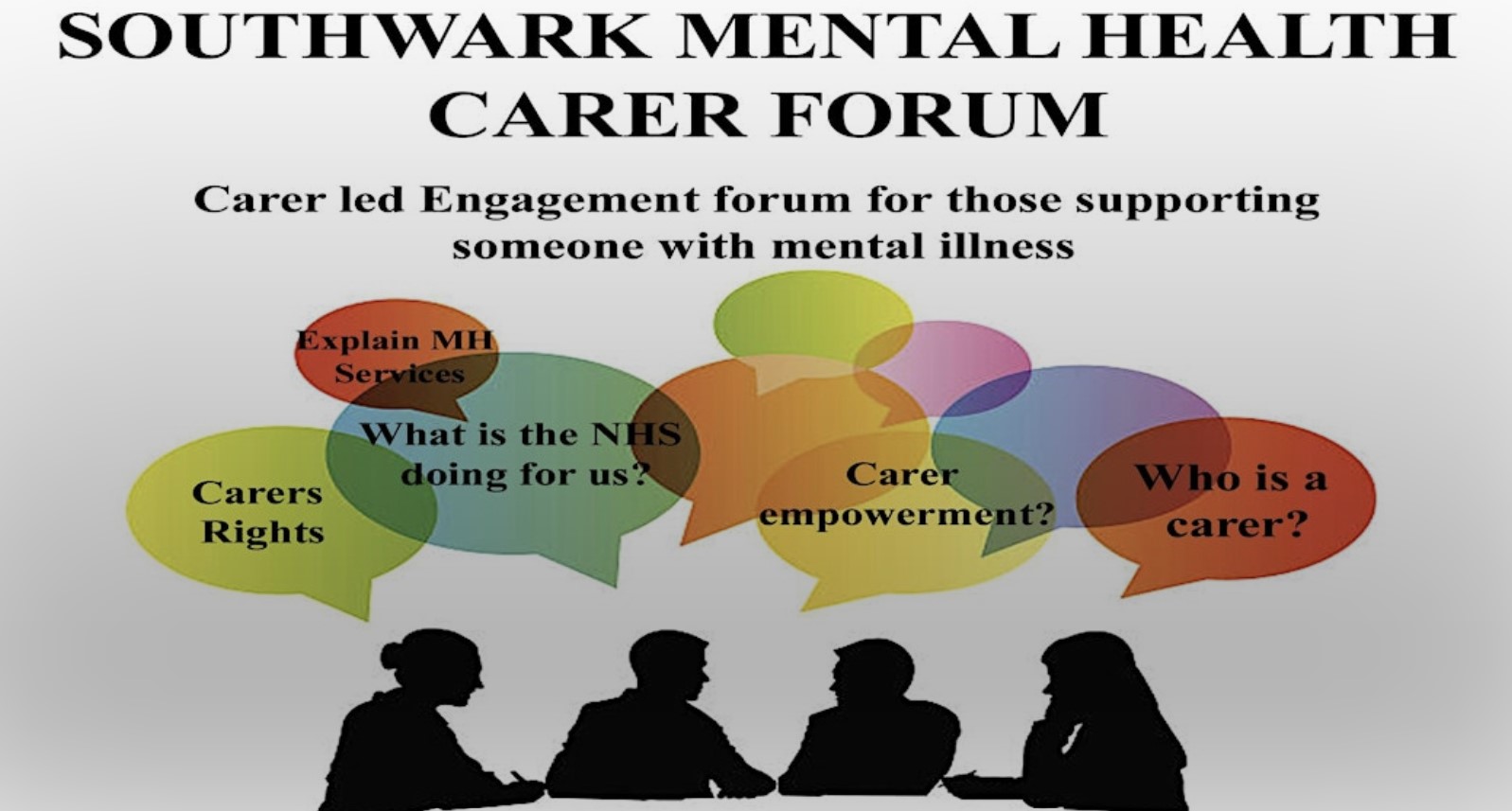
Southwark & Lambeth carer forum update September 2024

Welcome to a brief update of the carer forum for Southwark & Lambeth. The forum is facilitated by Matthew McKenzie, carer activist and author. The online carer led group runs once a month.

Quick recap

matthew, a carer activist, discussed the purpose of his online groups aimed at those caring for someone with a mental illness. There was also updates from a project to improve the Trust’s understanding of service users’ and carers’ experiences. The project, co-produced with service users and carers, collects stories to report back to the Trust’s Executive board and directorates, with a focus on improving services for people, particularly in mental health. The last presentation from Matthew McKenzie also discussed the challenges of navigating the mental health system, the importance of self-education and support networks, and the need for better engagement with mental health providers.

Carer Activist Groups and Service Improvement

Matthew, a carer activist, discussed his online groups for carers of individuals with mental illness in Lambeth and Southwark, aiming to tackle carer stigma and improve services. Debora, a Lead Commissioner Officer, joined the meeting as matthew spoke about his work on a book featuring carers’ stories.

We then had Morgan, present a project to improve the Trust’s understanding of service users’ and carers’ experiences. The project, co-produced with service users and carers, collects stories to report back to the Trust’s Executive board and directorates. matthew raised concerns about potential stigma and repercussions for carers sharing their stories, which Morgan addressed by emphasizing anonymity and confidentiality.

Initiative Discussion and Story Collection Project

After Morgan’s presentation, Matthew initiated a discussion about an initiative, seeking feedback and questions from the attendees. Morgan clarified that the project, originally set to end in November, had received additional funding from the Maudsley charity and was now extended till the end of September next year. The project aimed to improve services for people, particularly in mental health, by collecting stories from service users and carers. Morgan explained that the stories could be collected in various environments, including private rooms at libraries or community centers, to ensure comfort for the storytellers. The project also offered a £15 voucher for those sharing their stories. Morgan encouraged those interested in collecting stories to contact them via email. matthew then proposed to distribute the project details to his mailing list and Whatsapp groups. The conversation ended with matthew setting the scene for the next part of the discussion, which would involve sharing personal experiences and allowing carers to seek advice from the group.

More details on sharing your story below.

https://slam.nhs.uk/stories

Navigating Mental Health System as a Carer

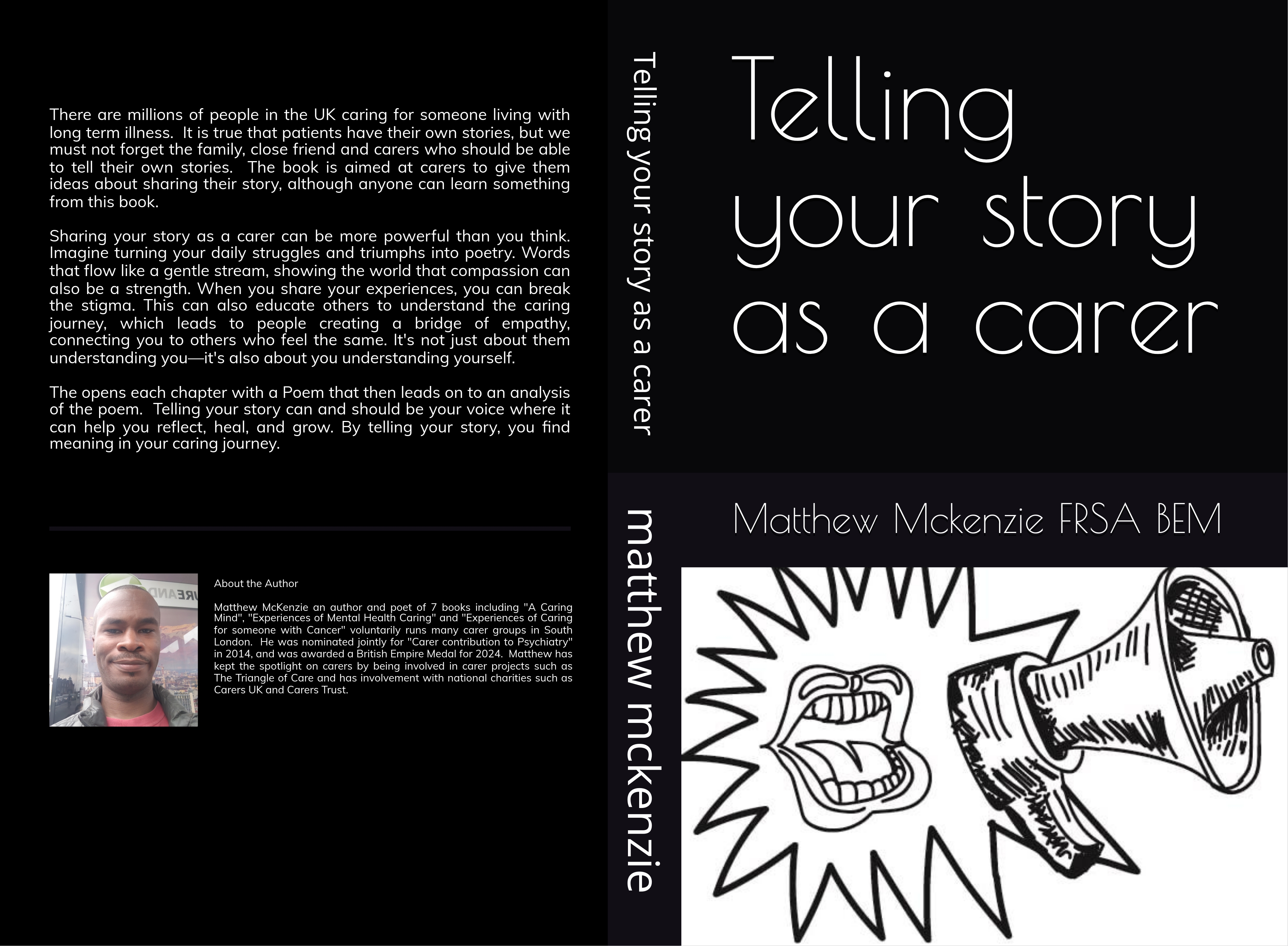
matthew moved on to discuss the complexities of navigating the mental health system as a carer, emphasizing the importance of understanding one’s rights and the need for education in accessing mental health services. He shared his personal experiences as a carer for his mother with schizophrenia and his brothers with autism, and mentioned his role as an author, having written several books including working on his new book “Telling Your Story as a Carer“.

He also touched on his interest in poetry as a means of sharing difficult experiences. A carer member of the group defined navigating the mental health system as trying to get the best services in place for a loved one, knowing what services are available and implementing them. Another carer shared her personal experience of struggling to get her loved one recognized as unwell, which led to a difficult situation. The discussion aimed to educate the group members about the challenges and strategies involved in navigating the mental health system.

Navigating Mental Health Challenges and Support

A carer shared her experiences with her loved one’s mental health and the challenges she faced in accessing appropriate care, emphasizing the importance of a good General Practitioner (GP) and social worker. matthew agreed, highlighting the need for better support and guidance for carers. One carer discussed the challenges faced by their son in accessing mental health services, expressing frustration at the lack of support from their GP and the single access point.

Matthew Mckenzie then moved on to discuess the challenges faced by families and carers in navigating the mental health system, suggesting that the system should focus more on the families and carers. matthew emphasized the importance of understanding specific mental health conditions and the need for better education and support for those navigating the mental health system.

Effective Caregiving Strategies and Support Network Building

Matthew McKenzie emphasized the importance that carers work on self-education on medical conditions and treatment options, understanding the healthcare system, and building a support network. This needs support from professionals, but the more carers learn, the better.

He stressed the need for effective communication during appointments, the significance of care plan meetings, and the potential need to change GPs if communication is not effective. matthew also highlighted the financial aspects of caregiving, the importance of planning for emergencies, and the need for self-care. He encouraged caregivers to seek support from others and stay informed about upcoming healthcare policy changes. matthew plans to attend a session at Parliament to raise awareness of the group’s challenges and influence policy.

Navigating Mental Health System Challenges

Matthew discussed the challenges of navigating the mental health system, emphasizing the importance of understanding the roles and time constraints of various professionals. He suggested the use of local counselors as a potential resource and highlighted the role of organizations such as the Care Quality Commission and Integrated Care Boards in ensuring good value for money and meeting patient and carer needs.

Matthew also stressed the need for support for carers and the importance of lobbying and engaging with organizations like Patient Opinion and HealthWatch. He urged attendees to share their experiences to bring about change and not to isolate themselves. A carer shared her positive experience with a mental health provider and advised others to research and choose the right GP practice and doctor. matthew agreed, highlighting the value of support groups and mental health advocates. He expressed concerns about the lack of support from local mental care providers, but also stressed the need for better engagement with them.

Carer Awareness and Advocacy Discussion

Matthew McKenzie then discussed his experiences as a carer and his efforts to raise awareness about carers’ issues. He mentioned his involvement in various groups and his plans to share his insights on his YouTube channel.

Matthew also emphasized the importance of carers being identified and registered, and he encouraged the group to lobby for their rights. He mentioned an upcoming event with the MP and encouraged the group to attend. matthew also shared resources and promised to send a PDF summary of the meeting to the attendees. He ended the conversation by expressing his gratitude and wishing everyone well.

Building a caring community

As a person of lived experience in caring for those close to me. I have always tried to advocate that a caring attitude leads to caring communities. We all want a place where we can thrive. We all want somewhere that we are connected and supported. This takes work, it takes energy and yes, it takes a lot of experience.

Its not just about caring for someone, we want a place that cares for us, but we must all chip in. We must all do our bit, but the goal is that we will all benefit.

Caring for one another is something that is a wonderful thing, it is not easy and I know many walk away from the role because the challenge is too much. This is understanding, we should have that choice.

However, the choice gets more expensive if we all decide to walk away from connecting with each other. Such a choice leads to isolation, misunderstandings, fragmentation and certainly poor mental health. We should try to care for our community. It is something that will benefit us in the long run. Its a wonderful thing to learn from each other, but we must chose wisely. We must look at the long term picture and not focus on short easy gains that never last.

Building a caring community is the way forward. For far too long we have become isolated and no one benefits. We need to connect and look for what brings us together. There is no quick solutions, it takes hard work, but together we will all rise.

Community is important, especially a community that cares.

Lets connect.

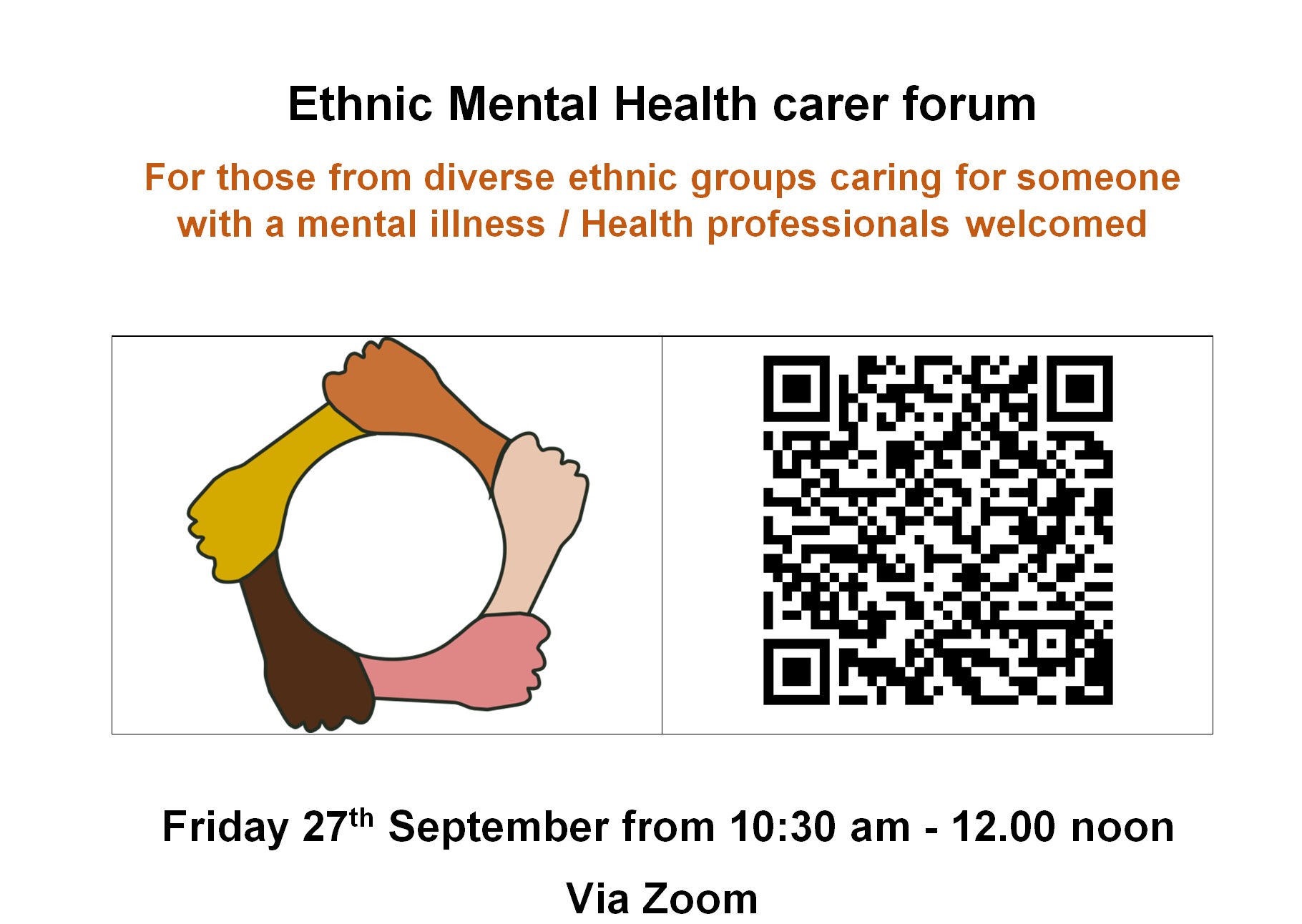
Ethnic mental health Carer Forum Update September 2024

Welcome to an update of my ethnic carer group. The group focuses discussions, updates and presentations regarding those who care for someone living with mental illness. The group has become national a while back due to supporting “Carers Trust” triangle of care and the new NHS England Patient Carer Race Equality Framework.

Here is a brief update of my national ethnic carer forum.

  • Quick recap

Linda From West London Health NHS Trust discussed PCREF updates, focusing on supporting patient care and amplifying the voice of service users, communities, and carers. We also was joined by DR Eula Miller a senior lecturer at Manchester Metropolitan University. She shared her two-year project exploring the experiences of minority families accessing and engaging with mental health services, and her work in engaging with black churches in the Greater Manchester area to address mental health issues and myths.

Lastly we were joined by Deepa presented a report on the work done from Healthwatch Greenwich, highlighting the need for culturally sensitive approaches to support carers from ethnic minority backgrounds and developing culturally relevant resources.

  • West London Trust Collaboration and Feedback

Linda discussed her work with the West London Trust, focusing on supporting patient care and amplifying the voice of service users, communities, and carers. She mentioned that they have been working together since February or March and have conducted several listening events. Linda also discussed the progress of the patient and carer race equality framework, emphasizing the need for better communication and feedback loops. She encouraged participants to share their thoughts or questions and proposed a separate meeting for those who wanted to be updated in detail. Linda agreed to work on improving the communication of updates and developments. Other members expressed enthusiasm for a recent presentation, describing it as “very, very, very riveting,” and requested a simplified version of Linda’s PowerPoint presentation.

  • South London NHS Trust Advisory Group Discussion

A carer member of the group expressed interest in the work of the South London and Maudsley NHS Trust’s Equality, Diversity, and Inclusion Advisory Group and requested Linda’s contact details for further conversation. Linda agreed to share her contact details and promised to have a separate conversation with the carer. As Chair of the forum, I then introduced an attendee from Oxford Health NHS trust who had missed the beginning of Linda’s presentation. I mentioned that I would send off any slides or handouts from the meeting for members to digest. The meeting then proceeded to the next speaker, Dr. Eula Miller, who discussed her interest in mental health care and her role as a nurse educator. Eula also mentioned her goal of influencing future practitioners to better engage with carers in the community.

  • Exploring Mental Health Service Experiences and Themes

Dr Eula discussed her two-year project exploring the experiences of families accessing and engaging with mental health services. The project involved individual conversations and focus groups, and was particularly relevant during the Covid-19 pandemic. The themes that emerged from the project were categorized into four areas: “If only someone had listened,” “Not knowing,” “Drowning in misunderstanding,” and “What can we do differently.” Dr Eula highlighted the consequences of not being heard, such as loved ones being admitted in crisis situations, and the impact on carers’ health and trust in services. She also noted the participants’ proactive response, forming a self-help group to share knowledge and support each other. Eula’s presentation was well-received, with several attendees expressing interest in her research and seeking further information.

You can read more about the project below

Black and ethnic minority carers perceptions on mental health services and support in the United Kingdom: a systematic review

  • Addressing Mental Health in Black Churches

Dr Eula shared her work in engaging with black churches in the Greater Manchester area to address mental health issues and myths. She has been visiting churches, providing information, and linking them to mental health workers. Eula also mentioned her work in educating future nurses on how to assess mental health issues. She offered to share her full report with attendees. I thanked Eula for her work and encouraged others to ask questions. A member from Integrated Care Board expressed interest in reading the full report and potentially replicating Eula’s work in Greenwich.

I also asked Shenade a Wandsworth Carers centre representative about her experiences with minority carers and mental health services. Shenade shared her experiences with the Bridging the Mind Project, highlighting the need for culturally appropriate information and support. A carer attendee of the group praised Eula’s presentation and emphasized the importance of collaboration and information sharing in providing effective care.

  • Building Cultural Sensitivities and Community Engagement

A carer attendee expressed her appreciation for Eula’s presentation and acknowledged its relevance to her upcoming work. Another attendee shared her experiences with strengthening cultural sensitivities and the importance of reaching out to diverse communities. She suggested using peer ambassadors and faith leaders to build trust and facilitate communication. Eula agreed, emphasizing the need for collaboration and understanding among different groups. Another professional shared a personal experience of a patient being misjudged due to her religious practices, highlighting the need for education and understanding among staff. The group agreed on the importance of educating staff and engaging with diverse communities to promote fairness and understanding.

  • Addressing Mental Health Challenges in Minority Carers

Matthew McKenzie then asked and Deepa from HealthWatch Greenwich to discuss the challenges faced by minority carers struggling with mental health issues. Deepa shared her team’s research findings, highlighting the need for culturally sensitive approaches to support carers from ethnic minority backgrounds. She noted the evolving role of carers, the challenges they face, and the importance of clear information about their rights and entitlements. Deepa concluded by presenting recommendations for improving support services for black and ethnic minority carers in Greenwich, including a comprehensive review of existing services, enhancing community engagement, and developing culturally relevant resources.

You can read more about the report below.

This concludes my update of the National ethnic mental health carer forum. See you next month. Please video my carer awareness video regarding minority carers.