By Matthew McKenzie – Chair of the group
If you weren’t able to join our June South London Mental Health Carers Group meeting, here’s a summary of the main discussions and updates. As always, the meeting brought together unpaid carers from across Lambeth, Lewisham, Southwark and Croydon to share experiences, raise concerns and keep each other informed about developments affecting mental health carers.
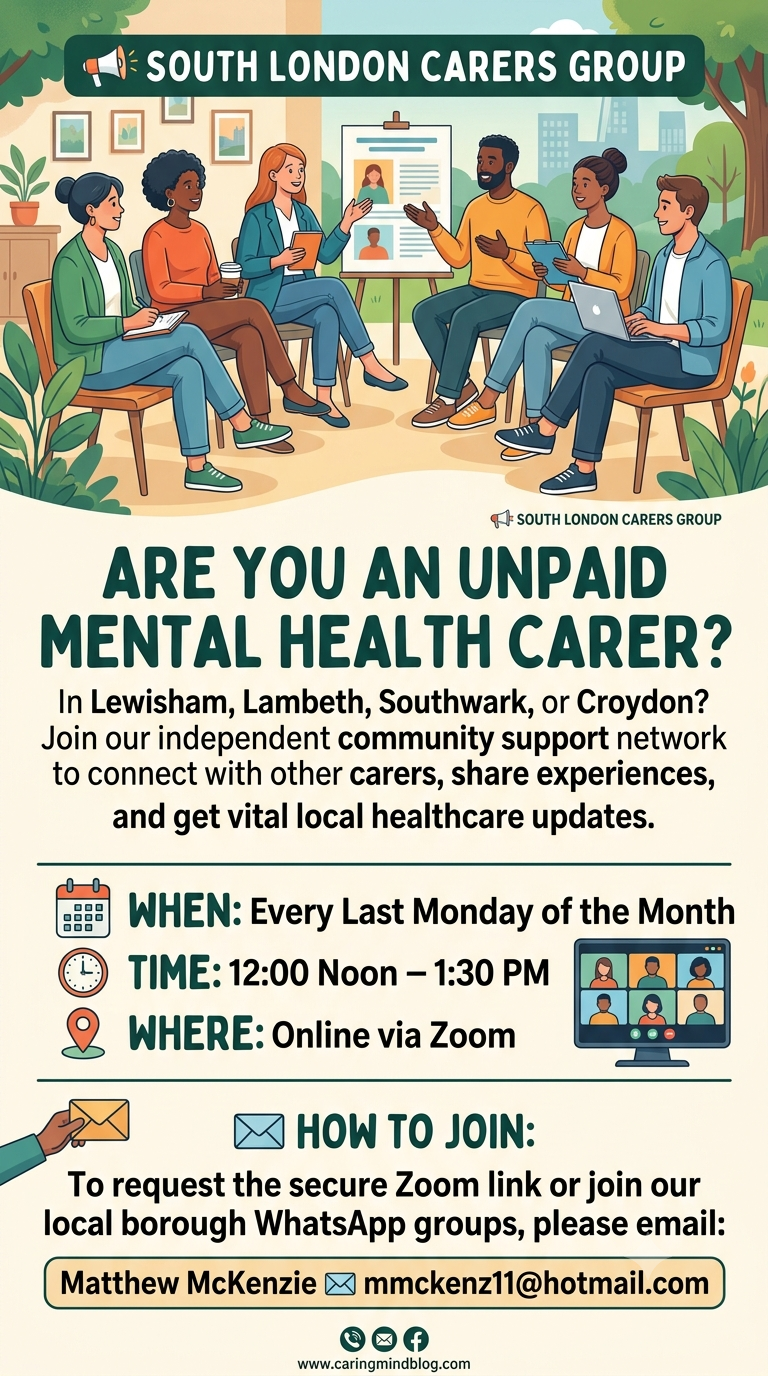
Why these meetings matter
One of the strongest themes throughout the meeting was the importance of carers staying connected. Many carers cannot attend every committee or involvement meeting due to their caring responsibilities, work or other commitments. By sharing updates, we can help ensure everyone remains informed about changes that may affect them and the people they support.
Several carers commented that services sometimes feel like they are “reinventing the wheel”, with the same issues being raised repeatedly. While progress can be slow, continuing to speak up and share experiences remains essential.
Updates from the Maudsley Family and Carers Committee
Carers who attended the latest South London and Maudsley (SLAM) Family and Carers Committee shared several important developments.
Review of the Involvement Register
SLAM is reviewing its Involvement Register over the coming months. Working groups will look at areas including:
- Outcomes
- How involvement is delivered
- Governance and policy
Carers interested in influencing how services engage with families are encouraged to consider joining the register. Participation is flexible, allowing carers to contribute when they are able.
Triangle of Care
The Triangle of Care continues to be a significant focus, particularly around how carers are identified, involved and supported during someone’s mental health care.
Discussions also covered how Trusts monitor their progress and how carers’ details are recorded to ensure families receive appropriate information and support.
Information for carers
Work is continuing to improve the information provided to carers. Rather than relying on a single handbook that can quickly become outdated, there are plans to develop more flexible information resources that can be updated more easily and provided when carers actually need them.
Mental Health Act reforms
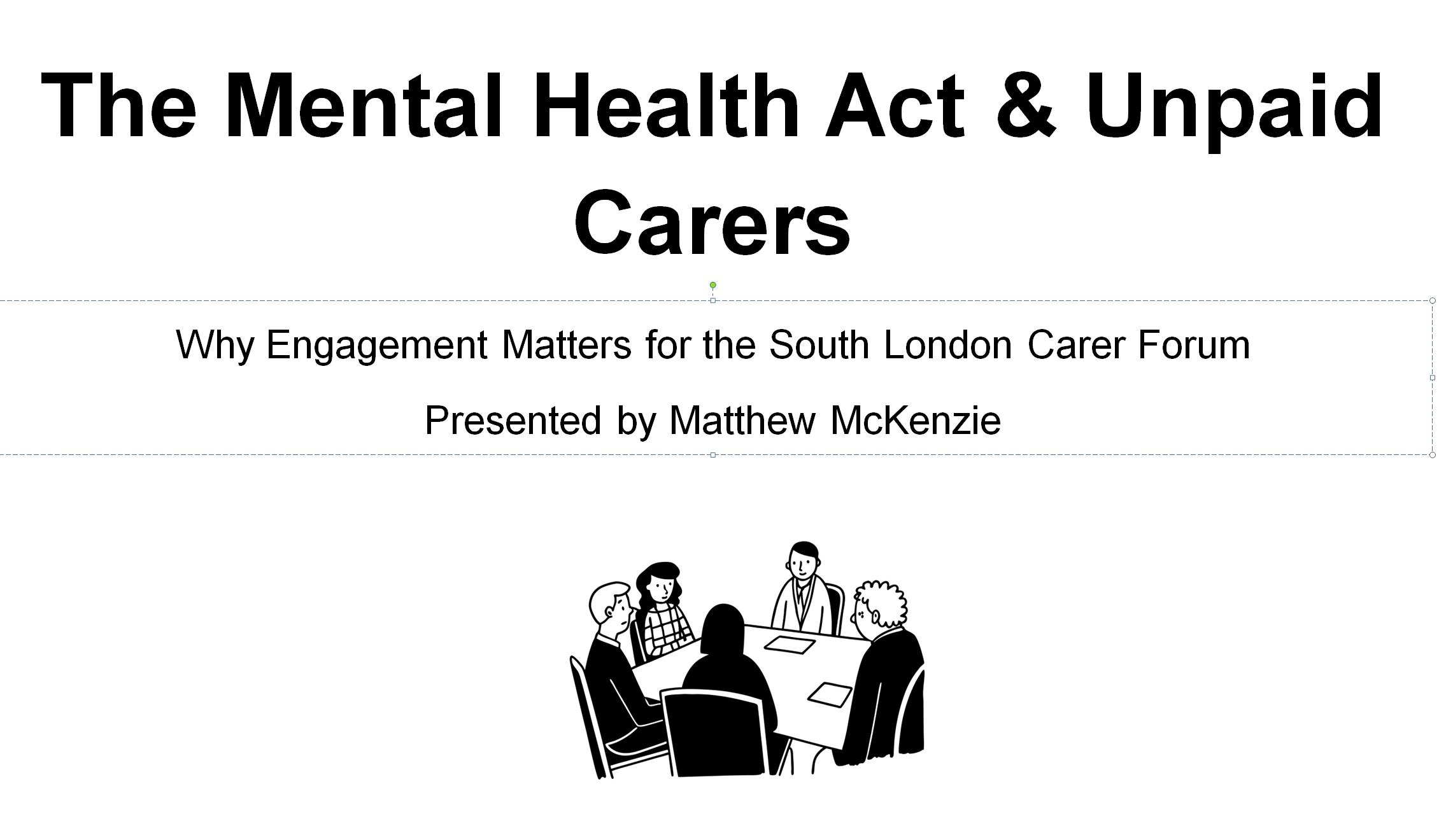
A significant part of the meeting focused on the recent changes to the Mental Health Act and what they could mean for unpaid carers.
Key topics included:
- Greater emphasis on patient choice and involvement.
- The introduction of the Nominated Person, replacing the traditional “Nearest Relative” in many situations.
- The importance of Advance Choice Documents, allowing people to record their wishes while they are well.
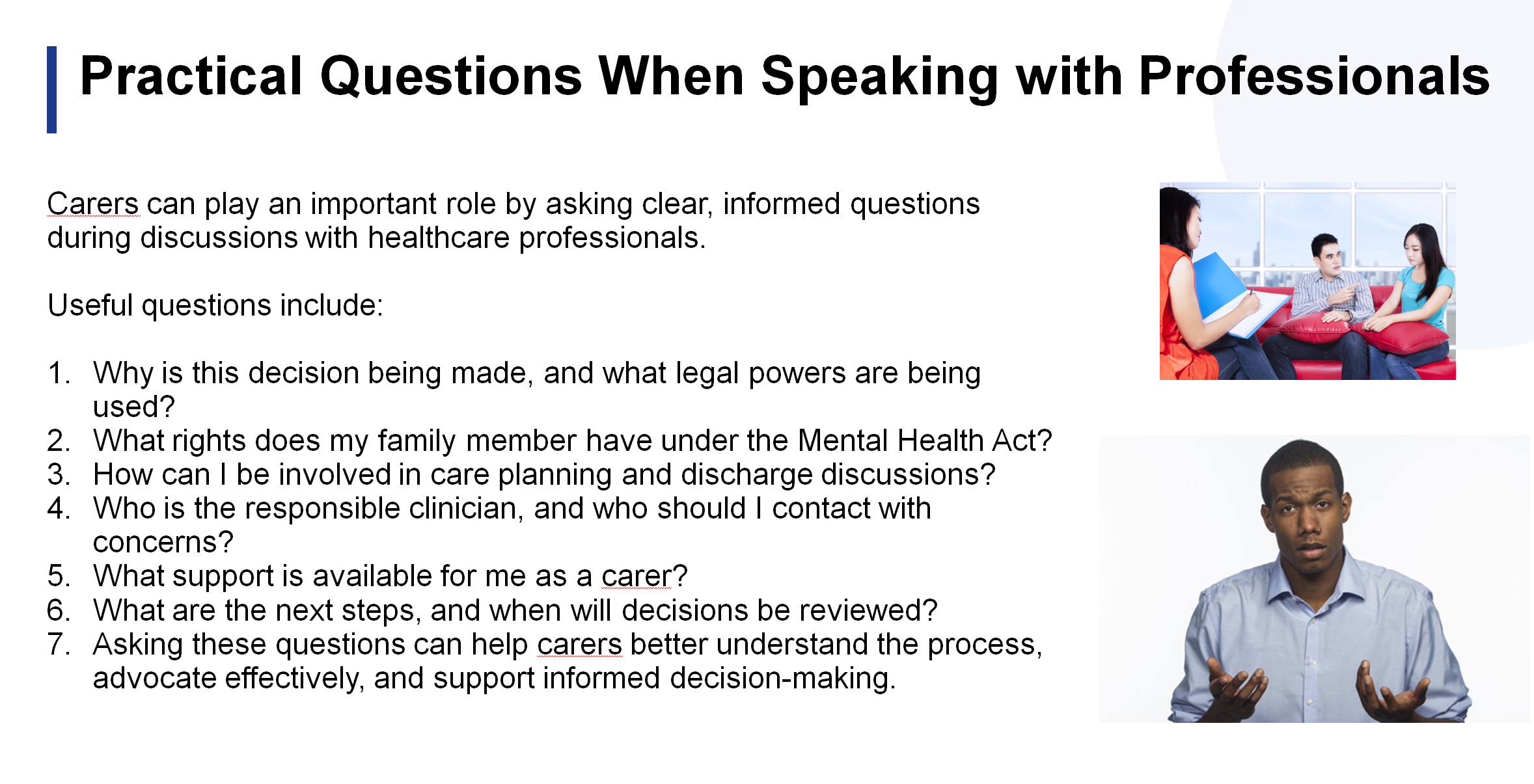
- The need for carers to understand their legal rights and ask questions during admissions, treatment planning and discharge.
Carers discussed both the opportunities and concerns arising from these changes, particularly where someone may lose insight during periods of illness. There was broad agreement that carers need clear information about how the reforms will be implemented locally and how families will continue to be involved.
Advocacy and complaints
Members shared experiences of trying to access advocacy services and navigate complaints processes.
Concerns included:
- Limited access to independent mental health advocacy in some boroughs.
- Unclear complaints pathways.
- The need for carers to be listened to, even when confidential information cannot be shared with them.
- The importance of raising concerns through appropriate safeguarding and governance routes where necessary.
Several carers also shared positive experiences where persistence had led to improvements in care.
Local updates from across South London
One of the strengths of the South London Mental Health Carers Group is the opportunity for carers from different boroughs to share what is happening locally. While each area faces its own challenges, many of the issues raised were common across South London.
Lambeth
Carers discussed the continuing work of the Lambeth Living Well Collaborative, which brings together carers, service users, voluntary organisations and professionals to improve local mental health services. Members were reminded that carers are welcome to attend collaborative meetings and contribute to discussions about service improvements.
The conversation also recognised the wider pressures affecting carers beyond mental health services. Rising living costs, reductions in council tax support for many working-age residents receiving benefits, and the increasing financial pressures on families continue to affect carers’ wellbeing. These wider social issues inevitably have an impact on people’s ability to sustain their caring role.
Lewisham
Carers provided an update on Lewisham’s Community Mental Health Transformation programme. While work continues to redesign community services, concerns remain about what happens when someone is discharged from specialist mental health services back to primary care.
Several carers highlighted unanswered questions around:
- How GPs will be supported to manage people with ongoing severe mental health needs.
- What support carers can expect once specialist services are no longer involved.
- Whether communication between secondary mental health services and GP practices is sufficiently robust.
These are important questions that carers hope local services will continue to address as transformation plans progress.
Croydon and Lewisham carer information
Members also heard that new information resources for carers are being developed in Croydon and Lewisham. Rather than relying on lengthy booklets, services are creating a series of practical information sheets covering different aspects of mental health care. This approach should allow information to be updated more regularly and provided when carers need it most.
Carers welcomed this change, noting that people often need specific information at different stages of their caring journey rather than receiving a large handbook all at once.
The important role of GP practices

An interesting discussion focused on the role of GP practices in supporting unpaid carers.
Members recognised that experiences vary considerably between surgeries. Some GP practices have developed strong support for carers, while others still have some way to go.
One positive example shared was Wells Park Practice, where carers have become actively involved in developing support, including helping to establish a regular carers’ coffee morning. This demonstrates what can be achieved when GP practices actively engage with carers and recognise the valuable role they play.
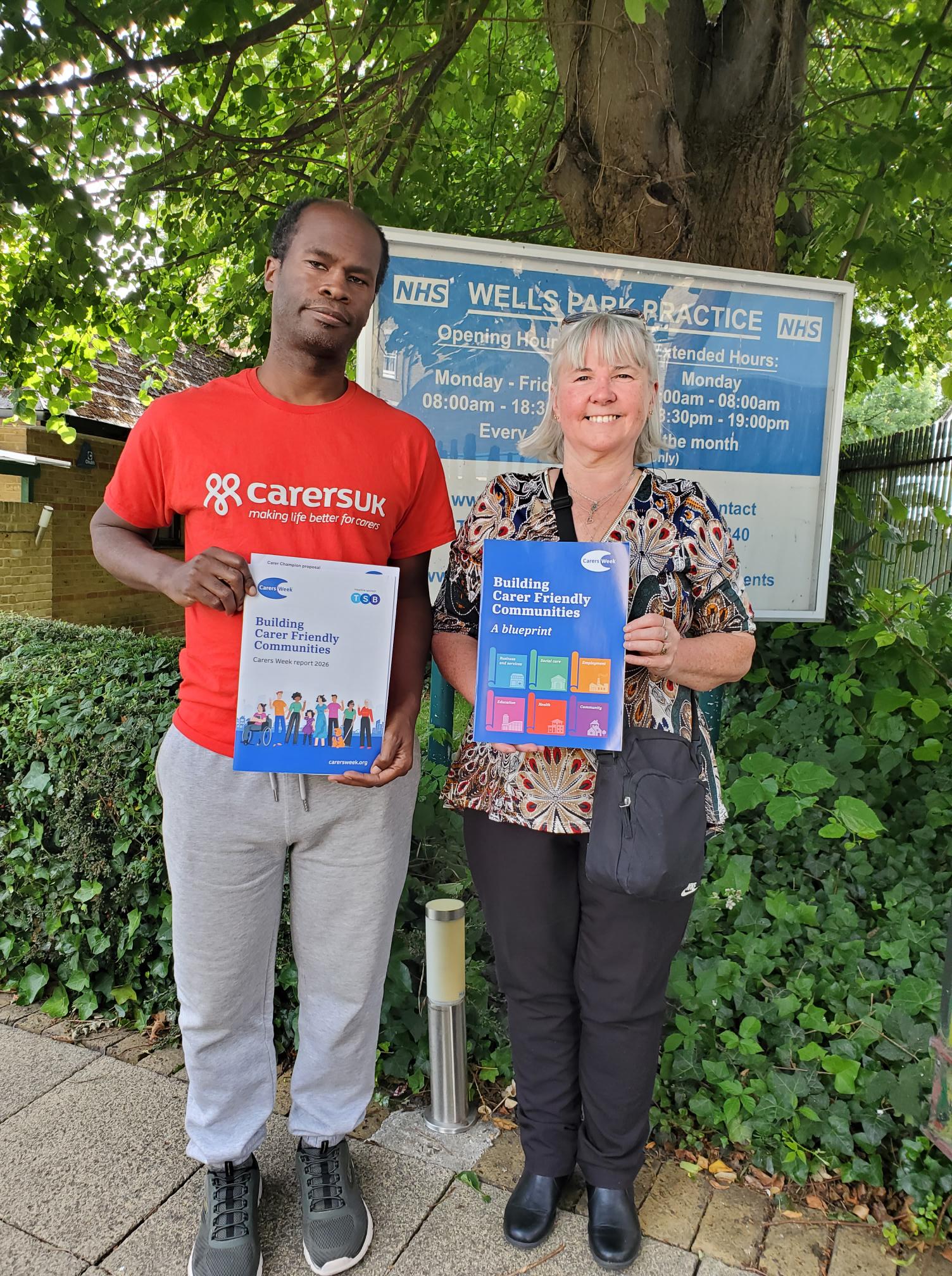
The meeting reinforced several practical messages for carers:
- Make sure your GP practice knows that you are an unpaid carer and ask to be recorded on their carers register.
- Ask what support your surgery offers to carers, including health checks, referrals or local support groups.
- If your current practice offers limited support for carers, it may be worth exploring what neighbouring GP practices provide, particularly if they have developed a stronger carers programme.
As community mental health services increasingly work alongside primary care, ensuring that GP practices recognise and support unpaid carers is becoming more important than ever.
Learning from each other
Perhaps the most valuable part of the local updates was hearing how carers are finding solutions in different boroughs. Good practice in one area can often inspire improvements elsewhere.
Whether discussing carers’ information, community transformation, GP engagement or involvement opportunities, the message was clear: carers’ experiences are a vital source of learning, and sharing those experiences helps improve services across South London as a whole.
Looking ahead
One of the biggest messages from the meeting was that carers have valuable lived experience that services need to hear. Whether through local carers’ centres, involvement registers, Trust committees or community groups, every contribution helps shape future services.
If you are interested in becoming more involved but can only contribute occasionally, don’t let that put you off. Many opportunities allow carers to participate as much or as little as their circumstances allow.
Thank you to everyone who attended and contributed so openly. Your experiences continue to help improve understanding and influence services across South London.
We look forward to welcoming both new and returning carers to our next meeting.

