by Matthew McKenzie FRSA BEM – Facilitator, National Cancer Caregiver Forum
Welcome to my October update from the National Cancer Caregiver Forum, which took place online on 28 October 2026.

For those unable to attend, this month’s session explored support for unpaid cancer carers, the role of hospice services, and why recognising a carer must lead to practical help. I welcomed colleagues from St Christopher’s Hospice, who explained their work with carers, families and communities.
I also shared an update on my engagement with Cancer Alliances and presented “Who Cares for the Cancer Carer?”, reflecting on the often unseen responsibilities of supporting someone living with cancer.
Building connections with Cancer Alliances
I opened the meeting by explaining why I am continuing to build relationships between the forum and Cancer Alliances.
Carers need opportunities to hear about support in their own areas, ask questions and influence services. A national forum can help make those connections, particularly when someone hears about good practice elsewhere and asks what is available locally.
On 27 October, I met with RM Partners, the West London Cancer Alliance, following questions about support for carers in West London.

We discussed identifying unpaid cancer carers, promoting the forum and creating opportunities for carers to contribute their experiences. RM Partners also described developing work around prehabilitation and rehabilitation, including physical activity, nutrition, information and psychological support.
An important question for me was how carers and families could contribute to this work. Their everyday knowledge can help services understand what happens between appointments and what makes support realistic to use.
I also updated the forum on my approach to North Central London Cancer Alliance, asking about support for cancer caregivers, opportunities for involvement and connections with our group. At the time of the October meeting, that conversation was still being developed.

The purpose of these links is to help carers find support and ensure their experiences influence how services develop.
St Christopher’s Hospice: support earlier in the journey
Our guests challenged a common assumption: that hospice care is only relevant during the final days of someone’s life.
They explained that St Christopher’s supports adults with life-limiting conditions, alongside their families and unpaid carers. Their presentation described support at home and within the hospice, working alongside other professionals involved in someone’s care.
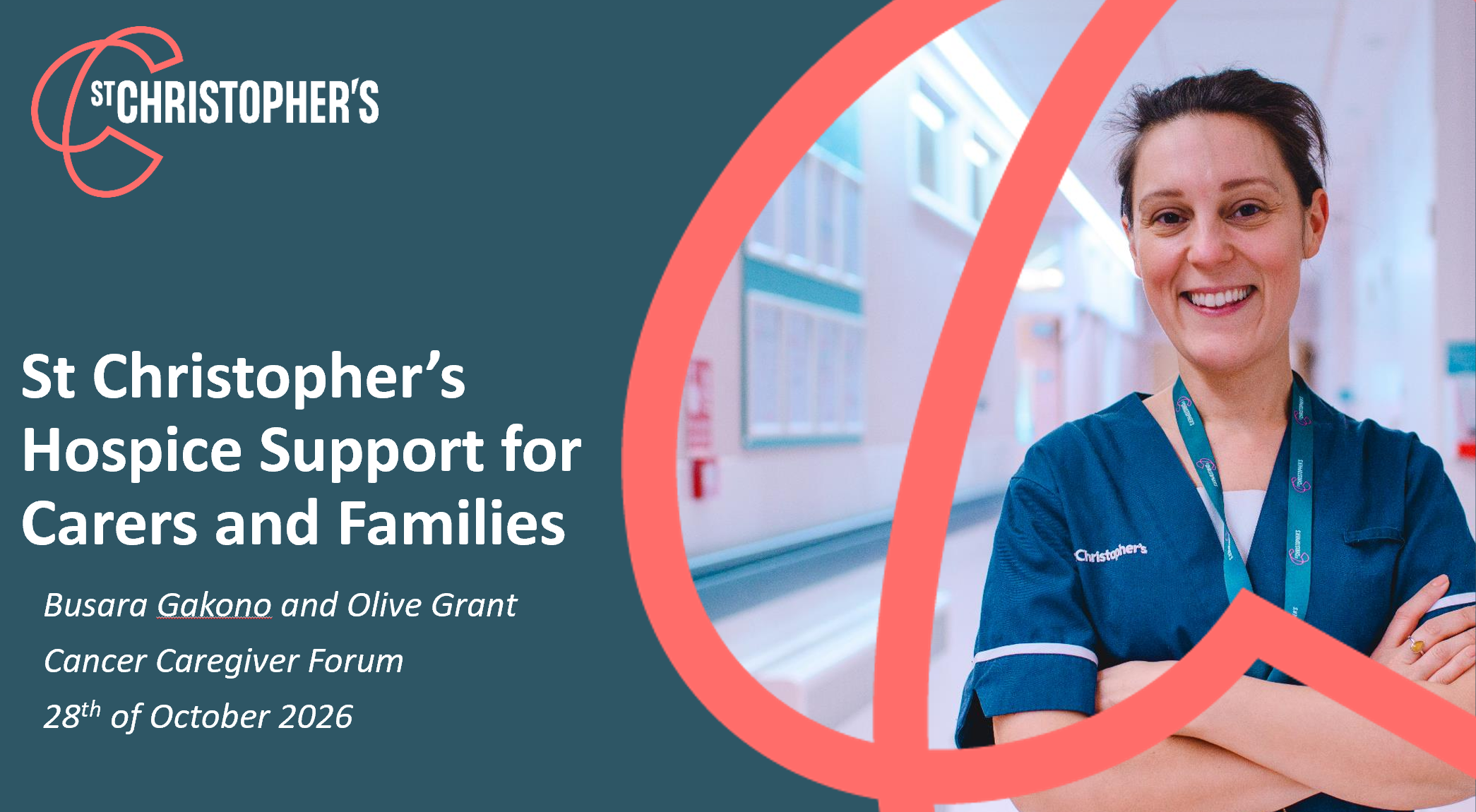
A central message was that care involves more than managing physical symptoms. Emotional wellbeing, spiritual needs, relationships and personal wishes also matter.
For carers, understanding this earlier can make a difference. If people associate a hospice only with someone’s final days, they may not realise that there could be support worth exploring before that point.
The team described their work across Bromley, Croydon, Lambeth, Lewisham and Southwark, while explaining that access depends on the particular service and circumstances.
Community support and tackling inequalities
St Christopher’s community work includes addressing inequalities in access to palliative care and helping people understand what hospice support involves.
Our guests spoke about meeting communities, listening to concerns and responding to different understandings of illness, dying and bereavement.
This matters because information alone does not necessarily make a service accessible. People may have questions about whether a hospice understands their culture, beliefs or family circumstances. Others may simply not know whether the support is intended for them.
The team also described involving lived experience through consultation workshops, focus groups and an advisory panel. These provide opportunities to hear about barriers and use that learning to improve services.
This connected closely with the purpose of our forum: creating space for carers’ experiences to inform the support offered to them.
Support for unpaid carers
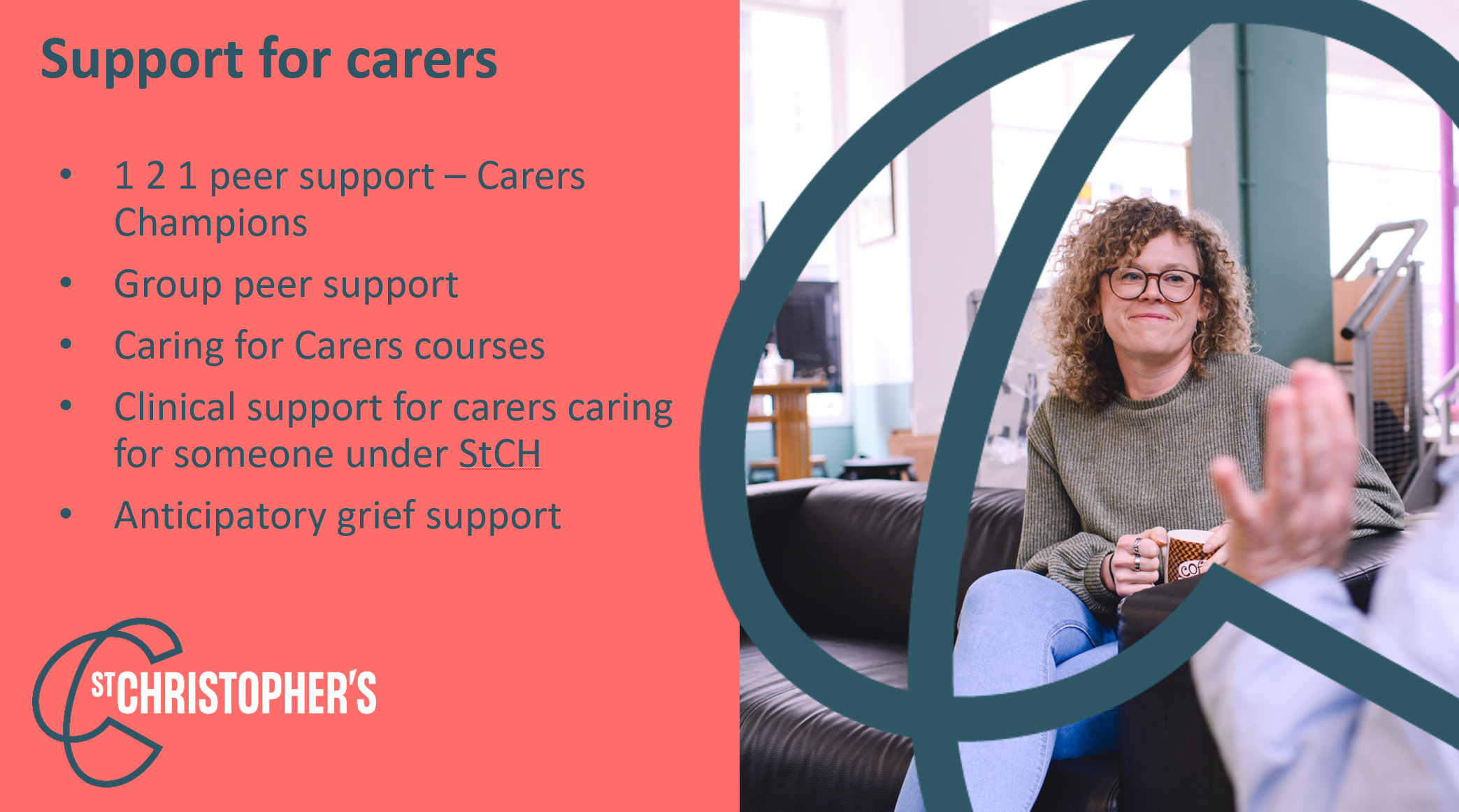
The presentation outlined several approaches to supporting carers, including peer groups, individual support and learning opportunities.
Carers Champion programme
The Carers Champion programme matches a carer with a volunteer who has lived experience of caring.
Our guests described a series of around six telephone conversations, offering space to talk, feel heard and reflect on the carer’s own wellbeing.
The examples shared illustrated the value of speaking with someone who understands caring from experience. A carer may find it difficult to express everything to family or friends, particularly when they are worried about upsetting others.
Having a separate space can help someone acknowledge feelings they have been carrying quietly.
Caring for Carers course
The team also described a free Caring for Carers course, delivered through three Zoom sessions.
Topics discussed included changing relationships, practical support and signposting, and loss or anticipatory grief.
Online delivery can make participation easier for some carers who struggle to leave home, although caring responsibilities can still make it difficult to find uninterrupted time.
At the meeting, the team said the next course was expected in February and offered to share further information for circulation.
Emotional support and anticipatory grief
We heard about support for anticipatory grief: the feelings someone may experience while preparing for the possible loss of a person they care about.
Carers may want to discuss those feelings, but they should also have the choice about when and whether to do so.
The presentation described bereavement buddy support and clinical services such as counselling, psychotherapy and art therapy, with access depending on the service and the person’s connection with St Christopher’s.
Can carers access support in their own right?
One question I raised was whether a cancer carer could receive support if the person they care for had not been referred to St Christopher’s.
Our guests explained that some community support, including carer groups and the Caring for Carers course, could be available more widely.
They also explained that the Carers Champion programme was not exclusively for carers of St Christopher’s patients, although capacity and waiting times needed to be considered. At the time of the meeting, they described a waiting list of approximately a month.
Clinical support for carers had different eligibility requirements and was linked to the person they supported being under St Christopher’s care.
This distinction is useful. Carers need clear information about which services they can approach directly, which require a referral and what they can expect next.
These details reflect the October presentation. Anyone interested should check current availability and eligibility with St Christopher’s.
Listening when carers say something has changed
I also asked how carers are involved in care planning and what happens when they tell staff that something has changed.
Carers often notice changes through their everyday involvement. They may recognise that someone is struggling, that a plan is becoming difficult to manage or that their own ability to continue caring has changed.

Our guests explained that detailed clinical arrangements sat with their clinical colleagues. They described assessments, advance care planning and opportunities for feedback through community work and consultation.
The discussion highlighted the importance of having a clear route for carers’ concerns. Inviting feedback is valuable, but carers also need to know who will respond and how their information will be used.
What happens when a carer feels unable to cope?
Another question concerned carers who feel exhausted or unable to manage at home, including outside normal working hours.
The team explained that St Christopher’s patients have an out-of-hours route for clinical concerns, including access to nursing advice.

For a carer’s own support needs, they described possible routes through their support programmes, social workers, GP and local services, depending on the situation.
We also discussed the distinction between the hospice’s own conversations and questionnaires with carers and a formal local authority carer’s assessment.
The presentation did not establish a general offer of respite. This remains an important question when carers need practical relief from their responsibilities as well as someone to talk to.
Matthew McKenzie: Who Cares for the Cancer Carer?
My presentation focused on the person supporting someone living with cancer.
People do not always describe themselves as carers. They may say they are a husband, wife, partner, daughter, son, sibling or friend. Their support may develop gradually, without a clear moment when they recognise how much they have taken on.
Yet around treatment and hospital appointments there can be another working day of responsibilities:
- Arranging transport and accompanying someone to appointments.
- Preparing meals and managing household tasks.
- Making calls and following up information.
- Remembering questions and keeping track of what happens next.
- Balancing caring with employment, children or other family responsibilities.
- Managing their own health alongside someone else’s needs.
These examples will not describe every carer. The point is to ask what someone is carrying that other people may not see.
Making room for the carer’s feelings
Caring can involve love and closeness alongside worry, frustration, uncertainty and exhaustion.
Those feelings can exist together. Carers should have space to describe their experience without being told how they ought to feel.
Some may feel guilty about asking for help. Others may worry that discussing their needs will add to the concerns of the person with cancer.
My message was that carers need room for their own experience too. They should not have to reach a crisis before someone asks how they are coping.
Within the forum, there is no expectation that someone must tell their full story. Listening, reflecting or contributing through the chat are all ways of taking part.
Recognition needs a practical next step
Recognising a carer is a starting point. What happens afterwards matters just as much.
A conversation about caring should help someone understand where to take their questions and what support they might explore.
Useful starting points can include:
- “I support someone living with cancer. What support is available for me?”
- “Who can I contact with my questions?”
- “Could someone help me prepare for an appointment?”
- “I am finding this difficult. What could help?”
For services, the corresponding questions are equally important: Who does this person rely on? What does their supporter need? What would make it easier for them to participate?
If someone says they are struggling, there needs to be clarity about who follows up.
Bridging the gap between knowing and accessing
A theme running through the meeting was the difference between knowing a service exists and feeling able to use it.
For one carer, a clear telephone contact may make the difference. Another may need written information to revisit later, language support or a session that fits around work and caring.
Someone else may first need reassurance that the service is relevant to their circumstances.
This is why asking “What would make this easier for you to access?” can be more useful than assuming that providing information has solved the problem.
Carers’ circumstances also change. Support that worked earlier in someone’s caring role may need to be reconsidered later.
Looking ahead
My thanks to the colleagues from St Christopher’s Hospice for sharing their work and answering questions about support for unpaid carers.
We discussed sharing presentation materials and course information, alongside the possibility of another visit to the forum in the new year.
I will also continue developing links with Cancer Alliances, helping connect carers with opportunities for support and involvement.
For anyone who could not attend, I hope this update offers useful questions to take into conversations with services. You are welcome to bring your experiences and questions to a future forum, or simply come along and listen.
What is one thing that would make your caring role more manageable?