Tag Archives: cancer care

Help Shape Better Cancer Care for People with Learning Disabilities from Ethnic Minority Communities

By Matthew McKenzie – Chair of ethnic MH Carer forum / Chair of Cancer Carergiver group

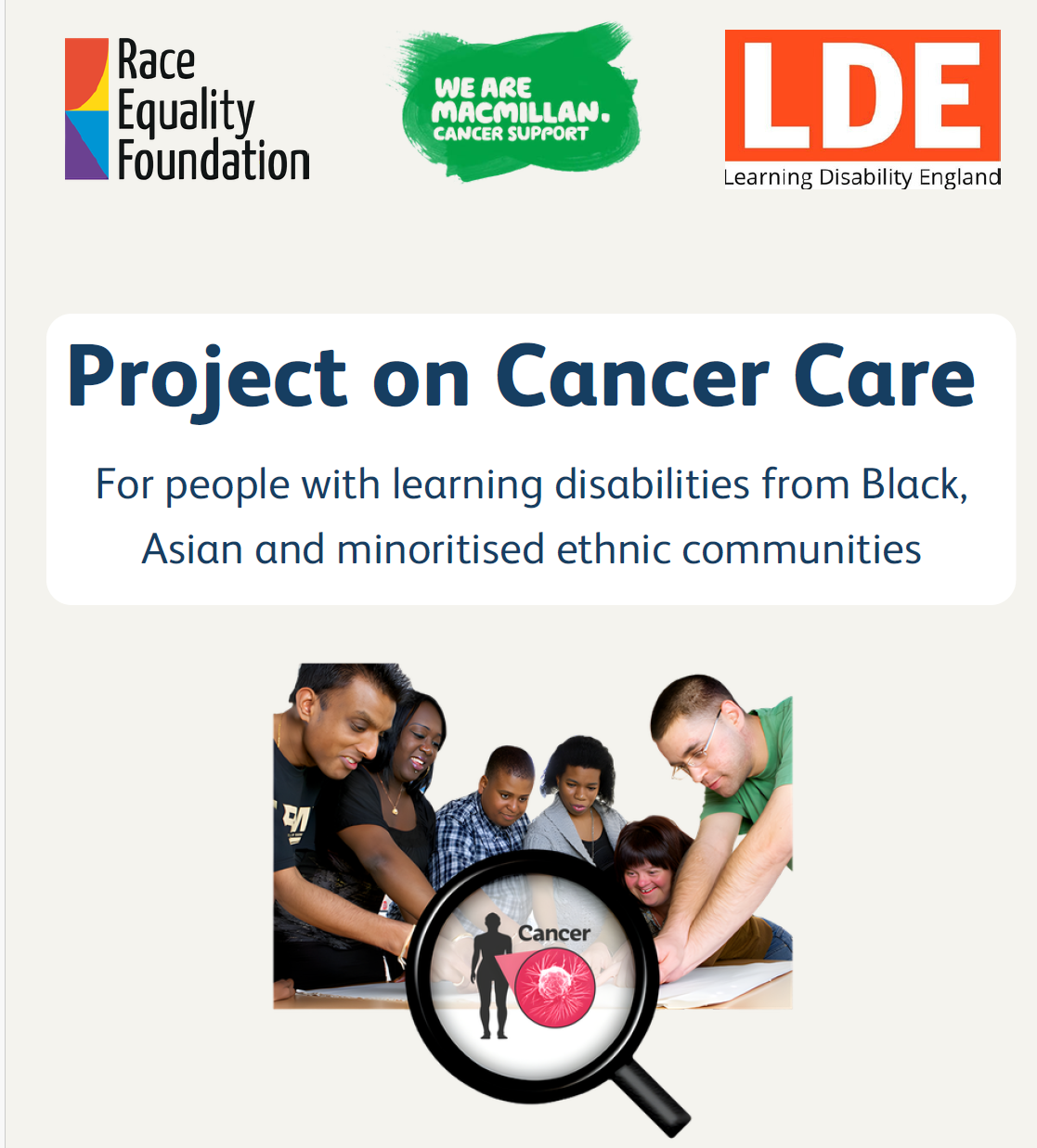
I was recently sent information about an important cancer care project being led by Learning Disability England in partnership with the Race Equality Foundation which is funded by Macmillan Cancer Support.

The project aims to improve cancer care for people with learning disabilities from Black, Asian and minoritised ethnic communities. A working group is being established involving self-advocates, family members and friends who have experience of cancer.

As someone who regularly raises awareness of the experiences of cancer caregivers, I believe this is an important opportunity to ensure that people with lived experience help shape what better and more inclusive cancer care should look like.

About the project

People with learning disabilities can face considerable barriers when trying to access cancer screening, understand health information, communicate their symptoms or navigate treatment.

When race, culture, language and discrimination are added to the picture, those barriers can become even more complicated.

Family members and unpaid carers may play a vital role by:

  • Helping the person communicate their needs and preferences.
  • Supporting them to attend screening and hospital appointments.
  • Explaining information in an accessible and reassuring way.
  • Recognising changes in the person’s health or behaviour.
  • Advocating for reasonable adjustments.
  • Supporting the person before, during and after cancer treatment.

However, carers’ knowledge is not always recognised by healthcare professionals. Families may also have to navigate difficult conversations about consent, confidentiality, treatment choices and culturally appropriate support.

This is why the involvement of self-advocates and families must not be treated as an afterthought. Their experiences can help identify where cancer services work well, where people are being excluded and what needs to change.

Who can become involved?

Learning Disability England would like to hear from people from Black, Asian and minoritised ethnic communities who:

  • Have a learning disability and have experienced cancer.
  • Have attended cancer screening.
  • Have a family member who has experienced cancer.
  • Support a loved one with a learning disability who has experienced cancer.

The project is therefore open to different forms of cancer experience. Someone does not necessarily need to have received a cancer diagnosis themselves to have something valuable to contribute.

The working group will meet once a month, with most meetings taking place online. Participants will also be paid for their time.

Members of the group will help develop training and resources explaining what good cancer care should look like for people with learning disabilities from Black, Asian and minoritised ethnic backgrounds.

The importance of lived experience

Health services and organisations often develop resources for people without sufficiently involving the people who will actually use them.

Lived-experience involvement can help ensure that information is accessible, culturally responsive and based on the realities faced by patients and families.

It is also important that the voices of family carers are included alongside those of self-advocates. Carers may have witnessed difficulties in accessing screening, delays in diagnosis, poor communication or a failure to provide reasonable adjustments. They may also be able to highlight examples of compassionate and inclusive care that other services could learn from.

People with learning disabilities must remain at the centre of decisions about their own health and care. Proper involvement of family carers should strengthen the person’s voice rather than replace it.

How to express an interest

If you would like to learn more or are interested in joining the working group, please contact Annabelle Ferrari-Wood, the project coordinator:

Telephone: 07383 488 862
Email: annabelle.ferrari-wood@LDEngland.org.uk

You can also visit the Learning Disability England website.

Please consider sharing this opportunity with learning disability groups, cancer support organisations, carer centres, ethnic minority community groups and families who may have relevant experience.

Better cancer care cannot be designed without listening to the people most affected by it. This project provides an opportunity for self-advocates and family carers to help influence training and resources that could improve the experiences of many others.

Partnering for Better Outcomes – Reflections on My Latest Royal College of Nursing Blog

By Matthew McKenzie – Cancer Carer forum Facilitator


Partnering for Better Outcomes – Reflections on My Latest RCN Blog

Supporting someone living with cancer is a journey filled with uncertainty, responsibility, and deep emotional commitment. As many carers know, much of this work happens quietly in the background. But every so often, there’s an opportunity to shine a light on the realities carers face and the vital partnerships that make a difference.

I’m proud to share that the Royal College of Nursing (RCN) recently invited me to contribute to their blog as part of a wider piece exploring how nurses support cancer caregivers. Written by Shannon Copeland (PhD researcher at Queen’s University Belfast), Partnering for better outcomes: How nurses support cancer caregivers highlights the evolving role of informal carers and the essential collaboration between families and nursing professionals.

In the blog, I shared my lived experience as an unpaid carer, the challenges, the emotional strain, and most importantly, the difference nurses can make when they recognise and support carers as part of the care team. Simple acts such as clear communication, continuity of support, and acknowledgment of a carer’s role can transform the caregiving experience.

Nurses often stand at the intersection of patient and carer needs. When they listen, guide, and empower carers, both patients and families benefit. I’m grateful to Shannon and the RCN for giving space to these conversations, and for highlighting the importance of carer voices in cancer care.

💙 Read the full RCN blog here: Partnering for better outcomes: How nurses support cancer caregivers
https://www.rcn.org.uk/news-and-events/Blogs/partnering-for-better-outcomes

If you’re a carer, a nurse, or someone interested in improving cancer support, I encourage you to give it a read and join the discussion. Together, we can continue raising awareness of the carer journey and push for better recognition, resources, and collaboration across health and social care.

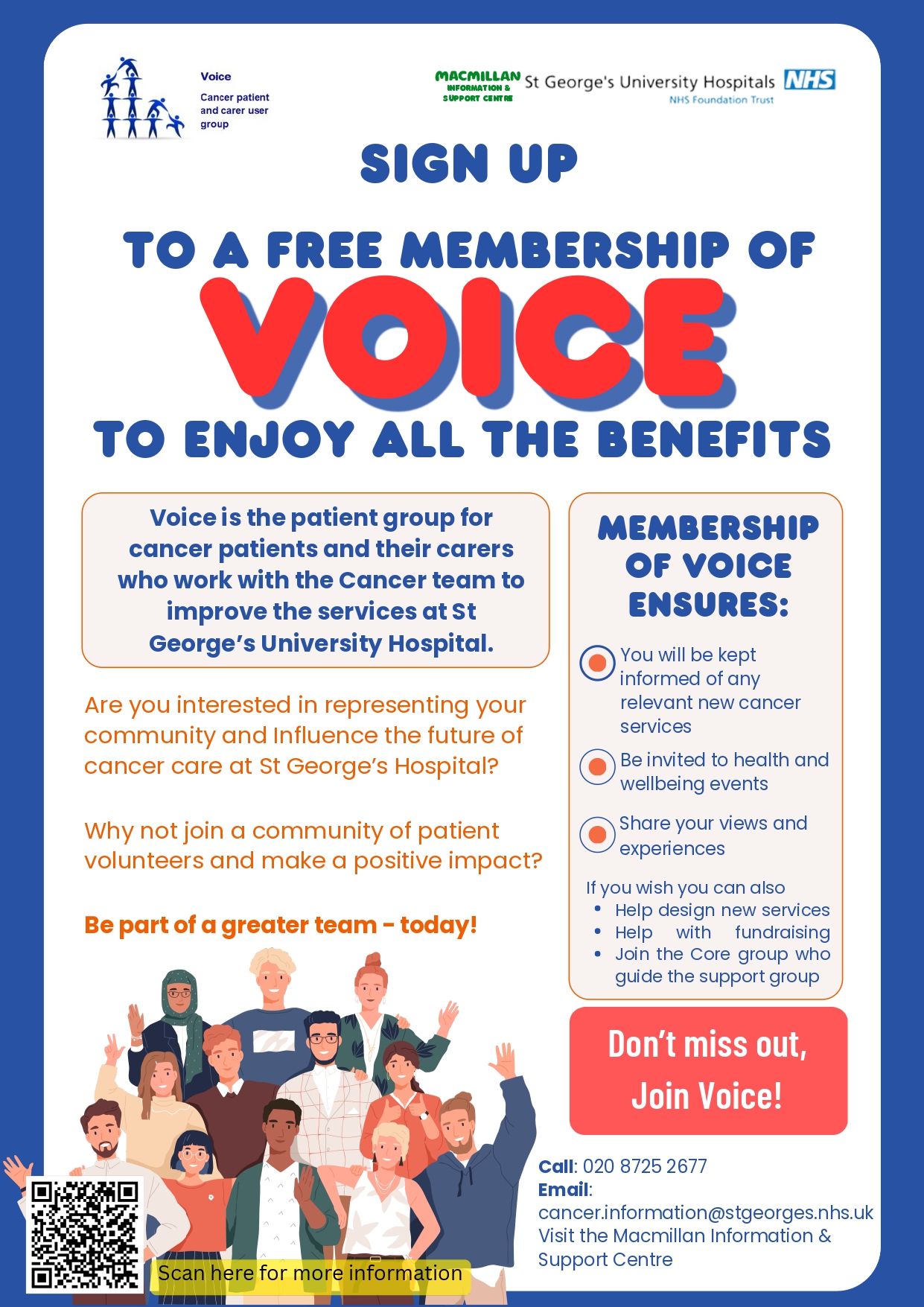
Join Voice – Amplifying the Voices of Cancer Patients and Carers at St George’s Hospital

By Matthew McKenzie – Cancer Carer group

At St George’s University Hospitals NHS Foundation Trust, people affected by cancer are placed at the heart of everything they do. Whether you’re a patient receiving treatment, a family member, a carer, or part of a local cancer support group, your experiences and insights are invaluable in shaping the way the hospital cancer services are delivered.

That’s why Voice exists.

See link below for more details.

What is Voice?

Voice is a dedicated patient and carer group that works closely with the Cancer Team at St George’s. It provides a vital forum for sharing experiences, ideas, and suggestions that directly influence how services are planned, developed, and improved.

By joining Voice, you’ll:

  • Represent the perspectives of patients and carers.
  • Share what works well in cancer pathways and highlight areas for improvement.
  • Help identify priorities for local cancer services.
  • Be kept informed of new cancer services and projects.
  • Take part in health and wellbeing events.
  • Have the chance to help design new services or join the core group guiding the support group.

Why carers are especially needed

Carers play a unique and vital role in the cancer journey. Their insights into the challenges and realities of supporting a loved one through treatment provide perspectives that professionals and even patients themselves may not always see.

Right now, Voice is especially looking for more carers to join, ensuring their voices are fully represented in shaping services.

How to get involved

Becoming a member of Voice is free. By joining, you’ll be part of a welcoming community committed to making cancer care better for everyone.

To find out more or sign up, contact the Macmillan Information and Support Centre:
Together, we can make a real difference in the lives of those affected by cancer.