By Matthew McKenzie, Co-Facilitator – South West London Mental Health Carers Forum
Our September forum brought carers together with Nisha from the South West London and St George’s Mental Health NHS Trust Recovery College.

We explored the courses available to carers, how to join them, and a question that matters well beyond the college: what happens when a carer still needs support after a time-limited service ends?
What the Recovery College offers carers
Nisha explained that Recovery College courses are co-produced and delivered by a practitioner trainer alongside a peer trainer with lived experience. The college offers face-to-face courses across Kingston, Richmond, Sutton, Merton and Wandsworth, as well as online learning.

Five online courses run each term specifically for friends, family members and carers: Your Role in Recovery, What Is Recovery?, Responding to Extremes, Planning for Well-being, and Navigating Support Services. Carers who meet the college’s eligibility criteria can also explore its wider range of courses.
We also heard about Navigating the Wards, a newer course for families and carers whose loved one has been admitted to a mental health ward. It brings together practical information, contact with ward staff and a chance to meet others who understand that experience. A carer may need time before feeling ready to attend, so it was reassuring to hear that the course is intended to run again rather than being a one-off opportunity.
Caring does not end after 12 months
The most important discussion came from a carer who had benefited from Recovery College courses but questioned the limit on access after a loved one leaves trust services. Nisha explained that eligible carers can continue to access courses for up to 12 months after discharge, while webinars remain available more widely.
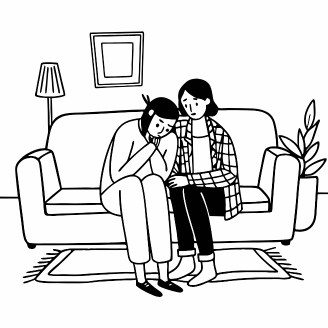
A caring role rarely follows that timetable. Someone may need to pause their learning during a difficult period, return to a course when they are better able to take it in, or seek support years later as circumstances change. A second member also asked about eligibility, showing how relevant this question is to carers trying to find the right help.
Nisha listened to these concerns and said she would take the question of eligibility back for further discussion. She also described work to strengthen links with community and voluntary organisations, so that carers have clearer routes to support when their access to the college ends. It was a constructive exchange, and one we hope can continue.
Members also spoke about how hard it can be to discover support in the first place. Carers should not have to find every course or service by chance while managing an already demanding role. Clear information, accessible formats and active outreach matter, including for carers from ethnic minority communities and people who may face other barriers to taking part.
How carers can take part
Nisha explained that prospective students can look through the Recovery College timetable and complete an online registration form, selecting courses that interest them. The team checks eligibility and confirms a place if one is available; if a course is full, there may be a waiting list. Open days offer a chance to talk through the options, but a registered student does not need to attend an open day each term to book another course. Courses in a different borough may also be an option.

We asked how carers from this forum could help shape future courses. Nisha welcomed continued discussion about carer involvement in course design and delivery. We also talked about sharing information both ways: making more carers aware of the college, and helping people who attend its carer courses find our forum.
A space for carers to connect
At the start of the meeting, I shared a glimpse of a recent carers’ art and poetry session. Creative expression can give carers another way to speak about experiences that are difficult to put into everyday conversation. I would welcome the chance to explore a similar opportunity in South West London with interested carers and local partners.
Thank you to Nisha for joining us and answering members’ questions openly, and to the carers who shared their experiences. Their questions helped move the conversation from a list of courses to the practical issue of whether support remains accessible when carers need it.
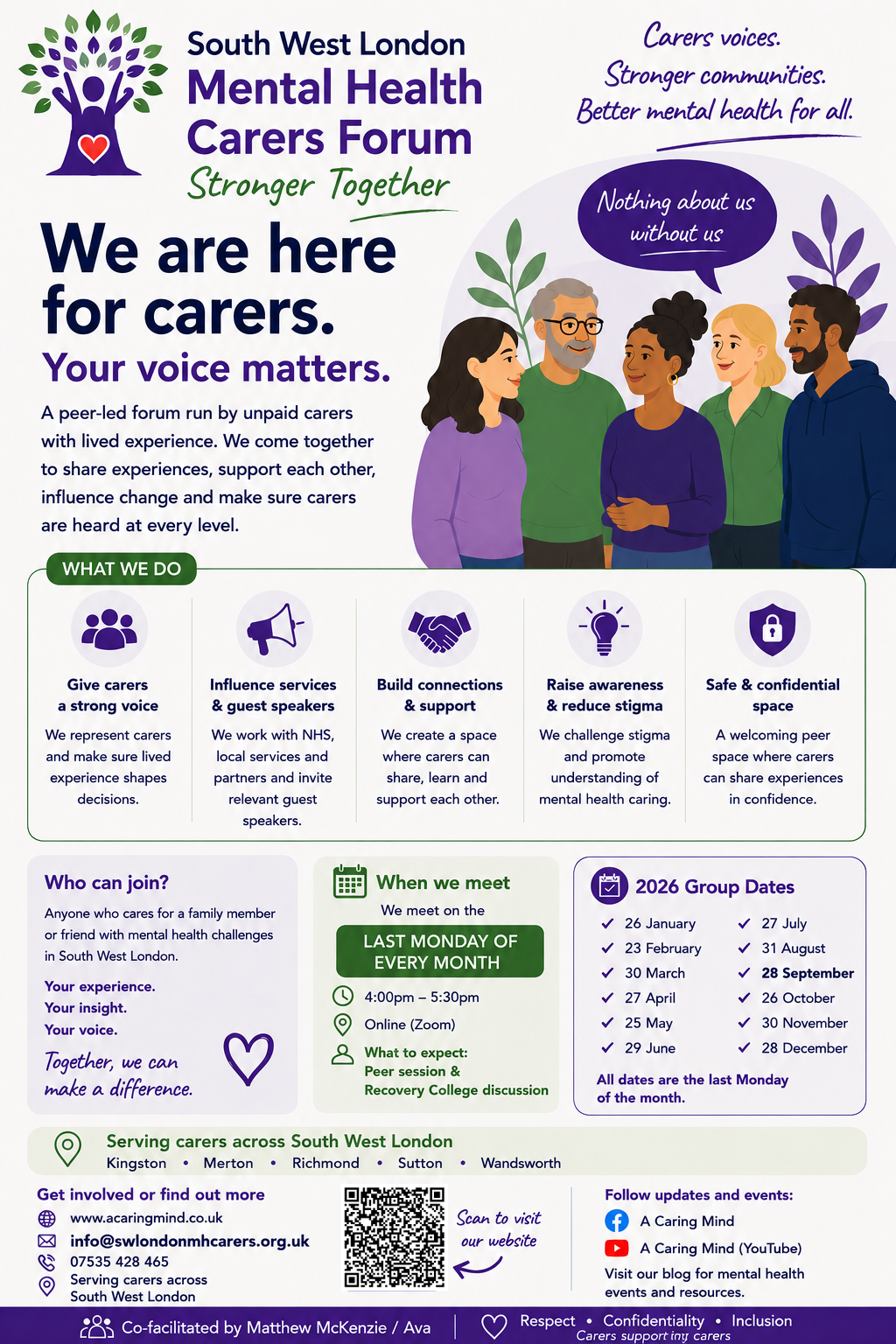
The South West London Mental Health Carers Forum meets monthly and welcomes unpaid mental health carers across the five boroughs. Our next meeting is planned for Monday 26 October 2026. To ask about joining, email info@swlondonmhcarers.org.uk.