By Matthew McKenzie – Carers UK ambassador / Chair of National ethnic mental health carers forum
Are you a Black unpaid carer supporting a family member with a learning disability (sometimes referred to as an intellectual disability) who has experienced mental health difficulties?
Have you ever tried to access mental health support on their behalf? This could include contacting services such as Community Learning Disability Teams, CAMHS, Community Mental Health Teams, Talking Therapies or other mental health services.

If so, your experiences matter.
Lauren Heath, a second-year Trainee Clinical Psychologist at the University of Southampton, is conducting doctoral research exploring the experiences of Black carers who have accessed, or attempted to access, mental health support for a family member with a diagnosed learning disability.
We know that Black unpaid carers often face additional challenges when trying to navigate health and social care systems. Too often, their experiences are unheard or underrepresented in research. This study aims to better understand those experiences and help inform more culturally sensitive and inclusive services in the future.
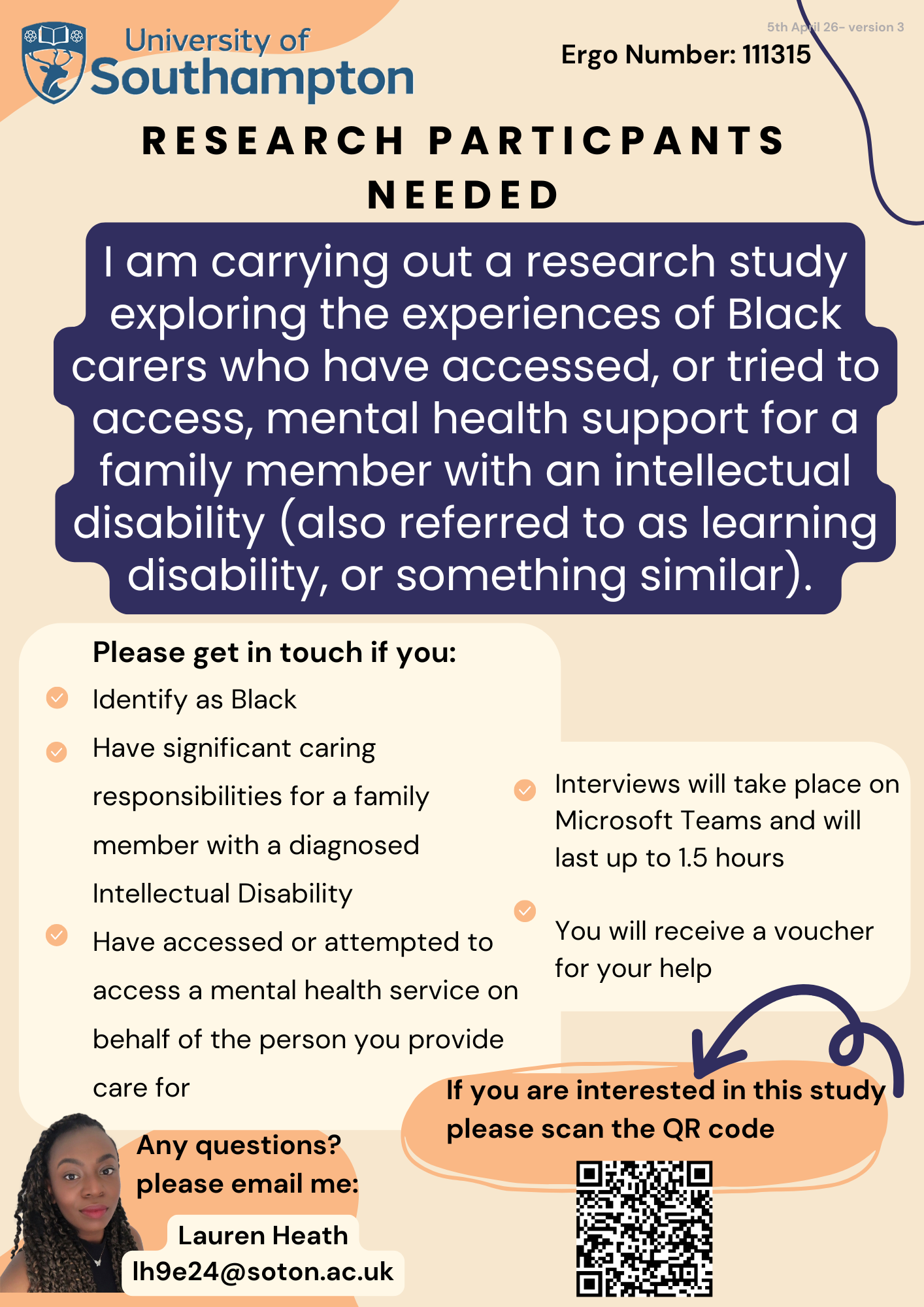
You may be eligible to take part if you:
- Identify as Black.
- Have significant caring responsibilities for a family member with a diagnosed learning disability (or intellectual disability).
- Have accessed, or attempted to access, mental health services on their behalf.
Taking part will involve:
- A confidential interview lasting approximately 1.5 hours via Microsoft Teams.
- Your responses will be anonymised once all interviews have been completed.
- You will receive a voucher to thank you for your time and contribution.
Lauren previously worked within Community Learning Disability Teams across the UK and became interested in understanding why so few Black families appeared to be accessing these services. Her doctoral research hopes to amplify the voices of Black carers and contribute towards improving culturally sensitive support for families in the future.
If you think this research may apply to you, or someone you know, please consider taking part or sharing this opportunity within your networks.
To find out if you are eligible, you can complete the short questionnaire or contact Lauren directly at L.Heath@soton.ac.uk.
Your lived experience could help shape future services for Black families and carers.