The recent Carers Forum brought together unpaid carers, health professionals, and community organisations from across South London to share updates, experiences, and ideas for improving mental health support. The event, chaired by Matthew McKenzie, created a safe and open space for carers to connect, exchange information, and have their questions heard by local health leaders.
Setting the Scene
Matthew opened the session by welcoming carers from across Lambeth, Lewisham, and Southwark. He spoke about the importance of providing carers with dedicated time to hear from service providers, particularly those supporting someone with mental ill-health and to ensure their voices shape local mental health strategies.
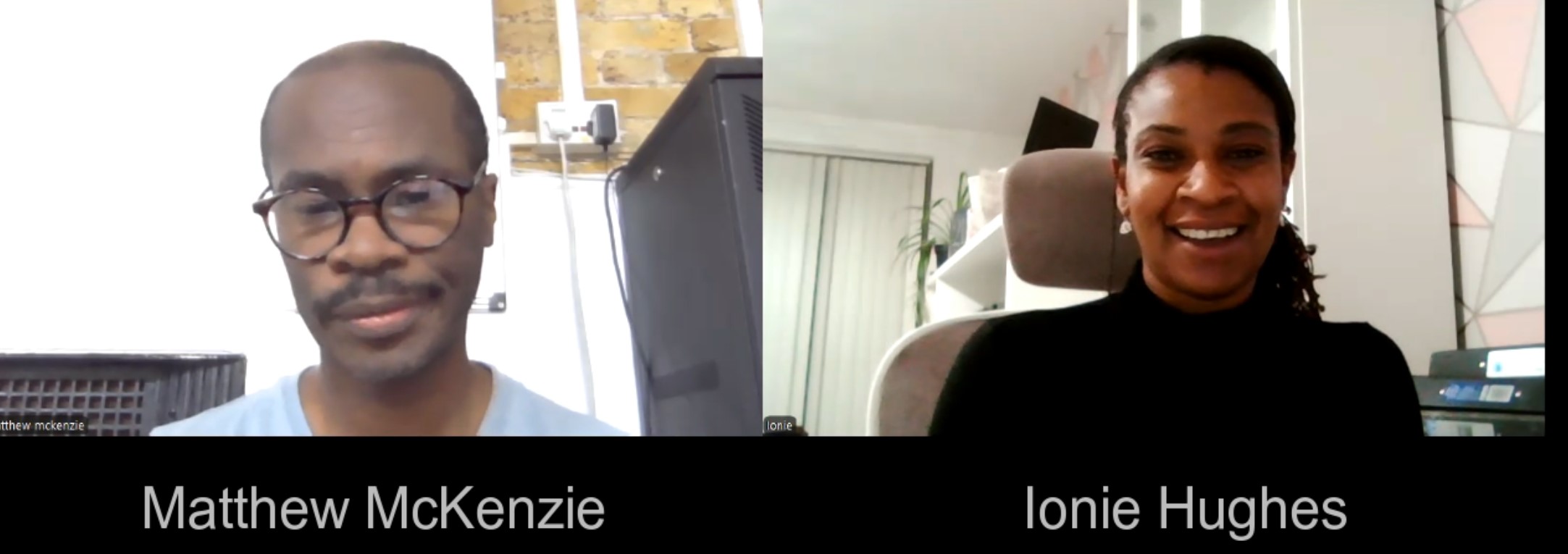
Supporting unpaid carers is a greatly unrecognized yet profoundly impactful endeavor. In our latest interview from a series dedicated to highlighting those who go out of their way to aid and uplift unpaid carers, Matthew McKenzie had the opportunity to speak with Ionie Hughes.
Ionie talked about how she tries to reach parent carers through her charity, Socialising Angels, which is a C.I.C that was created to help reduce isolation, which focuses to help young adults with social, emotional and mental health needs.
You can watch the full interview below.
Drawing from her personal experiences and relentless advocacy, Ionie provides invaluable insight into the unique challenges and necessities of unpaid carers. Below, we delve into Ionie’s story, her organization, and the far-reaching influence of her work.
Training and Positive Influence
Ionie is trained in Rational Emotional Behavior Therapy, reinforcing her belief that altering one’s mindset and belief systems is crucial for overcoming challenges. She emphasizes positive thinking and speech, offering powerful encouragement and practical advice to other carers. Her ability to balance personal experience with professional training enhances her effectiveness as a support figure.
Socializing Angels: A Community Endeavor
About the Organization
Socializing Angels CIC, founded by Ionie in 2022 and operational since 2023, is based in Brixton. The organization aims to bring young adults with various disabilities into the community, providing them with social engagement opportunities. This initiative not only enriches the lives of the young adults but also offers respite to their parent carers.
Challenges of Running a Non-Profit
Running a community interest company like Socializing Angels comes with its own set of challenges. As the CEO, Ionie juggles multiple responsibilities without financial compensation, as most of the organization’s funds are directed toward service provision. The startup phase of the CIC is heavily reliant on external funding and the dedication of its founder.
Ionie’s work extends beyond service provision for her own son to advocating for and supporting other young adults and their families. This dual role often leads to overwhelming exhaustion and the risk of burnout. However, her steadfast commitment to both her son and her organization underscores the dedication and resilience inherent to unpaid carers.
The Unseen Challenges of Unpaid Carers
Daily Struggles and Lack of Recognition
Unpaid carers perform a plethora of tasks around the clock, often without recognition or financial remuneration. Their roles are multifaceted, ranging from advocacy to personal assistance and emotional support.
Ionie points out that unpaid carers frequently experience burnout due to the nonstop nature of their responsibilities. The mental toll of continually advocating and caring for a loved one, compounded by the financial strain of a cost-of-living crisis, is immense.
Integrity and Unwavering Commitment
Despite these challenges, the integrity and love that motivate unpaid carers are evident. They dedicate themselves selflessly to the welfare of others, driven by an unwavering commitment to their loved ones. This spirit of selflessness is emblematic of the unpaid carer community.
Essential Skills for Carer Outreach
Knowledge of Community Resources
For carers seeking to make a difference, understanding the community landscape is crucial. This involves attending meetings, forums, and various community events to stay informed and engaged. Personal interactions and shared experiences are key elements in creating a supportive network.
Empathy, Compassion, and Understanding
Ionie highlights the importance of empathy, compassion, and active listening in supporting fellow carers. Building a rapport and a community based on mutual understanding and shared experiences can provide both practical support and emotional solace.
Personal Experience and Advocacy
Personal experience is a powerful tool in advocacy. Ionie’s own journey has been instrumental in shaping her ability to help others. By sharing her story and the strategies that have worked for her, she provides a valuable blueprint for other carers seeking guidance and support.
Conclusion
Ionie Hughes’ journey and dedication shine a spotlight on the often-overlooked world of unpaid carers. Her relentless advocacy, personal sacrifices, and the establishment of Socializing Angels CIC stand as a testament to the incredible impact one person can have in making the world a more inclusive and supportive place.
Through recognizing and addressing the challenges faced by unpaid carers, we can begin to create a more understanding and supportive environment. It is imperative to appreciate and uplift those who selflessly dedicate their lives to the care of others, often without any form of compensation or recognition. Ionie’s story is a powerful reminder of the strength and resilience that define the carer community.
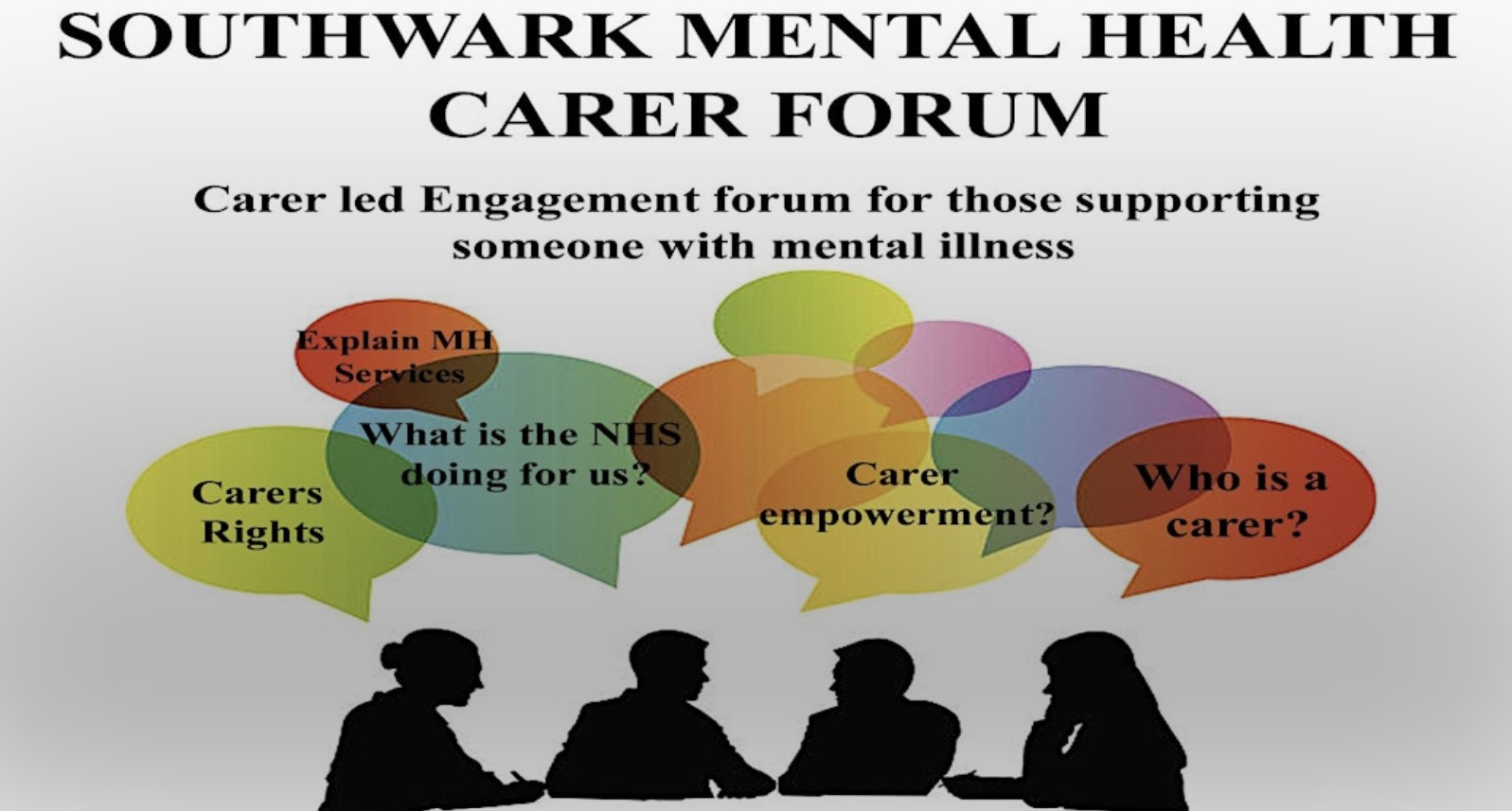
Welcome to a brief update of the carer forum for Southwark & Lambeth. The forum is facilitated by Matthew McKenzie, carer activist and author. The online carer led group runs once a month.
Quick recap
matthew, a carer activist, discussed the purpose of his online groups aimed at those caring for someone with a mental illness. There was also updates from a project to improve the Trust’s understanding of service users’ and carers’ experiences. The project, co-produced with service users and carers, collects stories to report back to the Trust’s Executive board and directorates, with a focus on improving services for people, particularly in mental health. The last presentation from Matthew McKenzie also discussed the challenges of navigating the mental health system, the importance of self-education and support networks, and the need for better engagement with mental health providers.
Carer Activist Groups and Service Improvement
Matthew, a carer activist, discussed his online groups for carers of individuals with mental illness in Lambeth and Southwark, aiming to tackle carer stigma and improve services. Debora, a Lead Commissioner Officer, joined the meeting as matthew spoke about his work on a book featuring carers’ stories.
We then had Morgan, present a project to improve the Trust’s understanding of service users’ and carers’ experiences. The project, co-produced with service users and carers, collects stories to report back to the Trust’s Executive board and directorates. matthew raised concerns about potential stigma and repercussions for carers sharing their stories, which Morgan addressed by emphasizing anonymity and confidentiality.
Initiative Discussion and Story Collection Project
After Morgan’s presentation, Matthew initiated a discussion about an initiative, seeking feedback and questions from the attendees. Morgan clarified that the project, originally set to end in November, had received additional funding from the Maudsley charity and was now extended till the end of September next year. The project aimed to improve services for people, particularly in mental health, by collecting stories from service users and carers. Morgan explained that the stories could be collected in various environments, including private rooms at libraries or community centers, to ensure comfort for the storytellers. The project also offered a £15 voucher for those sharing their stories. Morgan encouraged those interested in collecting stories to contact them via email. matthew then proposed to distribute the project details to his mailing list and Whatsapp groups. The conversation ended with matthew setting the scene for the next part of the discussion, which would involve sharing personal experiences and allowing carers to seek advice from the group.
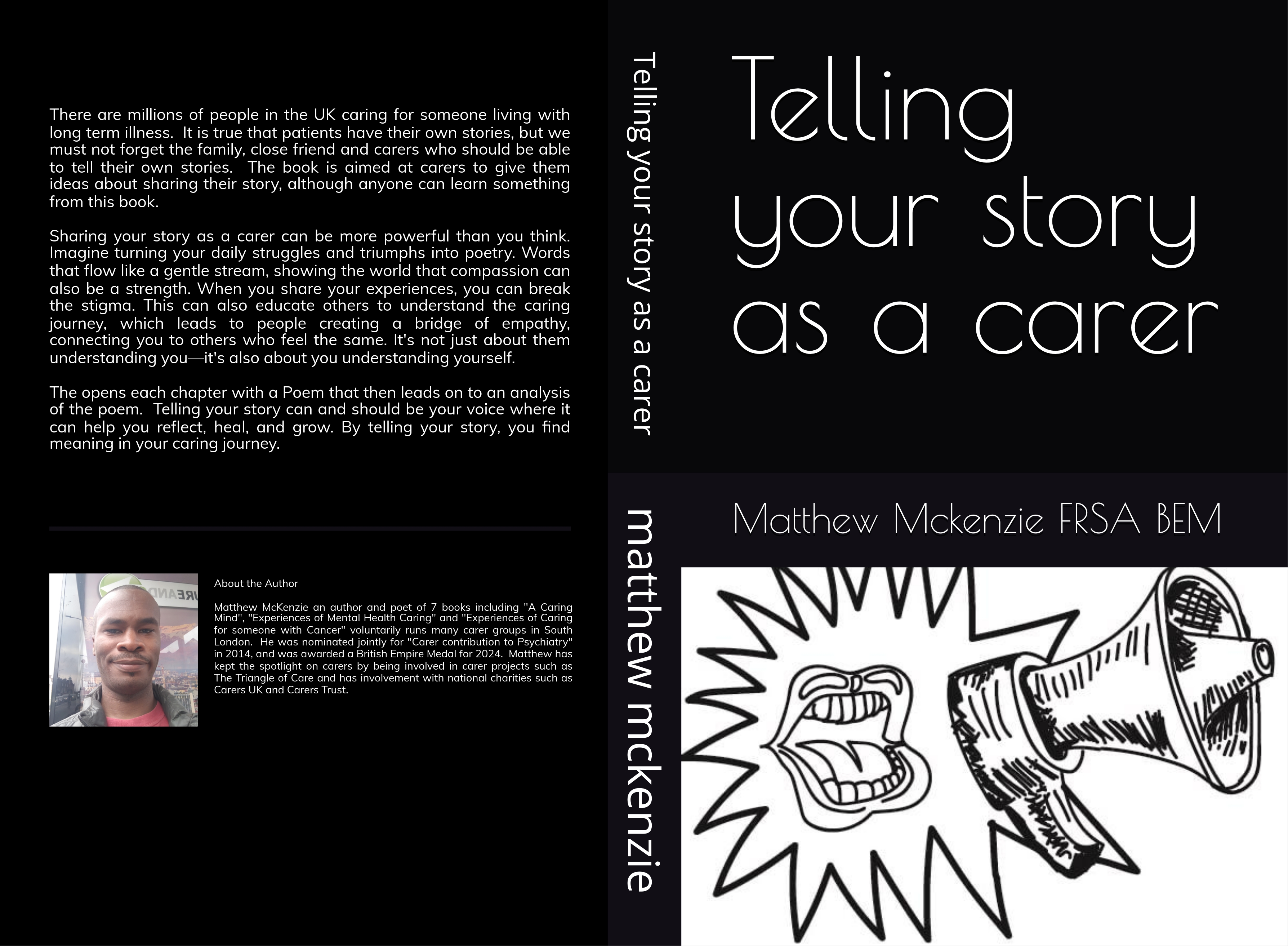
matthew moved on to discuss the complexities of navigating the mental health system as a carer, emphasizing the importance of understanding one’s rights and the need for education in accessing mental health services. He shared his personal experiences as a carer for his mother with schizophrenia and his brothers with autism, and mentioned his role as an author, having written several books including working on his new book “Telling Your Story as a Carer“.
He also touched on his interest in poetry as a means of sharing difficult experiences. A carer member of the group defined navigating the mental health system as trying to get the best services in place for a loved one, knowing what services are available and implementing them. Another carer shared her personal experience of struggling to get her loved one recognized as unwell, which led to a difficult situation. The discussion aimed to educate the group members about the challenges and strategies involved in navigating the mental health system.
Navigating Mental Health Challenges and Support
A carer shared her experiences with her loved one’s mental health and the challenges she faced in accessing appropriate care, emphasizing the importance of a good General Practitioner (GP) and social worker. matthew agreed, highlighting the need for better support and guidance for carers. One carer discussed the challenges faced by their son in accessing mental health services, expressing frustration at the lack of support from their GP and the single access point.
Matthew Mckenzie then moved on to discuess the challenges faced by families and carers in navigating the mental health system, suggesting that the system should focus more on the families and carers. matthew emphasized the importance of understanding specific mental health conditions and the need for better education and support for those navigating the mental health system.
Effective Caregiving Strategies and Support Network Building
Matthew McKenzie emphasized the importance that carers work on self-education on medical conditions and treatment options, understanding the healthcare system, and building a support network. This needs support from professionals, but the more carers learn, the better.
He stressed the need for effective communication during appointments, the significance of care plan meetings, and the potential need to change GPs if communication is not effective. matthew also highlighted the financial aspects of caregiving, the importance of planning for emergencies, and the need for self-care. He encouraged caregivers to seek support from others and stay informed about upcoming healthcare policy changes. matthew plans to attend a session at Parliament to raise awareness of the group’s challenges and influence policy.
Navigating Mental Health System Challenges
Matthew discussed the challenges of navigating the mental health system, emphasizing the importance of understanding the roles and time constraints of various professionals. He suggested the use of local counselors as a potential resource and highlighted the role of organizations such as the Care Quality Commission and Integrated Care Boards in ensuring good value for money and meeting patient and carer needs.
Matthew also stressed the need for support for carers and the importance of lobbying and engaging with organizations like Patient Opinion and HealthWatch. He urged attendees to share their experiences to bring about change and not to isolate themselves. A carer shared her positive experience with a mental health provider and advised others to research and choose the right GP practice and doctor. matthew agreed, highlighting the value of support groups and mental health advocates. He expressed concerns about the lack of support from local mental care providers, but also stressed the need for better engagement with them.
Carer Awareness and Advocacy Discussion
Matthew McKenzie then discussed his experiences as a carer and his efforts to raise awareness about carers’ issues. He mentioned his involvement in various groups and his plans to share his insights on his YouTube channel.
Matthew also emphasized the importance of carers being identified and registered, and he encouraged the group to lobby for their rights. He mentioned an upcoming event with the MP and encouraged the group to attend. matthew also shared resources and promised to send a PDF summary of the meeting to the attendees. He ended the conversation by expressing his gratitude and wishing everyone well.
Calling carers from Black African and/or Black Caribbean communities in Lambeth. There is an exciting project that asks for your views.
It has consistently been shown that black men have the poorest experiences and outcomes when it comes to mental health services. So Healthwatch Lambeth wants to hear your experiences of caring a male relative who has a Serious Mental Illness, been hospitalise as a result of their illness and then discharged to their GP.
This is a core part of Healthwatch Lambeth’s new mental health project and each carer would receive a £15 shopping voucher for their time.
The borough of Lambeth want those to recover, stay well, and lead a fulfilling life.
Lambeth Healthwatch also wants to talk to carers as they play a key role in supporting people with a Serious Mental Illness.
To share your views, please contact Anna D’Agostino at 07737 599224 or email Anna at anna.dagostino@healthwatchlambeth.org.uk
Welcome back to another blog by carer activist Matthew McKenzie. I run many groups aimed at those caring for someone unpaid. They could be caring for someone suffering mental illness or caring for someone affected by cancer. One of the groups I run is the Joint Southwark & Lambeth mental health carers forum.
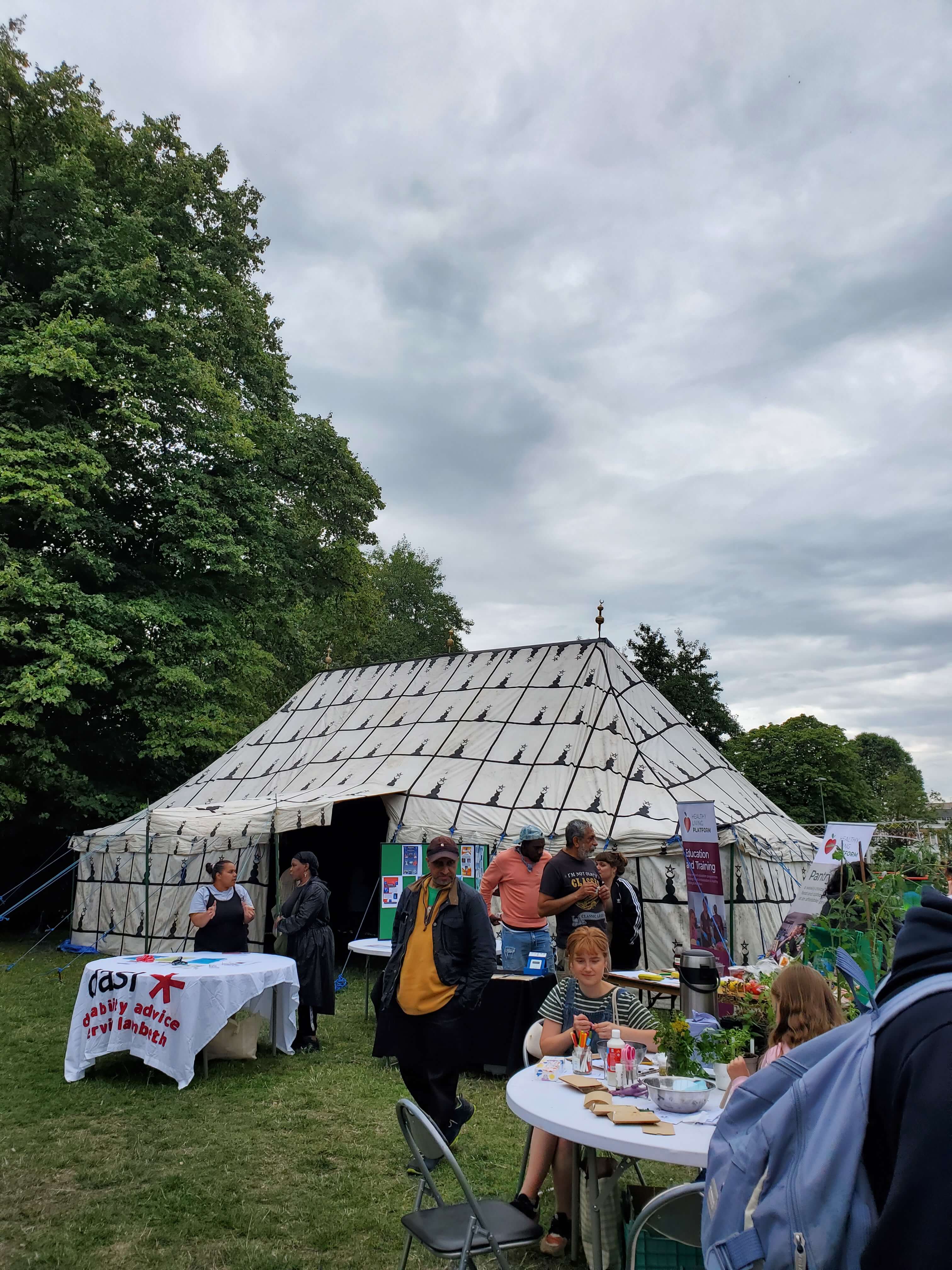
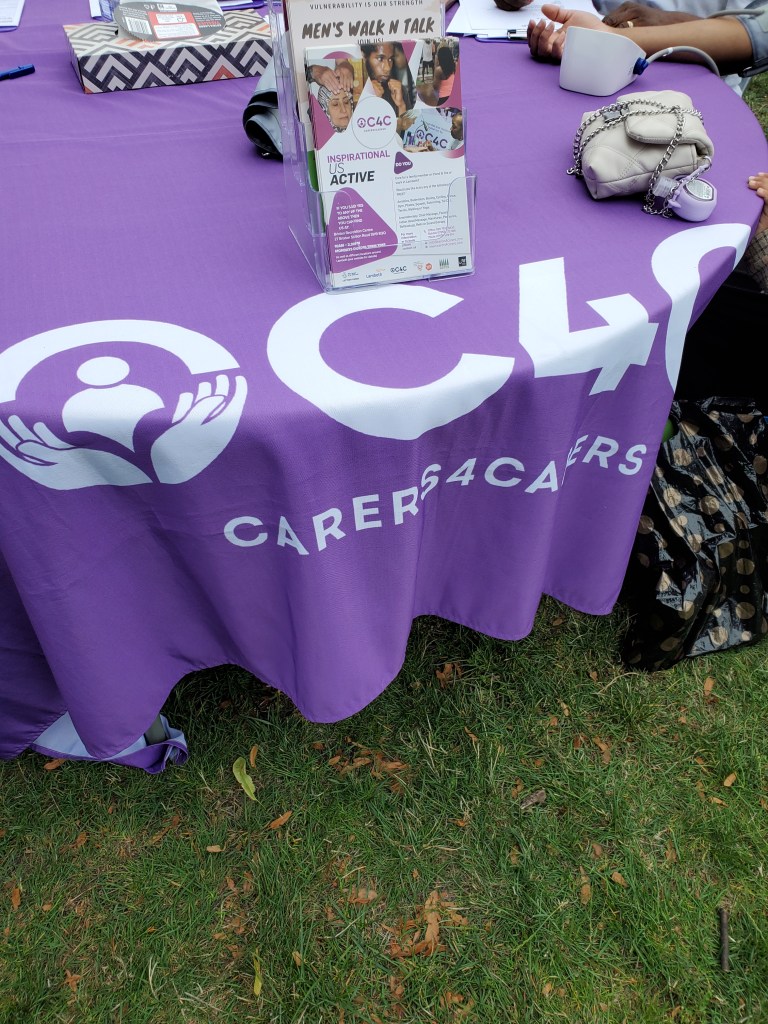
So I was delighted to attend a fun filled community event over in Lambeth.
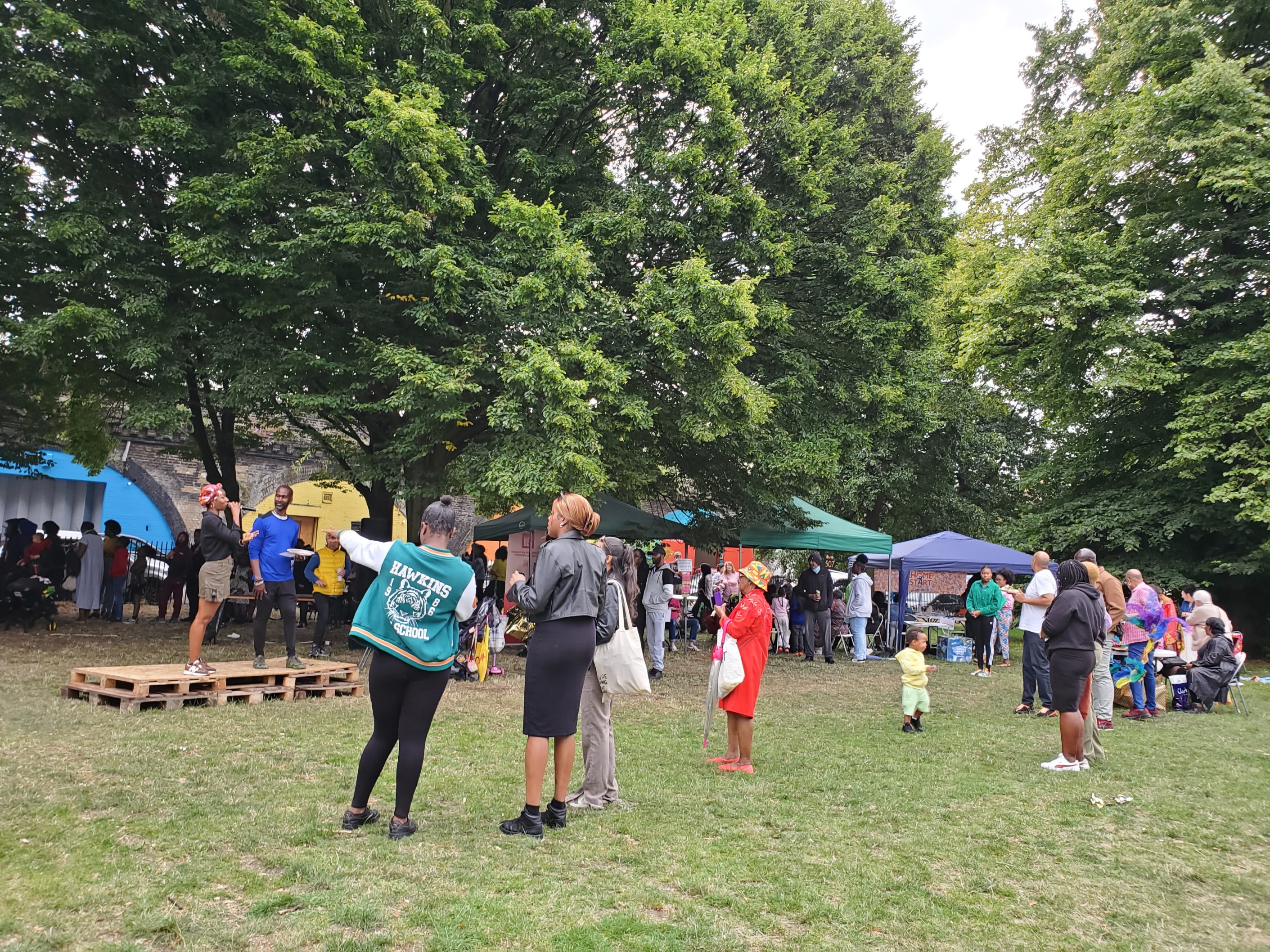
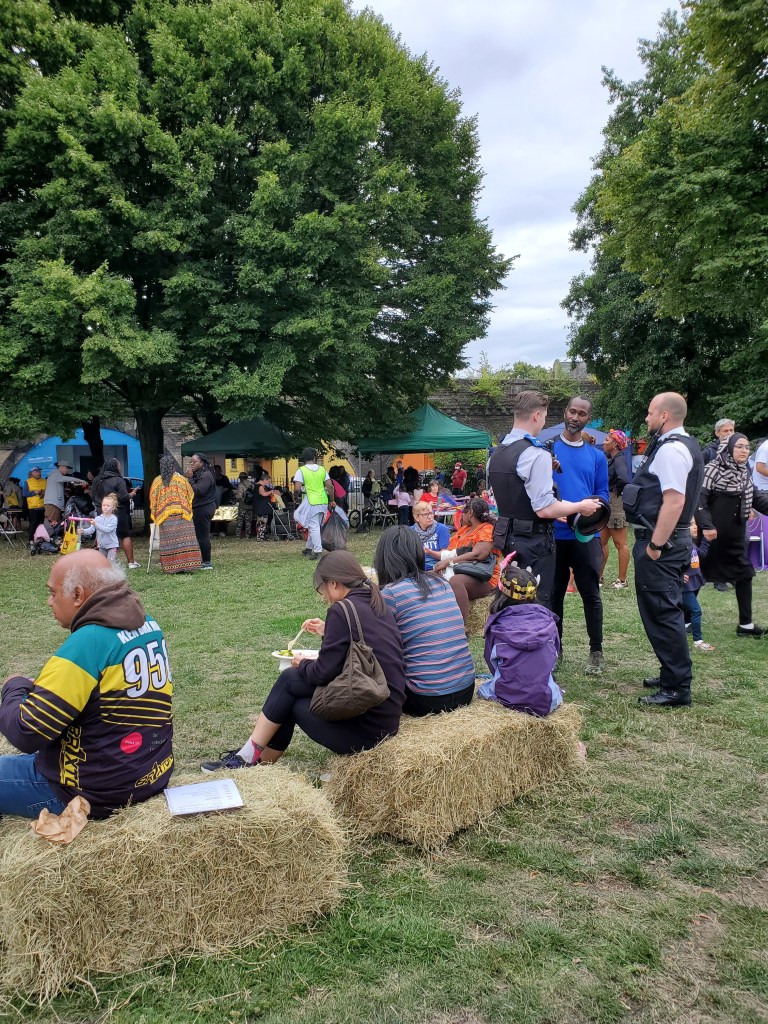
The weather was perfect for the health event. The event focused on the Lambeth community and beyond. It was a way to bring the community together.
We all have something in common, just as we all have importance in health and wellbeing. So it was a fun afternoon where everyone could come together and learn what the borough of Lambeth if providing for the community.
The event was called “Thriving Vassall and Coldharbour Health Day”. It took place over at Wyck Gardens on the 21 July 2023 from 3pm to 7pm.
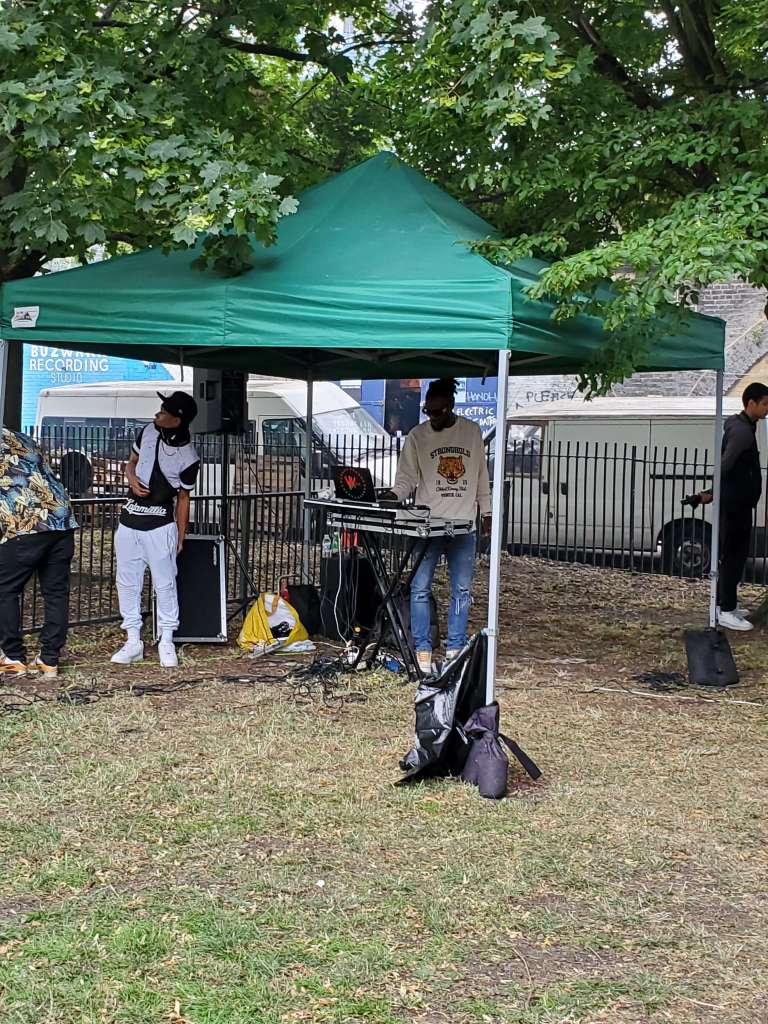
When I attended the wellbeing festival, the first thing I noticed was how everyone was enjoying themselves. There was no fussing or fighting, people were relaxing, enjoying the music, learning about health and eating the food provided.
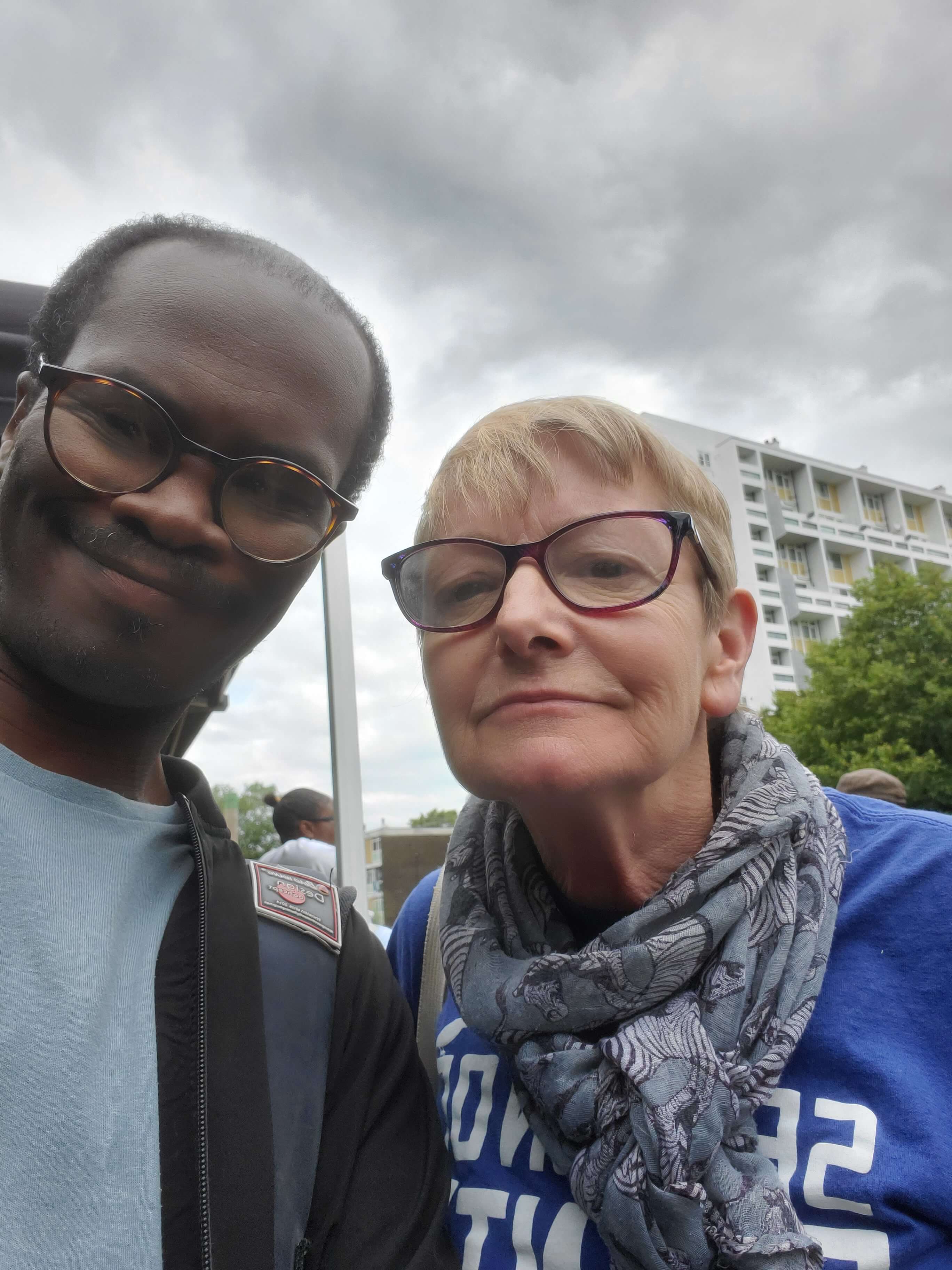
I met up and chatted with Karen Hooper who is a carer and does so much to promote community links in Lambeth.
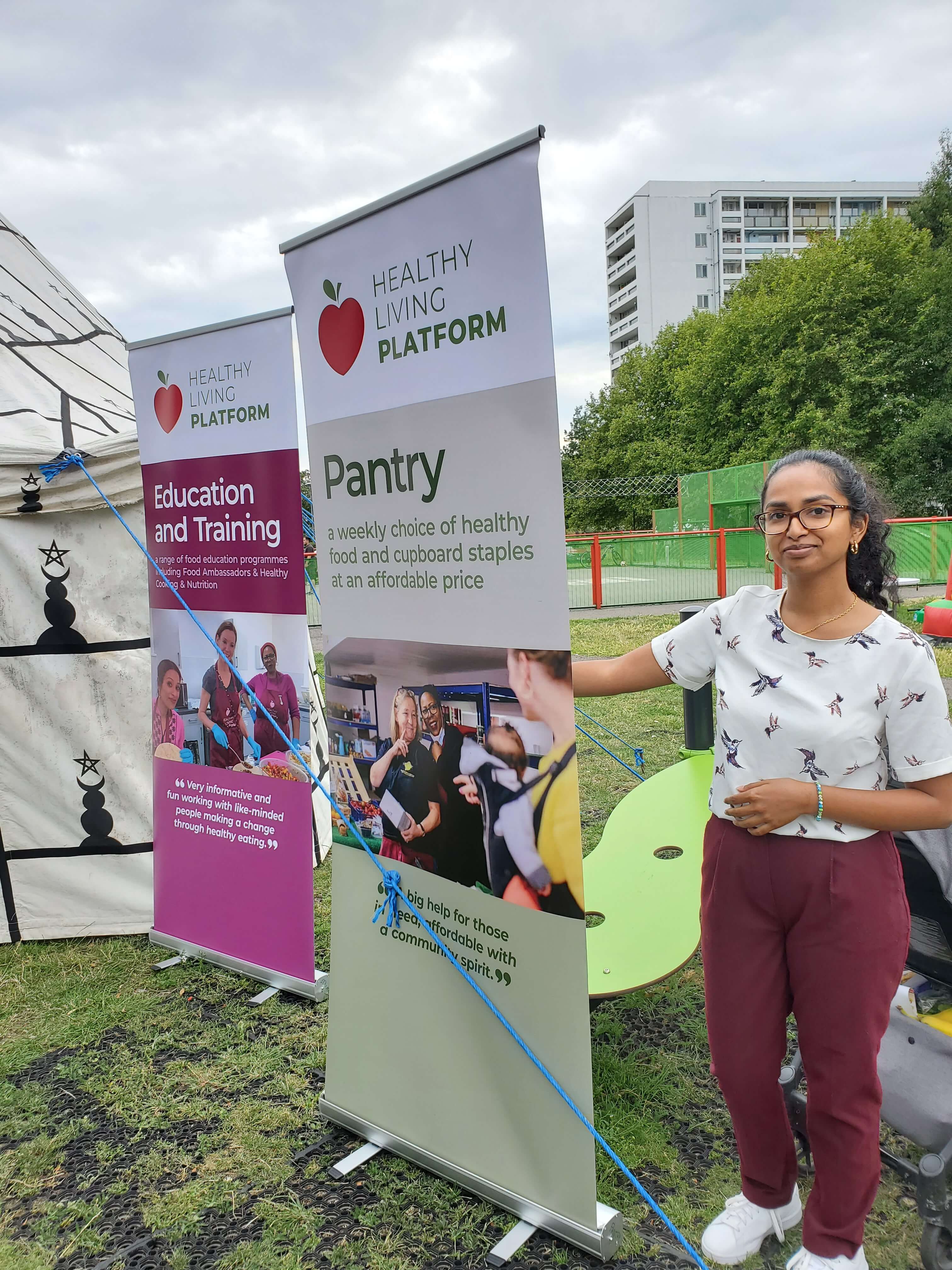
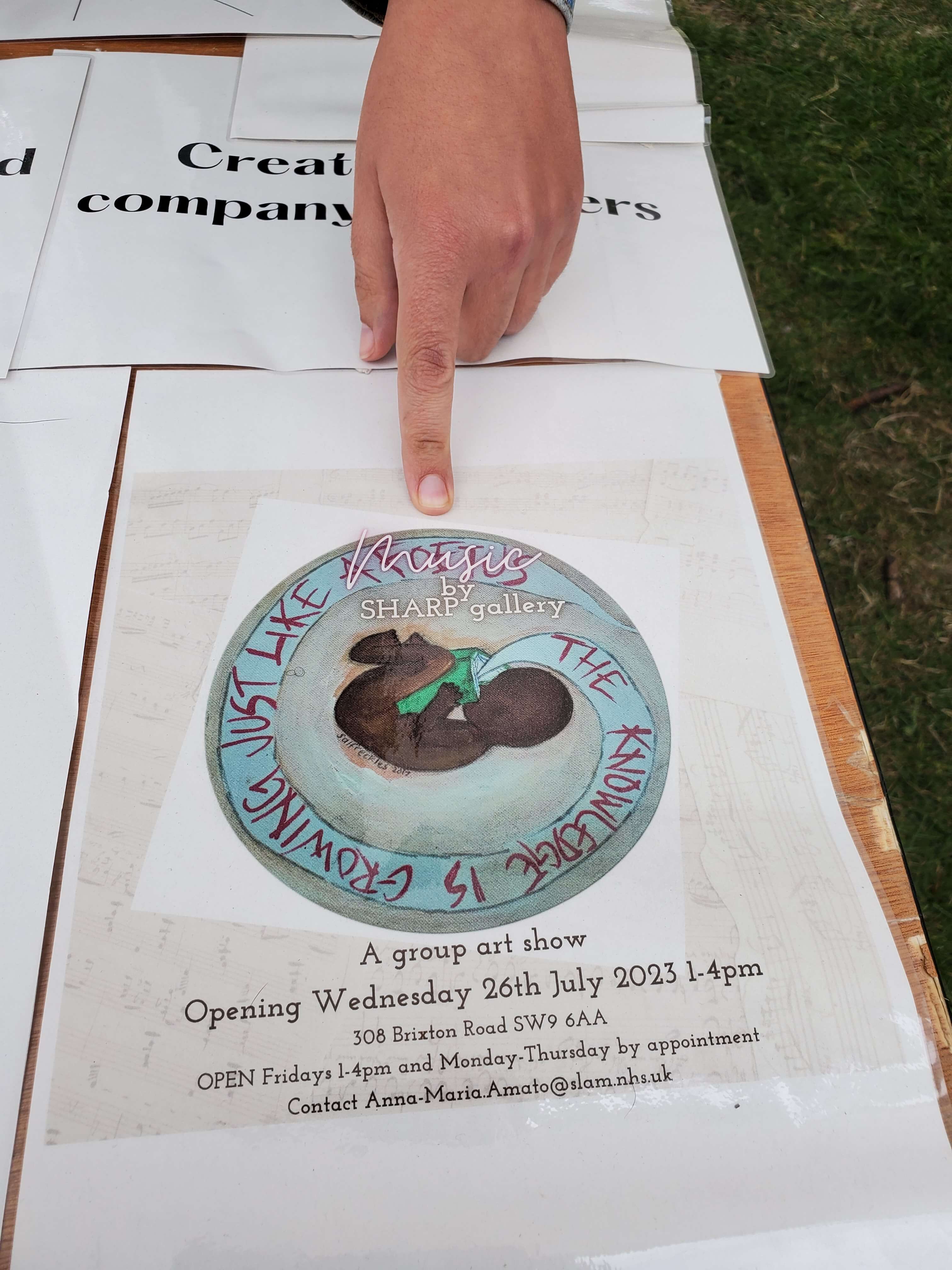
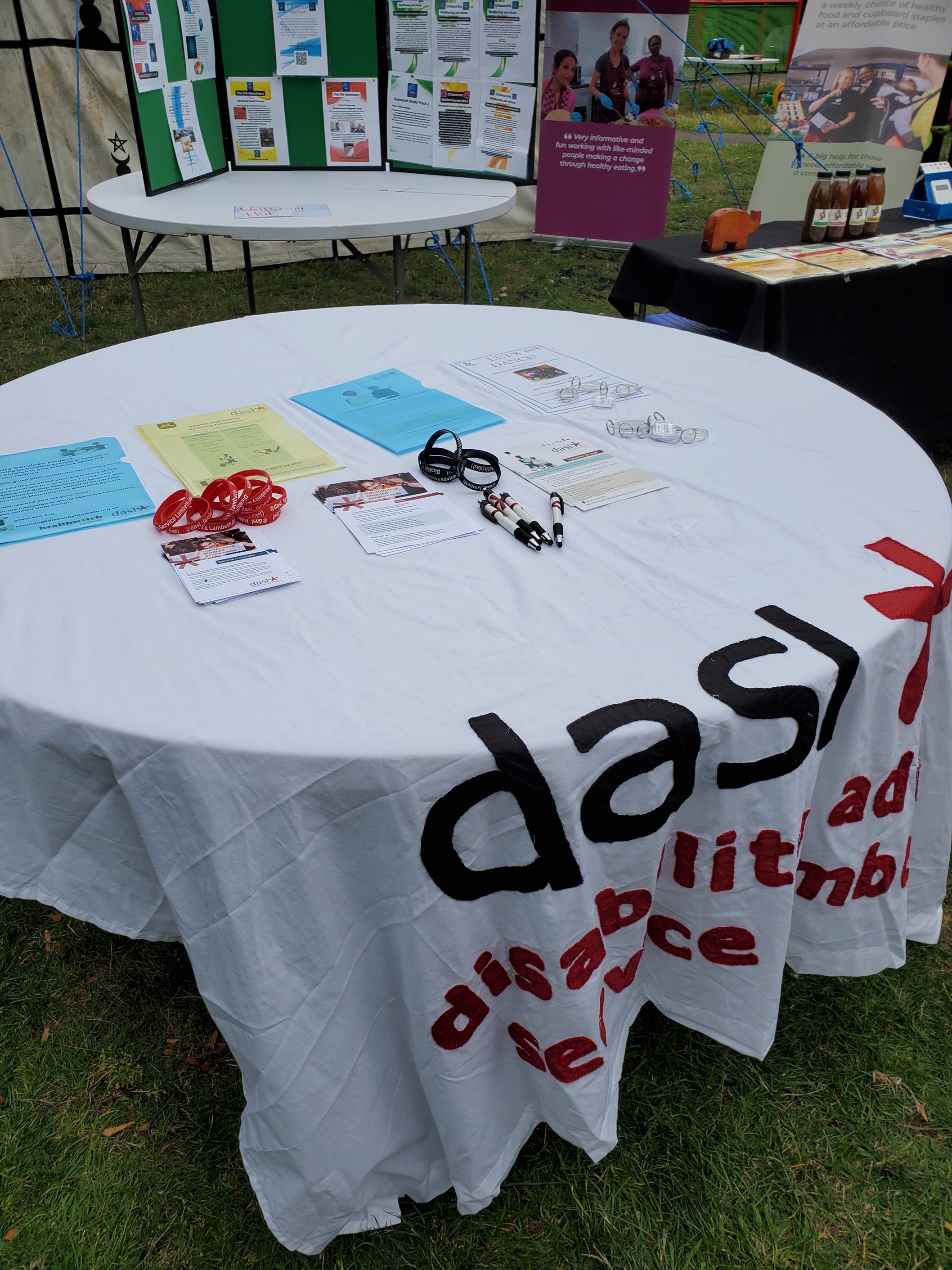
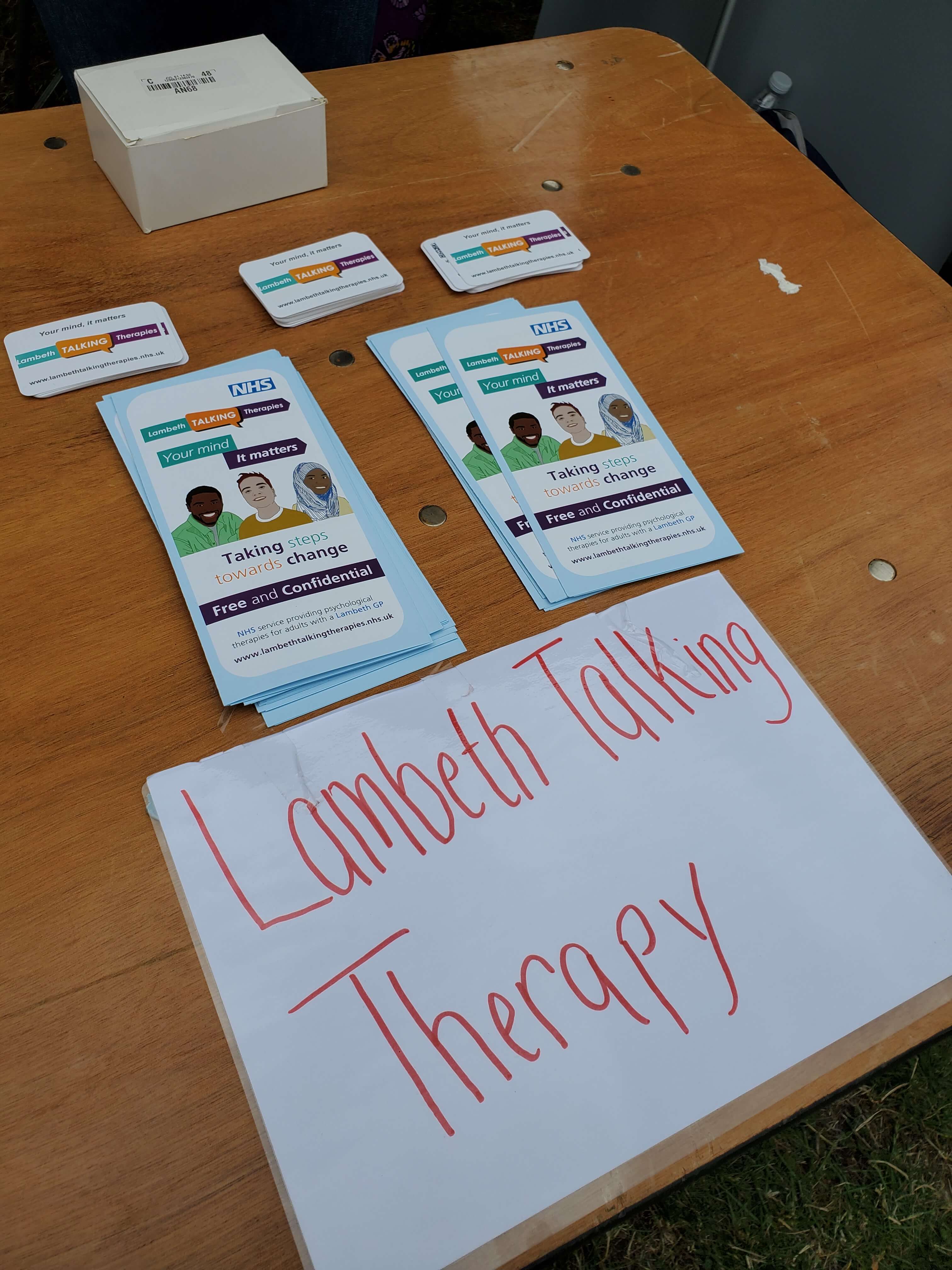
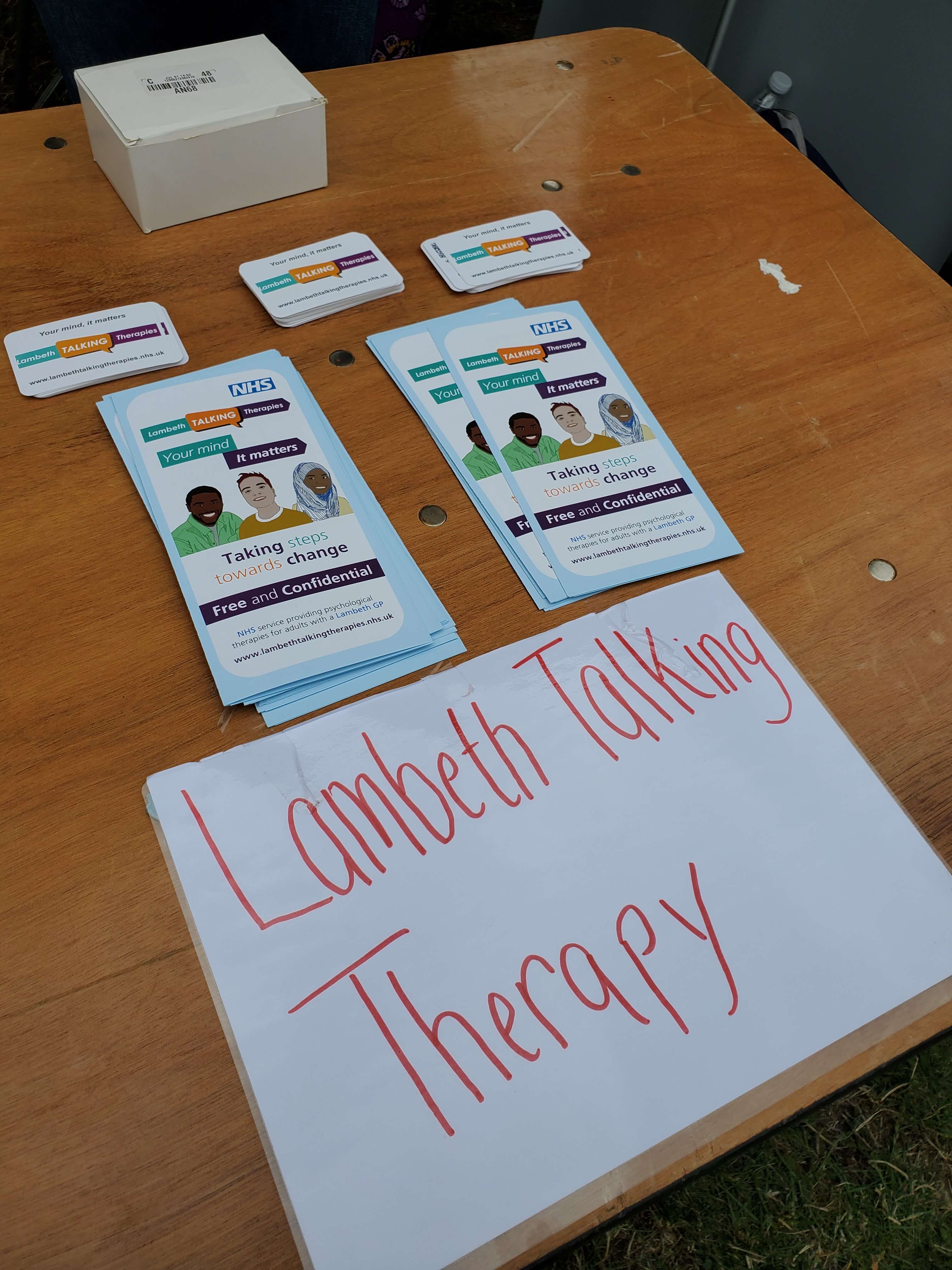
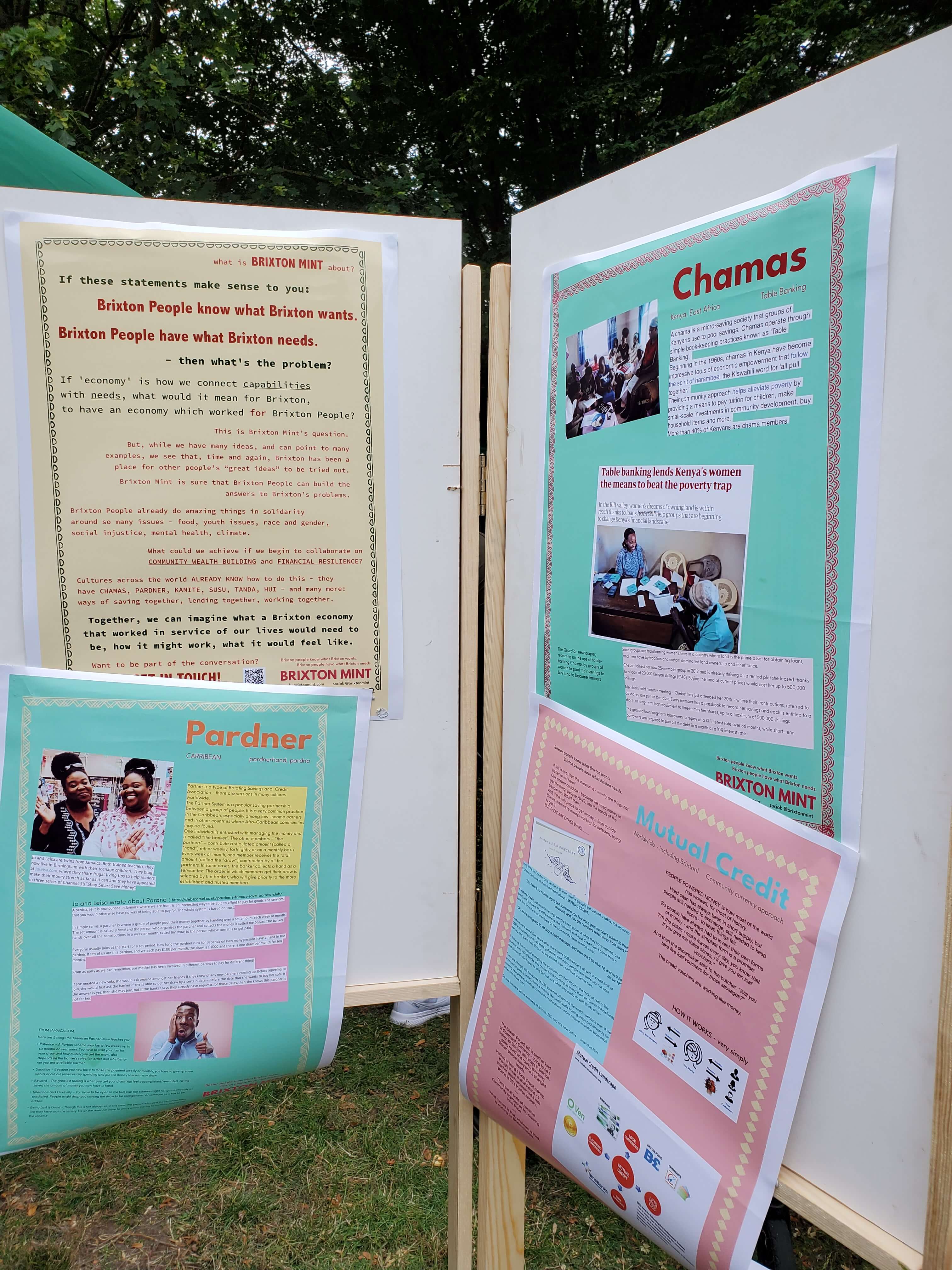
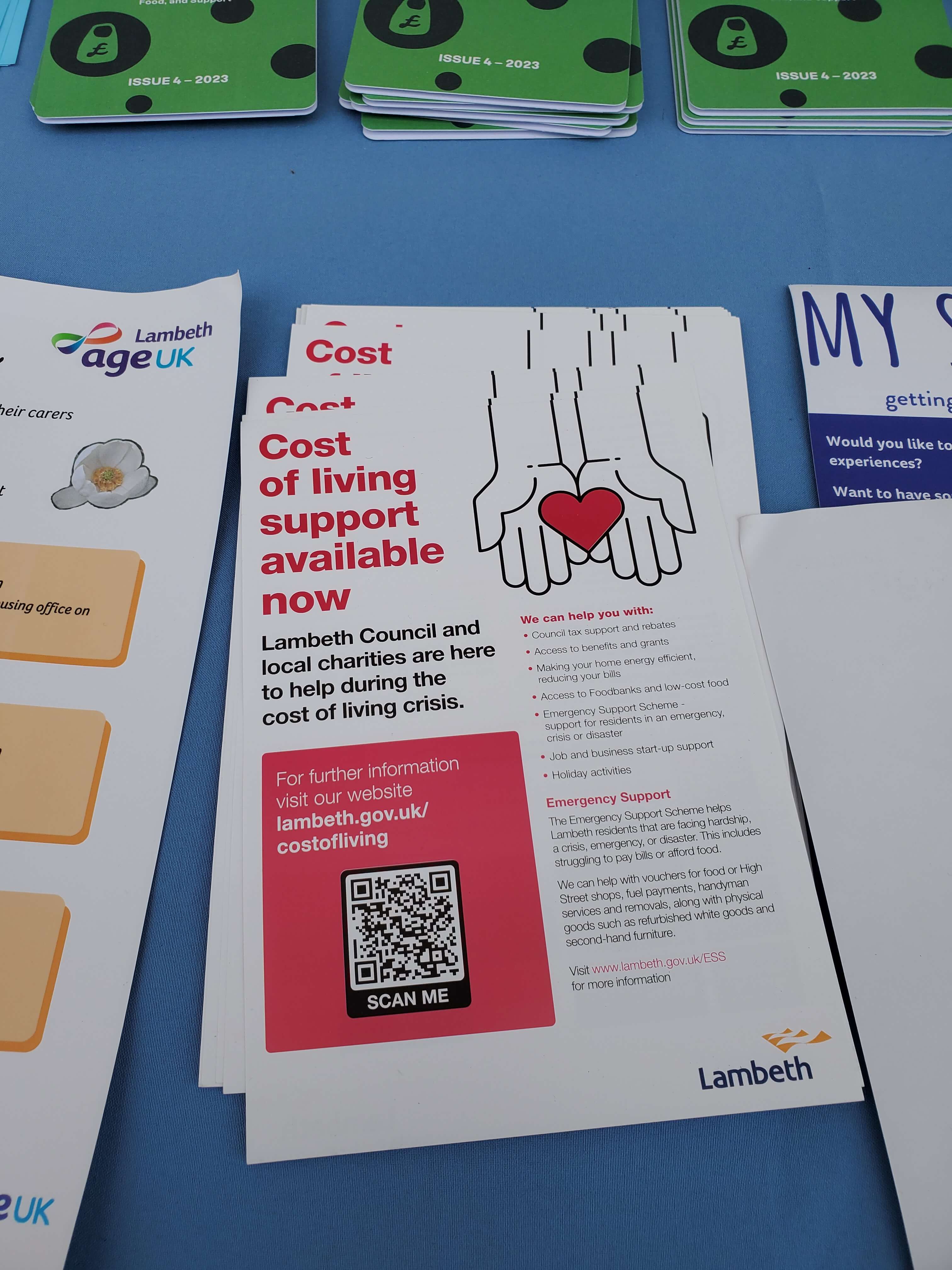
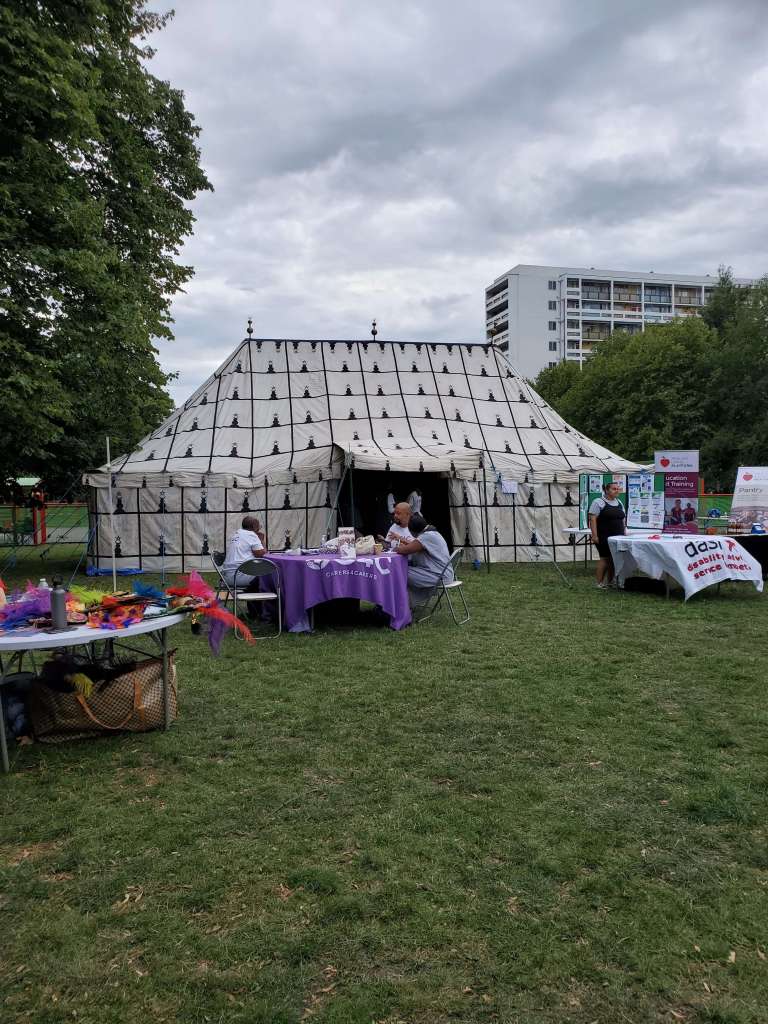
I then spoke to stall holders at Age UK Lambeth, Disability UK Lambeth, Kooth stall, SHARP Gallery and more.
The Wellbeing Festival provided fun for all the family. Workshops and activities to help attendees stay fit and healthy. It was great to see a focus on young people’s mental health from the Kooth stall.
We also had stalls from South London & Maudsley regarding mental wellbeing services.
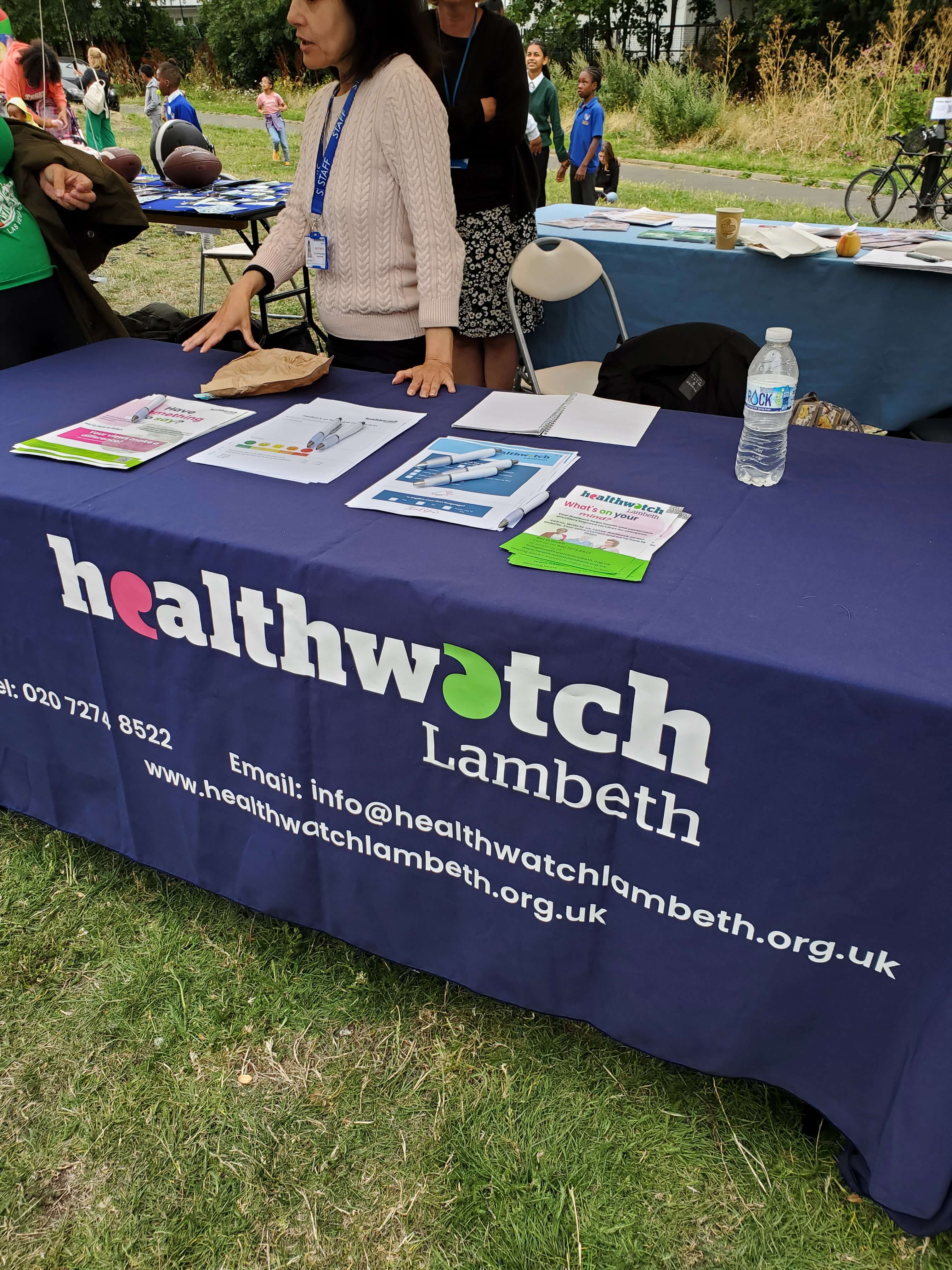
Involvement and providing feedback on health services is so important. So it was great to see Lambeth Healthwatch giving advice and information at their stall.
I noticed there was Jewellery Making and Face painting for children attending as it is great for young people to get creative. There was also a bouncy castle.
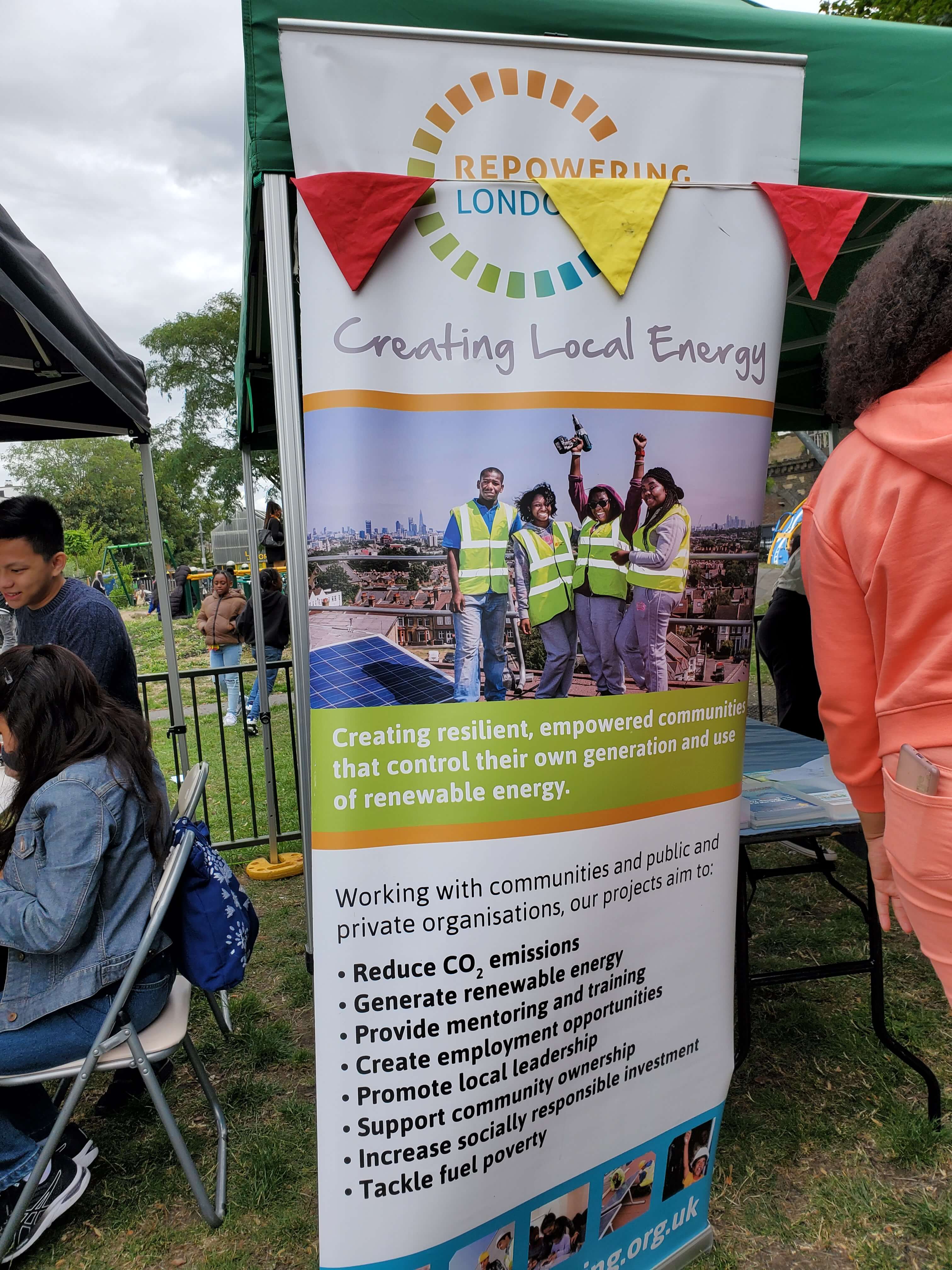
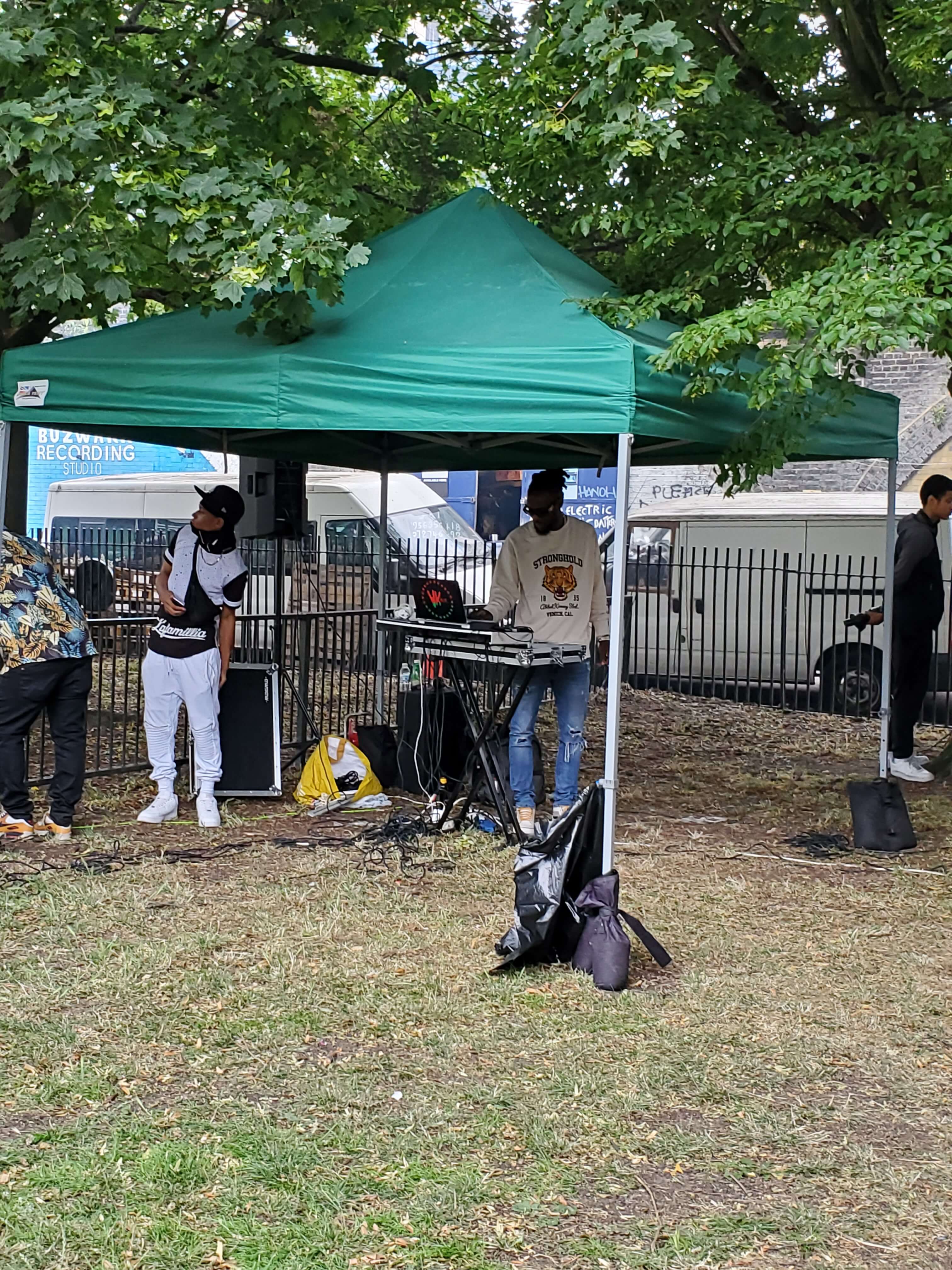
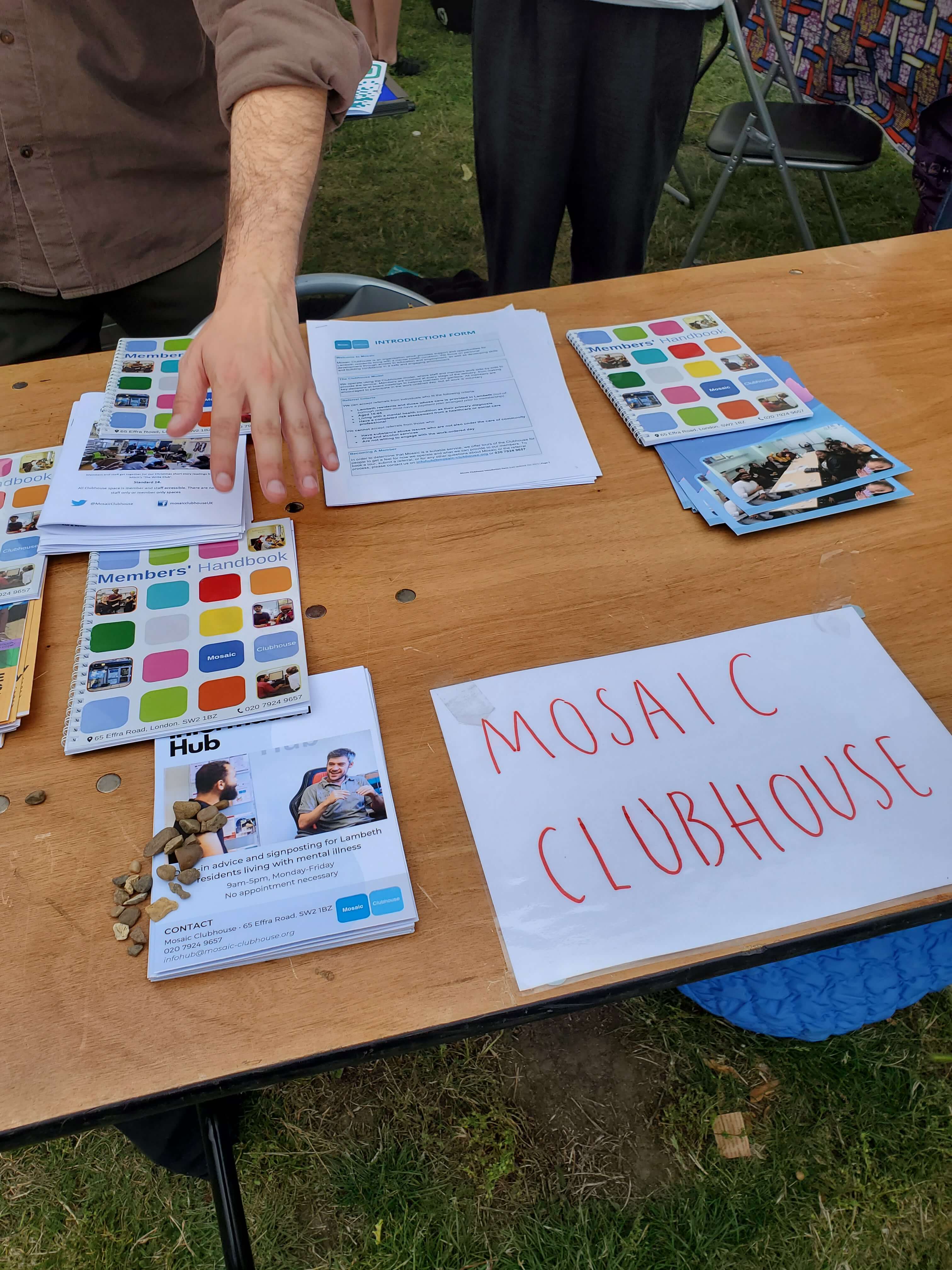
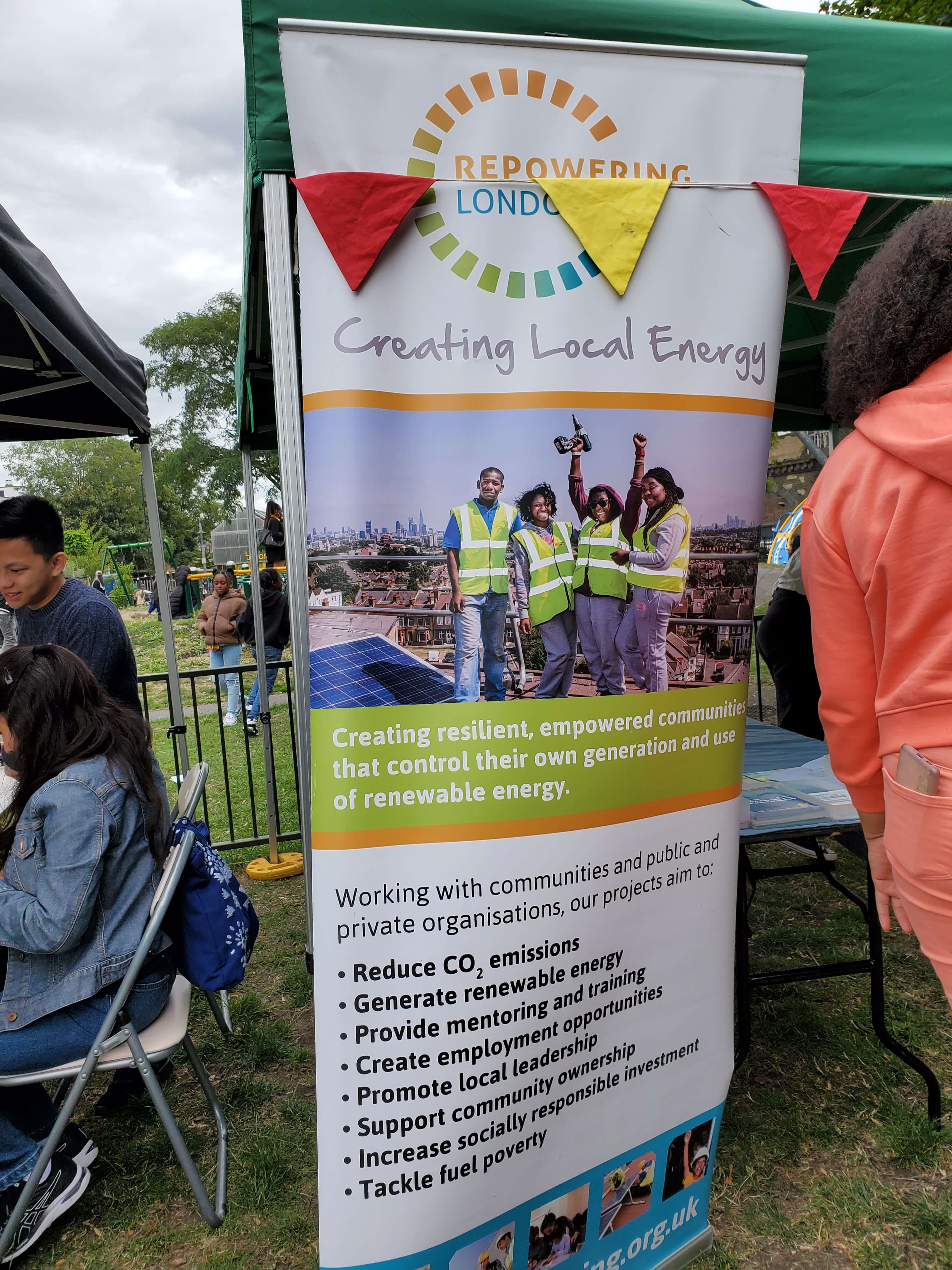
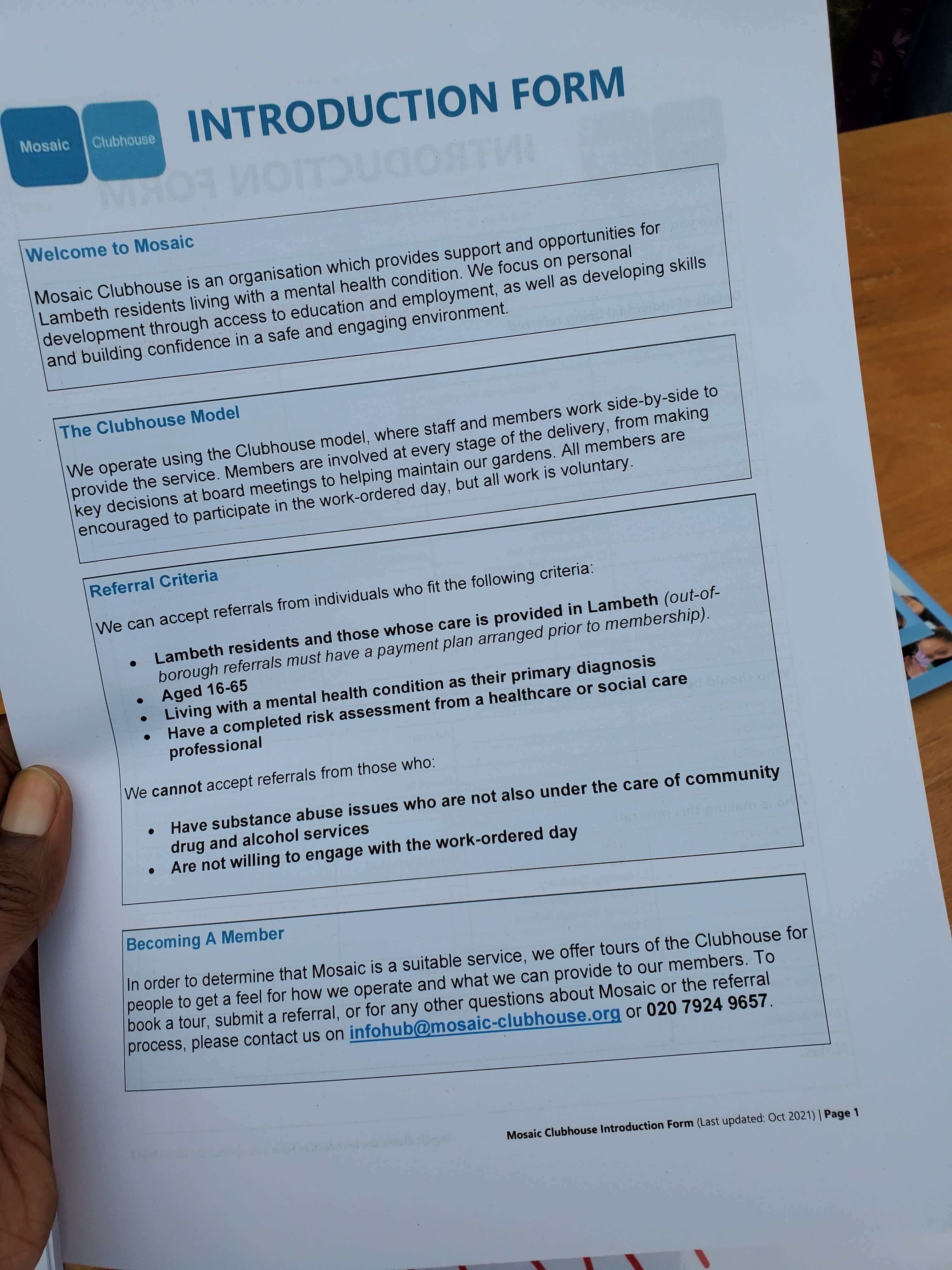
There were other Stall holders including Lambeth Childhood, Active Lambeth, Primary Care Network engagement (especially from the social perscribers). We also had stall information from Moasaic Club House, Certitude, Loughborough Farm, Buzwakk Recording Studio, Big Kid Foundation, Repowering London and Lambeth Libraries.
We also had some great singing performances on the day.
With so much bringing the community together, I enjoyed my visit to the Health and Wellbeing day, everyone was friendly and many wanted to chat about their services to help the community.
A big thank you to the main organisers Anthea, at Thriving Vassall & Coldhabour (Fiveways), Surjit from Ecosystem Coldharbour and Kamika from Chips and to everyone who came to the event.
Welcome to my latest update for joint Southwark & Lambeth carers forum. I have been unwell with COVID for the past week, but due to my previous vaccinations the affect was not so horrible. If I did not have the previous vaccinations I am sure the COVID would have been 10 times worse. If you are caring for someone vulnerable please get the vaccination as you cannot always avoid catching the virus. It is good to have some form of protection rather than nothing.
Speakers for my February forum were
Southwark Heathwatch
Lambeth Healthwatch
Kieran Quirke the Mental Health lead from Kings College NHS FT
Just a quick reminder, the aim of my carer forums is to allow unpaid carers who care for someone suffering mental ill health, get a chance to network and hear updates on what the services are doing for carers and for those using health & social care services. My carer groups cover half of London.
Megan Isherwood and Gosia Kaczmarczykfrom Southwark healthwatch presents
There have been a few changes over at Southwark Healthwatch and it had been a while since they attended the group and engage with unpaid carers. Megan who is the research and projects officer at Southwark Healtwatch gave us a quick introduction on some of their projects. Megan also let my group know how they could get involved with Southwark Healthwatch and their upcoming events.
Megan mentioned that there is a Healthwatch in every area of England, and they were created from the Health and Social Care Act of 2012. Healthwatch are a statutory organisation. Healthwatch are funded by the local authority that being Southwark council, but healthwatch Southwark are very much independent. Healthwatch Southwark hosted by community Southwark and has helped them to work closely with the voluntary community groups in the area of Southwark.
Basically Healthwatch Southwark want everyone who lives in the London Borough of Southwark to be able to access and receive the best possible health and care services appropriate for our diverse community. As a reminder Healthwatch Southwark are the independent champion for the patient voice.
So Healthwatch are here to represent the local community and make sure that services work for those in the borough of Southwark. So this means that they listen to local people about their health and social care needs and experiences. Healthwatch Southwark helps patients and service users voice their views and concerns in order to make services better and more suited to their needs. Healthwatch also have a signposting function. So they can provide advice and information helping people to navigate the very complicated health and social care system. Healthwatch knows that navigating the system can be a real maze, but as an extra form of empowerment they also promote patient involvement in shaping services.
This can mean helping people to get involved in health and social care decision making bodies and processes. Megan continued to talk about how their community engagement can lead to different ways for local people to have their say. Regarding generic experiences this can be both online and in person. Healthwatch also have the power to enter and view services, like GPS, hospitals care homes. Healthwatch can go in and observe them and find out the views of patients and staff.
Healthwatch Southwark connects with local voluntary and community organisations and work collaboratively with them. Healthwatch conducts research, and works on reports and give recommendations to health commissioners (Southwark CCG). Healthwatch also influences boards and committees particular the Southwark Council health and wellbeing board.
Healthwatch feeds into monitoring systems and consultations and they share these concerns with commissioners to make sure your voice is heard and to aid directly into influence change. Megan wanted to finish up her talk focusing on mental health, so she talked about their recent mental health services project. This was a recent report on the mental health services which is published their website site. It came about due to a workshop held in January, where lots of people attended, and there were representatives from South London & Maudsley hospital where they presented their formal response to the report. The report basically identified the key themes and areas that about unmet needs around SLaMs adult mental health community services provision where Healthwatch made recommendations to them on how to address these unmet needs.
The report involves carrying out a survey to find out people’s experiences of the services. Healthwatch focused on issues of access, waiting, suitability, impact and staff. So in the end Healthwatch received 81 responses, which was from service users and carers. The key findings were that the Southwark improving access to psychological therapies, which is IAPTs on if you’re talking therapies, and also the community mental health teams, which were the most used services, followed by crisis services, integrated psychological therapy teams and assessment and liaison services.
Since my carer forum tends to focus on wellbeing, the next section was from Gosia Kaczmarczyk who is Southwark Healthwatch Community Engagement Officer. Gosia did a wellbeing meditation session online for the group to experience. Gosia then went on to talk about the volunteering opportunities at Southwark Healthwatch.
Since Southwark Healthwatch do the enter and view programme. They are going to be working on induction training to train these representatives in the coming months. They will also be recruiting for community engagement.
Healthwatch will also recruit for committee health ambassadors where those interested can even become an advisory board member. Such opportunities can have an impact on how healthwatch do their work and what they are focusing on. It is like a really important part. Volunteers can also help guide healthwatch on their upcoming events.
Anna D’Agostinofrom Lambeth Healthwatch presents
After the talk and engagement from Healthwatch Southwark, it was now Healthwatch Lambeth’s turn to talk about what they do. Anna who is the Engagement Lead for Mental Health gave the carers an overview of what Healthwatch Lambeth does. Anna also reminder my forum that Healthwatch was established in 2013 as a charity, where each part in England has a HealthWatch. In fact there are around 150 Healthwatch organisation throughout England. Anna mentioned it was established to give the people a stronger voice on how health and social care services are really set up and in some cases challenge the way that they are actually run those services. This is why healthwatch really want to hear people voices.
Healthwatch contacts people, liaise with them and gather their feedback, and then they contact the providers to see how services can be improved.
As with what Healthwatch Southwark does. Healthwatch Lambeth does Enter and View – Where they visit commissioned services, interview service users and staff suggest how the service can improve. Healthwatch Lambeth also do Information & Signposting – they help people find the information & services they need and signpost them to organisations that can provide support.
Anna wanted to talk about a particular project Healthwatch Lambeth are currently running this is in regards to healthcare during the Pandemic.
Healthwatch Lambeth want to talk to people with mental health needs and their carers How easy or difficult was it for you to access healthcare? Did you get the support you needed? Where you offered an annual health check? Were you offered Covid-19 testing and/or the vaccine?
Kieran Quirke From Kings NHS trust presents
Kieran gave us a brief update from King’s College Hospital NHS Foundation Trust. Kieran admitted that since the last time he came to the group, a lot of the projects have been put on hold because the Omicron virius (a varient of the corona virus). It is only in the last couple of weeks, things are starting to get back towards a state normality however one of the first things to mention is that visiting the hospital is now back to to visitors or patients across the majority of sites, which is an improvement.
Kieran mentioned that Kings NHS trust can hopefully start moving forward on some of the John’s campaign stuff, which I stalled during the pandemic where the dementia and delirium team are leading. Kieran mentioned two important things to mention updates where the first was the launch of their butterfly Cafe dementia group, which is due to start on the 8th of March in the afternoon, and they have got a venue for that where it is going to be held at the institute of psychiatry, They have got a room within the lounge area. Where that will be running monthly.
It’s free to attend. There’s no ability to provide transport, unfortunately, but there is wheelchair access and there will be some refreshments. It is also going to be supported by KINGs NHS volunteers alongside some of their community partners. All they need to do is email in advance to say they’re coming where there is a bit of a chance to plan for numbers that is needed to provide for.
Another update is joint working with Mosaic clubhouse, where they come in and engage with some of their medical patients. This project was unfortunately delayed because of the pandemic. So it has taken a little while to get it back up and running. They are looking to launch in March, although it is a pilot and will initially work with four wards being medical wards. If there is a patient with a mental health concern, that is within the psych liaison threshold, The ward can then refer to Mosaic Clubhouse and Mosaic will send to a member of staff and a service user who will come and visit and spend some time with the patient and talk them about signposting Community Services, and then potentially revisit if need be, it’ll be on the medical wards, so there’ll be probably quite short, brief interventions. But that’s another really positive development.
The last update is that they plan to develop a new carers policy. This is one of those projects, which has been suspended and suspended, but hopefully now they will start to get the wheels rolling underneath it. The final update is for Matthew to get involved in KINGS NHS carers day celebration.
This is my update for my Joint Southwark & Lambeth mental health carers forum for February
Welcome to the first joint Southwark & Lambeth mental health carer forum. As usual the forum brings together unpaid carers from both London boroughs and beyond to seek engagement from mental health, health & social care services. There will at times be national speakers or I might talk about carer empowerment or carer awareness from my books.
Speakers for January were
Cristina Clarke – Non Regulated Staff Code of Conduct Project Lee Roach – Lambeth reflections on carer focus Alice Glover – SLaM involvement structure breakdown
Cristina Clarke presents
Cristina explained a little bit about her role and work that she is doing to support the nursing Directorate. The project is specifically on unregulated staff code of conduct that they are currently reviewing. Cristina is a nurse by background where she is supporting the Deputy Chief Nurse for the trust to look at the policies and the clinical policies across the Maudsley NHS Foundation trust. Cristina is also working on safer staffing. One of the things that they have done recently, is set up a service user and carer review group looking into such policies. It is true that in the past policies can often be quite dry, quite long, lengthy, and at times don’t always have the voice of people using the services and haven’t always been scrutinized appropriately. So they have had to set up a group where service users and carers get involved, unfortunately they are low on carers, in fact, most of the people in the policy review group are service users, so they really want more voices from carers to help review clinical policy going forwards.
The thing is it’s not only policy regulation, but it’s related to staffing. They have got a code of conduct for the NHS trust, which is for those who aren’t sort of governed by a statutory agency. For example where the nursing workforce are governed by the National Nursing Midwifery Council, or medics are usually members of the GMC. SLaM have recognized that there’s a huge proportion of the workforce, including peer support workers, and psychologists, clinicians that don’t have a code of conduct. Still the Trust has regulation policy but it’s quite old. So they have been reviewing it and wanting to bring it up to date with national guidance. They are looking at aligning the policy with the trust strategy that was reviewed recently. Cristina mentioned that they are really keen to get some feedback from service users and carers, because it effects such a huge part of The workforce who are providing care day in and day out.
Cristina reminded us if anyone was interested in getting involved in policy review they actually have got some focus groups coming up. If they want to just have a read a bit and get some feedback, whether it be in a quite a structured way, or if it’s just informally just having a chance to read and feedback is all that is needed.
Alice Glover presents on involvement at South London & Maudsley
It was now Alice Glover turn to present. She is one of Muadsley’s Patient & public involvement leads. Alice actually attends my forums from time to time, and she wanted to talk about encouraging people to get involved at the NHS trust if the can. Alice and SLaM are really keen to get more carers / family carers to be involved in some of the NHS trust improvement work. Alice mentioned it was quite timely hearing what Christina had just talked about, because that’s a really good example of how people can get involved in helping improve the services. Alice moved to talk a bit about what the involvement register and how it works in terms of opportunities for people to review the policies.
The involvement register is literally a list of people who have experience of the SLaM services, either as a service user, or as a family member or carer, once you’re on this list, you can be paid for your time, if you help Maudsley services with service improvements. So the people that are in the group that Christina talked about are actually members of the involvement register, they may come together and meet once every six weeks. People can be paid for their time during the meetings, but they are also paid for their time if they’re reviewing documents.
Alice mentioned she understands that there maybe challenges around they’re carrying responsibilities but also people may be working. So for carers, it may be really important to have opportunities to comment on documents in their own time when it’s convenient for them. If they are able to get on the involvement, register, then there are differences that people can be paid for their time. And the payment rates are 10 pounds an hour for reading documents outside of meetings, if you’re on a Zoom meeting or a team’s meeting, and you might be using your data, then the payment rate currently is 15 pounds an hour. And you can do up to 30 hours a month. On the involvement register, it’s a very ad hoc, most people don’t do anywhere near 30 hours is completely up to you. Most people would do maybe a couple of hours a week before that.
I produced a list of involvement operations which Alice started talking about at length. Alice mentioned the list is quite a broad list. Each of the departments have collated a list of the sorts of things that people are involved in. Alice mainly covers Lambeth and Southwark. In those boroughs there are advisory groups. This is were there are a group of people with lived experience who meet every month and discuss service improvements.
Alice finished up her talk stating that a staff member or manager might come along to the advisory groups and say what projects they are thinking of doing, it could be thinking of making a change to the inpatient services and they want to know what the group thinks about it. As a carer, or family member, they can bring their own perspective and say, “Well, that might work. But have you thought of this?”
Alice feels that when people are designing services, historically, there have been times when the carers perspective hasn’t been included, and Maudsley NHS are trying to work harder to make sure that does happen. So advisory groups meet every month and basically they are a group of people giving advice around their lived experience.
Lee Roach presents on how Lambeth MH services have been engaging with carers
Lee Roach who has been supporting the forum wanted to run through some of the support that Lambeth MH services have been providing to carers. SLam now have a dedicated carer support service. There is carer support service for psychosis and bipolar. They predominantly have been operating their meetings by phone during the during the pandemic, plus they have a monthly support group where they run over teams a bit like matthew’s carer forums, which are kind of moderately well attended. It seems people have contacted by phone rather than using using online technology for groups. The Lambeth services usually have around 100 contacts a month with carers.
There are other means of carer support in the form of ward carer champions. Lee mentioned that the carer champions are individual staff members who are either based in one of their teams. So either at the ward or in one of the community mental health teams. They have been able to maintain a register of carer champions in all of their community mental health settings. So for the short term, their Lambeth support services the focus within the home treatment teams and all of the wards in the hospital who have got carer champions.
Lee continued stating that the way that they support them is that they have a forum every two months, which they share with Southwark support staff. So Southwark & Lambeth carer champions tend to meet and update. They have also been running these online groups, which have been reconfigured a number of occasions, around dates and times and things. Although online meetings are quite successful with community carer champions from the Lambeth community teams, there are not so successful with the impatient carer champions. So Lee is looking at probably running inpatient face to face groups as soon as possible with the carer champions.
The idea of these meetings is that they can share good practice. So some of the things that weren’t on the wards might not be working as effectively on those mental health teams. Some of the issues might come up against, and also just an opportunity for for those of us dealing with carer’s role in Southwark or Lambeth to kind of update them on changes across the trust new initiatives. These things could be like what will have an impact on carers. As mentioned Lee has been running a Lambeth inpatient family and carers group. These run every two weeks. Where it is a virtual meeting where they use the Microsoft Team’s platform. Lee has to request carer details from the impatient team managers and the carer champions where he gets in contact with carers and then he explains about the meeting, and then invites them along.
Lee also talked about support from matrons at the hospital who come along to the online carer support groups. They are joined by the community pharmacist to answer questions about medication that carers might have. Lee is also involved with Carer’s Lambeth Hub, where he attends a number of different meetings that they run carers collaboration. These groups usually discuss carers strategy where to make sure South London and Maudsley are finding out what’s going on with other carer organizations.
So that we can make sure that our people we’re working with about that, and also that we’re involved in black thrive, Lambeth wide initiatives around carers and Lee attends Matthew’s National triangle of care meetings, this is where South London & Maudsley is working on there triangle of care audit. There are going for their first star.
Welcome to a brief update of my Joint Southwark and Lambeth Mental Health carers forum for August 2021. There was no speaker for that month so I presented on the following being:
The Importance of carer involvement
Plus I also presented on Carer empowerment
Funnily enough the turn out for the joint forum was very good and to be honest I couldnt present for a long while due to carers speaking to each other on how things have been developing for them.
Welcome to the July update of my Joint Southwark & Lambeth Carers forum. The forum is focused on unpaid carers who care for someone suffering mental ill health.
Speakers for the July forum were
Carol Ellis: Promoting her son’s book regarding surviving suicide
MP Helen Hayes – Speaking about carer updates for the boroughs
Dr Natasha Tyler – An associate Researcher from University of Manchester
DR NATASHA PRESENTS ON HER RESEARCH.
Dr Natasha started off by saying that as a researcher from the University of Manchester at the patient safety Translational Research Center. She has been working with Matthew probably for about three or four years now. He’s been involved in quite a bit more research and she was just going to give a little bit of an overview about involving carers in quality and safety research. Dr Natasha wanted to speak a little bit about involving carers in quality and safety research.
Welcome to June 2021 Joint Southwark & Lambeth mental health carer forum update. Below is a list of speakers for the carer forum.
Faith Smith – Unpaid carer on her 136 project
David Meyrick – Southwark inpatient carer lead updates on carer support.
Alice glover – SL&M Patient & carers involvement
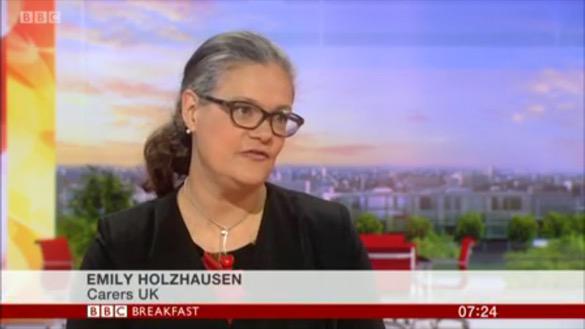
Emily Holzhausen – Director of Policy and Public Affairs for Carers UK
Elinor Bradley – on gathering carer experiences for Royal College of Psychiatrist
Just a quick note that the Southwark & Lambeth carer’s forum runs once a month and seeks to help empower families and carers who are caring for someone suffering mental ill health. The idea is for families and carers to know what is going on and also to hold to account, while getting educated about unpaid carers, health and social care.
Faith Smith presentS ON 136 PROJECT
Faith who is one of the carers involved at SL&M (South London & Maudsley) involvement register, basically involvement scheme for patients and carers. Faith is also a member of several of my carer groups. Faith mentioned she is a carer advocate and is working on a new project that she would like to introduce to us this afternoon. The project is around the section 136 of the Mental Health Act. Section 136 of the Mental Health Act is actually a section that gives the police the power to remove a person from a public place when they appear to be suffering from a mental disorder to a place of safety.
The place of safety could be to a hospital or to police station. We all know that those those kinds of interactions do not always go well and the outcomes are not always what we would like. So she has been asked to set up and share what is going to be called a Pan London, section 136 carers board. The aim of the group is to establish a solution which a focus group of experts by experience, which would be a group of carers and service users experts by experience.
The idea is that the group focuses on coproduction, a safe environment, holistic approach, which would then in turn lead to better outcomes.
David Meyrick SL&M Southwark Inpatient carers lead.
Next to speak was David Meyrick who works hard to promote carer inclusion on inpatient wards. David wanted to speak about the carer champion roles and how that works on SL&M inpatient settings.
So across the trust, every team should have carer champion either either one or two, on the wards, and so that we have two champions for each team. The idea is that the kind of champion will lead on the work that team does for me and carers, but not in a way that they get left with all the work for carer support within that team.
What we want to do is encourage staff to create an environment where the whole team has carers on a focus for evidence business the same way that we approach safeguarding, for instance, safeguarding is ever in business.
What you want to do as carer champion is to be more trained, be more aware and have more case knowledge and skills around carers, but use that to support their colleagues so that we get a consistent level of support for carers. So currently we have two carer champions, each team has currently, in the inpatient setting, that can be a little bit of a challenge, because it’s a high turnover staff. David has been busy with carer welcome packs to give to families and carers on the wards and continuing with his carer support groups.
Alice Glover SL&M public and patient involvement
Alice wanted to talk a little bit about involvement. She wanted to be a little flexible on the issue of involvement because she not sure what members wanted to know regarding involvement and co-production. Alice was happy for anyone to put in questions in the Zoom chat or even interrupt her presentation. Alice gave a quick overview of the involvement side of things. Alice covers Lambeth and Southwark, but for Croydon and Lewisham that is covered by Jane Lyons and other boroughs and directorates. Alice feels the whole thing about involvement is about how we’re improving and developing our mental health services, and how we’re improving people’s experience by people who use our services and people who care for them. The important thing is that as a mental health trust, we are listening to people’s experiences and those experiences are influencing changes within those services.
So there’s lots of ways that people are involved in terms of sharing their experiences from filling in satisfaction questionnaires, with specific questionnaires for carers. She knows David has done some really good work to encourage carers to fill in satisfaction questionnaires on the wards so that we can start to understand how carers are experiencing our services. Where it is not just about how their loved ones are experiencing things, but actually how carers also experience services.
As a mental health trust we look at complaints, and look at incidents and even compliments. So there are many ways of how we try and understand how carers are experiencing SL&M services, but also on behalf of their loved ones. Alice continued to explain other forms of involvement including the involvement register, which is basically a list of people who have been through a process and it is for people with lived experience of using our services, or as a family member or carer.
She is aware that there is at least 5 people at the forum who are on SL&M’s involvement, which they may want to say something about their experiences of being on the involvement register. Alice just wanted to say, they are always encouraging more carers to join our involved register, at the same time recognizing the limitations that people have on their time and totally understand that people don’t always have the availability just because of the other things going on in their life. Not least of which may be caring for their loved one.
The involvement register can be a flexible way of getting involved and being paid for your time. It means that you can you have opportunities to get involved in projects, sharing experiences as a carer in a way to try and influence change in terms of how services are developed.
Emily Holzhausen from Carers UK presents
Emily from Carers UK was delighted to be at such a carer-led forum and wanted to mention how she met Matthew quite a few years ago and I was so impressed with how he spoke about carer involvement at mental health trusts. She also wanted to mention how impressed she is with Matthew as he advocates for carers in regards to national work, because he really draws on the experience of working with unpaid carers and their stories. Emily enjoyed the discussions regarding mental health services and how unpaid carers experience involvement.
Emily has been around for many years campaigning on the unpaid carers movement, but she does wonder whether with some of the engagement and involvement is very well aware around the benefits issues with those payments. Emily wondered if it’s possible to be flexible around some of the expenses, for instance maybe paying for WiFi or data or something like that to help carers engage in a different way. If they can’t take the payment because of benefits.
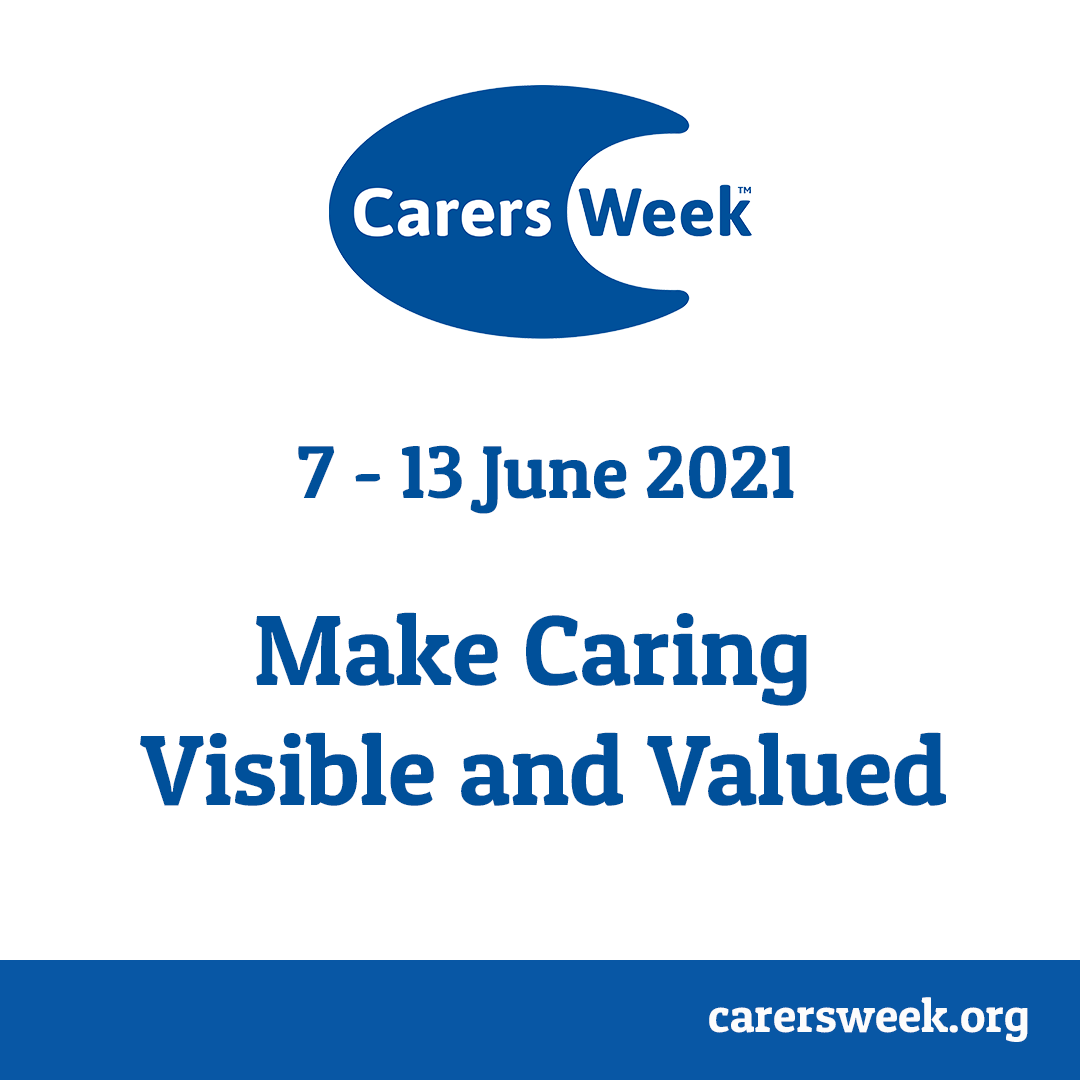
Emily continued to speak about Carers Week 2021 and talked about why they campaign for Carers Week? They do it because caring is so often invisible, because it can quite often a private matter. The problem can also be a double edged sword because while its private, it can also mean carers can suffer in silence and isolation. So this year, it allows us to talk to anybody we want to really about caring, whether that’s the general public, families of friends, whether it’s employers, services and so on. So this year 2021, Carer’s UK chose the theme “visible and valued”, because last year, we said making caring visible, and carers told us we want a bit more than that. So such a theme added in.
Carer’s UK used their words and added invisible and valued this year. It has been really interesting as We’ve had a lot of engagement. Carer’s UK has done more events with employers than ever. Such events with employers and many more, but another thing is Carer’s UK had last year was tough for people because many are still getting to grips with the pandemic. So this year, there has been an increase in online activities with less being face to face.
Emily spoke about numerous wellbeing activities, which have been focused on carers, these were in terms of the politicians, where they had 66 MPs pledge support for carers week. Plus a number of MPs came to hear carer stories at one of Carers UK focus event.
Elinor Bradley on Royal College of psychiatrist project
Elinor attended the carers forum to speak on her latest project, she also works for Kent & Medway NHS trust, but she is representing the faculty of rehabilitation for the Royal College of psychiatrist. Elinor wanted to speak about a national issue, where she suppose it was similar to what Emily was talking about bringing the voice of carers forward. As of this moment the Royal college is sort of trying to represent the voices of carers and service users of rehabilitation services. She was sure many of those attending would know about mental health rehabilitation, but it’s really the branch of mental health services for people with complex mental health difficulties quite often psychosis. For those patients with psychosis, they have got some residual impairments, that really limit their ability to function independently. So quite often they unfortunately have had lots of repeated admissions, lots of crisis admissions, or lengthy admissions.
The royal college of psychiatrists have campaigned quite hard for the voices of people who have got complex mental health difficulties. This has sort of resulted in a new NICE guidelines, which are very sort of focused on reducing out of area care, and being focused on Person Centered Care, and also the involvement of carers and family as part of the support system.
So the RCPSYCH has done some really good work in the college, but what they are aware that they don’t really have the voices of carers or those other service users with lived experience represented on the website. So they currently engaged in a project and to collate some narratives or some stories of service users, for carers with lived experience of complex mental health.
The aim is to give those a platform nationally, so that would be on the Royal College of psychiatry website. Plus also to use experiences to work towards future campaigns and guidelines that we should be working towards. This is so that the royal college is looking for the good and the bad of supporting someone with complex mental health difficulties. This can also extend to the good and the bad of rehab services or even 136 assessments and inpatient wards as she mentioned on what David was talking about earlier on.
The aim is to raise the voices of the whole journey of supporting someone with complex mental health difficulties, so the college is looking for accounts, narratives of a range of people nationally.
This concludes June’s joint Southwark & Lambeth Mental Health carers forum.
Please check out our next set of carer group dates.














 A Caring Mind