The session opened with updates and heartfelt check-ins. One of our carer members, shared a deeply personal and challenging situation regarding her loved ones declining mental and physical health. Despite strained family dynamics and the emotional burden of caring, a carer is courageously advocating for her loved one and seeking support through nursing services and assessments.
Peer Support: Insights from Experience
Long-time members offered valuable perspectives from their own journeys. A carer shared their struggle supporting individuals, which showed a stark reminder of the emotional and logistical toll caring can take. Another carer encouraged fellow carers to prioritise their own well-being, even in small ways a cup of tea, a short walk, a moment to breathe.
Why Unpaid Carers Should Join Our Mental Health Carers Forum and Why Oxleas & Our Local Authorities Should Listen
By Matthew McKenzie
Caring for a loved one with mental health needs is a journey full of challenges, isolation, and too often lack of support. That’s why we run a dedicated Mental Health Carers Forum with Greenwich Carers Centre that brings together unpaid carers from across Greenwich and sometimes other boroughs since Oxleas covers Bromley and Bexley.
In our most recent forum, carers opened up about what it’s really like to navigate services and support their loved ones. The message was clear: unpaid carers are doing more than ever often alone and we need to work together to make sure they are not left behind.
The Power of Peer Support
One carer said:
“I’m a sandwich carer — looking after my elderly parents and my daughter with complex needs. Groups like this are a lifeline. It’s a space to share, learn, and recharge.”
For many carers, peer support is one of the few places where they are truly heard. Another participant explained:
“It helps so much to hear from others going through similar things. It’s the only way I know what services are available and what’s changing.”
Challenges That Carers Face
Through the forum, we heard repeated concerns:
Lack of joined-up care between GPs and mental health services
Delays in care planning and assessments — or carers being excluded altogether
Confusing systems — carers are often left chasing up GPs or social workers themselves
Failure to take carers’ expertise seriously in assessments and planning
Emotional strain — many carers at breaking point, needing better respite and emotional support
One mother of three autistic children shared:
“I told them my son cannot tolerate bright light that’s why the curtains were drawn. But the assessor just complained about the curtains and parking. They didn’t listen to what my son really needs.”
Presentation: Advocating for a Loved One During and After Mental Health Crisis
Matthew McKenzie delivered a detailed presentation on how unpaid carers can effectively advocate for their loved ones, particularly around mental health services.
Key points included:
Carers are not just supporters, they are also advocates for their loved ones
Building relationships with key professionals (GP, care coordinator, psychiatrist, social worker) is crucial
Carers should keep records of symptoms, interventions and communications to support advocacy
During a crisis, carers should:
Stay calm
Be factual about symptoms and risks
Be assertive (but respectful) in requests for urgent action
Request risk assessments and ask for information to be recorded
Understand confidentiality rights and use carers’ rights under the Care Act
The importance of self-care for carers, advocacy can be exhausting, and carers must seek peer support and breaks
Carers should also use the complaints process and escalate concerns when services fail
A Call to Oxleas NHS and Local Authority
We know big changes are coming, NHS England reorganisations, funding pressures, staff reductions. But one thing won’t change: the system depends on unpaid carers.
That’s why we urge Oxleas NHS Trust and the local authorities to:
✅ Regularly engage with this forum to hear carers’ voices ✅ Ensure carers are meaningfully included in care plans and reviews ✅ Offer more training and support for staff on carer involvement ✅ Improve clarity on who carers can contact in a crisis ✅ Work with us to strengthen co-production, not just in theory, but in practice
As one member put it:
“If the services won’t be there in full anymore — then carers will have to do even more. But we can’t do it if we’re broken.”
Join Us
If you’re an unpaid carer supporting someone with mental health needs, whether you’re new to caring, or have years of experience, please come along.
You’ll find a space to share, learn advocacy skills, and connect with others who truly understand. We also run a peer WhatsApp group, ask if you’d like to join.
Together we are stronger and louder. The more carers attend, the harder it is for services to ignore us.
For more info or to attend the next forum: contact
The Power of Poetry and Storytelling in the Lives of Carers
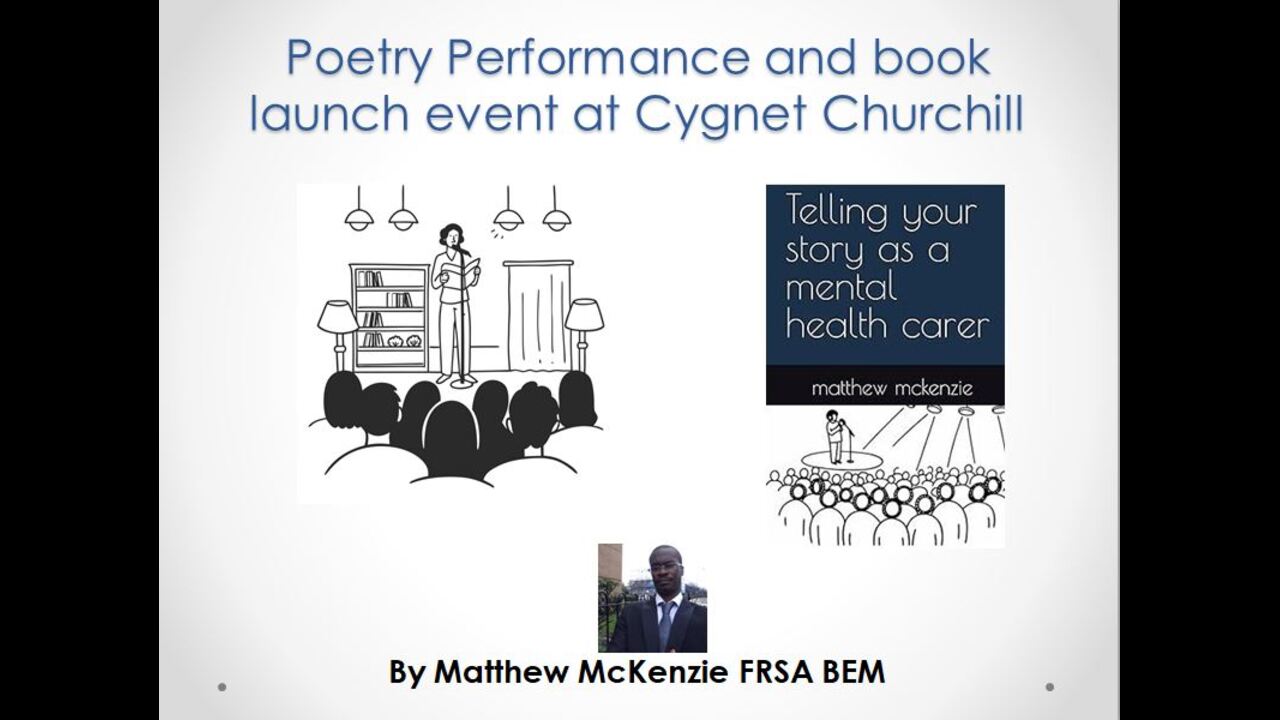
Caring for a loved one with mental health challenges or chronic illness is a journey marked by both hardship and hope. Too often, the voices of carers those who provide unpaid, tireless support are overlooked in the broader conversation about health and wellbeing. Yet, as this moving gathering of carers and poets reveals, storytelling and poetry can be transformative tools for connection, healing, and advocacy. So it was an honour to host our first poetry event at Cygnet Churchill for the 13th of June during Carers Week 2025
This Blog explores the themes, experiences, and creative expressions shared by carers, drawing from a vibrant community event centered on poetry, storytelling, and the lived realities of those who care. Through their words, we gain insight into the emotional landscape of caring, the challenges faced, and the resilience that emerges when stories are shared.
To watch the performance, please view the video below.
Giving Carers a Voice: The Motivation Behind the Book
The host of the event was myself (Matthew McKenzie), as a prolific author and advocate, where I have dedicated my eighth book to amplifying the voices of mental health carers. For me, books are more than just a means of communication they are a way to reach people who might otherwise remain unheard.
Understanding the Role of Faith and Spirituality in Caregiving
Caregiving is often seen as an act of love and dedication, where individuals selflessly care for loved ones dealing with long-term physical or mental health issues. For many, the journey of caregiving can be particularly challenging, filled with emotional, physical, and psychological hurdles. However, one essential aspect often intertwined in this journey, especially for black carers, is faith and spirituality.
To watch the video lecture by Matthew McKenzie, click the video below
The Intersection of Faith, Spirituality, and Caregiving
Faith and spirituality can significantly influence those who are unpaid carers or caregivers, particularly within minority communities. Whether through organized religious beliefs, church communities, or personal spirituality, faith can provide strength, resilience, and coping mechanisms essential for caregivers.

 A Caring Mind