Challenges of Carer Over involvement in Mental Health Caregiving

Understanding Over-Involvement as a Mental Health Carer

Welcome to another lecture taken off my YouTube channel. If you want to watch the lecture please see the video below.

Caring for a loved one with long-term mental ill health is a profound act of compassion, resilience, and often necessity. For countless unpaid carers, the daily reality involves advocating, supporting, and filling in the ever-widening gaps left by under-resourced mental health systems. But amid this dedication, a challenging reality emerges: what happens when you become “too involved” as a mental health carer?

Navigating the boundary between healthy support and over-involvement is fraught with emotional, social, and systemic complexities. For many carers, especially those without significant backup or support from services, over-involvement isn’t a deliberate choice. Rather, it’s a reaction to anxiety, lack of resources, unavailable respite, or a deep sense of responsibility, factors often compounded by the failures of the very systems meant to help.

This article explores the nuanced challenges of over-involvement, the psychological and social fallout for carers, the systemic pitfalls that fuel this cycle, and constructive pathways forward.


What Does It Mean to Be “Too Involved”?

Over-involvement as a mental health carer doesn’t refer to love or dedication, but to a state where healthy boundaries are blurred. It can look like:

  • Constantly monitoring or managing every decision or behavior: Driven by anxiety, the carer feels compelled to oversee every aspect of their loved one’s life.
  • Neglecting one’s own needs and identity: Support shifts from helping to living solely for the cared-for person, with carers sidelining their own health and well-being.
  • Becoming the sole or primary source of support with little to no backup: In the absence of adequate services, carers take on overwhelming responsibility.
  • Feeling unable to step away—even when necessary: Carers may feel there’s simply no option to rest, leading to chronic exhaustion.

While not every carer will experience all of these, most will likely encounter at least some, especially during crises or prolonged periods of under-resourcing.


The Emotional and Social Toll of Over-Involvement

Burnout and Fatigue

The most immediate impact of over-involvement is caregiver burnout. Continual vigilance, lack of sleep, and emotional strain take a heavy toll. Fatigue accumulates until carers can no longer function effectively, putting their own mental health at risk.

Guilt, Anxiety, and Isolation

Carers often wrestle with overwhelming guilt—fearful of not doing enough, or of something going wrong in their absence. Anxiety about possible crises or relapses becomes a constant presence. Over time, this anxiety, coupled with a lack of support, leads to profound isolation: friends, hobbies, and social ties erode under the relentless demands of caring.

Loss of Identity

Many carers experience a blurring, or even a loss, of their personal identity. They become “the carer,” subsuming roles as a partner, parent, sibling, or friend. The world shrinks to the immediate needs of the cared-for person, often at the expense of the carer’s own aspirations and selfhood.

Depression and Hopelessness

Without respite or validation, carers can slip into depression. Hopelessness stems from the sense that there is no help available and nobody understands the unrelenting emotional labor.

Neglect of Personal Health and Finances

Skipping one’s own medical appointments, neglecting health, and losing the ability to work full or even part-time are all too common. The financial strain can be devastating, adding yet another layer of stress.

Social Withdrawal and Relationship Strain

Over-involvement is a key driver of relationship breakdowns—not just with friends and work, but with the cared-for person. Overreliance on the carer can breed resentment on both sides, fueling conflicts, codependency, and, on the part of the cared-for person, a diminished sense of autonomy and independence.


Systemic Failures: Why Carers Become Over-Involved

Underfunded and Overstretched Services

The reality for many mental health carers is that the system simply doesn’t provide for the needs of those with mental health conditions—let alone their carers. Cuts to services, lack of staff, and waiting lists mean that carers are left to fill the gaps. They become, by necessity, the constant support, regardless of personal capacity.

Lack of Communication and Training

Poor communication from health or social services leaves carers in the dark. With no clear guidance or explanation of the cared-for person’s needs, diagnosis, or care plan, carers are left to guess, manage, and advocate alone. Often, vital training around role limitations or healthy boundaries is missing entirely.

Delayed or Insufficient Care Provision

When care is delayed or inadequate, carers are expected to step up, often without assessment or recognition. Insufficient professional support forces carers to take on roles they may not feel prepared for.

Weak Support and Community Networks

With respite care and carer centers decreasing in number and capacity, finding relief or support is increasingly difficult. Carers are isolated, unable to share experiences, access information, or receive the validation needed to carry on effectively.


The Double-Edged Sword of Professional Involvement

When Professionals Flag “Over-Involvement”

Health professionals may at times flag a carer as being “too involved” and, in some cases, limit or block their involvement in treatment or information sharing. While, in theory, this is a safeguard to protect the autonomy and recovery of the person with mental health needs, in practice it often plays out as a means of gatekeeping, especially in overburdened services.

Confidentiality laws may be invoked, sometimes rightly, sometimes in a blanket manner—leaving carers excluded from vital care discussions. “Gatekeeping” behaviors can include:

  • Restricting carers from meetings, updates, or ward visits
  • Using complex jargon to confuse or minimize a carer’s role
  • Citing a carer’s emotional state as evidence they may be a hindrance, thereby weaponizing carer fatigue

The Controversy: Persistence vs. Over-Involvement

A difficult question arises: when does persistence and advocacy for a loved one become “over-involvement”? Too often, carers asking difficult questions or pushing for better care are labeled obstructive or overbearing, sometimes as a way for professionals to deflect accountability for insufficient services or to reduce pressure on their own overstretched roles.

Yet, the very qualities needed in good carers—advocacy, persistence, commitment to high standards of care—may be used against them. Without structure, dialogue, and mutual respect, the risk is that carers are shut out, leaving both carer and cared-for at greater risk.


The Vicious Cycle: Carer Fatigue as a Reason for Exclusion

Systemic failure has a way of compounding itself. Carers are forced to step in because services are lacking. This necessary over-involvement leads to fatigue, stress, and sometimes mistakes or emotional responses. Professionals then point to this fatigue as a reason to exclude the carer or question their suitability—without offering alternatives or meaningful support. The end result: everyone loses, most of all the person in crisis.


Best Practices: Constructive Solutions and Support Strategies

Respite and Connection: The Need for Rest and Support Networks

Respite care, though increasingly scarce—is essential. Time off to rest, reset, and re-engage with passions outside the caring role is not a luxury but a lifeline.

Equally vital are carer support groups and centers, whether formal (hospital, community organizations) or informal (peer-organized). These provide:

  • Connection and reduced isolation
  • Information about navigating the mental health system
  • Validation and shared experience
  • Opportunities to strengthen one’s own identity

Many carers find that meeting others, even infrequently, offers practical ideas and emotional relief.

Learning to Set Healthy Boundaries

Establishing boundaries is crucial, but incredibly hard—especially when no backup options exist. Carers benefit greatly from structured education about:

  • The scope and limits of their role
  • When to step back, and how to do so without guilt
  • How to communicate their boundaries to professionals and family

Such education is often, unfortunately, lacking. Professional services have a duty to provide training and guidance, both for the carer’s health and for the relationship with the cared-for person.

Professional Education and Constructive Inclusion

Mental health professionals need ongoing training—not just on mental health conditions, but on carer engagement and support. Constructive inclusion means:

  • Sharing appropriate (non-confidential) information with carers
  • Involving carers in care planning and discussions
  • Recognizing their unique insights, without over-relying on them
  • Actively supporting carers to take breaks or step back as needed

Shared Responsibility, Not Transferred Responsibility

Mental health systems must prioritize shared responsibility. Carers should neither be left to do everything (“just get on with it”) nor shut out completely. Effective service provision means:

  • Joint care planning that integrates professionals, patients, and carers
  • Policies that match available resources—rather than just shifting risk onto families
  • Building a culture of respect and inclusion, not suspicion or blame

Carers’ Right to Step Back

Carers should feel empowered to step back from their role, even temporarily, without fear of catastrophe or overwhelming guilt. This is only possible in systems that provide meaningful support and backup—not merely moral encouragement.


Final Reflections: Moving Forward with Awareness and Compassion

The challenges of over-involvement as a mental health carer are not a sign of personal failure. More often, they reflect the shortcomings of a fragmented, under-resourced system that expects too much while providing too little.

No approach will be perfect. Sometimes, even with the best intentions, carers will cross the line into over-involvement. What’s essential is recognizing these moments not as failures, but as signals to seek connection, education, respite, or professional guidance.

For professionals, the task is to move beyond gatekeeping and work with carers as partners, acknowledging both their knowledge and their limits. For families, building peer support networks and for carers individually, permission to step back—are keys to sustainability.

Ultimately, meaningful mental health care must be rooted in shared responsibility, communal support, and flexible, compassionate boundaries. Only then can carers continue to support their loved ones not just out of necessity, but out of a place of balance, health, and hope.


Resources for Mental Health Carers

  • Carers UK: Offers a wide range of advice and community forums for carers.
  • Mind: Provides specific support on mental health caring, advocacy, and rights.
  • Rethink Mental Illness: Campaigning and advice for families and carers.
  • Local Carer Centers: Contact your local authority or NHS Trust for groups and training.
  • Peer Support Networks: Consider informal groups or online forums for shared experience and validation.

If you are a carer, professional, or someone with lived experience: remember, caring is both a gift and a challenge. Prioritize your own well-being as part of the journey. The health of the whole community depends on supporting you too.
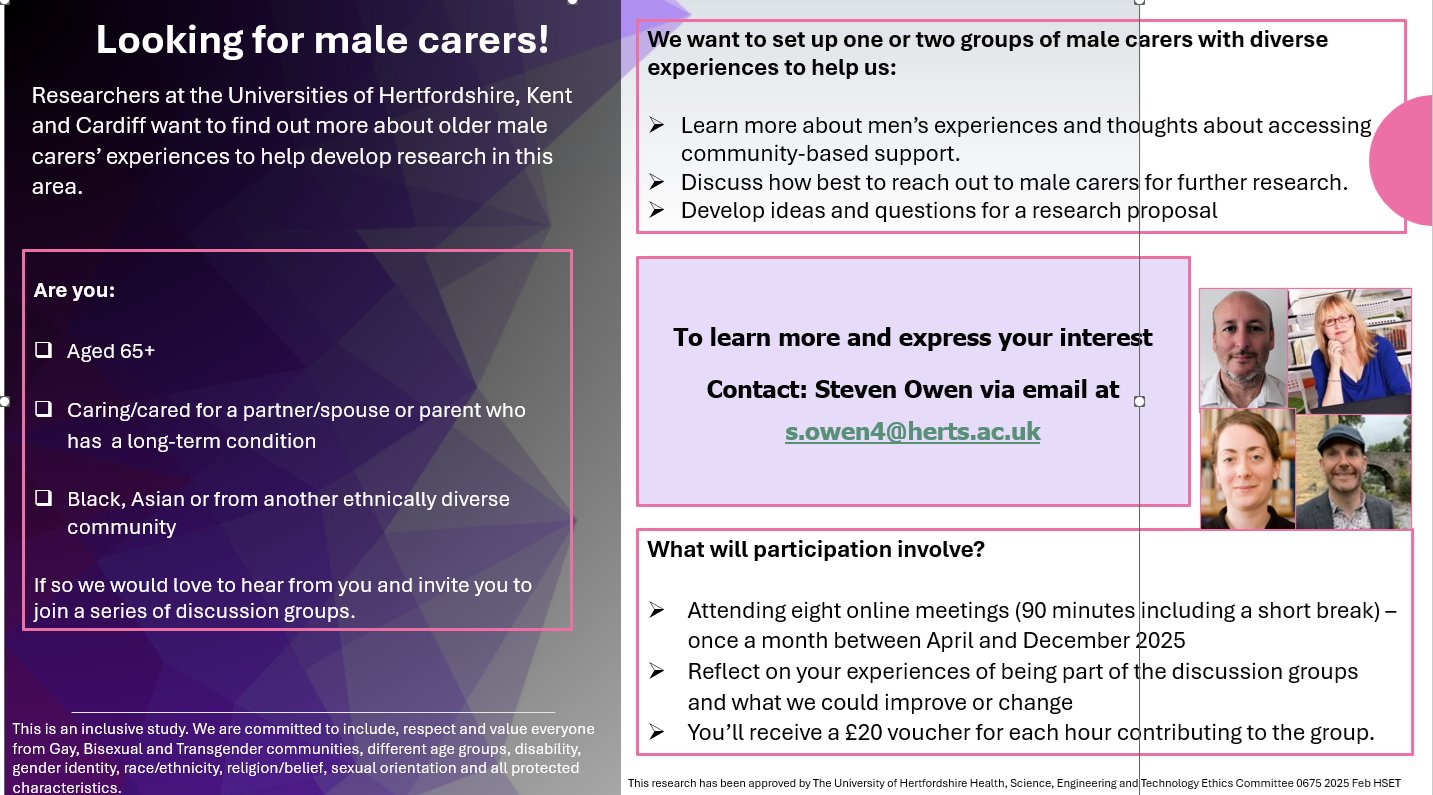

New Research Opportunity for Older Male Carers – Get Involved!

Are you a male carer aged 65 or over? Have you cared for a partner, spouse, or parent with a long-term condition? If so, researchers want to hear from you!

A new study led by the Universities of Hertfordshire, Kent, and Cardiff is exploring the unique experiences of older male carers to help shape future support and improve research in this area.

This inclusive study especially welcomes participants from Black, Asian, and other ethnically diverse communities. By taking part, you’ll have the chance to share your thoughts in a safe, supportive environment and help ensure older male carers’ voices are heard.

What’s Involved?

  • Join 8 friendly online discussion groups (90 minutes each with a short break), once a month from April to December 2025.
  • Reflect on your experiences and what could improve for carers like you.
  • Receive a £20 voucher for each hour of your time.

Why This Matters
Male carers often go under the radar in national conversations about care. Your insight could directly help researchers design better support systems and reach others in similar roles.

Interested?
Contact Steven Owen at s.owen4@herts.ac.uk to express your interest or learn more.

Let’s help make sure the voices of older male carers are heard, respected, and valued.

Cygnet’s Co-Production in Commissioning Conference 2025

On May 1st, 2025, Cygnet Health Care hosted its landmark Co-Production in Commissioning Conference at the iconic Villa Park, Birmingham. More than just a professional gathering, the event was a manifesto for a more inclusive, compassionate, and equitable model of care, driven by people with lived experience, carers, clinicians, and commissioners alike.

Packed with powerful keynotes, practical models, and heartfelt stories, the day was as emotionally resonant as it was strategically focused.

Continue reading

Coping with Depression Practical Strategies for Unpaid Carers

Introduction

Hi everyone, it’s Matthew McKenzie here, and as you know, my focus is usually on raising awareness about unpaid carers, those who care for someone living with long-term ill health, whether it be mental health or physical health. Today, we’re shifting our attention slightly to discuss strategies for dealing with depression. This issue doesn’t just affect the individuals you’re caring for; it can also impact unpaid carers themselves. I’ve been through it, and it’s something that creeps up on you unexpectedly. Even while doing your best in your caregiving role, external factors and the nature of who you’re caring for can significantly affect your mental well-being.

To watch the video, please see below.

Strategies for Combating Depression

Let’s dive into these 20 or so strategies that carers, or anyone for that matter, can use to deal with depression.

Continue reading

World Parkinson’s Day 2025: Driving Awareness for Parkinson’s Disease

Welcome to another blog and awareness video by carer activist Matthew McKenzie FRSA BEM. If you wish to see the awareness below, please click below.

Raising Awareness: The Unseen Heroes of Parkinson’s Disease

Parkinson’s Disease, a progressive neurological condition predominantly affecting movement and coordination, often evokes the imagery of tremors and physical discomfort. Yet, beyond these visible symptoms lies an intricate complexity that reshapes daily life for both those diagnosed and the caregivers – the unsung heroes standing resiliently behind them.

As we mark World Parkinson’s Day 2025, it is imperative to delve deep into the unseen facets of this journey, particularly focusing on driving and the often-overlooked unpaid carers who tirelessly offer support, love, and patience against formidable odds.

Understanding Parkinson’s Disease: A Complex Condition

Parkinson’s Disease is more than an ailment of tremors. This progressive neurological disorder brings with it a range of symptoms that affect mobility, movement, and coordination, making daily tasks increasingly challenging. However, that’s merely the surface. The true complexity of Parkinson’s lies in its unpredictable nature, no two journeys are the same. Each individual experiences a unique set of challenges, and by extension, so do their families and carers.

The Impact on Mobility and Beyond

While the loss of coordinated movement is a significant indicator, Parkinson’s Disease affects much more than the physical. It impacts daily activities, altering how individuals interact with their environment and the people around them. This transformation extends beyond the individual, touching families and communities and reshaping relationships in profound ways.

The Role of Unpaid Carers: Strength and Resilience in Silence

For every person diagnosed with Parkinson’s Disease, there usually stands an unpaid carer – a partner, child, friend, or close companion who navigates this journey alongside them. These carers exhibit an unwavering commitment marked by strength and resilience, often facing their own set of challenges including emotional, physical, and financial strains. It is crucial to acknowledge their dedication and raise awareness about the indispensable role they play.

Life Beyond Diagnosis: A New Normal

Carers find their lives dramatically altered as they take on responsibilities that extend far beyond regular caregiving duties. There’s no clocking out, no salary, and hardly any spotlight. Carers prioritize the needs of the person with Parkinson’s above their own, often dealing with the emotional toll of the disease. They embody strength – the kind needed to wake up each day and face unknown variables, to push forward despite physical and emotional exhaustion.

The Intersection of Parkinson’s and Driving: Independence and Freedom

Driving symbolizes independence, connection, and freedom – aspects that those living with Parkinson’s struggle to hold on to. For many, driving is more than a convenience; it is a crucial part of their identity and autonomy. However, the progression of Parkinson’s can compromise these abilities, bringing about new challenges and fears.

The New Role of Carers in Mobility

Carers play a significant role in helping to navigate this new reality. They advocate, co-pilot, and sometimes take over the wheel in both a literal and emotional sense. Their support becomes an anchor for the person with Parkinson’s, helping them maintain some semblance of independence and connection with the world.

The Collective Effort: Parkinson’s UK and Global Initiatives

World Parkinson’s Day is spearheaded by a global alliance comprising approximately 80 Parkinson’s organizations, unified in their mission to raise awareness and advocate for those affected. Parkinson’s UK stands at the forefront of this initiative, leading the fight for better care, support, and services. They emphasize the importance of community, providing expert guidance and an invaluable support network for both patients and carers.

Advocacy and Community Support

These organizations work tirelessly to promote awareness, engage in advocacy efforts, and foster a sense of community. They provide a platform for those affected by Parkinson’s to share their experiences, find support, and fight for a better quality of life. Through these collective efforts, the aim is to ensure that no one faces this journey alone.

A Call to Action: Recognizing and Supporting Carers

As we commemorate World Parkinson’s Day, it is essential to recognize the people standing behind those with Parkinson’s. These carers often carry a significant portion of the burden, usually unnoticed and unacknowledged. Raising awareness about their contributions is vital to ensure they do not have to bear this weight in silence.

Driving Forward Together

The road ahead requires a collective effort to drive forward, not just physically but in terms of societal understanding and support. It’s about creating a world that truly acknowledges the challenges of living with Parkinson’s and equally the dedication of those who love and care through its trials. Together, by sharing this mission, we can make a meaningful difference in the lives of individuals with Parkinson’s and their carers.

Thank you for taking the time to read and understand the multifaceted journey of Parkinson’s Disease on this World Parkinson’s Day 2025. Let’s continue to support, advocate, and drive forward towards a better world for those living with and caring for Parkinson’s Disease.

Lead with Love: Stress Awareness Month 2025

Embracing Stress Awareness Month by Matthew McKenzie

Stress Awareness Month, observed every April, serves as a powerful reminder to pause, reflect, and take charge of our well-being.

To watch the awareness video, click below.

In 2025, the theme for Stress Awareness Month is “Lead with Love,” which encourages us to approach both ourselves and others with kindness, compassion, and acceptance. This movement is orchestrated by the Stress Management Society, a nonprofit organization founded in 2003 dedicated to helping individuals and organizations manage stress, improve well-being, and build resilience.

The Importance of Stress Awareness Month

Continue reading

What to Expect from a mental health Care Plan as a Carer : Essential Information and Tips

Introduction

Supporting a loved one with mental illness can be challenging and demanding, especially for unpaid carers. Understanding the intricacies of care plans can make a significant difference in ensuring the well-being of both the carer and the person being cared for. In this article, we will delve into the essential elements of an effective mental health care plan, providing valuable guidance for carers.

To watch the lecture where the blog describes, see video below.

Understanding the Care Plan

A mental health care plan is a comprehensive document outlining specific strategies, treatments, and support systems to help manage the mental health of an individual.

Continue reading

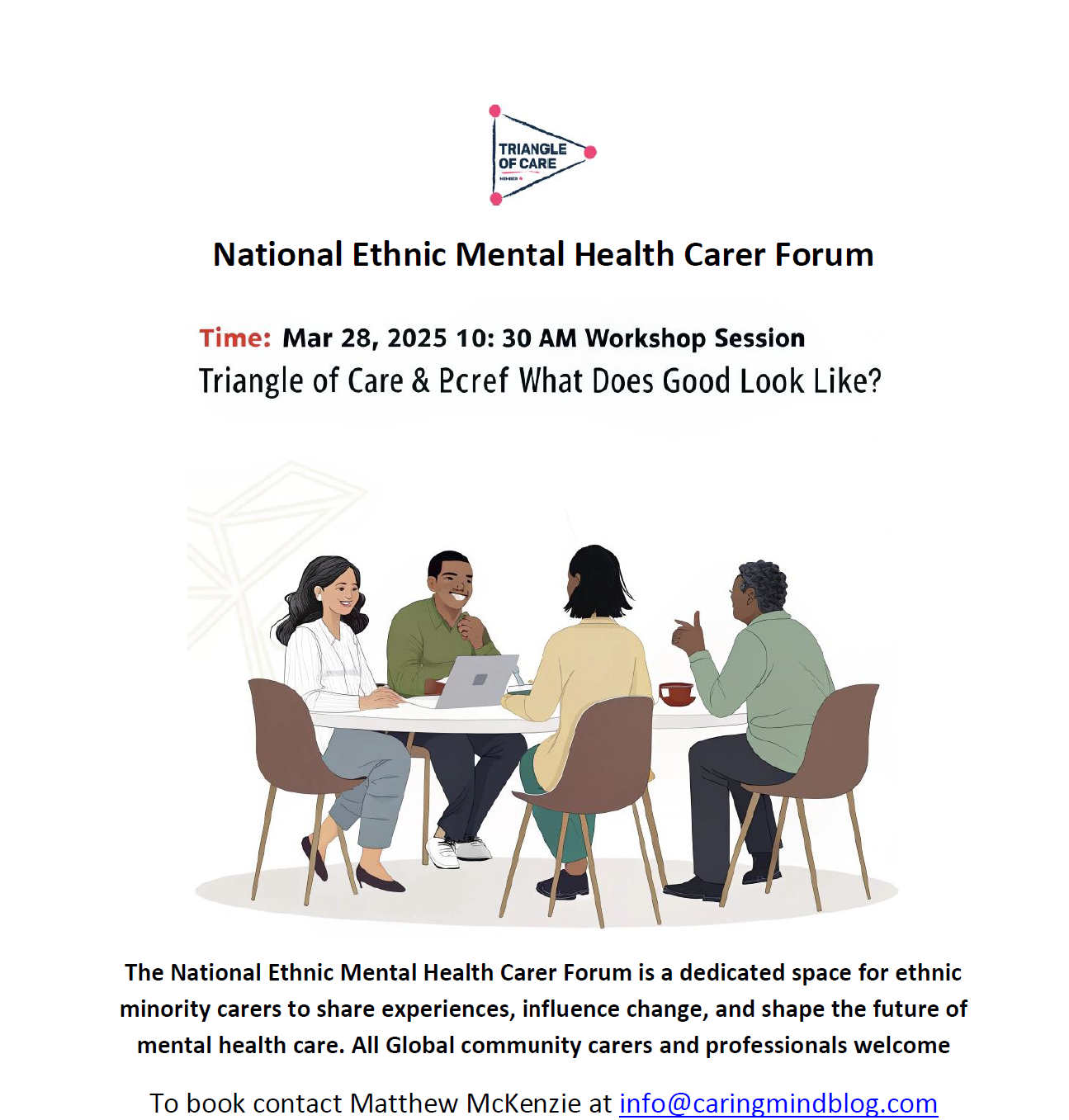
Ethnic mental health Carer Forum Update March 2025

The Importance of Ethnic Minority Mental Health Carer Voices: Empowering Unpaid Carers from the Global Majority by Matthew McKenzie

In today’s world, the voices of ethnic minority carers in mental health services must be heard and valued. The National Ethnic Mental Health Carers Forum meeting, held on March 28, 2025, underscored the vital role that co-production and lived experience play in shaping better services for those who care for loved ones with mental health needs.

Continue reading

South West London Mental Health carers group update for March 2025

Celebrating Mental Health Carers: Building Stronger Connections in Southwest London

By Matthew McKenzie | April 2025

Mental health carers play a vital, often unseen role in supporting loved ones through some of life’s most difficult challenges. At the SW London Mental Health Carer’s Group, we’re creating a space where carers can connect, learn, and feel empowered.

The forum is faciliated by Matthew McKenzie and Ava, although members of the group are encouraged to facilitate to develop carer empowerment.

Continue reading

Why Brain Tumour Awareness Month 2025 Matters More Than Ever

Join Matthew McKenzie in raising awareness for brain tumors, highlighting the importance of research, support, and campaigning. Stand up for science and mental health to make a difference in the lives of those affected. Watch the 4 minute awareness video below.

Raising Awareness for Brain Tumor Awareness Month

Brain tumors, whether cancerous or benign, are a life-altering diagnosis for affected individuals and their families.

Continue reading