Tag Archives: mental health poetry

2nd Voices & Verses – PCREF Poetry Event

By Matthew McKenzie – Cygnet PCREF Carer Lead & Carer Ambassador

Cygnet PCREF Carer Lead & Carer Ambassador

On 4 August 2026, unpaid carers, professionals and people with lived experience came together at Cygnet Churchill for the second Voices & Verses Carers Poetry Event. The purpose of the afternoon was not simply to read poetry, but to create a safe space where carers could express experiences that are often overlooked within mental health services.

The event formed part of Cygnet’s ongoing commitment to the Patient and Carer Race Equality Framework (PCREF) by exploring how creativity, culture and storytelling can strengthen co-production and improve relationships between carers and services. The afternoon was designed around inclusion, psychological safety and optional participation, allowing people to contribute in whatever way felt comfortable to them.

As someone who has cared for family members affected by severe mental illness for many years, I continue to believe that poetry allows carers to communicate emotions that ordinary conversations often fail to capture. Statistics tell us what is happening, but poetry often explains how it feels. This aligns closely with PCREF’s ambition to humanise care, improve understanding of racial inequalities and ensure lived experience genuinely influences service development.

The event opened with readings from my forthcoming collection of PCREF poems, including “Change is Possible.” Rather than focusing solely on racism, the discussion explored hope, community, partnership, co-production and carers becoming recognised as equal partners within mental health care. Participants reflected that although change often feels slow, meaningful progress can still occur when carers are given opportunities to influence services.

One participant commented that the poem should never have needed to exist because carers should already be recognised and listened to. Another reflected that the line “those doors open slowly” accurately described the experience of advocating for loved ones over many years. These discussions reminded everyone that poetry can stimulate conversations which may never emerge during formal meetings or consultations.


One of the highlights of the afternoon was a collaborative workshop led by Jo Lambert, introducing participants to the Hold the Hope project through art, colour and reflection.

Rather than asking carers to simply colour a picture, participants were encouraged to think about what hope, equality, dignity and belonging meant to them personally. They selected PCREF-related words, explored why particular colours reflected their emotions and discussed how creativity can communicate experiences beyond spoken language.

The discussion demonstrated that every participant interpreted the same image differently.

Some chose calming blues to represent peace and trust.

Others used brighter colours to symbolise recovery, resilience and optimism.

Several carers explained that colouring became a form of mindfulness, allowing them to process difficult emotions whilst talking with others.

The activity also highlighted something particularly important from a lived experience perspective. Mental health carers frequently spend years speaking on behalf of others. Opportunities to express their own feelings are much rarer. Through art and poetry, carers were able to focus on themselves without feeling they had to justify or defend their experiences.

This reinforced one of the strongest messages of the day:

Creative expression is not simply an enjoyable activity, it is another form of lived experience evidence.

Participants also appreciated that there were no “right” or “wrong” answers. Every artwork reflected an individual caring journey, demonstrating the diversity that exists within the unpaid carer community.


The power of shared lived experience

Perhaps the most valuable aspect of the event was the conversation that developed naturally between carers.

Discussions moved beyond poetry into themes including:

  • feeling excluded because of confidentiality
  • racial inequality within services
  • the emotional burden of long-term caring
  • recognition of carers as equal partners
  • loss of identity through caring
  • maintaining hope during crisis
  • the importance of community support

Many participants reflected that carers often possess significant practical knowledge but are still not viewed as equal partners within clinical decision making.

One participant explained that carers are frequently expected to educate professionals whilst simultaneously managing the emotional impact of supporting someone in crisis. Others spoke about the exhaustion of constantly advocating for loved ones whilst trying to maintain their own wellbeing.

These conversations demonstrated exactly why creative events have an important place within PCREF. Rather than collecting another questionnaire, participants were able to describe experiences in their own words, using poetry, storytelling and discussion.

Importantly, professionals attending the session also listened.

This helped create genuine dialogue rather than the traditional model where professionals ask questions and carers provide short answers.

The atmosphere remained respectful throughout, allowing difficult topics including racism, discrimination and feeling unheard to be explored constructively.

For many attendees, simply meeting other carers who understood their experiences reduced feelings of isolation.


Celebrating culture and creativity

The second half of the afternoon celebrated cultural diversity through music, spoken word and performance.

Faith shared “Soothing Blue,” a poem that had been transformed into music. Hearing lived experience expressed through song demonstrated another creative way carers can communicate emotions that may otherwise remain hidden. Participants reflected on themes of healing, identity and rediscovering themselves beyond their caring role.

Brenda then performed traditional Jamaican folk songs, including “Chi-Chi Bud Oh” and “By the Rivers of Babylon.” These performances reminded everyone that culture forms an important part of identity and wellbeing. Cultural expression can strengthen belonging and create opportunities for people from different backgrounds to learn from one another.

The PCREF word search and poetry activity further encouraged participants to explore words such as community, dignity, inclusion, hope, equality and compassion before creating short poems of their own. What initially appeared to be a simple puzzle became another opportunity for reflection and discussion.

Throughout the afternoon there was laughter, encouragement and mutual support. Participants applauded one another’s contributions regardless of previous poetry experience, reinforcing that everyone had something valuable to contribute.

By combining poetry, visual art, music and conversation, the event demonstrated that creativity can become a powerful vehicle for engagement with carers who may not usually participate in traditional consultation events.

Reflections and looking ahead

Looking back as both a lived experience carer and PCREF Carer Lead, I believe this event demonstrated several important lessons.

Firstly, carers do not simply want to be consulted, they want to be heard.

Secondly, creative approaches allow conversations to emerge that formal meetings often miss.

Thirdly, culture matters. When people feel safe enough to bring their whole identity into a room, discussions become richer, more authentic and more meaningful.

The Voices & Verses programme is gradually becoming more than a poetry group. It is developing into a community where carers can connect, learn from one another and influence future mental health services through creativity.

Future events will continue to develop this approach by:

  • expanding hybrid participation so more carers can join remotely;
  • increasing opportunities for cultural storytelling;
  • creating more collaborative art and poetry projects;
  • transforming poems into music and other creative media;
  • strengthening links between PCREF, Triangle of Care and co-production.

Most importantly, the event reminded us that lived experience should never be viewed as an optional extra.

Every poem, every conversation and every shared story represented expertise developed through years of caring.

PCREF asks organisations to listen more carefully to diverse communities.

This event showed that when carers are given the right environment, they do not simply speak—they inspire, educate and help shape better mental health services for everyone.

PCREF poem by Matthew McKenzie – Racial Inequality in Mental Health

What does racial inequality in mental health really look like from the perspective of an unpaid carer?

In this powerful spoken-word poem, Matthew McKenzie explores the realities of racism, bias, exclusion, stigma, and unequal treatment experienced by many ethnic communities when accessing mental health services.

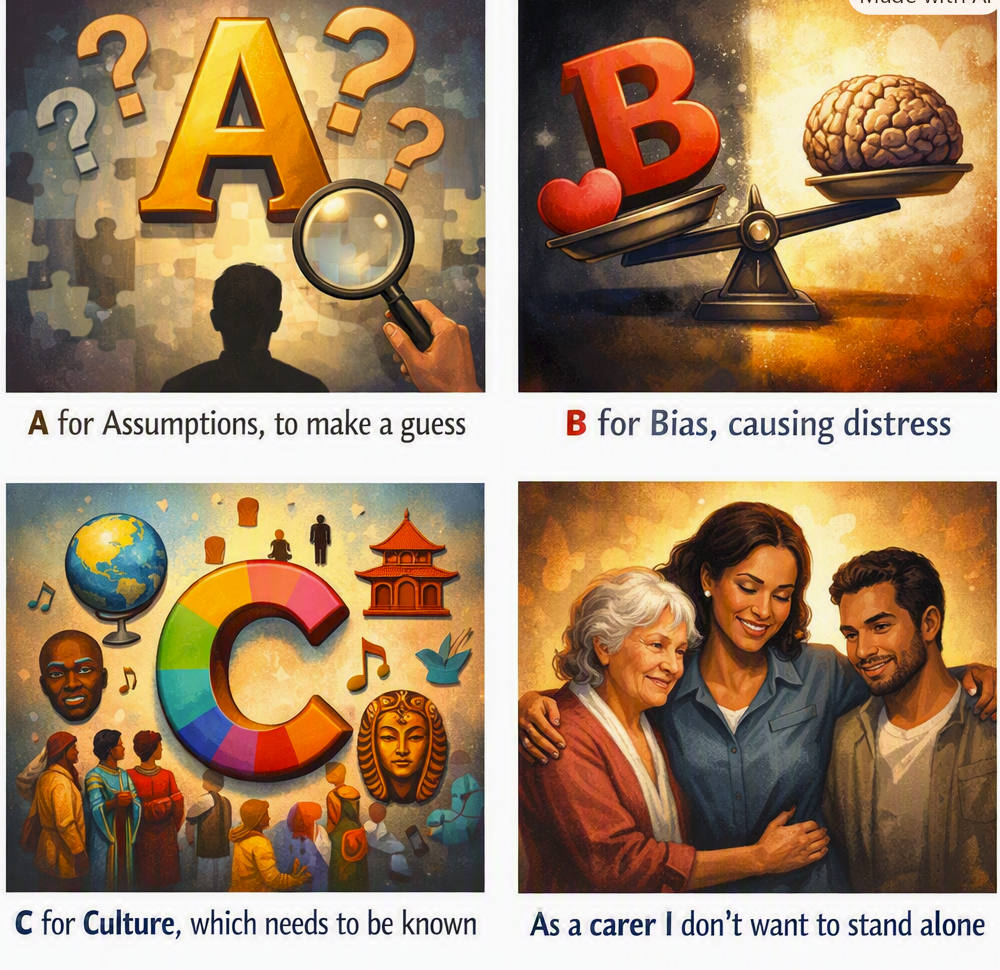
Through an A–R alphabet structure, this poem highlights why the Patient and Carer Race Equality Framework (PCREF) matters and why genuine cultural understanding, listening, and inclusion are essential to improving care.

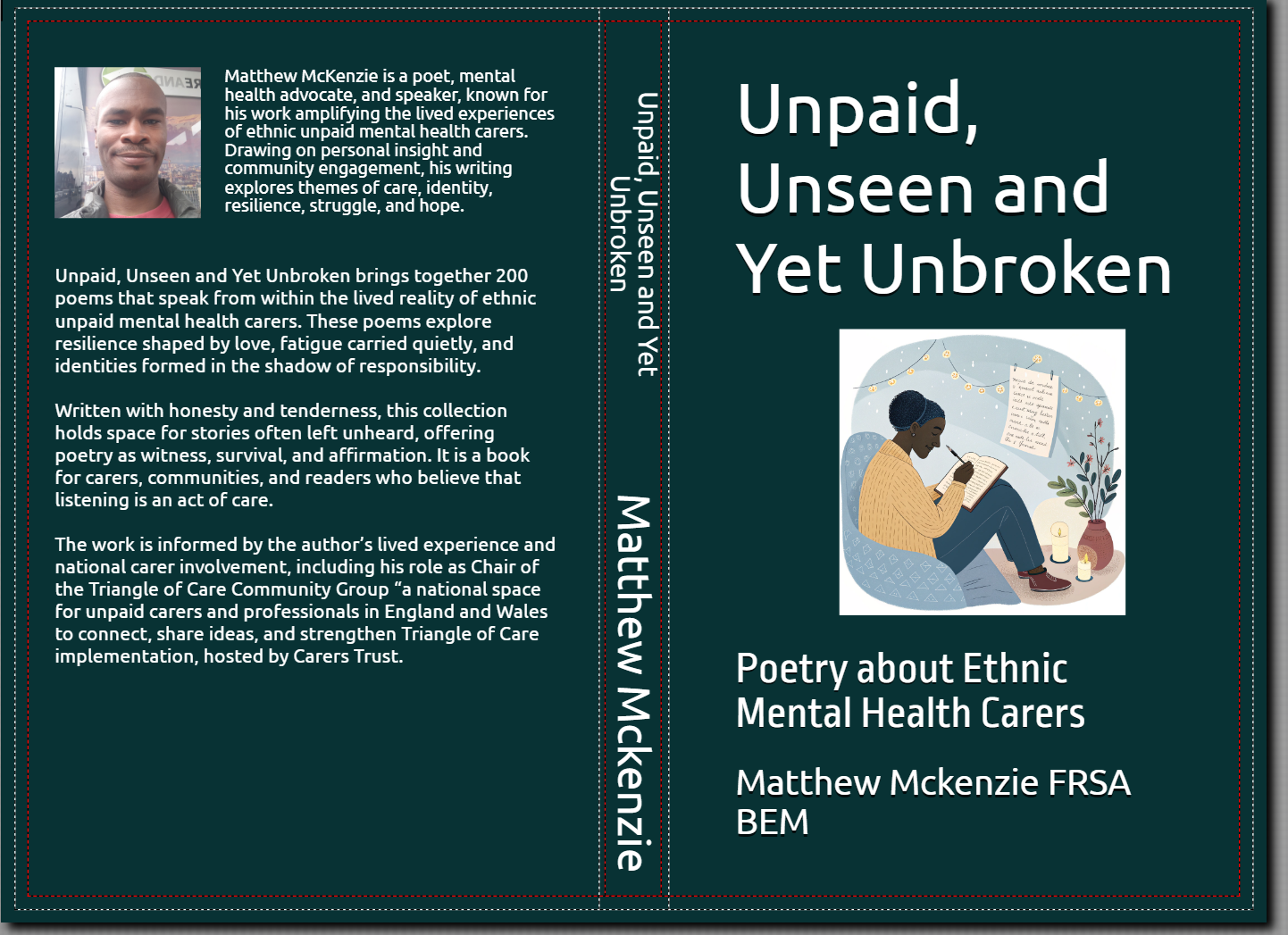
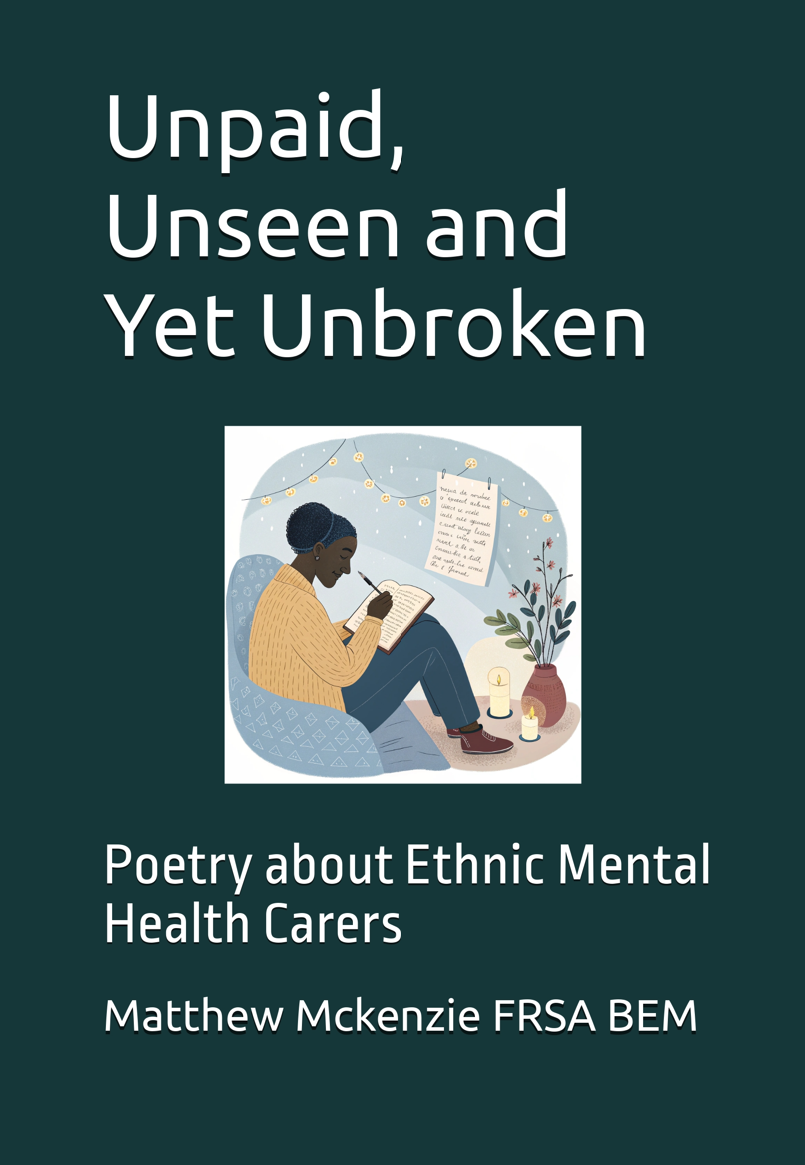
This poem is part of my 200-poem PCREF collection, Unpaid, Unseen and Yet Unbroken, giving voice to the experiences of unpaid carers supporting relatives with mental illness while challenging racial inequalities across mental health services.

Who is – A Poem for Mental Health Carers by Matthew McKenzie

Mental health carers often navigate a system that feels fragmented, leaving them unheard and unseen. My new spoken word poem, “Who is”, explores this reality asking who is believed, listened to, supported, or left behind when the challenges of mental illness take hold.

Taken from my upcoming poetry collection, Unpaid, Unseen and Yet Unbroken (launching 2026), this piece reflects the experiences of unpaid carers, particularly from ethnic minority communities, who face the added burden of navigating a system that often overlooks their voices.

Through poetry, I hope to open a conversation about the importance of listening, understanding, and valuing carers’ lived experiences.

🎥 Watch the full poem here: Who is – Spoken Word Poem

Latest poem from my book – Unpaid, Unseen and Yet Unbroken

By Matthew McKenzie, facilitator of National ethnic mental health carers forum

Welcome to my first blog for 2026.

I am working on a new poetry project linked to my forum and poetry groups. This poem turned into song is written from the perspective of an unpaid ethnic mental health carer, and explores identity, pride, self-worth, and refusing shame in systems that don’t always listen or recognise lived experience.

The poem is taken from my forthcoming poetry book in development,
Unpaid, Unseen and Yet Unbroken (due 2026), which centres the voices of ethnic mental health carers and aligns closely with the aims of PCREF (Patient and Carer Race Equality Framework), particularly around listening, inclusion, and lived experience shaping systems.

I’m using poetry and creative formats as another way to:

  • amplify carer voices
  • explore race and care with honesty
  • support conversations about equity, culture, and confidence in mental health services

If this resonates with your work, community, or organisation, please feel free to share.
Listening is an act of care.

Unpaid, Unseen and Yet Unbroken: A New Spoken Word Poem

By Matthew Mckenzie – facilitator of national ethnic mental health carers forum

I’m pleased to share “Unpaid, Unseen and Yet Unbroken”, a spoken word poetry video that marks the first poem released from my forthcoming poetry collection of the same name.

This first poem speaks from within the lived reality of unpaid mental health carers, particularly those from ethnic and marginalised communities whose labour is often overlooked, misunderstood, or taken for granted. It reflects moments many carers will recognise: waiting rooms, misrecognition, quiet endurance, and the strength it takes to keep showing up without acknowledgement.

🎥 Watch the spoken word video here:

The wider collection I am currently working on brings together poems shaped by care, fatigue, love, resilience, and survival. It is a body of work rooted in lived experience and community voices, offering poetry not only as expression, but as witness and affirmation.

This first poem sets the tone for what is to come, promoting honest, reflective, and unapologetic in its call for carers to be seen, heard, and respected.

This work is part of my ongoing commitment through my A Caring Mind youtube channel to use creativity as a way to challenge stigma, amplify unheard voices, and centre care as a vital social contribution.

More poems from this collection will be shared in the coming months.

“Listen to Me” – A Carer’s Plea Turned into Song

Caring for someone with a mental illness is an emotional, often isolating experience. Unpaid carers—whether they are family members, friends, or loved ones—carry immense responsibility, yet their voices can feel unheard, especially within the healthcare system.

One of my poem’s “On Being Heard” taken from my book The Poetry Book of Mental Health Caring, captures this struggle with raw honesty.

Continue reading

The book you should be reading this month

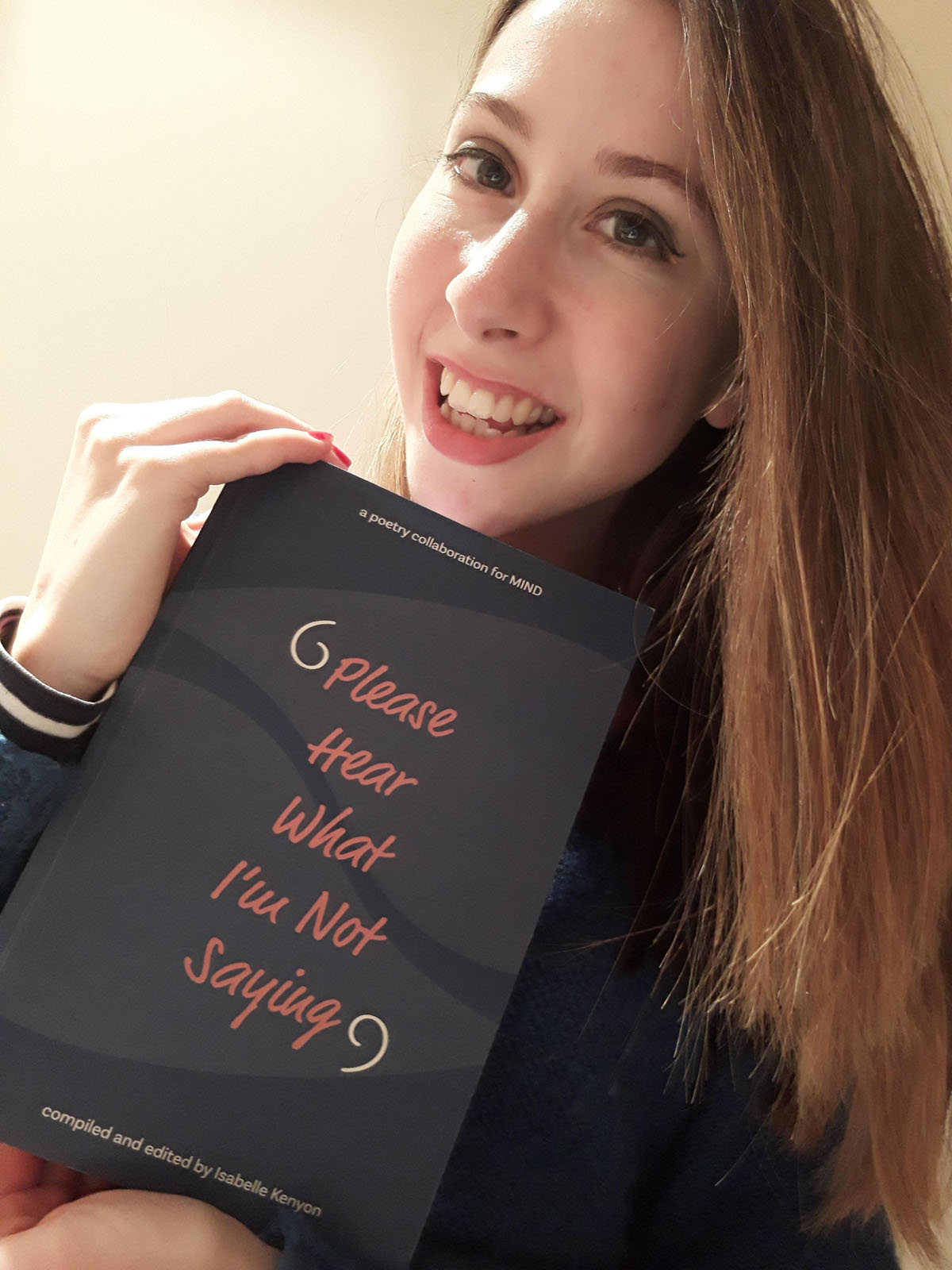
my face plus book‘Please Hear What I’m Not Saying’ is a poetry anthology featuring 116 poets, all writing about mental health. The profits from this book go to UK Charity, Mind.
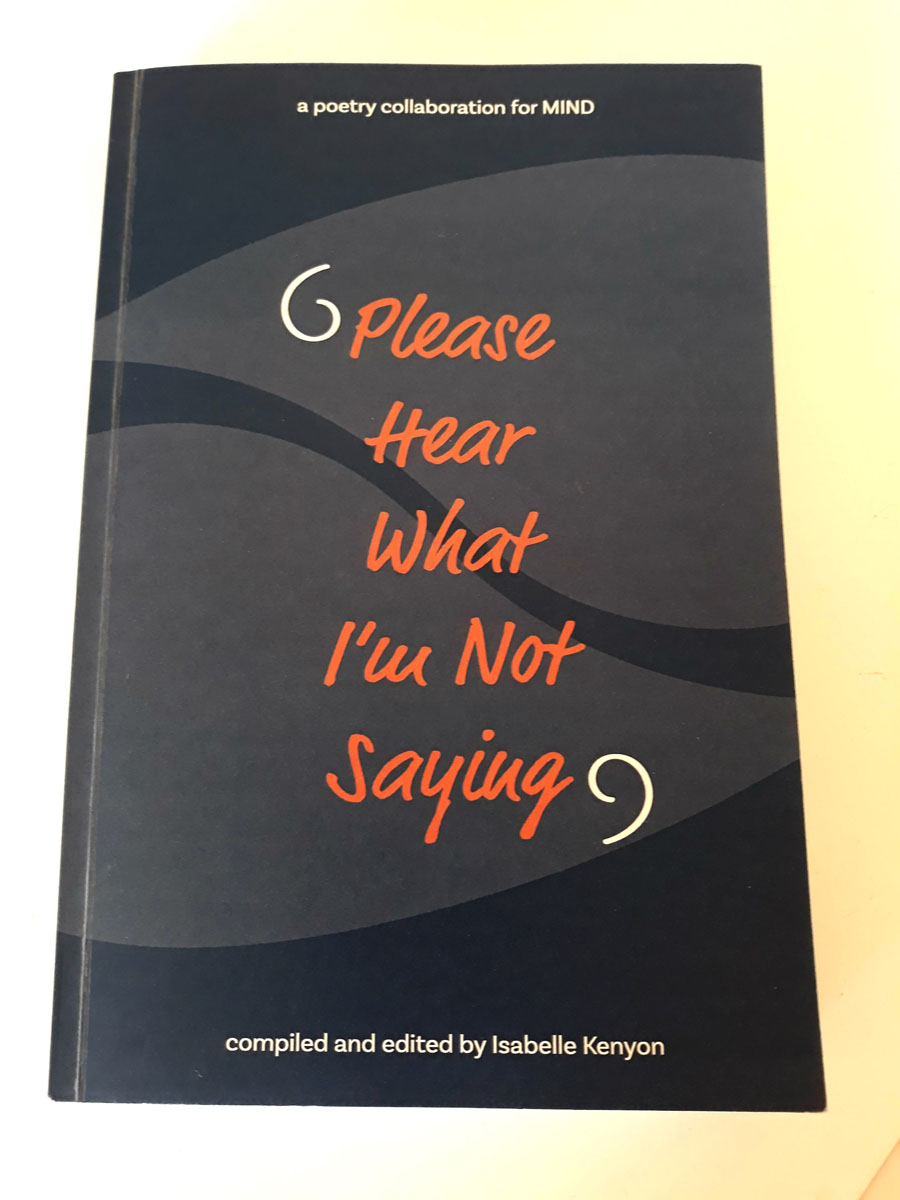
Editor Isabelle Kenyon compiled the anthology following an international submission call out. Contributors were enthused by a common goal to raise money for the charity, Mind.

With poems focusing on mental health from a wide range of experiences (covering topics such as grief, trauma, anxiety, poverty, Alzheimer’s and therapy), the book aims to continue the worldwide conversation about mental health.

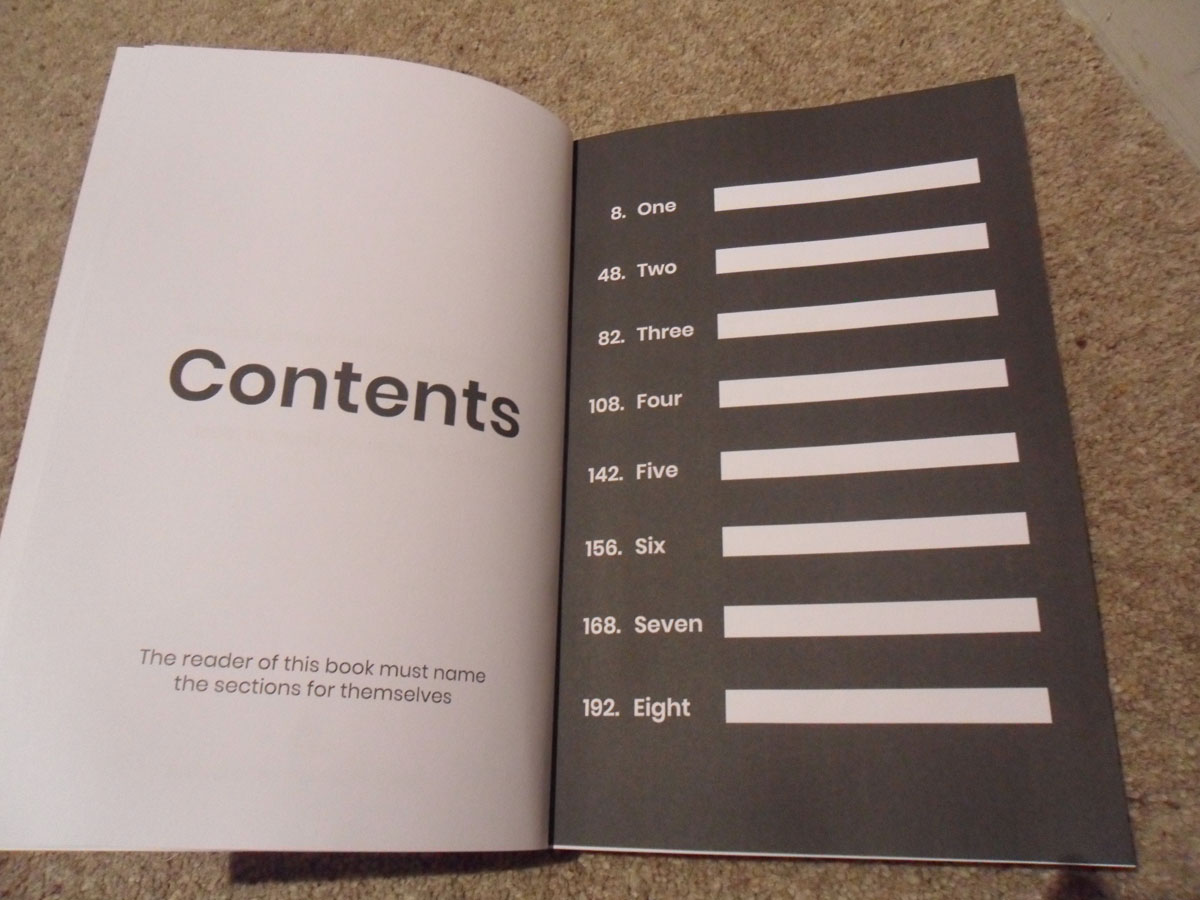
contents

Isabelle comments: ‘As an editor, I have not been afraid to shy away from the ugly or the abstract, but I believe that the anthology as a whole is a journey – with each section the perspective changes. I hope that the end of the book reflects the ‘light at the end of the tunnel’ for mental health and that the outcome of these last sections express positivity and hope.’’

You can buy the book on Amazon here: Please Here What I am Not Saying

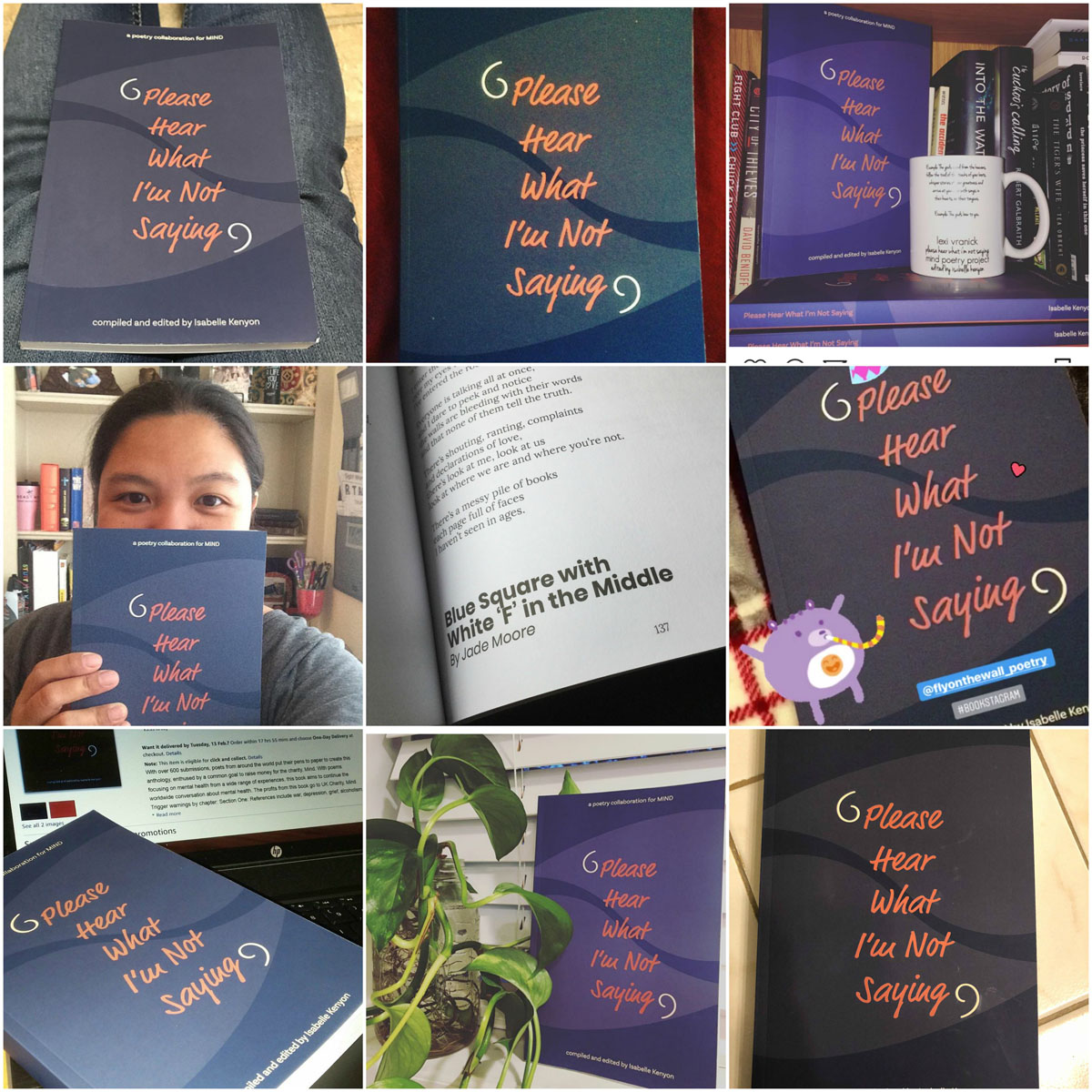
Reader Photos

And more information about the project here: https://www.flyonthewallpoetry.co.uk/mind-poetry-project

Mind Anthology