Tag Archives: Inclusive Healthcare

Ethnic mental health Carer Forum Update July 2025


Author: Matthew McKenzie

Building Stronger Voices: A Powerful July Gathering of the National Ethnic Mental Health Carer Forum

On Friday, July 25th, the National Ethnic Mental Health Carer Forum held another online session, continuing our work in empowering diverse carers and influencing meaningful change across mental health services. With participation from community champions, NHS professionals, experienced unpaid minority carers. The discussion was on the Triangle of Care (ToC) and PCREF (Patient Carer Race Equality Framework) stakeholders.

This forum exists to elevate the voices of ethnically diverse carers, bringing their lived experiences to the forefront of service transformation. Whether it’s holding systems to account or shaping policy guidance, this space remains vital in creating inclusive, anti-racist care across the UK.

Highlights from July’s Forum

🔵 Debbie Hustings’ Presentation on Triangle of Care & PCREF Integration
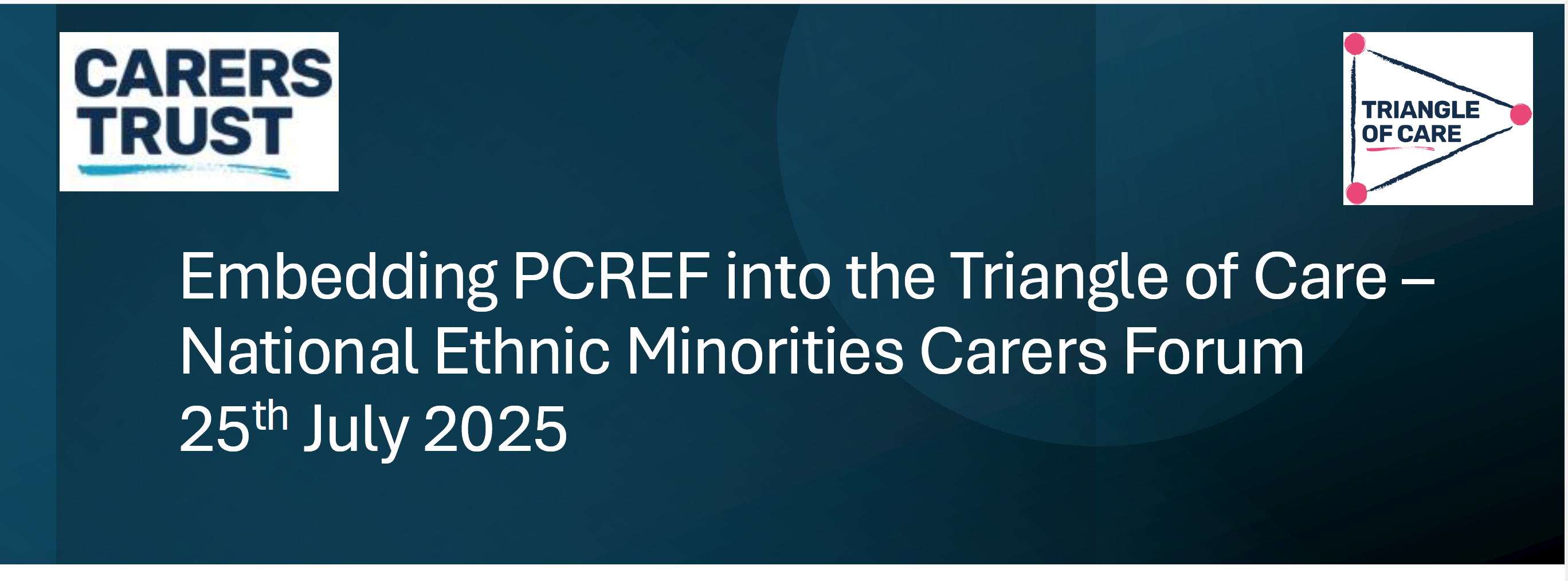
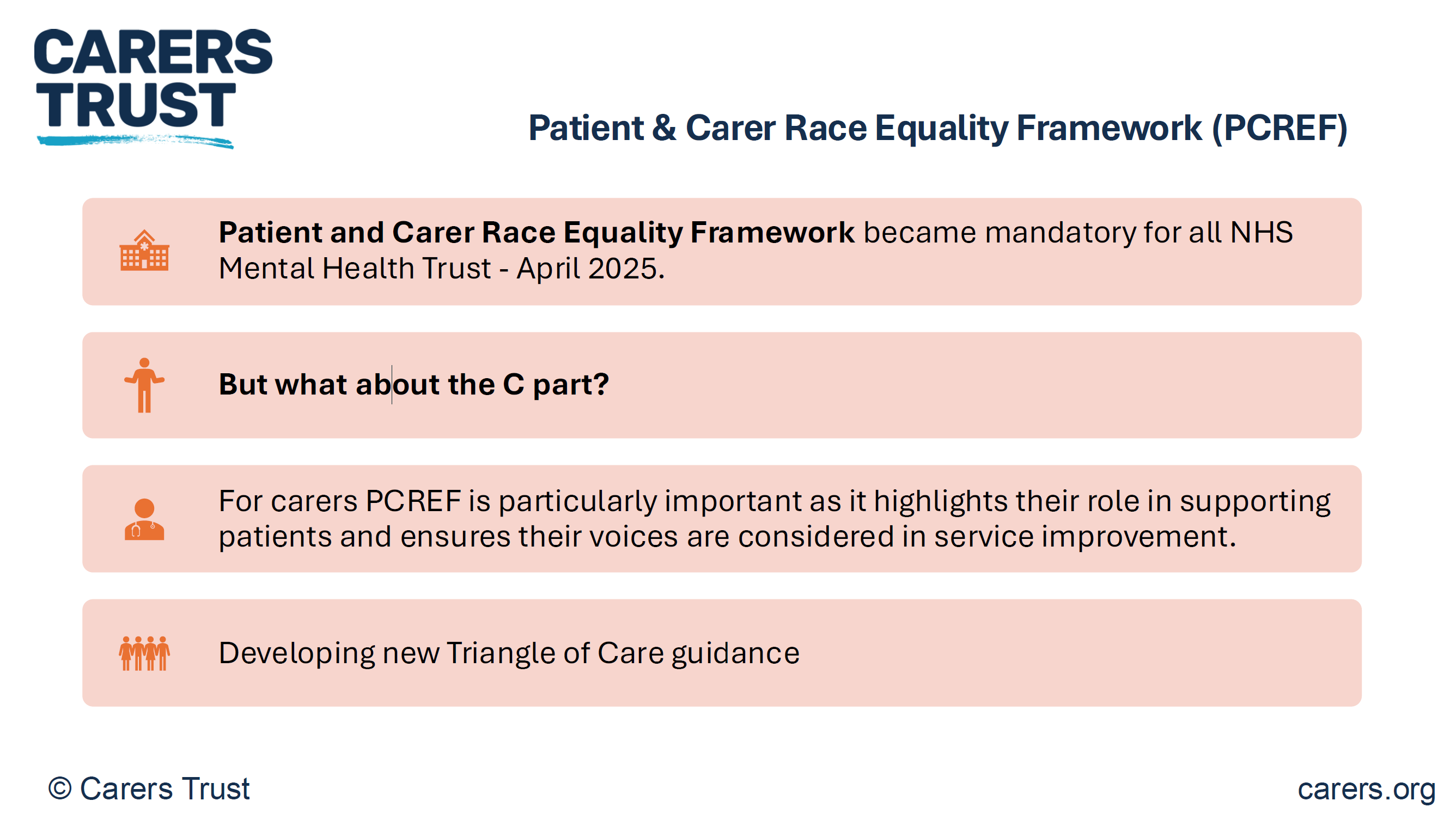
Debbie, a long-standing Triangle of Care Programme Lead and carer herself, gave an in-depth presentation on reviewing the Triangle of Care through a PCREF (Patient and Carer Race Equality Framework) lens. Her talk provided an honest look at institutional challenges and offered solutions for embedding racial equity into carer support standards. A key takeaway was how crucial lived experience is in driving real policy change not just warm words. She emphasized the importance of re-examining existing standards through a racial equity lens, stating that “beyond warm words,” carers need frameworks that are operational, measurable, and locally adaptable.
🟣 Powerful Feedback from Carers
Contributors shared difficult yet necessary truths. Carers spoke about the lack of involvement in care planning, systemic racism, the need for meaningful co-production (not “faux-production”), and experiences of isolation when navigating majority environments. One carer reflected, “In 28 years of caring for my son, I have never been involved in his care planning.”

Several carers shared their painful, sometimes shocking, experiences navigating mental health services, especially in areas with limited diversity. One participant remarked, “Even after decades of caring, I’ve never been included in a care plan.” Others spoke of staff who misunderstood or dismissed cultural nuances, the misuse of confidentiality rules to exclude carers, and the silencing of Black and Asian voices. Concerns were also raised about immigration-related fears, lack of access for non-English speakers, and a troubling rise in racism in predominantly white areas. These reflections painted a vivid picture of systemic inequality but also made clear the power of collective advocacywhen carers come together, change begins.

These testimonies highlighted how far we still need to go.

🟡 Inclusive Language & Representation
There was a passionate discussion around terminology whether to use “global majority” or “ethnically and racially diverse.” While some feared backlash from certain communities, the group leaned toward inclusivity and accountability over appeasement. This sensitivity around language underlines the forum’s thoughtful and intersectional approach.

🟢 The Work Ahead
Debbie shared the next steps in developing Standard 2 of the Triangle of Care through the PCREF lens: staff training. The goal? Mandatory, culturally safe, anti-racist care awareness education co-produced with carers from diverse backgrounds. By April 2026, the guidance will be finalized, field-tested, and launched nationally.

A Forum of Global Carers, Local Action

This month’s session proved again that our forum is more than discussion as it’s a driving force for equity. Participants from Southampton, Lewisham, Pennine, Norfolk, Leicester, South West London, Kent & Medway and beyond all shared insights into their local efforts, including cultural awareness training, community storytelling projects, and carer-led involvement initiatives.

One key message? Change is possible when carers are part of the conversation—not as guests, but as co-leaders.


Want to Get Involved?

The forum is open to carers and professionals across the UK and beyond. We meet monthly online, and everyone is welcome to join, contribute, or simply listen.
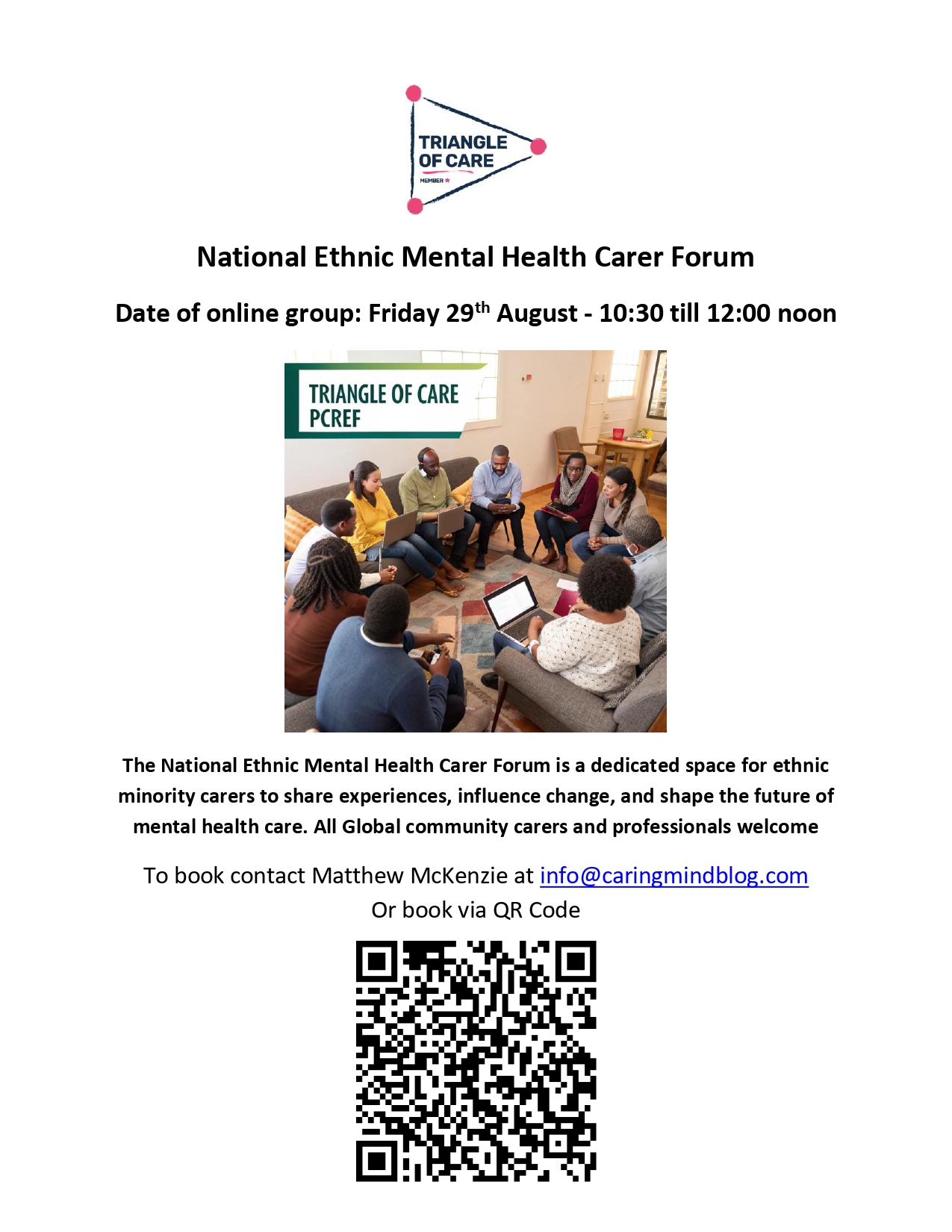
For bookings or questions, contact me at info@caringmindblog.com
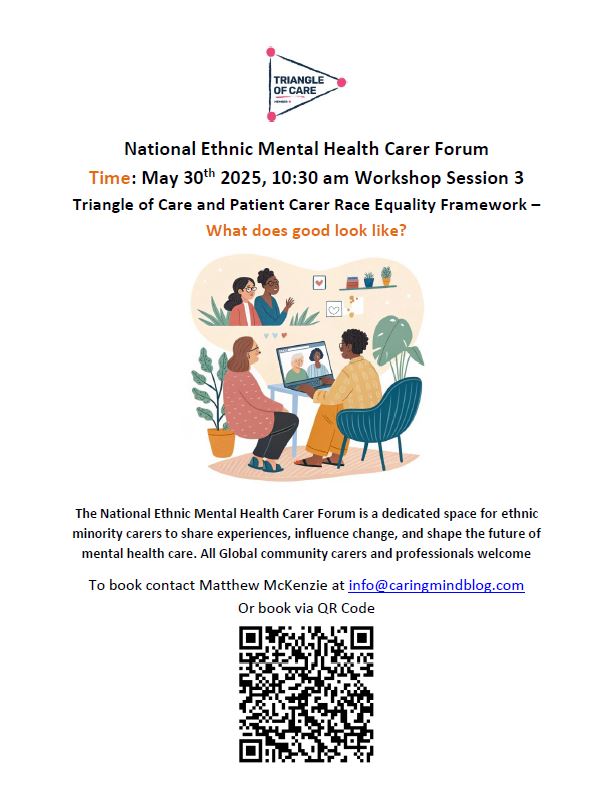
📱 Or download and scan the QR code in the flyer above

Together, minority mental health carers can shape a mental health system that sees, hears, and supports all carers—ethnically, culturally, and fully.

Next National MH carer forum in August 29th 10:30 am
Matthew McKenzie
Founder – Caring Mind Blog
Facilitator – National Ethnic Mental Health Carer Forum
Ethnic mental health Carer Forum Update June 2025

By Matthew McKenzie – Carer activist, poet and author

Welcome to a brief update of my ethnic mental health carer group, held monthly.

The meeting began with introductions and technical discussions on connecting to zoom, followed by presentations on research related to mental health care and carer support, particularly focusing on minority communities and paranoia. The group discussed various initiatives including a community intervention study, a carer experience questionnaire, and progress updates on Patient Carer Race Equality Framework reporting across different NHS regions. The conversation ended with discussions on challenges faced by minority carers, including access to mental health services and the need for better support systems, with calls for national collaboration and improved respite services.

Summary

Carer Support Network Expansion Discussion

The meeting began with Matthew introducing the session and addressing technical issues faced by some participants, including a participants video problems, which were resolved. Matthew explained his recent laptop issues and mentioned his involvement with Carers Trust regarding Triangle of Care. The group discussed the expansion of their focus with minority carers and the importance of connecting and networking across the UK. Juliana, a researcher, provided an overview of her work, and participants introduced themselves, sharing their roles and experiences related to mental health care and carer support. The conversation ended with a brief overview of upcoming presentations and discussions.

Continue reading

Ethnic mental health Carer Forum Update May 2025

Quick update on ethnic mental health carer group

The meeting focused on carer involvement and representation across different regions, with participants discussing their roles in supporting carers and addressing discrimination. The main focus for this meeting was on “What does good look like?” when it comes to Triangle of Care and PCREF.

The group explored the Triangle of Care initiative and its five key elements, including discussions about medication-related challenges and the need for better communication between healthcare providers and carers. The conversation ended with conversations about improving carer support systems, including the importance of advocacy, training, and creating safe spaces for carers to share concerns confidentially.

Continue reading

National Triangle of Care Community meeting – March 2025

By Triangle of Care community chair Matthew McKenzie FRSA BEM

For the month of March, unpaid carers, NHS professionals, and key stakeholders came together for another Triangle of Care National Community Meeting, which is a powerful space of collaboration, reflection, and shared purpose. Chaired by Matthew, the meeting spotlighted significant developments in carer engagement, mental health service standards, and equity frameworks across the NHS.

Continue reading

The Importance of Promoting Expert by Experience Ambassadors

Welcome to this blog by Cygnet Carer Ambassador Matthew McKenzie. As a carer ambassador, I strongly believe that those in similar roles who representing families and carers within healthcare and mental health services, should have maximum visibility and reach. This ensures that not only service users but also their carers receive the support and information they need.

On the 19th of March, I had the opportunity to visit Cygnet Millbank for a filming session where I shared my thoughts and messages aimed at families and carers with loved ones using Cygnet’s services. This initiative followed Cygnet’s Patient Carer Race Equality Framework event launch, a commendable effort to enhance outcomes for individuals from diverse communities.

During the filming, I was joined by fellow Carer Ambassador Julian de Takets. Together, we explored ways to strengthen the connection between families and carers and the services supporting their loved ones.

In my segment, I spoke about my role in representing, supporting, and advocating for carers. My work involves ensuring that carers’ voices are heard, offering guidance, and contributing to the development of inclusive, culturally competent services that genuinely address carers’ needs.

However, to make a real impact, it is vital that these messages reach the right audiences. Without effective promotion and engagement, our efforts as carer network ambassadors risk being limited in influence.

Families and carers play a fundamental role in supporting their loved ones’ recovery journeys, yet many feel overlooked or uncertain about how to navigate the mental health system. This is why mental health providers must actively promote and support the work of carer ambassadors. By amplifying our reach, healthcare organizations like Cygnet can ensure that carers feel seen, heard, and valued as equal partners in care.

As an ambassador, I see my role as a bridge between carers and mental health services, offering guidance and ensuring they have access to the right resources and support networks.

I look forward to seeing the completed videos off Cygnet’s website and hope that they serve as a valuable resource for families and carers. More broadly, I urge mental health services to not only establish ambassador programs but also to actively promote them, ensuring that Expert by Experience voices are at the heart of shaping and improving care services.

Carers and families deserve recognition, support, and inclusion in the mental health care process. By championing ambassadors and giving them a wider platform, we can create a more informed, connected, and supportive community for all involved.