Tag Archives: NHS Carers

Hospital Carer Discharge Meeting – May Update 2026

By Matthew McKenzie – Chair of the Carers Hospital Discharge group
Hospital discharge remains one of the most critical and stressful moments for unpaid carers, patients and healthcare professionals alike. During the recent Carers Hospital Discharge Group meeting held in May 2026, professionals, carers, NHS leaders, hospital representatives and community organisations came together to discuss major developments affecting carers across London and beyond.

The Carers Hospital Discharge meeting runs every 2 months and for the month of May we discussed improving hospital discharge processes, strengthening carer identification, digital inclusion, community support and the growing role of technology in healthcare planning.

The blog update is for those unable to attend, here is a summary of the key discussions, presentations, questions and responses shared during the session.


Universal Care Plan Expansion Through the NHS App

One of the biggest updates came from NHS England, who shared exciting news about the expansion of the Universal Care Plan (UCP).

The new development allows patients and members of the public to begin creating their own Universal Care Plans directly through the NHS App. Previously, only clinicians could initiate many aspects of these plans.

NHS England explained that editable sections now include areas such as:

  • “What matters to me”
  • Communication preferences
  • Care and contingency plans
  • Personal support needs

Clinical sections, however, remain under healthcare professional control.

Updates described the project as a major milestone after years of discussion about allowing people greater control over their own care information.

Question from attendee:

“Will carers be able to input on behalf of their cared-for person?”

response from presenter:

At present, carers cannot directly complete plans on behalf of another person due to safeguarding and proxy access concerns. However, carers can still complete their own care contingency plans within the system.

It was explained that this means if a carer suddenly becomes unable to provide care, emergency services and healthcare providers would be alerted that a contingency plan exists.

They also noted that community organisations could potentially support individuals with completing plans, provided appropriate governance and data security arrangements are in place.

The discussion highlighted both the opportunities and challenges of balancing digital access with safeguarding responsibilities

*****

For more developments on the Universal Care PLan, I have provided the link below of the recent Webinar

UCP Webinar: Supporting Patient Editable Access to the Universal Care Plan – Guidance for Professionals (May 2026)
https://vimeo.com/1190395114/37af950076?share=copy&fl=sv&fe=ci


New Research on Social Networks and Healthcare Support

Matthew McKenzie introduced an emerging research project led by Queen Mary University of London alongside several major universities including Harvard, Oxford and Warwick.

The project aims to explore how patients’ social support networks influence health outcomes, hospital admissions and long-term wellbeing.

Researchers are developing tools to map patients’ support systems, including:

  • Family carers
  • Friends
  • Peer groups
  • Community support
  • Online social networks

The project seeks to better understand how strong support systems can improve self-management and reduce avoidable hospital admissions.

Matthew explained that researchers are particularly interested in understanding:

  • Whether support network mapping would feel helpful or intrusive
  • How carers should be recognised within healthcare systems
  • How cultural differences affect support networks
  • What safeguards around privacy and consent are needed

The proposal sparked interest among attendees because it reflects a wider NHS shift toward community-based care and prevention.

NHS England connected the project to wider work around “family group conferencing,” where whole-family approaches are used to plan care and support more collaboratively.


NHS England’s Urgent and Emergency Care Strategy 2025/26

A major section of the meeting focused on NHS England’s emerging Urgent and Emergency Care (UEC) Strategy.

Matthew presented some notes on NHS England UEC outlining plans to:

  • Reduce avoidable hospital admissions
  • Deliver more care within communities
  • Expand digital healthcare access
  • Improve hospital discharge pathways
  • Strengthen operational efficiency

Key proposals included:

  • AI-enabled triage systems
  • NHS App navigation tools
  • Digitally coordinated urgent care
  • Expanded community-based treatment
  • Greater use of early intervention models

However, the discussion quickly moved toward the potential risks associated with rapid digital transformation.

Participants concerns:

Representatives covering Hospitals, raised important concerns about how discharge pressures could negatively affect carers.:

“If somebody urgently needs that hospital bed, the pressure becomes getting people discharged quickly. That may not always leave enough time to identify carers properly.”

They stressed that carer identification should happen throughout the patient journey not only during discharge.

They highlighted opportunities for identification during:

  • Outpatient appointments
  • Pre-assessment clinics
  • Routine hospital interactions

Concerns About Digital Poverty

Another major concern involved digital exclusion.

Participants warned that:

  • Older people
  • People with dementia
  • Individuals without smartphones
  • People facing poverty
  • Non-English speakers
  • Neurodivergent individuals

could all struggle if urgent care becomes too dependent on digital systems.

It was mentioned that meeting carers who still rely entirely on phone calls rather than online platforms and stressed the need for alternative accessible routes into care.

Others agreed and referenced an Equality Impact Assessment linked to the NHS 10-Year Plan, which explores risks around digital inequality and vulnerable groups being left behind.

Equalities Impact Assessment – 10 Year Health Plan for England
https://www.gov.uk/government/publications/equalities-impact-assessment-10-year-health-plan-for-england/equalities-impact-assessment-10-year-health-plan-for-england

You can find out more about the UEC below

https://www.england.nhs.uk/publication/urgent-and-emergency-care-plan-2025-26


Carers Week Preparations Across London and Beyond
Many organisations shared updates on activities planned for Carers Week 2026

NHS England

NHS England Carers Week 2026 – ‘Building Carer Friendly Communities’

https://www.events.england.nhs.uk/nhs-england-carers-week-2026-building-carer-friendly-communities

Kingston Carers Network

KCNshared plans for:

  • Benefits advice sessions
  • Afternoon tea events
  • Mental health awareness activities
  • Community picnics
  • Outreach work with carers across Kingston

A major highlight will be the attendance of Sir Ed Davey, who is himself a well-known advocate for unpaid carers due to his own lived experience caring for family members. His involvement is expected to help raise awareness of the challenges carers face daily.

KCN also spoke about Kingston Carers Network’s ongoing efforts to strengthen links with Kingston Hospital. The organisation already receives referrals through the hospital’s carers liaison department, helping unpaid carers access emotional support, information and practical guidance following hospital admissions or discharge.

However, KCN is now trying to expand its presence inside the hospital itself through more direct face-to-face outreach work. Plans are being discussed to establish regular information stands within hospital settings so carers can receive support earlier and more proactively.

KCN explained that while these conversations are progressing, coordinating regular in-hospital outreach remains challenging due to logistical pressures and scheduling issues. Despite this, the organisation continues to work closely with hospital teams to improve visibility and engagement with carers.

Beyond hospital settings, Kingston Carers Network continues to deliver several outreach programmes throughout the borough. Staff regularly attend local groups, community spaces and events to identify carers who may not realise support is available to them.

North Central London Carers Support Project

Eleanor updated the group on work taking place across:

  • Barnet
  • Camden
  • Enfield
  • Haringey
  • Islington

The project works in partnership with multiple NHS trusts and carers organisations across North Central London with the aim of creating a more consistent and coordinated approach to identifying and supporting unpaid carers.

At the centre of the programme is the development of a standard operating procedure for carers within hospitals and healthcare settings. The goal is to ensure carers are recognised earlier, referred more efficiently and supported more consistently regardless of which hospital or borough they engage with.

One of the project’s biggest developments has been the creation of a dedicated carers referral website. Eleanor explained that the system is designed to simplify the referral process for healthcare professionals. When a referral is submitted through the portal, the system automatically directs the carer to the appropriate local carers organisation based on their postcode.

The intention is to remove confusion for hospital staff while helping carers access support much faster.

Eleanor described the project as an effort to make support pathways:

  • Easier for professionals to navigate
  • More accessible for carers
  • Better integrated across borough boundaries
  • Less dependent on individual staff knowledge

A major focus of the project continues to be embedding carer awareness into everyday hospital practice.

Carer Awareness Training Expanding Across Hospitals

The team has made significant progress with carer awareness training sessions delivered across several NHS trusts.

Regular drop-in training sessions are now taking place with:

  • The Whittington Trust
  • The Royal Free
  • North London Mental Health Trust services

Eleanor shared that attendance at some sessions has now exceeded 40 healthcare staff members, which she described as a major success.

The training focuses on:

  • Identifying unpaid carers earlier
  • Understanding carers’ rights and needs
  • Improving referral pathways
  • Increasing staff confidence when supporting carers
  • Embedding carer recognition into routine clinical practice

Importantly, the project measures the effectiveness of these sessions using confidence ratings before and after training. Eleanor reported that most staff attending show at least a one- or two-level increase in confidence around identifying and supporting carers after participating.

North Central London’s Focus on Carers Week and Community Engagement

Preparations for Carers Week are also a major priority for the project.

The team plans to host information stalls and awareness events at several hospitals including:

  • The Whittington Hospital
  • University College London Hospital (UCLH)
  • Barnet Hospital

These events aim to:

  • Raise awareness of unpaid carers
  • Promote available support services
  • Encourage hospital staff to make referrals
  • Help carers connect with local organisations

Lewisham Council Developments

Updates from Lewisham was on the ongoing work taking place across Lewisham to improve support for unpaid carers, particularly through closer collaboration between hospitals, carers organisations and local commissioners.

A major development has been Lewisham Hospital’s involvement in the South East London pilot programme focused on creating a standard operating procedure for carers across NHS trusts. The pilot aims to improve consistency in how carers are identified, supported and referred within hospital settings.

It was explained that Lewisham Hospital has been working closely with Imago, the borough’s commissioned carers support provider, to strengthen partnerships with hospital nursing teams and improve awareness of carers across wards and services.

Particular emphasis is now being placed on:

  • Increasing carer awareness training
  • Improving communication between services
  • Embedding carer identification into routine hospital practice
  • Strengthening links between healthcare and community support

Inspired by discussions during the meeting, it was also highlighted plans to explore integrating carer identification into regular auditing and review processes within hospital settings similar to initiatives already underway in other trusts.

Redesigning Lewisham’s Future Carers Service

One of the most significant updates involved the redesign of Lewisham’s carers support service model.

They shared that the current commissioned contract for carers services is due to end in January 2027, and work is already underway to shape the next phase of support provision.

Importantly, unpaid carers themselves are playing a central role in developing the new model.

A series of co-production sessions has been held with carers across the borough to ensure their lived experiences directly influence future service design. These discussions are helping shape priorities around:

  • Access to support
  • Communication with carers
  • Outreach and identification
  • Emotional wellbeing services
  • Practical support needs
  • Hospital discharge experiences

The borough hopes to move into procurement for the redesigned service later this year.

Carers Hub Lambeth

Carers Hub Lambeth shared an update on the organisation’s ongoing work supporting unpaid carers across King’s College Hospital and Guy’s and St Thomas’ NHS Foundation Trusts.

Although the current hospital carers project funding has been extended for an additional six months, Jen explained that the programme is now approaching its final phase, with funding currently due to end in September 2026.

As a result, the team’s main focus is now on ensuring hospitals become as self-sufficient as possible in identifying and supporting carers once the dedicated project ends.

Expanding Carer Awareness Training

A major priority for Lambeth Carers Hub is expanding carer awareness training for healthcare professionals.

It was explained that the organisation has:

  • Increased training sessions from once to twice monthly
  • Begun arranging bespoke sessions with individual hospital teams
  • Expanded engagement with primary care networks
  • Updated training materials to address barriers to carer identification

The training aims to help healthcare staff:

  • Recognise unpaid carers earlier
  • Understand carers’ support needs
  • Improve referral pathways
  • Build confidence in conversations with carers
  • Embed carers into routine healthcare practice

Carers Hub Lambeth acknowledged that while training sessions often generate an immediate increase in referrals, maintaining long-term momentum remains challenging.

It was mentioned that a familiar pattern where professionals attend training, referrals increase temporarily, and then gradually reduce again as competing clinical pressures take over.

Because of this, the organisation is now trying to better understand:

  • Why carers continue to be missed
  • What barriers staff face in identifying carers
  • How carer awareness can become part of everyday practice rather than an additional task

This reflects a wider challenge discussed throughout the meeting — ensuring carer support becomes embedded within healthcare systems rather than dependent on individual staff enthusiasm.


Embedding Carer Recognition Into Everyday Hospital Practice

One of the most practical discussions came from GESH update on integrating carers into routine hospital auditing processes.

St George’s and Epsom and St Helier Hospitals are now:

  • Adding carer identification questions into ward audits
  • Including carers within routine quality checks
  • Training volunteers to identify carers on wards
  • Embedding carers into “business as usual” practice

Wendy also spoke extensively about the NHS “Reasonable Adjustments Digital Flag,” a major NHS initiative designed to ensure patients’ accessibility needs are recognised across services.

The system aims to help hospitals and GP services better identify:

  • Communication needs
  • Disabilities
  • Neurodivergence
  • Mental health conditions
  • Carer-related support needs

The long-term goal is for healthcare systems to automatically recognise and share reasonable adjustment requirements across services.


Final Reflections

The meeting demonstrated both optimism and concern about the future direction of health and social care.

There was strong agreement that:

  • Community-based care is necessary
  • Earlier intervention can prevent hospital admissions
  • Carers must be identified earlier
  • Digital systems offer opportunities

However, participants repeatedly stressed that healthcare transformation must not leave vulnerable people behind.

Carers remain central to safe discharge, patient wellbeing and long-term community support. As NHS services increasingly move toward digital and community-led models, ensuring carers are recognised, supported and included will remain critical.

The next Carers Hospital Discharge Group meeting is expected to take place in July 2026.
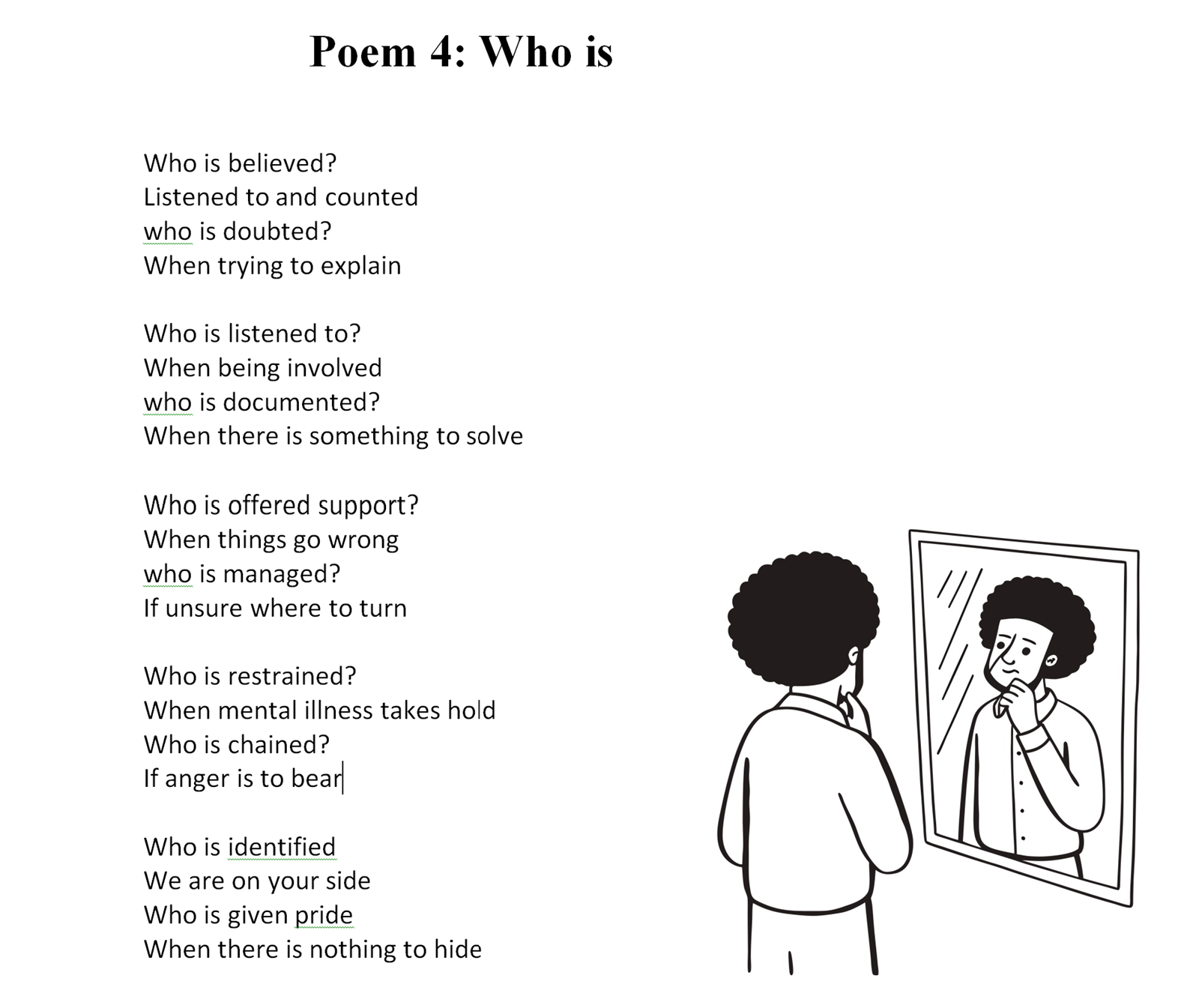
Voices & Verses PCREF Carer event

By Matthew McKenzie, Cygnet PCREF Carer Lead

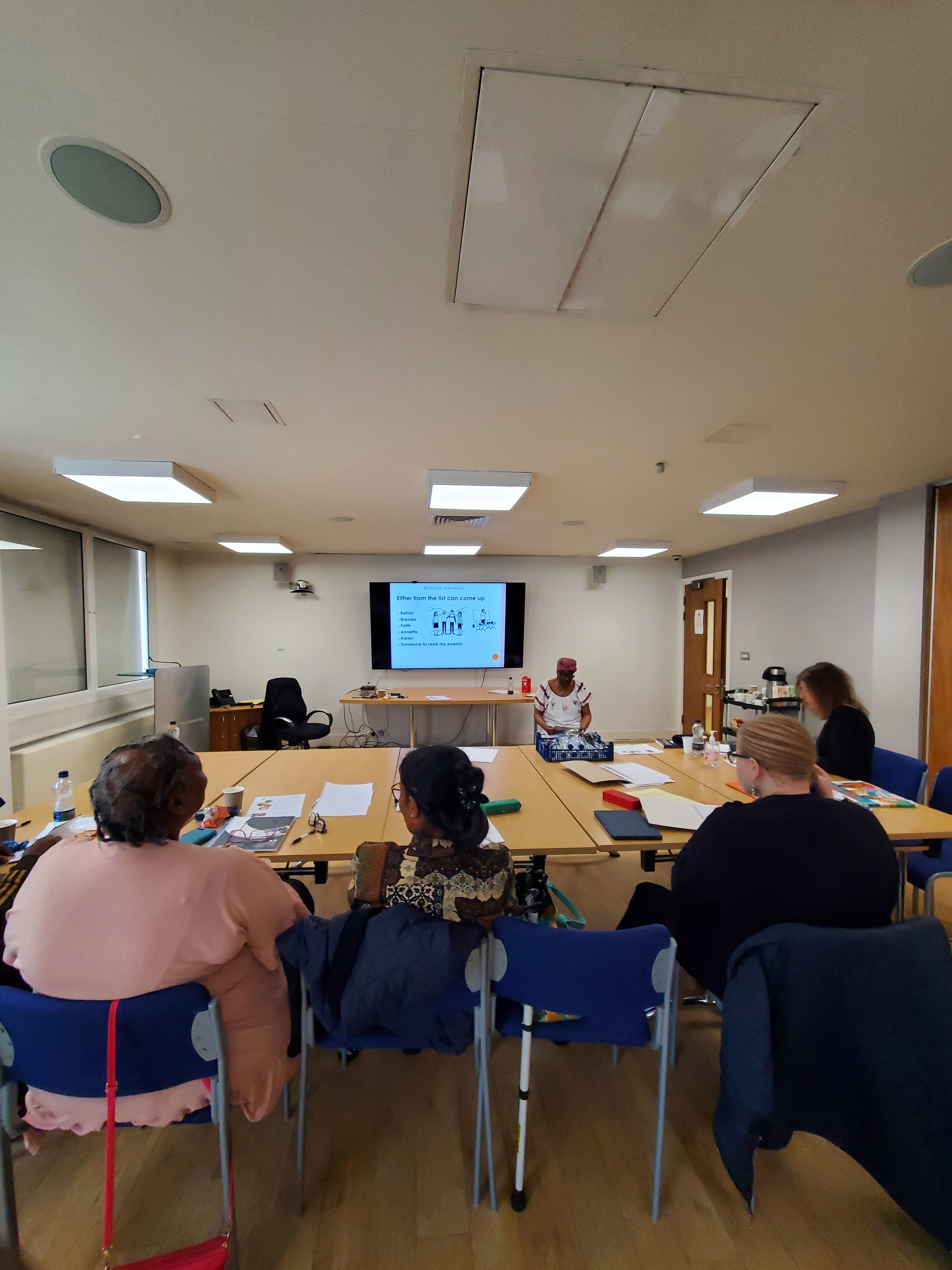
On Tuesday 28th April 2026, from 2:00pm to 4:00pm, we came together at Cygnet Churchill in Lambeth for what was described as a carers poetry event, but in truth, it became something much deeper.

It became a space where carers could speak, reflect, and be heard.

I hosted the session not just as a PCREF Carer Lead, but as someone with lived experience. That shaped everything the tone, the structure, and the intention behind every part of the agenda.

I made it clear: this was a safe, inclusive, and optional space. No pressure to perform. No expectation to share. Just an invitation.

We began with a simple check-in:
“What’s one word you’re arriving with?”


Opening Readings: Creating a Shared Starting Point

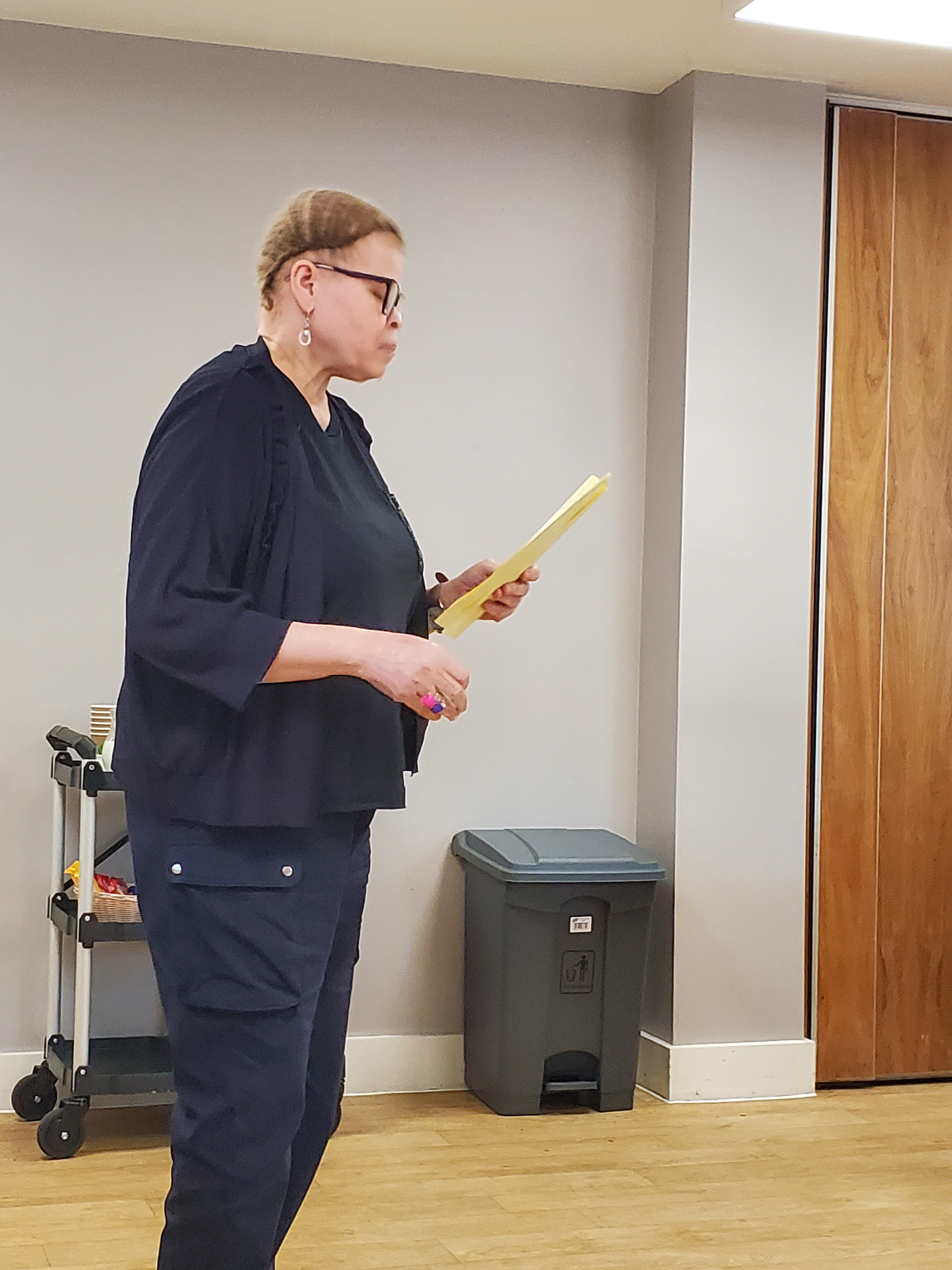
I started with a couple of my own poems, drawn from my work around carers, stigma, and racial inequality in mental health.

As shown above, one piece explored the question of who is listened to and who is overlooked within systems. Another focused on stigma and shame, particularly how cultural expectations and institutional barriers can compound the experience of caring.

These weren’t just readings—they were a way of opening the room.
An invitation for others to see themselves reflected.


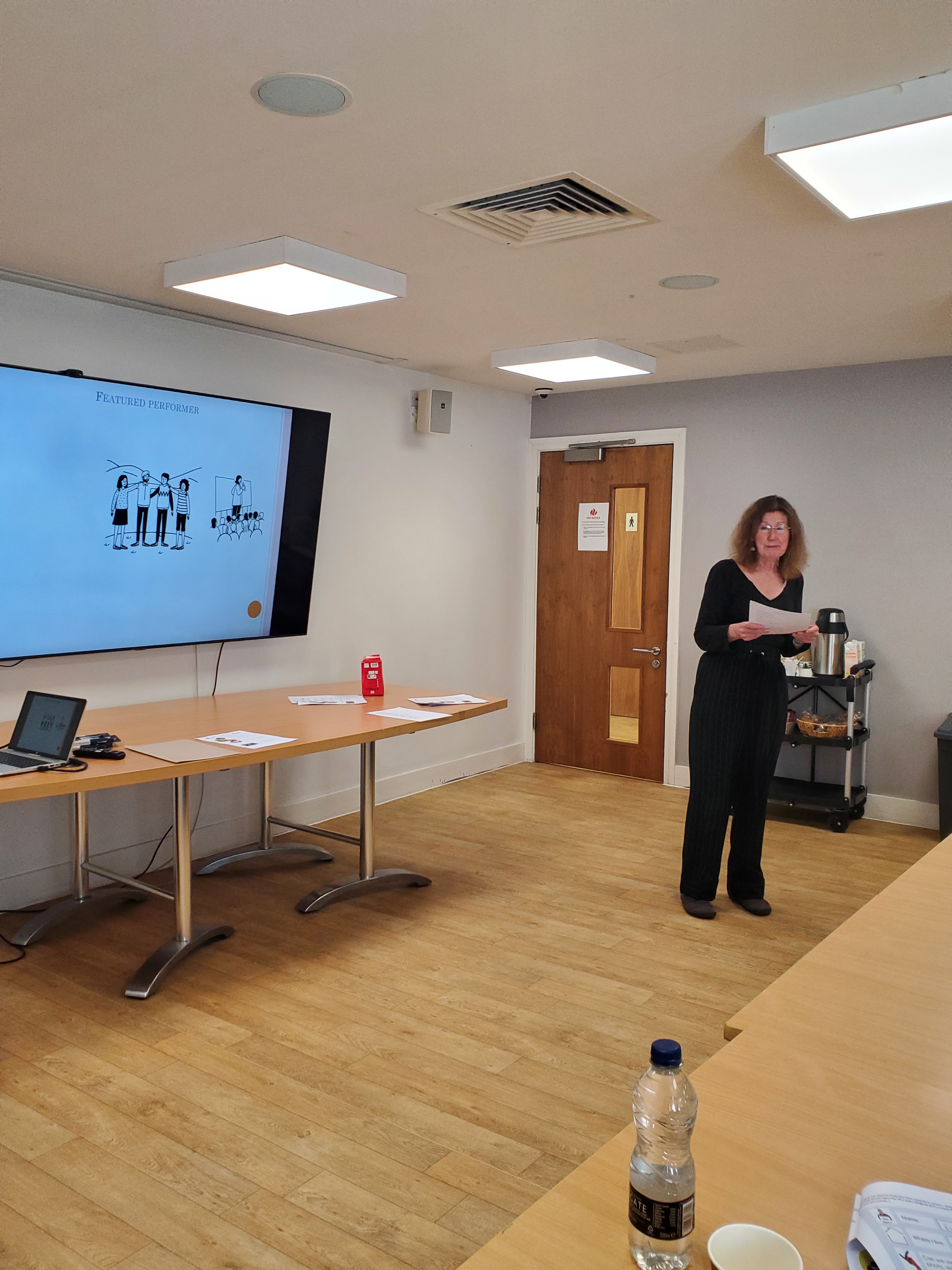
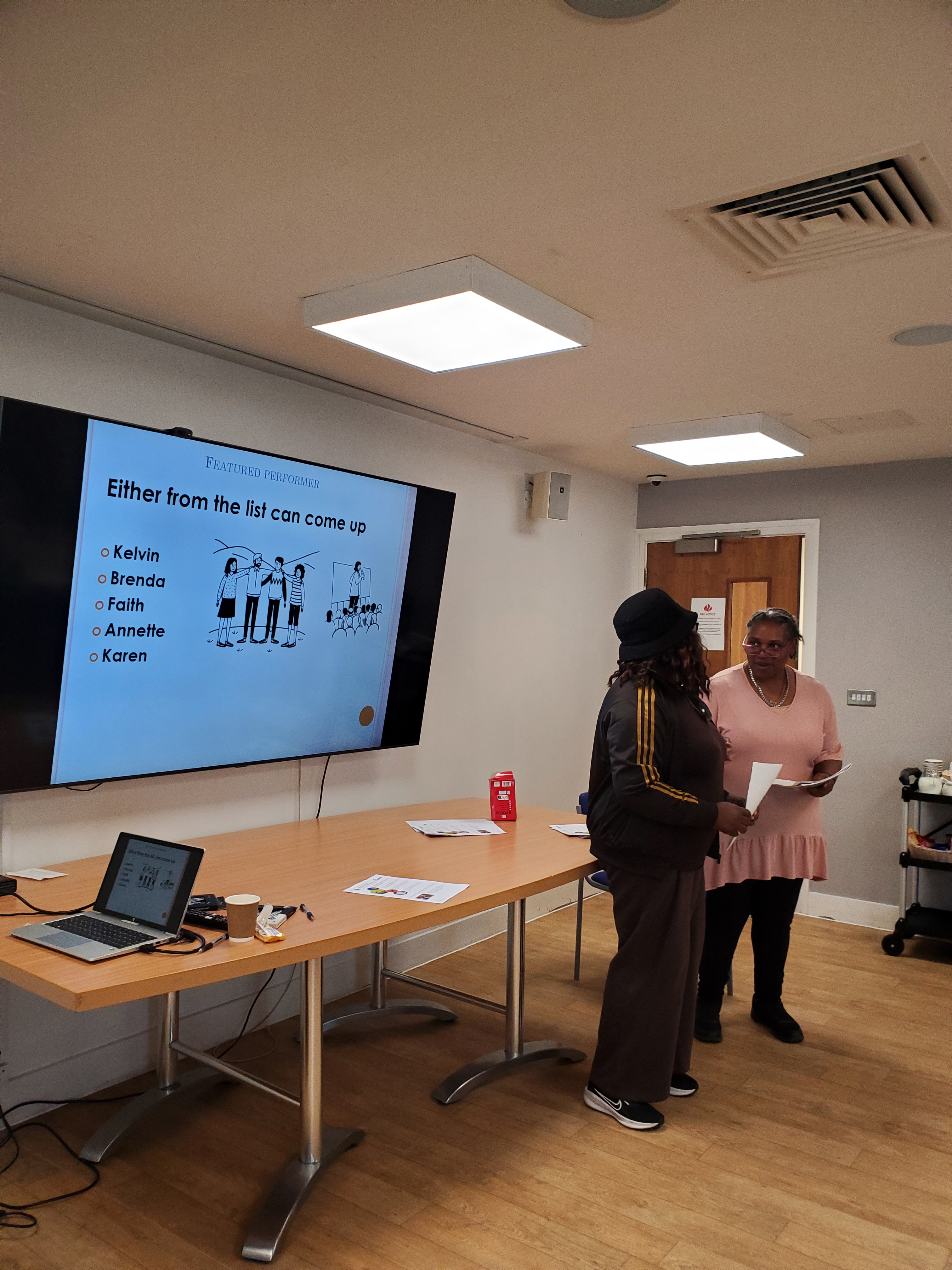
Featured Performer: Karen Ibrahim

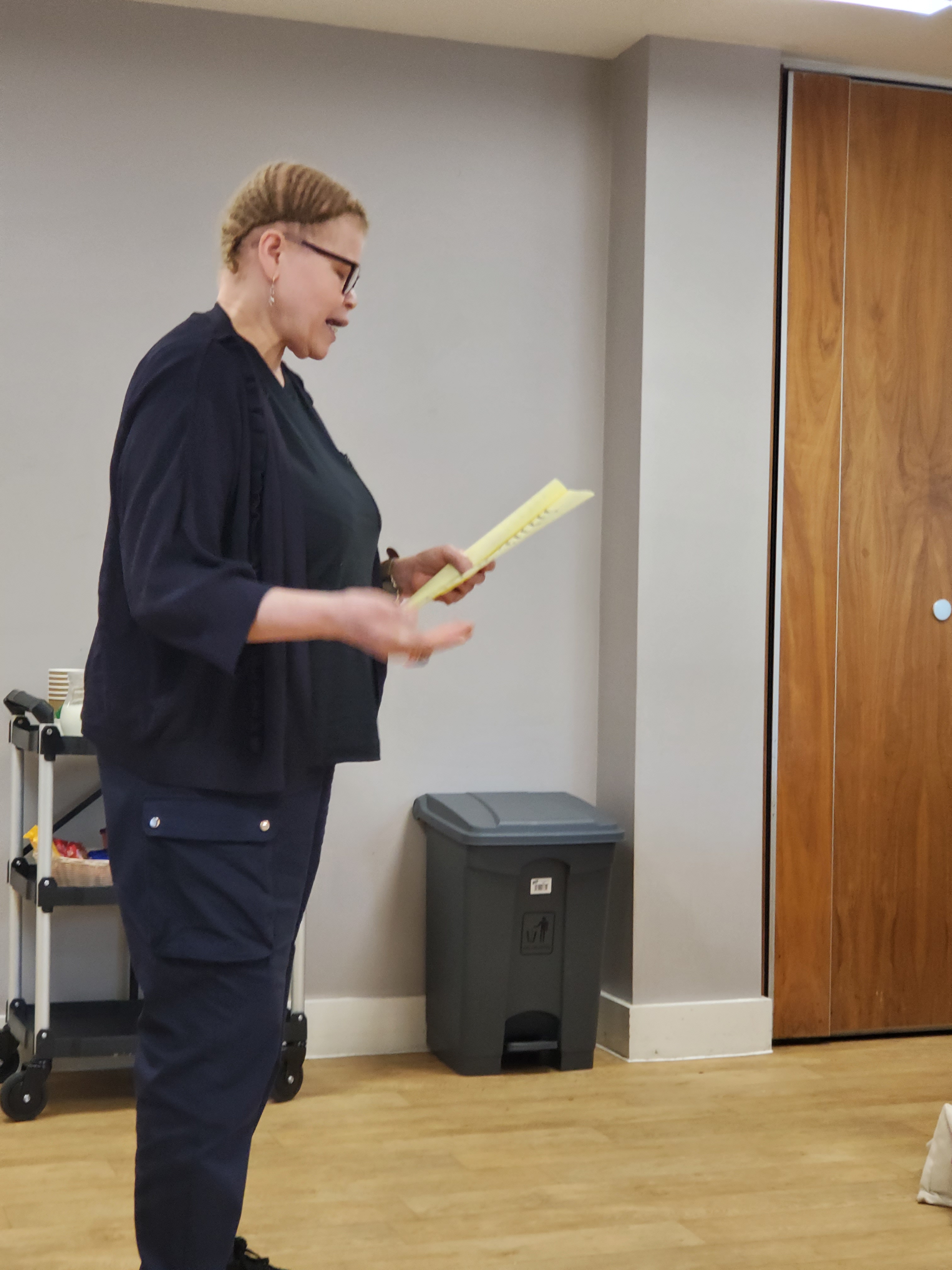
We then heard from Karen Ibrahim, whose poetry captured something deeply familiar to many carers the quiet, often invisible emotional labour of caring.

Her piece reflected the silence between carer and loved one, the fear of saying the wrong thing, and the reality of sitting with someone in distress without always knowing how to help. It spoke to that fragile balance carers hold every day.

Karen also shared a series of haiku-style reflections, drawn from carer experiences—short, powerful snapshots of emotion, nature, and coping. They reminded us that even the smallest expressions can carry deep meaning.


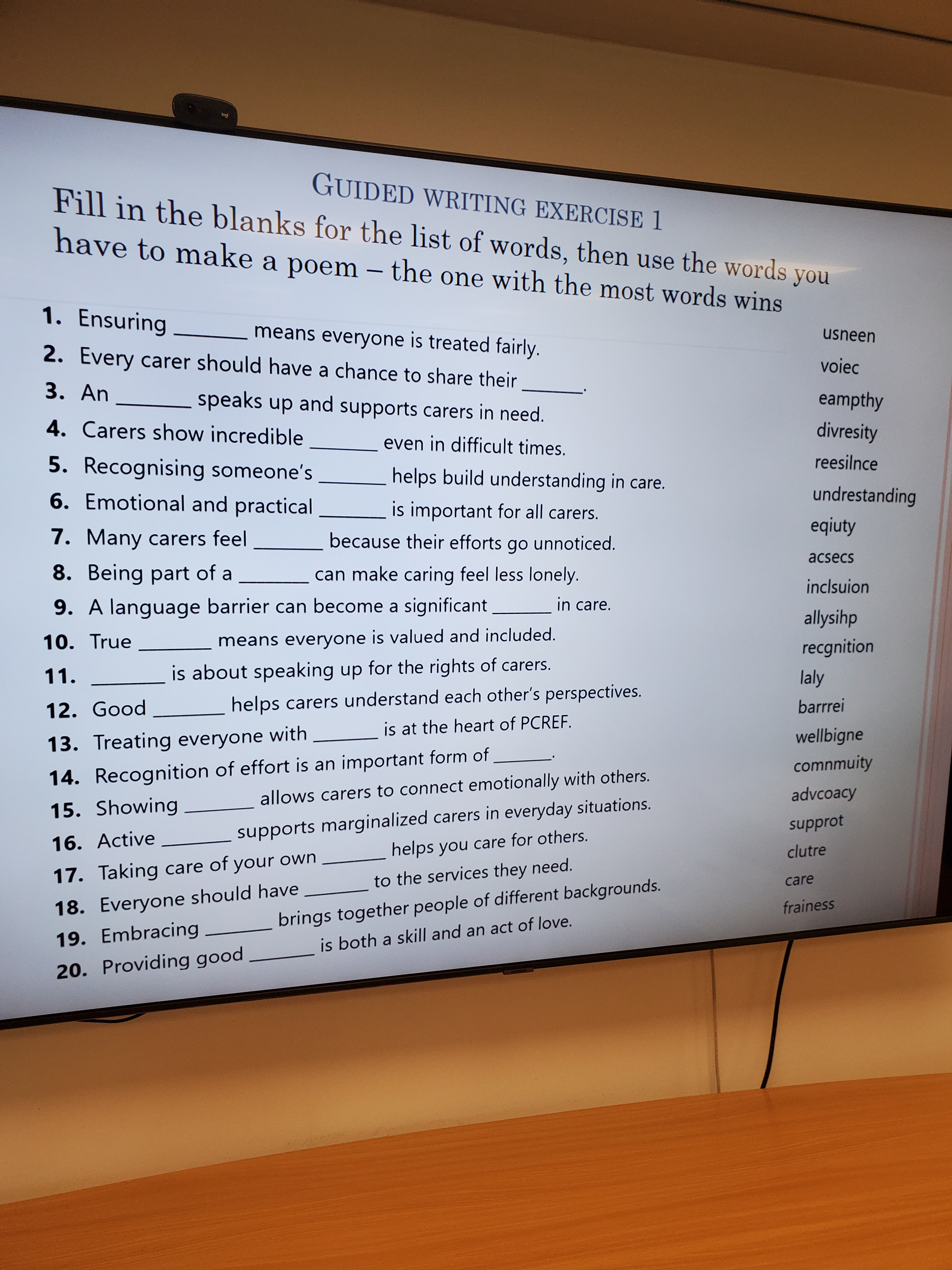
Guided Writing Exercise #1: Bringing PCREF to Life

We then moved into the first guided writing exercise.

I paired participants and asked them to:

  • Match PCREF-related concepts (like equity, advocacy, inclusion, resilience) to their meanings
  • Use those words to create a short poem or reflection

It was about translating PCREF from policy into lived language.

The results were powerful. Carers wrote about 4 poems altogether, below were the themes, which will be included in the new PCREF poetry book I am working on.

  • Feeling unseen and unheard
  • Wanting their voice recognised
  • Breaking down barriers in care
  • Finding strength through community

One group asked:
“Is my voice not loud enough to be heard?”

I felt that line stayed with me, because it captures exactly what PCREF is trying to address.


Performer & Open Mic (Round 1)

We then moved into our first round of performances, where carers shared both prepared and newly written work.

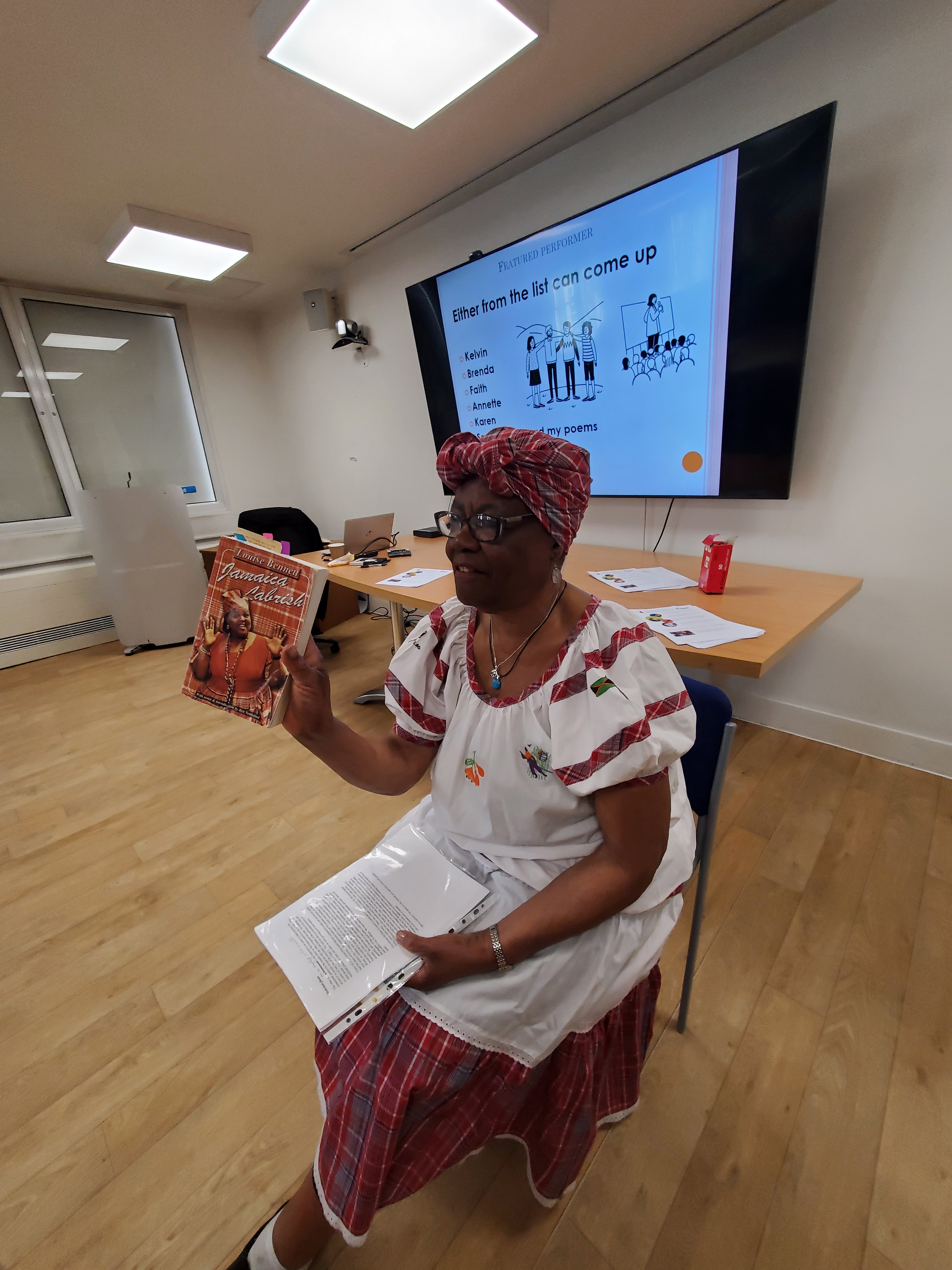
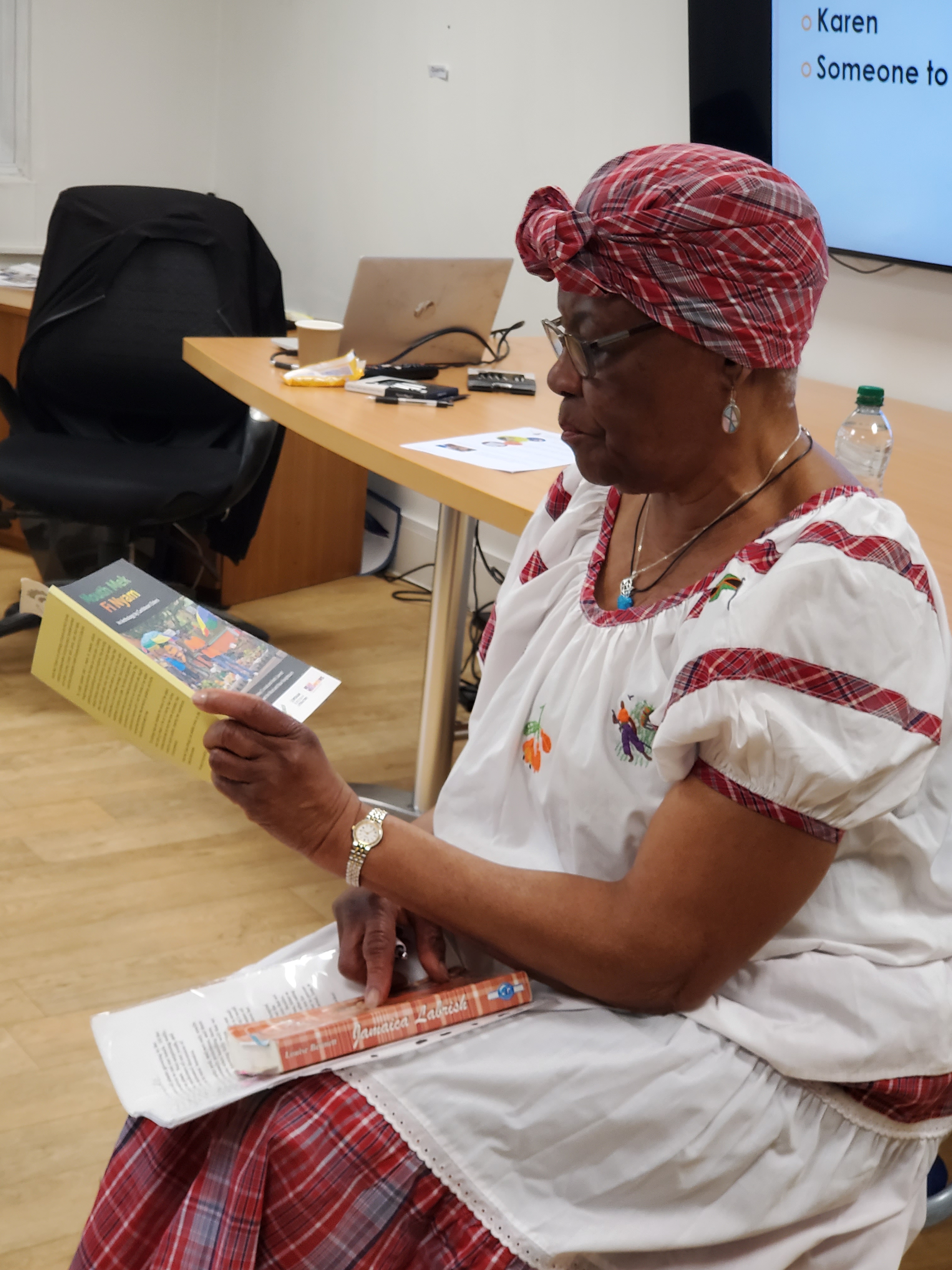
I felt Brenda brought something unique, blending cultural storytelling and poetry rooted in Jamaican heritage. She reflected on traditional knowledge, community wisdom, and the use of language and folklore as a way of preserving identity and healing. Her use of dialect and storytelling highlighted how culture shapes how we express and understand care.

Next was Annette Davis shared a piece centred on the identity of being a carer, capturing the emotional strain, lack of recognition, and inner strength that comes with the role. Her poem questioned what it means to be labelled a “carer” while navigating burnout, resilience, and the need for self-care.

Next up was Faith Smith and Nadine sharing a powerful reflection on system inequality, exploring the daily pressures of navigating services, the lack of accessible support, and the feeling of being caught in processes that don’t always respond to real-life needs.

Each piece added another layer to the conversation, with different perspectives, but shared truths.


Break & Connection

We paused for a short break and refreshments provided by the kind and wonderful staff at cygnet, but for the poetry event the conversations didn’t stop.

Carers continued to connect. Share stories. and reflected on what they had heard.

This is something I always emphasise, community doesn’t just happen in structured sessions. It happens in those in-between moments.


Creative Exercise session #2: Exploring PCREF Language

After the break, I introduced a second exercise, which was more interactive and reflective.

Participants worked with a word-search style challenge, identifying key PCREF-related terms such as:

  • Voice
  • Inclusion
  • Equity
  • Community
  • Trust
  • Advocacy
  • Listening
  • Stereotyping

Rather than writing full poems, we focused on discussion:
Which word stands out and why?

The responses were honest and grounded:

  • “Listening builds trust.”
  • “Community is where we belong.”
  • “Inclusion is what drives change.”
  • “Stereotyping still shapes how we’re treated.”

This is where PCREF becomes real, when people recognise themselves within it.


Performer & Open Mic (Round 2)

We continued with a second round of performances.

Carers shared reflections shaped by:

  • Cultural identity
  • Personal caring journeys
  • The emotional impact of systems
  • Hope, resilience, and change

Then ended with cultural carer songs by Brenda, see the video of part of the PCREF poetry session below.


In the end PCREF is about improving outcomes for racialised communities—but it cannot succeed if it remains purely clinical.

We:

  • Translated PCREF into lived experience
  • Used creativity to engage carers meaningfully
  • Created a culturally responsive space
  • Positioned carers as equal voices not passive participants

If you are caring for someone using Cygnet services, contact Family&Friends@cygnethealth.co.uk to join our Voices & Verses poetry group

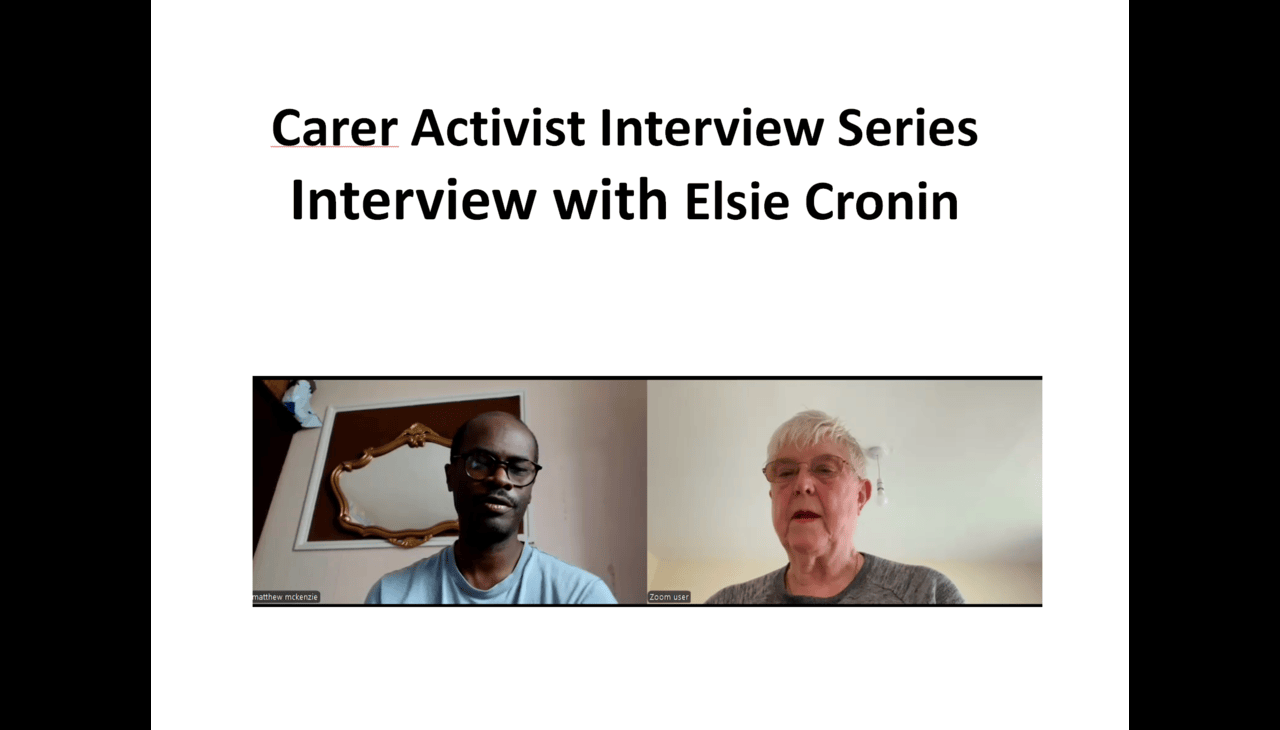
Interview with Elsie

Caring for a loved one is a role that often goes unseen and undervalued. In this interview, Matthew McKenzie speaks with Elsie, a 73-year-old carer and activist, about her journey as an unpaid carer, the challenges she’s faced, and her mission to support others walking the same path.

Standing Strong for Carers’ Rights

Elsie refuses to be silenced. Though at times labeled as a “persistent, unreasonable complainer,” she sees her persistence as a duty to her loved ones and to other carers. For her, raising concerns is about advocating for better care and systemic improvements.

Her advice to carers is simple but powerful:

  • Trust your instincts.
  • Don’t give up until your loved one gets the right care.
  • Learn about carers’ rights and stay engaged in decisions.

Finding Strength in Words

In a deeply moving moment, Elsie shared a poem she had written for the Book of Remembrance at Honor Oak Crematorium, in memory of her son. Her words reflect not only grief but also strength, love, and the motivation to keep advocating for change.

You’ll always be our hero.
Although you’re gone, we’re not apart.
Our love for you keeps going,
It stays deep within our hearts.

Football, food and fishing
Were what it was all about.
Blue is the color,
Come on, you lions, to shout.

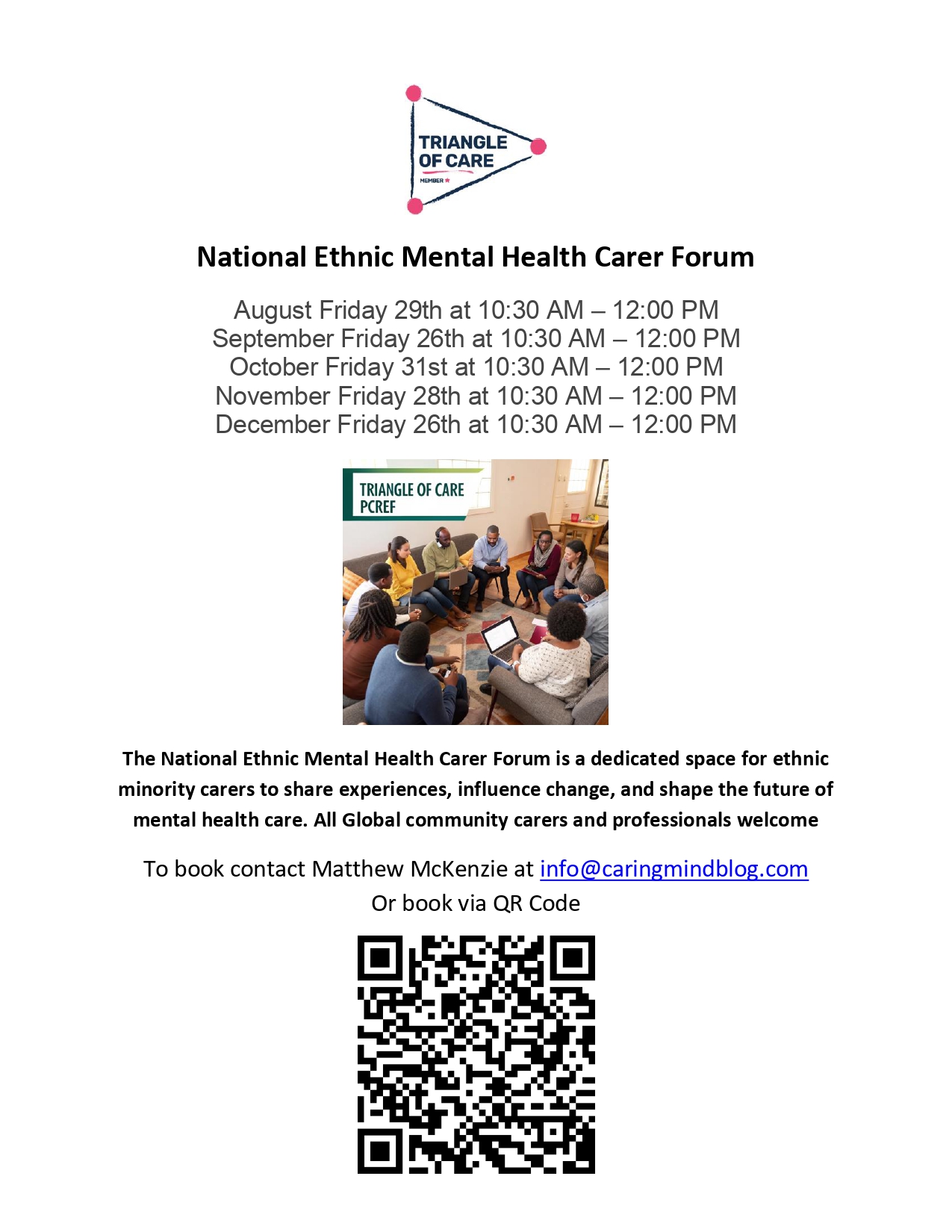
Ethnic mental health Carer Forum Update August 2025

by Matthew McKenzie – National Ethnic Mental Health Carer Forum Chair

In August, the online National Ethnic Mental Health Carer Forum came together once again to confront difficult but necessary conversations about systemic racism, discrimination, and the experiences of ethnic minority carers within health and social care. The forum, hosted by Matthew McKenzie, provided a platform for carers, professionals, and researchers to share insights, frustrations, and plans for change.


Focus on Racism and Discrimination

This month’s forum was unflinching in its focus: racism in health and mental health systems. Attendees shared powerful testimonies of racial abuse and discrimination, highlighting how these experiences undermine trust in services and affect both carers and those they support. There was a clear call for honesty – participants stressed the importance of naming racism directly, rather than disguising it behind euphemisms.

The group also discussed the overrepresentation of Black and brown people in prisons, the lack of tailored initiatives for older Black carers, and the persistent inequalities faced by ethnic minority families trying to navigate mental health and social care support.


Research and Evidence from Carers Trust

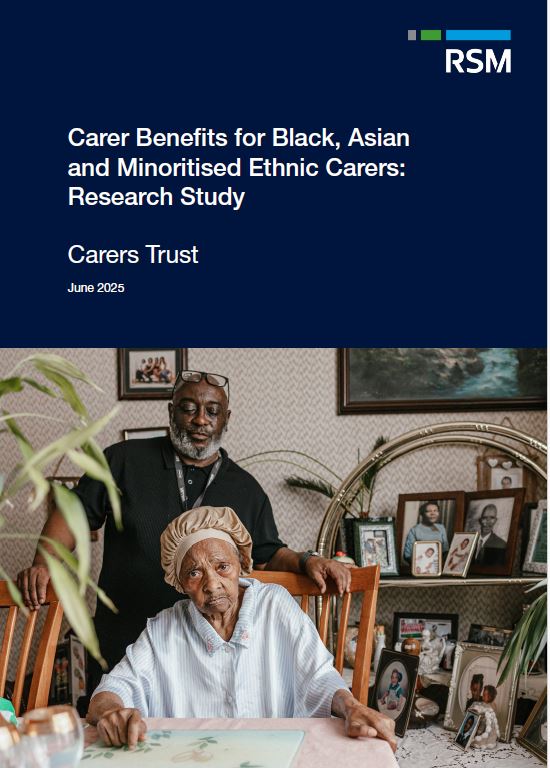
A key presentation came from Andrew of Carers Trust, who shared research into the barriers faced by Black, Asian, and minoritised ethnic carers. The findings highlighted widespread issues: discrimination, language barriers, lack of cultural competence, and difficulties in accessing benefits. Andrew emphasised the need for culturally inclusive services and stronger outreach strategies, while acknowledging feedback from the forum that research and advocacy must be explicit about racism rather than avoiding the term.

Andrew expanded on the importance of equity in benefit advice, pointing out that many carers miss out on their entitlements because information is inaccessible, overly complex, or not communicated in culturally relevant ways. He called for dedicated advice services that are not only multilingual but also sensitive to carers who may not self-identify as such.

He also spoke about the impact of social isolation on carers from ethnic minority backgrounds, who often have fewer support networks and face stigma within their own communities. Addressing this requires building trust with local organisations and ensuring carer support is visible in spaces where communities already gather, such as faith centres or community hubs.

Finally, Andrew outlined the Carers Trust’s national strategy, which involves working more closely with local carer organisations, producing research that amplifies marginalised voices, and lobbying for systemic reforms. He highlighted how this forum’s feedback directly shapes their advocacy, showing a real commitment to partnership.

Questions raised during Carers Trust’s presentation:

  1. How can Carers Trust ensure its research explicitly names racism rather than using softer language?
  2. What specific support can be offered to carers who do not self-identify as carers and miss out on benefits?
  3. How can Carers Trust improve its complaints handling processes, particularly for carers facing racism and discrimination?
  4. What role can MPs and lobbying groups play in supporting Carers Trust’s advocacy for ethnic minority carers?
  5. How will Carers Trust ensure its multilingual materials are distributed widely enough to reach isolated communities?

Hampshire & Isle of Wight NHS Anti-Racism Initiatives

Usually NHS Mental Health trust representatives update on anti-racism initiatives at the forum. This time Hampshire and Isle of Wight engaged with minority carers.

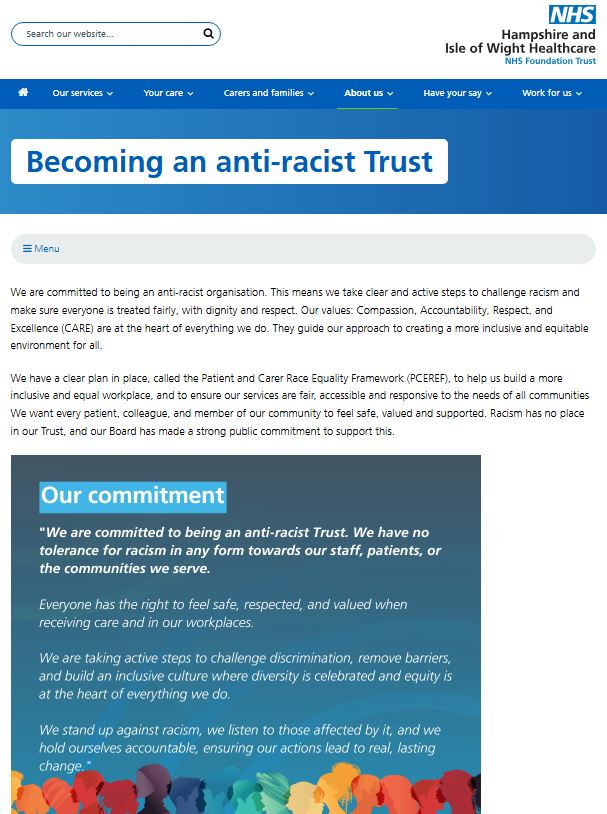
Elton who is the Diversity and Inclusion Partner from Hampshire and Isle of Wight NHS Trust provided an update on their anti-racist programmes, including the rollout of the Patient and Carer Race Equality Framework (PCREF). The trust has begun implementing cultural competence training, engaging with local communities, and embedding anti-racism into its wider mental health services. While early in its journey, the trust is already seeing changes in communication and engagement across different wards and services.

Elton shared that the trust is actively developing training modules on implicit bias, with the aim of reaching every staff member across its services. This training is intended not as a one-off exercise but as part of a sustained culture change programme. Early feedback from staff has been encouraging, with more frontline workers recognising how unconscious bias can influence treatment decisions.

He also described the trust’s efforts to engage directly with service users and carers, ensuring that their lived experiences feed into decision-making. Listening events, surveys, and advisory panels are being used to capture diverse perspectives, with a particular focus on groups who historically felt excluded from consultation.

In addition, Elton emphasised the need for transparency and accountability. The trust will publish regular updates on its PCREF action plan, allowing communities and stakeholders to scrutinise progress. He acknowledged that this is just the beginning, but stressed that embedding anti-racism into healthcare systems requires openness, humility, and sustained commitment.

Participants raised questions about how these initiatives address specific groups, such as older Black carers and prisoners’ families, as well as concerns about public misconceptions of anti-racism work. Elton acknowledged these challenges and committed to following up with colleagues on gaps raised during the discussion.

Questions raised during NHS Trust’s presentation:

  1. How will PCREF specifically address the needs of older Black adults who often feel invisible in services?
  2. What is being done to support the mental health of prisoners (e.g. Albany and Parkhurst prisons) and their families within this anti-racist framework?
  3. How will the trust prevent the public misconception that PCREF “excludes” white people?
  4. What mechanisms are in place to ensure transparency and accountability in publishing progress updates?
  5. How will the trust measure the long-term impact of cultural competence and implicit bias training?

Academic Research Contributions

The forum also heard from Shylet, a PhD researcher from University of Glasgow, who is focusing on learning disabilities. She presented her work on the lived experiences of Black African families caring for adults with learning disabilities, and invited participants to take part in interviews. Their contributions highlighted the importance of academic research in documenting and amplifying carers’ lived realities.

For more details you can contact her at S.Musabayana.1@research.gla.ac.uk


Carers’ Experiences of Benefits and Support

Another important theme was the financial challenges facing carers. The group discussed the complexity of benefits like Carer’s Allowance and how misinformation or fear of losing other entitlements often deters carers from claiming support. A carer expressed reluctance to claim due to concerns about how it might affect their relative’s benefits, while another highlighted the importance of valuing one’s own contribution and recognising caring work. There was frustration with bureaucratic systems that seem designed to exclude, particularly when layered with the additional barriers of language, culture, and discrimination.

Carers also highlighted the immense value of unpaid care, with estimates placing its worth at over £180 billion per year if it were to be paid for by the NHS. This figure underscored the urgent need for better recognition and support of carers’ contributions.


Strengthening Complaints and Accountability

There was a debate around how carers can raise complaints when faced with racism or poor treatment. Many participants expressed a lack of trust in formal systems like the CQC or Ombudsman, feeling that complaints disappear into bureaucracy without change. Suggestions included working with MPs, lobbying groups, or the media to ensure voices are heard.


Final Reflections

The August forum showed once again how necessary it is to hold these difficult conversations. Carers spoke bravely about racism and exclusion, professionals shared updates on anti-racist strategies, and researchers sought to bring lived experience into policy. Yet the message was clear: systemic change requires more than frameworks and research reports. It requires honesty, collaboration, and persistence.

As host, I was encouraged by the passion and determination in the room. The forum continues to grow as a national voice for ethnic minority carers, and our commitment to addressing racism head-on remains at the heart of this work.

Ethnic mental health Carer Forum Update May 2025

Quick update on ethnic mental health carer group

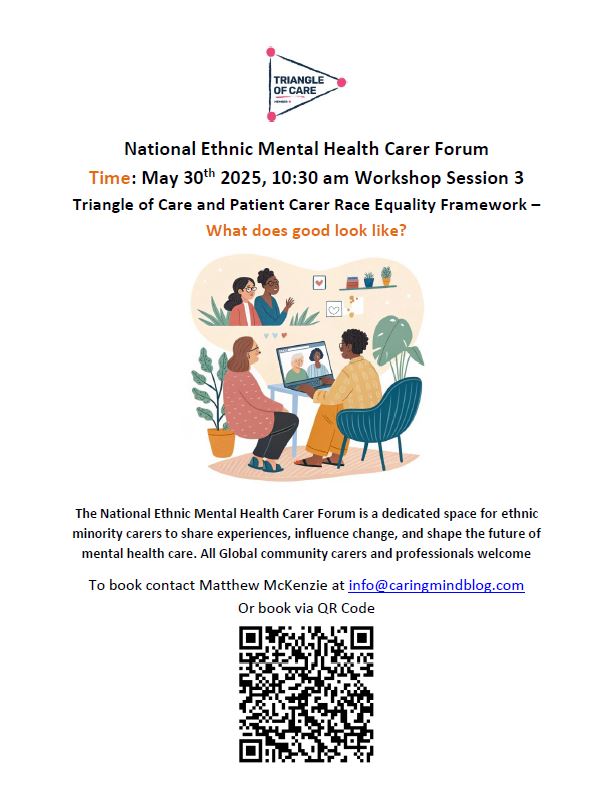
The meeting focused on carer involvement and representation across different regions, with participants discussing their roles in supporting carers and addressing discrimination. The main focus for this meeting was on “What does good look like?” when it comes to Triangle of Care and PCREF.

The group explored the Triangle of Care initiative and its five key elements, including discussions about medication-related challenges and the need for better communication between healthcare providers and carers. The conversation ended with conversations about improving carer support systems, including the importance of advocacy, training, and creating safe spaces for carers to share concerns confidentially.

Continue reading

Triangle of Care Community group update May 2025

Here is a brief update of the Triangle of Care Community group for the month of May 2025. The Triangle of Care Community group is a collaborative forum that champions the voices of unpaid carers in mental health services. The group works in partnership with service users, carers, and professionals to embed the principles of the Triangle of Care, promoting shared decision-making, improved communication, and recognition of carers as equal partners in care.

Our most recent meeting brought together carers, NHS professionals, researchers, and advocates from across the UK, including representatives from Kent, Bristol, Lewisham, East Sussex, and Hertfordshire. The atmosphere was one of mutual respect, knowledge-sharing, and a shared drive to improve the experience of care for carers and their loved ones.

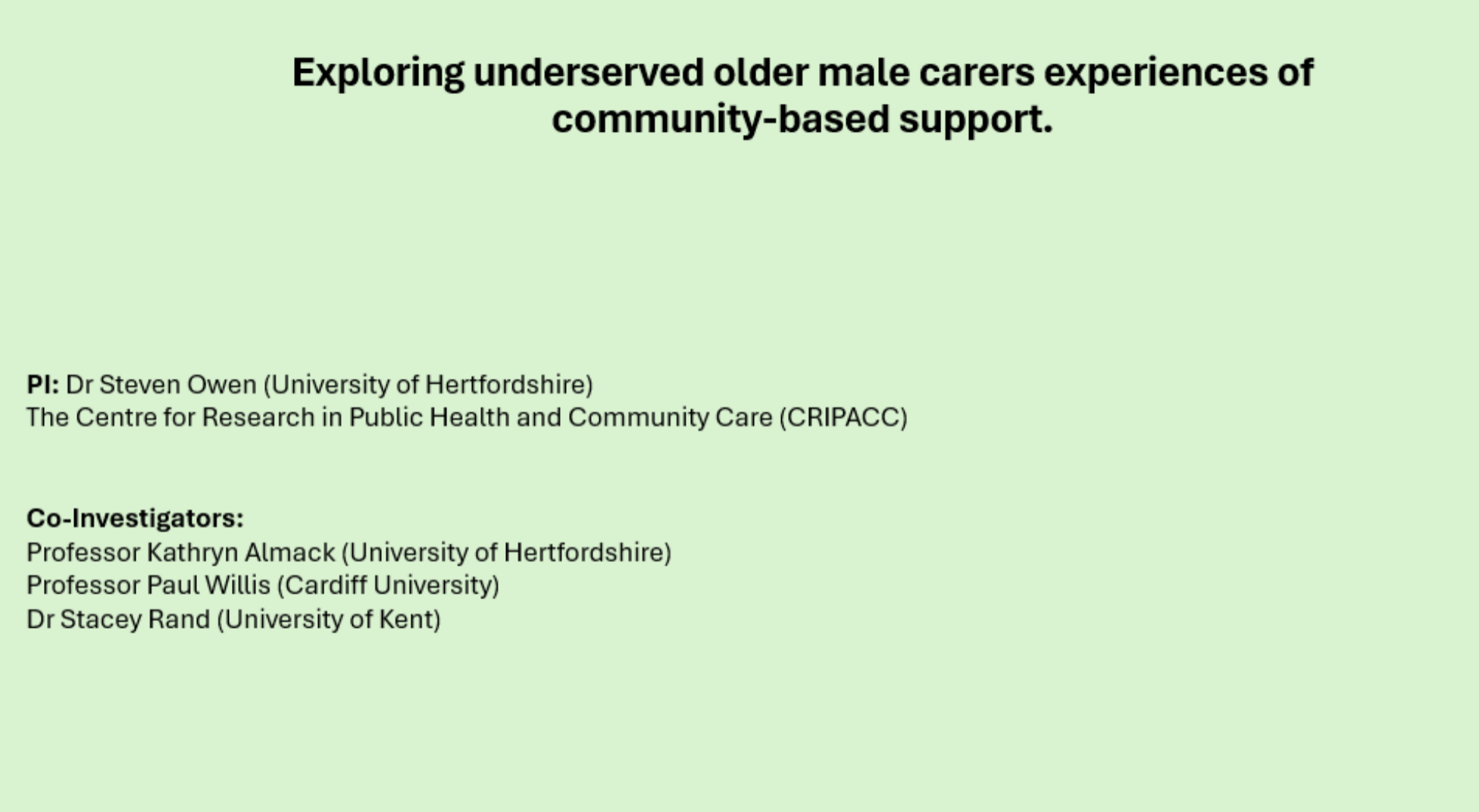
The meeting covered updates on Triangle of Care developments, including recent accreditations and ongoing pilots to adapt the model for various healthcare and social settings. Presentations were given on research studies related to mental health care, including pharmacist prescribers’ roles and experiences of underserved older male carers. The group also discussed campaigns for increased research funding in serious mental illnesses and initiatives to support carers, such as Carers Roadshows.

Triangle of Care Expansion Updates

Mary Patel one of the Triangle of Care leads, provided an update on Triangle of Care developments and accreditations. Several healthcare providers have recently gained Star awards. There are ongoing pilots to adapt Triangle of Care for social care settings and to incorporate criteria for better support of racially marginalized carers. Mary announced that the Triangle of Care community group will be formally brought on board with Carers Trust, with Matthew as the inaugural chair for a 2-year term. They are looking to bring on co-chairs to support Matthew in his role.

Triangle of Care Implementation Updates

The group discusses recent achievements in implementing the Triangle of Care model across various healthcare organizations. Gabrielle Richards who leads on carers at South London & Maudsley reported that her trust successfully completed their Star 2 accreditation assessment for community services.

Matthew McKenzie shared a video poem he created about the Triangle of Care as it was shown during the peer review at South London & Maudsley.

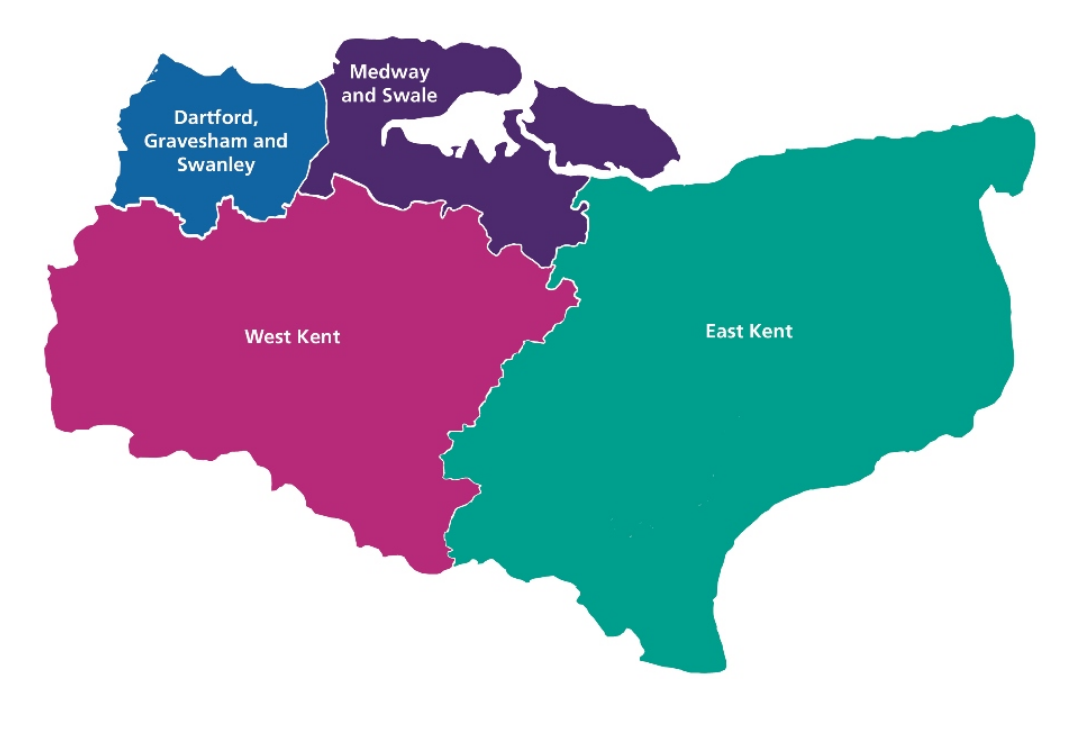
Kelvin thanked Gabrielle for her contributions as she prepares to leave her role. Louise from Kent and Medway NHS Trust reported they maintained their second star accreditation and have implemented new processes to ensure carer considerations are included in policy development.

https://www.kmpt.nhs.uk/carers/triangle-of-care/

Mental Health Care Research Study

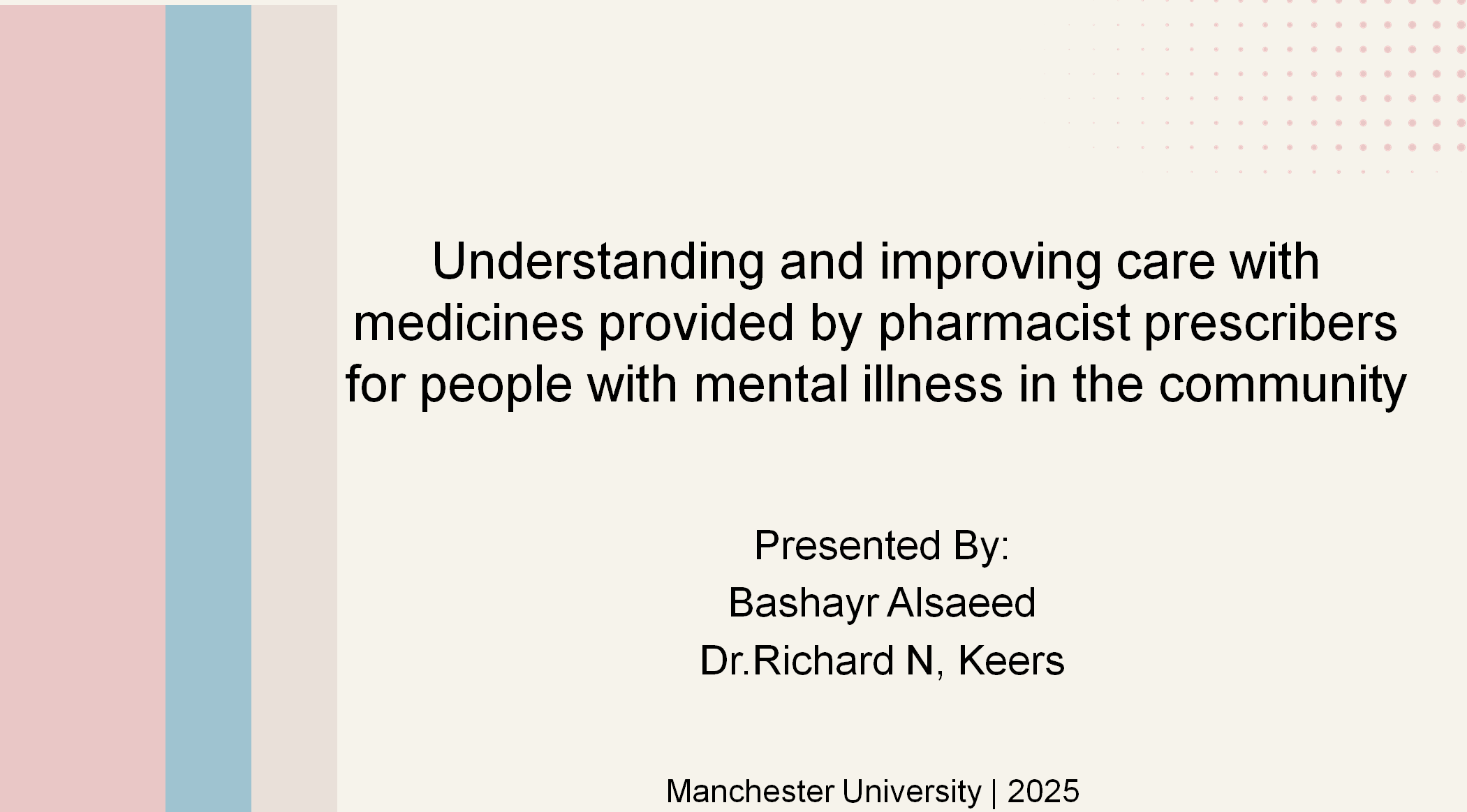
Richard introduced Bashir Al Saeed, a PhD student from the University of Manchester, to present their research study on the experiences of people with mental illness and their carers when receiving care from pharmacist prescribers in the community.

Bashir explains that the study aims to understand and improve care provided by pharmacist prescribers for people with mental illnesses in community-based settings. Participants will be asked to take part in a one-hour interview and will receive £30 as compensation.

The study is seeking individuals aged 18 or older with mental illnesses or their unpaid carers who have received care from pharmacist prescribers in the UK. A discussion follows about the inclusion criteria, particularly regarding the requirement for fluency in English, with concerns raised about potential issues against non-English speakers

Mental Health Research Campaign Initiative

The group discussed a campaign for better research into long-term serious mental illness in working-age people. Irene explained that they have been working on this campaign for a year, collaborating with experts from Oxford and the Welcome Trust.

The campaign aims to gather signatures and includes a short video. Irene emphasizes the importance of this initiative, as many in their group have loved ones who have been ill since their teens and are now in their thirties and forties.

You can find out more about the campaign from the link below.

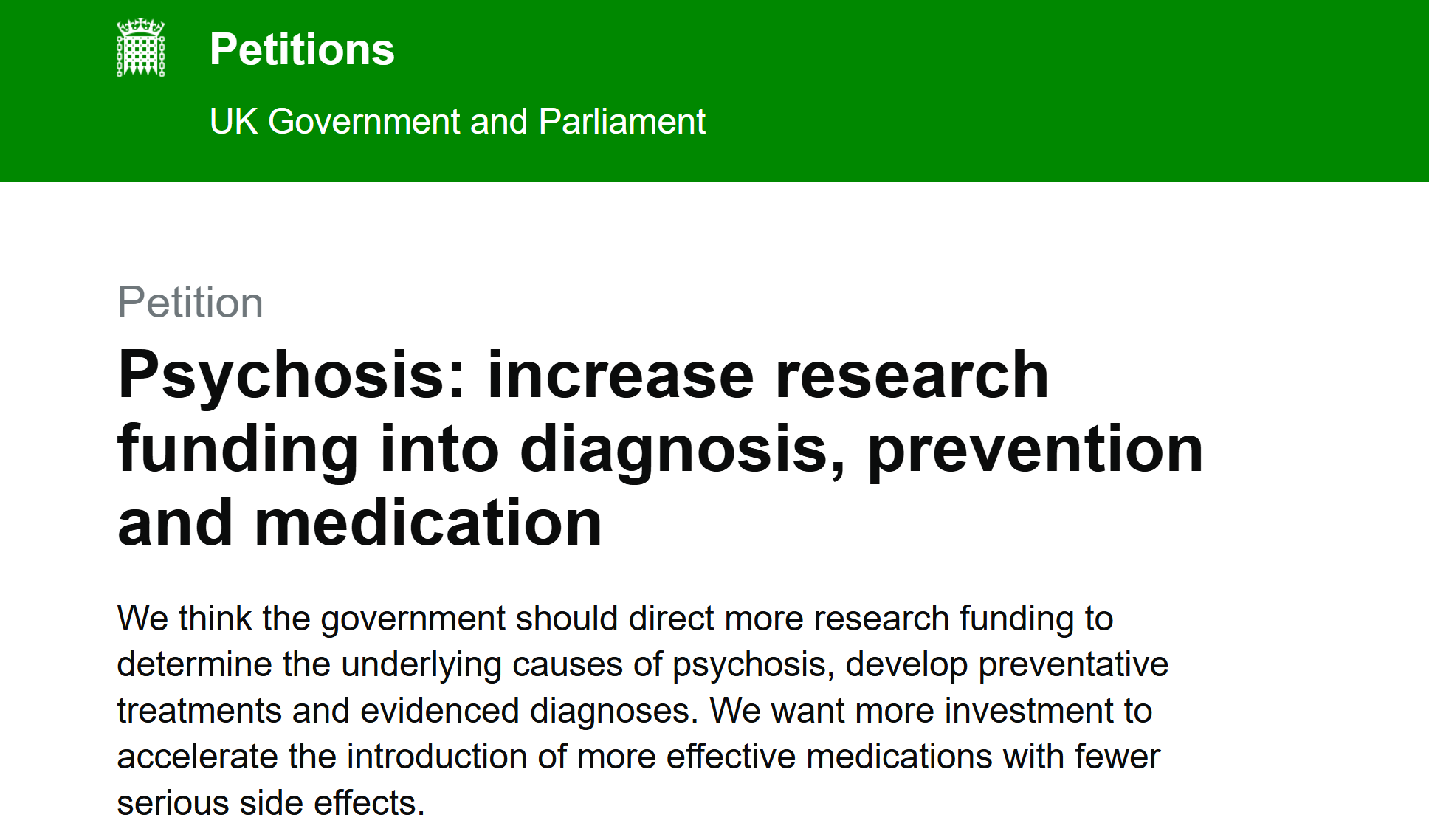
https://petition.parliament.uk/petitions/725846

Advocating for Psychosis Research Funding

The discussion focuses on a petition to increase government funding for research into psychosis, including its diagnosis, prevention, and treatment. Irene passionately advocates for more effective medications with fewer side effects, emphasizing the need for better understanding of the underlying causes of psychosis. A carer shared personal experiences of her son’s struggles with mental illness and medication side effects. The group discusses the importance of signing and sharing the petition to gain government support for accelerated research in this area.

Pharmacist Prescribing for Mental Health

The discussion focuses on pharmacists prescribing for mental health conditions. Richard explains that some pharmacists, especially those with specialized training, are caring for people with mental illnesses in various settings. However, the extent of their involvement in prescribing and monitoring is still unclear. A carer expressed concern about pharmacists prescribing for severe conditions like bipolar disorder without extensive training. The group discusses the need for proper qualifications and access to medical records. Richard emphasizes that the study aims to understand and improve the care provided by pharmacist prescribers in community services.

Carers Roadshows: Community Support Network

Trevor a carer involved at Notts NHS described his Carers Roadshows, which he has been organizing since 2013. These free events bring together various organizations dealing with health, mental health, and social care to provide information and support to carers and patients.

Trevor emphasizes the importance of communication in triangular care and sees the roadshows as an effective, sustainable tool for fostering connections between different organizations and the community. He expresses his ambition to expand the roadshows across the country, particularly in London boroughs, and offers to help others create their own roadshows using his four-step guide.

Older Male Carers Advisory Group

Steve Owen from the University of Hertfordshire presents his research project on exploring the experiences of underserved older male carers. The project aims to set up an advisory group of 7-10 older men, particularly from minority ethnic groups, same-sex relationships, and rural/coastal areas, to meet from June to December 2025.

The research group will discuss the benefits and challenges of caring, gender dynamics, and access to support. The project’s goals are to develop a grant proposal for further research and improve advisory group guidelines. Steve is still recruiting participants and welcomes help in sharing information about the project.

Final Reflections

The session highlighted both the progress and the gaps still faced by carers, particularly around communication, access to services, and recognition. The Triangle of Care model continues to be a vital tool in bridging these gaps, but it is the commitment of carers and professionals alike that drives real change.

“Thank you for another great meeting Matthew and everyone.” – Linda Thomas
“These meetings have been such a resource for us all.” – Gabrielle Richards
“Powerful video, powerful voices. Thank you everyone.” – Claire Wood

I’m proud to be involved and help lead as triangle of care community as Chair and look forward to building our impact together. If you’re interested in co-chairing or getting more involved, please reach out let’s continue to shape mental health care that values and includes carers at every level.