Tag Archives: carer feedback

Greenwich Mental Health Carers Forum – September 2026 Update

By Matthew McKenzie – Chair of the Greenwich Mental Health Carers Forum

Welcome to the September update of the Greenwich Mental Health Carers Forum, held on Tuesday 29 September 2026.

This month, we welcomed representatives from Greenwich Carers Centre, the Royal Borough of Greenwich, Healthwatch Greenwich and Greenwich Mental Health Hub, alongside unpaid carers.
Our discussion explored the future of carer support in Greenwich, difficulties accessing respite, support available through the Mental Health Hub, and how carers’ feedback can influence services.

For those unable to attend, here is an overview of the meeting.

Greenwich Carers Centre: opportunities to connect and receive support

Catherine Hope joined us on behalf of Greenwich Carers Centre to share its forthcoming activities.

The programme included employment and digital support, the Mindcare Memory Café, a men’s carers group, karaoke, bereavement support, and information sessions about wills and disabled persons’ trusts. A community health event was also highlighted for late October.
Alongside these events, the Centre continues to offer regular activities such as dance, art, Tai Chi, knitting and social gatherings.

These opportunities matter because caring can leave little time for friendship, enjoyment or attention to our own wellbeing. A welcoming place to meet others can make a considerable difference.

Carers interested in attending should contact Greenwich Carers Centre for the latest programme, booking arrangements and eligibility information.

Shaping the future of carer support in Greenwich

Caleb and Evie from the Royal Borough of Greenwich commissioning team updated us on work to review commissioned carer services and prepare for the next stage of the borough’s carers strategy.

The current strategy comes to an end in 2027. Commissioners have been gathering feedback through workshops, carers groups and community engagement, including sessions focused on mental health carers and culturally inclusive support.

They explained that this feedback is helping shape the requirements for future carer services. It will also inform thinking about a future strategy or charter, although the final approach has not yet been decided.

The intention is to develop proposals and return to carers groups, potentially early next year, to check whether those proposals reflect what carers have said.

I welcome that commitment to return. Carers need opportunities to see how their experiences have influenced decisions and to challenge proposals where something important has been missed.

Respite: carers need breaks that work in everyday life

Respite was one of the strongest themes raised during the meeting and across the council’s wider engagement.

Commissioners reported concerns about access, suitability, affordability and the complexity of finding the right support.

Our discussion showed why respite needs to fit the realities of caring. Some carers need a longer break, while others need smaller, regular periods of rest within their weekly routine.
One carer described difficulties obtaining support when the person they care for lives in accommodation in another borough. Their caring responsibilities continue despite living at different addresses.

This raised an important issue: services need to understand the care someone actually provides, including practical support, emotional support and ongoing responsibility across borough boundaries.

Commissioners also described an apparent mismatch between carers reporting a strong need for breaks and some commissioned respite beds remaining unused. They are exploring why this is happening and where access arrangements may be failing.

For me, this is a clear example of why listening to carers matters. The existence of a service does not tell us whether people can use it or whether it meets their needs.

How does feedback reach people who can change services?

I asked how concerns about difficult-to-access or unsuitable services reach those responsible for making improvements.

The commissioning team explained that they have brought together feedback on respite into a report and are sharing it with colleagues responsible for different services, including learning disability, mental health and care home provision.

Other concerns, including carers’ assessments, direct payments and support for parent carers, require work across several teams.

They acknowledged that the timescale for change varies. Some improvements may be possible through changes to contracts, while others require longer-term planning.

The team also expressed an interest in publishing an account of what they have heard and what they intend to do.

That would be a useful step towards accountability. Carers should be able to follow the connection between the experiences they share, the decisions made and the improvements delivered.

Earlier identification and culturally inclusive support

Commissioners highlighted several recurring themes from their engagement:

  • Inconsistent information and advice across services.
  • Missed opportunities to identify carers earlier.
  • Difficulty navigating health and social care.
  • A need for more proactive support.
  • The importance of trust and relationships.
  • Barriers involving access to interpreters.

The discussion about interpreting was particularly important. Carers should be able to explain their situation, understand information and take part in decisions in a language they can use confidently.

The council’s culturally inclusive engagement has also explored systemic barriers and anti-racist approaches to commissioning.

There was positive feedback too. Commissioners reported that carers place a high value on peer support, with Greenwich Carers Centre described by some as a lifeline.

Greenwich Mental Health Hub: understanding the support available

Jackie, representing Greenwich Mental Health Hub, gave a detailed presentation about its integrated approach.

The Hub brings together Oxleas clinical services and voluntary sector partners, including South East London Mind and Bridge Support. Its aim is to offer personalised support that considers someone’s psychological, physical and social circumstances.

The presentation described support involving:

  • Mental health assessment and brief interventions.
  • Medication advice and support.
  • Peer support and group programmes.
  • Housing, benefits and employment advice.
  • Social prescribing and community connections.
  • Support with co-occurring mental health and alcohol difficulties.
  • A dedicated carers advisor.

Jackie explained that much of the Hub’s work involves short-term support, generally around 12 weeks, with onward referral where further help is needed.

She also reported more than 7,000 referrals over the preceding year, illustrating the scale of demand.

Referral routes and carers’ concerns about deterioration

I asked what happens when a carer notices that the person they support is becoming more unwell, and how that information reaches the appropriate team.

In the discussion, Jackie described the GP referral route into the Hub. She explained that carers seeking their own support would also generally need a GP referral unless they were already receiving support through an active Hub referral.

The Hub was described as an appointment-based service rather than a walk-in service.

Jackie explained that referrals are screened regularly and urgent referrals prioritised. Screening is an initial review of the referral; it should not be confused with a confirmed appointment or treatment starting immediately.

These questions remain important for carers. When someone’s health is deteriorating, families need clear information about who to contact, how concerns are considered and what happens next.

Carers’ assessments and waiting for support

A carer raised concerns about waiting for a carers’ assessment without being given a clear timescale.

The discussion clarified that a local authority carers’ assessment and a mental health assessment through the Hub serve different purposes. One looks at the caring role and its impact; the other considers mental health support needs.
The carer was encouraged to ask the council for an expected timescale. An offer was also made to seek information about average waiting times and follow up.

The forum did not establish a confirmed waiting period. However, the discussion highlighted how uncertainty itself adds pressure when someone is already struggling.

Community organisations and mental health inequalities

Jackie also described the Hub’s grants programme supporting community organisations to provide mental health support.

She reported that ten community groups had received funding over the past year. The approach recognises that trusted local organisations can help people access support, particularly where stigma or other barriers make conventional services difficult to approach.

Further information about the grants was requested during the meeting.

Healthwatch Greenwich: another route for sharing experiences

Katie from Healthwatch Greenwich explained how residents can share experiences of health and social care, including through conversations and anonymous online feedback.

She described how information is anonymised when reported to commissioners, helping services understand what is working and where improvements are needed.

For carers who would prefer to speak privately rather than share an experience in a group, this offers another route to contribute.

Looking ahead

Thank you to all the carers and professionals who joined the September forum.

The meeting showed both the value of existing support and the difficulties carers still face. Respite, clear referral routes, timely assessments, consistent information and earlier recognition of caring responsibilities all need continued attention.

Our next Greenwich Mental Health Carers Forum is planned for November. I look forward to continuing these discussions and hearing how the feedback shared by carers is being taken forward.

You can also read the June forum update here.

Carers’ experiences need to remain central to the future of support in Greenwich.
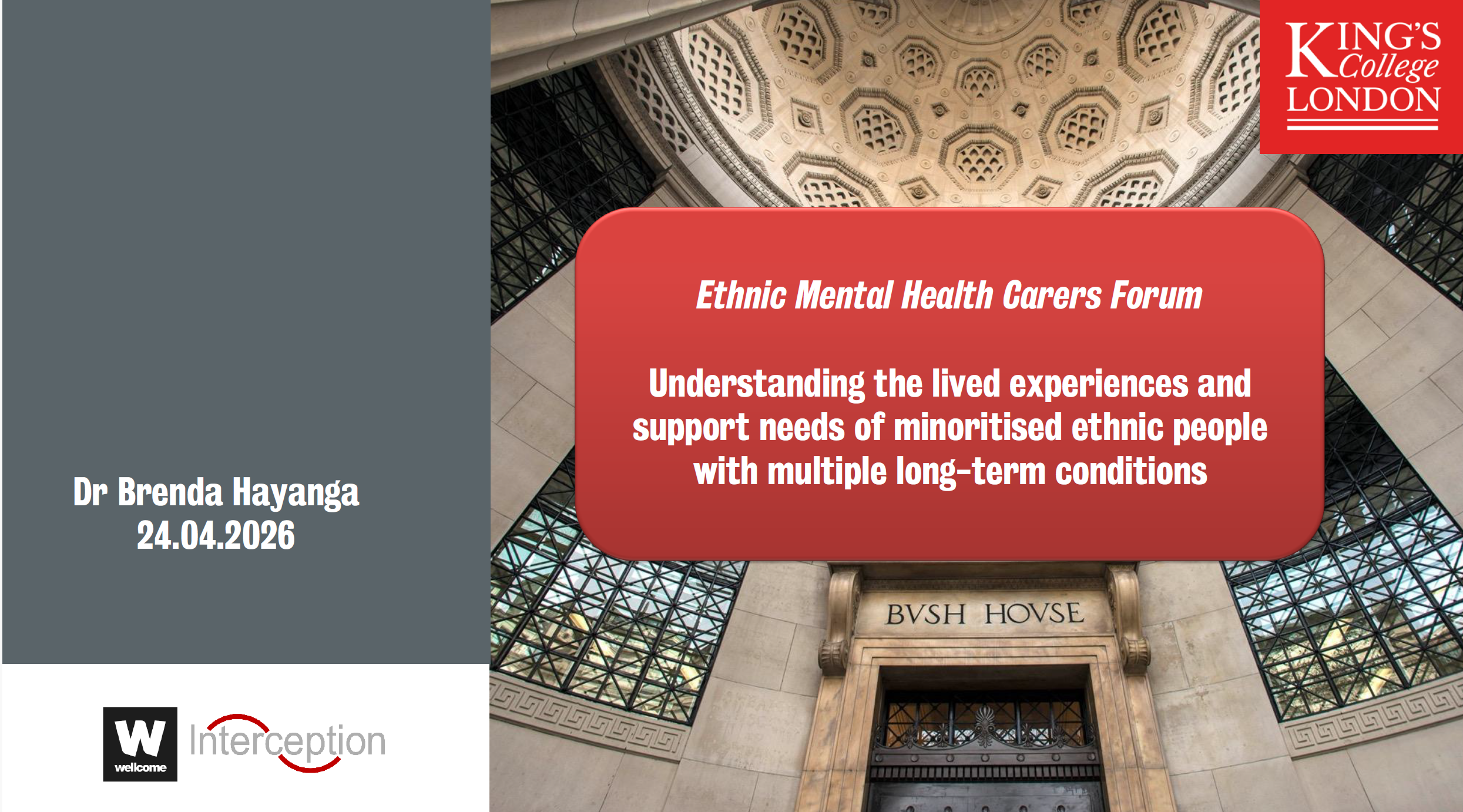
National Ethnic mental health Carer Forum : April Update 2026

If you weren’t able to join us for this month’s online forum, you missed a deeply insightful session packed with research updates and honest conversations. As a carer myself, I know how hard it is to find time for these meetings, so I’ve put together this expanded summary to keep you in the loop on the vital work being done for our community.


Meeting Agenda

  • Welcome and Intro: The role of the Patient Care Race Equality Framework (PCREF).
  • Speaker 1: Brenda Hayaka (King’s College London): Findings on ethnic inequalities in healthcare and the new “Interception” study.
  • Q&A Session: Addressing dementia stigma, medication, and language barriers.
  • Spirituality & Faith: Insights from Tuulia Castledine (Chaplain at SWLSTG) on recovery and holistic care.
  • Speaker 2: Becky Forster (University of Southampton): Supporting carers facing harmful or upsetting behaviors.
  • Local Advocacy: Healthwatch Croydon’s role in gathering carer feedback.
  • Closing: “Rooted and Growing” (A PCREF poem).

Key Speaker: Brenda Hayaka – The Interception Project

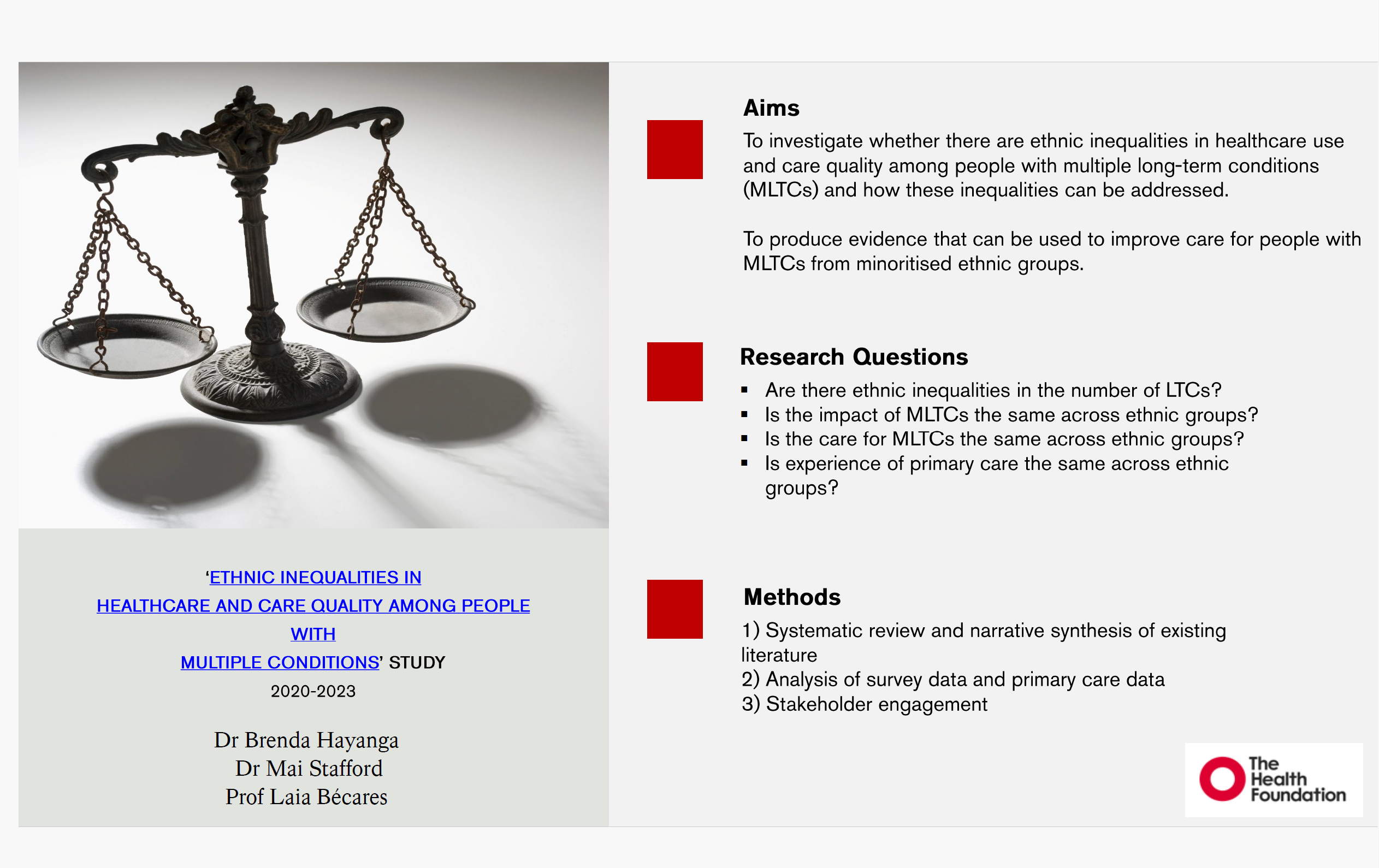
Brenda shared findings from her previous work on ethnic inequalities and introduced her new study on Multiple Long-Term Conditions (MLTCs).

Brenda Hayaka opened her keynote by sharing the heart behind her work on ethnic inequalities in healthcare. Drawing on her previous research, she described how minoritised ethnic patients and their carers often face significant challenges navigating multiple long-term conditions (MLTCs) with little support or recognition. She emphasized that while global interventions exist for conditions like diabetes and depression, there is a notable gap in UK-based research specifically addressing MLTCs in minoritised communities. This “major evidence gap” became the driving force behind her current study, The Interception Project.

What the Research Shows:

  • Systemic Disadvantage: Minoritized ethnic groups are disadvantaged from the development to the management of multiple conditions.
  • Poor Continuity of Care: Many experience poor therapeutic relationships with practitioners.
  • The UK Evidence Gap: While interventions for depression and diabetes exist globally, Brenda found zero studies specifically targeting MLTCs for minoritized groups within the UK healthcare system.

The “Interception” Study:

The Interception Project uses a creative and collaborative method called journey mapping to trace the lived experiences of patients and unpaid carers. Brenda explained that this approach goes beyond merely collecting data: it seeks to identify the pathways people take when seeking help, the barriers they encounter, and the moments where the healthcare system fails them. By listening deeply and reflecting these experiences back to communities, the research provides actionable insights into improving care quality and equity. The study is expanding beyond London to include Coventry and Manchester, recognizing that every community has unique strengths, challenges, and solutions.

Brenda highlighted that a central aim of the project is to co-create actionable recommendations with communities. These recommendations are intended for NHS leaders, commissioners, and policymakers, ensuring that the voices of carers and patients directly inform service design and delivery. She also spoke about the role of trusted community leaders in building access and overcoming barriers such as language differences, mistrust of institutions, and cultural stigma around certain health conditions. Faith communities, she noted, can play a crucial role not only as support networks for participants but also as partners in research, data collection, and advocacy for change.

Throughout her presentation, Brenda emphasized that understanding the journey of carers and patients requires attention to both systemic and relational factors. Minoritised ethnic groups often experience disadvantages in developing and managing multiple conditions, and poor continuity of care can weaken therapeutic relationships with practitioners. By documenting these experiences in detail, the Interception Project aims to fill the evidence gap and provide a roadmap for more equitable, culturally sensitive care. Brenda closed her keynote by reminding attendees that meaningful equity in healthcare begins when previously invisible experiences are recognized and acted upon—a call to transform insight into change.


Spirituality in Care: Forum Introduction by Matthew McKenze

I had the honor of opening the spirituality segment of the forum, emphasizing the vital role that faith and cultural practices play in supporting carers and patients from minoritised ethnic communities. I framed the discussion around the idea that mental health care cannot be fully effective unless it recognizes the whole person, including their spiritual and cultural identity. I highlighted that carers often draw strength, resilience, and meaning from their faith, and that this dimension is frequently overlooked in traditional mental health services.

I encouraged participants to consider spirituality not as an abstract concept, but as a tangible resource that can inform recovery, foster belonging, and enhance coping strategies. By acknowledging spiritual needs, mental health providers can build trust with communities that have historically experienced marginalization or misunderstanding within healthcare systems. I also set the tone for an open and reflective conversation, inviting attendees to share experiences, insights, and challenges related to integrating faith and mental health support.

By positioning spirituality as both a personal and systemic consideration, the forum aimed to explore how services can better engage with faith perspectives in a respectful, inclusive, and practical way. This introduction laid the groundwork for Tuulia Castledine’s keynote, which delved deeper into the spiritual tools and frameworks that support carers and patients in their mental health journeys.


Spirituality in Care: Insights from Tuulia Castledine (SWLSTG)

We were joined by Tula, a Chaplain from South West London and St George’s (SWLSTG), who led a vital discussion on the spiritual dimension of mental health.

Tuulia highlighted that for many carers and patients, faith is not just a personal practice but a framework through which they make sense of mental health crises. Spirituality often provides a lens for understanding why challenges occur and offers a source of hope, helping individuals navigate uncertainty with resilience.

Beyond offering meaning, Tuulia explained that spirituality can serve as a practical tool in recovery. It provides a “language for recovery” that allows carers and patients to express experiences and emotions that might otherwise be difficult to articulate. This sense of connection fosters belonging and strengthens the psychological resources people draw upon when coping with mental health challenges.

Tuulia also stressed the importance of services adopting what she called “spiritual curiosity.” Mental health professionals are encouraged to engage openly with faith perspectives rather than making assumptions or ignoring them. By integrating spirituality into holistic, person-centered care, services can better meet the needs of minoritised ethnic communities.

Finally, Tuulia highlighted a critical concern: when services fail to acknowledge faith, they risk deepening the mistrust that many minority communities feel toward mental health providers. Recognizing and valuing spiritual needs, she emphasized, is not just compassionate—it is a crucial component of equitable care, fostering trust, understanding, and more effective therapeutic relationships.

Summing up Tuulia’s talk

  • Making Sense of Illness: For many, faith is how they make sense of why a crisis is happening and where they can find hope.
  • A Tool for Recovery: Spirituality provides a “language for recovery” and can build resilience and a sense of belonging.
  • Moving Beyond Assumptions: Tula emphasized that services need to show “spiritual curiosity” and include faith as part of holistic, person-centered care.
  • The “Mistrust” Gap: When services ignore faith, it can deepen the mistrust minority communities feel toward mental health providers.

Carer Voice: Questions & Feedback

The Q&A session was one of the most powerful segments of the forum, offering an unfiltered view of the real-world barriers faced by carers and minoritised ethnic communities. Participants shared candid experiences, highlighting gaps in current mental health support and pressing for practical solutions.

A professional opened the discussion by addressing the critical issue of language and access. She pointed out that many research projects and healthcare initiatives fail because they do not allocate adequate resources for language interpretation or accessibility for disabled individuals. Without these provisions, vital services and studies inadvertently exclude those who may benefit most, leaving carers and patients marginalized.

A carer contributed a particularly thought-provoking critique regarding medication versus conversation. He challenged the system on why Black men are often prescribed stronger medication for longer periods rather than being offered meaningful dialogue and psychosocial support. This raised an important conversation about the need for culturally sensitive approaches to treatment that value listening, understanding, and relationship-building alongside pharmacological intervention.

The unpaid carer also highlighted the challenge of dementia stigma within older generations of minoritised communities. He described how deeply ingrained cultural perceptions can make it difficult for families to seek early support or even acknowledge the condition, creating additional stress for carers. The discussion emphasized that tackling stigma requires both education and culturally attuned engagement, alongside support networks that respect the values and experiences of carers and patients.

A mental health professional from another mental health NHS trust added a vital perspective on community engagement and trust-building. He emphasized that carers often encounter inconsistent communication from services and a lack of culturally informed support, which can leave families feeling isolated and unsupported. He urged healthcare providers to work more closely with community leaders, faith groups, and carers themselves to co-design services that truly respond to the specific needs of minoritised ethnic communities.

Overall, the feedback session underscored that systemic improvements must be informed by the lived experiences of carers. Their insights illuminated the gaps between policy, research, and practical care, reminding the forum that real change is rooted in listening to and amplifying these voices.


Support for Carers in Crisis

Becky Forster introduced a deeply important new study funded by Marie Curie, focusing on carers who find themselves in extremely challenging and sometimes frightening situations. The research aims to better understand the experiences of carers who have faced harmful, aggressive, or abusive behaviors from the person they care for, particularly at the end of life. Becky emphasized that these situations are often overlooked in traditional guidance, leaving carers without the support or strategies they need to cope safely and effectively.

The study seeks to gather real-life experiences from carers, acknowledging that their insights are invaluable in shaping practical and compassionate guidance for healthcare providers. Becky explained that the goal is not only to document these difficult experiences but also to translate them into actionable tools and recommendations for the NHS, ensuring that carers receive timely support, protection, and training when dealing with complex end-of-life care scenarios. By centering the voices of those who have lived through these crises, the project hopes to reduce isolation, increase safety, and enhance the wellbeing of carers facing some of the most emotionally and physically demanding circumstances.

Becky encouraged attendees to participate and share their stories, reassuring them that contributions would remain confidential and that their experiences could directly influence policy and practice. This initiative highlighted the critical need for systemic recognition of carers’ emotional and practical needs, ensuring that they are not left to navigate trauma and stress alone. The session reinforced that understanding, guidance, and compassionate support are essential for carers’ resilience and for providing safe, dignified care to those at the end of life.


Croydon Healthwatch

We concluded the forum with an important reminder from Anna of Healthwatch Croydon, who emphasized that anyone in England has the right to provide anonymous feedback on their care. Anna highlighted that this is more than a formal process, it is a powerful tool for carers, patients, and communities to have their voices heard. By sharing experiences of both excellent and inadequate care, individuals can directly influence how services are shaped, highlight gaps in provision, and push for improvements where they are most needed.

Anna also underscored that feedback plays a crucial role in holding policymakers and healthcare leaders accountable. When carers and patients report their experiences, patterns of inequality, or systemic barriers, it creates evidence that decision-makers cannot ignore. This feedback is particularly vital for minoritised ethnic communities, where historical mistrust and underrepresentation have often left issues unaddressed. She encouraged all attendees to see feedback not as a bureaucratic exercise, but as an instrument of empowerment, helping to drive change at both local and national levels.

I closed the session with my poem “Rooted and Growing,” celebrating that we don’t have to lose our identity to get the care we deserve.

Matthew McKenzie

Mental Health Carer & Forum Chair

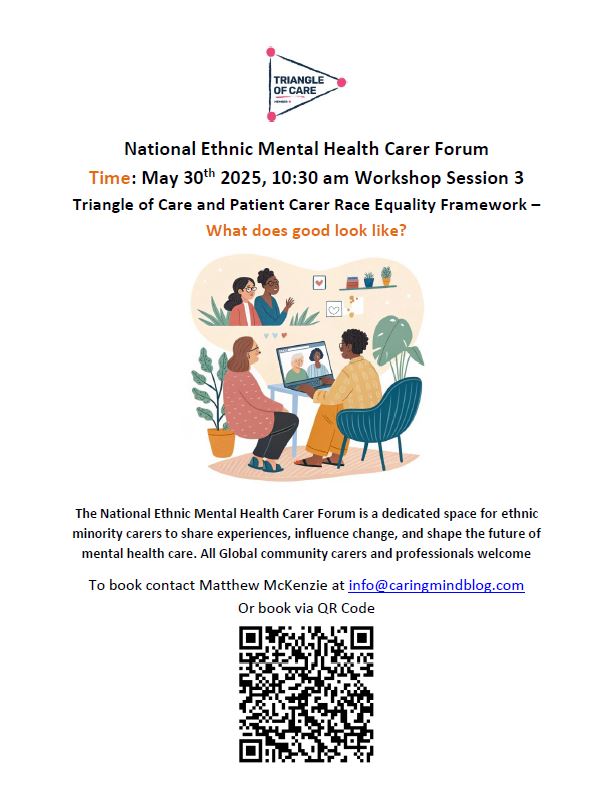
Ethnic mental health Carer Forum Update May 2025

Quick update on ethnic mental health carer group

The meeting focused on carer involvement and representation across different regions, with participants discussing their roles in supporting carers and addressing discrimination. The main focus for this meeting was on “What does good look like?” when it comes to Triangle of Care and PCREF.

The group explored the Triangle of Care initiative and its five key elements, including discussions about medication-related challenges and the need for better communication between healthcare providers and carers. The conversation ended with conversations about improving carer support systems, including the importance of advocacy, training, and creating safe spaces for carers to share concerns confidentially.

Continue reading →

National Triangle of Care community meeting – January 2025

Welcome back to a brief update of the National Triangle of Care Commnity Group. A meeting organised by myself as a carer of lived experience to give a chance for mental health carers to find out developments on Triangle of Care. The online group is attended by unpaid mental health carers, Carers Trust triangle of Care leads and NHS carer representatives and mental health staff.

Agenda of Meeting

The meeting focused on discussing the Triangle of Care program, gathering feedback from carers, and addressing challenges in mental health care. Attendees shared experiences and insights on carer involvement, communication issues, and the need for improved support systems. Key topics included progress updates on the Triangle of Care implementation, the importance of carer perspectives in healthcare decision-making, and strategies to enhance carer engagement and representation across diverse groups.


Continue reading →

The Reason to Include Carer Only Groups To Develop Mental Health Services

Welcome to another blog post by carer activist and ambassador Matthew McKenzie. I raise awareness of unpaid carers who support those with long term ill health. This time my blog focus is on the inclusion of carer only groups at mental health service development.

Continue reading →