By Matthew McKenzie FRSA BEM, Chair, Triangle of Care Community Group
This week’s Triangle of Care Member Webinar, hosted by Carers Trust, which focused on a vital question: What makes for meaningful carer involvement?
We heard from across the Triangle of Care network, these being carers, professionals, and trust representatives coming together to share what genuine involvement looks like in practice.
I spoke about my own lived experience as a carer, supporting two non-verbal brothers with autism and my late mother with mental health challenges and how this journey has shaped my advocacy for stronger partnerships between carers and professionals.
Over the years, through the Triangle of Care, I’ve seen how much difference early and equal involvement can make.
The Importance of Ethnic Minority Mental Health Carer Voices: Empowering Unpaid Carers from the Global Majority by Matthew McKenzie
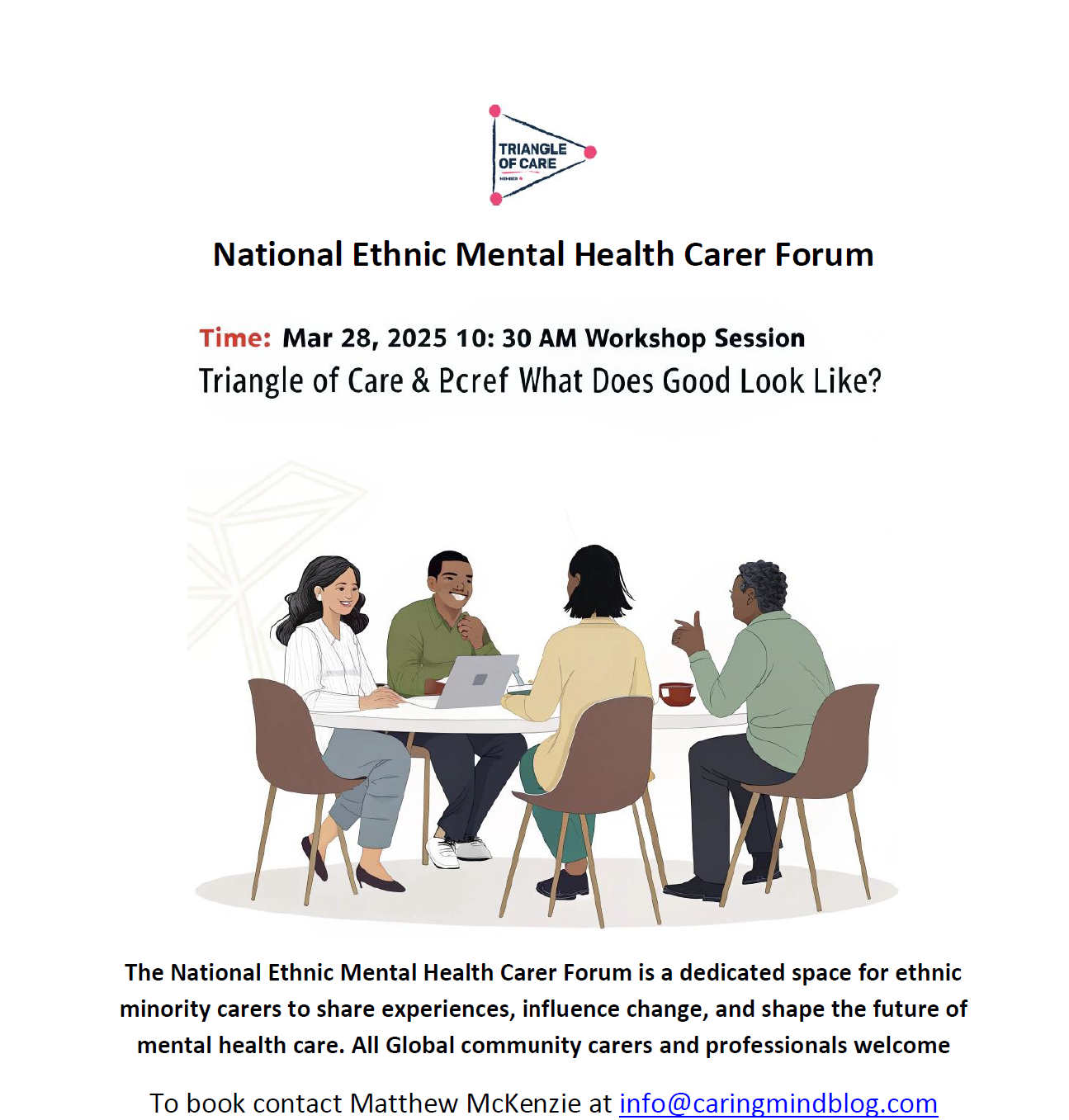
In today’s world, the voices of ethnic minority carers in mental health services must be heard and valued. The National Ethnic Mental Health Carers Forum meeting, held on March 28, 2025, underscored the vital role that co-production and lived experience play in shaping better services for those who care for loved ones with mental health needs.
By Triangle of Care community chair Matthew McKenzie FRSA BEM
For the month of March, unpaid carers, NHS professionals, and key stakeholders came together for another Triangle of Care National Community Meeting, which is a powerful space of collaboration, reflection, and shared purpose. Chaired by Matthew, the meeting spotlighted significant developments in carer engagement, mental health service standards, and equity frameworks across the NHS.
As you might know, unpaid carers play a vital yet often overlooked role in supporting individuals with mental health needs. Their contributions provide essential support and advocacy, yet they frequently encounter significant challenges due to limited training, insufficient resources, and time constraints. This blog and video explores key strategies for holding mental health trusts accountable while empowering carers to influence and improve mental health services. The blog is aimed at carers who are involved at their local mental health NHS trust. This means that they help shape services.
The Importance of Holding Mental Health Trusts Accountable
Ensuring accountability within mental health trusts is crucial. Carers have the right to expect high-quality, effective care for their loved ones. By holding such NHS trusts to these standards, both patients and carers benefit. Accountability encompasses various aspects, including access to timely and appropriate care, the quality of treatment plans, and the consistency of care. Without these measures in place, there is a risk of declining service quality, ultimately affecting the well-being of both carers and patients. Holding Mental Health NHS trusts to account is never an easy thing, you will have to learn from carer peers and to be honest, all you have is your carer lived experience to feedback your view of services.
If you want to watch the in-depth video of this lecture, please see below.
The Role of Carers in Mental Health
Carers offer valuable insights into the needs of those they support. Their experiences are instrumental in shaping effective mental health services.



 A Caring Mind