Tag Archives: poetry workshop

2nd Voices & Verses – PCREF Poetry Event

By Matthew McKenzie – Cygnet PCREF Carer Lead & Carer Ambassador

Cygnet PCREF Carer Lead & Carer Ambassador

On 4 August 2026, unpaid carers, professionals and people with lived experience came together at Cygnet Churchill for the second Voices & Verses Carers Poetry Event. The purpose of the afternoon was not simply to read poetry, but to create a safe space where carers could express experiences that are often overlooked within mental health services.

The event formed part of Cygnet’s ongoing commitment to the Patient and Carer Race Equality Framework (PCREF) by exploring how creativity, culture and storytelling can strengthen co-production and improve relationships between carers and services. The afternoon was designed around inclusion, psychological safety and optional participation, allowing people to contribute in whatever way felt comfortable to them.

As someone who has cared for family members affected by severe mental illness for many years, I continue to believe that poetry allows carers to communicate emotions that ordinary conversations often fail to capture. Statistics tell us what is happening, but poetry often explains how it feels. This aligns closely with PCREF’s ambition to humanise care, improve understanding of racial inequalities and ensure lived experience genuinely influences service development.

The event opened with readings from my forthcoming collection of PCREF poems, including “Change is Possible.” Rather than focusing solely on racism, the discussion explored hope, community, partnership, co-production and carers becoming recognised as equal partners within mental health care. Participants reflected that although change often feels slow, meaningful progress can still occur when carers are given opportunities to influence services.

One participant commented that the poem should never have needed to exist because carers should already be recognised and listened to. Another reflected that the line “those doors open slowly” accurately described the experience of advocating for loved ones over many years. These discussions reminded everyone that poetry can stimulate conversations which may never emerge during formal meetings or consultations.


One of the highlights of the afternoon was a collaborative workshop led by Jo Lambert, introducing participants to the Hold the Hope project through art, colour and reflection.

Rather than asking carers to simply colour a picture, participants were encouraged to think about what hope, equality, dignity and belonging meant to them personally. They selected PCREF-related words, explored why particular colours reflected their emotions and discussed how creativity can communicate experiences beyond spoken language.

The discussion demonstrated that every participant interpreted the same image differently.

Some chose calming blues to represent peace and trust.

Others used brighter colours to symbolise recovery, resilience and optimism.

Several carers explained that colouring became a form of mindfulness, allowing them to process difficult emotions whilst talking with others.

The activity also highlighted something particularly important from a lived experience perspective. Mental health carers frequently spend years speaking on behalf of others. Opportunities to express their own feelings are much rarer. Through art and poetry, carers were able to focus on themselves without feeling they had to justify or defend their experiences.

This reinforced one of the strongest messages of the day:

Creative expression is not simply an enjoyable activity, it is another form of lived experience evidence.

Participants also appreciated that there were no “right” or “wrong” answers. Every artwork reflected an individual caring journey, demonstrating the diversity that exists within the unpaid carer community.


The power of shared lived experience

Perhaps the most valuable aspect of the event was the conversation that developed naturally between carers.

Discussions moved beyond poetry into themes including:

  • feeling excluded because of confidentiality
  • racial inequality within services
  • the emotional burden of long-term caring
  • recognition of carers as equal partners
  • loss of identity through caring
  • maintaining hope during crisis
  • the importance of community support

Many participants reflected that carers often possess significant practical knowledge but are still not viewed as equal partners within clinical decision making.

One participant explained that carers are frequently expected to educate professionals whilst simultaneously managing the emotional impact of supporting someone in crisis. Others spoke about the exhaustion of constantly advocating for loved ones whilst trying to maintain their own wellbeing.

These conversations demonstrated exactly why creative events have an important place within PCREF. Rather than collecting another questionnaire, participants were able to describe experiences in their own words, using poetry, storytelling and discussion.

Importantly, professionals attending the session also listened.

This helped create genuine dialogue rather than the traditional model where professionals ask questions and carers provide short answers.

The atmosphere remained respectful throughout, allowing difficult topics including racism, discrimination and feeling unheard to be explored constructively.

For many attendees, simply meeting other carers who understood their experiences reduced feelings of isolation.


Celebrating culture and creativity

The second half of the afternoon celebrated cultural diversity through music, spoken word and performance.

Faith shared “Soothing Blue,” a poem that had been transformed into music. Hearing lived experience expressed through song demonstrated another creative way carers can communicate emotions that may otherwise remain hidden. Participants reflected on themes of healing, identity and rediscovering themselves beyond their caring role.

Brenda then performed traditional Jamaican folk songs, including “Chi-Chi Bud Oh” and “By the Rivers of Babylon.” These performances reminded everyone that culture forms an important part of identity and wellbeing. Cultural expression can strengthen belonging and create opportunities for people from different backgrounds to learn from one another.

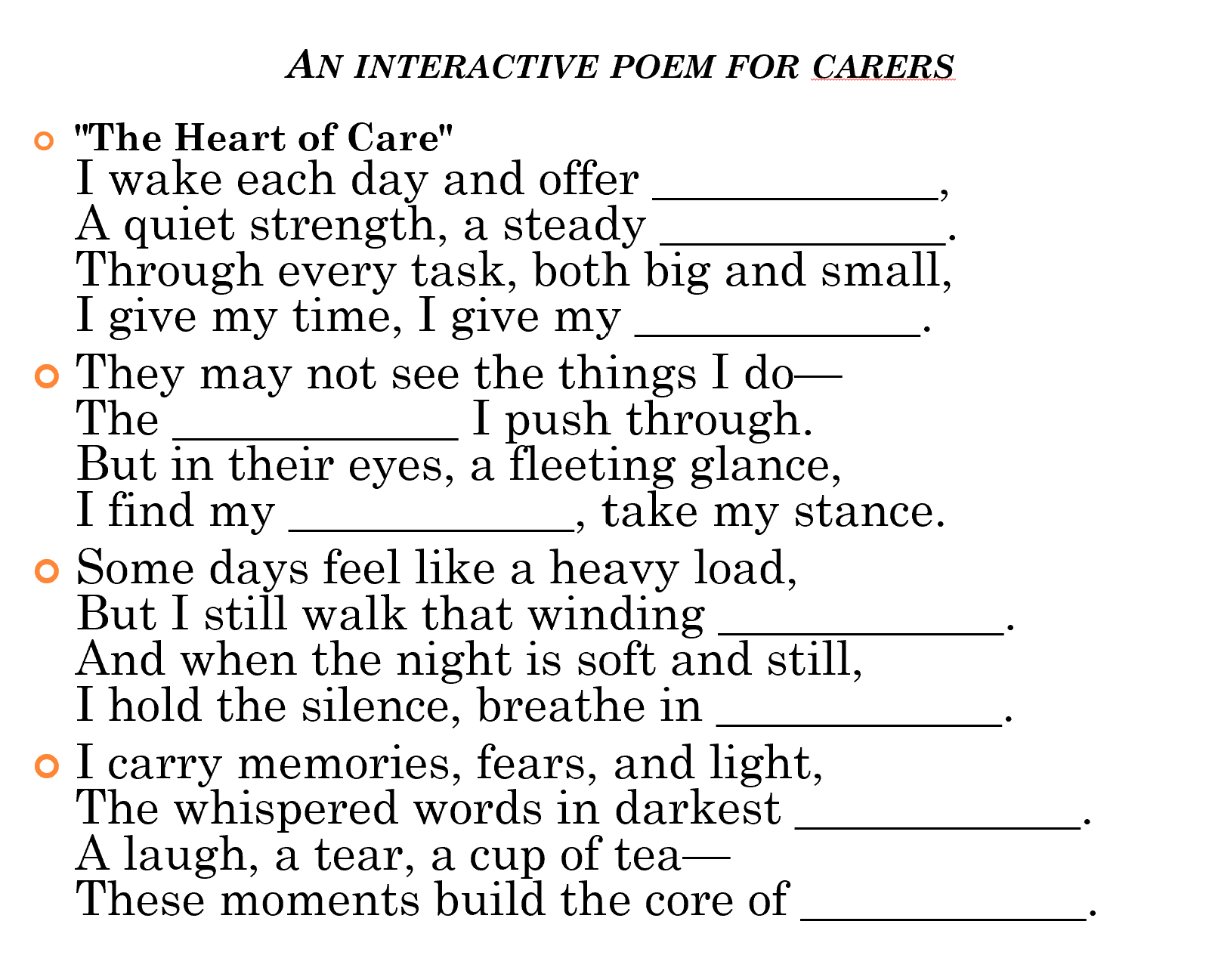
The PCREF word search and poetry activity further encouraged participants to explore words such as community, dignity, inclusion, hope, equality and compassion before creating short poems of their own. What initially appeared to be a simple puzzle became another opportunity for reflection and discussion.

Throughout the afternoon there was laughter, encouragement and mutual support. Participants applauded one another’s contributions regardless of previous poetry experience, reinforcing that everyone had something valuable to contribute.

By combining poetry, visual art, music and conversation, the event demonstrated that creativity can become a powerful vehicle for engagement with carers who may not usually participate in traditional consultation events.

Reflections and looking ahead

Looking back as both a lived experience carer and PCREF Carer Lead, I believe this event demonstrated several important lessons.

Firstly, carers do not simply want to be consulted, they want to be heard.

Secondly, creative approaches allow conversations to emerge that formal meetings often miss.

Thirdly, culture matters. When people feel safe enough to bring their whole identity into a room, discussions become richer, more authentic and more meaningful.

The Voices & Verses programme is gradually becoming more than a poetry group. It is developing into a community where carers can connect, learn from one another and influence future mental health services through creativity.

Future events will continue to develop this approach by:

  • expanding hybrid participation so more carers can join remotely;
  • increasing opportunities for cultural storytelling;
  • creating more collaborative art and poetry projects;
  • transforming poems into music and other creative media;
  • strengthening links between PCREF, Triangle of Care and co-production.

Most importantly, the event reminded us that lived experience should never be viewed as an optional extra.

Every poem, every conversation and every shared story represented expertise developed through years of caring.

PCREF asks organisations to listen more carefully to diverse communities.

This event showed that when carers are given the right environment, they do not simply speak—they inspire, educate and help shape better mental health services for everyone.

“Caring Feels Like a Poem”: Inside Ealing Carers’ Monthly Online Poetry Workshop

“Caring feels like towels.”
“Smells like sweat.”
“Sounds like silence.”
These are not lines from a published anthology, but heartfelt expressions from unpaid carers who meet every month in a quiet online space to write, reflect, and reconnect—through poetry.

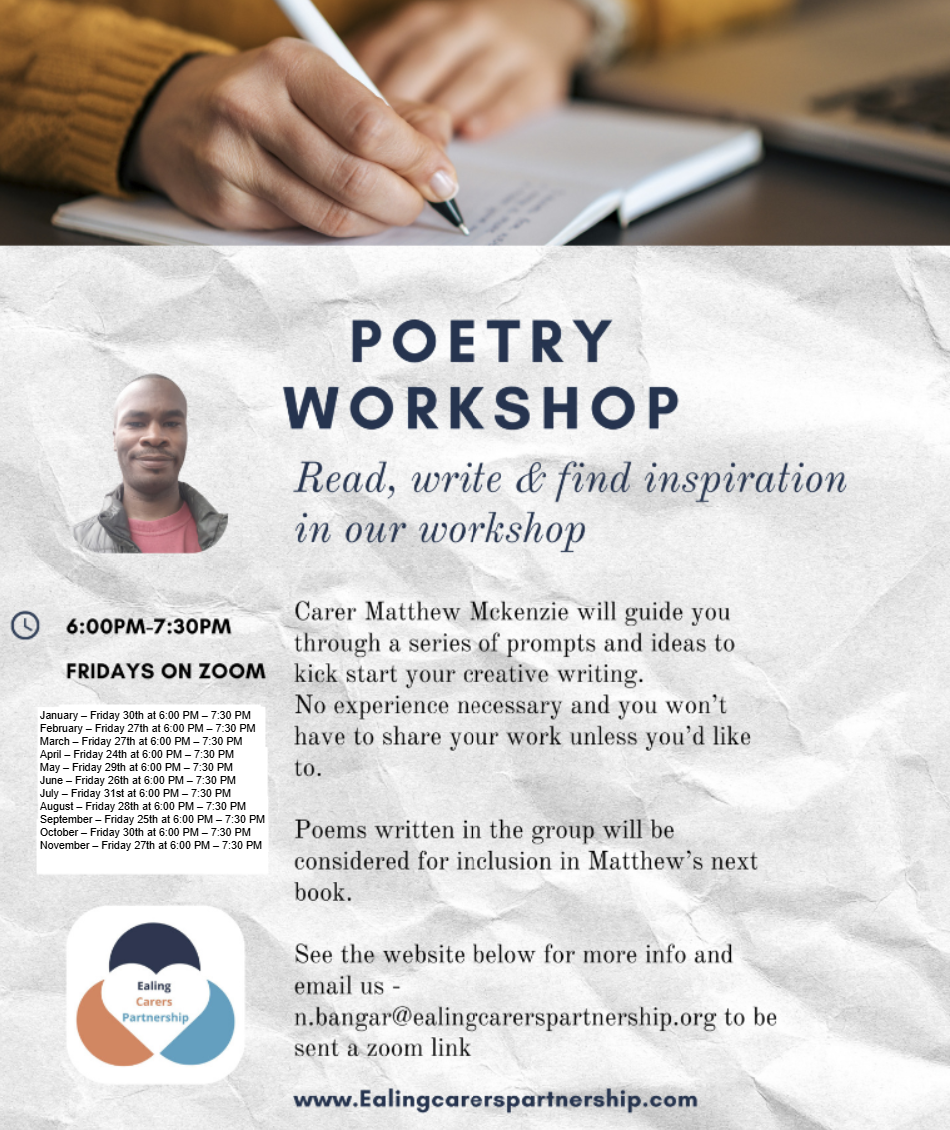
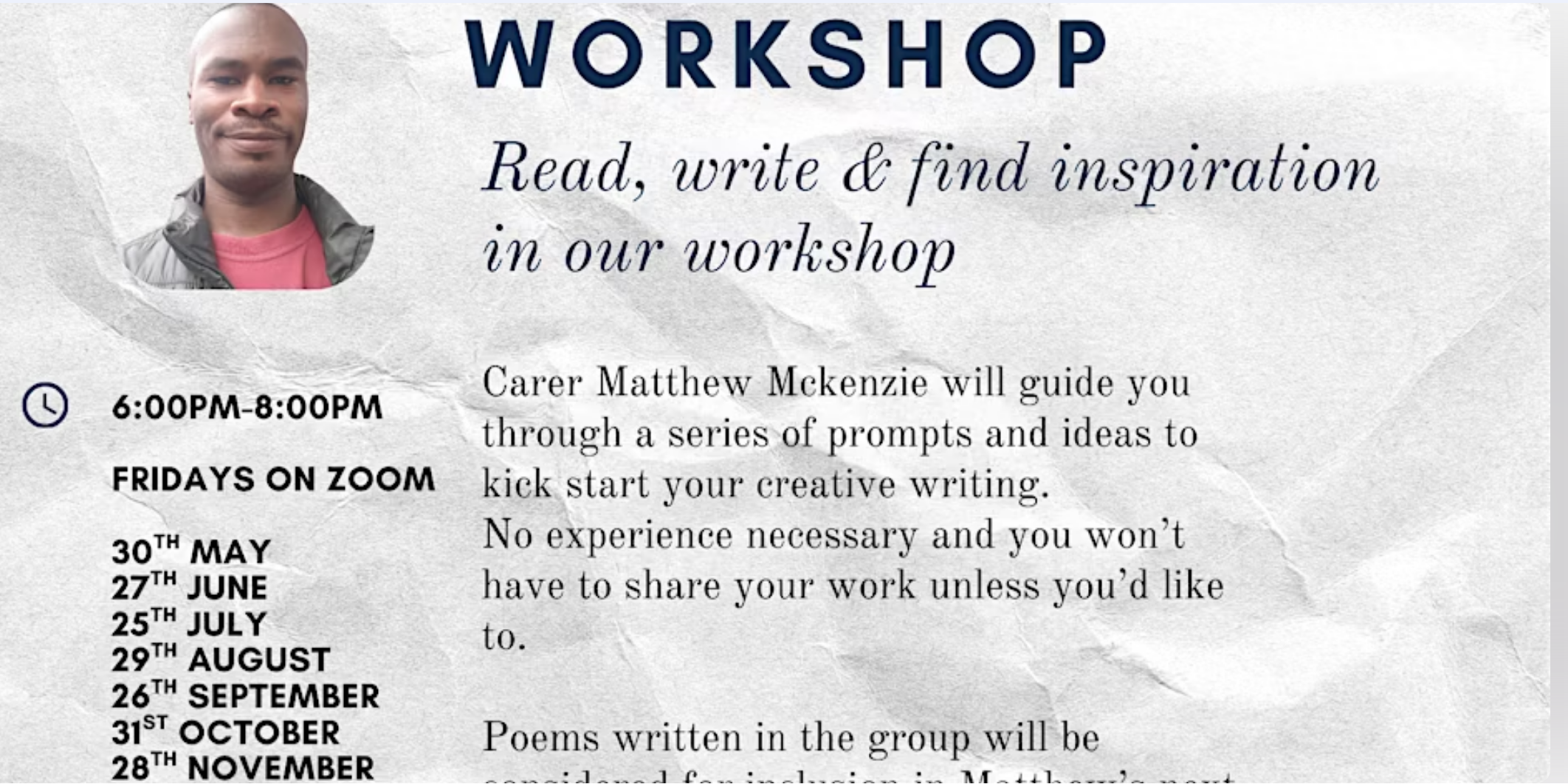
Welcome to the Ealing Carers Poetry Workshop, an online community gathering for carers, hosted on the last Friday of each month at 6 PM. It’s free, friendly, and, for many, deeply healing.

Why Poetry? Why Now?

For unpaid carers, life is often consumed by routines, responsibilities, and quiet sacrifices. There’s little time to stop and process the emotional weight of the role, let alone articulate it. That’s where poetry comes in.

Poetry doesn’t demand polished grammar or clever rhymes. It simply asks:
What do you feel?
And from that question, remarkable truths begin to emerge.

In a recent session, one carer described how “caring tastes like sweet and sour”—a vivid metaphor for the moments of tenderness mixed with exhaustion, patience, and the daily challenge of giving so much of oneself.

Another shared, “Caring feels like a balloon… slowly inflating until it might burst.”
The group nodded. They understood. No further explanation needed.

More Than Words

Each workshop is a gentle hour of guided prompts, group sharing (if you feel like it), and poetic reflection. Some come to listen. Some come to write. All leave feeling a little more grounded, and a little less alone.

Here’s what you can expect:

  • Creative prompts to help spark inspiration
  • No pressure to share if you’re not ready
  • A safe, confidential space led with empathy
  • A supportive community that “gets” the highs and lows of caring
  • Gentle encouragement to save and revisit your poetry as a personal record

One participant put it perfectly:

“You don’t have to be a poet. You just need to be willing to put words to what you feel.”

Healing Through Expression

We often talk about self-care for carers, poetry is one powerful, practical form. It’s a creative release that helps untangle emotions that don’t have easy answers. It can reflect joy, grief, humour, fatigue, hope. It can be messy. It can be raw. But above all, it’s yours.

As the facilitator beautifully says,

“Poetry holds up a mirror. What you see in it is up to you.”

For many carers, this monthly workshop has become a lifeline. A moment of peace. A reminder that their experiences matter.


If you are an unpaid carer, then Join Us – You Are Welcome

Whether you’re new to writing or simply curious, we invite you to take an hour for yourself.

🗓️ When: Last Friday of every month
🕕 Time: 6:00 PM (UK time)
🌐 Where: Online – attend from the comfort of your own home
🎟️ Reserve your free place here:
👉 Ealing Carers Poetry Workshop – Eventbrite

Grab a notebook. Pour a cup of tea. Come write with us.