Welcome to another blog post from my carers blog site. As usual I sometimes check out events to do with Mental Health, wellbeing events and carer’s events. I do not mind feeding back what I have picked up from these events. So on the Tuesday 22nd July over at Cambridge House in the London Borough of Southwark.
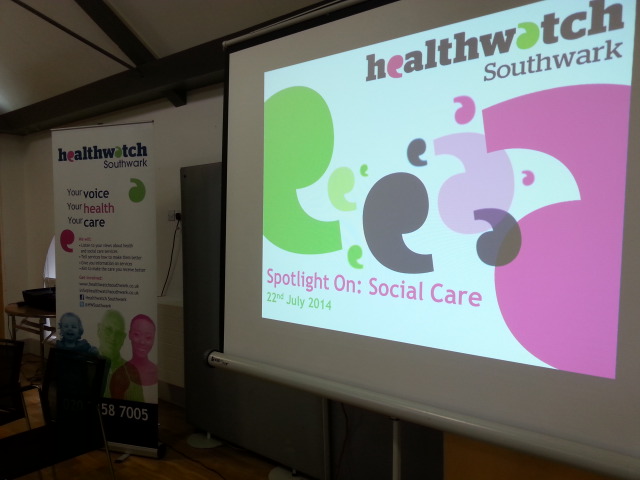
I decided to check out Southwark Healthwatch event on ” What’s happening in Social Care in Southwark – now and in the future?”.

The event lasted from 4:00 pm till 6:30 pm and there was lots on offer, plus plenty of time to contribute and get our views across. Before I continue, you may wonder what on earth is Healthwatch all about?
Healthwatch helps to give people a powerful voice locally and nationally. At a local level, local Healthwatch will work to help local people get the best out of their local health and social care services. Whether it’s improving them today or helping to shape them for tomorrow.
Healthwatch is the independent consumer champion created to gather and represent the views of the public. Healthwatch plays a critical role at both national and local level and will make sure that the views of the public and people who use services are taken into account.
Each borough across the UK has its own Healthwatch and not all Healthwatches have the same problems or work the same way, but their main focus is getting the people’s views via the right channels and helping sign post people to the correct health organisations. Healthwatch also a lot more than what I have mentioned, but please check out Healthwatch Southwark‘s site when you have time.
So going back to the event on “Social Care in Southwark”, what was in store?
Luckily we were told the agenda before the event, plus copies of the agenda were placed nearly on the tables. I must admit, even though I could not get any shots of people in the audience. The event was well attended, I think around 60 to 70 people came to the event. Quite a few of them being active members for their organisation. Here is a list of representations at the event. I have also taken the time to add a link of each organisations site.
Community Action Southwark – Umbrella group for voluntary sector groups in the borough.
Healthwatch Southwark – Here to make sure your views on local health and social care services are heard.
Local residents – Residents of Southwark who attended the event.
Metropolitan – Might be reps from the police.
Lambeth and Southwark MIND – Independent charity run by people who have personal experience of using mental health services.
Anchor – Provide a range of housing support for older residents in Southwark and beyond.
Blackfriars Settlement – Multi-faceted educational charity operating in North Southwark
SLaM – South London and Maudsley NHS Foundation Trust
Southwark Council – Council to Southwark Residents
Cambridge House – provide both a Law Centre offers confidential advice, assistance and representation.
Southwark Carers – provides information, advice and support to Carers across the borough.
Cooltan Arts – mental health and arts charity that believes mental well-being is enhanced by the power of creativity.
Southwark Irish Pensioners Project – Provide a lifeline to hundreds of elderly, vulnerable and isolated Irish people in Southwark
Southwark Deaf Group – Support for Deaf People around most daily living issues.
Latin American Disabled People’s Project – Run by and for disabled Spanish and Portuguese speaking people living in London.
Eritrean Orthodox Church and Community Centre – Eritrean Orthodox Christian Community Church.
Latin American UK forum – Helps support Latin American’s living in the UK.
Southwark Disablement Association – SDA is an organisation of people with seen and unseen disabilities which supports disabled people
Latin American Womens Rights Service – supports Latin American women in the UK
Anjel 2000 – Supports Organisations and Individuals in the Health and Social Care Sector.
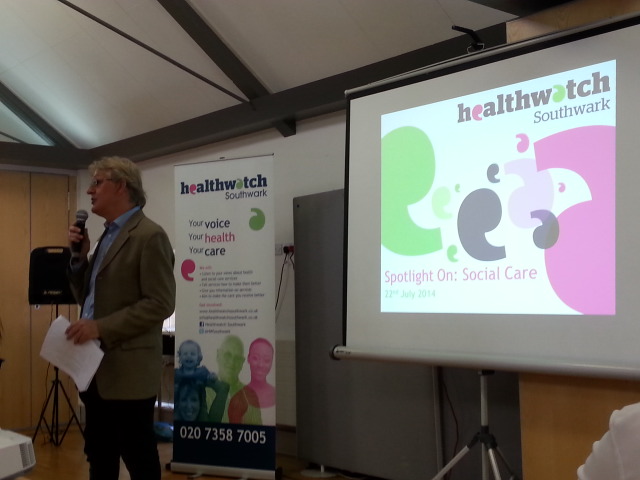
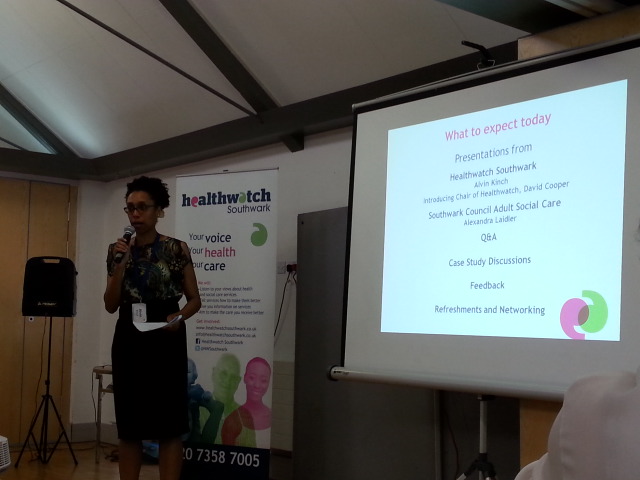
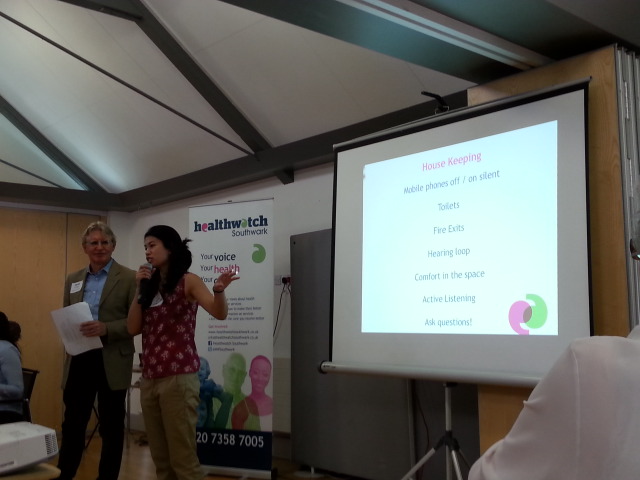
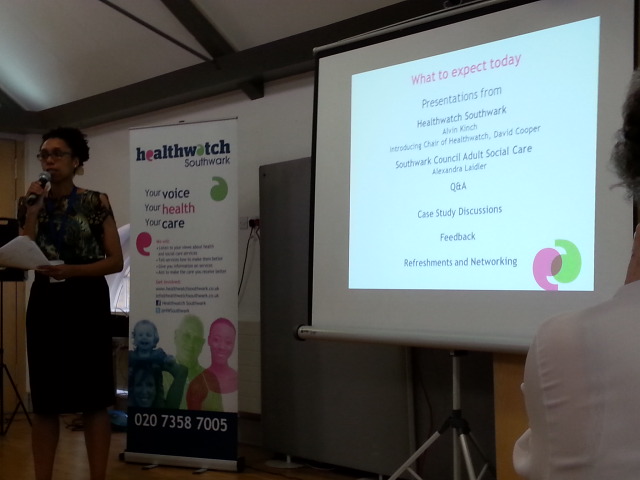
If I jump into the agenda of the event. We had the David Cooper who is the Chair of Healthwatch Southwark open the event.
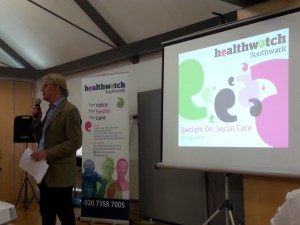
Next was the Manager of Healthwatch Southwark “Alvin Kinch” explain more about what Healthwatch Southwark is all about.
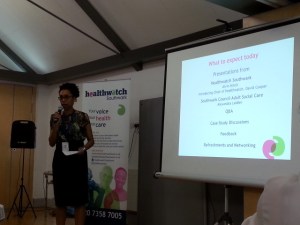
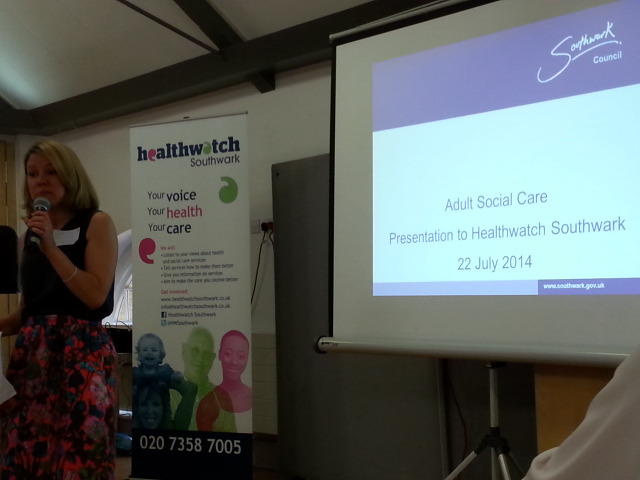
After that, we have the director of social care “Alexandra Laidler” present to us about the challenges and developments of social care services in the borough of Southwark.
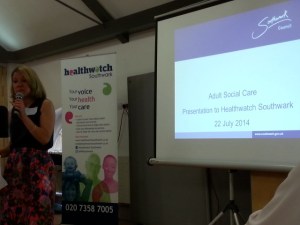
Once the speakers were finished, we then moved onto a quick question and answer session, which was followed by group discussions on a scenario and then each table fed back to the audience on their findings.
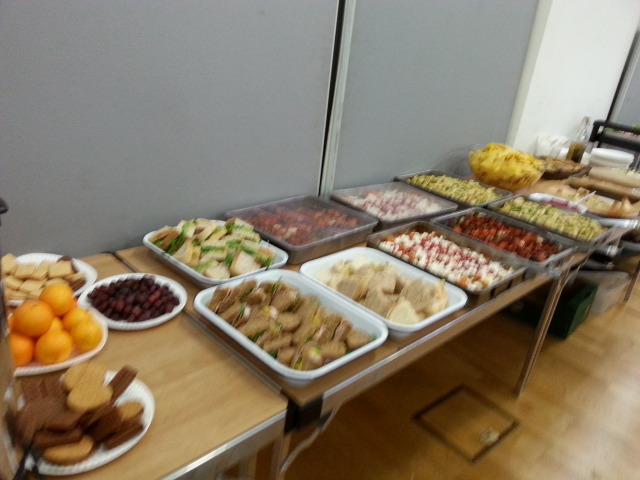
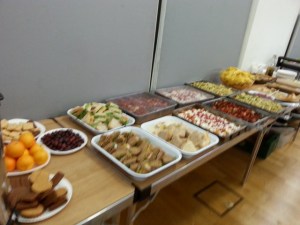
After the findings, we then were treated to a free dinner, which was very healthy.
So what I ll do is give a quick break down or pointers from the event.
First David Strong presented on the projects Healthwatch Southwark are doing and what they have been up to during the past 6 months. David also mentioned that while Healthwatch southwark are so busy working on the 4 targets for the people in southwark, these being the following
Access to GP services
Access to Mental Health services
Sexual Health Services, specifically HIV
Social Care
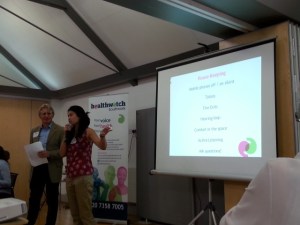
So the last part mentioned being social care was Healthwatch Southwarks aim to get our views and collate them into a report.
David Asked an important question “What happens when individuals do not meet the means-tested threshold to receive care and support”?
How can they pay for social care?
We then had Alvin explain a bit more about what Healthwatch Southwark is about. She went through the following being.
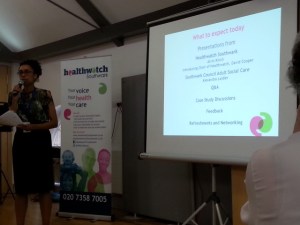
– How Healthwatch listens to people’s voices on matters of health services.
– How Healthwatch Southwark sets up focus groups, which they have been doing throughout the year.
– How Healthwatch visits services.
– They then produce a report on what they find.
– They also visit older people’s services.
– Plus when people contact Healthwatch, Healthwatch southwark can advise or signpost.
– Healthwatch Southwark does “Enter & View” training, but I think also many other healthwatches do this.
During the event, there was a mention of the New care act 2014, which I hope to cover one day.
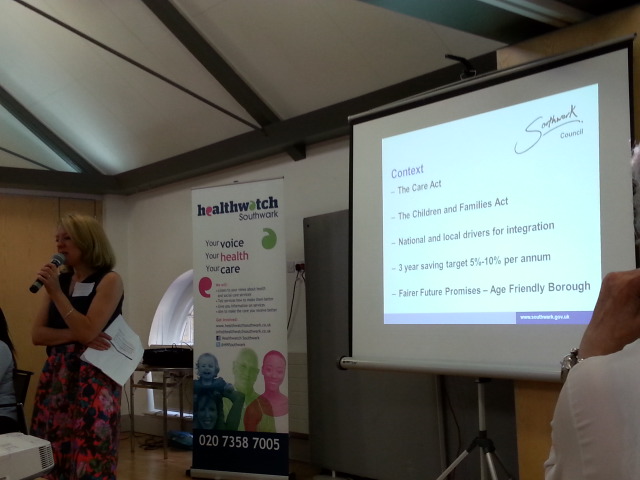
Next up was Alex Laidler who is the Director of Adult Social Care at Southwark Council. She spoke about how cuts presents a difficult problem for social care services in the London Borough of Southwark. Alex also mentioned more on “The Care Act” and “The Children and families Act”.
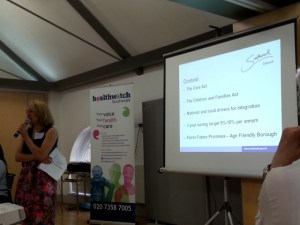
Alex spoke on how cuts will drive services to integrate with each other. This is where Southwark Council seeks to develop its Health & Wellbeing Strategy.
Southwark’s Health & Wellbeing Board have set up three priorities in order to deliver better health and care outcomes for the residents of Southwark, which are
– Giving every young person the best start in life
– Building healthier communities
– Improving the experiences of the most vulnerable residents and enabling them to live more independent lives.
Alex moved on to talk about how Southwark council and Southwark’s CCG strategic approach to integration. One of the points raised were how Southwark Council and the CCG have agreed their “Better Care Fund” where £22 million will fund schemes to support people to live at home and avoid hospital and A&E care.
The director of social care for Southwark then highlighted Southwark Council’s Social Care Priorities. I ll point out two being
– Develop diverse, innovative and adaptable health and social care
– Personalised health and social care services that are able to follow a resident through their lifetime.
Alex then talked about Southwark councils objectives for
Older people when it comes to social care.
Mental Health in the social Care setting
objectives for Learning disabilities & Autism.
And also Carers.
I ll point out a few of the objectives mentioned for carers
– Improving information and advice for carers
– Developing an outreach programme to reach carers at an early stage
– Young carers programme to offer support for young carers
– Expanding the provision of personal budgets for carers
– and many more points presented at the event
After Alex’s presentation, we heard quite a few good questions from the audience and representatives.
One question was about how difficult it is to know about personal budgets or even how to get a personal budget if suffering mental health problems.
Another was on how more awareness is needed for the Deaf community, plus the lack of interpreters.
A good question from the reps was on the financial situation of carers in Southwark.
After the Q&A session, there were the “Round the table” discussion. Each of the 7 tables where given around I think up to 3 scenarios focusing on Social Care problems, which we then fed back at the end. I found the discussions quite informative and education, since I admit I do not know much about social care problems.
Here were the points that were fed back at the end of the discussions from each table.
– There can be a problem when it comes to understanding what the person wants regarding social care, a lot can be down to the assessment criteria.
– The council should support and develop deaf people on some services.
– There is far too short time on discharge plans for Mental health users
– People need more control of social care services, there needs to be more choice.
– Social care assessments should be integrated
– carers needs support especially when the caree does not make their own support needs known.
– Discharge plans can and do often go wrong
After the lengthy discussions and feedback session, attendees were treated to a light meal, which I very much appreciated.
So how did I find the Healthwatch Southwark event?
* I felt the information presented at the event was relevant to its issues, but we will have to see how the health services act on the queries and questions.
* I was giving the opportunity to participate and even had the chance to feedback and share my experiences, this is critical to any focus group or event. Such events should be inclusive.
* The event made me understand the importance of giving my views on local health and social care services, if you do not give your views on health services, then its difficult for organisations to measure their effectiveness. Plus being able to give your views on health experiences is empowering, since I am sure that in the past, people were ignored, especially the most vulnerable people in the community.
* I felt my knowledge of Healthwatch has increased and I hope your knowledge about Healthwatch Southwark has increased as well.
* The knowledge of the speakers were very good, although I would have liked just a few more speakers, but I could understand the lack of time allocated at the event.
* The venue being Cambridge House was excellent and I certainly enjoyed the healthy food that was served.
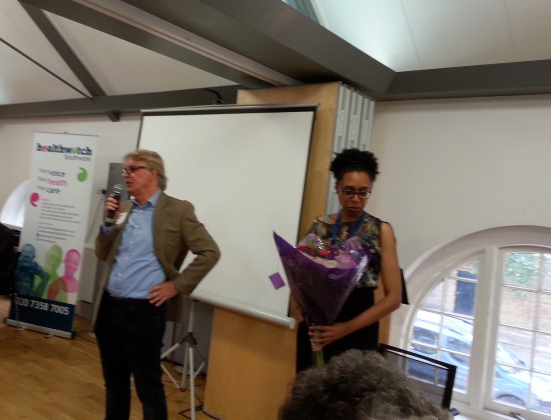
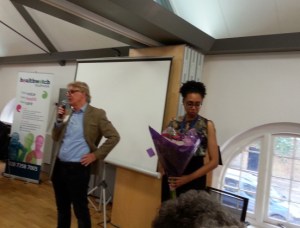
At the end of the event, we congratulated Alvin Kinch on how much she has contributed to Healthwatch and LiNK, she now has moved to a new role with Healthwatch England and I hope Alvin will continue to contributed much more to engaging people’s views on health services.
As a carer I felt it was important to attend Healthwatch events not only to get my voice heard or spread knowledge of the event, but also listen to other people affected by the health services. They have very important things to say and Healthwatch is there to collate their views.

 Welcome to a blog site of former carer Matthew McKenzie from South London. I used to care for my mother who passed away this year. For close to 18 years I have been supporting her and my brothers who both have autism, but for my mother she had a difficult time with mental health. There was only so much I could do and a lot of support depended on health and social care services that were already struggling.