By Matthew McKenzie FRSA BEM, Chair, Triangle of Care Community Group
This week’s Triangle of Care Member Webinar, hosted by Carers Trust, which focused on a vital question: What makes for meaningful carer involvement?
We heard from across the Triangle of Care network, these being carers, professionals, and trust representatives coming together to share what genuine involvement looks like in practice.
I spoke about my own lived experience as a carer, supporting two non-verbal brothers with autism and my late mother with mental health challenges and how this journey has shaped my advocacy for stronger partnerships between carers and professionals.
Over the years, through the Triangle of Care, I’ve seen how much difference early and equal involvement can make.
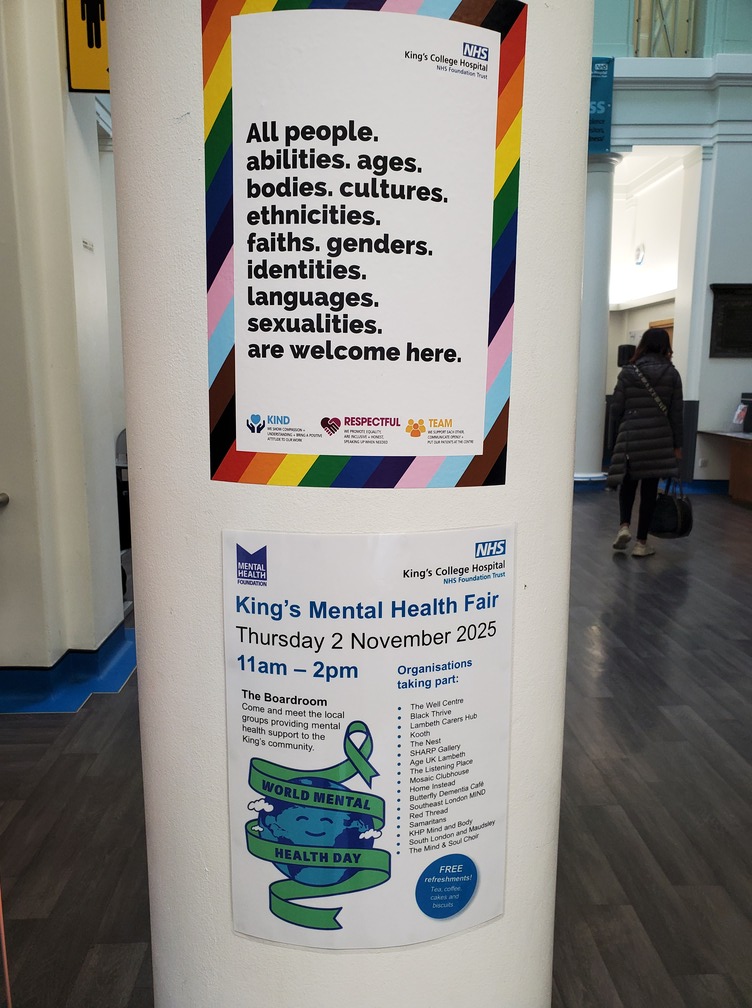
Today, I had the privilege of being part of King’s College Hospital NHS Foundation Trust’s Mental Health Fair, held on Thursday 2nd October, in recognition of World Mental Health Day 2025.
The event brought together a wide range of organisations and community groups working tirelessly to support the mental health and wellbeing of patients, families, and carers.
Why carers need to be at the heart of mental health conversations
As someone who has cared for a loved one experiencing mental health challenges, I know firsthand the importance of recognising and supporting carers through the groups i run.
Community is a word we hear often, but its true meaning and significance can sometimes be overlooked. At its core, a community is a network, a web of relationships built on shared identity, common themes, and mutual trust. Communities are formed when people come together, united by a sense of belonging and shared responsibility. This sense of belonging is not just about being part of a group; it’s about feeling valued, having a purpose, and working towards common ideals.
This blog is a transcript of the video below.
Communities exist in many forms. The most immediate and intimate is the family, where the seeds of unpaid caring are often sown.
Building Stronger Voices: A Powerful July Gathering of the National Ethnic Mental Health Carer Forum
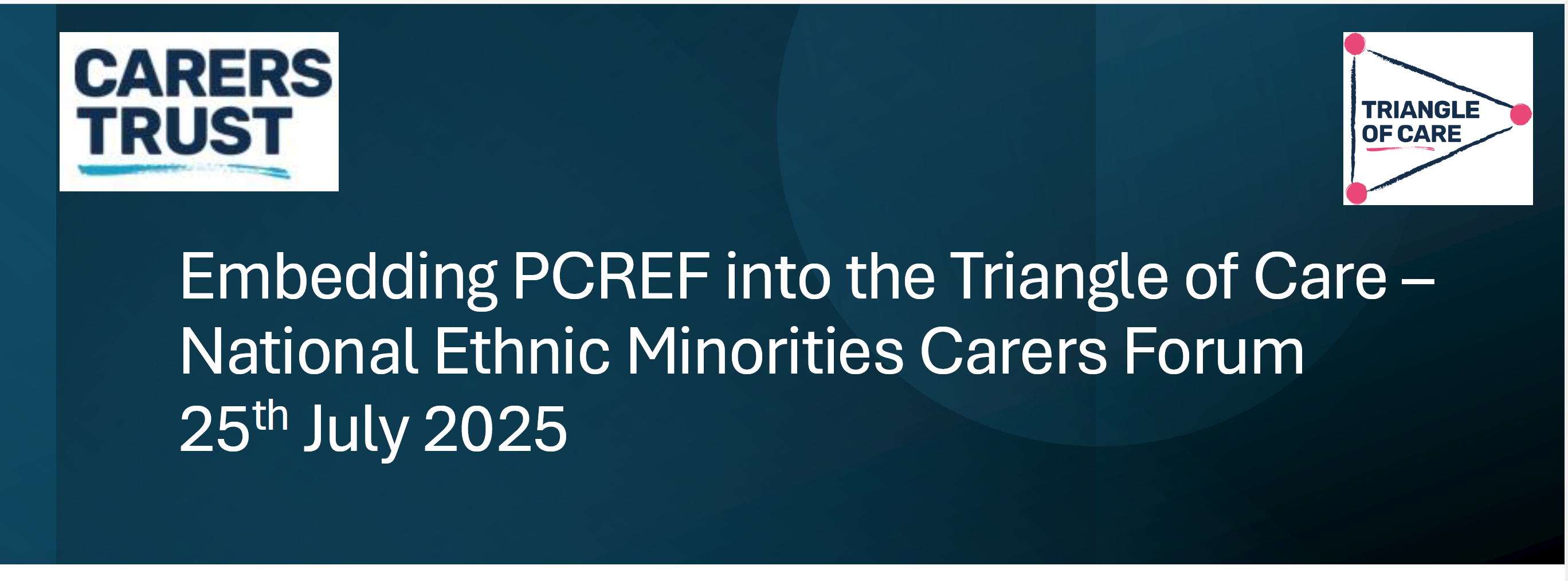
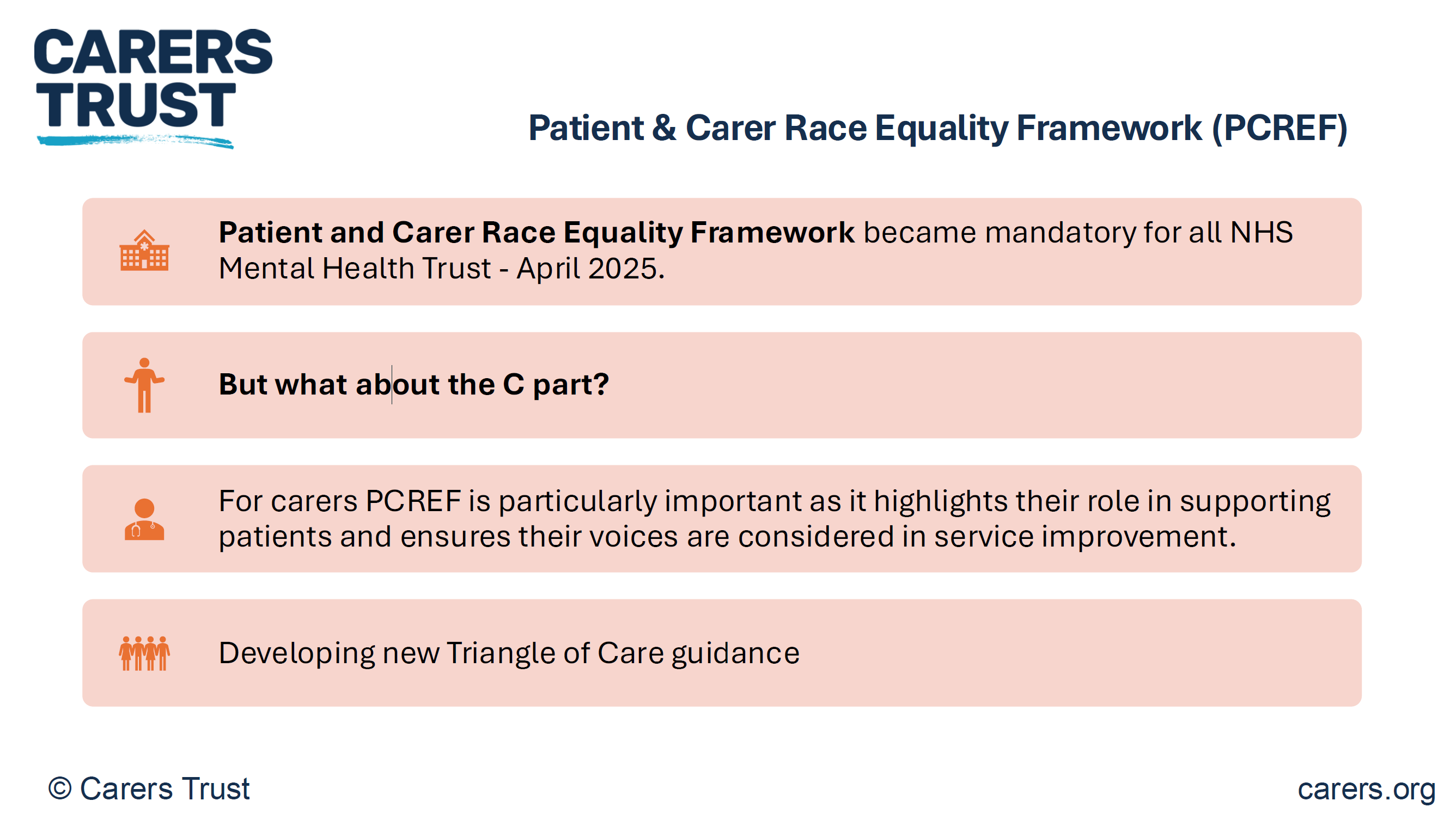
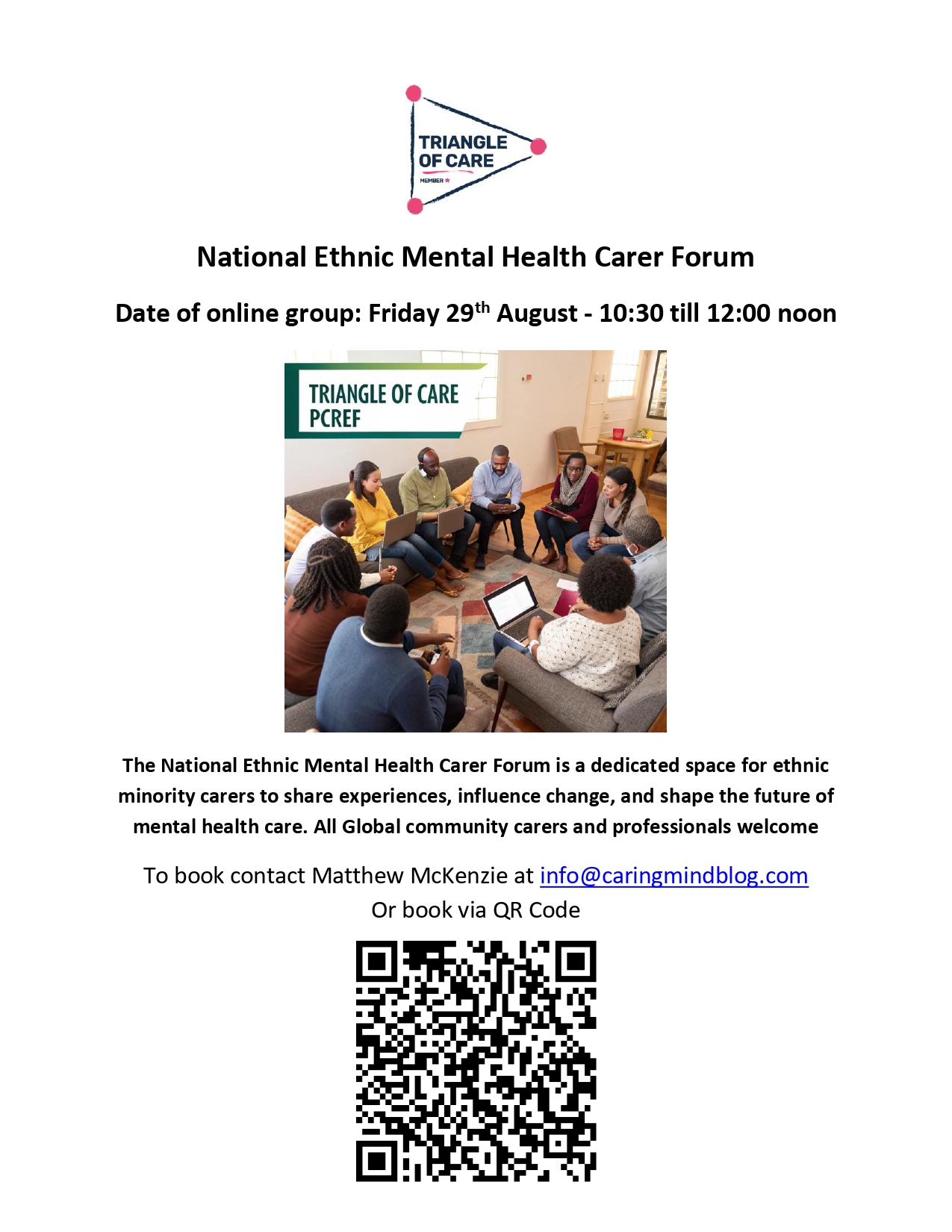
On Friday, July 25th, the National Ethnic Mental Health Carer Forum held another online session, continuing our work in empowering diverse carers and influencing meaningful change across mental health services. With participation from community champions, NHS professionals, experienced unpaid minority carers. The discussion was on the Triangle of Care (ToC) and PCREF (Patient Carer Race Equality Framework) stakeholders.
This forum exists to elevate the voices of ethnically diverse carers, bringing their lived experiences to the forefront of service transformation. Whether it’s holding systems to account or shaping policy guidance, this space remains vital in creating inclusive, anti-racist care across the UK.
Highlights from July’s Forum
🔵 Debbie Hustings’ Presentation on Triangle of Care & PCREF Integration Debbie, a long-standing Triangle of Care Programme Lead and carer herself, gave an in-depth presentation on reviewing the Triangle of Care through a PCREF (Patient and Carer Race Equality Framework) lens. Her talk provided an honest look at institutional challenges and offered solutions for embedding racial equity into carer support standards. A key takeaway was how crucial lived experience is in driving real policy change not just warm words. She emphasized the importance of re-examining existing standards through a racial equity lens, stating that “beyond warm words,” carers need frameworks that are operational, measurable, and locally adaptable.
🟣 Powerful Feedback from Carers Contributors shared difficult yet necessary truths. Carers spoke about the lack of involvement in care planning, systemic racism, the need for meaningful co-production (not “faux-production”), and experiences of isolation when navigating majority environments. One carer reflected, “In 28 years of caring for my son, I have never been involved in his care planning.”
Several carers shared their painful, sometimes shocking, experiences navigating mental health services, especially in areas with limited diversity. One participant remarked, “Even after decades of caring, I’ve never been included in a care plan.” Others spoke of staff who misunderstood or dismissed cultural nuances, the misuse of confidentiality rules to exclude carers, and the silencing of Black and Asian voices. Concerns were also raised about immigration-related fears, lack of access for non-English speakers, and a troubling rise in racism in predominantly white areas. These reflections painted a vivid picture of systemic inequality but also made clear the power of collective advocacywhen carers come together, change begins.
These testimonies highlighted how far we still need to go.
🟡 Inclusive Language & Representation There was a passionate discussion around terminology whether to use “global majority” or “ethnically and racially diverse.” While some feared backlash from certain communities, the group leaned toward inclusivity and accountability over appeasement. This sensitivity around language underlines the forum’s thoughtful and intersectional approach.
🟢 The Work Ahead Debbie shared the next steps in developing Standard 2 of the Triangle of Care through the PCREF lens: staff training. The goal? Mandatory, culturally safe, anti-racist care awareness education co-produced with carers from diverse backgrounds. By April 2026, the guidance will be finalized, field-tested, and launched nationally.
A Forum of Global Carers, Local Action
This month’s session proved again that our forum is more than discussion as it’s a driving force for equity. Participants from Southampton, Lewisham, Pennine, Norfolk, Leicester, South West London, Kent & Medway and beyond all shared insights into their local efforts, including cultural awareness training, community storytelling projects, and carer-led involvement initiatives.
One key message? Change is possible when carers are part of the conversation—not as guests, but as co-leaders.
Want to Get Involved?
The forum is open to carers and professionals across the UK and beyond. We meet monthly online, and everyone is welcome to join, contribute, or simply listen.
For bookings or questions, contact me at info@caringmindblog.com 📱 Or download and scan the QR code in the flyer above
Together, minority mental health carers can shape a mental health system that sees, hears, and supports all carers—ethnically, culturally, and fully.
Next National MH carer forum in August 29th 10:30 am Matthew McKenzie Founder – Caring Mind Blog Facilitator – National Ethnic Mental Health Carer Forum
The session opened with updates and heartfelt check-ins. One of our carer members, shared a deeply personal and challenging situation regarding her loved ones declining mental and physical health. Despite strained family dynamics and the emotional burden of caring, a carer is courageously advocating for her loved one and seeking support through nursing services and assessments.
Peer Support: Insights from Experience
Long-time members offered valuable perspectives from their own journeys. A carer shared their struggle supporting individuals, which showed a stark reminder of the emotional and logistical toll caring can take. Another carer encouraged fellow carers to prioritise their own well-being, even in small ways a cup of tea, a short walk, a moment to breathe.
Why Unpaid Carers Should Join Our Mental Health Carers Forum and Why Oxleas & Our Local Authorities Should Listen
By Matthew McKenzie
Caring for a loved one with mental health needs is a journey full of challenges, isolation, and too often lack of support. That’s why we run a dedicated Mental Health Carers Forum with Greenwich Carers Centre that brings together unpaid carers from across Greenwich and sometimes other boroughs since Oxleas covers Bromley and Bexley.
In our most recent forum, carers opened up about what it’s really like to navigate services and support their loved ones. The message was clear: unpaid carers are doing more than ever often alone and we need to work together to make sure they are not left behind.
The Power of Peer Support
One carer said:
“I’m a sandwich carer — looking after my elderly parents and my daughter with complex needs. Groups like this are a lifeline. It’s a space to share, learn, and recharge.”
For many carers, peer support is one of the few places where they are truly heard. Another participant explained:
“It helps so much to hear from others going through similar things. It’s the only way I know what services are available and what’s changing.”
Challenges That Carers Face
Through the forum, we heard repeated concerns:
Lack of joined-up care between GPs and mental health services
Delays in care planning and assessments — or carers being excluded altogether
Confusing systems — carers are often left chasing up GPs or social workers themselves
Failure to take carers’ expertise seriously in assessments and planning
Emotional strain — many carers at breaking point, needing better respite and emotional support
One mother of three autistic children shared:
“I told them my son cannot tolerate bright light that’s why the curtains were drawn. But the assessor just complained about the curtains and parking. They didn’t listen to what my son really needs.”
Presentation: Advocating for a Loved One During and After Mental Health Crisis
Matthew McKenzie delivered a detailed presentation on how unpaid carers can effectively advocate for their loved ones, particularly around mental health services.
Key points included:
Carers are not just supporters, they are also advocates for their loved ones
Building relationships with key professionals (GP, care coordinator, psychiatrist, social worker) is crucial
Carers should keep records of symptoms, interventions and communications to support advocacy
During a crisis, carers should:
Stay calm
Be factual about symptoms and risks
Be assertive (but respectful) in requests for urgent action
Request risk assessments and ask for information to be recorded
Understand confidentiality rights and use carers’ rights under the Care Act
The importance of self-care for carers, advocacy can be exhausting, and carers must seek peer support and breaks
Carers should also use the complaints process and escalate concerns when services fail
A Call to Oxleas NHS and Local Authority
We know big changes are coming, NHS England reorganisations, funding pressures, staff reductions. But one thing won’t change: the system depends on unpaid carers.
That’s why we urge Oxleas NHS Trust and the local authorities to:
✅ Regularly engage with this forum to hear carers’ voices ✅ Ensure carers are meaningfully included in care plans and reviews ✅ Offer more training and support for staff on carer involvement ✅ Improve clarity on who carers can contact in a crisis ✅ Work with us to strengthen co-production, not just in theory, but in practice
As one member put it:
“If the services won’t be there in full anymore — then carers will have to do even more. But we can’t do it if we’re broken.”
Join Us
If you’re an unpaid carer supporting someone with mental health needs, whether you’re new to caring, or have years of experience, please come along.
You’ll find a space to share, learn advocacy skills, and connect with others who truly understand. We also run a peer WhatsApp group, ask if you’d like to join.
Together we are stronger and louder. The more carers attend, the harder it is for services to ignore us.
For more info or to attend the next forum: contact
Written by: Matthew McKenzie – WLHT co-facilitator of ethnic carer group and Triangle of Care Community Chair
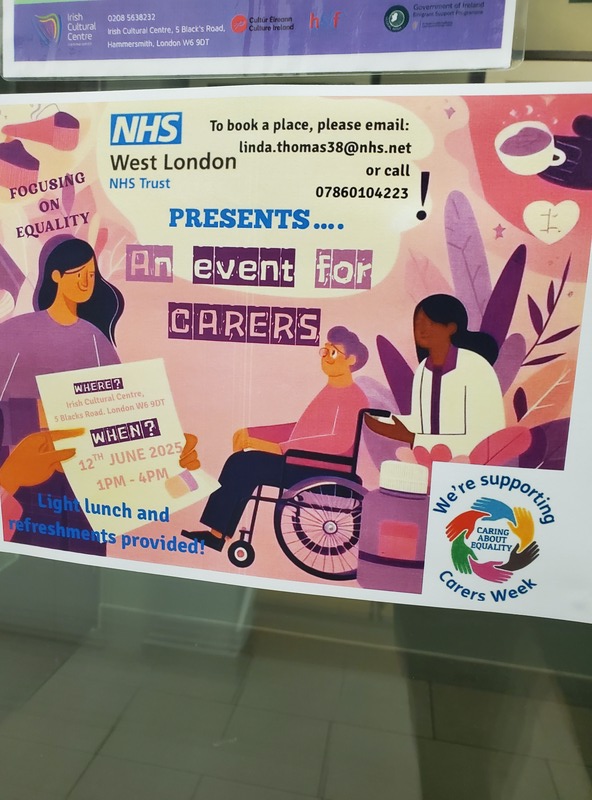
The Irish Cultural Centre in Hammersmith was filled with warmth and purpose on June 12th, as carers, professionals, and community leaders came together for the West London NHS Trust’s Carers Event in support of Carers Week 2025.
As Chair of the Triangle of Care Community and an involved carer for West London NHS Trust, I was interested in the carers conversations, and sense of solidarity among all those present.
Date: Friday, June 13, 2025 Time: 3:15 PM – 4:15 PM (GMT+1) Location: Cygnet Churchill, 22 Barkham Terrace, London SE1 7PW Admission: Free (Limited tickets available – reserve now!)
As part of this year’s Carers Week 2025, we’re thrilled to spotlight a truly special celebration: the Carer Poetry Performance Event & Book Launch – By Carers, For Carers. Taking place in the heart of London, this inspiring event offers a rare platform for unpaid carers to raise their voices through poetry, storytelling, and community.
Why This Event Matters
Caring can be isolating, demanding, and emotionally intense. This event flips the script by offering carers a space to express their journeys, hopes, struggles, and triumphs in their own words. It’s not just about performance it’s about connection, validation, and healing through creative expression.
Whether you’re a carer yourself or an ally, this is your opportunity to witness the power of poetry and lived experience intersecting. Hear firsthand stories that move, educate, and celebrate the silent heroes among us.
A Book Launch to Remember
The event also marks the launch of a special poetry book curated from carers across the community. It’s more than just a collection of verses, it’s a tribute to resilience, empathy, and the unseen emotional labor of caring.
Hosted by Matthew McKenzie
Spearheaded by Matthew McKenzie, a dedicated carer and ambassador for Cygnet Health, this event reflects his ongoing mission to amplify the voices of carers. With over 200 events hosted, Matthew brings both expertise and passion to the stage.
Reserve Your Free Ticket
Tickets are free but extremely limited. If you want to be part of this moving and empowering experience, don’t wait. Please note the event is for unpaid carers.
Let’s come together to honor the stories behind the care. Join us for an afternoon of poetry, purpose, and community.
Here is a brief update of the Triangle of Care Community group for the month of May 2025. The Triangle of Care Community group is a collaborative forum that champions the voices of unpaid carers in mental health services. The group works in partnership with service users, carers, and professionals to embed the principles of the Triangle of Care, promoting shared decision-making, improved communication, and recognition of carers as equal partners in care.
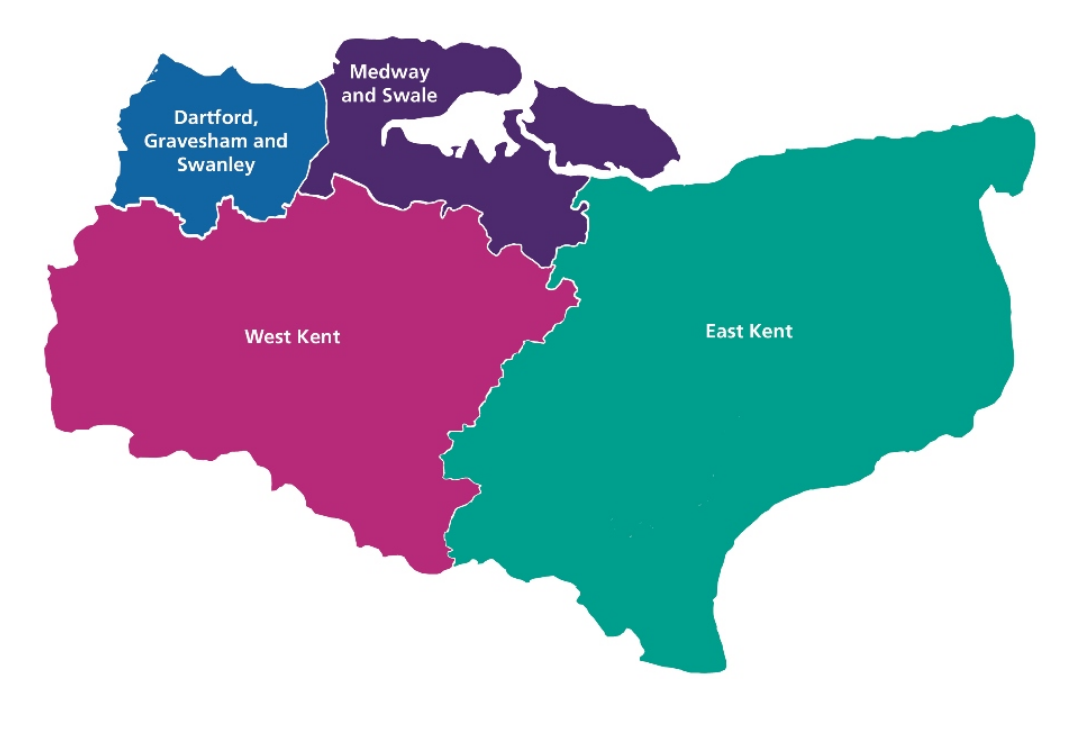
Our most recent meeting brought together carers, NHS professionals, researchers, and advocates from across the UK, including representatives from Kent, Bristol, Lewisham, East Sussex, and Hertfordshire. The atmosphere was one of mutual respect, knowledge-sharing, and a shared drive to improve the experience of care for carers and their loved ones.
The meeting covered updates on Triangle of Care developments, including recent accreditations and ongoing pilots to adapt the model for various healthcare and social settings. Presentations were given on research studies related to mental health care, including pharmacist prescribers’ roles and experiences of underserved older male carers. The group also discussed campaigns for increased research funding in serious mental illnesses and initiatives to support carers, such as Carers Roadshows.
Triangle of Care Expansion Updates
Mary Patel one of the Triangle of Care leads, provided an update on Triangle of Care developments and accreditations. Several healthcare providers have recently gained Star awards. There are ongoing pilots to adapt Triangle of Care for social care settings and to incorporate criteria for better support of racially marginalized carers. Mary announced that the Triangle of Care community group will be formally brought on board with Carers Trust, with Matthew as the inaugural chair for a 2-year term. They are looking to bring on co-chairs to support Matthew in his role.
Triangle of Care Implementation Updates
The group discusses recent achievements in implementing the Triangle of Care model across various healthcare organizations. Gabrielle Richards who leads on carers at South London & Maudsley reported that her trust successfully completed their Star 2 accreditation assessment for community services.
Matthew McKenzie shared a video poem he created about the Triangle of Care as it was shown during the peer review at South London & Maudsley.
Kelvin thanked Gabrielle for her contributions as she prepares to leave her role. Louise from Kent and Medway NHS Trust reported they maintained their second star accreditation and have implemented new processes to ensure carer considerations are included in policy development.
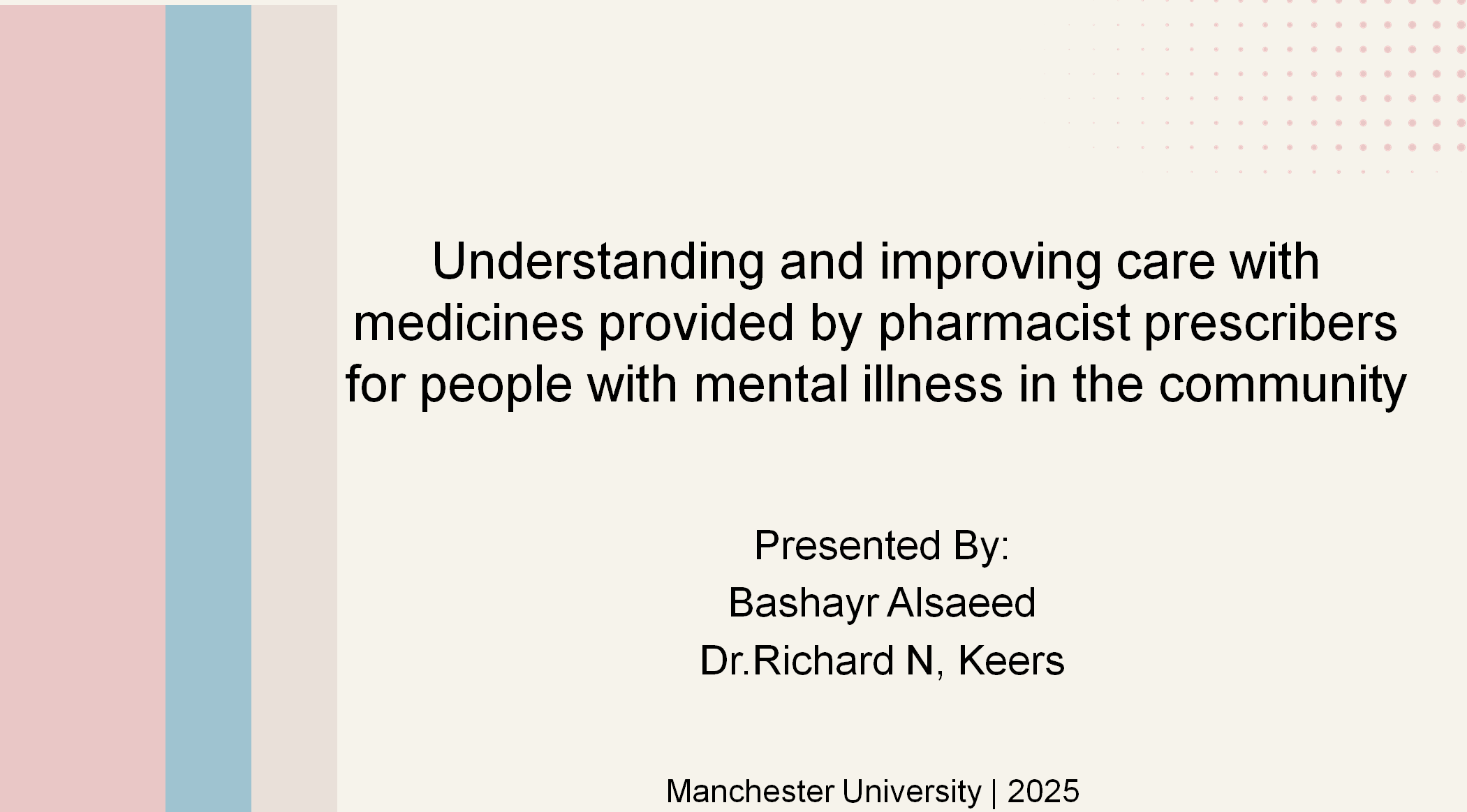
Richard introduced Bashir Al Saeed, a PhD student from the University of Manchester, to present their research study on the experiences of people with mental illness and their carers when receiving care from pharmacist prescribers in the community.
Bashir explains that the study aims to understand and improve care provided by pharmacist prescribers for people with mental illnesses in community-based settings. Participants will be asked to take part in a one-hour interview and will receive £30 as compensation.
The study is seeking individuals aged 18 or older with mental illnesses or their unpaid carers who have received care from pharmacist prescribers in the UK. A discussion follows about the inclusion criteria, particularly regarding the requirement for fluency in English, with concerns raised about potential issues against non-English speakers
Mental Health Research Campaign Initiative
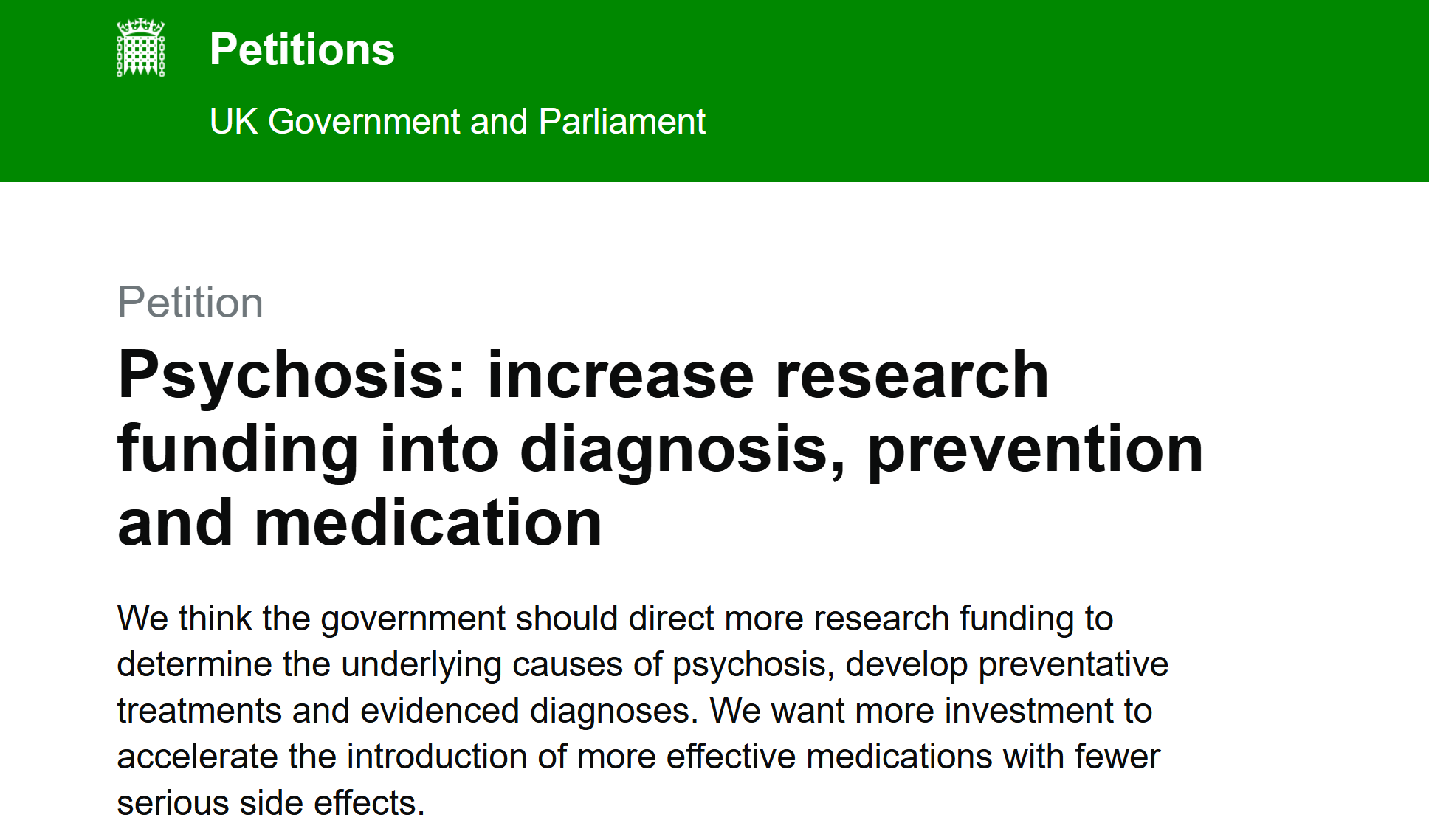
The group discussed a campaign for better research into long-term serious mental illness in working-age people. Irene explained that they have been working on this campaign for a year, collaborating with experts from Oxford and the Welcome Trust.
The campaign aims to gather signatures and includes a short video. Irene emphasizes the importance of this initiative, as many in their group have loved ones who have been ill since their teens and are now in their thirties and forties.
You can find out more about the campaign from the link below.
The discussion focuses on a petition to increase government funding for research into psychosis, including its diagnosis, prevention, and treatment. Irene passionately advocates for more effective medications with fewer side effects, emphasizing the need for better understanding of the underlying causes of psychosis. A carer shared personal experiences of her son’s struggles with mental illness and medication side effects. The group discusses the importance of signing and sharing the petition to gain government support for accelerated research in this area.
Pharmacist Prescribing for Mental Health
The discussion focuses on pharmacists prescribing for mental health conditions. Richard explains that some pharmacists, especially those with specialized training, are caring for people with mental illnesses in various settings. However, the extent of their involvement in prescribing and monitoring is still unclear. A carer expressed concern about pharmacists prescribing for severe conditions like bipolar disorder without extensive training. The group discusses the need for proper qualifications and access to medical records. Richard emphasizes that the study aims to understand and improve the care provided by pharmacist prescribers in community services.
Carers Roadshows: Community Support Network
Trevor a carer involved at Notts NHS described his Carers Roadshows, which he has been organizing since 2013. These free events bring together various organizations dealing with health, mental health, and social care to provide information and support to carers and patients.
Trevor emphasizes the importance of communication in triangular care and sees the roadshows as an effective, sustainable tool for fostering connections between different organizations and the community. He expresses his ambition to expand the roadshows across the country, particularly in London boroughs, and offers to help others create their own roadshows using his four-step guide.
Older Male Carers Advisory Group
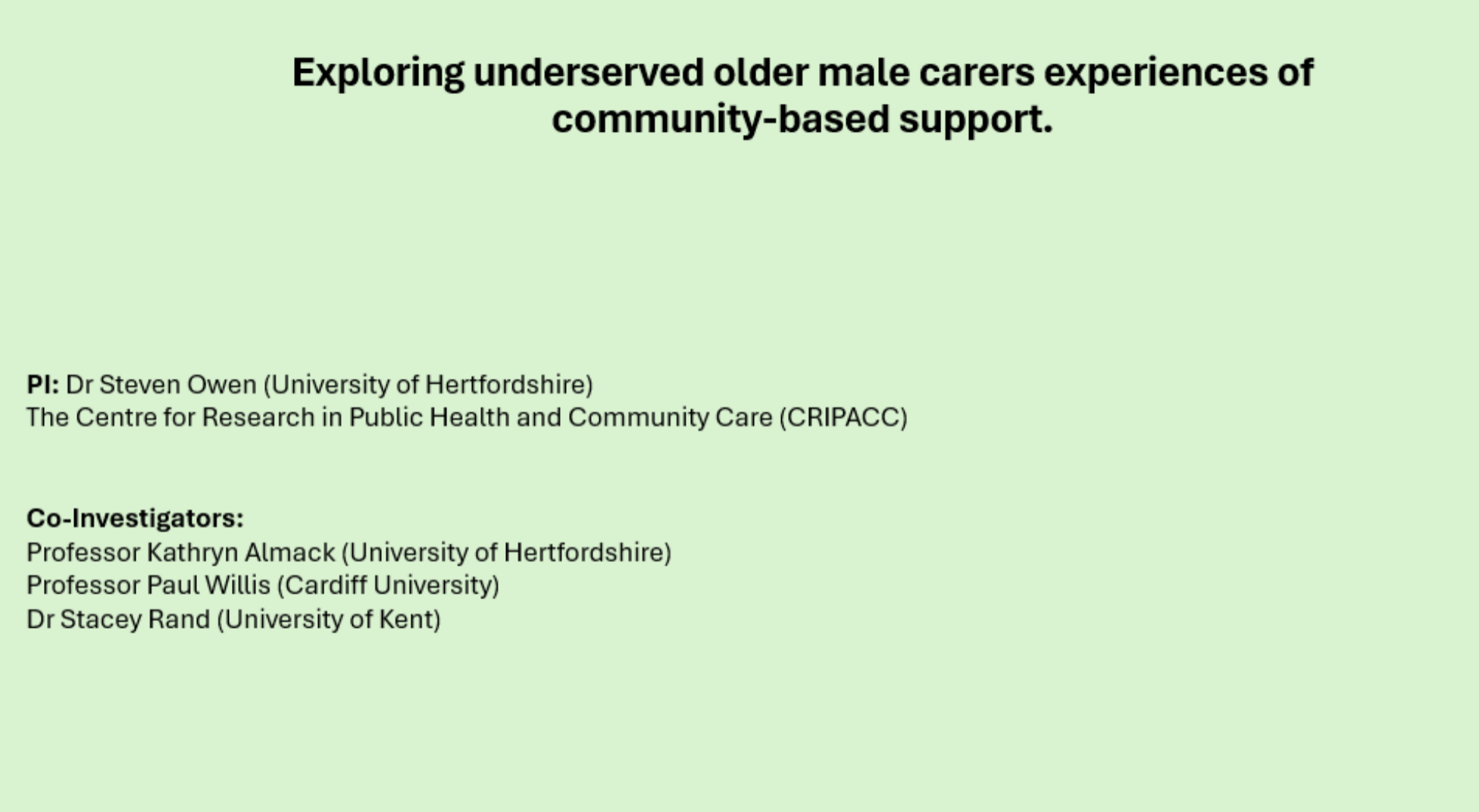
Steve Owen from the University of Hertfordshire presents his research project on exploring the experiences of underserved older male carers. The project aims to set up an advisory group of 7-10 older men, particularly from minority ethnic groups, same-sex relationships, and rural/coastal areas, to meet from June to December 2025.
The research group will discuss the benefits and challenges of caring, gender dynamics, and access to support. The project’s goals are to develop a grant proposal for further research and improve advisory group guidelines. Steve is still recruiting participants and welcomes help in sharing information about the project.
Final Reflections
The session highlighted both the progress and the gaps still faced by carers, particularly around communication, access to services, and recognition. The Triangle of Care model continues to be a vital tool in bridging these gaps, but it is the commitment of carers and professionals alike that drives real change.
“Thank you for another great meeting Matthew and everyone.” – Linda Thomas “These meetings have been such a resource for us all.” – Gabrielle Richards “Powerful video, powerful voices. Thank you everyone.” – Claire Wood
I’m proud to be involved and help lead as triangle of care community as Chair and look forward to building our impact together. If you’re interested in co-chairing or getting more involved, please reach out let’s continue to shape mental health care that values and includes carers at every level.
The Power of Community in Mental Health: Reflections on Mental Health Awareness Week 2025
By Matthew McKenzie
Mental health is a universal concern, touching every life in profound and personal ways. As we mark Mental Health Awareness Week 2025, the spotlight turns to a theme that is both timeless and urgently relevant: community. In a world where isolation and disconnection are increasingly common, the bonds we share with others, whether family, friends, neighbors, or online networks it can be the difference between despair and hope, between struggle and resilience.
You can watch the awareness video below.
This article explores the vital role of community in mental health, the challenges many face in accessing supportive spaces, and the collective actions we can take to ensure no mind is left behind.
Understanding Mental Health Awareness Week 2025
A Tradition of Advocacy and Reflection
For over two decades, Mental Health Awareness Week has been a cornerstone of advocacy in the UK, led by organizations like the Mental Health Foundation. Each year, this week serves as a time for reflection, education, and action, encouraging individuals and communities to prioritize mental well-being.