By Matthew McKenzie – Carer, Campaigner, Author and Speaker
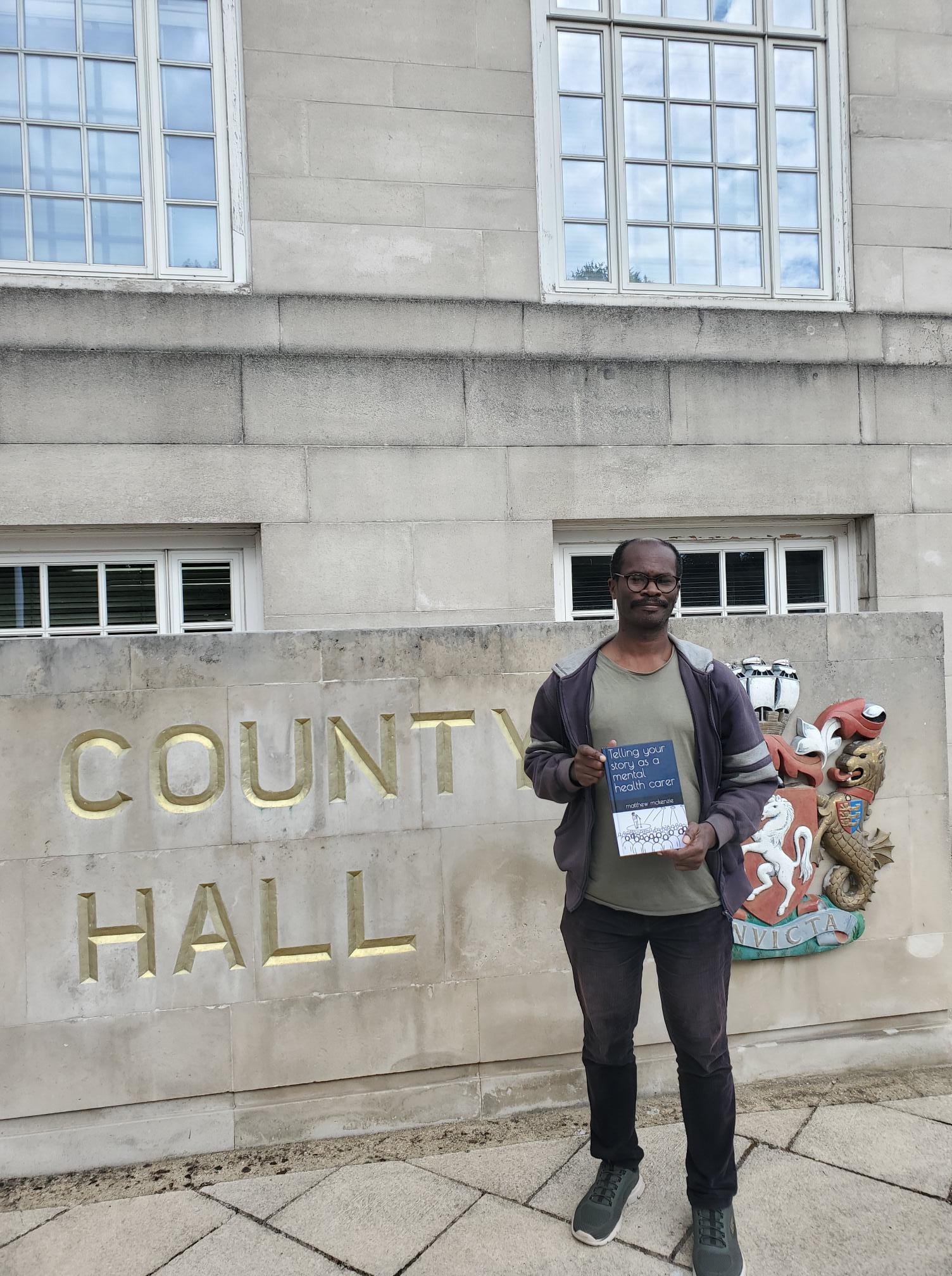
5 June 2026 – Supporting Kent County Council’s Carer Awareness Campaign
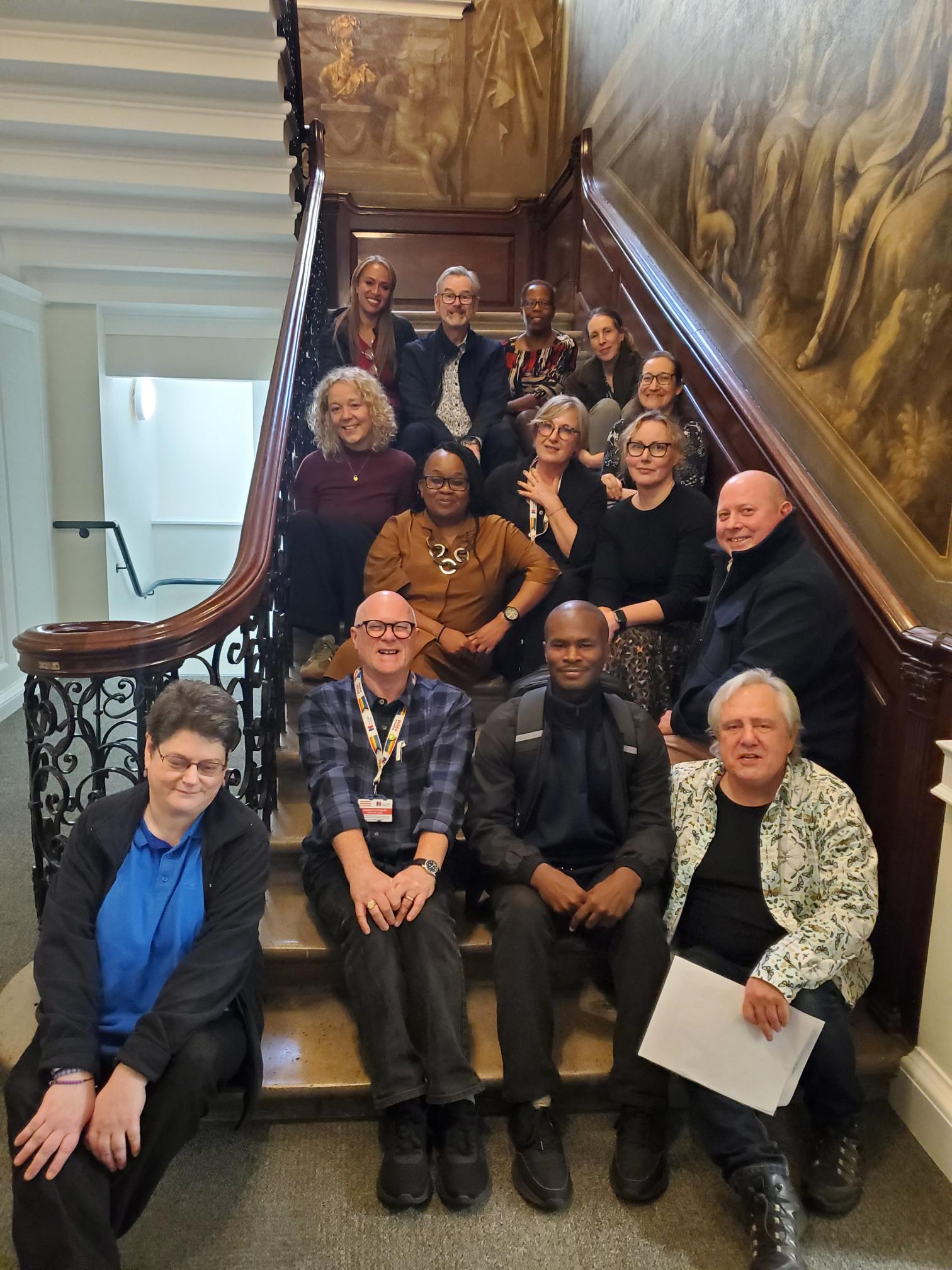
Although not officially part of Carers Week, my activities with Kent County Council formed an important part of my ongoing commitment to raising awareness of unpaid carers. I supported the county’s long-term carer awareness campaign by taking part in filming designed to help train council staff to better recognise and support carers.
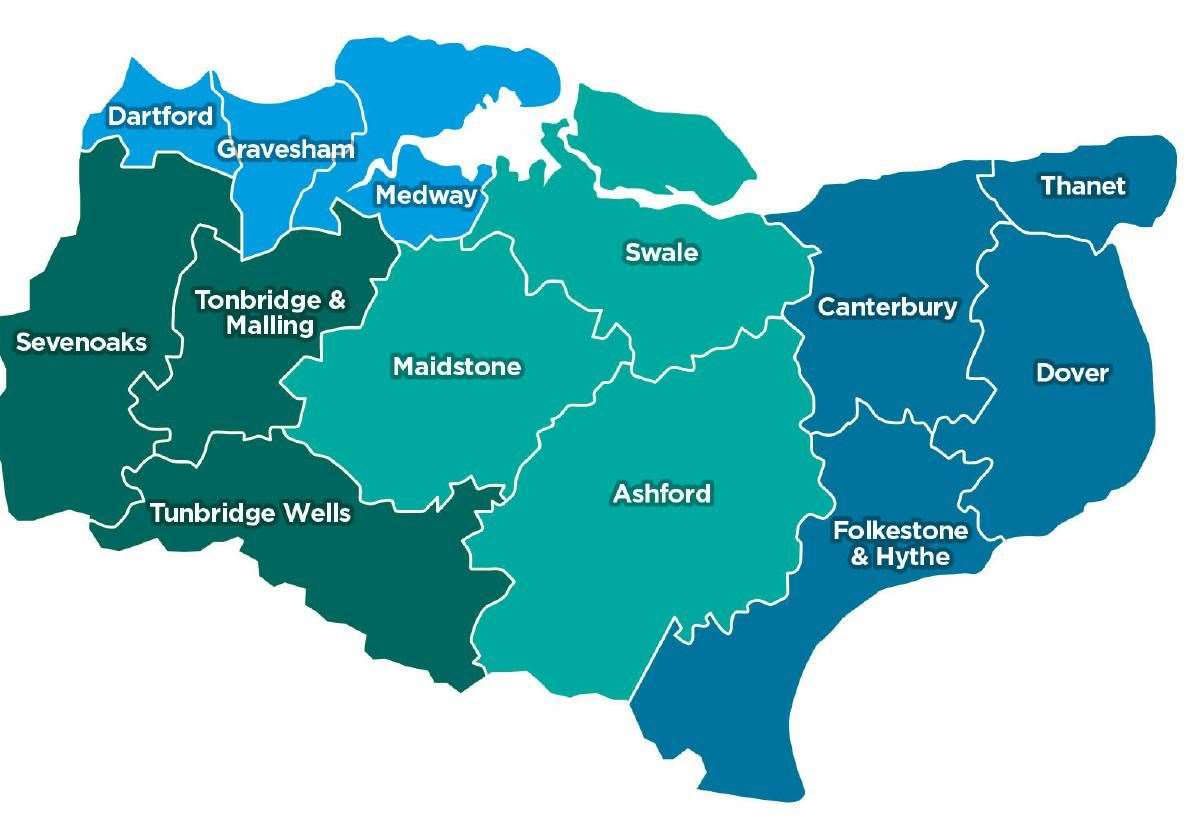
I also discussed future opportunities to speak at Kent County Council carer groups and continued promoting my own support groups across the county. It was encouraging to see local government investing in carer awareness and recognising the importance of ensuring carers are identified, valued and supported within their communities.
9 June 2026 – Developed Video promotion for Carers Week 2026
I did my bit to raise awareness of Carers Week 2026 via a video I developed, which you can see below.
8 June 2026 – Carers Week Stall at St George’s University Hospital
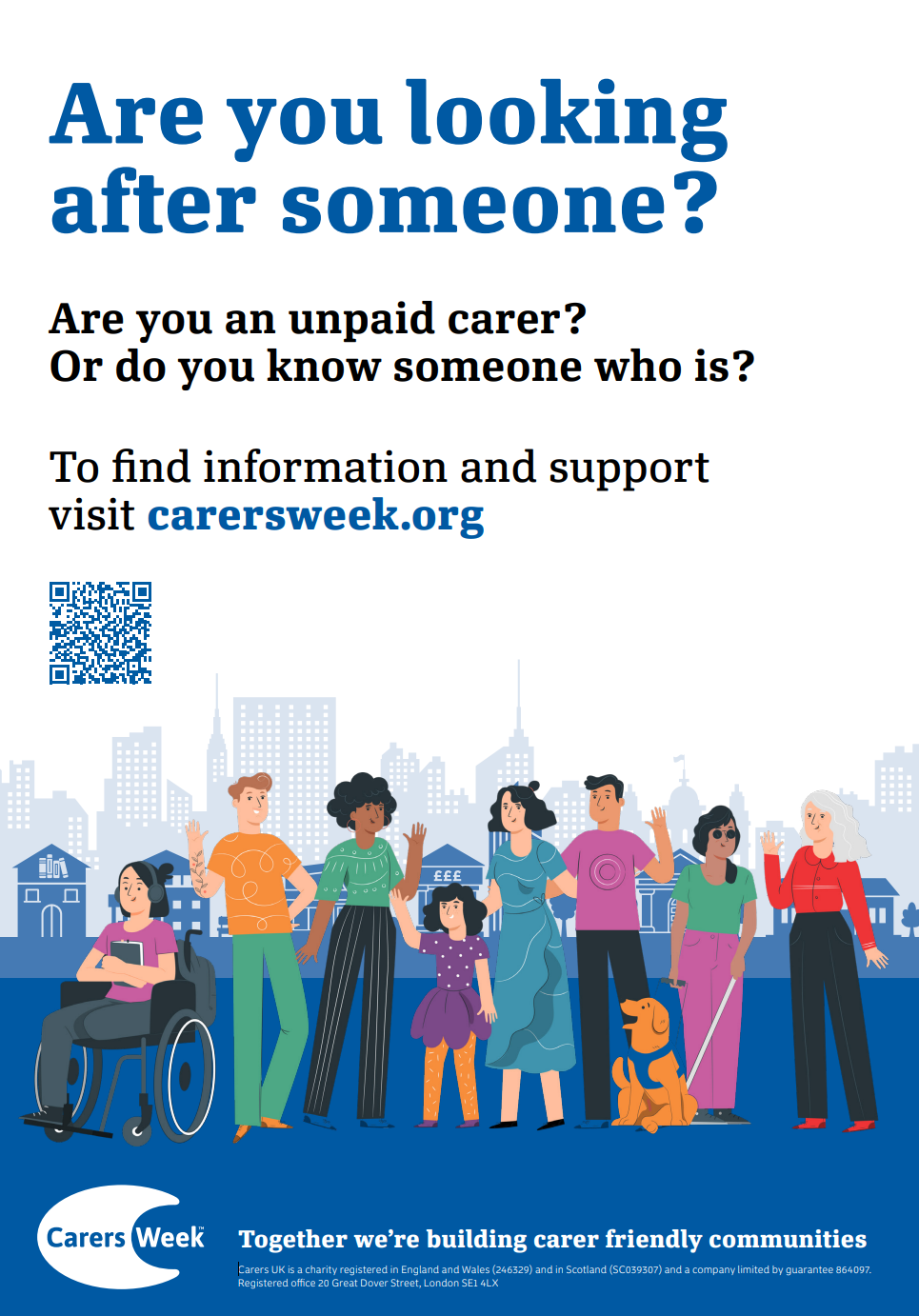
Carers Week officially began with a rewarding day at St George’s University Hospital, where I hosted a Carers UK information stall. The event provided an opportunity to engage directly with unpaid carers, patients, hospital staff and visitors, sharing information about the support available to carers both locally and nationally.
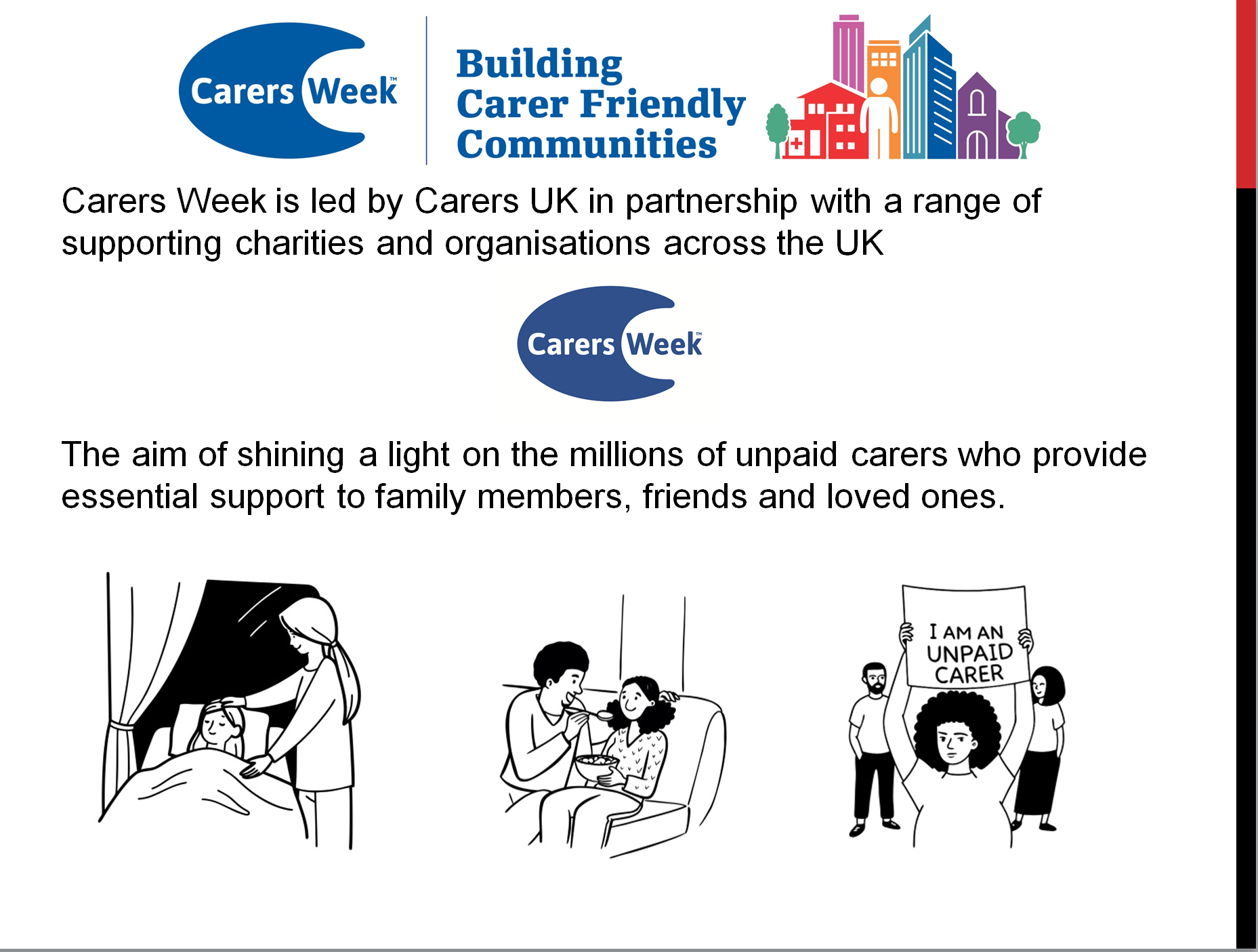
For Carers Week 2026, it takes place from 8–14 June and shines a spotlight on the millions of unpaid carers who provide essential care and support to family members, friends and loved ones throughout the UK.
This year’s theme, Building Carer Friendly Communities, highlights the need for workplaces, healthcare services, schools, local authorities and communities to better recognise and support unpaid carers.
Despite contributing billions of pounds worth of care each year, many unpaid carers continue to face challenges including financial hardship, social isolation, poor mental health and difficulties accessing support. So Carers Week aims to raise awareness of these issues while encouraging practical action to create a society where carers are valued, respected and included.
As a carer activist and founder of my site A Caring Mind, I am sure that creating carer-friendly communities starts with understanding the realities of caring. Whether you are caring for an ageing parent, a disabled child, a partner with a long-term condition or someone experiencing mental ill health, carers play a vital role in keeping families and communities together.
However, there are still many people do not identify themselves as carers and therefore miss out on important support, benefits and services. Carers Week 2026 provides an opportunity for individuals, organisations and policymakers to listen to carers’ experiences, champion carers’ rights and improve access to support for unpaid carers across the UK.
Watch my Carers Week 2026 video below to learn more about the campaign, this year’s theme and how you can get involved in supporting unpaid carers. Please share the video to help raise awareness and encourage more people to recognise the invaluable contribution that carers make every single day.
Together, we can build stronger, more inclusive and more carer-friendly communities
Blog by Ethnic Mental Health Carer forum Chair – Matthew McKenzie
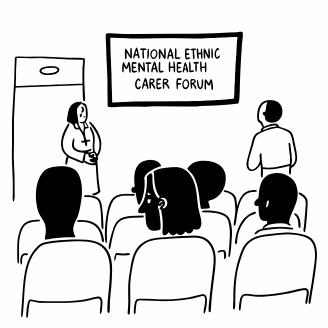
The May 2026 Ethnic Mental Health Carers Forum brought together carers, researchers, clinicians, community leaders, and representatives from mental health organisations across England. Although attendance was smaller than usual, the discussion was rich, honest, and highly informative, covering Mental Health Act reform, carers’ experiences, service inequalities, innovative approaches to care, and new research opportunities.
For those who were unable to attend, this blog provides a comprehensive overview of the meeting, including key presentations, audience questions, responses from speakers, and useful resources shared during the session.
Opening Remarks
As the chair, I welcomed attendees and outlined the agenda. The meeting focused on following:
Mental Health Act research and reform
Carers’ experiences supporting loved ones through detention
Findings from a major East Sussex carers research project
Resources for carers under the Mental Health Act
Electronic Health Records and future developments
Wider discussions on racial trauma, inequalities, and service improvement
The meeting also provided opportunities for networking, sharing lived experiences, and highlighting innovative projects happening across the country.
Research Study: Supporting a Loved One Through Mental Health Detention
Dr Maeve Conneely from University College London opened the meeting with a presentation on a new research study exploring the experiences of people who have been assessed or detained under the Mental Health Act, as well as the experiences of family members and carers who supported them through that process. The study has been commissioned as part of the wider programme of Mental Health Act reform and aims to understand how the current “Nearest Relative” provisions operate in practice before changes are introduced under the new legislation.
Dr Conneely explained that researchers are particularly interested in hearing from carers who were involved in supporting a loved one but who were not formally recognised as the “Nearest Relative” under the existing legal framework. She highlighted that these experiences are especially important because they can reveal where carers have been excluded from decision-making, denied access to information, or prevented from contributing to assessments despite playing a significant role in supporting the individual concerned. The study is open to anyone aged 16 or over who has direct experience of Mental Health Act assessments, detentions, Community Treatment Orders, holding powers, or related interventions, whether as a patient or as a supporter.
The research is linked to ongoing reforms of the Mental Health Act and seeks to understand how the “Nearest Relative” provisions currently operate before changes are implemented.
Who Can Take Part?
The study is looking for:
People who have been detained under the Mental Health Act
Family members and carers who supported someone during detention or assessment
Individuals who should have been involved as a nearest relative but were not
Anyone aged 16 or over with relevant experience
Interviews are conducted online and participants receive a £30 shopping voucher as a thank-you for their time.
Key Question from Participants
Q: Does the study include situations where someone should have been involved but wasn’t?
Response: Yes. Researchers are particularly interested in understanding experiences where carers or family members were excluded from decision-making processes despite playing a significant caring role.
Another Important Question
Q: Do carers need permission from the person who was detained before participating?
Response: No. Carers are sharing their own experiences and therefore only need to provide their own consent.
Discussion Themes
Participants highlighted:
Long-standing inequalities affecting Black communities under the Mental Health Act.
The overuse of psychiatric labels without sufficient exploration of trauma.
The need to understand why some individuals receive significantly different experiences of care, including access to private mental health facilities.
Concerns about trust in mental health services and the lasting impact of poor experiences across generations.
Several carers committed to taking part in the study to ensure lived experience informs future policy.
East Sussex Carers Research Project: What Carers Told Us
Age Angiolini presented findings from a year-long carers-led research project examining the experiences of family carers supporting people with serious mental illness across East Sussex. The study was developed in response to repeated concerns raised by carers at local support meetings and sought to capture their experiences of interacting with mental health services provided by the Sussex Partnership Foundation Trust (SPFT).
Although the research received 71 responses, representing only a proportion of the carers population in the region, the findings revealed a striking consistency in the challenges carers face. The survey explored themes including carers’ involvement in care planning, communication with services, consent and confidentiality, quality of care, crisis support, and priorities for improvement. Among the most significant findings were that 72% of carers reported being only sometimes involved or not involved at all in their loved one’s care, 73% felt services relied too heavily on carers, and 72% said they regularly had to advocate to secure appropriate support. The research concluded that many carers feel undervalued, excluded from decision-making, and left carrying significant responsibilities without adequate recognition or support.
The study gathered responses from carers supporting people with:
Schizophrenia
Bipolar disorder
ADHD
Autism
Complex neurodiverse conditions
Although the sample size was relatively modest, the findings revealed significant and consistent concerns.
Key Findings from the report
Carers Feel Excluded
72% reported being only sometimes involved or not involved at all.
73% felt services relied too heavily on carers.
72% said they had to advocate strongly to secure appropriate care.
Communication Failures
Participants reported poor communication between:
Mental health services
Assessment teams
Social services
Mental health liaison teams
Many carers described communications as inconsistent, unclear, and difficult to navigate.
Consent and Confidentiality
A recurring concern was that confidentiality procedures are often applied rigidly, preventing carers from sharing vital information during crises.
Carers argued that this can actively undermine effective care.
Quality of Care Concerns
The research found:
90% reported insufficient care.
Significant concerns around continuity of care.
A strong desire for dedicated care coordinators.
Widespread frustration with crisis services.
Crisis Support is Not Working
Many carers reported that:
NHS 111 is often inadequate for mental health crises.
A&E is frequently unsuitable for people experiencing mental distress.
Services remain reactive rather than preventative.
Calls for Change
Recommendations included:
Better crisis pathways
Improved coordination between services
More trauma-informed approaches
Greater therapeutic support
Increased family involvement
Better support for neurodiverse individuals
The presentation sparked considerable discussion, with many attendees noting that the findings reflected experiences they had encountered for years.
Carers Speak Out: Frustration, Trauma and the Need for Change
One of the most powerful aspects of the meeting was hearing directly from carers.
Several participants reflected on decades of involvement with mental health services and expressed concern that despite repeated reviews, consultations, and reforms, many of the same issues continue to persist.
Common themes included:
Institutional racism
Poor communication
Exclusion of carers
Over-medicalisation
Lack of trauma-informed care
Inadequate support during crises
A number of attendees emphasised that families often become de facto care coordinators, managing appointments, services, medications, and crises while receiving little support themselves.
One participant observed:
“They plan, medicate and treat. We care. Our worlds don’t meet.”
Others highlighted the impact of racial trauma and the way mental health services can fail to recognise the cultural context of distress.
Open Dialogue: A Different Way Forward?
Ren Reins introduced the concept of Open Dialogue, an internationally recognised approach to mental health care that focuses on relationships, networks, and collaborative conversations.
Open Dialogue aims to:
Bring families and professionals together
Reduce fragmentation between services
Focus on lived experience
Build trust
Improve recovery outcomes
Ren explained that major NHS-funded trials are underway and encouraged carers to learn more about the approach.
The discussion generated significant interest, particularly from attendees looking for alternatives to traditional medical models of care.
Nearest Relative Resources Project
Professor Judy Laing from the University of Bristol provided an update on an innovative project designed to support family members and carers who hold, or may hold, responsibilities under the Mental Health Act’s “Nearest Relative” provisions. Drawing on previous research with carers and mental health professionals, Professor Laing explained that many family members who find themselves in the Nearest Relative role often receive little information, guidance, or emotional support despite carrying significant legal responsibilities. In response, her team secured funding to develop a free, co-produced online resource that helps carers understand their rights, responsibilities, and options when supporting a loved one through mental health assessment, detention, and treatment.
Developed in partnership with carers, family members, mental health professionals, and organisations including Mind, Rethink Mental Illness, and Carers Trust, the website provides practical information, downloadable tools, guidance for conversations with professionals, and resources to help carers look after their own wellbeing. Professor Laing stressed that the project has been shaped directly by the experiences of those who have undertaken the role themselves, ensuring that the guidance reflects the realities and challenges carers face in practice rather than simply explaining legal processes.
The project emerged from research identifying significant gaps in information and support for people carrying out the “Nearest Relative” role.
What Has Been Developed?
The project has created a free online resource containing:
Information about legal rights
Guidance on conversations with professionals
Practical tools for meetings
Support for carers’ wellbeing
Resources explaining upcoming legal changes
The materials have been co-produced with carers and family members.
Questions Raised
How are diverse communities included?
Participants asked how the project ensures equity and accessibility.
Professor Laing explained that:
People from ethnic minority backgrounds have contributed to development.
Resources are being improved to increase accessibility.
Additional funding is supporting work around inclusion and accessibility.
Translation and alternative formats are being explored.
How is the project promoted?
Discussion focused on ensuring communities are aware of available support rather than resources existing only online.
Professor Laing outlined efforts involving:
Mind
Carers Trust
Mental health services
Local media
Carer forums
How will the new Nominated Person role protect carers who have traditionally been involved in supporting a loved one?
Several participants expressed concern that replacing the Nearest Relative role could unintentionally weaken the involvement of family members who have historically provided substantial support during periods of mental ill-health. Questions were raised about situations where a person may choose someone other than their primary carer to act as their Nominated Person, potentially reducing carers’ ability to access information or participate in key decisions. Professor Laing acknowledged that these concerns have been raised by many carers and explained that the practical details of how the new system will operate are still being developed. She stressed the importance of carers contributing their experiences to ensure that future guidance recognises the valuable role families often play in supporting recovery and maintaining continuity of care.
What support is available when professionals fail to recognise or understand carers’ legal rights?
Attendees also discussed the reality that many mental health professionals are not always familiar with the legal powers and rights associated with the Nearest Relative role. Participants described situations where carers were excluded from discussions, not informed of important decisions, or felt unable to challenge professional opinions because they lacked confidence in their understanding of the law. In response, Professor Laing highlighted that one of the main objectives of the Bristol resources project is to bridge this knowledge gap by providing practical tools, suggested questions, and clear explanations of carers’ rights. She noted that the project is also developing resources aimed at professionals themselves, with the goal of increasing awareness and ensuring that carers’ legal rights are better understood and respected across mental health services.
Attendees welcomed the commitment to increasing visibility.
Electronic Health Records and Future Developments
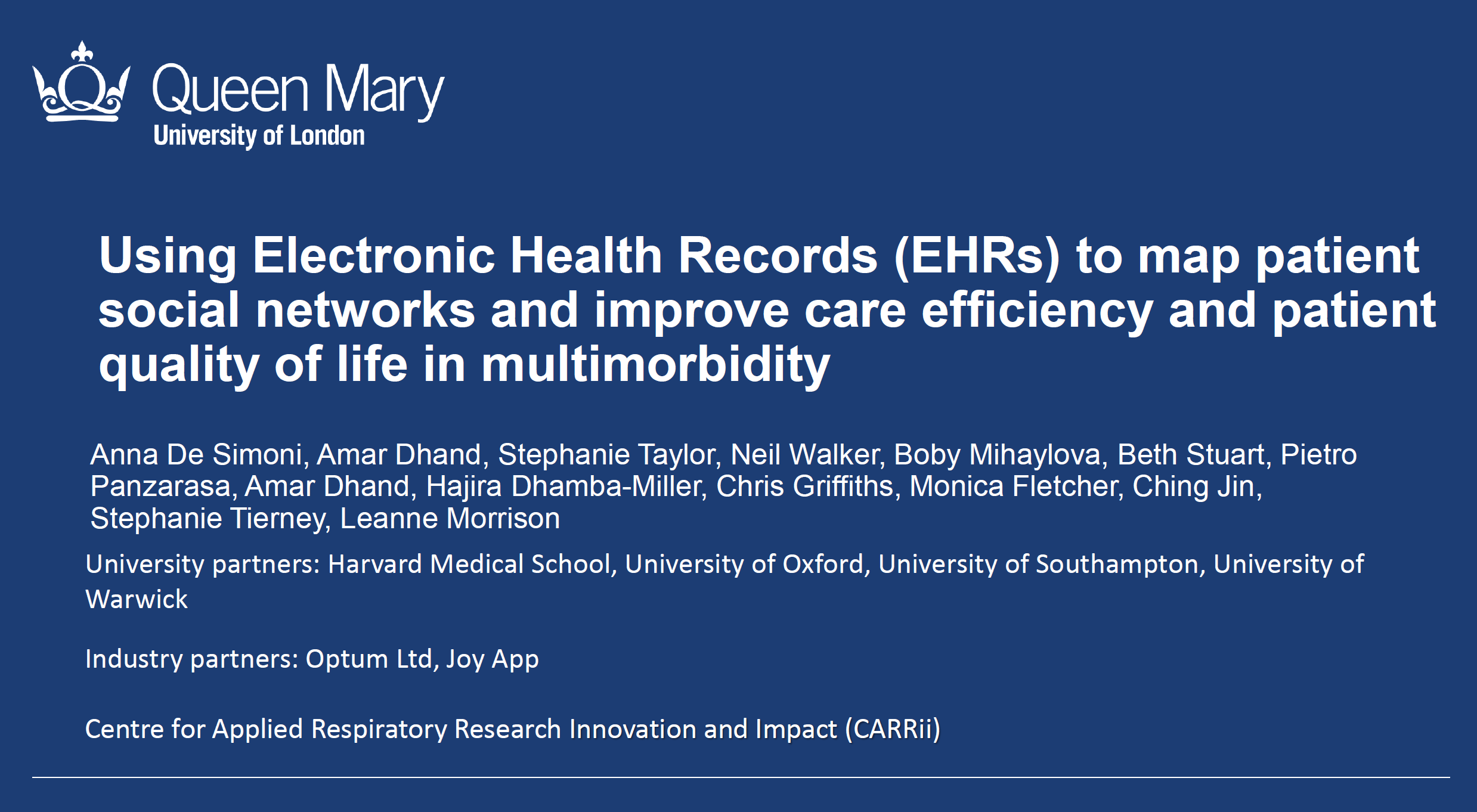
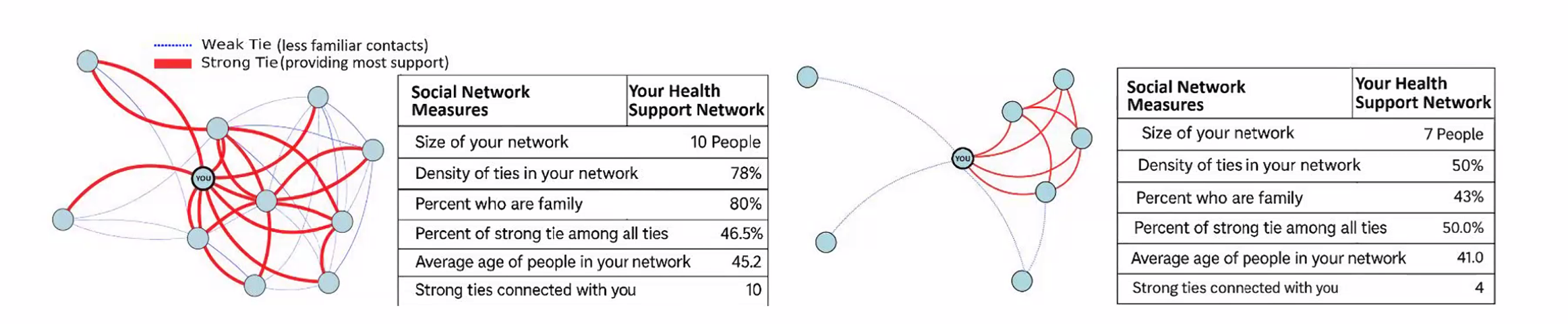
Dr Anna De Simoni, an Academic GP and Associate Professor of Primary Care at Queen Mary University of London, presented an early-stage research proposal focused on how electronic health records could be used to better understand and map the social support networks surrounding people living with multiple long-term health conditions.
Dr De Simoni sought direct feedback from carers to help shape the project before a formal funding application is submitted. She explained that while healthcare professionals can usually identify a patient’s next of kin and household members through existing GP records, they often have very limited understanding of the wider support networks that play a vital role in a person’s wellbeing.
These networks may include family members, neighbours, friends, faith groups, community organisations, carers, and others who provide practical and emotional support. The research aims to explore whether technology and electronic health records can help healthcare professionals better recognise these support systems and use that information to improve care planning, reduce unnecessary hospital admissions, and enhance quality of life for people living with complex health conditions.
The discussion generated considerable interest, particularly regarding:
Information sharing
Integration across services
Support for carers
Data protection concerns
Improving continuity of care
Several participants expressed enthusiasm about the potential benefits while also raising questions regarding privacy and access to NHS information.
Questions and Answers from Dr Anna De Simoni’s Presentation
Q: What problem is this research trying to solve? A: Dr De Simoni explained that healthcare professionals often know very little about the wider support network surrounding a patient. While medical records may identify a next of kin or people living in the same household, they rarely capture the full picture of who is actually providing practical, emotional, or day-to-day support. The project aims to better understand these social networks and use that information to improve care planning and patient outcomes.
Q: Who is the research aimed at? A: The initial focus is on people living with multiple long-term health conditions, including illnesses such as COPD and other complex health needs e.g mental health. The project seeks to understand how stronger recognition of support networks could improve quality of life, reduce hospital admissions, and support people to remain independent for longer.
Q: How would patients contribute information about their support network? A: The proposal includes the use of a Universal Care Plan through the NHS App. Patients would be able to enter information themselves about what matters to them, who supports them, how they prefer to be treated, and what should happen if their health deteriorates. This information could then be viewed and updated by relevant healthcare professionals.
Q: What role could carers play within the proposed system? A: Participants highlighted that carers often provide the majority of practical support but are frequently invisible within healthcare systems. The proposed approach could make carers more visible by helping professionals understand who is involved in supporting a patient and what role they play in maintaining wellbeing and independence.
Q: How will patient confidentiality and data protection be managed? A: Concerns were raised about privacy and the security of NHS data. Dr De Simoni explained that information governance, GDPR compliance, and data protection would be central to the project. Specialists in privacy and information governance would be involved to ensure that any information collected is handled safely, appropriately, and with proper consent.
Key Discussion: Why Are Carers Still Fighting the Same Battles?
A recurring theme throughout the meeting was the sense that many challenges identified today are the same challenges carers raised ten or twenty years ago.
Questions included:
Why are services still fragmented?
Why do carers continue to feel excluded?
Why are communication problems so persistent?
Why is trauma often overlooked?
Why do inequalities remain entrenched?
Participants reflected on whether the issue is primarily one of resources, leadership, service design, or culture.
Many agreed that meaningful change requires carers to remain actively involved in shaping policy and service delivery.
A carers support group recommended during discussion as a source of peer support and shared experience.
Final Reflections
The May 2026 Ethnic Mental Health Carers Forum highlighted both the challenges carers continue to face and the determination across the sector to improve outcomes.
From Mental Health Act reform and carers’ rights to innovative approaches such as Open Dialogue, the meeting demonstrated the importance of bringing together lived experience, research, policy, and practice.
Several speakers reminded attendees that change often begins with carers sharing their stories, participating in research, challenging poor practice, and helping shape future services.
The forum remains an important space where those voices can be heard.
Stories are powerful. They carry memory, experience, and truth in ways that forms and systems often cannot. For unpaid minority carers, our stories are not just reflections, they are essential to understanding the full picture of care.
I’ve recently shared a poem, “Our Stories Matter,” from my upcoming poetry book. It explores the importance of lived experience, intergenerational memory, and the voices that are too often overlooked within health and social care systems.
While assessments, care plans, and clinical notes tell part of the story, they rarely capture the depth of what families and carers experience every day. Our stories provide context. They bring meaning and complete the picture.
This is especially important within the context of PCREF, where recognising lived experience and cultural understanding is key to improving care and addressing inequalities. When carers’ voices are not heard, something vital is missing.
This poem is a reminder that our stories are central.
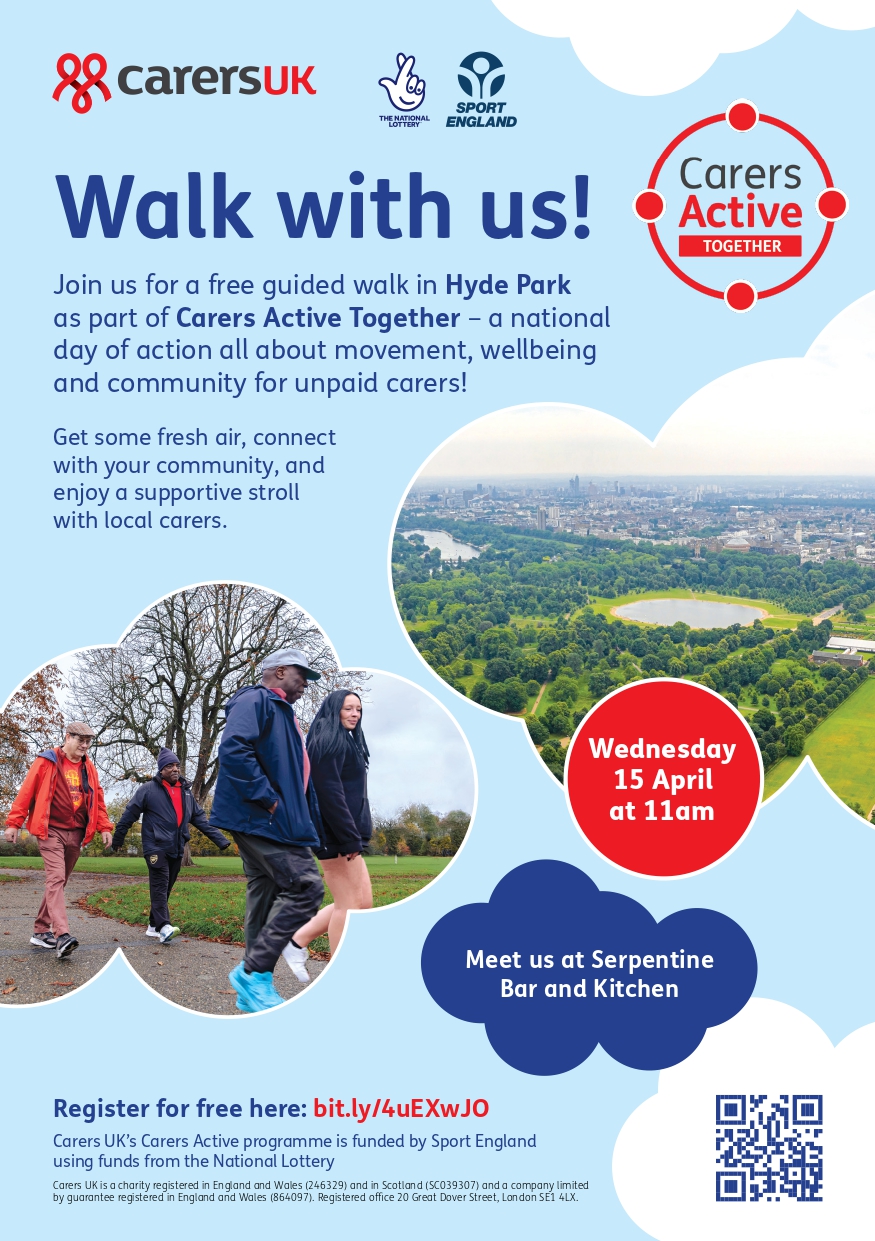
Taking time for yourself as a carer isn’t always easy. The daily responsibilities, emotional demands, and constant care for others can often mean your own wellbeing takes a back seat. That’s why initiatives like Carers Active Together matter more than ever.
This Wednesday 15 April, a national day of action is bringing carers across the UK together to focus on movement, wellbeing, and community and you’re invited to be part of it.
A simple step that makes a difference
As part of the day, Carers UK is hosting a free, friendly wellbeing walk in Hyde Park, which is a chance to pause, breathe, and connect with others who understand the caring journey.
Whether you’re caring for a loved one full-time or supporting someone alongside work and life commitments, this walk is designed to be inclusive, relaxed, and welcoming. There’s no pressure, just an opportunity to enjoy fresh air, gentle movement, and good company.
Event details
Date: Wednesday 15 April
Time: 11:00am
Location: Meet at Serpentine Bar and Kitchen, Hyde Park
Cost: Free
As highlighted on the event flyer (page 1), the walk is all about giving carers a chance to “get some fresh air, connect with your community, and enjoy a supportive stroll with local carers.”
Why join the walk?
Sometimes the smallest actions like a walk in the park can have the biggest impact. Taking part in this event can help you:
Boost your physical and mental wellbeing
Meet other carers and share experiences
Feel part of a supportive community
Take a well-deserved break in a beautiful setting
You’re not alone
Carers play an essential role in our communities, often quietly and without recognition. Carers Active Together is a reminder that your wellbeing matters too and that support is out there.
If you know someone who is a carer, consider sharing this with them. A simple invitation could make a meaningful difference.
Register your place
Spaces are free, but registration is encouraged. You can sign up here: 👉 https://bit.ly/4uEXwJO
If you’ve supported someone through a stay in mental health services, your experience could help improve care for others.
Researchers at The University of Manchester are inviting people with lived experience—including carers to take part in an online workshop focused on improving how mental health services support people during hospital discharge, particularly for individuals from Black heritage communities.
Reason for research
Evidence shows that people from Black communities often face poorer outcomes in mental health care, including barriers to access and challenges during discharge from hospital.
To address this, researchers are working to make future services and research more inclusive, culturally responsive, and grounded in real experiences. Hearing directly from carers is a key part of that work .
Who is running this?
The workshop is being led by Dr Natasha Tyler, a Research Fellow at The University of Manchester, as part of work linked to improving future research and care approaches.
The session will also be supported by facilitators with lived experience, including carers, to ensure discussions are grounded and meaningful .
Who can take part?
You may be interested if you:
Have cared for someone who has been an inpatient in adult mental health services
Have experience of discharge from mental health care
Want to share your perspective to improve future support
What’s involved?
Format: Online (MS Teams)
Duration: 2 hours
Dates: Sessions planned between 23rd April and 8th May 2026
Payment: £60 as a thank-you for your time
Participants will receive questions in advance to help prepare for the discussion.
Why get involved?
Taking part is a chance to:
Help shape future mental health research and services
Ensure carers’ voices are included in decision-making
Contribute to reducing inequalities in care
Share your experience in a supportive environment
How to express interest
If you’d like to take part, you can follow the link in the invitation to share your availability or contact the research team directly.
The March session of the National Ethnic Mental Health Carer Forum brought together carers, researchers, NHS professionals and community organisations for a conversation that felt both familiar and urgent.
Chaired by Matthew McKenzie, the forum stayed rooted in what it does best: creating a national grassroots space where lived experience meets systems, and where difficult truths are not avoided.
The agenda reflected that balance clearly:
10:35 – Professor Saffron Karlsen (University of Bristol)
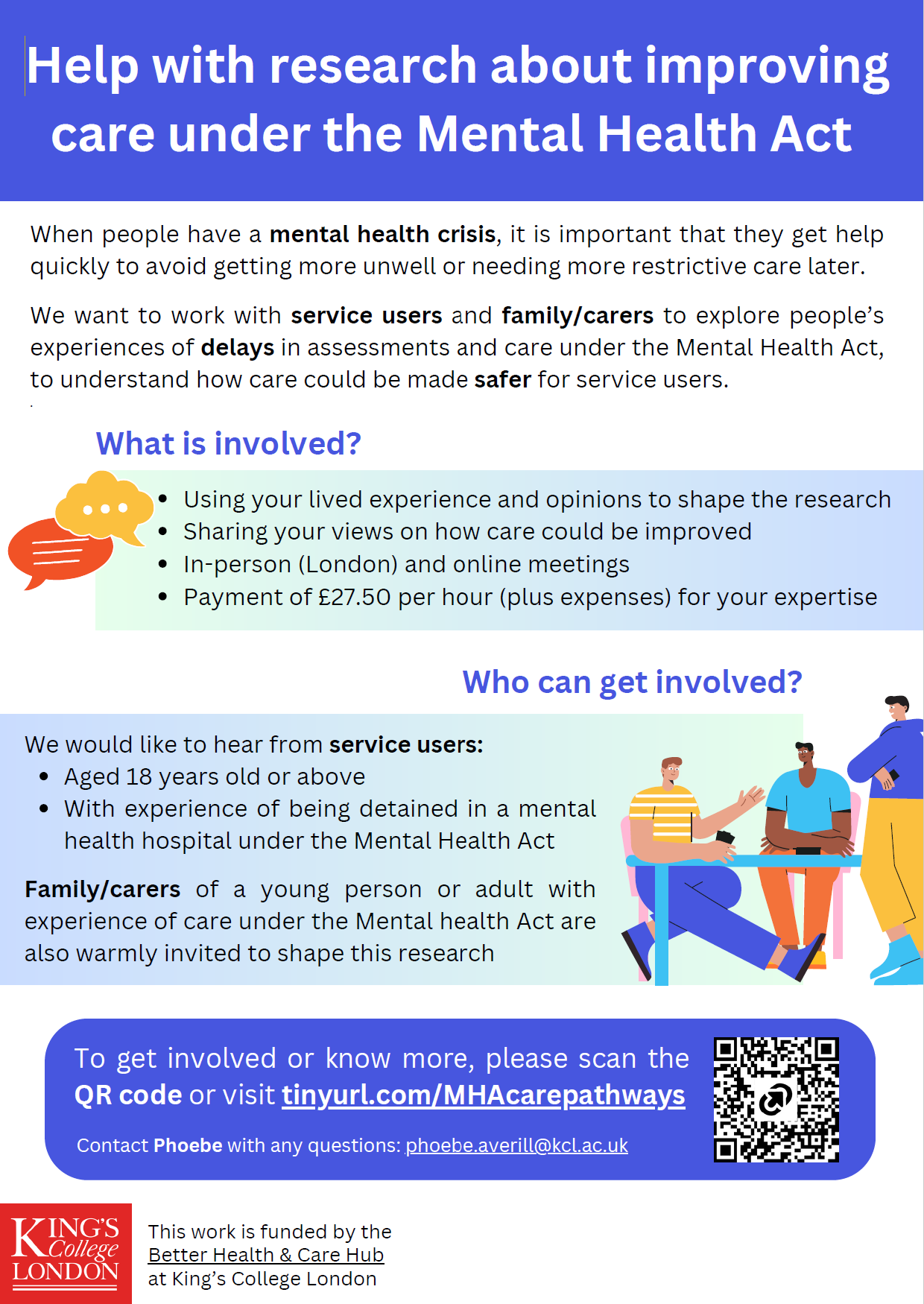
11:20 – King’s College London (Phoebe Averill & team)
11:50 – Parliamentary and Health Service Ombudsman
12:00 – Thomas Ince – Universal Care Plan
Racism and Mental Health: Naming What We Already Know
Professor Saffron Karlsen opened the forum with a presentation that didn’t just describe inequality it explained how it is produced, sustained, and experienced in everyday life.
Drawing on over 30 years of research, Professor Saffron Karlsen is a sociologist at the University of Bristol whose research examines how racism and social inequality affect health, particularly within ethnic minority communities.
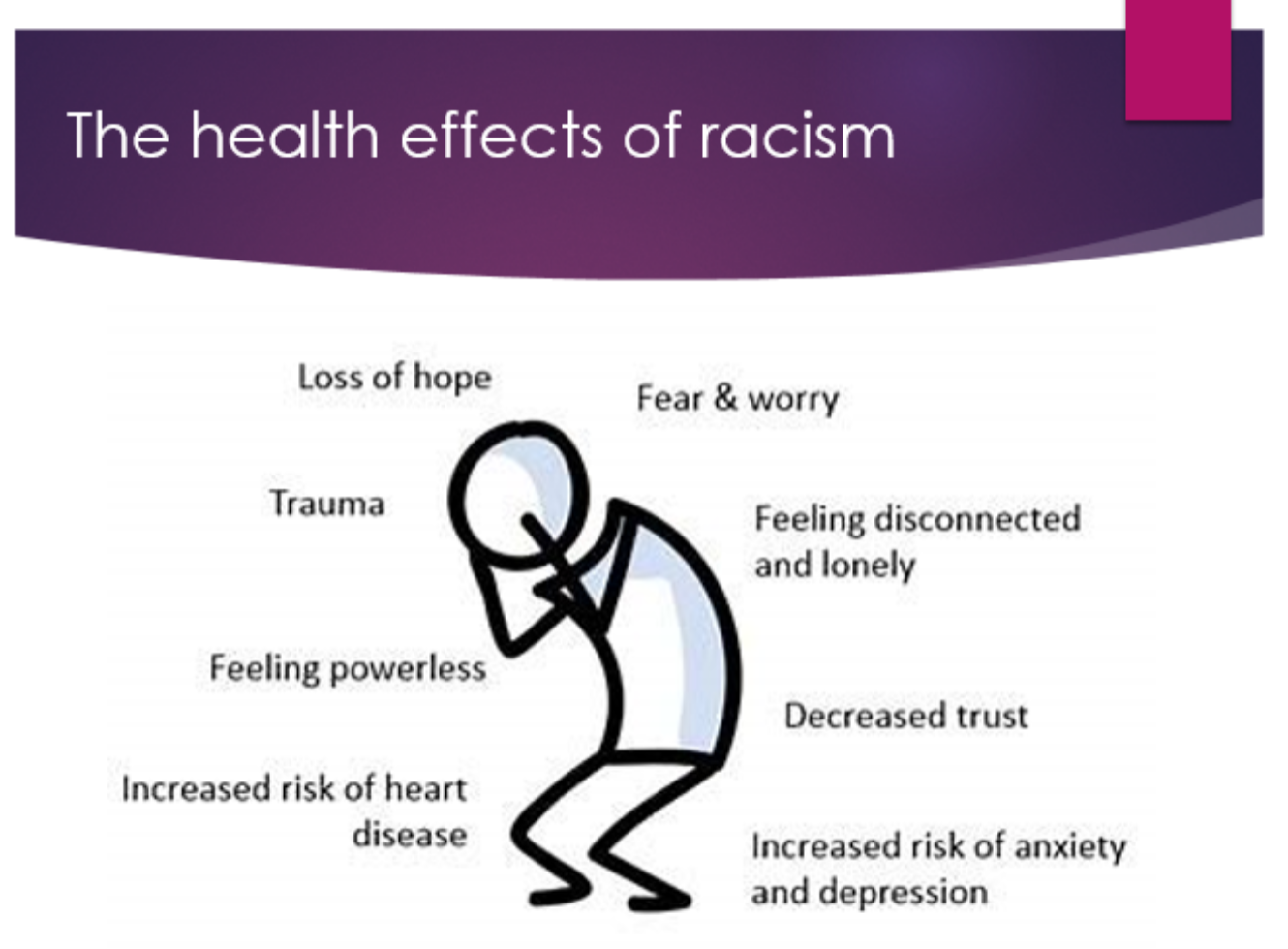
she spoke about racism not as a single act or incident, but as something woven into the fabric of society. It operates quietly and persistently, through institutions, through policies, through media narratives, and through the ways people interact with one another. The effect is cumulative. It builds over time, shaping not just opportunities, but health itself.
What made the presentation particularly powerful was how it connected these structural ideas to real human consequences. Racism was described as something that works on multiple levels at once: from overt abuse or violence, to the less visible but equally damaging experience of simply knowing that you live in a society where you may be treated unfairly. That awareness alone carrying the expectation of discrimination creates a constant undercurrent of stress and anxiety.
She explained how this stress doesn’t just sit in the mind. It translates into physical outcomes. People exposed to racism are more likely to experience anxiety, depression, and long-term distress, but also physical health inequalities such as cardiovascular disease. These outcomes are often misunderstood or misrepresented. Too frequently, they are explained away as lifestyle issues diet, exercise, personal choice without recognising the deeper social conditions that shape those behaviours in the first place.
A particularly striking part of the presentation focused on how people respond to these pressures. When individuals feel powerless to change their circumstances, they may turn to coping mechanisms smoking, drinking, or withdrawing from services. These responses are then judged in isolation, rather than understood as part of a wider context. In this way, the system not only fails to address the root causes but can end up reinforcing blame on the individual.
Perhaps the most important insight came when the discussion turned to healthcare itself. Even when services are available, they are not always experienced as safe or trustworthy. Saffron shared research showing that people may avoid seeking help not necessarily because of direct negative experiences, but because of what they have seen and heard about racism more broadly. The perception of risk becomes enough to keep people away.
One example described a woman who, during the COVID period, chose to avoid hospital care entirely. Her decision was shaped by what she had seen in public discourse and online reactions to racial justice movements. It left her feeling that she could not trust how she would be treated. This kind of anticipatory fear of not being treated with dignity or fairness adds another layer of stress to an already difficult situation.
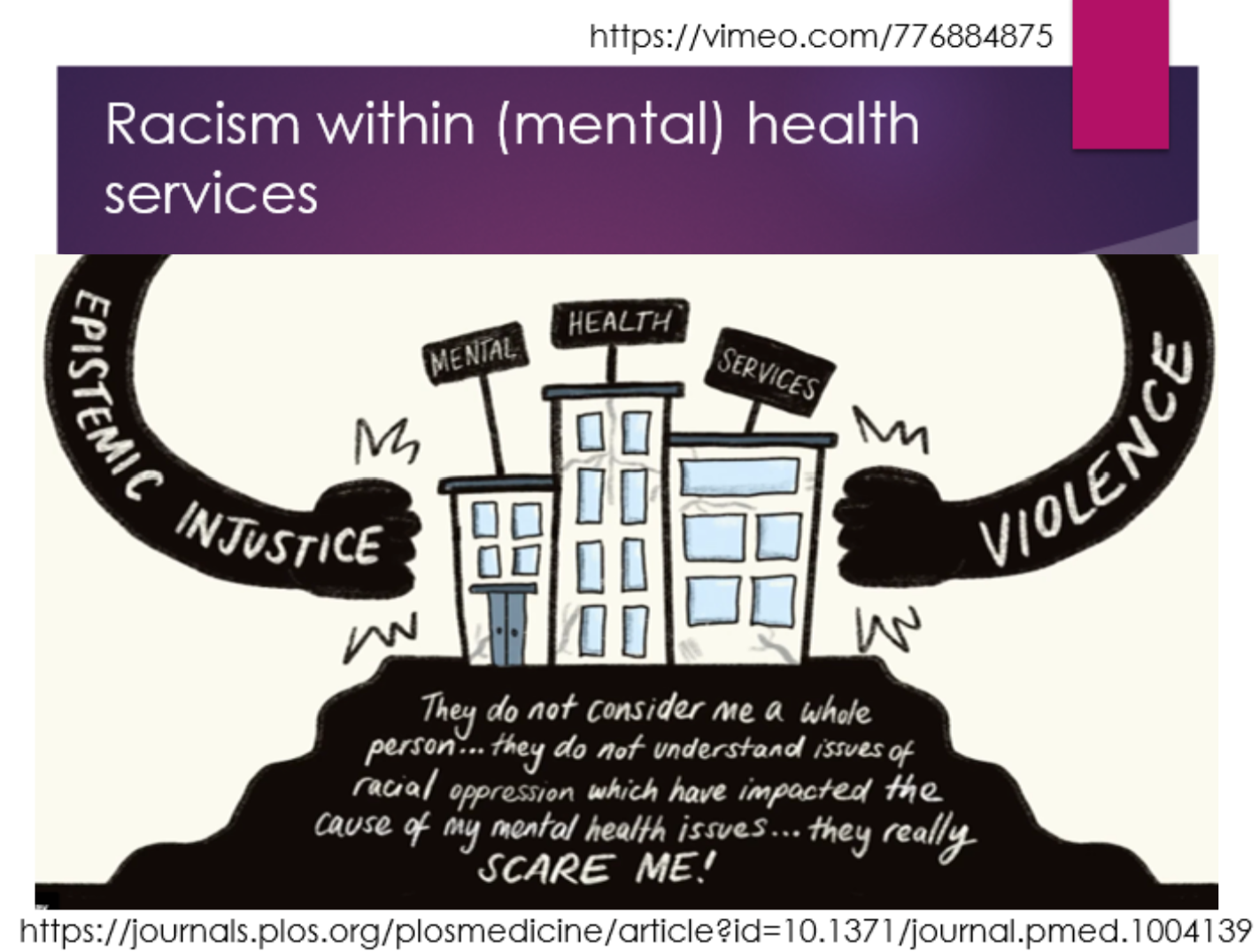
The presentation also challenged the way healthcare systems understand illness. Many services still operate within a narrow biomedical framework, focusing on symptoms and diagnoses while overlooking the social realities that contribute to them. For people from marginalised communities, this can lead to experiences where their perspectives are dismissed or misunderstood. They may try to explain how racism, housing, poverty, or life circumstances have shaped their health, only to find those explanations sidelined.
This is where the concept of “epistemic injustice” becomes important, although Saffron didn’t dwell on jargon, the meaning was clear. It is about whose knowledge counts. When patients and carers are not listened to, or when their experiences are not taken seriously, care becomes something done to them, rather than with them. For many, this is not just frustrating it is re-traumatising.
Professor Saffron also showed a video – Nilaari delivering hope A community mental health provider for people of colour, which you can watch below.
1. “You’ve explained the problems, but what are the solutions?”
Answer: Saffron acknowledged that addressing racism at its root is complex and long-term, but highlighted practical steps:
Services must be co-produced with people who have lived experience
Communities need to be actively involved in decision-making spaces
Grassroots and voluntary organisations should be:
properly funded
meaningfully included in policy and service design
She emphasised that change should be done with communities, not to them, and that learning from effective third-sector approaches is key.
2. “Do you look at drug and alcohol use as part of racism-related issues?”
Answer: Yes, but not in the way systems often frame it.
Saffron explained that:
Substance use is often a response to difficult life experiences, including racism and poverty
Systems tend to treat it as an individual problem, rather than understanding the wider causes
These behaviours can reflect a lack of:
support
options
alternative coping mechanisms
She stressed the importance of shifting away from blame and towards understanding context.
3. “Is trauma-informed care part of the solution?”
Answer: Trauma-informed care is important, but not sufficient on its own.
Saffron highlighted that:
Current models of trauma-informed care can be too narrow
They often fail to fully account for:
systemic racism
structural inequalities
Services also need to recognise that they themselves can contribute to trauma
She suggested that trauma-informed approaches must be:
culturally sensitive
shaped by different communities’ understandings of trauma
4. “What do you mean by ‘racism is a virus’?”
Answer: Saffron used this idea as a metaphor.
She explained that:
Racism spreads and reproduces across society, much like a virus
It moves through:
institutions
policies
social interactions
It grows and reinforces itself over time
At the same time, she used this idea to challenge overly individualised thinking—highlighting that racism is structural, not just personal.
King’s College London: When Crisis Care Comes Too Late presented by Phoebe Averill.
After the earlier discussion on racism and inequality, the presentation from King’s College London brought the conversation into something more immediate what actually happens when someone reaches crisis point and needs urgent mental health support.
Phoebe Averill and her team focused on pathways under the Mental Health Act, but what emerged wasn’t a technical discussion. It was a picture of a system that often struggles at the exact moment it is supposed to respond.
They began by looking at the period just before crisis. In many cases, there are early warning signs. Carers and families notice changes subtle at first, then more obvious. They often try to raise concerns early, hoping intervention might prevent things from escalating. But too often, those early signals are not acted on.
By the time the system responds, the situation has already deteriorated.
The research highlighted that delays are not caused by a single issue, but by a combination of pressures within the system. These include:
shortages in hospital beds
fragmented coordination between services
breakdowns in communication across teams
While these explanations are familiar, the impact of them feels anything but routine. During the waiting period, people do not remain stable. They become more unwell, more distressed, and more at risk. What could have been addressed earlier becomes a crisis that is harder to manage.
One of the most striking parts of the presentation was the focus on what happens in that gap between “something is wrong” and “help arrives.” That space is where much of the pressure shifts onto carers.
Carers described being left to manage situations that are escalating in real time. They are expected to keep someone safe, to monitor behaviour, and to absorb the emotional weight of what is happening all while waiting for services to respond. In some cases, this can last days or even weeks.
This isn’t a formal role, and it’s not one carers are prepared for. It’s something they step into because there is no alternative.
The consequences of these delays don’t end when care finally arrives. By that point, the impact can already be significant. The research pointed to outcomes such as:
worsening mental health leading to longer hospital stays
increased risk of avoidable harm during the waiting period
disruption to housing, employment, and relationships
In other words, the delay itself becomes part of the problem, shaping what happens next.
Another important thread running through the presentation was the role of carers’ knowledge. Carers are often the first to recognise when something is changing. They understand patterns, triggers, and early warning signs in a way that professionals may not see immediately. Yet this insight is not always taken seriously or acted upon.
The result is a system that tends to respond late rather than early intervening at crisis point, rather than preventing it.
The KCL team were clear that their research is trying to address this gap. They spoke about building a lived experience advisory group and involving carers and service users directly in shaping the work. There was a clear intention to move beyond observation and towards something more collaborative, where lived experience informs how the research develops.
At the same time, there was a quiet recognition in the room that much of this is not new. Similar issues have been raised repeatedly over the years. The difference here was not the discovery of the problem, but the clarity of where it sits in that critical moment where response is needed, and the system is slow to act.
Placed alongside the earlier discussion on racism, this presentation added another layer of understanding. It showed how broader inequalities are not abstract—they play out in very real ways at the point of crisis. Where trust is already fragile, delays make it harder to engage. Where carers are already stretched, the system’s response can increase that pressure rather than relieve it.
By the end of the session, one idea stood out clearly: this is not just about whether care is available. It is about whether it comes at the right time, whether the right people are listened to, and whether the system is able to act before situations reach breaking point.
Parliamentary and Health Service Ombudsman: When Accountability Feels Out of Reach
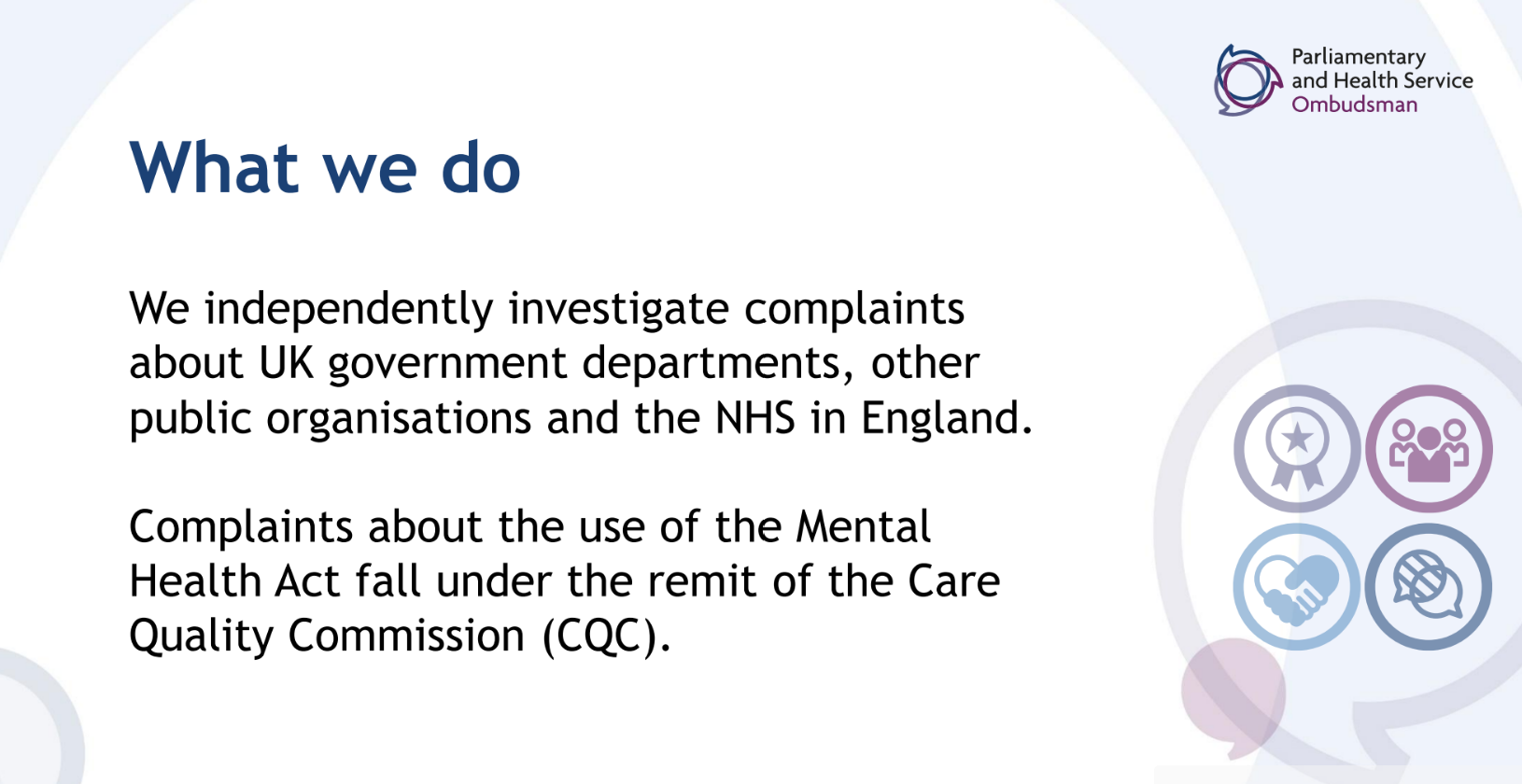
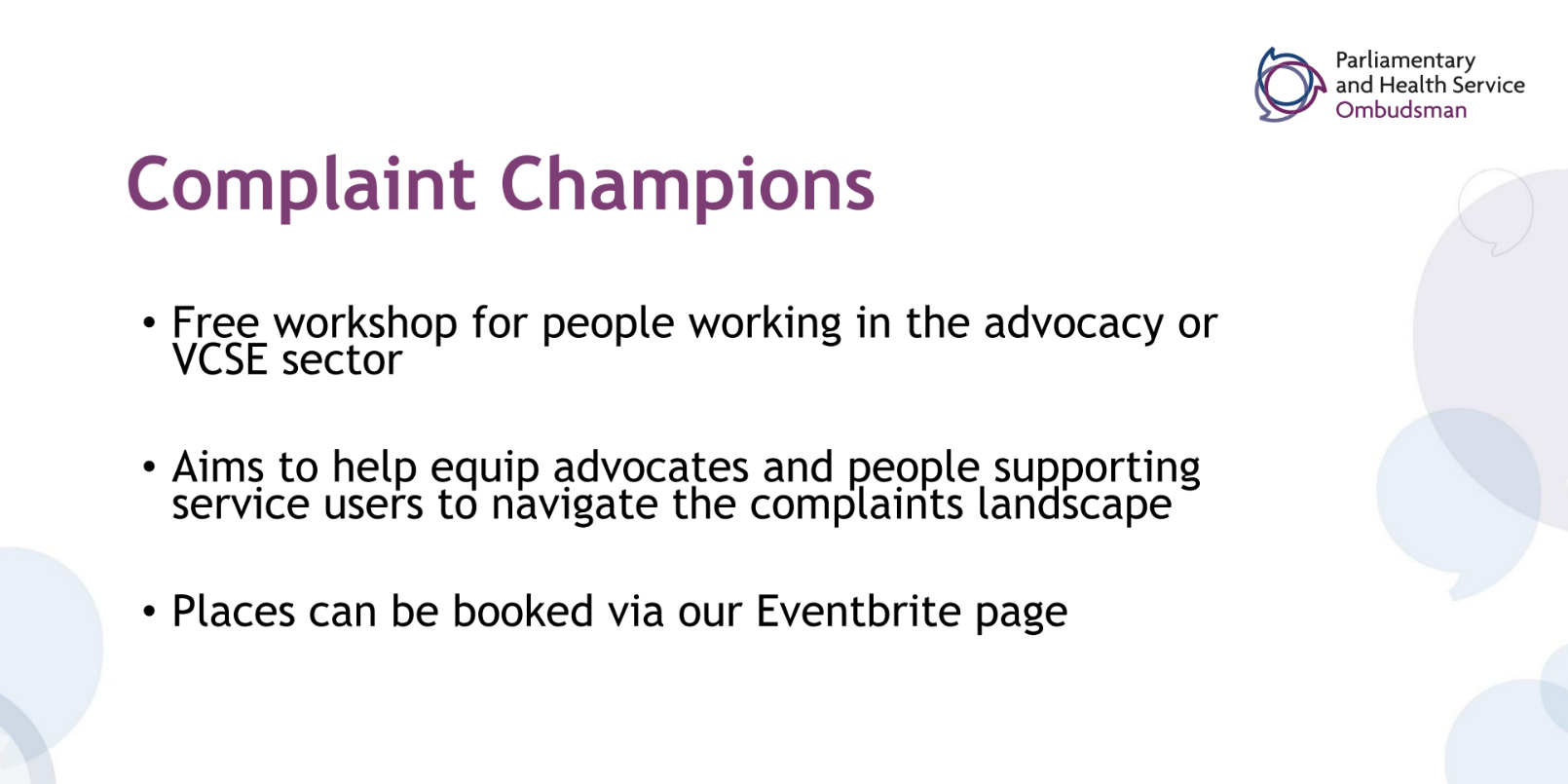
The next presentation of the forum came from the Parliamentary and Health Service Ombudsman team, who joined to explain how carers and families can raise concerns when NHS care goes wrong.
On the surface, this was a session about process how complaints move through the system and when the Ombudsman becomes involved. But as the discussion unfolded, it became clear that this was really about something deeper: whether accountability is genuinely accessible to carers in practice.
The team described their role as an independent body that steps in once local complaints processes have been completed. In theory, the pathway is clear. Before approaching the Ombudsman, people are expected to go through several stages:
raise concerns with the service directly
receive a formal response, often referred to as the “final response letter”
only then escalate the complaint for independent review
What sounds straightforward on paper quickly became more complex when viewed through lived experience.
Carers shared how difficult it can be to even reach that final stage. The process can take months, sometimes longer, and often requires sustained effort just to keep it moving. Following up, chasing responses, and navigating unclear communication becomes part of the experience.
One comment in the chat captured this reality clearly:
“It can be hard to get to the point of getting a final outcome letter… the amount of advocacy and chasing that needs to happen…”
Another highlighted how far removed the process can feel from everyday awareness:
“It takes far more than 12 months to even come into awareness…”
In response, the Ombudsman team acknowledged that delays particularly at the final response stage are common. They explained that in some cases, where delays are extreme, they may contact organisations directly, and they encouraged people to use their helpline for guidance when processes stall.
But even with that support, there was a sense in the room that the system places a significant burden on those trying to access it. By the time someone considers making a complaint, they are often already dealing with the aftermath of a difficult experience. Adding a lengthy and sometimes frustrating process on top of that can feel overwhelming.
The conversation also turned to accessibility. Questions were raised about language, digital access, and the assumptions built into how information is shared. Not everyone engages with systems in the same way, and not everyone finds it easy to navigate written guidance or formal processes.
Participants pointed out that some communities may never reach the complaints stage at all—not because issues don’t exist, but because the pathway itself is difficult to access.
This was reflected in a simple but powerful comment:
“We are assuming that everyone reads…”
There were also wider reflections about how systems could better meet people where they are, including:
making information available in more accessible formats and languages
reaching people through community networks, not just formal channels
Even within this practical discussion, the themes from earlier in the forum remained present. Trust, accessibility, and lived experience all shaped how people understood the complaints process.
Placed alongside the earlier presentations, this session added an important dimension. If the system fails as described in the discussions on racism and crisis care—then the ability to challenge that failure becomes critical. But if the route to accountability is difficult to navigate, many experiences may never be formally recognised.
What emerged was not a rejection of the Ombudsman’s role, but a recognition of the gap between what exists and what is accessible.
Because accountability is not just about having a process in place. It is about whether people can realistically use it especially at a time when they may already be stretched, exhausted, and navigating multiple pressures.
Universal Care Plan and Carer Contingency Planning Update
The final contribution to the forum came from Thomas Ince, introducing the Universal Care Plan often referred to as UCP. After the earlier discussions on racism, crisis care, and accountability, this felt like a shift towards something more practical: what the system is trying to build in response to the gaps carers have been describing.
At its core, the Universal Care Plan is a digital tool designed to allow people to record and share information about their care. It sits within the NHS App and is intended to bring together health, social care, and voluntary services around a shared understanding of a person’s needs and preferences.
Thomas described how the system has evolved over time. It began with a focus on end-of-life care, making sure that a person’s wishes could be accessed quickly by professionals such as ambulance crews. It then expanded into areas like sickle cell crisis planning and is now being extended further to cover a wider range of conditions and situations.
The direction of travel is clear: moving from a professionally controlled system towards something more person-owned, where individuals can enter their own information and shape how their care is understood.
A Tool That Centres “What Matters to You”
One of the key features Thomas highlighted was a section within the plan that allows people to describe themselves in their own words. Rather than being defined only by diagnosis or clinical notes, individuals can record what matters to them information that can then be seen by anyone involved in their care.
In principle, this is a shift towards more personalised and human-centred care. It offers a way to capture context, preferences, and lived experience in a system that often reduces people to categories.
But for this forum, the most significant element was something more specific.
The Carer Contingency Plan
Thomas introduced a feature that immediately resonated with the group: the carer contingency plan.
This allows carers to record what should happen if they are suddenly unable to provide care. For example:
if they become unwell or need urgent medical attention
if there is a sudden change in their circumstances
In those situations, the system can alert professionals to the fact that someone is dependent on that carer and provide information about what support is needed.
For many carers, this addressed a very real and often unspoken concern: what happens to the person they care for if something happens to them?
The idea that this information could be visible across services—rather than held informally or not at all felt like a meaningful step.
From Concept to Reality: The Challenge of Engagement
While the tool itself was broadly welcomed, the discussion quickly moved beyond what it does to how it will actually be used.
Thomas was open about the current stage of development. Although the system is available, it remains largely driven by professionals, with limited public awareness. One of the key aims now is to shift towards wider engagement encouraging people to take ownership of their care plans and input their own information.
This raised an important question in the room: how do you introduce a digital solution into communities where trust in services is already fragile?
Participants pointed out that many people particularly from ethnic minority backgrounds—do not engage easily with primary care systems. If the entry point to the Universal Care Plan is through those same systems, there is a risk that the people who could benefit most may not use it at all.
Suggestions began to emerge organically from the group, reflecting a more community-led approach:
working through carer centres, peer groups, and local networks
engaging cultural organisations and community leaders
using spaces where trust already exists, rather than relying solely on formal channels
There was a clear sense that communication could not be an afterthought. It needed to be built into the design of how the tool is introduced.
Language and Accessibility: A Tension Exposed
One of the most striking moments in this section came when language accessibility was discussed.
At present, the NHS App and therefore the Universal Care Plan is only available in English (and Welsh). Thomas acknowledged that this is a limitation and that while there are conversations about future solutions, no immediate changes are in place.
This prompted a strong reaction from participants. There was frustration that a tool described as “universal” could exclude large sections of the population from the outset. For some, this was not just a technical issue but a reflection of a wider pattern—systems being designed without fully considering the diversity of the communities they serve.
It brought the discussion back to a familiar theme from earlier in the forum: inclusion cannot be added later, it has to be built in from the beginning.
A Step Forward With Conditions
Despite these concerns, there was recognition that the Universal Care Plan has real potential.
The idea of having:
shared, accessible information across services
visibility of carers and their responsibilities
a contingency plan that reduces risk in emergencies
addresses issues that carers have been raising for years.
But the conversation made it clear that the success of the tool will depend on more than its functionality. It will depend on whether people:
know about it
trust it
can access it
and feel that it reflects their needs and realities
Without that, there is a risk that it becomes another well-intentioned solution that doesn’t reach the people it was designed for.
Placing It in the Wider Conversation
Coming at the end of the forum, this presentation connected in an important way to everything that had been discussed earlier.
Where Saffron’s presentation explored the structural roots of inequality, and the KCL research showed how system delays affect people in crisis, the Universal Care Plan represented an attempt however early to respond to those issues in practice.
But it also revealed the ongoing challenge.
Because even when new tools are introduced, they are still shaped by the same system dynamics: questions of trust, access, communication, and inclusion do not disappear they simply take new forms.
Chaired by Matthew McKenzie, Lived-Experience Carer
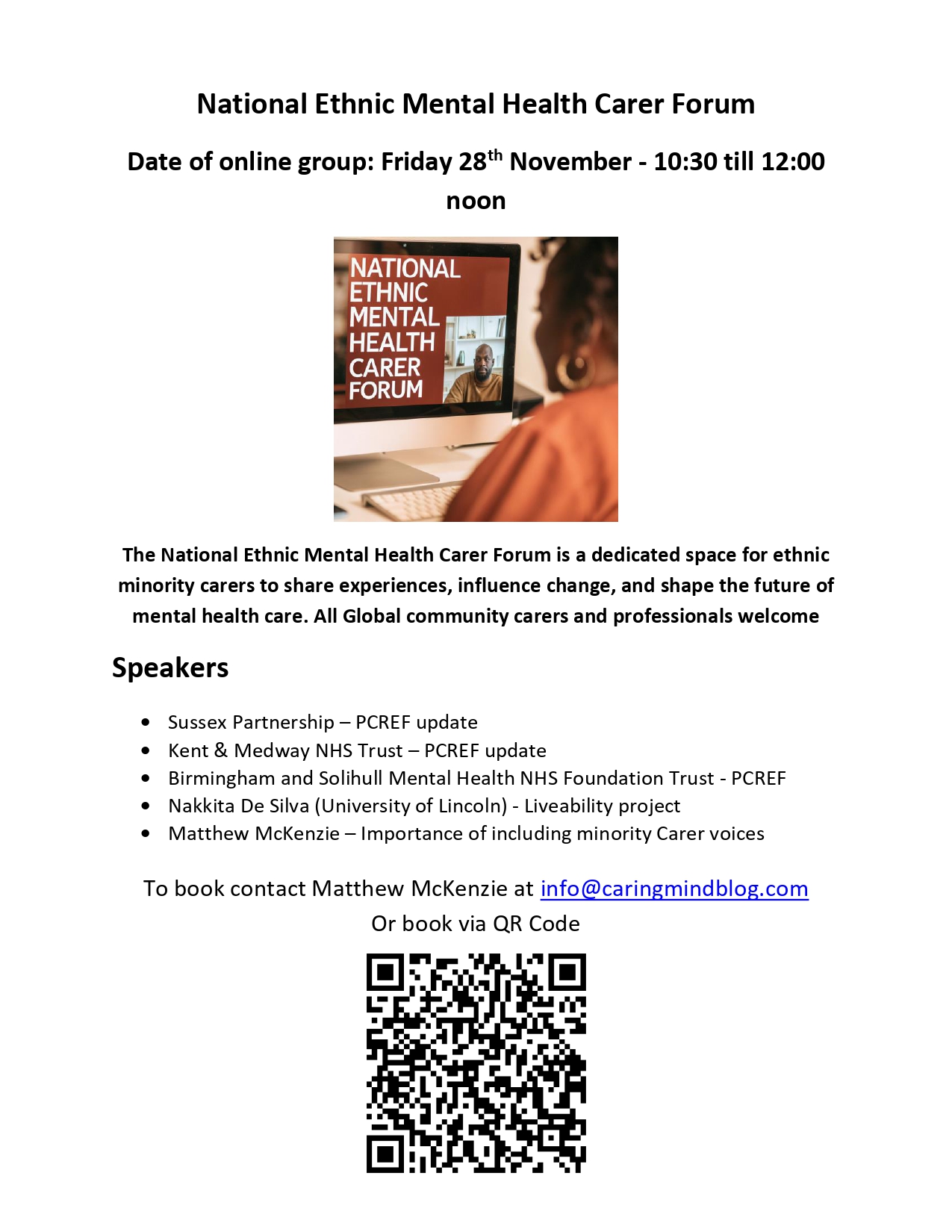
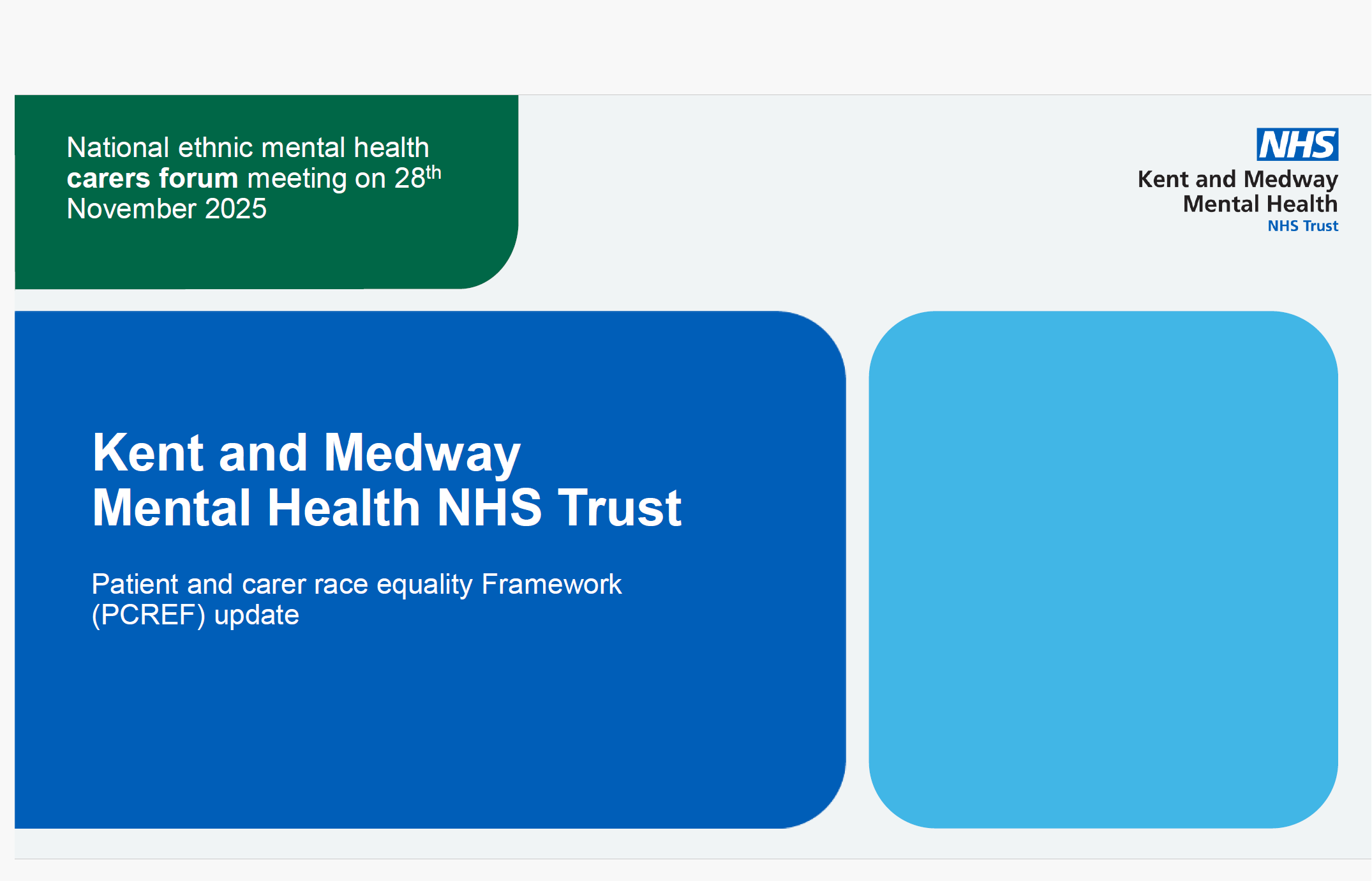
The latest meeting of the National Ethnic Mental Health Carer Forum brought together unpaid minority carers, community partners and four NHS mental Trusts (Avon & Whiltshire were kind enough to be included to update) to explore progress toward the Patient & Carer Race Equality Framework (PCREF), share challenges, and elevate lived-experience voices. As always, I ensured the space remained honest, fast-paced and rooted in what truly matters to ethnic minority carers: being heard, understood and included.
My latest blog for the November forum captures key highlights from each Trust, along with questions raised by attendees, reflecting the critical concerns and lived realities that continue to shape PCREF work across the country.
1. Avon & Wiltshire Mental Health Partnership Trust (AWP)
Focus: Triangle of Care, PCREF oversight, carer champion roles.
Avon & Wiltshire outlined how their PCREF programme is being driven through a clear governance structure, including a central Oversight Group and locality-based meetings. These layers ensure that learning from communities and staff filters upward and influences whole-trust priorities. Their collaboration with Nilaari (I think that is what their called), a long-standing community organisation supporting racially marginalised groups, has been key in grounding their PCREF work in authentic community voice.
A central pillar of their presentation was the strengthening of the Triangle of Care and carer-related PCREF oversight. They recognised that carer involvement cannot rely on goodwill or isolated champions; it requires structurally defined roles, written responsibilities, and consistent organisational expectations. The Trust is working on ensuring that every team and ward embeds a carer champion, whose purpose is not to “do everything for carers”, but to support cultural change within the workforce so that carers are recognised as equal partners.
They emphasised the importance of building staff capacity in cultural humility and safe conversations about race. AWP acknowledged that staff often feel unprepared to discuss ethnicity, discrimination or identity with carers. To address this, the Trust has created psychologically safe internal spaces, particularly for racially marginalised staff—to process experiences and explore how structural and interpersonal inequalities impact both staff wellbeing and patient care. This cultural environment is foundational to PCREF implementation because it shapes how confidently staff engage with diverse carers.
Key Points:
Carer champions must support, not replace, teams in working with carers.
Emphasis on psychological safety for racially marginalised staff and carers.
Encouraging honest conversations around race, trauma, and culture across staff teams.
Questions raised by attendees:
How do you embed cultural awareness within staff teams, not just for carers? – Concern that staff dynamics and cultural differences must be addressed to create consistent culturally responsive care.
How do staff and leaders hold ‘difficult conversations’ about race and safety? – Attendees wanted clarity on how psychological safety is practiced and how managers are supported.
🌟 2. Birmingham & Solihull Mental Health NHS FT
(Children & Young People’s Division – “Co-STARS” programme)
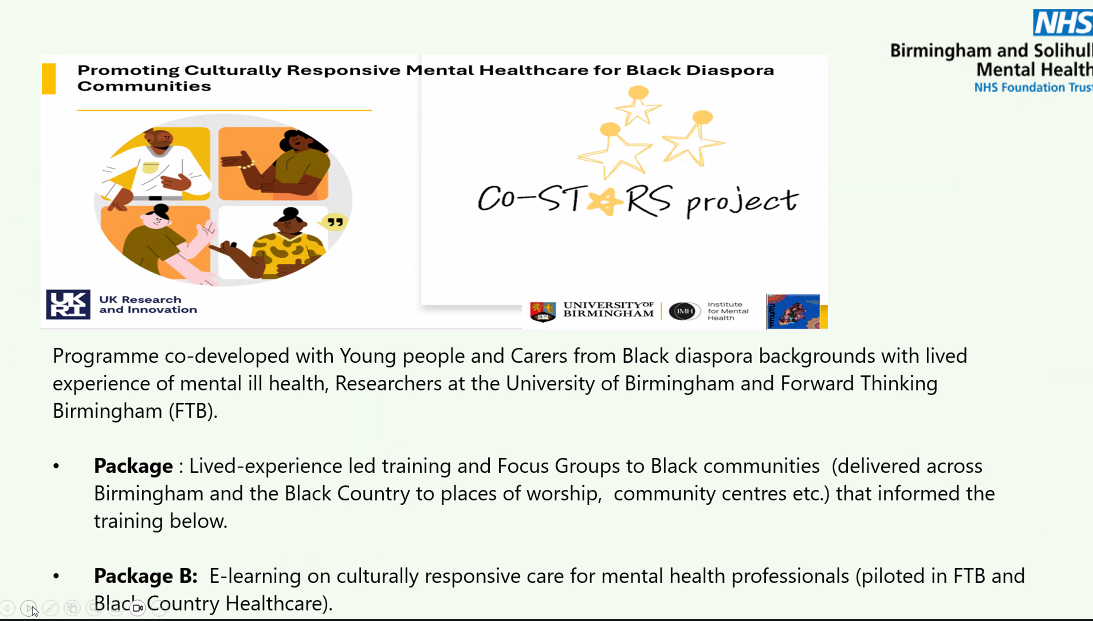
Birmingham & Solihull (CYP) presented one of the most detailed and emotionally grounded PCREF programmes, shaped heavily by lived-experience research with Black diaspora families. Their PCREF priorities, knowing our communities, transforming with communities, and delivering care that works reflect a commitment to embedding cultural responsiveness at every step. Their partnership with the University of Birmingham and Forward Thinking Birmingham has produced the Co-STARS project, a blend of lived-experience-led community work and staff training modules.
A major part of their PCREF advancement comes from working intensively with families to capture how racialised parents feel when using services. The Trust shared powerful testimonies from Black carers who described needing to “emotionally self-regulate” in meetings to avoid being labelled angry, unstable or cold. Parents also highlighted the emotional labour of protecting their children from stereotypes such as the “angry Black boy”, as well as fears of being adultified or dismissed. These insights have directly reshaped responses from clinical teams and informed the development of carers’ passports and safe spaces.
Birmingham & Solihull also emphasised building structures to ensure that their care pathways become culturally competent and adaptive. They are embedding PCREF champions across all clinical pathways, from eating disorders to psychosis and autism, ensuring diversity and inclusion principles shape every aspect of assessment, treatment and review. The Trust is also developing e-learning on culturally responsive practice, and expanding identity-specific support spaces (e.g., Black Carers Groups and new plans for Asian carers’ spaces). This multi-layered approach reflects a commitment to PCREF that is both structural and deeply relational.
Key Points:
Embedding culturally competent conversations within CYP teams.
Developing a Black Carers Group and safe spaces for racialised parent groups.
New e-learning on culturally responsive practice (from Co-STARS package).
Use of carer passports to ensure carers feel like equal partners.
Strong focus on how ethnic minority parents feel judged or misread by services (e.g., “angry Black woman,” “cold mother”) – themes drawn directly from carer focus groups.
Recognising adultification, stereotyping, and the emotional labour families perform.
Questions raised by attendees:
What about older adult Black communities? – Carers questioned how older Black adults, shaped by decades of racism, would be included in PCREF work.
Are you working with the police on cultural awareness? – Concerns around disproportionate use of Section 136 and stereotypes (e.g., assuming someone is “aggressive” because they speak loudly or gesture).
How will parent–carer voices shape service pathways and outcomes across all diagnoses (e.g., autism, psychosis)?
3. Sussex Partnership NHS Foundation Trust
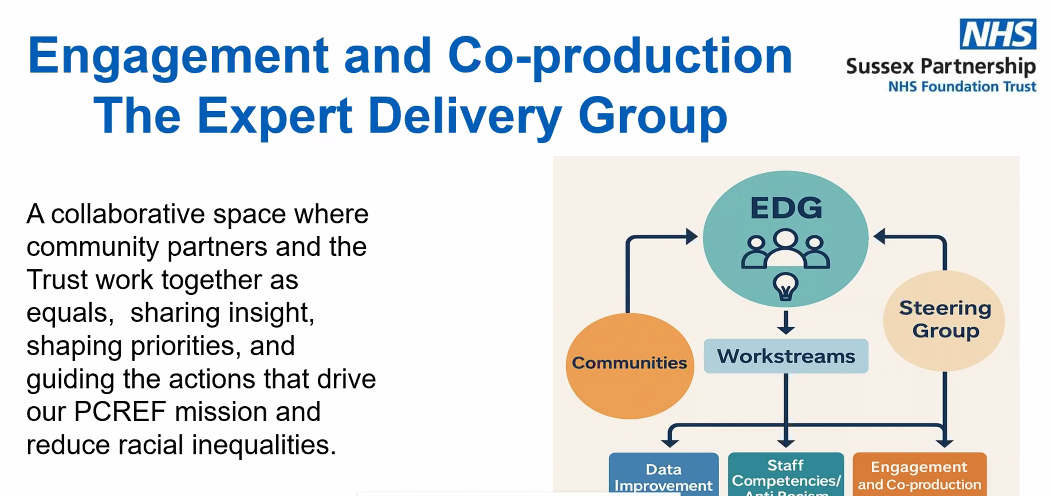
Sussex Partnership presented PCREF as a three-pillared programme: data, co-production & engagement, and workforce development. Their first priority is improving ethnicity and protected characteristics data, which they acknowledged has historically been inconsistent. Sussex is launching a behavioural-change campaign that involves interviewing service users from minority backgrounds about why they may decline to share ethnicity, alongside staff interviews to understand documentation issues. Their goal is a transparent baseline from which meaningful PCREF action can be driven.
The Trust also described significant investment in a new data infrastructure via Power BI dashboards. These tools will pull together real-time information on areas such as restraint, Section 132 rights, and involuntary detention by ethnicity. The Trust stressed that PCREF cannot function without high-quality data because inequalities must be clearly visible and accessible to teams at every level—from ward managers to executive boards. Their future ambition is to enable quicker identification of disparities and faster interventions that prevent harm.
Sussex’s strongest focus was on building genuine co-production through their Expert Delivery Group (EDG). Unlike past approaches where community partners were only consulted, the EDG is designed as a collaborative decision-making space. Sussex acknowledged up front that phase 1 of PCREF planning did not fully embody equal partnership, and committed to ensuring that phase 2 will be co-produced from the ground up. The EDG will define what co-production means, co-design PCREF implementation plans, and shape updates that reflect community priorities, trust recovery, and anti-racist aspirations.
Key Points:
A behavioural-change campaign to improve ethnicity data recording (currently 65% compliance).
Development of Power BI dashboards for rapid inequality analysis.
Defining anti-racist and cultural competency skills for staff, tied to new EDI training.
Creation of the Expert Delivery Group (EDG) as a collaborative community–trust space.
Questions raised by attendees:
Is this “real” co-production or consultation? – Attendees challenged Sussex on whether the initial plan was created with the community or presented to them.
How will service users and carers hold equal power within co-production?
How will your anti-racism ambitions be demonstrated externally to communities? – Attendees expressed concerns that staff training alone does not reassure communities.
How will carers’ needs be embedded in PCREF (Triangle of Care)?
🌟 4. Kent & Medway Mental Health NHS Trust
Presenter:Kamellia (with contribution from Harriet – Lived Experience)
Kent & Medway showcased a comprehensive and governance-driven PCREF structure supported by their Equity for All Assurance Group. The Trust has embedded health inequalities into its broader strategy and is working to ensure that PCREF, protected characteristics data and health equity are woven into everyday practice. With the Trust’s newly updated name and identity, PCREF sits at the centre of a renewed commitment to equitable access, outcomes and patient experience across Kent and Medway.
Their PCREF progress includes delivering cultural competence training to 259 senior leaders, a significant investment in shifting leadership behaviour and expectations. They have also identified major data disparities in areas such as complaints, where ethnicity recording is only around 30%. To address this, they are rolling out the About Me form across their clinical system (Rio), which streamlines demographic and protected characteristics documentation for both carers and patients. This step is being supported by staff training designed to build confidence in discussing sensitive identity-related topics.
Kent & Medway also highlighted the expansion of their new Involvement & Engagement Team, which links directly with communities across East, West and North Kent. They are testing a Health Inequalities Toolkit, improving carer experience data collection, and creating new Family, Friends & Carers forms that capture protected characteristics, communication needs, and whether a carers pack was offered. The Trust’s approach is detailed, structural and long-term, aiming to embed PCREF as part of “business as usual” rather than a separate initiative.
Key Points:
259 senior leaders trained in cultural competence.
New About Me demographic/protected characteristics form launching trust-wide.
Major data gaps identified (e.g., only 30% ethnicity data for complaints).
New Involvement & Engagement Team connecting with community groups.
Testing the Health Inequalities Toolkit .
New Family, Friends & Carers Information Form including carer-pack tracking.
Questions raised by attendees:
Do you provide information in languages other than English? – Carers stressed that if translations don’t exist, PCREF is inaccessible from the start.
How will carers be supported to attend meetings given their unpredictable caring responsibilities?
How will you gather demographic data for carers when many do not have Rio records?
How will minority groups be reached in areas where the Trust’s population is overwhelmingly White British?
5. Carer Support Organisation (Kent & Medway Carers Support)
Presenter:Donna Green (involve Kent)
Key Points:
They run trust-wide carer experience groups and targeted workshops.
Emphasised difficulty for carers to attend meetings due to constant demands.
Highlighted the need for multiple approaches, including creative well-being sessions.
Closing Reflections from the Forum
I wrapped up the session acknowledging:
The strong desire across Trusts to improve PCREF delivery.
The pressure to progress quickly without losing sight of lived experience leadership.
The need to bring CQC into future meetings for transparency around expectations.
The importance of ethnic minority carers having a forum that values honesty over polished presentations.
Final Thoughts
This month’s forum demonstrated that while progress continues nationally, there remain shared challenges across NHS Mental HealthTrusts:
Recording ethnicity and protected characteristics meaningfully
Embedding anti-racism beyond training modules
Meeting the needs of Black, Asian and other racialised carers
Co-production that is real, not rhetorical
Involving carers whose time and emotional capacity are already stretched
Ensuring safety, trust and humanity in every interaction.
Above all, the session showed that ethnic minority carers are not passive observers they’re leading, questioning, shaping and insisting on accountability at every step.
On a brisk November afternoon, unpaid mental health carers across Greenwich gathered once again, not just to share experiences, but to seek answers, influence services, and strengthen community. Facilitated by long-time carer advocate Matthew McKenzie, the forum brought together carers, relatives, professionals, and two guest speakers from Oxleas NHS Foundation Trust.
As I explained when opening the meeting, the purpose of the forum is twofold connection and influence:
November’s session featured two speakers:
✅ Speaker 1 — Lorraine Regan
Director for Community Mental Health, Learning Disabilities & Autism, Oxleas NHS Foundation Trust
✅ Speaker 2 — Janice Williamson
Carer Involvement Lead, Oxleas NHS Foundation Trust
Both provided insight into service pressures, carer involvement, policy development, training, assessments, and support improvements happening across the trust.
Speaker Introduction — Lorraine Regan
Lorraine opened by introducing her background and role:
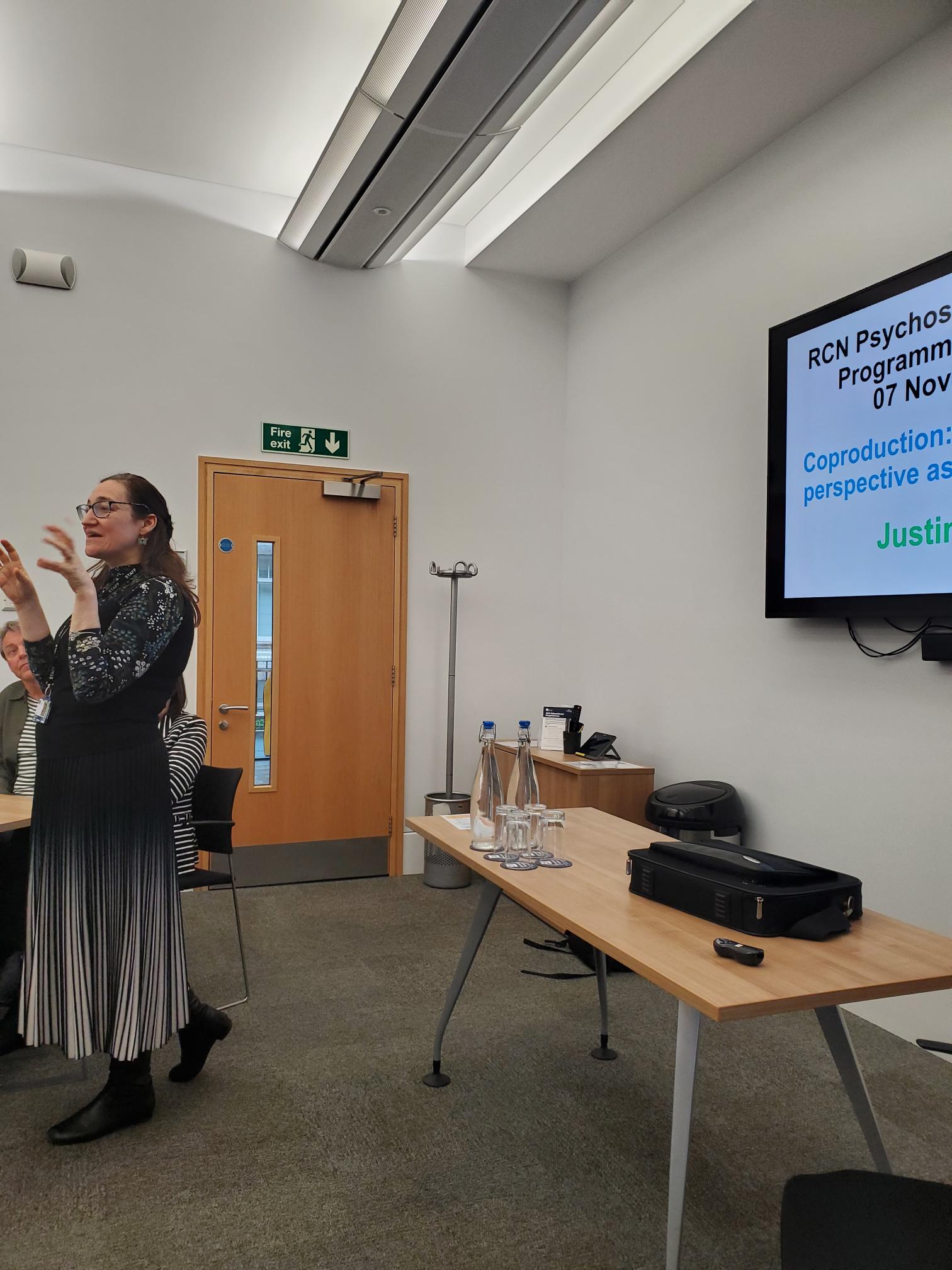
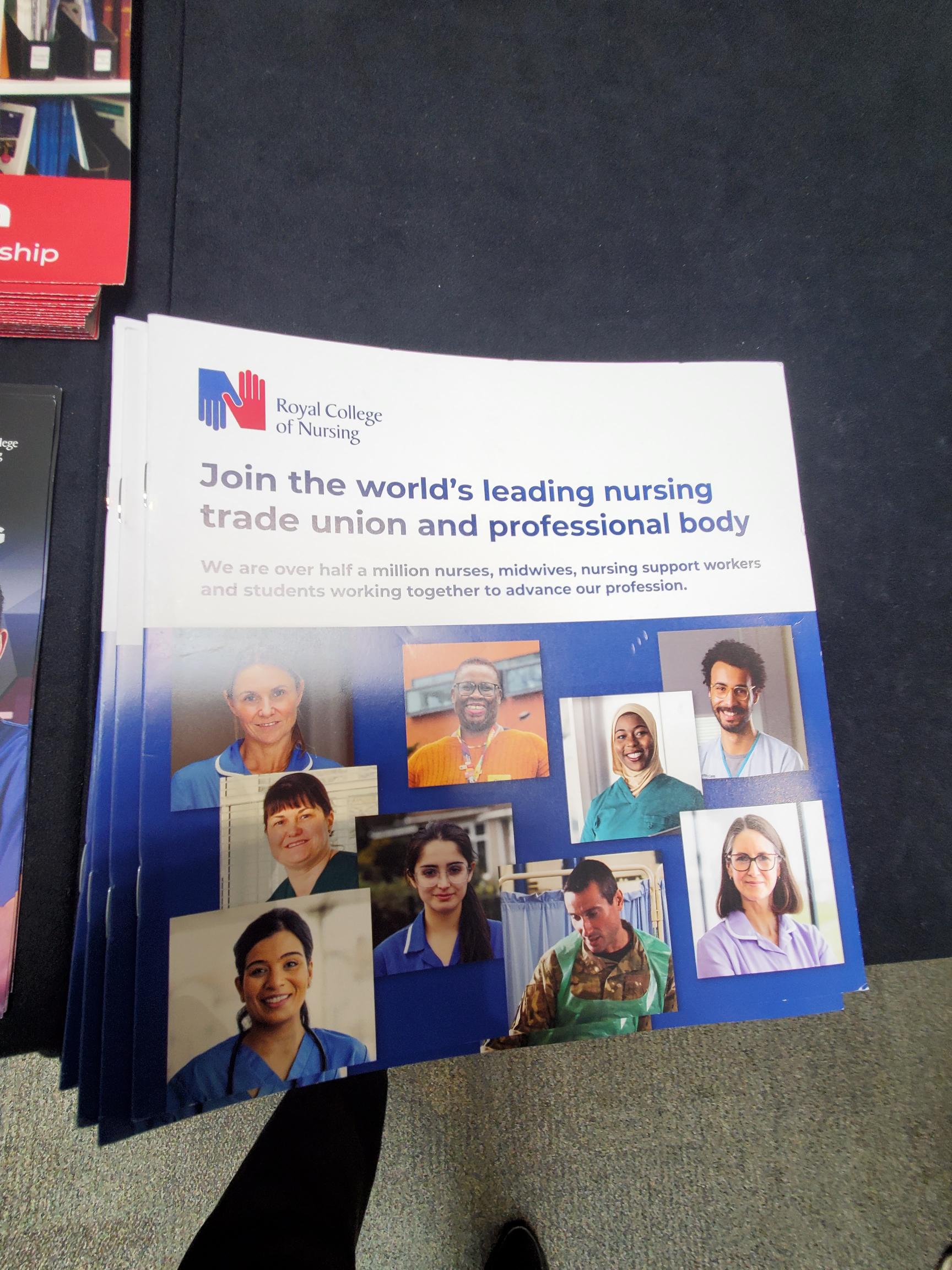
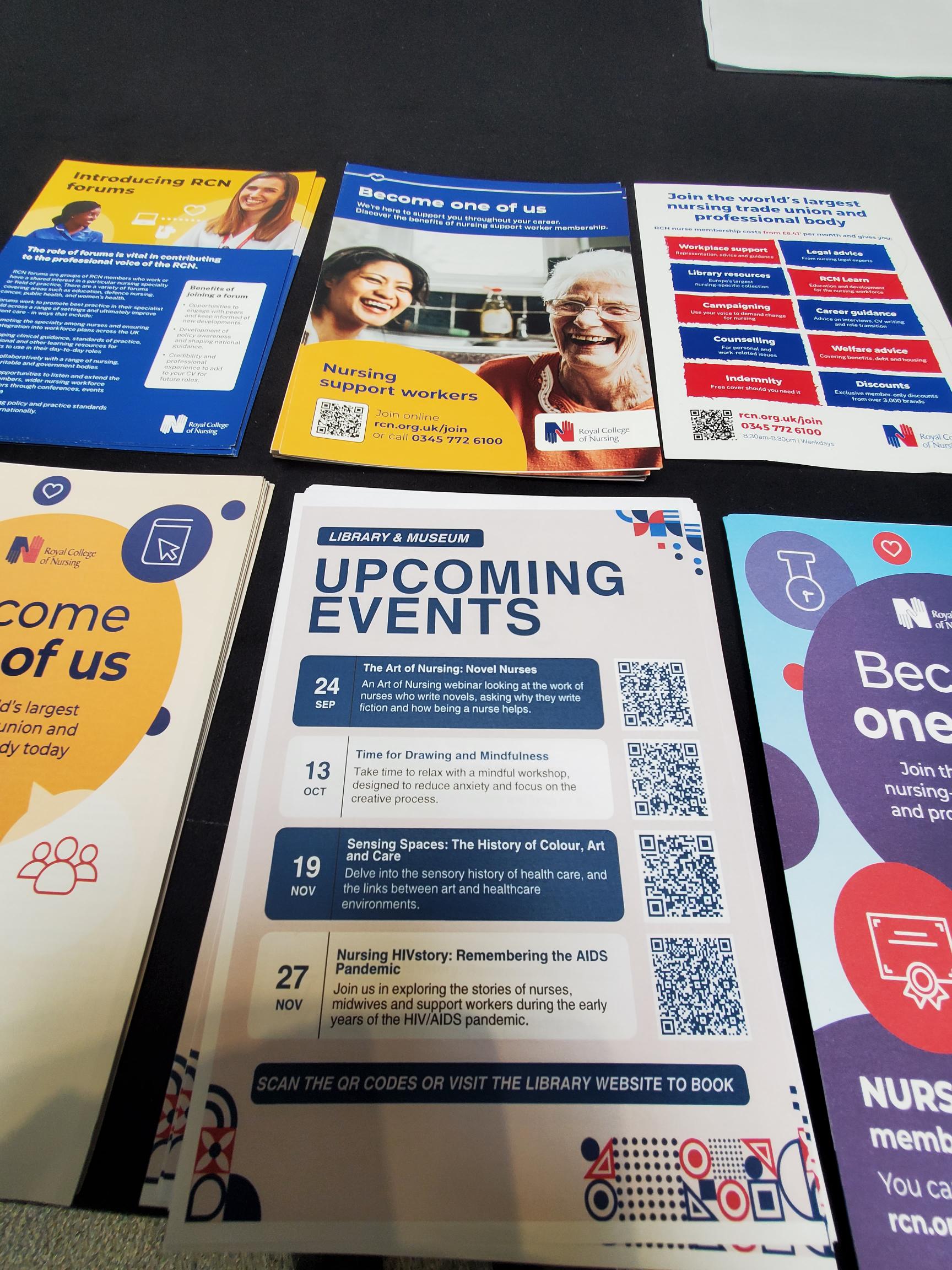
Walking into the RCN PSI Alumni Conference at Cowdray Hall on that crisp November morning, I felt a mix of pride, gratitude, and curiosity. It’s been many years since I first began speaking at RCN events like this, yet every time feels new because each gathering brings together nurses, carers, service users, and leaders who continue to shape the future of mental health care.
Before I continue to describe the event, let me sum up the Royal College of Nursing PSI programme. Basically the Psychosocial Interventions (PSI) programme is a nationally recognised training initiative designed to strengthen therapeutic skills of mental health professionals and embed recovery-focused, relationship-based care across services.
The PSI program is rooted in the principles of collaboration, reflection, co-production and empowerment, PSI equips practitioners with practical tools to support individuals experiencing mental distress, while also valuing the insight of carers and families.
I think what makes PSI stand out is its emphasis on seeing people beyond their diagnosis and fostering empathy, curiosity, and shared understanding between nurses, service users, and carers.
At the start of the conference and during it, I spoke to a few nurses over coffee, each reflecting on how PSI had shaped their practice one mental health nurse told me it had helped her “find her voice again.” For me, as a carer with lived experience, it was great to witness this sense of renewal. It reminded me why collaboration between professionals and lived experience communities is so essential.
Around 10 a.m., Catherine Gamble formally opened the event, setting a tone of gratitude and shared learning. Her introduction reminded us how much the alumni network had grown and how lived experience was now firmly part of the PSI culture.
As someone with lived experience of caring for my mum, who lived with schizophrenia, I approached the events not just as an observer but as someone deeply invested in the stories and struggles that bring us together as a triangle.
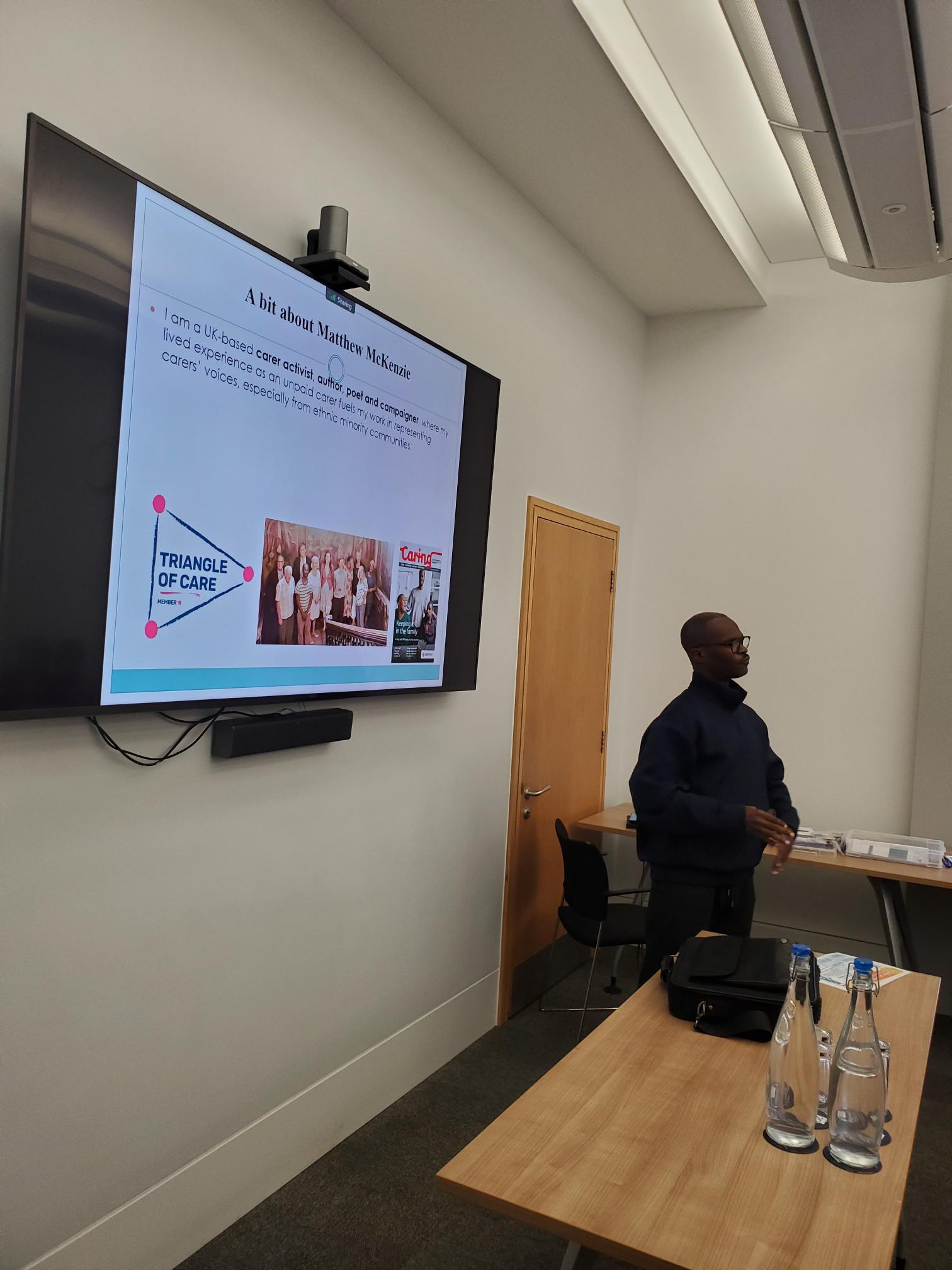
When I was invited to open the event and share my reflections as a carer, I knew I wanted to do more than talk about carers, I wanted to speak for them, and with them.
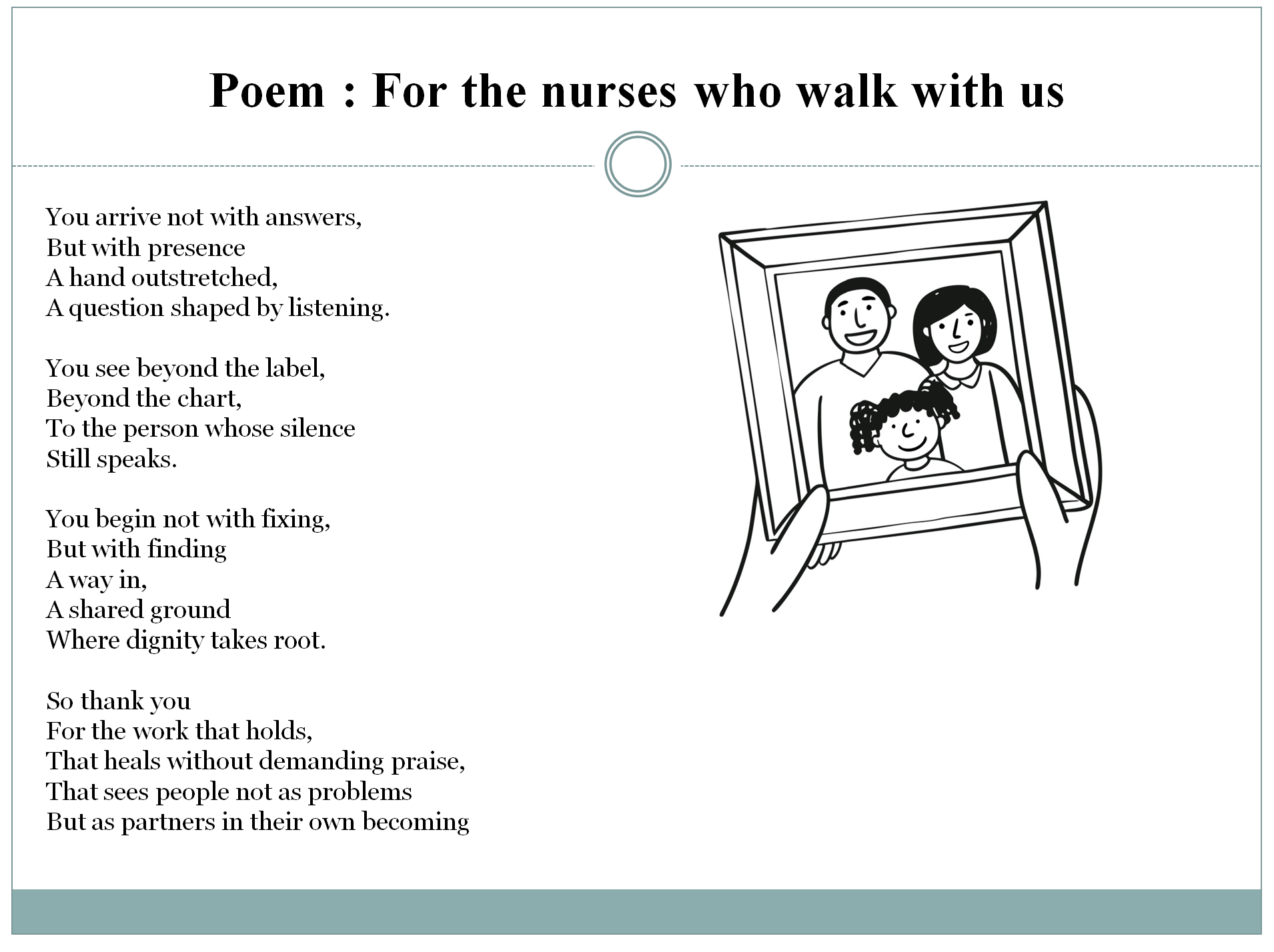
My Opening Talk – “The Nurses Who Walk With Us”
Standing at the podium, looking out at rows of passionate mental health nurses and lived experience, I began with gratitude. My words were simple but heartfelt:
“This is really about the nurses who walk with us, the ones who move beyond the labels, beyond the charts, and see the person, not the problem.”
I read a poem I had written to honour the compassion and resilience of those in the room a piece I called The Nurses Who Walk With Us.
The poem spoke about presence, about listening, and about the small acts of care that ripple into great change.
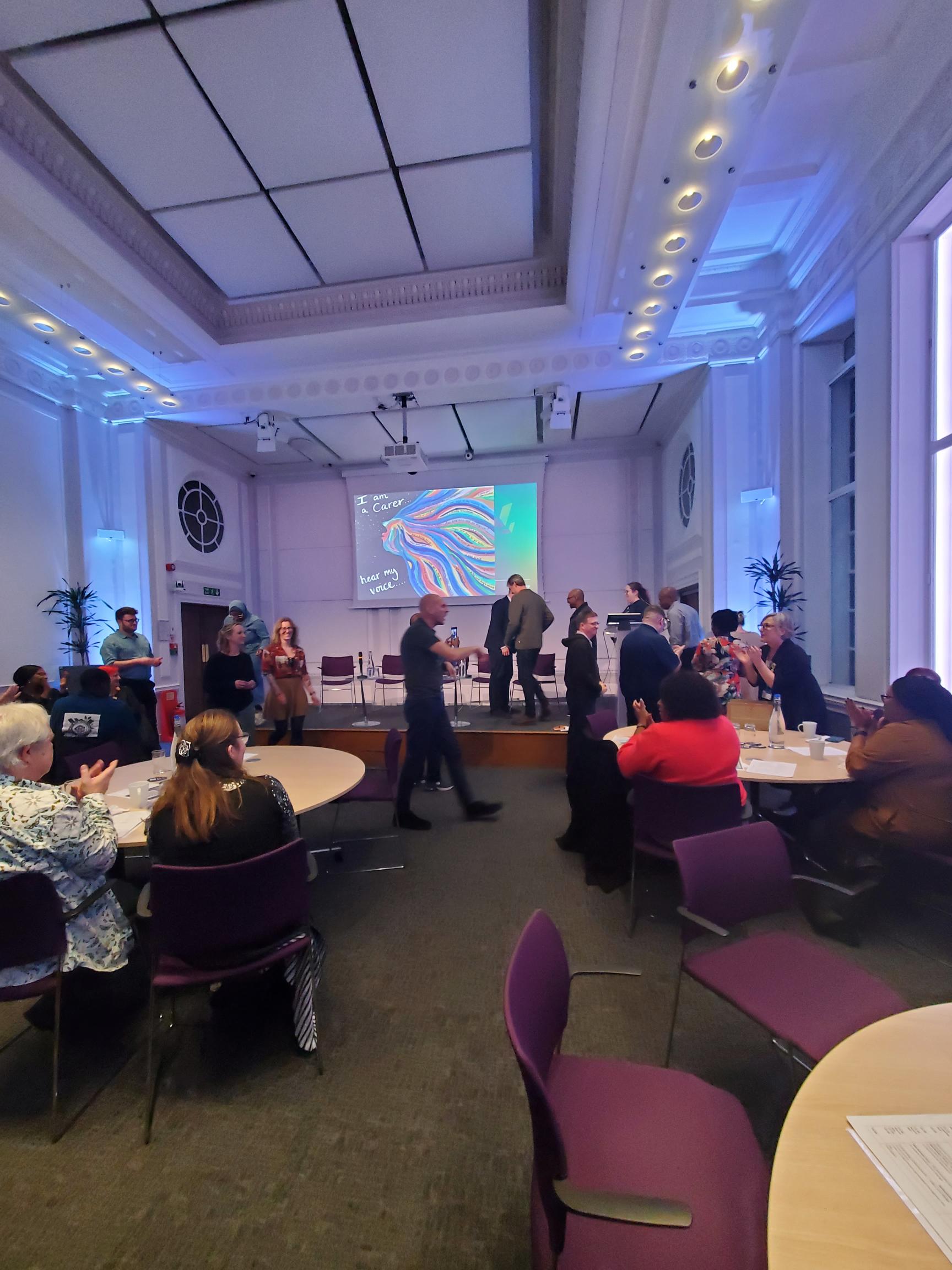
After my talk, I was moved by the warmth of the response. Many came up to share how my words mirrored their experiences or reminded them of why they came into nursing. That moment of connection that shared understanding set the tone for the day.
The Locksmiths Animation and Alumni Showcase
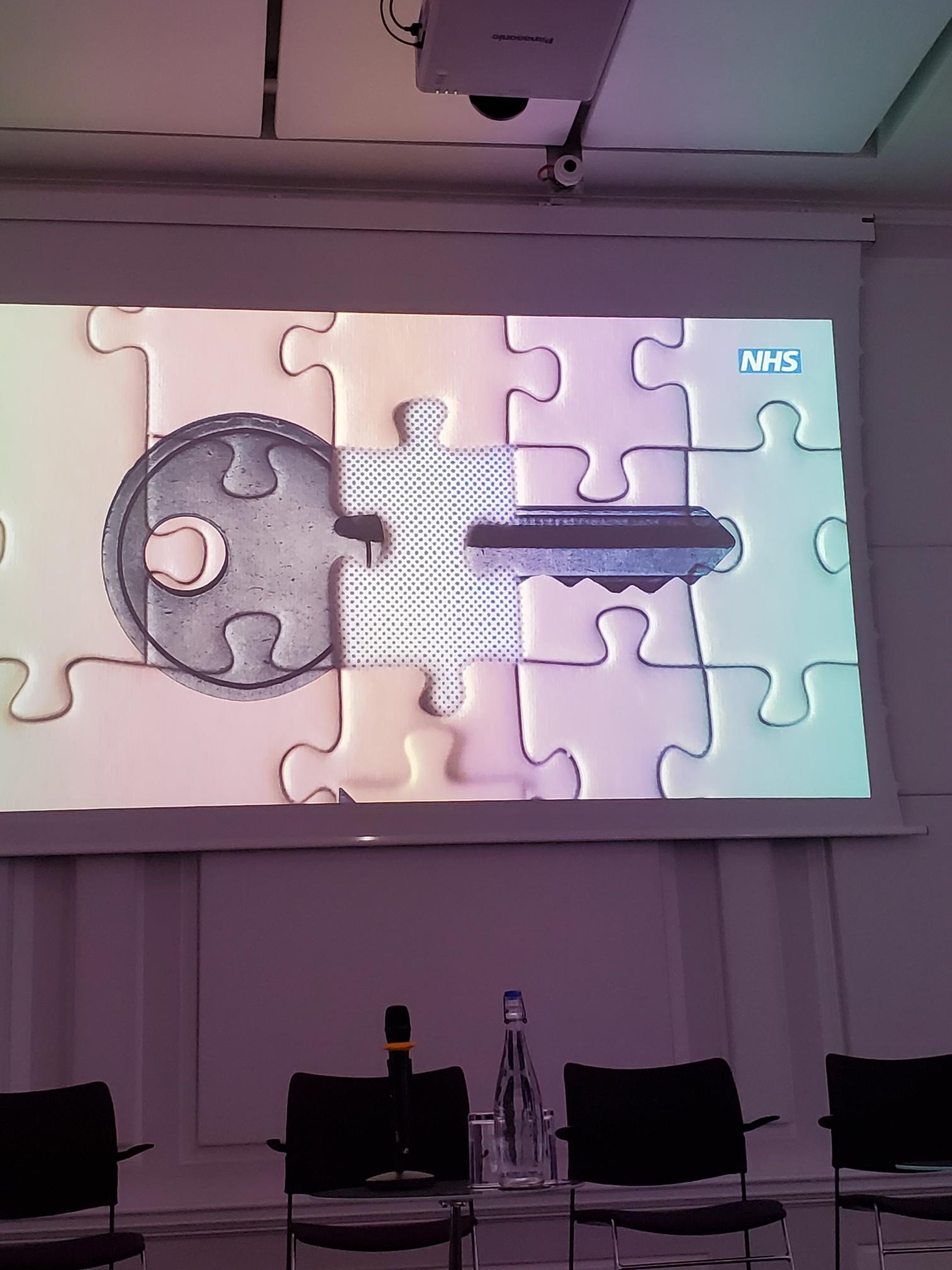
Following our opening session, Ellie Gordon and Stephen Jones launched the new animation “We Are the Locksmiths.” The film poetically portrayed mental health nurses as key-cutters shaping, adapting, and helping people find the right fit for recovery.
Watching it, I was struck by how accurately it captured the emotional labour of care, the balancing of vulnerability, patience, and professionalism
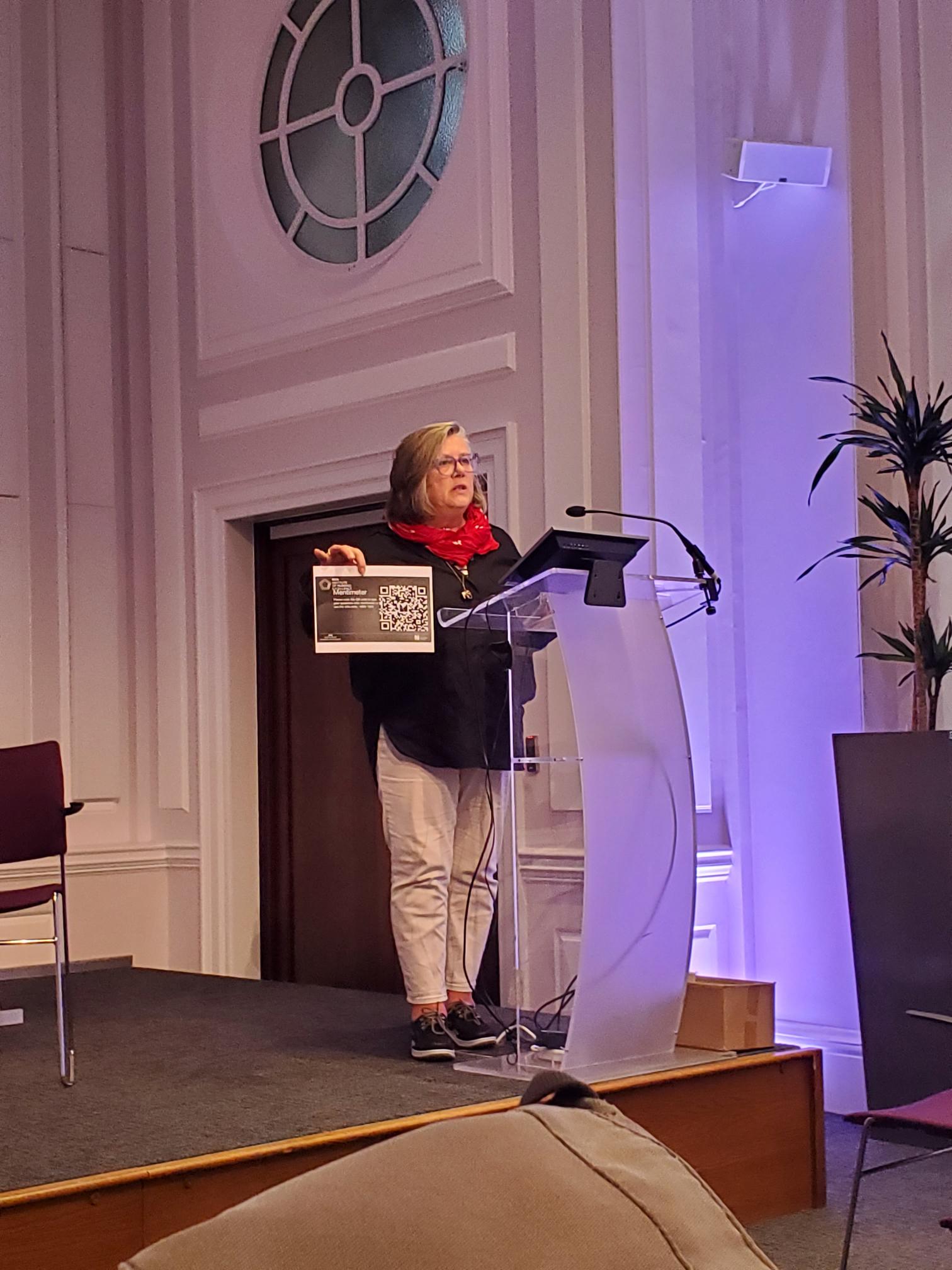
Next we had the Mentimeter session that morning, which was led by Professor Sally Hardy. She guided participants through reflective wellbeing questions using the interactive Mentimeter tool, encouraging everyone to think about how to sustain personal and professional wellbeing in mental health practice. Sally’s session wasn’t just about gathering feedback
Afterwards, the Alumni and Facilitators’ “Show and Tell Time” began. Groups from Sheffield NHS Trust, Sussex Mental Health Partnership, Lancashire Mental Health NHS trust, and Hereford NHS Trust sharing creative projects and reflections from their PSI practice. There were posters, poems, and community initiatives that had grown directly from the training. I wandered around the tables, speaking with participants who described how PSI had changed their teams. I think One mental health nurse told me, “We stopped seeing interventions as techniques and started seeing them as relationships.” It was inspiring
Workshop One – Working Together in Risk and Safety
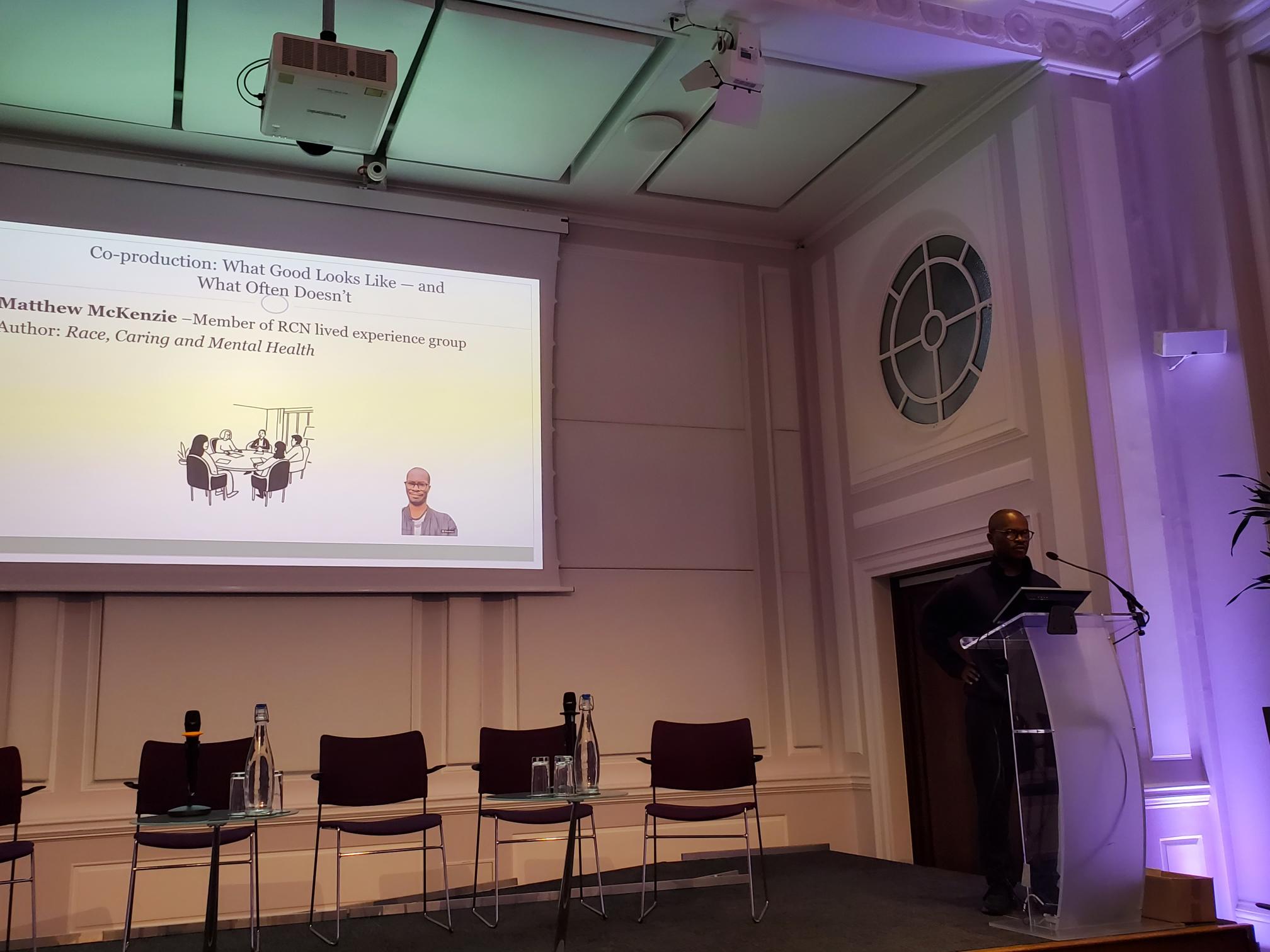
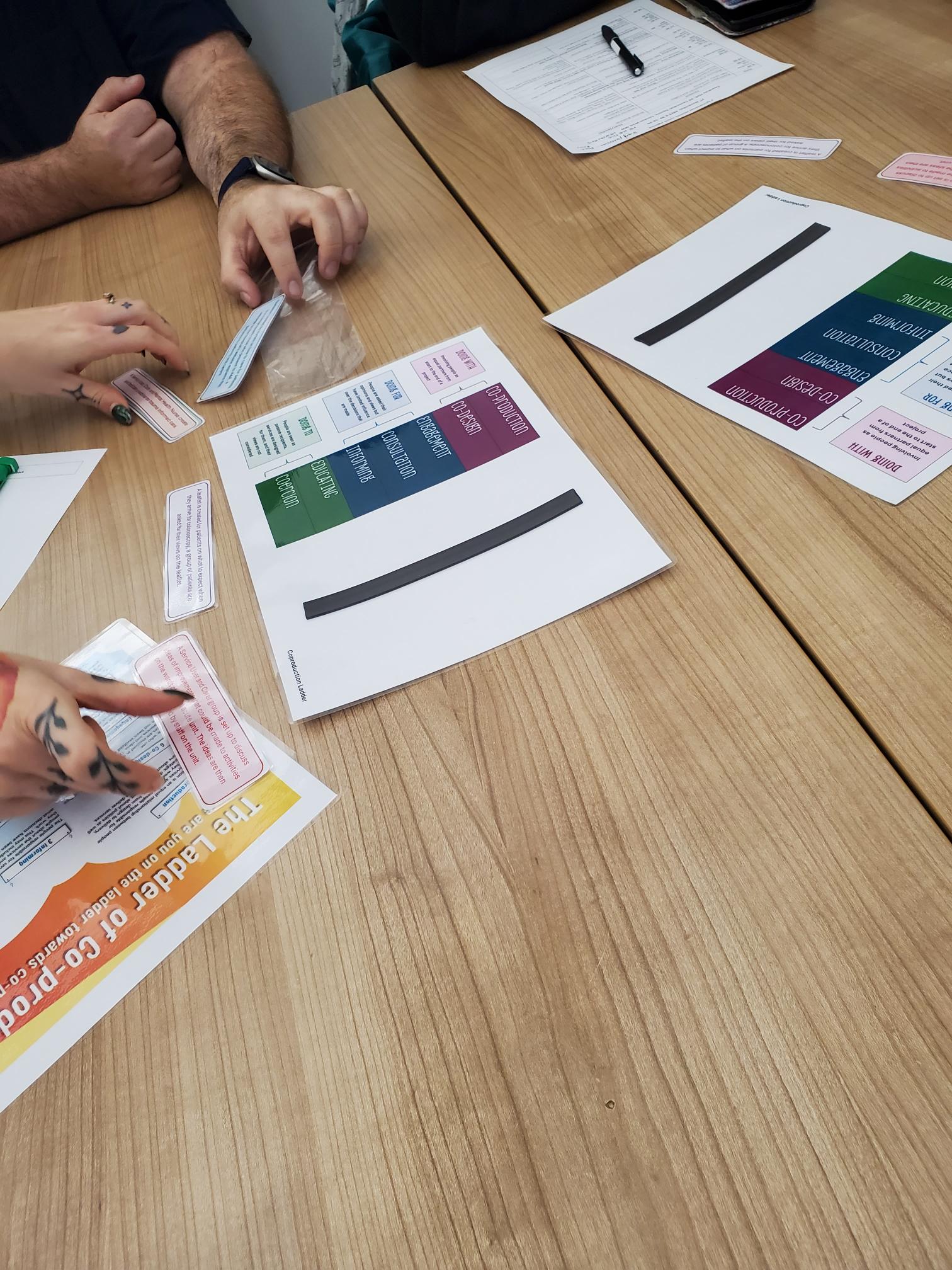
After refreshments, we broke into workshops. I joined Workshop One: Lived Experience and Co-Production – Utilising Our Expertise, led by Hannah Cadogan and colleagues. It was energising to see lived experienced and mental health nurses working side by side.
I spoke about what co-production really means from a carer’s point of view. I shared my journey as someone who has cared for a family member living with schizophrenia and another with autism, and how those experiences taught me the importance of being included as an equal partner in care.
I explained that carers often hold a deep understanding of the person they support insights that can make a real difference if professionals take the time to listen and involve us from the start, not as an afterthought. Drawing on my work with Carers UK, the Carers Trust, and the Triangle of Care as many nurses from the mental health trusts were members of triangle of care programme., I spoke about how true co-production is built on trust, openness, and shared learning.
We discussed barriers time, fear, power differences but also solutions, like embedding co-production in supervision and reflective practice.
In this session, the discussion turned to how we can meaningfully involve carers and service users in planning safety not as tick-box exercises, but as genuine collaborations. I found myself reflecting on my own experiences of sitting in meetings where decisions were made about my mum rather than with us.
Hearing the nurses speak so openly about their challenges about time pressures, fear of getting it wrong, and the emotional toll of risk reminded me that we’re all human in this process. True co-production means sharing not only responsibility but also vulnerability.
One participant spoke about the importance of patience: “We’re not here to fix; we’re here to find a way in.” That line stayed with me. It echoed my own philosophy that care starts with listening, not solving.
By the end of the workshop, we agreed that co-produced safety isn’t about removing risk; it’s about building trust so we can face risk together.
Workshop Two – Co-Production and Carer Involvement
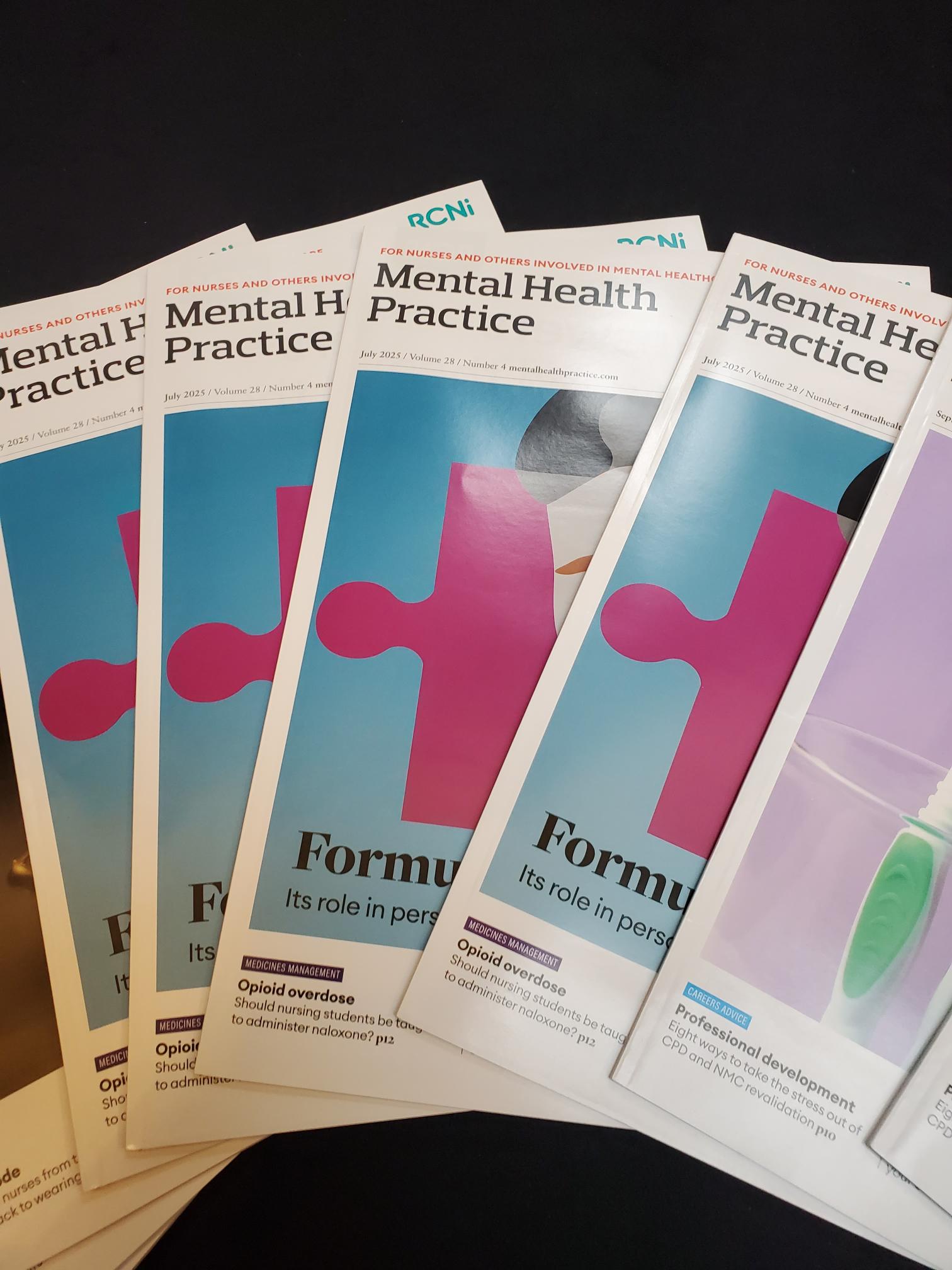
Lunch provided another opportunity for networking. The Mental Health Forum stand and MHP stall displayed resources on psychosocial practice.
I met others who had recently completed the course.
Conversations were open, curious, and full of mutual respect the kind of professional empathy that sustains hope in challenging work.
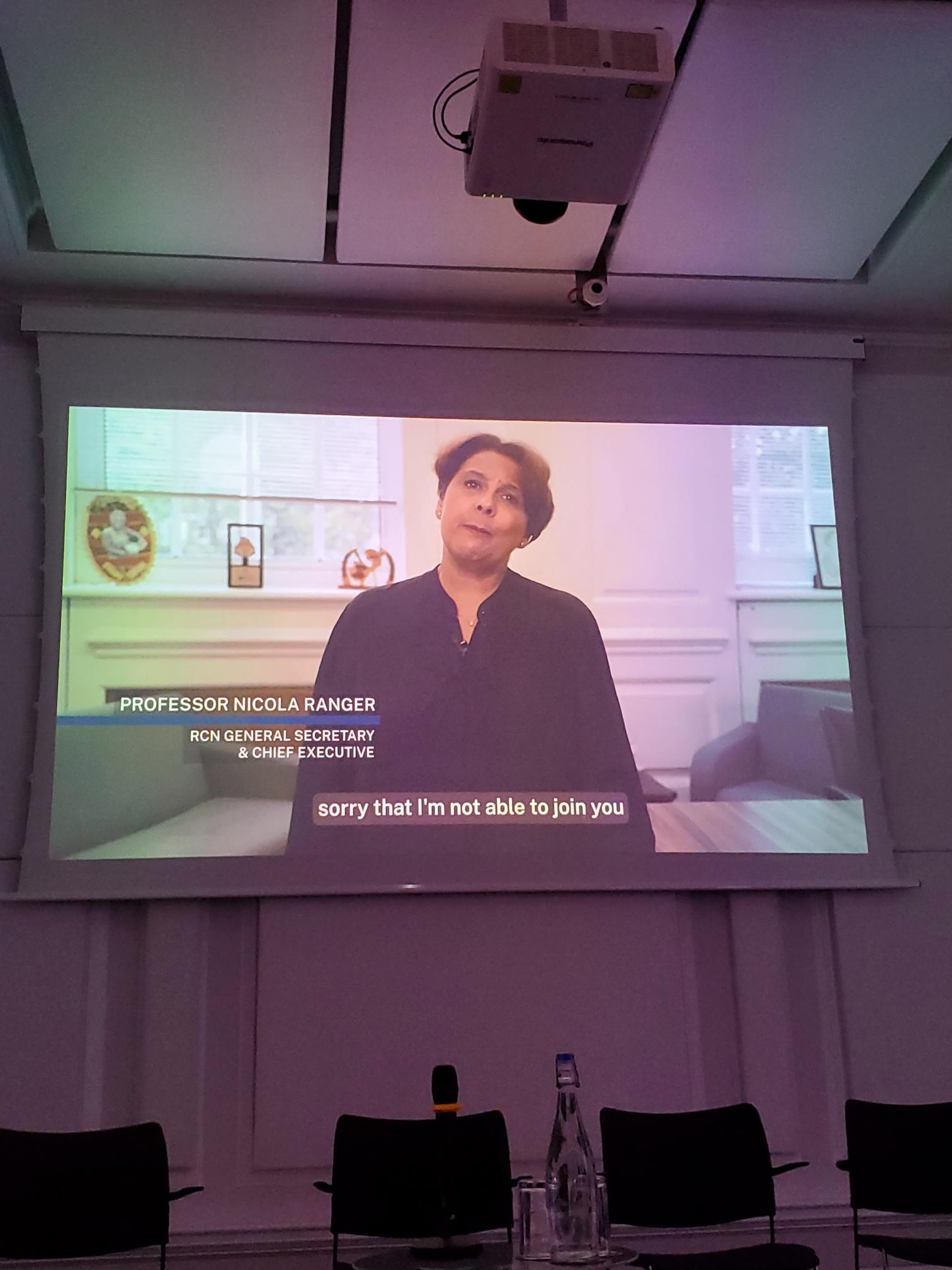
After lunch we heard from Professor Nicola Ranger, RCN General Secretary, who welcomed everyone back, commending the alumni for sustaining PSI’s legacy. Her words “you are the custodians of compassion” perfectly captured the spirit of the day.
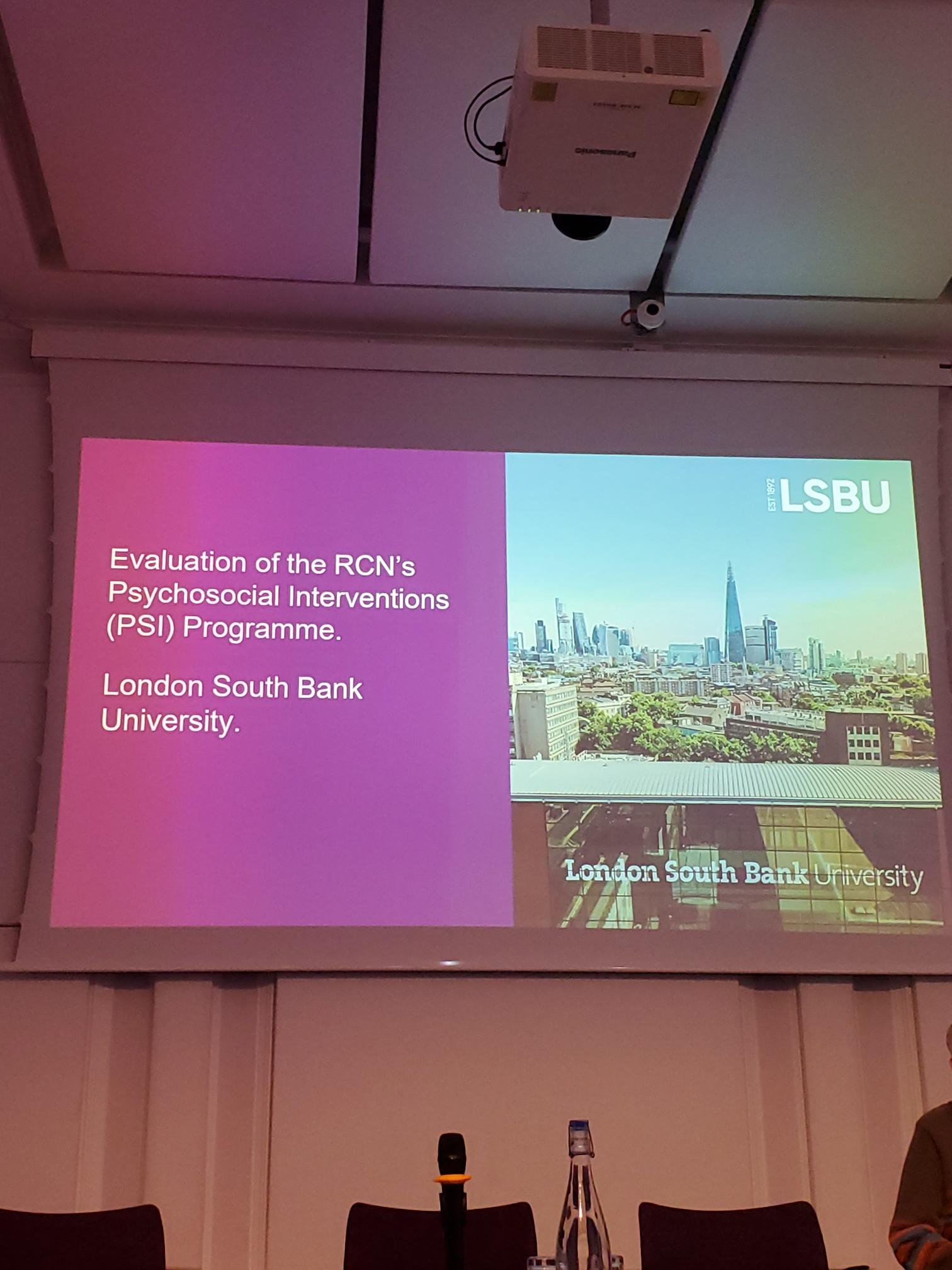
The evaluation session of the RCN PSI Alumni Conference was presented in partnership with London South Bank University (LSBU), who have been key academic collaborators in examining the outcomes and long-term impact of the Psychosocial Interventions (PSI) programme. This section was introduced by Stephen Jones, and Professor Chris Flood, a leading figure in mental health nursing and research at LSBU.
Together, they outlined how LSBU’s evaluation seeks to capture not just the quantitative outcomes of PSI such as improved confidence and competence among practitioners but also the qualitative stories of change, growth, and compassion that the alumni community embodies.
There will be several teams at LSBU, but I was impressed on the make up of the Advisory and Supervisory Team provides academic oversight and strategic direction.
Professor Patrick Callaghan, Professor of Mental Health Science at LSBU, offers extensive expertise in psychosocial interventions and nursing research leadership.
Professor Chris Flood, a leading mental health and adult nurse researcher, specialises in health economics, survey design, and qualitative inquiry.
Professor Neil Brimblecombe, Professor of Mental Health and Learning Disability, contributes his expertise in workforce development, nurse prescribing, and policy analysis linking the PSI evaluation to broader NHS workforce strategies.
Professor Eddie Chaplin, an expert in intellectual disabilities and psychosocial interventions, supports the development of inclusive frameworks for peer support, guided self-help, and service co-production.
Afternoon workshop
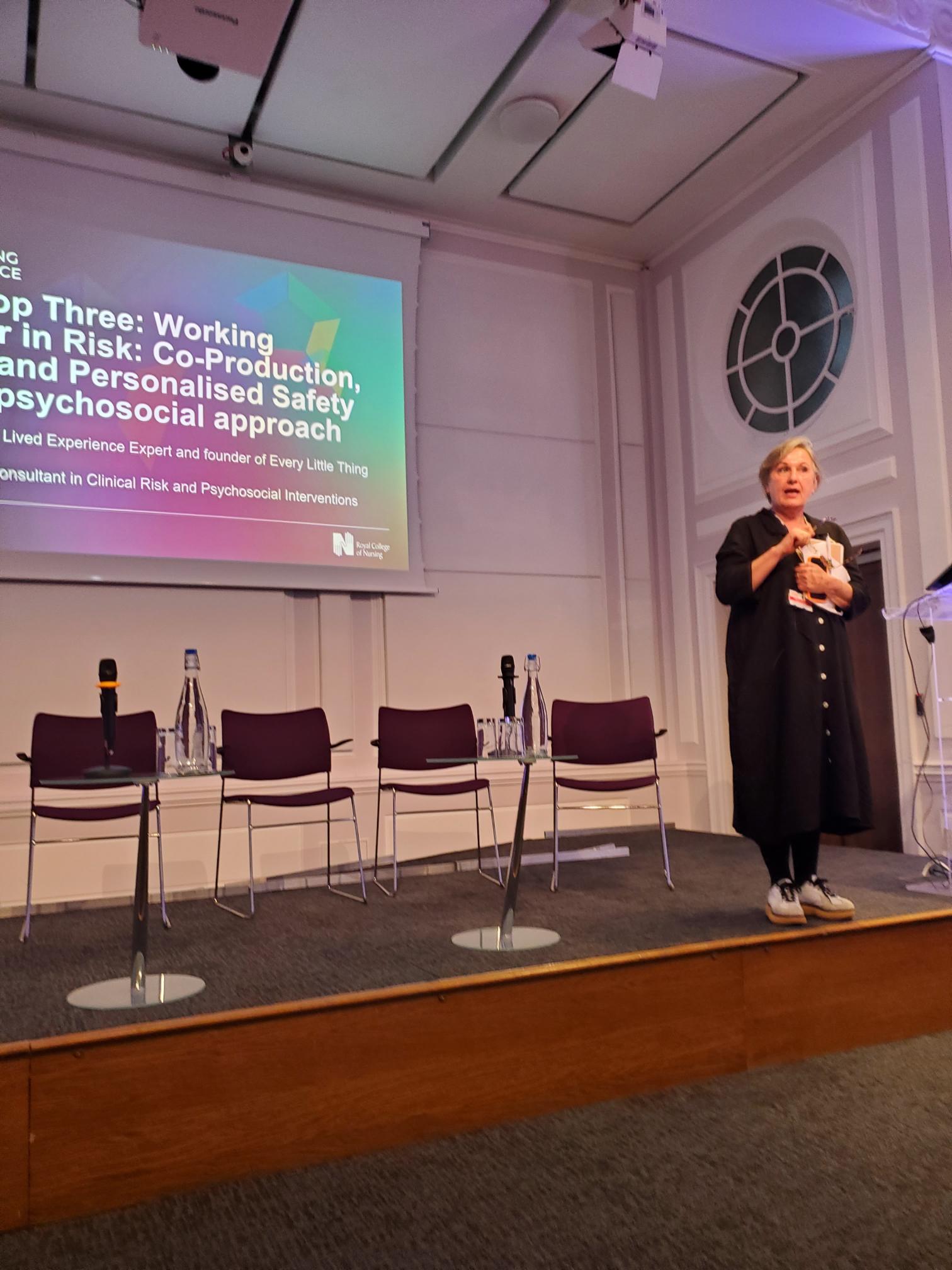
In the afternoon, I attended Workshop Three: Working Together in Risk – Co-Production, Suicide and Personalised Safety. It was deeply emotional. We discussed how carers can be crucial in early warning and safety planning, but only if professionals create safe spaces for them to speak. The workshop was presented by Berkshire Healthcare NHS Foundation Trus
During the workshop, we took part in reflective exercises that encouraged us to consider what “shared safety” truly means. We were asked to think of times when communication broke down between families, patients and professionals, and how different outcomes might have been possible if trust and collaboration had been stronger.
Celebrating Archievements
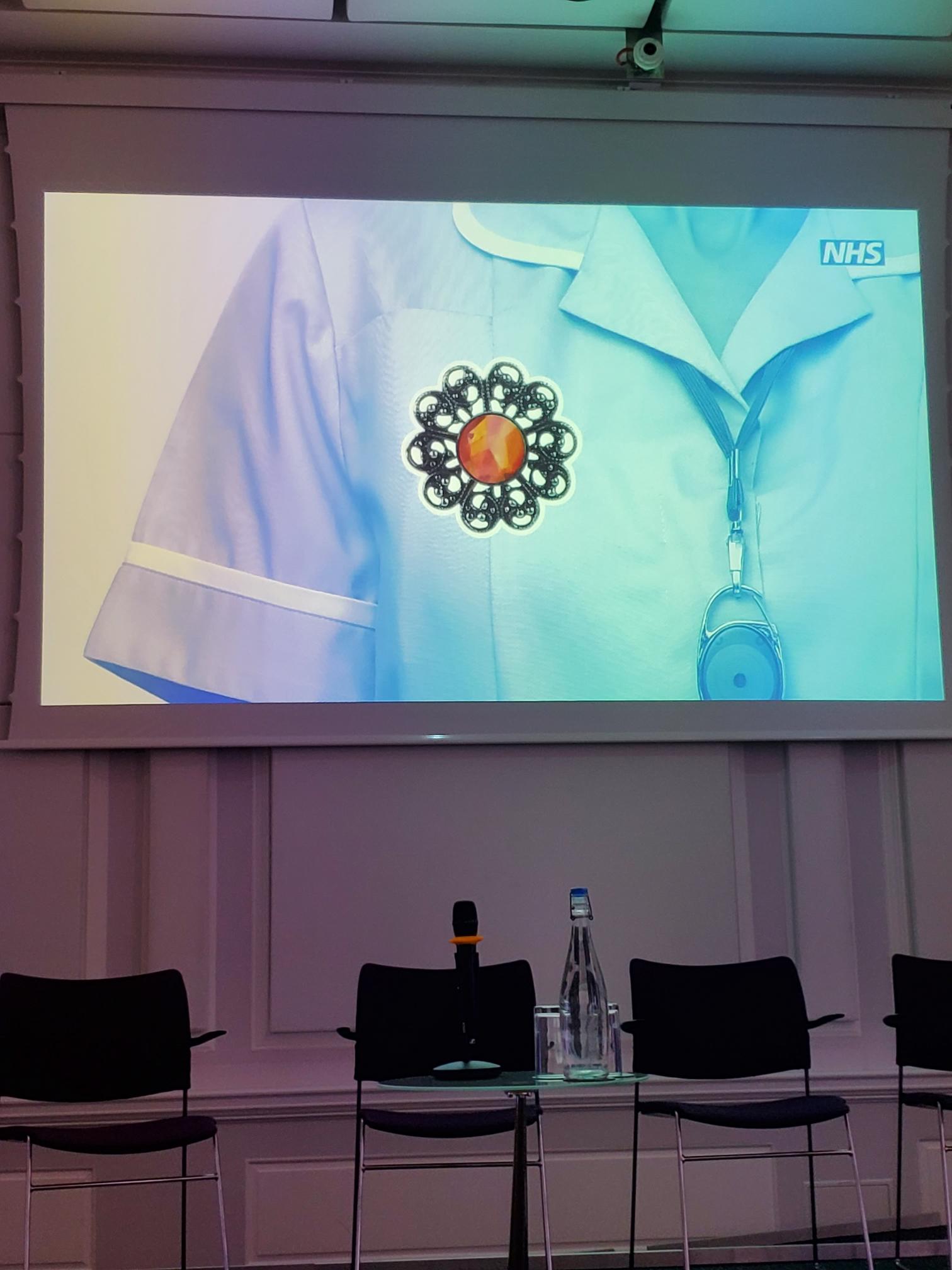
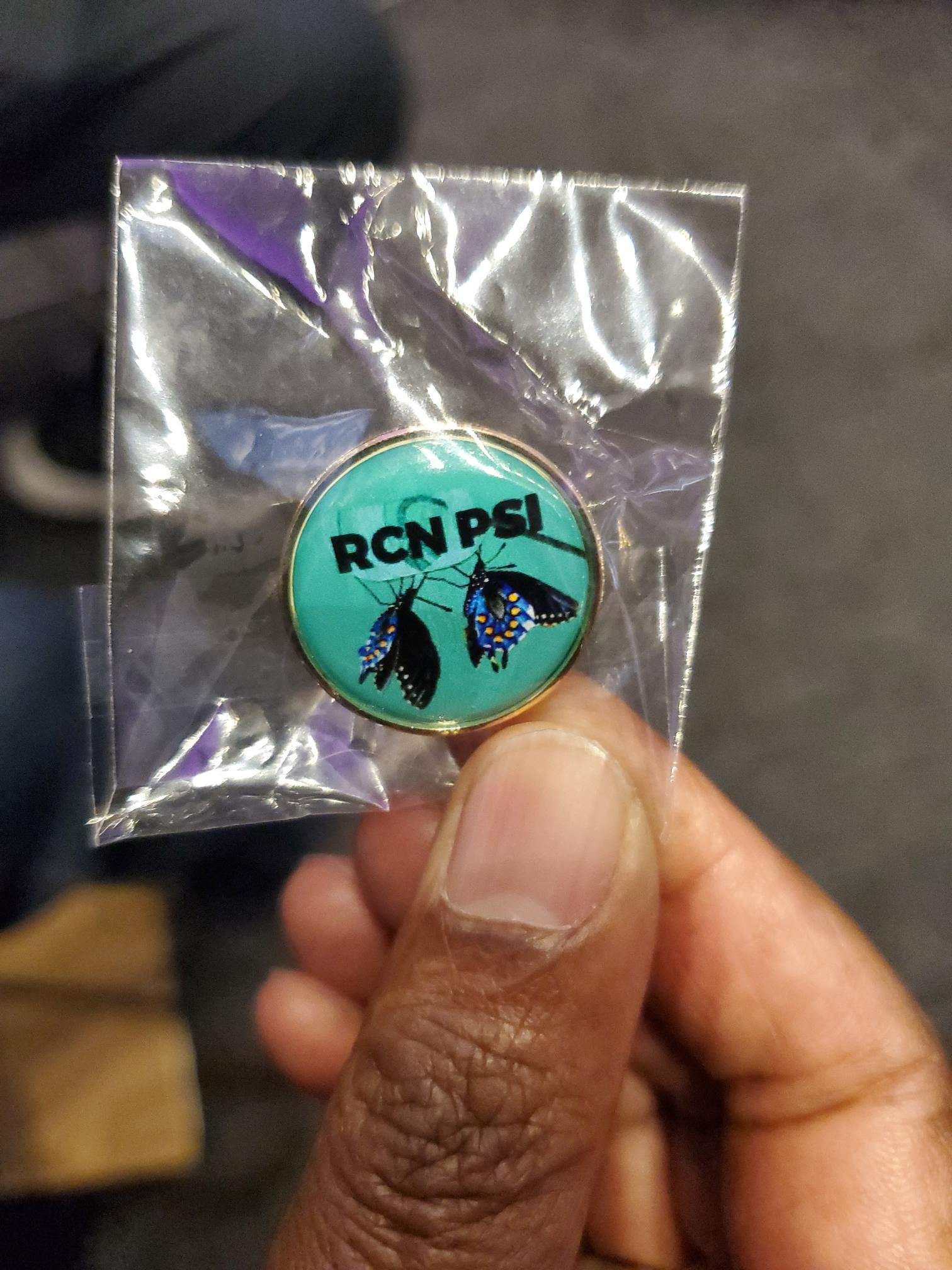
Those who finished the RCN PSI programm were presented with a RCN PSI alumni badge, which i felt was a small but powerful symbol of commitment, compassion, and continued learning. For many, receiving that badge wasn’t just about completing a programme; it represented belonging to a network that values empathy, partnership, and the courage to keep improving mental health care together.
Reflections and Looking Ahead
As the day drew to a close, we took a quiet moment to reflect. Conferences like this are not just about learning they are about belonging. They remind me that, while the caring role can often feel isolating, there is a wider network of understanding and solidarity.
I missed out a lot more that took place at the alumni event, but watch out for more exciting news from the RCN in future.
To find out more about the RCN PSI Progamme, click link below.