By Matthew McKenzie – Carer and Carers UK Ambassador
As unpaid carers, many of us know what it feels like to operate in the background. We juggle complex health systems, care for our loved ones, and manage our own lives, all too often feeling invisible.
That is why I am excited to share a major milestone for our community.
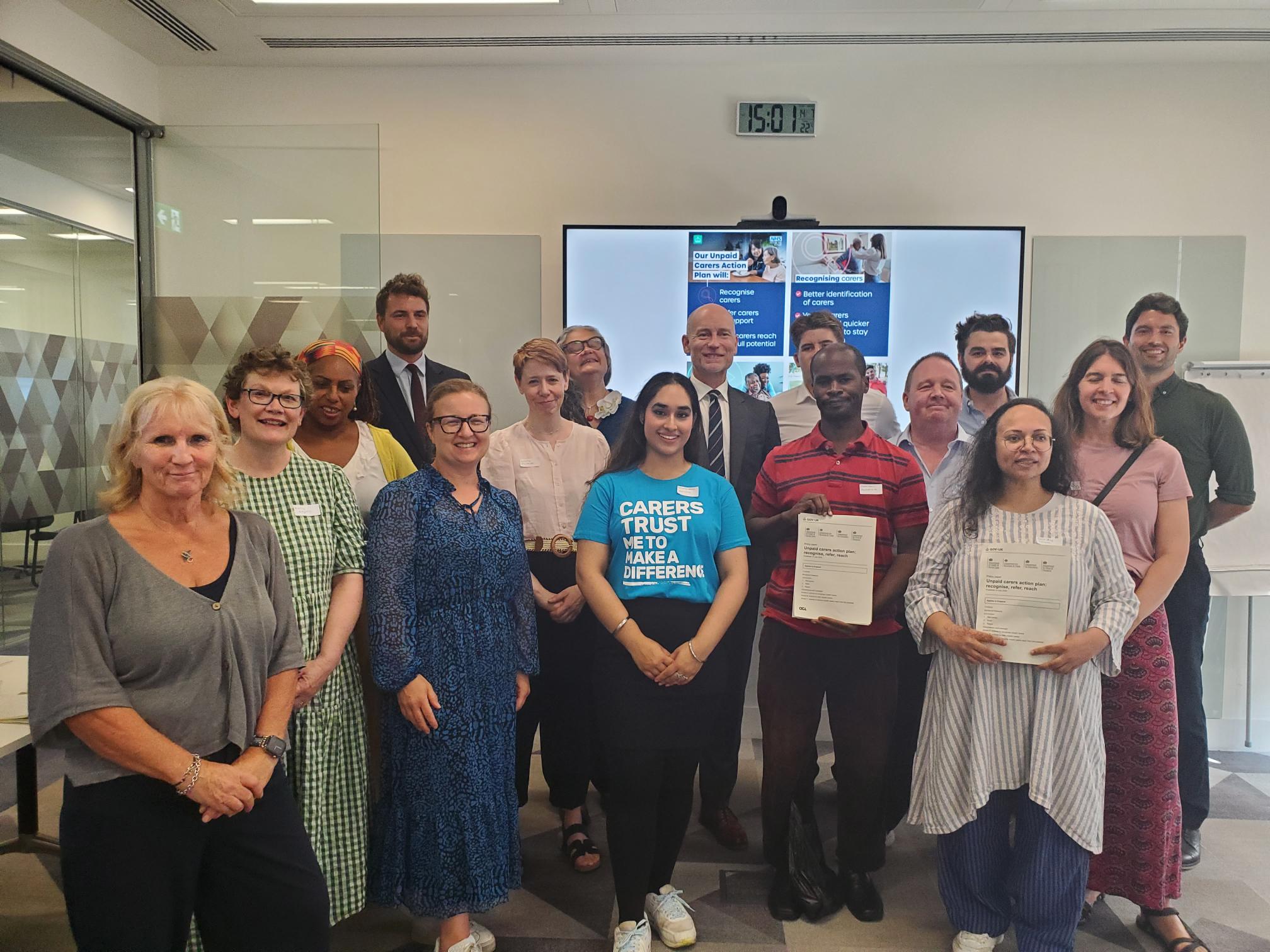
The Department of Health and Social Care (DHSC), alongside the Departments for Education, Business and Trade, and Work and Pensions has officially launched the Unpaid Carers Action Plan: Recognize, Refer, Reach.
This is England’s first-ever cross-government action plan dedicated entirely to supporting unpaid carers.
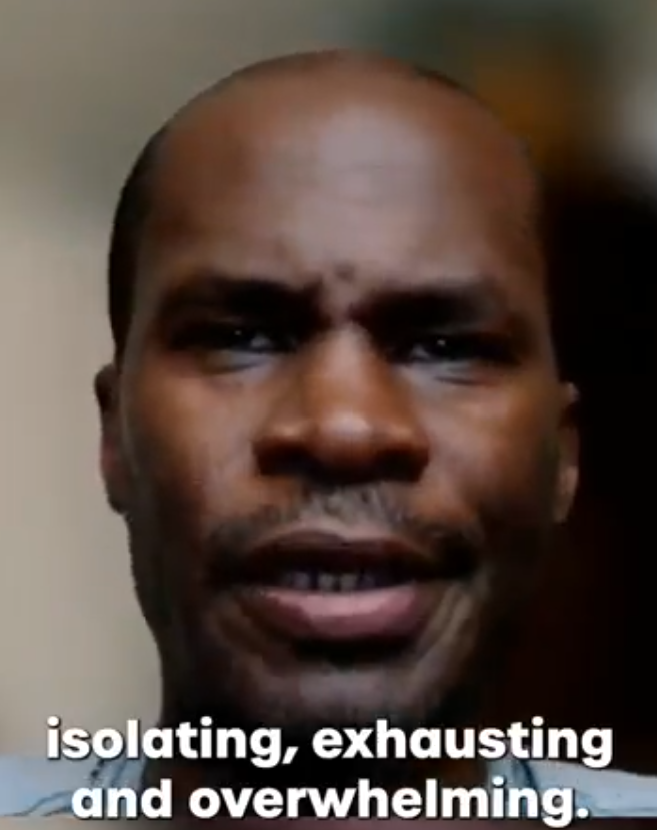
I was honored to attend the official launch event to represent our community, meet with Minister for Care Stephen Kinnock MP, and participate in the official DHSC launch video.
This isn’t just another policy document; it is a commitment across multiple government sectors to drive real, practical change.
The plan is built around three core pillars:
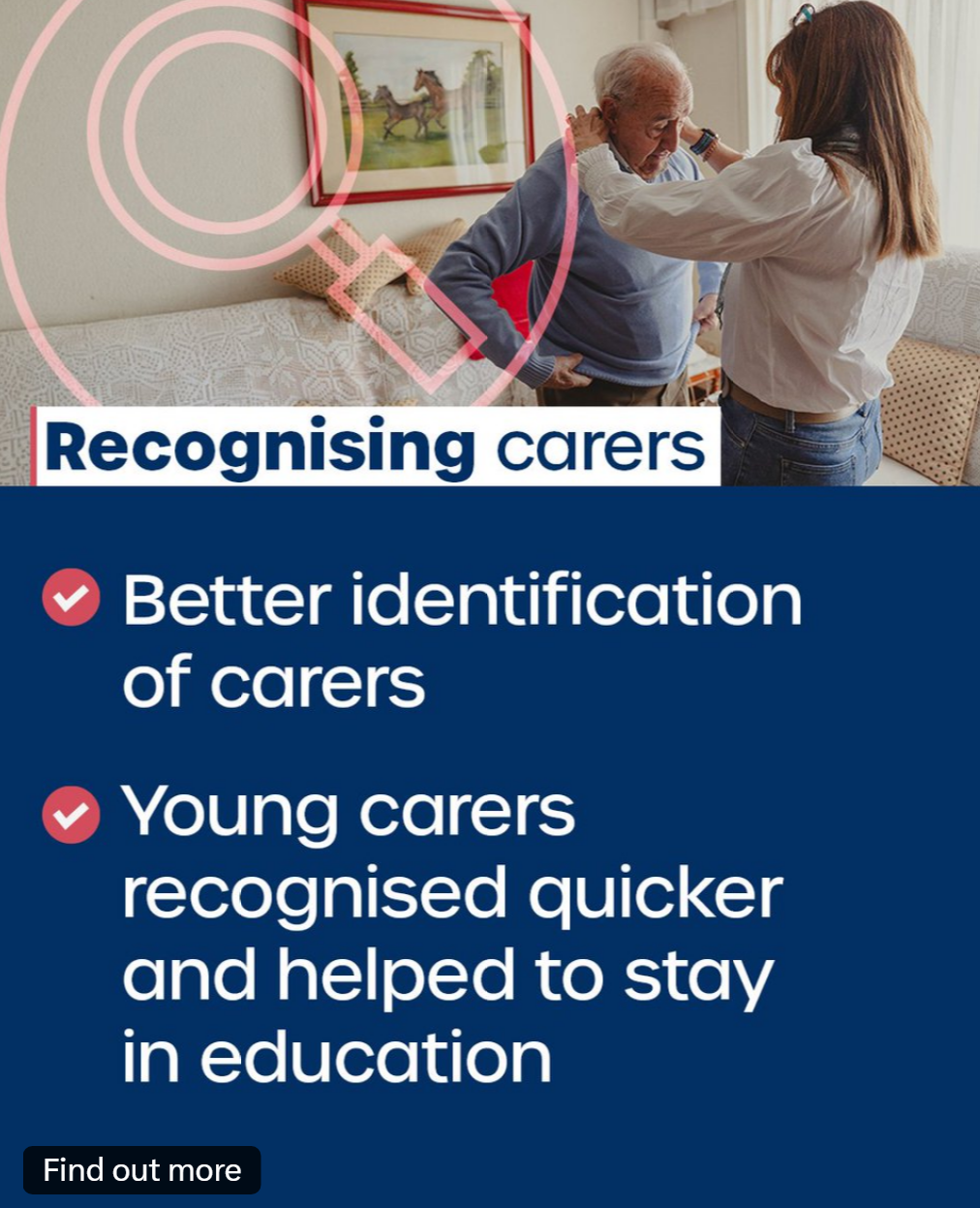
1. Recognise
Carers must be identified early. One of the most exciting digital updates is a new “MyCarer” section being introduced on the NHS App, allowing us to easily register our caring role so healthcare staff know who we are from the start.
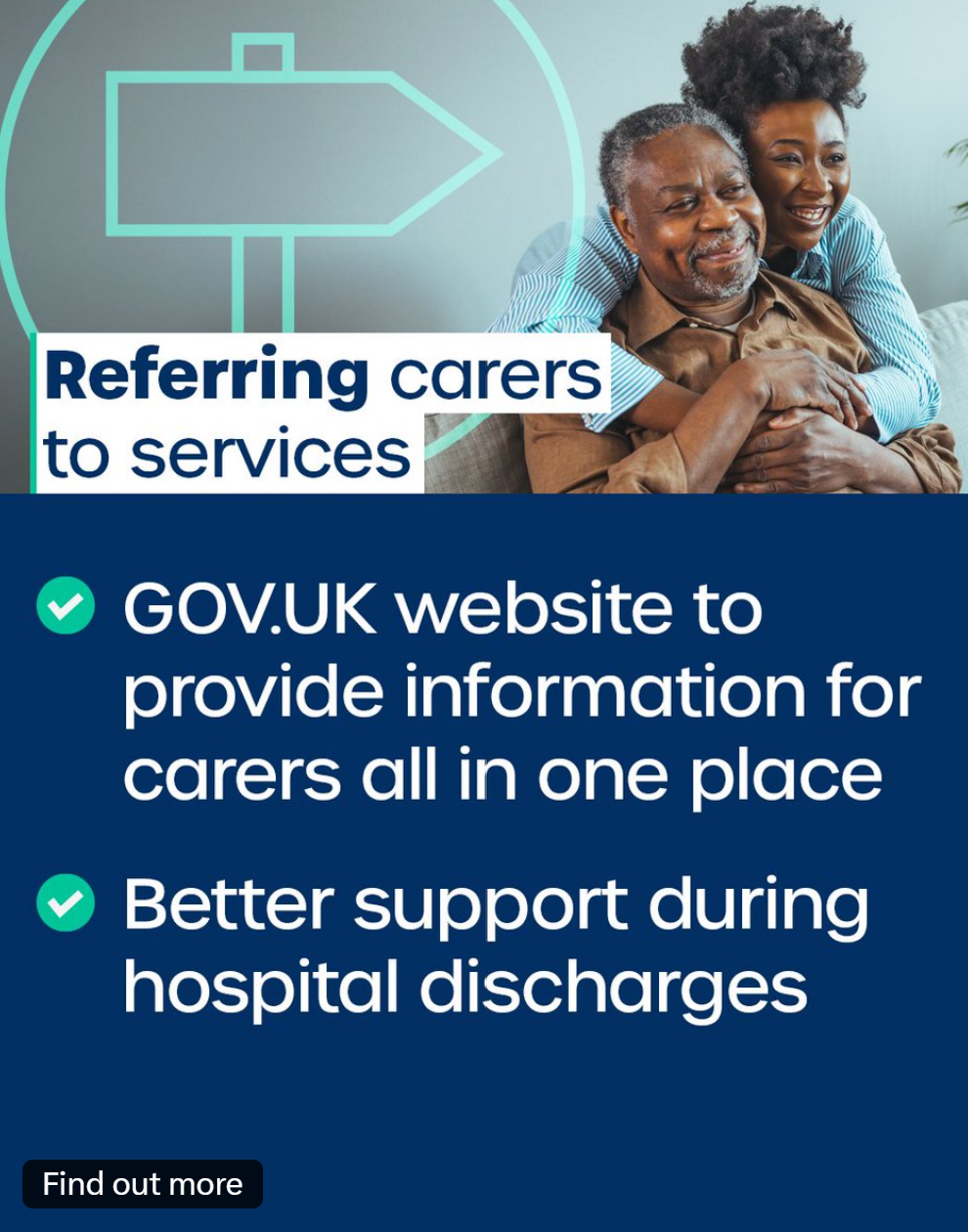
2. Refer
No carer should have to navigate the system alone. This pillar focuses on making sure we are directed to local carer centres, financial advice, and emotional support early on. Crucially, it aims to ensure we are formally included in major healthcare decisions, like hospital discharge planning.
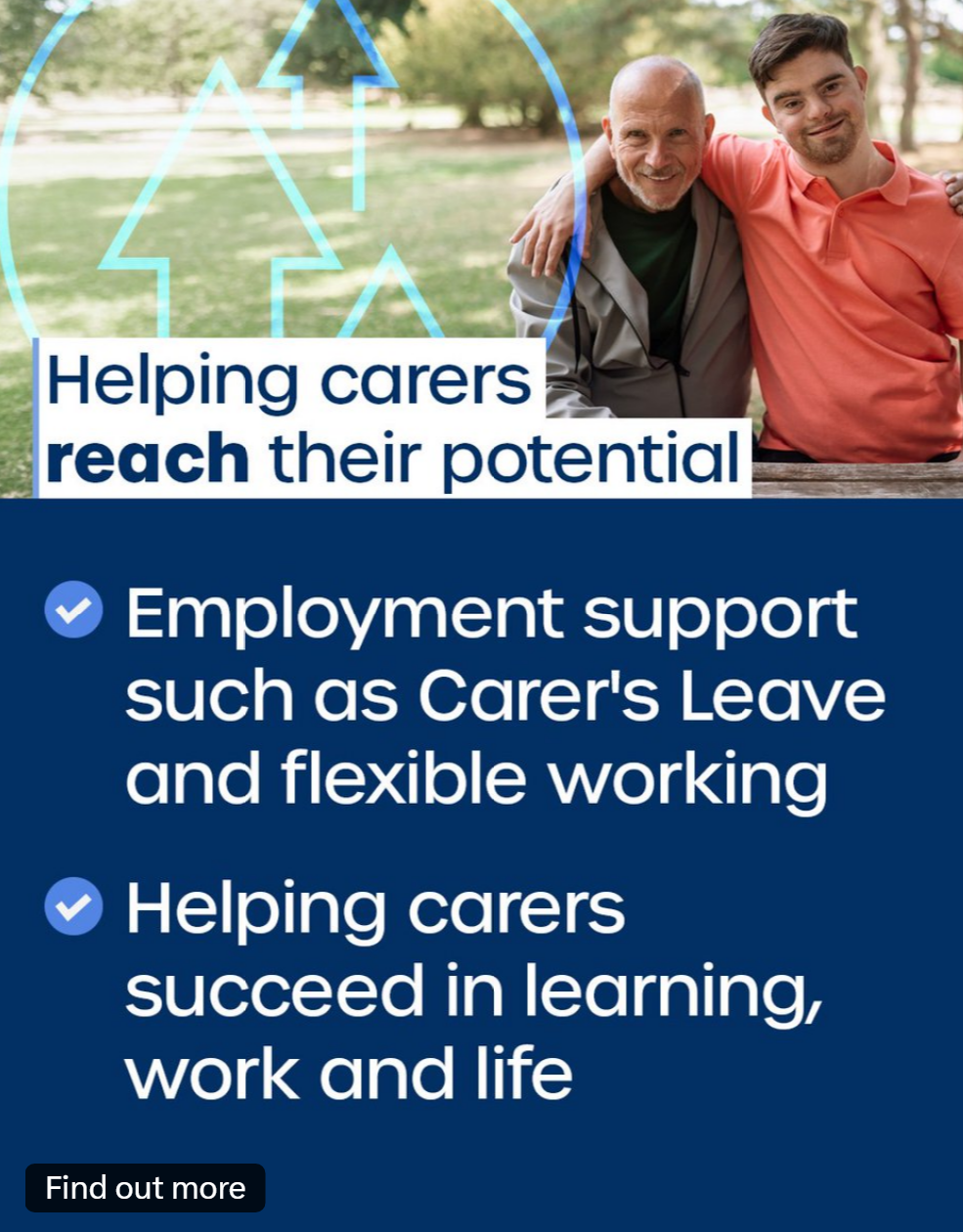
3. Reach
Caring shouldn’t mean giving up on your own future. For working carers, the plan explores paid carer’s leave and will require large employers (250+ staff) to publish carer support plans from spring 2027. For young carers, it means stronger support within schools so their education doesn’t suffer.
A Message to My Fellow Carers and Carer Centres
For years, we have argued that caring is not just a “health” issue, it impacts our jobs, our education, our finances, and our mental health. Seeing four government departments finally come together to address I feel is a massive step forward.
To my fellow unpaid carers: Please know that using your voice gives you a chance at being heard. It is important to get carers “on the map” to be recognised, and this plan is a direct result of carers sharing their lived experiences.
To Carer Centres and Forums: This action plan is a powerful tool for us. It gives us a framework to hold local services accountable and ensure the “Recognise, Refer, Reach” goals are delivered on the ground.
Of course change doesn’t happen overnight, but this plan gives us a vital foundation to build on. Let’s keep pushing, keep connecting, and make sure every single unpaid carer gets the recognition and support they deserve.
Written by Matthew McKenzie, Speaker, Carer, Campaigner and Poet
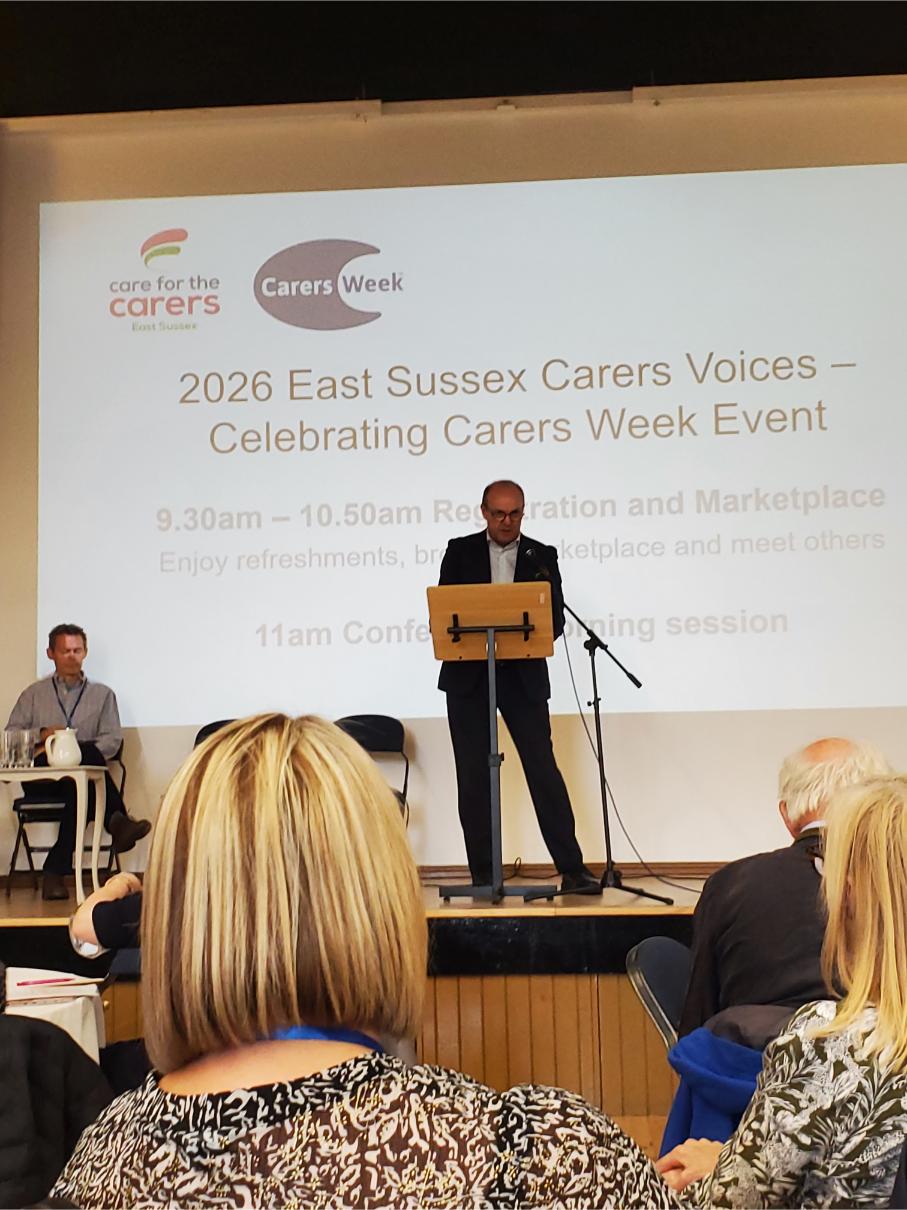
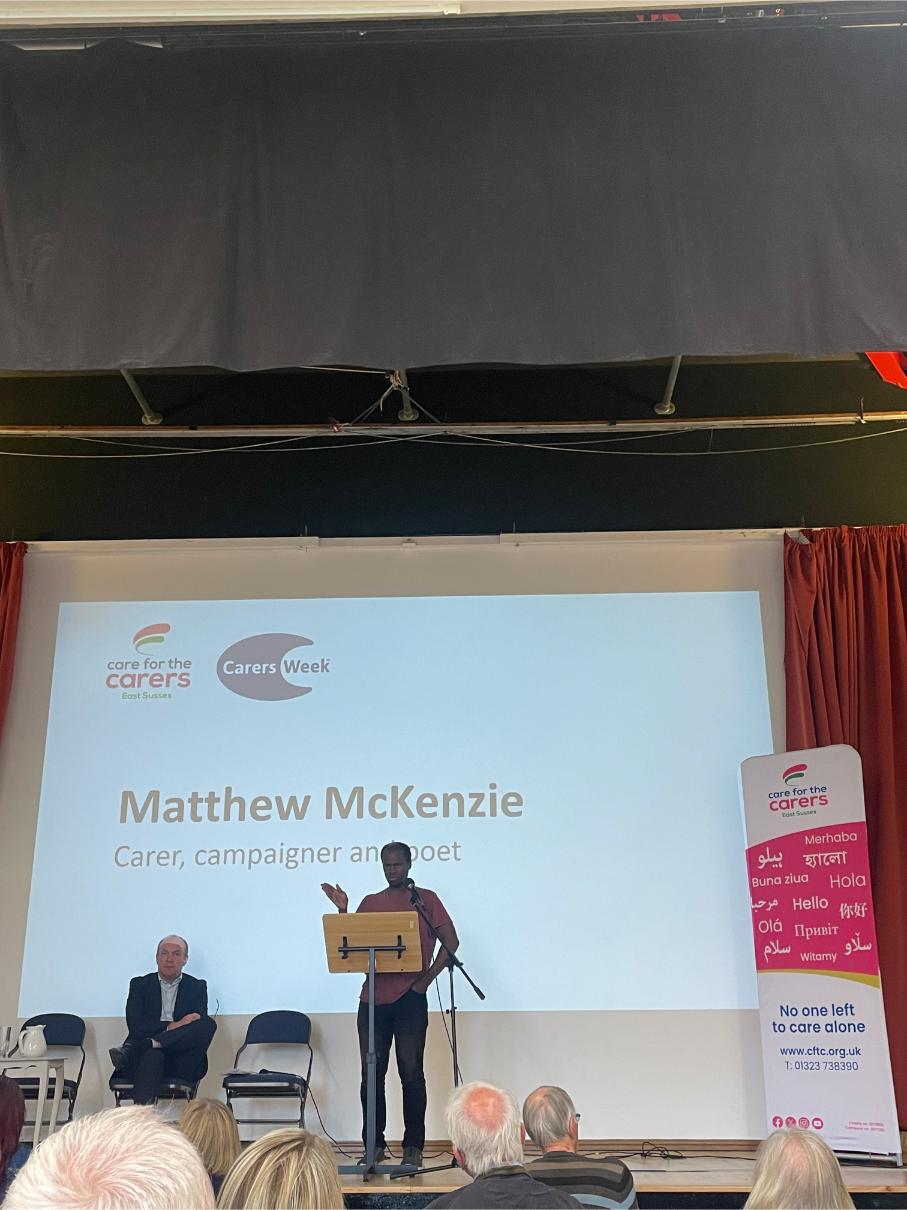
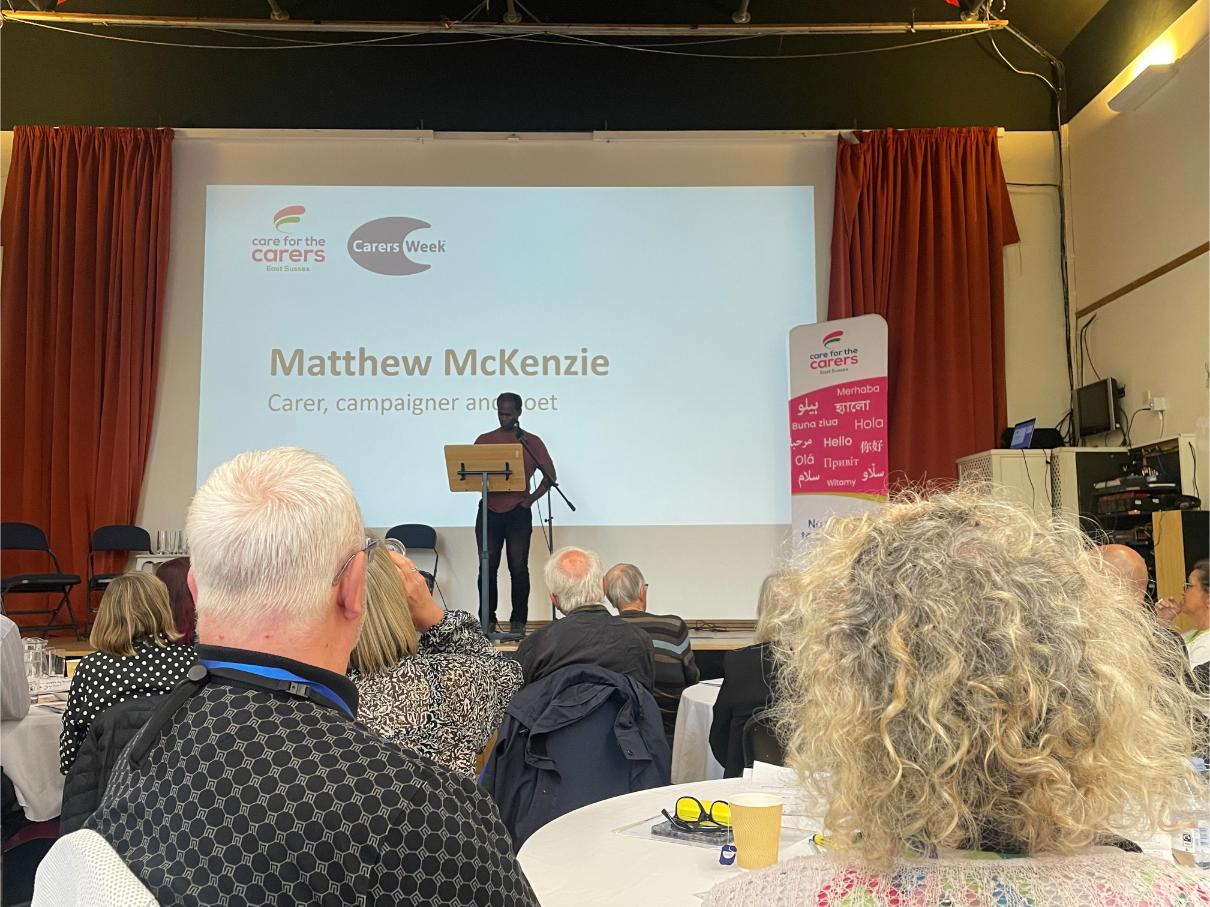
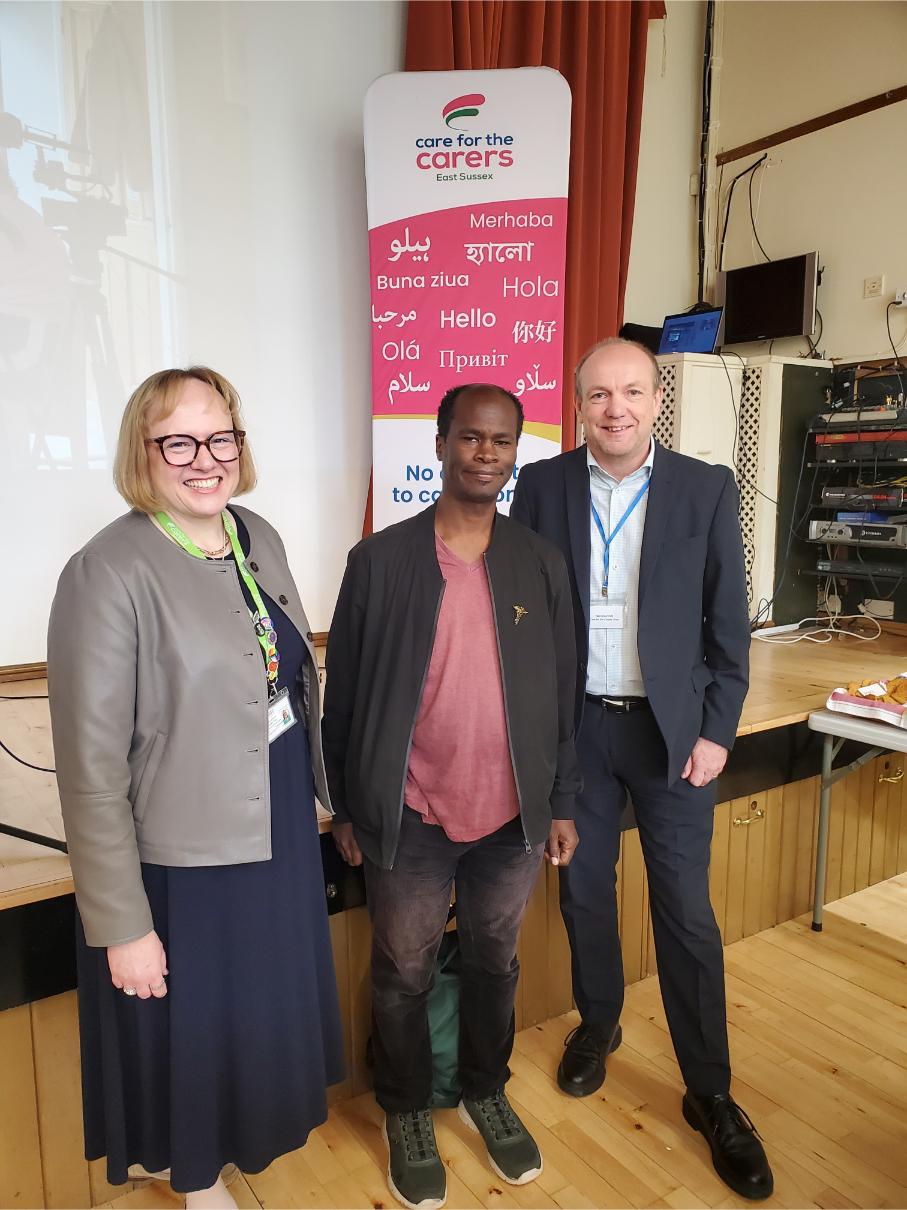
As part of Carers Week 2026, I had the privilege of travelling to East Dean in East Sussex to speak at the East Sussex Carers Voices – Celebrating Carers Week Event, organised by Care for the Carers. The event brought together unpaid carers, carers’ organisations, NHS representatives, local authority leaders, health professionals, community groups and carers from across East Sussex to discuss the realities of caring and identify ways to improve support for unpaid carers.
The event was hosted by Dr Neil Churchill, Chair of Care for the Carers, who guided the day’s discussions and emphasised the vital role carers play in society. Throughout the day, carers shared their personal stories, experiences and recommendations directly with decision-makers and service providers.
This blog post provides an overview of the key themes, speakers and discussions for those who were unable to attend.
Opening Remarks – Dr Neil Churchill
Dr Neil Churchill opened the event by welcoming attendees and recognising the significant contribution unpaid carers make to families, communities and public services.
He highlighted several key challenges currently facing carers:
• Rising financial pressures and cost-of-living concerns. • The growing number of carers leaving employment due to caring responsibilities. • Increased risks of poor physical and mental health among carers. • Social isolation and loneliness experienced by many carers. • Growing concerns around carer burnout.
Dr Churchill stressed that the country depends heavily on unpaid carers and that health and social care systems would struggle to function without them. He also spoke about the importance of moving towards a model where carers are treated as equal partners in care rather than simply being expected to cope alone.
A key message from his introduction was that carers should not be left to navigate fragmented services by themselves. Instead, health, social care and voluntary sector organisations must work together more effectively to recognise, support and value carers.
Carer Stories and Lived Experience
One of the most powerful aspects of the event was hearing directly from carers themselves.
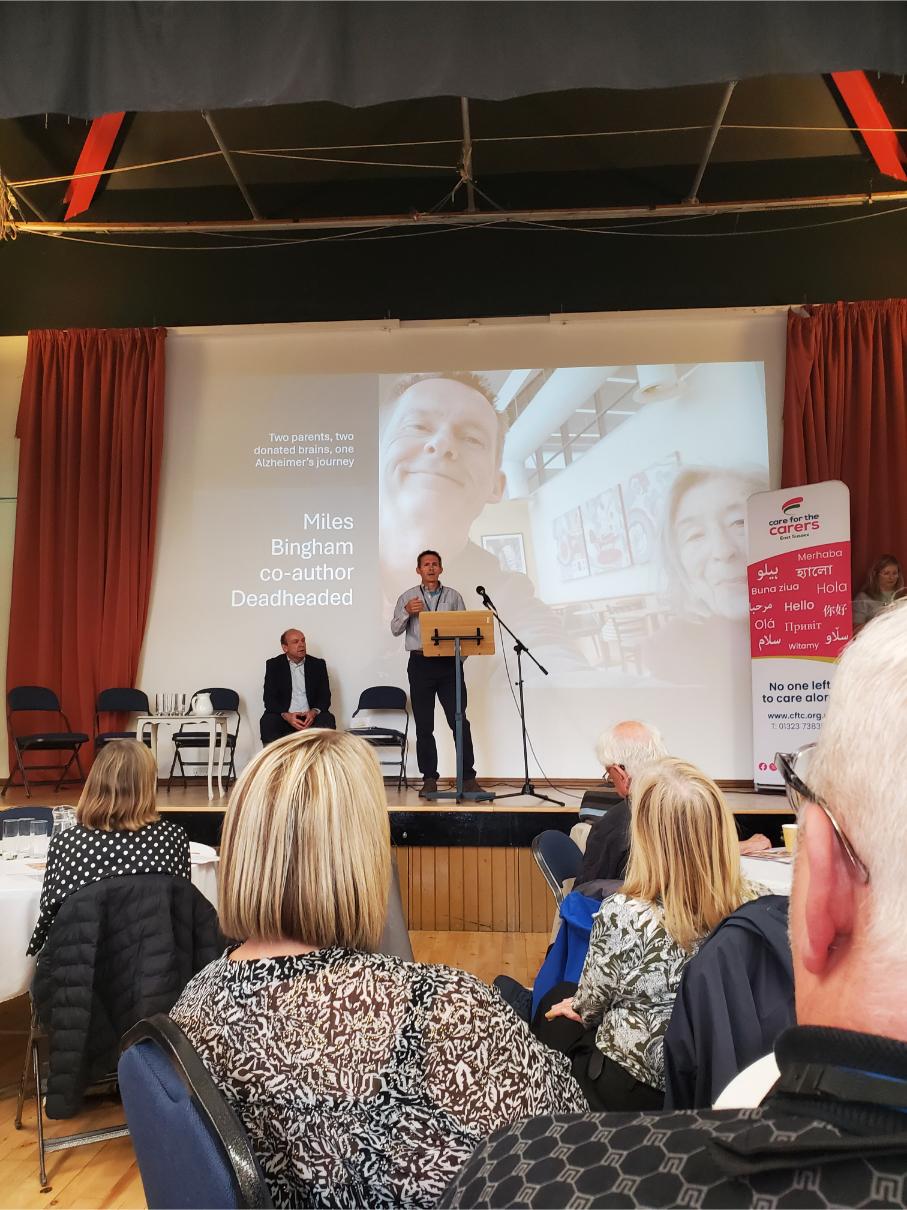
Miles Bing – Caring Through Dementia
The first speaker was Miles Bing, author of “Deadheaded: An Alzheimer’s Memoir by Mother and Son”.
Miles shared his family’s experience of supporting both of his parents through Alzheimer’s disease. His presentation explored the emotional impact of caring at a distance, the guilt often experienced by family members who live far away, and the difficulties of coordinating support across multiple services.
He spoke about:
• The long-term impact of dementia on families. • The challenges of accessing services in rural areas. • The lack of coordination between health and social care systems. • The practical and emotional burden placed on carers.
Many attendees identified strongly with his comments regarding the need for carers to act as coordinators between multiple organisations that often fail to communicate effectively with one another.
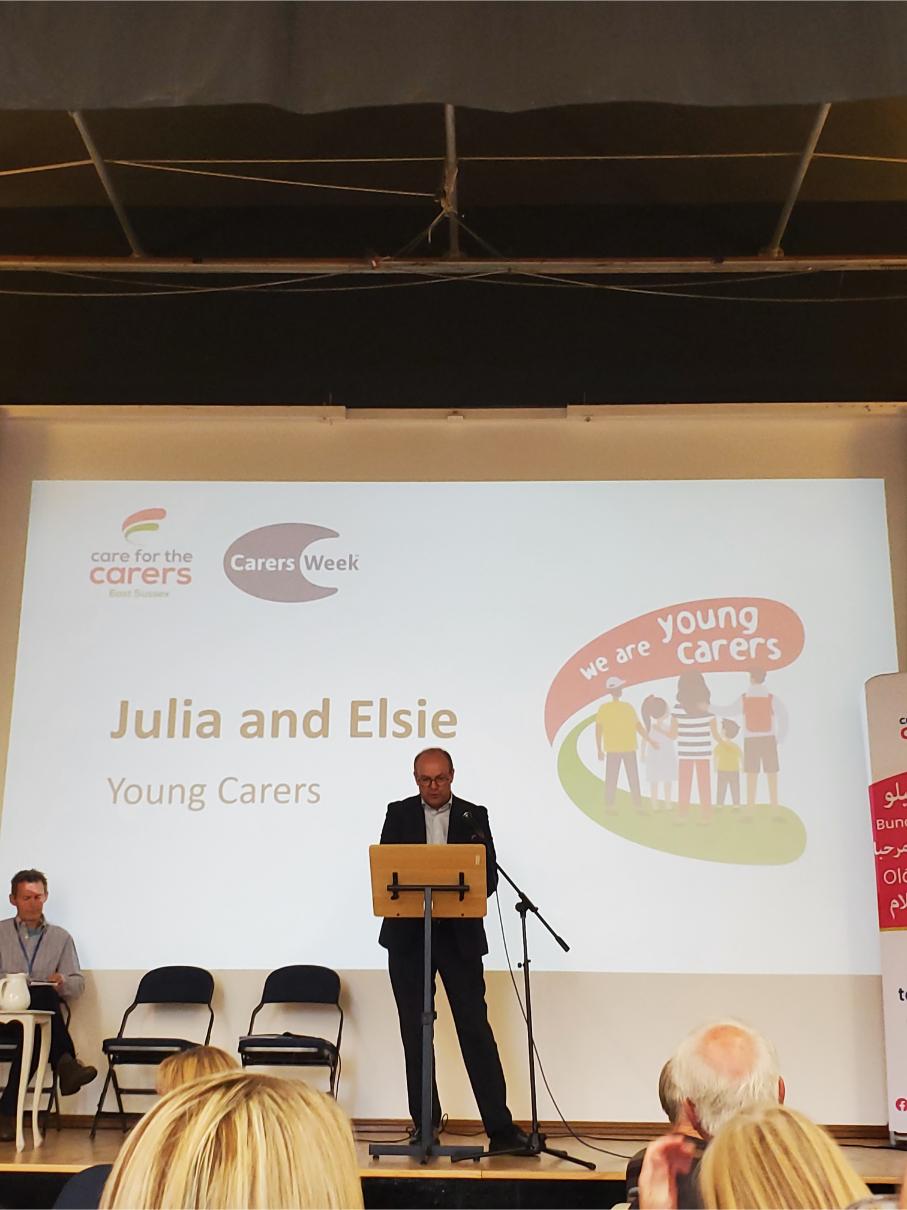
Young Carers – Julia and Elsie
The audience then heard from young carers Julia and Elsie, whose presentations left a lasting impression on everyone in the room.
Both spoke honestly about growing up while caring for family members with complex needs. They described responsibilities that included supporting parents during health crises, helping siblings with disabilities and managing situations involving emergency services.
Their stories demonstrated:
• The hidden nature of young caring responsibilities. • The emotional impact caring can have on children and young people. • The importance of early intervention and support. • The value of dedicated young carers services.
Perhaps most importantly, they highlighted that while caring can build resilience, no child should have to face these responsibilities without support.
The standing ovation they received reflected the courage and honesty with which they shared their experiences.
Round Table Discussions
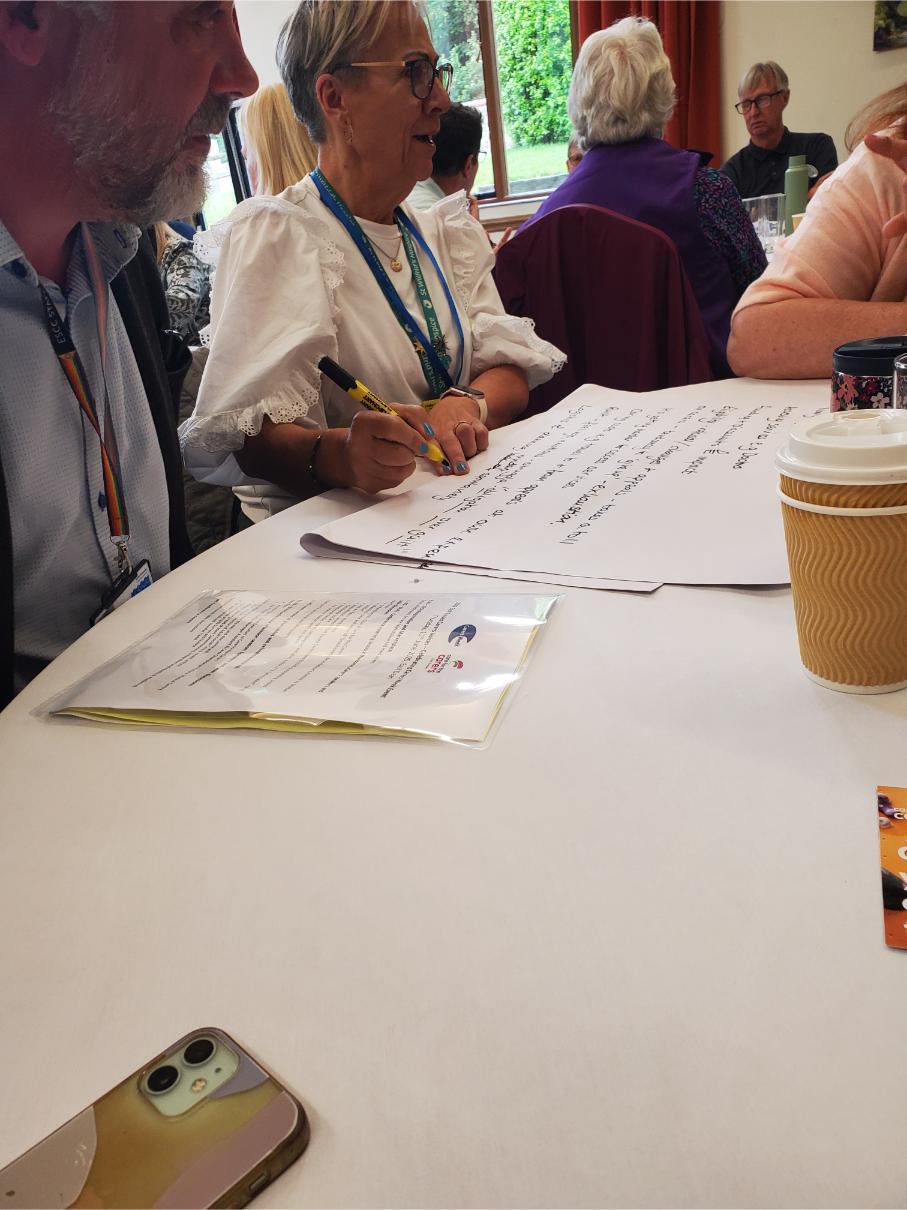
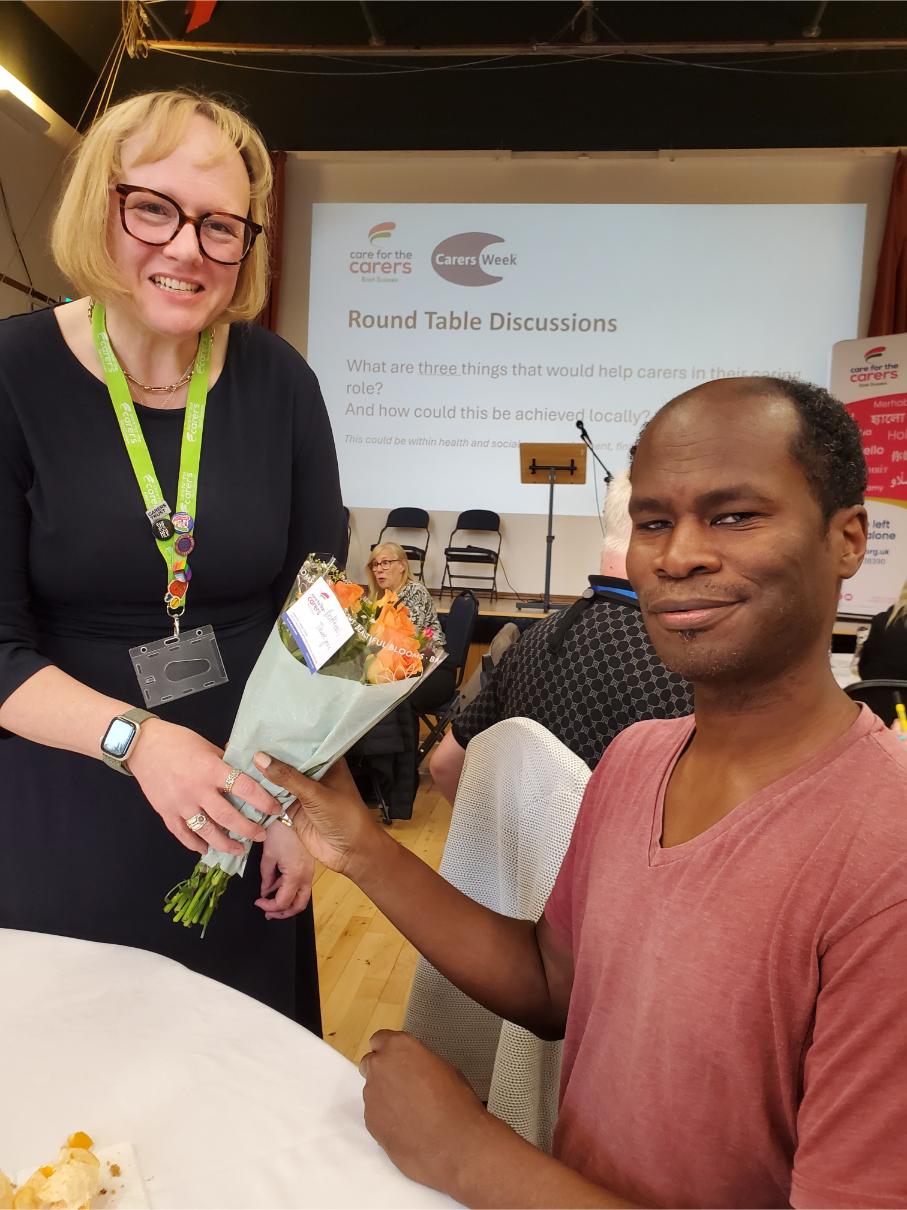
Following the morning speakers, attendees participated in facilitated round table discussions.
These conversations focused on:
• The biggest issues facing carers over the next six months. • Practical actions that could help carers in their caring role. • Barriers to accessing support. • Positive examples of support that should be expanded.
Several common themes emerged from these discussions:
Earlier Identification
Many carers reported not being recognised as carers until they had reached crisis point. Participants called for earlier identification within GP surgeries, hospitals and community services.
Access to Information
Attendees highlighted how difficult it can be to find accurate and timely information about available support.
Financial Pressures
Many carers discussed the financial impact of caring, including reduced employment opportunities and increasing household costs.
Mental Health and Wellbeing
Carers spoke about the emotional strain of caring and the importance of counselling, respite and peer support services.
Speaker sessions resumes
Diverse Communities and Caring
A particularly thought-provoking presentation was delivered by Manal Ahmed, who supports carers from ethnically diverse and refugee communities.
She discussed additional challenges experienced by carers from minority communities, including:
• Language barriers. • Cultural differences. • Social isolation. • Displacement trauma. • Immigration-related issues. • Financial and emotional dependency.
Manal explained that many carers experience multiple layers of disadvantage and that support services must be culturally aware and accessible to everyone.
She also highlighted positive examples of community-building activities that help carers connect with one another and reduce isolation.
Her presentation reinforced the importance of ensuring that no carer is excluded from support because of their background, language or circumstances.
My Presentation – A Carer’s Journey
I was invited to speak about my own experiences as a young carer and later as an adult carer supporting family members with autism and serious mental illness.
One of the key messages I shared was that many carers do not initially recognise themselves as carers. Like many people, I simply viewed what I was doing as helping my family.
However, over time I found myself:
• Coordinating care. • Supporting hospital admissions and discharges. • Managing appointments. • Advocating with professionals. • Navigating complex systems. • Supporting multiple family members simultaneously.
I spoke about how difficult it can be when carers are not listened to or involved in important decisions.
I also highlighted the importance of recognising carers as equal partners in care and ensuring that professionals understand the expertise carers develop through lived experience.
One of the central themes of my presentation was carers’ rights.
I encouraged carers to:
• Identify themselves as carers. • Seek support from local carers organisations. • Request carers assessments. • Learn about their rights. • Participate in co-production and service improvement. • Share their experiences to help reduce stigma.
To conclude, I performed my poem “It’s My Right”, which focuses on the rights every carer should expect to receive, including recognition, respect, involvement, information and support.
Afternoon Reflections and Future Priorities
The afternoon session included reflections from senior leaders from Care for the Carers, East Sussex County Council and NHS Sussex.
Discussions focused on:
• Improving identification of carers. • Supporting carers before crises occur. • Encouraging carers to access support services. • Learning from positive experiences of care. • Strengthening partnerships between carers and professionals.
Representatives acknowledged the crucial role carers play and listened to feedback gathered throughout the day.
Many carers expressed concerns about navigating systems that can often feel complicated and difficult to access. There was broad agreement that services should be simpler, more joined-up and more responsive to carers’ needs.
Key Messages from the Day
Several important messages emerged consistently throughout the event:
Carers Need Recognition
Many carers remain hidden and unidentified. Earlier recognition can lead to earlier support.
Carers Need Practical Support
Information, respite, emotional support and financial advice remain essential.
Carers Must Be Involved
Carers are experts in the lives of the people they support and should be treated as partners in care.
Young Carers Need Protection
Children and young people with caring responsibilities require dedicated support and opportunities to thrive.
Communities Matter
Strong local networks can help reduce isolation and improve wellbeing.
Prevention Is Better Than Crisis Management
Supporting carers early can prevent breakdowns in caring arrangements and reduce pressure on services.
Conclusion
The East Sussex Carers Voices Event was an excellent example of what can happen when carers, professionals and decision-makers come together to listen, learn and work collaboratively.
Throughout the day, carers shared powerful stories of resilience, commitment and compassion. They also spoke honestly about the challenges they face and the changes they want to see. I also recognised Agi who does lots of work raising carer awareness in Sussex, she recently spoke at my national ethnic mental health carers forum. So it was great to see her there.
Dr Neil Churchill’s leadership as host helped create an environment where carers felt able to speak openly and where decision-makers could hear directly from those with lived experience.
As Carers Week 2026 comes to a close, the challenge now is to turn these conversations into meaningful action. Carers should not have to struggle to be recognised, supported or heard.
The event demonstrated that when carers’ voices are placed at the centre of discussions, better solutions can emerge for everyone.
Thank you to Care for the Carers, all speakers, volunteers, professionals and carers who contributed to such a valuable and inspiring day.
By Matthew McKenzie – Carer activist (volunteer of Carers UK)
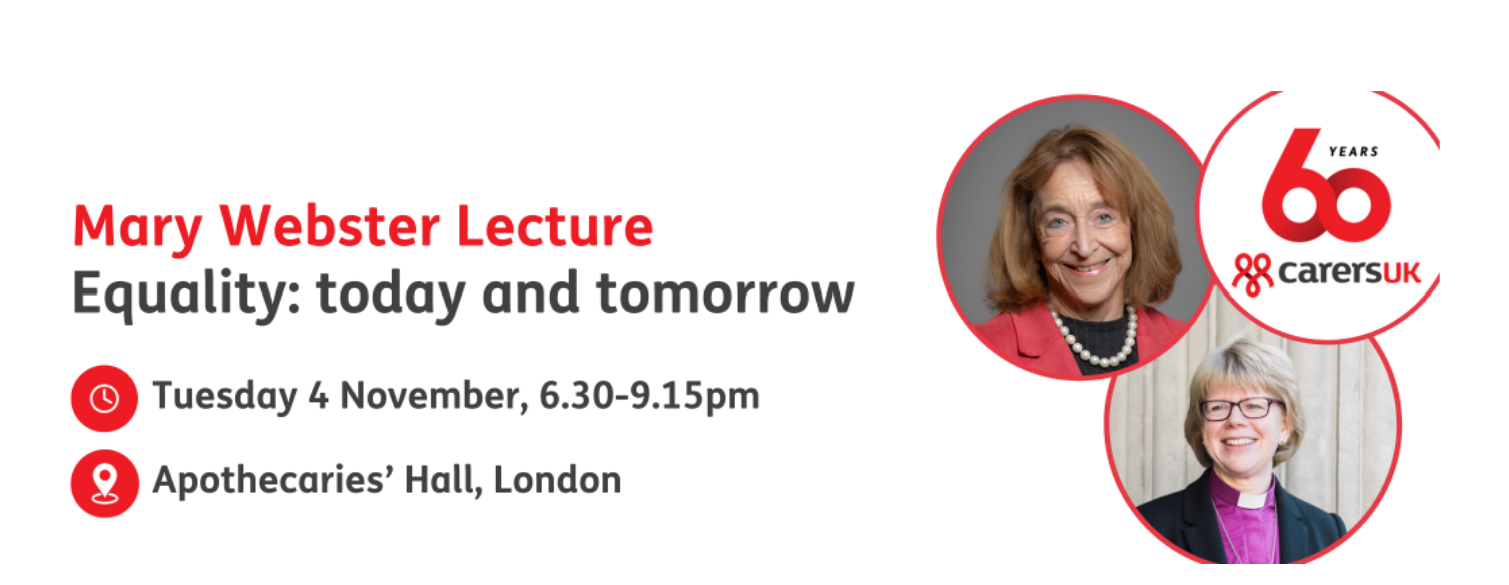
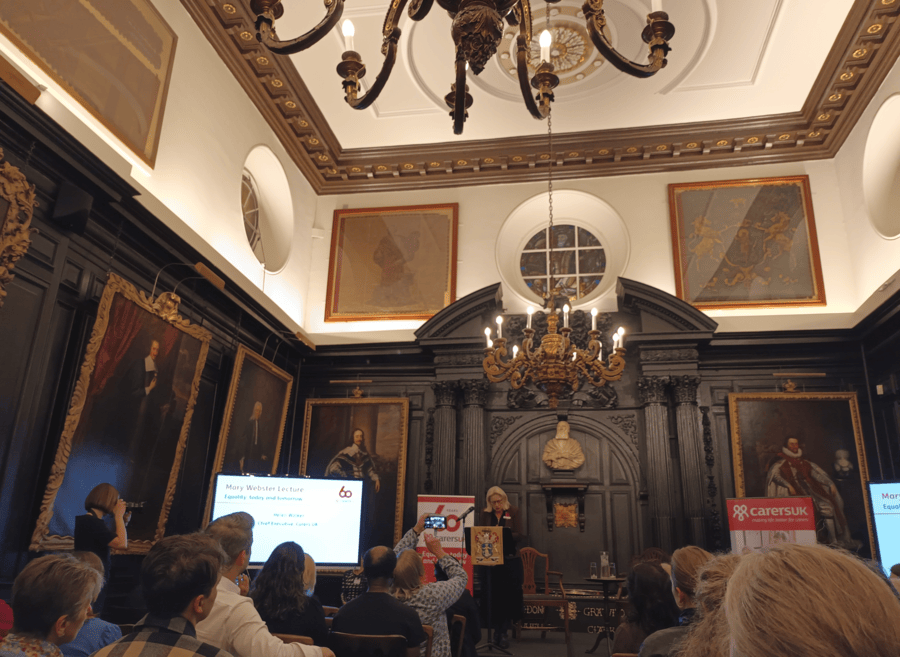
Last night I attended the Mary Webster Lecture at Apothecaries’ Hall in London, a special event marking Carers UK’s 60th anniversary. As someone who has cared for family members and now volunteers with Carers UK, it was moving to sit among other carers, professionals, and campaigners who have worked so hard for recognition and equality.
The event honoured Reverend Mary Webster, the founder of Carers UK, whose vision decades ago helped lay the foundations for unpaid carers’ rights. Today, as we still fight for equality and understanding, her legacy feels more important than ever.
Setting the Scene
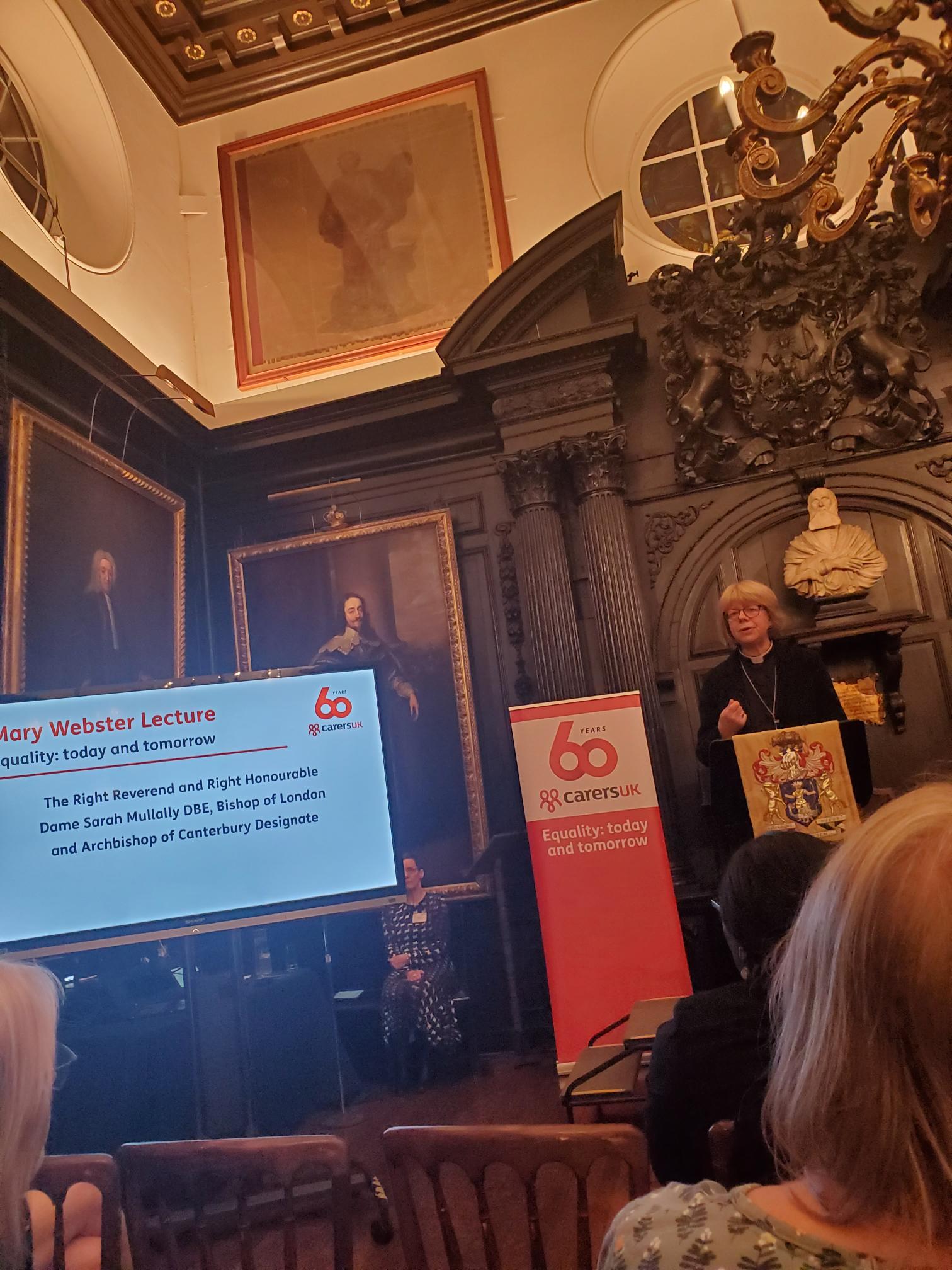
Apothecaries’ Hall is a grand, historic space filled with portraits and a sense of tradition. But it also felt like the right place to discuss change how we can build a future where carers are respected and supported equally. The evening began with warm welcomes and reflections from Helen Walker, Chief Executive of Carers UK. She reminded us that while progress has been made, many unpaid carers still live in poverty, often earning less than the minimum wage for full-time dedication.
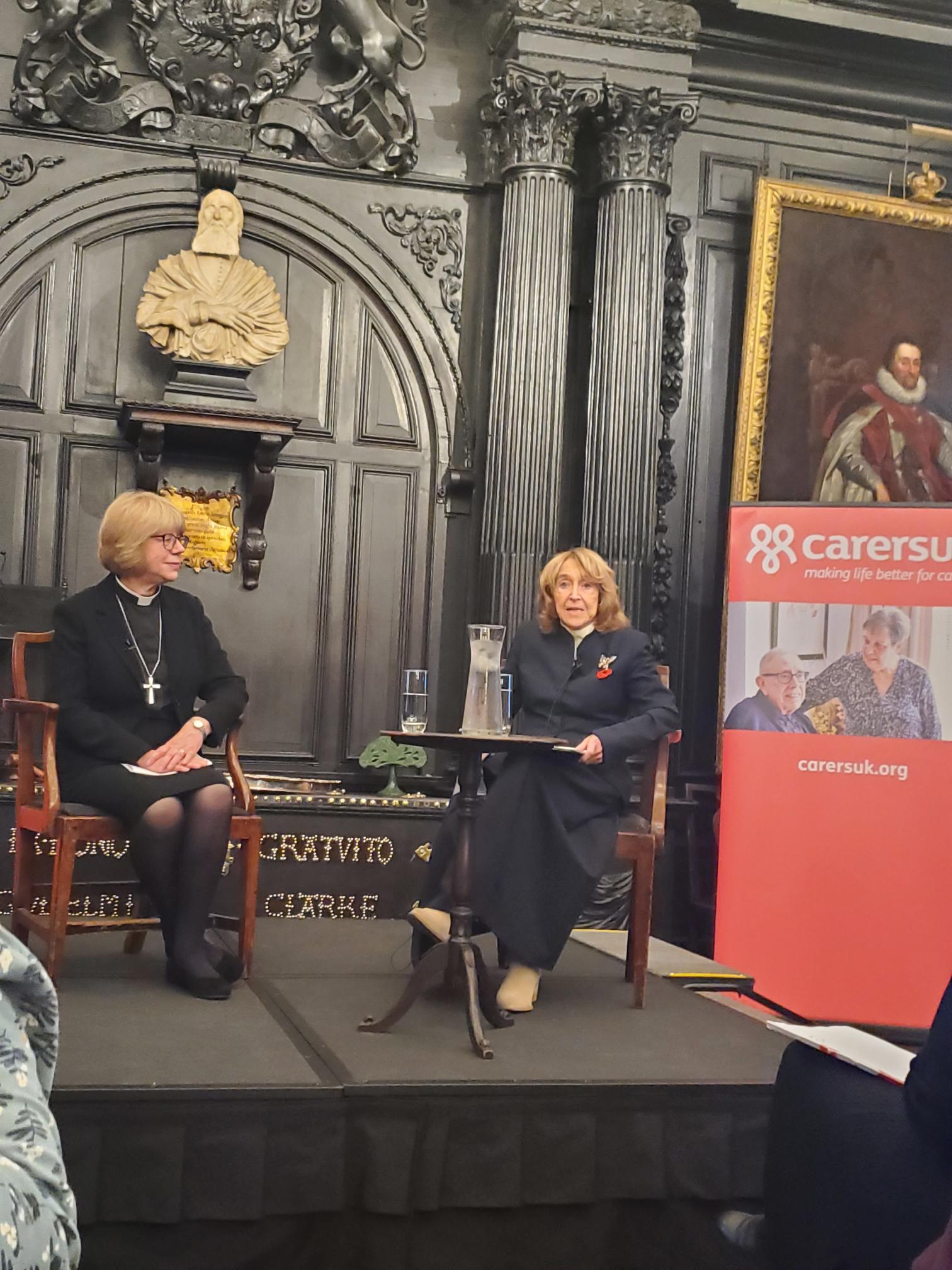
Then came the highlight of the evening a talk by The Right Reverend and Right Honourable Dame Sarah Mullally DBE, Bishop of London and recently named Archbishop of Canterbury Designate, in conversation with Baroness Jill Pitkeathley OBE, long-time carer champion and former Carers UK CEO.
Dignity in Caring
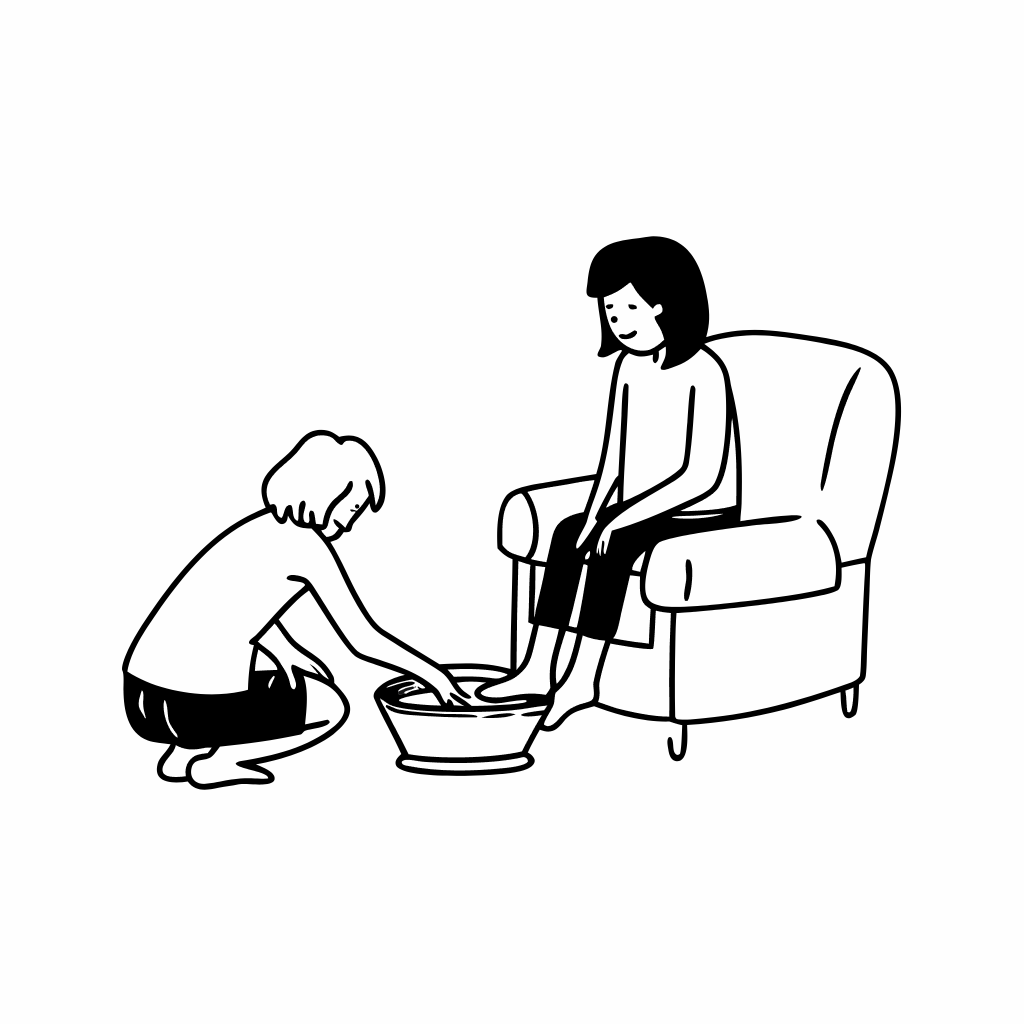
Bishop Sarah spoke with warmth and honesty about her journey from nursing to the Church. What struck me most was her story about washing her grandmother’s feet when she was a young nurse, which a simple act that carried deep dignity. She used that image to describe caring itself: often quiet, unseen, but filled with compassion and humanity.
Her message was clear that care is about dignity. Every person, regardless of ability, age, or background, has value. She reminded us that dependency isn’t weakness it’s part of being human. We all depend on others at different points in our lives.
As a Black male carer, that message really resonated. In many of our communities, caring happens quietly, often behind closed doors, without recognition or support. Bishop Sarah’s words reminded me that this invisible work deserves to be seen and respected not just by policy makers, but by society as a whole.
Lessons on Equality and Faith
Baroness Pitkeathley joined Bishop Sarah for a deep conversation about equality today and tomorrow. They reflected on how far carers’ rights have come and how far we still have to go. From health and financial struggles to workplace inequality, many of the same challenges from the 1990s remain today.
Bishop Sarah also spoke about the Church’s Reimagining Care Commission, which calls for a new “covenant of care” a moral agreement between government, communities, and families to share responsibility for those who need care. It’s not just about services, but about values: compassion, respect, and community.
Hearing that from someone soon to become the Archbishop of Canterbury gave me hope. It felt like a recognition that faith, ethics, and social justice must go hand in hand.
Voices from the Floor
The Q&A that followed was emotional and powerful. Carers from the audience spoke up about their struggles housing, mental health, disability, and the loneliness that caring can bring.
One carer shared the pain of fighting for proper housing for her disabled son; another spoke about the toll on her own health. Each voice reminded me that caring is more than statistics it’s real people doing extraordinary things every day, often without support.
My Reflection as a Black Carer Activist
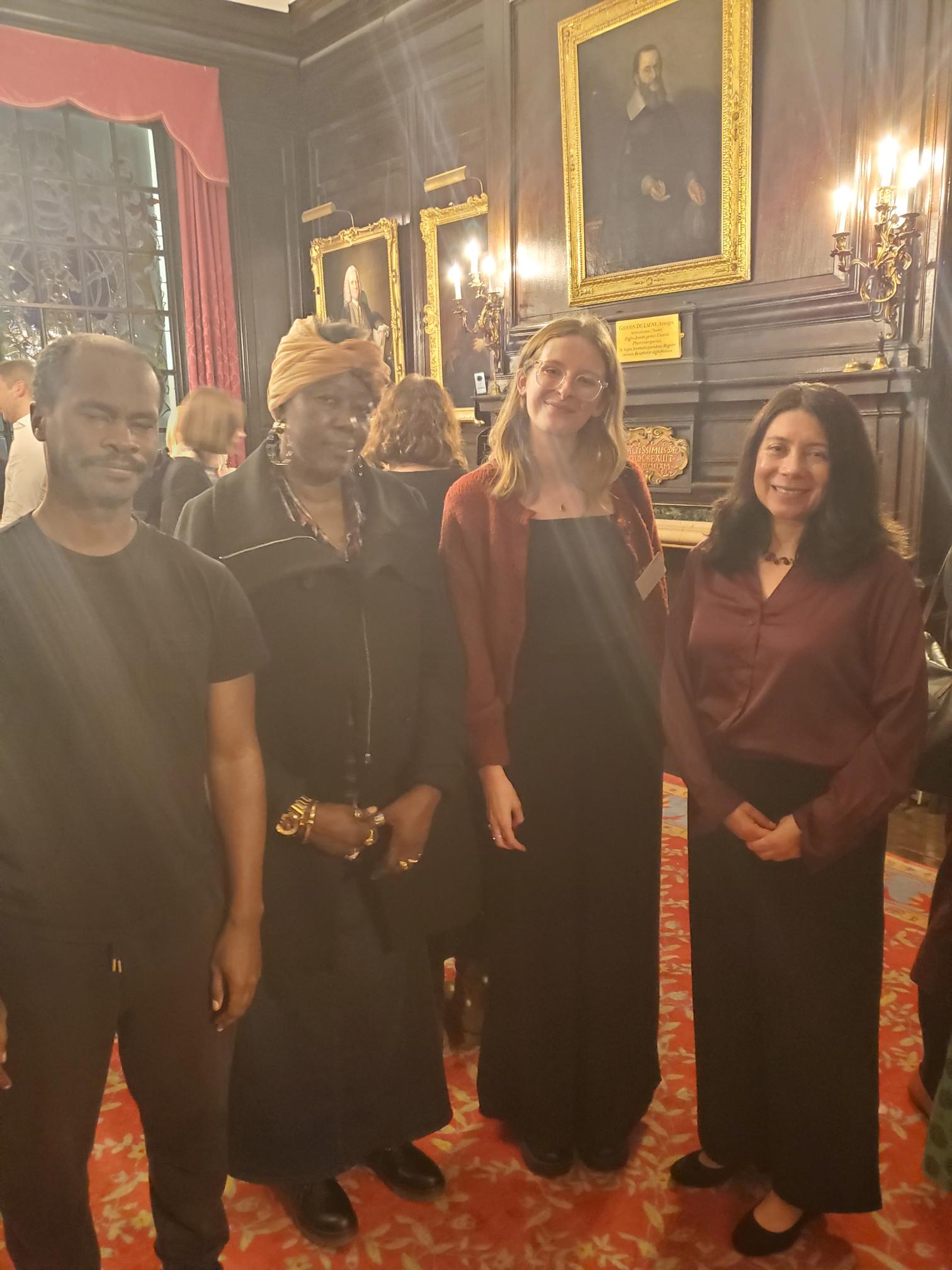
As I looked around the room, I thought of the carers in Black and ethnic minority communities who face extra barriers language, stigma, or fear of not being understood. Too often, our voices are missing from the conversation. I decided to have a chat with Dame Sarah Mullally about my thoughts, still nights like this show that inclusion is possible, and necessary.
Equality for carers means also recognising our diversity on different cultures, faiths, and family structures and ensuring that every carer can access the help they need, without judgement or struggle.
I left the event feeling encouraged but also challenged. Encouraged by the leadership and compassion of women like Bishop Sarah and Baroness Pitkeathley, who continue to champion carers’ rights. Challenged, because the journey isn’t over and each of us, whatever our background, has a role to play.
A Call for Tomorrow
Sixty years after Mary Webster founded Carers UK, unpaid carers are still holding society together.
We save the country billions, yet too many of us live in hardship. As Bishop Sarah said, we must rethink how we value care not as a cost, but as a cornerstone of our humanity.
For me, as a carer activist, that means continuing to speak up, share stories, and bring carers from all communities together. Because equality today and tomorrow starts with being seen, heard, and valued.