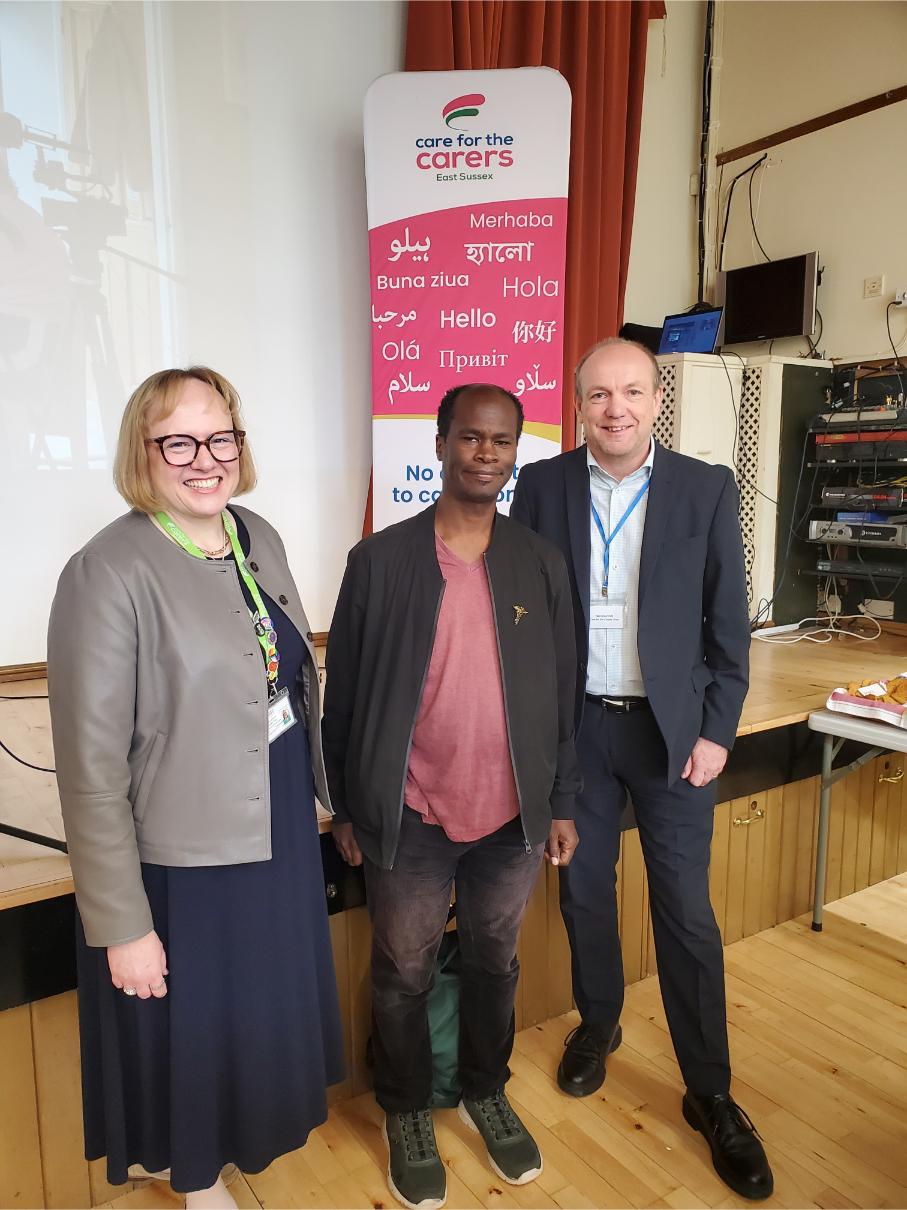
East Dean Village Hall – 11 June 2026
Written by Matthew McKenzie, Speaker, Carer, Campaigner and Poet
As part of Carers Week 2026, I had the privilege of travelling to East Dean in East Sussex to speak at the East Sussex Carers Voices – Celebrating Carers Week Event, organised by Care for the Carers. The event brought together unpaid carers, carers’ organisations, NHS representatives, local authority leaders, health professionals, community groups and carers from across East Sussex to discuss the realities of caring and identify ways to improve support for unpaid carers.

The event was hosted by Dr Neil Churchill, Chair of Care for the Carers, who guided the day’s discussions and emphasised the vital role carers play in society. Throughout the day, carers shared their personal stories, experiences and recommendations directly with decision-makers and service providers.
This blog post provides an overview of the key themes, speakers and discussions for those who were unable to attend.
Opening Remarks – Dr Neil Churchill
Dr Neil Churchill opened the event by welcoming attendees and recognising the significant contribution unpaid carers make to families, communities and public services.
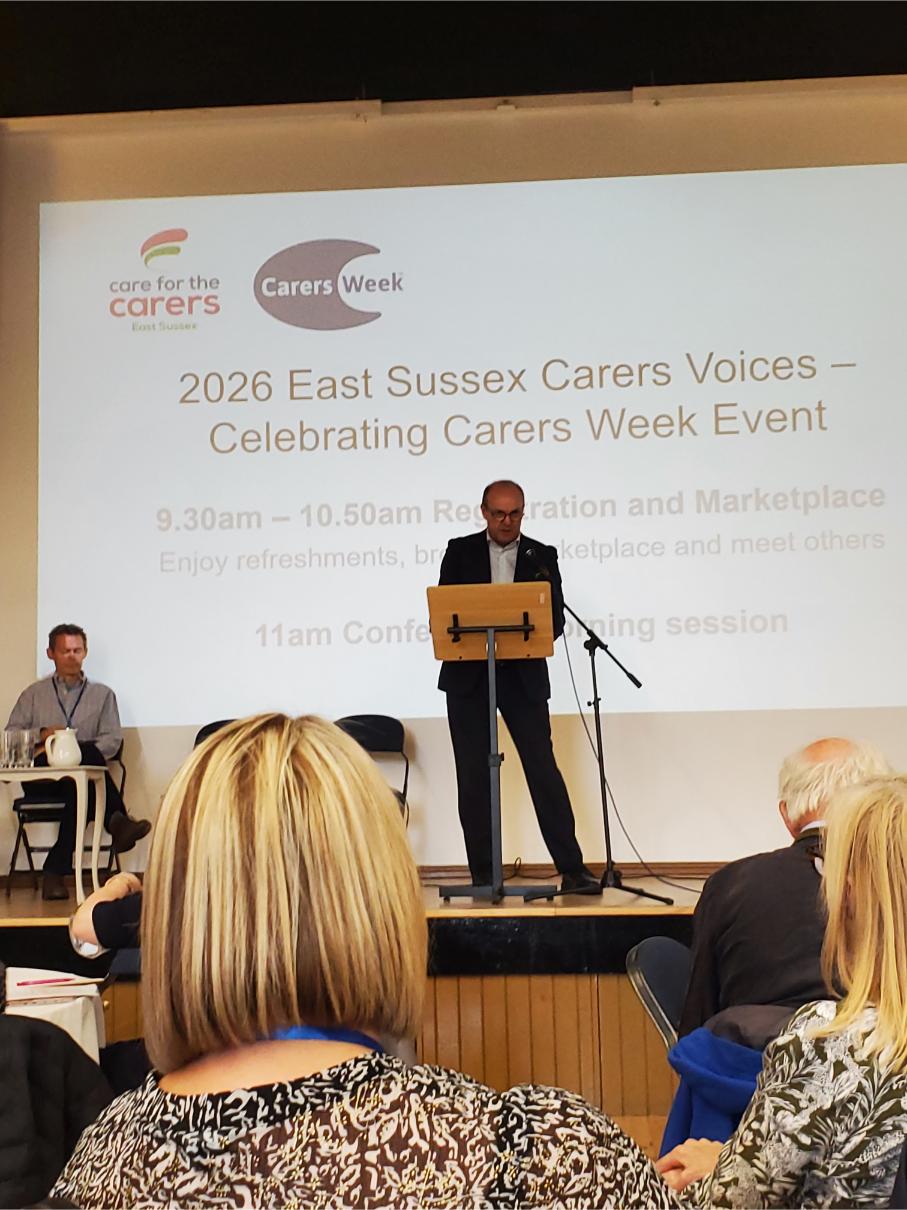
He highlighted several key challenges currently facing carers:
• Rising financial pressures and cost-of-living concerns.
• The growing number of carers leaving employment due to caring responsibilities.
• Increased risks of poor physical and mental health among carers.
• Social isolation and loneliness experienced by many carers.
• Growing concerns around carer burnout.
Dr Churchill stressed that the country depends heavily on unpaid carers and that health and social care systems would struggle to function without them. He also spoke about the importance of moving towards a model where carers are treated as equal partners in care rather than simply being expected to cope alone.
A key message from his introduction was that carers should not be left to navigate fragmented services by themselves. Instead, health, social care and voluntary sector organisations must work together more effectively to recognise, support and value carers.
Carer Stories and Lived Experience
One of the most powerful aspects of the event was hearing directly from carers themselves.
Miles Bing – Caring Through Dementia
The first speaker was Miles Bing, author of “Deadheaded: An Alzheimer’s Memoir by Mother and Son”.
Miles shared his family’s experience of supporting both of his parents through Alzheimer’s disease. His presentation explored the emotional impact of caring at a distance, the guilt often experienced by family members who live far away, and the difficulties of coordinating support across multiple services.
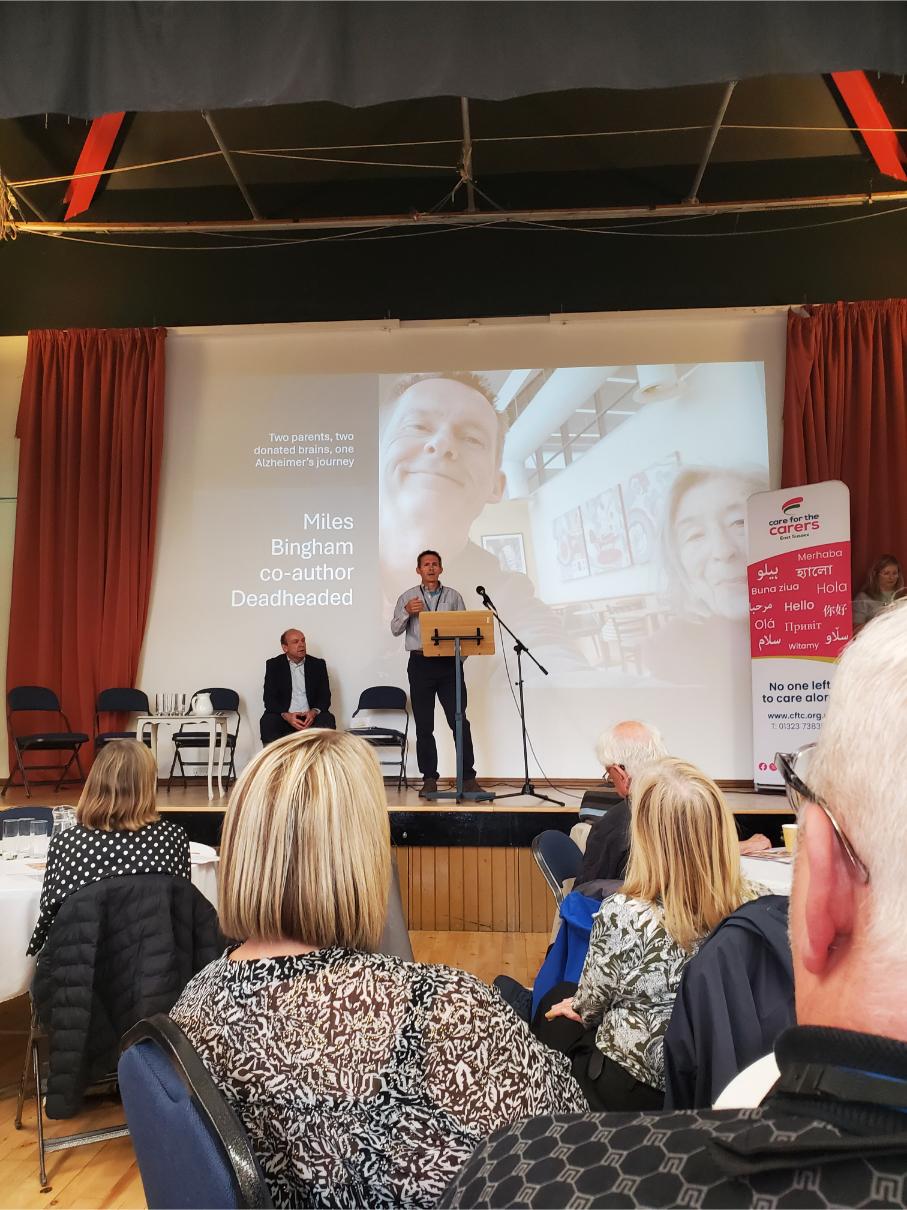
He spoke about:
• The long-term impact of dementia on families.
• The challenges of accessing services in rural areas.
• The lack of coordination between health and social care systems.
• The practical and emotional burden placed on carers.
Many attendees identified strongly with his comments regarding the need for carers to act as coordinators between multiple organisations that often fail to communicate effectively with one another.
Young Carers – Julia and Elsie
The audience then heard from young carers Julia and Elsie, whose presentations left a lasting impression on everyone in the room.
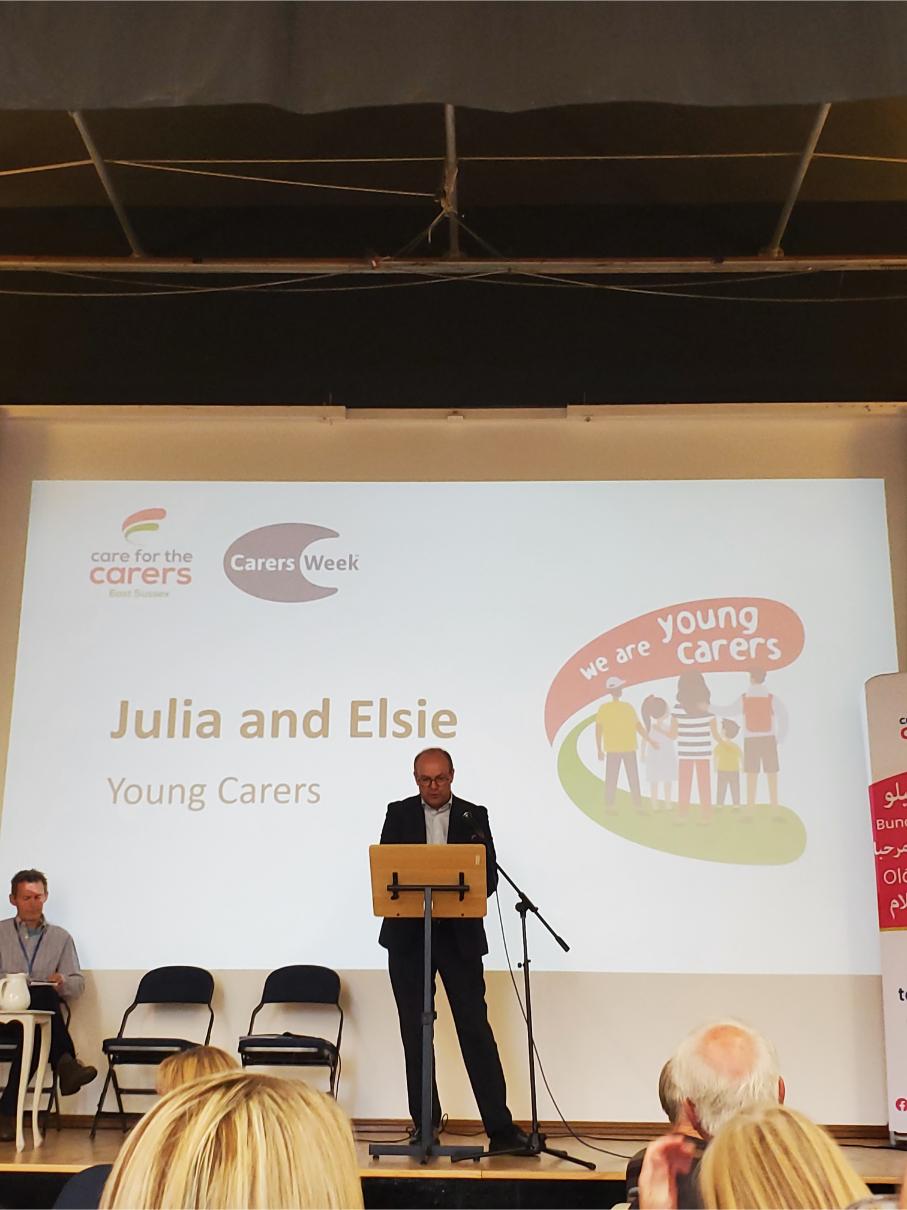
Both spoke honestly about growing up while caring for family members with complex needs. They described responsibilities that included supporting parents during health crises, helping siblings with disabilities and managing situations involving emergency services.
Their stories demonstrated:
• The hidden nature of young caring responsibilities.
• The emotional impact caring can have on children and young people.
• The importance of early intervention and support.
• The value of dedicated young carers services.
Perhaps most importantly, they highlighted that while caring can build resilience, no child should have to face these responsibilities without support.
The standing ovation they received reflected the courage and honesty with which they shared their experiences.
Round Table Discussions
Following the morning speakers, attendees participated in facilitated round table discussions.

These conversations focused on:
• The biggest issues facing carers over the next six months.
• Practical actions that could help carers in their caring role.
• Barriers to accessing support.
• Positive examples of support that should be expanded.
Several common themes emerged from these discussions:
Earlier Identification
Many carers reported not being recognised as carers until they had reached crisis point. Participants called for earlier identification within GP surgeries, hospitals and community services.
Access to Information
Attendees highlighted how difficult it can be to find accurate and timely information about available support.
Financial Pressures
Many carers discussed the financial impact of caring, including reduced employment opportunities and increasing household costs.
Mental Health and Wellbeing
Carers spoke about the emotional strain of caring and the importance of counselling, respite and peer support services.
Speaker sessions resumes
Diverse Communities and Caring
A particularly thought-provoking presentation was delivered by Manal Ahmed, who supports carers from ethnically diverse and refugee communities.
She discussed additional challenges experienced by carers from minority communities, including:
• Language barriers.
• Cultural differences.
• Social isolation.
• Displacement trauma.
• Immigration-related issues.
• Financial and emotional dependency.
Manal explained that many carers experience multiple layers of disadvantage and that support services must be culturally aware and accessible to everyone.
She also highlighted positive examples of community-building activities that help carers connect with one another and reduce isolation.
Her presentation reinforced the importance of ensuring that no carer is excluded from support because of their background, language or circumstances.
My Presentation – A Carer’s Journey
I was invited to speak about my own experiences as a young carer and later as an adult carer supporting family members with autism and serious mental illness.
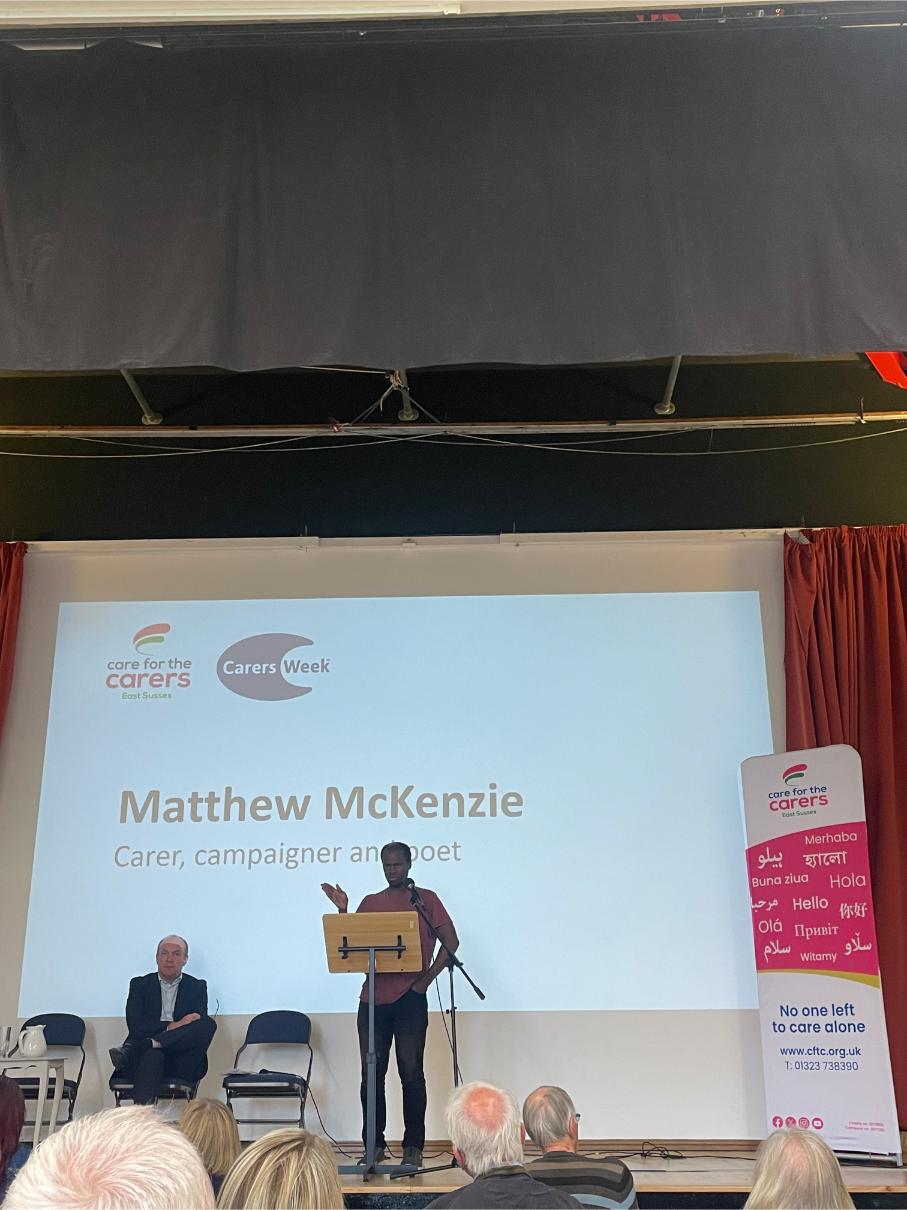
One of the key messages I shared was that many carers do not initially recognise themselves as carers. Like many people, I simply viewed what I was doing as helping my family.
However, over time I found myself:
• Coordinating care.
• Supporting hospital admissions and discharges.
• Managing appointments.
• Advocating with professionals.
• Navigating complex systems.
• Supporting multiple family members simultaneously.
I spoke about how difficult it can be when carers are not listened to or involved in important decisions.
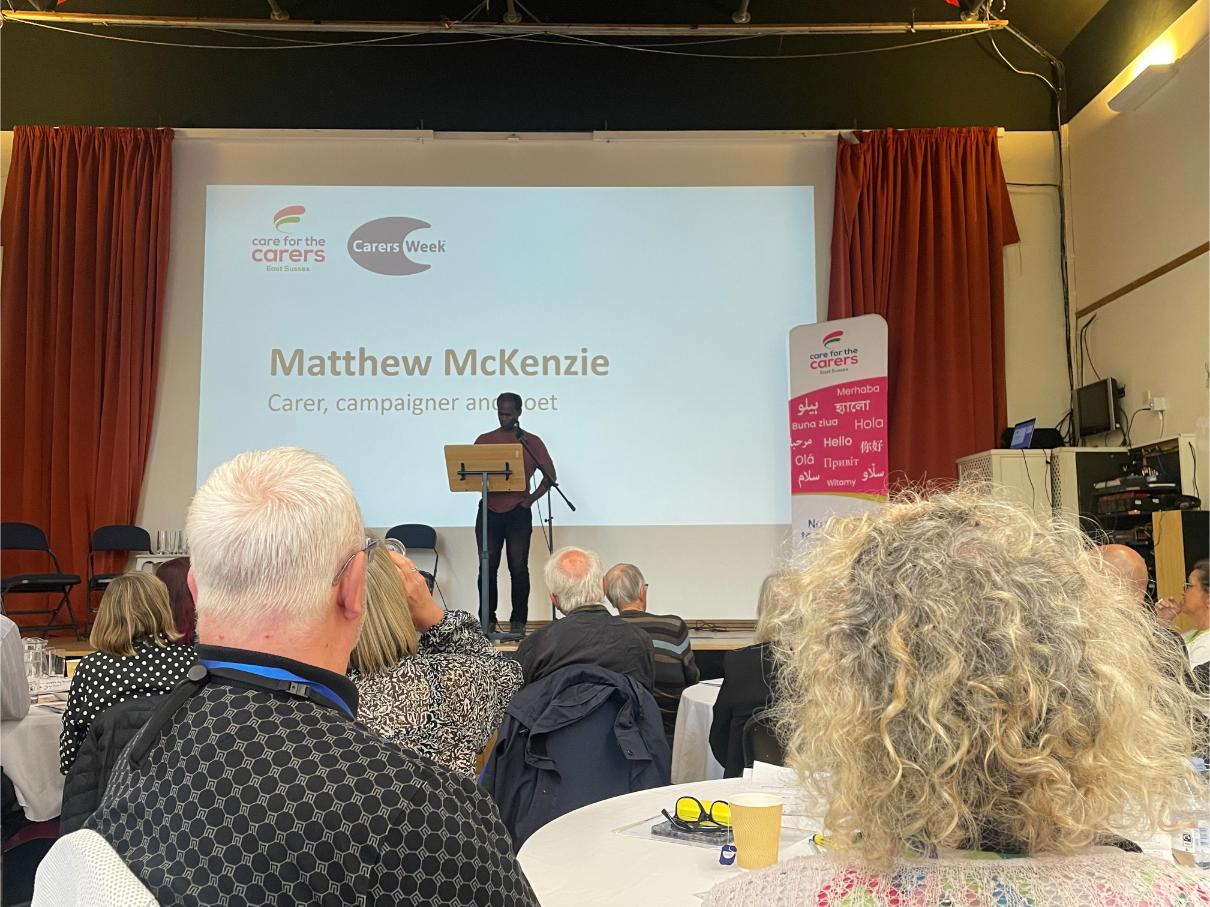
I also highlighted the importance of recognising carers as equal partners in care and ensuring that professionals understand the expertise carers develop through lived experience.
One of the central themes of my presentation was carers’ rights.
I encouraged carers to:
• Identify themselves as carers.
• Seek support from local carers organisations.
• Request carers assessments.
• Learn about their rights.
• Participate in co-production and service improvement.
• Share their experiences to help reduce stigma.
To conclude, I performed my poem “It’s My Right”, which focuses on the rights every carer should expect to receive, including recognition, respect, involvement, information and support.
Afternoon Reflections and Future Priorities
The afternoon session included reflections from senior leaders from Care for the Carers, East Sussex County Council and NHS Sussex.
Discussions focused on:
• Improving identification of carers.
• Supporting carers before crises occur.
• Encouraging carers to access support services.
• Learning from positive experiences of care.
• Strengthening partnerships between carers and professionals.
Representatives acknowledged the crucial role carers play and listened to feedback gathered throughout the day.
Many carers expressed concerns about navigating systems that can often feel complicated and difficult to access. There was broad agreement that services should be simpler, more joined-up and more responsive to carers’ needs.
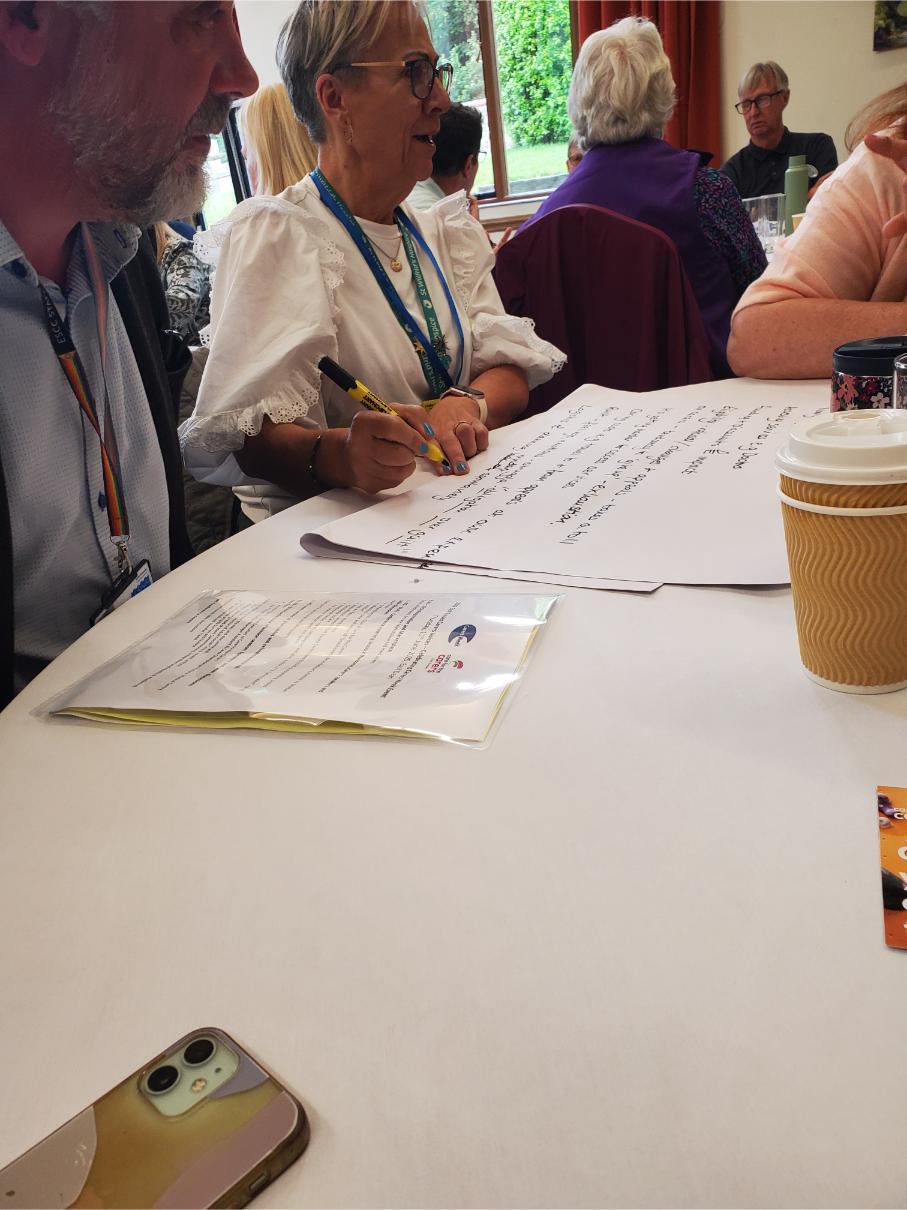
Key Messages from the Day
Several important messages emerged consistently throughout the event:
Carers Need Recognition
Many carers remain hidden and unidentified. Earlier recognition can lead to earlier support.
Carers Need Practical Support
Information, respite, emotional support and financial advice remain essential.
Carers Must Be Involved
Carers are experts in the lives of the people they support and should be treated as partners in care.
Young Carers Need Protection
Children and young people with caring responsibilities require dedicated support and opportunities to thrive.
Communities Matter
Strong local networks can help reduce isolation and improve wellbeing.
Prevention Is Better Than Crisis Management
Supporting carers early can prevent breakdowns in caring arrangements and reduce pressure on services.
Conclusion
The East Sussex Carers Voices Event was an excellent example of what can happen when carers, professionals and decision-makers come together to listen, learn and work collaboratively.
Throughout the day, carers shared powerful stories of resilience, commitment and compassion. They also spoke honestly about the challenges they face and the changes they want to see. I also recognised Agi who does lots of work raising carer awareness in Sussex, she recently spoke at my national ethnic mental health carers forum. So it was great to see her there.
Dr Neil Churchill’s leadership as host helped create an environment where carers felt able to speak openly and where decision-makers could hear directly from those with lived experience.
As Carers Week 2026 comes to a close, the challenge now is to turn these conversations into meaningful action. Carers should not have to struggle to be recognised, supported or heard.
The event demonstrated that when carers’ voices are placed at the centre of discussions, better solutions can emerge for everyone.
Thank you to Care for the Carers, all speakers, volunteers, professionals and carers who contributed to such a valuable and inspiring day.