By Matthew McKenzie, A Caring Mind (Carers UK Ambassador)
As an unpaid mental health carer, I have spent years navigating hospital corridors, GP practices, care plans, juggling crises, and long silences where carers are too often left out. I am sure unpaid carers are expected to hold families together, while notice early warning signs, and keep loved ones safe. Still I always mention most of us receive no formal training, and our knowledge is rarely recognised as expertise.
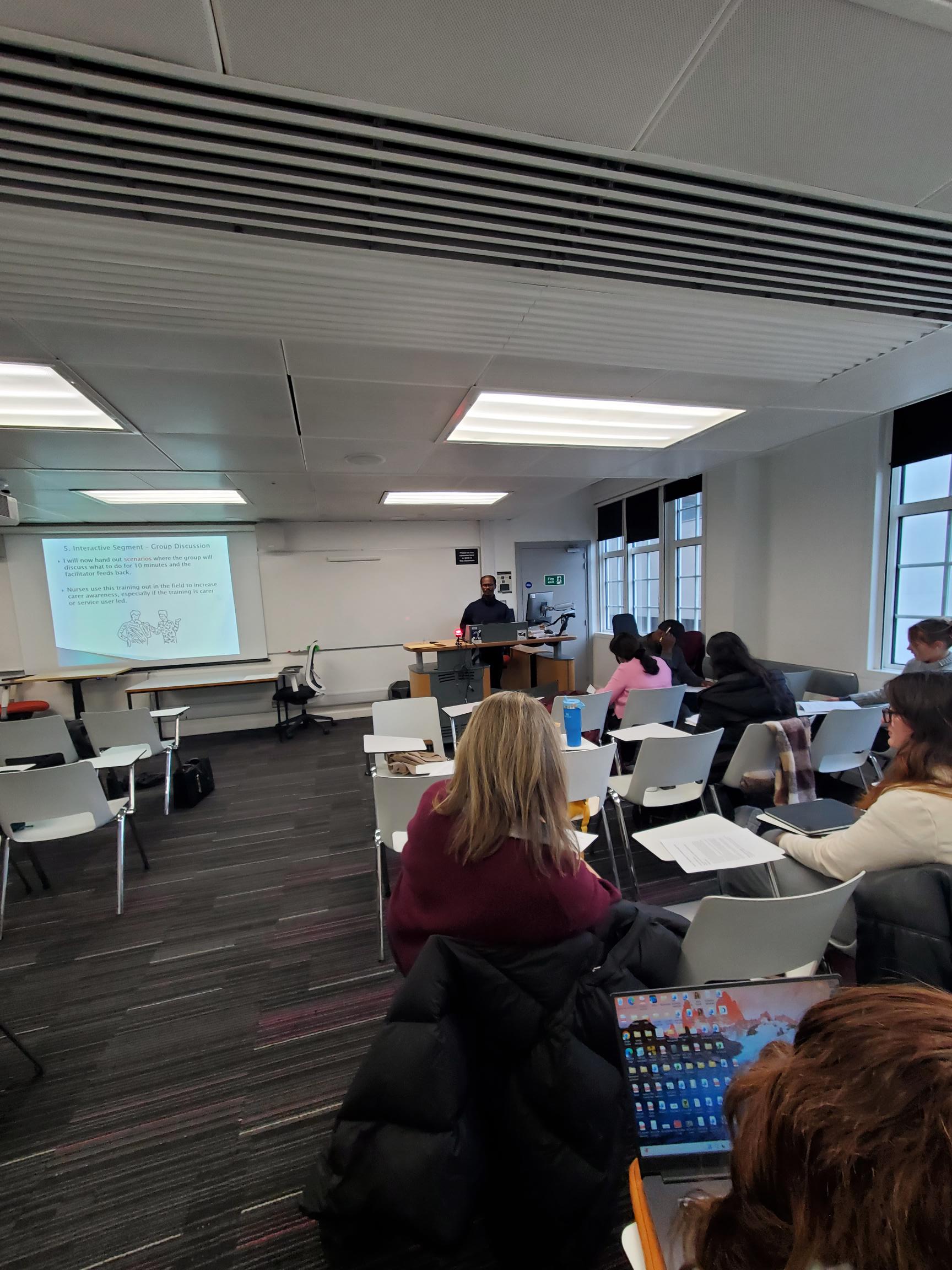
That is why recently teaching a module for the Masters course to mental health nursing students at King’s College London felt so important. Not after they qualify. Not once they are overwhelmed in practice. But before they step out into the field. The session took place 15th of January.
Why carer-led teaching matters
Unpaid carers sit at the sharp edge of the mental health system. We see what works, what harms, and what gets missed when professionals don’t fully understand the family context. When students hear directly from carers, learning moves beyond textbooks into real life into the emotional, practical, and ethical realities of care.
Training mental health professionals without carer voices is like teaching navigation without a map.
What I taught: lived experience as learning
The session I delivered was built entirely from a carer’s perspective and centred on one core message: you cannot deliver effective mental health care without working with carers.
The module covered:
My lived experience as an unpaid mental health carer How I became a carer, the emotional impact, the daily responsibilities, and the toll caring can take on mental and physical health.
The hidden impact on carers Burnout, stigma, isolation, guilt, and the reality that many carers are supporting professionals while receiving little support themselves.
Carers as partners, not problems Exploring what happens when carers are ignored – and how outcomes improve when they are listened to, informed, and included.
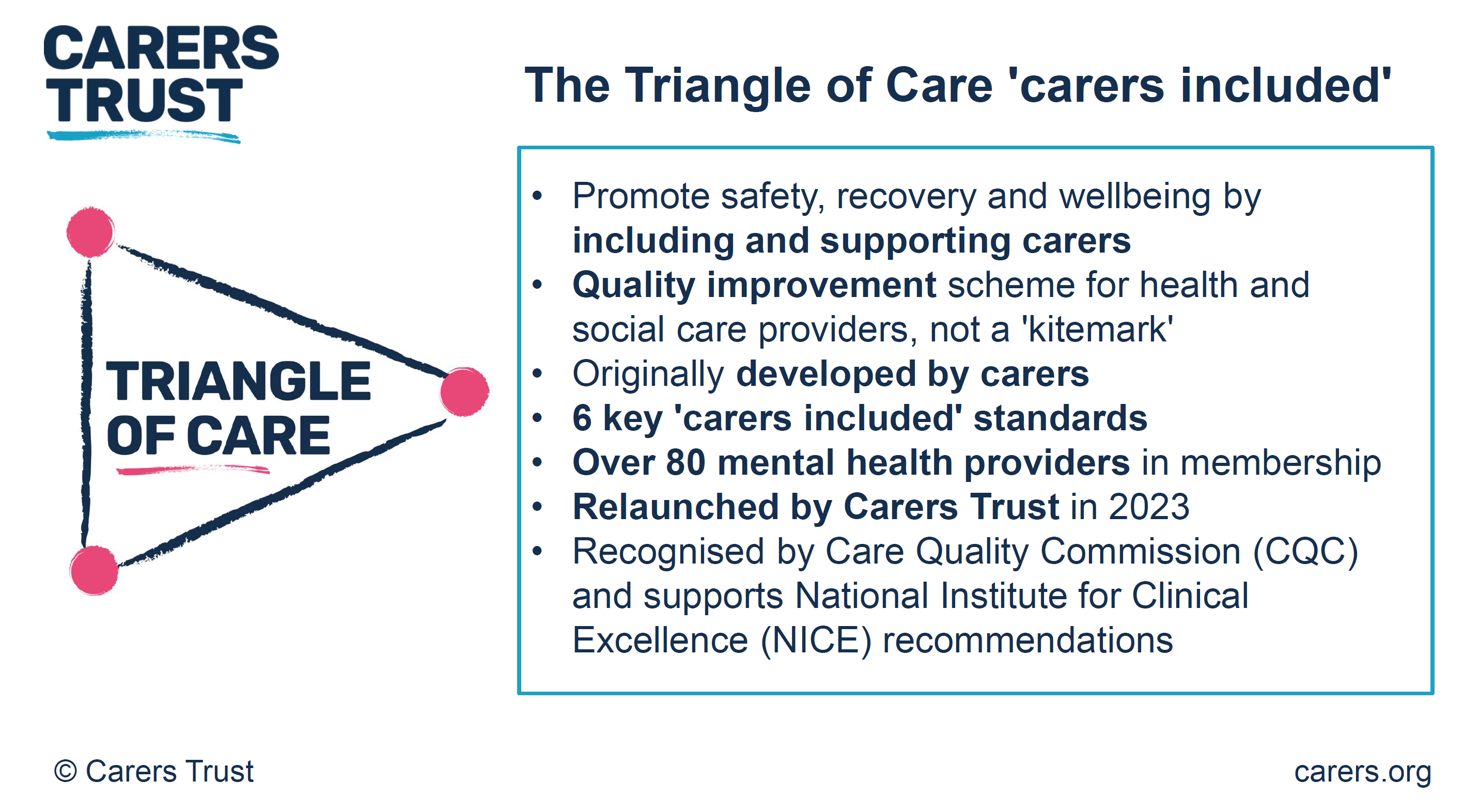
The Triangle of Care A strong emphasis on the Triangle of Care framework: the partnership between service user, carer, and professional. I challenged students to see carers as a vital link in the chain, not an optional extra.
Carers UK and carer identification Highlighting the role of Carers UK in advocacy, rights, resources, and why professionals must help carers identify themselves early so they can access support.
Practical skills for future nurses Listening without defensiveness, sharing information appropriately, involving carers in care planning, and understanding when carers need support themselves.
Interactive discussion and reflection Students worked through real-life scenarios, asking: What would I do differently now that I understand the carer experience?
The shift we need in education
Most unpaid carers are not trained for their role. We learn through crisis, exhaustion, and trial and error. Mental health professionals, however, are trained, which means universities have a responsibility to ensure that training includes those of us living this reality every day.
Carer-led teaching builds empathy, improves communication, and ultimately leads to safer, more effective care. When students learn early that carers matter, they carry that mindset into practice.
A final thought
Unpaid carers are already part of the mental health workforce, it’s just the title unpaid, unsupported, and often unheard. So I feel bringing carers into universities is not a “nice extra”. It is absolutely essential.
If we want a mental health system that truly works, we must start by listening to those who never clock off.
By Matthew McKenzie – Triangle of Care Community Chair.
The meeting opened with a welcome to carers, professionals, and partner organisations, reinforcing the importance of the Community Group as a collaborative and inclusive space. The Chair highlighted the ongoing commitment to co-production, ensuring that lived experience remains central to all Triangle of Care development and decision-making.
The purpose of the meeting was outlined, with emphasis on shared learning, constructive challenge, and influencing national work. Members were reminded that discussions within the group directly inform improvements to Triangle of Care standards, guidance, and implementation across services.
2. Triangle of Care Update (with Q&A)
Mary Patel – Carers Trust
The Triangle of Care update focused on how the programme continues to evolve as a learning-led, improvement-focused framework rather than a compliance or inspection tool. Members were reminded that the Triangle of Care is designed to support services to reflect honestly on how well carers are recognised, involved, and supported, and to identify practical actions for improvement.
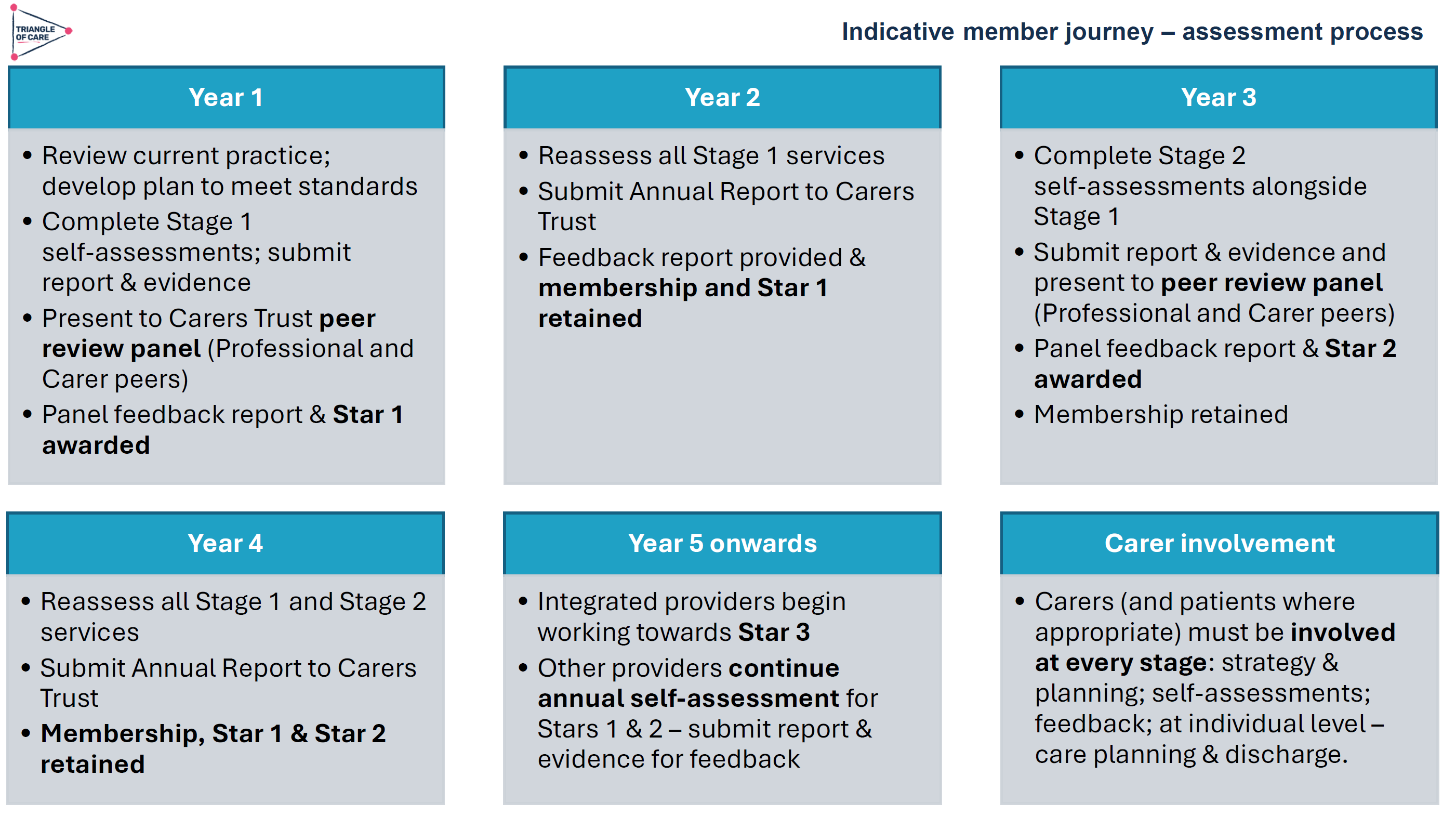
The update highlighted the growing maturity of the self-assessment and peer review process. Increasingly, organisations are using the framework not only to evidence good practice but to challenge themselves, learn from others, and embed carer partnership more consistently across teams and pathways.
Self-Assessment and Peer Review: What’s Working Well
The self-assessment process continues to be a key entry point for organisations engaging with the Triangle of Care. Where we were updated on how self-assessment encourages teams to pause and reflect on everyday practice, policies, and culture, rather than relying solely on written procedures. When combined with peer review, this reflection is strengthened by external challenge and lived-experience insight.
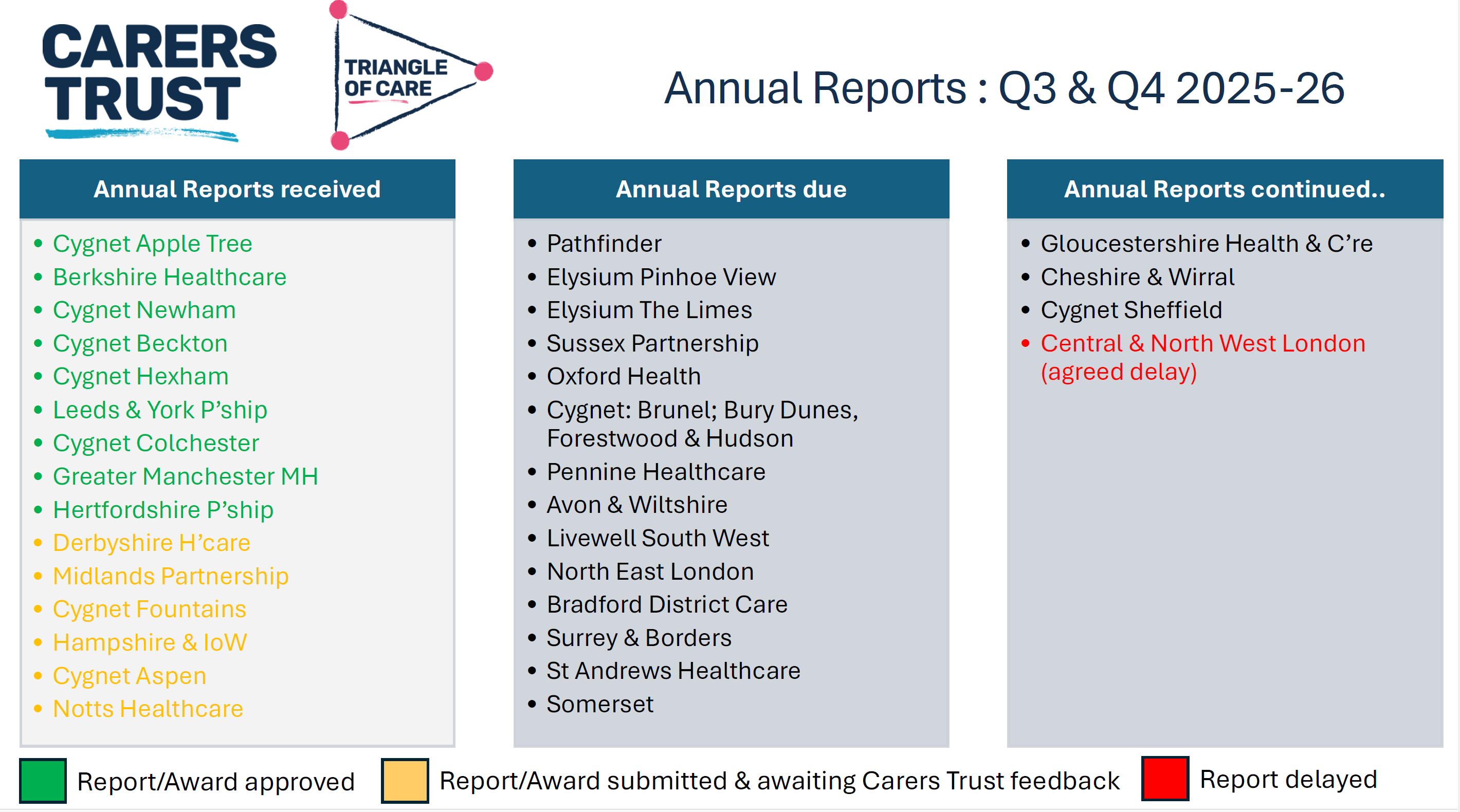
As part of the update, members were updated on emerging learning from Triangle of Care reports, including self-assessment submissions and peer review feedback. These reports were described as an important source of insight into how carer involvement is experienced on the ground, highlighting both areas of strong practice and recurring challenges across services
NOTE: These include reports going back 6 months, so not all NHS trusts listed
Peer review was described as most effective when organisations approach it with openness and curiosity. Lived-experience peer reviewers play a crucial role in asking different questions, highlighting blind spots, and grounding discussions in real-world carer experience.
A key discussion point was how to balance national consistency with local flexibility. Members acknowledged that while the Triangle of Care provides a shared framework and standards, services operate within different contexts, populations, and resource constraints.
Triangle of care and Patient Carer Race Equality Framework updates
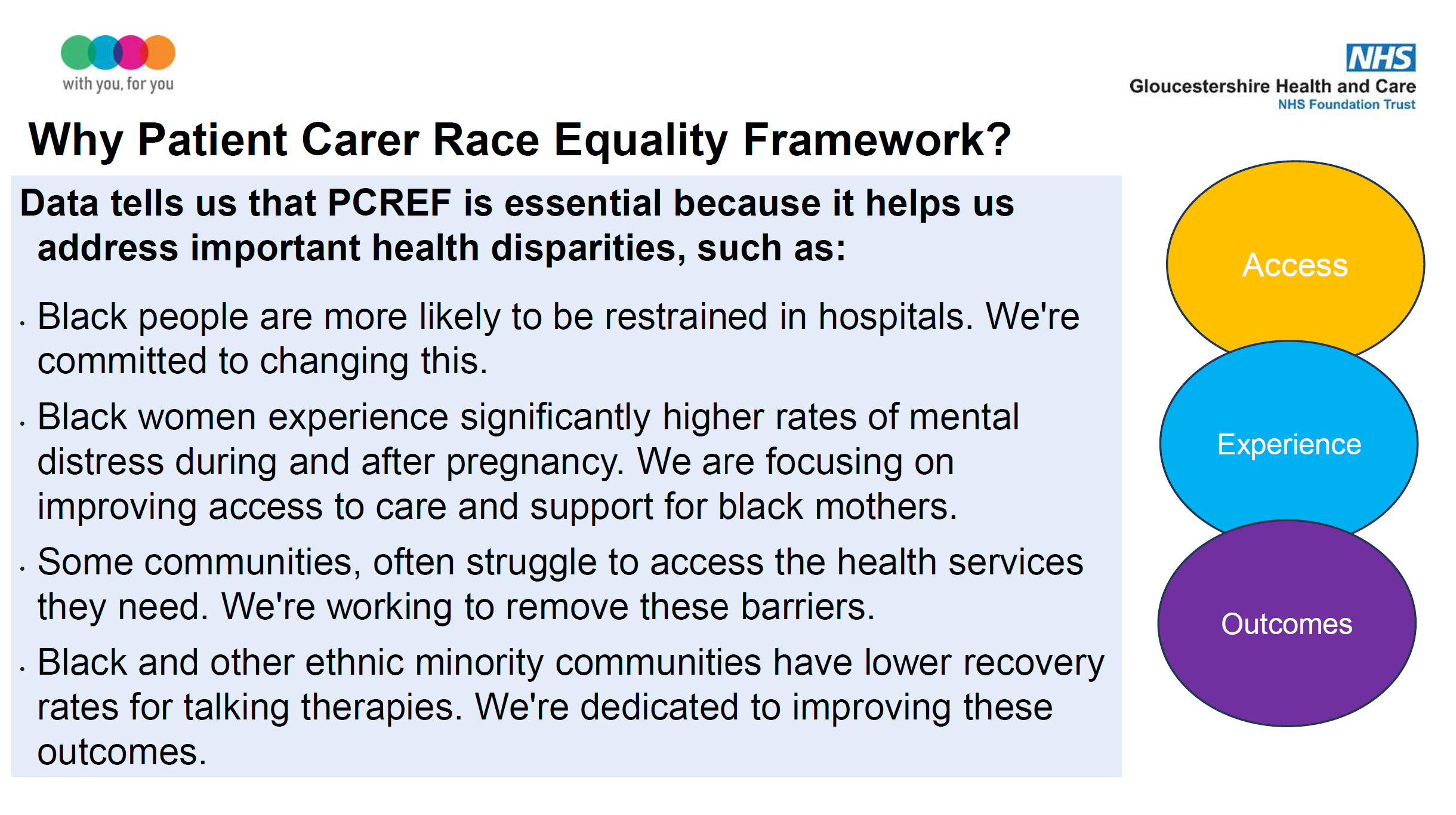
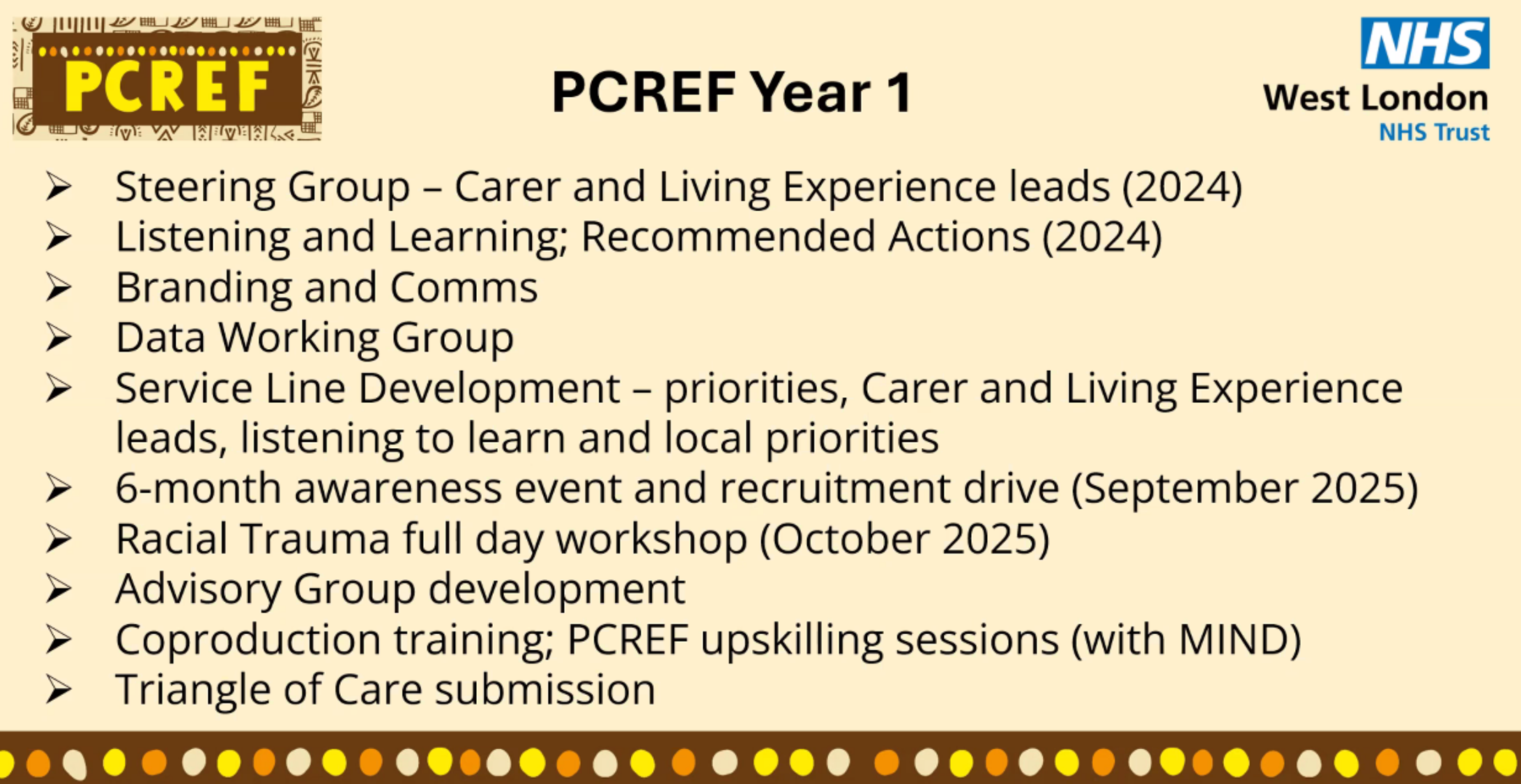
The Triangle of Care and PCREF Phase 2 pilot will be launched in April 2026, to test co-produced specialist guidance to support integration of carers from racially marginalised communities into the Triangle of Care.
Alignment with Wider System Priorities
Members discussed how Triangle of Care activity aligns with broader system developments, including Mental Health Act reform, integrated care, and equality frameworks. There was strong agreement that Triangle of Care should not sit in isolation but be embedded within wider quality improvement, safeguarding, and workforce development agendas.
The need to visibly align Triangle of Care with the Patient and Carer Race Equality Framework was reiterated. Members emphasised that carers must be able to see how equality commitments translate into tangible actions within standards, training, and evidence.
Key points
Aligning Triangle of Care with Mental Health Act reform
Embedding within wider system and quality frameworks
Stronger visibility of equality and race equity
Carer Voice and Evidence of Impact
A recurring theme was the importance of demonstrating impact. Members discussed how services can better evidence carer involvement and experience beyond policies and training records. This includes qualitative feedback, lived-experience insight, and examples of how carer input has influenced service design and delivery.
Emerging Challenges and Areas for Development
The update also acknowledged ongoing challenges, including workforce pressures, digital transformation, and uneven awareness of the Triangle of Care across organisations. Members noted that carer involvement can become fragile during periods of change unless it is firmly embedded in systems and culture.
Summary: Where the Programme Is Heading
The Triangle of Care update concluded with a shared understanding that the programme is well-established but still evolving. The focus for the next phase is on deepening impact, strengthening alignment with equality and legislative change, and supporting services to move from intention to consistent, inclusive practice.
Key discussion points
Peer review as a developmental, learning-focused process
Balancing national consistency with local flexibility
Alignment with Mental Health Act reform and equality frameworks
Keeping carer voices central to assessment and review
3. Sharing Experiences as a Peer Reviewer
Carer involved with Avon & whitlshire
A carer presented from her involvement at Avon and Wiltshire Mental Health Partnership NHS Trust, where she is involved as a lived-experience peer reviewer contributing to Triangle of Care.
She shared reflections from her role as a lived-experience peer reviewer. She spoke about the importance of authenticity, trust, and transparency in the peer review process, and how lived experience strengthens both credibility and impact. Her contribution reinforced the value of co-production and highlighted how peer review can challenge assumptions, surface good practice, and promote more carer-inclusive cultures within organisations.
The discussion reinforced that organisational openness and leadership engagement are critical to turning peer review feedback into real change. Members reflected on how hearing directly from peer reviewers deepens understanding of the practical impact of policies on carers.
Q&A / Discussion
Members asked how organisations typically respond to lived-experience feedback.
The involved carer noted that openness and leadership support were key factors in whether reviews led to meaningful change.
Discussion reinforced the importance of preparing services for peer review so that carers feel genuinely welcomed and listened to.
4. Carer Contingency Planning – Presentation and Local Practice
Mary Patel Local example: Carly Driscoll – Bradford District Care
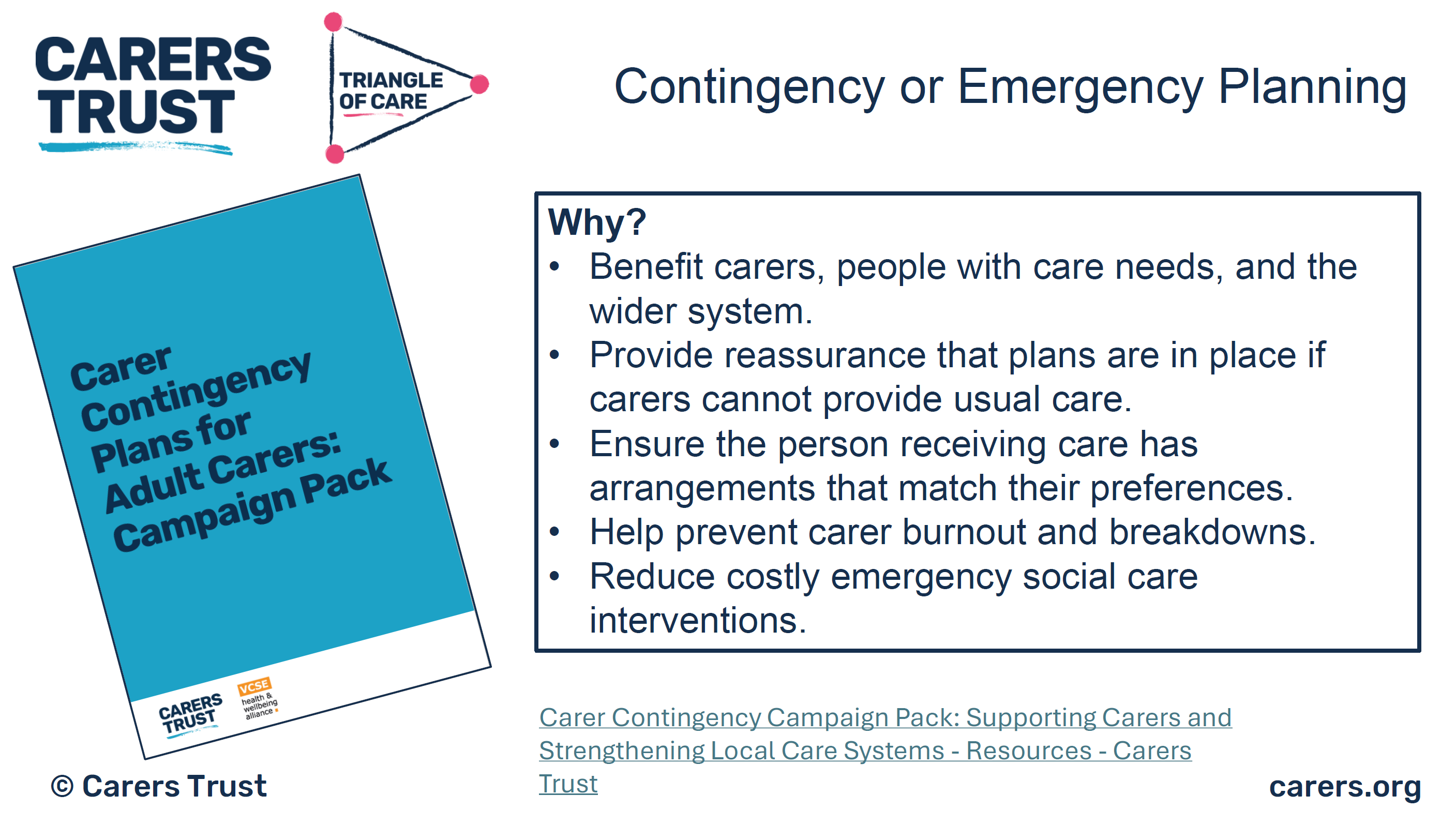
This session focused on carer contingency planning as a key element of carer support and crisis prevention. The presentation outlined why contingency planning is critical in reducing carer anxiety, preventing emergency admissions, and ensuring continuity of care when carers are unable to continue their role.
Carer Contingency Planning (CCP), as championed by Carers Trust, is designed to support carers by planning ahead for times when they might suddenly be unable to continue caring. This might include illness, emergencies, hospitalisation, or other crises. CCP shifts the focus from reactive support during crisis moments to proactive planning that reduces anxiety and prevents avoidable breakdowns in care.
Carers Trust emphasises that CCP is a conversational, personalised process where the carer’s expertise is central. Carers know the routines, preferences, and cues that matter for the person they care for; the goal of CCP is to capture that knowledge in a way that can be shared quickly and effectively with services, families, and emergency responders when needed.
A local practice example from Bradford District Care demonstrated how contingency planning can work in practice, highlighting practical tools, partnership working, and engagement with carers. Discussion explored the benefits of clear, accessible plans, while also acknowledging challenges around awareness, consistency, and uptake
The local practice example demonstrated how contingency planning can be embedded into routine work through partnership approaches and proactive engagement with carers. Members discussed the importance of introducing plans early and reviewing them regularly.
Key features of the Bradford approach
Routine integration: CCP discussions happen early, not just in crisis moments
Partnership working: Health, social care, and voluntary sector staff work in concert
Accessible documentation: Plans are shared in forms that carers can use and update
Support for carers: Carers are supported to lead the planning, not be passive recipients
Ongoing review: Plans are revisited as needs and circumstances evolve
Benefits seen locally
Carers report feeling more confident and less anxious
Greater clarity across professionals when carers are unavailable
Fewer last-minute, unplanned crises or service escalations
Better use of local support networks when official services are stretched
Q&A / Discussion
Questions focused on how contingency plans are introduced to carers and reviewed over time.
Members raised concerns about low awareness of contingency planning among carers not already engaged with services.
Discussion highlighted the need for flexibility, recognising that carers’ circumstances can change rapidly.
5. Carer Contingency Planning – System Perspective
Sara Lewis – SW London ICB
Sara Lewis’s session focused on Carer Contingency Planning (CCP) as a core, preventative element of carer support rather than a reactive or optional add-on. CCP is a structured way of planning for what should happen if a carer is suddenly unable to continue caring due to illness, crisis, exhaustion, or an emergency. At its heart, CCP is about reducing uncertainty and anxiety for carers while ensuring continuity and safety for the person they support.
Sara emphasised that effective CCP recognises carers as partners with expert knowledge of the person they care for. The process supports carers to articulate what matters most, what routines and support are essential, and who needs to be contacted in an emergency. When done well, CCP helps prevent avoidable crises, emergency admissions, and breakdowns in care by making plans visible, accessible, and shared across relevant services.
Accessibility was a major theme, particularly the risks of digital exclusion. While digital tools can be effective, members stressed the need for non-digital options, language support, and culturally appropriate approaches to ensure equity.
Key Takeaways from Sara Lewis’s Session
Carer Contingency Planning is preventative, not reactive
CCP is built on early, ongoing conversations with carers
Plans should reflect what matters to carers and the cared-for person
CCP must be accessible, inclusive, and culturally appropriate
Digital tools can help, but must not increase exclusion
Successful CCP requires shared ownership across services
When embedded well, CCP reduces crisis, anxiety, and system pressure
Q&A / Discussion
Members questioned how to balance digital innovation with the risk of digital exclusion.
Language barriers and accessibility for carers with different communication needs were highlighted.
Discussion emphasised that contingency planning must be embedded into standard care planning processes, not treated as optional or additional.
6. Looking Ahead: Priorities for the Community Group
The “Looking Ahead” discussion focused on how the Triangle of Care Community Group can continue to influence meaningful change for carers in an evolving policy and practice landscape. Members reflected on the increasing complexity of health and care systems and the importance of ensuring that carers are not left behind as reforms, digital transformation, and workforce pressures accelerate.
A strong theme throughout the discussion was visibility, making carer involvement, equality, and partnership explicit in practice, evidence, and outcomes. Participants emphasised that carers must not only be recognised in principle but experience consistent involvement and support in real-world settings. The group agreed that the next phase of work should strengthen both strategic influence and practical implementation.
Mental Health Act Reform and Carer Involvement
Members discussed the implications of upcoming Mental Health Act reform, particularly around carers’ rights, information-sharing, and involvement in decision-making. There was recognition that Triangle of Care principles provide a strong foundation for supporting services to meet new expectations, but that further work will be needed to translate legislation into everyday practice.
The group highlighted the risk that carers could be inconsistently involved if workforce understanding is weak or if systems focus narrowly on legal compliance. Proactive guidance, training, and examples of good practice were seen as essential to ensure carers are meaningfully included rather than consulted as an afterthought.
Equality, Race Equity, and Inclusion
A central priority looking ahead is ensuring that Triangle of Care activity visibly aligns with the Patient and Carer Race Equality Framework (PCREF). Members stressed that carers from racialised and marginalised communities often face additional barriers to involvement, including mistrust, cultural misunderstandings, and unequal access to support.
The group agreed that equality must be embedded into standards, peer review evidence, and training—not treated as a parallel or optional agenda. This includes capturing meaningful data, listening to diverse carer voices, and ensuring culturally responsive practice is clearly demonstrated.
Workforce Training and Education
Workforce development was identified as a critical lever for long-term change. Members highlighted the need to strengthen carer awareness training across all roles, particularly for staff new to mental health and social care settings. Without this foundation, carer involvement remains inconsistent and dependent on individual attitudes rather than organisational culture.
There was strong support for influencing pre-registration education, including universities and training providers, to embed carer awareness earlier. This was seen as an opportunity to normalise partnership with carers from the start of professional careers rather than trying to retrofit it later.
Key points
Strengthening carer awareness across the workforce
Embedding Triangle of Care principles early in training
Influencing universities and pre-registration pathways
Moving from individual goodwill to system-wide culture change
Digital, Data, and Accessibility
Digital transformation featured prominently in the discussion, with members acknowledging both its potential and its risks. While improved data systems and digital tools can support information-sharing and coordination, there was concern that carers without digital access or confidence may be excluded.
Participants emphasised that digital solutions must be designed inclusively, with non-digital alternatives always available. Data collection should support understanding of carer experience and inequality, not become a barrier to support.
Key points
Digital tools should support, not replace, relationships
Risk of digital exclusion for some carers
Importance of non-digital alternatives
Using data to improve equity, not reinforce gaps
Young Carers and Marginalised Groups
Supporting young carers and carers from marginalised communities was highlighted as a continuing priority. Members noted that these groups are often under-identified and less likely to be involved in care planning or decision-making, despite carrying significant caring responsibilities.
The group agreed that future work should focus on visibility, early identification, and tailored approaches that recognise the specific needs and challenges faced by these carers. Partnership with education, community, and voluntary sector organisations was seen as essential.
Key points
Improving identification of young carers
Addressing barriers faced by marginalised carers
Tailored, age-appropriate and culturally sensitive support
Stronger partnership working beyond health services
Collective Commitment Moving Forward
The discussion concluded with a shared commitment to using the Community Group as a platform for influence, learning, and accountability. Members recognised the value of continuing to share practical examples alongside strategic discussion, ensuring that Triangle of Care principles are translated into everyday practice.
Looking ahead, the group aims to remain proactive, inclusive, and responsive—supporting services to recognise carers as equal partners and ensuring that no carer is left unseen or unsupported as systems evolve.
Key discussion points
Preparing for Mental Health Act reform
Embedding the Patient and Carer Race Equality Framework
Improving workforce training and education pathways
Supporting young carers and marginalised communities
Improving data and digital systems without exclusion
As Chair I thanked contributors and reaffirmed the importance of continued collaboration to ensure carers are recognised as equal partners in care, with Triangle of Care principles translated into meaningful practice across services.
For those interested to hear more about triangle of care, see details below
I’ve spoken at many events over the years, but standing in a room full of carers always is a great experince differently. The room filled with lived experience, this time paid and unpaid carers carrying invisible weight of caring stories that rarely get space.
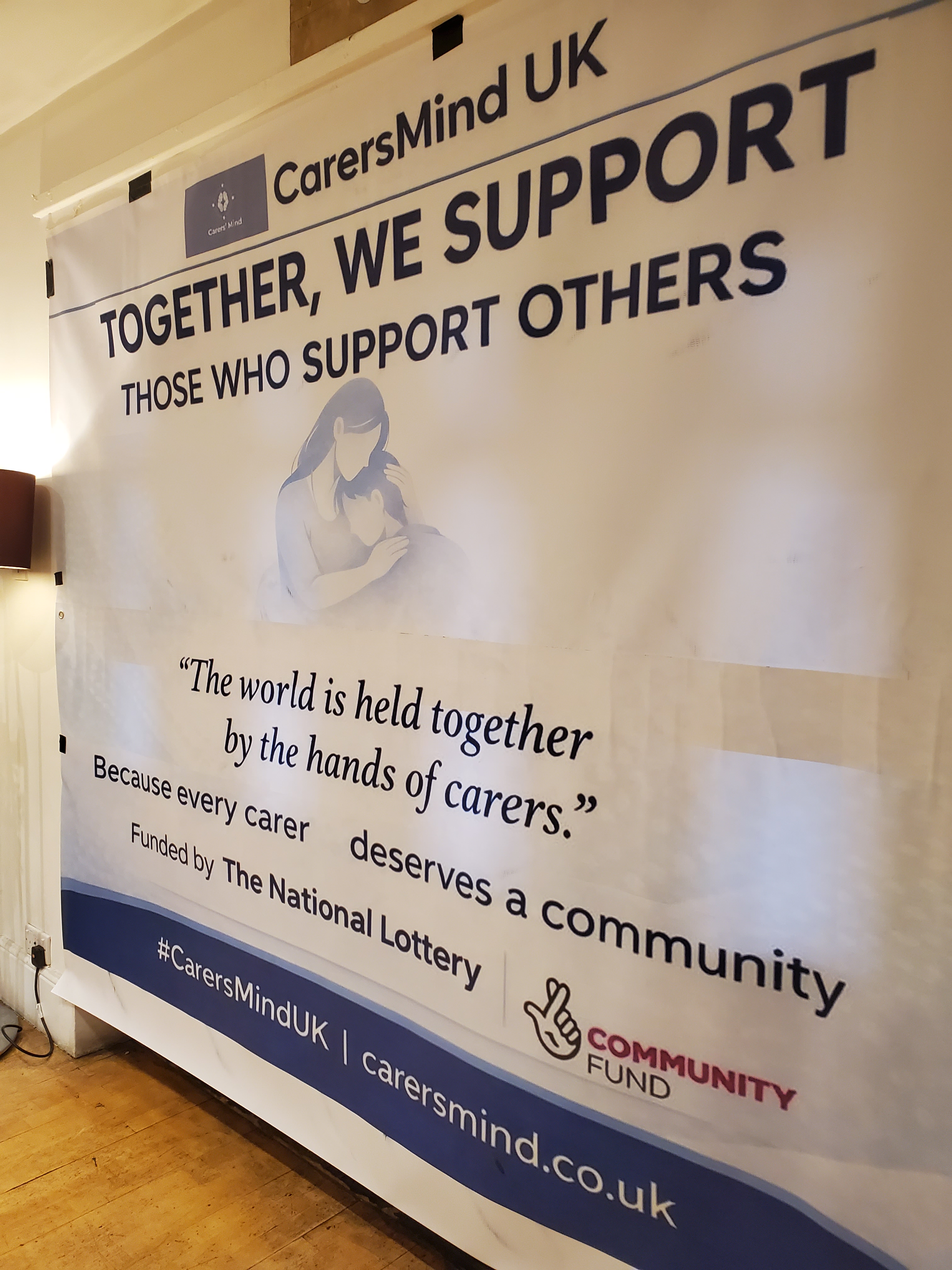
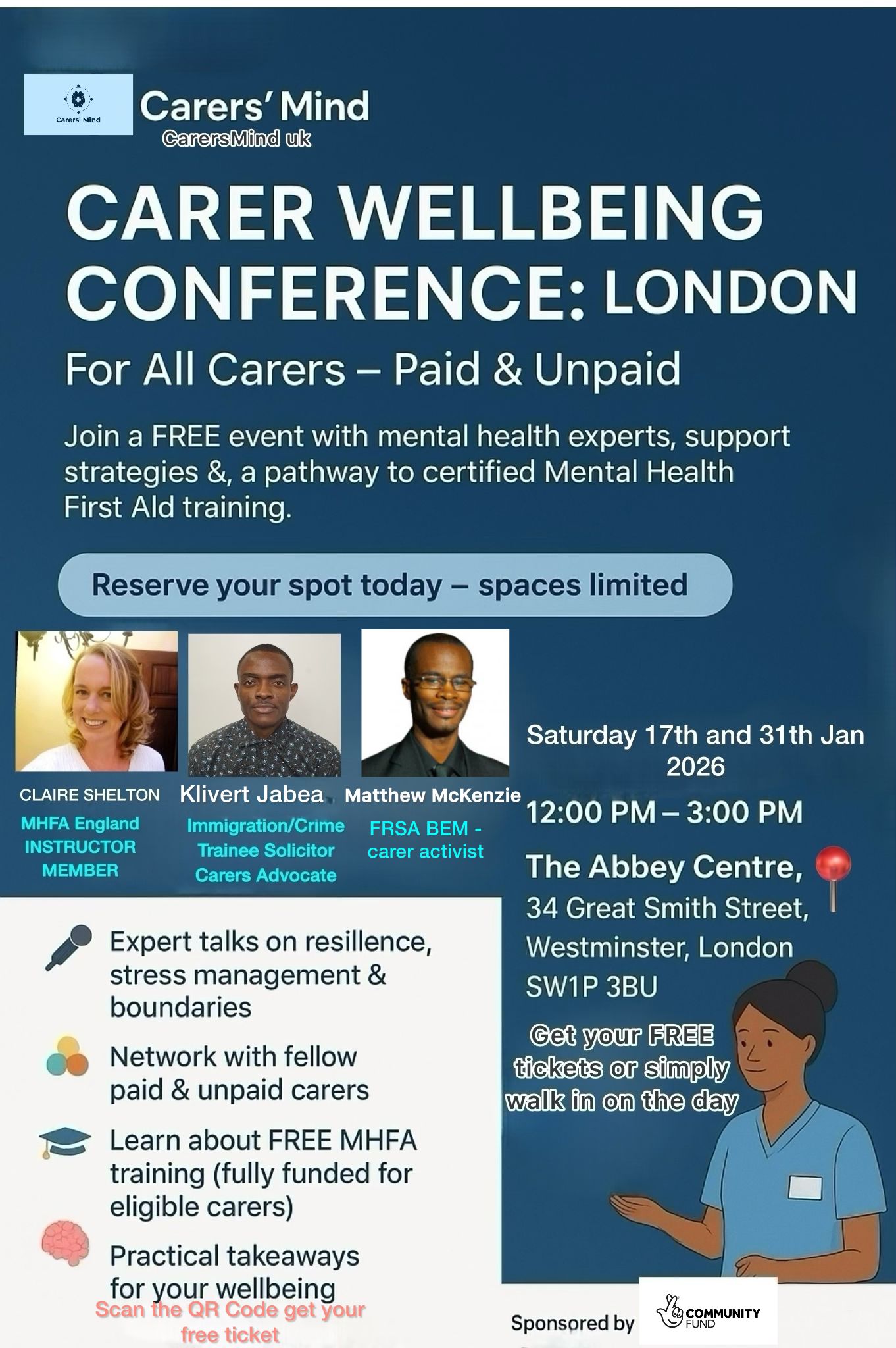
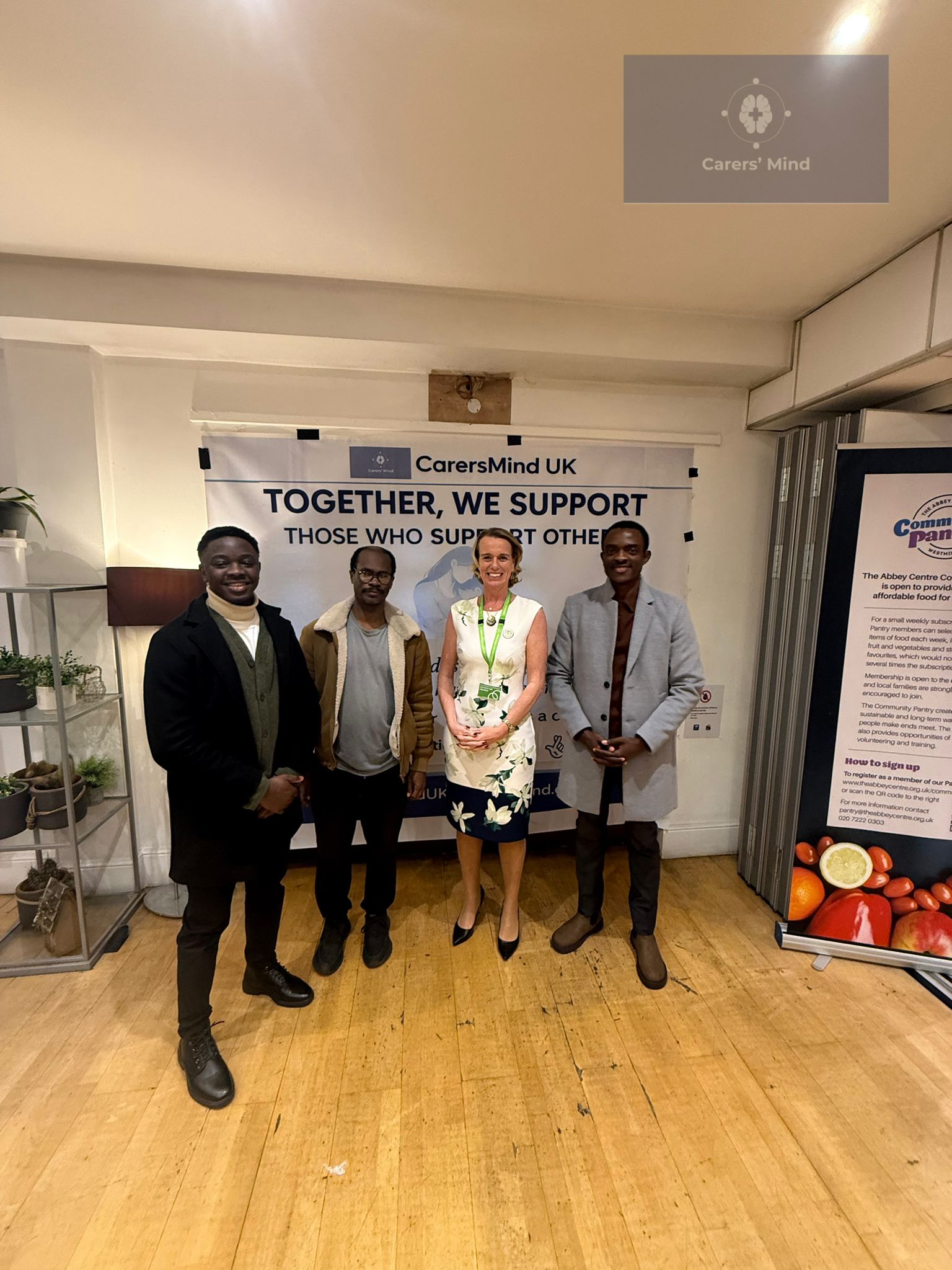
The Carers’ Wellbeing Conference in London, organised by Carers’ Mind CIC, was a moment where carers were allowed to be people first.
The event was hosted at The Abbey Centre, a welcoming community venue in Westminster that provides vital space for local groups, charities, and events focused on wellbeing, inclusion, and social support.
CarersMind CIC is a community-interest organisation dedicated to improving the wellbeing, visibility, and support of both paid and unpaid carers. Through accessible events, practical training, and open conversations about mental health, CarersMind CIC creates safe spaces where carers are recognised as individuals
The Impact of Caring on Mental Health
When I was invited to speak about “The Impact of Caring on Mental Health and What Actually Helps”, I didn’t hesitate. Caring has shaped every part of my adult life. It has taught me empathy, patience, advocacy, but it has also exposed me to burnout, trauma, guilt, and long stretches of isolation.
Too often, carers are spoken about rather than with. This conference made a conscious effort to centre carers’ voices, not as an afterthought, but as expertise.
The Room Told Its Own Story
At the conference, there was no pressure to “cope better” or “be more resilient” without acknowledging the cost. Instead, there was honesty.
Carers spoke about:
Burnout that creeps in quietly
Guilt for needing rest
The emotional toll of long-term responsibility
Feeling unseen by systems that rely on them
These were truths that deserved to be heard without judgement.
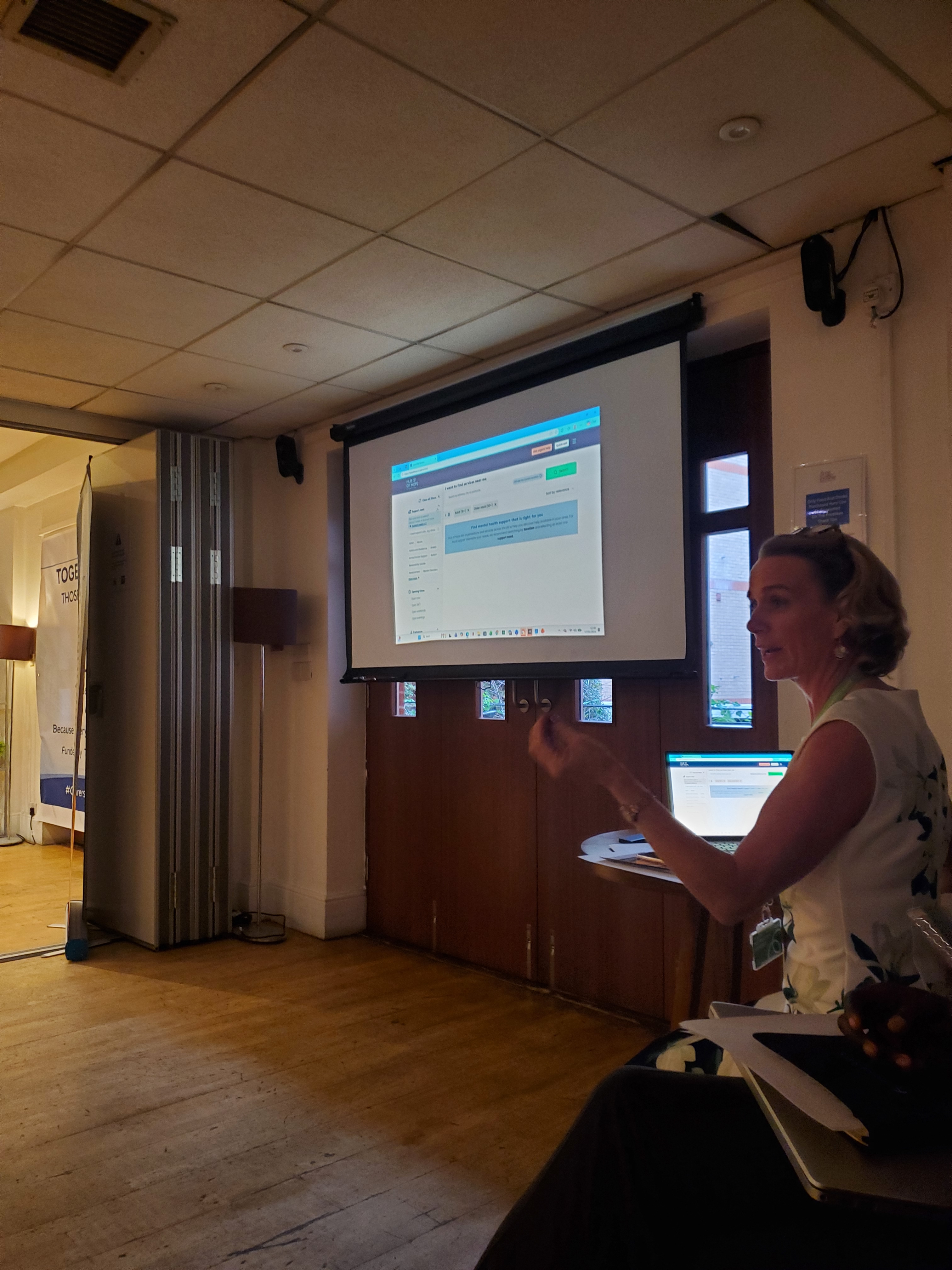
What Claire Shelton Shared at her session
Claire spoke openly about how caring impacts mental health carers over time, not just during moments of crisis. she talked about trauma that doesn’t announce itself, about stress containers that overflow slowly, and about how carers often normalise distress because “there’s no other option.”
Most importantly, she focused on what actually helps:
Being recognised as a carer both formally and emotionally
Access to peer support, not just professional services
Practical tools that reduce isolation
Boundaries that protect carers’ wellbeing without guilt
One resource Claire highlighted was the Hub of Hope, because carers need access to support that doesn’t require jumping through endless hoops. These matter not because they fix everything, but because they return a small amount of control to people who’ve lost a lot of it.
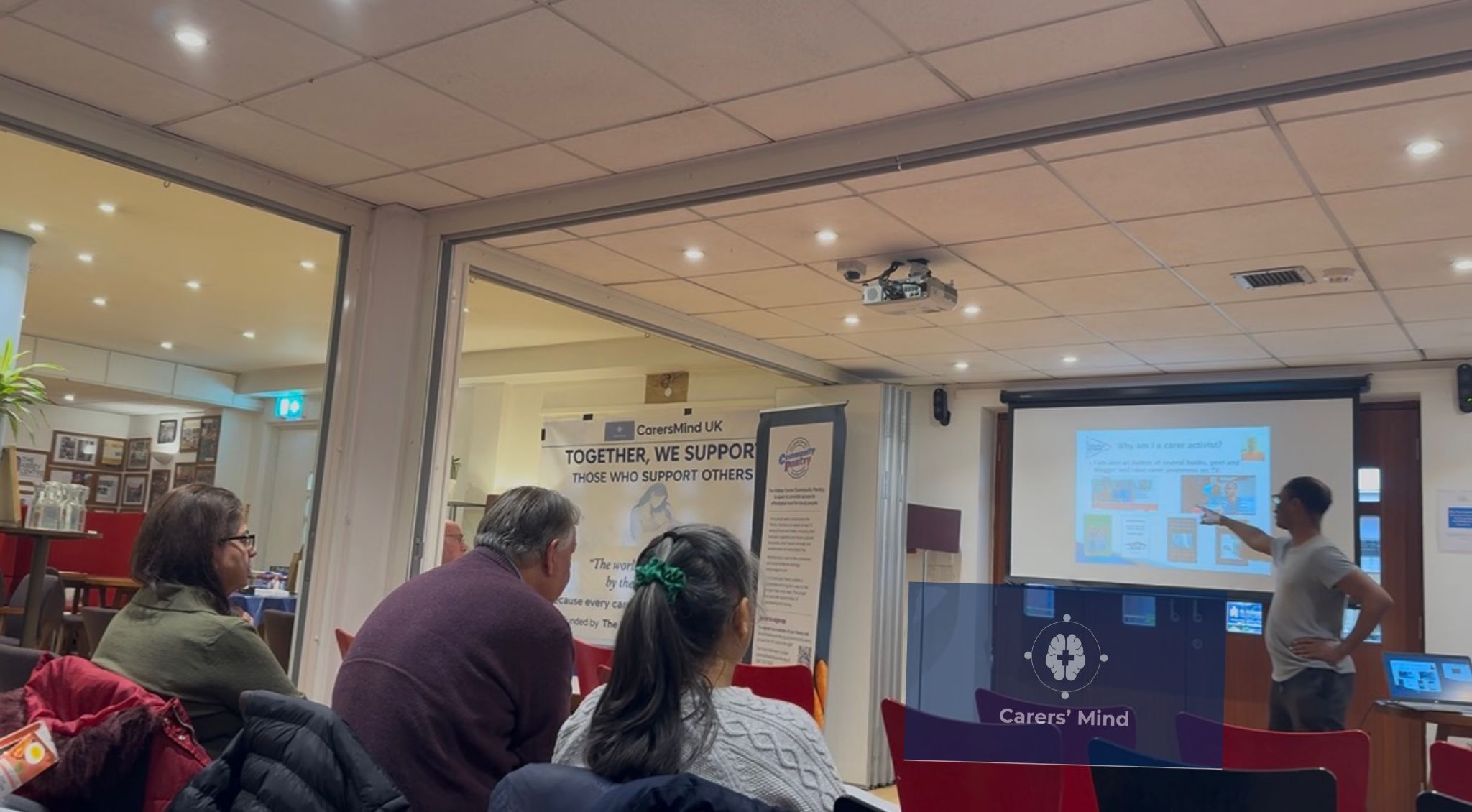
What I Shared in my session
In my session, I spoke from lived experience about the long-term impact of caring, shaped deeply by my role as a carer for my mother. I shared how caring is rarely defined by single moments of crisis, but by the gradual, cumulative pressure that builds over time. This includes the emotional labour, the constant vigilance, and the way stress and trauma often go unrecognised because caring simply becomes “what you do.”
I reflected on how caring for my mother affected my mental health, identity, and sense of self. This experience led me to speak about carers’ rights the right to be recognised as a carer, to be involved in decisions, to access support, and to protect one’s own wellbeing without guilt or fear of judgement.
Most importantly, I focused on what actually helps:
Being identified and recognised as a carer, both formally and emotionally
Understanding and exercising carers’ rights
Access to peer support grounded in shared lived experience, not only professional services
Practical tools that reduce isolation and complexity
The Power of Being in the Same Room
One of the most powerful moments wasn’t during my talk it was during the conversations that followed. Carers sharing strategies with each other. Nodding in recognition. Saying, “I thought it was just me.”
That’s the quiet power of events like this. They remind carers that their experiences are valid, shared, and worthy of space.
A Collective Effort
It was a privilege to share the day with:
Claire Shelton, who spoke with clarity and compassion about resilience, stress management, and boundaries
Klivert Jabea, who brought warmth, insight, and a strong message that self-care is not a luxury
The organisers at Carers’ Mind CIC, who created an environment that felt safe, inclusive, and genuinely carer-focused
This conference was about acknowledging reality and that’s where real wellbeing work begins.
Leaving with Hope and Responsibility
I left the Abbey Centre reminded of why this work matters. Carers are holding together families, communities, and systems often at great personal cost. Supporting carers isn’t optional. It’s essential.
Resources and Support for Carers
If you are a carer and are looking for support for your wellbeing, mental health, or caring role, the following resources were highlighted or reflected in discussions during the conference:
Hub of Hope — https://hubofhope.co.uk A free, UK-wide mental health support database that helps carers find local and national services quickly, without needing to navigate complex systems. It is particularly useful for carers who may not know where to start or who feel overwhelmed by traditional referral pathways.
CarersMind CIC — https://carersmind.co.uk/ A community interest company focused on improving carers’ mental health and wellbeing through events, training, and open conversations that centre lived experience. Their work creates spaces where carers feel recognised, heard, and supported.
Carers UK — https://www.carersuk.org/ Provides information on carers’ rights, benefits, assessments, and practical guidance for unpaid carers across the UK.
NHS Carers Support Local NHS and local authority carers services can offer carers’ assessments, signposting, and practical support. Availability varies by area, but carers have a right to request an assessment.
We all know how challenging the life of a carer can be, especially when it involves the emotional and physical toll of supporting a loved one through difficult health challenges. Christine’s powerful story of navigating her loved one’s mental health and recovery through the fears of mental health system discharge.
In Christine’s latest podcast, “From Carer to Mum” she opens up about her personal journey, sharing the challenges and triumphs of transitioning from the role of a carer back to simply being a mum. Over the course of two years, Christine witnessed her loved one’s growth and recovery, which was made possible through the right care, support, and therapy.
Christine’s story focuses about overcoming struggles; plus about rediscovering joy and a new sense of normalcy.
Now, Christine has taken the next step in sharing her journey. She’s launched her own podcast, where she’ll continue to inspire others by sharing her experiences, reflections, and insights into caregiving, recovery, and the journey of moving forward.
Tune into Christine’s new podcast channel, where you’ll hear more about the highs and lows of caring for a loved one, as well as the emotional lessons learned along the way. The first episode, titled “Christine’s Journey: From Carer to Mum,” is already live on SoundCloud and is ready for you to listen.
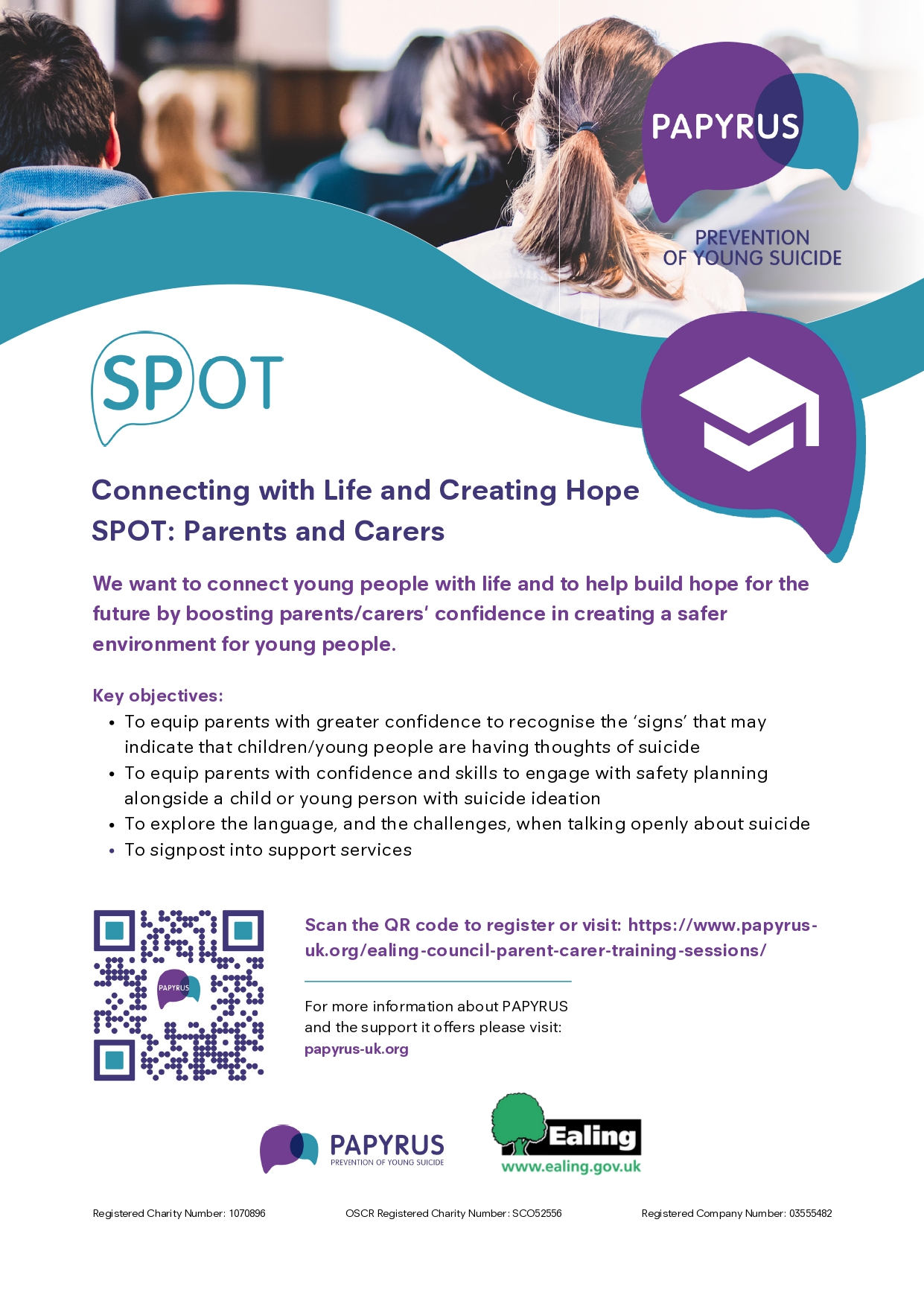
Caring for a child or young person can be incredibly rewarding – but it can also feel overwhelming, especially when you’re worried about their emotional wellbeing or safety. If you’re an unpaid carer in Ealing supporting a young person, you’re not alone, and there is local support available for you.
This spring, a new free online training opportunity is available for parents and unpaid carers in Ealing, designed to build confidence, understanding and hope when supporting young people who may be struggling.
Free Online Training: SPOT – Parents and Carers
PAPYRUS, the national charity for the prevention of young suicide, has been funded by Ealing Council to deliver SPOT: Parents and Carers – Connecting with Life and Creating Hope.
This training is specifically designed to support parents and unpaid carers to feel more confident in helping young people stay safe.
The sessions focus on:
Recognising signs that a child or young person may be struggling or experiencing suicidal thoughts
Developing confidence to talk openly and safely about suicide
Learning how to support safety planning alongside a young person
Understanding helpful language and common challenges in these conversations
Knowing where and how to access further support
The overall aim is to help carers feel better equipped to create safer spaces for young people and to strengthen connection, hope and understanding .
Online Training Dates
The SPOT sessions are delivered online, making them easier to attend around caring responsibilities. You can choose the date and time that works best for you:
12 March 2026 – 7:00pm to 8:30pm
18 March 2026 – 6:30pm to 8:00pm
26 March 2026 – 1:00pm to 2:30pm
The sessions are free to attend, but booking is required.
You Don’t Have to Do This Alone: Ealing Carers Partnership
Alongside training opportunities like SPOT, unpaid carers in Ealing can access ongoing help through the Ealing Carers Partnership.
The partnership brings together local organisations to support unpaid carers of all ages, including parents and carers of children and young people. Support can include:
Information and advice
Emotional support and listening spaces
Help navigating services
Peer support and carer groups
Training and workshops to build skills and confidence
If you’re caring for someone without pay, whether that’s a child, young person, partner, friend or family member – you are recognised as an unpaid carer, and you are entitled to support.
The Ealing Carers Partnership works to make sure carers are seen, heard and supported across the borough, and can help you find the right service at the right time.
Many carers tell us that one of the hardest parts of supporting a young person is not knowing what to say, or worrying about saying the “wrong” thing. Training like SPOT is not about having all the answers, it’s about building confidence, understanding and connection.
If you are supporting a young person in Ealing and would like to strengthen your confidence, we strongly encourage you to take up this opportunity and to connect with the wider support available through the Ealing Carers Partnership.
If you have questions, need help accessing support, or would like to know more about what’s available for unpaid carers locally, please reach out on the link below
Caring for someone affected by cancer can be deeply meaningful—and incredibly demanding. Between appointments, medications, emotional support, and everyday life, caregivers often put their own needs last. Yet caregivers need care too.
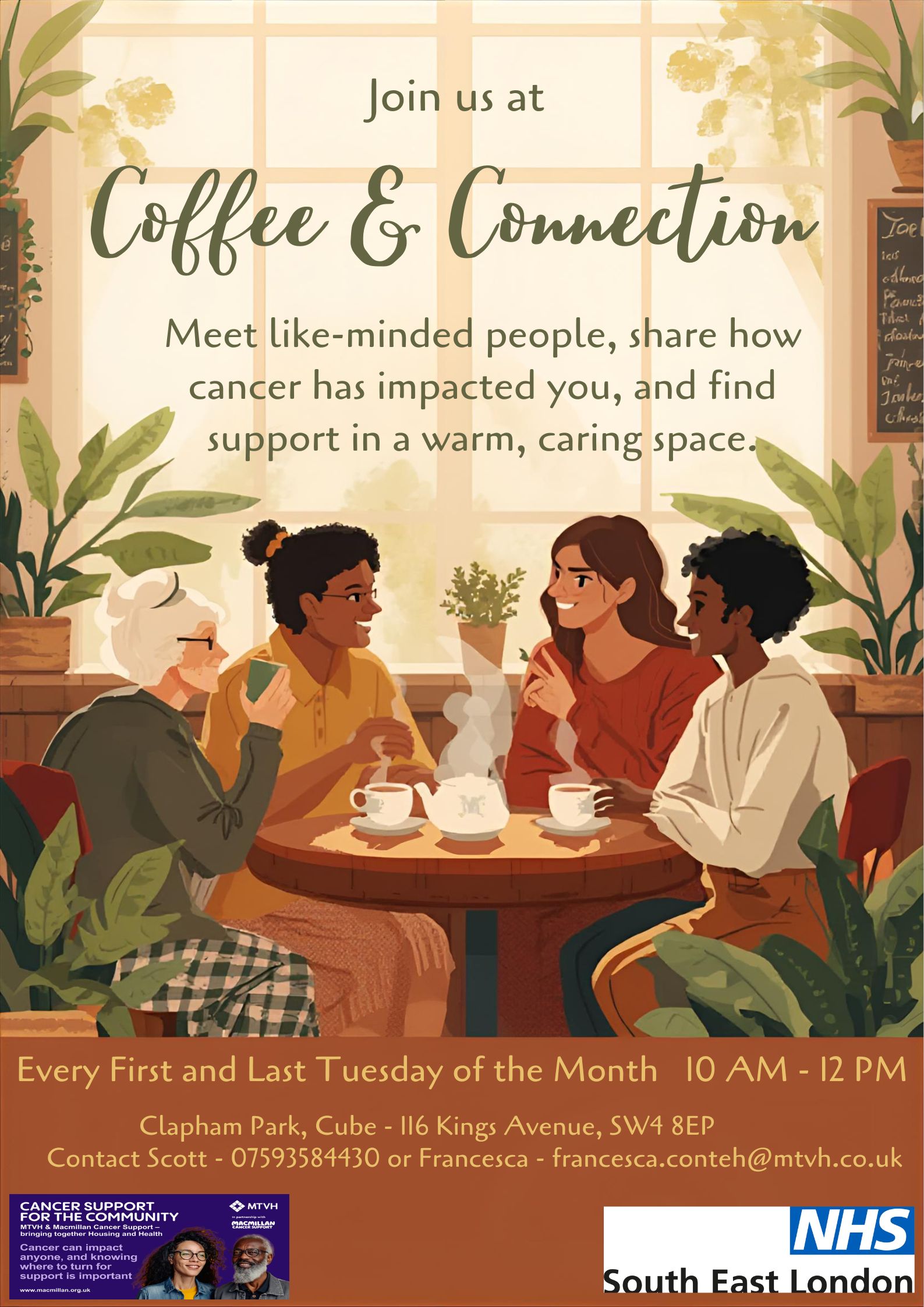
That’s why Coffee & Connection exists: a welcoming, gentle space where caregivers can pause, breathe, and connect with others who truly understand.
You Don’t Have to Carry It Alone
As a cancer caregiver, you may find yourself holding many emotions at once, these being love, worry, exhaustion, hope, frustration, and resilience. While friends and family may care deeply, it can be hard to explain the realities of caregiving to someone who hasn’t lived it.
Coffee & Connection brings together people who get it.
This is a place to:
Share how cancer has impacted your life as a caregiver
Listen to others’ stories without judgment or pressure
Feel seen, heard, and supported
Simply enjoy a cup of coffee in good company
There’s no expectation to talk if you don’t want to. Sometimes, just being in the room with others who understand is enough.
A Warm, Caring Environment
Set in a relaxed café-style space, Coffee & Connection is designed to feel calm and human and not clinical. Where Conversations unfold naturally over tea and coffee, surrounded by warmth, greenery, and kindness.
Whether you are caring for a partner, parent, child, sibling, or friend at any stage of the cancer journey, you are welcome to attend.
When and Where
Every first and last Tuesday of the month 10:00 AM – 12:00 PM
Clapham Park, Cube 116 Kings Avenue London, SW4 8EP
Want to Know More?
If you’d like more information or want to check in before attending, you can reach out to:
Caregiving can feel isolating, but connection has the power to lighten the load. Coffee & Connection offers a gentle reminder that you are not alone, and that your experiences matter too.
If you’re a cancer caregiver looking for understanding, support, or simply a moment of calm, consider joining us. The coffee will be warm, and so will the welcome.
By Matthew McKenzie, facilitator of National ethnic mental health carers forum
Welcome to my first blog for 2026.
I am working on a new poetry project linked to my forum and poetry groups. This poem turned into song is written from the perspective of an unpaid ethnic mental health carer, and explores identity, pride, self-worth, and refusing shame in systems that don’t always listen or recognise lived experience.
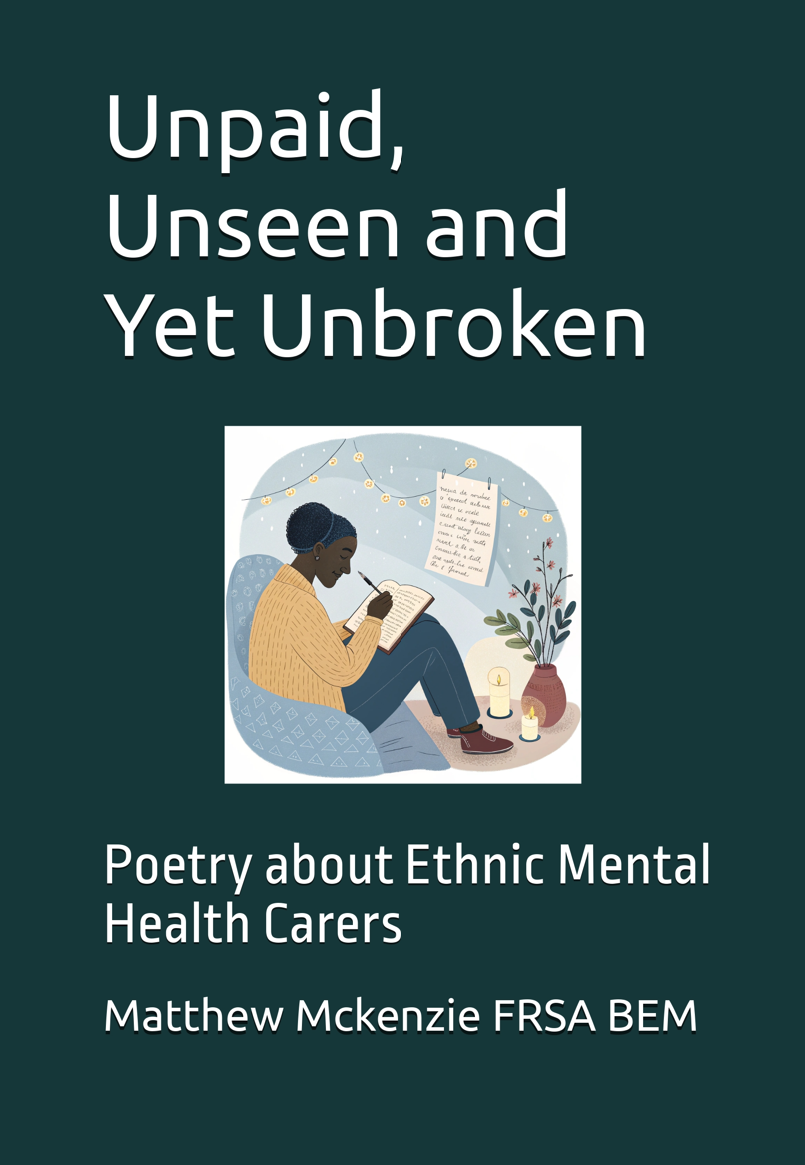
The poem is taken from my forthcoming poetry book in development, Unpaid, Unseen and Yet Unbroken (due 2026), which centres the voices of ethnic mental health carers and aligns closely with the aims of PCREF (Patient and Carer Race Equality Framework), particularly around listening, inclusion, and lived experience shaping systems.
I’m using poetry and creative formats as another way to:
amplify carer voices
explore race and care with honesty
support conversations about equity, culture, and confidence in mental health services
If this resonates with your work, community, or organisation, please feel free to share. Listening is an act of care.