By Matthew McKenzie FRSA BEM – Triangle of Care community chair
As a carer living in Lewisham, I know just how important it is that our voices are heard and that the support available truly meets our needs. Whether we’re looking after a parent, a partner, a child, or a friend, we all share the same challenges balancing care responsibilities, work, our own wellbeing, and often feeling invisible in the process.
That’s why I wanted to share something that directly affects all of us. Lewisham Council and the NHS South East London ICB are currently developing a new Action Plan for Unpaid Carers (2025–2028). This plan will set out how the Council aims to identify, value, and support more carers over the next few years.
The team leading this work, including a new member who recently joined the Adults Integrated Commissioning Team, is reaching out to carers across the borough to get our feedback.
By Matthew McKenzie – Carer activist and facilitator of the group
The group is a community of carers in Lambeth, Southwark and Lewisham that exists to provide support, advocacy, and connection for people looking after loved ones living with mental illness. It brings together unpaid carers of all ages and backgrounds to share experiences, learn from one another, and build confidence in dealing with health and social care professionals. A core part of its mission is reducing isolation by creating a safe space where carers can speak openly, develop skills, and access practical resources like advocacy services.
The meeting began with introductions and updates from various participants, including myselff where I discussed work with London Hospitals and the NHS app, while other carers introduced themselves to the group. In attendance was Tama from PohWer presented information about carer complaints and support services across different regions, including discussions about the potential impact of Healthwatch’s dissolution on patient and carer support services.
The meeting focused on introductions and updates from various organizations supporting unpaid carers across London. Matthew McKenzie facilitated the session, introducing participants from different boroughs and organizations, including
North Central London Carer Support Project (covering Barnet, Haringey, Camden, Enfield, and Islington)
The PSE (supporting South East London local authorities: Bexley, Bromley, Lambeth, Lewisham, Greenwich, and Southwark)
Richmond Borough Mind
Richmond Carers Centre
Kingston Carers Network
St George’s, Epsom and St Helier Hospital Group
Sutton Carers Centre
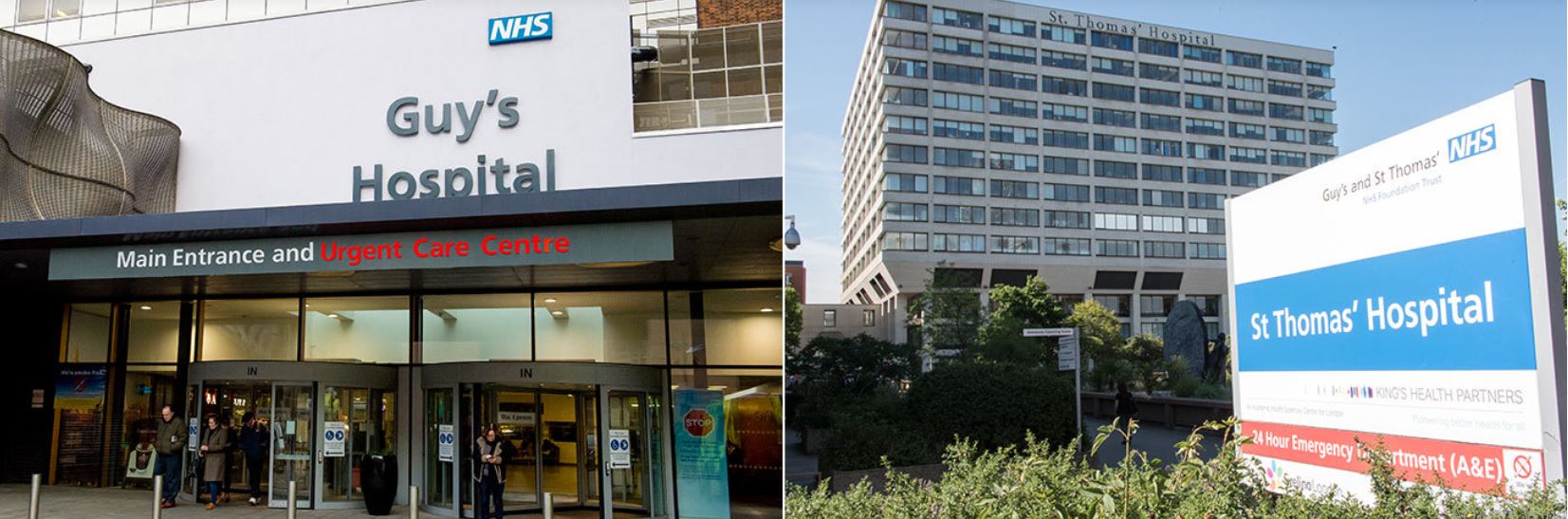
Carers Hub Lambeth (supporting unpaid carers, with hospital carers leads at King’s College Hospital and Guy’s & St Thomas’ Hospital)
Lewisham carers services (Imargo service manager)
Apologies from
Bromley Wells Bexley Carers Support Greenwich Carers Ealing Carers Partnership Tower Hamlets Carers Centre
NHS England updates including Universal Care Plan Updates
A representative from NHS England highlighted good news about the Hospital Discharge Toolkit, which had been originally developed in London by Debbie Hustings. The toolkit has already been adopted across much of southwest London with strong results. Recently, all NHS regions were asked to contribute work on hospital discharge, focusing particularly on carers’ experiences. When this went up to the Executive Quality Board at the national level, the London toolkit received recognition. The recommendation that came back was that all regions should develop something similar they could adopt London’s version directly or tailor one for their own needs. The representative stressed that this kind of recognition is significant because it helps the toolkit be taken more seriously and provides momentum for further rollout
In July 2025, we held another meeting of the London Hospital Discharge Carers Forum, which brings together carer centres, NHS professionals, and lived experienced unpaid carers to explore how we can better support unpaid carers through the complex hospital discharge journey.
With key developments shared, questions raised, and future opportunities on the table, I’m sharing this blog to ensure everyone is informed.
A Focus on Hospital Discharge but With Carers at the Centre
The forum continues to highlight how vital carer centres are in delivering effective, compassionate discharge support. But alongside that recognition comes rising expectations: better digital access, stronger links with acute hospital teams, more formal involvement in care planning, and even new digital tools to manage carer identity and input.
Our role is growing and so is the need for collective visibility and coordinated action.
Key Themes from July’s Discussion
1. NHS England Hospital Discharge Toolkit & Care Contingency Plan As an involved carer, I delivered the NHS England update. The main message? The Care Contingency Plan (CCP) is becoming a key focus across the system. There are planning sessions due in September, and carer centres might be asked whether they can take on CCP delivery alongside existing carers assessments.
This triggered a crucial question: Will additional funding or contractual support be offered to carer centres taking on CCPs? because we can’t afford to quietly absorb additional workload without clarity on resources or expectations.
2. Digital Tools – NHS App & Carer Self-Identification With the growing digitisation of NHS services, there are plans to enable carers to self-identify via a digital route. The Universal Care Plan (UCP) is being built into the NHS app, but there’s confusion about whether a separate “carer app” is being developed too.
We’ve asked NHS England for clarification: Will carers be expected to use one NHS app to manage both contingency plans and carer registration, or will multiple systems be introduced? The answer will have implications for how we support carers with digital skills and accessibility.
3. The Bigger Picture – NHS 10-Year Plan and Local Adaptation We explored how the new 10-Year NHS Plan mentions carers primarily in the context of discharge, but offers little in terms of direct support or investment in carers themselves. Several carer centres raised concerns about being seen only as a means to improve discharge outcomes, rather than as partners in their own right.
That said, some centres are using the plan as an opportunity, working with local Integrated Care Boards (ICBs) to adapt and influence how the priorities are rolled out locally, including integration with neighbourhood health centres and walk-in clinics.
Peer Learning and Local Centre Updates
As always, our meeting included practical insights from carer centres embedded in local hospitals. Topics included:
Establishing hospital-based carer hubs and information desks.
Hosting monthly drop-ins for carers on specific wards (e.g. stroke and frailty).
Using ward rounds to identify and build relationships with staff willing to act as carer champions.
Overcoming challenges in gaining visibility, sustaining presence, or maintaining resource levels for in-hospital work.
Planning carers coffee mornings and pop-up stands to increase footfall and engagement.
For newer hospital-based carer workers, this space proved invaluable as a place to learn from colleagues, gather ideas, and avoid isolation.
Project Developments: What Centres Need to Know
Several borough-wide and London-wide initiatives are taking shape that could directly affect how carer centres operate in coming months:
A standard operating procedure for hospital discharge, currently being developed across South East London, is aiming to streamline how carers are engaged at discharge, with pilot sites starting this September.
In North Central London, work is underway on a web portal that makes it easier for hospital and emergency staff to refer carers into local support services including from the London Ambulance Service.
Carer Centres in several areas are starting or refreshing carer charters, carer passports, and surveys designed to codify carer involvement and measure experience across hospital pathways.
Carer support workers at one major South London hospital are re-establishing visibility post-staff transition. Efforts are underway to build new ward-level relationships and identify carer champions among staff. The centre is also exploring monthly carer drop-ins, asking the group for ideas on what works well and what doesn’t.
One East London carer centre has established a hospital-based hub on a specific ward floor, acting as a go-to space for carers needing support or information. They also run monthly drop-in sessions on elderly/frailty and stroke wards conditions where family involvement in discharge planning is often critical.
These projects are at different stages, but all point to one thing: carer centres are being asked to operate more visibly, more formally, and more digitally. It’s essential we shape this process and not just respond to it.
With NHS England’s CCP work moving fast and carer integration into digital systems ramping up, carer centres can no longer afford to remain on the sidelines.
We have a chance to be informed of policy changes early not after implementation.
Carer centres and hospitals can raise concerns about workload, training, and funding before it’s too late.
Newer or isolated workers benefit from collective knowledge-sharing and support.
This is not just another meeting, it’s one of the few cross-borough forums focused squarely on carer centres in the acute hospital context.
Looking Ahead: September Session
Our next meeting will be held usually the last week of September.
Let’s not let carers be an afterthought. Let’s make sure carer centres are seen, heard, and properly resourced.
Welcome to a brief update of my Hospital Carers Discharge group. The Carers Hospital Discharge Toolkit Working Group is a collaborative initiative dedicated to improving the hospital discharge experience for carers and their loved ones. Chaired by myself a carer with lived experience, the group brings together a diverse mix of voices, including fellow carers, representatives from local carer centres, and, at times, hospital public and patient involvement (PPI) leads or staff. This inclusive approach ensures that the toolkit remains grounded in real-world experiences while benefiting from professional insight and support.
The meeting began with introductions from various participants who shared their roles related to carer support and hospital engagement, including updates on the Universal Care Plan and NHS 10-year plan from NHS England. We also had a presentation on the new project to support carers across North Central London, covering five boroughs and 11 hospital sites, which will help identify and support carers through various initiatives and resources.
The group discussed upcoming events for Carers Week 2025, new carers charter development at one of London’s largest NHS trusts, and various support programs, while addressing challenges and opportunities for improving carer support across different organizations and locations.
Carer Support and Hospital Engagement
The meeting began with introductions from various participants, who shared their roles and affiliations related to carer support and hospital engagement. Matthew highlighted his involvement in various mental health hospital trusts and carer engagement initiatives, while Eleanor discussed her new role as project manager for the North Central London Carers Support Project, which covers five boroughs. Ros from NHS England provided an update on the Universal Care Plan for carers, noting that more updates are needed. The conversation ended with plans for Eleanor to present later, focusing on developments in carer support across the region.
Universal Care Plan Implementation Update
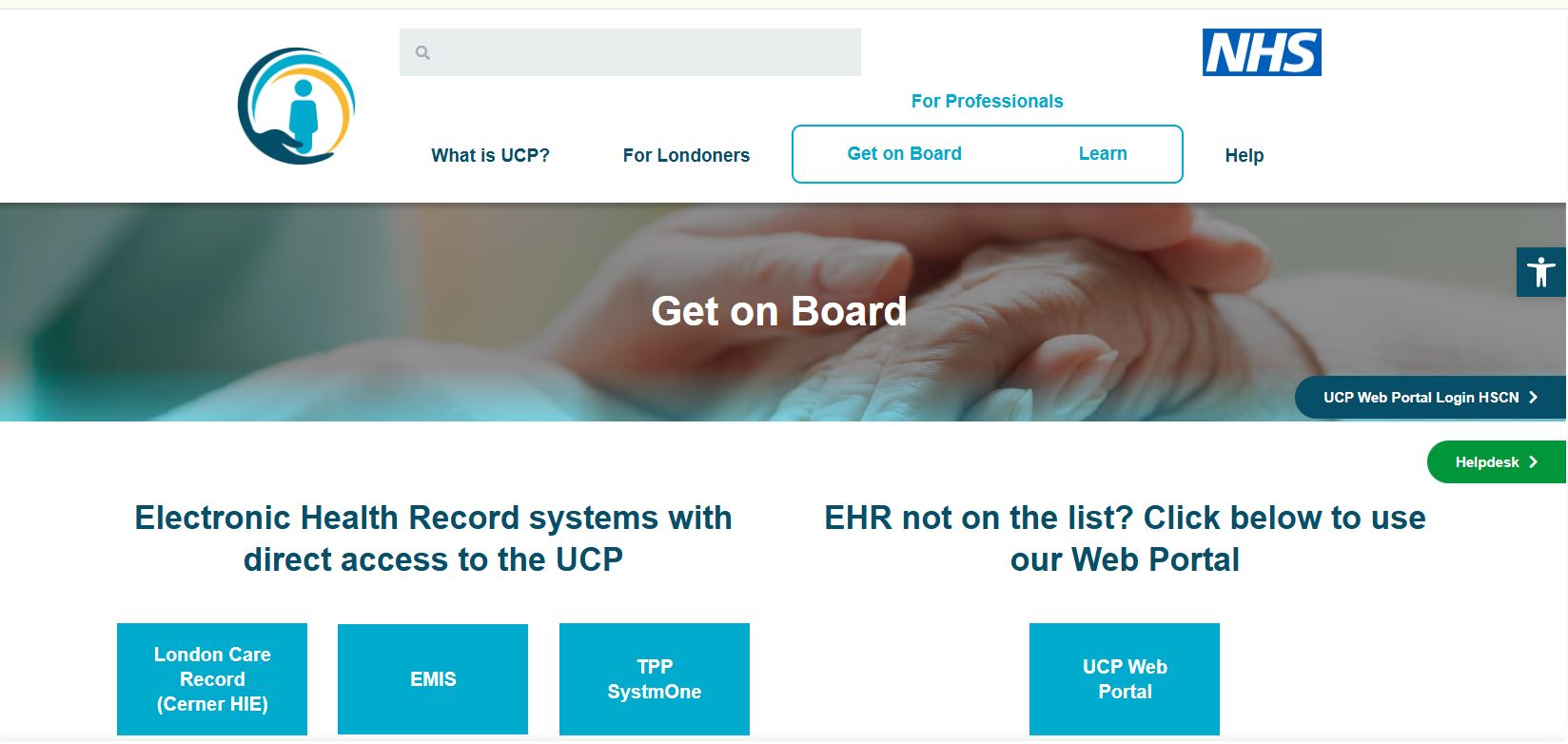
As mentiioned earlier, there was a discussion the Universal Care Plan, which launched in January and will soon allow unpaid carers to initiate their own plans through the NHS app, expected by late summer or early autumn.
It was noted that while some organizations like hospitals and local authorities are familiar with the plan, there are knowledge gaps in the community and voluntary sectors. It was noted that the Urgent Care Plan team are addressing technical questions about IT systems and interfaces, and they are working towards a coordinated London approach. Also highlighted was the need for more training and support in having conversations with carers about the importance of being identified and registered in the system.
NHS 10-Year Plan Updates
There was also updates on the NHS 10-year plan, expected to be published in July, which will emphasize patient experience and care. An update on the integration of carers’ work streams between NHS England and the Department of Health and Social Care, with a likely focus on working-age carers. It was also mentioned on the uploading a video recording of the UCP Carer Contingency Plan launch to NHS Future, which participants could access by requesting to join.
Universal Care Plan Resources
The group discussed the Universal Care Plan (UCP) and its resources for carers, with an offer to connect with the UCP team in South West London.
Matthew shared a website link for UCP One London, which provides information and updates on carer technology initiatives.
The group also discussed plans for Carers Week next month and a new mental health resource for hospitals, though it was noted that details about the latter were still pending.
Carer Support Project Launch
Eleanor presented a new project to support carers across North Central London, covering five boroughs and 11 hospital sites. She explained how the project will identify carers through self-referral or hospital staff identification, using a website with translation tools and referral forms that can be submitted by carers.
Eleanor also discussed plans for carer awareness training and the distribution of informational materials in hospitals to help identify and support carers. Harrow Carers centre raised questions about how hospitals can alert staff to carers involved with patients and how to better identify carers, to which Eleanor responded with plans for training and collaboration with other initiatives like the Universal Care Plan.
Carer Strategy and Resources Discussion
Eleanor discussed her previous work with Guys and St Thomas’s, noting that she had been involved in creating a carer strategy. She offered to provide the email address of a former colleague for more accurate information. The group also discussed a returning from home resources project led by Guys in southeast London, which the CEO of Bexley Carers Centre planned to present at the next meeting.
Carer Support Program Updates
The meeting discussed a carer support program that targets all carers, including young carers, with no specific threshold or type of carer required. Eleanor explained that local carers organizations would decide how to support identified carers, and hospital staff would have a centralized referral system. Matthew McKenzie provided an update on Carers Week events, highlighting various topics and resources available.
I have placed the link below from the NHS England site.
Tower Hamlet Carers Centre shared developments at the Royal London Hospital, including the addition of two carer support workers, a new base on the 13th floor, and efforts to raise awareness among staff and carers.
Carer Support Events and Initiatives
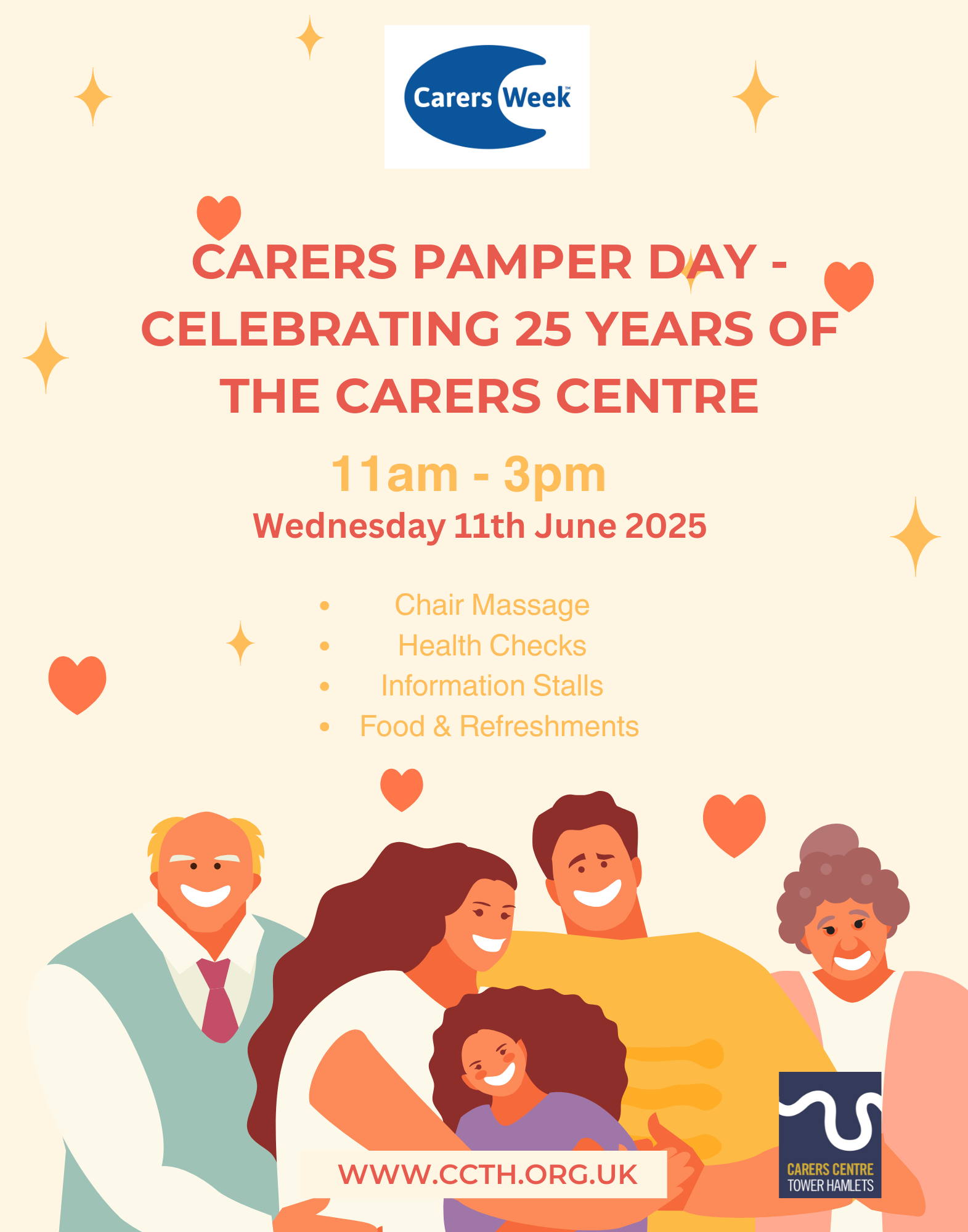
Tower Hamlets Carer centre discussed upcoming events to promote carer support, including a community day on June 11th.
Plus an information stall at the Royal Hospital on June 13th.
Tower Hamlets Carer Centre mentioned plans to start a coffee morning at the hospital’s 13th floor carers hub. Harrow Carers shared that the carers support lead stopped in April due to funding issues, but the NHS trust is now considering joining the Triangle of Care scheme. He requested help finding a suitable presenter for an upcoming meeting with high-level trust members. Matthew offered to connect the centre with Triangle of care leads, who might be able to help with the presentation.
Carers Week Planning and Support
The team discussed upcoming events for Carers Week 2025, including a joint event with the local authority and a new event in the north of the borough in partnership with Greenwich carers. St Georges hospital NHS trust (GESH) shared the development of a new carers charter based on feedback from listening events, which will be shared with various groups and staff to demonstrate commitment to carers’ needs.
SONY DSC
Bexley Carers mentioned the availability of the Household Support Fund for carers facing cost of living issues, with grants of up to £150 available through local authorities.
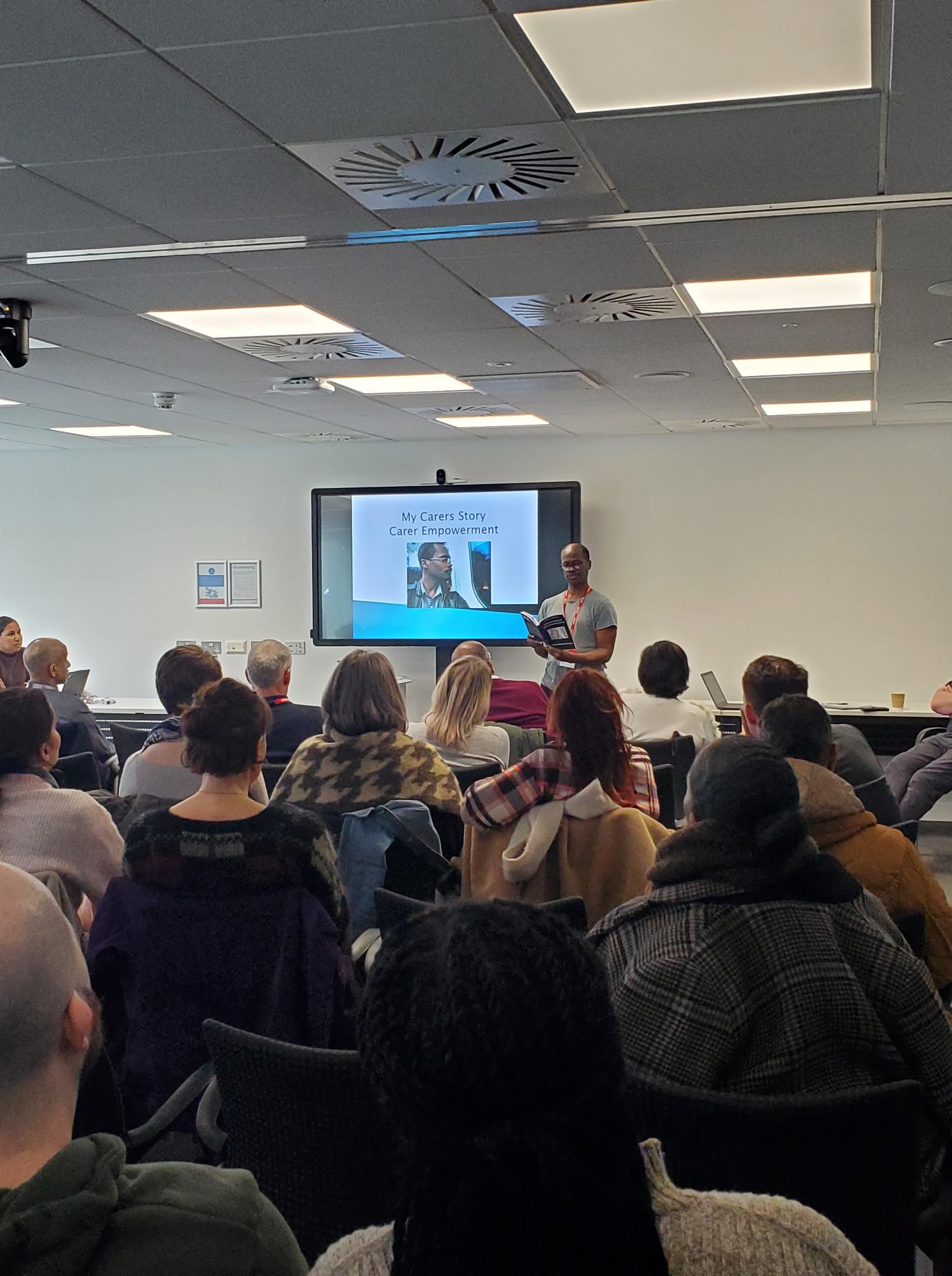
On February 25th, 2025, carers, professionals, and support organizations gathered at Tooley Street for a Carers event provided by Southwark Council. The event was developed by Sarah Bullman, Senior Policy and Strategy Lead for Adult Social Care over in Southwark. The event, hosted by Simon Rayner, provided an opportunity to connect, share updates, and explore ways to support carers in the community.
Key Highlights from the Event:
🔹 Carefree – Presented by Salil Meech Mazumdar, Carefree shared their work in providing much-needed short breaks and respite opportunities for unpaid carers, ensuring they have time to rest and recharge.
🔹 Southwark Carers – Sarah Bullman introduced Southwark Carers including Verinder CEO of Southwark Carers, an essential organization offering tailored advice, practical support, and advocacy for carers in the borough of Southwark.
🔹 Mobilise – A digital-first platform supporting carers, Mobilise was discussed in depth, highlighting how online peer support and coaching can help carers navigate their roles more effectively.
🔹 Imago – Known for their work in youth and adult carer services, Imago shared updates on their projects that focus on young carers, connecting them with resources and professional guidance.
🔹 Carers Hub/Centre – Southwark council focus on a new Carers Hub set for next year, where updates on focus groups and workshops on how the carers centre will be used for supporting unpaid carers.
The last section of the event was below
🔹 Voice of the Carer & Carer Empowerment – Chloe Harvey and Sarah Bullman provided updates on Southwark’s Carers Strategy, reinforcing the importance of carer voices in shaping policy.
Plus Matthew McKenzie, a well-known carer advocate, spoke passionately about listening to carers, empowering them, and ensuring co-production in decision-making. He also read moving excerpts from his book, The Poetry of Mental Health Caring, which resonated deeply with attendees.
The event concluded with a networking lunch, allowing attendees to connect, share experiences, and strengthen their collective efforts in supporting carers.
This forum was a powerful reminder that carers should never feel alone—there is a strong and growing community dedicated to uplifting and advocating for them. 💙









 A Caring Mind