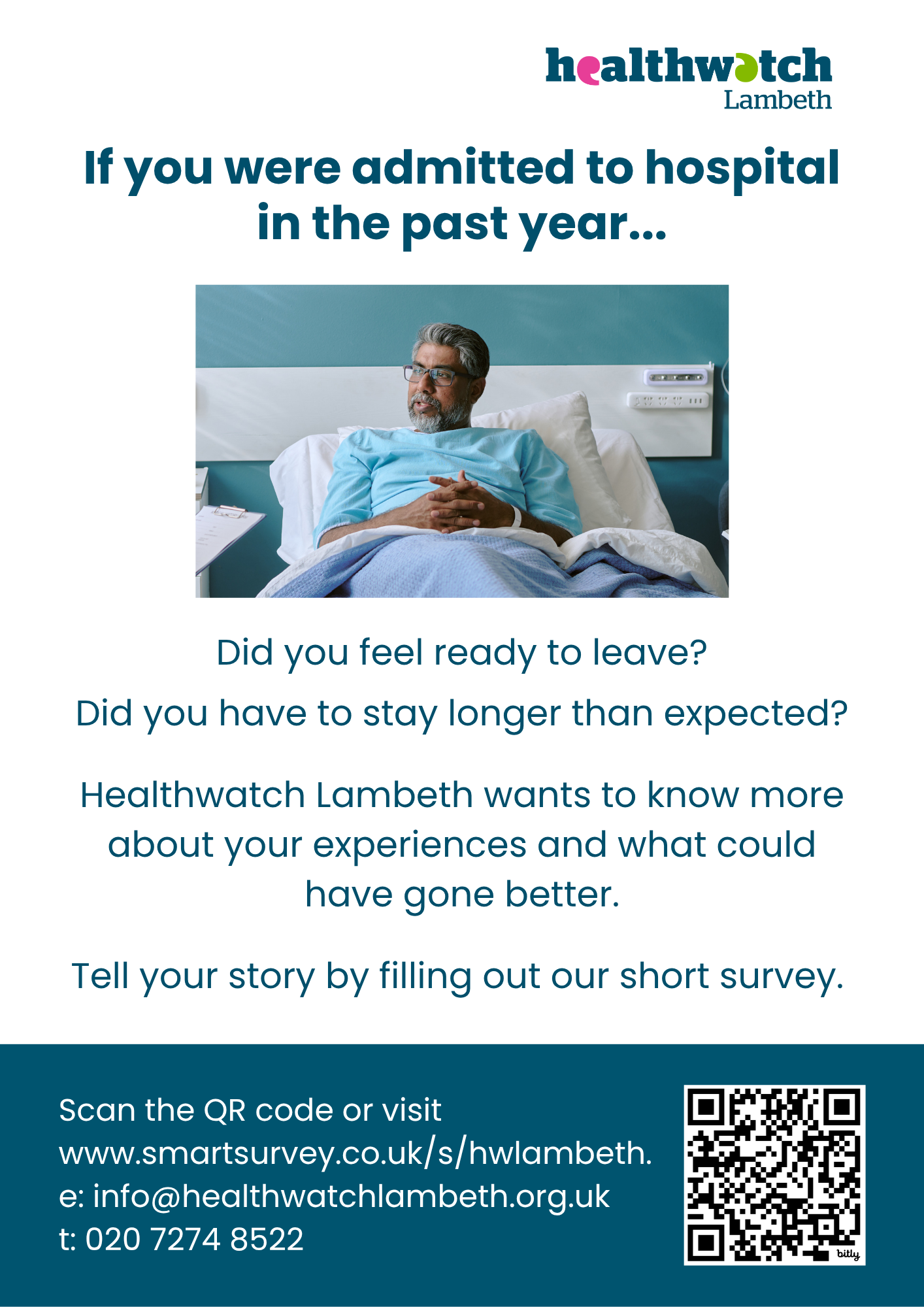
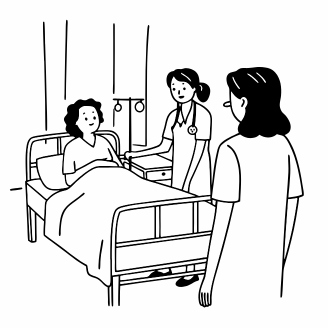
Healthwatch Lambeth is inviting patients and unpaid carers to share their experiences of leaving hospital.
The survey is part of a nationwide Healthwatch England project examining hospital discharge. Healthwatch Lambeth is particularly seeking responses from people living in Lambeth who have experienced a difficult hospital discharge within the past 12 months.
This may include situations where:
Discharge was delayed.
The patient was sent home before they felt ready.
Information about the discharge was unclear or incomplete.
Essential equipment or support was not available.
Follow-up care had not been properly arranged.
An unpaid carer was not sufficiently involved, informed or prepared.
The survey can be completed by patients themselves or by an unpaid carer describing the experience of someone they care for.
Healthwatch Lambeth is especially interested in hearing from people whose experiences may not always be represented in health and care feedback, including men and people from ethnic minority communities.
Hospital discharge can place significant responsibility on families and unpaid carers. When carers are not recognised, involved or given the right information, they may suddenly find themselves managing medication, personal care, appointments and recovery without adequate preparation.
Sharing these experiences can help identify what needs to improve and highlight the importance of involving carers as genuine partners throughout discharge planning.
Please share this survey with Lambeth residents, patients and unpaid carers who may have had a difficult hospital discharge experience during the past year.
By Matthew McKenzie – Chair of Carers Hospital Discharge group
Thanks to everyone who attended our July Hospital Carer Discharge Meeting. We welcomed representatives from NHS trusts, local authorities, carers organisations, Healthwatch, and voluntary sector partners from across London. As always, the purpose of the meeting was to share developments, learn from each other’s work, and strengthen collaboration to improve hospital experiences and discharge planning for unpaid carers.
Although every organisation is at a different stage of development, one message came through very clearly: supporting unpaid carers is becoming an increasingly important priority across hospitals, councils and the NHS.
A Strong Focus on Earlier Carer Identification
One of the recurring themes throughout the meeting was the importance of identifying carers as early as possible during a patient’s hospital journey.
Many hospitals continue to recognise that carers are often identified too late—sometimes only when discharge is already taking place. Earlier identification allows staff to:
involve carers in care planning
understand the practical support available at home
recognise carers’ own support needs
prevent unsafe or delayed discharges
improve communication between hospital teams and families.
Lewisham & Greenwich NHS Trust provided an update on its Standard Operating Procedure (SOP) designed to improve the identification and involvement of unpaid carers. Although implementation has been delayed because of competing organisational priorities, the framework remains in place and includes:
earlier identification of carers on admission
recording carers within hospital systems
involving carers in discharge planning
ensuring carers understand care needs following discharge
connecting carers with local authority assessments and community support.
Alongside this, the Trust continues reviewing its Carers Charter and strengthening relationships with voluntary organisations across Lewisham, Greenwich and Bexley to improve partnership working. Training for ward staff is also beginning with support from local councils to improve awareness of carers and available services.
This demonstrates that improving hospital discharge is not simply about creating new policies, but embedding carer awareness throughout everyday clinical practice.
Excellent Examples of Partnership Working
Several organisations shared encouraging examples of collaboration across health and social care.
The North Central London Carer Support Project described a wide range of initiatives already underway across several NHS trusts.
These include:
weekly co-delivered carer awareness sessions with Camden Carers at University College London Hospital
regular online training sessions at Whittington Hospital attracting around forty staff members each session
development of an e-learning programme for professionals working with carers
greater involvement of patient experience teams in monitoring referrals to carers organisations.
Particularly encouraging was the decision to begin monitoring hospital referral numbers to carers organisations as a performance measure. Measuring referrals each month provides a practical way of understanding whether carers are actually being identified and connected to support rather than relying solely on policy documents.
Camden Carers also highlighted continued outreach into GP surgeries through dedicated engagement work, recognising that many carers first come into contact with primary care long before hospital admission.
Learning from Cancer Carers
Healthwatch representatives shared plans for a significant research project exploring the experiences of carers supporting someone with cancer. The study is expected to begin later this year and will gather the views of carers across several London boroughs before producing recommendations for NHS trusts and publishing the findings publicly. The aim is to better understand what is working well for carers, where support can be strengthened, and how healthcare services can respond more effectively to the realities faced by those caring for someone undergoing cancer treatment.
The discussion highlighted the importance of ensuring that the voices of unpaid carers are heard throughout the research process. Caring for someone with cancer can involve navigating complex treatment pathways, managing appointments across multiple services, providing emotional support, and balancing caring responsibilities alongside work and family life. Research such as this provides an opportunity to capture those lived experiences and translate them into practical recommendations that can improve communication, discharge planning, access to information, and the support available to carers across NHS services.
As Chair of the Cancer Caregiver Forum, I also highlighted opportunities for researchers and NHS organisations to work more closely with existing cancer carer networks to ensure lived experience remains central to future improvements.
Hospital Discharge Remains a National Priority
Several organisations reflected on how hospital discharge continues to be one of the biggest concerns raised by unpaid carers.
Chelsea and Westminster Hospital NHS Foundation Trust
Chelsea and Westminster Hospital explained that feedback from carers is regularly discussed through its Patient Experience Group, with hospital discharge continuing to be one of the most common issues raised by families. Representatives acknowledged that while significant work has taken place, there remains more to do to ensure carers are consistently recognised, listened to, and involved throughout a patient’s stay in hospital.
The Trust also highlighted the important role that carers play in shaping future improvements. By regularly hearing directly from carers through patient experience forums, the hospital is building a better understanding of the practical challenges families face before, during and after discharge. Although their Carers Lead was unable to attend this meeting, the Trust expressed a strong commitment to continuing engagement with regional partners and learning from initiatives taking place across London to strengthen discharge planning and carer support.
Richmond Carers Centre
Richmond Carers Centre reported strong referral links with Kingston Hospital, particularly through dementia services, while also developing opportunities for joint education sessions where hospital staff and carers can better understand each other’s experiences of discharge planning.
Alongside its close working relationship with Kingston Hospital, Richmond Carers Centre continues to raise professional awareness across the borough, encouraging more organisations to identify unpaid carers and refer them for support. The team reflected on ideas gathered from national conferences, including improving engagement with diverse communities and strengthening links with GP practices and Primary Care Networks. Although capacity remains a challenge, Richmond Carers Centre continues to explore new ways of increasing visibility so that carers receive information, advice and emotional support as early as possible rather than only after a hospital discharge has taken place.
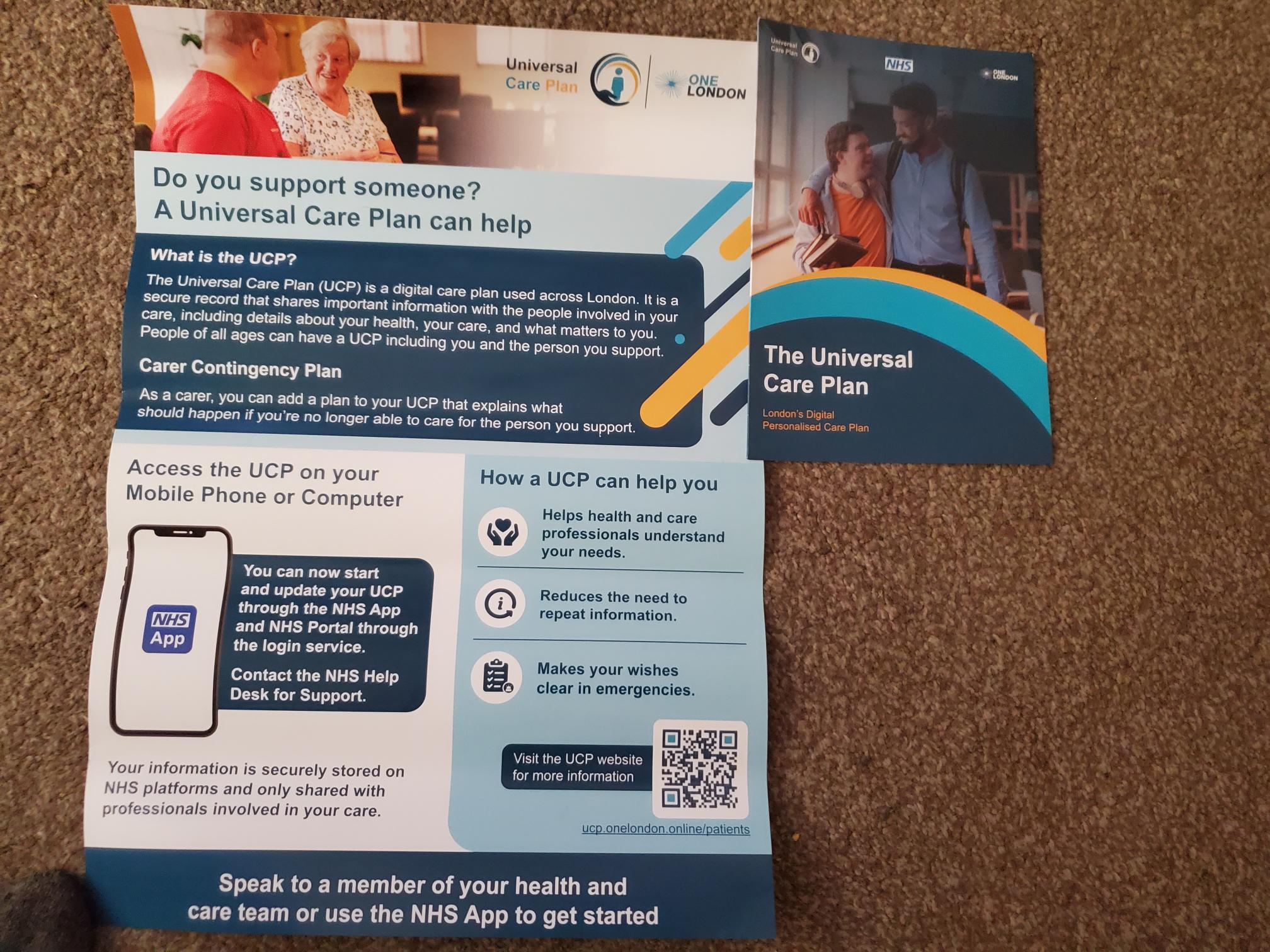
Universal Care Plan and Care Contingency Plan (UCP/CCP)
An important update was shared regarding the Universal Care Plan (UCP) and Care Contingency Plan (CCP), which are being developed through NHS England to improve how carers are identified and supported across health services. Attendees heard that the programme is currently being piloted in London and aims to allow unpaid carers to record emergency contingency arrangements and important caring information digitally through the NHS App and GP systems. The long-term ambition is for this information to be accessible across different parts of the NHS, helping professionals better understand both the needs of the person receiving care and the vital role played by their unpaid carer. Representatives who attended the recent NHS England workshop described the programme as a positive and promising development, with training opportunities expected to become available as the rollout progresses.
The discussion also highlighted that increasing awareness will be just as important as the technology itself. Many carers remain unaware that care planning and contingency planning can help prepare for emergencies where they may suddenly be unable to provide care. By encouraging hospitals, GP practices and carers organisations to promote the Universal Care Plan and Care Contingency Plan, there is an opportunity to improve continuity of care, reduce avoidable crises, and ensure that carers’ knowledge and wishes are better recognised within the wider health and care system. As these initiatives develop, organisations across London will have an important role in helping carers understand how to access and make effective use of these new digital planning tools.
Southwark Council
Southwark Council also described ongoing partnership work with Guy’s & St Thomas’ and King’s College Hospital. King’s College Hospital is currently developing a Care and Support Navigator service designed to support patients while they remain on waiting lists, assist with discharge planning, and improve signposting into community services once patients return home.
The Council explained that while its refreshed Carers Strategy is not solely focused on hospital discharge, close partnership working with local NHS trusts remains a key priority. Through the Southwark Carer Collaborative, which meets quarterly with representatives from King’s College Hospital and Guy’s & St Thomas’, organisations are sharing developments, identifying opportunities for joint working, and ensuring carers remain firmly on the agenda. Southwark also confirmed that the newly launched Cross-Government Unpaid Carers Action Plan is already helping to inform the direction of its refreshed strategy, demonstrating how national policy is beginning to influence local planning and partnership working.
National Developments – A Significant Moment for Unpaid Carers
Perhaps the most significant national development discussed during the meeting was the publication of the UK Government’s first Cross-Departmental Unpaid Carers Action Plan, launched on early July.
Although many details will continue developing over the coming months, the plan represents an important step because responsibility for unpaid carers is now being considered across multiple government departments rather than solely within health and social care.
Key priorities include:
improving identification of unpaid carers
increasing referrals into carers support services
strengthening employment support for working carers
making greater use of digital systems including the NHS App.
Alongside this sits the development of the Universal Care Plan and Carers Contingency Plan. Early pilots suggest these tools could allow carers to record emergency contingency arrangements and important caring information digitally, making that information more accessible across health services when needed. Training opportunities are expected to become available as the programme expands.
Looking Ahead
Although considerable progress is being made, many of the discussions reinforced that improving hospital discharge requires sustained partnership between NHS trusts, councils, carers organisations and, most importantly, unpaid carers themselves.
Future meetings will continue sharing practical examples of good practice, highlighting successful projects, and identifying opportunities for organisations to learn from one another.
At our September meeting we look forward to welcoming Carers UK, who will provide regarding hospitals and unpaid carers.
Thank you once again to everyone who contributed to the July meeting. Your willingness to share ideas, successes and challenges continues to strengthen our collective efforts to ensure unpaid carers are recognised, valued and fully involved throughout the hospital discharge process.
By Matthew McKenzie – Triangle of Care – Community group chair
Putting Carers at the Centre of Care
The latest Triangle of Care Community Group brought together carers, professionals and partner organisations from across England to share learning, celebrate progress and identify where further improvements are needed. The meeting highlighted the growing influence of the Triangle of Care across mental health and acute services, whilst reinforcing that there is still much work to do to ensure carers are consistently recognised, valued and supported.
One of the most powerful aspects of the meeting was hearing directly from carers about their experiences. Whilst many spoke positively about the progress that has been made over recent years, there was a shared view that carer involvement remains inconsistent across services. Carers described feeling more included than ever before, with greater awareness of the Triangle of Care principles and more opportunities to participate in steering groups, service developments and community discussions. However, concerns remain around automatic carer identification, information sharing and ensuring that carers are genuinely recognised as partners in care.
Several carers reflected on the importance of having their voices heard early in a patient’s care journey. Examples were shared of services introducing carer contribution templates that ensure family members are involved within 72 hours of admission, whilst others highlighted improvements to confidentiality processes that allow patients to determine what information can be shared with carers at different stages of their recovery. These practical changes demonstrate how relatively small adjustments can have a significant impact on relationships between carers, patients and professionals.
Progress Across the Triangle of Care Programme
Mary Patel, Triangle of Care Programme Lead at Carers Trust, provided an update on developments across the national programme. The Triangle of Care continues to grow, with a number of organisations progressing through the STAR accreditation process and demonstrating their commitment to embedding carer-inclusive practice across services.
Importantly, members were reminded that the STAR awards are not designed to rank organisations, but instead reflect the breadth of implementation across different service areas. STAR I focuses primarily on inpatient and crisis services, STAR II expands into community services, whilst STAR III recognises organisations delivering integrated services across multiple clinical areas.
Several trusts have recently achieved STAR awards, whilst others are progressing through the assessment process over the coming months. The programme’s peer review approach continues to ensure that carers remain central to the assessment process, with carers actively involved in reviewing evidence, identifying good practice and making recommendations for future development.
The Triangle of Care Member Hub continues to provide valuable opportunities for peer learning, resource sharing and collaborative working. Upcoming webinars will include sessions exploring Open Dialogue approaches developed by Devon Partnership NHS Trust, providing members with further opportunities to learn about therapeutic models that place families and carers at the heart of care planning.
Advancing Equality Through the Patient and Carer Race Equality Framework
A significant development announced during the meeting was the launch of Phase Two of the Triangle of Care and Patient and Carer Race Equality Framework (PCREF) project.
PCREF represents the first mandatory anti-racism framework within mental health services in England. Recognising that carers from racially marginalised communities often experience poorer outcomes and face additional barriers when accessing support, the Triangle of Care programme has been working collaboratively with carers and mental health providers to strengthen the way services assess and respond to carers’ needs.
The revised self-assessment framework encourages services to move beyond assumptions and adopt a more professionally curious approach to understanding carers’ individual experiences. Rather than viewing carers as a homogenous group, the framework recognises that caring experiences are shaped by culture, identity, language, personal circumstances and wider health inequalities.
Pilot sites from across England are now testing the revised guidance, with learning being shared nationally throughout the project. Importantly, organisations do not need to be participating in the pilot to begin implementing the principles and learning that emerge from this work.
Alongside PCREF, Carers Trust continues to contribute to national policy developments, including the Modern Service Framework for Severe Mental Illness and the forthcoming Mental Health Strategy for England. Throughout these discussions, there has been a consistent message that carers must be recognised as partners in care and have access to appropriate support in their own right.
Confidentiality, Information Sharing and Carer Inclusion
Confidentiality remained one of the most prominent themes throughout the meeting. Whilst participants acknowledged the importance of protecting patients’ rights and preferences, carers highlighted that confidentiality can sometimes become a barrier to meaningful engagement.
Several contributors reflected that confidentiality should never prevent professionals from listening to carers’ concerns or receiving valuable information that may support a patient’s care. Others spoke about the importance of revisiting conversations around consent over time, recognising that patients’ preferences may change as their circumstances and wellbeing improve.
Practical examples of good practice included breaking confidentiality discussions down into specific areas, allowing patients to decide what information can be shared about medication, activities, wellbeing and treatment plans, rather than relying on simple ‘yes or no’ decisions. There was also discussion around the importance of staff training to improve confidence when navigating complex conversations around confidentiality and information sharing.
Participants agreed that carers should never be expected to provide significant levels of support without receiving the information necessary to do so safely and effectively. Achieving the right balance between confidentiality and partnership working remains an important priority for the Triangle of Care community.
Triangle of Care Principles Within Acute Services
The meeting concluded with an inspiring presentation from Wendy Doyle, Head of Patient Experience at St George’s University Hospitals NHS Foundation Trust and Epsom and St Helier Hospitals, exploring how Triangle of Care principles can be successfully implemented within acute hospital settings.
Whilst the Triangle of Care originated within mental health services, Wendy demonstrated that its principles are equally applicable across acute care environments. Her organisation supports approximately 19,000 members of staff across multiple hospital sites and has developed a comprehensive approach to identifying, recording and supporting unpaid carers.
Staff are encouraged to identify carers at the earliest possible opportunity, with this information recorded within patient records to ensure continuity throughout the patient’s hospital journey. Comprehensive carer awareness training is delivered through virtual sessions, ward-based education and e-learning resources, helping staff understand both the practical and emotional importance of recognising carers.
Importantly, identifying carers is only the beginning of the process. Every carer recorded within the hospital system receives a follow-up wellbeing check from the Patient Experience Team to discuss their own support needs, identify any challenges and facilitate referrals to local carers’ organisations where appropriate.
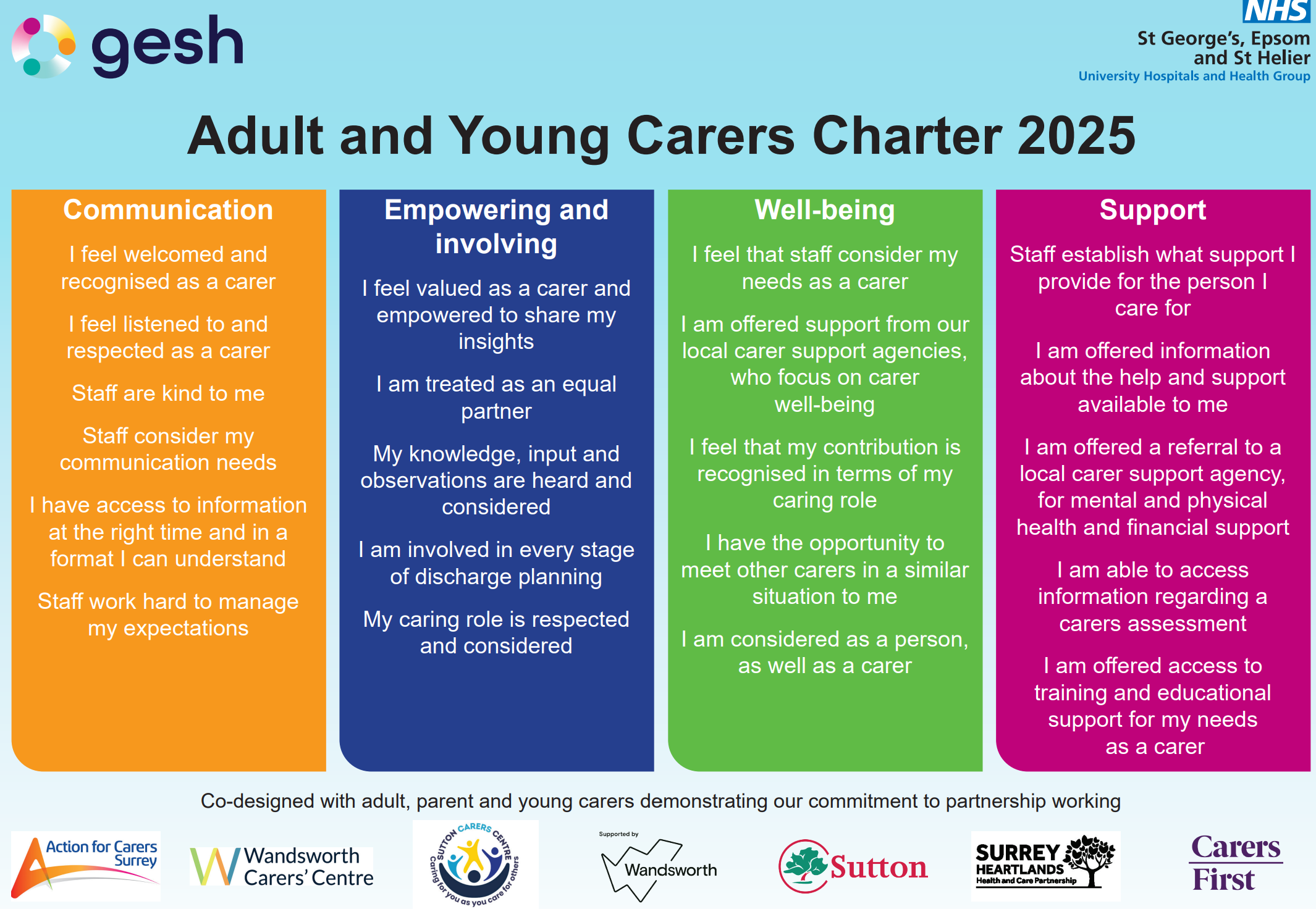
Partnership working sits at the heart of this approach, with close collaboration between acute services and local carers’ centres ensuring carers can access a broad range of practical and emotional support. Adult and Young Carers’ Charters have also been co-produced with carers themselves, helping to shape organisational commitments around kindness, inclusion and meaningful engagement.
Perhaps most importantly, Wendy highlighted that supporting carers improves outcomes for everyone. Better communication strengthens discharge planning, reduces avoidable hospital admissions and readmissions, improves patient safety and helps prevent carer burnout. Acute hospital stays can provide valuable opportunities to identify carers who may previously have remained invisible and connect them with longer-term support.
Looking Ahead
The discussions throughout the meeting demonstrated both the progress that has been made and the challenges that remain. There is increasing recognition that carers are essential partners in delivering high-quality care across both mental health and acute services. However, meaningful involvement cannot rely upon individual goodwill alone; it requires consistent systems, robust policies and a genuine commitment to partnership working.
Looking ahead, the Triangle of Care programme will continue to expand opportunities for peer learning, influence national policy developments and support organisations to embed carer-inclusive practices across services. The ongoing work around PCREF and wider mental health policy developments provide important opportunities to ensure that carers’ voices remain central to future service transformation.
Above all, the meeting reinforced a simple but powerful message: carers must not be viewed as an afterthought or an optional addition to care planning. They are experts through experience, invaluable partners in care and individuals with support needs of their own. When carers are identified early, listened to meaningfully and supported appropriately, outcomes improve not only for carers themselves, but for patients, families and services alike.
The Triangle of Care Community Group continues to provide an important space where carers and professionals can learn from one another, challenge existing practices and work collectively towards more compassionate, inclusive and effective care.
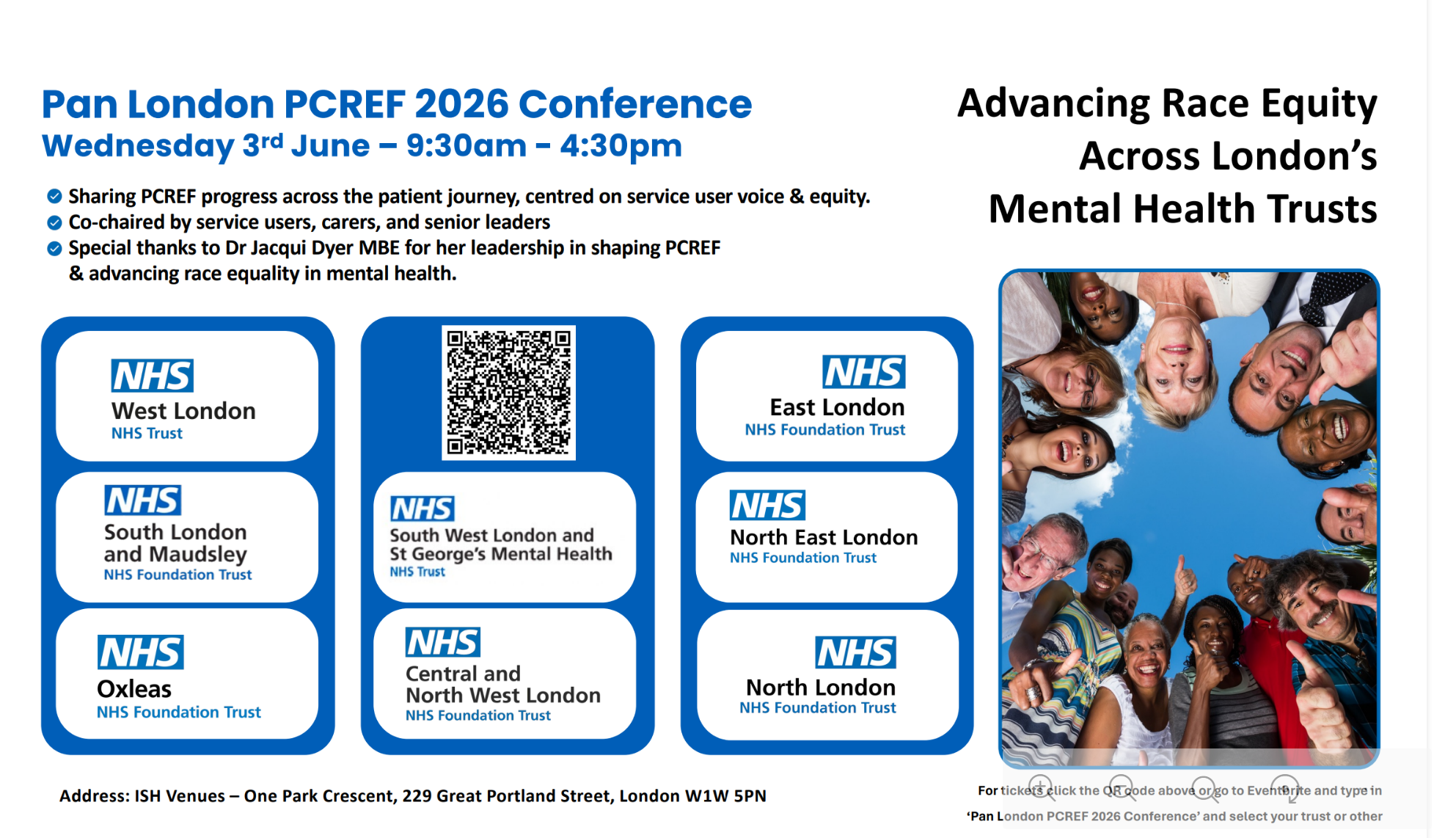
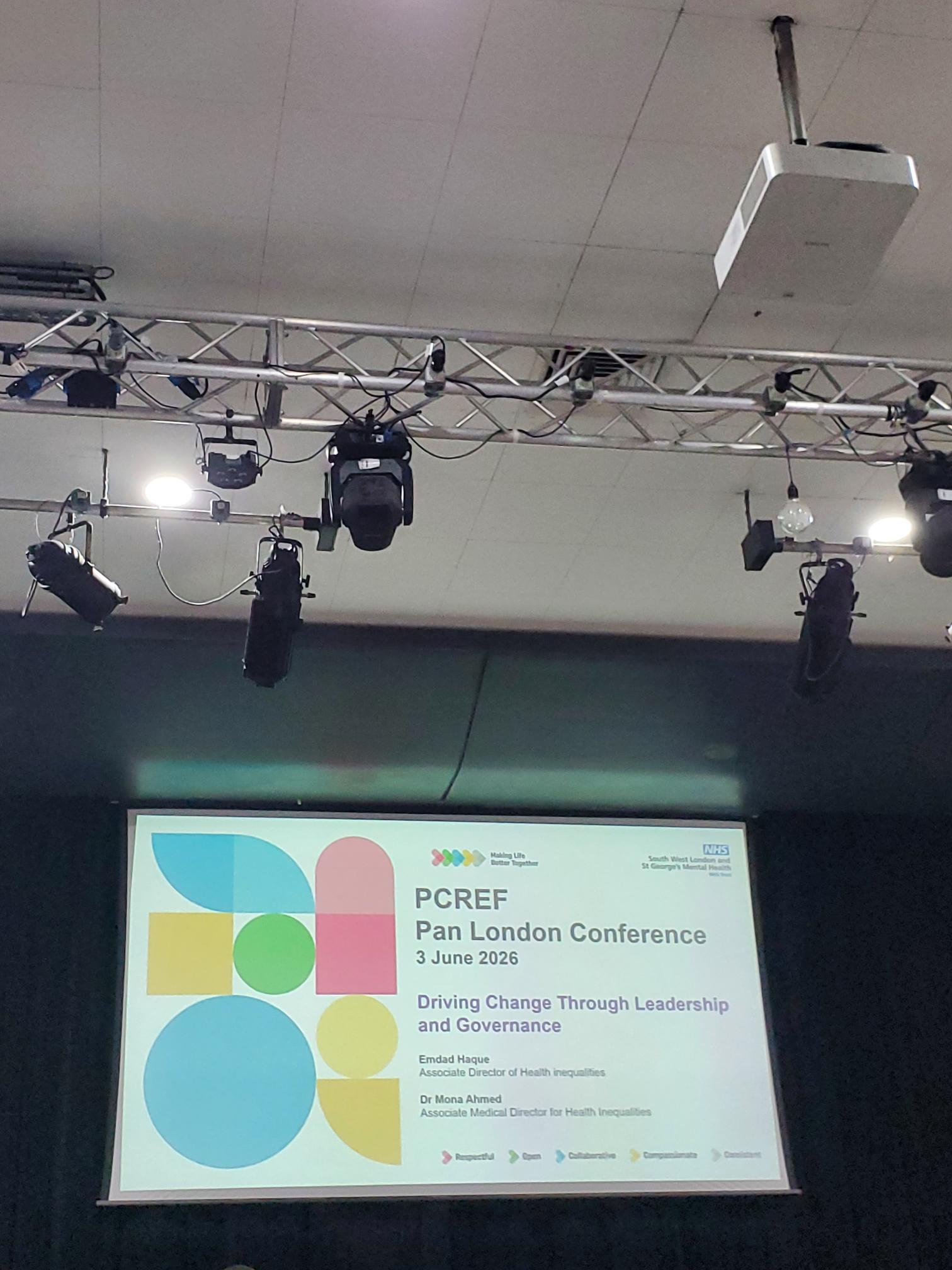
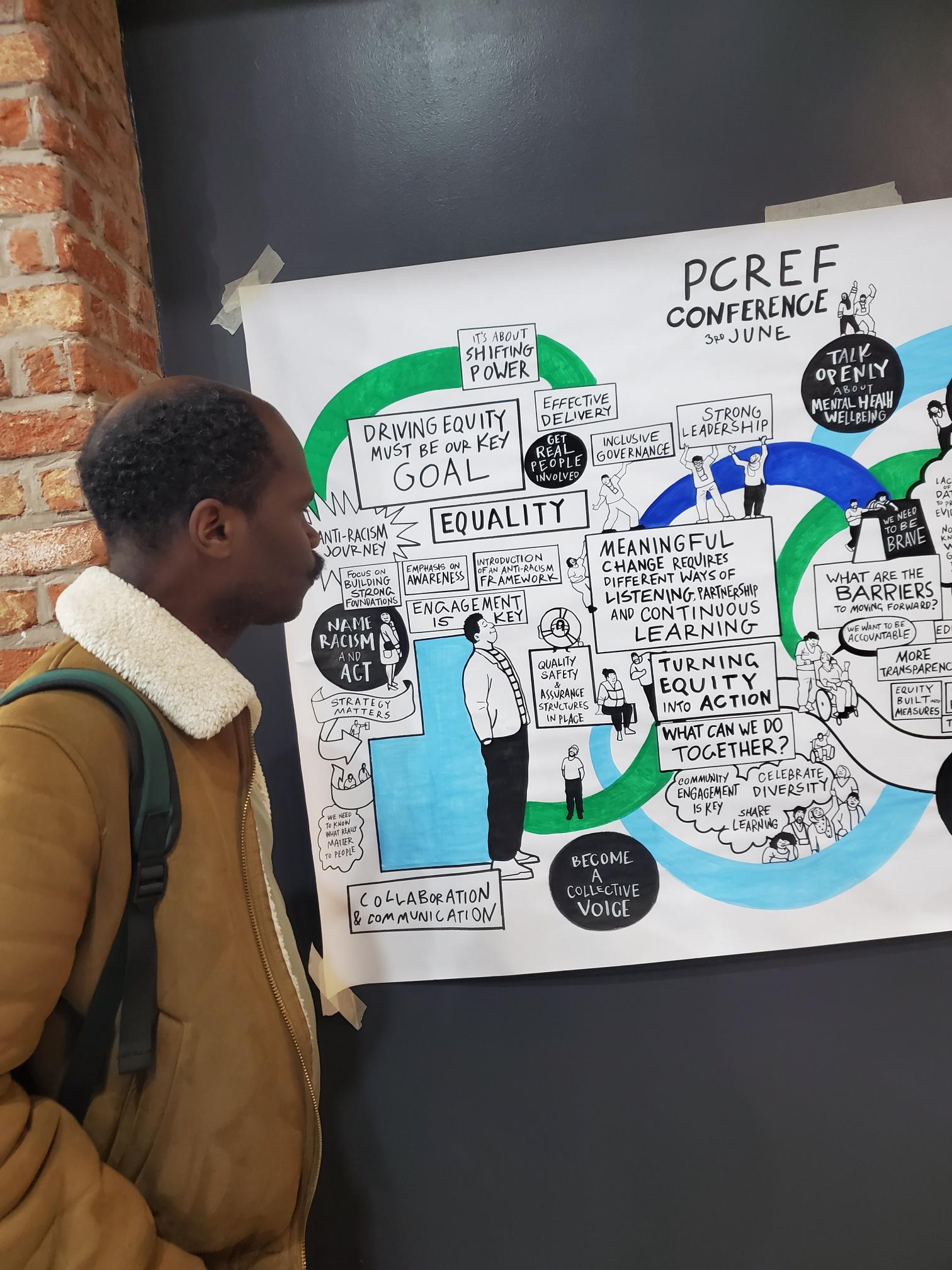
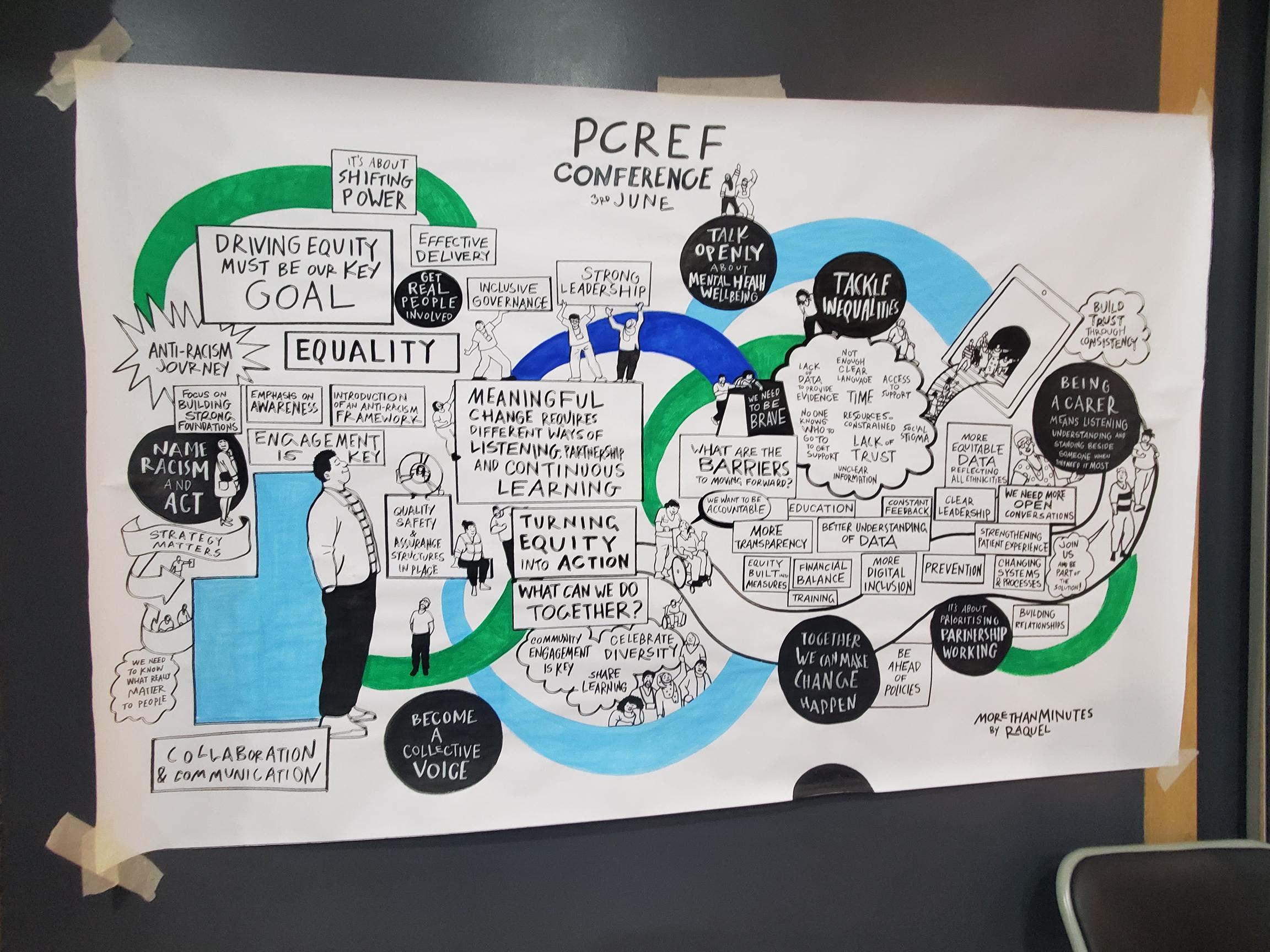
On Wednesday 3 June 2026, colleagues from all eight London Mental Health Trusts, alongside carers, service users, community organisations, researchers, regulators and system leaders, gathered at ISH Venues in central London for the Pan London Patient and Carer Race Equality Framework (PCREF) Conference.
Chaired by Erica deti from North East London NHS Foundation Trust (NELFT), the conference provided a unique opportunity to showcase progress, share learning and strengthen London’s collective commitment to race equity within mental health services.
The conference was built around the principle that advancing race equity requires both organisational commitment and meaningful partnership with people who use services, carers and communities. Throughout the day, speakers challenged delegates to move beyond discussion and towards action, recognising that the inequalities experienced by racialised communities within mental health services remain one of the most significant challenges facing the NHS.
South West London and St George’s Mental Health NHS Trust
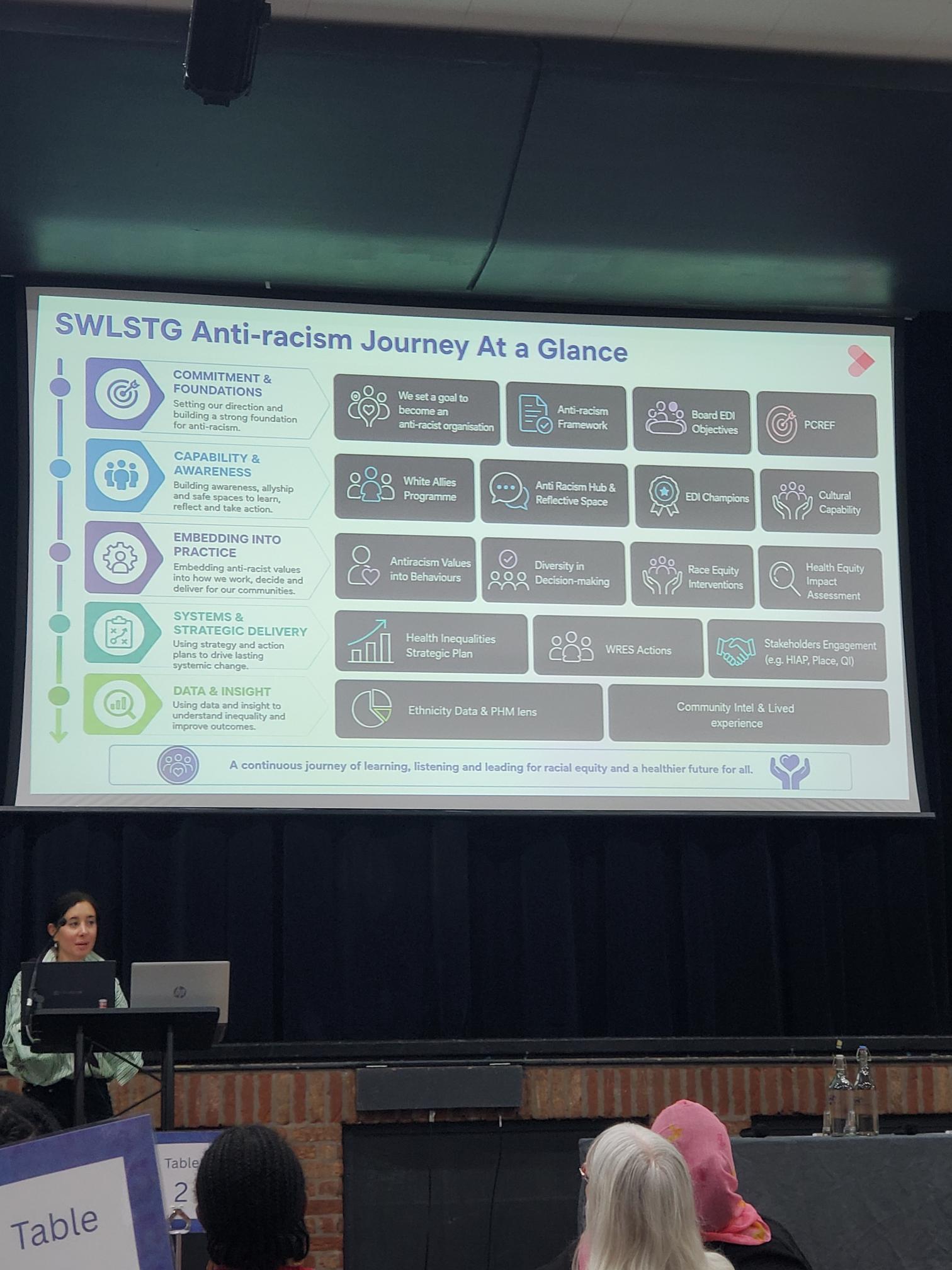
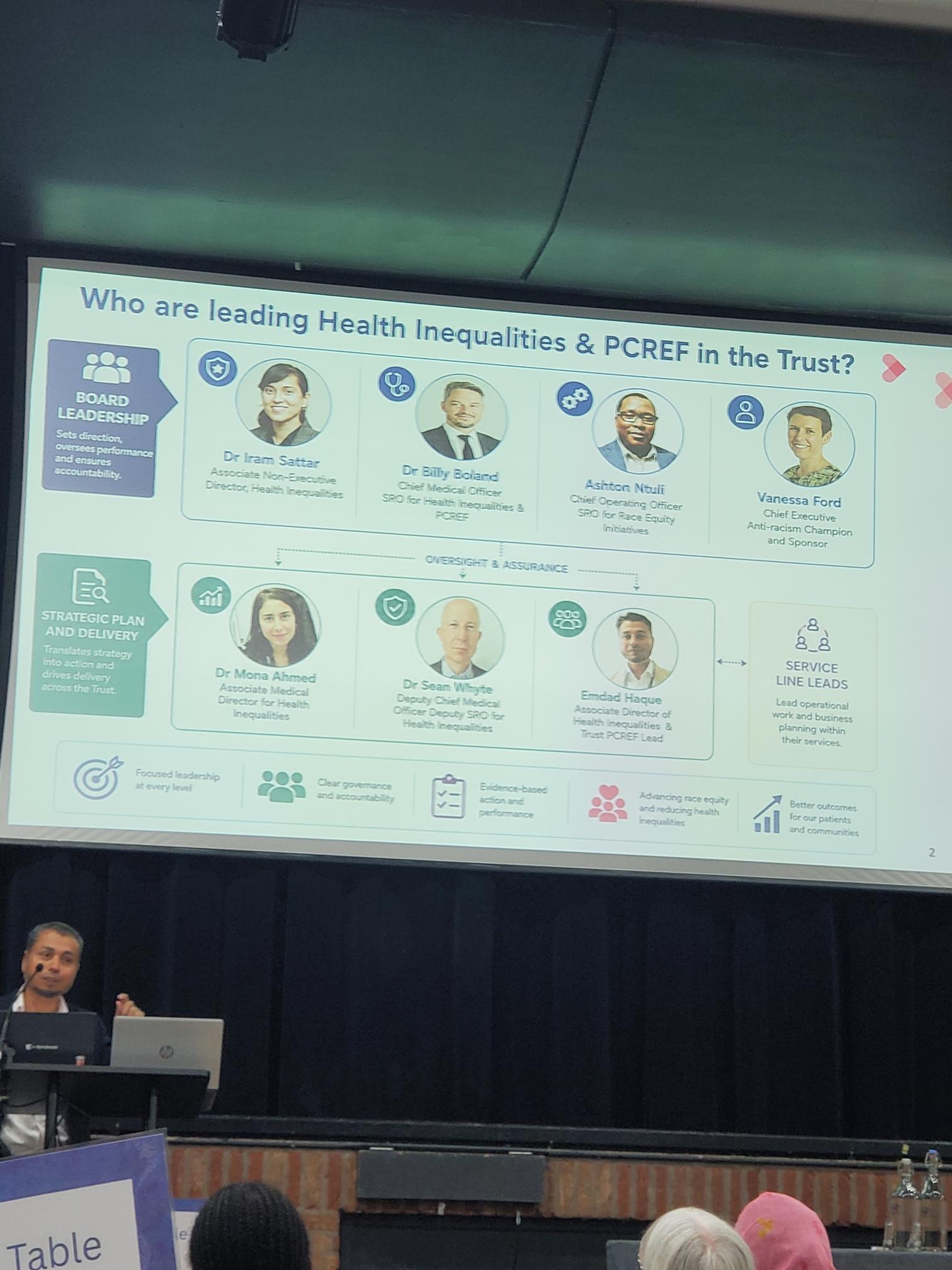
The first trust presentation was delivered by Amdad Ibrahim, Associate Director of Health Inequalities, and Dr Mona Dhesi, Consultant Forensic Psychologist and Associate Medical Director at South West London and St George’s Mental Health NHS Trust. Their presentation provided one of the clearest examples of how PCREF can be fully integrated into organisational strategy. Beginning with an explicit acknowledgement that racism exists within healthcare organisations and wider society, they demonstrated how their trust had used this recognition as the foundation for meaningful action.
The speakers outlined a comprehensive anti-racism programme linking governance, workforce development, community engagement and service transformation. Race equity has been embedded into business planning, leadership accountability and quality improvement processes, supported by cultural capability programmes, anti-racism steering groups and health equity assessments.
Their presentation demonstrated how PCREF can become part of the organisational DNA of a trust rather than a standalone initiative and provided a practical blueprint for others seeking sustainable implementation.
1. Commitment and Foundations
The Trust began by establishing a clear organisational commitment to becoming an anti-racist organisation. This commitment is supported through a range of strategic frameworks and governance structures, including the Trust’s Anti-Racism Framework, Board Equality, Diversity and Inclusion objectives, and the implementation of the Patient and Carer Race Equality Framework (PCREF).
Speakers emphasised that meaningful progress begins with leadership acknowledging that racism exists within healthcare systems and taking responsibility for addressing it. This commitment has been reinforced at Board level and incorporated into wider organisational priorities to ensure race equity remains visible and accountable.
2. Capability and Awareness
Recognising that sustainable change requires learning and reflection, the Trust has invested heavily in developing staff awareness and cultural capability. This includes initiatives such as:
White Allies Programme
Anti-Racism Hub and Reflective Spaces
Equality, Diversity and Inclusion Champions
Cultural Capability Training
These programmes create opportunities for staff to develop a deeper understanding of race, culture, privilege and inequality while providing safe spaces for reflection and discussion. The aim is to move beyond awareness and support staff to actively challenge inequity within their daily practice.
3. Embedding Anti-Racism into Practice
SWLSTG has focused on ensuring anti-racist values are embedded within decision-making processes and clinical practice rather than existing solely within training programmes.
Key areas of work include:
Embedding anti-racist values into organisational behaviours
Increasing diversity within leadership and decision-making structures
Delivering targeted race equity interventions
Using Health Equity Impact Assessments to inform service development
The Trust highlighted how race equity considerations are now being incorporated into service redesign programmes, policy development and clinical pathways, ensuring that decisions are assessed for their potential impact on different communities.
East London NHS Foundation Trust (ELFT)
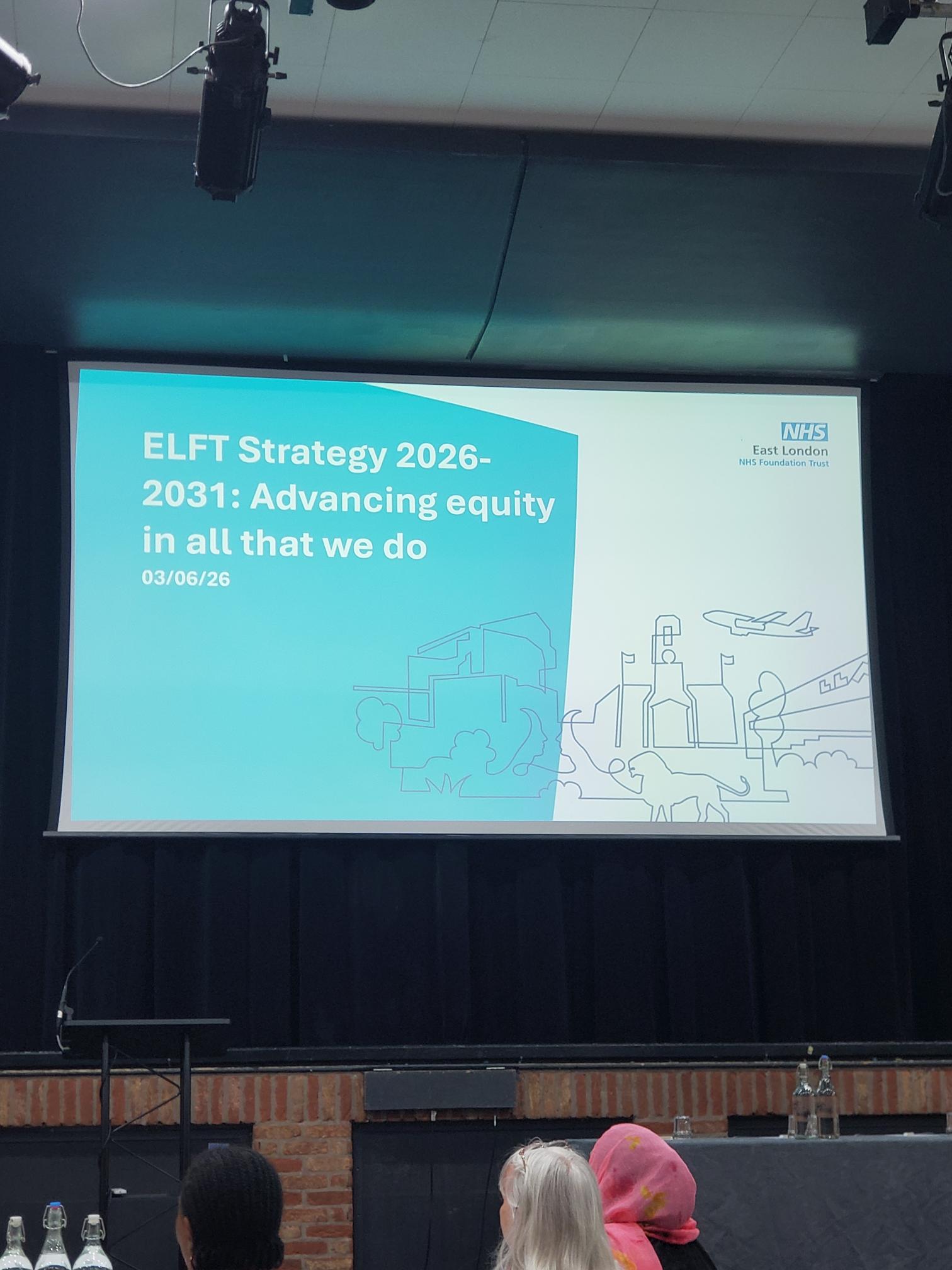
Advancing Equity in All That We Do: ELFT Strategy 2026–2031
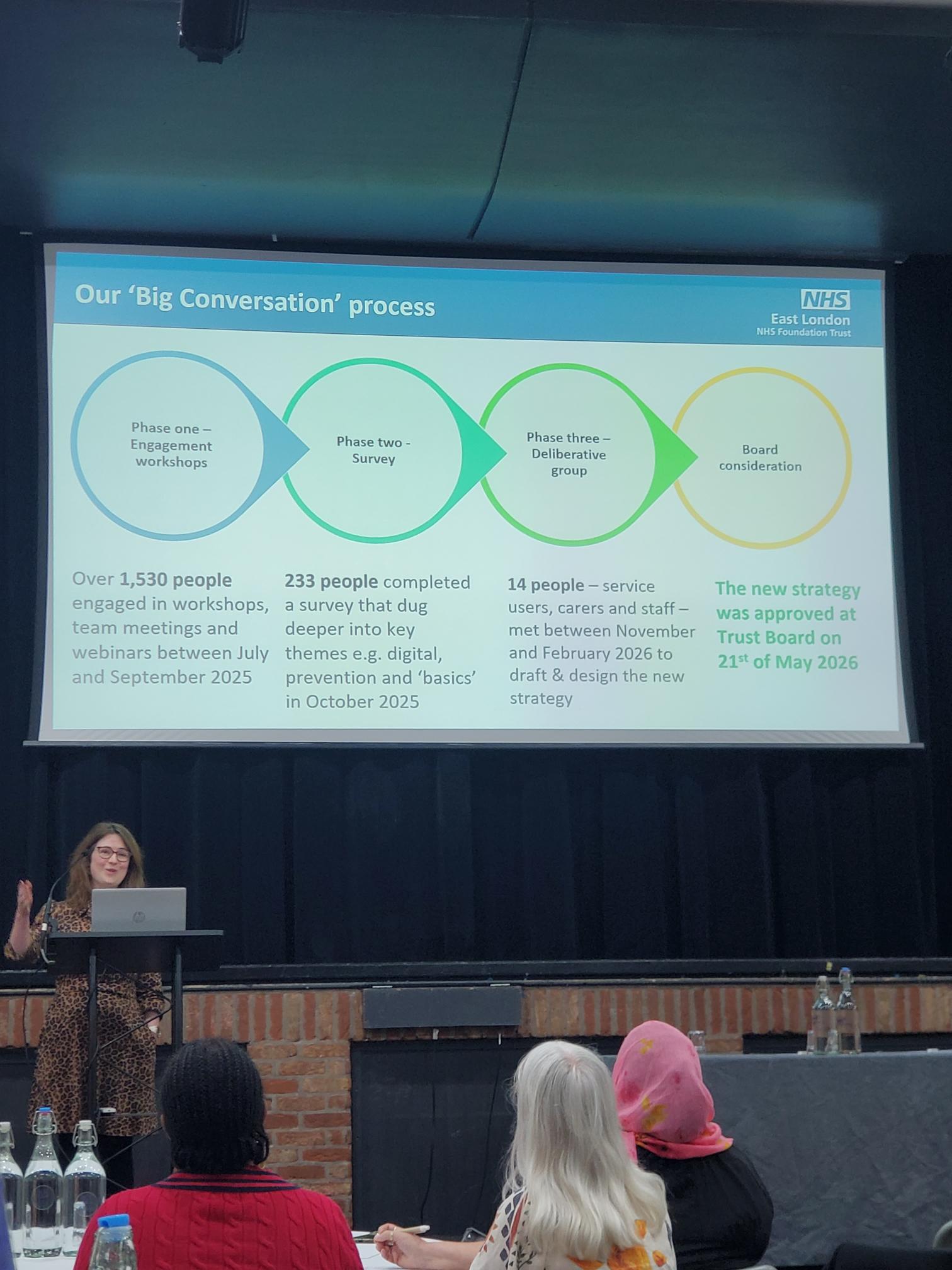
Presented by Carrie Sissons, Deputy Director of Integrated Care, East London NHS Foundation Trust shared how race equity and inclusion have been embedded at the heart of the Trust’s new 2026–2031 Strategy. Rather than developing a strategy behind closed doors, ELFT undertook an extensive engagement programme designed to ensure that the voices of service users, carers, staff and communities directly influenced the Trust’s future direction.
Carrie explained that the strategy was developed during a period of significant challenge for health and care services, but also a period of opportunity. The Trust recognised that if it was to improve outcomes for the diverse communities it serves across East London, Bedfordshire and Luton, equity could not be treated as a separate programme of work. Instead, it had to become a core principle underpinning every decision, every service and every improvement initiative undertaken by the organisation.
Building the Strategy Through the “Big Conversation”
A major feature of the strategy development process was the Trust’s extensive engagement exercise known as the “Big Conversation.” This programme was designed to ensure that the final strategy reflected the experiences, priorities and aspirations of the people who use and deliver services.
What People Told ELFT
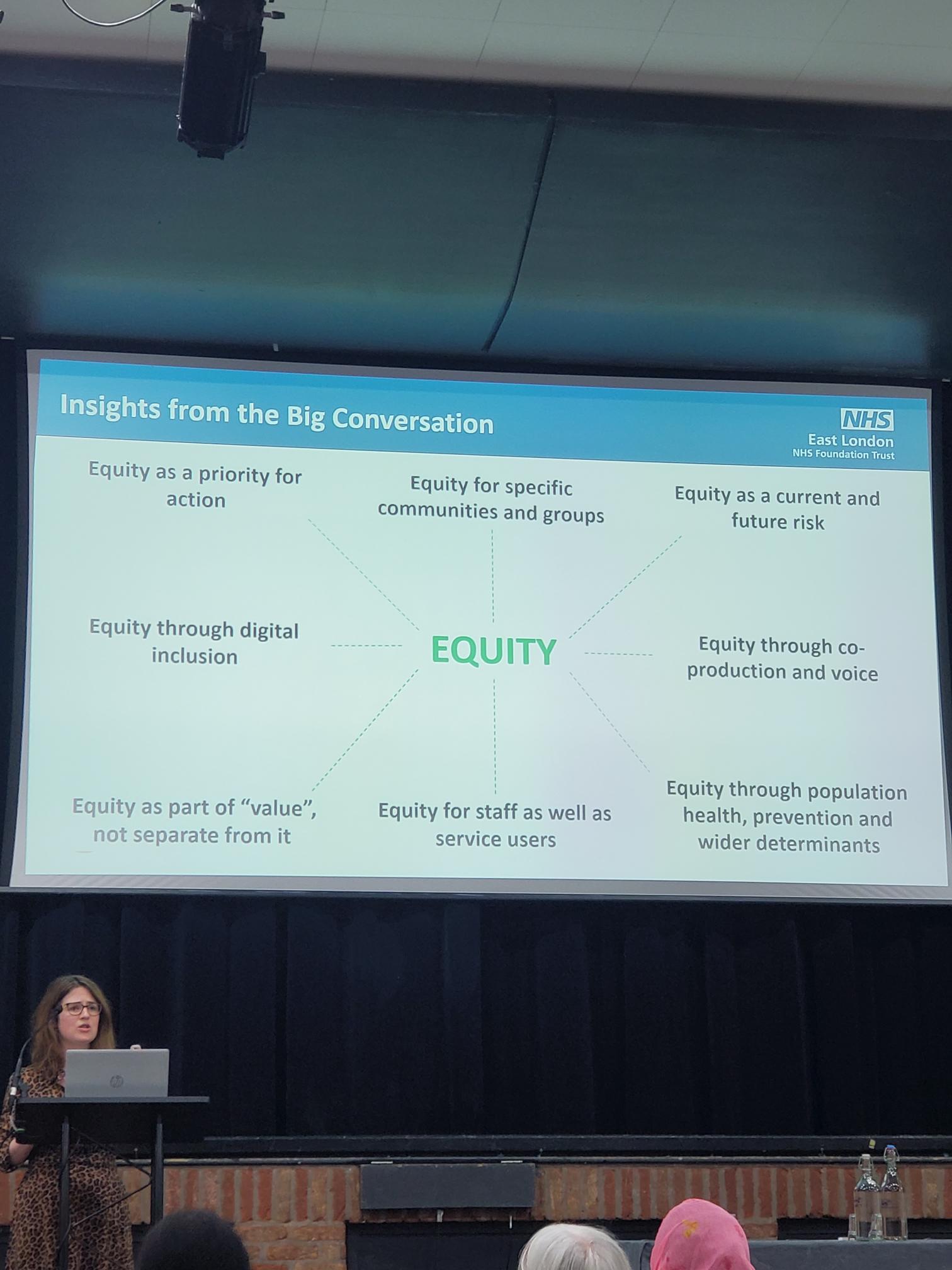
One of the strongest messages emerging from the Big Conversation was the importance of equity. Participants consistently identified inequalities in access, experience and outcomes as issues that required sustained attention and action.
The engagement process highlighted several key themes:
Equity as a priority for action.
Equity for specific communities and groups.
Equity as a current and future risk.
Equity through co-production and lived experience.
Equity through population health and prevention.
Equity for staff as well as service users.
Equity through digital inclusion.
Equity as an essential part of value, not separate from it.
Carrie explained that these findings reinforced the need for equity to be visible throughout the Trust’s strategic objectives and operational plans. Participants wanted to see measurable action rather than broad commitments, with a focus on understanding and addressing disparities experienced by different communities.
The ELFT Strategy 2026–2031
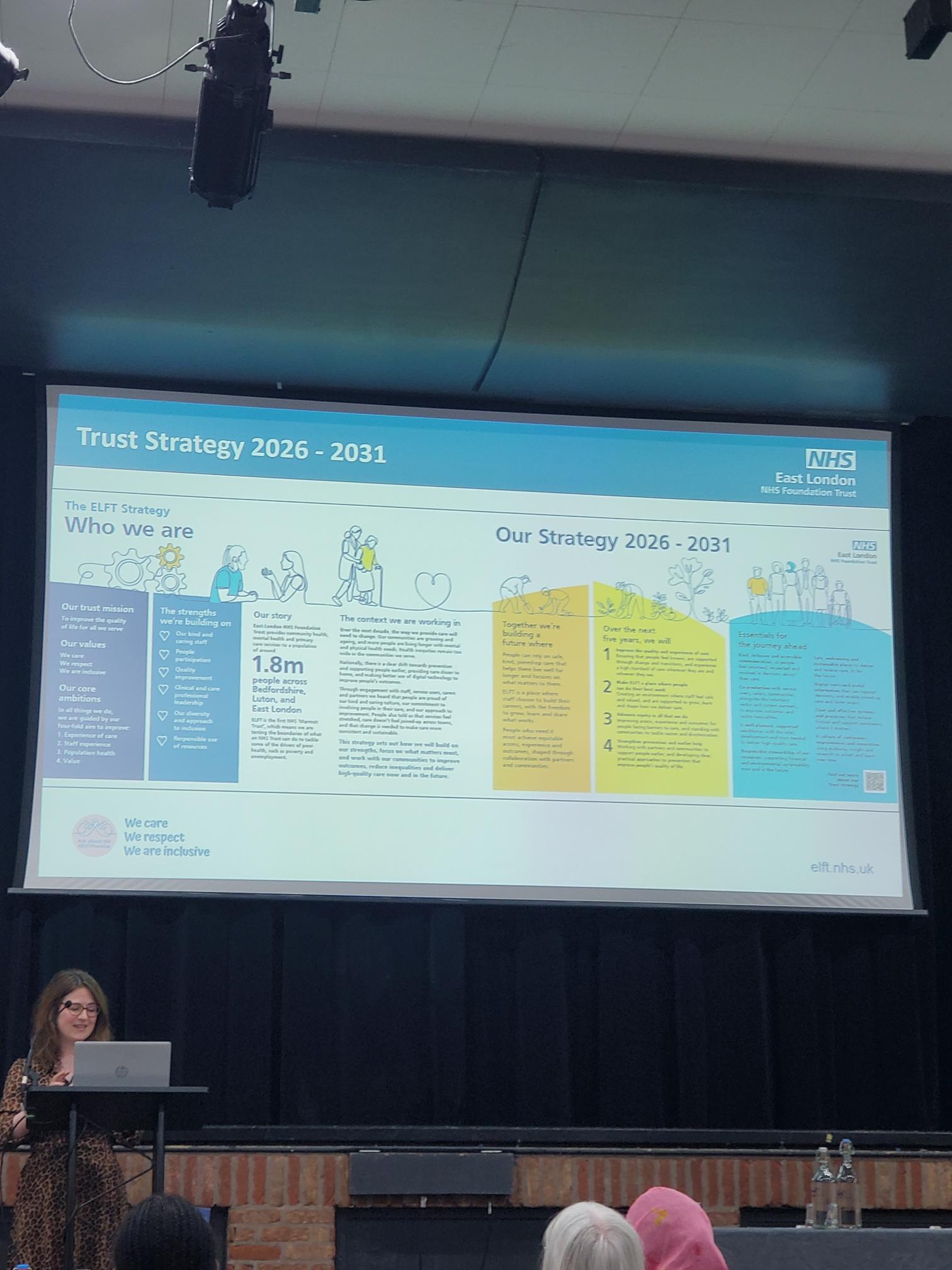
The new strategy builds upon ELFT’s existing values and commitment to high-quality care. Serving approximately 1.8 million people across East London, Bedfordshire and Luton, the Trust recognised that reducing inequalities must remain central to its future ambitions.
The strategy identifies four broad priorities for the next five years:
Improve the quality and experience of care.
Make ELFT a great place to work.
Advance equity in all that we do.
Work with partners and communities to improve lives.
Of these priorities, the commitment to advancing equity was particularly relevant to the themes of the PCREF conference.
Priority Three: Advance Equity in All We Do
Carrie described this priority as a commitment to ensuring that equity becomes embedded within everyday practice rather than being treated as a specialist programme.
By 2031, ELFT aims to ensure that:
Teams routinely analyse access, experience and outcomes by population group.
Services take action when disparities are identified.
Progress continues against PCREF commitments.
The Trust’s Anti-Racism Plan and Charter are actively implemented.
Equity and inclusion are strengthened across the workforce.
Inequalities experienced by racialised communities are reduced.
The strategy recognises that data alone is not enough. Equity must be considered throughout service design, quality improvement, workforce development and organisational decision-making.
West London NHS Trust
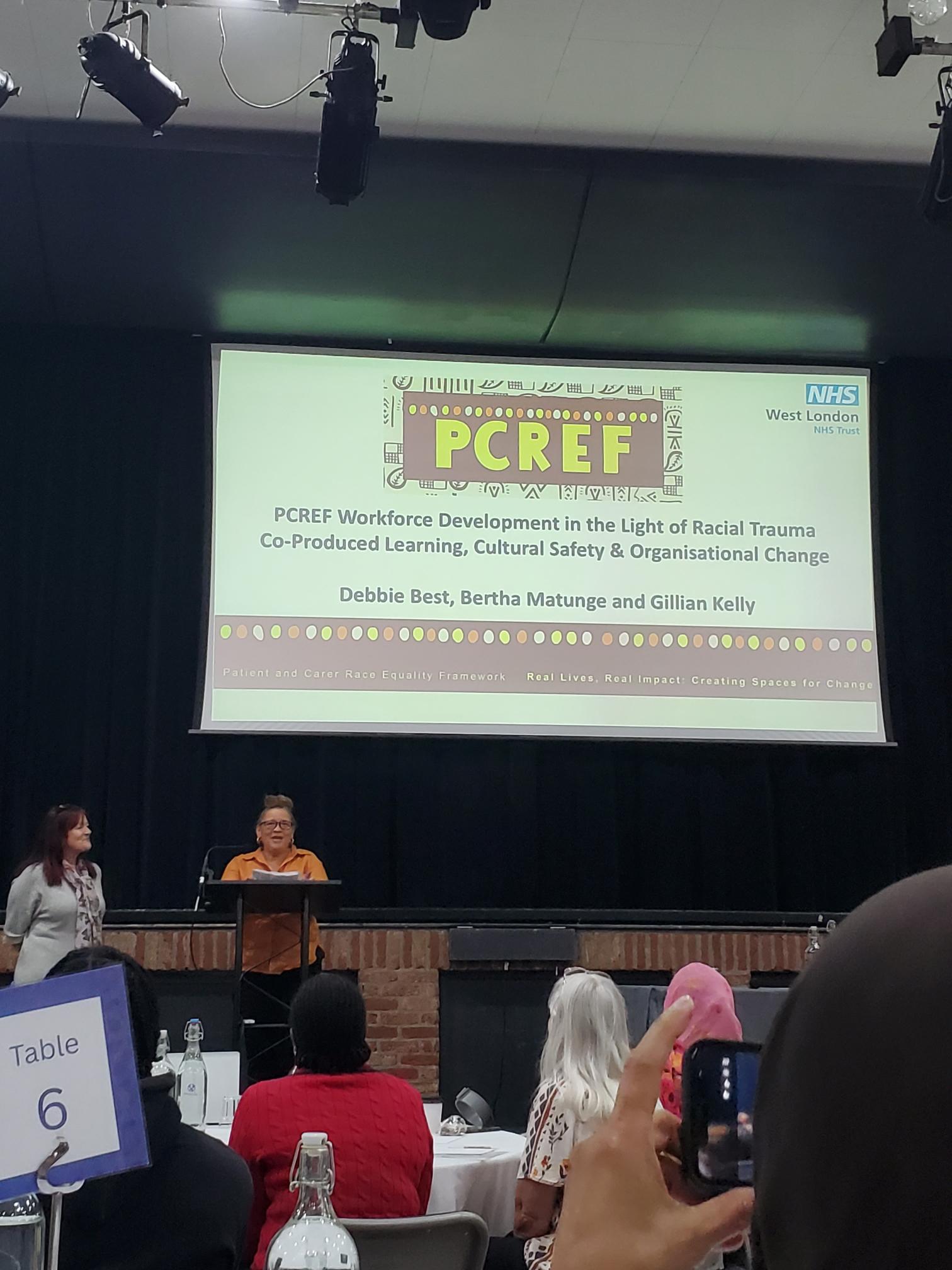
Presented by Debbie Best (PCREF Lead), Natalie Mark (Living Experience PCREF Lead) and Dr Anne Aiyegbusi, West London NHS Trust delivered one of the most powerful and thought-provoking presentations of the conference. Their session focused on racial trauma, exploring how racism affects patients, carers and staff, and how organisations can create safe spaces to acknowledge, understand and respond to those experiences.
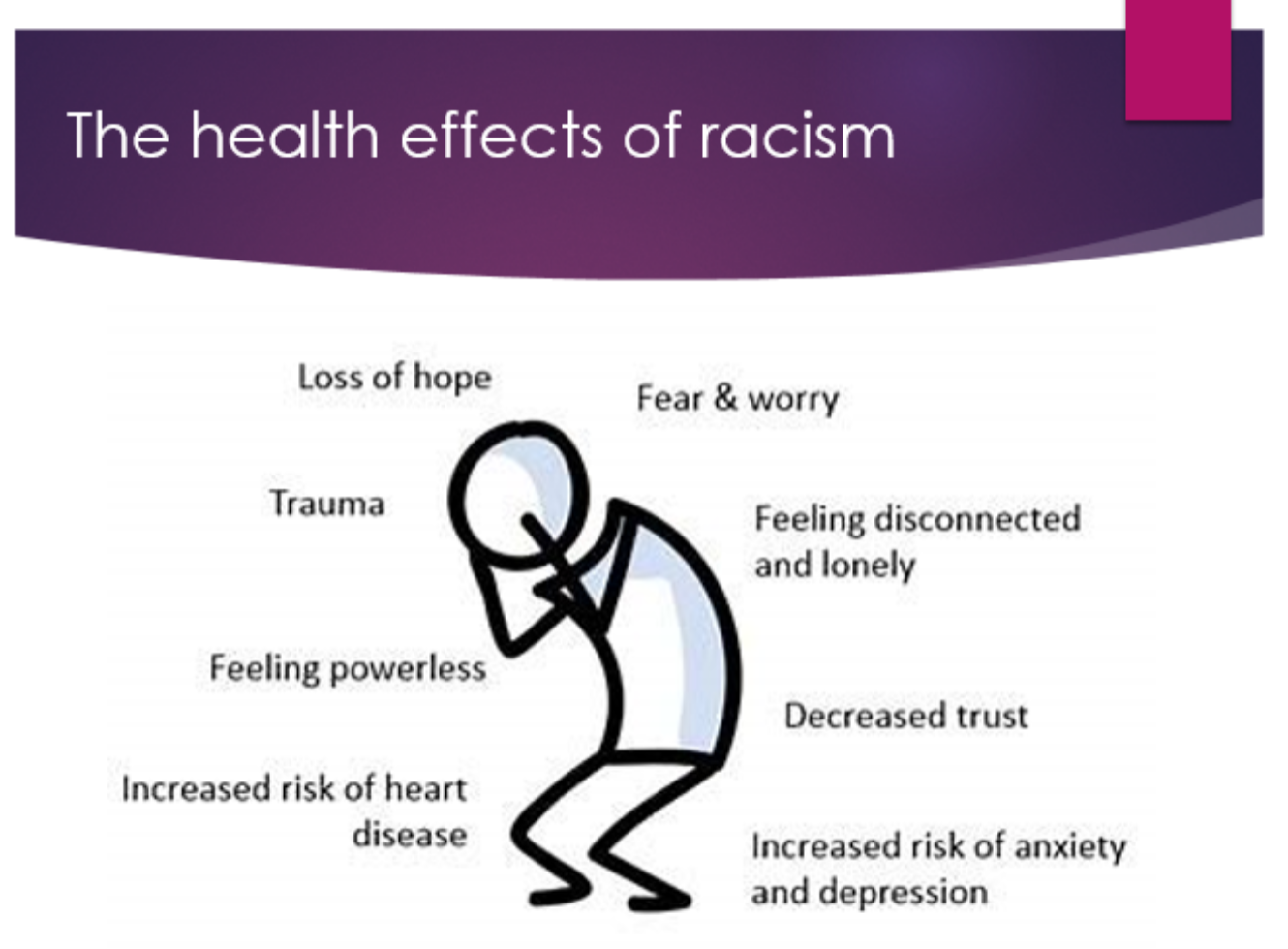
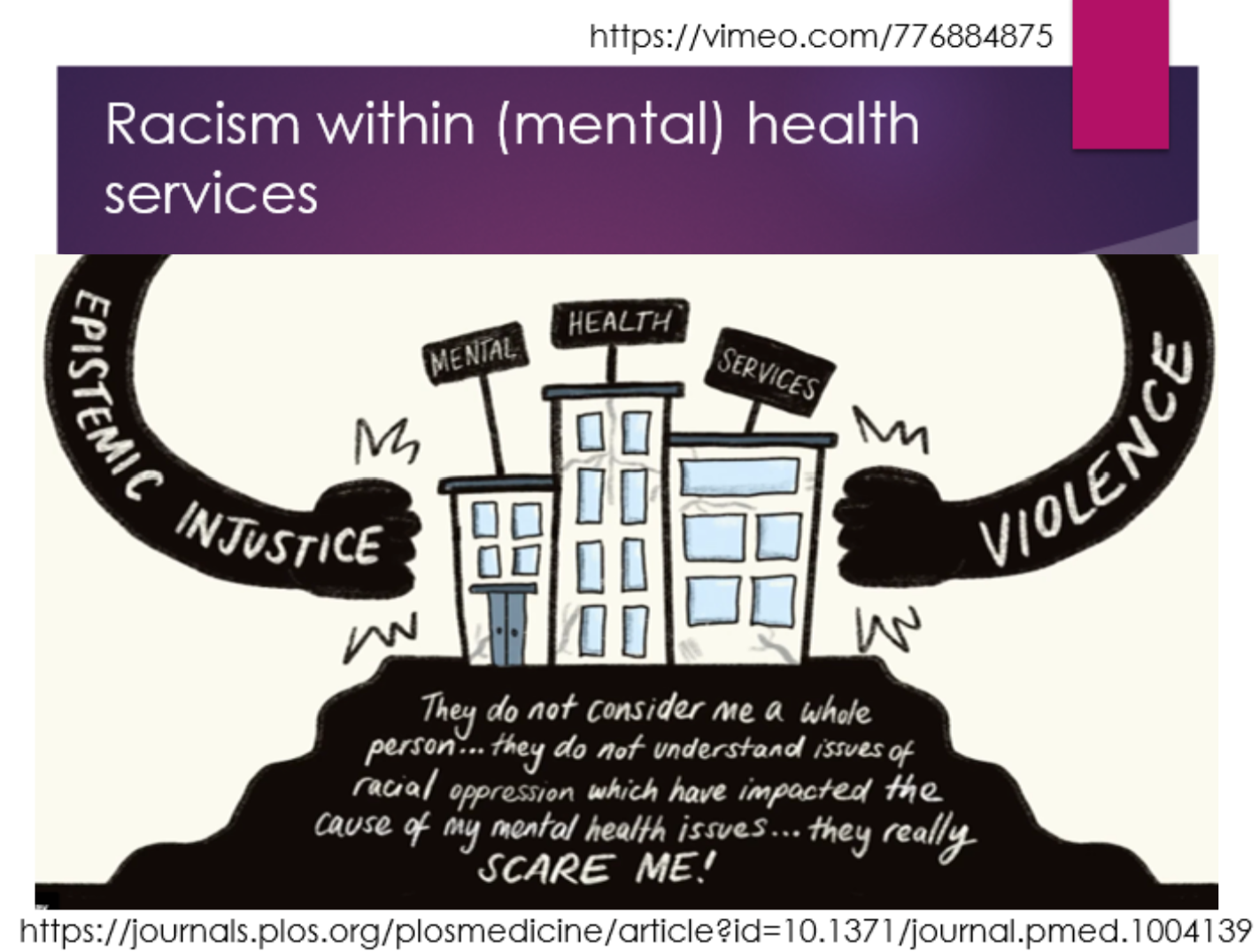
The presentation was rooted in the recognition that racial inequalities remain deeply embedded within mental health services. The team explained that their work developed in response to persistent concerns around disproportionate referrals, detention rates and restrictive interventions experienced by racialised communities. They also highlighted how mistrust of services and experiences of re-traumatisation continue to affect people’s willingness to engage with mental health support. Importantly, they stressed that racial trauma is not only experienced by service users but also by carers and staff, many of whom continue to navigate systems that can reproduce inequity.
Why This Work Matters
West London NHS Trust identified several key issues that informed the development of their racial trauma programme:
Disproportionate rates of referrals and detention among racialised communities.
Higher levels of restrictive interventions within mental health pathways.
Mistrust of services due to previous negative experiences.
The risk of re-traumatisation through interactions with healthcare systems.
The impact of racism on patients, carers and staff alike.
A particularly striking message from the presentation was that many racialised staff attending the workshops were not learning about racial trauma as a new concept. Instead, they were reflecting on experiences that formed part of their everyday reality. This observation reinforced the importance of creating environments where these experiences can be discussed openly and safely.
Co-produced Learning Spaces
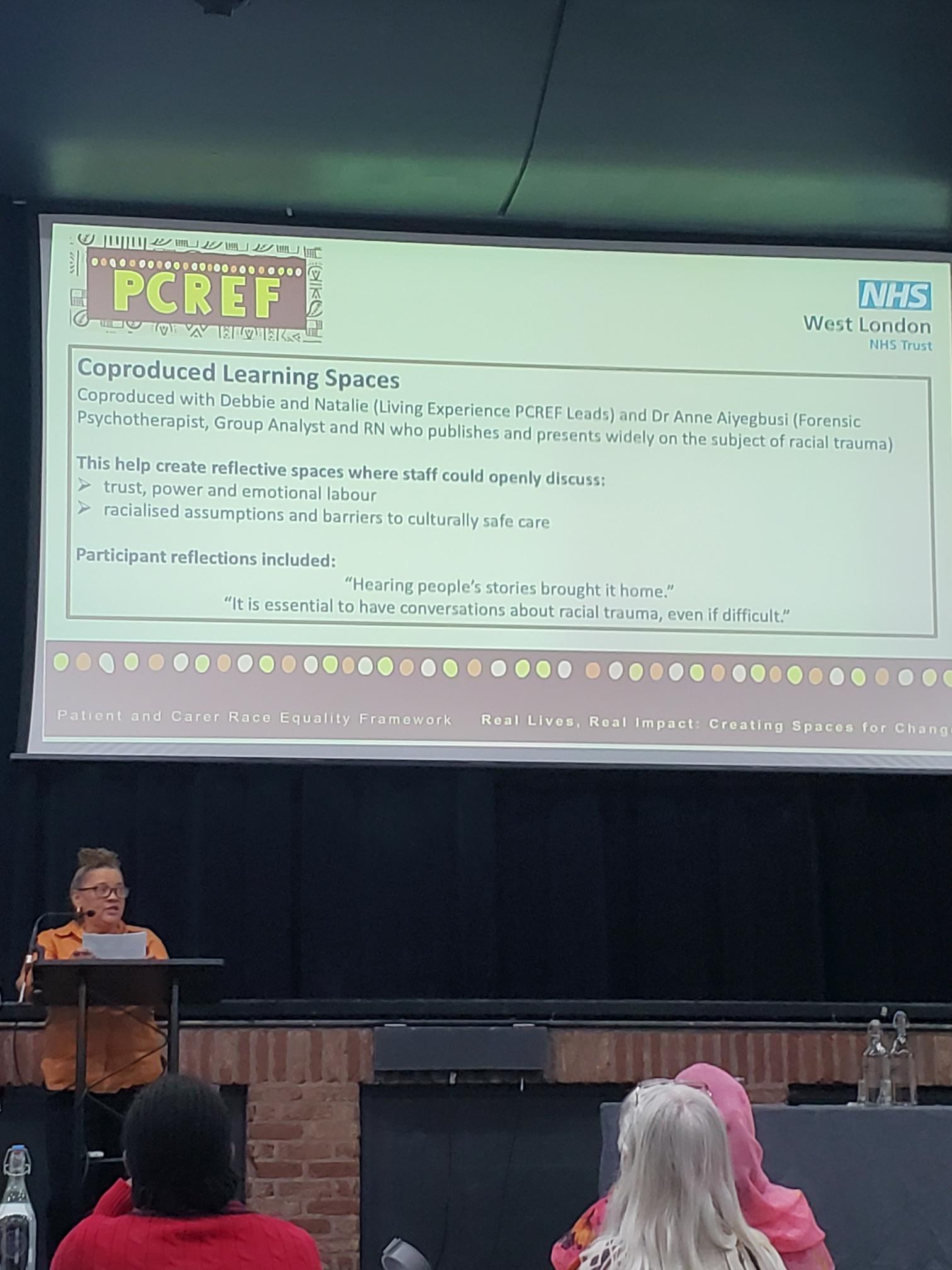
The racial trauma workshops were developed through a co-production approach involving Debbie Best, Natalie Mark and Dr Anne Aiyegbusi, a forensic psychotherapist, group analyst and registered nurse who has published extensively on racial trauma. Together they designed reflective learning spaces where participants could explore difficult but essential conversations around race, identity and mental health.
The workshops encouraged participants to discuss:
Trust, power and emotional labour.
Racialised assumptions within healthcare.
Barriers to culturally safe care.
Experiences of racism in professional and personal settings.
Organisational responsibilities in responding to racial trauma.
Feedback from participants demonstrated the impact of these conversations. Attendees reported that hearing people’s lived experiences brought the issues to life in ways that data alone could not achieve. Many described the workshops as challenging but necessary, with one participant stating that conversations about racial trauma are essential even when they are uncomfortable.
Wider PCREF Implementation at West London NHS Trust
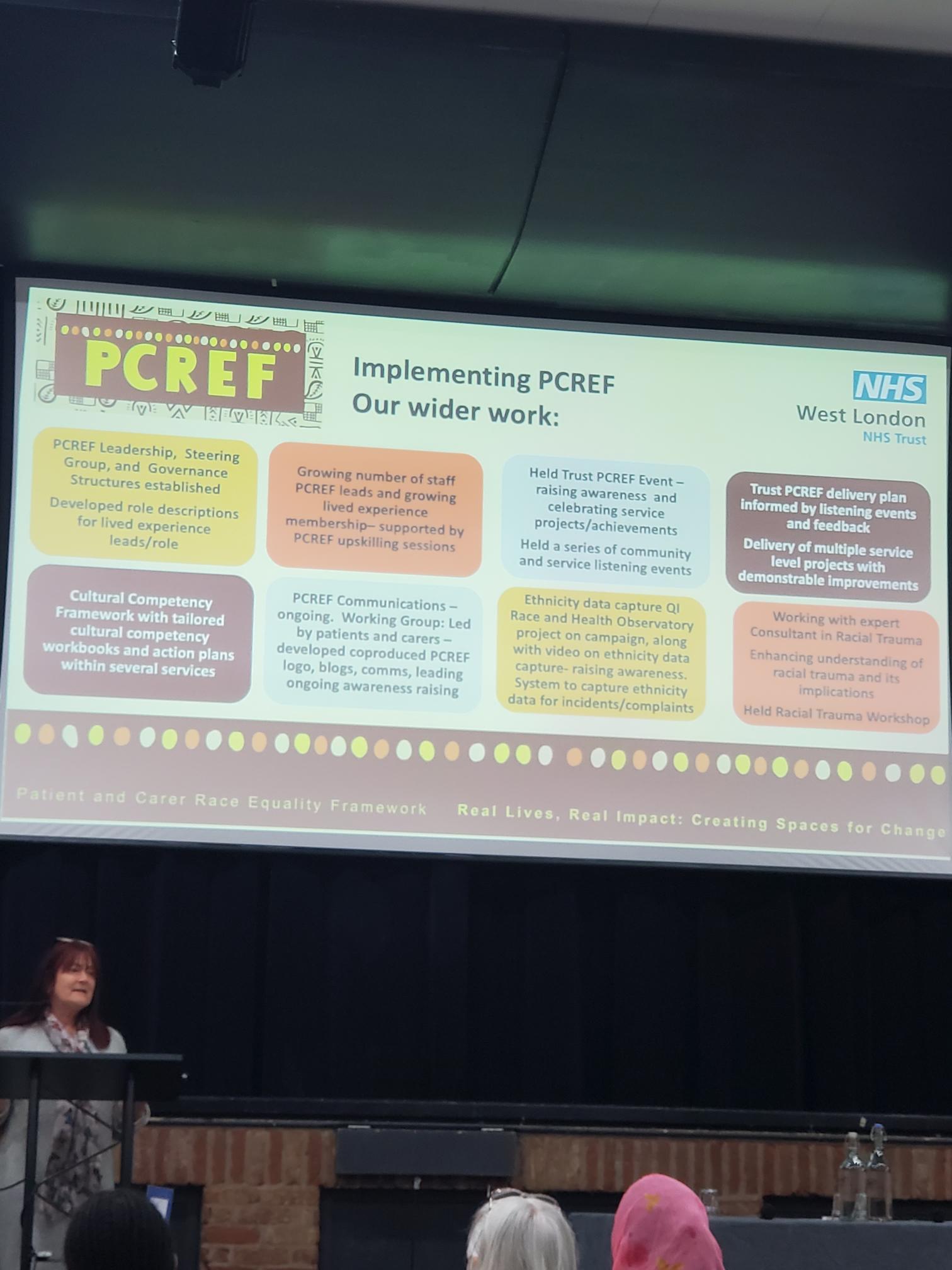
Alongside the racial trauma work, the presentation highlighted wider progress being made through PCREF implementation across the Trust.
Key achievements included:
Establishing PCREF leadership, steering groups and governance structures.
Increasing the number of PCREF leads and lived experience members.
Delivering Trust-wide PCREF awareness events.
Running community listening events and engagement activities.
Developing a Cultural Competency Framework and tailored action plans.
Creating co-produced communications led by patients and carers.
Improving ethnicity data collection and reporting systems.
Working with specialist racial trauma consultants to strengthen organisational understanding.
Particularly noteworthy was the emphasis on co-production. Patients and carers were not simply consulted but actively involved in shaping communications, governance structures, learning programmes and strategic priorities. This demonstrated a commitment to ensuring that those most affected by inequalities have a meaningful voice in driving change.
Key Learning from West London NHS Trust
The West London presentation demonstrated that addressing racial inequalities requires more than policy changes alone. It requires organisations to create spaces where difficult conversations can happen safely, where lived experience is valued as expertise and where learning leads directly to action.
Their work showed that racial trauma is not solely an individual experience but an organisational challenge that requires leadership, accountability and sustained commitment. By combining co-production, cultural competency, workforce development and organisational reflection, West London NHS Trust is helping to create the conditions for more equitable and culturally safe mental health services.
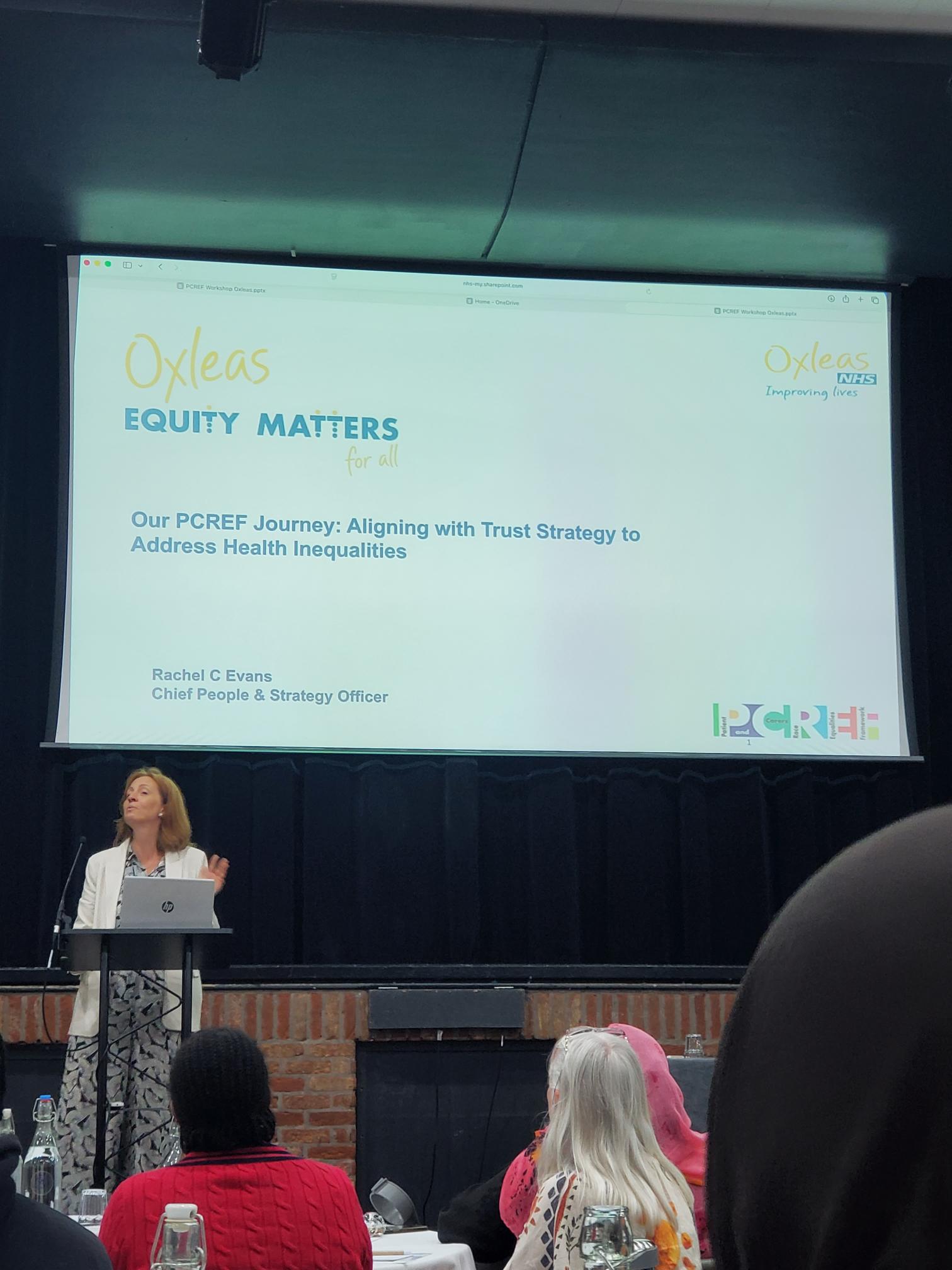
Oxleas NHS Foundation Trust
Reducing Inequalities in Restrictive Practice: From Data to Action
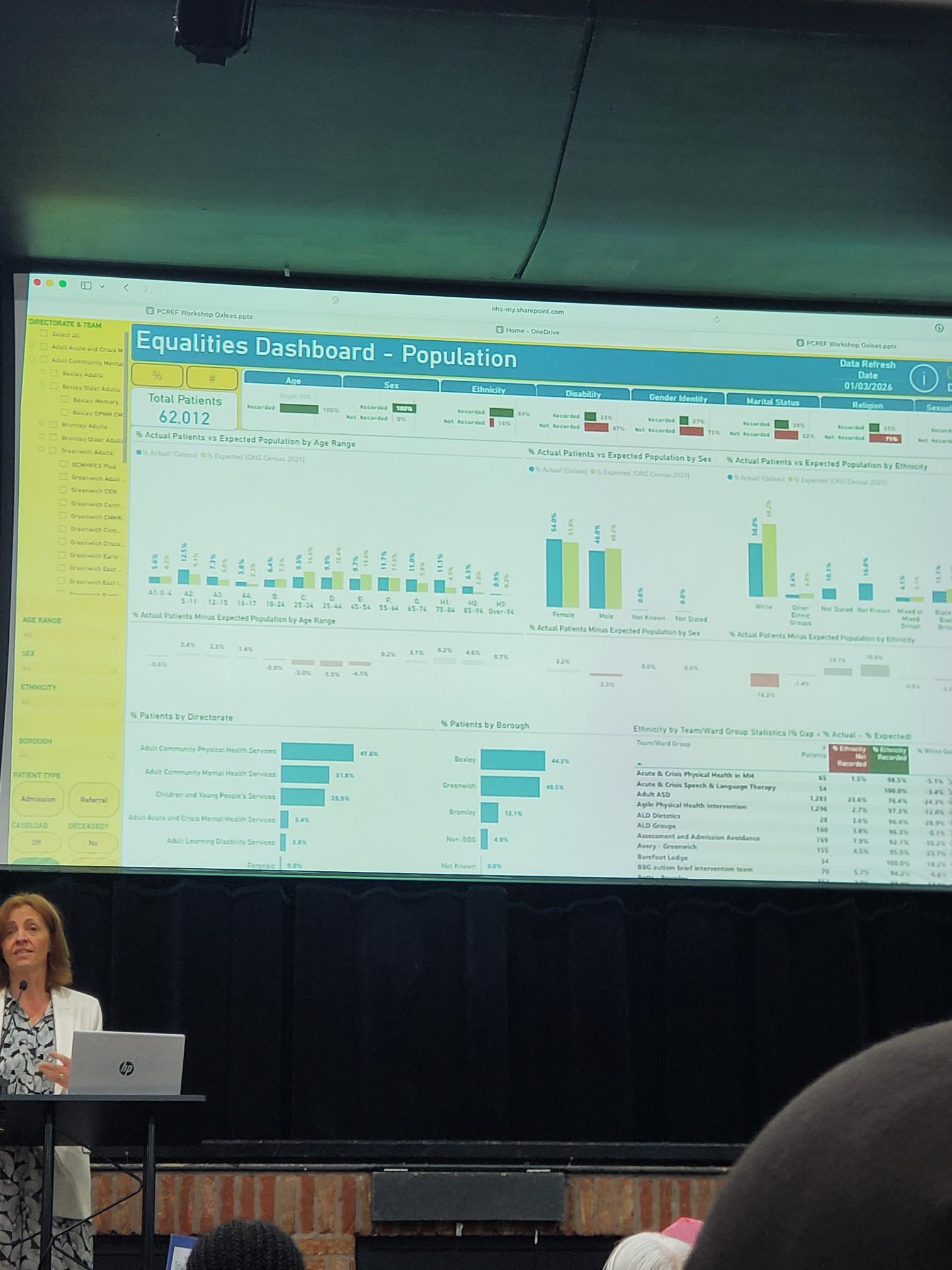
Presented by Oxleas NHS Foundation Trust, this session focused on reducing inequalities in restrictive practice through the lens of the Patient and Carer Race Equality Framework (PCREF). The presentation explored how data, lived experience, trauma-informed care and practical service improvements can work together to reduce the use of restraint, seclusion and restrictive interventions while addressing racial disparities.
The presenters explained that restrictive practices are not experienced equally across all communities. Evidence shows that people from some racialised groups are more likely to experience restrictive interventions, making this both a safety issue and a race equity issue. Oxleas therefore sought to identify practical actions that could improve care while simultaneously reducing inequalities.
Listening to Staff and Stakeholders
As part of their PCREF work, Oxleas engaged staff, service users and stakeholders to identify priorities for change. The feedback was grouped and ranked to establish the strongest starting points for improvement.
The consultation identified two immediate workstreams:
Debrief and Escalation
Trauma-Informed Care
The presentation emphasised that participants did not ask for abstract policy changes. Instead, they identified practical improvements that could be implemented directly within services.
Highest-Ranked Priorities
The most frequently identified priorities included:
A key message from the slide was that stakeholders wanted changes that would directly affect day-to-day care, staff behaviour and patient experience.
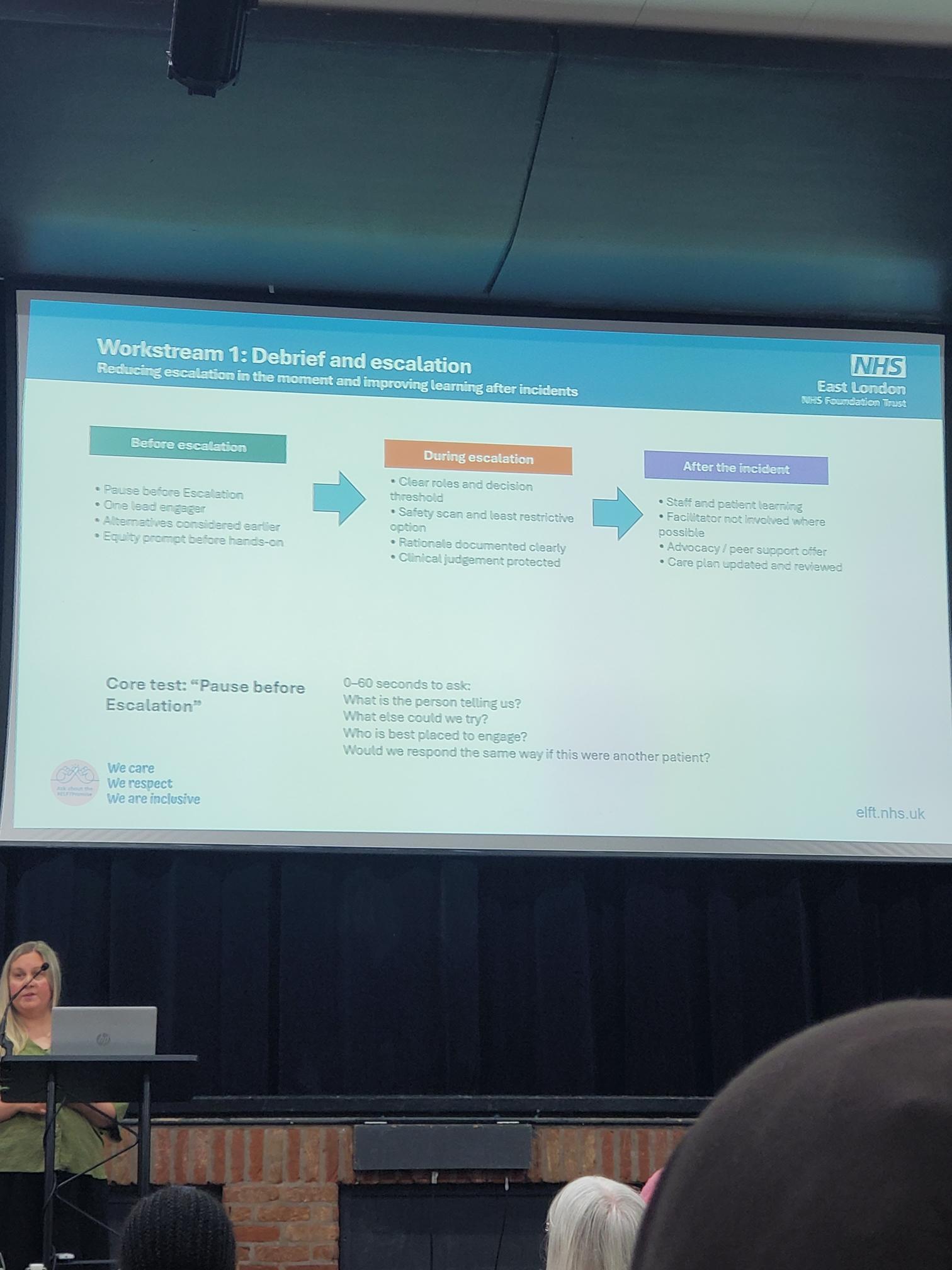
Workstream One: Debrief and Escalation
The first workstream focused on reducing escalation in the moment and improving learning after incidents occur.
The framework was organised into three stages:
Before Escalation
Staff are encouraged to:
Pause before escalating situations.
Ensure one lead staff member takes responsibility.
Consider alternatives earlier.
Use an equity prompt before moving to hands-on interventions.
The emphasis was on slowing decision-making enough to ensure staff are responding to the person’s needs rather than reacting automatically.
During Escalation
The presentation highlighted the importance of:
Clear staff roles.
Defined decision-making thresholds.
Safety scanning.
Choosing the least restrictive option available.
Clear documentation of rationale.
Protecting clinical judgement while maintaining accountability.
The objective is to ensure restrictive interventions are only used when absolutely necessary and are proportionate to the situation.
After the Incident
Learning after incidents was considered equally important.
Actions included:
Joint staff and patient learning.
Independent facilitation where possible.
Advocacy and peer support.
Reviewing and updating care plans.
The focus was not simply on recording incidents but on understanding what happened and preventing repetition.
Next Steps
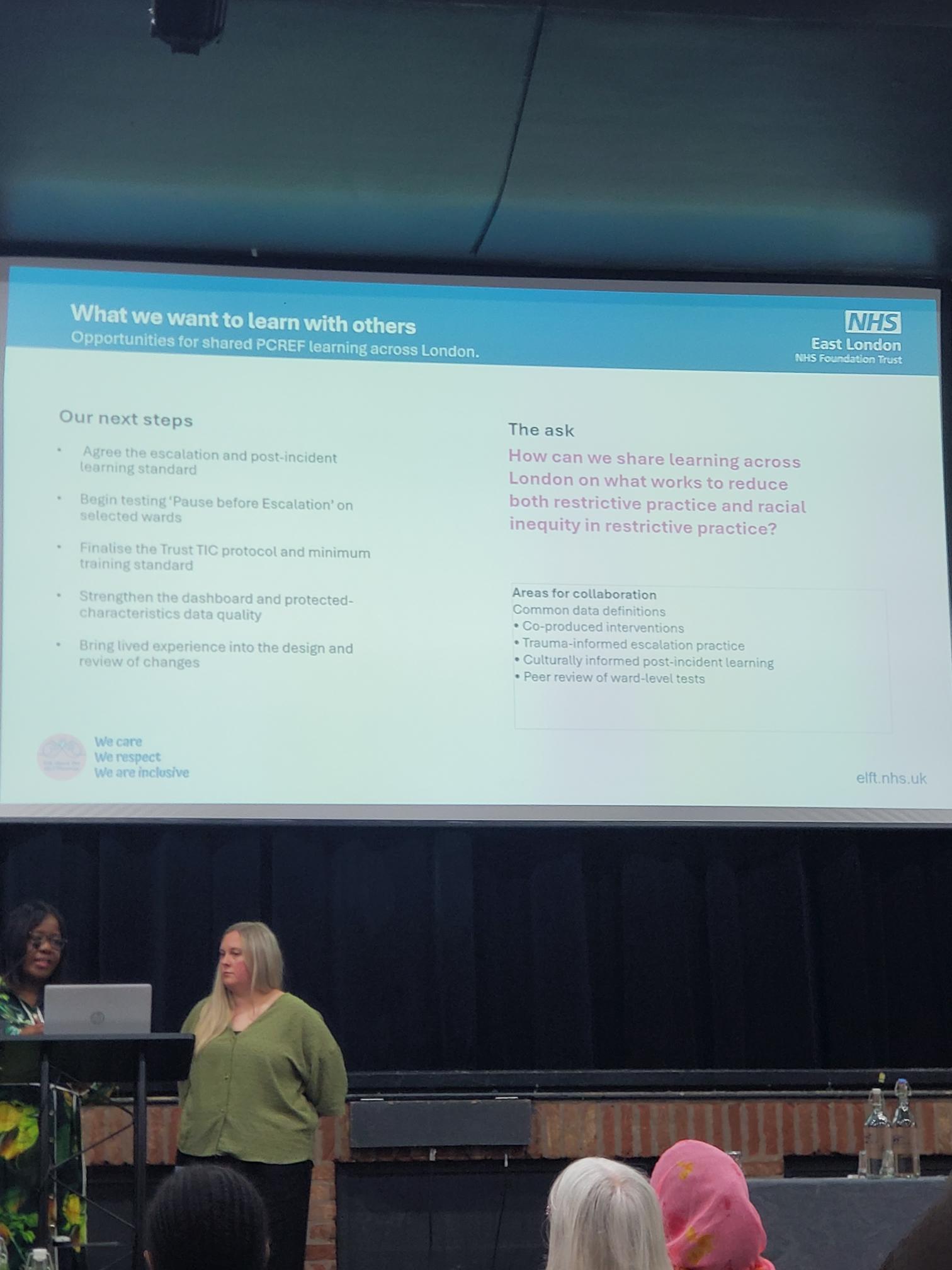
The presentation concluded with a clear action plan for the coming period.
Planned Actions
Agree a Trust-wide escalation and post-incident learning standard.
Begin testing the “Pause Before Escalation” approach on selected wards.
Finalise a Trust Trauma-Informed Care (TIC) protocol and minimum training standard.
Strengthen dashboard reporting and improve protected-characteristics data quality.
Embed lived experience into the design and review of changes.
These actions reflect the Trust’s commitment to moving from discussion to implementation.
Learning Across London
The presenters also highlighted the importance of collaboration across London’s mental health trusts.
Areas identified for collaboration included:
Common data definitions.
Co-produced interventions.
Trauma-informed escalation practice.
Culturally informed post-incident learning.
Peer review of ward-level improvement projects.
This reflected one of the key themes running throughout the conference: that race equity work is strengthened when trusts learn from each other rather than working in isolation.
North East London NHS Foundation Trust (NELFT)
North East London NHS Foundation Trust (NELFT) presented its PCREF work through the lens of national competencies, demonstrating how race equity can be embedded into everyday clinical practice rather than being treated as a standalone initiative. The presentation, delivered by Erica Deti, Patient and Carer Race Equality Lead, highlighted the importance of developing a workforce that is confident, culturally competent and able to respond effectively to the needs of diverse communities. NELFT emphasised that meaningful change requires organisations to move beyond awareness and into practical action, ensuring that race equity is reflected in leadership, service design and frontline care.
A key focus of the presentation was the development and implementation of national PCREF competencies, designed to support staff at all levels in understanding racial inequalities and their impact on mental health outcomes. Erica explained how these competencies help staff build the knowledge, skills and confidence needed to challenge inequity, engage meaningfully with service users and carers, and contribute to culturally responsive services. The Trust also stressed the importance of involving people with lived experience throughout this process, ensuring that learning is informed by real experiences rather than theoretical concepts alone.
The presentation reinforced the message that achieving race equity is a continuous journey rather than a destination. NELFT shared examples of how the Trust is embedding co-production, reflective practice and accountability into its approach, while encouraging staff to consider how their decisions influence patient experiences and outcomes. By focusing on workforce development, lived experience leadership and organisational learning, NELFT demonstrated how PCREF can act as a catalyst for long-term cultural change, helping to create services that are safer, fairer and more responsive to the communities they serve.
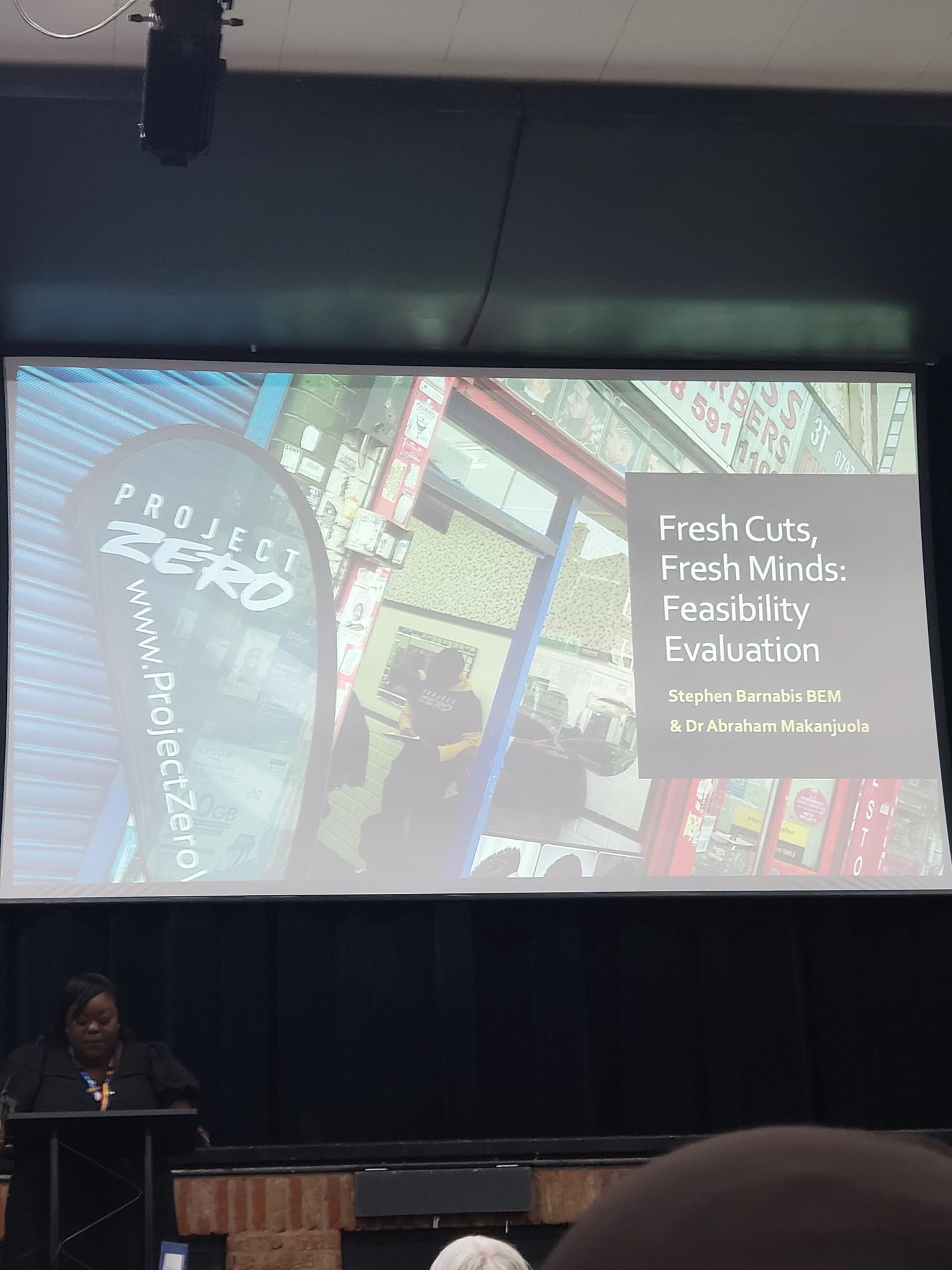
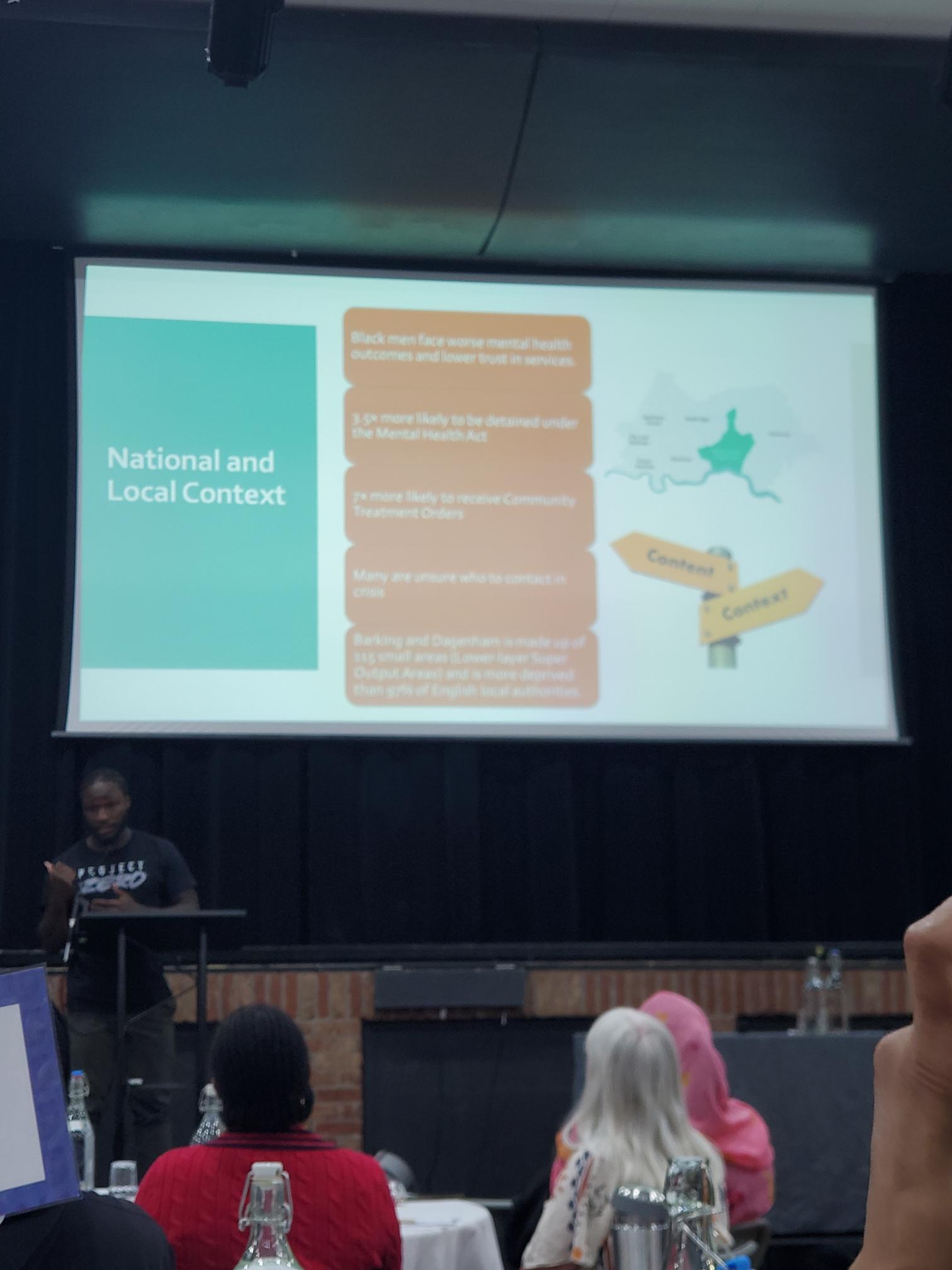
A second NELFT presentation was delivered from local community organisations and Project Zero. This session focused on partnership working with local barbershops, voluntary organisations and community groups as a means of improving engagement with racialised communities. The speakers described how trusted community settings can help bridge gaps between services and populations that may feel excluded from traditional healthcare pathways.
Carer Spotlight
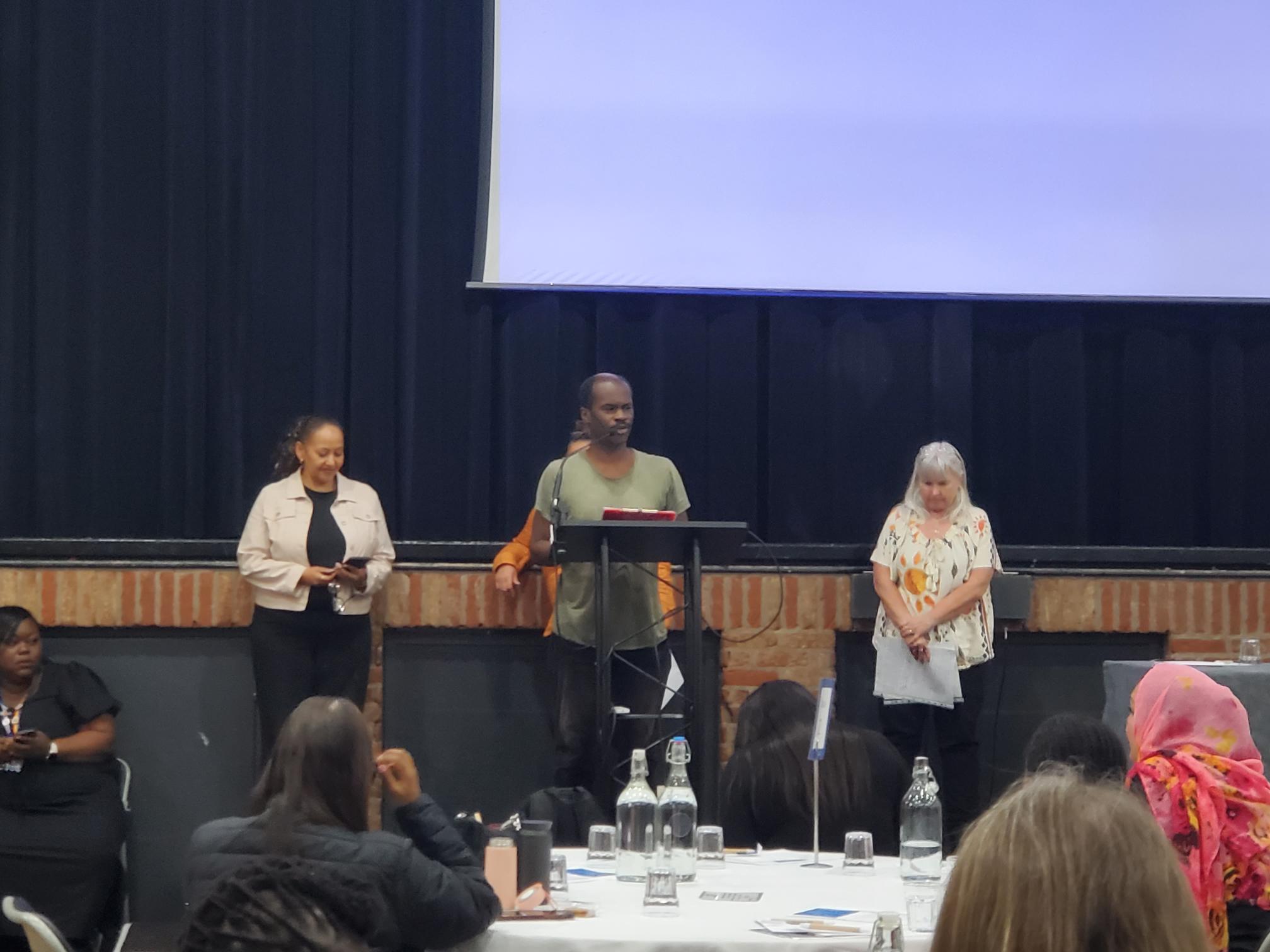
Matthew McKenzie and PCREF Carer Poetry
One of the most powerful moments of the afternoon came during the Carer Spotlight, where carers used poetry to share personal experiences of supporting loved ones through mental health services. The session moved beyond statistics, policies and organisational frameworks to remind attendees of the human stories that sit behind every discussion about race equity, access and care. The poetry was delivered by Matthew McKenzie and fellow carers, creating a reflective and emotional space that grounded the conference in lived experience. Through spoken word and personal reflection, the audience was invited to consider what it truly means to care, advocate and persevere within systems that do not always recognise the voices of carers.
A recurring theme across the poems was the often invisible role of carers. Several pieces explored the emotional labour involved in supporting a family member through periods of crisis, while also navigating complex services and systems.
Here is the poem from Matthew McKenzie taken from his collaborative book (in development) – Unpaid, Unseen and Yet Unbroken
The poems highlighted feelings of exhaustion, responsibility and uncertainty, but also resilience and determination. Listeners heard about the challenges of balancing personal wellbeing with caring responsibilities, and the reality that carers frequently become experts in supporting their loved ones while receiving little recognition themselves. The poetry gave voice to experiences that are often hidden from formal reports and performance data, yet have a profound impact on individuals and families.
Another important theme was the need for genuine partnership between services, service users and carers. The poems reflected frustrations when carers felt excluded from conversations, ignored during decision-making or treated as outsiders despite their deep understanding of the person they support. At the same time, they celebrated examples of compassionate practice, where professionals listened, worked collaboratively and recognised carers as valuable partners in recovery. These reflections connected strongly with the wider messages of PCREF, reinforcing that co-production is most effective when carers are respected, included and treated as equal contributors rather than passive observers.
Central and North West London NHS Foundation Trust (CNWL)
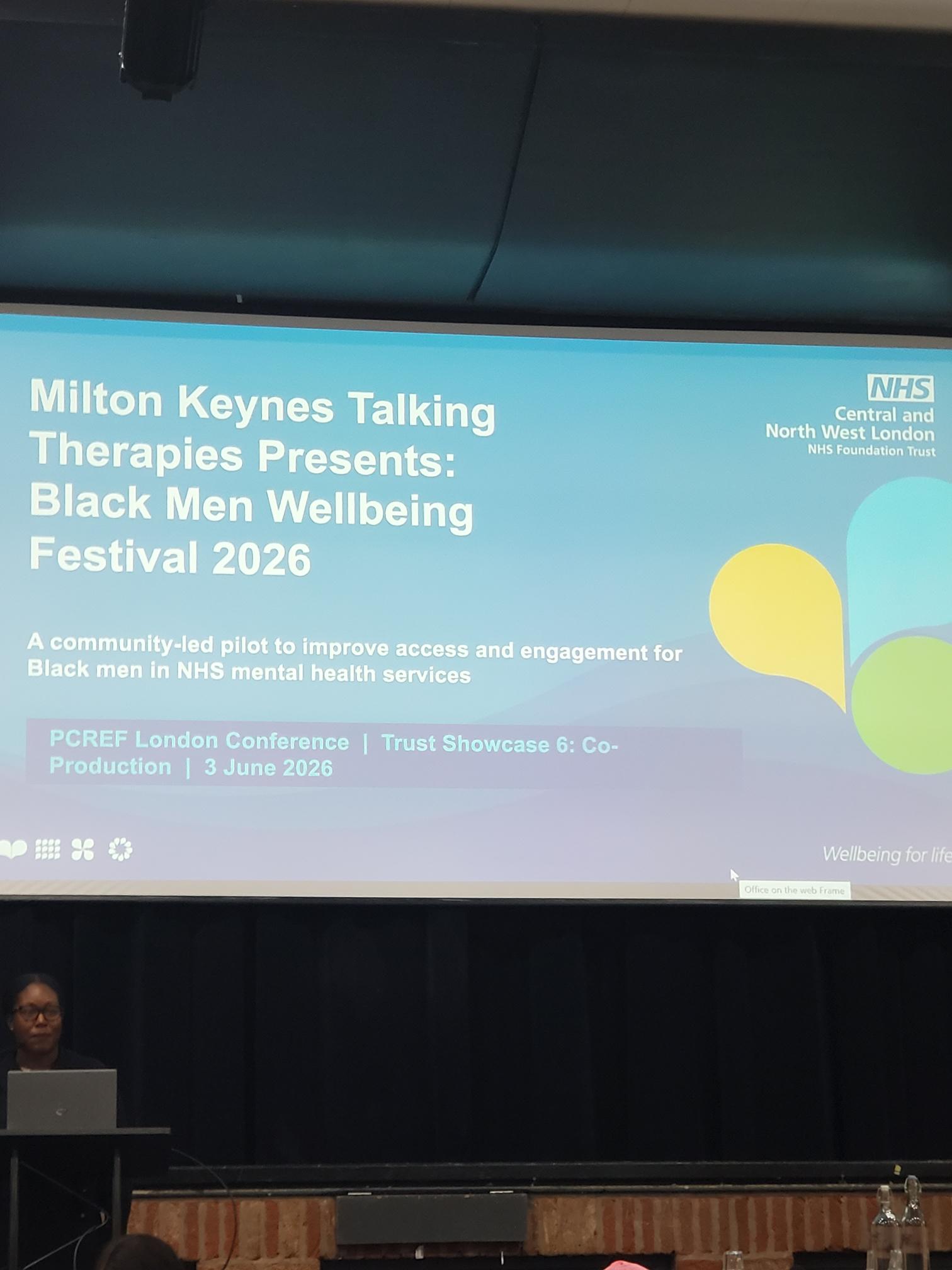
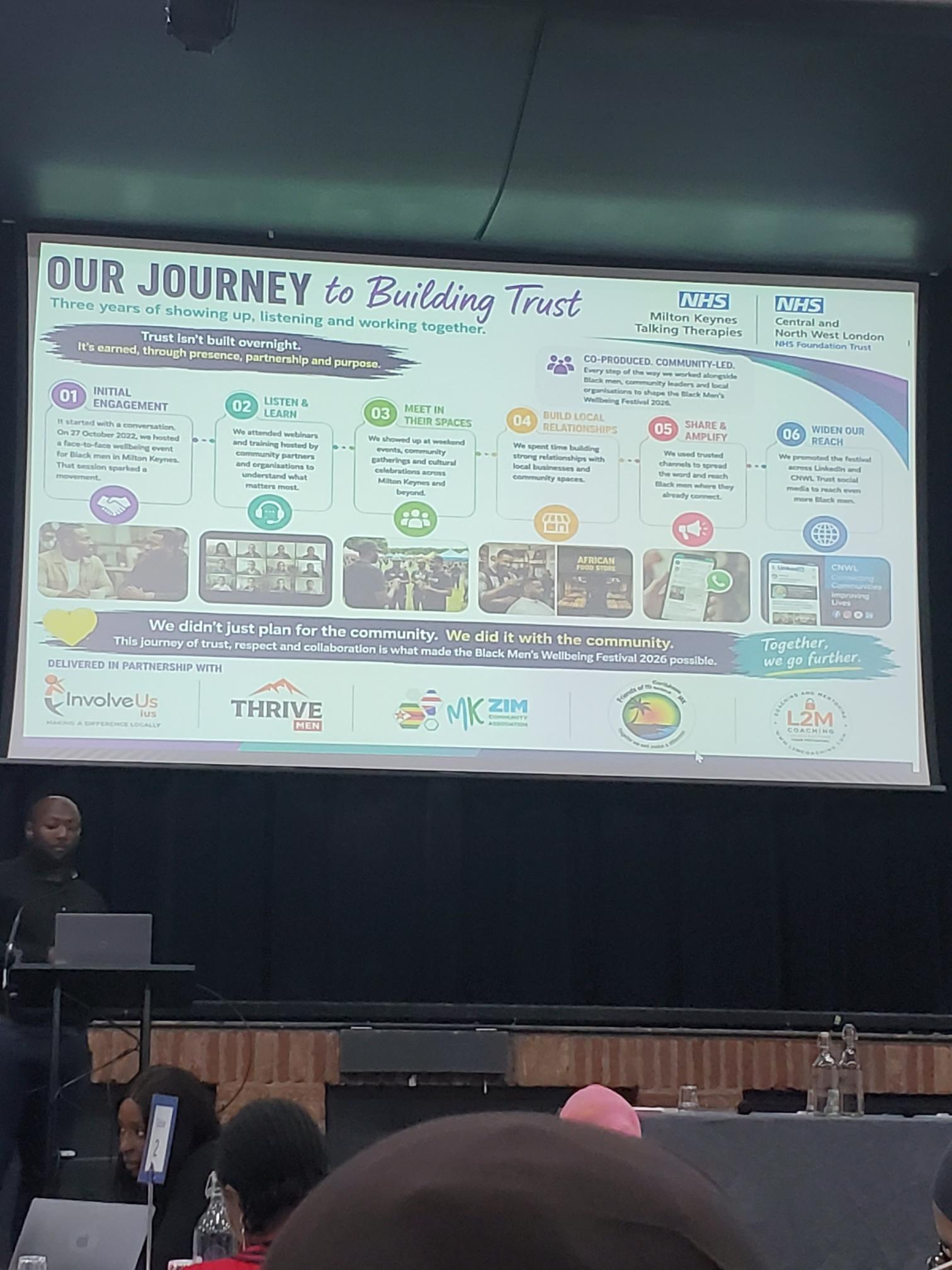
Presented by J’nelle James, Acting Assistant Director of Culture and Equality, Diversity and Inclusion, Central and North West London NHS Foundation Trust (CNWL) showcased one of the conference’s most innovative examples of co-production through the Black Men’s Wellbeing Festival 2026. The presentation focused on how Milton Keynes Talking Therapies worked with Black men, community leaders and local organisations to improve engagement with NHS mental health services. Rather than expecting communities to come to services, CNWL demonstrated how services can go out into communities, build relationships and create spaces where conversations about mental health feel safe, relevant and culturally meaningful.
The presentation explained that the project began during Black History Month in October 2022, when Milton Keynes Talking Therapies hosted a free face-to-face wellbeing session for Black men at Stantonbury Health Centre. The event explored themes including racial trauma, stigma, family relationships, cultural influences and self-worth. What began as a single wellbeing session quickly revealed a significant unmet need within the community. Participants spoke openly about barriers to accessing support and the lack of culturally relevant mental health conversations, leading the team to recognise that a longer-term programme of engagement was needed.
CNWL emphasised that trust cannot be created through a single event or consultation exercise. Instead, trust is earned through visibility, consistency and genuine partnership. The Trust described a three-year journey of listening, learning and working alongside local communities, which ultimately led to the development of the Black Men’s Wellbeing Festival. The project became an example of how PCREF principles can be applied in practice by ensuring that communities are involved in shaping solutions rather than simply being consulted after decisions have already been made.
Building Trust Through Co-Production
A central message throughout the presentation was that “trust isn’t built overnight.” The festival emerged through a deliberate process of relationship-building and community engagement. CNWL outlined six stages that helped transform an initial wellbeing event into a large-scale community-led initiative.
The first stage focused on initial engagement, beginning with the October 2022 wellbeing session. Following this, the team moved into a listening and learning phase, hosting webinars, training sessions and community discussions to understand what Black men wanted from mental health services. Rather than assuming solutions, the Trust spent time listening to experiences and identifying priorities directly from community members.
The next stages involved meeting people in community spaces, strengthening relationships with local organisations and businesses, amplifying messages through trusted community networks and broadening engagement across Milton Keynes. The presentation highlighted that every stage was developed collaboratively with community partners, ensuring that ownership of the programme remained shared rather than NHS-led.
Key Stages of the Journey
Initial engagement through Black History Month wellbeing events.
Listening sessions and community conversations.
Presence at local community gatherings and celebrations.
Building partnerships with local organisations and businesses.
Using trusted networks to amplify messages.
Expanding engagement through media, events and outreach.
The Black Men’s Wellbeing Festival 2026
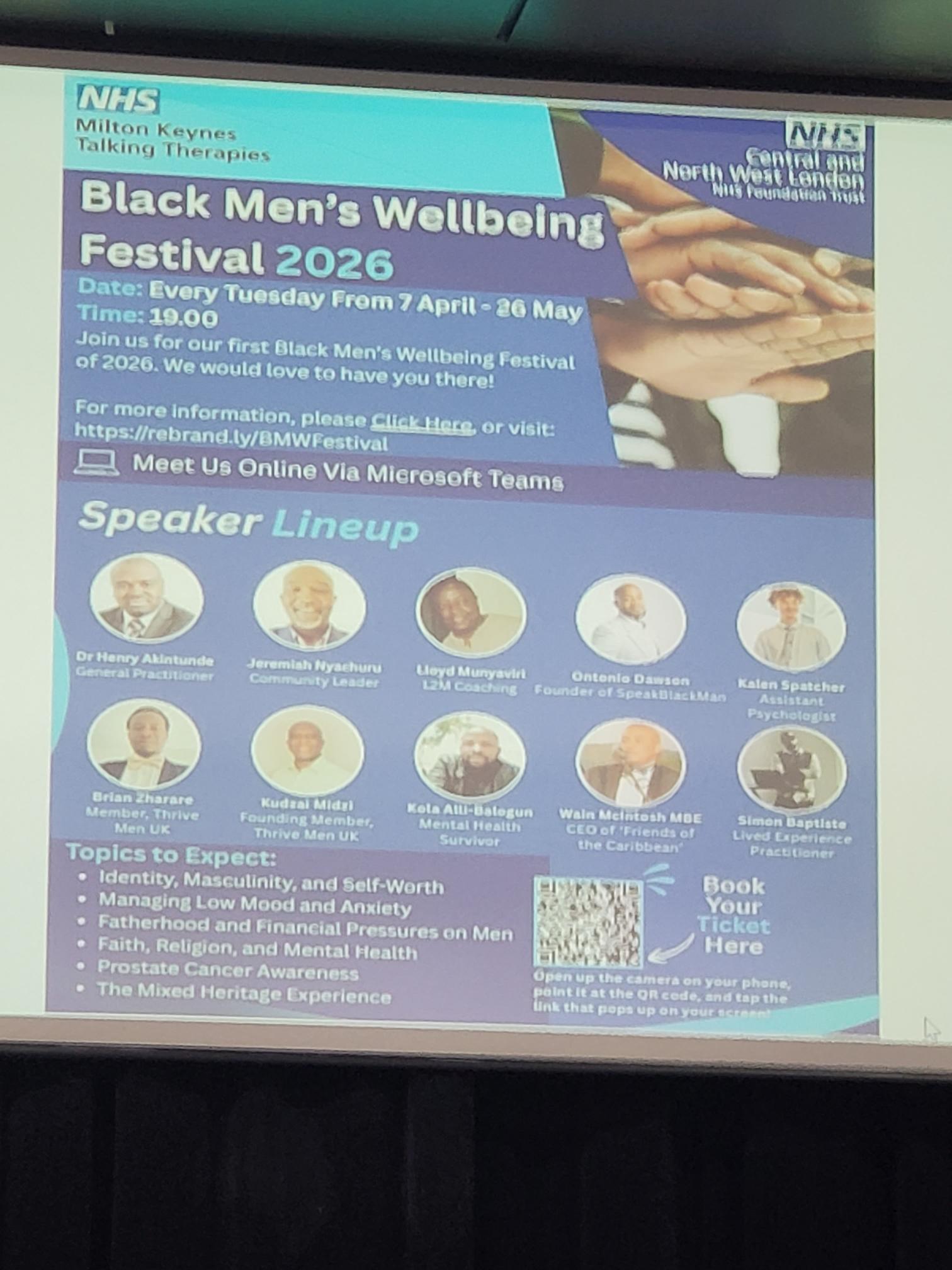
The culmination of this work was the launch of the Black Men’s Wellbeing Festival 2026, a community-led programme designed to improve access and engagement for Black men within mental health services. Running weekly between April and May 2026, the festival brought together clinicians, community leaders, lived experience speakers and local organisations to create open conversations about wellbeing, identity and mental health.
The programme tackled subjects that participants themselves had identified as important. Rather than focusing solely on clinical mental health conditions, the festival explored the wider social, cultural and personal experiences that influence wellbeing. This reflected a more holistic understanding of mental health and recognised that issues such as identity, masculinity, family expectations and discrimination all play an important role in people’s wellbeing.
The festival also demonstrated how NHS services can become more accessible when support is delivered in partnership with trusted community figures. By bringing together professionals and community leaders, CNWL created opportunities for conversations that may not otherwise take place within traditional healthcare settings.
North London NHS Foundation Trust
Equity and Health Inequalities Strategy 2026–2030: “Inclusion in Action”
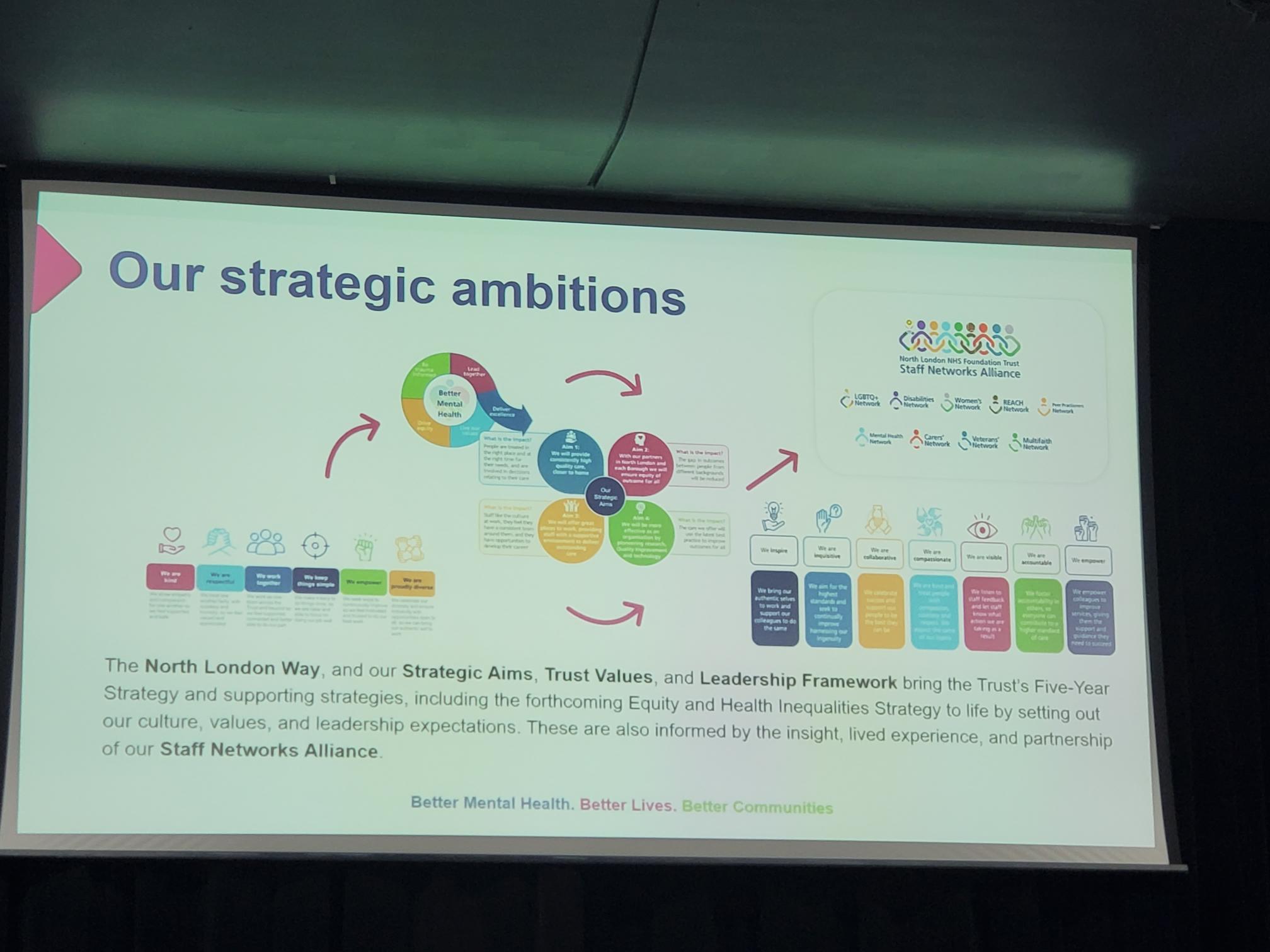
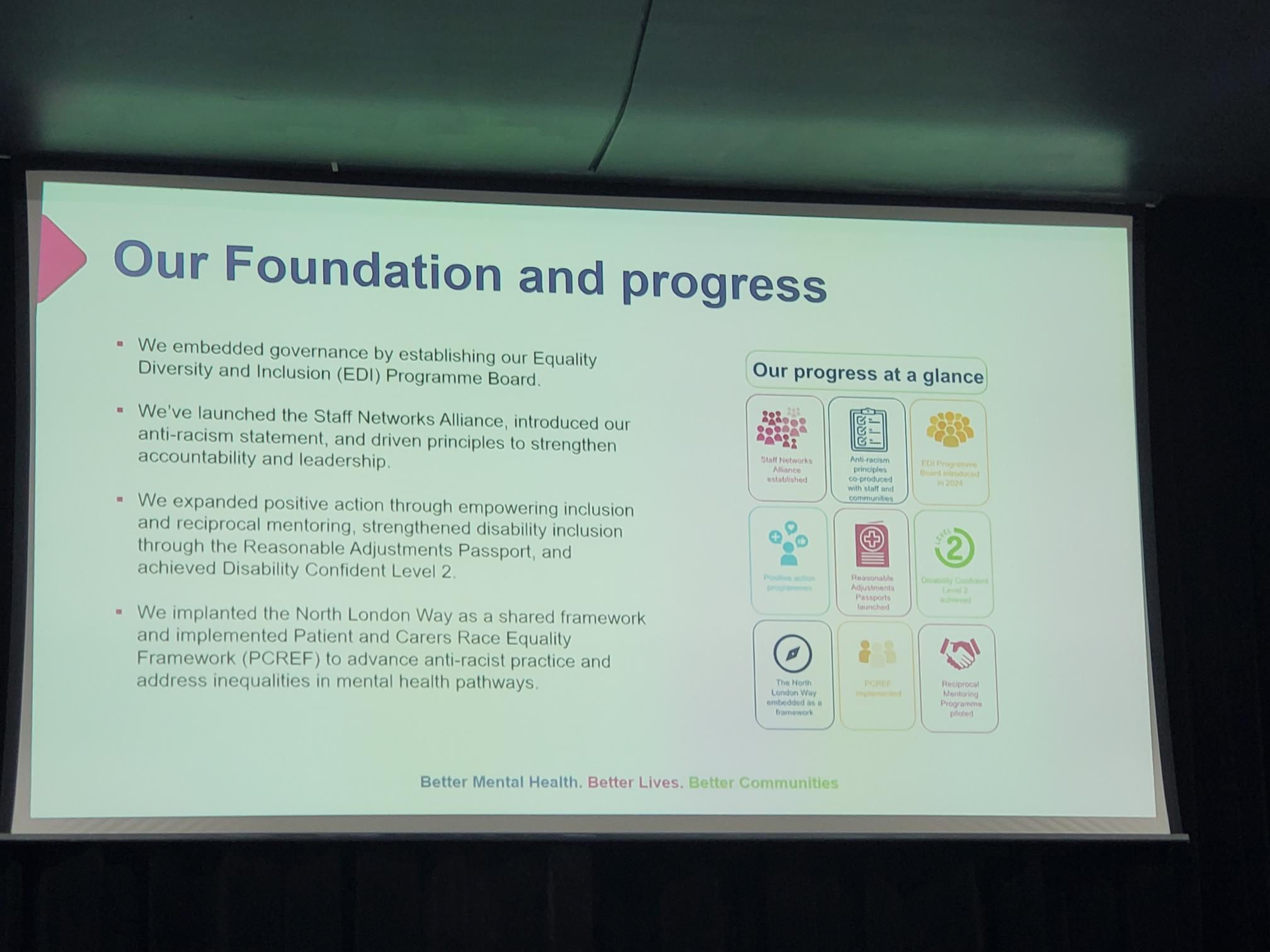
North London NHS Foundation Trust presented its new Equity and Health Inequalities Strategy 2026–2030, centred on the theme of “Inclusion in Action.” The presentation highlighted the Trust’s ambition to embed equity into every aspect of organisational culture, leadership, workforce development and service delivery. Rather than treating equality and health inequalities as separate workstreams, the strategy positions inclusion as a fundamental principle underpinning better mental health outcomes, improved staff experiences and stronger communities. The Trust’s vision was summarised through the phrase: “Better Mental Health. Better Lives. Better Communities.”
A key theme throughout the presentation was the recognition that addressing inequalities requires action at both organisational and system levels. The strategy aligns with the Trust’s broader five-year organisational goals and is supported by the North London Way, Trust values, leadership framework and staff network structures. The presenters emphasised that lived experience, staff insight and community partnership have been central to shaping the strategy, ensuring that it reflects the realities of the diverse populations served across North Central London.
The presentation also highlighted the importance of shared accountability. Equity was presented not as the responsibility of specialist equality teams alone, but as a collective responsibility across leadership, clinical services, operational teams and partner organisations. Through this approach, the Trust aims to create sustainable cultural change while reducing inequalities experienced by both service users and staff.
Strategic Ambitions and Organisational Change
A major focus of the presentation was how the Trust intends to turn principles into practical action. The strategy builds upon existing organisational priorities while introducing a stronger and more explicit focus on equity and inclusion. The presenters described a framework that links the Trust’s strategic aims, leadership expectations, workforce culture and service improvement activity into a single coherent approach.
The strategy is closely connected to the work of the Staff Networks Alliance, which brings together a range of staff networks representing diverse communities and experiences. The Trust described these networks as essential partners in shaping policy, challenging inequalities and ensuring that organisational decisions are informed by lived experience. This collaborative model reflects a commitment to co-production and shared leadership rather than top-down decision making.
The presentation emphasised a set of organisational values that support inclusive practice, including visibility, accountability, compassion, collaboration and empowerment. These principles are intended to guide both staff behaviour and organisational decision-making. By embedding these values throughout the Trust, leaders hope to create a culture where inclusion becomes a routine part of everyday practice rather than a separate programme of work.
Building on Existing Foundations
The final section of the presentation focused on progress already achieved and the foundations that have been established to support future work. The Trust outlined a number of significant developments, including the creation of an Equality, Diversity and Inclusion (EDI) Programme Board, which provides governance and oversight for inclusion and health inequalities initiatives. This governance structure helps ensure that equity remains a strategic priority and is monitored at senior levels of the organisation.
The Trust has also introduced several initiatives aimed at strengthening accountability and supporting underrepresented groups. These include the launch of the Staff Networks Alliance, the development of anti-racism principles, positive action programmes, reciprocal mentoring opportunities and improvements in disability inclusion through the Reasonable Adjustments Passport scheme. The Trust reported achieving Disability Confident Level 2 status, reflecting progress in creating a more inclusive workplace environment.
Importantly, the presentation highlighted the implementation of the Patient and Carer Race Equality Framework (PCREF) as a key mechanism for advancing anti-racist practice and addressing inequalities within mental health pathways. Alongside embedding the North London Way as a shared organisational framework, the Trust views PCREF as a central component of its strategy for reducing inequities and improving outcomes. The overall message was that meaningful progress has already begun, but sustained effort, partnership and accountability will be required to achieve the ambitions set out in the Equity and Health Inequalities Strategy 2026–2030.
A recurring message from the closing discussion was that race equity remains everybody’s responsibility. While significant progress has been made, panellists acknowledged that much work remains. Delegates left with a renewed commitment to collaboration, stronger partnerships with carers and communities, and a shared determination to ensure that PCREF continues to drive meaningful and measurable change across London’s mental health services.
Blog by Ethnic Mental Health Carer forum Chair – Matthew McKenzie
The May 2026 Ethnic Mental Health Carers Forum brought together carers, researchers, clinicians, community leaders, and representatives from mental health organisations across England. Although attendance was smaller than usual, the discussion was rich, honest, and highly informative, covering Mental Health Act reform, carers’ experiences, service inequalities, innovative approaches to care, and new research opportunities.
For those who were unable to attend, this blog provides a comprehensive overview of the meeting, including key presentations, audience questions, responses from speakers, and useful resources shared during the session.
Opening Remarks
As the chair, I welcomed attendees and outlined the agenda. The meeting focused on following:
Mental Health Act research and reform
Carers’ experiences supporting loved ones through detention
Findings from a major East Sussex carers research project
Resources for carers under the Mental Health Act
Electronic Health Records and future developments
Wider discussions on racial trauma, inequalities, and service improvement
The meeting also provided opportunities for networking, sharing lived experiences, and highlighting innovative projects happening across the country.
Research Study: Supporting a Loved One Through Mental Health Detention
Dr Maeve Conneely from University College London opened the meeting with a presentation on a new research study exploring the experiences of people who have been assessed or detained under the Mental Health Act, as well as the experiences of family members and carers who supported them through that process. The study has been commissioned as part of the wider programme of Mental Health Act reform and aims to understand how the current “Nearest Relative” provisions operate in practice before changes are introduced under the new legislation.
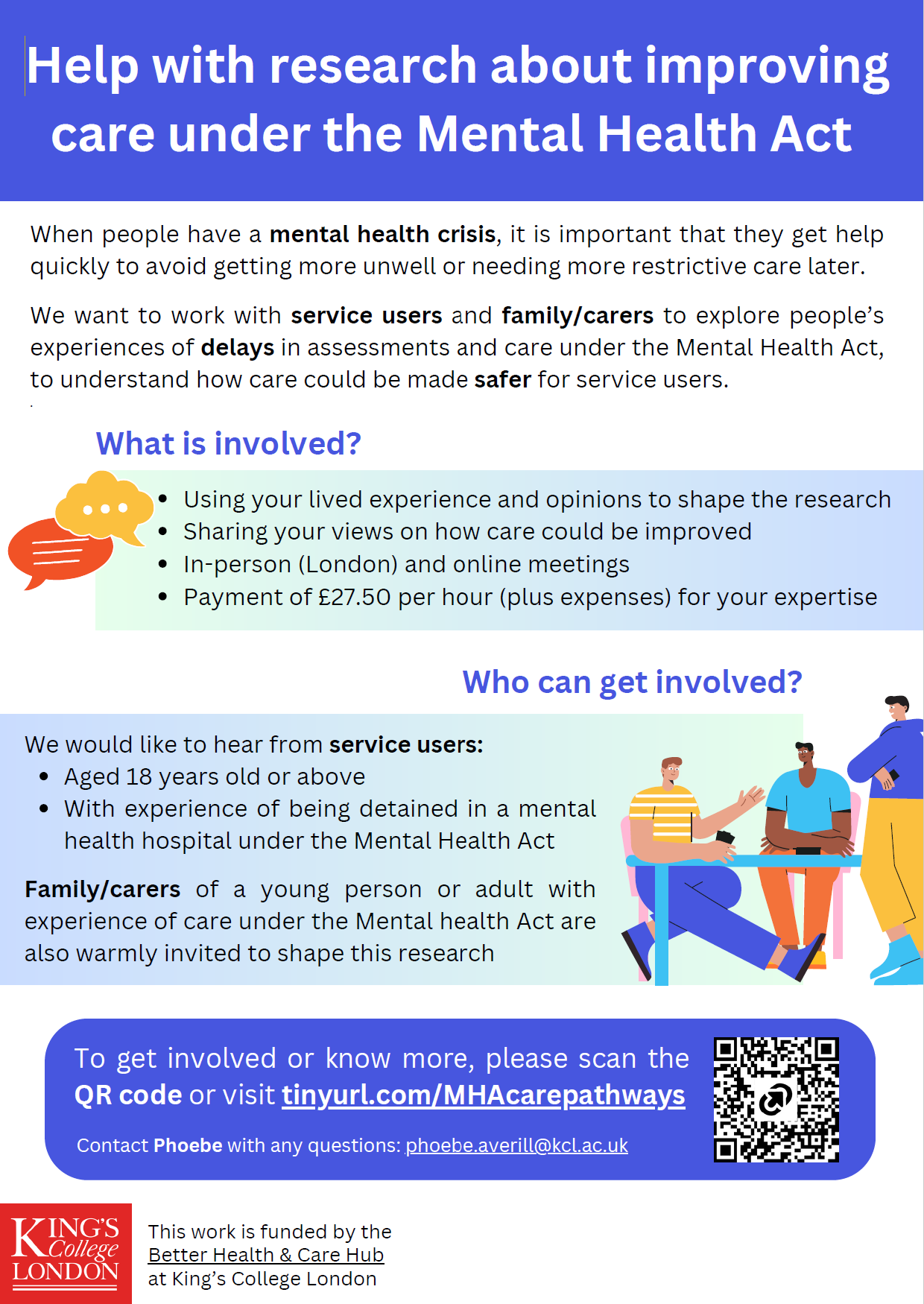
Dr Conneely explained that researchers are particularly interested in hearing from carers who were involved in supporting a loved one but who were not formally recognised as the “Nearest Relative” under the existing legal framework. She highlighted that these experiences are especially important because they can reveal where carers have been excluded from decision-making, denied access to information, or prevented from contributing to assessments despite playing a significant role in supporting the individual concerned. The study is open to anyone aged 16 or over who has direct experience of Mental Health Act assessments, detentions, Community Treatment Orders, holding powers, or related interventions, whether as a patient or as a supporter.
The research is linked to ongoing reforms of the Mental Health Act and seeks to understand how the “Nearest Relative” provisions currently operate before changes are implemented.
Who Can Take Part?
The study is looking for:
People who have been detained under the Mental Health Act
Family members and carers who supported someone during detention or assessment
Individuals who should have been involved as a nearest relative but were not
Anyone aged 16 or over with relevant experience
Interviews are conducted online and participants receive a £30 shopping voucher as a thank-you for their time.
Key Question from Participants
Q: Does the study include situations where someone should have been involved but wasn’t?
Response: Yes. Researchers are particularly interested in understanding experiences where carers or family members were excluded from decision-making processes despite playing a significant caring role.
Another Important Question
Q: Do carers need permission from the person who was detained before participating?
Response: No. Carers are sharing their own experiences and therefore only need to provide their own consent.
Discussion Themes
Participants highlighted:
Long-standing inequalities affecting Black communities under the Mental Health Act.
The overuse of psychiatric labels without sufficient exploration of trauma.
The need to understand why some individuals receive significantly different experiences of care, including access to private mental health facilities.
Concerns about trust in mental health services and the lasting impact of poor experiences across generations.
Several carers committed to taking part in the study to ensure lived experience informs future policy.
East Sussex Carers Research Project: What Carers Told Us
Age Angiolini presented findings from a year-long carers-led research project examining the experiences of family carers supporting people with serious mental illness across East Sussex. The study was developed in response to repeated concerns raised by carers at local support meetings and sought to capture their experiences of interacting with mental health services provided by the Sussex Partnership Foundation Trust (SPFT).
Although the research received 71 responses, representing only a proportion of the carers population in the region, the findings revealed a striking consistency in the challenges carers face. The survey explored themes including carers’ involvement in care planning, communication with services, consent and confidentiality, quality of care, crisis support, and priorities for improvement. Among the most significant findings were that 72% of carers reported being only sometimes involved or not involved at all in their loved one’s care, 73% felt services relied too heavily on carers, and 72% said they regularly had to advocate to secure appropriate support. The research concluded that many carers feel undervalued, excluded from decision-making, and left carrying significant responsibilities without adequate recognition or support.
The study gathered responses from carers supporting people with:
Schizophrenia
Bipolar disorder
ADHD
Autism
Complex neurodiverse conditions
Although the sample size was relatively modest, the findings revealed significant and consistent concerns.
Key Findings from the report
Carers Feel Excluded
72% reported being only sometimes involved or not involved at all.
73% felt services relied too heavily on carers.
72% said they had to advocate strongly to secure appropriate care.
Communication Failures
Participants reported poor communication between:
Mental health services
Assessment teams
Social services
Mental health liaison teams
Many carers described communications as inconsistent, unclear, and difficult to navigate.
Consent and Confidentiality
A recurring concern was that confidentiality procedures are often applied rigidly, preventing carers from sharing vital information during crises.
Carers argued that this can actively undermine effective care.
Quality of Care Concerns
The research found:
90% reported insufficient care.
Significant concerns around continuity of care.
A strong desire for dedicated care coordinators.
Widespread frustration with crisis services.
Crisis Support is Not Working
Many carers reported that:
NHS 111 is often inadequate for mental health crises.
A&E is frequently unsuitable for people experiencing mental distress.
Services remain reactive rather than preventative.
Calls for Change
Recommendations included:
Better crisis pathways
Improved coordination between services
More trauma-informed approaches
Greater therapeutic support
Increased family involvement
Better support for neurodiverse individuals
The presentation sparked considerable discussion, with many attendees noting that the findings reflected experiences they had encountered for years.
Carers Speak Out: Frustration, Trauma and the Need for Change
One of the most powerful aspects of the meeting was hearing directly from carers.
Several participants reflected on decades of involvement with mental health services and expressed concern that despite repeated reviews, consultations, and reforms, many of the same issues continue to persist.
Common themes included:
Institutional racism
Poor communication
Exclusion of carers
Over-medicalisation
Lack of trauma-informed care
Inadequate support during crises
A number of attendees emphasised that families often become de facto care coordinators, managing appointments, services, medications, and crises while receiving little support themselves.
One participant observed:
“They plan, medicate and treat. We care. Our worlds don’t meet.”
Others highlighted the impact of racial trauma and the way mental health services can fail to recognise the cultural context of distress.
Open Dialogue: A Different Way Forward?
Ren Reins introduced the concept of Open Dialogue, an internationally recognised approach to mental health care that focuses on relationships, networks, and collaborative conversations.
Open Dialogue aims to:
Bring families and professionals together
Reduce fragmentation between services
Focus on lived experience
Build trust
Improve recovery outcomes
Ren explained that major NHS-funded trials are underway and encouraged carers to learn more about the approach.
The discussion generated significant interest, particularly from attendees looking for alternatives to traditional medical models of care.
Nearest Relative Resources Project
Professor Judy Laing from the University of Bristol provided an update on an innovative project designed to support family members and carers who hold, or may hold, responsibilities under the Mental Health Act’s “Nearest Relative” provisions. Drawing on previous research with carers and mental health professionals, Professor Laing explained that many family members who find themselves in the Nearest Relative role often receive little information, guidance, or emotional support despite carrying significant legal responsibilities. In response, her team secured funding to develop a free, co-produced online resource that helps carers understand their rights, responsibilities, and options when supporting a loved one through mental health assessment, detention, and treatment.
Developed in partnership with carers, family members, mental health professionals, and organisations including Mind, Rethink Mental Illness, and Carers Trust, the website provides practical information, downloadable tools, guidance for conversations with professionals, and resources to help carers look after their own wellbeing. Professor Laing stressed that the project has been shaped directly by the experiences of those who have undertaken the role themselves, ensuring that the guidance reflects the realities and challenges carers face in practice rather than simply explaining legal processes.
The project emerged from research identifying significant gaps in information and support for people carrying out the “Nearest Relative” role.
What Has Been Developed?
The project has created a free online resource containing:
Information about legal rights
Guidance on conversations with professionals
Practical tools for meetings
Support for carers’ wellbeing
Resources explaining upcoming legal changes
The materials have been co-produced with carers and family members.
Questions Raised
How are diverse communities included?
Participants asked how the project ensures equity and accessibility.
Professor Laing explained that:
People from ethnic minority backgrounds have contributed to development.
Resources are being improved to increase accessibility.
Additional funding is supporting work around inclusion and accessibility.
Translation and alternative formats are being explored.
How is the project promoted?
Discussion focused on ensuring communities are aware of available support rather than resources existing only online.
Professor Laing outlined efforts involving:
Mind
Carers Trust
Mental health services
Local media
Carer forums
How will the new Nominated Person role protect carers who have traditionally been involved in supporting a loved one?
Several participants expressed concern that replacing the Nearest Relative role could unintentionally weaken the involvement of family members who have historically provided substantial support during periods of mental ill-health. Questions were raised about situations where a person may choose someone other than their primary carer to act as their Nominated Person, potentially reducing carers’ ability to access information or participate in key decisions. Professor Laing acknowledged that these concerns have been raised by many carers and explained that the practical details of how the new system will operate are still being developed. She stressed the importance of carers contributing their experiences to ensure that future guidance recognises the valuable role families often play in supporting recovery and maintaining continuity of care.
What support is available when professionals fail to recognise or understand carers’ legal rights?
Attendees also discussed the reality that many mental health professionals are not always familiar with the legal powers and rights associated with the Nearest Relative role. Participants described situations where carers were excluded from discussions, not informed of important decisions, or felt unable to challenge professional opinions because they lacked confidence in their understanding of the law. In response, Professor Laing highlighted that one of the main objectives of the Bristol resources project is to bridge this knowledge gap by providing practical tools, suggested questions, and clear explanations of carers’ rights. She noted that the project is also developing resources aimed at professionals themselves, with the goal of increasing awareness and ensuring that carers’ legal rights are better understood and respected across mental health services.
Attendees welcomed the commitment to increasing visibility.
Electronic Health Records and Future Developments
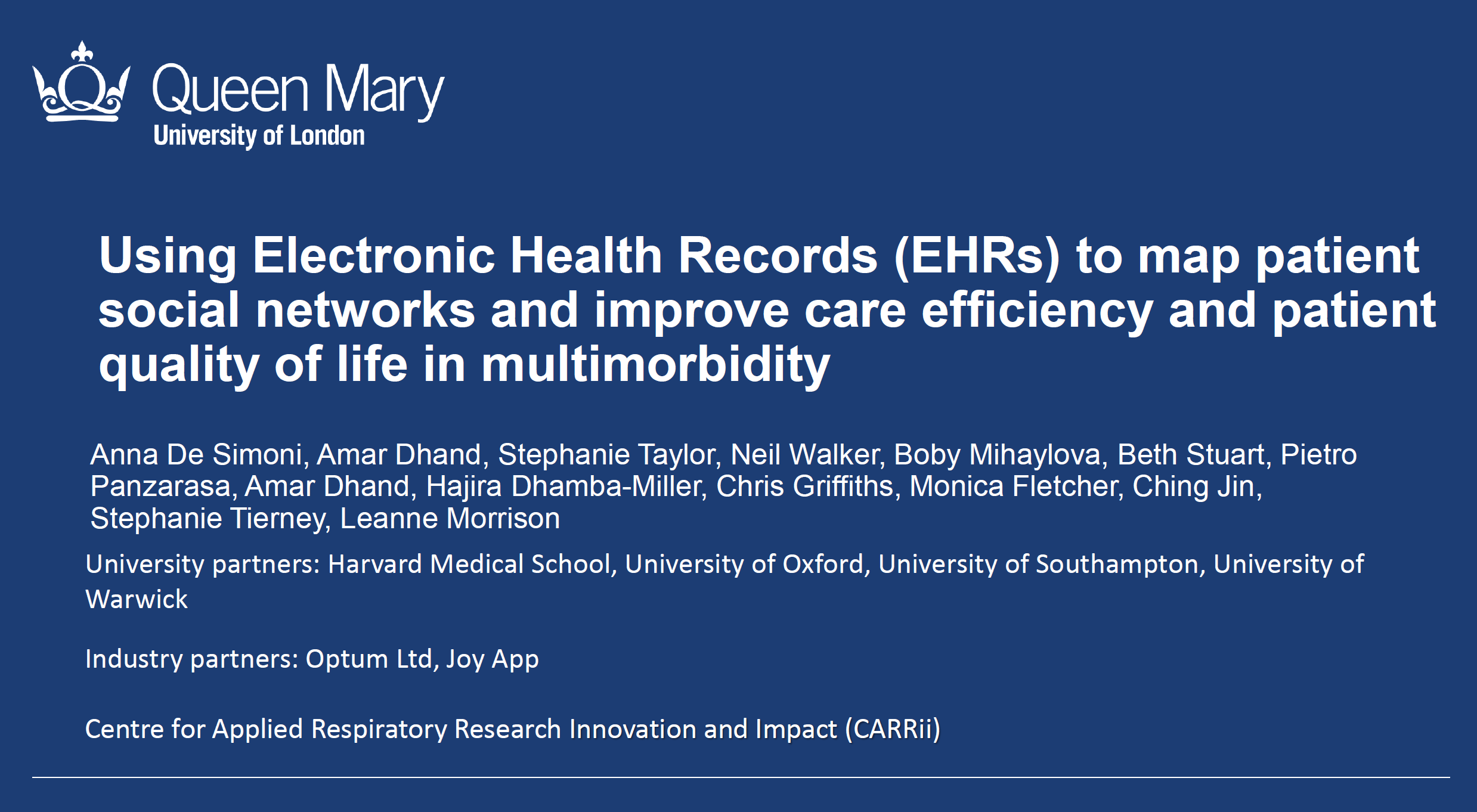
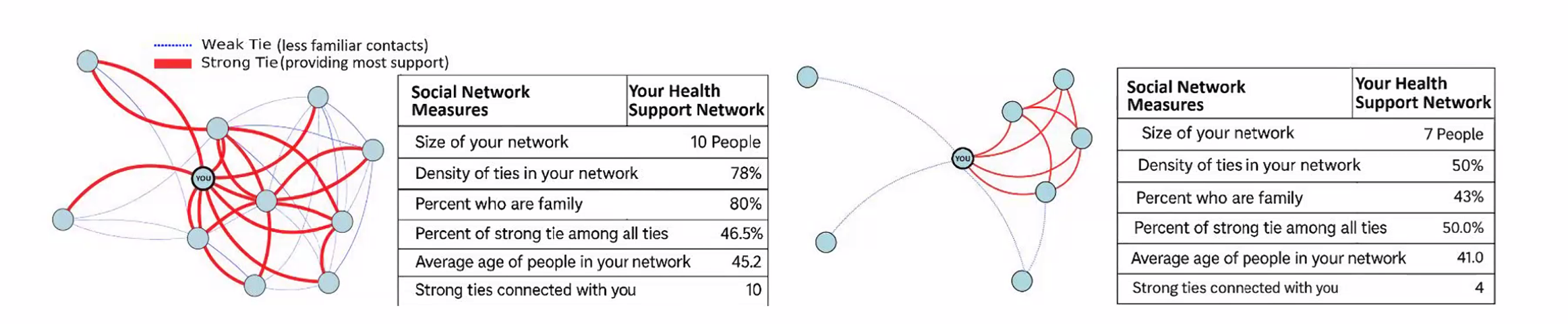
Dr Anna De Simoni, an Academic GP and Associate Professor of Primary Care at Queen Mary University of London, presented an early-stage research proposal focused on how electronic health records could be used to better understand and map the social support networks surrounding people living with multiple long-term health conditions.
Dr De Simoni sought direct feedback from carers to help shape the project before a formal funding application is submitted. She explained that while healthcare professionals can usually identify a patient’s next of kin and household members through existing GP records, they often have very limited understanding of the wider support networks that play a vital role in a person’s wellbeing.
These networks may include family members, neighbours, friends, faith groups, community organisations, carers, and others who provide practical and emotional support. The research aims to explore whether technology and electronic health records can help healthcare professionals better recognise these support systems and use that information to improve care planning, reduce unnecessary hospital admissions, and enhance quality of life for people living with complex health conditions.
The discussion generated considerable interest, particularly regarding:
Information sharing
Integration across services
Support for carers
Data protection concerns
Improving continuity of care
Several participants expressed enthusiasm about the potential benefits while also raising questions regarding privacy and access to NHS information.
Questions and Answers from Dr Anna De Simoni’s Presentation
Q: What problem is this research trying to solve? A: Dr De Simoni explained that healthcare professionals often know very little about the wider support network surrounding a patient. While medical records may identify a next of kin or people living in the same household, they rarely capture the full picture of who is actually providing practical, emotional, or day-to-day support. The project aims to better understand these social networks and use that information to improve care planning and patient outcomes.
Q: Who is the research aimed at? A: The initial focus is on people living with multiple long-term health conditions, including illnesses such as COPD and other complex health needs e.g mental health. The project seeks to understand how stronger recognition of support networks could improve quality of life, reduce hospital admissions, and support people to remain independent for longer.
Q: How would patients contribute information about their support network? A: The proposal includes the use of a Universal Care Plan through the NHS App. Patients would be able to enter information themselves about what matters to them, who supports them, how they prefer to be treated, and what should happen if their health deteriorates. This information could then be viewed and updated by relevant healthcare professionals.
Q: What role could carers play within the proposed system? A: Participants highlighted that carers often provide the majority of practical support but are frequently invisible within healthcare systems. The proposed approach could make carers more visible by helping professionals understand who is involved in supporting a patient and what role they play in maintaining wellbeing and independence.
Q: How will patient confidentiality and data protection be managed? A: Concerns were raised about privacy and the security of NHS data. Dr De Simoni explained that information governance, GDPR compliance, and data protection would be central to the project. Specialists in privacy and information governance would be involved to ensure that any information collected is handled safely, appropriately, and with proper consent.
Key Discussion: Why Are Carers Still Fighting the Same Battles?
A recurring theme throughout the meeting was the sense that many challenges identified today are the same challenges carers raised ten or twenty years ago.
Questions included:
Why are services still fragmented?
Why do carers continue to feel excluded?
Why are communication problems so persistent?
Why is trauma often overlooked?
Why do inequalities remain entrenched?
Participants reflected on whether the issue is primarily one of resources, leadership, service design, or culture.
Many agreed that meaningful change requires carers to remain actively involved in shaping policy and service delivery.
A carers support group recommended during discussion as a source of peer support and shared experience.
Final Reflections
The May 2026 Ethnic Mental Health Carers Forum highlighted both the challenges carers continue to face and the determination across the sector to improve outcomes.
From Mental Health Act reform and carers’ rights to innovative approaches such as Open Dialogue, the meeting demonstrated the importance of bringing together lived experience, research, policy, and practice.
Several speakers reminded attendees that change often begins with carers sharing their stories, participating in research, challenging poor practice, and helping shape future services.
The forum remains an important space where those voices can be heard.
By Matthew McKenzie – Chair of the Carers Hospital Discharge group
Hospital discharge remains one of the most critical and stressful moments for unpaid carers, patients and healthcare professionals alike. During the recent Carers Hospital Discharge Group meeting held in May 2026, professionals, carers, NHS leaders, hospital representatives and community organisations came together to discuss major developments affecting carers across London and beyond.
The Carers Hospital Discharge meeting runs every 2 months and for the month of May we discussed improving hospital discharge processes, strengthening carer identification, digital inclusion, community support and the growing role of technology in healthcare planning.
The blog update is for those unable to attend, here is a summary of the key discussions, presentations, questions and responses shared during the session.
Universal Care Plan Expansion Through the NHS App
One of the biggest updates came from NHS England, who shared exciting news about the expansion of the Universal Care Plan (UCP).
The new development allows patients and members of the public to begin creating their own Universal Care Plans directly through the NHS App. Previously, only clinicians could initiate many aspects of these plans.
NHS England explained that editable sections now include areas such as:
“What matters to me”
Communication preferences
Care and contingency plans
Personal support needs
Clinical sections, however, remain under healthcare professional control.
Updates described the project as a major milestone after years of discussion about allowing people greater control over their own care information.
Question from attendee:
“Will carers be able to input on behalf of their cared-for person?”
response from presenter:
At present, carers cannot directly complete plans on behalf of another person due to safeguarding and proxy access concerns. However, carers can still complete their own care contingency plans within the system.
It was explained that this means if a carer suddenly becomes unable to provide care, emergency services and healthcare providers would be alerted that a contingency plan exists.
They also noted that community organisations could potentially support individuals with completing plans, provided appropriate governance and data security arrangements are in place.
The discussion highlighted both the opportunities and challenges of balancing digital access with safeguarding responsibilities
*****
For more developments on the Universal Care PLan, I have provided the link below of the recent Webinar
New Research on Social Networks and Healthcare Support
Matthew McKenzie introduced an emerging research project led by Queen Mary University of London alongside several major universities including Harvard, Oxford and Warwick.
The project aims to explore how patients’ social support networks influence health outcomes, hospital admissions and long-term wellbeing.
Researchers are developing tools to map patients’ support systems, including:
Family carers
Friends
Peer groups
Community support
Online social networks
The project seeks to better understand how strong support systems can improve self-management and reduce avoidable hospital admissions.
Matthew explained that researchers are particularly interested in understanding:
Whether support network mapping would feel helpful or intrusive
How carers should be recognised within healthcare systems
How cultural differences affect support networks
What safeguards around privacy and consent are needed
The proposal sparked interest among attendees because it reflects a wider NHS shift toward community-based care and prevention.
NHS England connected the project to wider work around “family group conferencing,” where whole-family approaches are used to plan care and support more collaboratively.
NHS England’s Urgent and Emergency Care Strategy 2025/26
A major section of the meeting focused on NHS England’s emerging Urgent and Emergency Care (UEC) Strategy.
Matthew presented some notes on NHS England UEC outlining plans to:
Reduce avoidable hospital admissions
Deliver more care within communities
Expand digital healthcare access
Improve hospital discharge pathways
Strengthen operational efficiency
Key proposals included:
AI-enabled triage systems
NHS App navigation tools
Digitally coordinated urgent care
Expanded community-based treatment
Greater use of early intervention models
However, the discussion quickly moved toward the potential risks associated with rapid digital transformation.
Participants concerns:
Representatives covering Hospitals, raised important concerns about how discharge pressures could negatively affect carers.:
“If somebody urgently needs that hospital bed, the pressure becomes getting people discharged quickly. That may not always leave enough time to identify carers properly.”
They stressed that carer identification should happen throughout the patient journey not only during discharge.
They highlighted opportunities for identification during:
Outpatient appointments
Pre-assessment clinics
Routine hospital interactions
Concerns About Digital Poverty
Another major concern involved digital exclusion.
Participants warned that:
Older people
People with dementia
Individuals without smartphones
People facing poverty
Non-English speakers
Neurodivergent individuals
could all struggle if urgent care becomes too dependent on digital systems.
It was mentioned that meeting carers who still rely entirely on phone calls rather than online platforms and stressed the need for alternative accessible routes into care.
Others agreed and referenced an Equality Impact Assessment linked to the NHS 10-Year Plan, which explores risks around digital inequality and vulnerable groups being left behind.
A major highlight will be the attendance of Sir Ed Davey, who is himself a well-known advocate for unpaid carers due to his own lived experience caring for family members. His involvement is expected to help raise awareness of the challenges carers face daily.
KCN also spoke about Kingston Carers Network’s ongoing efforts to strengthen links with Kingston Hospital. The organisation already receives referrals through the hospital’s carers liaison department, helping unpaid carers access emotional support, information and practical guidance following hospital admissions or discharge.
However, KCN is now trying to expand its presence inside the hospital itself through more direct face-to-face outreach work. Plans are being discussed to establish regular information stands within hospital settings so carers can receive support earlier and more proactively.
KCN explained that while these conversations are progressing, coordinating regular in-hospital outreach remains challenging due to logistical pressures and scheduling issues. Despite this, the organisation continues to work closely with hospital teams to improve visibility and engagement with carers.
Beyond hospital settings, Kingston Carers Network continues to deliver several outreach programmes throughout the borough. Staff regularly attend local groups, community spaces and events to identify carers who may not realise support is available to them.
North Central London Carers Support Project
Eleanor updated the group on work taking place across:
Barnet
Camden
Enfield
Haringey
Islington
The project works in partnership with multiple NHS trusts and carers organisations across North Central London with the aim of creating a more consistent and coordinated approach to identifying and supporting unpaid carers.
At the centre of the programme is the development of a standard operating procedure for carers within hospitals and healthcare settings. The goal is to ensure carers are recognised earlier, referred more efficiently and supported more consistently regardless of which hospital or borough they engage with.
One of the project’s biggest developments has been the creation of a dedicated carers referral website. Eleanor explained that the system is designed to simplify the referral process for healthcare professionals. When a referral is submitted through the portal, the system automatically directs the carer to the appropriate local carers organisation based on their postcode.
The intention is to remove confusion for hospital staff while helping carers access support much faster.
Eleanor described the project as an effort to make support pathways:
Easier for professionals to navigate
More accessible for carers
Better integrated across borough boundaries
Less dependent on individual staff knowledge
A major focus of the project continues to be embedding carer awareness into everyday hospital practice.
Carer Awareness Training Expanding Across Hospitals
The team has made significant progress with carer awareness training sessions delivered across several NHS trusts.
Regular drop-in training sessions are now taking place with:
The Whittington Trust
The Royal Free
North London Mental Health Trust services
Eleanor shared that attendance at some sessions has now exceeded 40 healthcare staff members, which she described as a major success.
The training focuses on:
Identifying unpaid carers earlier
Understanding carers’ rights and needs
Improving referral pathways
Increasing staff confidence when supporting carers
Embedding carer recognition into routine clinical practice
Importantly, the project measures the effectiveness of these sessions using confidence ratings before and after training. Eleanor reported that most staff attending show at least a one- or two-level increase in confidence around identifying and supporting carers after participating.
North Central London’s Focus on Carers Week and Community Engagement
Preparations for Carers Week are also a major priority for the project.
The team plans to host information stalls and awareness events at several hospitals including:
The Whittington Hospital
University College London Hospital (UCLH)
Barnet Hospital
These events aim to:
Raise awareness of unpaid carers
Promote available support services
Encourage hospital staff to make referrals
Help carers connect with local organisations
Lewisham Council Developments
Updates from Lewisham was on the ongoing work taking place across Lewisham to improve support for unpaid carers, particularly through closer collaboration between hospitals, carers organisations and local commissioners.
A major development has been Lewisham Hospital’s involvement in the South East London pilot programme focused on creating a standard operating procedure for carers across NHS trusts. The pilot aims to improve consistency in how carers are identified, supported and referred within hospital settings.
It was explained that Lewisham Hospital has been working closely with Imago, the borough’s commissioned carers support provider, to strengthen partnerships with hospital nursing teams and improve awareness of carers across wards and services.
Particular emphasis is now being placed on:
Increasing carer awareness training
Improving communication between services
Embedding carer identification into routine hospital practice
Strengthening links between healthcare and community support
Inspired by discussions during the meeting, it was also highlighted plans to explore integrating carer identification into regular auditing and review processes within hospital settings similar to initiatives already underway in other trusts.
Redesigning Lewisham’s Future Carers Service
One of the most significant updates involved the redesign of Lewisham’s carers support service model.
They shared that the current commissioned contract for carers services is due to end in January 2027, and work is already underway to shape the next phase of support provision.
Importantly, unpaid carers themselves are playing a central role in developing the new model.
A series of co-production sessions has been held with carers across the borough to ensure their lived experiences directly influence future service design. These discussions are helping shape priorities around:
Access to support
Communication with carers
Outreach and identification
Emotional wellbeing services
Practical support needs
Hospital discharge experiences
The borough hopes to move into procurement for the redesigned service later this year.
Carers Hub Lambeth
Carers Hub Lambeth shared an update on the organisation’s ongoing work supporting unpaid carers across King’s College Hospital and Guy’s and St Thomas’ NHS Foundation Trusts.
Although the current hospital carers project funding has been extended for an additional six months, Jen explained that the programme is now approaching its final phase, with funding currently due to end in September 2026.
As a result, the team’s main focus is now on ensuring hospitals become as self-sufficient as possible in identifying and supporting carers once the dedicated project ends.
Expanding Carer Awareness Training
A major priority for Lambeth Carers Hub is expanding carer awareness training for healthcare professionals.
It was explained that the organisation has:
Increased training sessions from once to twice monthly
Begun arranging bespoke sessions with individual hospital teams
Expanded engagement with primary care networks
Updated training materials to address barriers to carer identification
The training aims to help healthcare staff:
Recognise unpaid carers earlier
Understand carers’ support needs
Improve referral pathways
Build confidence in conversations with carers
Embed carers into routine healthcare practice
Carers Hub Lambeth acknowledged that while training sessions often generate an immediate increase in referrals, maintaining long-term momentum remains challenging.
It was mentioned that a familiar pattern where professionals attend training, referrals increase temporarily, and then gradually reduce again as competing clinical pressures take over.
Because of this, the organisation is now trying to better understand:
Why carers continue to be missed
What barriers staff face in identifying carers
How carer awareness can become part of everyday practice rather than an additional task
This reflects a wider challenge discussed throughout the meeting — ensuring carer support becomes embedded within healthcare systems rather than dependent on individual staff enthusiasm.
Embedding Carer Recognition Into Everyday Hospital Practice
One of the most practical discussions came from GESH update on integrating carers into routine hospital auditing processes.
St George’s and Epsom and St Helier Hospitals are now:
Adding carer identification questions into ward audits
Including carers within routine quality checks
Training volunteers to identify carers on wards
Embedding carers into “business as usual” practice
Wendy also spoke extensively about the NHS “Reasonable Adjustments Digital Flag,” a major NHS initiative designed to ensure patients’ accessibility needs are recognised across services.
The system aims to help hospitals and GP services better identify:
Communication needs
Disabilities
Neurodivergence
Mental health conditions
Carer-related support needs
The long-term goal is for healthcare systems to automatically recognise and share reasonable adjustment requirements across services.
Final Reflections
The meeting demonstrated both optimism and concern about the future direction of health and social care.
There was strong agreement that:
Community-based care is necessary
Earlier intervention can prevent hospital admissions
Carers must be identified earlier
Digital systems offer opportunities
However, participants repeatedly stressed that healthcare transformation must not leave vulnerable people behind.
Carers remain central to safe discharge, patient wellbeing and long-term community support. As NHS services increasingly move toward digital and community-led models, ensuring carers are recognised, supported and included will remain critical.
The next Carers Hospital Discharge Group meeting is expected to take place in July 2026.
If you’ve supported someone through a stay in mental health services, your experience could help improve care for others.
Researchers at The University of Manchester are inviting people with lived experience—including carers to take part in an online workshop focused on improving how mental health services support people during hospital discharge, particularly for individuals from Black heritage communities.
Reason for research
Evidence shows that people from Black communities often face poorer outcomes in mental health care, including barriers to access and challenges during discharge from hospital.
To address this, researchers are working to make future services and research more inclusive, culturally responsive, and grounded in real experiences. Hearing directly from carers is a key part of that work .
Who is running this?
The workshop is being led by Dr Natasha Tyler, a Research Fellow at The University of Manchester, as part of work linked to improving future research and care approaches.
The session will also be supported by facilitators with lived experience, including carers, to ensure discussions are grounded and meaningful .
Who can take part?
You may be interested if you:
Have cared for someone who has been an inpatient in adult mental health services
Have experience of discharge from mental health care
Want to share your perspective to improve future support
What’s involved?
Format: Online (MS Teams)
Duration: 2 hours
Dates: Sessions planned between 23rd April and 8th May 2026
Payment: £60 as a thank-you for your time
Participants will receive questions in advance to help prepare for the discussion.
Why get involved?
Taking part is a chance to:
Help shape future mental health research and services
Ensure carers’ voices are included in decision-making
Contribute to reducing inequalities in care
Share your experience in a supportive environment
How to express interest
If you’d like to take part, you can follow the link in the invitation to share your availability or contact the research team directly.
I chaired our March hospital discharge network meeting with a real sense of momentum building across the system. What continues to strike me is the mix of voices in the room, commissioners, carers centres, hospital representatives, and grassroots advocates all trying to tackle the same persistent issue: how we properly involve and support unpaid carers during and after hospital discharge.
As someone with lived experience, particularly in mental health and complex care, I always come back to one key question: Are carers being treated as partners, or are they still being treated as visitors?
This meeting gave us a very honest answer progress is happening, but there is still a long way to go.
Key Presentation: Derbyshire HConnect Project
Emma’s presentation was, for me, an important part of the meeting not because it introduced something completely new, but because it clearly articulated what many carers have been saying for years, and then actually did something about it.
What stood out immediately was that this wasn’t a project designed in isolation. It was built directly from carer voice and lived experience. The starting point wasn’t “how do we improve discharge?” it was “what are carers actually experiencing right now?”
And what carers described was difficult to hear, but not surprising.
Carers spoke about not being recognised at all. Some said no one had even asked if they were a carer. Others described situations where their knowledge of the person they care for was ignored, even when it was critical. One example that stayed with me was a carer describing their loved one being discharged in the middle of winter, late at night, without proper clothing or preparation.
There was a consistent feeling that once someone enters hospital, the carer’s role is almost paused or worse, dismissed entirely.
What the HConnect project does differently is acknowledge that this isn’t just a communication issue it’s a system and culture issue.
Instead of relying on one intervention, the model works across multiple layers of the hospital system. It introduces dedicated hospital liaison workers who build relationships with wards, while also ensuring carers themselves are visible and supported directly on-site. At the same time, it invests in staff through training, guidance, and practical tools so that engaging carers becomes part of everyday practice rather than an optional extra.
What I found particularly important is that the project doesn’t assume staff are unwilling—it recognises that many staff simply lack the confidence, knowledge, or structure to engage carers properly. In fact, the findings showed that many hospital teams had never received any formal carer awareness training and were often unaware that carers even have a legal right to be involved in discharge planning.
The research element of the project adds another layer of depth. Through interviews with carers, several consistent themes emerged.
Carers described feeling invisible—treated as visitors rather than partners in care. They talked about their expertise being dismissed, even when they knew the patient best. Communication was often unclear or inconsistent, and discharge frequently felt rushed, with little notice or preparation. In many cases, carers ended up acting as the safety net catching mistakes, coordinating care, and managing complex needs on their own once the person returned home.
What struck me most is that these issues aren’t just isolated incidents they are patterns.
But importantly, the presentation didn’t just focus on what’s going wrong. It also highlighted what good looks like. In situations where carers were listened to, involved early, and treated as equal partners, the entire experience changed for both the carer and the patient. The challenge now is making that level of practice consistent, not exceptional.
The project is already showing tangible impact. There has been a noticeable increase in carers being identified within hospital settings, more referrals coming directly from health professionals, and hundreds of carers receiving support through the programme.
For me, the biggest takeaway from this presentation is this:
This isn’t about adding more services it’s about changing behaviour across the system.
The HConnect model recognises that for carers to be properly involved, three things need to be in place: staff need the capability to identify carers, the opportunity within the system to engage them, and the motivation to see this as a core part of care. Without all three, change simply won’t stick.
And that’s why this work matters. Because until carers are consistently seen, heard, and included, we will continue to see the same issues repeating no matter how many initiatives we introduce.
Lewisham Commissioner Update
From Lewisham’s commissioning side, there were some strong practical developments.
A key initiative is the rollout of a carer welcome pack, designed to be:
Clearly visible in hospital settings
Easily accessible to carers at the point of need
This is being strengthened through:
Increased collaboration with hospital staff
Plans to expand distribution across wards
From Lewisham, we also received a really significant update around system-level change, particularly the development of a Standard Operating Procedure (SOP) for engaging unpaid carers in hospital settings.
This work has been led across South East London ICB, with an external partner supporting the design. The aim of the SOP is to provide:
Clear guidance to hospital wards
Practical prompts and questions for staff
A consistent approach to identifying and engaging carers during hospital stays
What stood out to me is that this isn’t just a document, it’s designed to change behaviour on the ground. It focuses on something simple but powerful: how staff start conversations with carers and recognise the people already supporting patients.
In Lewisham, University Hospital Lewisham was selected as one of the pilot sites, with two wards testing the approach. The next stage is particularly important:
The SOP is being embedded into Trust templates
It is due to be presented to the Trust board for formal approval
There are plans to roll this out across Lewisham and Greenwich NHS Trust, including Queen Elizabeth Hospital (Woolwich)
What I found especially encouraging is that carers have been involved throughout:
Input gathered through workshops
Further feedback taken to the Lewisham Council’s Open Carers Forum
Ongoing opportunity for boroughs to adapt the SOP to local needs
Alongside this, Lewisham is continuing practical work on the ground:
Strengthening links between commissioned carers services and hospital staff
Expanding visibility through carer welcome packs and information points within the hospital
For me, this is one of the most important developments discussed in the meeting. If implemented properly, a shared SOP like this has the potential to:
Reduce inconsistency across wards
Embed carer identification into everyday practice
Move us closer to a system where carers are routinely recognised—not accidentally discovered
Hospital Update: Lewisham & Greenwich NHS Trust
A really important contribution came from the patient experience perspective at Lewisham and Greenwich NHS Trust, which covers University Hospital Lewisham and Queen Elizabeth Hospital (Woolwich).
From the Trust side, there was clear recognition that:
The work carers are doing is valuable and essential to patient outcomes
There is a need to improve physical visibility of carer support within hospital settings
Space and infrastructure need to better support engagement (for example, identifying a permanent location for carer engagement and resources)
There was also a willingness to:
Explore how carer-led engagement (including my own involvement) can be better embedded within the hospital environment
Strengthen links between patient experience teams and carers organisations
From my perspective, this was a positive and practical discussion. Too often we talk about engagement in theory—but here we were talking about where the table actually goes on the ward, and that level of detail matters.
Because if carers can’t see you, they can’t access you.
Greenwich (Commissioning & Mental Health)
Greenwich colleagues spoke about their broader system approach, particularly within mental health.
Their focus includes:
Identifying gaps in carer support across services
Embedding carers within commissioning priorities
Understanding what carers themselves want from local systems
They also posed an important question to the group: What should local authorities prioritise for carers?
My answer was straightforward: We need clear leadership and accountability, a named person or role responsible for carers across the system.
Without that, good work risks becoming fragmented.
Lambeth Carers Hub (King’s College Hospital & St Thomas’ Hospital)
Lambeth shared a detailed and honest update regarding their work across King’s College Hospital and Guys and St Thomas Hospital
Key points included:
Their hospital discharge project is continuing, but with reduced capacity due to funding constraints
They have secured a short-term extension, allowing work to continue until September
A major focus is now embedding carer awareness training into staff induction processes
Importantly, they raised a systemic issue:
The need to hold commissioned care agencies accountable, particularly when carers report poor-quality care after discharge
This is critical. Discharge doesn’t end at the hospital door—if the care package fails, the whole system fails.
Southwark Council Update
From Southwark, we heard about work being done at a system level, particularly linked to:
Development of discharge information resources across South East London
Collaboration across boroughs and NHS partners
The intention is for these resources to be:
Widely accessible and adaptable
Used across multiple organisations, rather than siloed locally
Given the proximity to major hospitals like King’s College Hospital and GSTT hosptal, this kind of coordinated approach is essential.
City & Hackney Carers Centre (Homerton Hospital)
A more concerning update came from City & Hackney, particularly regarding work linked to Homerton Hospital.
They reported:
The loss of a hospital discharge worker role
A significant drop in referrals to the carers centre as a result
Reduced presence within the hospital environment
This clearly demonstrates something we often say but don’t always quantify:
When you remove dedicated roles, you remove outcomes.
The worker’s presence had been directly contributing to engagement and referrals. Without that, carers are once again at risk of being missed.
Richmond Carers Centre (Kingston Hospital)
Updates from Richmond Carers Centre highlighted both strong engagement and opportunities to build further.
Positives:
Strong referral pathways coming through from Kingston Hospital, particularly linked to discharge activity
Ongoing professional awareness work, helping improve understanding of carers across services
There is a clear foundation here, with established relationships already supporting carers into services. The opportunity now is to build on that by increasing visibility and strengthening in-hospital engagement further.
Richmond Borough Mind (Springfield Hospital – SWLSTG)
From Richmond Borough Mind, the focus was more specifically on their work within South West London and St George’s Mental Health Trust (SWLSTG), particularly at Springfield Hospital.
Key challenges highlighted:
Difficulty accessing wards within Springfield Hospital, limiting direct engagement with carers
Limited contact with carers when based in general hospital areas rather than embedded on wards
Ongoing challenge in identifying where carers are most visible and reachable within mental health settings
What came through strongly is that, despite proactive efforts such as setting up stands and being present on-site, footfall from carers remains low unless services are embedded directly into ward environments.
This reinforces a key point for me:
In mental health settings especially, access is everything—if you’re not where carers are, you simply won’t reach them.
Bexley Carers (Post-Discharge & Reablement Focus)
Bexley brought an important perspective that often gets overlooked what happens after discharge.
Their work is focusing on:
Supporting carers once reablement packages end
Recognising that carers often deprioritise themselves during discharge, only to struggle later
Increasing concern around safeguarding and mental health, particularly in dementia care
This is where we need to shift thinking: Discharge is not the endpoint—it’s the start of a new phase of care.
Cross-Cutting Reflections
Across all updates, several consistent themes emerged:
Inconsistent carer identification across wards and trusts
Funding fragility, with projects often short-term
Need for embedded training, not optional sessions
Importance of visibility within hospital environments
Gaps in post-discharge support, especially after reablement
My Closing Thoughts
Chairing this meeting, I was struck by both the progress and the gaps.
There is innovation happening in Derbyshire, in Lambeth, in Lewisham, across South East London. But it’s uneven. And carers feel that inconsistency every day.
For me, the priority remains clear:
Identify carers early
Involve them properly
Support them beyond discharge
Because when we get that right, everything else improves—outcomes, safety, and experience.
And until we get that right consistently, we still have work to do.
The March session of the National Ethnic Mental Health Carer Forum brought together carers, researchers, NHS professionals and community organisations for a conversation that felt both familiar and urgent.
Chaired by Matthew McKenzie, the forum stayed rooted in what it does best: creating a national grassroots space where lived experience meets systems, and where difficult truths are not avoided.
The agenda reflected that balance clearly:
10:35 – Professor Saffron Karlsen (University of Bristol)
11:20 – King’s College London (Phoebe Averill & team)
11:50 – Parliamentary and Health Service Ombudsman
12:00 – Thomas Ince – Universal Care Plan
Racism and Mental Health: Naming What We Already Know
Professor Saffron Karlsen opened the forum with a presentation that didn’t just describe inequality it explained how it is produced, sustained, and experienced in everyday life.
Drawing on over 30 years of research, Professor Saffron Karlsen is a sociologist at the University of Bristol whose research examines how racism and social inequality affect health, particularly within ethnic minority communities.
she spoke about racism not as a single act or incident, but as something woven into the fabric of society. It operates quietly and persistently, through institutions, through policies, through media narratives, and through the ways people interact with one another. The effect is cumulative. It builds over time, shaping not just opportunities, but health itself.
What made the presentation particularly powerful was how it connected these structural ideas to real human consequences. Racism was described as something that works on multiple levels at once: from overt abuse or violence, to the less visible but equally damaging experience of simply knowing that you live in a society where you may be treated unfairly. That awareness alone carrying the expectation of discrimination creates a constant undercurrent of stress and anxiety.
She explained how this stress doesn’t just sit in the mind. It translates into physical outcomes. People exposed to racism are more likely to experience anxiety, depression, and long-term distress, but also physical health inequalities such as cardiovascular disease. These outcomes are often misunderstood or misrepresented. Too frequently, they are explained away as lifestyle issues diet, exercise, personal choice without recognising the deeper social conditions that shape those behaviours in the first place.
A particularly striking part of the presentation focused on how people respond to these pressures. When individuals feel powerless to change their circumstances, they may turn to coping mechanisms smoking, drinking, or withdrawing from services. These responses are then judged in isolation, rather than understood as part of a wider context. In this way, the system not only fails to address the root causes but can end up reinforcing blame on the individual.
Perhaps the most important insight came when the discussion turned to healthcare itself. Even when services are available, they are not always experienced as safe or trustworthy. Saffron shared research showing that people may avoid seeking help not necessarily because of direct negative experiences, but because of what they have seen and heard about racism more broadly. The perception of risk becomes enough to keep people away.
One example described a woman who, during the COVID period, chose to avoid hospital care entirely. Her decision was shaped by what she had seen in public discourse and online reactions to racial justice movements. It left her feeling that she could not trust how she would be treated. This kind of anticipatory fear of not being treated with dignity or fairness adds another layer of stress to an already difficult situation.
The presentation also challenged the way healthcare systems understand illness. Many services still operate within a narrow biomedical framework, focusing on symptoms and diagnoses while overlooking the social realities that contribute to them. For people from marginalised communities, this can lead to experiences where their perspectives are dismissed or misunderstood. They may try to explain how racism, housing, poverty, or life circumstances have shaped their health, only to find those explanations sidelined.
This is where the concept of “epistemic injustice” becomes important, although Saffron didn’t dwell on jargon, the meaning was clear. It is about whose knowledge counts. When patients and carers are not listened to, or when their experiences are not taken seriously, care becomes something done to them, rather than with them. For many, this is not just frustrating it is re-traumatising.
Professor Saffron also showed a video – Nilaari delivering hope A community mental health provider for people of colour, which you can watch below.
1. “You’ve explained the problems, but what are the solutions?”
Answer: Saffron acknowledged that addressing racism at its root is complex and long-term, but highlighted practical steps:
Services must be co-produced with people who have lived experience
Communities need to be actively involved in decision-making spaces
Grassroots and voluntary organisations should be:
properly funded
meaningfully included in policy and service design
She emphasised that change should be done with communities, not to them, and that learning from effective third-sector approaches is key.
2. “Do you look at drug and alcohol use as part of racism-related issues?”
Answer: Yes, but not in the way systems often frame it.
Saffron explained that:
Substance use is often a response to difficult life experiences, including racism and poverty
Systems tend to treat it as an individual problem, rather than understanding the wider causes
These behaviours can reflect a lack of:
support
options
alternative coping mechanisms
She stressed the importance of shifting away from blame and towards understanding context.
3. “Is trauma-informed care part of the solution?”
Answer: Trauma-informed care is important, but not sufficient on its own.
Saffron highlighted that:
Current models of trauma-informed care can be too narrow
They often fail to fully account for:
systemic racism
structural inequalities
Services also need to recognise that they themselves can contribute to trauma
She suggested that trauma-informed approaches must be:
culturally sensitive
shaped by different communities’ understandings of trauma
4. “What do you mean by ‘racism is a virus’?”
Answer: Saffron used this idea as a metaphor.
She explained that:
Racism spreads and reproduces across society, much like a virus
It moves through:
institutions
policies
social interactions
It grows and reinforces itself over time
At the same time, she used this idea to challenge overly individualised thinking—highlighting that racism is structural, not just personal.
King’s College London: When Crisis Care Comes Too Late presented by Phoebe Averill.
After the earlier discussion on racism and inequality, the presentation from King’s College London brought the conversation into something more immediate what actually happens when someone reaches crisis point and needs urgent mental health support.
Phoebe Averill and her team focused on pathways under the Mental Health Act, but what emerged wasn’t a technical discussion. It was a picture of a system that often struggles at the exact moment it is supposed to respond.
They began by looking at the period just before crisis. In many cases, there are early warning signs. Carers and families notice changes subtle at first, then more obvious. They often try to raise concerns early, hoping intervention might prevent things from escalating. But too often, those early signals are not acted on.
By the time the system responds, the situation has already deteriorated.
The research highlighted that delays are not caused by a single issue, but by a combination of pressures within the system. These include:
shortages in hospital beds
fragmented coordination between services
breakdowns in communication across teams
While these explanations are familiar, the impact of them feels anything but routine. During the waiting period, people do not remain stable. They become more unwell, more distressed, and more at risk. What could have been addressed earlier becomes a crisis that is harder to manage.
One of the most striking parts of the presentation was the focus on what happens in that gap between “something is wrong” and “help arrives.” That space is where much of the pressure shifts onto carers.
Carers described being left to manage situations that are escalating in real time. They are expected to keep someone safe, to monitor behaviour, and to absorb the emotional weight of what is happening all while waiting for services to respond. In some cases, this can last days or even weeks.
This isn’t a formal role, and it’s not one carers are prepared for. It’s something they step into because there is no alternative.
The consequences of these delays don’t end when care finally arrives. By that point, the impact can already be significant. The research pointed to outcomes such as:
worsening mental health leading to longer hospital stays
increased risk of avoidable harm during the waiting period
disruption to housing, employment, and relationships
In other words, the delay itself becomes part of the problem, shaping what happens next.
Another important thread running through the presentation was the role of carers’ knowledge. Carers are often the first to recognise when something is changing. They understand patterns, triggers, and early warning signs in a way that professionals may not see immediately. Yet this insight is not always taken seriously or acted upon.
The result is a system that tends to respond late rather than early intervening at crisis point, rather than preventing it.
The KCL team were clear that their research is trying to address this gap. They spoke about building a lived experience advisory group and involving carers and service users directly in shaping the work. There was a clear intention to move beyond observation and towards something more collaborative, where lived experience informs how the research develops.
At the same time, there was a quiet recognition in the room that much of this is not new. Similar issues have been raised repeatedly over the years. The difference here was not the discovery of the problem, but the clarity of where it sits in that critical moment where response is needed, and the system is slow to act.
Placed alongside the earlier discussion on racism, this presentation added another layer of understanding. It showed how broader inequalities are not abstract—they play out in very real ways at the point of crisis. Where trust is already fragile, delays make it harder to engage. Where carers are already stretched, the system’s response can increase that pressure rather than relieve it.
By the end of the session, one idea stood out clearly: this is not just about whether care is available. It is about whether it comes at the right time, whether the right people are listened to, and whether the system is able to act before situations reach breaking point.
Parliamentary and Health Service Ombudsman: When Accountability Feels Out of Reach
The next presentation of the forum came from the Parliamentary and Health Service Ombudsman team, who joined to explain how carers and families can raise concerns when NHS care goes wrong.
On the surface, this was a session about process how complaints move through the system and when the Ombudsman becomes involved. But as the discussion unfolded, it became clear that this was really about something deeper: whether accountability is genuinely accessible to carers in practice.
The team described their role as an independent body that steps in once local complaints processes have been completed. In theory, the pathway is clear. Before approaching the Ombudsman, people are expected to go through several stages:
raise concerns with the service directly
receive a formal response, often referred to as the “final response letter”
only then escalate the complaint for independent review
What sounds straightforward on paper quickly became more complex when viewed through lived experience.
Carers shared how difficult it can be to even reach that final stage. The process can take months, sometimes longer, and often requires sustained effort just to keep it moving. Following up, chasing responses, and navigating unclear communication becomes part of the experience.
One comment in the chat captured this reality clearly:
“It can be hard to get to the point of getting a final outcome letter… the amount of advocacy and chasing that needs to happen…”
Another highlighted how far removed the process can feel from everyday awareness:
“It takes far more than 12 months to even come into awareness…”
In response, the Ombudsman team acknowledged that delays particularly at the final response stage are common. They explained that in some cases, where delays are extreme, they may contact organisations directly, and they encouraged people to use their helpline for guidance when processes stall.
But even with that support, there was a sense in the room that the system places a significant burden on those trying to access it. By the time someone considers making a complaint, they are often already dealing with the aftermath of a difficult experience. Adding a lengthy and sometimes frustrating process on top of that can feel overwhelming.
The conversation also turned to accessibility. Questions were raised about language, digital access, and the assumptions built into how information is shared. Not everyone engages with systems in the same way, and not everyone finds it easy to navigate written guidance or formal processes.
Participants pointed out that some communities may never reach the complaints stage at all—not because issues don’t exist, but because the pathway itself is difficult to access.
This was reflected in a simple but powerful comment:
“We are assuming that everyone reads…”
There were also wider reflections about how systems could better meet people where they are, including:
making information available in more accessible formats and languages
reaching people through community networks, not just formal channels
Even within this practical discussion, the themes from earlier in the forum remained present. Trust, accessibility, and lived experience all shaped how people understood the complaints process.
Placed alongside the earlier presentations, this session added an important dimension. If the system fails as described in the discussions on racism and crisis care—then the ability to challenge that failure becomes critical. But if the route to accountability is difficult to navigate, many experiences may never be formally recognised.
What emerged was not a rejection of the Ombudsman’s role, but a recognition of the gap between what exists and what is accessible.
Because accountability is not just about having a process in place. It is about whether people can realistically use it especially at a time when they may already be stretched, exhausted, and navigating multiple pressures.
Universal Care Plan and Carer Contingency Planning Update
The final contribution to the forum came from Thomas Ince, introducing the Universal Care Plan often referred to as UCP. After the earlier discussions on racism, crisis care, and accountability, this felt like a shift towards something more practical: what the system is trying to build in response to the gaps carers have been describing.
At its core, the Universal Care Plan is a digital tool designed to allow people to record and share information about their care. It sits within the NHS App and is intended to bring together health, social care, and voluntary services around a shared understanding of a person’s needs and preferences.
Thomas described how the system has evolved over time. It began with a focus on end-of-life care, making sure that a person’s wishes could be accessed quickly by professionals such as ambulance crews. It then expanded into areas like sickle cell crisis planning and is now being extended further to cover a wider range of conditions and situations.
The direction of travel is clear: moving from a professionally controlled system towards something more person-owned, where individuals can enter their own information and shape how their care is understood.
A Tool That Centres “What Matters to You”
One of the key features Thomas highlighted was a section within the plan that allows people to describe themselves in their own words. Rather than being defined only by diagnosis or clinical notes, individuals can record what matters to them information that can then be seen by anyone involved in their care.
In principle, this is a shift towards more personalised and human-centred care. It offers a way to capture context, preferences, and lived experience in a system that often reduces people to categories.
But for this forum, the most significant element was something more specific.
The Carer Contingency Plan
Thomas introduced a feature that immediately resonated with the group: the carer contingency plan.
This allows carers to record what should happen if they are suddenly unable to provide care. For example:
if they become unwell or need urgent medical attention
if there is a sudden change in their circumstances
In those situations, the system can alert professionals to the fact that someone is dependent on that carer and provide information about what support is needed.
For many carers, this addressed a very real and often unspoken concern: what happens to the person they care for if something happens to them?
The idea that this information could be visible across services—rather than held informally or not at all felt like a meaningful step.
From Concept to Reality: The Challenge of Engagement
While the tool itself was broadly welcomed, the discussion quickly moved beyond what it does to how it will actually be used.
Thomas was open about the current stage of development. Although the system is available, it remains largely driven by professionals, with limited public awareness. One of the key aims now is to shift towards wider engagement encouraging people to take ownership of their care plans and input their own information.
This raised an important question in the room: how do you introduce a digital solution into communities where trust in services is already fragile?
Participants pointed out that many people particularly from ethnic minority backgrounds—do not engage easily with primary care systems. If the entry point to the Universal Care Plan is through those same systems, there is a risk that the people who could benefit most may not use it at all.
Suggestions began to emerge organically from the group, reflecting a more community-led approach:
working through carer centres, peer groups, and local networks
engaging cultural organisations and community leaders
using spaces where trust already exists, rather than relying solely on formal channels
There was a clear sense that communication could not be an afterthought. It needed to be built into the design of how the tool is introduced.
Language and Accessibility: A Tension Exposed
One of the most striking moments in this section came when language accessibility was discussed.
At present, the NHS App and therefore the Universal Care Plan is only available in English (and Welsh). Thomas acknowledged that this is a limitation and that while there are conversations about future solutions, no immediate changes are in place.
This prompted a strong reaction from participants. There was frustration that a tool described as “universal” could exclude large sections of the population from the outset. For some, this was not just a technical issue but a reflection of a wider pattern—systems being designed without fully considering the diversity of the communities they serve.
It brought the discussion back to a familiar theme from earlier in the forum: inclusion cannot be added later, it has to be built in from the beginning.
A Step Forward With Conditions
Despite these concerns, there was recognition that the Universal Care Plan has real potential.
The idea of having:
shared, accessible information across services
visibility of carers and their responsibilities
a contingency plan that reduces risk in emergencies
addresses issues that carers have been raising for years.
But the conversation made it clear that the success of the tool will depend on more than its functionality. It will depend on whether people:
know about it
trust it
can access it
and feel that it reflects their needs and realities
Without that, there is a risk that it becomes another well-intentioned solution that doesn’t reach the people it was designed for.
Placing It in the Wider Conversation
Coming at the end of the forum, this presentation connected in an important way to everything that had been discussed earlier.
Where Saffron’s presentation explored the structural roots of inequality, and the KCL research showed how system delays affect people in crisis, the Universal Care Plan represented an attempt however early to respond to those issues in practice.
But it also revealed the ongoing challenge.
Because even when new tools are introduced, they are still shaped by the same system dynamics: questions of trust, access, communication, and inclusion do not disappear they simply take new forms.
Chaired by: Matthew McKenzie – Lived Experience Carer
Welcome to the November 2025 update of the Hosptial Carer discharge group. The Hospital Carer Discharge Group is a collaborative network chaired by lived-experience carer Matthew McKenzie, bringing together unpaid carers, carer-centre teams, hospital staff and local authority representatives to improve how carers are identified, supported and involved throughout a patient’s hospital journey.
The group provides a space to share updates from hospitals and carers’ organisations, highlight challenges in discharge processes, strengthen links between community and acute services, and promote consistent carer-focused practices such as using the Carers Hospital Discharge Toolkit, developing standard operating procedures, and raising staff awareness.
The November meeting focused updates from the South East London Carer Standard Operating Procedure pilot, improving carer identification, strengthening links between community and hospital services, and practical challenges in engaging hospital teams.
For those who don’t know, In the context of the Hospital Carer Discharge an SOP is a step-by-step, structured process that hospital staff follow to ensure unpaid carers are identified, informed, supported and included consistently during a patient’s hospital stay and discharge.
It usually outlines:
How to record, communicate and follow up on carer involvement
Who is responsible at each stage (nurses, discharge teams, carer services)
What actions must be taken (e.g., asking about caring roles, sharing information, making referrals)
When these actions should happen (admission, treatment phase, discharge planning)
Who Attended
The session was well attended by a mix of carers, hospital representatives, and carer-centre staff, including:
Carer representatives
Matthew McKenzie – Chair; lived experience mental health carer; Carers UK, Carers Trust & NHS England Citizens Advisory Group volunteer.
Various peer supporters, carers involved in local networks and PPGs.
Carer support organisations
Carers Hub Lambeth
Tower Hamlets Carer Centre
Wandsworth Carer Centre
North Central London Carers Support Project
Apologies
Sutton Carers Centre
Richmond Carers Centre
Greenwich Carers Centre
Harrow Carers Centre
Bromley Well
IMAGO – Lewisham carers Centre
Bexley Carers Support
Involve Kent
Hospitals & NHS staff
Queen Elizabeth Hospital (Lewisham & Greenwich NHS Trust)
Public Service Consultants (PSC)
Bromley, Lambeth, Lewisham, Greenwich council leads (mentioned in discussion)
St George’s Hospital (GESH) – references to staff
Meeting Overview
The growing importance of carer involvement in hospitals, especially with mental health pressures and changes to the Mental Health Act.
The group’s purpose: sharing updates, strengthening links between carers and hospitals, and improving the implementation of the Carers Hospital Discharge Toolkit.
Key Presentation – Update on the South East London Carer SOP Pilot
Speaker:Public Service Consultants (PSC)
The major portion of the meeting focused on the pilot testing of a new 11-step Standard Operating Procedure for identifying and supporting unpaid carers across hospitals in South East London.
🔹 Hospitals involved in the SOP pilot
King’s College Hospital – Acute Medicine ward
University Hospital Lewisham – Hawthorne (older patients) and Alder (specialty medicine) wards
Princess Royal University Hospital (Bromley) – Frailty Unit via Transfer of Care Hub
🔹 Key outcomes
King’s College Hospital saw the strongest progress.
Nurses proactively engaged unpaid carers.
All leaflets and materials were distributed within weeks.
Carer details (with consent) were passed to Lambeth Carers Hub.
Nursing staff requested feedback loops to see the impact of referrals.
Lewisham Hospital
Progress slower initially; improved after site visits.
Ward managers highly supportive and embedding SOP practices.
Lewisham Council exploring funding for an in-hospital carers support team.
Princess Royal (Bromley)
SOP and leaflets now shared with the frailty unit.
Council to continue taking work forward.
🔹 Overall reflections
Hospitals still experience heavy winter pressures and staff capacity issues.
Engagement differs widely between NHS trusts.
Many ward teams had never seen the London Carers Toolkit, indicating a need for simplification.
Councils intend to continue cross-borough meetings after PSC’s involvement ends.
Issues & Discussion Points
1. Gaps in consistency across hospital sites
Queen Elizabeth Hospital (QEH) had not been part of the pilot, they have requested to be included
Staff expressed interest in adopting SOP materials and joining future rollout.
2. Carer diversity and training needs
Caroline highlighted the need for:
Training reflecting different care needs: LD, dementia, mental health, elderly carers.
Cultural diversity considerations in how carers interact with hospital teams.
Better alignment with Lewisham & Greenwich’s Compassion in Care programme.
3. Current SOP scope limitations
SOP starts at the ward stage, but carers need involvement pre-admission and post-discharge.
Best practice from NICE and the national toolkit emphasises whole-journey support.
4. Hospital culture & resistance
Carer-centre staff described feeling:
Like a “hindrance” in MDT or discharge meetings
Sometimes unwelcome or blocked from engaging on wards
Fighting clinical priorities vs. carer rights
Still needing major awareness-raising to reduce resistance
A carer noted power imbalances and the risk that carers are seen as “barriers to discharge” rather than essential partners.
Updates from Carer Centres & Hospital Teams
Carers Hub Lambeth
Significant increase in referrals, especially from King’s.
Engagement seems weaker at Guy’s & St Thomas’, it looks to be still pushing for a stronger carers strategy there, but hopeful the strategy should pick up.
Working with ward rounds and direct conversations with carers.
North Central London Carers Project
Working across 8 hospital sites, possilbly
Royal Free Hospital
Barnet Hospital
North Middlesex Hospital
Chase Farm Hospital
The Whittington Hospital
University College Hospital
St Pancras Rehabilitation (Camden and West London)
Community Central London Trust
North London Foundation Trust (Mental Health)
Updates include:
A hospital “menu” to track progress across the toolkit (training, comms, discharge planning).
Embedding carers into induction programmes.
Co-authoring discharge documentation at St Pancras Rehab Centre with dedicated “carer sections”.
Upcoming use of Cerner electronic records system to automatically flag carers.
Tower Hamlets Carer Centre
Carer representative based at Royal London Hospital (east London)
Challenges include:
Slow referrals & reliance on staff awareness
Some carers only identified at crisis stage
Need to expand the carers passport across Royal London
Hackney pilot ends in March concerns about future funding
Wandsworth Carer Centre / St George’s
SONY DSC
Developing carer awareness training with Patient Experience Team
Growth in referrals after training sessions, though staff forget over time
Plan to expand ward coverage
As chair I shared St George’s new Carers Charter as a tool for accountability
Carer-Led Developments in Primary Care
A group of Lewisham unpaid carers has begun major work with GP practices, including:
Creating a PCN-wide carers information pack
Ensuring carer champions in GP surgeries
Working with pharmacies to distribute information
Improving identification on GP systems
Exploring alignment with Lewisham’s new Carers Action Plan
Plans for the Future
More invitations to NHS carer strategy leads
Sharing SOP materials with non-pilot hospitals where possible.
Matthew to link contacts across councils and hospitals for ongoing monitoring, being the following boroughs e.g.
Lewisham
Assistant Director – Adult Mental Health & Wellbeing
Joint Commissioner – Adult Mental Health & Wellbeing
Greenwich
Strategic Commissioning Lead
Commissioning Lead for Carers
Bromley
Assistant Director – Commissioning
Commissioning Officer
Bexley
Service Manager – Adult Social Care
Lambeth
Integrated Commissioning Manager – Adults and Health
Southwark
Strategic Programmes Manager
Commissioning Manager
Medium-term aims
Push for in-hospital carer support teams in Lewisham & Greenwich.
Expand training and embed carers into staff induction.
Improve pre-admission and discharge-planning pathways on carer identification and involvement for familes and carers.
Stronger collaboration between LD nurses, dementia teams, and carers services.
Longer-term aspirations
Greater consistency across trusts
Unified carers strategy within each hospital
A system where carers are routinely recognised, supported, and involved in decisions
Closing Remarks
As cchair I closed the meeting by thanking attendees and acknowledging the collective effort to improve carers’ experiences across London hospitals. I reaffirmed the importance of:
Making carers visible
Ensuring rights are upheld
Strengthening trust–carer relationships
Carrying learning into the new year
The next meeting will be scheduled in January, with hopes of smoother cross-hospital collaboration in 2024.