This week as of this blog post, the London Assembly published a major new report on unpaid carers: “London’s unpaid carers: Caring for the carers.”
I had the opportunity to contribute to this work as a carer and advocate, alongside others who shared their lived experience. Seeing those voices reflected in the final report is both encouraging and a reminder of how much still needs to change for unpaid carers in London.
One of the strongest messages in the report is that many unpaid carers are still not identified.
Too often, people caring for a partner, parent, or child don’t even realise they are classed as a “carer” which means they miss out on financial support, services, and basic recognition.
From my own experience, and what was shared at the Assembly, this is especially true for:
Mental health carers
Carers from ethnic minority backgrounds
Indentification of unpaid carers
If you’re not identified, I feel you don’t exist in the system.
Financial pressure is a major issue
The report possibly confirms what many carers already know:
Nearly 1 in 3 carers in London are living in poverty
Carer’s Allowance is not enough to live on
Many carers have to reduce work or leave employment entirely
There are positive recommendations here like reviewing Carer’s Allowance and reducing travel costs, but these need to turn into real change, not just policy discussions.
Support isn’t working as it should
Another issue raised in the report and something I spoke about is that support often feels like a “tick-box exercise”.
Carers go through assessments, but:
Support is limited
Funding is inconsistent
Real help (like respite care) is hard to access, especially for mental health carers, I mean what does respite actually mean for mental health unpaid carers?
Identification alone isn’t enough. I think It has to lead to meaningful, practical support.
So what needs to happen next?
The report makes some important recommendations:
Better identification of carers across London
More funding for local carer services
Changes to Carer’s Allowance
Improved workplace support
and a lot more, but you would have to go through the report.
But the key question now is: will this actually be implemented?
Carers don’t need more recognition alone we need action.
Final thoughts
Unpaid carers are holding up the health and social care system every single day.
This report is a very important step forward. But it should be the beginning of change not the end of the conversation.
If you are a carer, or know someone who is, I’d encourage you to read the report and share your experiences. The more visible carers are, the harder it is for the system to ignore us.
By Matthew McKenzie, A Caring Mind (Carers UK Ambassador)
As an unpaid mental health carer, I have spent years navigating hospital corridors, GP practices, care plans, juggling crises, and long silences where carers are too often left out. I am sure unpaid carers are expected to hold families together, while notice early warning signs, and keep loved ones safe. Still I always mention most of us receive no formal training, and our knowledge is rarely recognised as expertise.
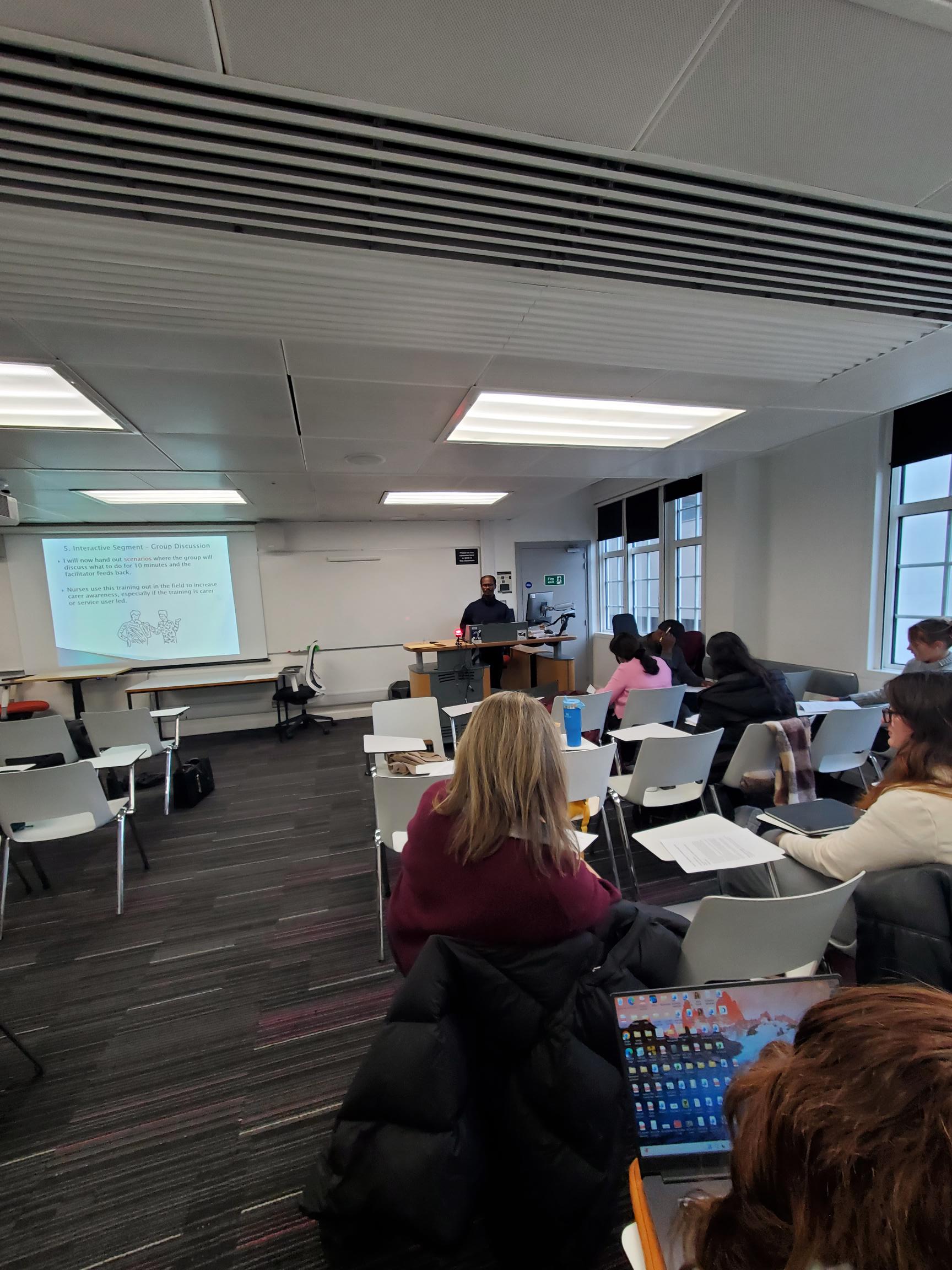
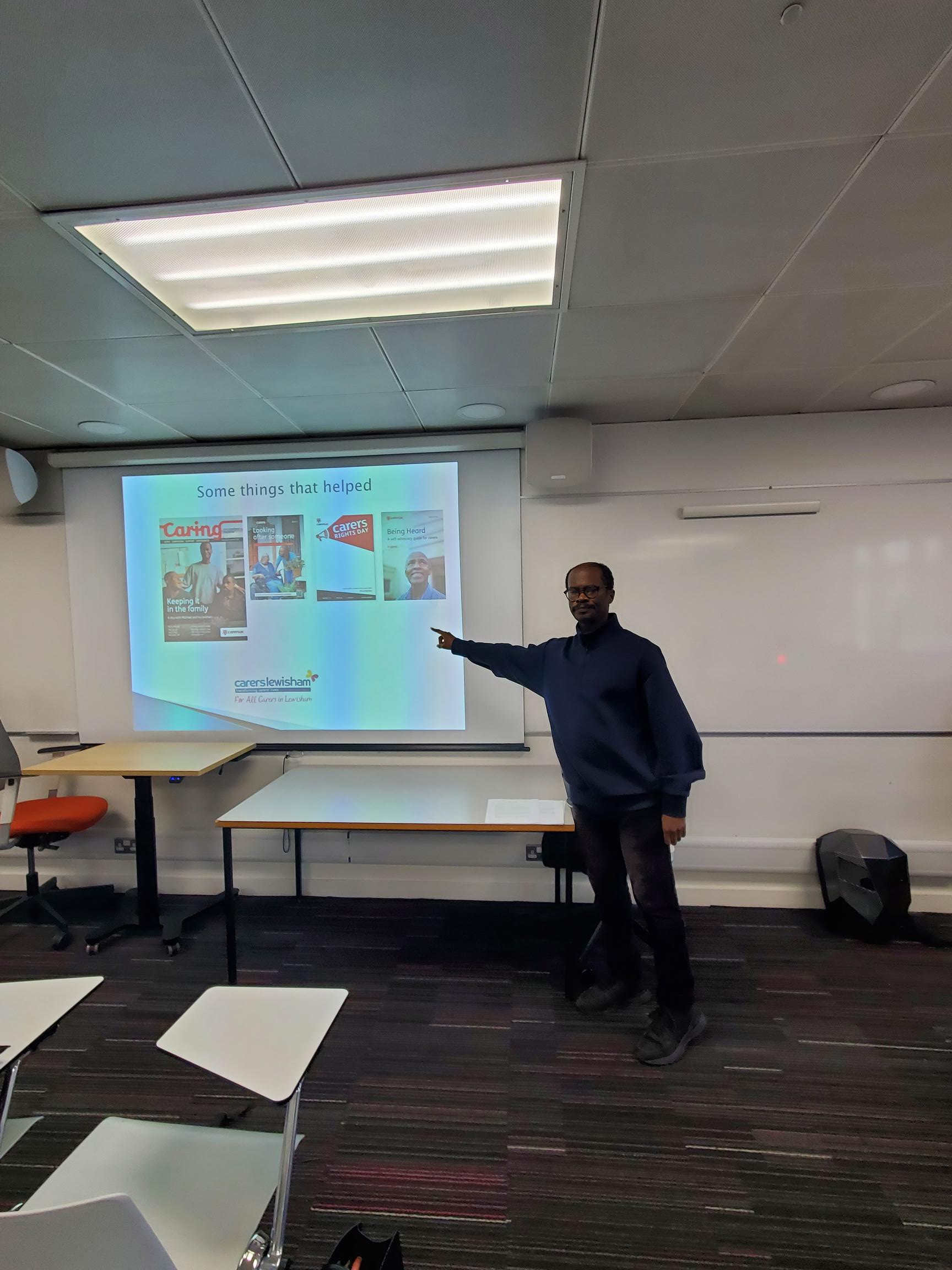
That is why recently teaching a module for the Masters course to mental health nursing students at King’s College London felt so important. Not after they qualify. Not once they are overwhelmed in practice. But before they step out into the field. The session took place 15th of January.
Why carer-led teaching matters
Unpaid carers sit at the sharp edge of the mental health system. We see what works, what harms, and what gets missed when professionals don’t fully understand the family context. When students hear directly from carers, learning moves beyond textbooks into real life into the emotional, practical, and ethical realities of care.
Training mental health professionals without carer voices is like teaching navigation without a map.
What I taught: lived experience as learning
The session I delivered was built entirely from a carer’s perspective and centred on one core message: you cannot deliver effective mental health care without working with carers.
The module covered:
My lived experience as an unpaid mental health carer How I became a carer, the emotional impact, the daily responsibilities, and the toll caring can take on mental and physical health.
The hidden impact on carers Burnout, stigma, isolation, guilt, and the reality that many carers are supporting professionals while receiving little support themselves.
Carers as partners, not problems Exploring what happens when carers are ignored – and how outcomes improve when they are listened to, informed, and included.
The Triangle of Care A strong emphasis on the Triangle of Care framework: the partnership between service user, carer, and professional. I challenged students to see carers as a vital link in the chain, not an optional extra.
Carers UK and carer identification Highlighting the role of Carers UK in advocacy, rights, resources, and why professionals must help carers identify themselves early so they can access support.
Practical skills for future nurses Listening without defensiveness, sharing information appropriately, involving carers in care planning, and understanding when carers need support themselves.
Interactive discussion and reflection Students worked through real-life scenarios, asking: What would I do differently now that I understand the carer experience?
The shift we need in education
Most unpaid carers are not trained for their role. We learn through crisis, exhaustion, and trial and error. Mental health professionals, however, are trained, which means universities have a responsibility to ensure that training includes those of us living this reality every day.
Carer-led teaching builds empathy, improves communication, and ultimately leads to safer, more effective care. When students learn early that carers matter, they carry that mindset into practice.
A final thought
Unpaid carers are already part of the mental health workforce, it’s just the title unpaid, unsupported, and often unheard. So I feel bringing carers into universities is not a “nice extra”. It is absolutely essential.
If we want a mental health system that truly works, we must start by listening to those who never clock off.
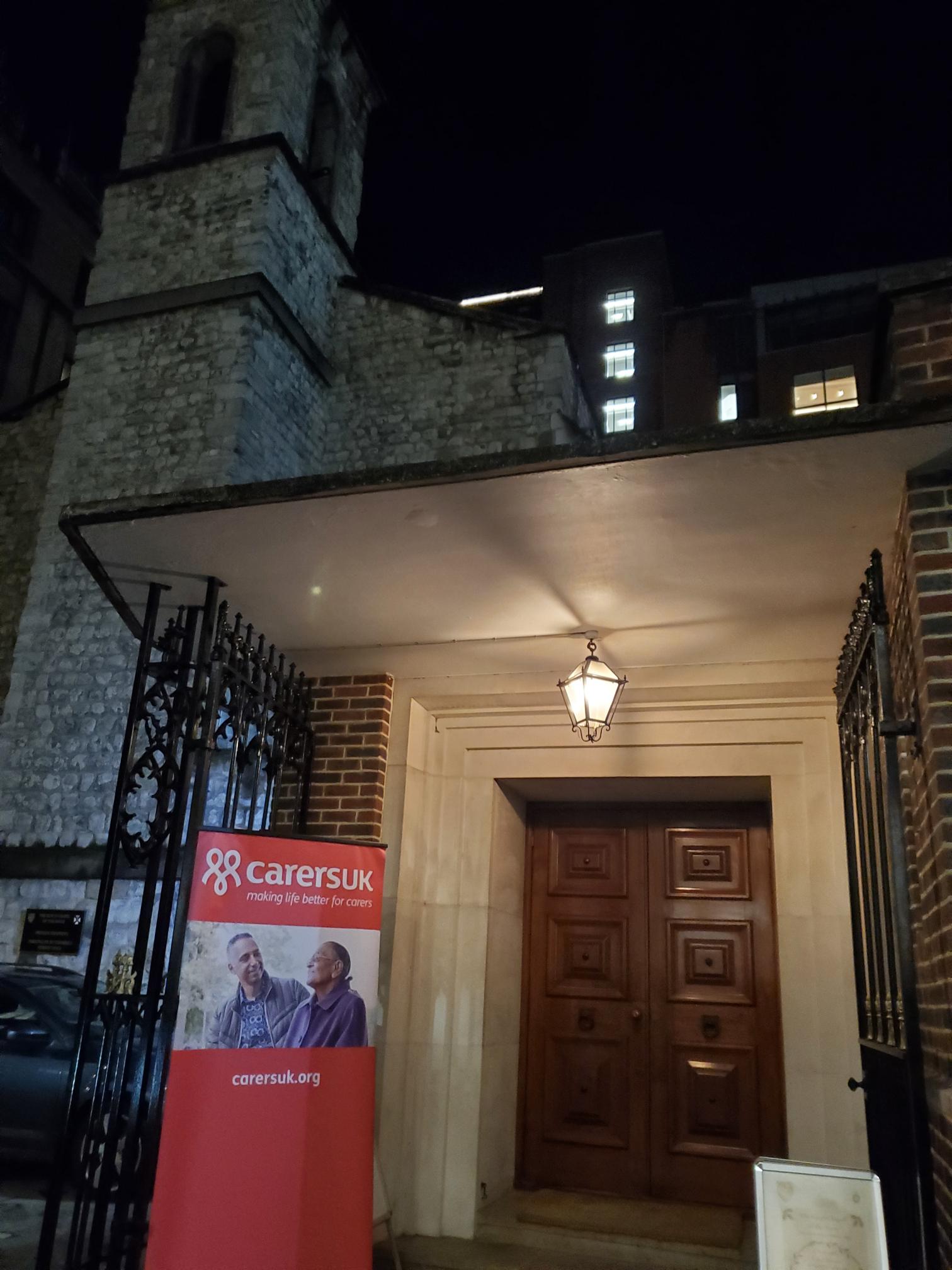
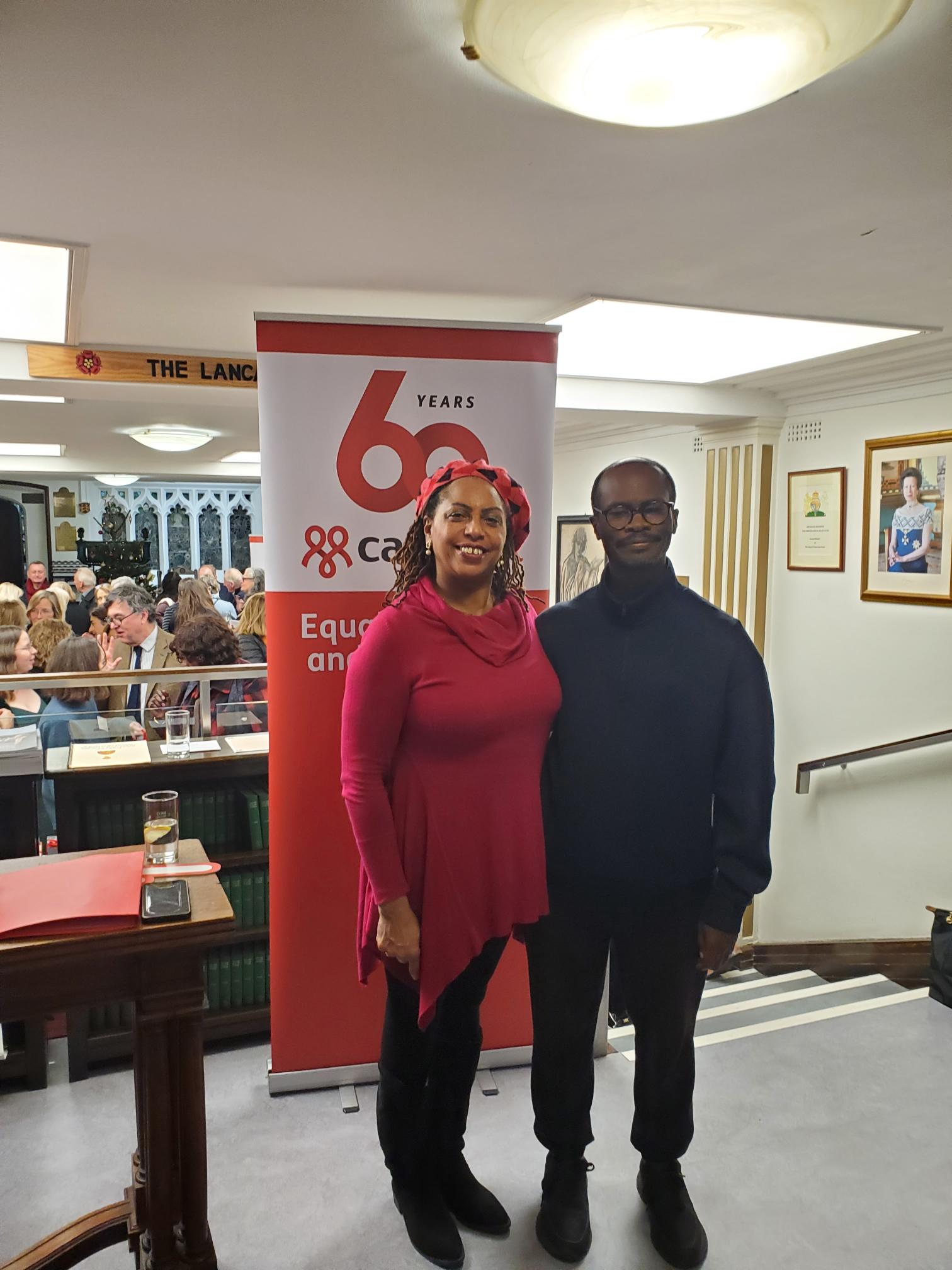
On 4th December 2025, I had the privilege of attending the Service of Christmas Carols and Readings for Carers UK (for their 60th anniversary) at The King’s Chapel of the Savoy.
As many will know, Carers UK is a national charity that offers advice, information, and advocacy for unpaid carers, people who look after a family member or friend due to illness, disability, mental health challenges or frailty.
Their work is vital and ranges from campaigning for carers’ rights, to shaping policy, to providing emotional and practical support.
As someone who has spent years amplifying carers’ voices, and as someone who has been a carer myself, I always find moments like this grounding. They remind me that carers are so often hidden and deserve spaces of recognition, reflection, and community.
I couldnt capture the whole event, so a lot of it is from memory,
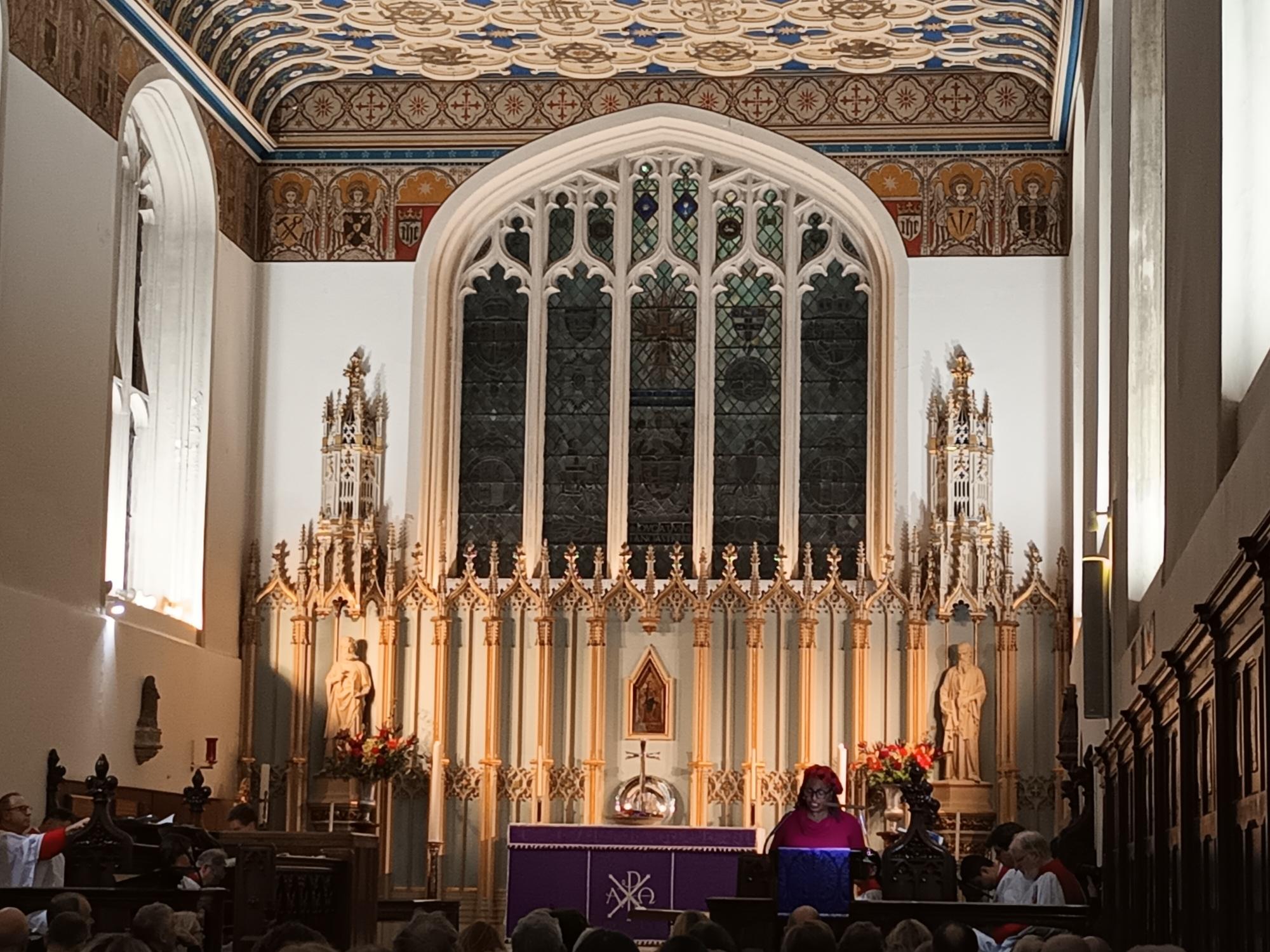
The King’s Chapel of the Savoy, with its royal heritage and intimate atmosphere, felt like the perfect place for such a service. The carved wood, the vivid ceiling, the echo of voices old and new it all contributed to an environment where carers could feel honoured rather than overlooked.
A Service That Told carer Stories
The order of service blended scripture, poetry, classic carols, and carers’ own words. Each part spoke to a different dimension of caring, love, sacrifice, resilience, loss, hope.
Here is a clear, concise list of the Carers UK Christmas Carol Service Order, based on the programme you shared.
Some of the order of Service – Carers UK Christmas Carols and Readings
Carol – Once in Royal David’s City
Welcome & The Bidding Prayer by The Revd Canon Thomas Woodhouse MA
Welcome on Behalf of Carers UK by Helen Walker, Chief Executive
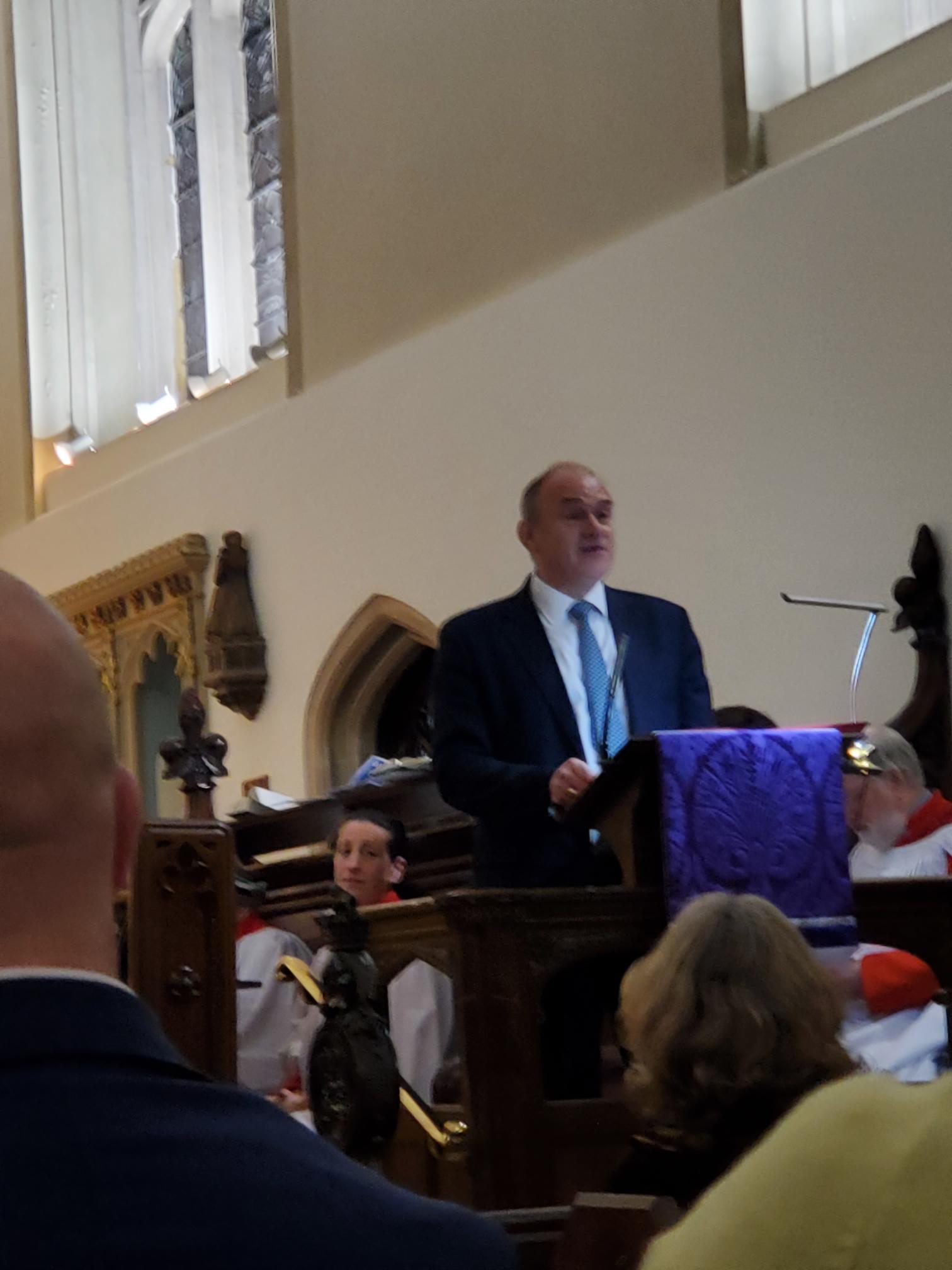
Gospel According to Luke, Chapter 2, Verses 8–20 Reader: Rt Hon Sir Ed Davey MP
Reading – Gospel According to Luke, Chapter 2, Verses 1–7, Reader: The Rt Rev Rob Wickham
Reading – Extract from A Christmas Carol, Reader: Jaycee La Bouche, a carer
The Blessing by The Revd Canon Thomas Woodhouse MA
Below are some reflections on the elements that struck me the most, based on the transcript provided.
I started noting down things when hearing the classic Clement Clarke Moore poem brought a sense of nostalgia and gentleness. For many carers, Christmas isn’t always restful, it can be emotionally heavy or practically demanding. Yet this reading reminded me of the grounding power of tradition.
There was also a Carer’s Poem – “I Carried Him” (Martin Seare), which was read by Tiggy Walker. The poem captured something familiar to many carers, which is the sense of being the energy source behind someone else’s survival. The feeling of being nurse, advocate, motivator, protector, and emotional anchor, all at once.
Jaycee’s reading from A Christmas Carol brought a heartfelt authenticity to the service, grounding Dickens’ message of compassion in real lived experience. Hearing a carer deliver those words reminded me how powerfully stories of renewal that echo the emotional journeys many carers navigate every day.
We also heard an extract from A Christmas Carol, where hearing Dickens’ words about Scrooge’s transformation felt fitting. Carers often live in a world full of systems that need to “wake up” to their realities, these systems overdue for compassion and change.
There was another Carer’s Poem – “Hands That Once Held Me” (Aaliyah O’Neill), which was read by Pippa Haywood. This poem honoured the emotional labour that accompanies caring, the grief, the patience, the love that persists through fading timelines and shifting identities.
Walking around after the service, we were provided with wine and mince pies (I could only handle one glass of mine), but ate a lot of mince pies. I also noticed on a nearby table, beautifully wrapped with red ribbon, were copies of books written by individuals deeply connected to the world of caring.
Tiggy Walker’s Both Sides Now offered a tender, candid exploration of love, loss, and the emotional realities of caring, while Why I Care highlighted personal reflections on the value and challenges of supporting others by Sir Ed Davy. Seeing these books at the event felt fitting, they extended the service’s message by giving carers stories they could see themselves in, learn from, and feel strengthened by.
Carols – Collective Voice, Collective Strength
Carols like “Once in Royal David’s City,” “O Little Town of Bethlehem,” “In the Bleak Midwinter,” “O Come All Ye Faithful,” and “Hark the Herald Angels Sing” took on added meaning.
Singing these in chapel reminded me that carers often feel alone, but they are part of a much larger story. Carols have always been about shared experience, hope, and unity. That unity was felt strongly throughout the chapel.
A Blessing for Carers
Towards the end, The Revd Canon Thomas Woodhouse offered prayers acknowledging:
those who care
those who are cared for
those who grieve
those who find joy in service
those who struggle silently
What the Service Meant to Me as a Carer
I left the event feeling the followng:
Being Seen
Carers rarely hear their stories reflected back to them with such respect. This service did that.
Connected
Being surrounded by fellow carers, supporters, faith leaders, and advocates reminded me that we are not navigating these challenges alone.
Renewed
Christmas can be difficult for many carers, i am running a few carer groups to reduce isolation, but this service offered a moment to pause, reflect, and recharge spiritually and emotionally.
Motivated
Each poem and reading reinforced why I continue to campaign and raise awareness: because carers’ lives, struggles, and contributions must be brought into public consciousness.
Final Thoughts
The Carers UK Christmas Service wasn’t just a festive gathering, it was a space that lifted the voices and experiences of carers into the light.
Carers UK continues to be a champion for those who give so much of themselves. And events like this remind us that recognition, community, and hope are powerful gifts.
I left the chapel gratefull for the stories shared, for the solidarity felt, and for the reminder that carers are, and always have been, at the heart of what makes our communities truly compassionate.
BONUS : A small tour of the chapel.
History in the Woodwork: Discovering the Stories Behind the Savoy Chapel’s Symbols
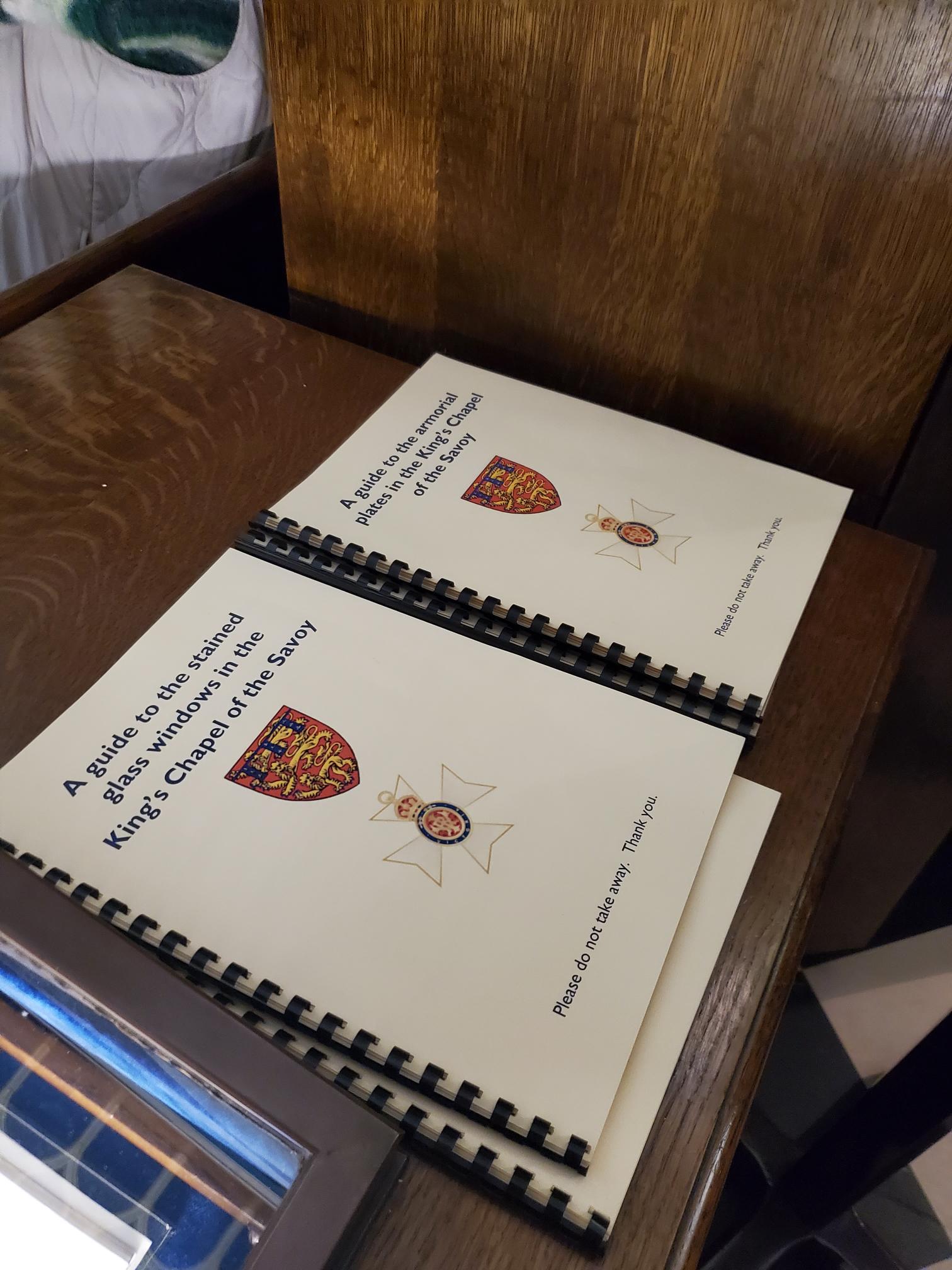
One unexpected part of attending the Carers UK Christmas Service at The King’s Chapel of the Savoy was the opportunity to explore some of the chapel’s remarkable historical artefacts. As a carer and someone who works in carer advocacy, I often reflect on continuity on how the past shapes the present. Walking around the chapel, I realised the walls were not just decorative; they were storytellers.
These objects and emblems remind us that the Savoy Chapel is a living part of royal, national, and personal history. And in many ways, the quiet endurance reflected in these items echoes the resilience of carers across the country.
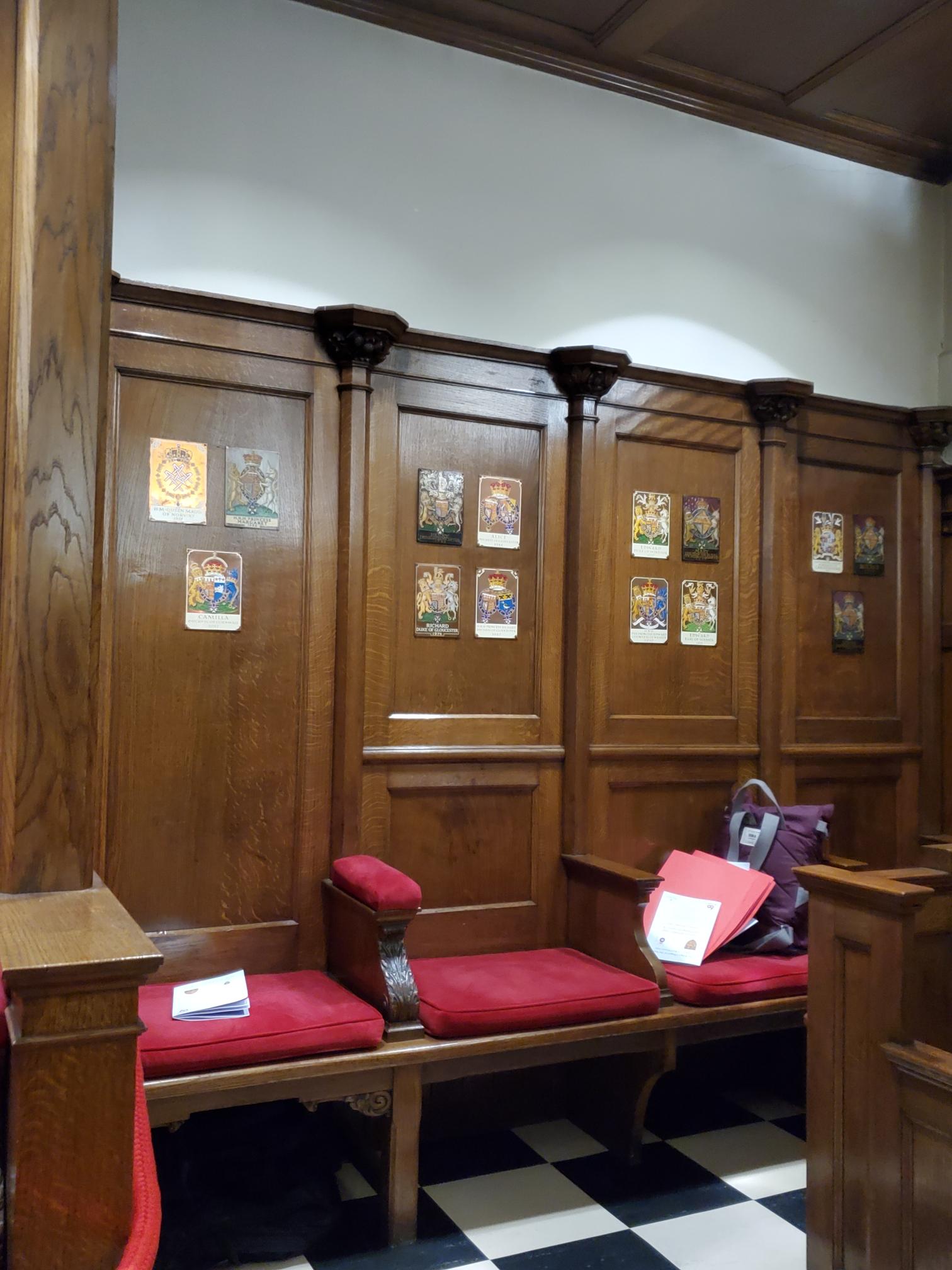
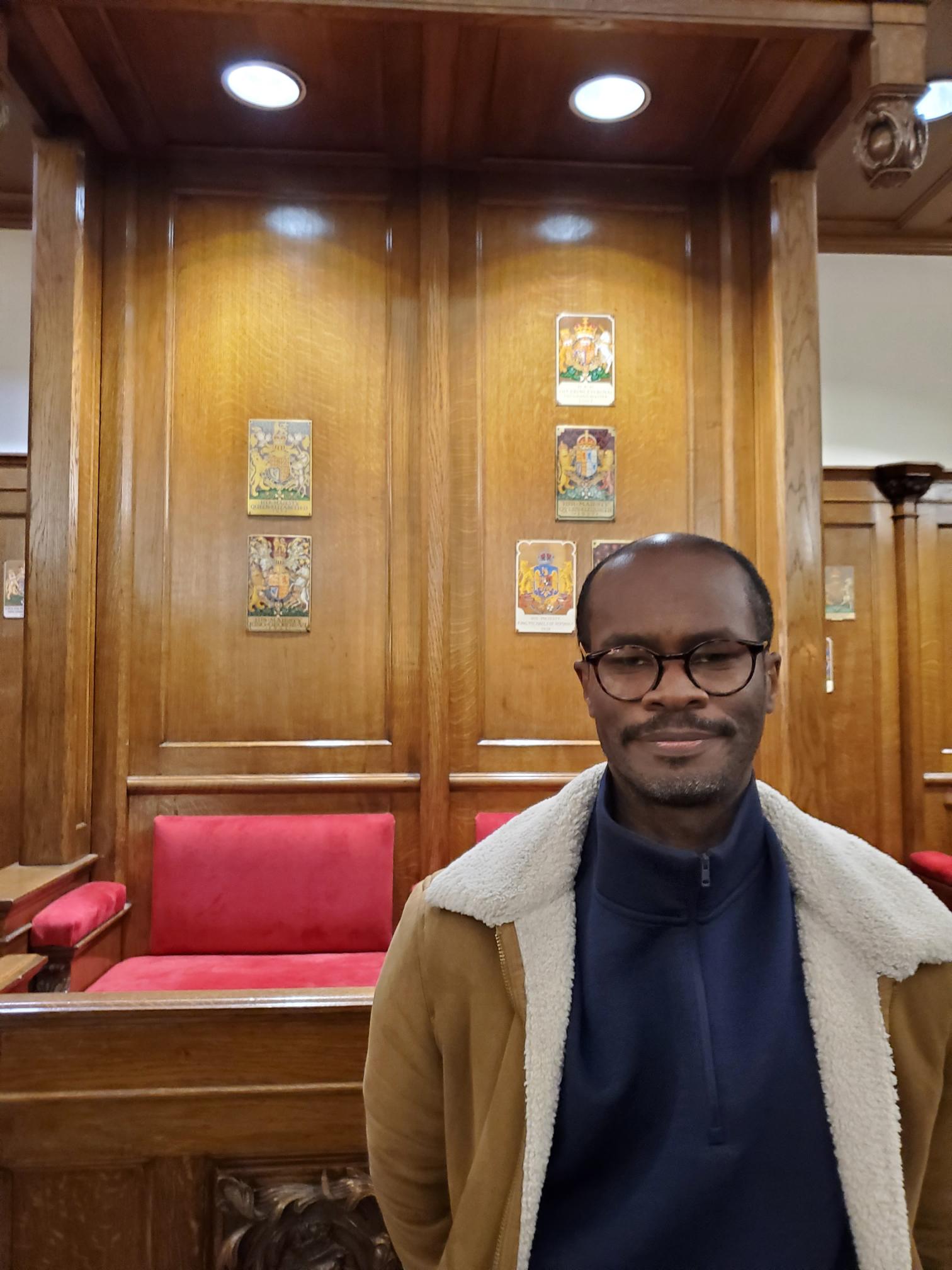
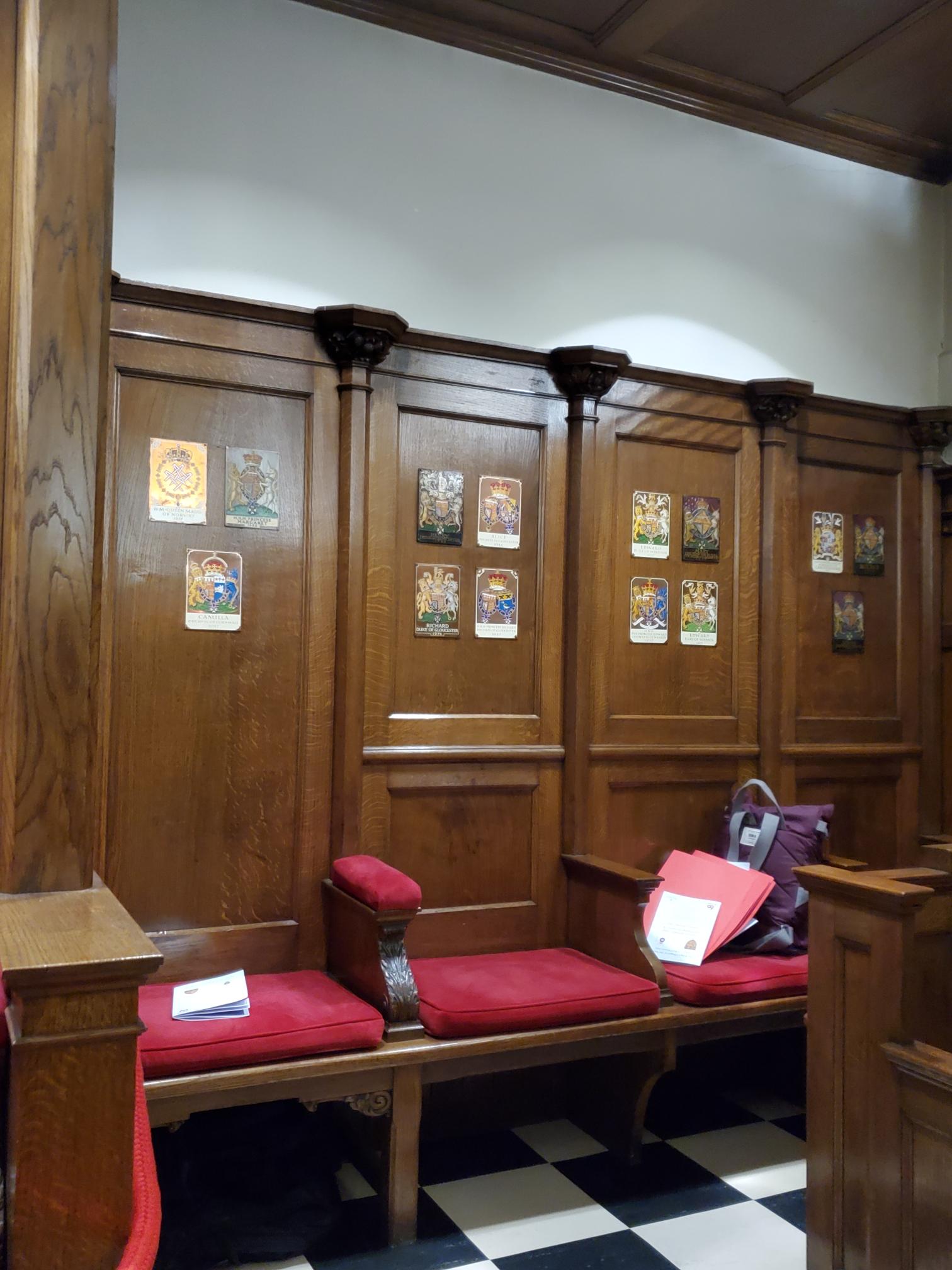
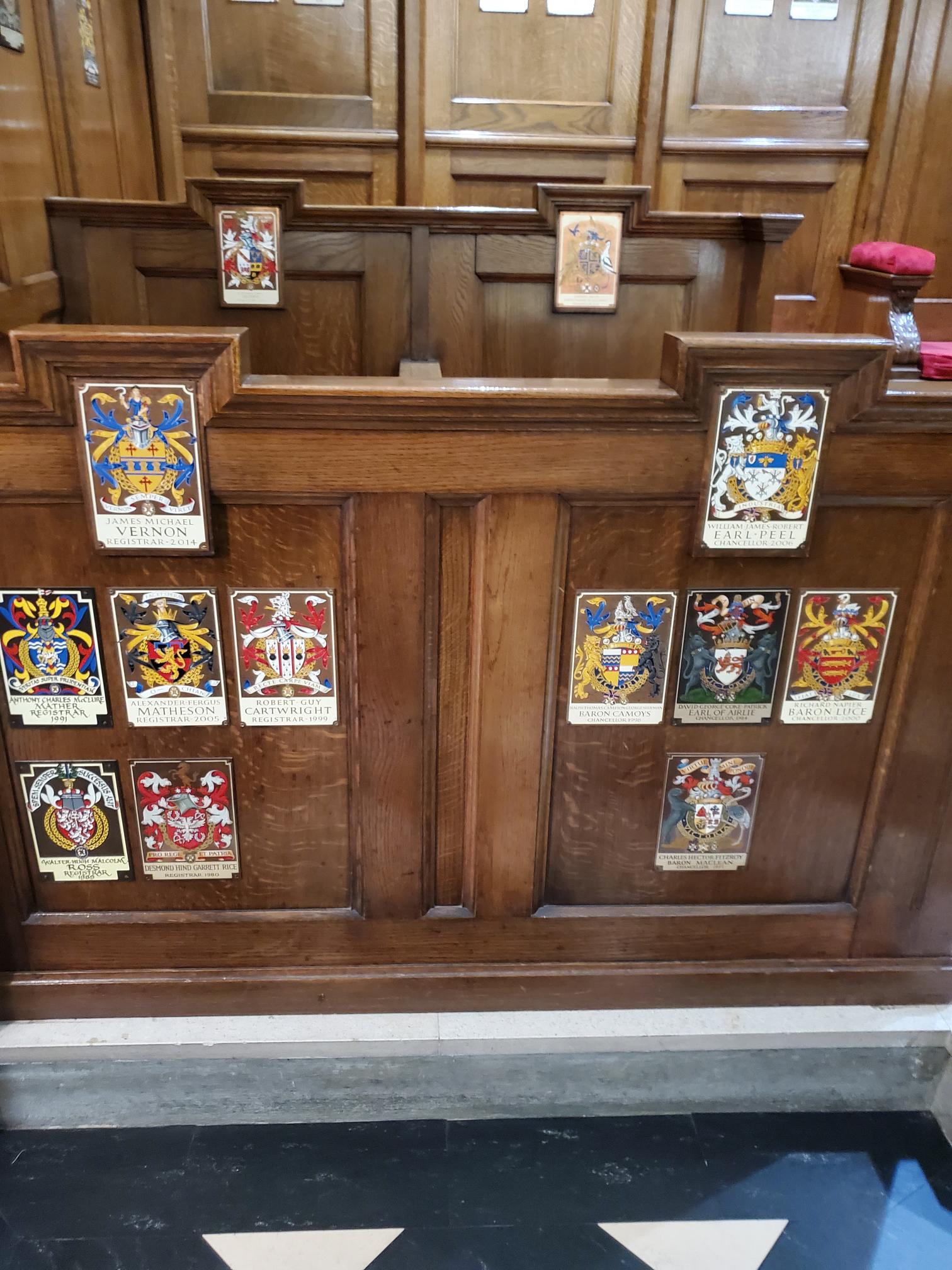
1. The Heraldic Plaques on the Chapel Walls
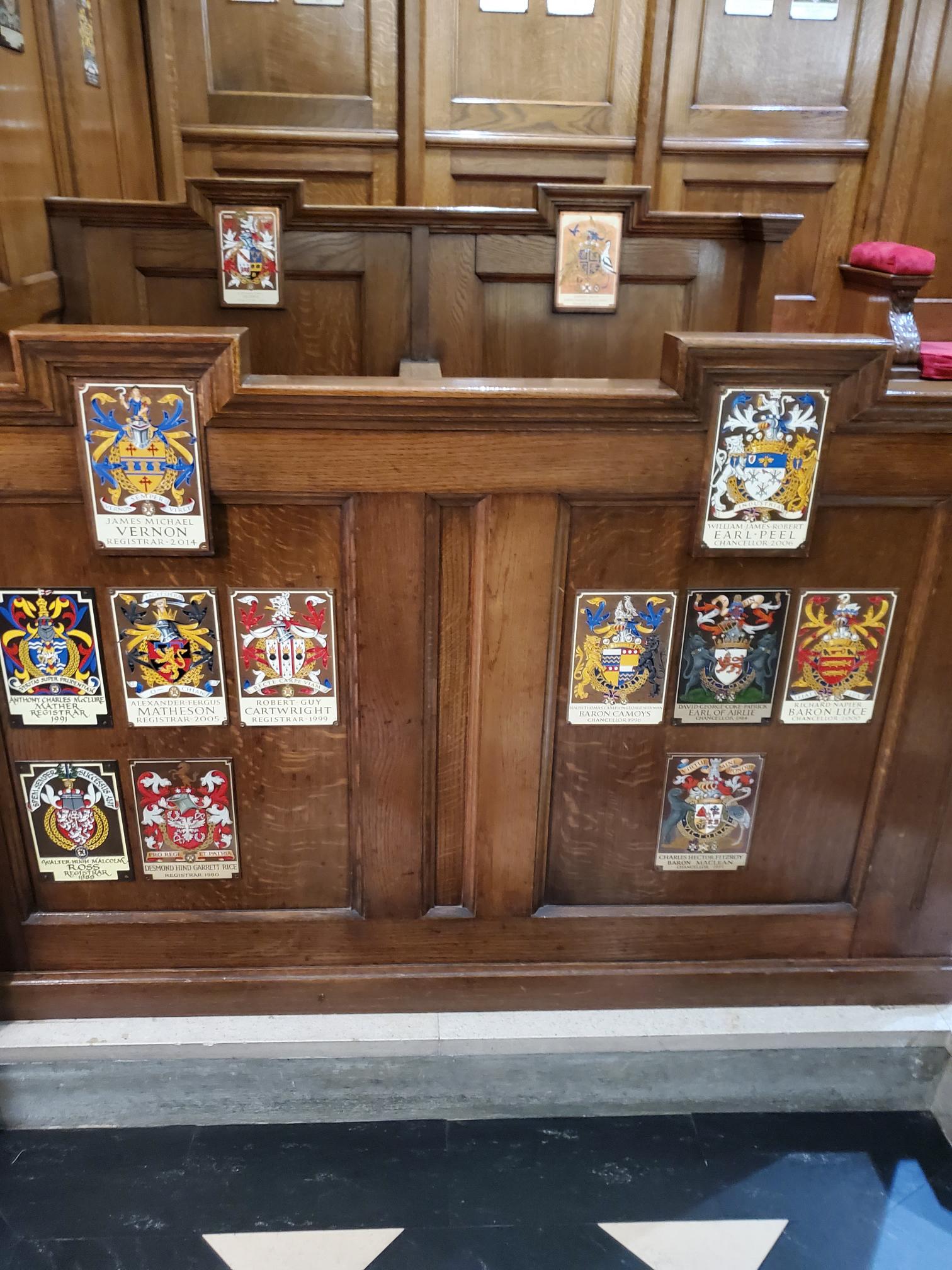
Along the wooden panelled walls were beautifully detailed heraldic plaques, each representing past members or senior figures associated with the Royal Victorian Order or individuals linked to the chapel’s long history of royal service.
The Royal Victorian Order was established in 1896 by Queen Victoria as a way of personally recognising service to the monarch. That personal element, service based on loyalty, commitment, and relationship. That i felt especially meaningful as someone attending the Carers UK event.
Each plaque typically includes:
A coat of arms, with symbols representing the individual’s heritage, achievements, or values.
A Latin motto, often referencing duty, honour, or faith.
A record of rank or title, showing how the person was tied to the Crown or Order.
Standing before these plaques, I was reminded that service, whether to the Crown or to a loved one is always part of a bigger human story.
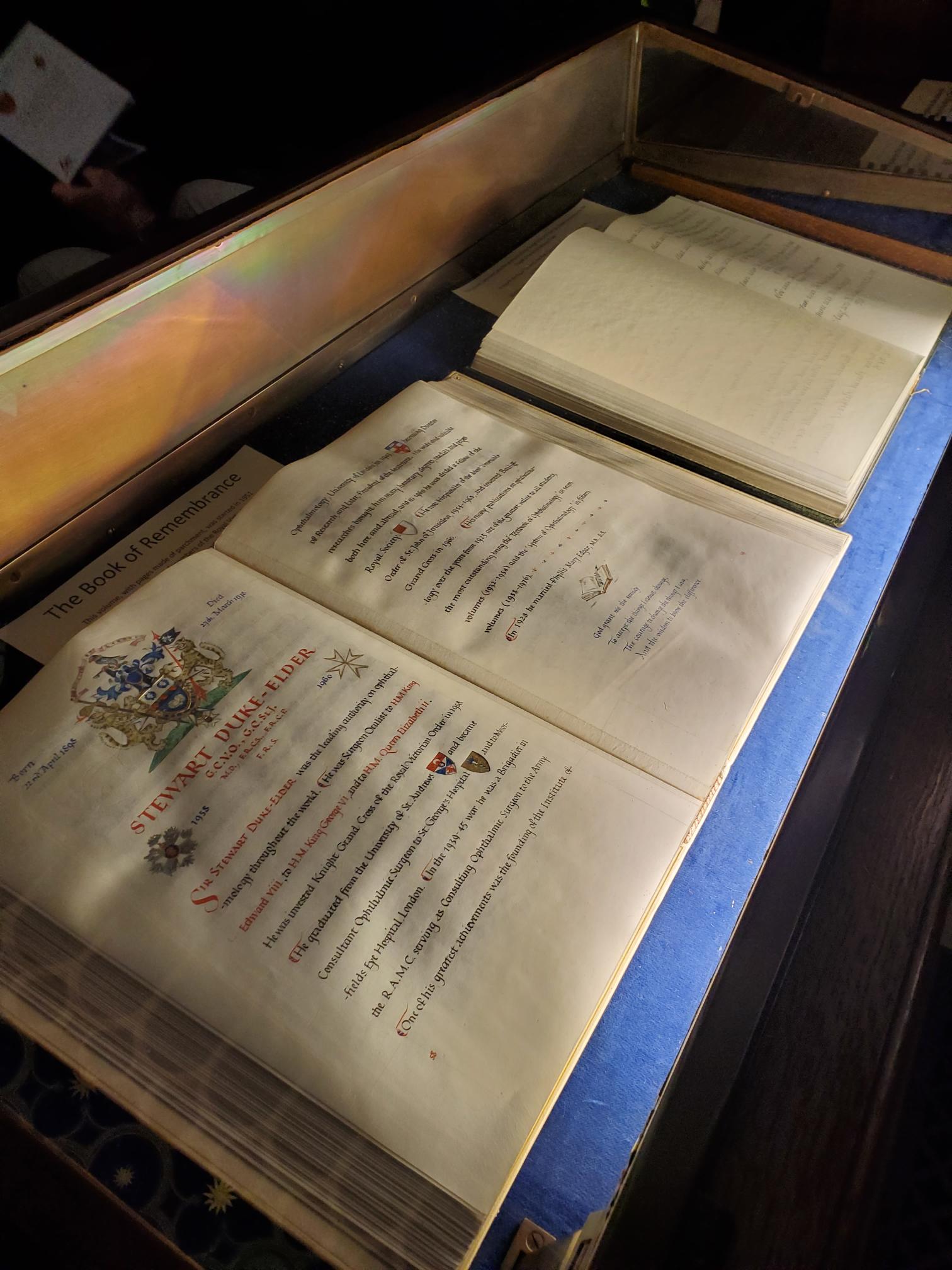
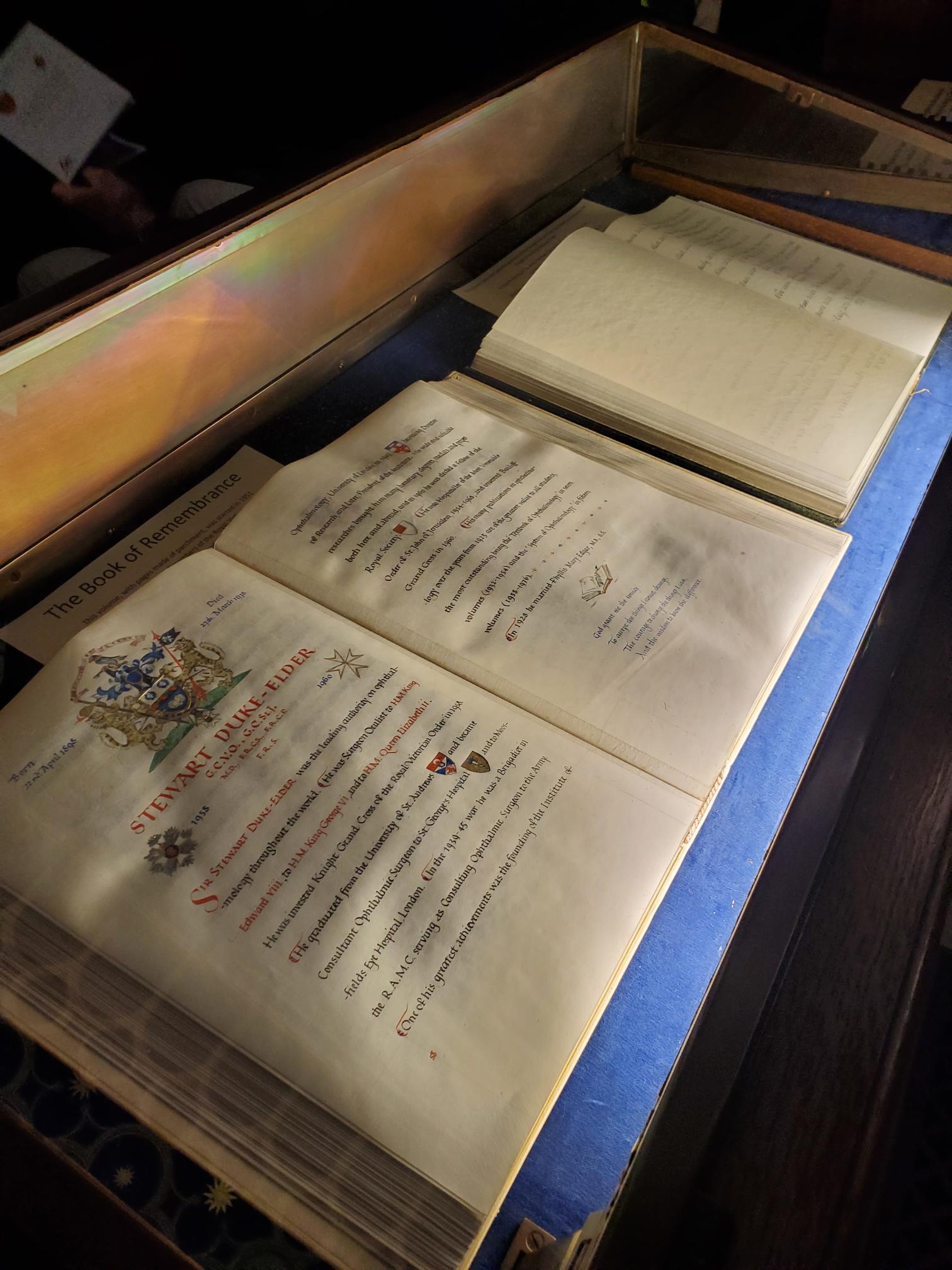
2. The Book of Remembrance
Displayed under protective glass, the Book of Remembrance is one of the most moving artefacts in the Savoy Chapel. It is handwritten and illuminated in a traditional style, much like medieval manuscripts.
The book honours individuals connected to the chapel, recording their names, contributions, and sometimes short dedications. Every entry is crafted with care, respecting the memory of those who served their communities or the Royal Household.
3. The Stalls with Coats of Arms of Officers and Servants of the Order
In the choir stalls, more coats of arms decorate the woodwork. These represent officers, registrars, chaplains, and others who have served the Royal Victorian Order over the decades.
Each shield is different, but together they form a visual tapestry of dedication. They signal continuity across generations much like how caring roles pass through families, communities, and time.
You can almost imagine the individuals who once occupied these seats, each carrying out their duties with diligence. Their heraldry remains here as a testament to lives spent in service.
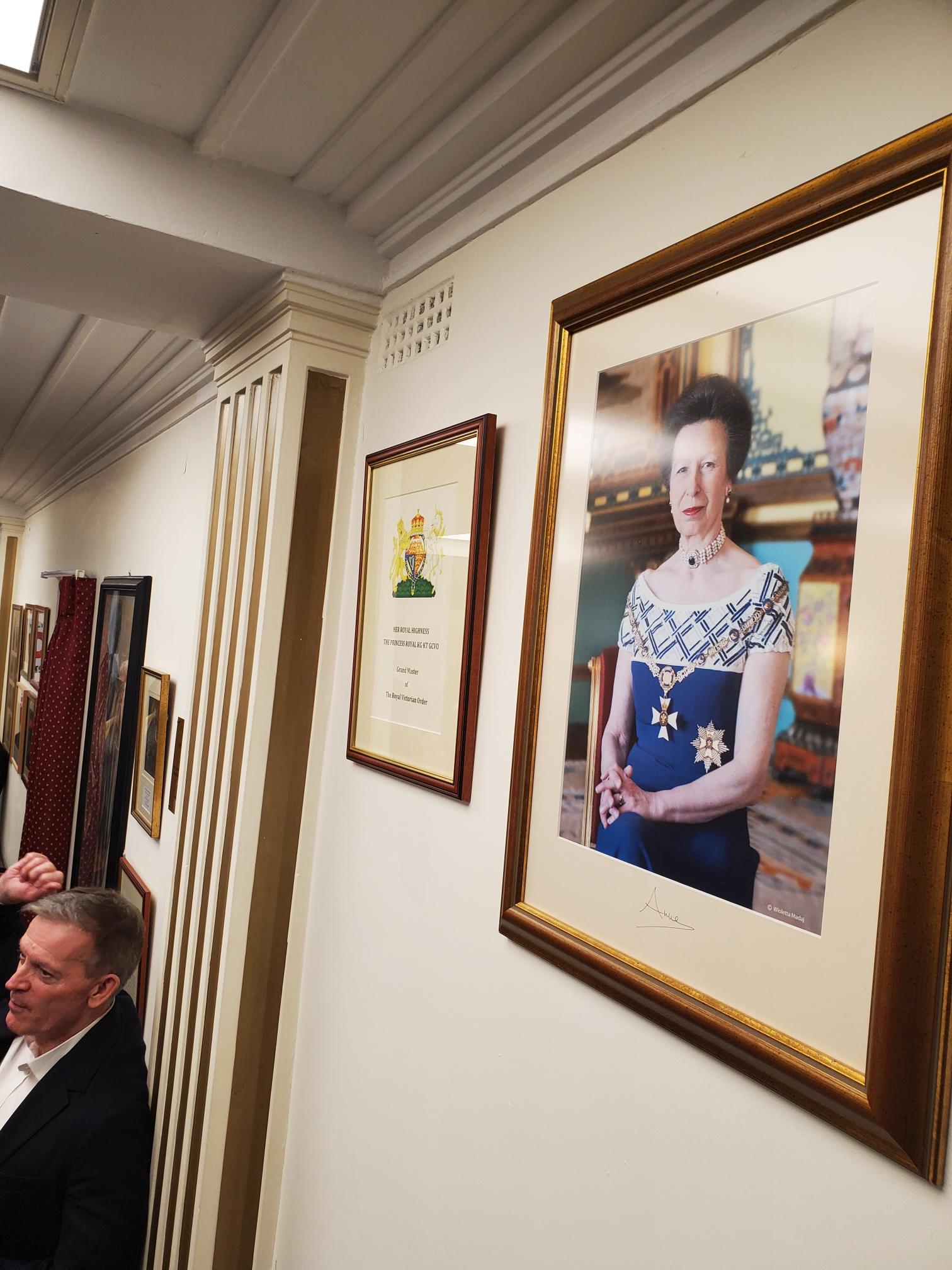
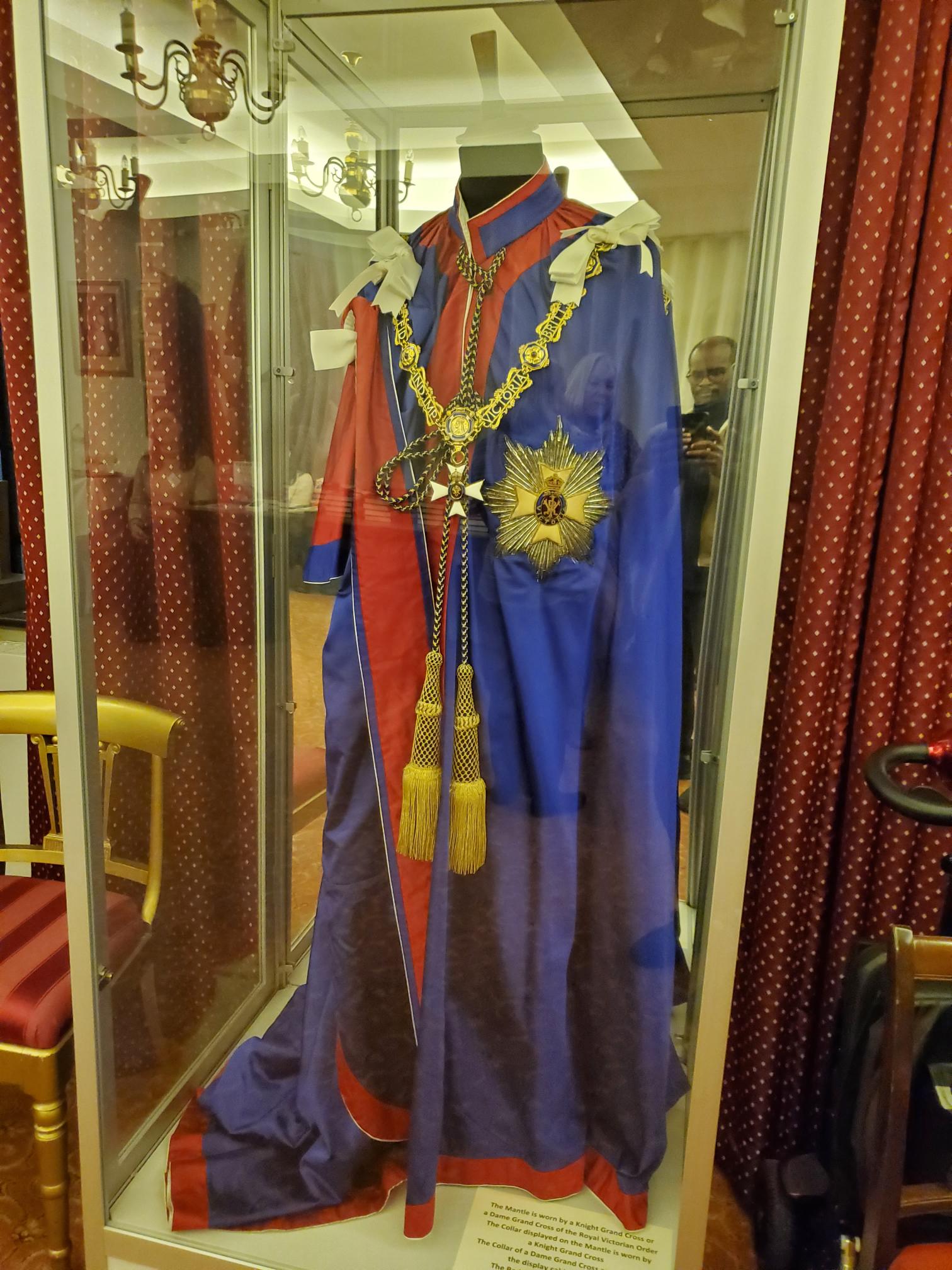
4. The Mantle and Insignia of a Knight Grand Cross of the Royal Victorian Order
One of the most striking displays was the ceremonial mantle worn by a Knight Grand Cross of the Royal Victorian Order (GCVO). The deep blue and crimson robe, gold tassels, and the star emblem reflect the highest grade of this honour.
The mantle’s presence is not merely decorative:
The GCVO is awarded personally by the monarch, not via government recommendation.
It recognises exceptional service to the Crown.
The Star, Badge, and Collar each represent centuries-old tradition.
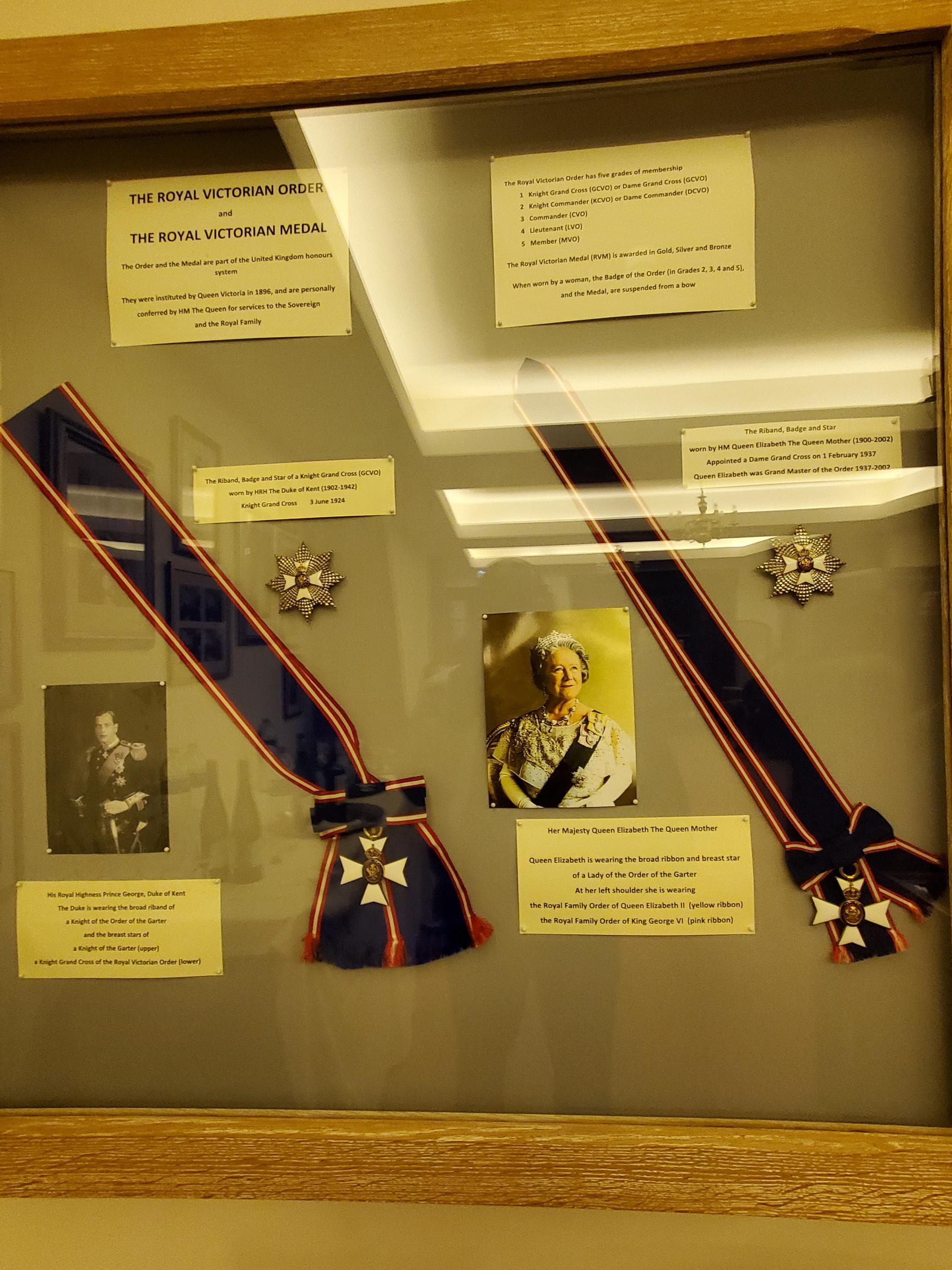
5. The Royal Victorian Order and Medal Display
This framed display explains the different grades of the Royal Victorian Order (RVO) and shows examples of the insignia, including:
Knight/Dame Grand Cross (GCVO)
Knight/Dame Commander (KCVO/DCVO)
Commander (CVO)
Lieutenant (LVO)
Member (MVO)
Royal Victorian Medal (RVM) in Gold, Silver, and Bronze
The RVM is unique because it honours personal service by staff who support the Royal Household directly, often throughout a lifetime. The photos in the display include historical figures wearing the ribbons and badges, underscoring the order’s strong ties to loyalty and lifelong commitment.
Why These Artefacts Mattered at a Carers Event
These historical items weren’t just museum pieces; they told a story of service, loyalty, remembrance, and quiet strength. I think in that sense, they perfectly framed the Carers UK Christmas Service.
On this year’s Carers Rights Day 2025 (Thursday 20 November), the theme is “Know your rights, use your rights.”
If you care for someone, whether it’s a partner, parent, child or friend; you may be missing out on vital support simply because you didn’t realise you have rights as a carer.
In my new video I walk you through what those rights actually are, and how you can use them in practice.
In this video you’ll discover:
Why recognising yourself as a carer matters
Key rights every carer should know (from assessments to flexible working)
How to make use of those rights in your daily life
Where to go for help, guidance and support
Click the link, take two minutes, and empower yourself today.
By Matthew McKenzie – Carer activist (volunteer of Carers UK)
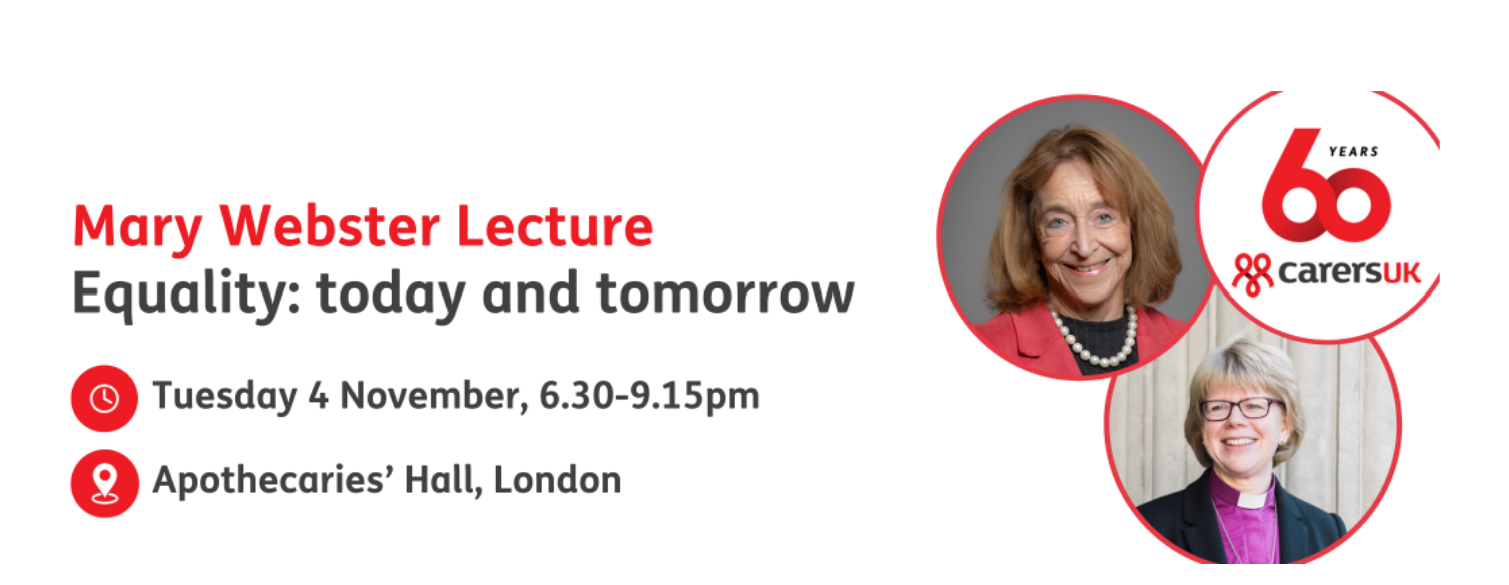
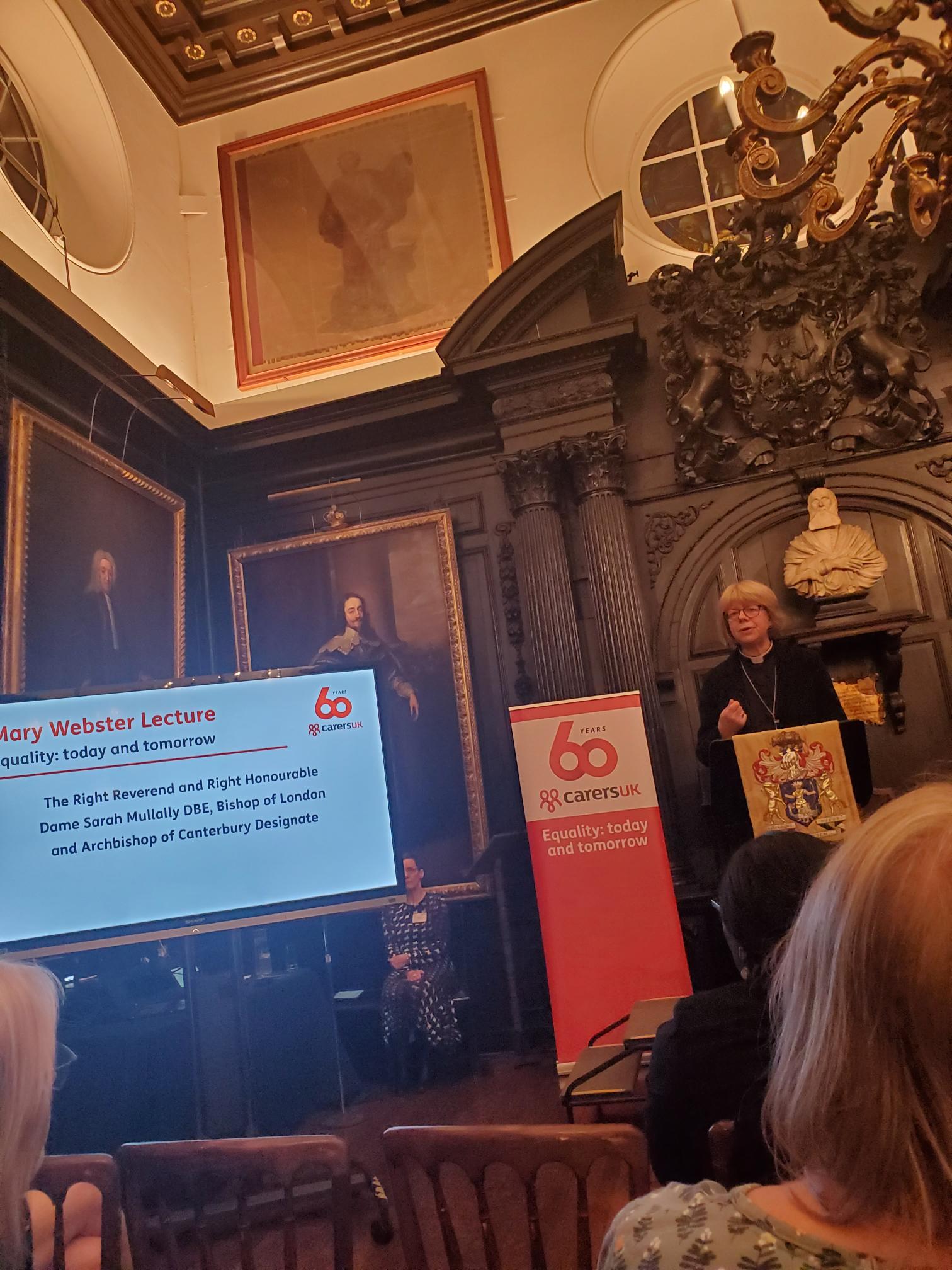
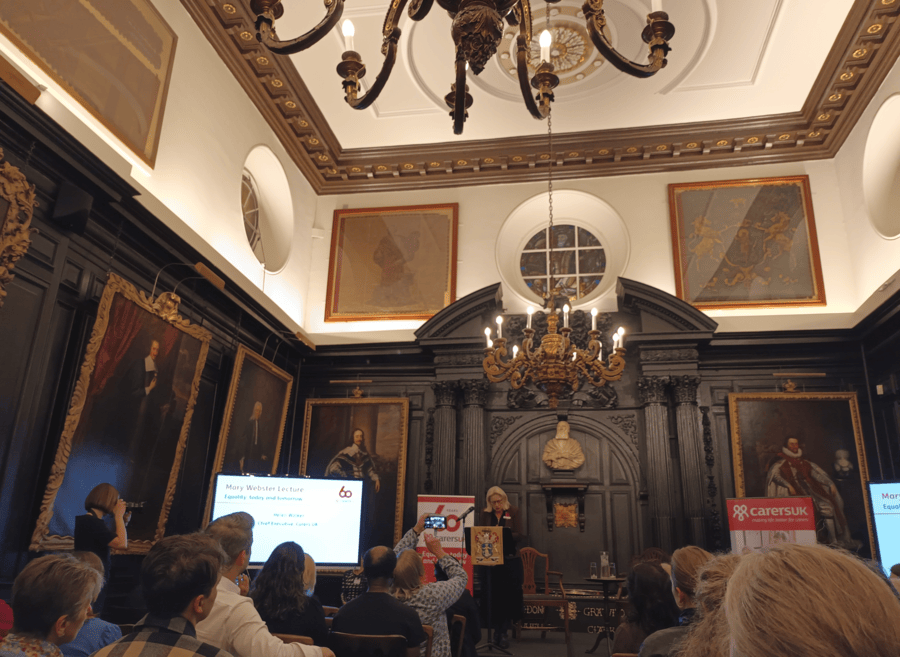
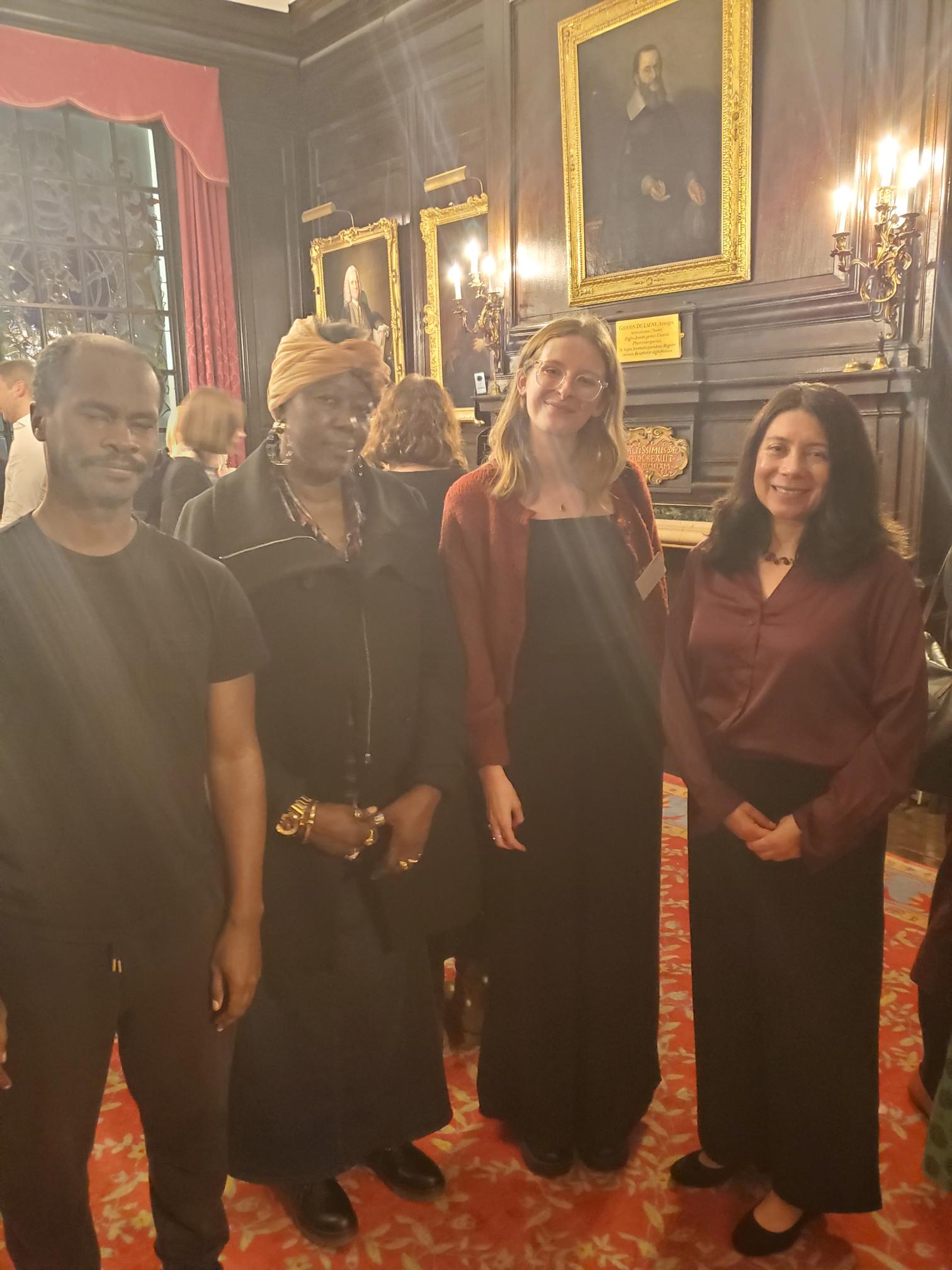
Last night I attended the Mary Webster Lecture at Apothecaries’ Hall in London, a special event marking Carers UK’s 60th anniversary. As someone who has cared for family members and now volunteers with Carers UK, it was moving to sit among other carers, professionals, and campaigners who have worked so hard for recognition and equality.
The event honoured Reverend Mary Webster, the founder of Carers UK, whose vision decades ago helped lay the foundations for unpaid carers’ rights. Today, as we still fight for equality and understanding, her legacy feels more important than ever.
Setting the Scene
Apothecaries’ Hall is a grand, historic space filled with portraits and a sense of tradition. But it also felt like the right place to discuss change how we can build a future where carers are respected and supported equally. The evening began with warm welcomes and reflections from Helen Walker, Chief Executive of Carers UK. She reminded us that while progress has been made, many unpaid carers still live in poverty, often earning less than the minimum wage for full-time dedication.
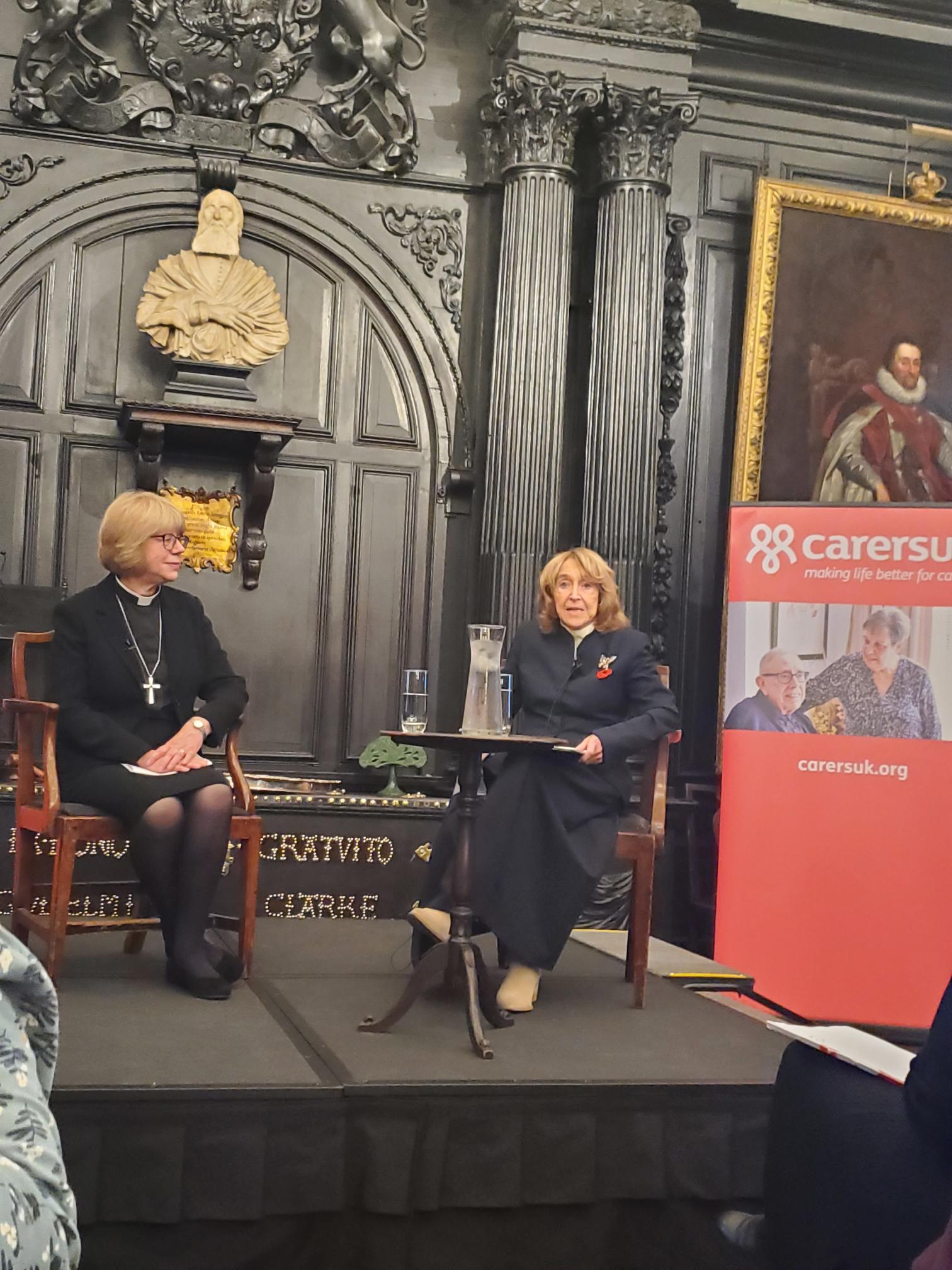
Then came the highlight of the evening a talk by The Right Reverend and Right Honourable Dame Sarah Mullally DBE, Bishop of London and recently named Archbishop of Canterbury Designate, in conversation with Baroness Jill Pitkeathley OBE, long-time carer champion and former Carers UK CEO.
Dignity in Caring
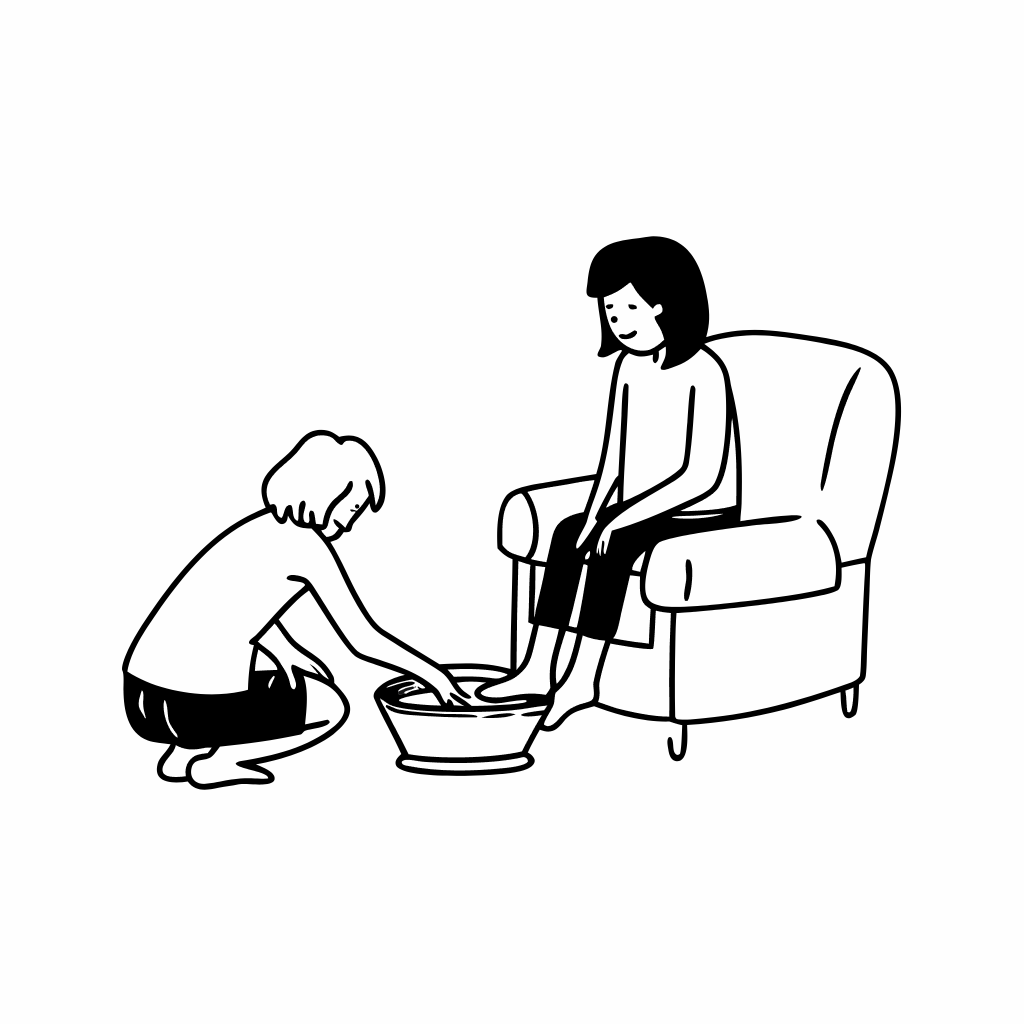
Bishop Sarah spoke with warmth and honesty about her journey from nursing to the Church. What struck me most was her story about washing her grandmother’s feet when she was a young nurse, which a simple act that carried deep dignity. She used that image to describe caring itself: often quiet, unseen, but filled with compassion and humanity.
Her message was clear that care is about dignity. Every person, regardless of ability, age, or background, has value. She reminded us that dependency isn’t weakness it’s part of being human. We all depend on others at different points in our lives.
As a Black male carer, that message really resonated. In many of our communities, caring happens quietly, often behind closed doors, without recognition or support. Bishop Sarah’s words reminded me that this invisible work deserves to be seen and respected not just by policy makers, but by society as a whole.
Lessons on Equality and Faith
Baroness Pitkeathley joined Bishop Sarah for a deep conversation about equality today and tomorrow. They reflected on how far carers’ rights have come and how far we still have to go. From health and financial struggles to workplace inequality, many of the same challenges from the 1990s remain today.
Bishop Sarah also spoke about the Church’s Reimagining Care Commission, which calls for a new “covenant of care” a moral agreement between government, communities, and families to share responsibility for those who need care. It’s not just about services, but about values: compassion, respect, and community.
Hearing that from someone soon to become the Archbishop of Canterbury gave me hope. It felt like a recognition that faith, ethics, and social justice must go hand in hand.
Voices from the Floor
The Q&A that followed was emotional and powerful. Carers from the audience spoke up about their struggles housing, mental health, disability, and the loneliness that caring can bring.
One carer shared the pain of fighting for proper housing for her disabled son; another spoke about the toll on her own health. Each voice reminded me that caring is more than statistics it’s real people doing extraordinary things every day, often without support.
My Reflection as a Black Carer Activist
As I looked around the room, I thought of the carers in Black and ethnic minority communities who face extra barriers language, stigma, or fear of not being understood. Too often, our voices are missing from the conversation. I decided to have a chat with Dame Sarah Mullally about my thoughts, still nights like this show that inclusion is possible, and necessary.
Equality for carers means also recognising our diversity on different cultures, faiths, and family structures and ensuring that every carer can access the help they need, without judgement or struggle.
I left the event feeling encouraged but also challenged. Encouraged by the leadership and compassion of women like Bishop Sarah and Baroness Pitkeathley, who continue to champion carers’ rights. Challenged, because the journey isn’t over and each of us, whatever our background, has a role to play.
A Call for Tomorrow
Sixty years after Mary Webster founded Carers UK, unpaid carers are still holding society together.
We save the country billions, yet too many of us live in hardship. As Bishop Sarah said, we must rethink how we value care not as a cost, but as a cornerstone of our humanity.
For me, as a carer activist, that means continuing to speak up, share stories, and bring carers from all communities together. Because equality today and tomorrow starts with being seen, heard, and valued.
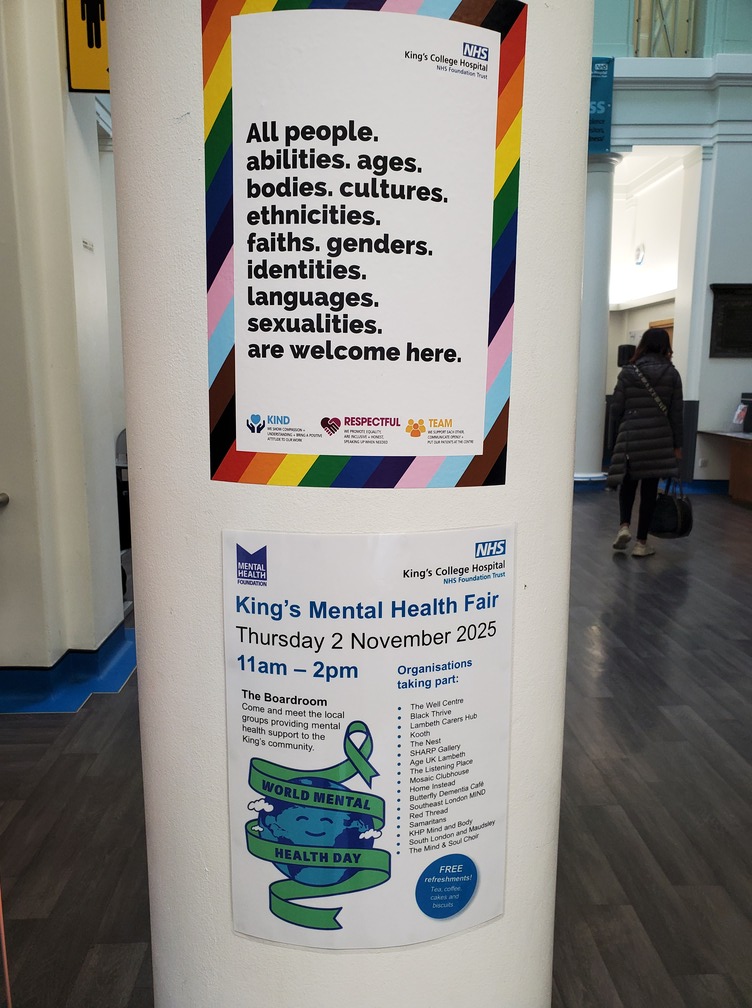
Today, I had the privilege of being part of King’s College Hospital NHS Foundation Trust’s Mental Health Fair, held on Thursday 2nd October, in recognition of World Mental Health Day 2025.
The event brought together a wide range of organisations and community groups working tirelessly to support the mental health and wellbeing of patients, families, and carers.
Why carers need to be at the heart of mental health conversations
As someone who has cared for a loved one experiencing mental health challenges, I know firsthand the importance of recognising and supporting carers through the groups i run.
By Matthew McKenzie – Facilitator of National ethnic mental health carer forum & Triangle of Care – Community group
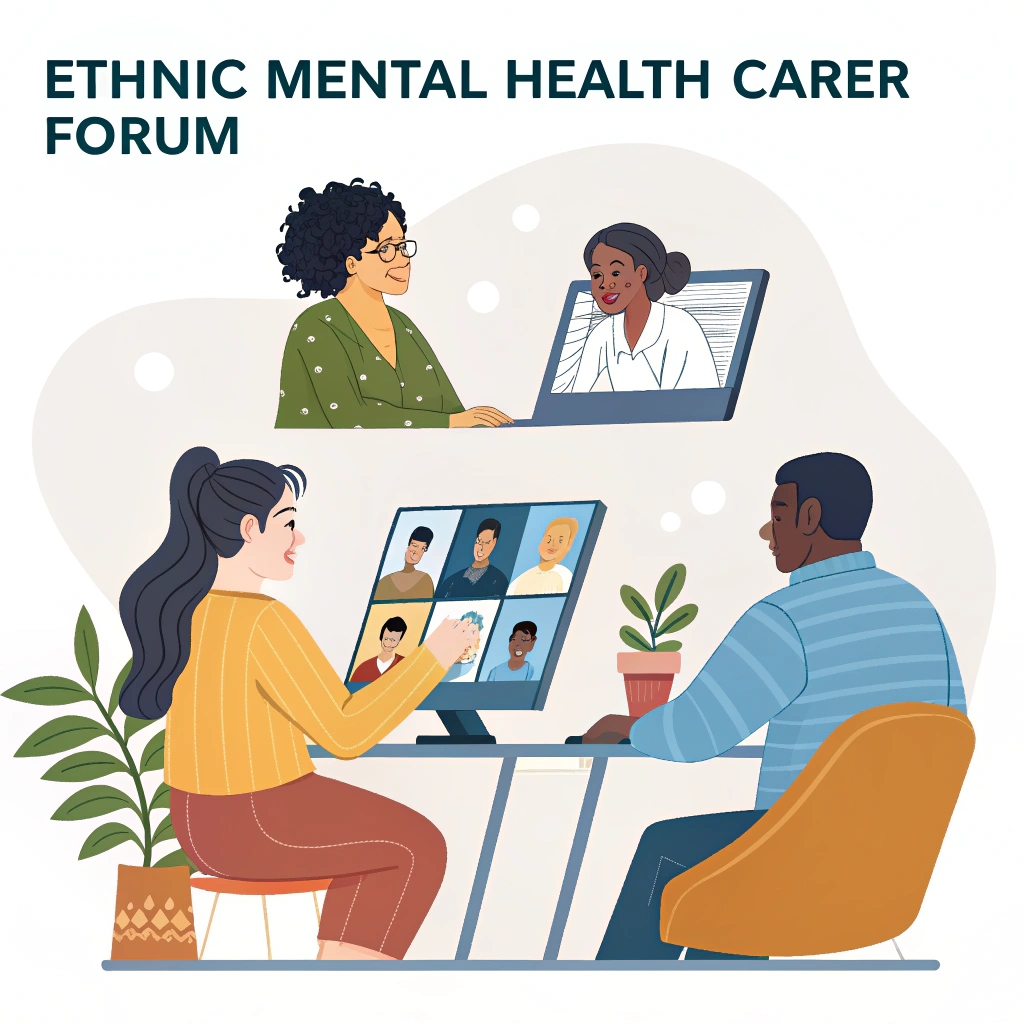
The National Ethnic mental health Carers Forum (chaired by myself) met for September bringing together various stakeholders, including carers, healthcare professionals, and community representatives, to address issues related to race, equity, and care services. Key discussions included technical setups, addressing ongoing challenges in healthcare for marginalized communities, and emphasizing the importance of incorporating diverse perspectives in developing solutions for better patient experiences.
The importance of data collection, representation, and systemic change catalyzed by community engagement were recurring themes. Presenters highlighted various initiatives, including the Patient Carers Race Equality Framework (PCREF), aimed at improving services for ethnic minority populations. Questions from attendees focused on ensuring inclusivity and effective communication within the healthcare framework.
Improving Ethnic Minority Healthcare Access
The meeting introduced participants to the Patient Carer Race Equality Framework (PCREF) initiative, focusing on improving outcomes for patients and carers from ethnic minority backgrounds.
Wayne Farah, an associate at the Institute of Race Relations, presented resources available to support understanding and addressing racism in healthcare, including statistics, healthcare access issues, and practical resources for carers.
Wayne Farrar opened his talk by drawing on both professional expertise and personal experience. He explained the history of the IRR, its focus on amplifying marginalised voices, and the resources it provides such as IRR News and the Calendar of Racism and Resistance. His main theme was the persistence of institutional racism in the NHS and wider systems, which he linked to the legacy of “race science.” He argued that current approaches, like dashboards, metrics, and inquiries, often mask the real problem by treating health inequalities as technical or biological issues rather than outcomes of racism and discrimination.
Wayne used examples such as the Windrush scandal to show how bureaucracy allows injustice to persist, describing this as the “banality of evil.” He also shared personal stories about advocating for his wife in the healthcare system, emphasising that carers need to be strong and assertive because no one cares more about their loved ones than they do. He concluded with reflections on resilience, including how he has reframed being stereotyped as an “angry Black man” into a form of empowerment to push harder for change.
The discussion that followed showed how deeply Wayne’s talk resonated. Carers praised the presentation’s directness and asked if Wayne had worked with PCREF (Patient Carer Race Equality Framework). Wayne said he had some involvement through the NHS Confederation and noted that PCREF could more strongly address issues like “racecraft.” Len raised a challenge about Wayne’s framing of race as a social construct, pointing out that racism feels very real to victims. Wayne clarified that he meant race has no biological basis in medicine, but racism is a social process with very real consequences. Another carer shared her experience of being stereotyped by NHS staff about her risk of diabetes despite not following the assumed “Asian diet,” saying Wayne’s points about race-based assumptions resonated strongly with her. Another carer also reflected on how stereotyping affects healthcare, while other participants spoke of how powerful and validating Wayne’s talk had been.
Overall, Wayne’s session combined history, critique of systemic racism, and practical advice for carers. The Q&A highlighted both curiosity about frameworks like PCREF and the need to address the tension between race as a social construct and racism as lived reality. Many participants expressed gratitude, saying the presentation was direct, powerful, and reflected their own experiences of stereotyping and inequality in healthcare.
Carer Questions: A carer challenged Wayne’s statement that race is a social construct, saying that while it may not be biological, racism is very real for victims and has a lived history.
Wayne’s Response: He clarified that he meant race has no biological or scientific basis in medicine or anthropology, but racism is very real as a social process. He emphasised that health disparities (like hypertension in Black communities or diabetes in South Asians) are not caused by race itself, but by racism, discrimination, and lack of access to appropriate services. He wanted participants to be cautious when institutions frame disparities as inherent to race rather than outcomes of racism.
Matthew’s Question (Forum Lead): I asked what role the Royal College of Psychiatry should play in countering race science, given its influence over professionals and carers.
Wayne’s Response: He said that was the aim of PCREF, but royal colleges were historically rooted in race science, which is why good intentions are not enough. He criticised the frequent use of “inquiries” into deaths of Black men in mental health care as ways of delaying real change. He argued that systemic neglect persists, and professional bodies must take responsibility rather than congratulate themselves for minor improvements.
Addressing Racism in Healthcare Systems – Norfolk and Suffolk NHS Foundation Trust
As usual Mental Health trust representatives including involved carers update the national ethnic carer forum on developments.
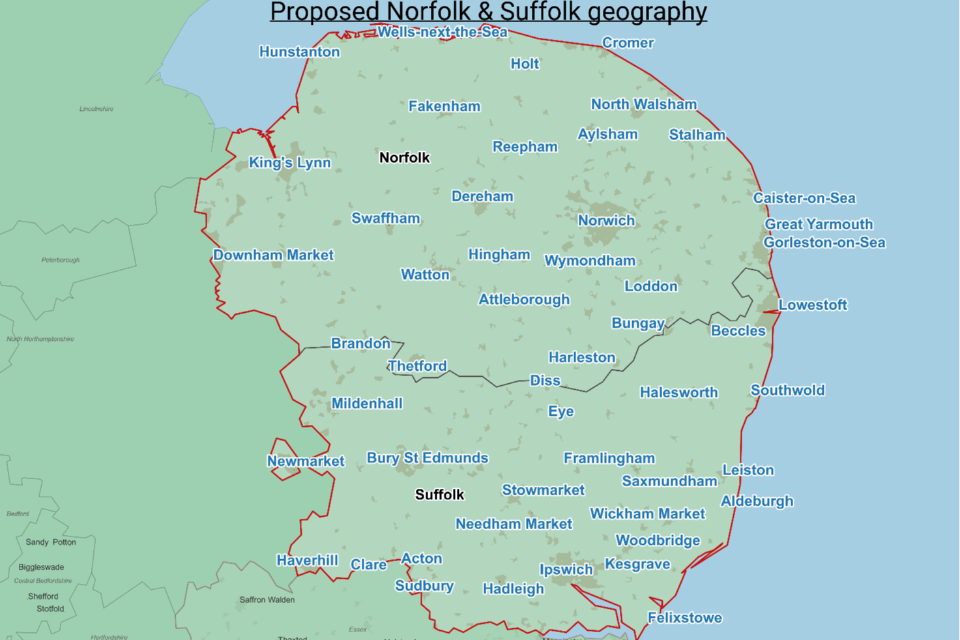
Cath explained that race equity is now a strategic priority for NSFT, which serves a largely rural and non-ethnically diverse population where explicit racism is still present in communities and services. Under the leadership of their Chief Executive, the trust has set out a clear strategy built on improving health, care, culture, and value. To deliver this, NSFT has launched 12 large-scale change programmes, one of which previously focused broadly on inclusion but has now been reframed specifically around race equity. Importantly, this work is being split equally between workforce development and PCREF, so that both staff experiences and service-user outcomes are addressed.
She acknowledged that NSFT is still behind other trusts in terms of PCREF implementation. Their original PCREF plan, approved in spring, has already been recognised as inadequate and is now under review. Cath noted that this review will lead to a more outcomes-focused approach rather than process-driven work. A dedicated health equity and PCREF team is also being created as part of the trust’s corporate redesign, reflecting a recognition that they lacked capacity and expertise in this area. The revised plan is due to go through governance for approval in November.
Annie, speaking as a carer representative, highlighted how important it is to be “at the table rather than on the menu.” She acknowledged she can be seen as “aggressive” or “demanding,” but stressed that Cath had helped give her the confidence to challenge constructively at board level. Annie linked IRR advice about building relationships with senior managers to her own experience, saying that having a place at decision-making tables empowers carers to make sure the realities faced by ethnic communities are heard. She also reflected on her personal motivation: as the mother of a mixed-heritage son, she feels a responsibility to speak up on what ethnic families experience in practice.
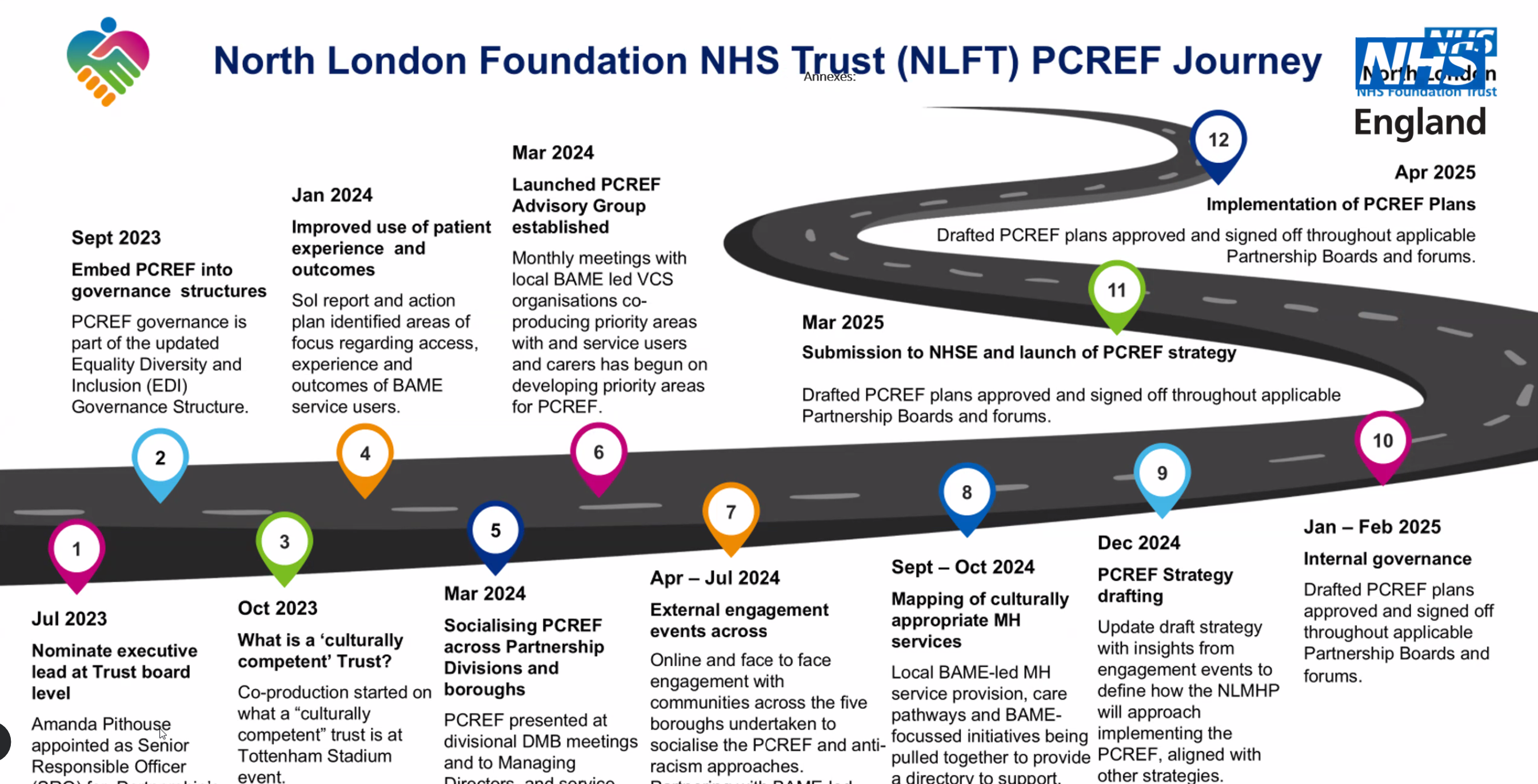
PCREF Implementation and Progress Update – north london nhs foundation trust
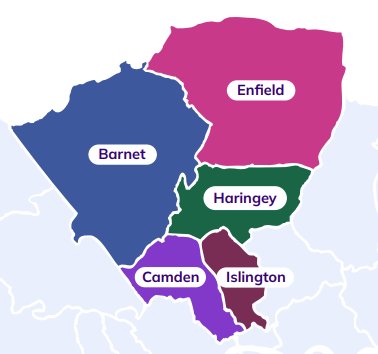
The next NHS trust to present to my forum was North London NHS FT, which covers 5 London boroughs due to the merger of 2 large NHS mental health trusts.
Samina Arfan, Associate Director for Equality, Diversity and Inclusion at North London Foundation Trust (NLFT), explained that her trust was created from the merger of Camden & Islington and Barnet, Enfield & Haringey trusts. Unlike some early PCREF pilot sites, NLFT only began its PCREF journey in late 2023. The first step was setting up governance structures, securing an executive lead at board level, and creating an EDI programme board. Alongside her colleague, Jordel Akinola, she led engagement events in local boroughs to ensure strong co-production with communities. These early steps gave the trust a foundation to begin shaping its PCREF plan
A major priority has been addressing inequalities in mental health detention and restraint practices. Samina shared data showing Black communities are disproportionately detained under section 2 of the Mental Health Act, while Asian people are underrepresented. Restrictive practice data revealed that Black men were more likely to experience prone restraint, which prompted a quality improvement project across wards. This included improving the accuracy of ethnicity recording, since too many patient records lacked this information. Workforce diversity was highlighted as well—NLFT has a diverse staff, but the data still shows ethnic disparities in care outcomes, making it vital to view restraint and detention through a racism lens
She also described broader initiatives: building a PCREF dashboard to apply a race lens to existing NHS targets; launching co-production projects with children and young people, including multi-faith engagement in mosques, synagogues, and youth boards; and expanding the role of peer workers, nearly half of whom are from ethnic minority backgrounds. However, she admitted feedback systems like the Friends and Family Test are not capturing enough voices from diverse communities, so peer workers and advisory groups are essential in bridging that gap
Samina emphasised the role of the PCREF advisory group, which brings together service users, carers, voluntary sector organisations, and staff to scrutinise trust data and guide projects. She stressed transparency by involving the people actually delivering the work, holding them accountable, and ensuring that community voices influence outcomes. She also acknowledged challenges: national NHS changes and funding cuts risk diluting PCREF work, so she is advocating for a North London PCREF collaborative to align efforts across local mental health providers and share learning. Finally, she noted that patients and carers with long-term involvement must be given a stronger seat at the table, as their lived experience is crucial for shaping change.
After Samina’s presentation, a carer spoke about her frustration at struggling to access clear information on the trust’s anti-racist strategy. She explained that despite being part of the Haringey Service User and Carer Forum for many years and emailing various staff, she had received little response. The carer felt this was a missed opportunity, as service-user and carer forums could be powerful spaces for embedding anti-racist approaches. She emphasised that these groups already hear many concerns from families and communities, so they should be central to shaping change, especially given the NHS’s recent shift towards more community-based mental health services
Samina acknowledged th carer’s concerns and agreed that stronger links to service-user and carer forums across the five boroughs were vital. She said the challenge since her colleague left was not a lack of will but a drop in capacity, as her EDI team had been reduced in size. To address this, she planned to personally attend service-user forums (even if only once a quarter) to ensure communication wasn’t lost and updates reached carers directly. She stressed it was about embedding the work into the system, not leaving it solely to her or the EDI team. Samina invited the carer to connect with her offline, exchange emails, and join the PCREF advisory group, ensuring carers and service users from each borough had representation. She also underlined that community connections must feed upwards into trust decision-making, rather than being siloed
Advancing Carer Equality Initiatives – Triangle of Care & PCREF, Carers UK Black History month
I closed the session by giving a short update on my wider work around carers and PCREF. I explained that I chair the Triangular Care Community Group, which meets every two months and focuses strongly on carers’ mental health. This group is working on how Triangular Care Standards can be linked with PCREF implementation, making sure that carers, especially from minority backgrounds are properly included in the conversation. I also mentioned that Carers Trust is circulating a draft for feedback, and encouraged participants to get involved and share their views within the next week
I also highlighted my role as an volunteer & ambassador with Carers UK, where I help on raising the profile of unpaid carers. I flagged upcoming events, including a Black History Month event on 13th October, organised by Carers UK, where I will be speaking at.
If you are a carer or minority carer, please book for the online share & learn session below.
I encouraged attendees to use such opportunities to ask “the magic questions” about how influencial organisations will keep its focus and inclusion on minority carers
I then reminded everyone that collaboration across groups whether through PCREF forums, Carers Trust, or Carers UK, that it is vital to strengthening the voice of carers and ensuring equality.
I confirmed that the next forum meeting would be on 31st October and encouraged participants to spread the word so more carers, minority or otherwise, could join in the conversation.
Summary of the Ethnic Carers Forum Meeting – September
Multi-Angle Analysis
The meeting illustrated the deep-seated complexities of race and healthcare, revealing how institutional frameworks and practices intersect to affect service delivery and patient care. By advocating for the inclusion of diverse perspectives and leveraging collected data, participants aim to challenge systemic barriers that contribute to inequitable health outcomes. The call for community engagement underlined the need for actionable collaborations that transcend traditional healthcare models.
Technical Terminology
PCREF (Patient Carer Race Equality Framework): A strategic framework aimed at addressing health disparities experienced by marginalized racial and ethnic groups.
Race Science: Historical studies that claimed race was a biological determinant influencing health outcomes, which is now widely discredited.
Weathering: A term that describes the cumulative impact of social, economic, and environmental stressors on health outcomes over time.
Key Insights
The forum highlighted that systemic racism impacts health behaviors and access to resources, necessitating a reevaluation of how healthcare frameworks can better address the roots of health disparities.
There remains a critical gap in understanding the complexity of health outcomes related to racial and ethnic backgrounds, underscoring the need for comprehensive retraining of health professionals regarding these issues.
Actionable strategies for engagement with marginalized communities must be prioritized, as this will enhance the contextual understanding of healthcare needs.
Collaboration between organizations, local communities, and health professionals is essential for effective reform in healthcare delivery systems.
Continuous dialogue and reflective practice can lead to transformative outcomes within healthcare services.
FAQ
1. Why is the discussion surrounding race so critical in healthcare contexts? It is essential to address the impact that systemic racism has on health outcomes, access to care, and the overall well-being of marginalized communities. Understanding this context helps healthcare systems provide more equitable and effective care.
2. What is the significance of the Patient Carers Race Equality Framework (PCREF)? The PCREF serves as a guiding structure to ensure that care systems consider the specific needs of ethnic minorities, aiming to reduce health disparities and improve outcomes through focused strategies and policy implementations.
3. How can community engagement improve healthcare services? Engaging with communities allows healthcare providers to gain invaluable insights into the unique challenges they face, leading to tailored interventions that address these barriers effectively.
4. What steps can healthcare professionals take to address institutional racism? Healthcare professionals should actively engage in ongoing training regarding cultural competency, advocate for equitable policies, and ensure that their practices do not perpetuate discrimination.
By Matthew McKenzie – Carer poet and Carer activist
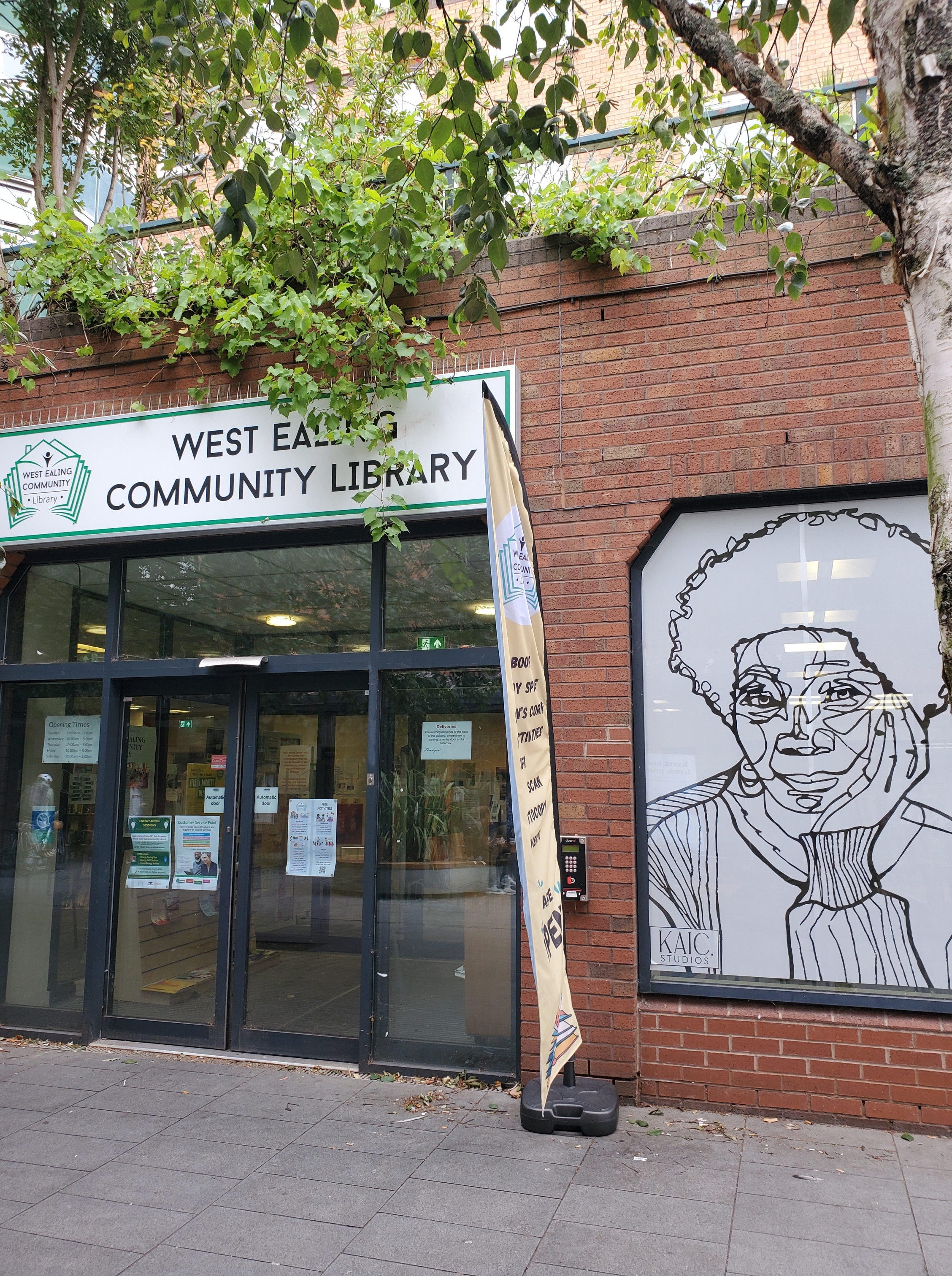
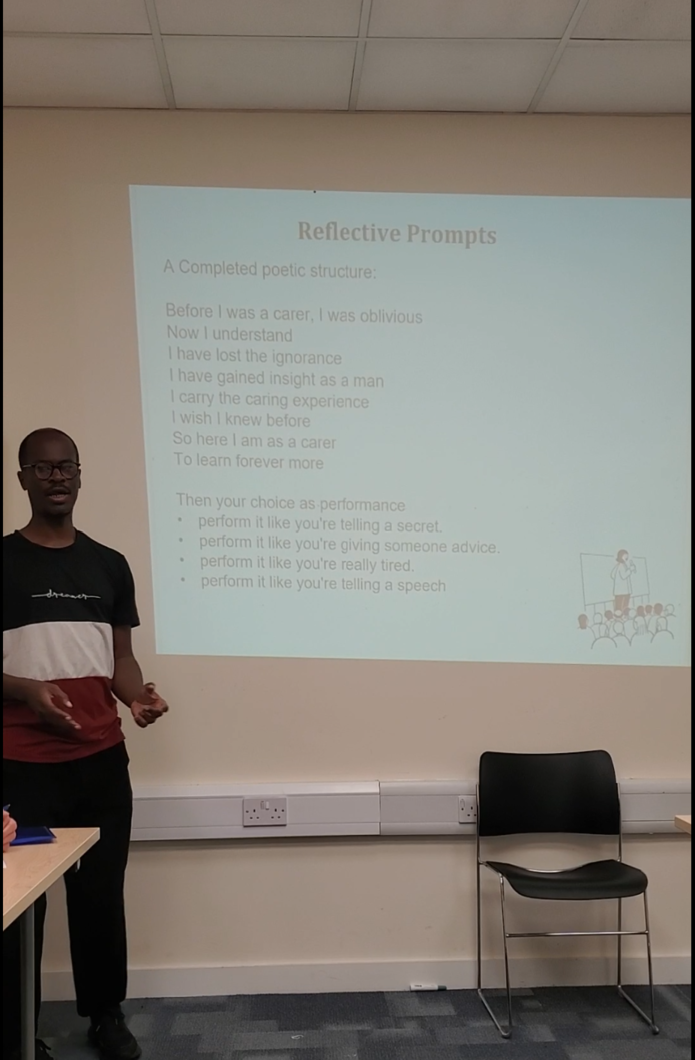
On the 18th of September, West Ealing Library once again became a hub of creativity, reflection, and connection as carers gathered for our second poetry workshop. Guided by carer activist and writer Matthew McKenzie, the session offered not just writing prompts, but a safe and supportive space to explore the healing power of words.
Poetry as Expression and Healing
The morning began with Matthew sharing his personal journey from caring for his mother living with schizophrenia, to writing books on mental health and carer experiences, and now using poetry as a tool for both advocacy and self-expression.
For many carers, life can feel isolating, exhausting, and invisible to wider society. Poetry offered participants a way to give voice to those emotions. As I reminded carers, “Poetry gives shape to what’s hard to say” — even if it’s just a few lines scribbled on paper, those words can carry truth, comfort, and even influence change.
The Urgent Need for Digital Skills Among Unpaid Carers
Unpaid carers who provide support to family members, friends, or neighbors with long-term health conditions are the backbone of many communities. Their work is often invisible, yet it is essential for the well-being of countless individuals. As healthcare systems rapidly digitize, the landscape of caregiving is undergoing a profound transformation. Unpaid carers now face the challenge of adapting to new technologies, digital platforms, and online resources that are becoming integral to the delivery of care.
This blog explores why technical and digital skills are no longer just optional for unpaid carers. The blog is also a transcript of matthew’s video below.
Drawing on insights from matthew’s experience as an unpaid carer & IT professional and advocate for carers, we delve into the practical reasons behind this shift, the opportunities and challenges it presents, and the future trends that will shape caregiving in the years to come.
The Changing Face of Caregiving
Digitization in Healthcare
Healthcare is moving online at an unprecedented pace. Electronic health records, telehealth platforms, wearable health devices, and digital prescriptions are becoming the norm. The reasons are clear: digitization streamlines processes, reduces costs, and enables real-time access to critical health data. For unpaid carers, this means that many aspects of their role now require interaction with digital tools.
The Role of Carer Centers
Local carer centers have traditionally been the first point of contact for those seeking support. As these centers will play a crucial role in helping carers acquire the skills needed to navigate the new landscape. Online training, virtual support groups, and digital resource libraries are just some of the ways carer centers are evolving.
Overcoming Barriers to Digital Inclusion
Challenges Faced by Carers
Not all carers are comfortable with digital environments. Some may lack the means to access technology, while others face disabilities that make using digital platforms difficult. For example, visual impairments can pose significant challenges. It’s important for carer centers and support organizations to recognize these barriers and provide alternative solutions where possible.
The NHS 10-Year Plan
Digitization is at the heart of the NHS’s long-term strategy. Unfortunately, unpaid Carers who fail to meet the demand for digital skills may find themselves excluded from essential services and support. Embracing technology is not just about keeping up, it’s about empowering carers to meet the needs of those they support with confidence and efficiency.
Conclusion
The digitization of healthcare is transforming the role of unpaid carers. Technical and digital skills are now essential for accessing resources, coordinating care, and advocating for loved ones. While the transition may be challenging, it offers opportunities for greater efficiency, independence, and empowerment.
If you are an unpaid carer, now is the time to invest in your digital skills. Seek out training, connect with support networks, and take advantage of the tools available. Your role is vital, and with technology on your side, you can continue to make a difference in the lives of those you care for.
By Matthew McKenzie – Carers UK volunteer & Ambassador
As a poet and carer of lived experienced, I always try and listen to other poets when I get the chance.
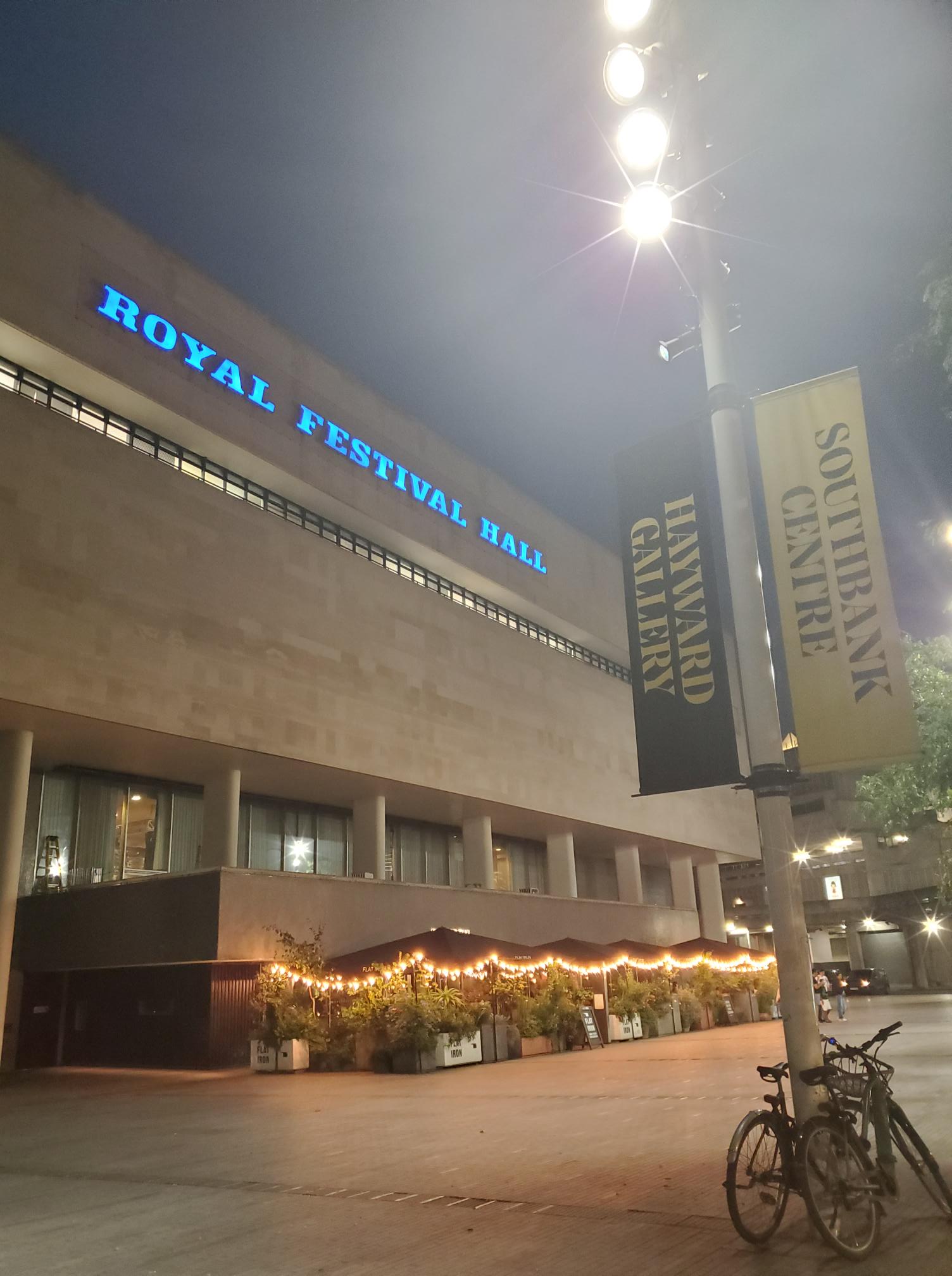
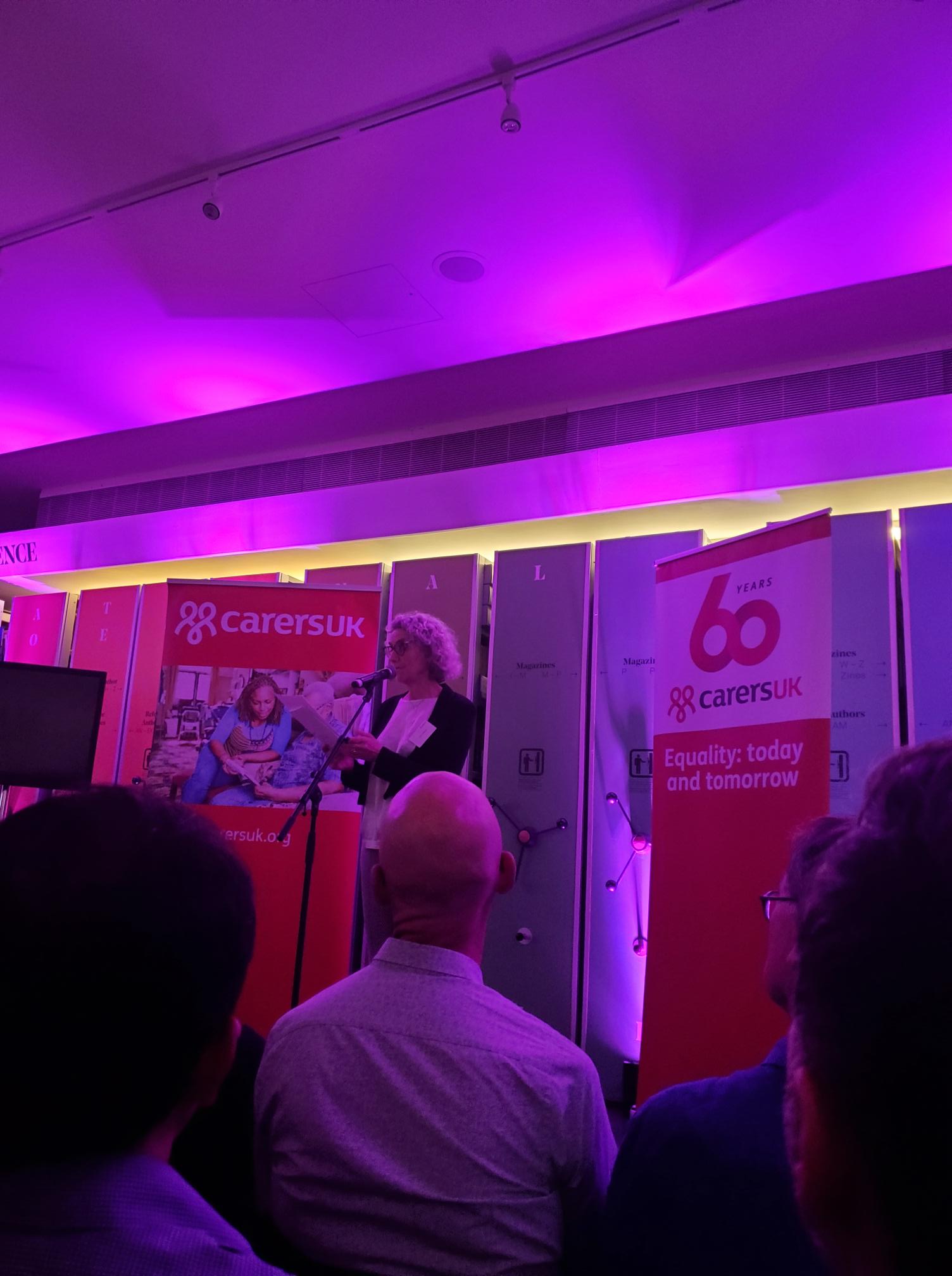
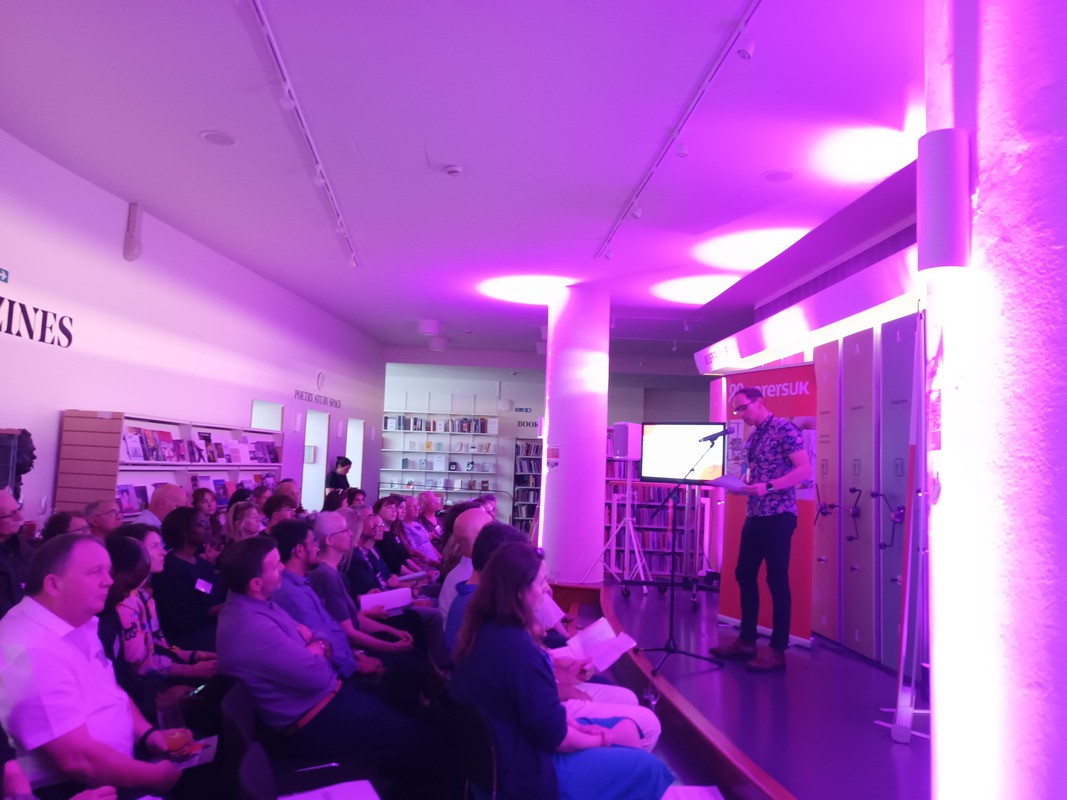
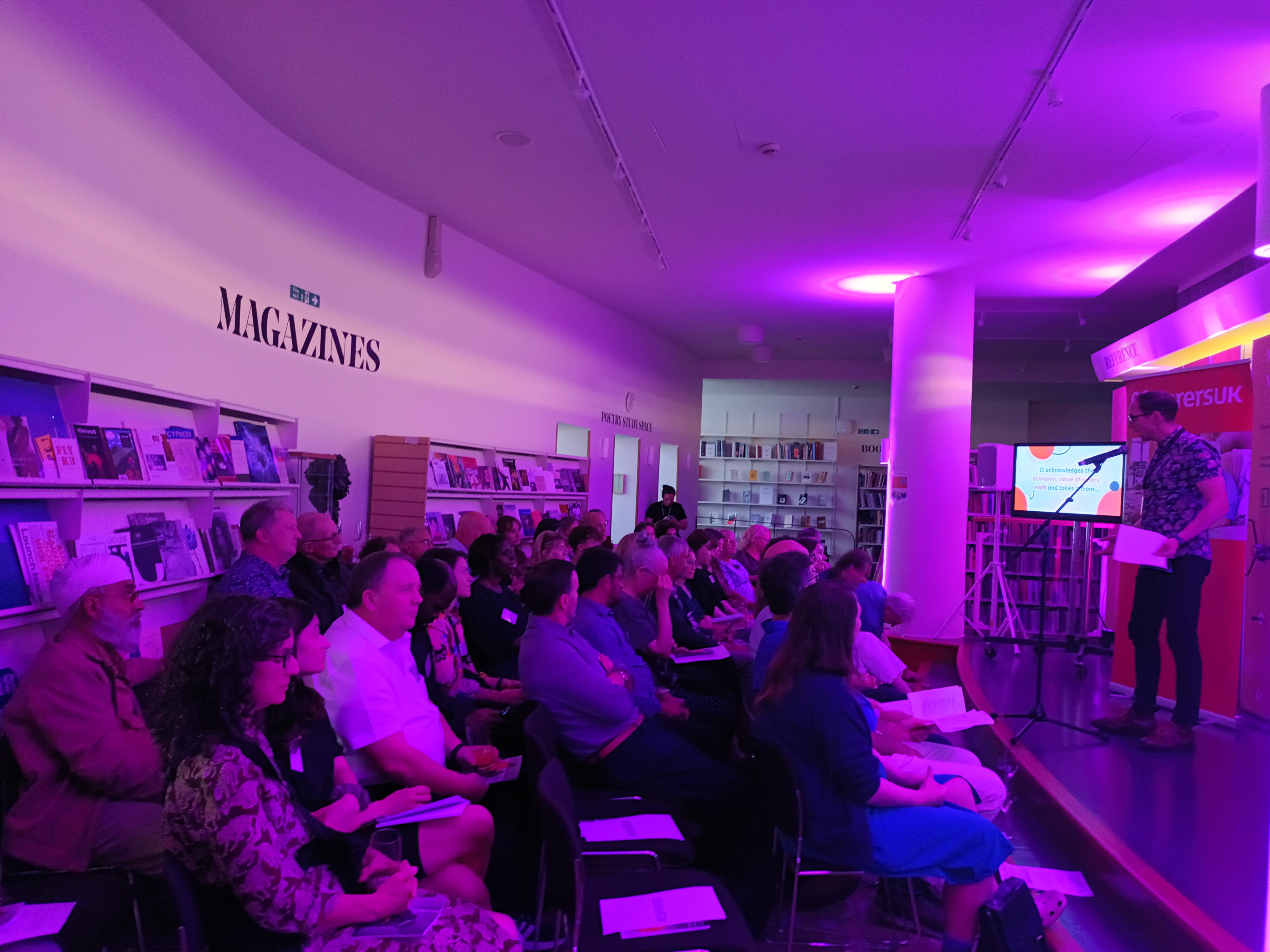
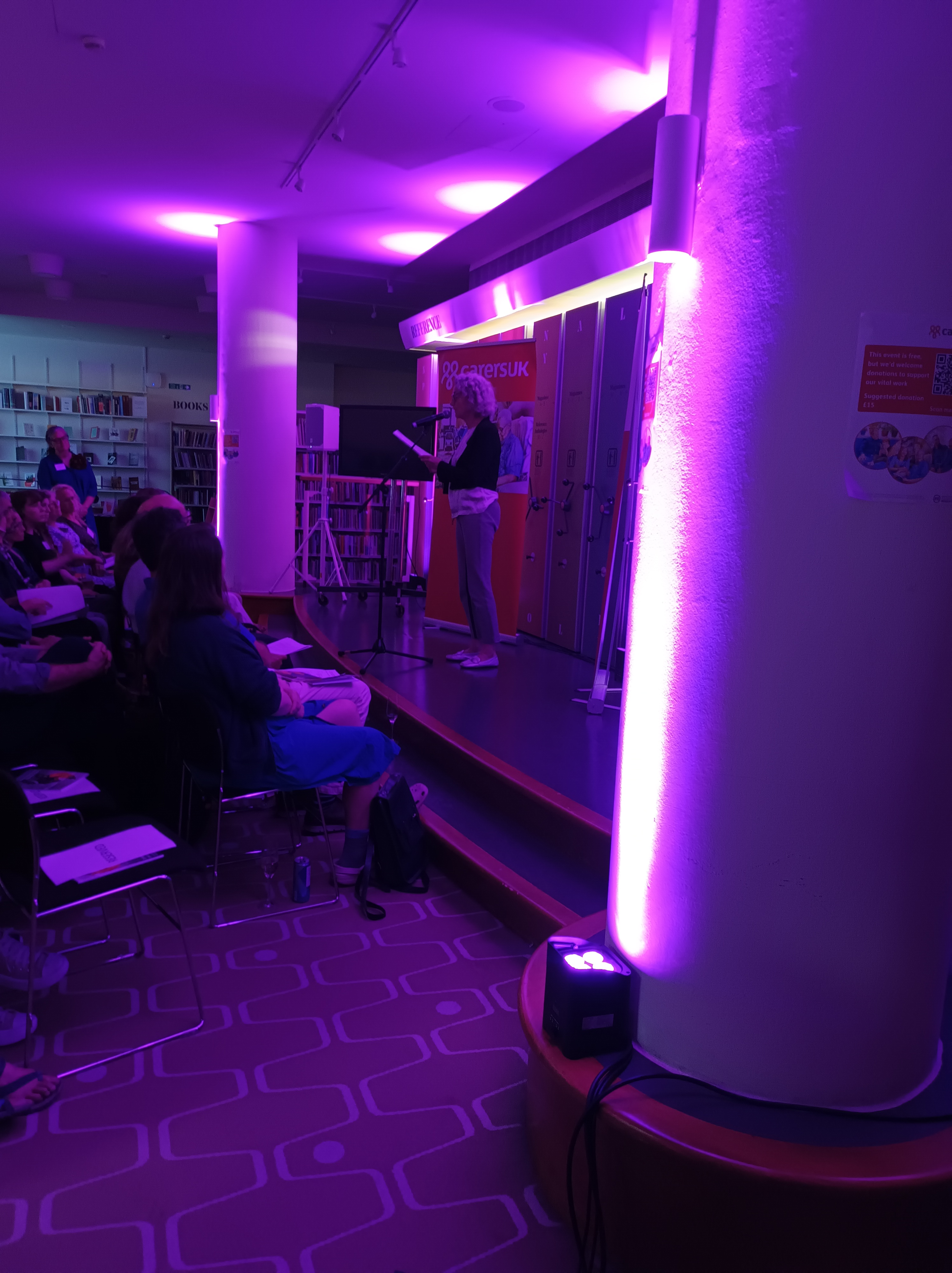
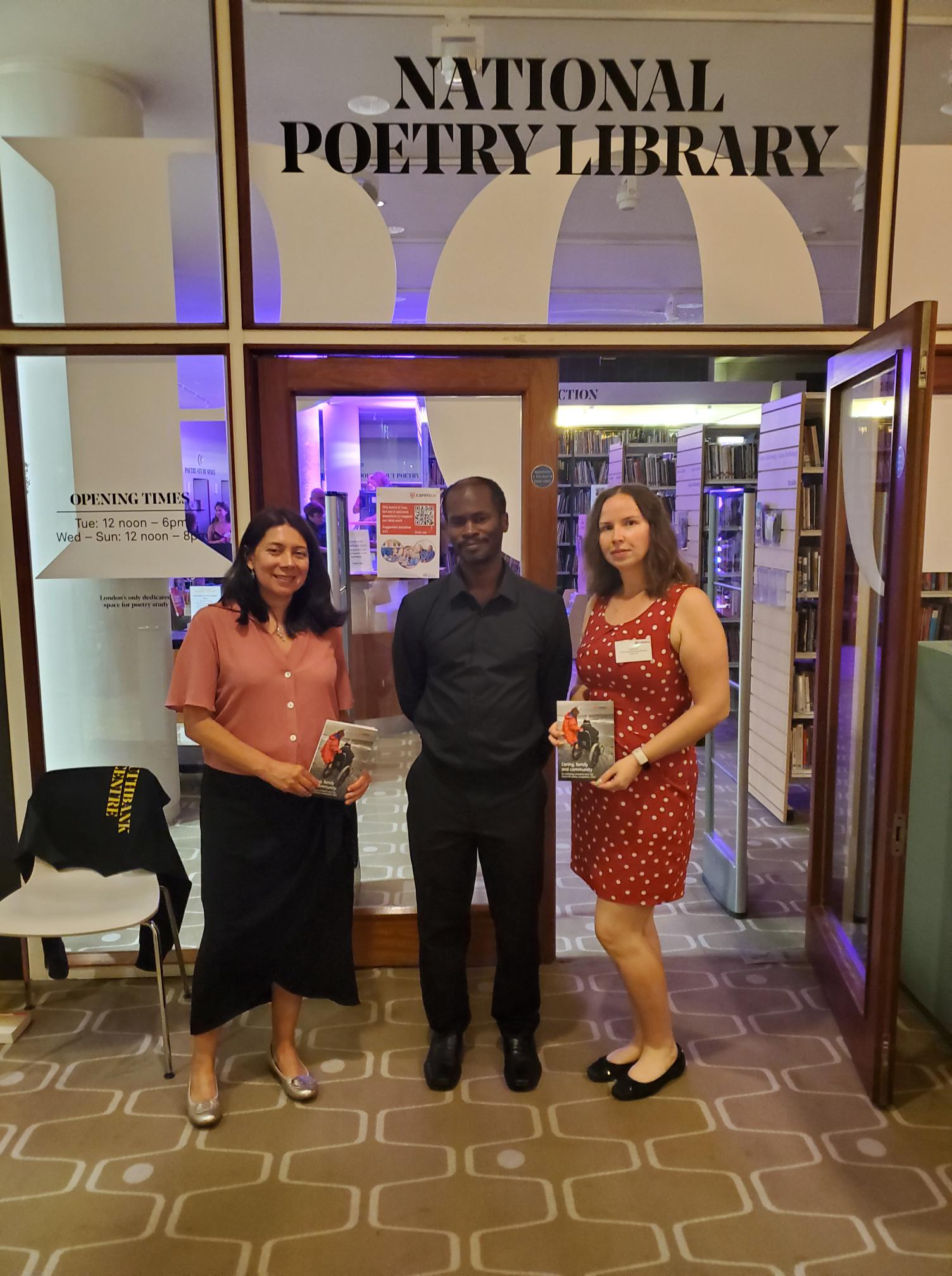
So on Tuesday 19 August 2025, I had the pleasure of attending the Carers UK Poetry Competition 2025 Celebration at the National Poetry Library, located on Level 5 of the Royal Festival Hall at London’s Southbank Centre.
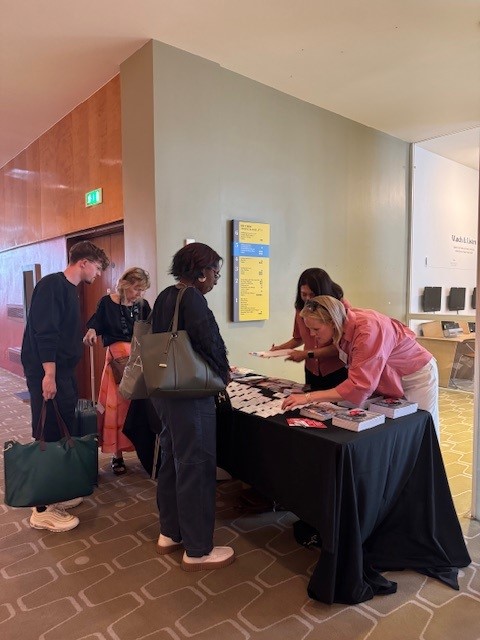
Carers UK staff were welcoming guests, carers and poets who contributed to the Carers UK Poetry anthology to the event.
The event, hosted by Carers UK and led by Michael Shann, Head of Carer Support, which marked a very special milestone: the organisation’s 60th anniversary. It was an evening of reflection, creativity, and celebration, bringing together carers, poets, supporters, and friends to honour the voices of those who care for others.
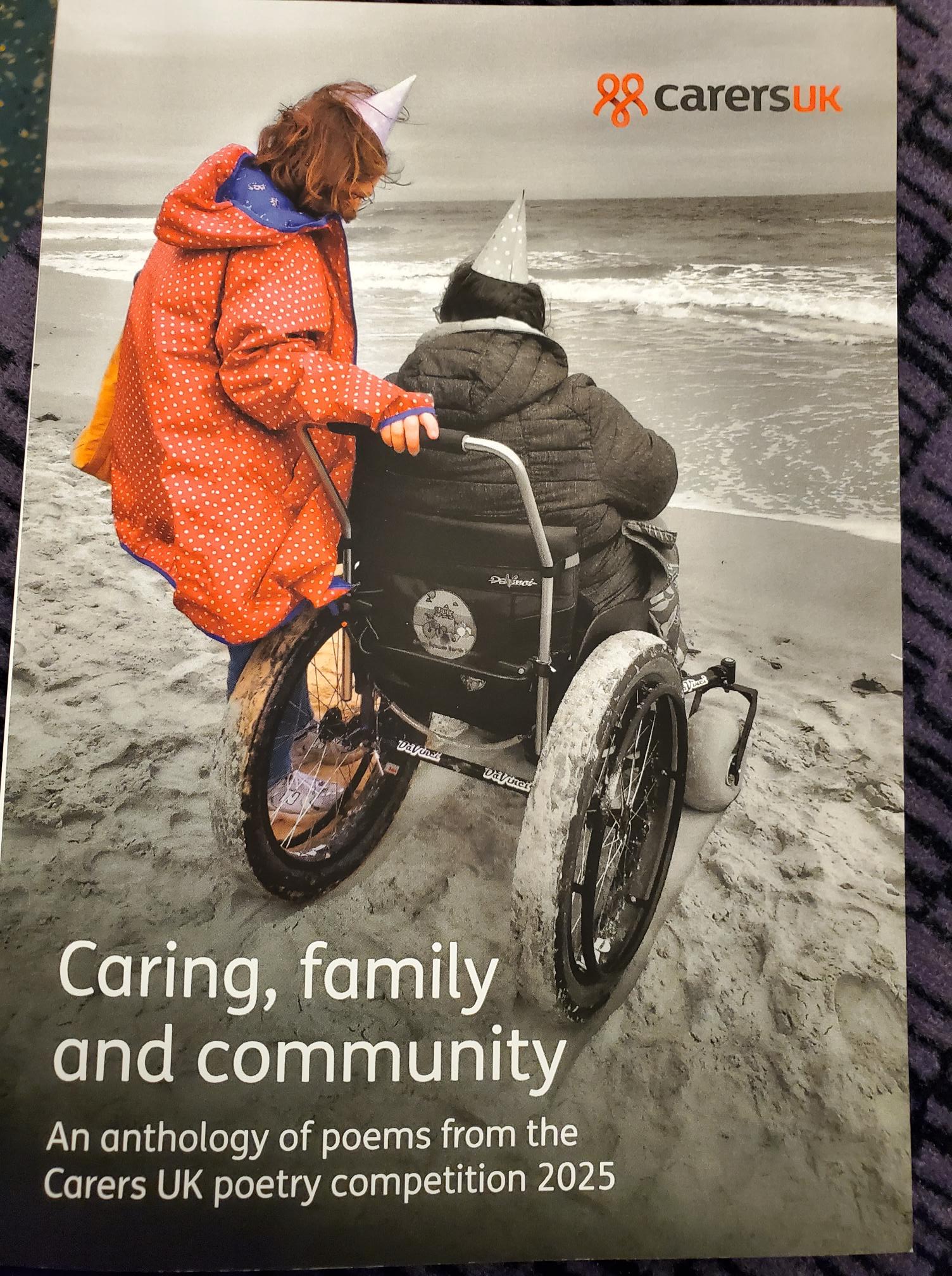
For the year 2025, the poetry competition was themed “Caring, Family and Community”, with more than 270 entries submitted from across the country. The anthology launched on the night, Caring, Family and Community, where beautiful collection of poems capturing the emotions, challenges, and deep humanity at the heart of caring.
The programme included readings of winning, highly commended, and shortlisted poems. The anthology also features a preface by Helen Walker, Chief Executive of Carers UK, and a foreword by Cheryl Moskowitz, Lead Competition Judge 2025.
The atmosphere at the National Poetry Library was warm and I was welcomed by many of the Carers UK team including Carers Scotland. Guests and poets enjoyed celebratory drinks and canapés while engaging in conversations about poetry, caring, and the power of creative expression.
The poetry book itself is thoughtfully arranged, beginning with featured poems before moving on to the winning, highly commended, and shortlisted entries, and ending with notes on the contributors. The poets performed their poems, each highlighting a different perspective on caring, family, and community, weaving together diverse voices into a powerful collective story.
One poem that particularly stood out to me was “Heart & Soul” by Alison Hull.
Heart and Soul by Alison Hull
Even though it’s new to me, I’m going to write a poem. I don’t know what to write, Or where it’s even going. But what I’m very clear of, Is you’ve taught me like no other. You make me very proud, To be your carer and your mother. We laugh at times and cry so much, And we’ve learnt a thing or two. I’ve met your needs, calmed your fears, Taken care of you. Little by little we get things done, Although it isn’t always easy. We take small steps, sometimes none, Resting up, If needs be. Your bravery inspires me, Your love for animals too. I try to understand, how life really is for you. The caring role’s a huge one, It can be isolating too. It helps to connect with others, Who know what we’re going through. So this is the end of my poem, But not of my caring role. That journey will continue, With all of my heart and soul.
When Alison recited it that evening, I felt it was clear that she spoke from the heart. Her words captured the tenderness and strength of caring. I felt the poem was well crafted.
For me personally, as a Carers UK volunteer and poet, it was inspiring to see how words can bring people together and shine a light on the experiences of carers.
Being able to attend, listen, and celebrate alongside others who share a passion for both caring and poetry was a privilege, so I was very thankful to be invited.
The Southbank Centre, with its iconic Royal Festival Hall, provided the perfect backdrop a cultural hub alive with creativity and community spirit.
Events like this remind us not only of the importance of caring, but also of the importance of telling our stories. Poetry gives voice to what can sometimes be invisible, and Carers UK continues to ensure those voices are heard.
I’d like to thank Michael Shann and the Carers UK team for organising such a meaningful evening, and for their ongoing commitment to supporting carers across the UK.
Here’s the updated section with the official website link included:
Becoming a Member of Carers UK
If you are a carer yourself, one of the most valuable steps you can take is to become a member of Carers UK. Membership is free and open to anyone caring for a family member, friend, or neighbour. By joining, you’ll gain access to:
A supportive community of carers who truly understand what you’re going through.
Regular updates, newsletters, and information on carers’ rights and support.
Invitations to events, workshops, and opportunities to share your story.
Resources and guidance to help you manage the challenges of caring.
Carers UK is not just an organisation as it’s a lifeline for many. By becoming a member, you can feel more connected, supported, and empowered in your caring role.
You can sign up easily via the Carers UK website: www.carersuk.org


















 A Caring Mind