By Matthew McKenzie FRSA BEM, Chair, Triangle of Care Community Group
This week’s Triangle of Care Member Webinar, hosted by Carers Trust, which focused on a vital question: What makes for meaningful carer involvement?
We heard from across the Triangle of Care network, these being carers, professionals, and trust representatives coming together to share what genuine involvement looks like in practice.
I spoke about my own lived experience as a carer, supporting two non-verbal brothers with autism and my late mother with mental health challenges and how this journey has shaped my advocacy for stronger partnerships between carers and professionals.
Over the years, through the Triangle of Care, I’ve seen how much difference early and equal involvement can make.
The meeting focused on introductions and updates from various organizations supporting unpaid carers across London. Matthew McKenzie facilitated the session, introducing participants from different boroughs and organizations, including
North Central London Carer Support Project (covering Barnet, Haringey, Camden, Enfield, and Islington)
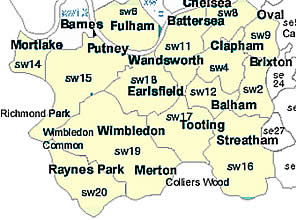
The PSE (supporting South East London local authorities: Bexley, Bromley, Lambeth, Lewisham, Greenwich, and Southwark)
Richmond Borough Mind
Richmond Carers Centre
Kingston Carers Network
St George’s, Epsom and St Helier Hospital Group
Sutton Carers Centre
Carers Hub Lambeth (supporting unpaid carers, with hospital carers leads at King’s College Hospital and Guy’s & St Thomas’ Hospital)
Lewisham carers services (Imargo service manager)
Apologies from
Bromley Wells Bexley Carers Support Greenwich Carers Ealing Carers Partnership Tower Hamlets Carers Centre
NHS England updates including Universal Care Plan Updates
A representative from NHS England highlighted good news about the Hospital Discharge Toolkit, which had been originally developed in London by Debbie Hustings. The toolkit has already been adopted across much of southwest London with strong results. Recently, all NHS regions were asked to contribute work on hospital discharge, focusing particularly on carers’ experiences. When this went up to the Executive Quality Board at the national level, the London toolkit received recognition. The recommendation that came back was that all regions should develop something similar they could adopt London’s version directly or tailor one for their own needs. The representative stressed that this kind of recognition is significant because it helps the toolkit be taken more seriously and provides momentum for further rollout
In July 2025, we held another meeting of the London Hospital Discharge Carers Forum, which brings together carer centres, NHS professionals, and lived experienced unpaid carers to explore how we can better support unpaid carers through the complex hospital discharge journey.
With key developments shared, questions raised, and future opportunities on the table, I’m sharing this blog to ensure everyone is informed.
A Focus on Hospital Discharge but With Carers at the Centre
The forum continues to highlight how vital carer centres are in delivering effective, compassionate discharge support. But alongside that recognition comes rising expectations: better digital access, stronger links with acute hospital teams, more formal involvement in care planning, and even new digital tools to manage carer identity and input.
Our role is growing and so is the need for collective visibility and coordinated action.
Key Themes from July’s Discussion
1. NHS England Hospital Discharge Toolkit & Care Contingency Plan As an involved carer, I delivered the NHS England update. The main message? The Care Contingency Plan (CCP) is becoming a key focus across the system. There are planning sessions due in September, and carer centres might be asked whether they can take on CCP delivery alongside existing carers assessments.
This triggered a crucial question: Will additional funding or contractual support be offered to carer centres taking on CCPs? because we can’t afford to quietly absorb additional workload without clarity on resources or expectations.
2. Digital Tools – NHS App & Carer Self-Identification With the growing digitisation of NHS services, there are plans to enable carers to self-identify via a digital route. The Universal Care Plan (UCP) is being built into the NHS app, but there’s confusion about whether a separate “carer app” is being developed too.
We’ve asked NHS England for clarification: Will carers be expected to use one NHS app to manage both contingency plans and carer registration, or will multiple systems be introduced? The answer will have implications for how we support carers with digital skills and accessibility.
3. The Bigger Picture – NHS 10-Year Plan and Local Adaptation We explored how the new 10-Year NHS Plan mentions carers primarily in the context of discharge, but offers little in terms of direct support or investment in carers themselves. Several carer centres raised concerns about being seen only as a means to improve discharge outcomes, rather than as partners in their own right.
That said, some centres are using the plan as an opportunity, working with local Integrated Care Boards (ICBs) to adapt and influence how the priorities are rolled out locally, including integration with neighbourhood health centres and walk-in clinics.
Peer Learning and Local Centre Updates
As always, our meeting included practical insights from carer centres embedded in local hospitals. Topics included:
Establishing hospital-based carer hubs and information desks.
Hosting monthly drop-ins for carers on specific wards (e.g. stroke and frailty).
Using ward rounds to identify and build relationships with staff willing to act as carer champions.
Overcoming challenges in gaining visibility, sustaining presence, or maintaining resource levels for in-hospital work.
Planning carers coffee mornings and pop-up stands to increase footfall and engagement.
For newer hospital-based carer workers, this space proved invaluable as a place to learn from colleagues, gather ideas, and avoid isolation.
Project Developments: What Centres Need to Know
Several borough-wide and London-wide initiatives are taking shape that could directly affect how carer centres operate in coming months:
A standard operating procedure for hospital discharge, currently being developed across South East London, is aiming to streamline how carers are engaged at discharge, with pilot sites starting this September.
In North Central London, work is underway on a web portal that makes it easier for hospital and emergency staff to refer carers into local support services including from the London Ambulance Service.
Carer Centres in several areas are starting or refreshing carer charters, carer passports, and surveys designed to codify carer involvement and measure experience across hospital pathways.
Carer support workers at one major South London hospital are re-establishing visibility post-staff transition. Efforts are underway to build new ward-level relationships and identify carer champions among staff. The centre is also exploring monthly carer drop-ins, asking the group for ideas on what works well and what doesn’t.
One East London carer centre has established a hospital-based hub on a specific ward floor, acting as a go-to space for carers needing support or information. They also run monthly drop-in sessions on elderly/frailty and stroke wards conditions where family involvement in discharge planning is often critical.
These projects are at different stages, but all point to one thing: carer centres are being asked to operate more visibly, more formally, and more digitally. It’s essential we shape this process and not just respond to it.
With NHS England’s CCP work moving fast and carer integration into digital systems ramping up, carer centres can no longer afford to remain on the sidelines.
We have a chance to be informed of policy changes early not after implementation.
Carer centres and hospitals can raise concerns about workload, training, and funding before it’s too late.
Newer or isolated workers benefit from collective knowledge-sharing and support.
This is not just another meeting, it’s one of the few cross-borough forums focused squarely on carer centres in the acute hospital context.
Looking Ahead: September Session
Our next meeting will be held usually the last week of September.
Let’s not let carers be an afterthought. Let’s make sure carer centres are seen, heard, and properly resourced.
Building Stronger Voices: A Powerful July Gathering of the National Ethnic Mental Health Carer Forum
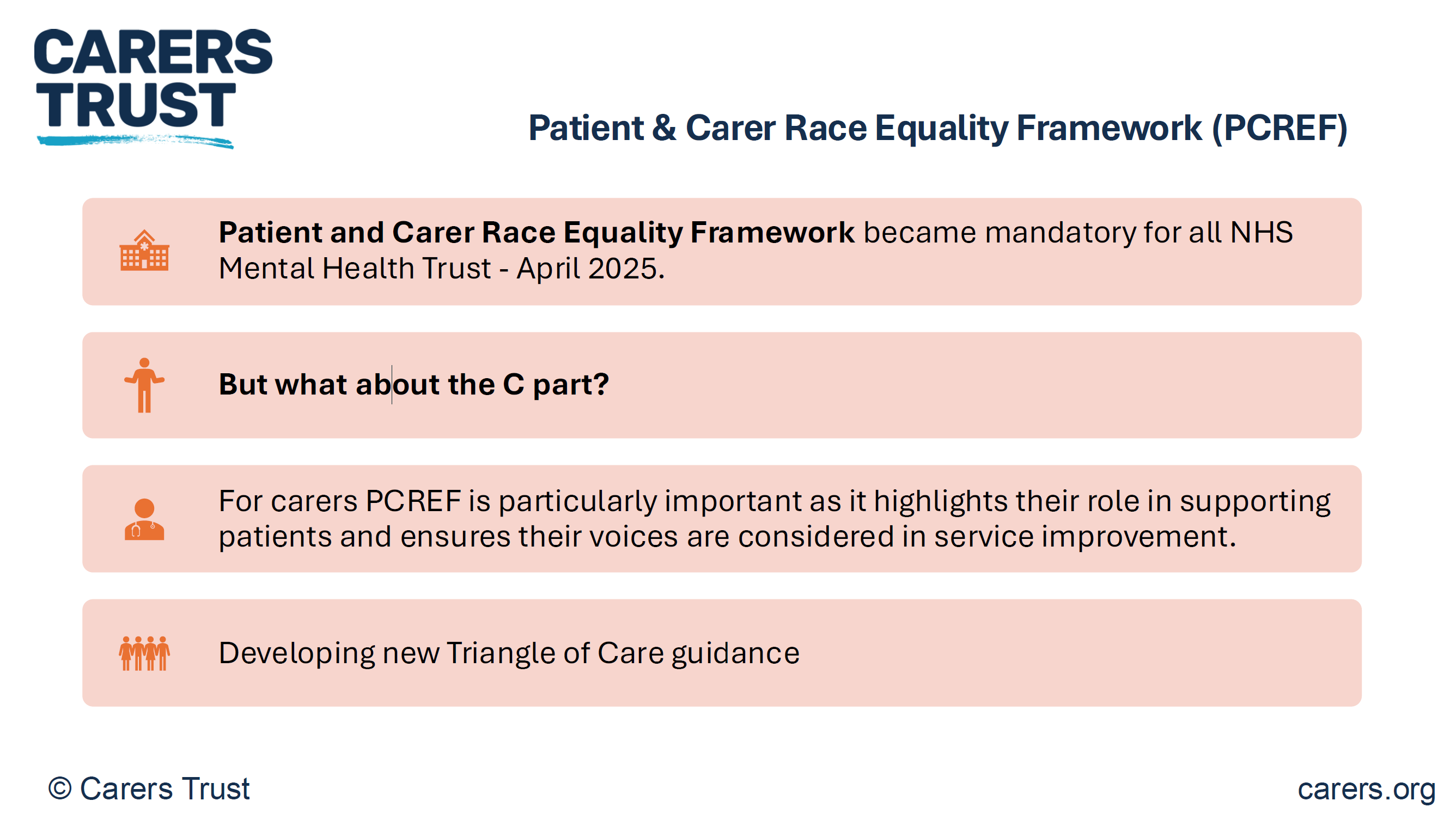
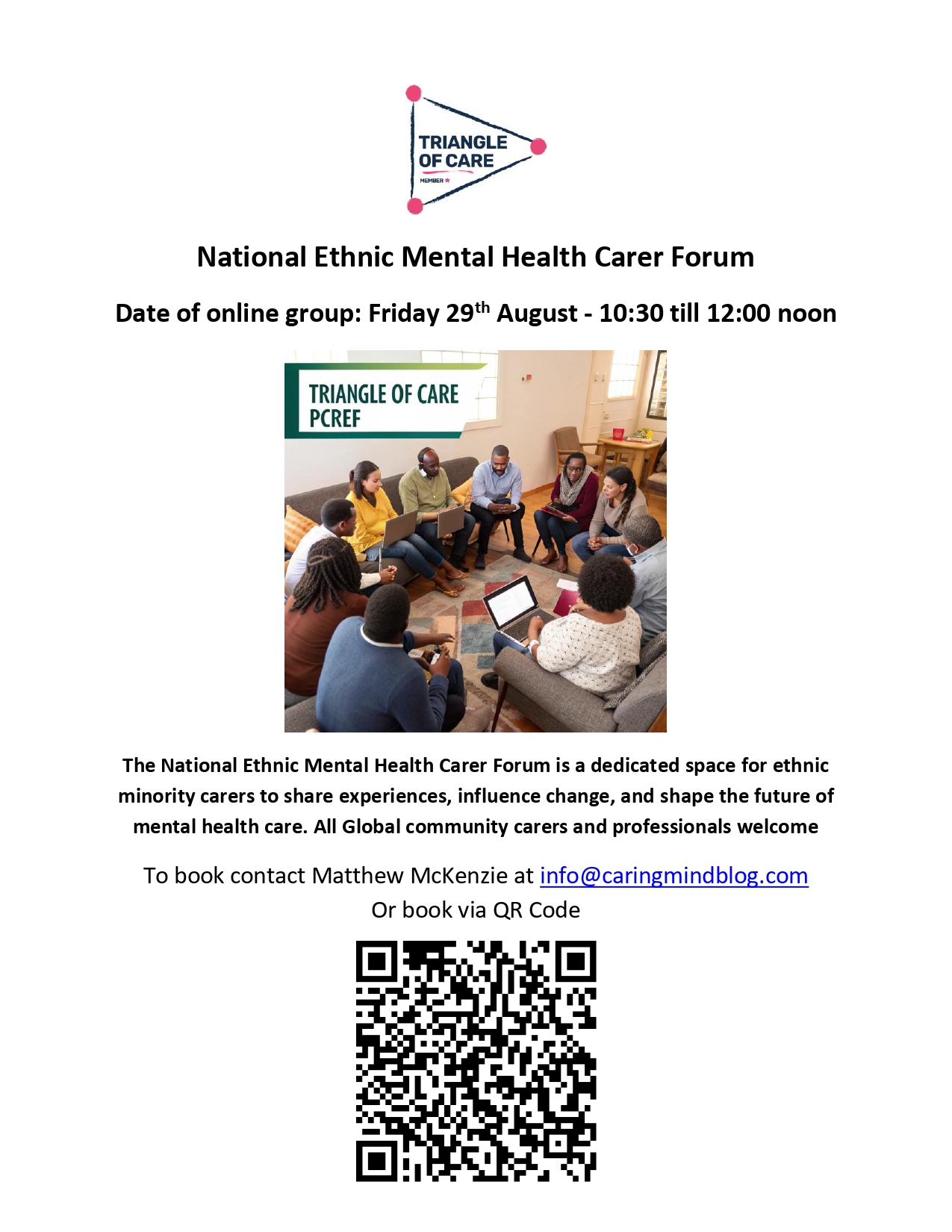
On Friday, July 25th, the National Ethnic Mental Health Carer Forum held another online session, continuing our work in empowering diverse carers and influencing meaningful change across mental health services. With participation from community champions, NHS professionals, experienced unpaid minority carers. The discussion was on the Triangle of Care (ToC) and PCREF (Patient Carer Race Equality Framework) stakeholders.
This forum exists to elevate the voices of ethnically diverse carers, bringing their lived experiences to the forefront of service transformation. Whether it’s holding systems to account or shaping policy guidance, this space remains vital in creating inclusive, anti-racist care across the UK.
Highlights from July’s Forum
🔵 Debbie Hustings’ Presentation on Triangle of Care & PCREF Integration Debbie, a long-standing Triangle of Care Programme Lead and carer herself, gave an in-depth presentation on reviewing the Triangle of Care through a PCREF (Patient and Carer Race Equality Framework) lens. Her talk provided an honest look at institutional challenges and offered solutions for embedding racial equity into carer support standards. A key takeaway was how crucial lived experience is in driving real policy change not just warm words. She emphasized the importance of re-examining existing standards through a racial equity lens, stating that “beyond warm words,” carers need frameworks that are operational, measurable, and locally adaptable.
🟣 Powerful Feedback from Carers Contributors shared difficult yet necessary truths. Carers spoke about the lack of involvement in care planning, systemic racism, the need for meaningful co-production (not “faux-production”), and experiences of isolation when navigating majority environments. One carer reflected, “In 28 years of caring for my son, I have never been involved in his care planning.”
Several carers shared their painful, sometimes shocking, experiences navigating mental health services, especially in areas with limited diversity. One participant remarked, “Even after decades of caring, I’ve never been included in a care plan.” Others spoke of staff who misunderstood or dismissed cultural nuances, the misuse of confidentiality rules to exclude carers, and the silencing of Black and Asian voices. Concerns were also raised about immigration-related fears, lack of access for non-English speakers, and a troubling rise in racism in predominantly white areas. These reflections painted a vivid picture of systemic inequality but also made clear the power of collective advocacywhen carers come together, change begins.
These testimonies highlighted how far we still need to go.
🟡 Inclusive Language & Representation There was a passionate discussion around terminology whether to use “global majority” or “ethnically and racially diverse.” While some feared backlash from certain communities, the group leaned toward inclusivity and accountability over appeasement. This sensitivity around language underlines the forum’s thoughtful and intersectional approach.
🟢 The Work Ahead Debbie shared the next steps in developing Standard 2 of the Triangle of Care through the PCREF lens: staff training. The goal? Mandatory, culturally safe, anti-racist care awareness education co-produced with carers from diverse backgrounds. By April 2026, the guidance will be finalized, field-tested, and launched nationally.
A Forum of Global Carers, Local Action
This month’s session proved again that our forum is more than discussion as it’s a driving force for equity. Participants from Southampton, Lewisham, Pennine, Norfolk, Leicester, South West London, Kent & Medway and beyond all shared insights into their local efforts, including cultural awareness training, community storytelling projects, and carer-led involvement initiatives.
One key message? Change is possible when carers are part of the conversation—not as guests, but as co-leaders.
Want to Get Involved?
The forum is open to carers and professionals across the UK and beyond. We meet monthly online, and everyone is welcome to join, contribute, or simply listen.
For bookings or questions, contact me at info@caringmindblog.com 📱 Or download and scan the QR code in the flyer above
Together, minority mental health carers can shape a mental health system that sees, hears, and supports all carers—ethnically, culturally, and fully.
Next National MH carer forum in August 29th 10:30 am Matthew McKenzie Founder – Caring Mind Blog Facilitator – National Ethnic Mental Health Carer Forum
Why Unpaid Carers Should Join Our Mental Health Carers Forum and Why Oxleas & Our Local Authorities Should Listen
By Matthew McKenzie
Caring for a loved one with mental health needs is a journey full of challenges, isolation, and too often lack of support. That’s why we run a dedicated Mental Health Carers Forum with Greenwich Carers Centre that brings together unpaid carers from across Greenwich and sometimes other boroughs since Oxleas covers Bromley and Bexley.
In our most recent forum, carers opened up about what it’s really like to navigate services and support their loved ones. The message was clear: unpaid carers are doing more than ever often alone and we need to work together to make sure they are not left behind.
The Power of Peer Support
One carer said:
“I’m a sandwich carer — looking after my elderly parents and my daughter with complex needs. Groups like this are a lifeline. It’s a space to share, learn, and recharge.”
For many carers, peer support is one of the few places where they are truly heard. Another participant explained:
“It helps so much to hear from others going through similar things. It’s the only way I know what services are available and what’s changing.”
Challenges That Carers Face
Through the forum, we heard repeated concerns:
Lack of joined-up care between GPs and mental health services
Delays in care planning and assessments — or carers being excluded altogether
Confusing systems — carers are often left chasing up GPs or social workers themselves
Failure to take carers’ expertise seriously in assessments and planning
Emotional strain — many carers at breaking point, needing better respite and emotional support
One mother of three autistic children shared:
“I told them my son cannot tolerate bright light that’s why the curtains were drawn. But the assessor just complained about the curtains and parking. They didn’t listen to what my son really needs.”
Presentation: Advocating for a Loved One During and After Mental Health Crisis
Matthew McKenzie delivered a detailed presentation on how unpaid carers can effectively advocate for their loved ones, particularly around mental health services.
Key points included:
Carers are not just supporters, they are also advocates for their loved ones
Building relationships with key professionals (GP, care coordinator, psychiatrist, social worker) is crucial
Carers should keep records of symptoms, interventions and communications to support advocacy
During a crisis, carers should:
Stay calm
Be factual about symptoms and risks
Be assertive (but respectful) in requests for urgent action
Request risk assessments and ask for information to be recorded
Understand confidentiality rights and use carers’ rights under the Care Act
The importance of self-care for carers, advocacy can be exhausting, and carers must seek peer support and breaks
Carers should also use the complaints process and escalate concerns when services fail
A Call to Oxleas NHS and Local Authority
We know big changes are coming, NHS England reorganisations, funding pressures, staff reductions. But one thing won’t change: the system depends on unpaid carers.
That’s why we urge Oxleas NHS Trust and the local authorities to:
✅ Regularly engage with this forum to hear carers’ voices ✅ Ensure carers are meaningfully included in care plans and reviews ✅ Offer more training and support for staff on carer involvement ✅ Improve clarity on who carers can contact in a crisis ✅ Work with us to strengthen co-production, not just in theory, but in practice
As one member put it:
“If the services won’t be there in full anymore — then carers will have to do even more. But we can’t do it if we’re broken.”
Join Us
If you’re an unpaid carer supporting someone with mental health needs, whether you’re new to caring, or have years of experience, please come along.
You’ll find a space to share, learn advocacy skills, and connect with others who truly understand. We also run a peer WhatsApp group, ask if you’d like to join.
Together we are stronger and louder. The more carers attend, the harder it is for services to ignore us.
For more info or to attend the next forum: contact
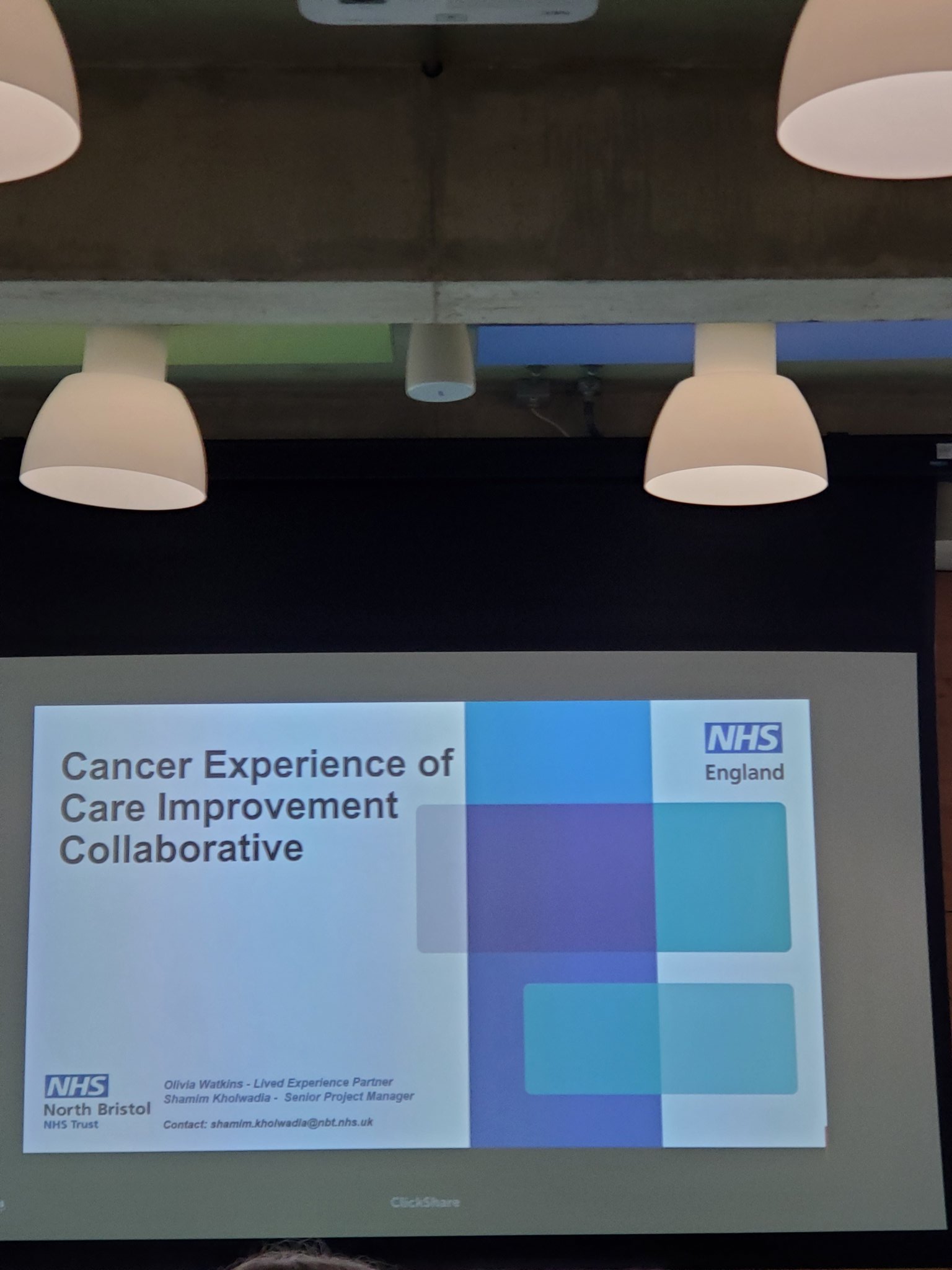
Welcome to another blog post from carer activist Matthew McKenzie. Did you know I am a stakeholder member of NHS England’s “Cancer Improvement Collaborative (CiC)” cohort 5? We had our Cancer Experience of Care Improvement Collaborative event, which was held over at Coin Street Neighbourhood Centre on the 5th of March.
The event was to recognise the work carried out by participants who were part of the cohort, these being the Cancer Alliances in England.
CiC Cohort 5 focus is on improving experience of cancer care for patients with a pre-existing condition (mental health, learning disability, autism and dementia) and their families and unpaid carers.
As a carer of lived experience, I was included in welcoming attendees and helping to promote the event. The recognition event was well attended and facilities were excellent. To start off with the event, we had a welcome Carl Shaw (Learning Disability & Autism Adviser NHS England) and Anna Rarity (Cancer Experience of Care Programme Manager of the National Cancer Programme) gave an Introduction to the Cancer Improvement Collaborative, which was easy to follow.
We were provided with a welcome pack which included the agenda for the day, which also included the commonly used Acronyms of the cancer programme.
We then had an introduction of the National Cancer Programme from Jodie Moffat who is the Deputy Director, Policy and Strategy of the NHS Cancer Programme.
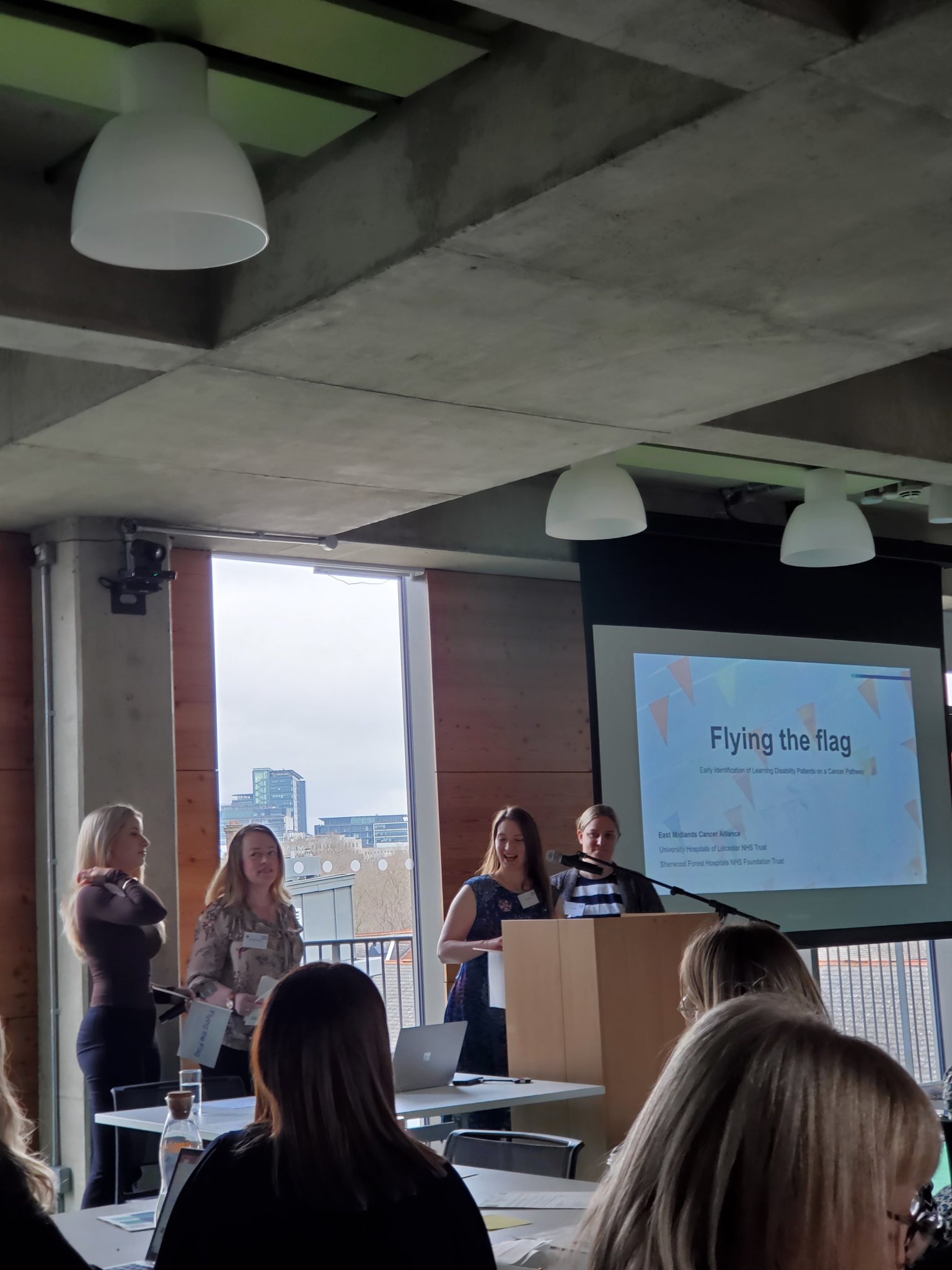
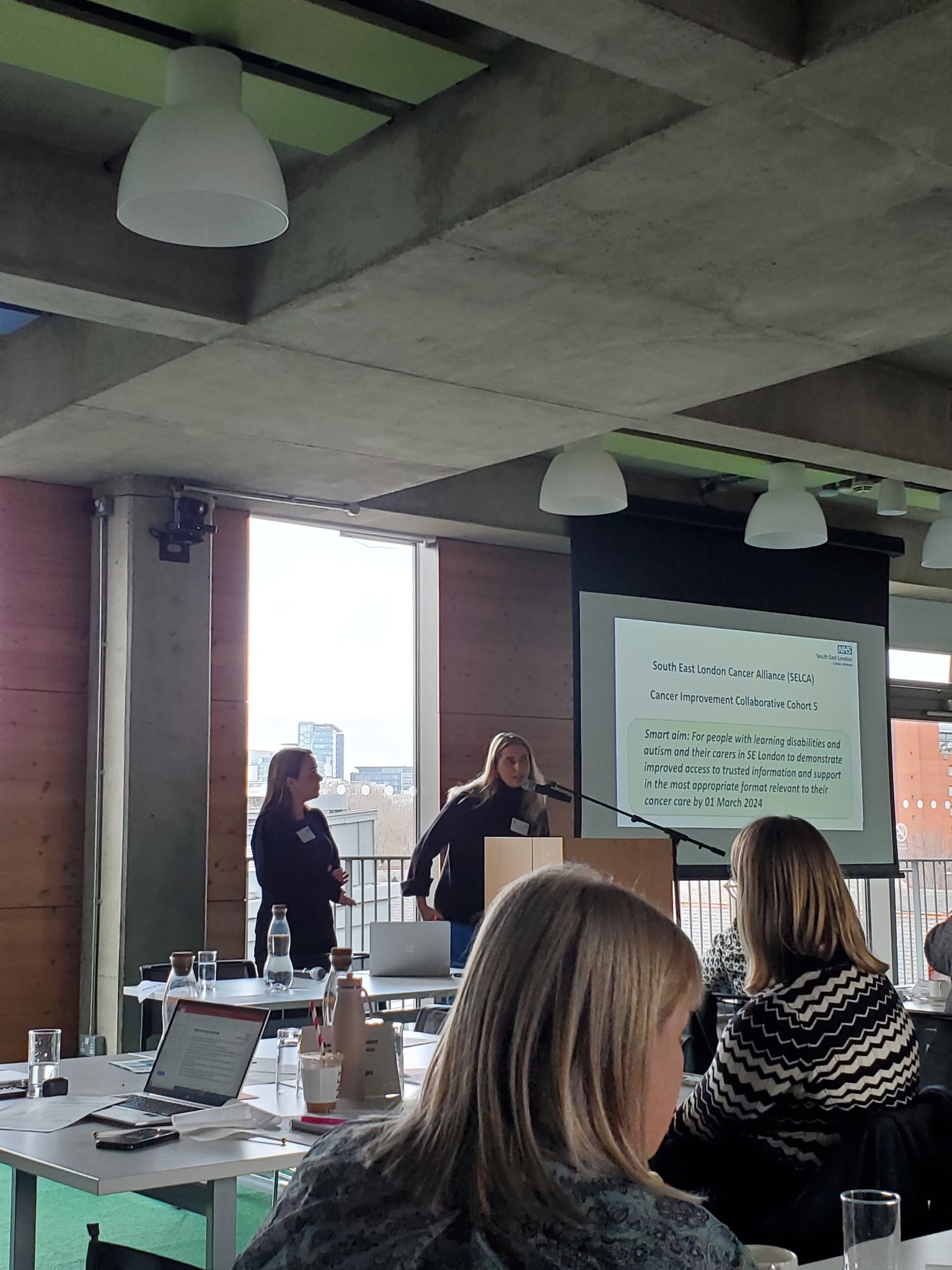
Throughout the day there were several Project team presentations from the following
South East London Cancer Alliance East Midlands Cancer Alliance Humber & North Yorkshire Cancer Alliance March Primary Care Network Birmingham & Solihull ICB Blackpool Teaching hospitals North East & North Cumbria Bristol, North Somerset & South Gloucestershire ICB Coventry & Warwickshire
Highlights of the event was watching the carer story to show NHS England’s commitment to carers. Since I focus on unpaid carers, it was good to hear the impact of caring and how the carer managed their role as a cancer caregiver.
Another highlight was on recognising the archievements of Claire Marshall (Experience of Care Lead, Experience & Partnerships Team, People & Communities at NHS England) as she is moving on to another role.
I noticed some of the presentations allowed those with a learning disability or mental health to co-present and be part of the recognition. As the focus should allow those who use the services to co-produce and co-present the successes.
There was also a chance to network with others at the event during Lunch. I noticed some attendees were given different coloured badges to show if they were ok to chat or socialise. We cannot assume everyone is in the best mood to talk as they could be going through painful and stigmatising experiences.
The lunch provided was very good, which included vegan food. I also caught up with a few attendees and representatives from cancer alliances.
There was also a special presentation from the Quality Improvement Team from Great Ormond Street Hospital – Caitlin McGovern and Nuwanthi Yapa Mahathanthila. They presented on how Quality improvement proceeded at the hospital
The last update was from Dr Neil Churchill OBE who is the director for people and communities at NHS England. Neil spoke about the importance of the Cancer Improvement programme, raising awareness and including people’s experiences.
All in all, I found the CiC Recognition event an important way to update those involved in cancer improvement. It is important we include those who go though lived experience of cancer, but especially include those who take that extra step to use their experience to improve cancer care. That being both patient and those providing care.
I would also like to say “Well done” to Marsh Primary Care Network – Kent and Medway on winning the Great Idea Award for their project “Improving Cancer Awareness for Care Home Staff”
Welcome to a quick blog from carer matthew mckenzie. Just last night I went to the excellent (Health Service Journal) HSJ Awards 2021.
Taken from the HSJ website – The 41st HSJ Awards culminated in a ceremony shining a light on healthcare excellence at Evolution London. From senior leaders to front-line staff, all finalists have been a source of life-changing and much needed work sharing best practice, improving patient outcomes, and being innovators of better service.
As we all know due to the pandemic and a few other things, the NHS is under immense pressure and whatever pressure the NHS and social care suffers from, it does not take long before unpaid carers take on that added strain. Many patients and unpaid carer’s are often forgetten and although awards are necessary, it is so important to award the work done to identify, support and keep track of the many millions of unpaid carers across the country.
The entries for 2021 were very impressive and numerous as many healthcare systems took up the challenge. For those who managed to get their projects to be judged, I can say there are all winners, but unfortunately there can only be one HSJ winner.
As one of the judges for the entries I felt I learned a lot on the system led carer category. I found out how dedicated the healthcare professionals were in pairing up with stakeholders and those who support unpaid carers.
The judging process was led by Jennifer Kenward who is the senior NHS England lead for experience of care, which is a much needed role for increasing the identity of carers all around the country. You can read her blog in the link below.
I was a bit late arriving to the event due to fighting with my bow tie, but the venue was easy to get to from pimico underground station. I was worried about the covid situation of such a large ceremony, but the way the event was run, everything was strictly monitored.
As a judge we were placed on the front tables to get an excellent view of the awards hosted by the brilliant Sue Perkins who is a great British icon and is passionate about the NHS. The food was excellent and HSJ staff looked after us very well.
I managed to greet friends and partners from Carers UK, Carers Trust and NHS England as well as fellow judges. Obviously I gave them a signed copy of my book (I never miss a trick).
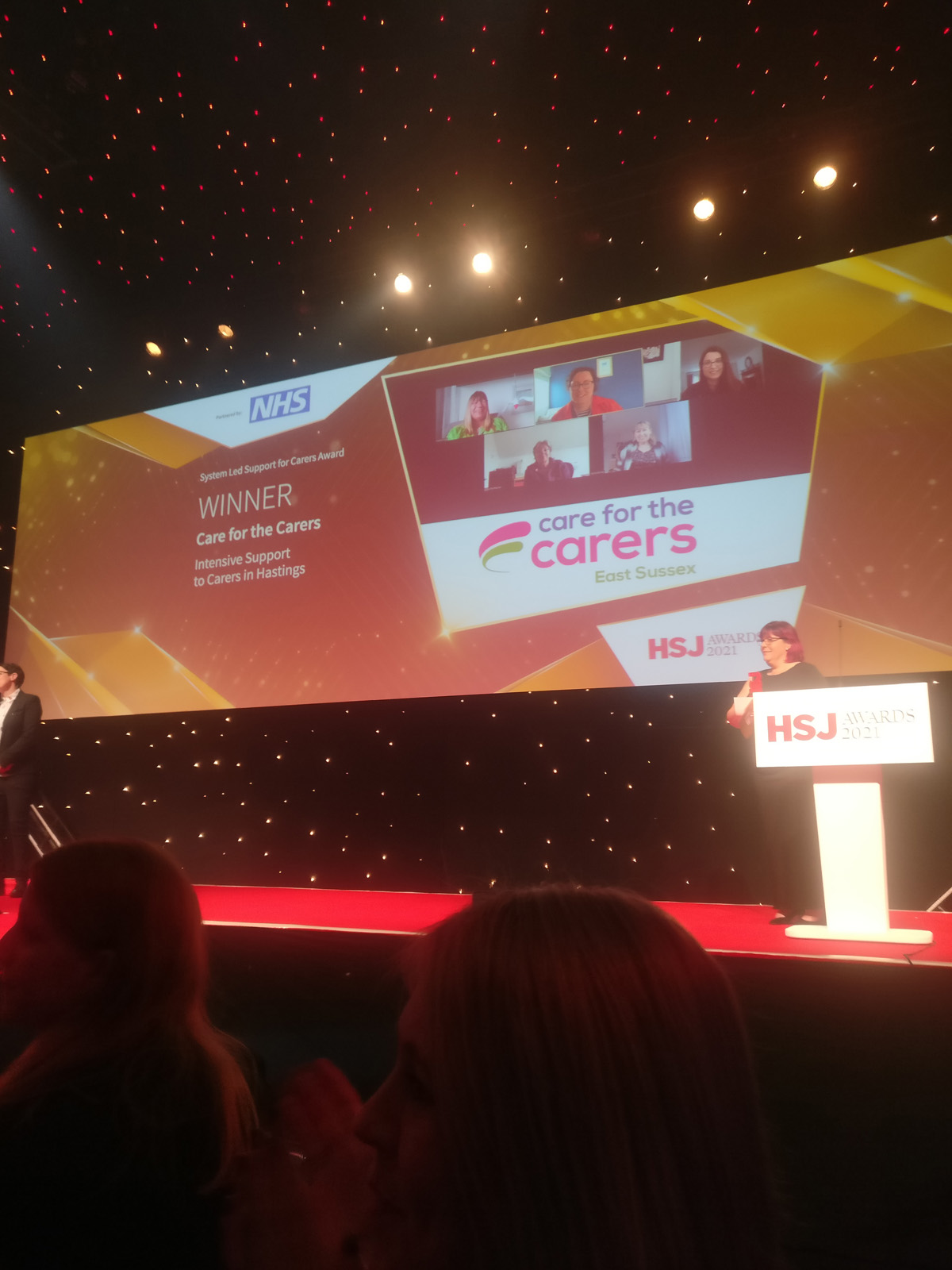
The winner for our category ” System-Led Support for Carers” was “Care for the Carers” on their Intensive Support to Carers in Hastings.
The highly commended award went to West Yorkshire and Harrogate Unpaid Carers Programme, Covid-19 Vaccination Programme for Unpaid Carers.
You can find out more about Care For the Carers off their website below.
All in all, I felt very previllaged to be included as a judge for the HSJ System-Led Support for Carers category for 2021. A very challenging year for the NHS and also challenging for unpaid carers, but entries for such awards set the standard for others to follow. I urge those across the country to take up that challenge and care for the carers.
Well done Care for the Carers, your HSJ award is historic.
Here is the brief update of my South West London carers forum for July. As mentioned, I have not been blogging much due to working on my 2nd book on unpaid mental health carer experiences. I still run my carer groups including helping out West London NHS health trust on their Black Asian minority carer peer group.
However back to South west London.
The following speakers for July were
Phoebe Averill – PHd Student at Kings College Carol Ellis – Carer speaking about her son’s new book Ros Spinks – NHS England Commitment to Carers programme Myself on Why unpaid carers must hold to account
PHOEBE AVERILL PRESENTS ON HER PHD PROJECT
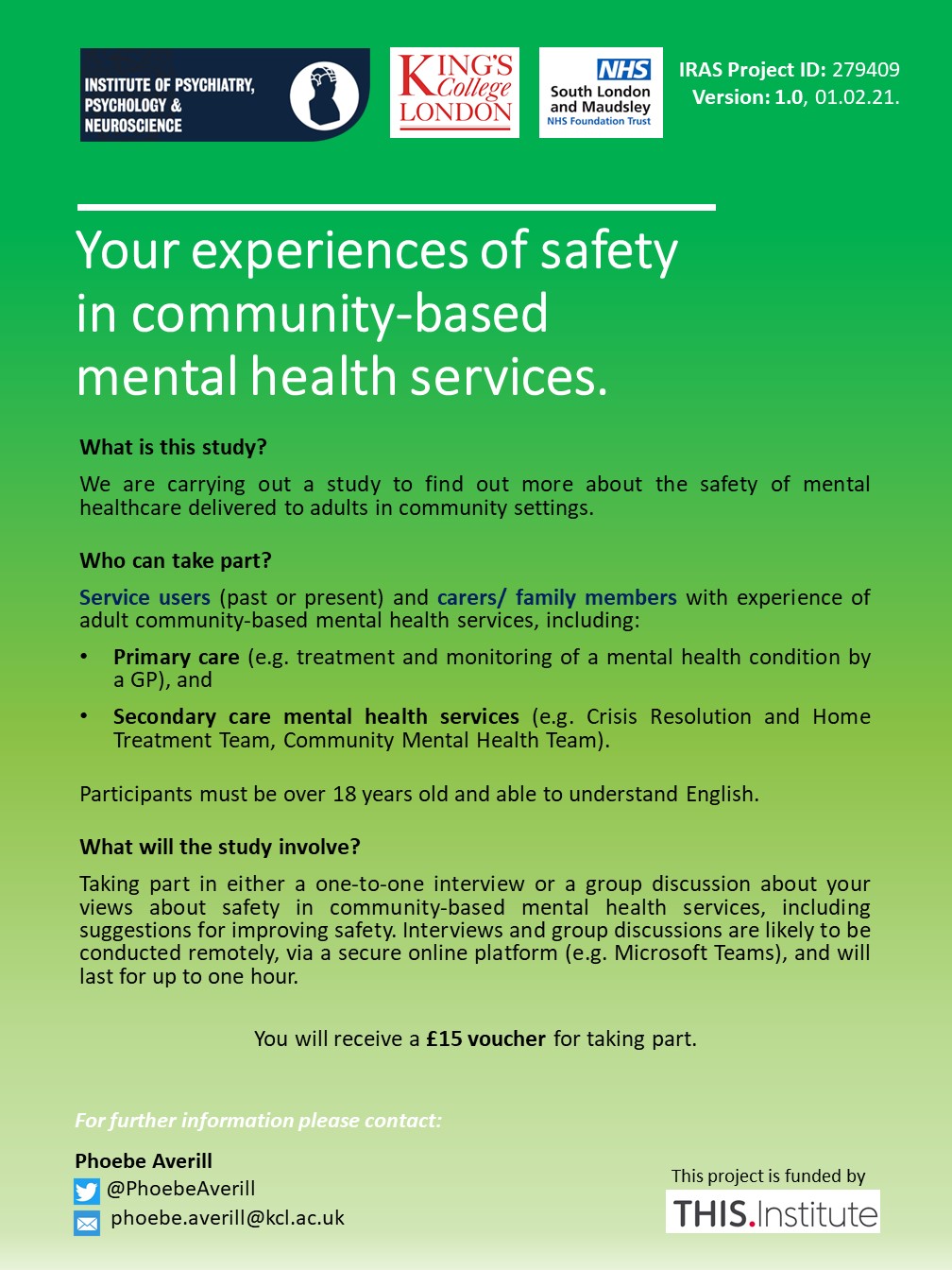
Phoebe from Kings college University spoke about focusing on safety and quality of care in community mental health Services. So as part of the research, she wanted to invite carers to share their views. Phoebe wanted to give us just a little bit more info about the research as the problem of patient safety hasn’t really been a given as much research which is limited, although there is a growing amount of research from those interested in this area. Still, it’s mainly focused on inpatient mental health services. In actual fact, most mental health care experiences are actually in community settings.
So that’s really important that patient safety in community mental health settings are researched as well. So that’s what she is trying to do with the research. Phoebe is speaking with families and carers of adults with mental health problems in the community services. What she is trying to find out is what kind of “safe and unsafe” care means to the carers in this context, because it’s not very well Understood. She would like to know what types of safety issues you worry about as carers and any ideas about what can make community mental health care safer and would could improve the services. There really is no right or wrong answers, it is about hearing carers experiences and opinions.
Phoebe also has spoken to services as well as to healthcare professionals, but it’s really what the carers views are? So what does the actual study involve? It will be a discussion with other carers since that will be what kind of format unpaid carers prefer.
For more information about the project I have included a screenshot below.
There were quite informative questions from carer members of the forum, but I have a lot to catch up with. So will move on to the next presentation.
Carol Ellis and her son talks about his new book
Carol’s son Shaun Ellis started off talking how he ended up with depression due to the death of his father. His book “A Gentle Breeze: Living with depression” focuses on how he managed to survive attempted suicide and his journey battling depression.
Shaun wanted to highlight such experiences through his words and actions. This is why he chose to write a book about his experiences. In this book Shaun describes all the techniques he used to battle his depression. As well as sharing his story, he wants to reach out to fellow suffers and encouraging them to seek the help they need.
Shaun then read a couple of passages from his new book, which led to questions coming from the carer members of the forum.
I have placed a link for those interested in the book below.
Ros Spinks from NHS England & Improvement presents on the Commitment to Carers programme
Ros from NHS England kindly engages with some of my carer groups I run online for half of London. She spoke about her role as one of the regional carer leads, however she covers London, while the rest covers England. Ros spoke about how the ‘commitment to carers programme’ is linked to NHS Englands long term plan, which is actually 2 years old. Ros talked about one of the big areas which are the quality markers in primary care. These are a set of standards that carer’s should expect from any GP practice across the country. However it is not mandatory, which is a bit of a challenge, because it can be difficult to get GP practices to do things in different ways, not because they’re bad practices, but due to such challenges.
Another quality marker is on identifying carer’s because there are still issues regarding the identification of carers in health and social care. It might be that some people do not identify themselves as carers, but that is not the point. It is up to the NHS and social services to help people understand and help educate them on what support they can get as an unpaid carer.
There was a Q & A session from members of the South West London carer forum.
One question was on why are the quality markers not mandatory.
Ros mentioned there has been discussion to make those mandatory, but raised the option that some GP practices work differently and would learn better from other GP practices in a network. Sometimes it is better to try different options ranging from training to rewards if GPs do well in identifying carers. Ros mentioned there is some leverage with the CQC as they use the NHS England quality markers to see if GPs are actually listening to their patients and carers.
Another question focused on what would Ros like to see in place to bring equality to unpaid carers to the level their patients have.
Ros felt she would like to see fantasic carer support centre that actually has the resources to care for the unpaid carer. She would also like to see a carer’s champion just like what they have in the GP practices in the London bourough of Hilligdon. Those in the GP practice could act as the carer champion, which could be the receptionist or GP and surprisingly it does not cost anything, they can help being carer friendly, identify carers and help refer them.
Another question which was very important came from a carer wanting to know what secondary care was doing for carers and if they follow NHS England & Improvement quality markers.
Ros was delighted such a question was asked and she mentioned hospitals were working towards a carer’s card or passport, actually some hospitals already have this and it is a recognition that a patient has someone who cares and that carer does need support and to be kept informed, infact the best secondary support from hospitals is that the carer will be involved in all the care decisions made and not just told what will happen or the carer be seen as an afterthought.
There were many other questions raised from carer members, but below was the one raised by myself on the commitment standards as I was interested in how NHS England’s Commitment for Carers has been progressing since it’s release around 2014. Ros responded to all of them, where some of the responses I have added below since at the time of the document it mentioned a few tasks were ongoing.
NHS England to raise the profile of what a carer does and how they can be supported with health care staff.
NHS England signed up and supports and promotes annual Carers Week campaign.
Establish a NHS England board level ‘Carer Champion’ and support NHS England board level members to shadow a carer.
A senior NHS England Carers Group to take ownership of the ‘Commitment to Carers’ document and NHS England’s support for carers.
Ros mentioned it is Jenifer Kenward who is on the senior management team and she links to the departments health and social care as well.
Collaborate with carers’ organisations to establish how carers award schemes might be extended to commissioners to support improving the experience of carers across England.
Ros responded these would be your Carers UK and Carers Trust organisations.
NHS England in partnership with NHS IQ to hold a national NHS Young Carers event to support how young carers can be better supported and the wellbeing of young carers promoted by the NHS.
Ros responded that usually three times a year, every region has a certain amount of young carer champions that come together to help drive the young carer’s strategy.
NHS England to support a Carers Champions Network bringing together the healthcare and carers groups.
NHS England will continue to implement the Equality Delivery System for the NHS, involving staff, patients, carers and the community to ensure equality is embedded within all of its core business including workforce development.
Ros mentioned NHS England has to do this, its practically a legal duty, she went into more detail about this.
NHS England is committed to supporting innovation in the NHS and will ensure that innovative ways of engaging with and providing care for carers are considered through the national innovation fund schemes.
Priority 1 Raising the Profile of Carers
NHS England to support the relevant bodies, including Health Education England, to support the use of packages for health care staff that increase carers awareness, and support staff to identify, involve and recognise carers as experts, and as individuals with their own needs, choices and aspirations.
On this question, Ros stated that Health Education England do have a training package that actually includes all frontline staff to increase carer’s awareness. Ros still mentioned there still is a problem to make training mandatory and she would very much like to see that.
NHS England to support the relevant bodies in signposting carers to information and advice about support available. The reason I asked Ros this question was because I felt even though resources are out there for carers, it seems not many carers are using them. I am aware there are social perscribers, but they seem geared for older adults to combat loneliness or for patients.
NHS England to contribute to increasing the awareness within the NHS of the duties and functions of local authorities with regards to carers.
Ros spoke how NHS England has made big strides on this task specifically for Integrated Care Systems (more on that in my September carer forum for Lewisham where Ros spoke about ICS Changes). Ros mentioned there has been much improvement and better awareness from a strategic level to the local NHS level.
NHS England and NHS IQ to liaise with carers organisations and the Royal College of General Practitioners (RCGP) in order to support their work on identification, implementation and sharing of best practice models. (Again, I tend to bother the Royal College of GPs because I was interested in an update to the RCGP carer’s strategy when Judith Cameron was the RCGP Carer leads).
Ros responded this would be on the quality markers from NHS England, but there was also recently a series of events from the Royal college of medicine regarding the focus on unpaid carers.
Priority 2 Education, Training and Information
NHS England to investigate approaches to measure the skills, confidence and knowledge of carers and potential benefits on care and carers.
Data sharing: As part of the Patient Online programme, NHS England to scope the potential for carers to access the GP medical records of the patients they care for, where applicable, and the patient has given their consent.
Ros mentioned a huge amount of work has been done on this since 2014, although due to COVID-19 happening she admits work on this has slowed down. Ros states hospitals should have the access to pull patient GP data if a patient turns up to hospitals very unwell and unable to speak for themselves.
NHS England’s new ambitions for End of Life Care, to be published in June 2014, will include the intentions for support for carers and bereaved relatives.
Ros again talked about the personalisation agenda as there has been a lot of work done on this. We spoke about the lead for end of life care who is Sherone phillips, although Ros mentioned there is a regional lead and a national lead for End of Life care.
NHS England to support timely dementia diagnosis and the best available treatment for everyone who needs it, including support for their carers. For example, the revised Dementia Enhanced Service will include an offer of a health check for carers and signposting for information and support.
Develop a programme of work to support the health and wellbeing of carers through the community nursing strategy.
NHS England’s widening digital participation programme to reduce inequalities: ‘100,000 citizens trained in basic online skills to boost health literacy’ will apply to carers as well as patients.
Ros mentioned this is NHS digital and a lot of work has been done on this, but there is more to do.
Priority 3 Service Development
NHS England will promote and work towards parity of esteem for carers so that mental health and wellbeing is considered and supported alongside physical health needs.
Through work on developing the House of Care toolkit, NHS England will work to bring together all the relevant national guidance, published evidence, local case studies and information to support carers to be informed and engaged in care.
NHS England to include carers in work around developing standards and service components for personalised care planning to help ensure carers are integral to the care and support planning process and are consistent with the National Voices principles of care and support planning.
Ros stated this does happen and that it is important to involve the public, patients and carers into the planning of personalised care. A good example is the work done with people with learning disabilities and those that support them regarding annual health checks.
Patients who can benefit will have the option to hold their own personal health budget resulting in direct benefits to carers, including feeling more in control and perceived health improvements.
Ros mentioned this happens through the personalised care.
Priority 4 Person-centred, well-coordinated Care
Scope how NHS England can most effectively support the RCGP and other partners in the work they intend to develop around carers.
I queried if NHS England also work closely with RCGP, RCPSYCH, RCM and others. Where Ros mentioned they do work across different programmes.
NHS England will consider how carers can be supported through commissioning of primary care including through future developments to the GP contract and enhanced services.
Ros mentioned at some point NHS England pulled back from this, but now there are discussions in place.
NHS England to work with NICE and other partners to develop measurement and best practice guidance in order to increase identification of carers.
Ros mentioned this happened last October, so NICE have issued guidence on how carers should be treated and it complementary to NHS England’s quality markers, it should not replace them. (I have posted a link below that might relate to what Ros mentioned).
NHS England to undertake a series of regional evidence summits for carers to establish an independent assessment of the evidence in order to capture, disseminate and encourage good practice.
Ros talked about how the above has happened and has probably morphed into innovated care systems. So this is how NHS England know how Yorkshire, Devon, Surrey have all these brilliant carer strategies, of there are other places as well.
NHS England to maximise opportunities to capture feedback and incorporate into discussions and work to improve quality and inform best practice.
Ros feels this feedback are from monthly calls from carers.
NHS England to undertake a piece of work to understand the impact of current commissioning incentives and system drivers in supporting carers. For example, through the GP contract, revisions to enhanced services for unplanned admissions and dementia.
Ros was not sure, it would be before her time, but it sounds like a one off piece of work, but can follow up on this with us.
NHS England to review current national processes in place to gather bereaved carers’ views on the quality of care in the last three months of life in order to address gaps in evidence.
Where commissioners identify the need for support, co-produce practical tools and a support programme of implementation with NHS IQ.
Priority 6 Commissioning support
NHS England to coordinate effective ways of working by developing partnership links between health, social services and other organisations, including the voluntary sector to establish how carers can be supported as effectively as possible.
NHS England to continue to work with the Standing Commission on Carers.
NHS England to remain a member of the cross government carers strategy board and will encourage and support carers organisations to play an active role in the Collaboration for Coordinated Care.
Establish an annual meeting with key partners including carers organisations to monitor progress and review objectives.
Priority 7 Partnership links
NHS England to continue as a corporate member of Employers for Carers.
NHS England to continue to implement and support established policies on flexible working, leave and emp
There were more discussions raised about NHS England & Improvement commitment to carers, but for more information you can check out NHS England’s Bi Monthly Carers Programme Lunch and Learn Webinar. The link is below.
This was a brief update for my South west London carers forum for July 2021.
Welcome and thanks for stopping by. This website aims to raise awareness of unpaid carers, like myself and also raise awareness of mental health. Hence the title of the site “A Caring Mind”. Recently I attended the exciting and prestigious HSJ award ceremony. I wanted to blog a fair bit of my experience there, especially from a carer’s perspective. Before I continue with my view of the ceremony, which was excellent, I want to mention a bit about HSJ Awards and its aim.
A bit of background on HSJ Awards
The HSJ Awards have been celebrating healthcare excellence for 39 years through huge political, technological and financial challenges within the sector. They have many partners, which are The Department of Health & Social carer, their leading partner Geometric Results INC, Lloyds Pharmacy, NHS Employers, Ministry of Defense, NHS England, Freedom to Speak up, NHS Charities together and many more.
Sorry I forgot to mention HSJ stands for Health Service Journal. The Health Service Journal is a news service which covers the National Health Service, healthcare management and health care policy. So you can tell what HSJ covers in regards to health is of major importance.
The HSJ awards focused on several categories on that night to celebrate the hard work, innovation and dedication across the Health and Social care field.
The categories up for awards I have listed below.
Acute or Specialist Service Redesign Initiative Award
Acute or Specialist Trust of the Year
Acute Sector Innovation of the Year
Clinical Leader of the Year
Community or Primary Care Service Redesign
Connecting Services and Information Award
Driving Efficiency Through Technology Award
Freedom to Speak Up Organisation of the Year
Health and Local Government Partnership Award
HSJ Partnership of the Year
Mental Health Innovation of the Year
Mental Health Provider of the Year
Military and Civilian Health Partnership Award
Patient Safety Award
Primary Care Innovation of the Year
Reservist Support Initiative Award
Staff Engagement Award
System Leadership Initiative of the Year
System Led Support for Carers Award
Workforce Initiative of the Year
As you can tell, from the categories the awards reflected excellence on health services across the country.
My experience at the HSJ ceremony
The HSJ 2019 award ceremony took place at Evolution London, which was once known as Battersea Evolution. The building is massive and has seating up to 2,000 for dinners, I think i does hundreds of ceremonies a year as in conferences, exhibitions, award ceremonies and much more.
If I was to sum up the ceremony, I felt most welcomed by everyone from experience of care team from NHS England, Carers UK and Carers Trust. They were all so important in the role that they do, even though they probably would be very humble about it. I felt honored to be there.
The food was excellent, the venue staff was very polite and the HSJ team especially Zara was fantastic. I was shocked they managed to get hold of actor James Nesbitt OBE to host the ceremony and I did not expect him to come out singing, James was very professional throughout the ceremony, because there was so many award categories to go through.
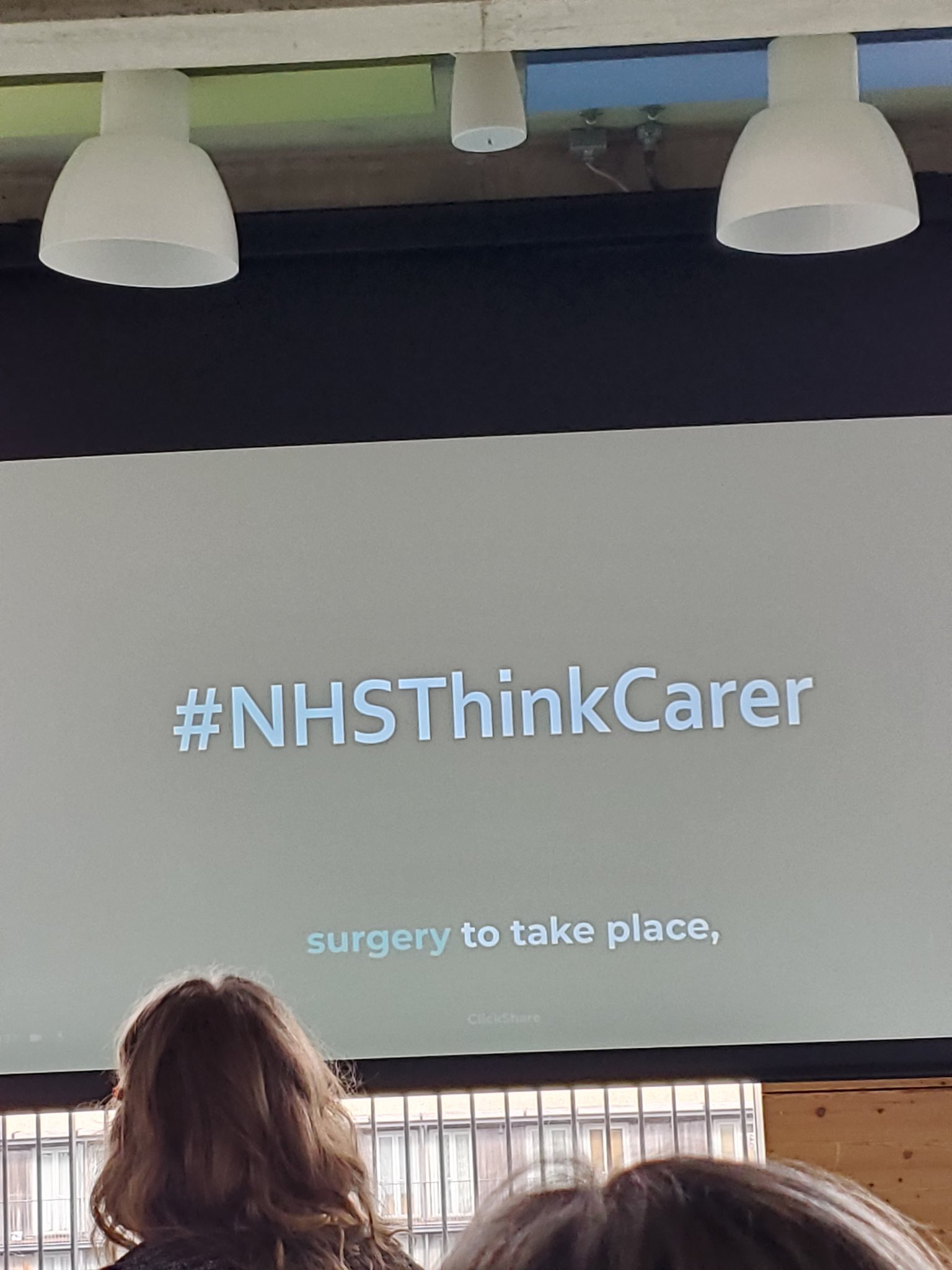
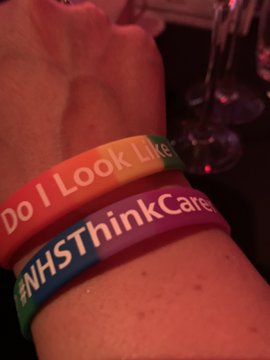
I was also impressed he wore the #NHSThinkCarer band and actually spoke about it at the ceremony.
Whats it means to a carer when a region wins that award
Going back to the HSJ Awards, I was fortunate enough to be one of the Judges for the Award category on “System Led Support for Carers Award”. I must admit judging the awards was fun, but challenging since the entries were very good, but to be honest my main drive for this blog is what does it mean for carer when a service wins such an award?
I did not really want to just do a description of the award event, I think anyone reading this especially healthcare providers should be interested on my thoughts. I think I wasn’t brought in to judge the entries because I am just a carer, I spend a lot of time engaging with mental health trusts, councils and CCG’s on carer welfare, policies and practices. I am sure some of them are fed up of me poking my nose into their business. Yet my focus is always on the unpaid carers where I am practically covering South London and expanding quickly.
If you look at my website you can see I have been raising awareness from 2014, but even before then I was involved raising awareness of unpaid carers. Its like I have nothing better to do but network carers together and speak as one.
My view on the system led support for Carers award is that it is a challenge to other systems to engages with unpaid carers. Any part of England’s health and social care field focusing on carers should not be a tick-box exercise.
I want to remind unpaid carers to take time and examine why West Yorkshire and Harrogate Health and Care Partnership won that award. You can view the Case study in the link below.
As a carer and an HSJ carer judge, I could not help but compare the entries to local or nearby carer focused systems. I had learnt a large amount of what works for carers and why.
I want to raise this to other unpaid carers that I network with as so to help educate unpaid them of the importance of awarding systems that involve and focus on unpaid carers to the highest standard.
My view is that West Yorkshire and Harrogate Health and Care Partnership has thrown down the gauntlet for others to either follow or compete against, but it is not enough for local authorities to do this by following examples from winners. We need unpaid carers to also engage with local authorities and ask…what are you doing for us?
We need unpaid carers to be green with envy when they see how other unpaid carers are supported from HSJ winners and those that entered for that category. It might seem hard asking for carers to poke their noses into Local authority affairs, but why not?
Does the Local authority seek to involve carers into their systems? Why are some Integrated care systems so quiet? What are they doing and who is leading them? How are carers identified in your area? Are you involved when it comes to Carer engagement? I think carers should find out who or what is running their carers programme and if it is either run of the mill or seeking to make an impact in unpaid carers lives.
The future
I want to see more entries in 2020 HSJ Awards for the carer category, just because pushing for unpaid carer welfare can be challenging, does not mean no one can do it.
I am sure some where out there, there is a region in England that has been quiet on carer engagement for too long and should not be hiding. I think those that entered for the award were all winners in my book and set the standard for others to follow.
Conclusion
I would like to thank everyone who has involved me so far and from my observation they all have unpaid carers at the heart of what they do. If the NHS was to fall over (god forbid), they still would be fighting hard for unpaid carer recognition.
Thanks for stopping by and I hope I have not offended anyone apart from councils or districts who stay quiet on carers.














 Welcome and thanks for stopping by. This website aims to raise awareness of unpaid carers, like myself and also raise awareness of mental health. Hence the title of the site “A Caring Mind”. Recently I attended the exciting and prestigious HSJ award ceremony. I wanted to blog a fair bit of my experience there, especially from a carer’s perspective. Before I continue with my view of the ceremony, which was excellent, I want to mention a bit about HSJ Awards and its aim.



 A Caring Mind