Category Archives: Carers Lewisham MH Forum

Lewisham, Southwark & Lambeth carer forum update October 2025

The recent Carers Forum brought together unpaid carers, health professionals, and community organisations from across South London to share updates, experiences, and ideas for improving mental health support. The event, chaired by Matthew McKenzie, created a safe and open space for carers to connect, exchange information, and have their questions heard by local health leaders.

Setting the Scene

Matthew opened the session by welcoming carers from across Lambeth, Lewisham, and Southwark. He spoke about the importance of providing carers with dedicated time to hear from service providers, particularly those supporting someone with mental ill-health and to ensure their voices shape local mental health strategies.

Continue reading

Lewisham, Southwark & Lambeth carer forum update September 2025

By Matthew McKenzie – Carer activist and facilitator of the group

The group is a community of carers in Lambeth, Southwark and Lewisham that exists to provide support, advocacy, and connection for people looking after loved ones living with mental illness. It brings together unpaid carers of all ages and backgrounds to share experiences, learn from one another, and build confidence in dealing with health and social care professionals. A core part of its mission is reducing isolation by creating a safe space where carers can speak openly, develop skills, and access practical resources like advocacy services.

The meeting began with introductions and updates from various participants, including myselff where I discussed work with London Hospitals and the NHS app, while other carers introduced themselves to the group. In attendance was Tama from PohWer presented information about carer complaints and support services across different regions, including discussions about the potential impact of Healthwatch’s dissolution on patient and carer support services.

Continue reading

Lewisham, Southwark & Lambeth Mental Health carer forum – July 2025 update

By Matthew McKenzie

LLS Carers Forum – July Update: Voices, Concerns & Community Strength

Welcome to the July update for the Lewisham, Lambeth, and Southwark Mental Health Carers Forum. This month’s meeting, chaired by Matthew McKenzie, provided space for powerful updates, critical reflections, and a sobering insight into national developments affecting carer support.

🔸 Growing the Carers Voice

Our forum continues to evolve, bringing together unpaid carers from across boroughs. It remains a space for empowerment, where carers can speak openly, challenge services, and influence support structures. Several attendees introduced themselves and reflected on their caring roles, often crossing borough boundaries and facing ongoing questions about their own place in the system.

🔸 Spotlight: Healthwatch Update

One of the major concerns raised was the planned abolition of Healthwatch England and its local branches, which is a development that has deeply unsettled many in our community.

Anna from Healthwatch Lambeth joined us (on her day off—thank you, Anne!) to explain what’s happening:

  • Healthwatch functions—listening to service users, signposting, and enter-and-view visits, which are set to be absorbed by local authorities and ICBs.
  • As a statutory body, Healthwatch cannot be dissolved without legislation, so operations continue for now.
  • Carers voiced serious concerns over the loss of Healthwatch’s independence and trust, especially as a safe channel for feedback.

Anne reminded us: Healthwatch is still active and listening. A final report on black men’s experiences in Lambeth mental health services is due by mid-August.

🔸 Key Questions Raised

  • How will services preserve independent feedback mechanisms once Healthwatch is gone?
  • What accountability structures will replace them?
  • What are the implications of the broader wave of health service body consolidations?

🔸 Updates from the Ground

We also heard from other carer members:

  • A carer from Lewisham shared feedback she submitted to the Lewisham Unpaid Carers Forum regarding carer engagement, with little response so far unfortunately highlighting an all-too-common issue.
  • Other Carers reflected on Lambeth’s carer engagement structures, noting some decline in carer-led decision-making over the years.
  • Another Carer emphasized the importance of real, consistent carer champions within NHS teams particularly in mental health crisis services.

🔸 Carers Forum Reflections

Matthew provided a helpful comparison between Lewisham and Lambeth carer engagement models. While Lewisham has a formal Unpaid Carers Forum, its independence is limited. Lambeth’s model leans more on the collaborative network and carer support groups. Both boroughs face challenges in consistency, clarity, and co-production.

A concern raised repeatedly: carer champions are often named but rarely visible and sometimes, not even known by their own teams.

📅 Next Forum: August 25 or 26

Due to the bank holiday, the next forum will likely be held on August 26. We’ll aim to have a guest speaker and will explore new ways for carers to hold services to account especially in light of the potential Healthwatch closure.


If you’d like to contribute to future discussions or attend the next forum, please reach out. This is your space.

📣 Let’s continue to speak up, stand together, and push for better mental health support for all carers.

Lewisham, Southwark & Lambeth Mental Health carer forum – June 2025 update

About the Forum:
The Lewisham, Lambeth & Southwark Carers Forum is a collaborative online space that brings together unpaid carers, carer leads, mental health professionals, and support organizations to share experiences, raise concerns, and influence change. Focused primarily on mental health caregiving, the forum serves as a platform for peer support, policy updates, training insights, and service development. Led by carer advocate Matthew McKenzie, the group fosters empowerment through regular discussions, creative expression, and co-produced solutions, ensuring carers’ voices are heard across local systems and beyond.

Carers Week Collaboration Discussion

The meeting began with introductions from Matthew McKenzie, who leads a merged online carers group, and other participants including Yvonne, a carers navigator at Southwark Carers, and Margaret, a carer representative with the Royal College of Psychiatrists. The group discussed Carers Week activities and their various roles in supporting carers across different organizations. Karen Hooper, connected with the Lambeth Living Well Collaborative, while Lee Roach, the carers lead for South London & Maudsley in Lambeth, shared his involvement with the Trustwide Family and Carers Committee.

Continue reading

Lewisham Mental Health carer forum – November 2024 update

Welcome to a brief update of my Lewisham mental health carer forum aimed at those caring for someone living with mental illness.

The carer group discussed the importance of involving carers in the planning and improvement of services, with a focus on creating a carer family involvement network and improving carer information. They also addressed concerns about the lack of involvement of black carers in Council initiatives and the need for better communication and support for carers. The conversation ended with discussions on effective communication in caregiving for mental health, the importance of self-care for carers, and the need for professional help when communication breaks down.

Continue reading

Lewisham Mental Health carer forum – October 2024 update

Welcome to a brief update of my Lewisham mental health carer forum aimed at those caring for someone living with mental illness.

Forum update for October

Matthew Mckenzie led a meeting for mental health carers, introducing new members and discussing essential questions for service users’ care and treatment. The group explored various aspects of mental health care, including diagnosis, treatment plans, medication, legal rights, and the importance of carer involvement in the recovery process. The conversation ended with a presentation on the challenges faced by unpaid carers and a discussion on the importance of peer support and knowledge empowerment for carers navigating the mental health system.

Mental Health Carer Group Organizing

Matthew Mckenzie, who has lived experience of being a mental health carer was the group organizer. He led a meeting with various carers and professionals. Matthew introduced himself and his various groups, including one for South West London.

He also mentioned his carer website and the previous meeting’s link. Matthew then proceeded with introductions from various attendees who also are unpaid carers. Matthew then introduced Nadine, the new Lewisham Mental Health Carer’s social worker, who shared her role and responsibilities. The conversation ended with Matthew planning to present on what carers need to prepare for if they’re going to end up in a role with mental ill health.

Carer Support Worker’s Role and Plans

In the meeting, Nadine Denniss-Baker discussed her role as the new Lewisham carer’s support worker, emphasizing her commitment to understanding and addressing the needs of carers. She highlighted her involvement in various groups, including a carer’s group and carer’s champions meetings, and her plans to update and expand these initiatives. Nadine also shared her personal experiences as a carer and her professional background as an approved mental health professional. She discussed the importance of transparency and the need for better communication and collaboration between different organizations and groups. Also discussed was the potential for Nadine to attend national meetings and share best practices with other trusts. The conversation ended with a discussion on the importance of sharing good practice documents and resources to support carers and staff.

Introducing New Members and Questions

Matthew led a meeting where he introduced two new carer members group. Matthew then presented a list of essential questions for carers to ask regarding service users’ care and treatment, which he plans to blog about in the future. He also mentioned that he would record the meeting for those who couldn’t attend. The meeting was part of a carer’s forum, and Matthew emphasized the importance of carers being aware of these questions to better support their loved ones using mental health services.

Understanding Mental Health Diagnosis and Treatment

Matthew discussed the importance of understanding the diagnosis and treatment plan for a loved one’s mental health. He emphasized the need to ask about the current diagnosis, treatment plan, and the effectiveness of the treatment. Matthew also highlighted the importance of monitoring side effects and the potential for medication adjustments. He stressed the need for carers to engage with the multidisciplinary team, including primary contacts, and to inquire about the roles of specialists like occupational therapists. Matthew also mentioned the importance of understanding the medication’s purpose, dose, and potential side effects, and the need to clarify with the loved one if they can refuse medication. He concluded by emphasizing the importance of education regarding medication and mental health

Discussing Relapse and Care Plans

Matthew also highlighted the importance of asking about signs of relapse and what to do in emergencies, as these should be included in the care plan. Another member of the carer group, Faith mentioned a carer’s emergency card discussed at a recent forum, which Matthew agreed was a valuable tool. The group agreed on the need for a two-way conversation about relapse signs and for these to be recorded for quicker response times.

Carer Awareness, Training, and Rights

Matthew emphasized the importance of carer awareness and training, urging carers to ask questions and seek clarification when necessary. He also highlighted the need for carers to know their rights and how to make complaints if they’re not satisfied with the care provided. A carer suggested adding a section on how to make a complaint, which Matthew agreed to include in his future lectures. A carer stressed the importance of knowing the names of the care team and their managers to ensure effective communication and support. Matthew concluded by discussing the need for carers to understand what information can be shared with them, and the importance of obtaining consent from their loved ones to be involved in their care.

Involving Carers in Recovery Plans

Matthew discussed the importance of involving carers in the recovery plan of their loved ones, especially when they are living with them. He emphasized the need for a comprehensive care plan, which should be shared with the carer and the service user. Matthew also highlighted the importance of establishing specific goals for the service user’s mental health and social well-being. He suggested asking essential questions about the discharge plan, support after discharge, and the involvement of the community mental health team. Matthew also stressed the need for carers to understand the goals set for the service user’s recovery and to ask for practical advice on how to support their loved one. He concluded by mentioning the need for carers to know the roles and responsibilities of the care coordinator and other team members.

Challenges of Unpaid Carers in Borough

In the meeting, Matthew presented a detailed account of the challenges faced by unpaid carers in the borough, highlighting the what type of support and resources available to them. Carers discussed the need for better advertising and involvement of carers in services. A carer raised a question about encouraging carers to be more involved in services, to which Matthew responded that it’s a challenge due to the carers’ heavy workload. Matthew agreed to share his presentation in PDF format and to write a blog on the topic. Several carers expressed appreciation for Matthew’s presentation, noting that it provided a clear guide for navigating the complex network of resources and services.

Challenges of Carers and Peer Support

The carer group discussed the challenges faced by carers and the importance of peer support. A carer shared their experience of dealing with the mental health system, highlighting the lack of support and the invisibility of carers. Matthew emphasized the need for carers to be equipped with knowledge to ask specific questions during meetings to avoid being lost in the system. A carer asked another member about her experience of caring for her loved one regarding psychosis, and the carer responded by shared her journey, highlighting the importance of peer support and retaining hope. Matthew ended the conversation by encouraging the use of triangle of care and inviting everyone to attend future meetings.

Lewisham MH carer forum – October 2024

Here is a brief update of the carer forum I run aimed at those caring for someone with mental health challenges.

The meeting involved a discussion on the challenges faced by carers and service users in accessing healthcare services, with a focus on mental health issues. The group explored the use of storytelling and poetry as tools for raising awareness and improving understanding of the carer’s journey. They also discussed the importance of support networks and the need for proactive communication with healthcare providers to ensure timely appointments and care coordination.

Carer Group Organizer Discussion on Mental Health Challenges

Matthew, the carer group organizer, led a discussion with carers in attendance about their own experieces caring for someone with severe mental illness. Morgan from the Patient Stories Project at South London and Maudsley introduced her work collecting stories from service users and carers.

Patient Stories Project and Personal Experiences

A carer shared his personal experience and situation, which was acknowledged by matthew. Matthew then introduced Morgan, who presented the Patient Stories Project. Morgan explained that the project was initiated to improve the way patient and carer experiences are collected, as traditional surveys were deemed ineffective. The project is partially funded by the Maudsley Charity and aims to provide a human voice to issues faced by patients. Morgan also mentioned that the project is flexible in its approach, allowing patients to share their stories via various methods, including face-to-face, written, or creative methods. A carer member of the group asked about the reporting methods, to which Morgan responded, explaining the various options available. matthew then shared his own experience of using poetry to raise awareness about carers.

Using Poetry for Caregiving Experiences and Collaboration

Matthew shared his thoughts on using caregiving experiences to connect with others through poetry. He highlighted the power of poetry to express emotions, create vivid imagery, and inspire creativity. Matthew also mentioned his own caregiving experience and how it has influenced his writing, with a focus on raising awareness about caring for someone with mental ill health. He expressed interest in meeting with Morgan to discuss further collaboration.

Improving Carer Experiences and Breaking Stigma

The meeting also focused on improving the experiences of carers and service users through sharing stories and experiences to break stigma and enhance understanding of the carer’s journey. The importance of carers’ voices being heard more clearly in survey data and feedback mechanisms was emphasized. Positive experiences from carers were shared, along with areas for improvement. The use of social media, such as Twitter, was discussed as a tool for raising awareness and seeking help.

Addressing Access Challenges for Patients

A carer discussed the challenges faced by a patient who was referred to Lewisham Single Point of Access but was unable to access services due to a referral requirement from her GP in Lambeth. Someone suggested that they should meet with the GP to discuss available services and potential referrals. Carers agreed that this situation was a good case study for understanding the difficulties in accessing services. A carer also mentioned that the patient’s chronic health condition and the conflict between Lambeth and Lewisham services were complicating the situation. The team decided to leverage the GP’s power to refer the patient to appropriate services and start her on therapy.

Addressing Healthcare Access Challenges and Recruitment

Carers also discussed the challenges faced by individuals in accessing healthcare services. They highlighted the need for a carer’s lead to be appointed.

They also discussed the difficulties in the recruitment process, particularly the time it takes for background checks and DBS checks. matthew proposed reaching out to mental health nurses in GP surgeries for further assistance. The team agreed to continue their efforts to improve the situation and support those in need.

April Carer Forum Updates 2023

Welcome back to a quick update of my carer groups and forums. I have resorted to doing a brief update due my current projects raising carer awareness. As of this moment, I am writting fiction carer stories. You can check out my YouTube channel to view those stories. I have around 13 more stories focusing on caring for someone with mental illness, I will then work on stories focusing on caring for someone with cancer and follow that up with a book.

Until then, here are my updates below.

Lewisham Mental Health carer forum

For my Lewisham MH carers forum we had engagement from Mina Hadi who have lived experience of mental health. She is the service user representative for the Patient Carer Race Equality Framework over at East London NHS Foundation Trust.

Mina would have attended my ethnic carer forum, but there was a clash, so we agreed she can present at my Lewisham carer forum. I often say to members of my carer group to network. This is vitally important if carer members are involved in a community project. This is why I try to link up with other groups involved in increasing equity for ethnic minorities using mental health services.

Mina talked about the importance of PCREF and how East London NHS FT is working towards reaching out to marginalised groups. These being diverse ethnic groups, refugees, asylum seekers, the homeless and the LGBTQ community. All are vulnerable to mental illness due to discrimination, stigma and lack of support. Mina talked about what needs to be done and work in progress.

The next speaker was Dr Georgina Charlesworth from University College London.

She is the Associate Professor in Research Department of Clinical, Educational and Health Psychology.

Her main focus is on dementia where she has wrote a number of papers. Some are shown below

  • Living alone and risk of dementia: A systematic review and meta-analysis
  • Befriending carers of people with dementia: randomised controlled trial
  • Peer support and reminiscence therapy for people with dementia and their family carers: a factorial pragmatic randomised trial.
  • Examining the Lancet Commission risk factors for dementia using Mendelian randomisation

Dr Georgina was joined by another researcher linked to North East London NHS Foundation Trust. Dr Georgina spoke heavily on the importance of dementia carers. She was impressed that such a carer forum existed and felt that we as a group set an example. Dr Georgina spoke about the problems of stigma and she talked about one of her projects, which was the Carer Supporter Programme within Prof Martin Orrell’s NIHR-funded programme entitled “Support at Home: Interventions to Enhance Life in Dementia”.

The new Alzheimer’s Society service manager for South East London was also due to join us, but were unavailable and I am hoping they will be free next time.

Ethnic mental Health carer forum

This is a forum not bound to a specific area. There should be places for minority ethnic carers to attend, so I often advertise the group to other NHS mental health trusts. The main group members are usually from South London.

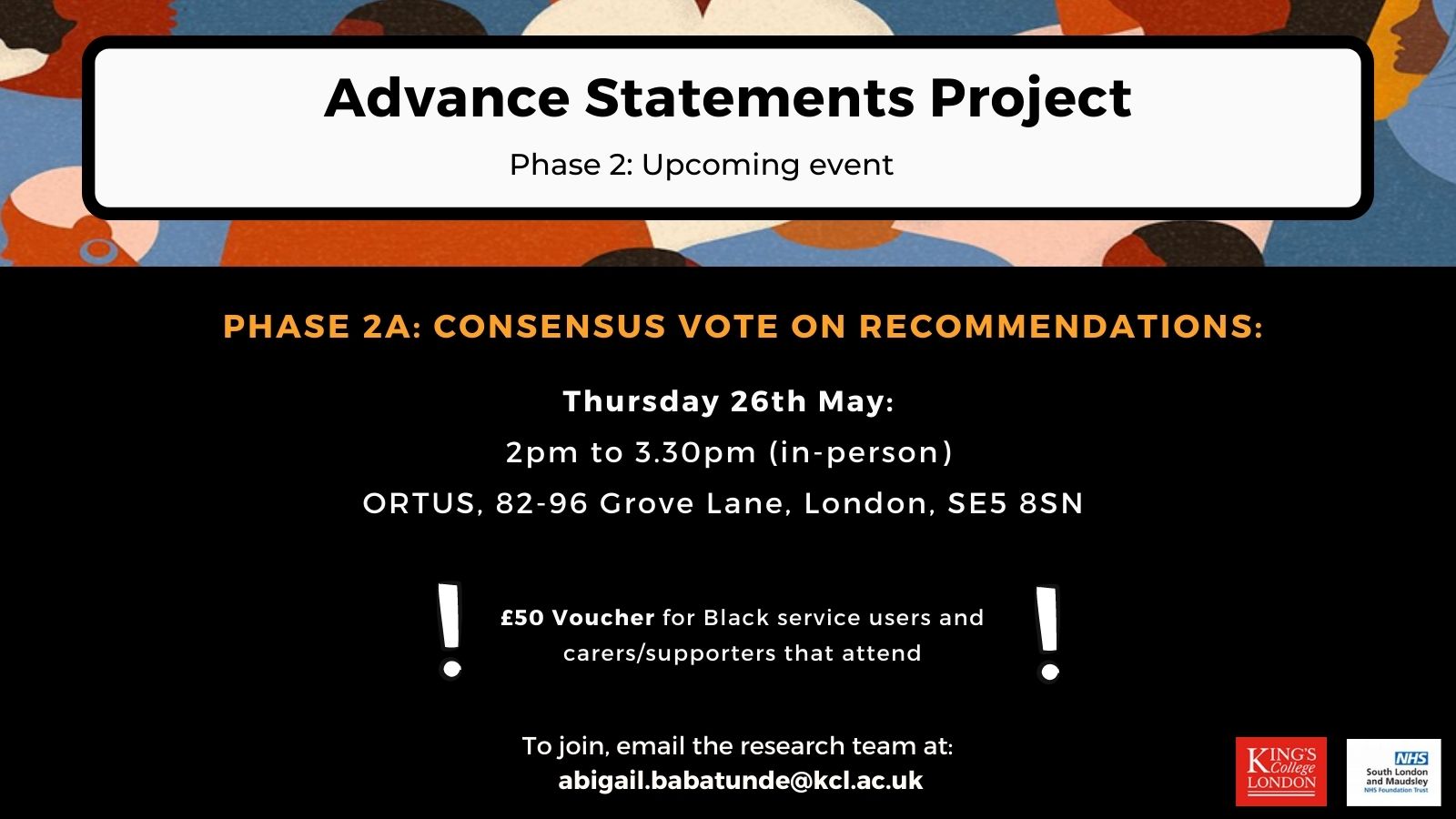
The first speaker for this carer group was Abigail Babatunde from Kings College London. She spoke on updates for the project advanced directives black people.

The Advance Statements Project is a research project on getting advance statements – also known as advance choice documents or advance directives – to work for Black African and Caribbean service users who have previously been detained under the Mental Health Act, their carers, and mental health staff.

The goal of the research is to:

  • Help reduce detention under the Mental Health Act for Black service users,
    Support, hear and understand Black service users and their carers/supporters,
  • Know and further understand the issues surrounding using advance choice documents and why staff members may not follow them,
  • Reduce coercive care in mental health care, and to better the relationships between Black service users, their carers/supporters and staff/professionals.

There is a follow up event at the Ortus (Maudsley NHS) below.

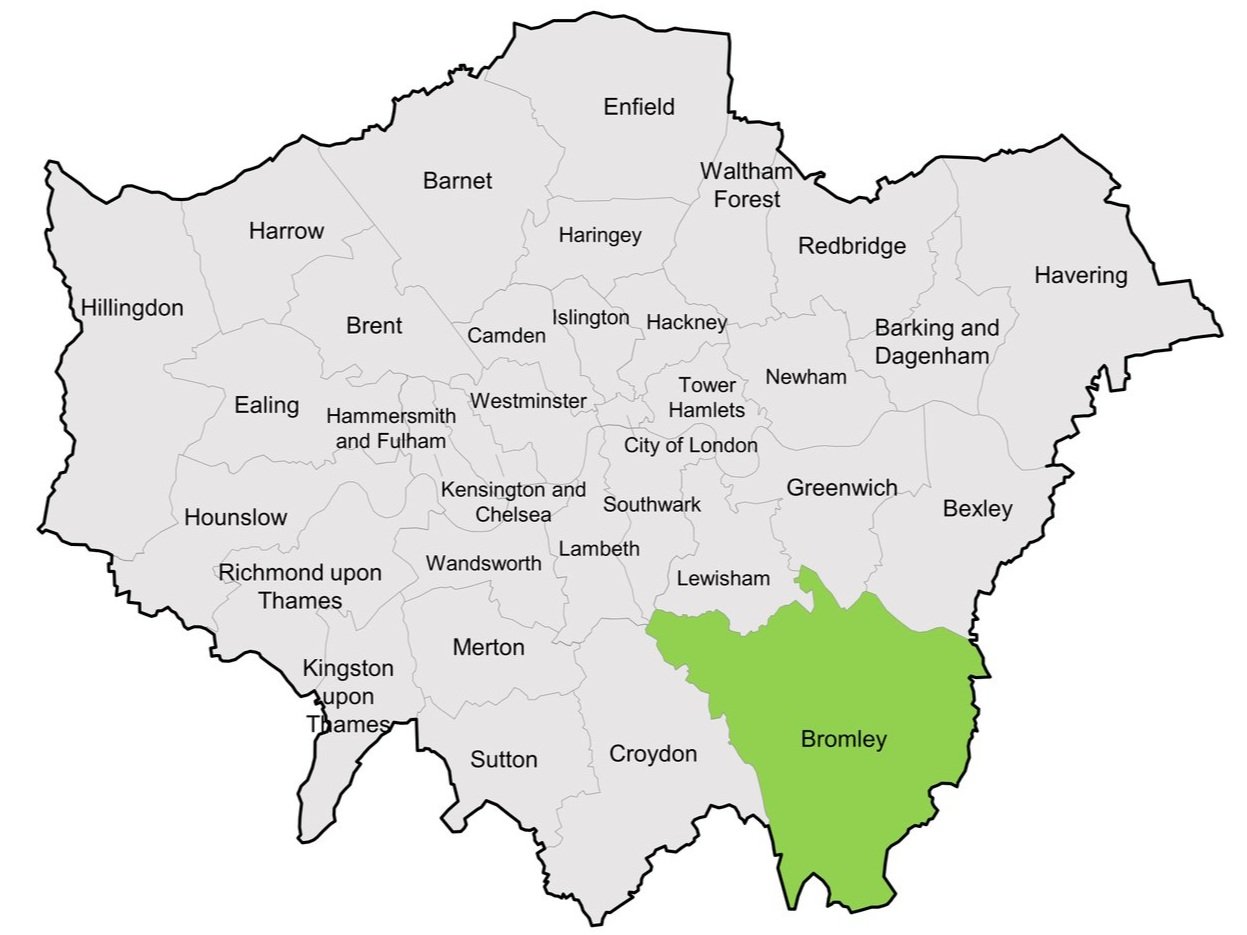
The next speaker was Denise Mantell from Bromley council. Bromley Council is currently developing its Carers Strategy and would like to hear from as many carers as possible. Since Oxleas mental health services covers Bromley, it was a chance carers could get to be involved. It would help if the carers strategy involve those caring for someone with mental illness.

Talking about Oxleas NHS Foundation trust, we were joined by Japleen Kaur and Marie-france mutti. They spoke about the new Funding scheme – Improving patient and carer experience grants.

If those within Oxleas have an idea that will improve patient or carer experience, they can bid for funding (up to £750) from our charitable funds. The project ideas need to be developed jointly between members of staff and people who use Oxleas services or care for people who use Oxleas services.

Stages

  1. Application form completed and sent to our Involved Network
  2. Applicant informed of bid outcome
  3. Transfer of funding arranged
  4. Activity takes place
  5. Bidder shares photos/feedback on how funds have been used.

Scheme criteria

• The grant should be spent on enhancing the experience of people using our services and their families
• It should be used for activities/items that are not funded by trust services.
• It should benefit at least three service users.
• All bids need to developed joined with people using our services and staff members.

The first application period for the Improve Fund is open now until 31 May 2023.

If you have a query about the fund, please email: oxl-tr.involved@nhs.net.

Joint Southwark and Lambeth Mental Health Carers forum

Here are the update’s for my other carer forum I run in the afternoon for the last friday of the month. I used to run these forums seperately, but due to covering a lot. I have decided to merge them.

We were delighted to be joined by another speaker from University College London. This was Dr Rebecca Lacey who talked about her study on Young Adult carers in the UK.

This was following off from Carers Trust “Young Carers Action Day”, but unfortunately it was too late for Dr Lacey to attend in March.

Staff from Lambeth Carers Hub attended to hear more on her research.

You can read Dr Lacey’s paper on the link below.

https://www.mdpi.com/1660-4601/19/21/14076

The next speaker was Sarah Allen who is the Head of Patient Experience at Guys & St Thomas NHS FT. The hospital trust is currently working on their Carers Strategy. I often to say to all carers that it is very important to engage with hospital service carers strategy.

It is not enough for a carers strategy to exist, but to be used to hold services to account as in “You Say We did” focus.

GSTT want to involve families and carers in all aspects of their services.

They aim to recognise, value, include and respect carers. Plus treat them as expert partners at the heart of decision making for the person they care for.

I also presented the new NHS England hospital discharge toolkit to the group, there was a bit of confusion as some felt the toolkit was for triangle of care.

https://www.england.nhs.uk/london/our-work/carers-and-hospital-discharge/

In the end I pointed that this was for acute hospital services in London.

I am also pushing to engage with GSTT Cancer and Surgery Clinical Group to raise the profile of cancer carers. Once I have built a group of cancer carers, I am hoping for engagement for that hospital trust especially regarding the cancer group. I am also getting support from Kings NHS and eventually will expand to other hospital trusts.

South West London MH carers group

This group is a hybrid as there is a carer-led peer focus for the first part of the group. The next part is finding out about services and how they are supporting carers.

The group is strictly carer-led and co-facilitated by SW London carer Ava. She does the peer group section, while I will focus on speakers and engagement.

We had a great turnout as all 5 carer centre’s help promote the group, but we can out of time for the peer support section. The group seeks engagement from the local mental health trust South West London & St George, but this can be difficult, probably lack of staff maybe? Still we got engagement from Kingston Hospital who have a strong carer focus.

We where joined by Beth Mburu who is one of the Clinical Liaison Practitioners. Kingston Hospital is working on their carers focus and Beth talked about the following

  • Hosp. Discharge Planning Toolkit (aimed at staff)
  • Carers’ Needs Assessment Template (augmenting and embedding the Carers’ Agreement)
  • Carers’ Passport
  • Triangle of Care – hospital self-assessment tool and lessons learned/embedded
  • Resource for first time Carers / people who give their time to support a vulnerable person
  • National resources -already in existence from Carers’ UK – communicate and disseminate to the right people
  • Live/real-time digital tool aimed at Carers’ drawing together local provision and resources
  • Safe Transitions of Care – checklist for front-line staff
  • Hospital checklist / advice and Information

Kingston hospital NHS FT also had a carers event on the 4th of May to engage with carers and let them know about the work they are doing to support carers.

Again I am also focusing on engagement from the hospital’s cancer services to prepare for my cancer carer group. It is important to know who does what and how they focus on cancer carers.

March Carer Forum Updates 2023

Welcome to my March update of most of my carer forums. These forums are for those caring for someone with mental illness. The idea of the groups is to allow unpaid carers a chance to find out about mental health services. The forums also allow researchers from universities and hospitals to update carers on current trends affecting carers and mental illness.

Lewisham Mental Health carers forum

For this carers forum we were delighted to have Bobby Pratap from South London and Maudsley NHS attend. Bobby is the Director of Implementation for the borough of Lewisham. This means in laymen’s terms that a large investment I guessing around 100 million will be focused on changes to mental health services in the borough.

With that kind of investment, it is vital for patient, carer and public engagement. Bobby comes with a wealth of experience straight from NHS England’s as the Deputy head of Mental health.

Bobby presented the challenges that mental health services face in the borough of Lewisham. He also presented some feedback from engagement events under South London & Maudsley. Bobby was certainly tested by the members of the forum who grilled him on NHS trust resources.

I also presented the new NHS London Hospital discharge toolkit. Since the Carers UK 2021 report, it has been widely known that unpaid carers feel uninvolved in hospital discharge. Carers complain that they are invisible to the NHS. So NHS London carer leads have come up with a hospital discharge checklist

The benefits to involving carers in hospital discharge are

Some Benefits

Reduced carer strain and breakdown
Patients less likely to re-admitted.
Caring situation is more sustainable
Better health outcomes for both patient and carer
Reduced overall cost to system

With some Accute hospitals taking the lead, there is hope other hospital will become carer friendly and see unpaid carers as part of the team.

The resource can be downloaded from below via Carers Trust Website

https://carers.org/resources/all-resources/142-carers-and-hospital-discharge-toolkit-for-london-hospitals-and-community-providers

South west London Mental Health carers forum

This forum is facilitated by myself and Ava who is a mental health and carer campaigner. The forum covers the boroughs of Kingston, Merton, Wandsworth, Richmond and Sutton. As a group focusing on mental health carers, we get support from the carer centres and from local Mind and Rethink organisations.

There was no speakers for the group this month, so I presented the hospital discharge carer toolkit. I also covered updates regarding the Triangle of Care.

Joint Southwark & Lambeth MH carers forum

For this group. Carers had a chance to find out what a Mental Health Solicitor does. We were joined by Burke Niazi Solicitors. The solicitor who represented my late mother had engaged with our group to answer queries, issues and questions. The forum was well attended and even some had attended from my other forums.

We were also joined by Lee Roach who is Lambeth’s carers lead for Maudsley adult services. Lee is also the Head Occupational Therapist for Lambeth Operational Directorate. Lee updated carers from Lambeth on services related to triangle of care. I was also interested in how Southwark carer leads were engaging with carers. It might take a while for them to drop by our group since Guys & St Thomas NHS are due to attend next month to speak about their carer’s strategy.

Lastly the group was joined by Guy Swindle who is the Deputy Director of Lambeth Living Well Network Alliance.

Greenwich Mental Health Carers forum

I only run this group Bi-monthly and Greenwich carers heavily supports the group. We get great support from Oxleas NHS and the Royal Borough of Greenwich often attends when they can. For this group we had engagement from Lisa Moylan who is Oxleas head of Mental Health Legislation.

The main reason I asked for Lisa to engage with the forum is to allow carers to understand what the department does, but also get an idea of how the Law department will deal with the new changes to the Mental Health Act. The MP will also chat with carers about their thoughts about proposed bill.

At the group, I updated members on updates regarding Greenwich Carers Strategy.

Some of the updates were

Raising awareness of caring with local employers
Developing a carers self-assessment app
Research with carers from ethnic communities
Further development of the Mobilise digital platform
Exploring feasibility of a Carers Card

There are plans Greenwich carers partnership board to Engage with local GPs and Engage with hospitals. Talking about hospitals, I also presented the London hospital carers discharge toolkit.

Ethnic Mental Health carers forum

This is the only forum that I run that focuses on carers from ethnic communities. It is also a forum that can actually reach out via several mental health trusts as sometimes we get attendees from SWLSTG, West London Health trust, Kent & Medway and CNWL, but the main focus is what South London & Maudsley or Oxleas are focusing on. The group also engages with speakers from universities and researchers. We also can get updates from the local authority or Healthwatch.

The speaker for March was Natalie Creay who is Founder of Liberating Knowledge, she is also on the advisory board of The Lancet Psychiatry magazine and a trustee of The London Community Foundation.

Yes, she does a lot. Natalie spoke to us regarding health inequalities of Black and Asian people. Her research looked at Closing gaps in patient data for Black and South Asian communities.

Through the focus groups and interviews they conducted with healthcare staff. It was found that

  • Staff were less confident about describing why data is collected or how it is used
  • Staff felt that a lack of people in leadership roles who are committed to tackling bullying, institutional racism and health inequalities
  • Some staff also referred to a concern from Black and South Asian communities about whether they can trust the NHS given past harms
  • There were innovative ideas proposed such as the NHS being more radical in how it thinks about data ownership and giving more control to people and their communities over their data and the insights generated from them.

It was found that The burden of tackling health inequalities rests on people with lived experience.

There were several recommendations regarding the research, some listed below.

  • Create the conditions for systemic change to enable the following recommendations to be delivered by accelerating efforts to eradicate racism within the NHS. This should include developing the cultural and racial capability of the workforce.
  • Consider developing a race equity framework for physical health services that draws on the approach used for the Patient and Carer Race Equality Framework in Mental Health services.
  • Secure the support and commitment of senior leaders to improve data practices, embed inequalities work and create space for staff to innovate within the NHS.
  • Actively challenge ‘hard to reach’ narratives that encourage the perception Black, Asian and minoritised communities are disengaged or unwilling to share their patient data.
  • Equip healthcare workers with the tools to hold meaningful conversations about data: explore more innovative approaches that provide engaging ‘bite-size’ learning material targeted at healthcare workers.

This led on to one of our members Brenda who is a member of the Patient Carer Race Equality Framework to report back how Maudsley is using the framework to increase health equality and reduce racism. We also got updates from the Public Health Training and Development Manager for Lewisham who have been working hard to reduce health inequalities within ethnic communities. This was emulated on projects from Bromley, Lewisham and Greenwich Mind Updates.

This concludes most of my carer forums for March.

February carer forum updates 2023

Hello carers, here is another update from most of my carer forums. Usually I try to update on each of the forums, but due to spending time writing books and raising carer awareness, it is not always possible to update each forum page.

  • Lewisham Mental Health Carer forum update

For my Lewisham group, South London & Maudsley want to engage with the London borough of Lewisham to explain new ideas for mental health services. There will possibly be a revamp of the Ladywell Unit that is based at Lewisham Hospital.

The speakers who looked to engage with carers were Sir Norman Lamb and Bobby Pretap, but unfortunately the meeting had to be cancelled.

The other speaker Angela Brient who is a PhD Researcher in Public Health spoke about the Impact of trauma. Angela spoke about her lived experience, which comes from caring for her husband who sustained a spinal injury whilst on deployment with the Australian Air Force in the Middle East. She was his primary carer for over a year, but ultimately, her husband took his own life.

The carer’s group were grateful for Angela’s insight and we learnt more of the Impact of Trauma course that Dr Julie Langan Martin mentioned to me a while back. Dr Julie is the Senior Lecturer in Psychiatry at the University of Glasgow. We are hoping to hear more updates on the Impact of Trauma course at a later date.

  • Joint Southwark & Lambeth Carer forum update

For my joint mental health carer forum over in Southwark and Lambeth. Carers were delighted to get engagement from Helen Hayes MP for Dulwich and West Norwood. Carers spoke about their past experiences of providing unpaid care, but the main topic was the progress of the new Mental Health Act. Members of the group are very keen to observe the debate in Parliment.

Other carers were interested to speak to Richard Okolo on how a mental health solicitor could help someone who has been sectioned. Richard could not make the forum, but we hope to hear from him in March.

  • Ethnic Mental Health Carers forum Update

This carers forum specifically focuses on the experience of ethnic and diverse carers. Our first speaker was a carer on involvement at South London & Maudsley. Currently Maudsley NHS is an anti-racist organisation and seeks to increase health equity. South London & Maudsley NHS is signed up to the Patient Carer Race Equality Framework (PCREF). PCREF exists to eliminate the unacceptable racial disparity in the Access, Experience and Outcomes of Black communities and significantly improve their trust and confidence in our mental health services.

Annette Davis who is the Chair of the PCREF Service Users and Carers Group then gave updates to members. Annette mentioned that PCREF is a UK wide NHS initiative and South London and Maudsley are one of the first Trusts in the country to address institutionalised racism in the NHS. We heard updates on new flyers to advertise to the community on how they can hear updates or get involved in being an activist.

The next speaker Dr Brenda Hayanga spoke about her new research “Ethnic inequalities in multiple long-term health conditions in the United Kingdom: a systematic review and narrative synthesis”. Yes, I know it is a long title, but I do not know many research papers that have short titles.

Still, the importance of this research cannot be underestimated as I had just published my 4th book regarding health inequalities.

Dr Brenda will be speaking at an exciting event in april. The event focuses on Ethnic inequalities in healthcare for people with multiple conditions.

At the event there will be the following speakers

  • Katherine Merrifield from the Health Foundation
  • Dr Habib Naqvi who is Chief Executive of the NHS Race and Health Observatory
  • Dr Jayati Das Munshi who is a Clinical Reader in Social and Psychiatric Epidemiology at KCL.
  • Eve Riley who is based at Macmillan Cancer Support
  • Jabeer Butt OBE whose work looks into tackling discrimination and disadvantage.
  • Dr Brenda Hayanga who is a Research Fellow at the Department of Global Health and Social Medicine, King’s College London

The final update at the ethnic MH carers group was from Carers UK Melanie Crew. Melanie is the Senior Policy and Research Officer at Carers UK. Melanie talked about the new initiative on Good practice guide on supporting ethnic minority carers. The briefing follows Carers UK’s landmark report examining Black, Asian and minority ethnic carers’ experiences of the pandemic.

You can find out more from the link below.

https://www.carersuk.org/press-releases/carers-uk-releases-good-practice-briefing-for-supporting-black-asian-and-minority-ethnic-carers/

  • South West London Mental Health Carers group.

Obviously my 3rd biggest group, which covers 5 london boroughs. The group is co-facilitated by Ava who is involved at Kingston Carers Network and SWLSTG. The group is getting lots of support from the 5 carer centres.

We had a visit from Kirsty McLachlan who is based at Richmond Borough Mind. Kirsty is the Carers and Parents in Mind Manager and is very keen to promote the forum in our Carers in Mind monthly newsletter. It is great to see support and promotion about unpaid carers.

Our 2nd speaker was Chloe Smith who is the Healthy Communities Builder from Kingston Voluntary Action. She was joined by BBC MultiAward winning Poet, Michael Groce. They are working on a set of poetry workshops aimed Black, African and Caribbean Communities over in Kingston. There will be guest poets that will come and inspire people’s work throughout the weeks ahead by sharing their own stories and work. I was the guest poet for week 2 (more on that later).

You can watch a promotional video below

The third speaker was Wendy Doyle who is the Head of Patient Experience St Georges university hospital. This is one of the hospitals were I run a carer’s stall. Wendy updated our group on the carer’s focus the hospital is planning. Wendy also updated us on a healthwatch report.