Category Archives: Aimed at Carers

Blog posts aimed at non paid carers caring for someone unwell.

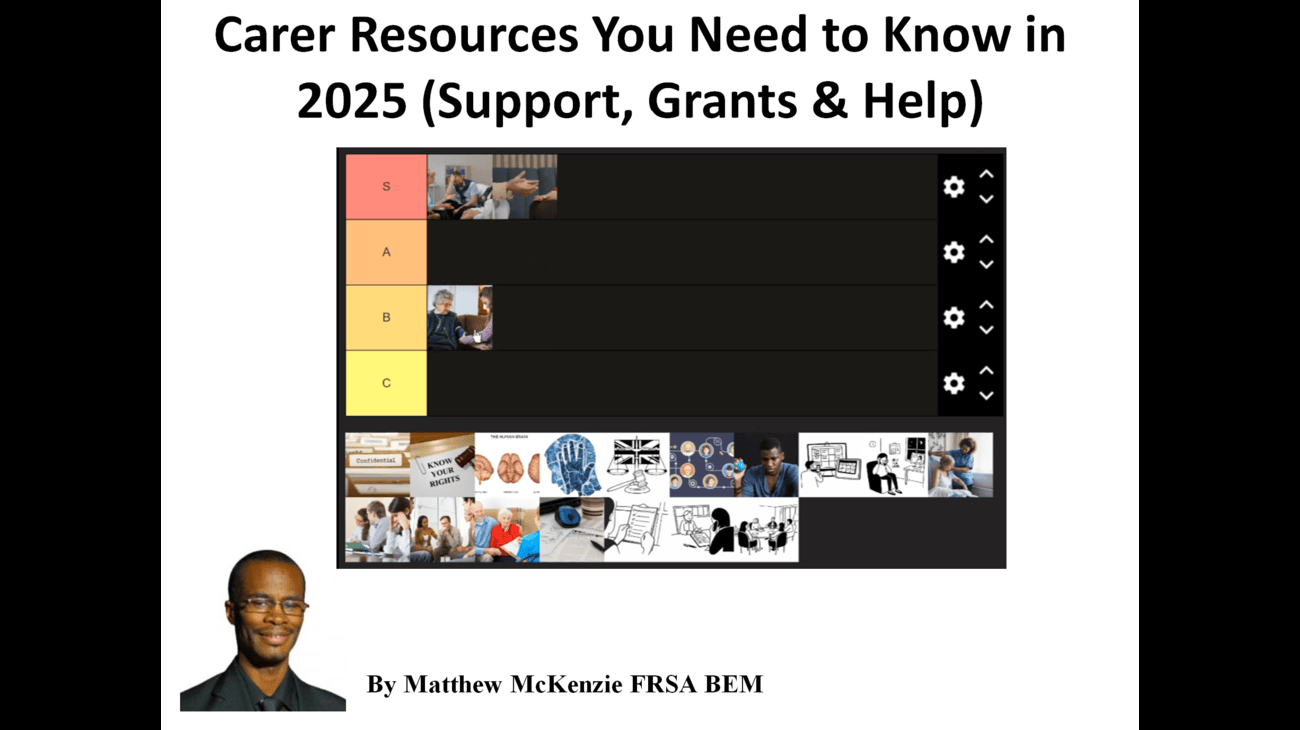
Top 20 Essential Resources for Mental Health Carers

By Matthew McKenzie FRSA BEM – Carer Activist

Caring for a loved one with a mental illness is a demanding, often under-recognized role. Many unpaid carers find themselves thrust into complex scenarios, navigating mental health crises, advocating for proper support, balancing their own wellbeing, and, too often, facing these challenges in isolation. While every carer’s journey is unique, a core set of resources can make a dramatic difference between feeling overwhelmed and finding sustainable ways to cope and thrive.

This article and video unpacks those essential resources through the lens of an experienced carer activist and carer, offering both a practical hierarchy of importance and actionable insights. Using a “tier list” as a framework, we’ll explore which resources are most urgent and why, how they fit together, and tips for navigating the labyrinth of mental health care.

To watch which resources are essential for mental health carers, watch the video below.


The Tiered Approach: Prioritizing Carers’ Needs

Resources for mental health carers can be overwhelming in scope from legal advice and crisis hotlines to financial support and practical training. To create clarity, resources are placed into four tiers:

  • S Tier (Essential): Survival-level supports; absolutely critical for continued caring and crisis management.
  • A Tier (Sustaining): Highly valuable resources that keep your caring role tenable in the long run.
  • B Tier (Enhancing): Important support systems that reduce daily strain and improve quality of life but aren’t as immediately pressing.
  • C Tier (Auxiliary): Long-term stability and planning; often overlooked but still necessary.

Let’s break down what falls into each tier and how you can access and leverage these resources effectively.


Carers: Unsung Heroes, Essential Supports

Mental health carers are the invisible backbone of the support system—shouldering enormous responsibility, often without recognition or adequate support. By focusing on these critical resources and prioritizing self-care as well as advocacy, carers can find greater resilience, confidence, and sustainability.

Remember, you are not alone. Whether you access support online, through local groups, or formal agencies, reach out, ask questions, and don’t accept “no” as the final answer when it comes to your rights and wellbeing. With the right resources and support system, caring for a loved one with mental illness can be not just a challenge to survive—but a journey where you both can thrive.

The Digital Revolution in Unpaid Care: Empowering Carers Through Technology

From Matthew McKenzie carer activist

For Unpaid carers those who support loved ones living with long-term physical or mental health conditions, they face a unique set of challenges. The role is often demanding, emotionally taxing, and can feel isolating. Yet, in recent years, the rapid advancement of digital tools, apps, and online platforms has begun to transform the landscape of unpaid care, offering new avenues for support, organization, and connection.

My blog is a short transcript of my longer video below

Drawing from the lived experience as a passionate advocate for unpaid carers and an IT professional, my article and video explores how digitization, artificial intelligence, and mobile technology are reshaping the way informal carers manage their responsibilities. We’ll delve into the practical benefits, the most useful apps, and the limitations of technology in the caring role, providing a comprehensive guide for carers seeking to harness digital tools for their own well-being and the well-being of those they support.


Understanding the Role of Technology in Unpaid Care

The Growing Demands on Carers

Unpaid carers often juggle multiple responsibilities: managing medication schedules, tracking symptoms, coordinating appointments, and advocating for their loved ones with health professionals. The emotional and cognitive load can be overwhelming, especially when combined with work, family, and personal commitments.

As I points out, “As humans, we can only remember things so often. So, especially when we’re getting older or if we are under a lot of stress trying to juggle our caring role and busy lives, it does help to have apps that can schedule these things.”

The Promise of Digitization

Digitization offers carers a “second brain”, a way to offload tasks, reminders, and information, reducing stress and mental clutter. Mobile phones, now more powerful than ever, serve as hubs for health management, communication, and emotional support. But while technology can be transformative, it’s not without its challenges, including digital literacy, access, and the irreplaceable of value of human connection.

The Future of Care: Technology as an Empowering Force

The digital revolution is reshaping unpaid care, offering carers new ways to manage responsibilities, connect with others, and support their own well-being. While technology is not a replacement, it can be a powerful ally, reducing stress, improving organization, and fostering community.

As my experience shows, embracing digital tools can transform the caring journey. By leveraging apps for health management, communication, and emotional support, carers can reclaim control, reduce isolation, and find new sources of strength.

Ultimately, the goal is not to replace human kindness or connection, but to empower carers with the tools they need to thrive. With thoughtful adoption and ongoing support, technology can help unpaid carers navigate the challenges of their role and build a brighter, more connected future.

Resources and Recommendations my video covers

Essential Apps for Carers

  • Pill Reminder: Medication management and alerts
  • Medsafe: Medication tracking and scheduling
  • NHS App: Health records, care plans, and feedback (UK)
  • Google Calendar / Microsoft Outlook: Appointment and routine management
  • To-Do List / Trello: Task organization
  • Zoom / Microsoft Teams / Google Chat: Virtual support groups and communication
  • Siri / Google Assistant: Voice commands and reminders
  • AI Journals / Well-being Apps: Emotional support and mindfulness

Tips for Safe and Effective Use

  • Choose reputable apps with strong privacy policies
  • Keep software updated to ensure security
  • Seek training or support if you’re new to digital tools
  • Balance online and offline support for holistic well-being

Conclusion

Unpaid carers are the unsung heroes of our communities, providing vital support to those living with long-term ill health. The rise of digital tools and technology offers new hope, making the caring role more manageable, less isolating, and more connected.

By embracing digitization, carers can streamline their responsibilities, access emotional support, and build resilient communities. While challenges remain, the future of care is bright, powered by technology and the enduring spirit of human kindness.

Shaping the Future of Support for Unpaid Carers in Lewisham

By Matthew McKenzie FRSA BEM – Triangle of Care community chair

As a carer living in Lewisham, I know just how important it is that our voices are heard and that the support available truly meets our needs. Whether we’re looking after a parent, a partner, a child, or a friend, we all share the same challenges balancing care responsibilities, work, our own wellbeing, and often feeling invisible in the process.

That’s why I wanted to share something that directly affects all of us. Lewisham Council and the NHS South East London ICB are currently developing a new Action Plan for Unpaid Carers (2025–2028). This plan will set out how the Council aims to identify, value, and support more carers over the next few years.

The team leading this work, including a new member who recently joined the Adults Integrated Commissioning Team, is reaching out to carers across the borough to get our feedback.

Continue reading

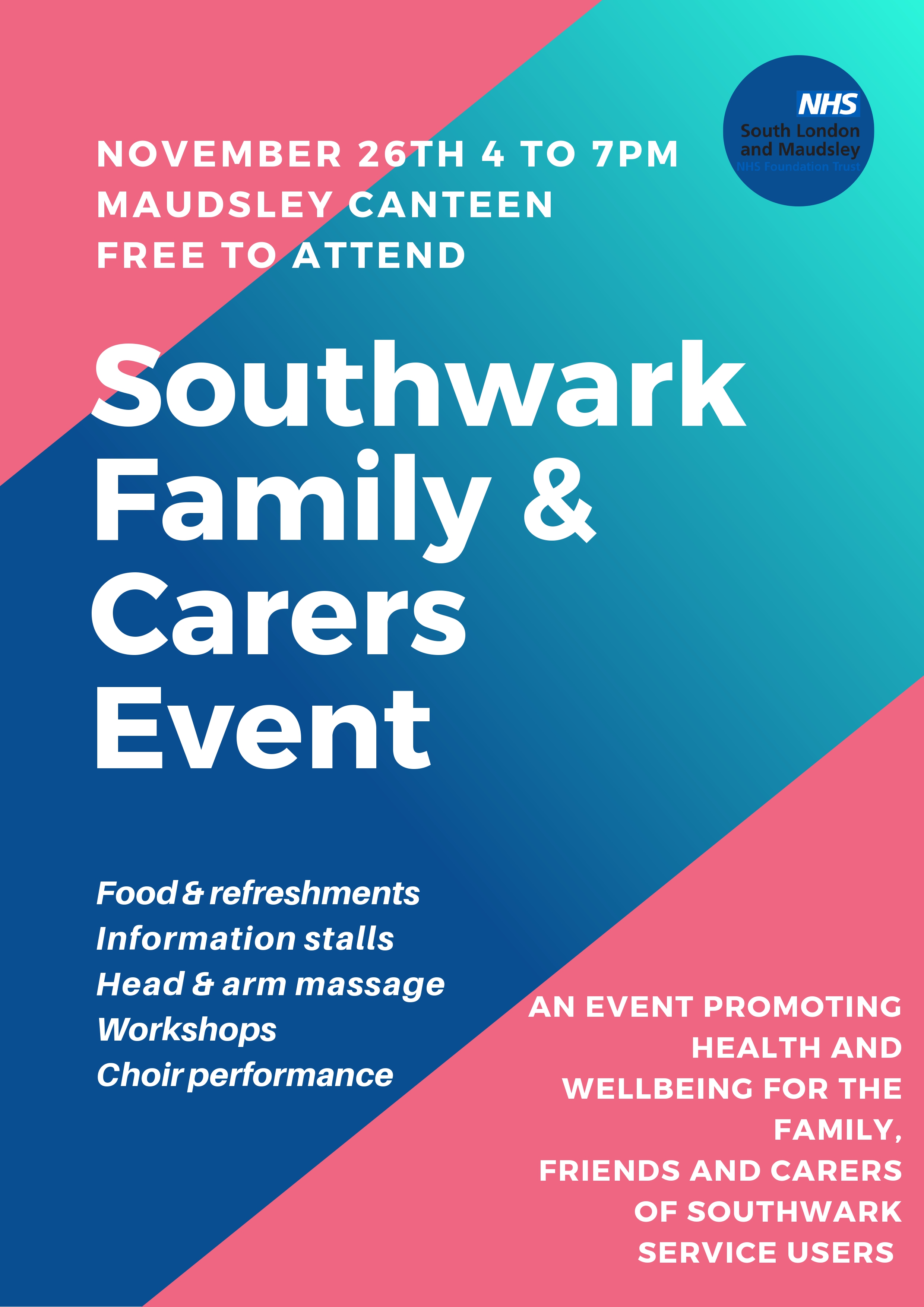
Southwark Family & Carers Event at the Maudsley!

By Matthew McKenzie, Chair of the Triangle of Care Community Group

Supporting someone with mental health challenges can be both rewarding and demanding. That’s why it’s so important for families and carers to have spaces where they can connect, share experiences, and find out about the support available to them.

South London & Maudsley NHS Foundation Trust (SLaM) will be hosting a special event for the family and carers of anyone using the services of Southwark community mental health teams, inpatient, or crisis services.

This free, drop-in event offers a relaxed and welcoming environment where families and carers can meet staff, learn more about how services work, and discover the support available to them.

🌈 Event Details

📅 Wednesday 26th November
🕓 4–7 PM
📍 The Maudsley Canteen
💷 Free of charge – drop in anytime

What to Expect

  • Opportunities to speak directly with staff from Southwark’s mental health teams
  • Information stalls offering resources and advice
  • Workshops focused on wellbeing and caring
  • Food & refreshments provided throughout the evening
  • Massages to help you relax
  • A choir performance to lift your spirits

This event is all about community, connection, and care – a chance to recognise the vital role families and carers play in supporting mental health recovery and wellbeing.

If you’re a carer, family member, or friend supporting someone under Southwark’s services, please do come along. It’s an opportunity not only to learn and unwind, but to feel appreciated and supported.

For more information, you can contact:
📧 David.Meyrick@slam.nhs.uk

Calling All Carers: Get Involved with the OSMOSIS Research Project

Blog by Matthew McKenzie – Carer activist

As someone who’s been advocating for carers for years through A Caring Mind, I know how important it is that carers’ experiences influence the way support systems are built. The OSMOSIS project offers a real chance to help improve understanding and services for those of us supporting loved ones with severe mental health conditions.

If you are caring for someone living with psychosis, schizophrenia, or bipolar disorder, here’s an opportunity to make your voice heard.

Continue reading

What Makes for Meaningful Carer Involvement?

By Matthew McKenzie FRSA BEM, Chair, Triangle of Care Community Group

This week’s Triangle of Care Member Webinar, hosted by Carers Trust, which focused on a vital question: What makes for meaningful carer involvement?

We heard from across the Triangle of Care network, these being carers, professionals, and trust representatives coming together to share what genuine involvement looks like in practice.

I spoke about my own lived experience as a carer, supporting two non-verbal brothers with autism and my late mother with mental health challenges and how this journey has shaped my advocacy for stronger partnerships between carers and professionals.

Over the years, through the Triangle of Care, I’ve seen how much difference early and equal involvement can make.

Continue reading

Understanding Community: The Foundation of Connection

By Matthew McKenzie – A Caring Mind

Community is a word we hear often, but its true meaning and significance can sometimes be overlooked. At its core, a community is a network, a web of relationships built on shared identity, common themes, and mutual trust. Communities are formed when people come together, united by a sense of belonging and shared responsibility. This sense of belonging is not just about being part of a group; it’s about feeling valued, having a purpose, and working towards common ideals.

This blog is a transcript of the video below.

Communities exist in many forms. The most immediate and intimate is the family, where the seeds of unpaid caring are often sown.

Continue reading

Why Unpaid Carers need to be aware of learning Digital Skills

By Matthew McKenzie

The Urgent Need for Digital Skills Among Unpaid Carers

Unpaid carers who provide support to family members, friends, or neighbors with long-term health conditions are the backbone of many communities. Their work is often invisible, yet it is essential for the well-being of countless individuals. As healthcare systems rapidly digitize, the landscape of caregiving is undergoing a profound transformation. Unpaid carers now face the challenge of adapting to new technologies, digital platforms, and online resources that are becoming integral to the delivery of care.

This blog explores why technical and digital skills are no longer just optional for unpaid carers. The blog is also a transcript of matthew’s video below.

Drawing on insights from matthew’s experience as an unpaid carer & IT professional and advocate for carers, we delve into the practical reasons behind this shift, the opportunities and challenges it presents, and the future trends that will shape caregiving in the years to come.

The Changing Face of Caregiving

Digitization in Healthcare

Healthcare is moving online at an unprecedented pace. Electronic health records, telehealth platforms, wearable health devices, and digital prescriptions are becoming the norm. The reasons are clear: digitization streamlines processes, reduces costs, and enables real-time access to critical health data. For unpaid carers, this means that many aspects of their role now require interaction with digital tools.

The Role of Carer Centers

Local carer centers have traditionally been the first point of contact for those seeking support. As these centers will play a crucial role in helping carers acquire the skills needed to navigate the new landscape. Online training, virtual support groups, and digital resource libraries are just some of the ways carer centers are evolving.

Overcoming Barriers to Digital Inclusion

Challenges Faced by Carers

Not all carers are comfortable with digital environments. Some may lack the means to access technology, while others face disabilities that make using digital platforms difficult. For example, visual impairments can pose significant challenges. It’s important for carer centers and support organizations to recognize these barriers and provide alternative solutions where possible.

The NHS 10-Year Plan

Digitization is at the heart of the NHS’s long-term strategy. Unfortunately, unpaid Carers who fail to meet the demand for digital skills may find themselves excluded from essential services and support. Embracing technology is not just about keeping up, it’s about empowering carers to meet the needs of those they support with confidence and efficiency.

Conclusion

The digitization of healthcare is transforming the role of unpaid carers. Technical and digital skills are now essential for accessing resources, coordinating care, and advocating for loved ones. While the transition may be challenging, it offers opportunities for greater efficiency, independence, and empowerment.

If you are an unpaid carer, now is the time to invest in your digital skills. Seek out training, connect with support networks, and take advantage of the tools available. Your role is vital, and with technology on your side, you can continue to make a difference in the lives of those you care for.

NHS Digital Revolution: Empowering Unpaid Carers

The Digital Revolution in the NHS: Why Unpaid Carers Must Be at the Heart of Change

From Matthew McKenzie – Carer activist

Below is a transcript of my video

The National Health Service (NHS) in the UK is undergoing a profound transformation, one that is being described as a technological revolution. With the launch of the NHS 10-year plan, the focus is shifting towards digitization, artificial intelligence, and centralized health information. While these changes promise to streamline care and improve outcomes, there is a critical group whose needs and voices must not be overlooked: unpaid carers.

Unpaid carers which I feel are often family members or close friends often play a vital role in supporting those with long-term health conditions, including mental illness and cancer. Their contributions are immense, yet they are frequently left on the sidelines when it comes to digital innovation in healthcare. This article explores why unpaid carers must be central to the NHS’s digital future, the challenges they face, and the steps needed to ensure they are empowered, included, and supported.

Understanding the Role of Unpaid Carers

The Backbone of Community Care

Unpaid carers are the unsung heroes of the healthcare system. They manage medications, coordinate appointments, provide emotional support, and often handle emergencies. Their work extends far beyond what is visible to the public or even to healthcare professionals. When patients leave hospitals or clinics, it is usually unpaid carers who take on the responsibility of ongoing care at home.

The Double Burden

Caring for someone with long-term illness can be demanding, both physically and emotionally. Many carers juggle multiple roles, often putting their own needs last. The demands of caring can make it difficult to keep up with new technologies or to seek out digital tools that could make their role easier. This invisibility and self-sacrifice can lead to carers being left behind as the NHS moves forward with its digital agenda.

The NHS 10-Year Plan and the Digital Revolution

What’s Changing in the NHS?

The NHS 10-year plan marks a significant shift towards digital healthcare. Key elements include:

  • Expansion of the NHS App: The NHS app is being developed to allow for easier booking of appointments, prescription management, and access to centralized health information.
  • Integration of Artificial Intelligence: AI will be used to process the growing volume of health data, supporting healthcare workers in making faster, smarter decisions.
  • Digital Health Records: Patient records will be digitized and made accessible across services, ensuring continuity of care and reducing the need for patients and carers to repeat their stories to every professional.

The Promise of Technology

Digitization offers many potential benefits for carers. With the right support, technology can:

  • Reduce waiting times and streamline appointment bookings.
  • Provide real-time access to health information and test results.
  • Eliminate the need to repeatedly explain a patient’s history to different professionals.
  • Help carers stay organized and informed, improving the quality of care they provide.

The Risks of Exclusion

Barriers to Digital Inclusion

Despite the promise of technology, there are significant barriers that can prevent unpaid carers from benefiting:

  • Digital Literacy: Not all carers are comfortable with technology, and some may lack the skills or confidence to use digital tools effectively.
  • Access to Devices: Smartphones and other devices capable of running advanced health apps can be expensive, putting them out of reach for many carers who may already be financially stretched.
  • Design Oversights: Many digital health tools are not designed with carers in mind, focusing instead on patients or healthcare professionals.
  • Time Constraints: The demands of caring leave little time for carers to research or learn about new digital resources.

The Danger of Being Left Behind

If unpaid carers are not included in the digital transformation, there is a real risk that they will be excluded from important aspects of care planning and decision-making. This could lead to poorer outcomes for both carers and those they support, and ultimately place greater strain on the NHS as a whole.


Making Digital Healthcare Work for Carers

The Need for Training and Support

To ensure carers can benefit from digital innovations, targeted training and support are essential. This could include:

  • Workshops and Training Sessions: Carer centers and NHS trusts can offer training on how to use digital tools, such as the NHS app.
  • Recovery Colleges: In the mental health sector, recovery colleges can help upskill carers in using technology to support their loved ones.
  • Accessible Design: Digital tools should be designed with carers in mind, ensuring they are intuitive and easy to use.

Inclusion in Care Records and Decision-Making

Carers must be recognized and included in digital care records, with appropriate safeguards for confidentiality. This would allow them to:

  • Be easily identified and referred to support services.
  • Access relevant health information to better support the person they care for.
  • Participate in care planning and decision-making processes.

Co-Designing Digital Tools

Carers should have a say in the design and rollout of digital health tools. Their lived experience provides invaluable insights into what works and what doesn’t. Involving carers from the outset can ensure that digital innovations truly meet their needs.

Practical Steps for Carers

Engaging with the NHS App

Carers should be encouraged to explore the NHS app and see how it can support them in their role. This might include:

  • Booking appointments for the person they care for.
  • Managing prescriptions and medication reminders.
  • Accessing up-to-date health information and test results.

Seeking Support and Sharing Feedback

Carers should not hesitate to ask their GP, pharmacist, or local carer organizations about digital options and support. Providing feedback on what works and what doesn’t is crucial for improving digital services.

Building a Community of Support

Carer groups and forums can play a vital role in sharing experiences, tips, and support related to digital healthcare. By working together, carers can help each other navigate the digital landscape and advocate for their needs.

The NHS’s Responsibility: Including Carers in the Digital Future

Recognizing Carers as Partners, Not Visitors

Unpaid carers are not just visitors in the healthcare system as they are integral to its functioning. Their inclusion in the digital revolution is not optional; it is essential for the sustainability of the NHS.

Reducing Pressure on the System

By supporting carers with digital tools and resources, the NHS can help them provide better care, reducing the pressure on hospitals and social care services. Excluding carers would only shift the burden back onto the NHS, undermining the goals of the 10-year plan.

Building Digital Solutions with People at the Center

Technology alone cannot solve the challenges of healthcare. Digital solutions must be built with the people who use them patients, carers, and professionals at the center. This means ongoing dialogue, co-design, and a commitment to accessibility and inclusion.

Looking Ahead: Embracing Change Together

The Constant of Change

Technology is always evolving, bringing both challenges and opportunities. For carers, staying informed and engaged with digital developments is key to ensuring they are not left behind.

Shaping the Future

Carers have a unique opportunity to shape the future of healthcare. By participating in the digital revolution, sharing their experiences, and advocating for their needs, they can help create a system that works for everyone.

A Call to Action

Whether you are a carer, a healthcare professional, or someone interested in the future of the NHS, now is the time to act. Embrace digital tools, seek out training and support, and make your voice heard. Together, we can ensure that the NHS’s digital future is inclusive, effective, and centered on the needs of those who care.

Conclusion

The NHS’s digital revolution holds great promise, but its success depends on the inclusion of unpaid carers. By recognizing their vital role, addressing barriers to digital access, and involving them in the design and implementation of new tools, we can build a healthcare system that is truly fit for the future. Unpaid carers are not just supporting the system they are shaping it. Their voices, experiences, and needs must be at the heart of the NHS’s digital journey.

The Hidden Struggles of Unpaid Carers: Understanding and Overcoming the 20 Worst Challenges

By Matthew McKenzie

Unpaid carers are the unsung heroes of our society, providing essential support to loved ones with long-term or terminal illnesses, disabilities, or mental health conditions. Despite their vital role, they often remain invisible, unsupported, and overwhelmed by the weight of their responsibilities. As Carers Week 2025 approaches, it’s crucial to shine a light on the realities unpaid carers face and explore practical solutions to help them navigate their journey.

Drawing from lived experience and insights gathered from carer support groups, this article delves into the 20 most significant challenges unpaid carers encounter. It also offers actionable advice and resources to empower carers and those who wish to support them.

To watch the detailed video lecture, see below.


The Backbone of Society: Unpaid Carers in Context

There are an estimated 5 to 7 million unpaid carers in the UK alone, with millions more worldwide. These individuals save health and social care systems billions each year, yet their contributions are often undervalued or overlooked. The role of an unpaid carer is demanding, complex, and frequently misunderstood by those who have never walked in their shoes.

Continue reading