March 21 marks the International Day for the Elimination of Racial Discrimination, which is a day recognised across the world to remember, reflect, and take action.
This day was established following the tragic events of the Sharpeville Massacre in South Africa in 1960, where peaceful protestors lost their lives while standing against injustice. It is a reminder of how far we have come, but also how far we still need to go.
Racism is not just something we read about in history. It continues to exist in our societies, often in ways that are subtle, systemic, and deeply embedded. It can affect people’s opportunities, their confidence, and their sense of belonging.
As a carer activist, I see the impact of this in mental health and support systems. When people feel unheard, misunderstood, or treated unfairly, it can have lasting effects on their wellbeing. Care should be equal, compassionate, and inclusive for everyone.
This day is not only about raising awareness, but about encouraging action. Each of us has a role to play in challenging discrimination and promoting understanding.
That might mean listening more carefully to others’ experiences, educating ourselves, speaking up when something isn’t right, or simply showing empathy in our everyday interactions.
Change doesn’t always come from big gestures. It often starts with small, consistent actions.
March 21 is a reminder, but I think the responsibility is ongoing.
The question is: what will you do to stand against racism?
By Matthew McKenzie, A Caring Mind (Carers UK Ambassador)
As an unpaid mental health carer, I have spent years navigating hospital corridors, GP practices, care plans, juggling crises, and long silences where carers are too often left out. I am sure unpaid carers are expected to hold families together, while notice early warning signs, and keep loved ones safe. Still I always mention most of us receive no formal training, and our knowledge is rarely recognised as expertise.
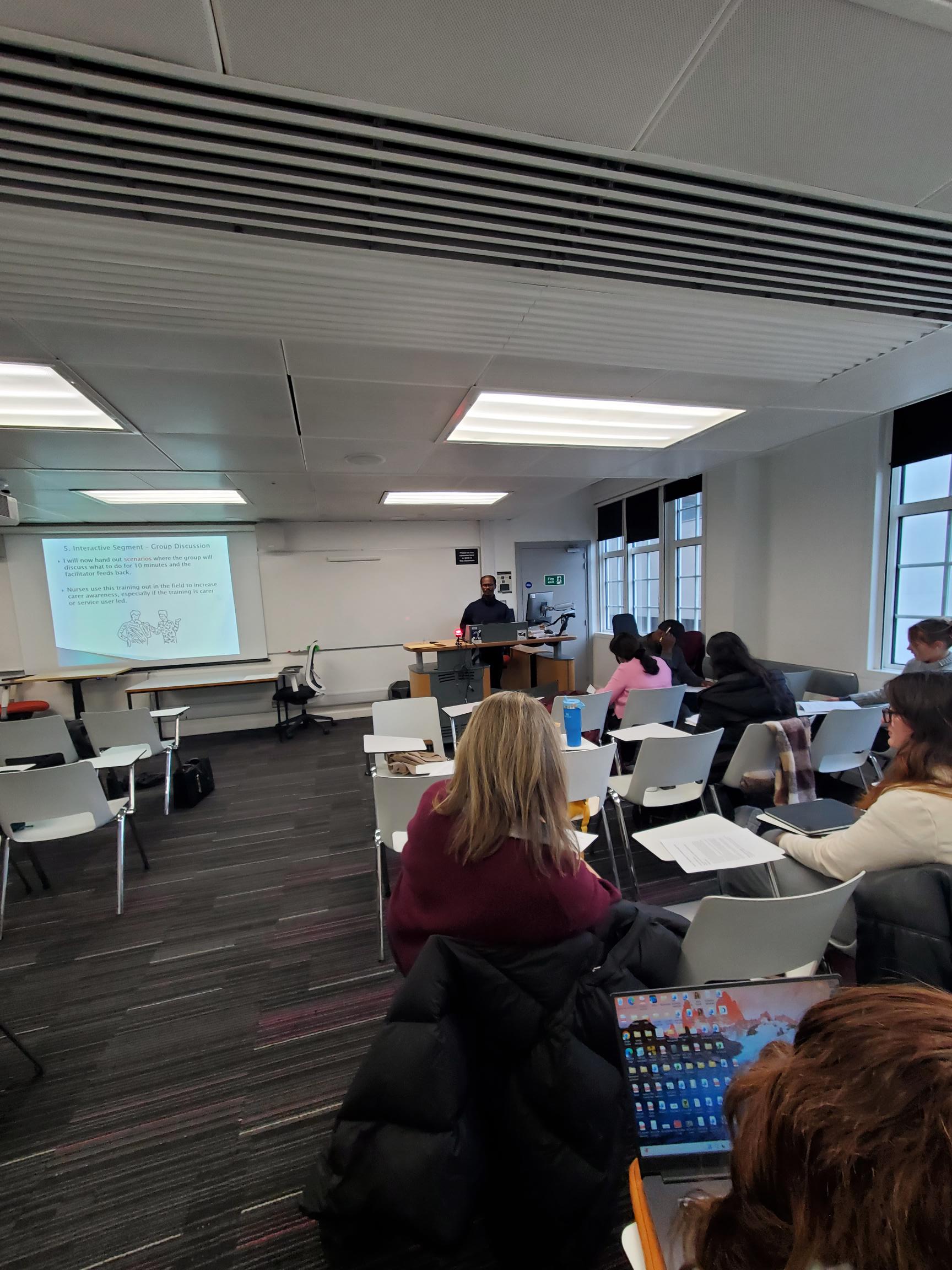
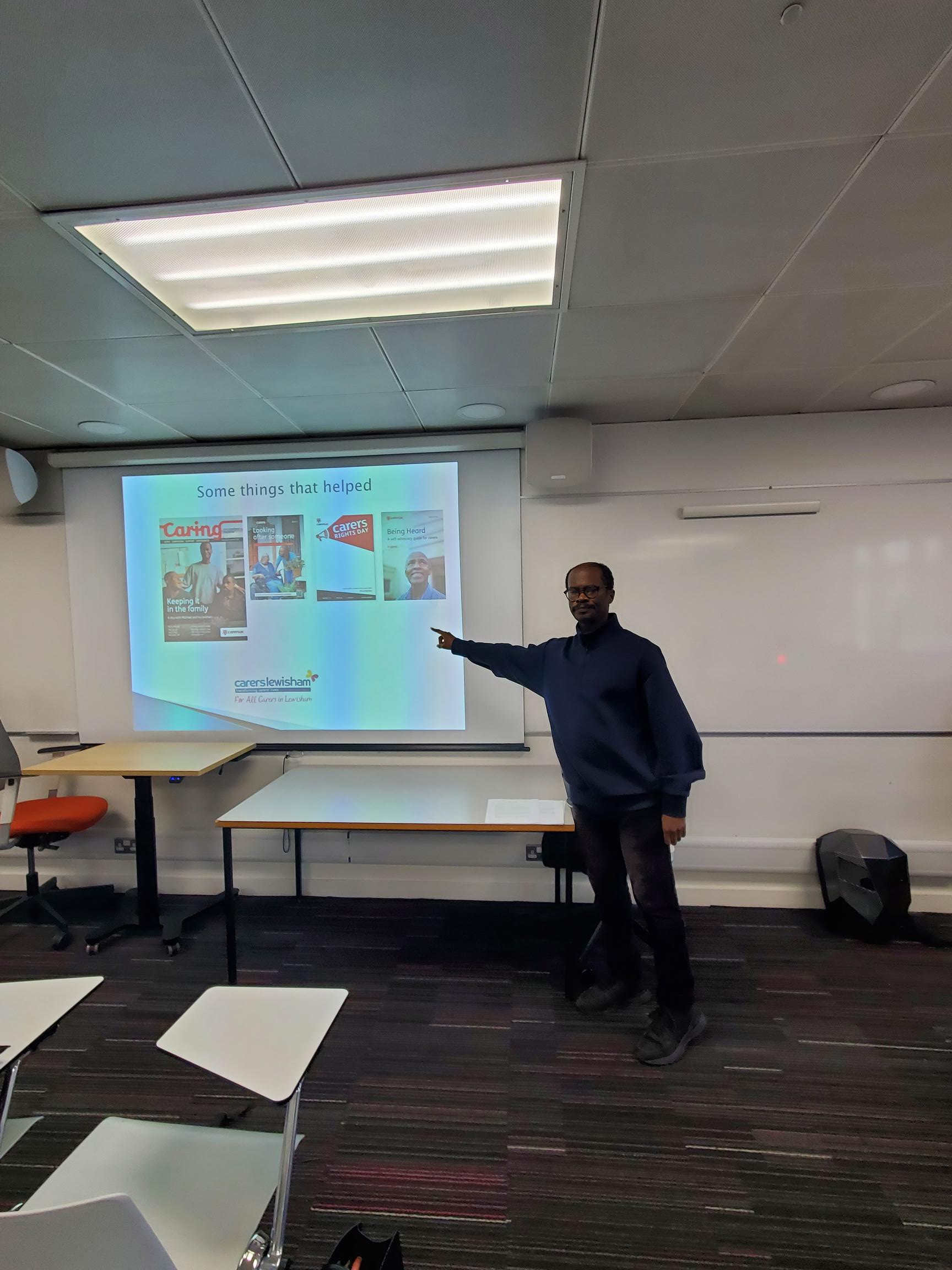
That is why recently teaching a module for the Masters course to mental health nursing students at King’s College London felt so important. Not after they qualify. Not once they are overwhelmed in practice. But before they step out into the field. The session took place 15th of January.
Why carer-led teaching matters
Unpaid carers sit at the sharp edge of the mental health system. We see what works, what harms, and what gets missed when professionals don’t fully understand the family context. When students hear directly from carers, learning moves beyond textbooks into real life into the emotional, practical, and ethical realities of care.
Training mental health professionals without carer voices is like teaching navigation without a map.
What I taught: lived experience as learning
The session I delivered was built entirely from a carer’s perspective and centred on one core message: you cannot deliver effective mental health care without working with carers.
The module covered:
My lived experience as an unpaid mental health carer How I became a carer, the emotional impact, the daily responsibilities, and the toll caring can take on mental and physical health.
The hidden impact on carers Burnout, stigma, isolation, guilt, and the reality that many carers are supporting professionals while receiving little support themselves.
Carers as partners, not problems Exploring what happens when carers are ignored – and how outcomes improve when they are listened to, informed, and included.
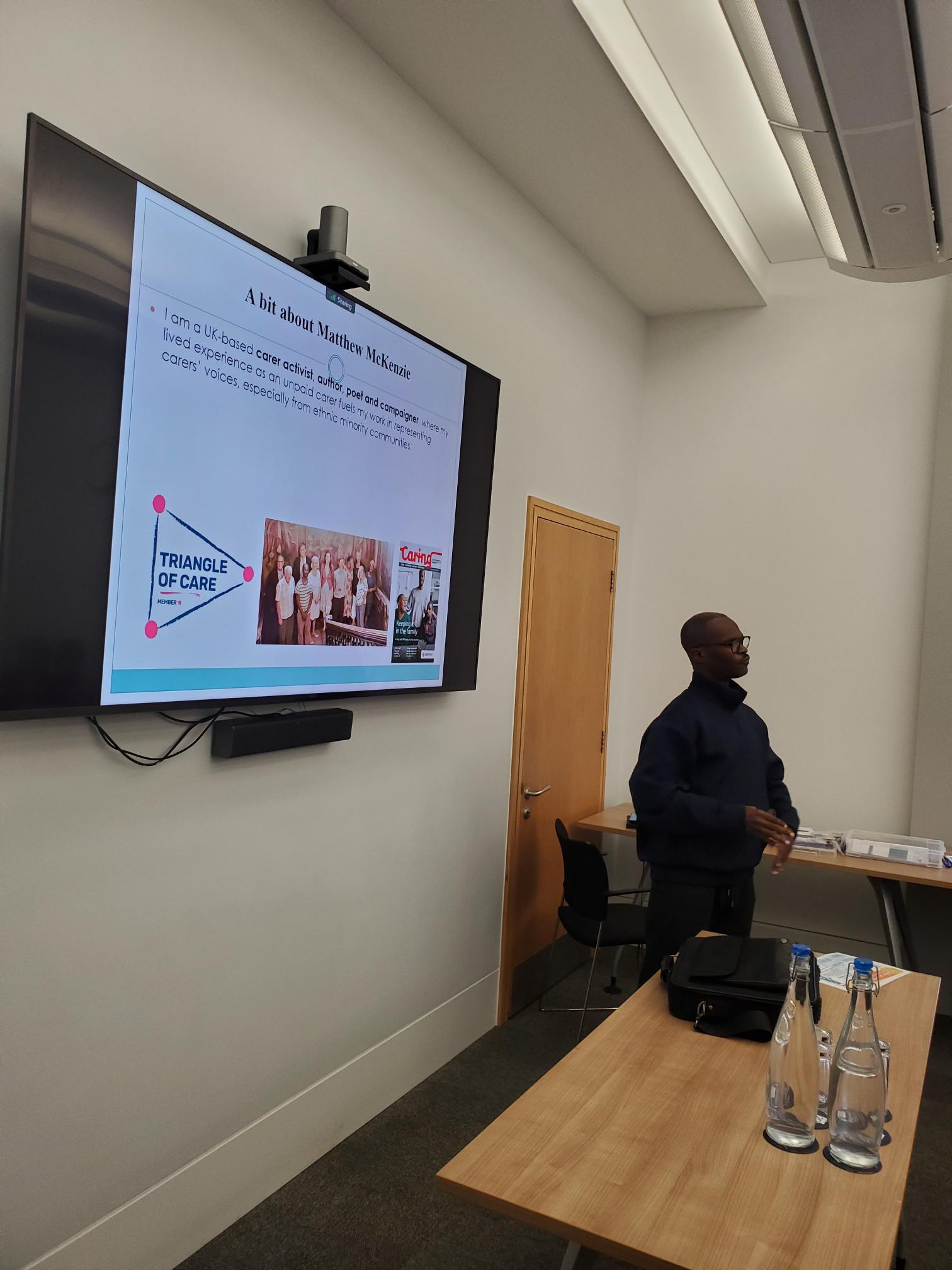
The Triangle of Care A strong emphasis on the Triangle of Care framework: the partnership between service user, carer, and professional. I challenged students to see carers as a vital link in the chain, not an optional extra.
Carers UK and carer identification Highlighting the role of Carers UK in advocacy, rights, resources, and why professionals must help carers identify themselves early so they can access support.
Practical skills for future nurses Listening without defensiveness, sharing information appropriately, involving carers in care planning, and understanding when carers need support themselves.
Interactive discussion and reflection Students worked through real-life scenarios, asking: What would I do differently now that I understand the carer experience?
The shift we need in education
Most unpaid carers are not trained for their role. We learn through crisis, exhaustion, and trial and error. Mental health professionals, however, are trained, which means universities have a responsibility to ensure that training includes those of us living this reality every day.
Carer-led teaching builds empathy, improves communication, and ultimately leads to safer, more effective care. When students learn early that carers matter, they carry that mindset into practice.
A final thought
Unpaid carers are already part of the mental health workforce, it’s just the title unpaid, unsupported, and often unheard. So I feel bringing carers into universities is not a “nice extra”. It is absolutely essential.
If we want a mental health system that truly works, we must start by listening to those who never clock off.
By Matthew Mckenzie – facilitator of national ethnic mental health carers forum
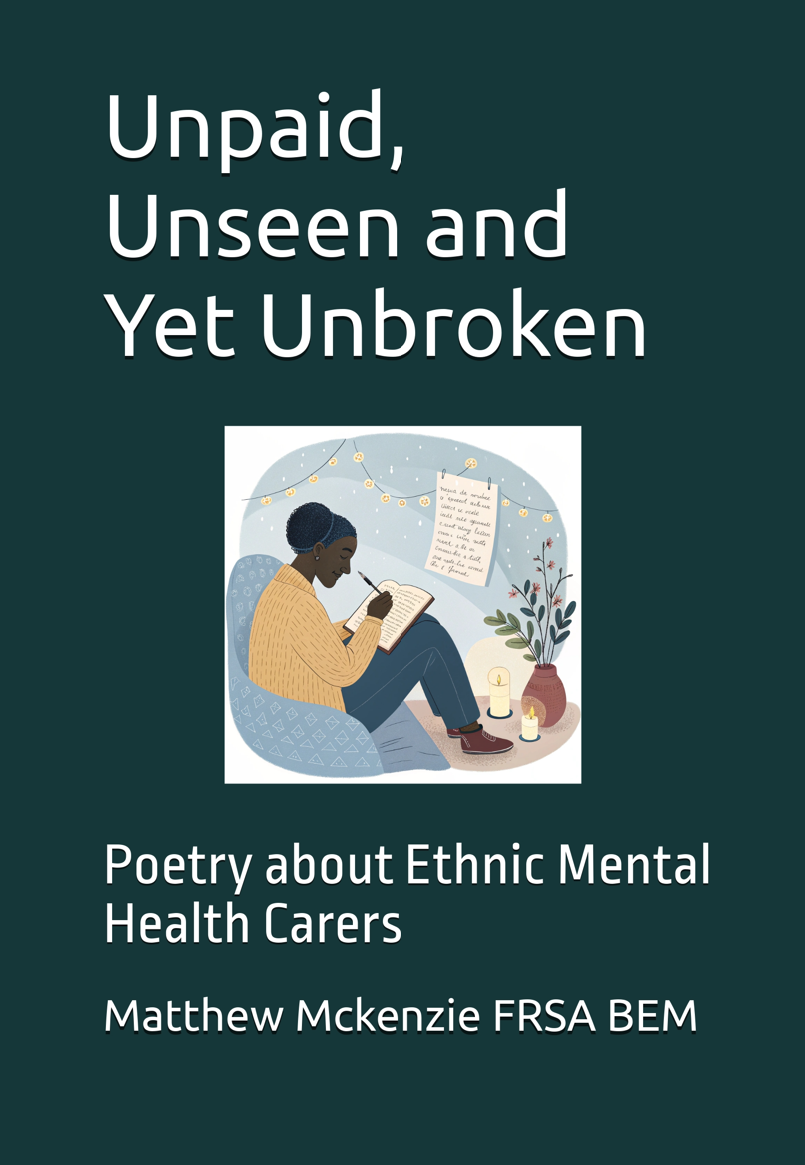
I’m pleased to share “Unpaid, Unseen and Yet Unbroken”, a spoken word poetry video that marks the first poem released from my forthcoming poetry collection of the same name.
This first poem speaks from within the lived reality of unpaid mental health carers, particularly those from ethnic and marginalised communities whose labour is often overlooked, misunderstood, or taken for granted. It reflects moments many carers will recognise: waiting rooms, misrecognition, quiet endurance, and the strength it takes to keep showing up without acknowledgement.
🎥 Watch the spoken word video here:
The wider collection I am currently working on brings together poems shaped by care, fatigue, love, resilience, and survival. It is a body of work rooted in lived experience and community voices, offering poetry not only as expression, but as witness and affirmation.
This first poem sets the tone for what is to come, promoting honest, reflective, and unapologetic in its call for carers to be seen, heard, and respected.
This work is part of my ongoing commitment through my A Caring Mind youtube channel to use creativity as a way to challenge stigma, amplify unheard voices, and centre care as a vital social contribution.
More poems from this collection will be shared in the coming months.
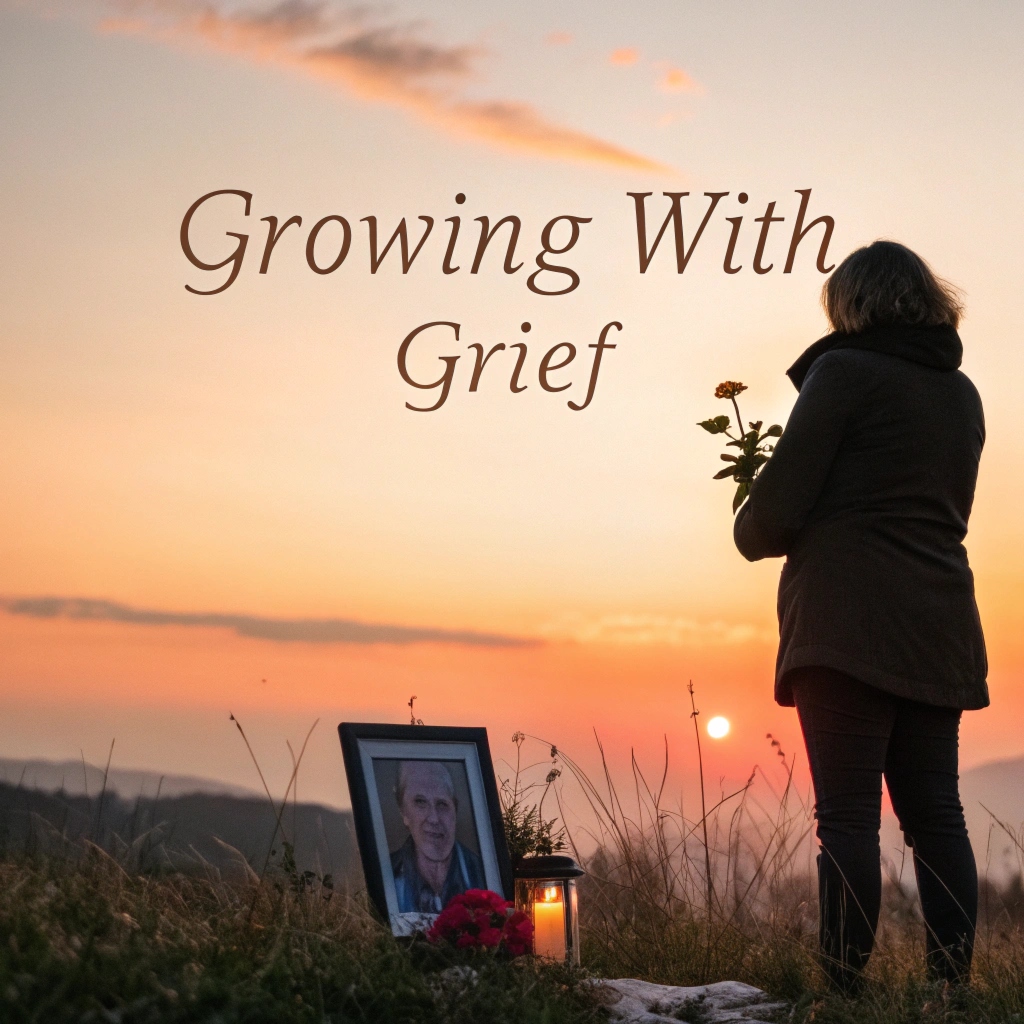
This week, we come together to recognise something deeply human, yet often hidden: grief and the people who carry it long after the world has moved on.
I’ve created a short video exploring the emotional reality of bereavement, with a special focus on unpaid carers. These are the people who quietly give their time, energy, and love to support someone through illness… and who are often left to grieve in silence when that journey ends.
My hope is that this helps spark conversations, reduce stigma, and remind anyone grieving that you are not alone.
If you or someone you know needs support, these organisations can help:
Let’s work together to make sure every bereaved person, especially unpaid carers so they is heard, supported, and understood. #GrowingWithGrief | #GriefSupport | #UnpaidCarers | #Wellbeing
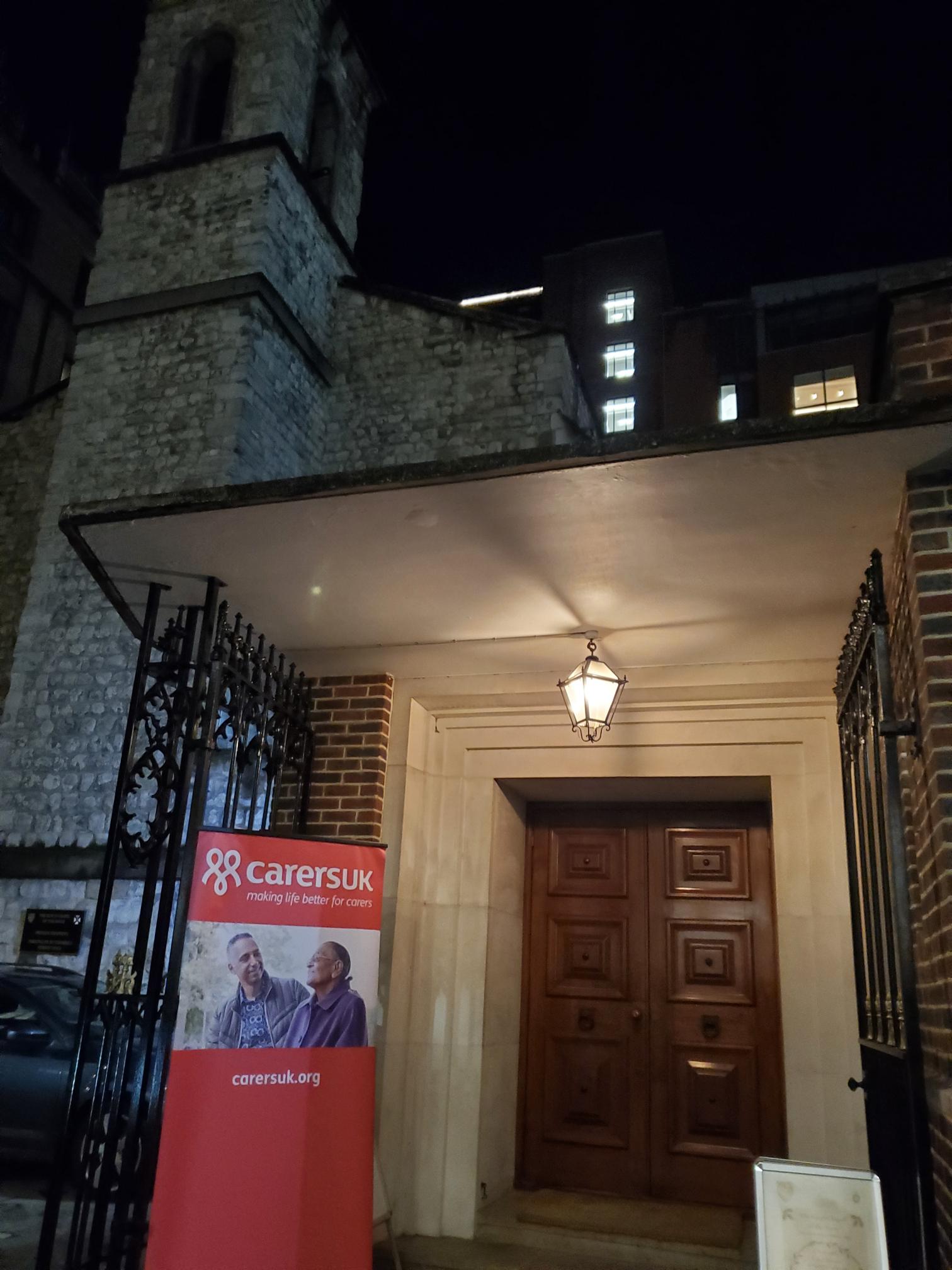
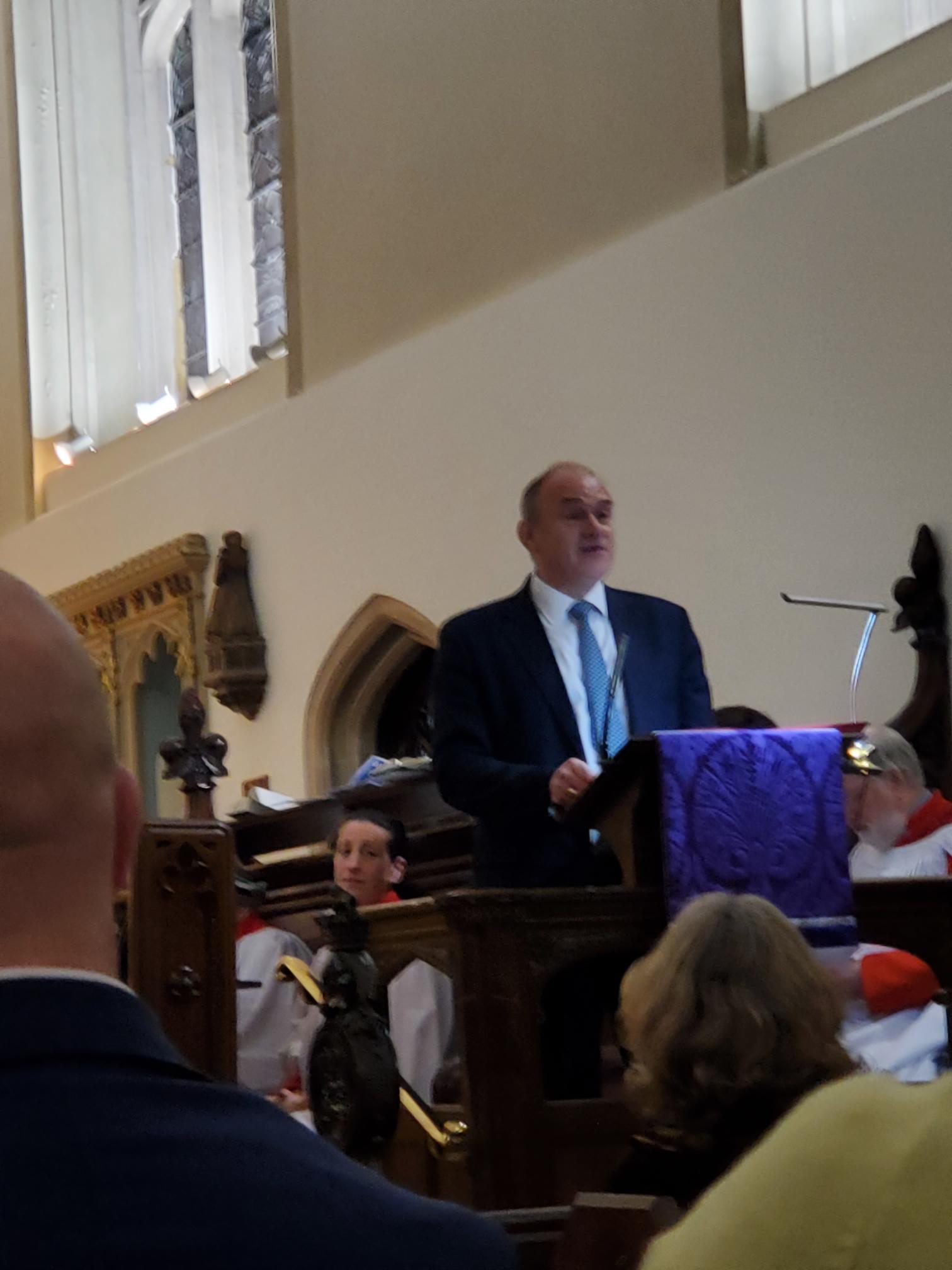
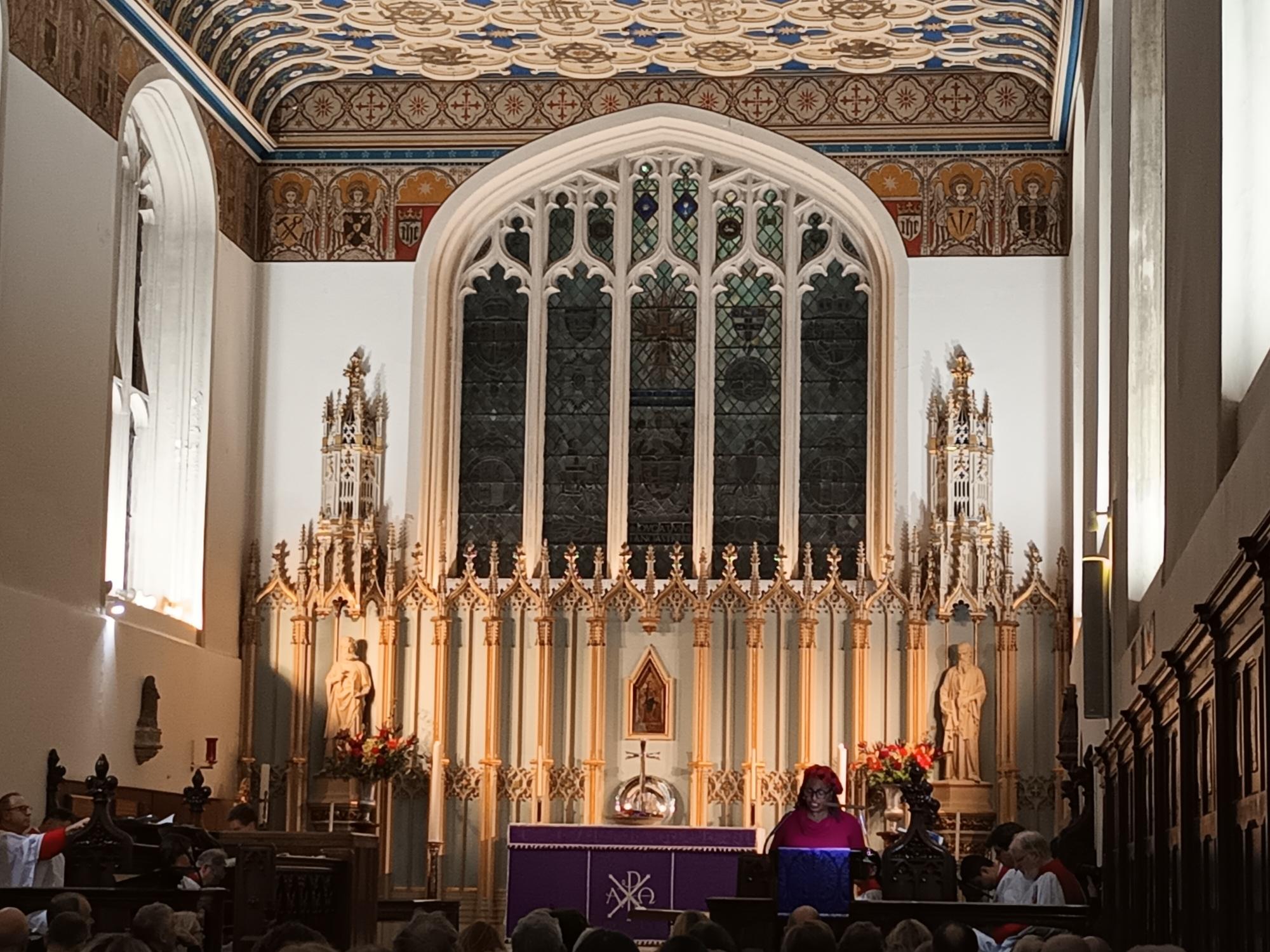
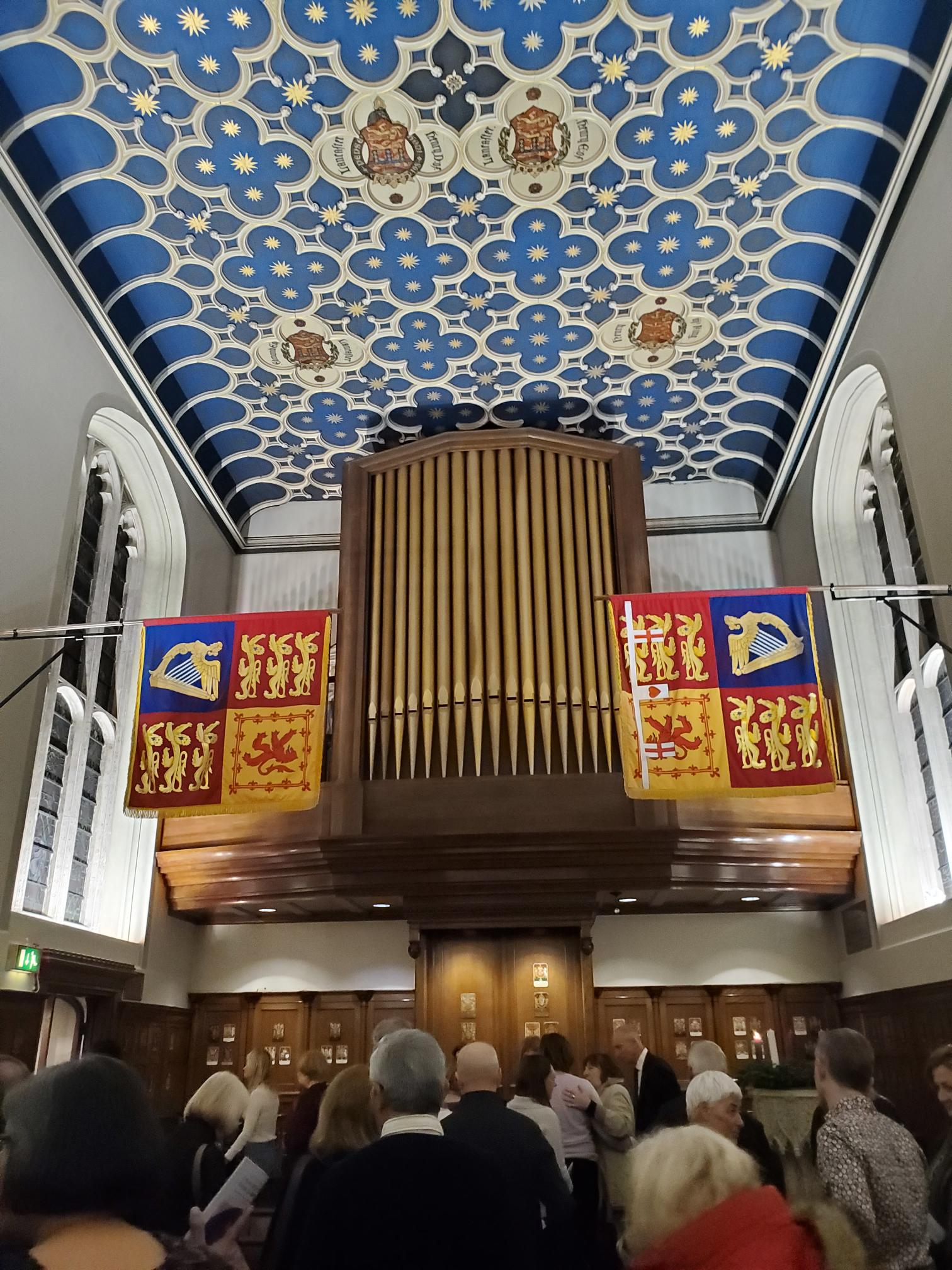
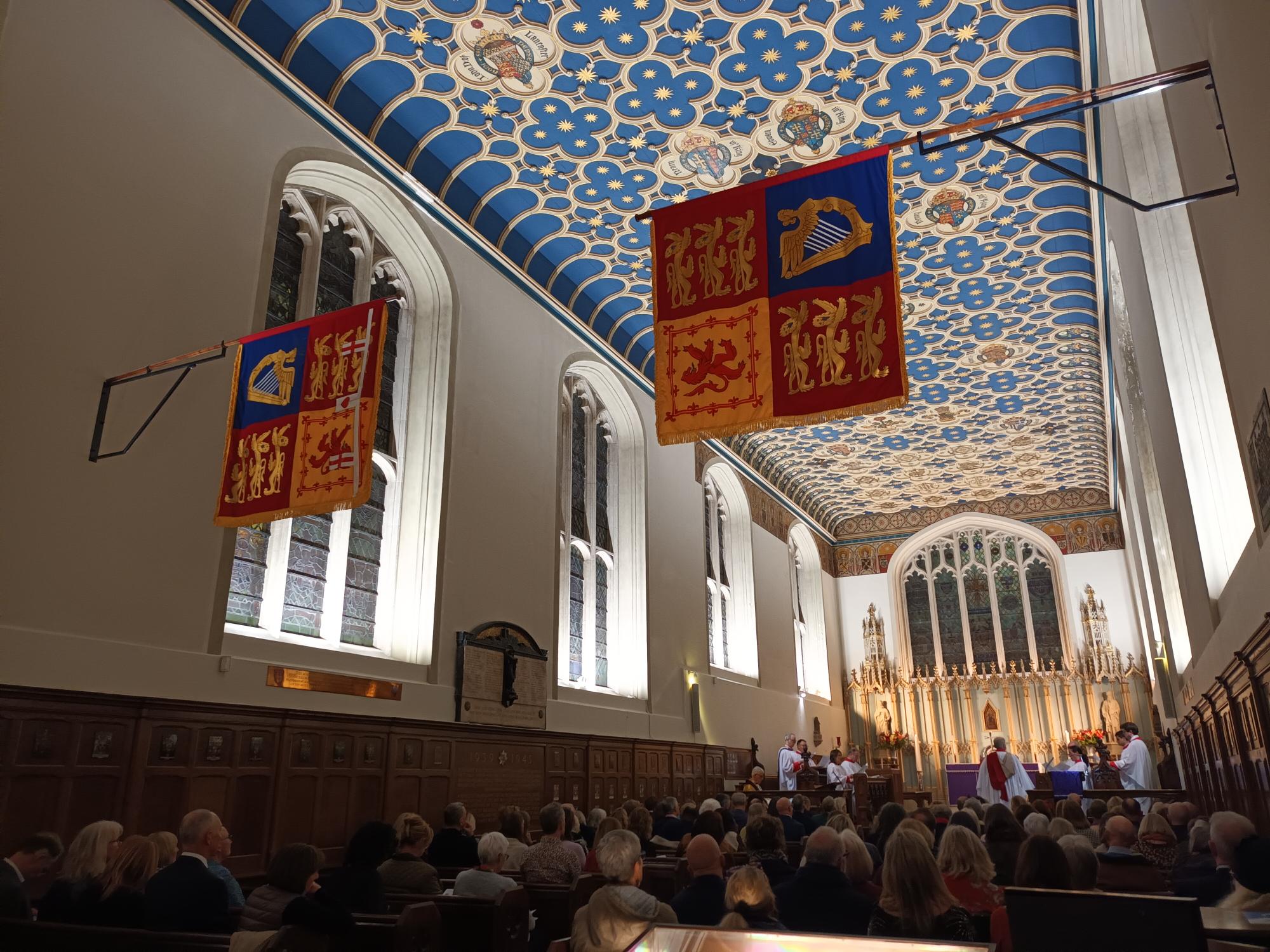
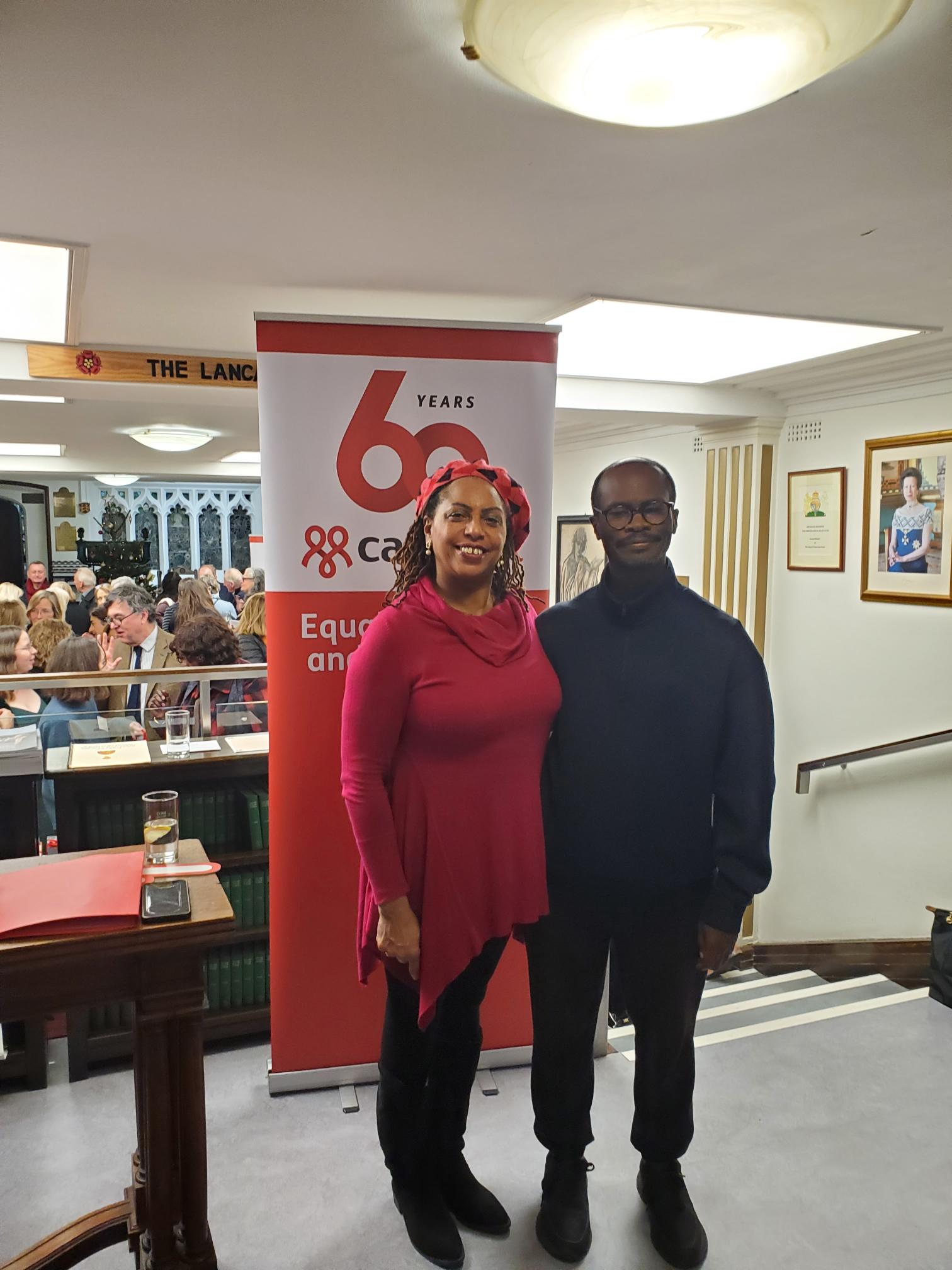
On 4th December 2025, I had the privilege of attending the Service of Christmas Carols and Readings for Carers UK (for their 60th anniversary) at The King’s Chapel of the Savoy.
As many will know, Carers UK is a national charity that offers advice, information, and advocacy for unpaid carers, people who look after a family member or friend due to illness, disability, mental health challenges or frailty.
Their work is vital and ranges from campaigning for carers’ rights, to shaping policy, to providing emotional and practical support.
As someone who has spent years amplifying carers’ voices, and as someone who has been a carer myself, I always find moments like this grounding. They remind me that carers are so often hidden and deserve spaces of recognition, reflection, and community.
I couldnt capture the whole event, so a lot of it is from memory,
The King’s Chapel of the Savoy, with its royal heritage and intimate atmosphere, felt like the perfect place for such a service. The carved wood, the vivid ceiling, the echo of voices old and new it all contributed to an environment where carers could feel honoured rather than overlooked.
A Service That Told carer Stories
The order of service blended scripture, poetry, classic carols, and carers’ own words. Each part spoke to a different dimension of caring, love, sacrifice, resilience, loss, hope.
Here is a clear, concise list of the Carers UK Christmas Carol Service Order, based on the programme you shared.
Some of the order of Service – Carers UK Christmas Carols and Readings
Carol – Once in Royal David’s City
Welcome & The Bidding Prayer by The Revd Canon Thomas Woodhouse MA
Welcome on Behalf of Carers UK by Helen Walker, Chief Executive
Gospel According to Luke, Chapter 2, Verses 8–20 Reader: Rt Hon Sir Ed Davey MP
Reading – Gospel According to Luke, Chapter 2, Verses 1–7, Reader: The Rt Rev Rob Wickham
Reading – Extract from A Christmas Carol, Reader: Jaycee La Bouche, a carer
The Blessing by The Revd Canon Thomas Woodhouse MA
Below are some reflections on the elements that struck me the most, based on the transcript provided.
I started noting down things when hearing the classic Clement Clarke Moore poem brought a sense of nostalgia and gentleness. For many carers, Christmas isn’t always restful, it can be emotionally heavy or practically demanding. Yet this reading reminded me of the grounding power of tradition.
There was also a Carer’s Poem – “I Carried Him” (Martin Seare), which was read by Tiggy Walker. The poem captured something familiar to many carers, which is the sense of being the energy source behind someone else’s survival. The feeling of being nurse, advocate, motivator, protector, and emotional anchor, all at once.
Jaycee’s reading from A Christmas Carol brought a heartfelt authenticity to the service, grounding Dickens’ message of compassion in real lived experience. Hearing a carer deliver those words reminded me how powerfully stories of renewal that echo the emotional journeys many carers navigate every day.
We also heard an extract from A Christmas Carol, where hearing Dickens’ words about Scrooge’s transformation felt fitting. Carers often live in a world full of systems that need to “wake up” to their realities, these systems overdue for compassion and change.
There was another Carer’s Poem – “Hands That Once Held Me” (Aaliyah O’Neill), which was read by Pippa Haywood. This poem honoured the emotional labour that accompanies caring, the grief, the patience, the love that persists through fading timelines and shifting identities.
Walking around after the service, we were provided with wine and mince pies (I could only handle one glass of mine), but ate a lot of mince pies. I also noticed on a nearby table, beautifully wrapped with red ribbon, were copies of books written by individuals deeply connected to the world of caring.
Tiggy Walker’s Both Sides Now offered a tender, candid exploration of love, loss, and the emotional realities of caring, while Why I Care highlighted personal reflections on the value and challenges of supporting others by Sir Ed Davy. Seeing these books at the event felt fitting, they extended the service’s message by giving carers stories they could see themselves in, learn from, and feel strengthened by.
Carols – Collective Voice, Collective Strength
Carols like “Once in Royal David’s City,” “O Little Town of Bethlehem,” “In the Bleak Midwinter,” “O Come All Ye Faithful,” and “Hark the Herald Angels Sing” took on added meaning.
Singing these in chapel reminded me that carers often feel alone, but they are part of a much larger story. Carols have always been about shared experience, hope, and unity. That unity was felt strongly throughout the chapel.
A Blessing for Carers
Towards the end, The Revd Canon Thomas Woodhouse offered prayers acknowledging:
those who care
those who are cared for
those who grieve
those who find joy in service
those who struggle silently
What the Service Meant to Me as a Carer
I left the event feeling the followng:
Being Seen
Carers rarely hear their stories reflected back to them with such respect. This service did that.
Connected
Being surrounded by fellow carers, supporters, faith leaders, and advocates reminded me that we are not navigating these challenges alone.
Renewed
Christmas can be difficult for many carers, i am running a few carer groups to reduce isolation, but this service offered a moment to pause, reflect, and recharge spiritually and emotionally.
Motivated
Each poem and reading reinforced why I continue to campaign and raise awareness: because carers’ lives, struggles, and contributions must be brought into public consciousness.
Final Thoughts
The Carers UK Christmas Service wasn’t just a festive gathering, it was a space that lifted the voices and experiences of carers into the light.
Carers UK continues to be a champion for those who give so much of themselves. And events like this remind us that recognition, community, and hope are powerful gifts.
I left the chapel gratefull for the stories shared, for the solidarity felt, and for the reminder that carers are, and always have been, at the heart of what makes our communities truly compassionate.
BONUS : A small tour of the chapel.
History in the Woodwork: Discovering the Stories Behind the Savoy Chapel’s Symbols
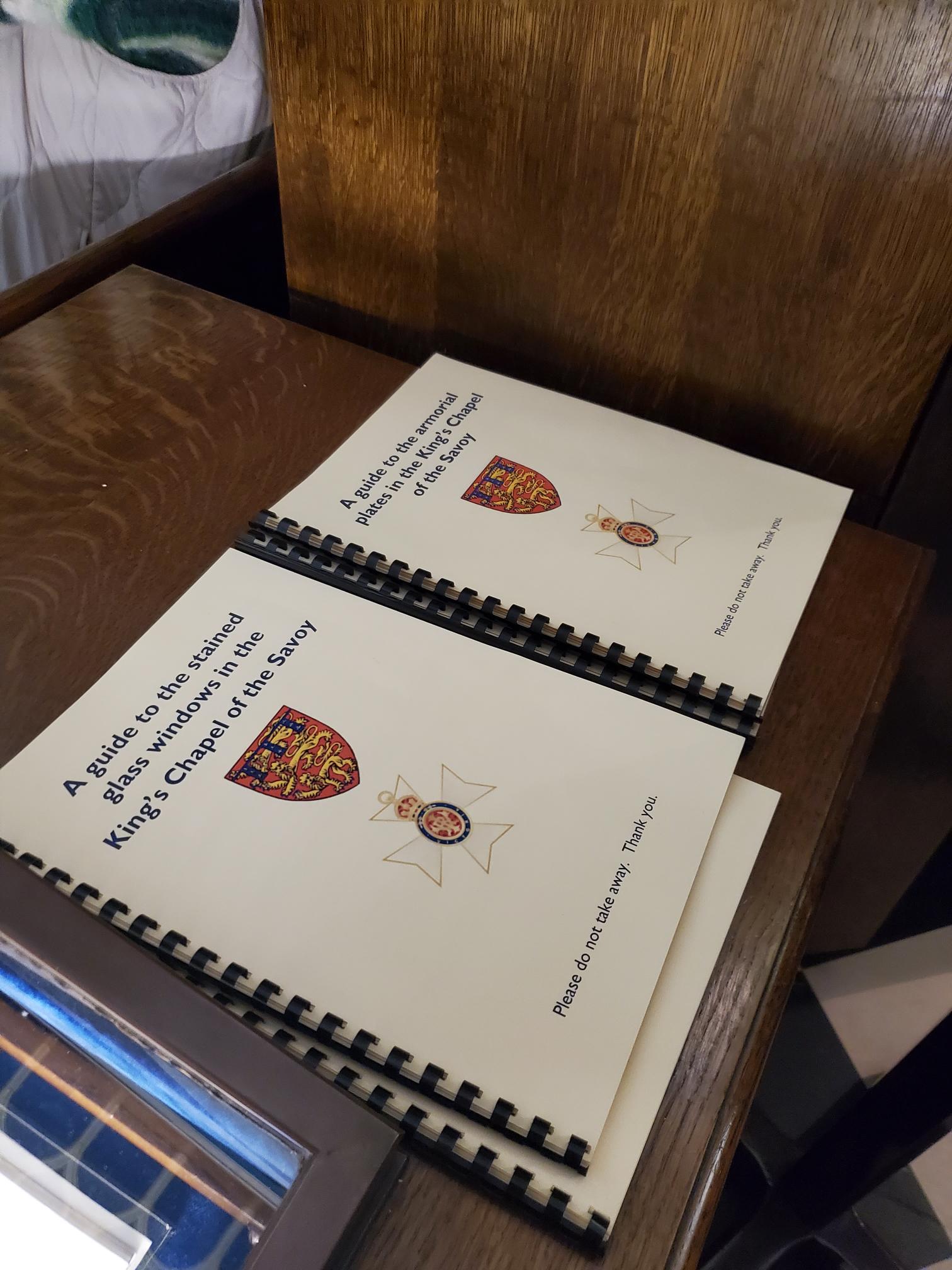
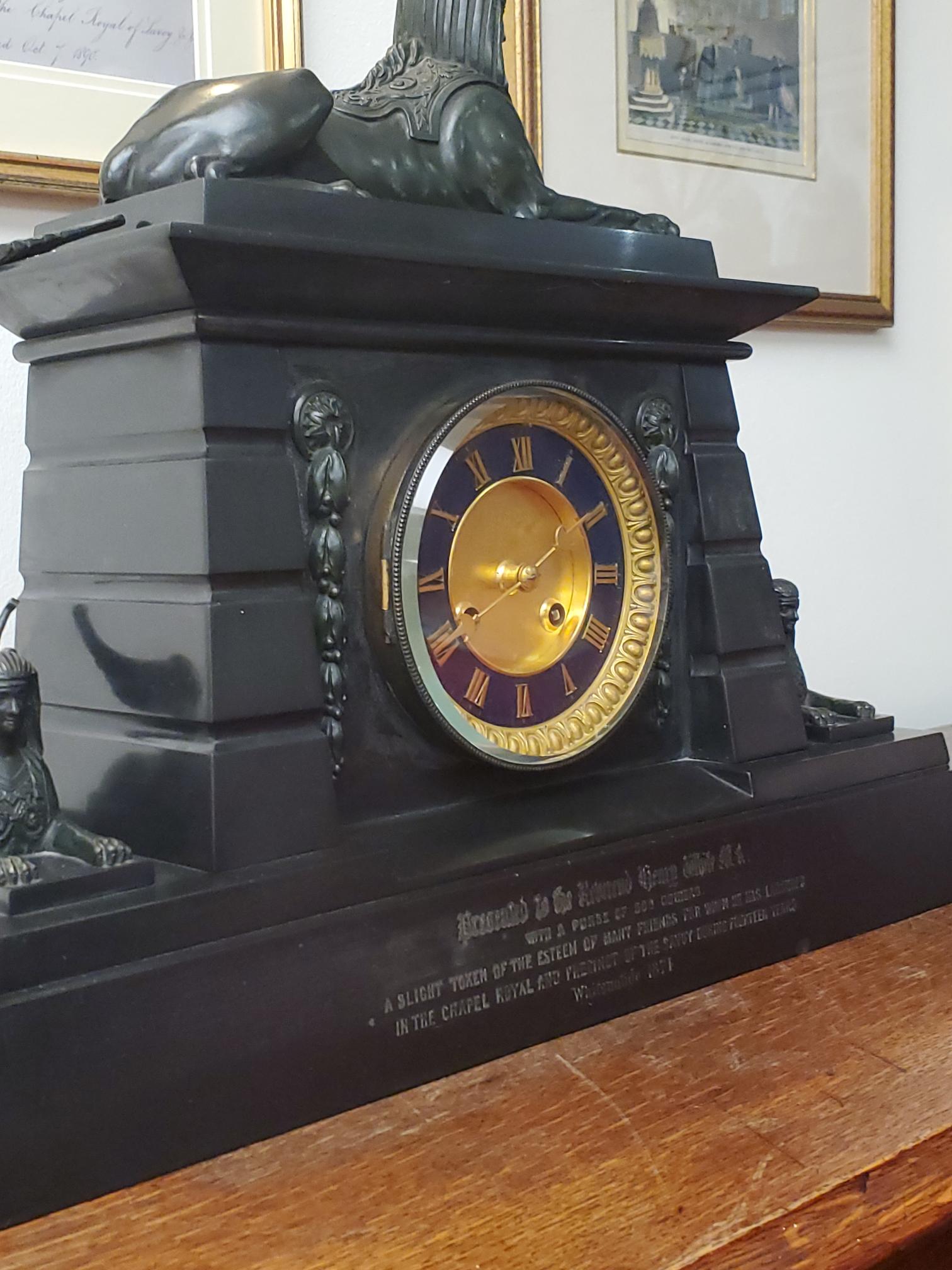
One unexpected part of attending the Carers UK Christmas Service at The King’s Chapel of the Savoy was the opportunity to explore some of the chapel’s remarkable historical artefacts. As a carer and someone who works in carer advocacy, I often reflect on continuity on how the past shapes the present. Walking around the chapel, I realised the walls were not just decorative; they were storytellers.
These objects and emblems remind us that the Savoy Chapel is a living part of royal, national, and personal history. And in many ways, the quiet endurance reflected in these items echoes the resilience of carers across the country.
1. The Heraldic Plaques on the Chapel Walls
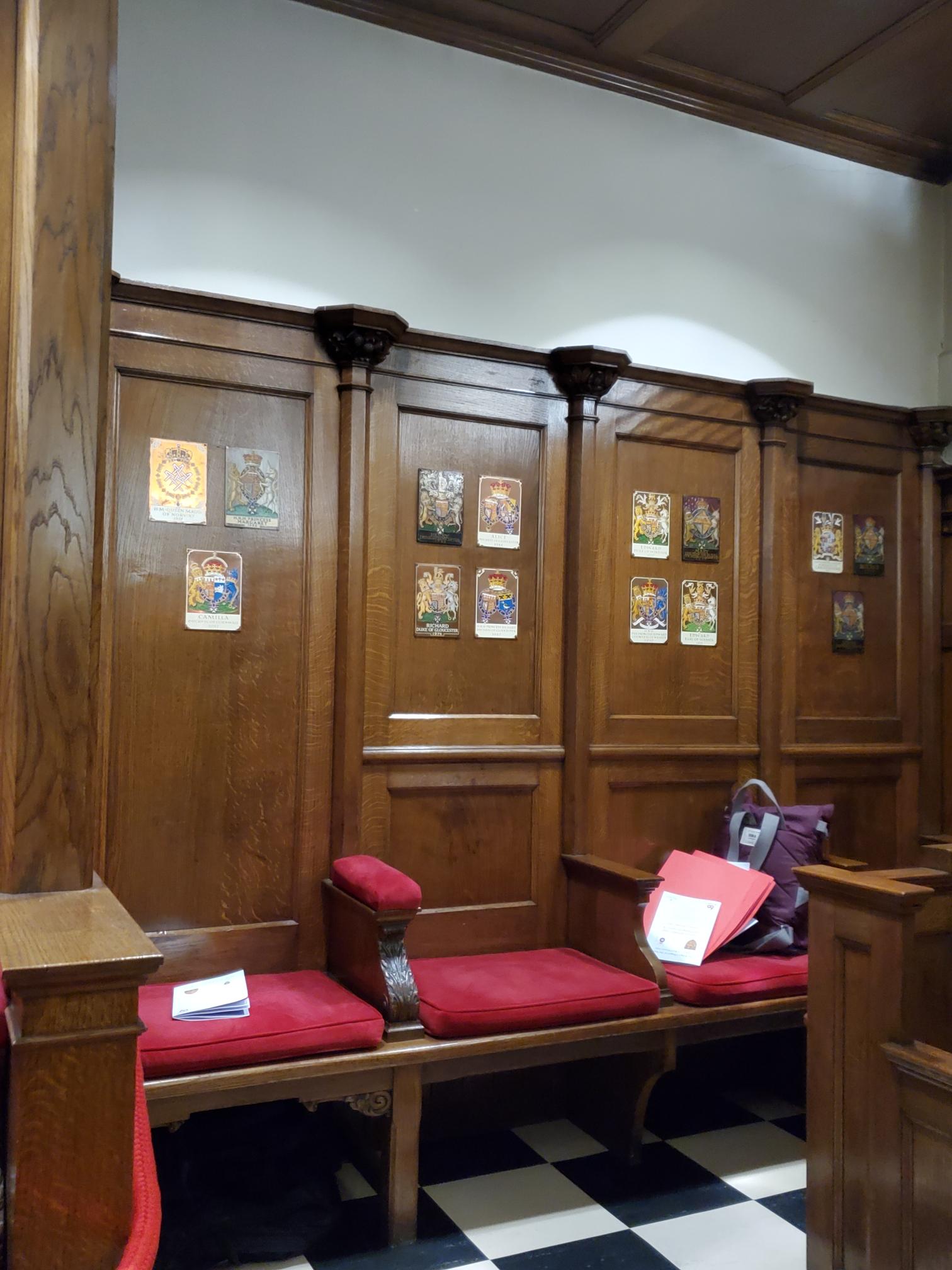
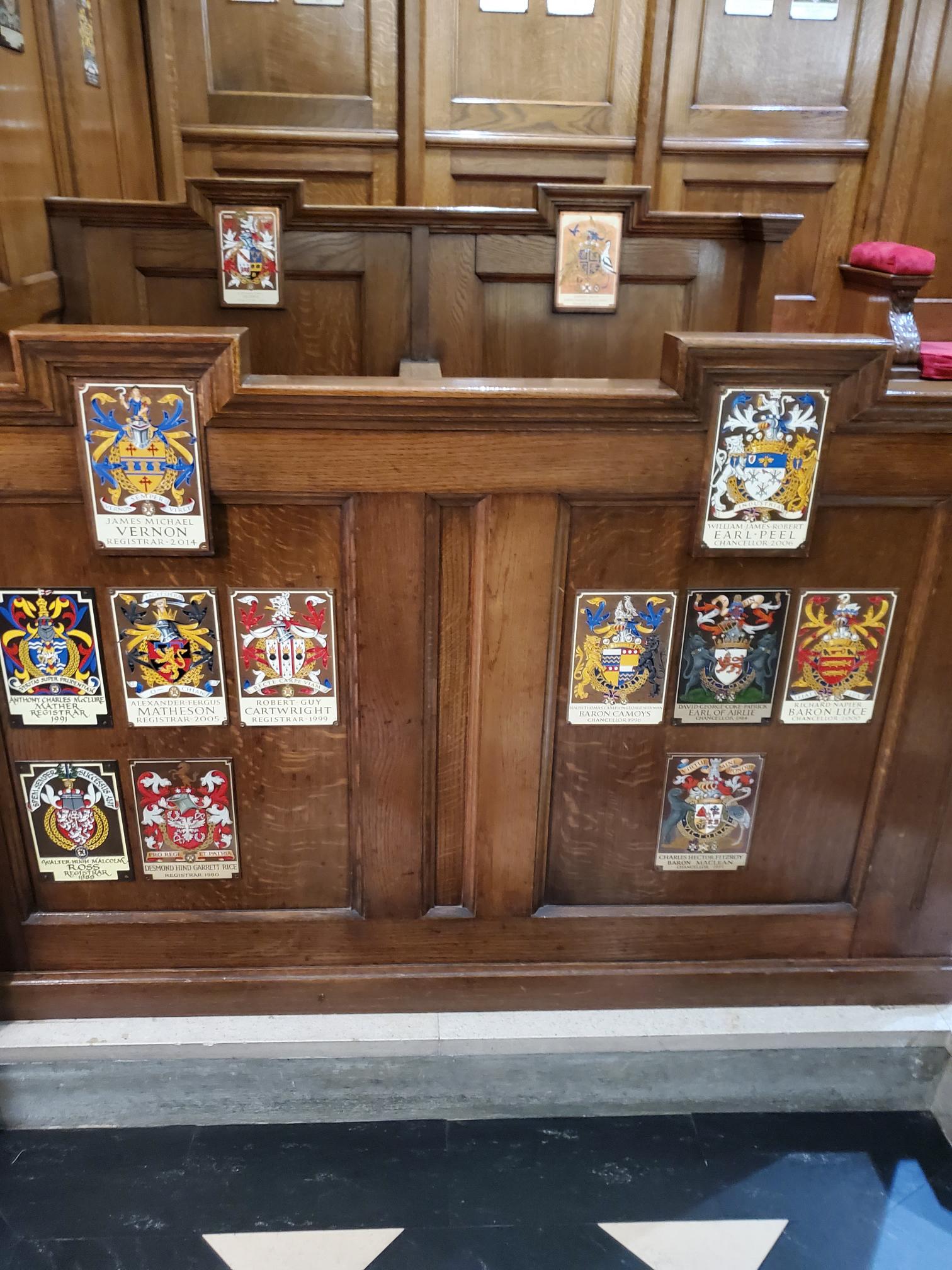
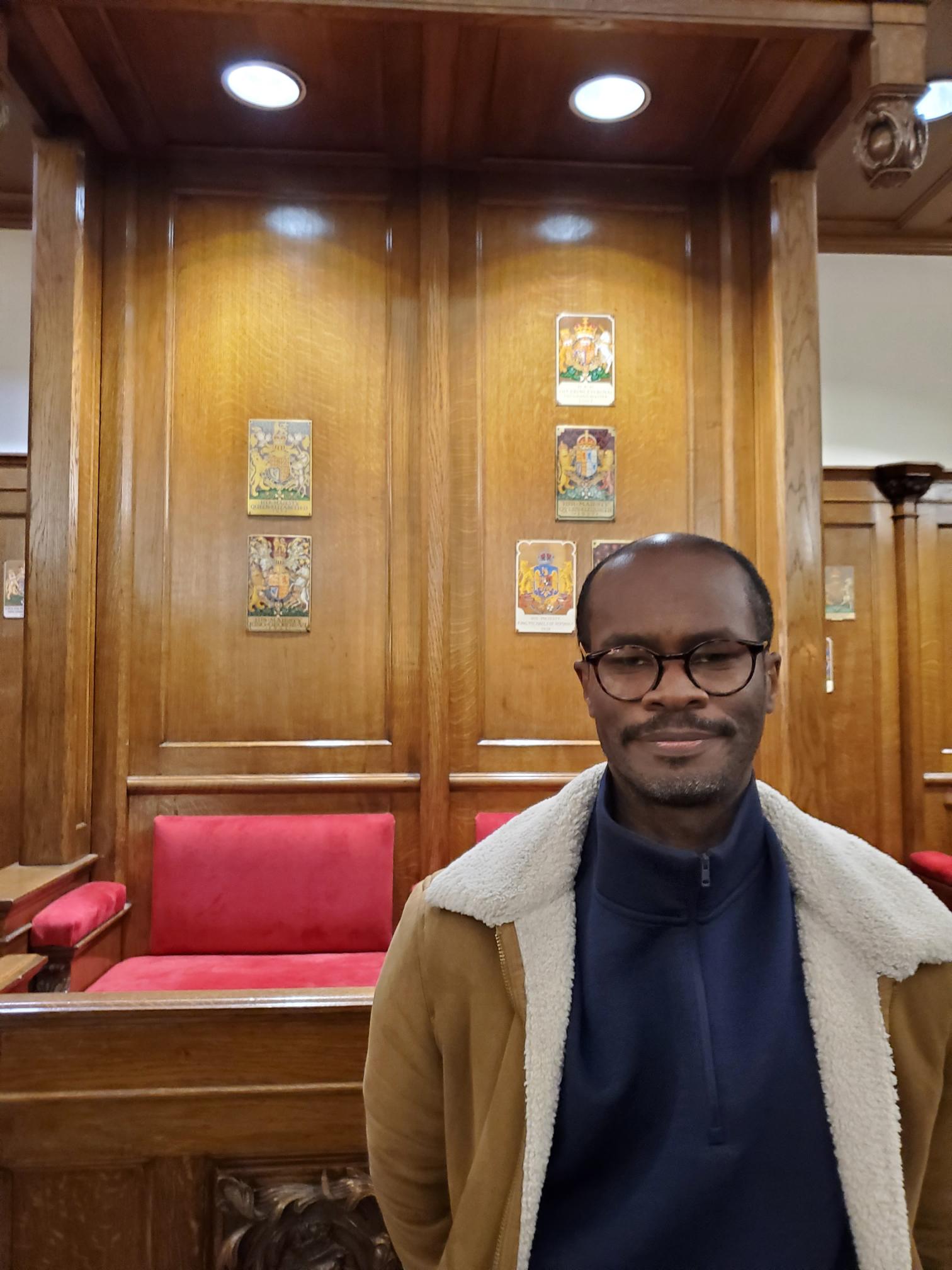
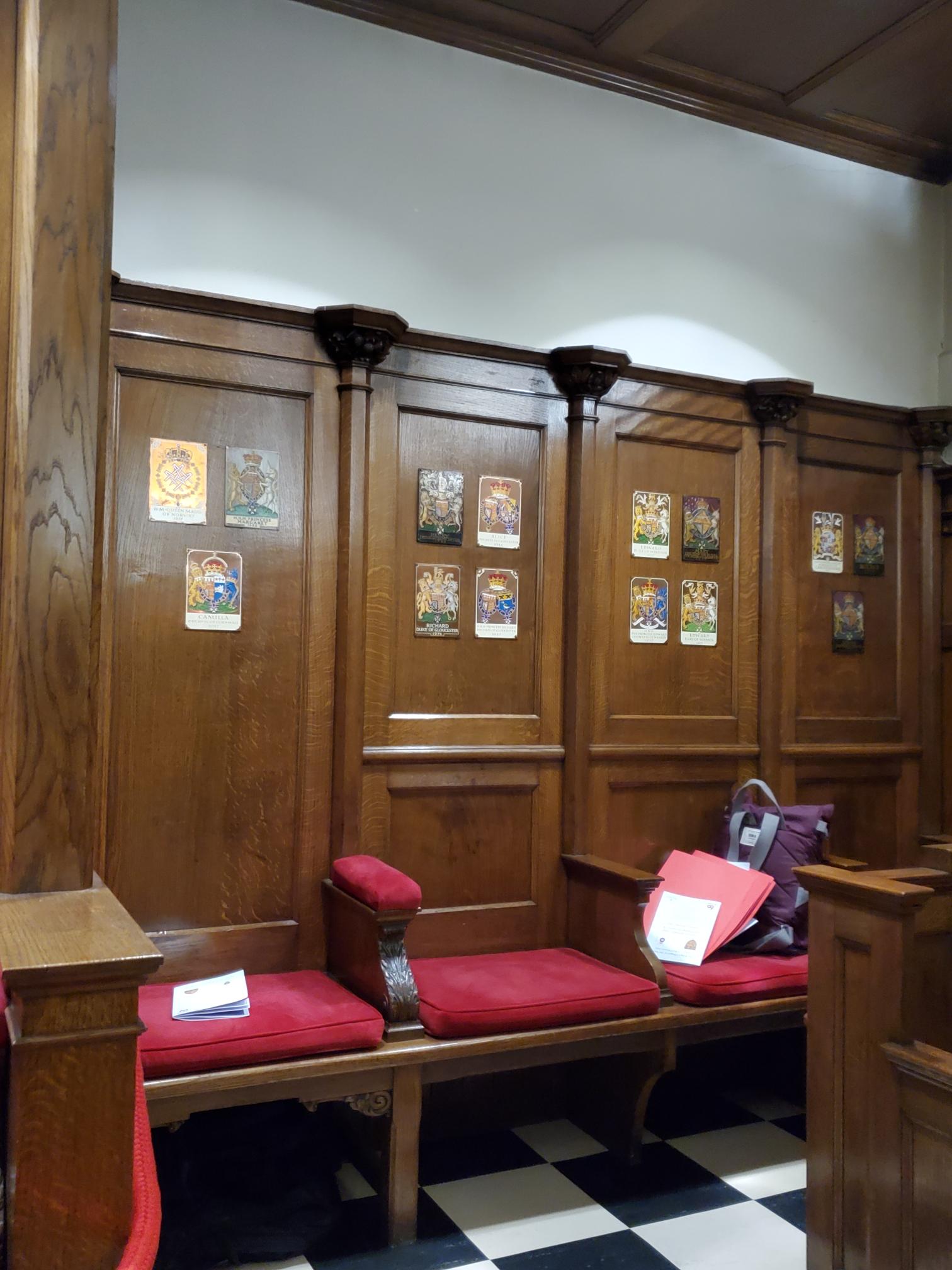
Along the wooden panelled walls were beautifully detailed heraldic plaques, each representing past members or senior figures associated with the Royal Victorian Order or individuals linked to the chapel’s long history of royal service.
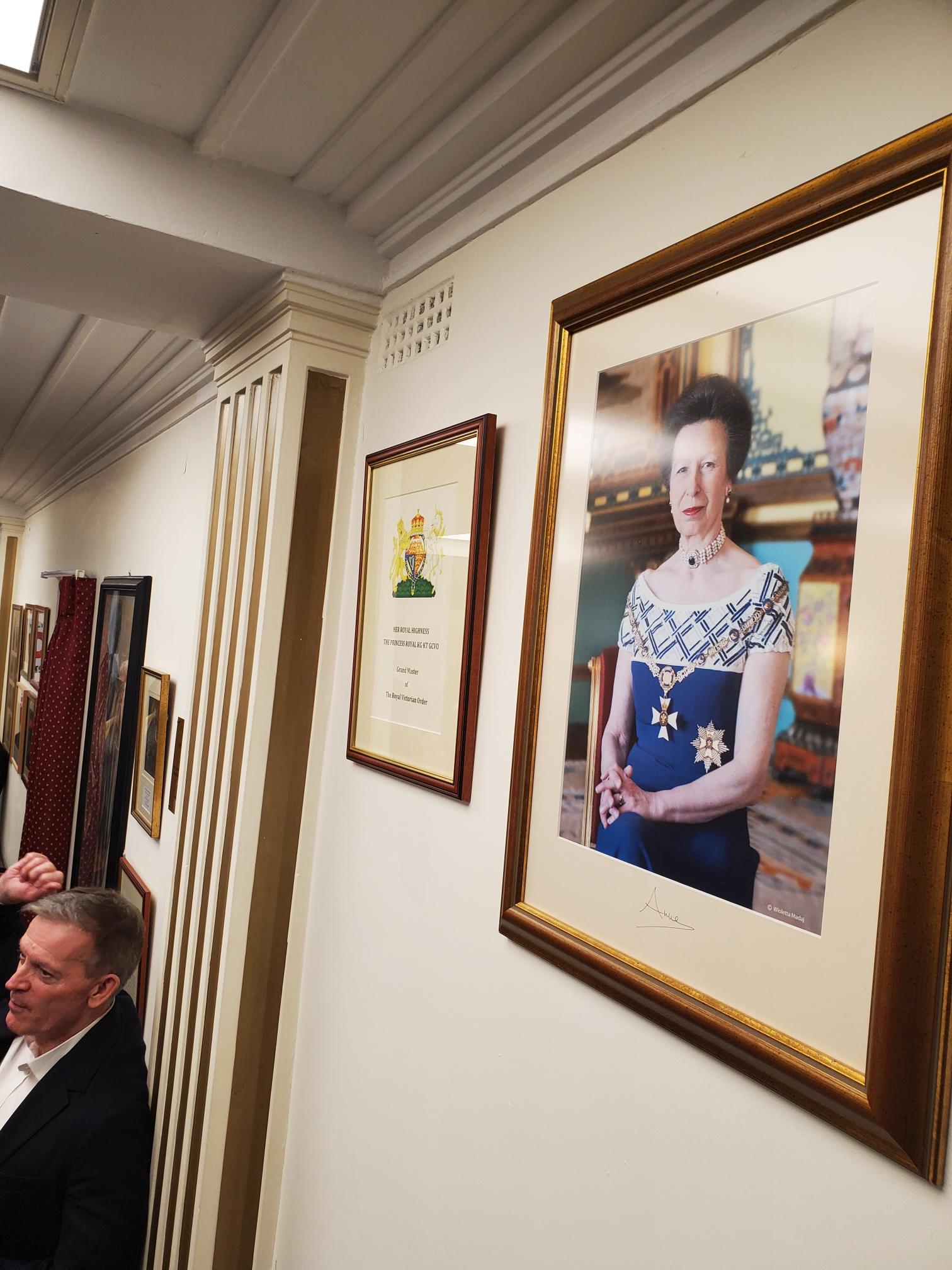
The Royal Victorian Order was established in 1896 by Queen Victoria as a way of personally recognising service to the monarch. That personal element, service based on loyalty, commitment, and relationship. That i felt especially meaningful as someone attending the Carers UK event.
Each plaque typically includes:
A coat of arms, with symbols representing the individual’s heritage, achievements, or values.
A Latin motto, often referencing duty, honour, or faith.
A record of rank or title, showing how the person was tied to the Crown or Order.
Standing before these plaques, I was reminded that service, whether to the Crown or to a loved one is always part of a bigger human story.
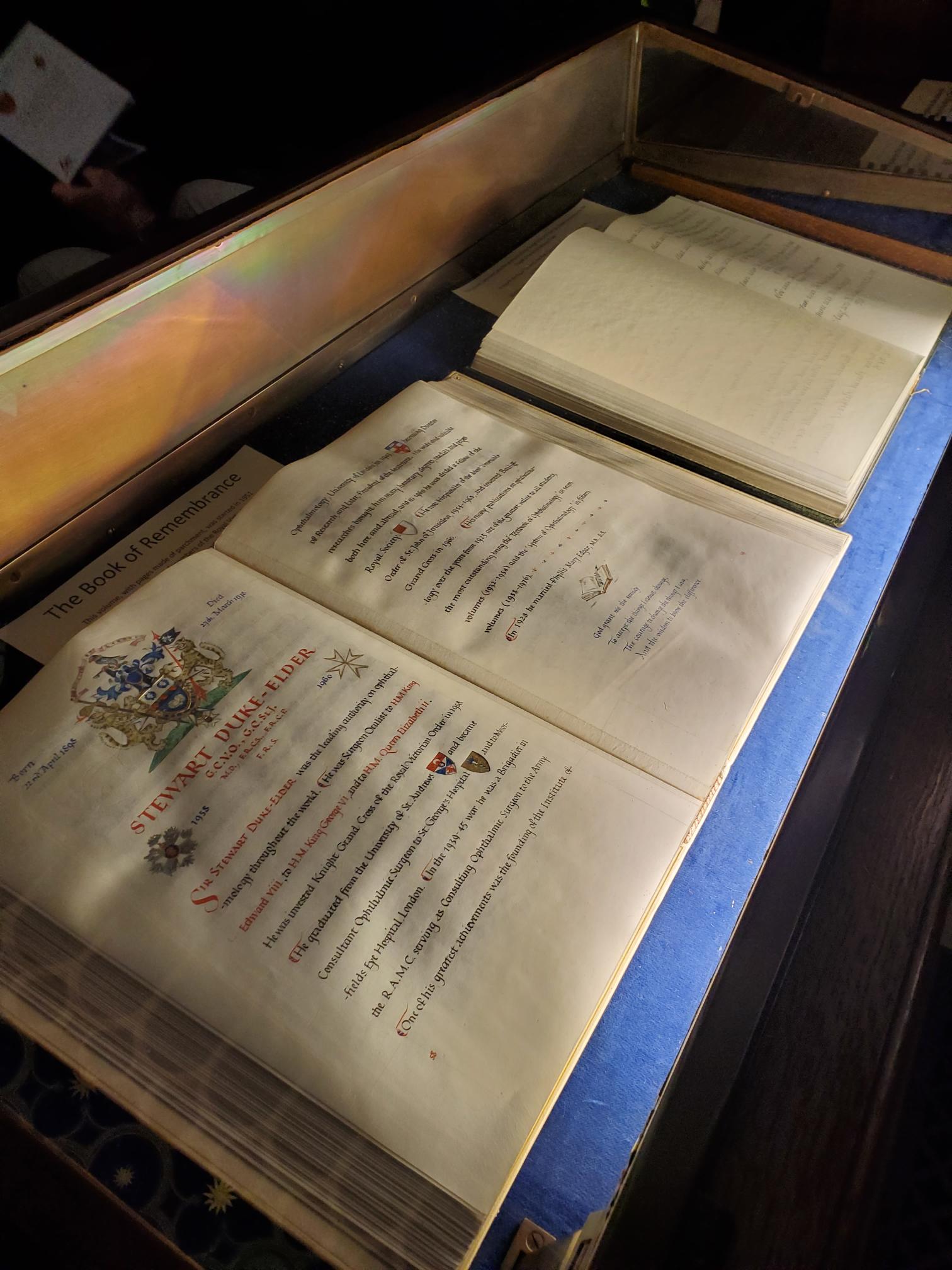
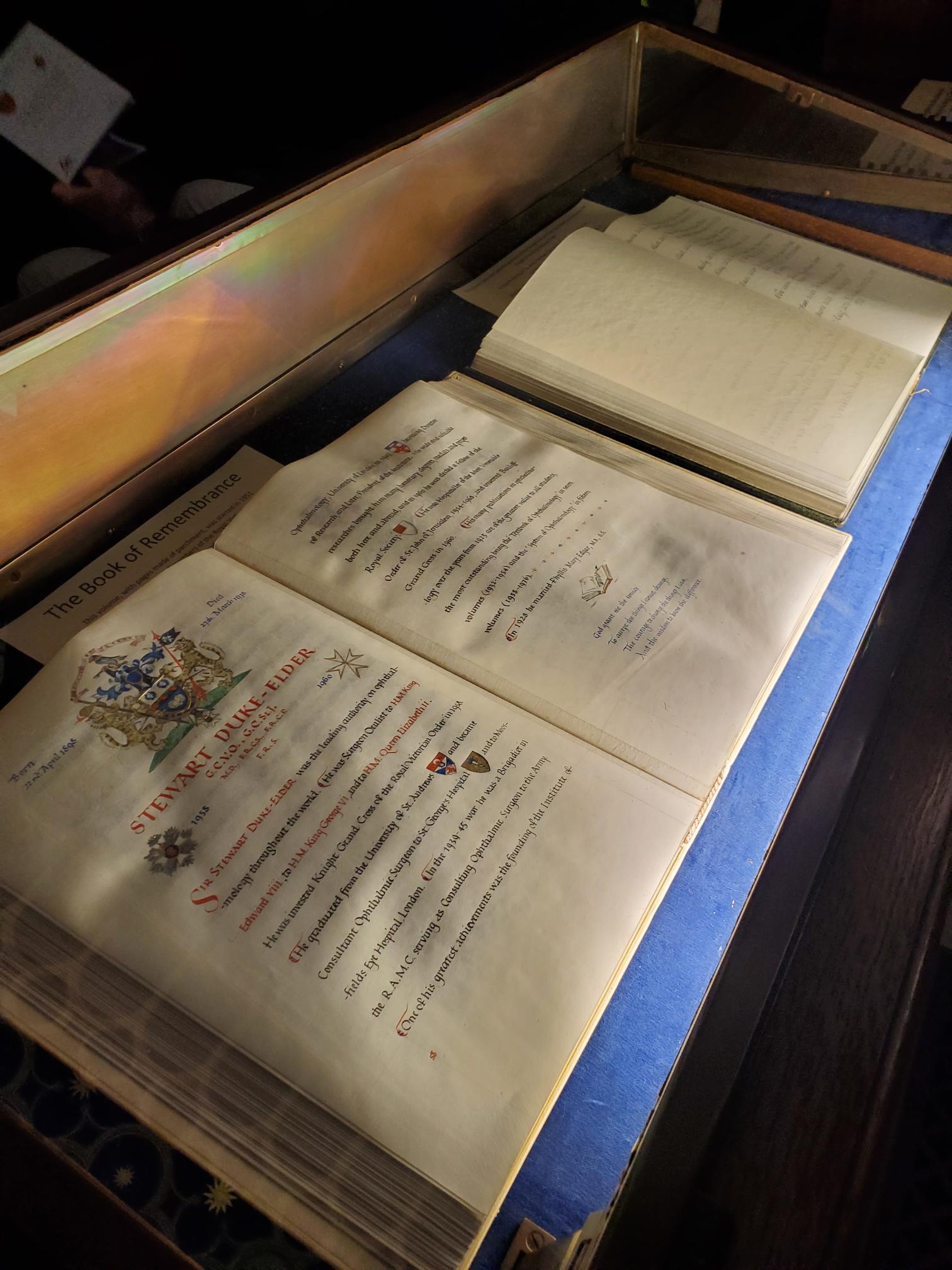
2. The Book of Remembrance
Displayed under protective glass, the Book of Remembrance is one of the most moving artefacts in the Savoy Chapel. It is handwritten and illuminated in a traditional style, much like medieval manuscripts.
The book honours individuals connected to the chapel, recording their names, contributions, and sometimes short dedications. Every entry is crafted with care, respecting the memory of those who served their communities or the Royal Household.
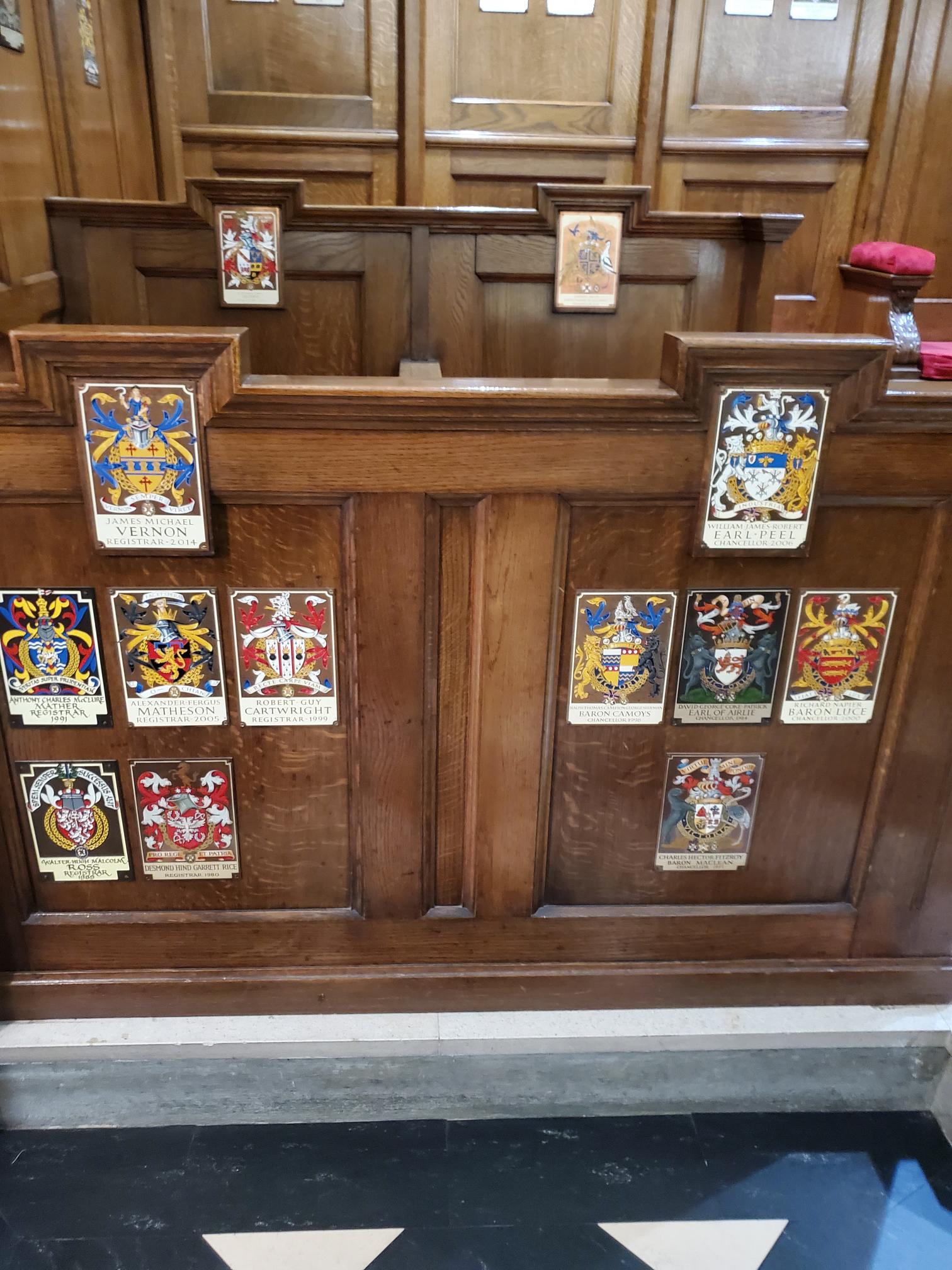
3. The Stalls with Coats of Arms of Officers and Servants of the Order
In the choir stalls, more coats of arms decorate the woodwork. These represent officers, registrars, chaplains, and others who have served the Royal Victorian Order over the decades.
Each shield is different, but together they form a visual tapestry of dedication. They signal continuity across generations much like how caring roles pass through families, communities, and time.
You can almost imagine the individuals who once occupied these seats, each carrying out their duties with diligence. Their heraldry remains here as a testament to lives spent in service.
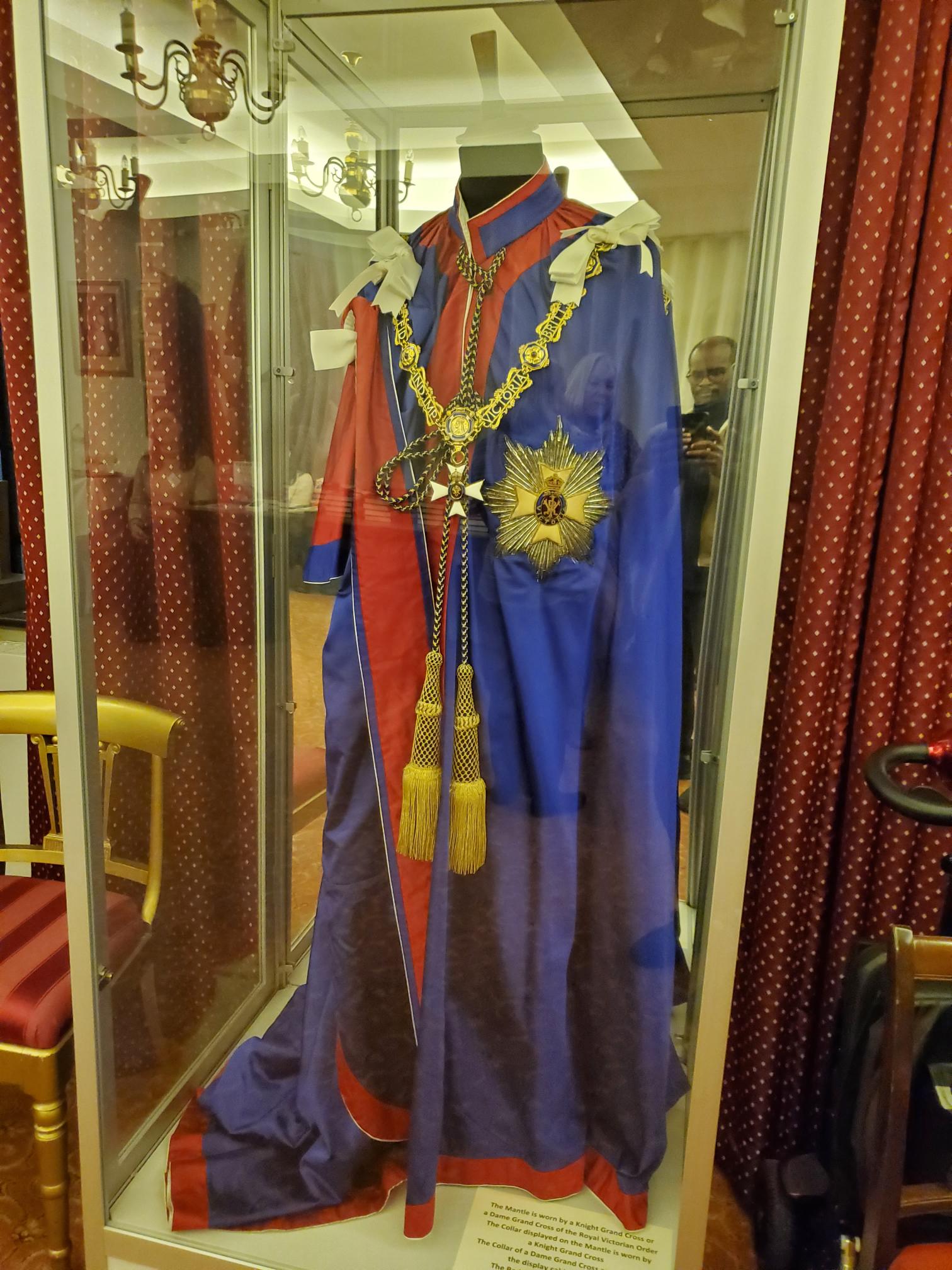
4. The Mantle and Insignia of a Knight Grand Cross of the Royal Victorian Order
One of the most striking displays was the ceremonial mantle worn by a Knight Grand Cross of the Royal Victorian Order (GCVO). The deep blue and crimson robe, gold tassels, and the star emblem reflect the highest grade of this honour.
The mantle’s presence is not merely decorative:
The GCVO is awarded personally by the monarch, not via government recommendation.
It recognises exceptional service to the Crown.
The Star, Badge, and Collar each represent centuries-old tradition.
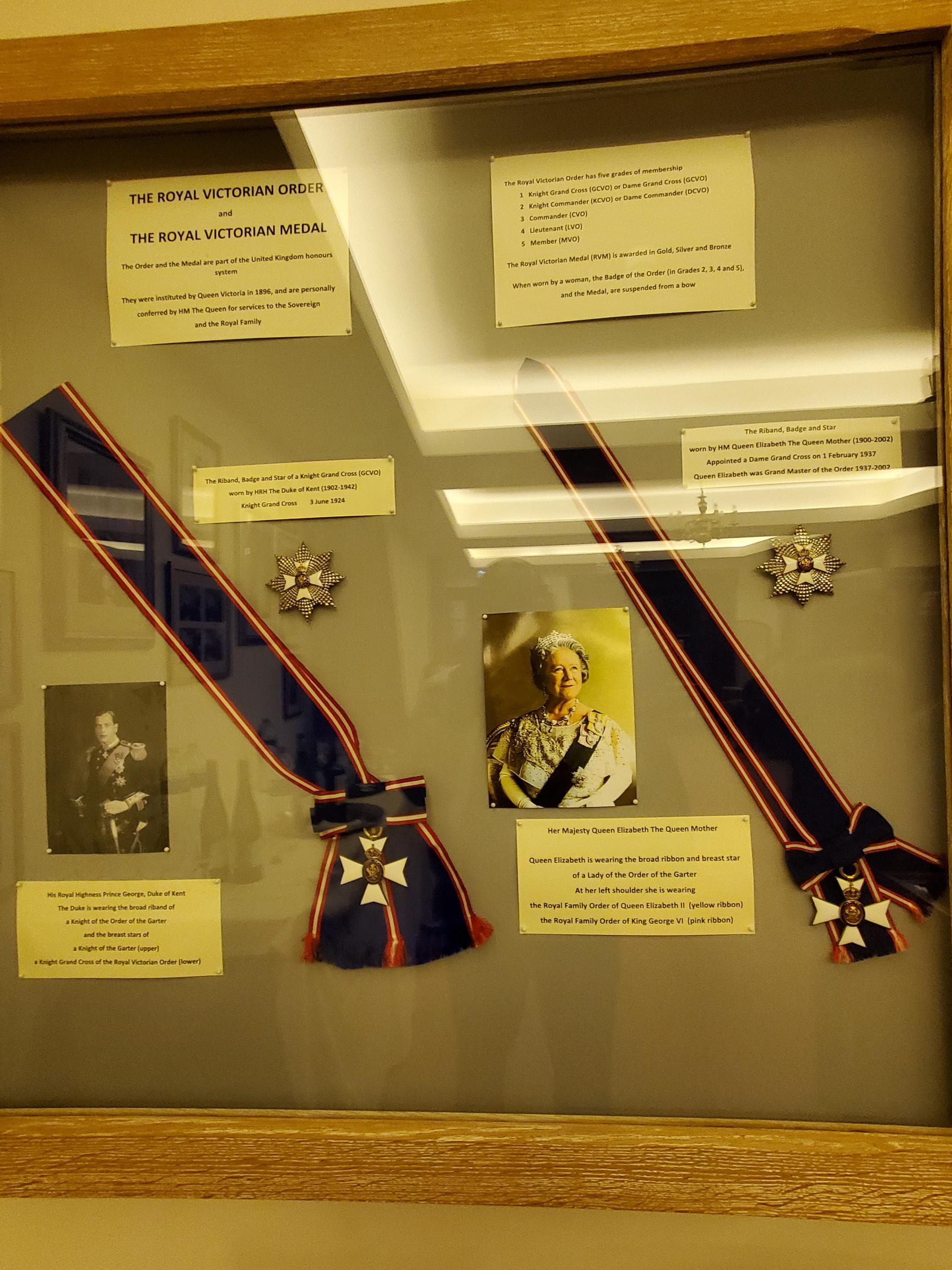
5. The Royal Victorian Order and Medal Display
This framed display explains the different grades of the Royal Victorian Order (RVO) and shows examples of the insignia, including:
Knight/Dame Grand Cross (GCVO)
Knight/Dame Commander (KCVO/DCVO)
Commander (CVO)
Lieutenant (LVO)
Member (MVO)
Royal Victorian Medal (RVM) in Gold, Silver, and Bronze
The RVM is unique because it honours personal service by staff who support the Royal Household directly, often throughout a lifetime. The photos in the display include historical figures wearing the ribbons and badges, underscoring the order’s strong ties to loyalty and lifelong commitment.
Why These Artefacts Mattered at a Carers Event
These historical items weren’t just museum pieces; they told a story of service, loyalty, remembrance, and quiet strength. I think in that sense, they perfectly framed the Carers UK Christmas Service.
By Matthew McKenzie, Co-Facilitator – SW London Carers Forum
About the South West London Carers Group
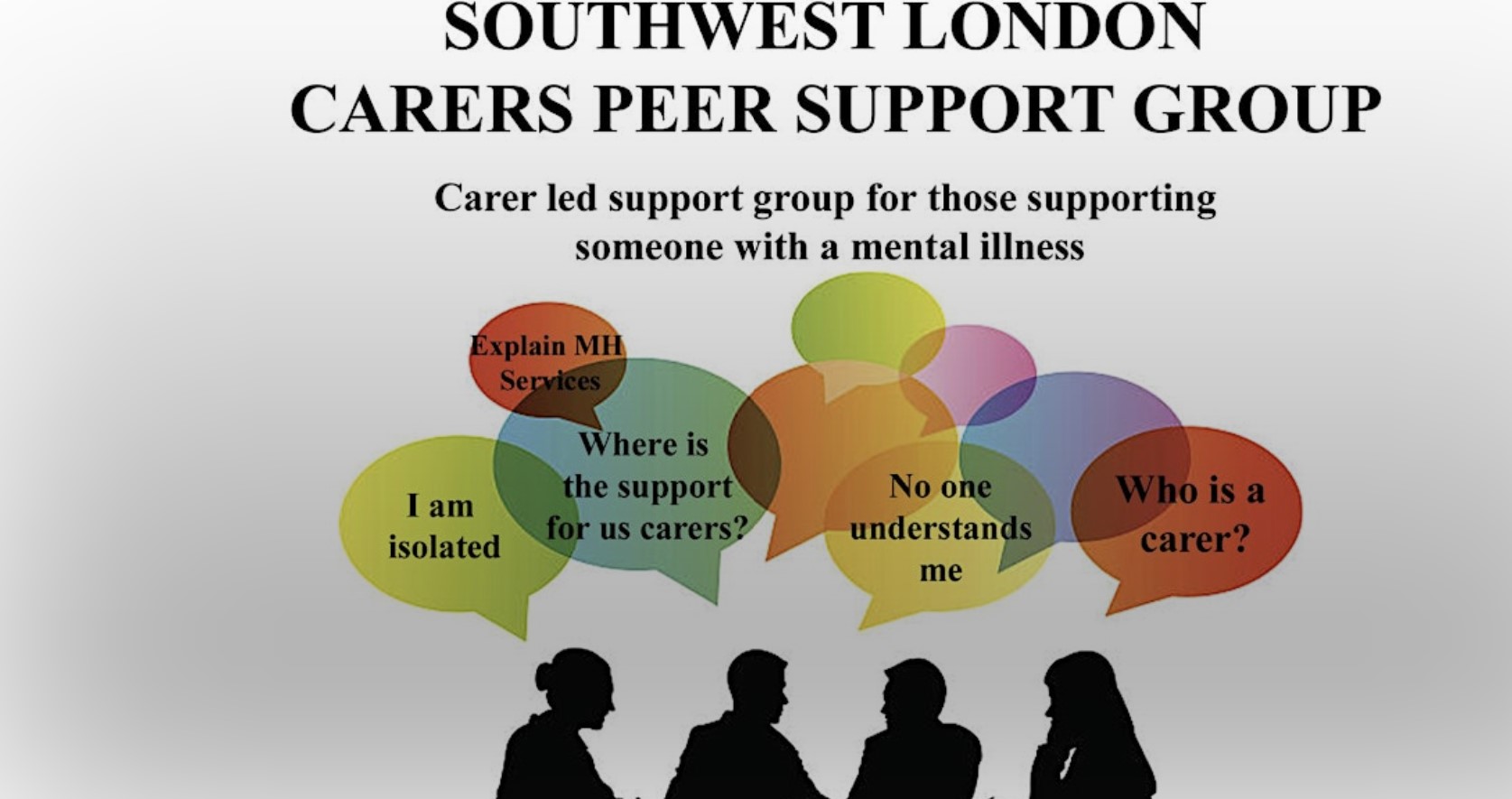
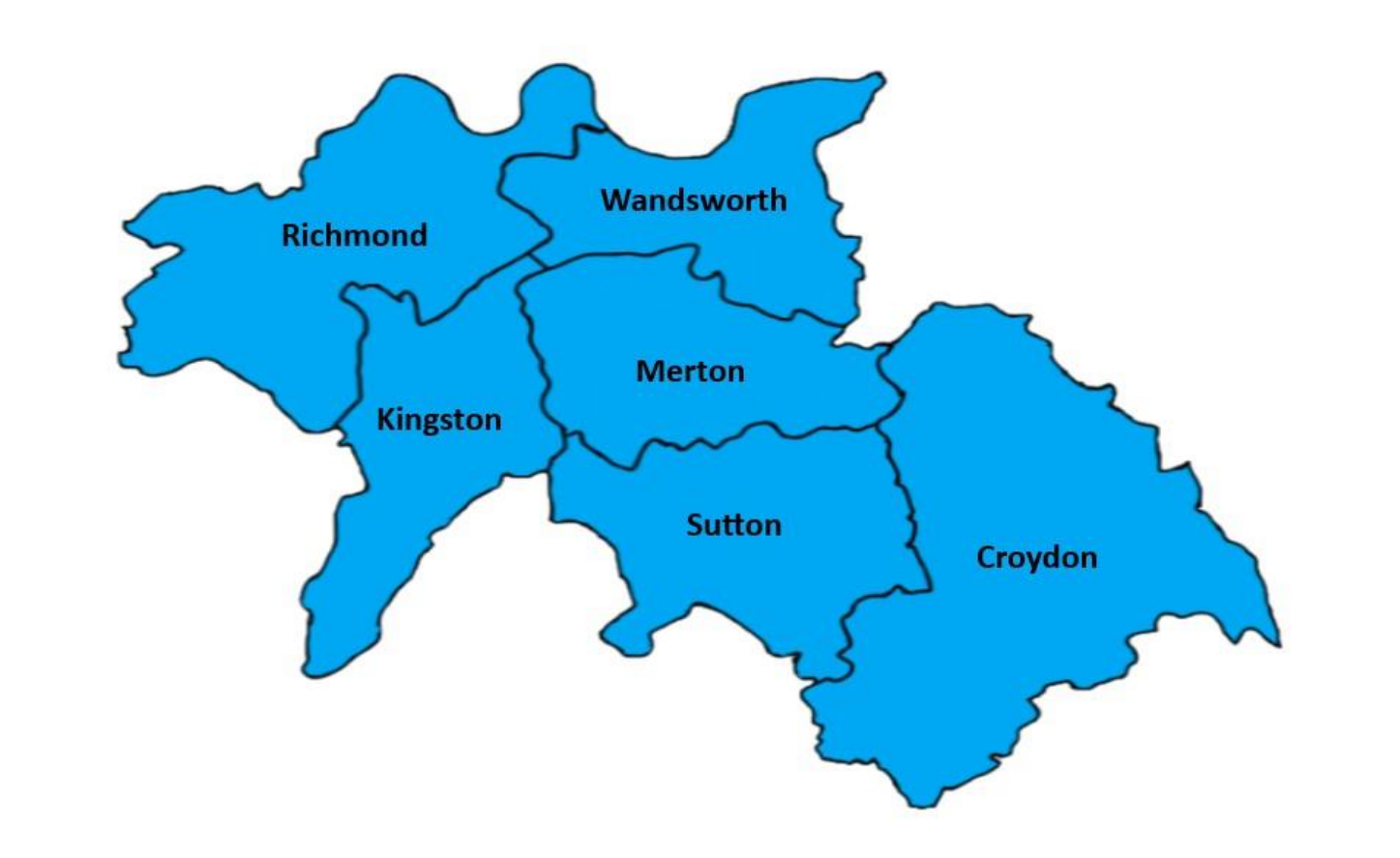
The South West London Carers Group brings together unpaid mental health carers from across the boroughs of Sutton, Merton, Wandsworth, Richmond and Kingston, to share experiences, gain peer support, and stay informed about local health and social care developments.
The group provides a safe and welcoming space where carers can discuss the challenges of supporting loved ones particularly those with long-term conditions or mental health needs while also learning from guest speakers, professionals, and each other. Co-facilitated by myself, the forum plays an important role in making carers’ voices heard and strengthening connections between carers and local NHS, mental health, and community services.
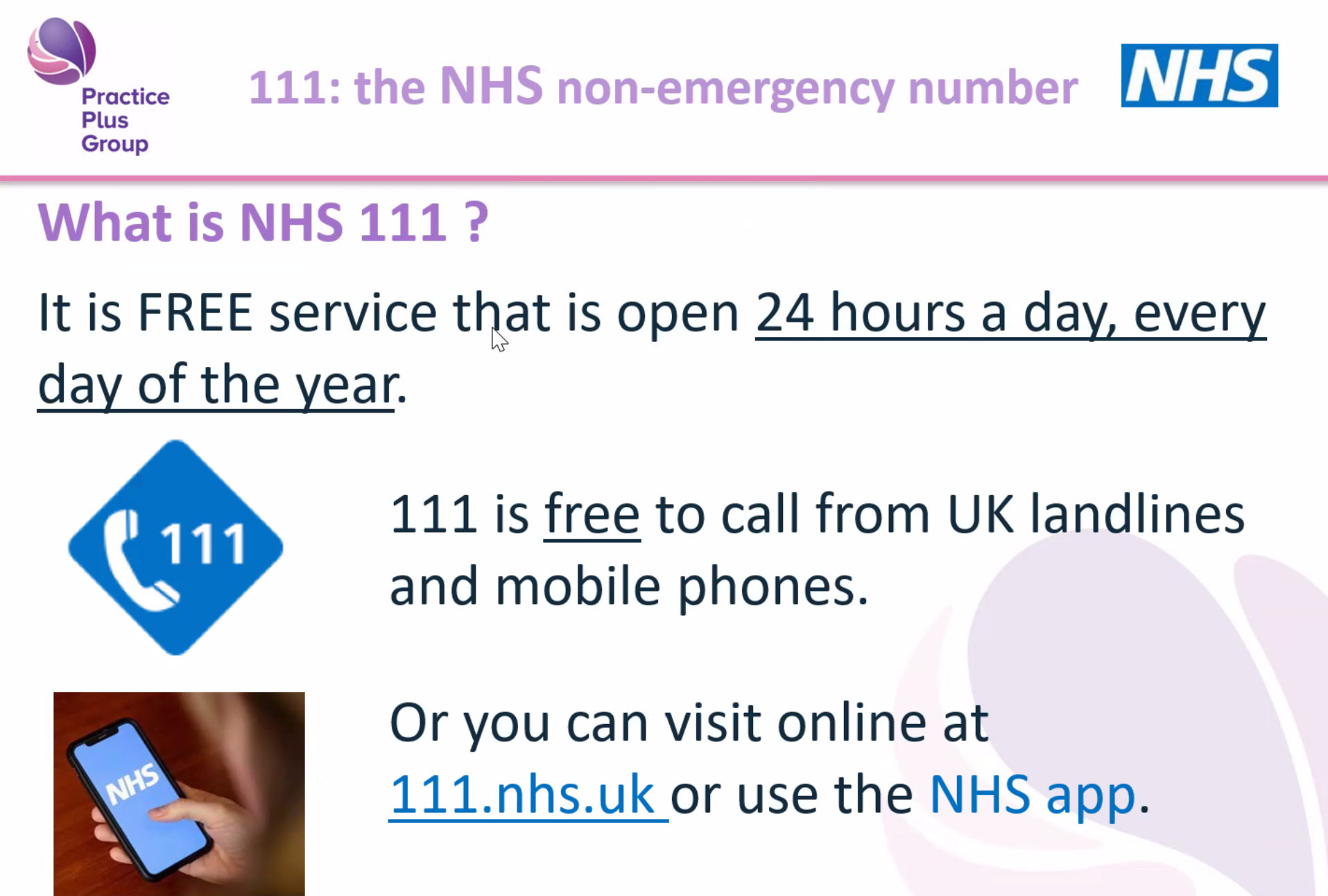
Our November South West London Carers Group meeting brought one of the most informative sessions we’ve had all year. We were joined by Dalvinder, the Patient Experience Lead for NHS 111, who provided a thorough and eye-opening look at how the 111 urgent care service really works, what carers can expect, and how the system is evolving.
Dal’s role involves reviewing patient feedback, monitoring the quality of calls, and ensuring that the service remains compassionate, safe, and responsive. He also regularly meets with community groups, like ours to raise awareness of what 111 can offer.
24/7 Telephone Assessments
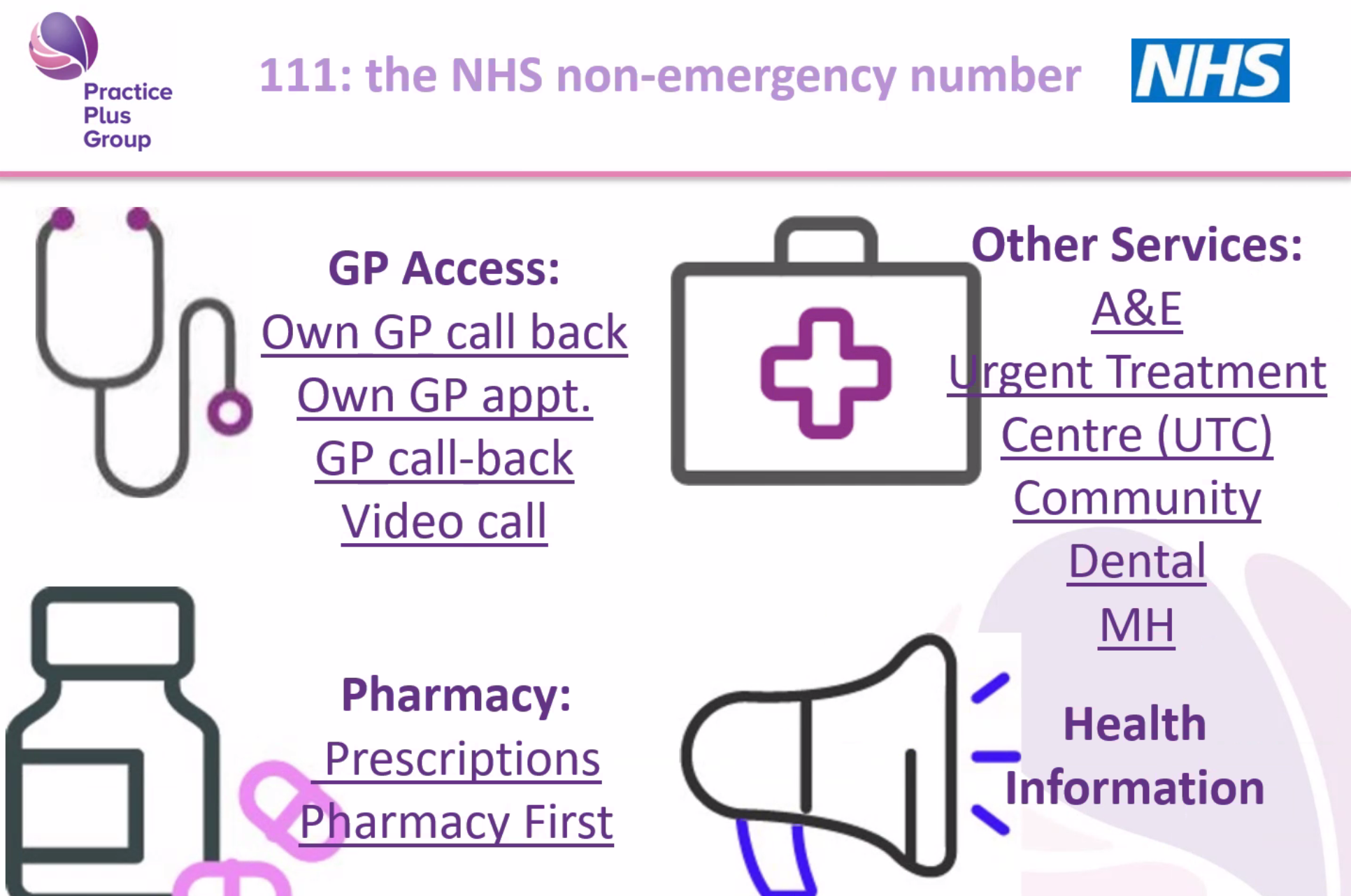
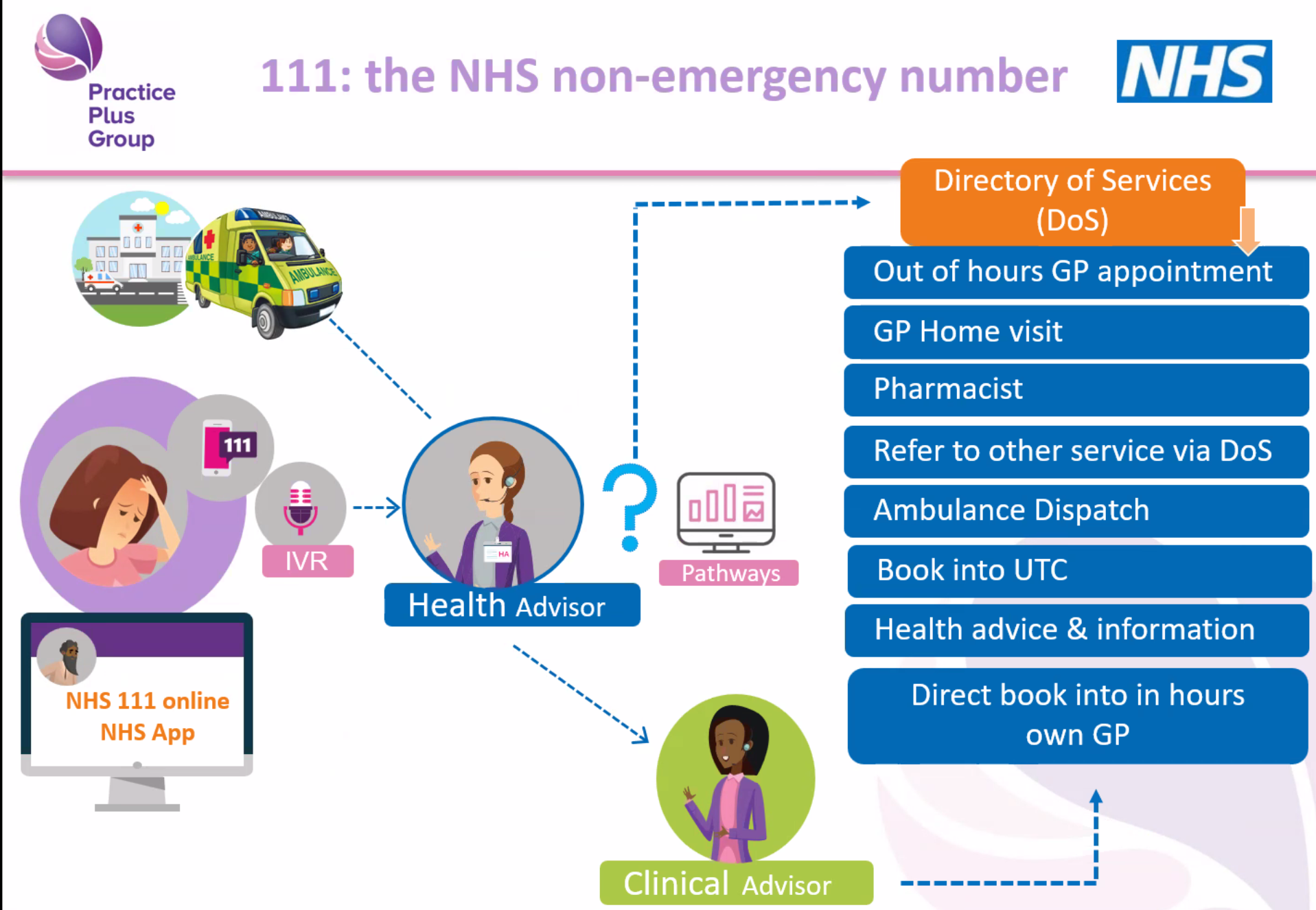
Dal opened by reminding us that NHS 111 operates 24 hours a day, 365 days a year, and never closes. The telephone assessment is often the first point of contact, and callers speak to a trained health advisor who uses the NHS Pathways system to ask structured questions. This ensures the call handler can rule out serious issues and direct the caller to the right service quickly. Dal emphasised that while questions can feel detailed or repetitive, each answer opens or closes clinical “pathways,” helping the system determine the safest next step.
GP Home Visiting (Evenings, Overnights, Weekends)
One of the biggest surprises for many carers was learning that NHS 111 has a GP home visiting service, specifically for times when GP surgeries are closed weekday evenings, overnight, weekends, and bank holidays. This service is intended for people who cannot safely travel, including those with mobility issues, caring responsibilities, or urgent health needs that don’t require hospital care. If a home visit is determined to be appropriate, a GP working for 111 can visit in a dedicated GP car and may provide medication on the spot or issue prescriptions if needed.
Primary Care Clinics (PCCs) – Same-Day Appointments via 111
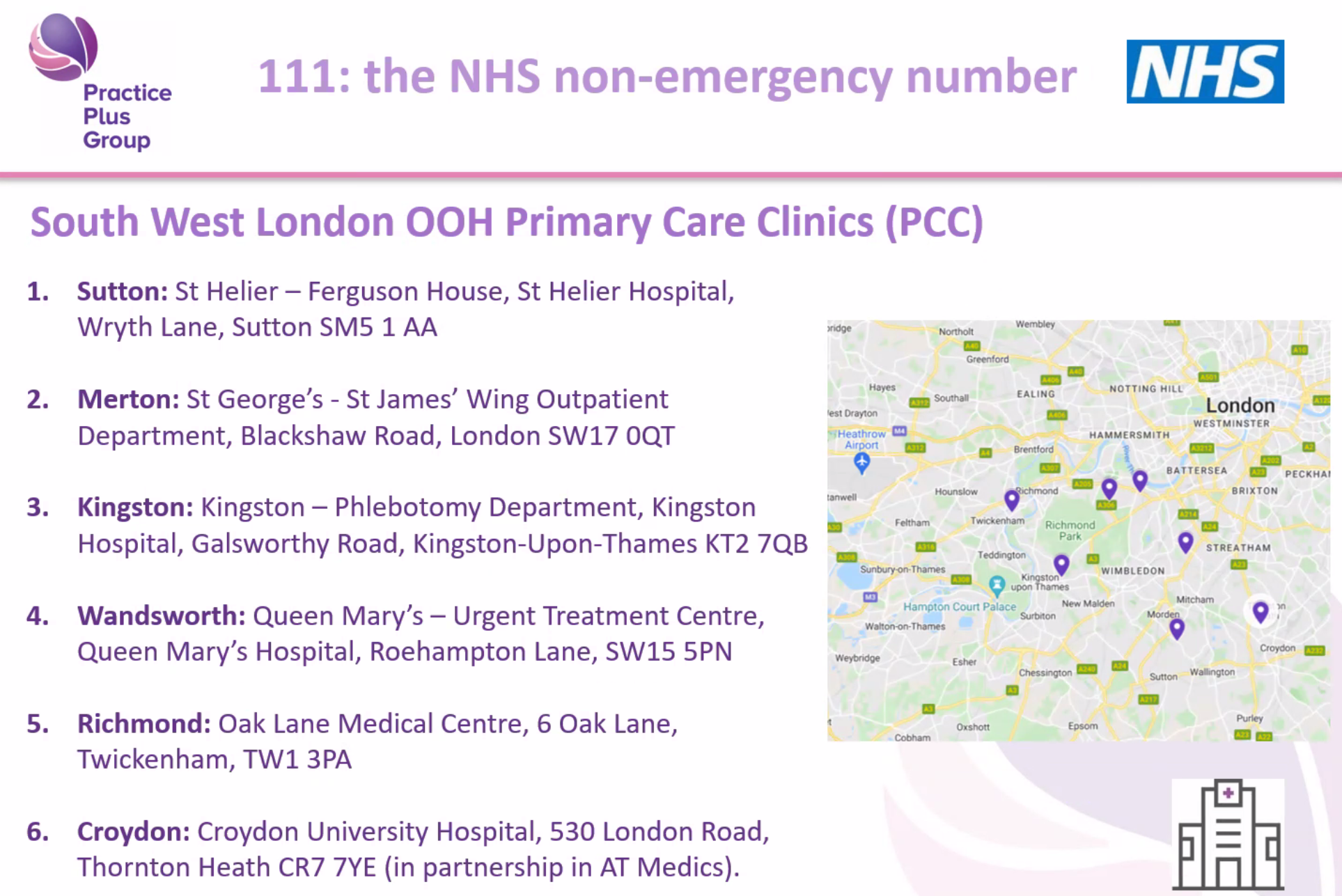
Dal also explained the role of Primary Care Clinics (PCCs) located across South West London. These clinics operate outside normal GP hours and can see patients the same day—but crucially, access is by 111 referral only. If 111 decides that someone needs to see a GP face-to-face and can travel, they may be booked into a PCC appointment. Carers learned that you cannot walk into these clinics directly; 111 must assess the situation and confirm the appointment. This helps manage demand and ensures that appointments go to those who need them most urgently.
The Expanding Role of Pharmacies and “Pharmacy First”
Another major theme was the evolving role of pharmacies in urgent care. Dal explained that pharmacists are highly trained professionals—more trained than many realise—and 111 can now direct callers to pharmacists for assessments, repeat prescriptions, and urgent medication needs. The Pharmacy First scheme allows some pharmacies to provide consultations and treatment in private rooms for a range of minor illnesses. 111 can also arrange emergency prescription access if someone runs out of routine medication while travelling, provided the medication is part of their regular treatment.
Arranging Call-Backs From Your Own GP
In certain situations, NHS 111 can request that your own GP practice contacts you, especially for non-face-to-face issues such as renewal of regular medication, questions about paperwork, or administrative needs. While GP appointment slots reserved for 111 are limited and fill quickly, the service can still send urgent notifications to GP surgeries when clinically necessary. Dal encouraged carers to mention when the need is time-sensitive so the system can prioritise appropriately.
Mental Health Support via 111 Option 2
One of the most important updates for mental health carers was the introduction of 111 Option 2, currently being trialled across London. When callers choose this option, the call is diverted away from standard 111 and straight to local specialist mental health teams, who can assess issues such as relapse, agitation, distress, changes in behaviour, or crises at home. Dal emphasised that while 111 is not a specialist mental health service, Option 2 ensures that people with mental health needs receive expert support. Data from the pilot is expected next year, and Dal offered to return to share the outcomes.
What We Learned About NHS 111
Many carers know the NHS 111 number exists, but few realise the range of services behind it. Dal explained that 111 is a free, 24/7 service (including weekends and holidays) designed for urgent health concerns that are not life-threatening.
Many carers commented that they had no idea 111 provided such a broad range of services.
Questions From Carers
Carers asked many thoughtful and practical questions during the session, including:
1. Mental Health Crises
A carer asked how 111 responds to mental health emergencies, particularly when someone becomes distressed, unwell, or difficult to support at home.
Dal explained that 111 itself is a generic urgent care service, but Option 2 sends callers straight to trained mental health professionals, who can triage cases such as relapse, agitation, or risk concerns in a more specialist way.
2. Access to Medical Records
A question was raised about whether 111’s clinicians can view a patient’s medical history.
Dal clarified that clinicians have access to the Summary Care Record, containing essential medical information, medications, conditions, and recent interactions—if the caller gives consent.
3. Home Visiting Times and Coverage
Carers asked about response times and geographical limits.
Dal explained that SW London is fully covered, though travel times vary depending on the area and how busy the service is. Home visiting is evenings, nights, and weekends only.
4. Staffing Levels and Training
One question focused on whether call handlers are medically trained.
Dal shared that 111 employs 180 health advisors in SW London—non-clinical staff who have completed an intensive six-week training program. They follow the NHS Pathways system and are supported by clinical advisors (GPs, nurses, paramedics) who can join or take over calls when needed.
5. Using 111 When Travelling
A carer asked about getting medication while away from home.
Dal explained that 111 can arrange for prescription collections at pharmacies in another part of England, which has helped many travellers who forget medication.
6. Hearing Impairment and Accessibility
There was interest in support for people who cannot make phone calls.
Dal confirmed services such as text relay, online 111, and the NHS App, all of which improve accessibility for carers and patients with additional needs.
Carer Reflections and Experiences
Several carers shared personal experiences both positive and challenging. One described how 111 triage was vital when they urgently needed treatment for a severe infection, while another discussed difficulties when GP surgeries didn’t always respond quickly to reports sent by 111. These real stories helped emphasise how important it is for carers to know when and how to use the service, and how essential accurate information is during triage.
Key Tips Dal Shared for Carers
Give as much information as possible, including social factors such as caring responsibilities, mobility challenges, or inability to travel.
Stay with the person you’re calling about, as the call handler will ask you to check symptoms in real time.
Tell 111 if symptoms change—this can alter the urgency and outcome.
Always keep your phone nearby when waiting for a callback; 111 will try only three times.
Don’t hesitate to call again if you’re unsure or worried.
Closing Thoughts
The session was incredibly well-received. Many carers said they learned things they never knew, even though they had used 111 before. Dal’s openness and honesty—both about what the service can do and what its limitations are—made his presentation especially valuable.
As co-facilitator, I (Matthew McKenzie) will continue to share information like this to help carers navigate local health services more confidently. We hope to invite Dal back once the evaluation of 111 Option 2 (mental health) is published, we also have a keen interest on what the ICB is doing especially regarding carer involvement.
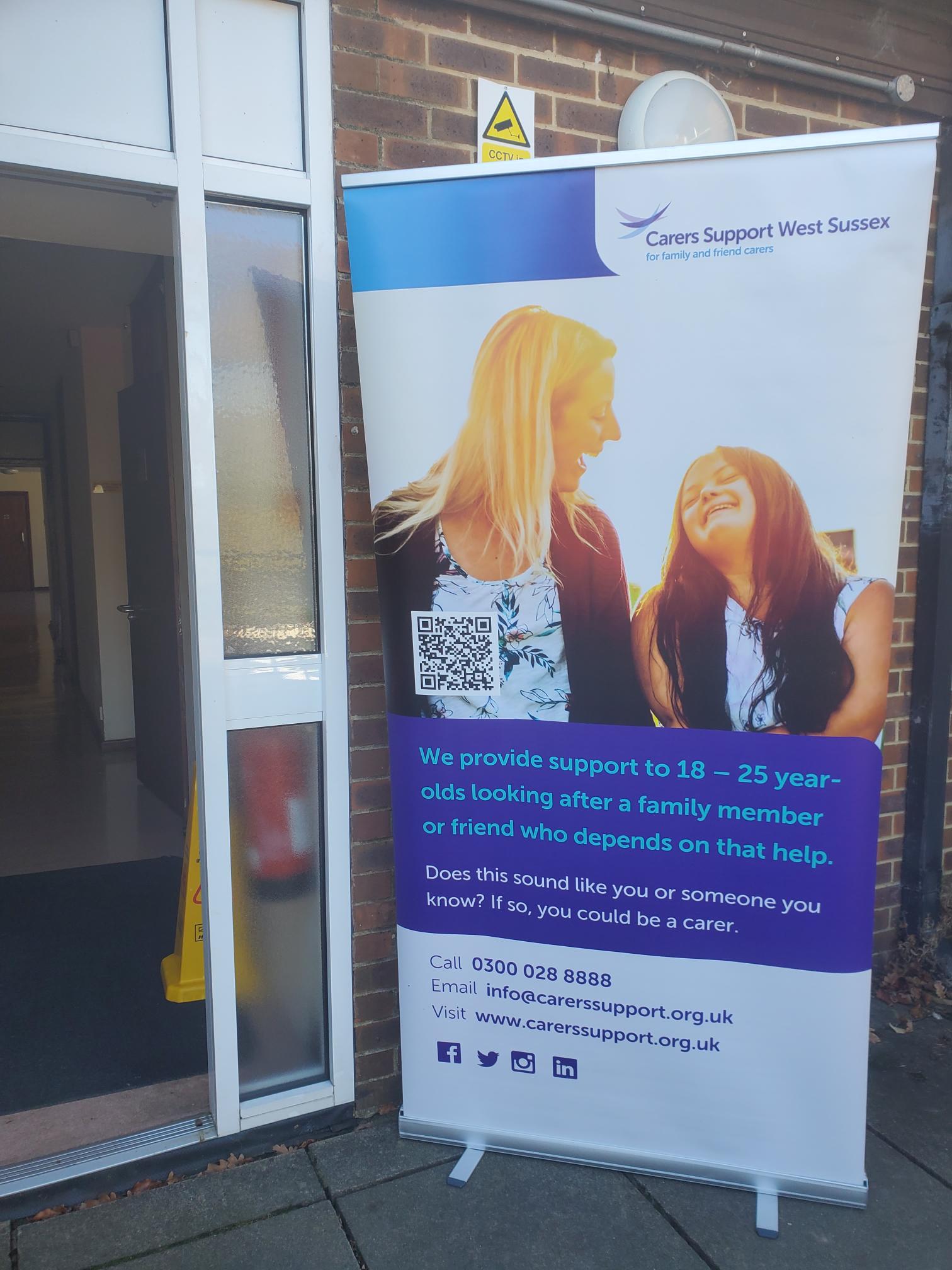
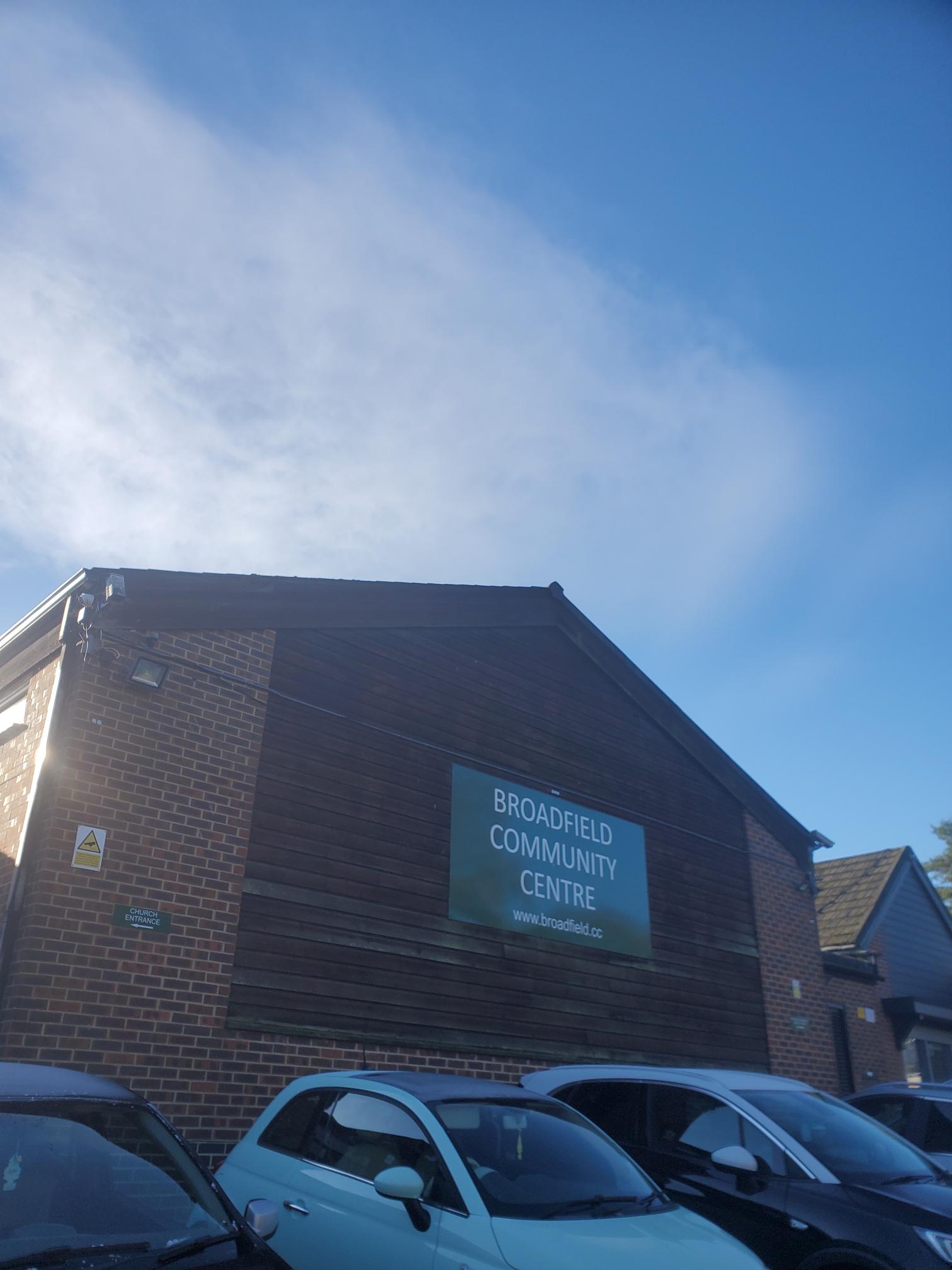
On Thursday 20th November, I had the privilege of attending and speaking at the Memory, Wellbeing and Brain Health event hosted at Broadfield Community Centre in Crawley. Organised by Carers Support West Sussex, the event formed part of Carers Rights Day, bringing together carers, professionals, community teams, and people living with dementia for a day of learning, connection, and support.
Although I couldn’t stay for the full programme due to travelling to another Carers Rights Day engagement later that afternoon, I was grateful to take part in the early sessions and witness the energy and compassion that shaped the whole day.
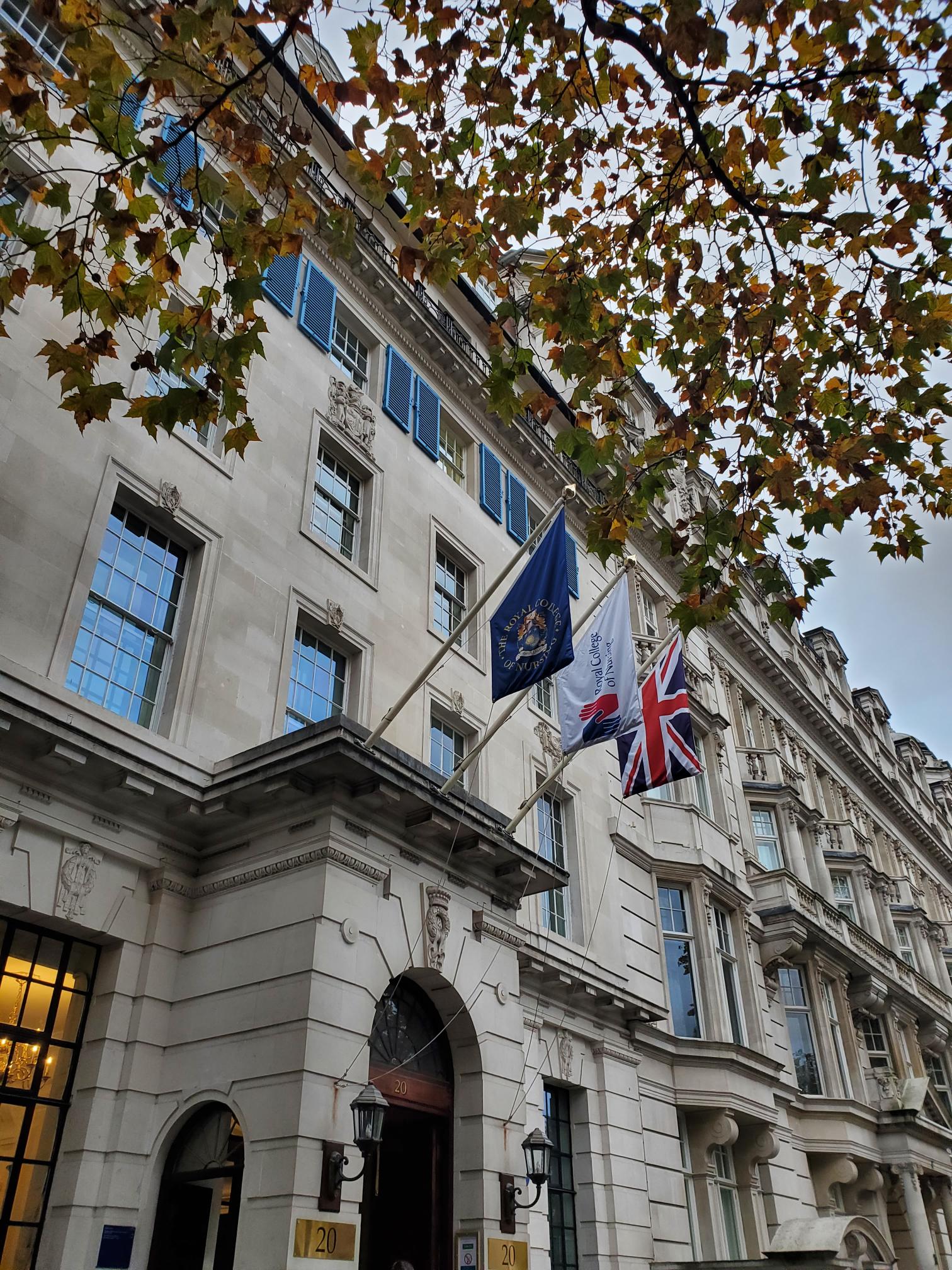
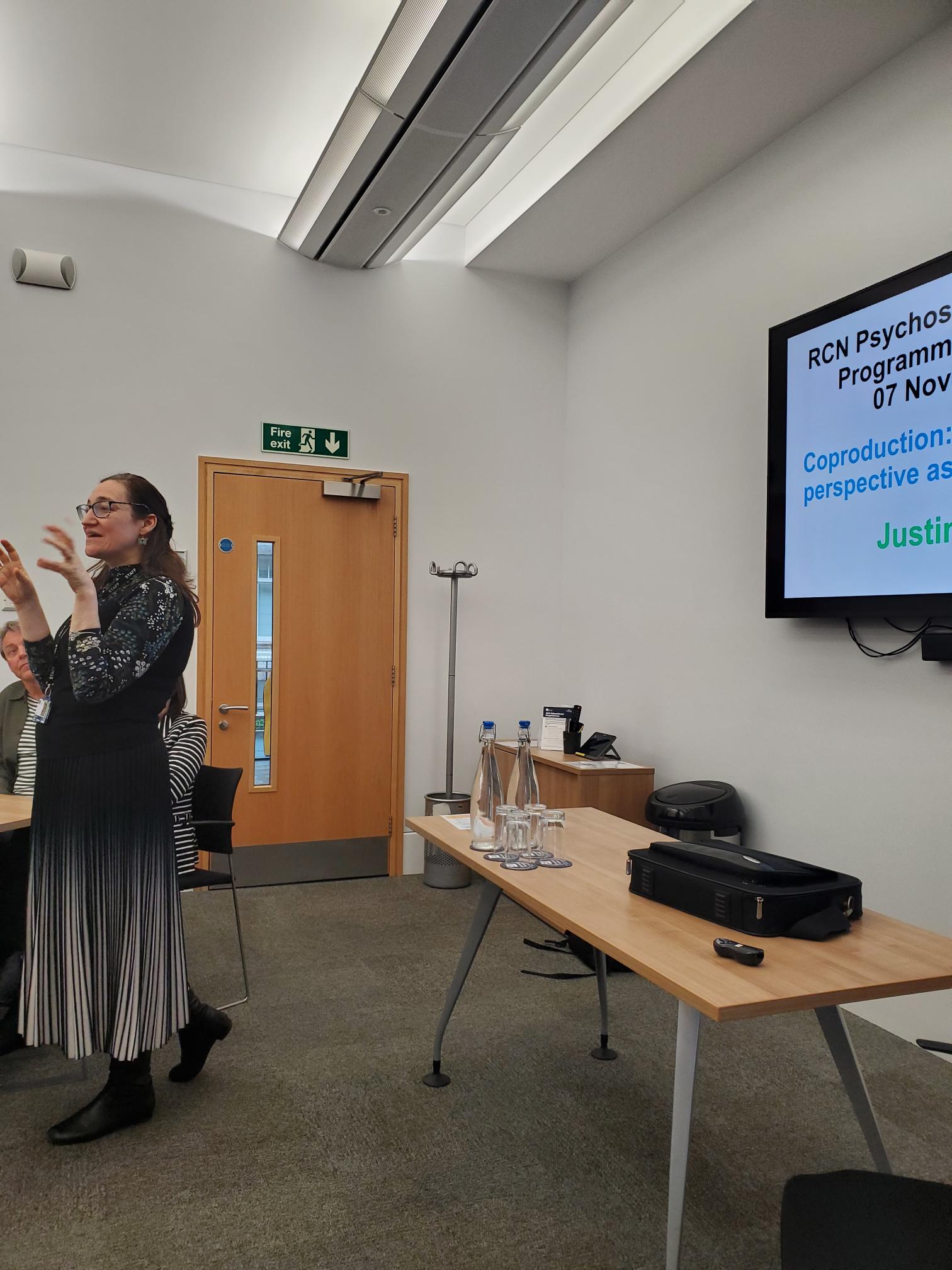
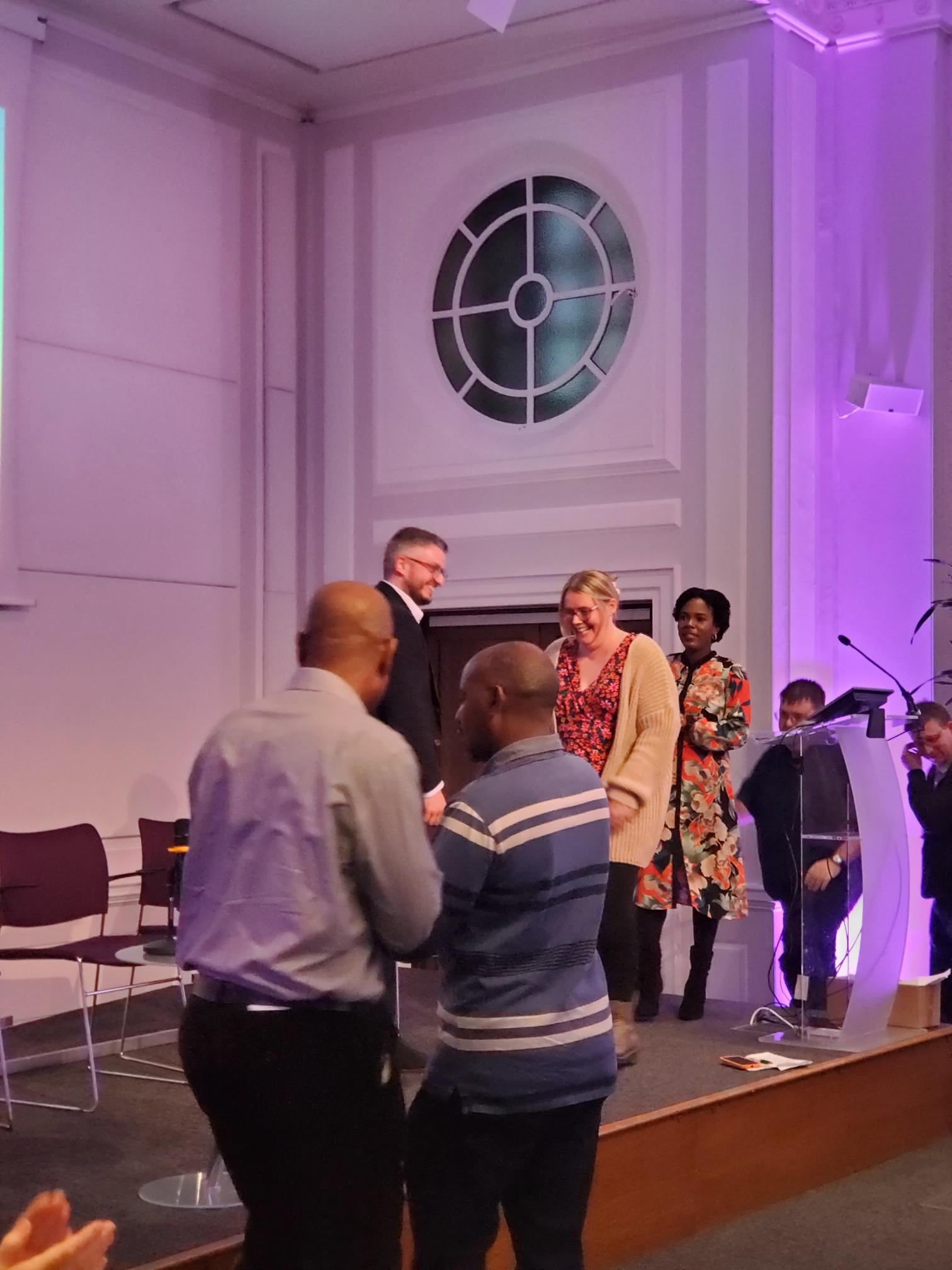
Walking into the RCN PSI Alumni Conference at Cowdray Hall on that crisp November morning, I felt a mix of pride, gratitude, and curiosity. It’s been many years since I first began speaking at RCN events like this, yet every time feels new because each gathering brings together nurses, carers, service users, and leaders who continue to shape the future of mental health care.
Before I continue to describe the event, let me sum up the Royal College of Nursing PSI programme. Basically the Psychosocial Interventions (PSI) programme is a nationally recognised training initiative designed to strengthen therapeutic skills of mental health professionals and embed recovery-focused, relationship-based care across services.
The PSI program is rooted in the principles of collaboration, reflection, co-production and empowerment, PSI equips practitioners with practical tools to support individuals experiencing mental distress, while also valuing the insight of carers and families.
I think what makes PSI stand out is its emphasis on seeing people beyond their diagnosis and fostering empathy, curiosity, and shared understanding between nurses, service users, and carers.
At the start of the conference and during it, I spoke to a few nurses over coffee, each reflecting on how PSI had shaped their practice one mental health nurse told me it had helped her “find her voice again.” For me, as a carer with lived experience, it was great to witness this sense of renewal. It reminded me why collaboration between professionals and lived experience communities is so essential.
Around 10 a.m., Catherine Gamble formally opened the event, setting a tone of gratitude and shared learning. Her introduction reminded us how much the alumni network had grown and how lived experience was now firmly part of the PSI culture.
As someone with lived experience of caring for my mum, who lived with schizophrenia, I approached the events not just as an observer but as someone deeply invested in the stories and struggles that bring us together as a triangle.
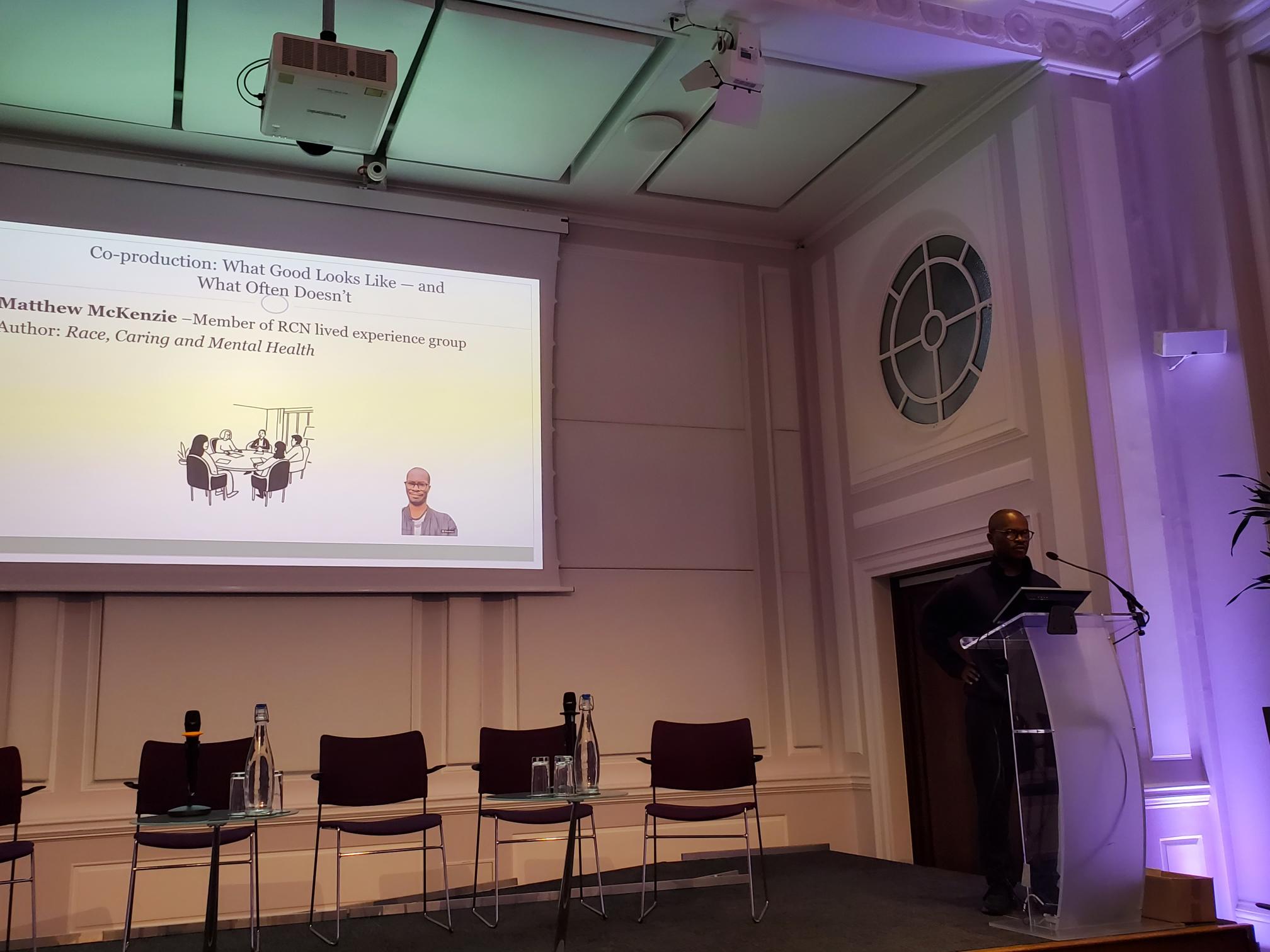
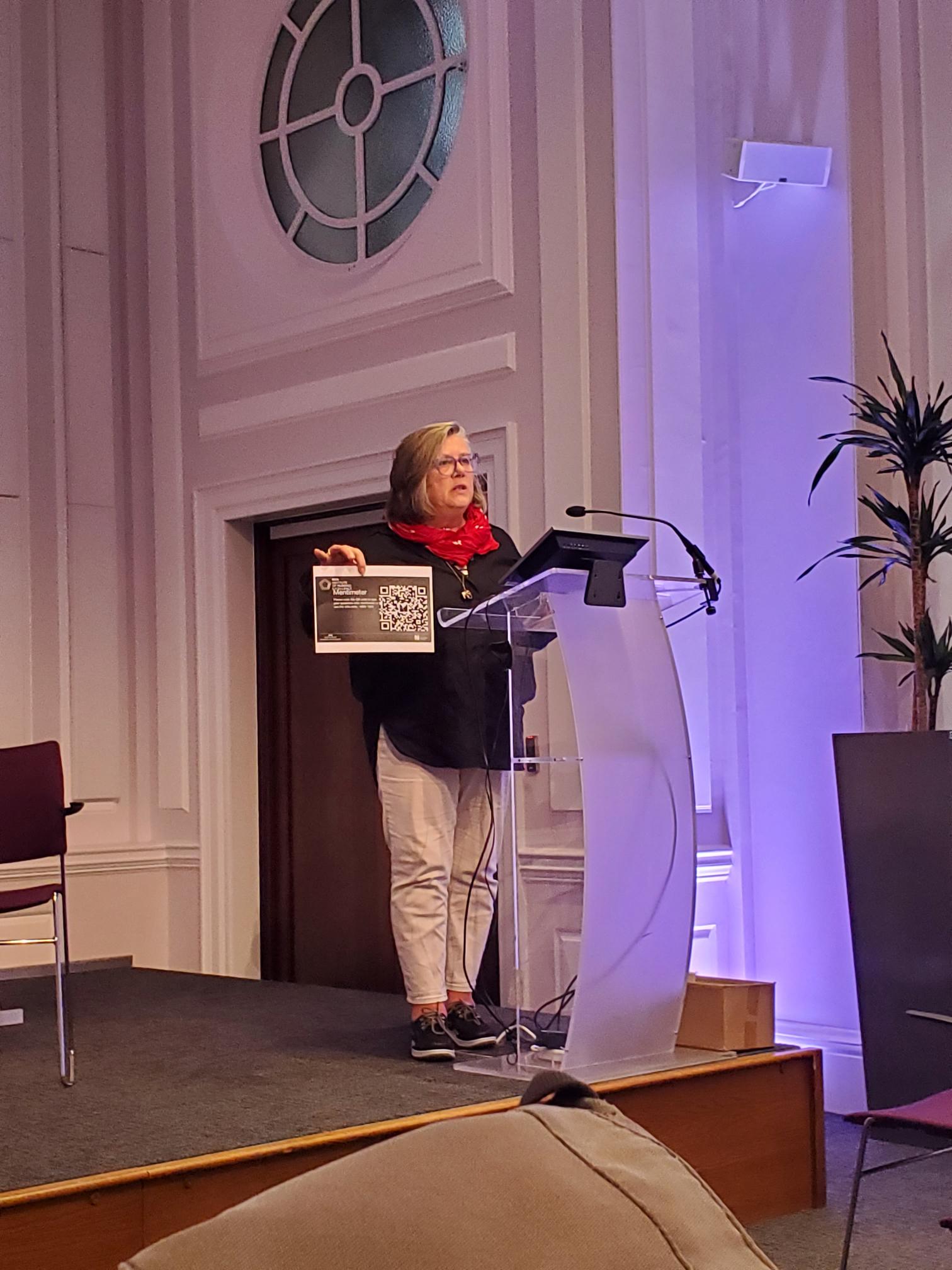
When I was invited to open the event and share my reflections as a carer, I knew I wanted to do more than talk about carers, I wanted to speak for them, and with them.
My Opening Talk – “The Nurses Who Walk With Us”
Standing at the podium, looking out at rows of passionate mental health nurses and lived experience, I began with gratitude. My words were simple but heartfelt:
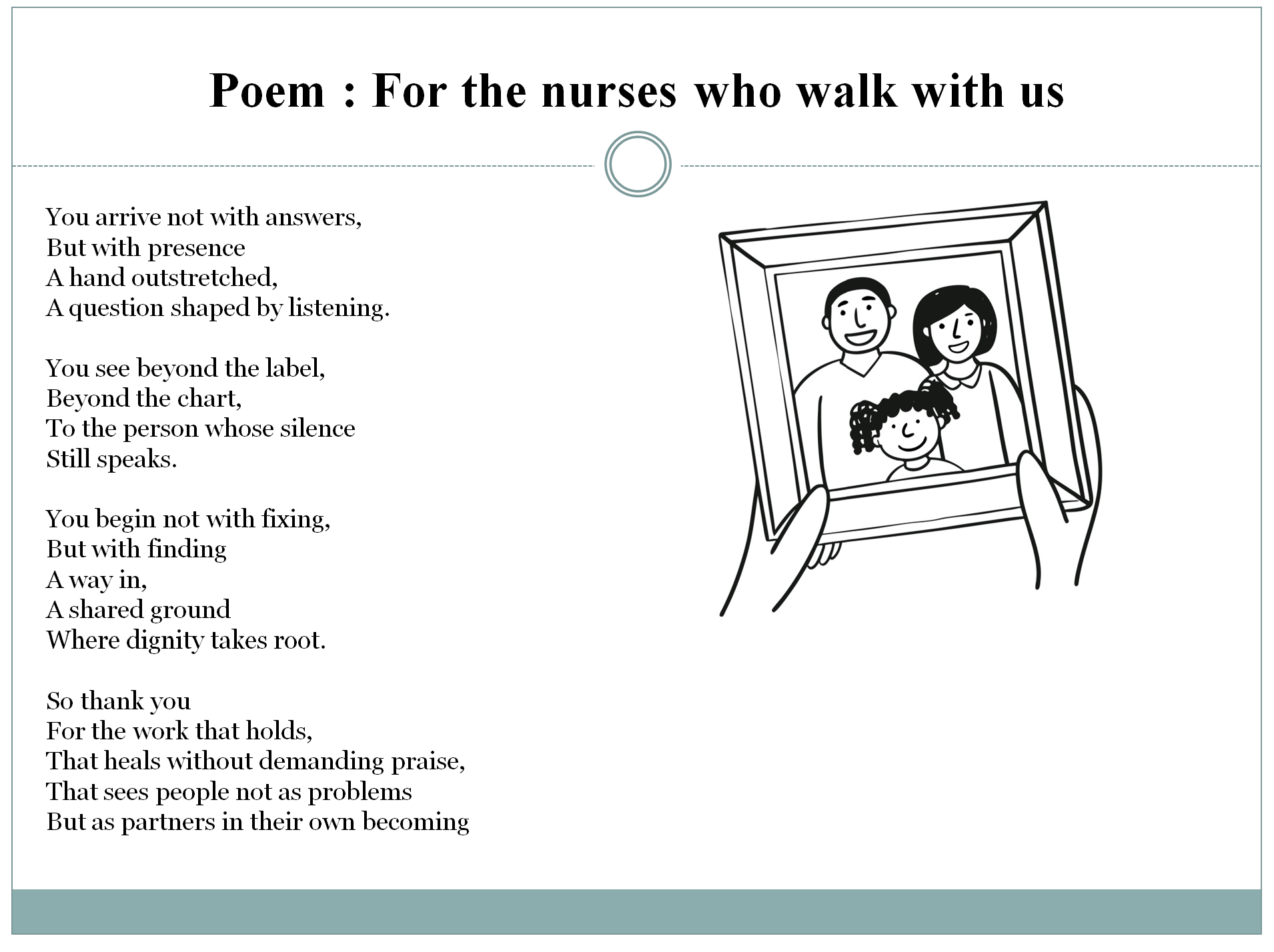
“This is really about the nurses who walk with us, the ones who move beyond the labels, beyond the charts, and see the person, not the problem.”
I read a poem I had written to honour the compassion and resilience of those in the room a piece I called The Nurses Who Walk With Us.
The poem spoke about presence, about listening, and about the small acts of care that ripple into great change.
After my talk, I was moved by the warmth of the response. Many came up to share how my words mirrored their experiences or reminded them of why they came into nursing. That moment of connection that shared understanding set the tone for the day.
The Locksmiths Animation and Alumni Showcase
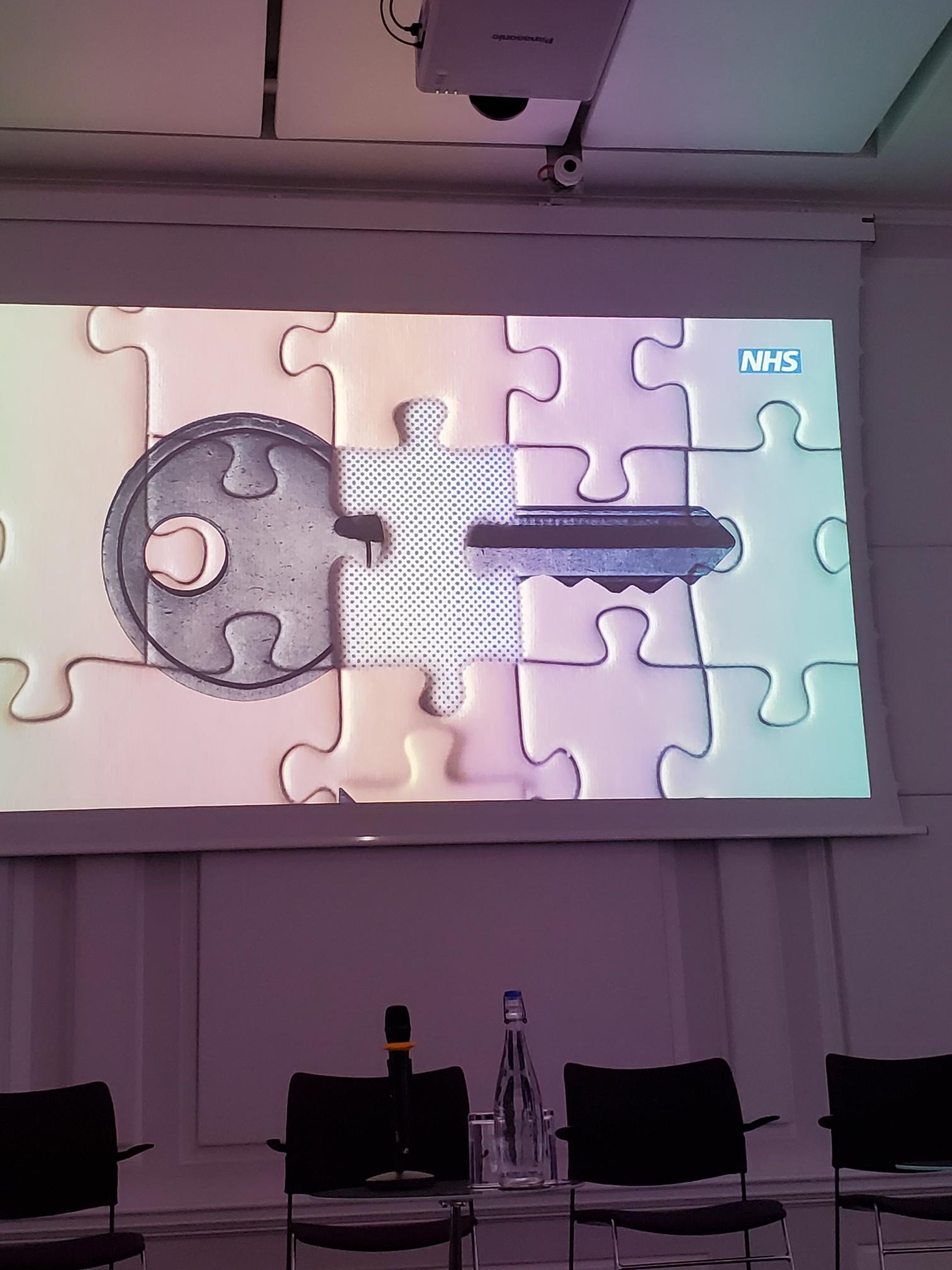
Following our opening session, Ellie Gordon and Stephen Jones launched the new animation “We Are the Locksmiths.” The film poetically portrayed mental health nurses as key-cutters shaping, adapting, and helping people find the right fit for recovery.
Watching it, I was struck by how accurately it captured the emotional labour of care, the balancing of vulnerability, patience, and professionalism
Next we had the Mentimeter session that morning, which was led by Professor Sally Hardy. She guided participants through reflective wellbeing questions using the interactive Mentimeter tool, encouraging everyone to think about how to sustain personal and professional wellbeing in mental health practice. Sally’s session wasn’t just about gathering feedback
Afterwards, the Alumni and Facilitators’ “Show and Tell Time” began. Groups from Sheffield NHS Trust, Sussex Mental Health Partnership, Lancashire Mental Health NHS trust, and Hereford NHS Trust sharing creative projects and reflections from their PSI practice. There were posters, poems, and community initiatives that had grown directly from the training. I wandered around the tables, speaking with participants who described how PSI had changed their teams. I think One mental health nurse told me, “We stopped seeing interventions as techniques and started seeing them as relationships.” It was inspiring
Workshop One – Working Together in Risk and Safety
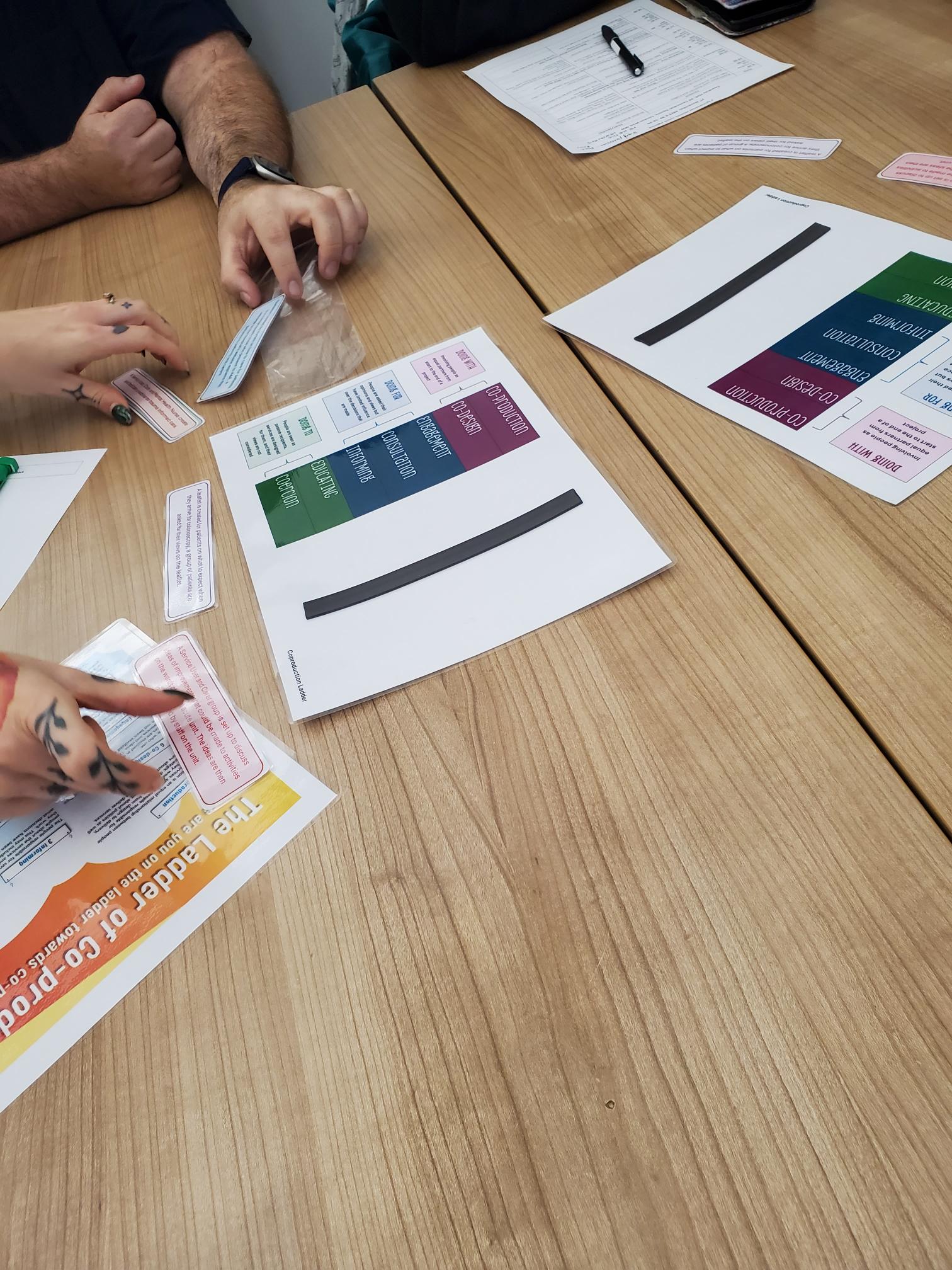
After refreshments, we broke into workshops. I joined Workshop One: Lived Experience and Co-Production – Utilising Our Expertise, led by Hannah Cadogan and colleagues. It was energising to see lived experienced and mental health nurses working side by side.
I spoke about what co-production really means from a carer’s point of view. I shared my journey as someone who has cared for a family member living with schizophrenia and another with autism, and how those experiences taught me the importance of being included as an equal partner in care.
I explained that carers often hold a deep understanding of the person they support insights that can make a real difference if professionals take the time to listen and involve us from the start, not as an afterthought. Drawing on my work with Carers UK, the Carers Trust, and the Triangle of Care as many nurses from the mental health trusts were members of triangle of care programme., I spoke about how true co-production is built on trust, openness, and shared learning.
We discussed barriers time, fear, power differences but also solutions, like embedding co-production in supervision and reflective practice.
In this session, the discussion turned to how we can meaningfully involve carers and service users in planning safety not as tick-box exercises, but as genuine collaborations. I found myself reflecting on my own experiences of sitting in meetings where decisions were made about my mum rather than with us.
Hearing the nurses speak so openly about their challenges about time pressures, fear of getting it wrong, and the emotional toll of risk reminded me that we’re all human in this process. True co-production means sharing not only responsibility but also vulnerability.
One participant spoke about the importance of patience: “We’re not here to fix; we’re here to find a way in.” That line stayed with me. It echoed my own philosophy that care starts with listening, not solving.
By the end of the workshop, we agreed that co-produced safety isn’t about removing risk; it’s about building trust so we can face risk together.
Workshop Two – Co-Production and Carer Involvement
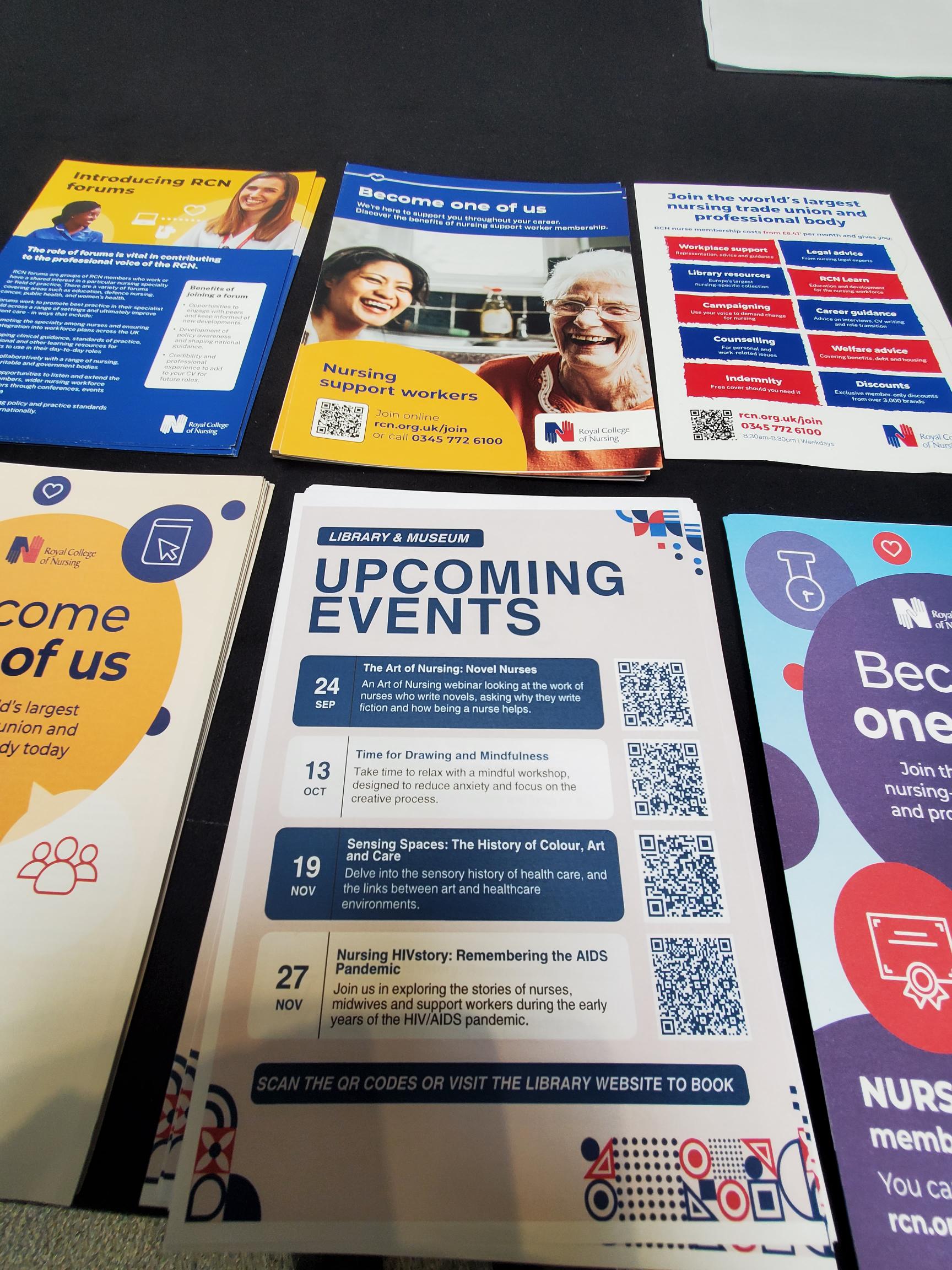
Lunch provided another opportunity for networking. The Mental Health Forum stand and MHP stall displayed resources on psychosocial practice.
I met others who had recently completed the course.
Conversations were open, curious, and full of mutual respect the kind of professional empathy that sustains hope in challenging work.
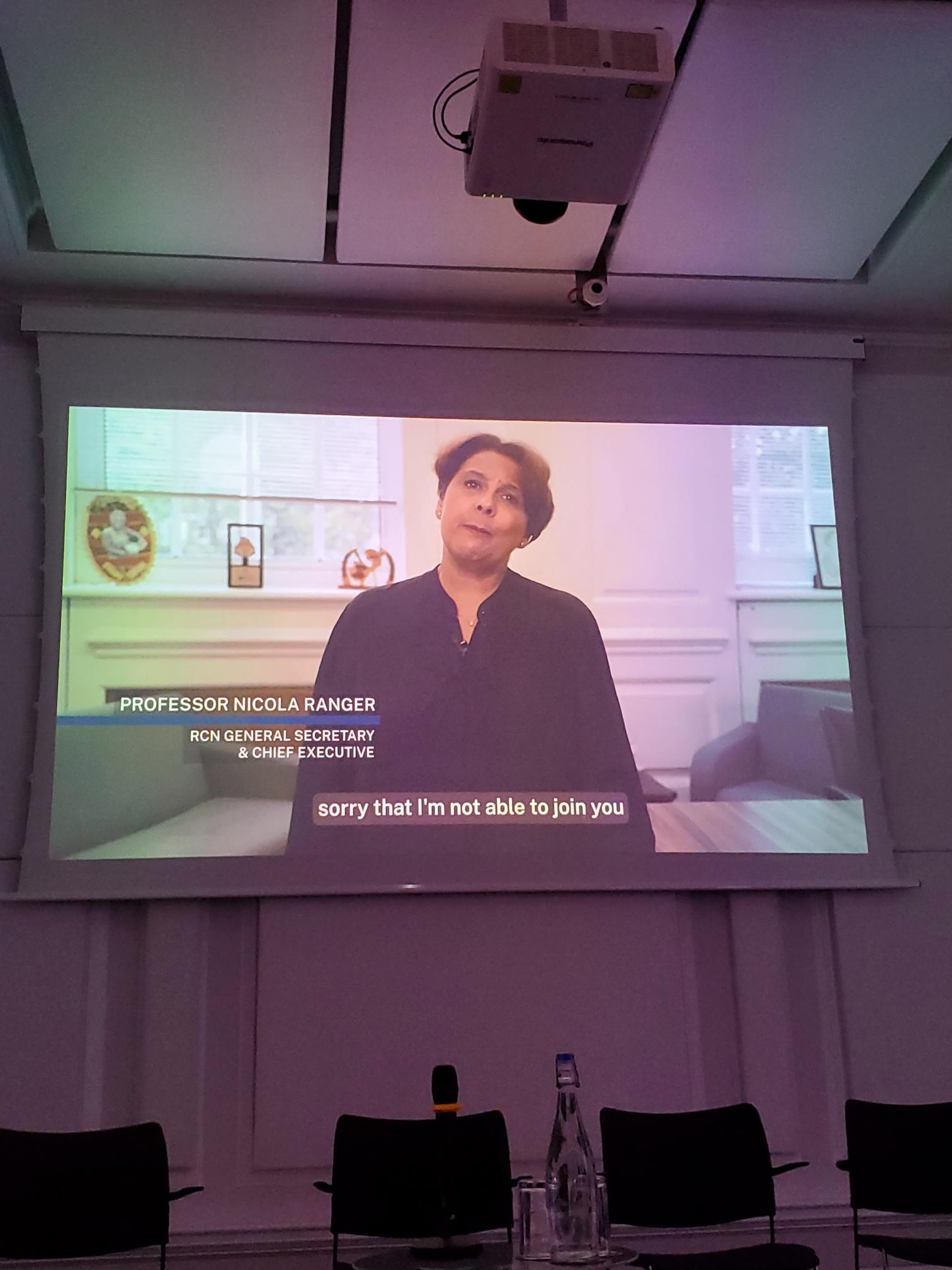
After lunch we heard from Professor Nicola Ranger, RCN General Secretary, who welcomed everyone back, commending the alumni for sustaining PSI’s legacy. Her words “you are the custodians of compassion” perfectly captured the spirit of the day.
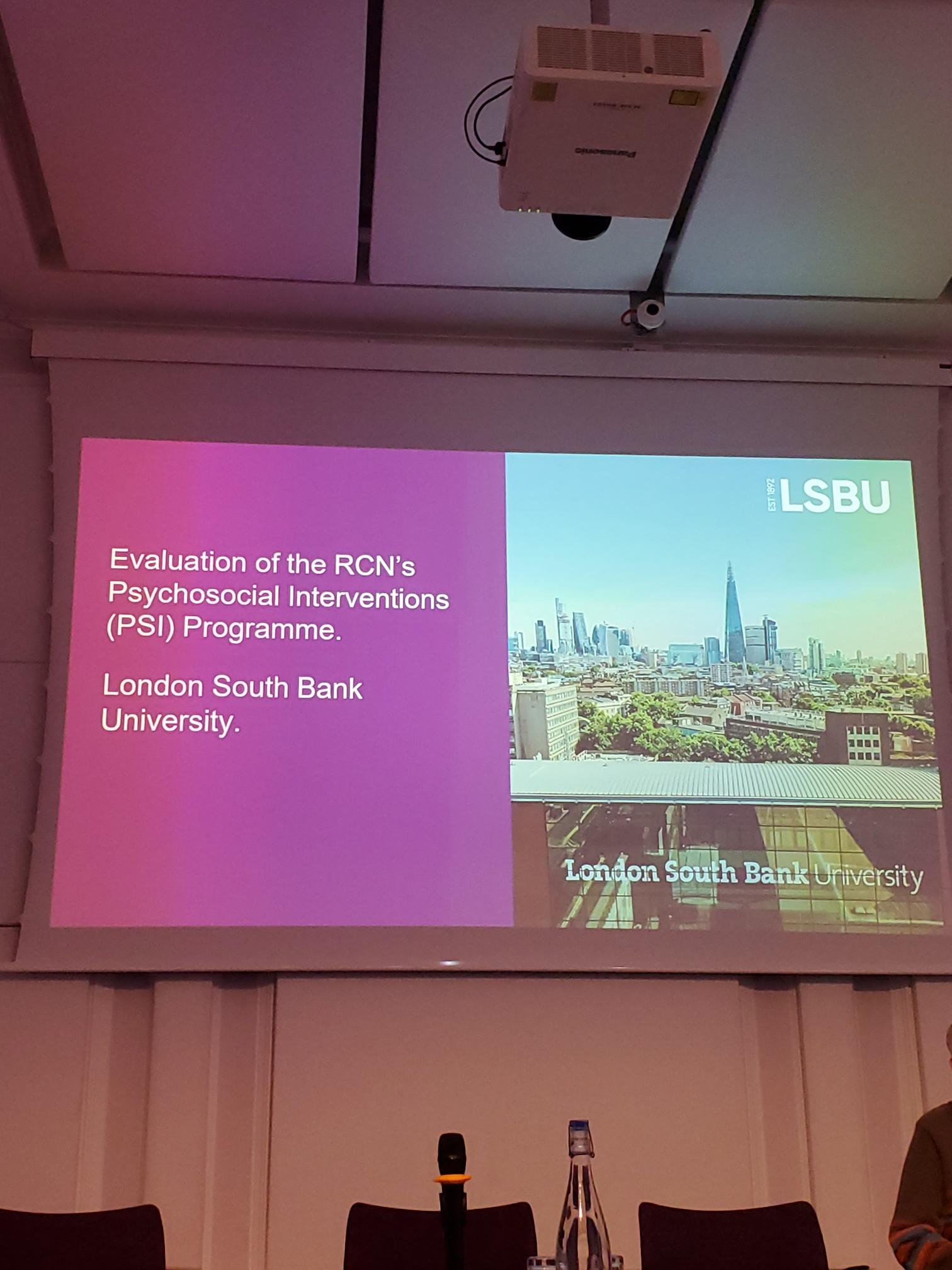
The evaluation session of the RCN PSI Alumni Conference was presented in partnership with London South Bank University (LSBU), who have been key academic collaborators in examining the outcomes and long-term impact of the Psychosocial Interventions (PSI) programme. This section was introduced by Stephen Jones, and Professor Chris Flood, a leading figure in mental health nursing and research at LSBU.
Together, they outlined how LSBU’s evaluation seeks to capture not just the quantitative outcomes of PSI such as improved confidence and competence among practitioners but also the qualitative stories of change, growth, and compassion that the alumni community embodies.
There will be several teams at LSBU, but I was impressed on the make up of the Advisory and Supervisory Team provides academic oversight and strategic direction.
Professor Patrick Callaghan, Professor of Mental Health Science at LSBU, offers extensive expertise in psychosocial interventions and nursing research leadership.
Professor Chris Flood, a leading mental health and adult nurse researcher, specialises in health economics, survey design, and qualitative inquiry.
Professor Neil Brimblecombe, Professor of Mental Health and Learning Disability, contributes his expertise in workforce development, nurse prescribing, and policy analysis linking the PSI evaluation to broader NHS workforce strategies.
Professor Eddie Chaplin, an expert in intellectual disabilities and psychosocial interventions, supports the development of inclusive frameworks for peer support, guided self-help, and service co-production.
Afternoon workshop
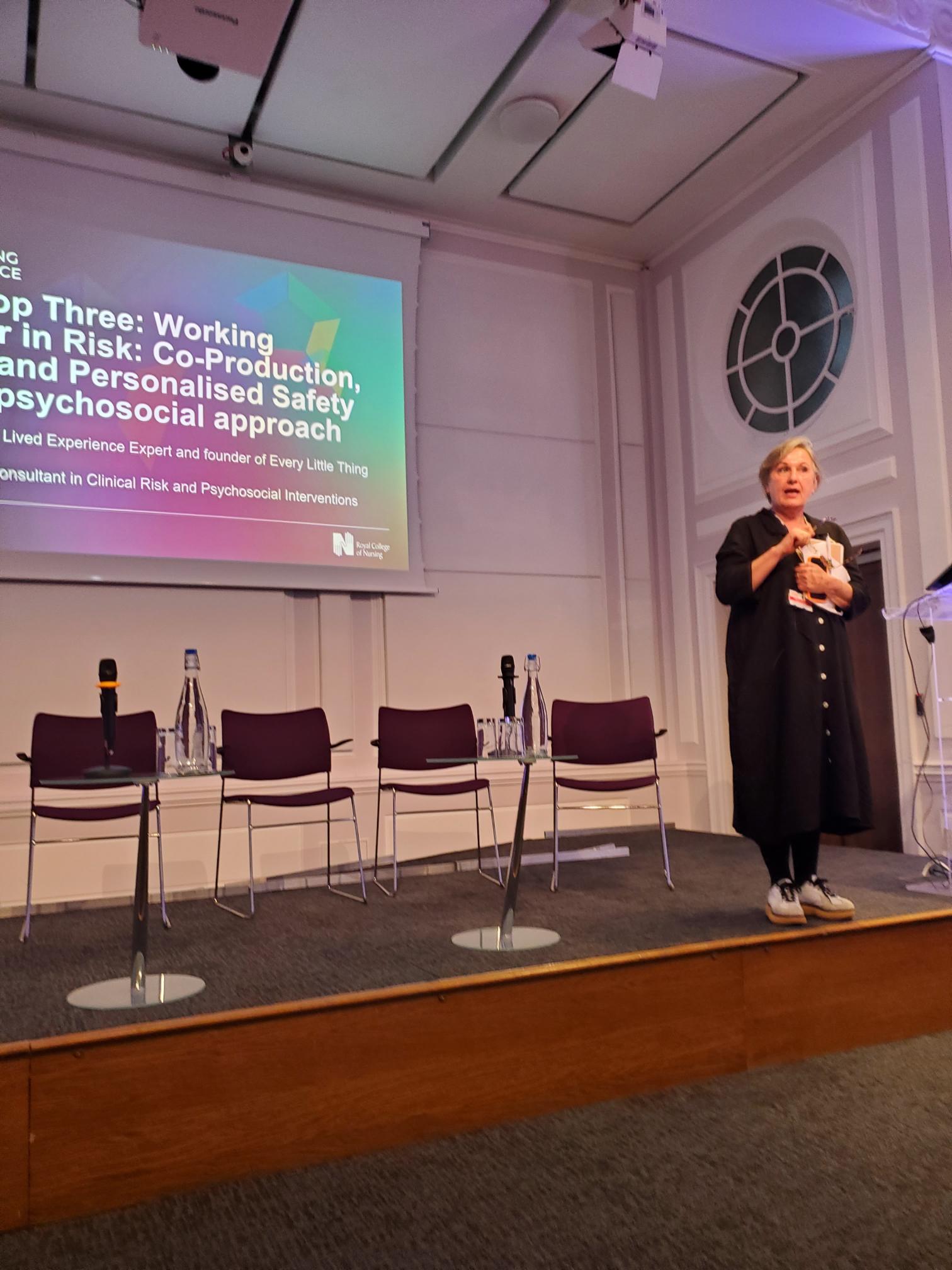
In the afternoon, I attended Workshop Three: Working Together in Risk – Co-Production, Suicide and Personalised Safety. It was deeply emotional. We discussed how carers can be crucial in early warning and safety planning, but only if professionals create safe spaces for them to speak. The workshop was presented by Berkshire Healthcare NHS Foundation Trus
During the workshop, we took part in reflective exercises that encouraged us to consider what “shared safety” truly means. We were asked to think of times when communication broke down between families, patients and professionals, and how different outcomes might have been possible if trust and collaboration had been stronger.
Celebrating Archievements
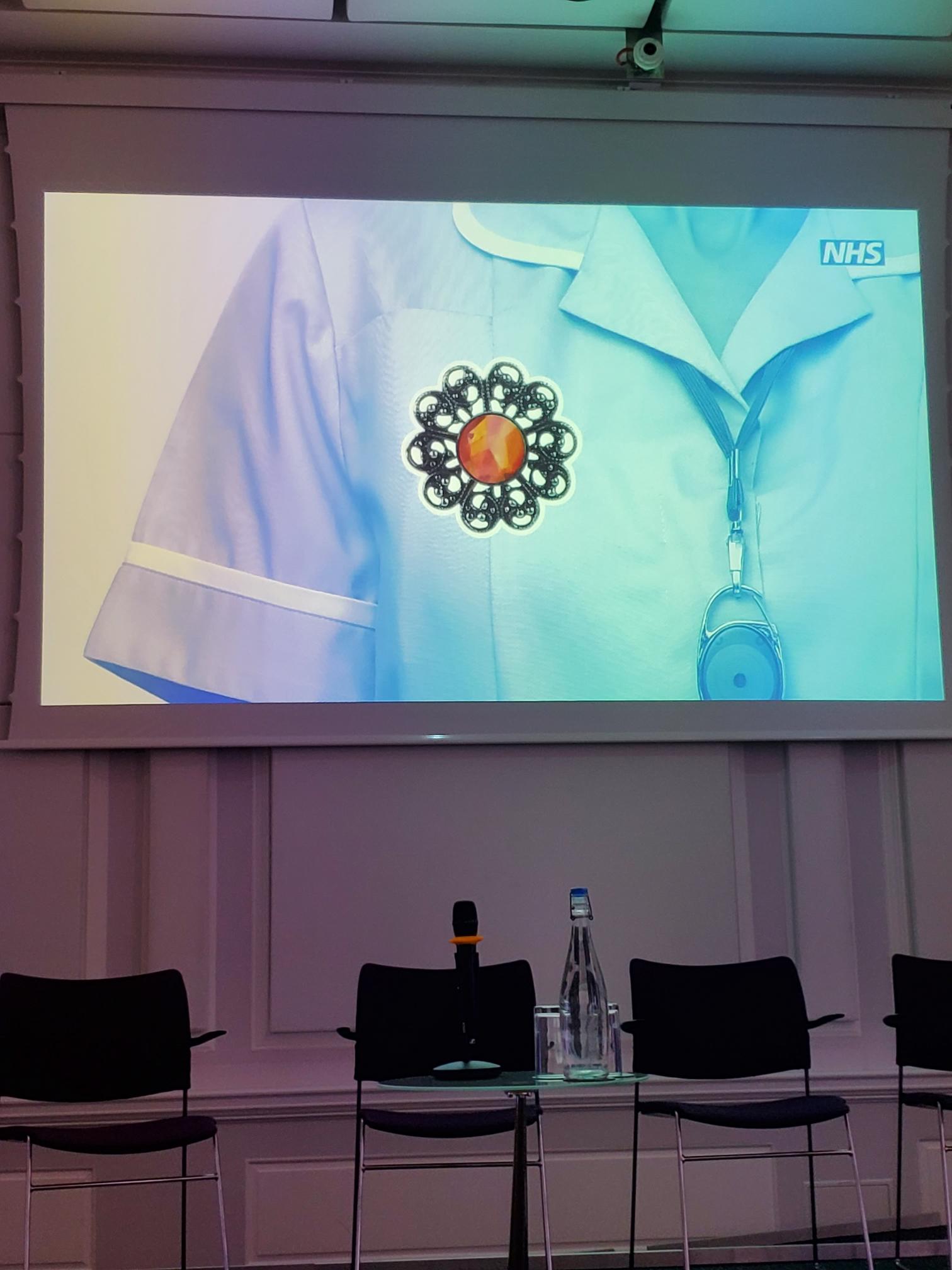
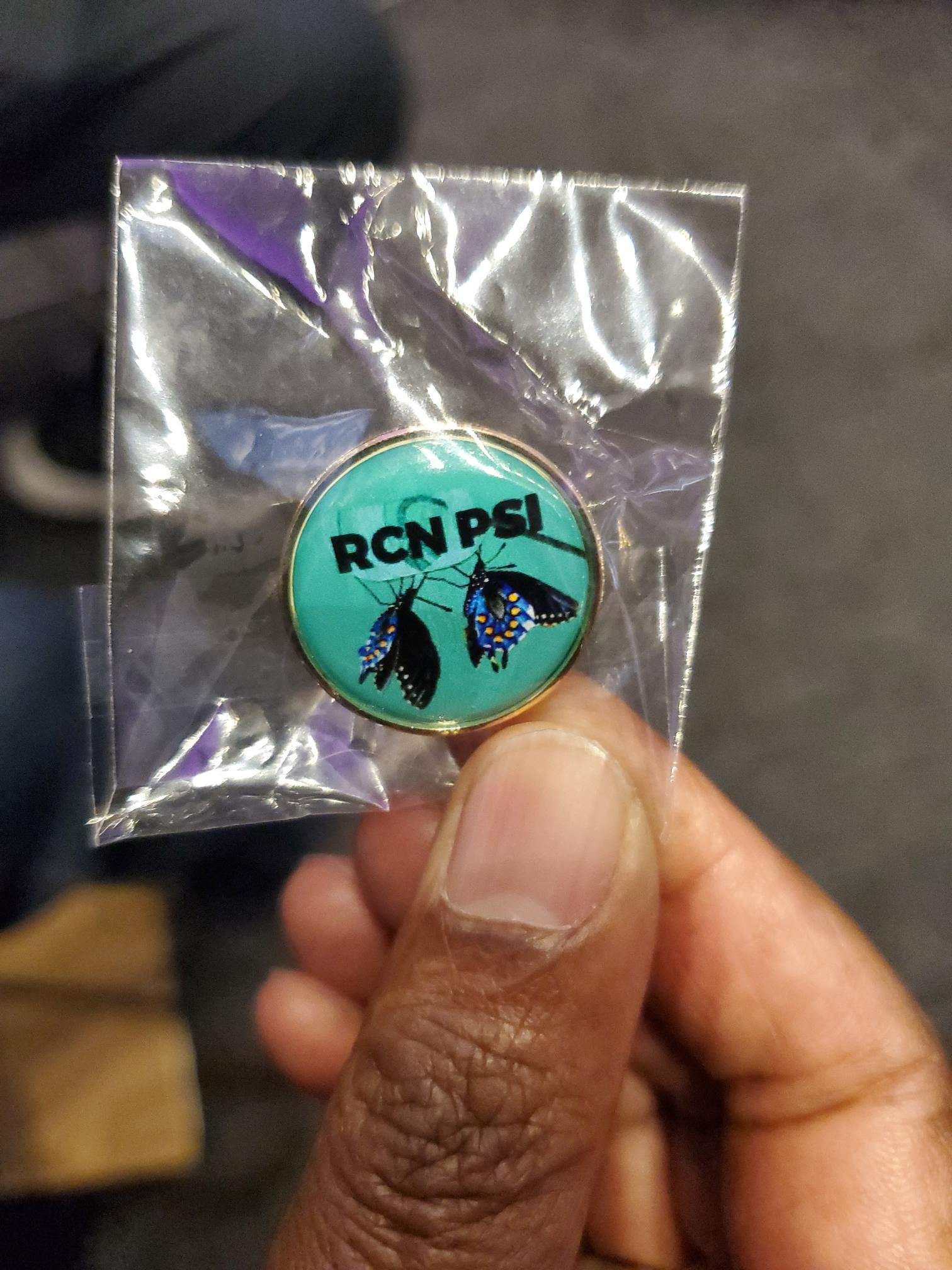
Those who finished the RCN PSI programm were presented with a RCN PSI alumni badge, which i felt was a small but powerful symbol of commitment, compassion, and continued learning. For many, receiving that badge wasn’t just about completing a programme; it represented belonging to a network that values empathy, partnership, and the courage to keep improving mental health care together.
Reflections and Looking Ahead
As the day drew to a close, we took a quiet moment to reflect. Conferences like this are not just about learning they are about belonging. They remind me that, while the caring role can often feel isolating, there is a wider network of understanding and solidarity.
I missed out a lot more that took place at the alumni event, but watch out for more exciting news from the RCN in future.
To find out more about the RCN PSI Progamme, click link below.
By Matthew McKenzie – Carer activist (volunteer of Carers UK)
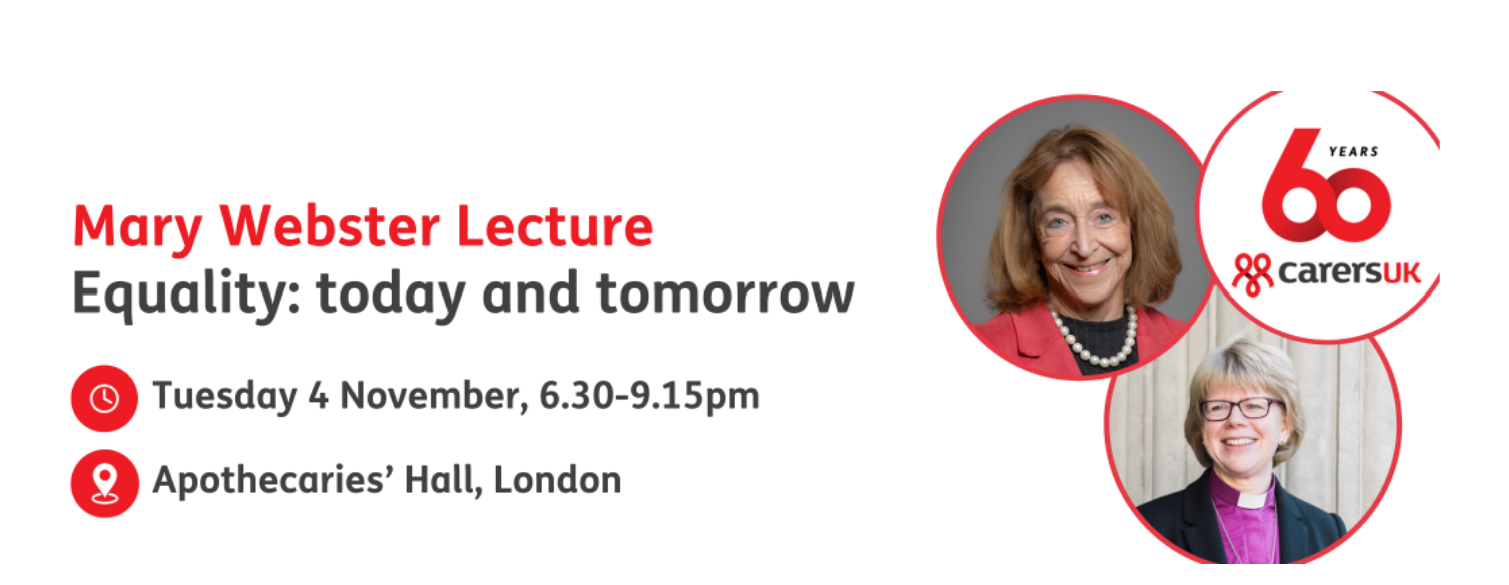
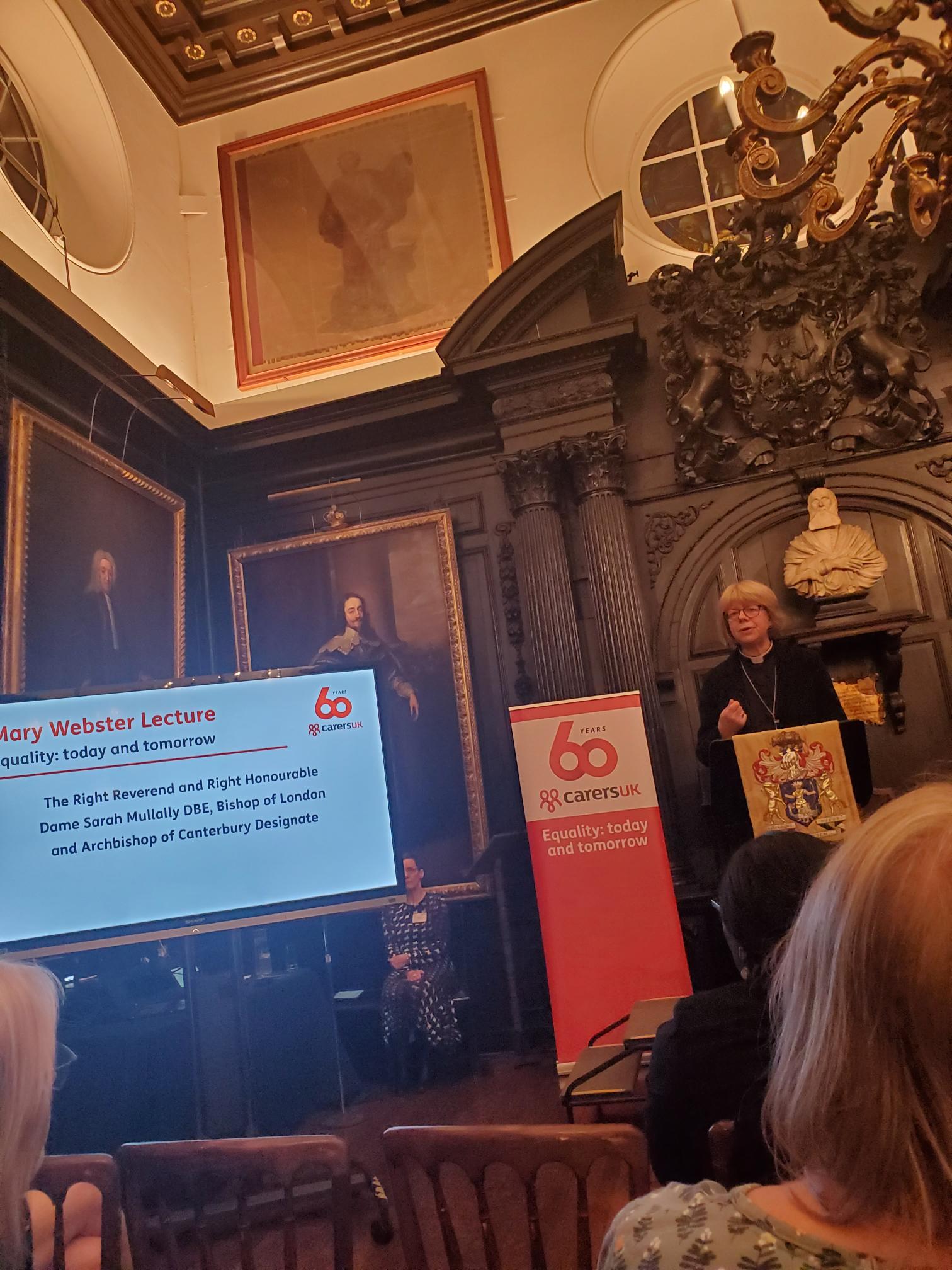
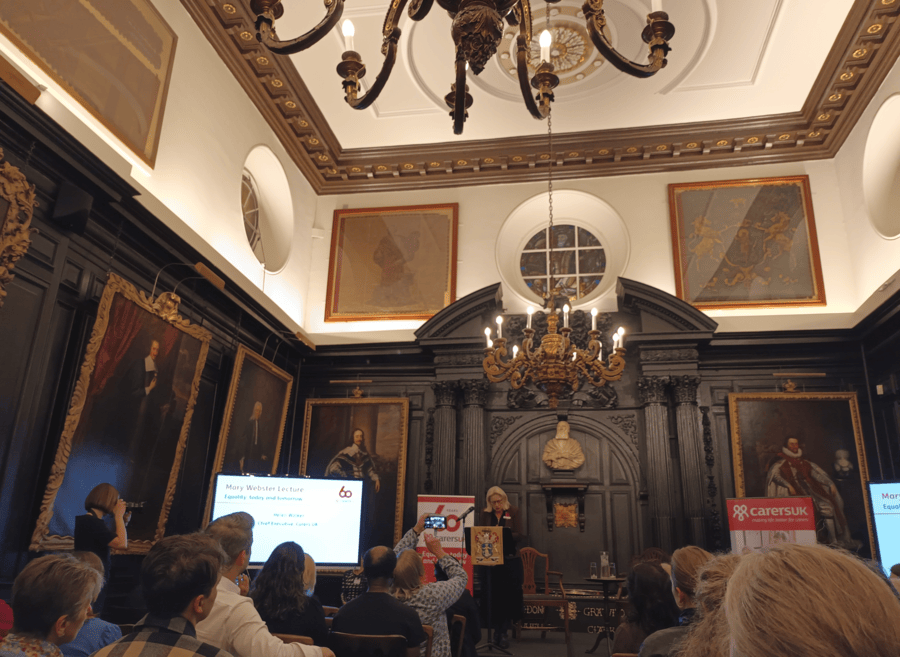
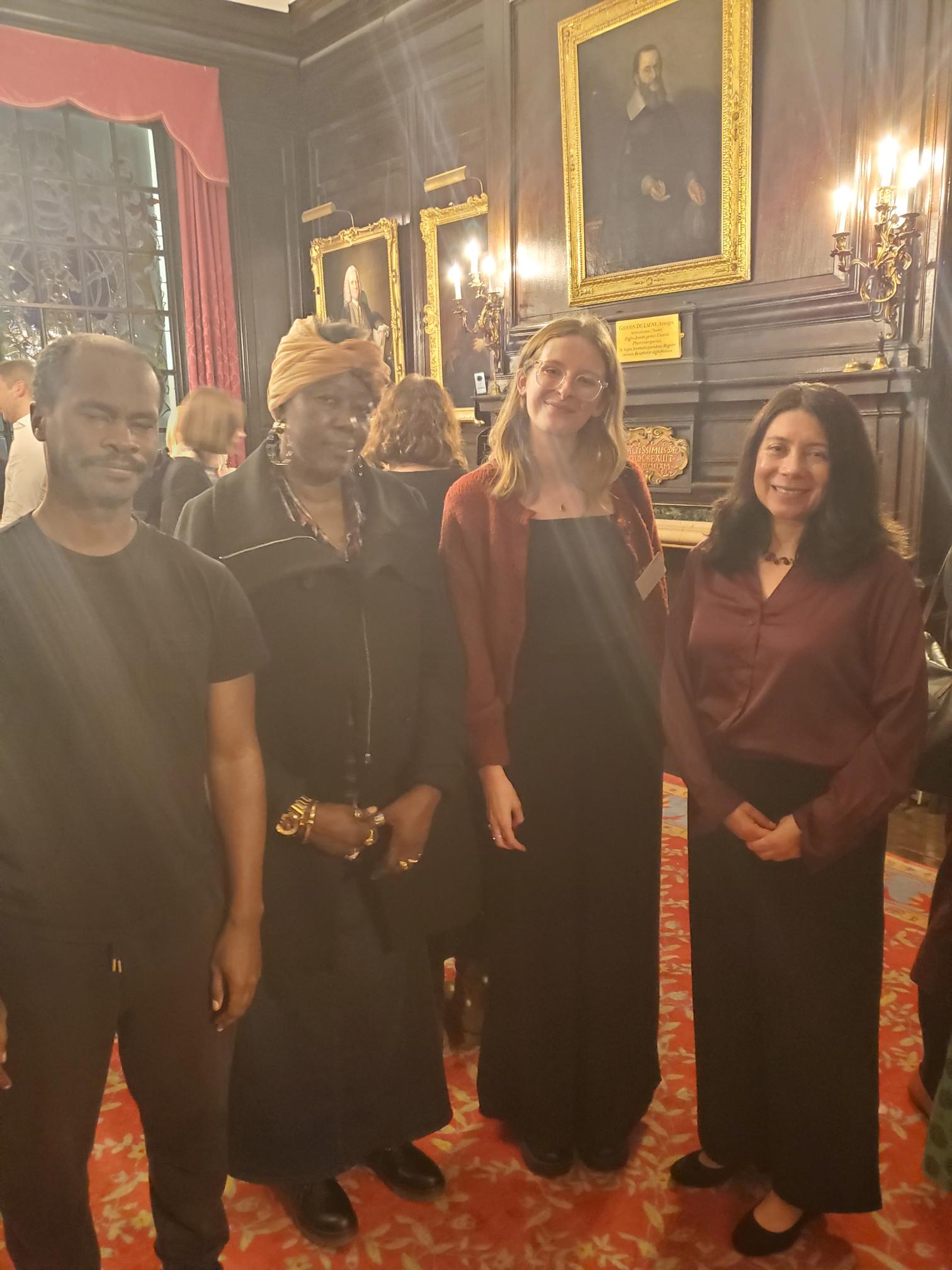
Last night I attended the Mary Webster Lecture at Apothecaries’ Hall in London, a special event marking Carers UK’s 60th anniversary. As someone who has cared for family members and now volunteers with Carers UK, it was moving to sit among other carers, professionals, and campaigners who have worked so hard for recognition and equality.
The event honoured Reverend Mary Webster, the founder of Carers UK, whose vision decades ago helped lay the foundations for unpaid carers’ rights. Today, as we still fight for equality and understanding, her legacy feels more important than ever.
Setting the Scene
Apothecaries’ Hall is a grand, historic space filled with portraits and a sense of tradition. But it also felt like the right place to discuss change how we can build a future where carers are respected and supported equally. The evening began with warm welcomes and reflections from Helen Walker, Chief Executive of Carers UK. She reminded us that while progress has been made, many unpaid carers still live in poverty, often earning less than the minimum wage for full-time dedication.
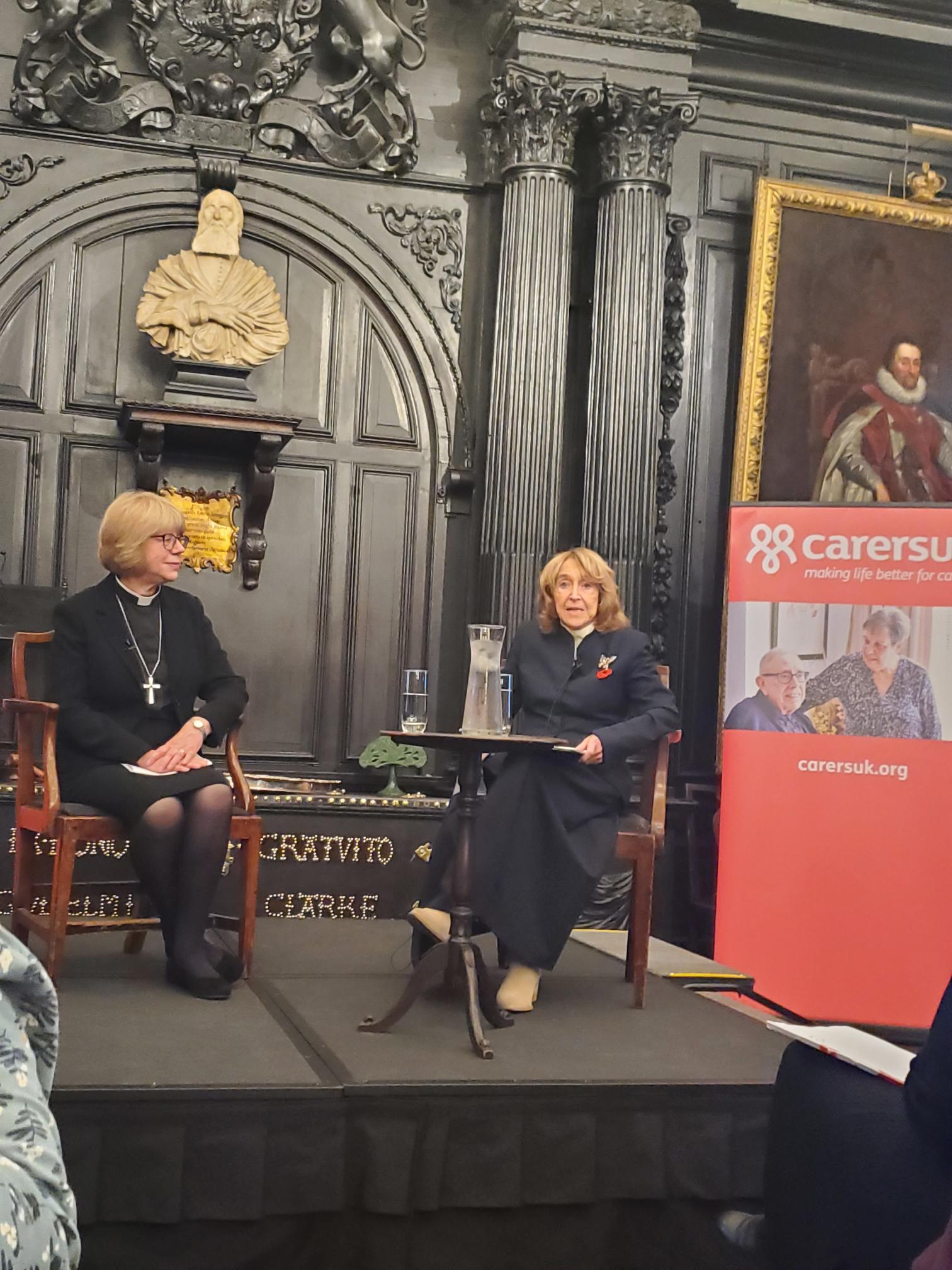
Then came the highlight of the evening a talk by The Right Reverend and Right Honourable Dame Sarah Mullally DBE, Bishop of London and recently named Archbishop of Canterbury Designate, in conversation with Baroness Jill Pitkeathley OBE, long-time carer champion and former Carers UK CEO.
Dignity in Caring
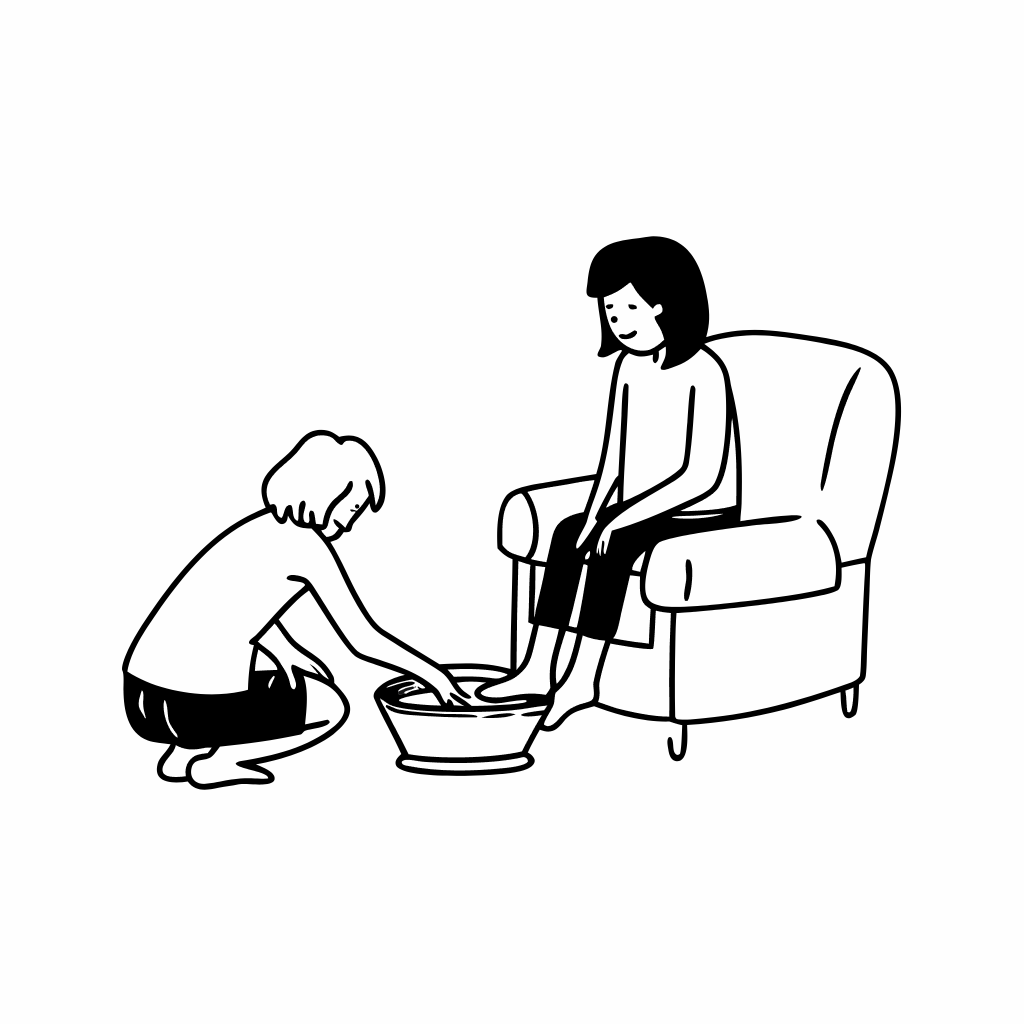
Bishop Sarah spoke with warmth and honesty about her journey from nursing to the Church. What struck me most was her story about washing her grandmother’s feet when she was a young nurse, which a simple act that carried deep dignity. She used that image to describe caring itself: often quiet, unseen, but filled with compassion and humanity.
Her message was clear that care is about dignity. Every person, regardless of ability, age, or background, has value. She reminded us that dependency isn’t weakness it’s part of being human. We all depend on others at different points in our lives.
As a Black male carer, that message really resonated. In many of our communities, caring happens quietly, often behind closed doors, without recognition or support. Bishop Sarah’s words reminded me that this invisible work deserves to be seen and respected not just by policy makers, but by society as a whole.
Lessons on Equality and Faith
Baroness Pitkeathley joined Bishop Sarah for a deep conversation about equality today and tomorrow. They reflected on how far carers’ rights have come and how far we still have to go. From health and financial struggles to workplace inequality, many of the same challenges from the 1990s remain today.
Bishop Sarah also spoke about the Church’s Reimagining Care Commission, which calls for a new “covenant of care” a moral agreement between government, communities, and families to share responsibility for those who need care. It’s not just about services, but about values: compassion, respect, and community.
Hearing that from someone soon to become the Archbishop of Canterbury gave me hope. It felt like a recognition that faith, ethics, and social justice must go hand in hand.
Voices from the Floor
The Q&A that followed was emotional and powerful. Carers from the audience spoke up about their struggles housing, mental health, disability, and the loneliness that caring can bring.
One carer shared the pain of fighting for proper housing for her disabled son; another spoke about the toll on her own health. Each voice reminded me that caring is more than statistics it’s real people doing extraordinary things every day, often without support.
My Reflection as a Black Carer Activist
As I looked around the room, I thought of the carers in Black and ethnic minority communities who face extra barriers language, stigma, or fear of not being understood. Too often, our voices are missing from the conversation. I decided to have a chat with Dame Sarah Mullally about my thoughts, still nights like this show that inclusion is possible, and necessary.
Equality for carers means also recognising our diversity on different cultures, faiths, and family structures and ensuring that every carer can access the help they need, without judgement or struggle.
I left the event feeling encouraged but also challenged. Encouraged by the leadership and compassion of women like Bishop Sarah and Baroness Pitkeathley, who continue to champion carers’ rights. Challenged, because the journey isn’t over and each of us, whatever our background, has a role to play.
A Call for Tomorrow
Sixty years after Mary Webster founded Carers UK, unpaid carers are still holding society together.
We save the country billions, yet too many of us live in hardship. As Bishop Sarah said, we must rethink how we value care not as a cost, but as a cornerstone of our humanity.
For me, as a carer activist, that means continuing to speak up, share stories, and bring carers from all communities together. Because equality today and tomorrow starts with being seen, heard, and valued.
By Matthew McKenzie, Facilitator, National Ethnic Mental Health Carer Forum
Introduction: A Forum that Connects and Challenges
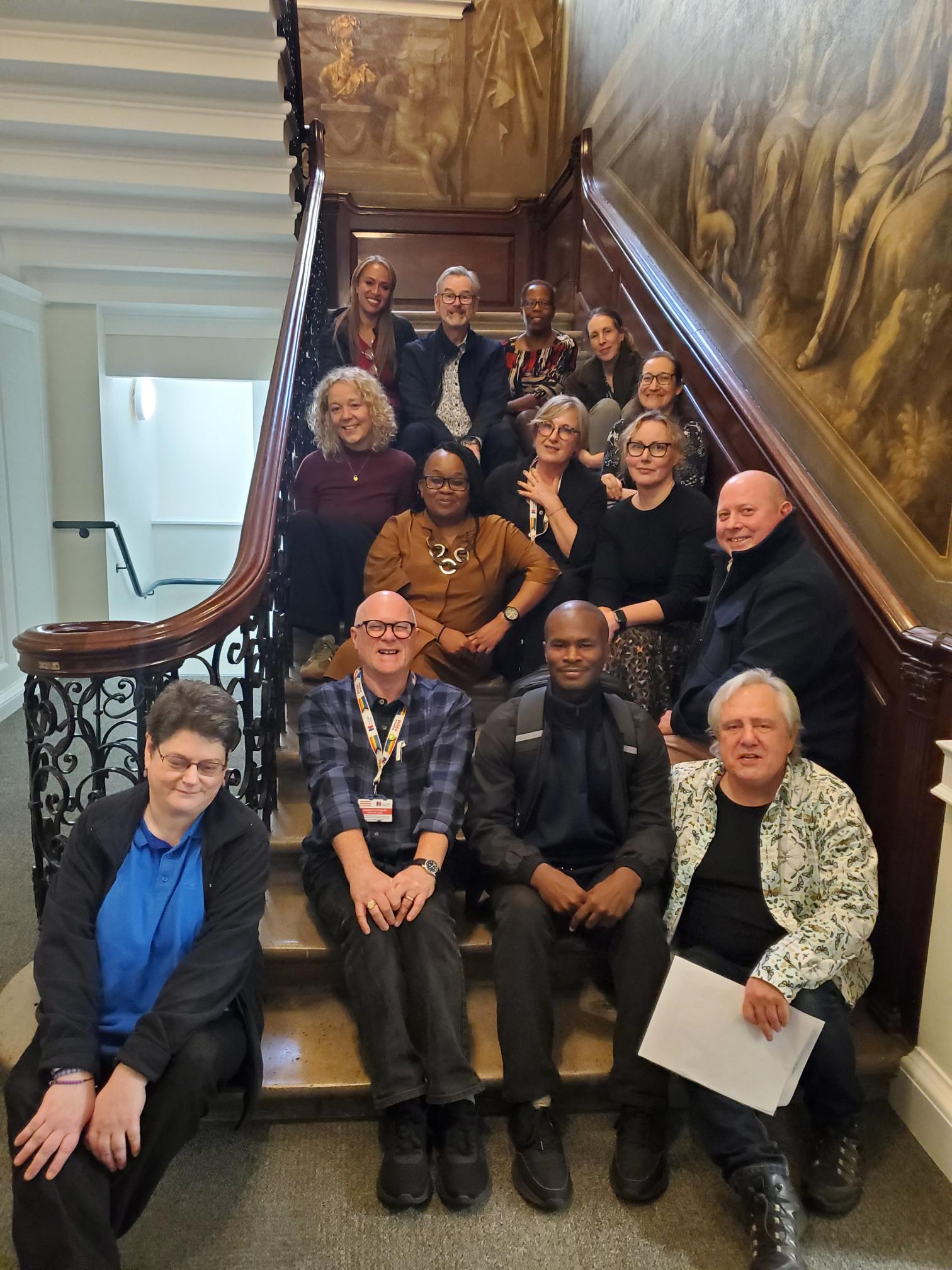
As the facilitator of the National Ethnic Mental Health Carer Forum, I never take for granted how special these sessions are. Each month, carers, professionals, and researchers from all over the UK log in to share knowledge, raise awareness, and push for change in how mental health services understand and support ethnic minority communities.
Our October 2025 session was a powerful one. Falling on the last day of Black History Month, it brought together crucial themes on race equality, co-production, research, and carer visibility.
We heard from two key areas shaping mental health equity right now:
The OSMOSIS Project, led by Dr. Jacqueline Sin and Sharon Galliford, focusing on developing social care-based support for carers of people with psychosis.
The Patient and Carer Race Equality Framework (PCREF), presented by Aboobaker Bhana, Equality and Involvement Manager for South West Yorkshire Partnership NHS Foundation Trust.









 A Caring Mind