Tag Archives: community support

Lewisham, Southwark & Lambeth carer forum update October 2025

The recent Carers Forum brought together unpaid carers, health professionals, and community organisations from across South London to share updates, experiences, and ideas for improving mental health support. The event, chaired by Matthew McKenzie, created a safe and open space for carers to connect, exchange information, and have their questions heard by local health leaders.

Setting the Scene

Matthew opened the session by welcoming carers from across Lambeth, Lewisham, and Southwark. He spoke about the importance of providing carers with dedicated time to hear from service providers, particularly those supporting someone with mental ill-health and to ensure their voices shape local mental health strategies.

Continue reading

Reflections from King’s Mental Health Fair 2025 – A Carer’s Perspective

By Carer Activist – Matthew McKenzie

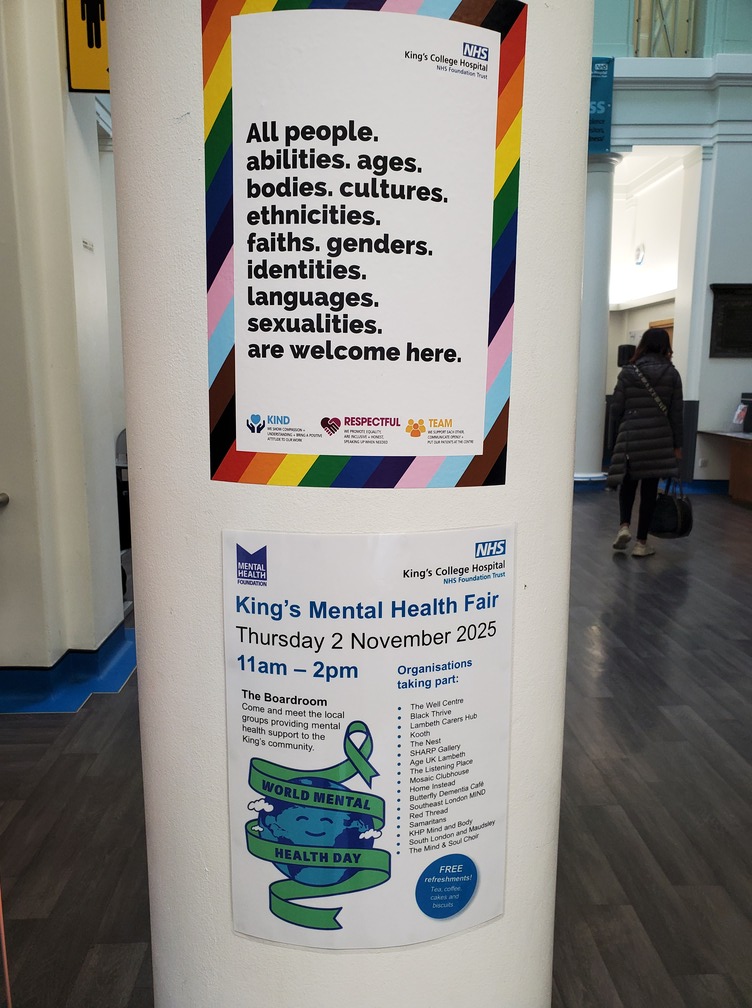
Today, I had the privilege of being part of King’s College Hospital NHS Foundation Trust’s Mental Health Fair, held on Thursday 2nd October, in recognition of World Mental Health Day 2025.

The event brought together a wide range of organisations and community groups working tirelessly to support the mental health and wellbeing of patients, families, and carers.

Why carers need to be at the heart of mental health conversations

As someone who has cared for a loved one experiencing mental health challenges, I know firsthand the importance of recognising and supporting carers through the groups i run.

Continue reading

Understanding Community: The Foundation of Connection

By Matthew McKenzie – A Caring Mind

Community is a word we hear often, but its true meaning and significance can sometimes be overlooked. At its core, a community is a network, a web of relationships built on shared identity, common themes, and mutual trust. Communities are formed when people come together, united by a sense of belonging and shared responsibility. This sense of belonging is not just about being part of a group; it’s about feeling valued, having a purpose, and working towards common ideals.

This blog is a transcript of the video below.

Communities exist in many forms. The most immediate and intimate is the family, where the seeds of unpaid caring are often sown.

Continue reading

Hospital Carers Discharge Meeting Update July 2025

Posted: July 2025
By: Matthew McKenzie

In July 2025, we held another meeting of the London Hospital Discharge Carers Forum, which brings together carer centres, NHS professionals, and lived experienced unpaid carers to explore how we can better support unpaid carers through the complex hospital discharge journey.

With key developments shared, questions raised, and future opportunities on the table, I’m sharing this blog to ensure everyone is informed.

A Focus on Hospital Discharge but With Carers at the Centre

The forum continues to highlight how vital carer centres are in delivering effective, compassionate discharge support. But alongside that recognition comes rising expectations: better digital access, stronger links with acute hospital teams, more formal involvement in care planning, and even new digital tools to manage carer identity and input.

Our role is growing and so is the need for collective visibility and coordinated action.


Key Themes from July’s Discussion

1. NHS England Hospital Discharge Toolkit & Care Contingency Plan
As an involved carer, I delivered the NHS England update. The main message? The Care Contingency Plan (CCP) is becoming a key focus across the system. There are planning sessions due in September, and carer centres might be asked whether they can take on CCP delivery alongside existing carers assessments.

This triggered a crucial question: Will additional funding or contractual support be offered to carer centres taking on CCPs? because we can’t afford to quietly absorb additional workload without clarity on resources or expectations.

2. Digital Tools – NHS App & Carer Self-Identification
With the growing digitisation of NHS services, there are plans to enable carers to self-identify via a digital route. The Universal Care Plan (UCP) is being built into the NHS app, but there’s confusion about whether a separate “carer app” is being developed too.

We’ve asked NHS England for clarification: Will carers be expected to use one NHS app to manage both contingency plans and carer registration, or will multiple systems be introduced? The answer will have implications for how we support carers with digital skills and accessibility.

3. The Bigger Picture – NHS 10-Year Plan and Local Adaptation
We explored how the new 10-Year NHS Plan mentions carers primarily in the context of discharge, but offers little in terms of direct support or investment in carers themselves. Several carer centres raised concerns about being seen only as a means to improve discharge outcomes, rather than as partners in their own right.

That said, some centres are using the plan as an opportunity, working with local Integrated Care Boards (ICBs) to adapt and influence how the priorities are rolled out locally, including integration with neighbourhood health centres and walk-in clinics.


Peer Learning and Local Centre Updates

As always, our meeting included practical insights from carer centres embedded in local hospitals. Topics included:

  • Establishing hospital-based carer hubs and information desks.
  • Hosting monthly drop-ins for carers on specific wards (e.g. stroke and frailty).
  • Using ward rounds to identify and build relationships with staff willing to act as carer champions.
  • Overcoming challenges in gaining visibility, sustaining presence, or maintaining resource levels for in-hospital work.
  • Planning carers coffee mornings and pop-up stands to increase footfall and engagement.

For newer hospital-based carer workers, this space proved invaluable as a place to learn from colleagues, gather ideas, and avoid isolation.


Project Developments: What Centres Need to Know

Several borough-wide and London-wide initiatives are taking shape that could directly affect how carer centres operate in coming months:

  • A standard operating procedure for hospital discharge, currently being developed across South East London, is aiming to streamline how carers are engaged at discharge, with pilot sites starting this September.
  • In North Central London, work is underway on a web portal that makes it easier for hospital and emergency staff to refer carers into local support services including from the London Ambulance Service.
  • Carer Centres in several areas are starting or refreshing carer charters, carer passports, and surveys designed to codify carer involvement and measure experience across hospital pathways.
  • Carer support workers at one major South London hospital are re-establishing visibility post-staff transition. Efforts are underway to build new ward-level relationships and identify carer champions among staff. The centre is also exploring monthly carer drop-ins, asking the group for ideas on what works well and what doesn’t.
  • One East London carer centre has established a hospital-based hub on a specific ward floor, acting as a go-to space for carers needing support or information. They also run monthly drop-in sessions on elderly/frailty and stroke wards conditions where family involvement in discharge planning is often critical.

These projects are at different stages, but all point to one thing: carer centres are being asked to operate more visibly, more formally, and more digitally. It’s essential we shape this process and not just respond to it.

With NHS England’s CCP work moving fast and carer integration into digital systems ramping up, carer centres can no longer afford to remain on the sidelines.

  • We have a chance to be informed of policy changes early not after implementation.
  • Carer centres and hospitals can raise concerns about workload, training, and funding before it’s too late.
  • Newer or isolated workers benefit from collective knowledge-sharing and support.

This is not just another meeting, it’s one of the few cross-borough forums focused squarely on carer centres in the acute hospital context.


Looking Ahead: September Session

Our next meeting will be held usually the last week of September.

Let’s not let carers be an afterthought. Let’s make sure carer centres are seen, heard, and properly resourced.

South West London Mental Health carers group update for June 2025

A Space to Share, a Space to Be Heard

The session opened with updates and heartfelt check-ins. One of our carer members, shared a deeply personal and challenging situation regarding her loved ones declining mental and physical health. Despite strained family dynamics and the emotional burden of caring, a carer is courageously advocating for her loved one and seeking support through nursing services and assessments.

Peer Support: Insights from Experience

Long-time members offered valuable perspectives from their own journeys. A carer shared their struggle supporting individuals, which showed a stark reminder of the emotional and logistical toll caring can take. Another carer encouraged fellow carers to prioritise their own well-being, even in small ways a cup of tea, a short walk, a moment to breathe.

Continue reading

Mental Health Awareness Week 2025: The Power of Community

The Power of Community in Mental Health: Reflections on Mental Health Awareness Week 2025

By Matthew McKenzie

Mental health is a universal concern, touching every life in profound and personal ways. As we mark Mental Health Awareness Week 2025, the spotlight turns to a theme that is both timeless and urgently relevant: community. In a world where isolation and disconnection are increasingly common, the bonds we share with others, whether family, friends, neighbors, or online networks it can be the difference between despair and hope, between struggle and resilience.

You can watch the awareness video below.

This article explores the vital role of community in mental health, the challenges many face in accessing supportive spaces, and the collective actions we can take to ensure no mind is left behind.


Understanding Mental Health Awareness Week 2025

A Tradition of Advocacy and Reflection

For over two decades, Mental Health Awareness Week has been a cornerstone of advocacy in the UK, led by organizations like the Mental Health Foundation. Each year, this week serves as a time for reflection, education, and action, encouraging individuals and communities to prioritize mental well-being.

Continue reading

South West London Mental Health carers group update for March 2025

Celebrating Mental Health Carers: Building Stronger Connections in Southwest London

By Matthew McKenzie | April 2025

Mental health carers play a vital, often unseen role in supporting loved ones through some of life’s most difficult challenges. At the SW London Mental Health Carer’s Group, we’re creating a space where carers can connect, learn, and feel empowered.

The forum is faciliated by Matthew McKenzie and Ava, although members of the group are encouraged to facilitate to develop carer empowerment.

Continue reading

Unpaid Carers: Understanding Rights and Advocacy for Mental Health Support

Introduction to Unpaid Carers and Their Rights

Here is another blog post aimed at those caring for a loved one living with mental illness. If you want to see the video lecture of “Advocacy & Mental Health Care Top Questions Every Carer Should Ask”. Click on the video below.

Caring for someone with a long-term mental illness is both a noble and challenging task. In today’s society, unpaid carers, often family members or close friends, play a crucial role in supporting individuals with mental health needs. Despite their importance, unpaid carers frequently navigate a complex and overwhelming landscape of rights, services, and support systems.

Continue reading

Challenges Carer Centres face

Understanding Unpaid Carers and the Vital Role of Carer Centers

This blog is by carer activist Matthew McKenzie. In the UK, millions of people, often unnoticed and unappreciated, dedicate their lives to caring for family members with long-term physical or mental health conditions. These unpaid carers are the backbone of the caregiving system, yet they face numerous challenges daily. Here, we delve into the crucial role of carer centers, the obstacles they encounter, and potential solutions to sustain and enhance their vital services.

What is a Carer Center?

Continue reading