IT Officer for London School of Osteopathy and a Carer representative for Maudsley. As you can see, I have many interests shown off my blog. I hope to keep it updated with posts and more things to come soon.
A fantastic new opportunity from King’s College London is inviting unpaid carers and members of the public to capture these experiences through photography.
Free Online Photography Workshops
Whether you’ve never taken a photograph beyond snapping pictures on your phone or you already enjoy photography, these free online workshops are designed for everyone.
You’ll learn how to:
Use your smartphone to take more meaningful photographs.
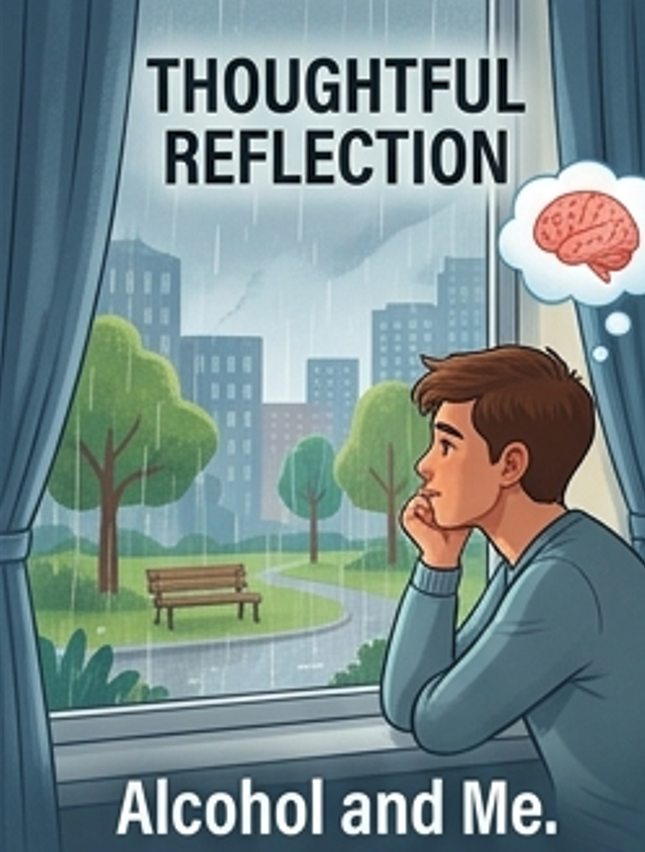
This week (6–12 July) marks Alcohol Awareness Week 2026, organised by Alcohol Change UK. This year’s theme, “Alcohol and Me,” encourages us to take a moment to reflect on our own relationship with alcohol and the impact it can have on our health, mental wellbeing, relationships and everyday lives.
For many unpaid carers supporting someone with a mental health condition, life can be emotionally demanding. While we often focus on the person we care for, it’s just as important to look after our own wellbeing. This campaign reminds us that seeking support, talking openly and making small positive changes can make a real difference.
To support this important awareness week, I’ve created a new video on my YouTube channel, A Caring Mind, exploring why Alcohol Awareness Week matters, particularly for carers and families affected by mental ill health.
If this post resonates with you, please share the video to help raise awareness, reduce stigma and remind carers that their wellbeing matters too.
By Matthew McKenzie – Chair of Cancer Caregiver group
Supporting a loved one through a cancer diagnosis is a journey that often goes unseen. Family members, partners, friends, and other caregivers provide emotional support, help navigate appointments, and stand alongside patients during one of the most challenging periods of their lives. Yet their experiences are rarely heard.
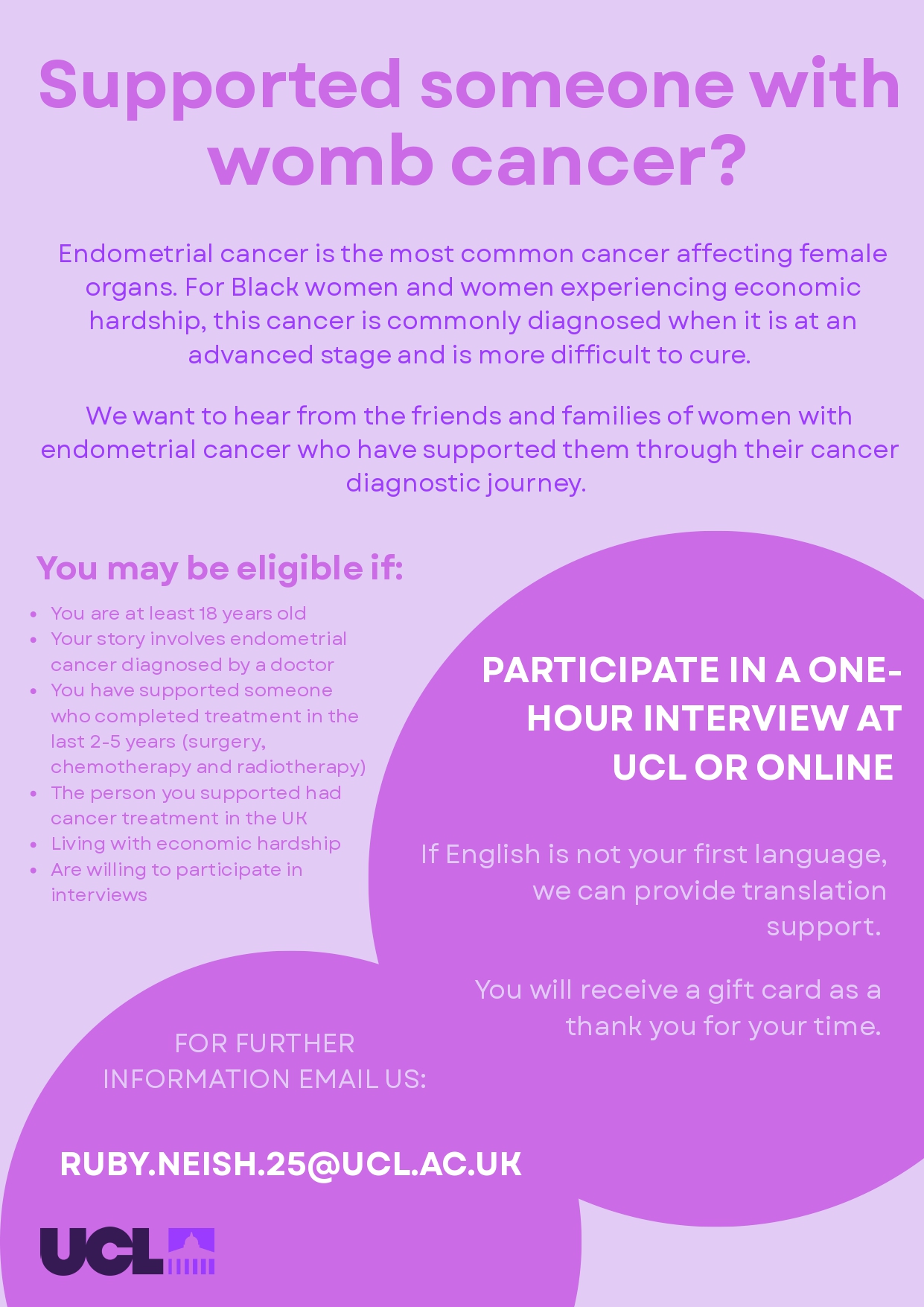
Researchers at University College London (UCL) are inviting people who have supported someone with endometrial (womb) cancer to take part in a research study exploring the cancer diagnostic journey. The study is particularly interested in hearing from people who have supported women experiencing economic hardship, as well as Black women, who are more likely to be diagnosed with endometrial cancer at a later stage, when treatment can be more difficult.
Your Story Matters
Every caregiver’s experience provides valuable insight into the challenges people face before, during, and after a cancer diagnosis. By sharing your story, you can help researchers better understand the barriers to timely diagnosis and identify ways to improve support for future patients and their families.
By Matthew McKenzie – Ethnic Mental Health Carer and Poet
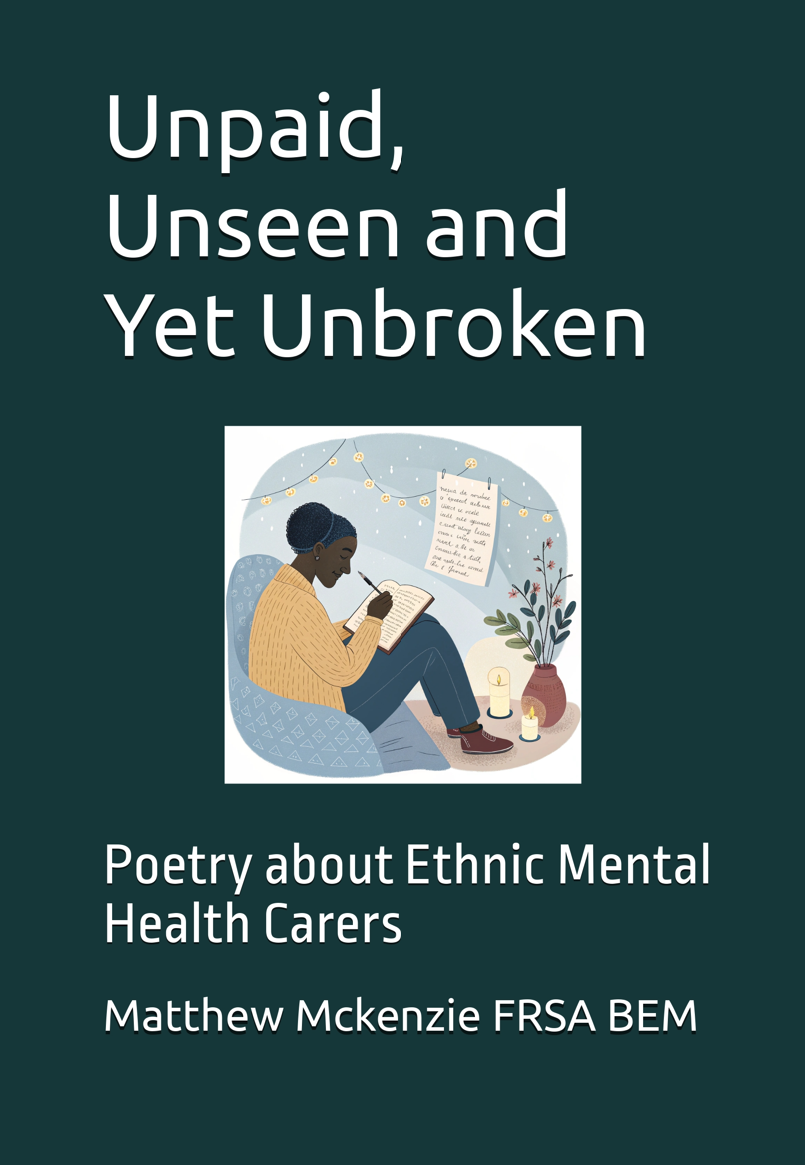
invisible challenge for ethnic minority mental health carers. “Poem 15: The friends I have lost,” a powerful spoken-word piece from Matthew McKenzie’s poetry book that is in development Unpaid, Unseen and Yet Unbroken, sheds a crucial light on this hidden struggle.
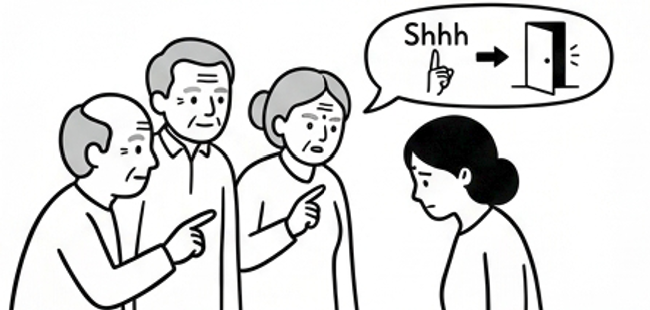
It captures the profound loneliness of an unpaid carer who watches friendships fade away as community members close their ears and elders demand privacy over open support. By highlighting the intersection of familial duty, mental illness, and societal rejection, this moving presentation exposes the heavy emotional toll born by those who care for loved ones behind closed doors.
This poem serves as a stark reminder of why initiatives like the Patient Carer Race Equality Framework (PCREF) are so urgently needed in healthcare and community support networks today.
Watch the full poetry video to immerse yourself in this essential conversation, and help us raise awareness for the vital support and recognition that ethnic minority mental health carers truly deserve.
By dismantling the barriers of stigma and addressing the specific inequalities faced by ethnic minority families, PCREF aims to ensure that no carer is left to navigate this challenging journey in absolute isolation.
By Matthew McKenzie – Chair of the Greenwich MH carers forum
The forum continues to provide a safe space for carers to receive updates, influence local services and learn about developments that affect both carers and the people they support.
This month’s forum focused on three important themes:
New support available for carers through the Greenwich Mental Health Hub.
Major reforms to the Mental Health Act and what they mean for carers.
Why unpaid carers must continue to have a voice in shaping local mental health services.
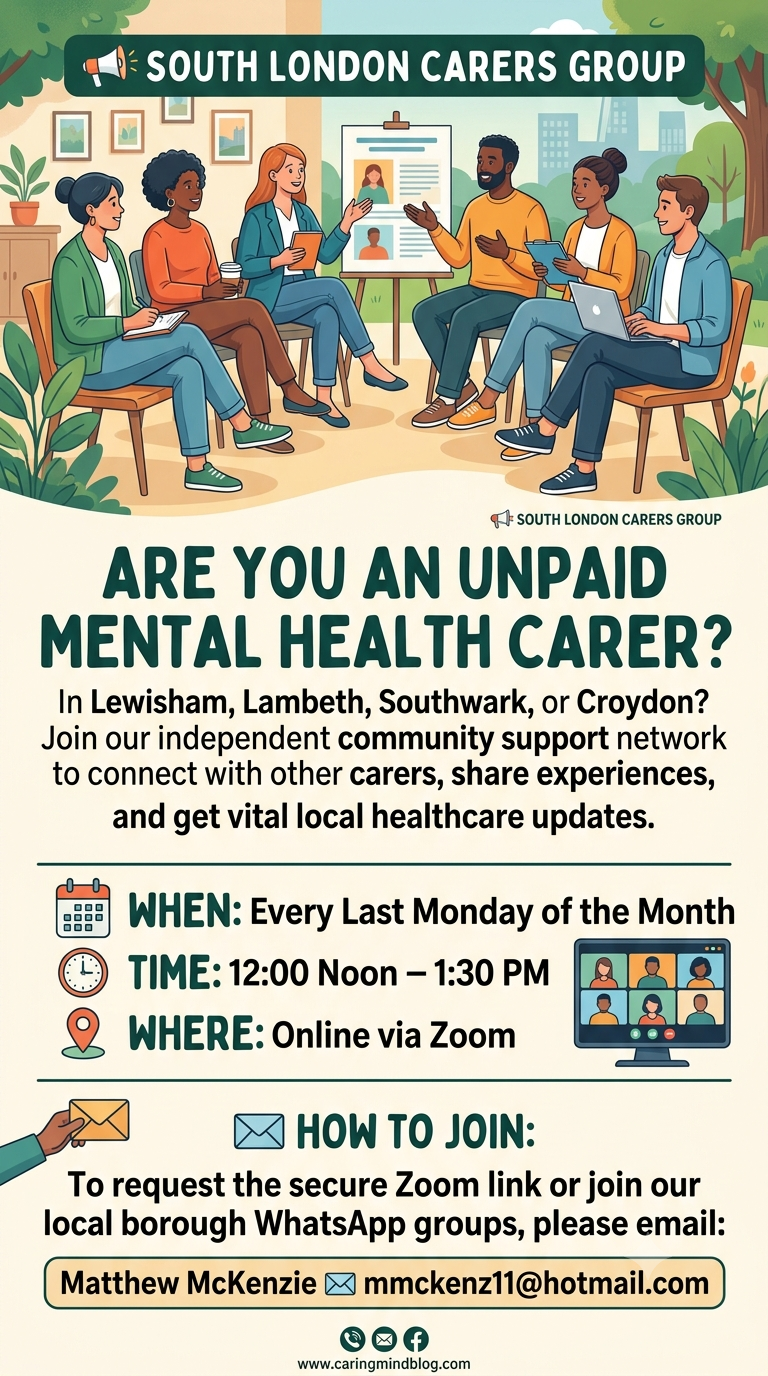
If you weren’t able to join our June South London Mental Health Carers Group meeting, here’s a summary of the main discussions and updates. As always, the meeting brought together unpaid carers from across Lambeth, Lewisham, Southwark and Croydon to share experiences, raise concerns and keep each other informed about developments affecting mental health carers.
Why these meetings matter
One of the strongest themes throughout the meeting was the importance of carers staying connected. Many carers cannot attend every committee or involvement meeting due to their caring responsibilities, work or other commitments. By sharing updates, we can help ensure everyone remains informed about changes that may affect them and the people they support.
By Matthew McKenzie – Chair of Triangle of Care community group, NHS England involvement & Carer Poet
We are delighted to invite carers to “Caring Together, Stronger Together” a special event hosted by West London NHS Trust to recognise, support and celebrate the vital role of carers.
The event is open to all carers across Ealing, Hounslow, and Hammersmith & Fulham, so please could you share this information and the attached flyer with all of your networks.
Join us for an enjoyable and informative afternoon featuring:
Opportunities to socialise and connect with other carers
Inspiring talks, presentations and poetry
A carers’ services marketplace with information stands
I will also be hosting a Carer stall providing leaflets for Carers including UCP
Wellbeing activities, including mindfulness and hand massages
A complimentary hot lunch
Event details: 📅 Wednesday 29 July 🕐 1:00pm – 4:00pm 📍 Irish Cultural Centre, 5 Blacks Road, London W6 9DT
The event is designed to help carers connect, access information, and take some well-deserved time for themselves in a welcoming and supportive environment.
Looking forward to welcoming carers from across our West London communities. Please help us spread the word by sharing this invitation and the attached flyer.
By Matthew McKenzie – Carer & Chair of the National Ethnic MH carer Forum
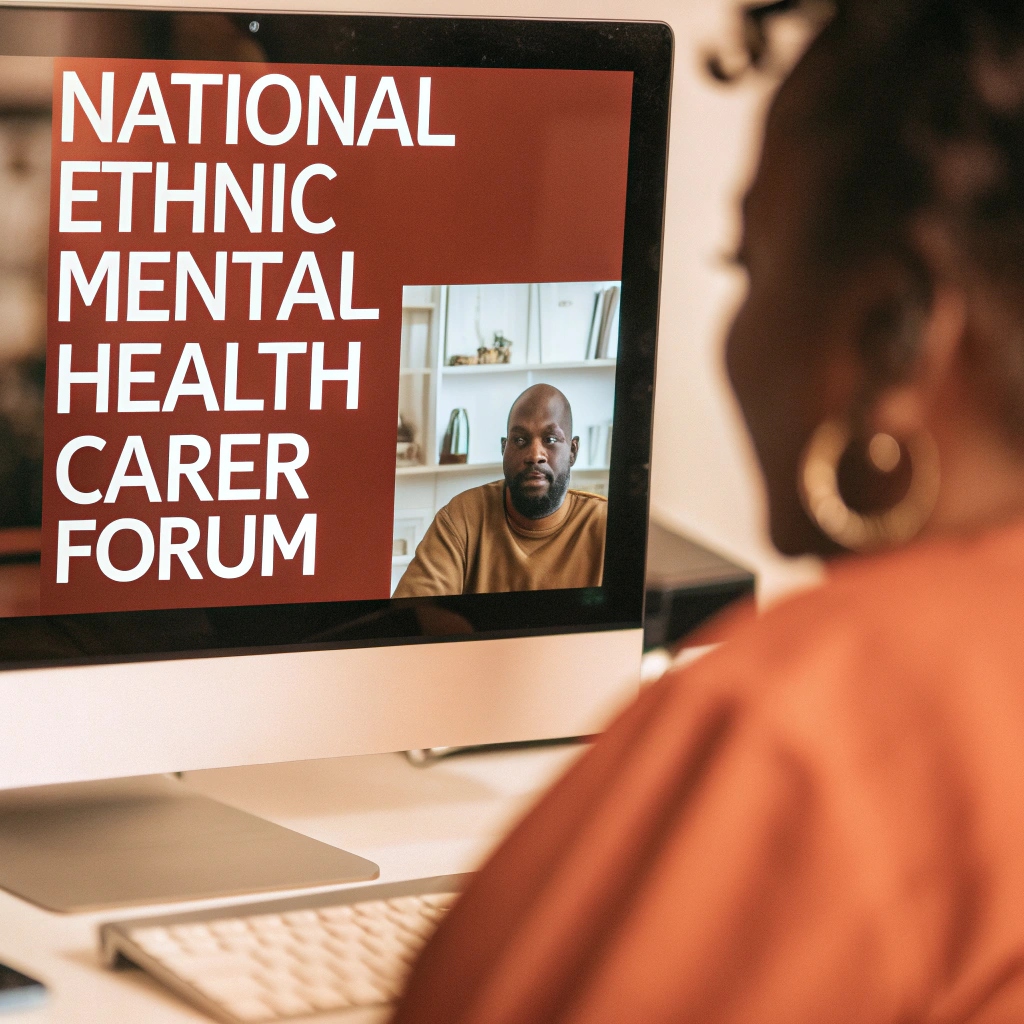
The June 2026 National Ethnic Mental Health Carer Forum brought together carers, NHS Trusts, researchers, voluntary organisations and mental health professionals from across England to discuss one shared ambition improving mental health services through genuine co-production with ethnic minority carers.
Matthew reminded delegates that carers develop expertise through lived experience. Supporting a family member with severe mental illness means navigating NHS services, social care, benefits systems and advocacy. These experiences provide knowledge that cannot be learned through textbooks alone.
Opening Presentation
Matthew McKenzie
The Importance of Co-production
Forum Chair Matthew McKenzie opened the meeting by welcoming carers and professionals from across England and reflecting on more than a decade of leading the National Ethnic Mental Health Carer Forum.
By Matthew McKenzie – member of UCP Lived experience group
Many unpaid carers worry about one question: “What would happen if I suddenly became ill or was unable to provide care?” It is a concern that often sits in the background but can cause enormous anxiety.
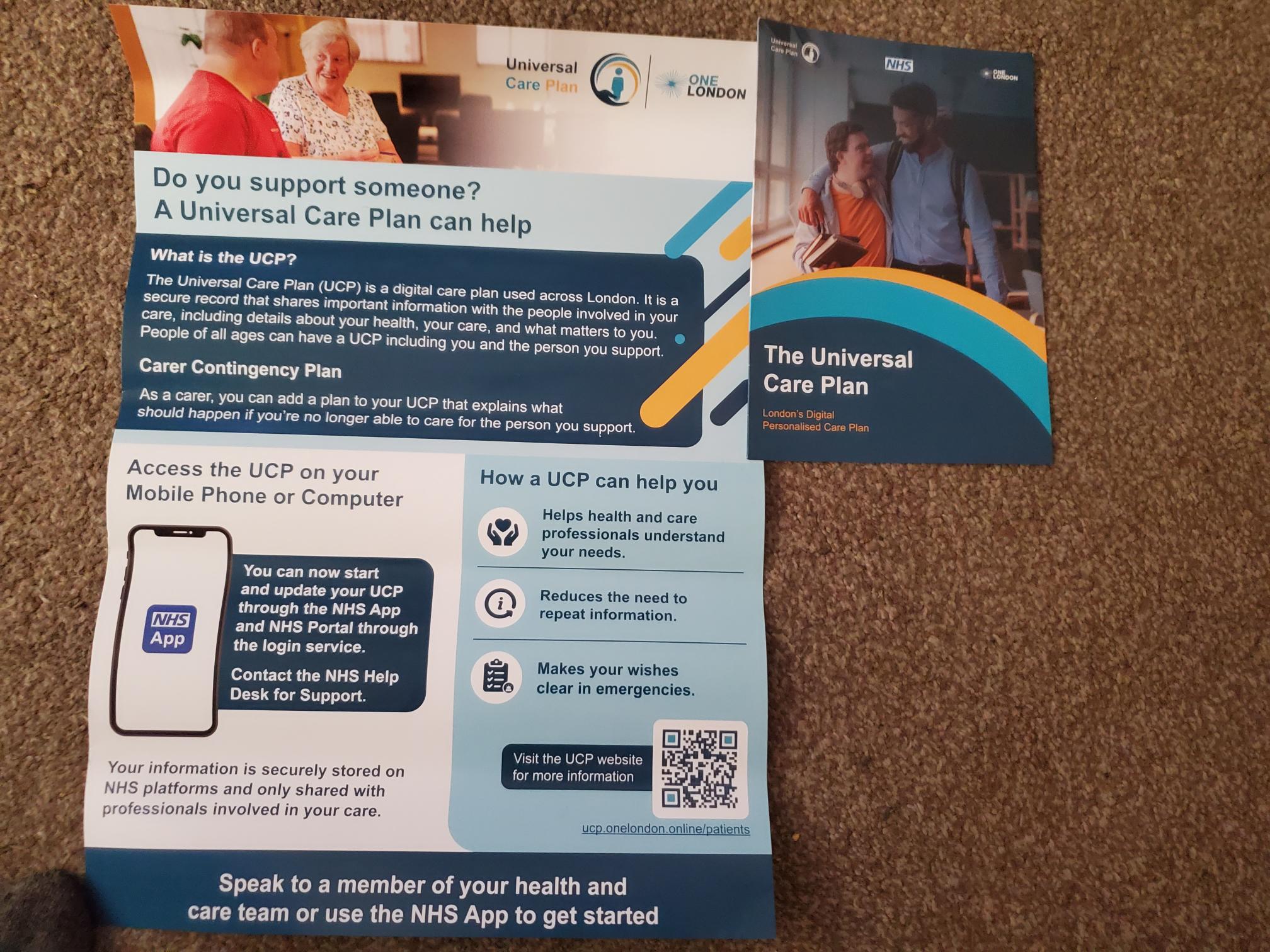
A new approach being developed across London aims to provide reassurance and practical support. Through the Universal Care Plan (UCP) and the Carer Contingency Plan (CCP), unpaid carers can record important information and make plans so that the people they care for continue to receive support if circumstances change.
What is a Universal Care Plan?
The Universal Care Plan (UCP) is a secure digital care record used across London. It allows important information to be shared with health and care professionals involved in a person’s care.
The plan records information that matters most to the individual, including:
Health conditions and medical information.
Personal wishes and preferences.
Details about family members and carers.
Important contacts.
Information that can help professionals provide better care.
The UCP can help reduce the need to repeat information and ensures that health and care staff have access to information when it matters most.
People of all ages can have a Universal Care Plan, including both carers and the people they support.
For unpaid carers, one of the most valuable developments is the Carer Contingency Plan (CCP).
The CCP allows carers to record what should happen if they are suddenly unable to continue caring because of illness, an emergency or another unexpected event.
The plan can include:
Emergency contacts.
Information about daily routines.
Medication arrangements.
Communication needs.
Important preferences and wishes.
Details about replacement support or family members who could help.
Having this information available means professionals and family members can respond more quickly and with greater confidence during a crisis.
Why is this important for unpaid carers?
Many carers provide support around the clock and often put their own needs last. Yet emergencies can happen to anyone.
A Carer Contingency Plan can:
Provide peace of mind.
Help avoid unnecessary hospital admissions.
Ensure continuity of care.
Reduce stress during emergencies.
Make carers more visible to health and care services.
Improve communication between professionals and families.
Most importantly, it recognises the crucial role unpaid carers play and helps ensure they are not overlooked.
Accessible and Easy to Use
Universal Care Plans and Carer Contingency Plans are designed to be practical and accessible.
Plans can be created:
In hospitals.
In community services.
Through voluntary sector organisations.
By individuals themselves using the NHS App and NHS digital services.
Support materials and guidance are continuing to expand, making it easier for both professionals and carers to understand and use the system.
Working Together Across Health and Care
The UCP and CCP are being used across hospital, community and voluntary sector settings. Their purpose is simple but powerful: to improve communication, support carers and ensure that important information is available when it is needed most.
For unpaid carers, this represents a positive step forward. Carers have long spoken about wanting greater recognition and reassurance that there is a plan in place should something happen to them. The Carer Contingency Plan helps answer that concern.
A Message to Carers
If you support a family member, partner, friend or neighbour, you are not alone. Your role matters, and planning ahead is not about expecting the worst—it is about providing reassurance and protecting the person you care for.
The Universal Care Plan and Carer Contingency Plan offer a practical way to make your wishes known, improve communication with professionals and ensure that support can continue when it is needed most.
If you would like to know more, speak to your hospital’s carers service, community team, GP practice, local carers organisation or ask a member of your health and care team about the Universal Care Plan and Carer Contingency Plan.
Planning ahead today can bring peace of mind tomorrow for both carers and the people they care for.
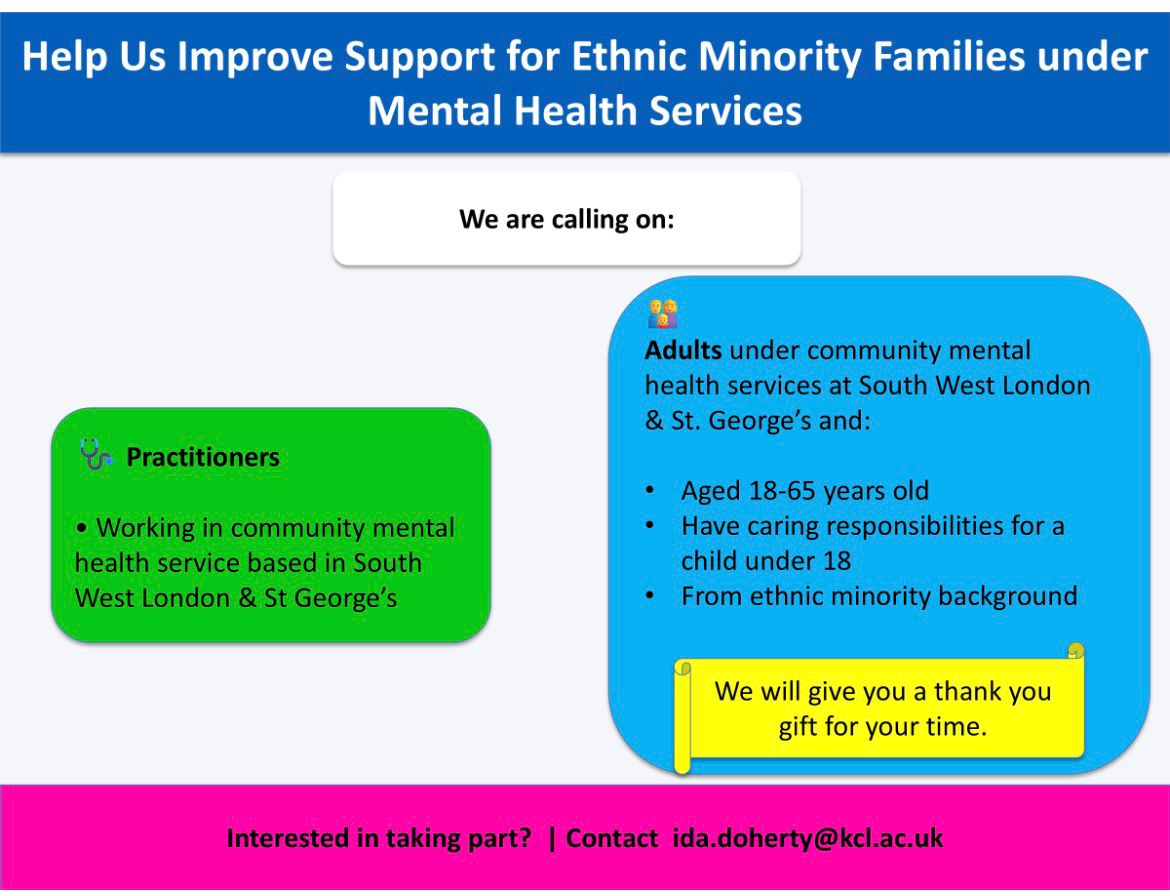
Are you a parent or carer from an ethnic minority background who is currently receiving support from community mental health services in South West London? Researchers at King’s College London are looking to hear from families about their experiences to help improve the support available to parents and carers.
Who can take part?
You may be eligible if you:
Are aged 18–65
Are currently under the care of South West London and St George’s Mental Health NHS Trust community mental health services
Have caring responsibilities for a child under 18
Identify as being from an ethnic minority background
Why take part?
Parents and carers from ethnic minority communities often face unique challenges when accessing mental health support. By sharing your experiences, you can help researchers understand what works well, what could be improved, and how services can better support families across South West London.
Your voice can contribute to developing more inclusive, family-focused mental health services for future generations.
Are practitioners involved?
The study is also inviting practitioners working in community mental health services within South West London and St George’s Mental Health NHS Trust to take part, helping to bring together both professional and lived experience perspectives.
Thank You for Your Time
Participants apart from practitioners will receive a thank-you gift in recognition of their time and contribution.
Interested in Taking Part?
For more information or to express your interest, please contact: