My latest poetry video, “Gatekeeping Care,” explores the barriers minority ethnic unpaid carers can face when trying to navigate mental health services.
This is where unwritten rules, complicated medical language and unexplained carer rights can leave people struggling to understand how to obtain support.
Unpaid carers can also have their concerns not taken seriously.
The poem also reflects on what it feels like when decisions are made without carers and their cultural or religious beliefs are overlooked.
Through this poem, I want to raise awareness of why the Patient and Carer Race Equality Framework (PCREF) matters to carers and families.
I feel mental health services must listen to carers, communicate clearly and recognise them as equal partners rather than leaving them feeling judged, invisible or powerless.
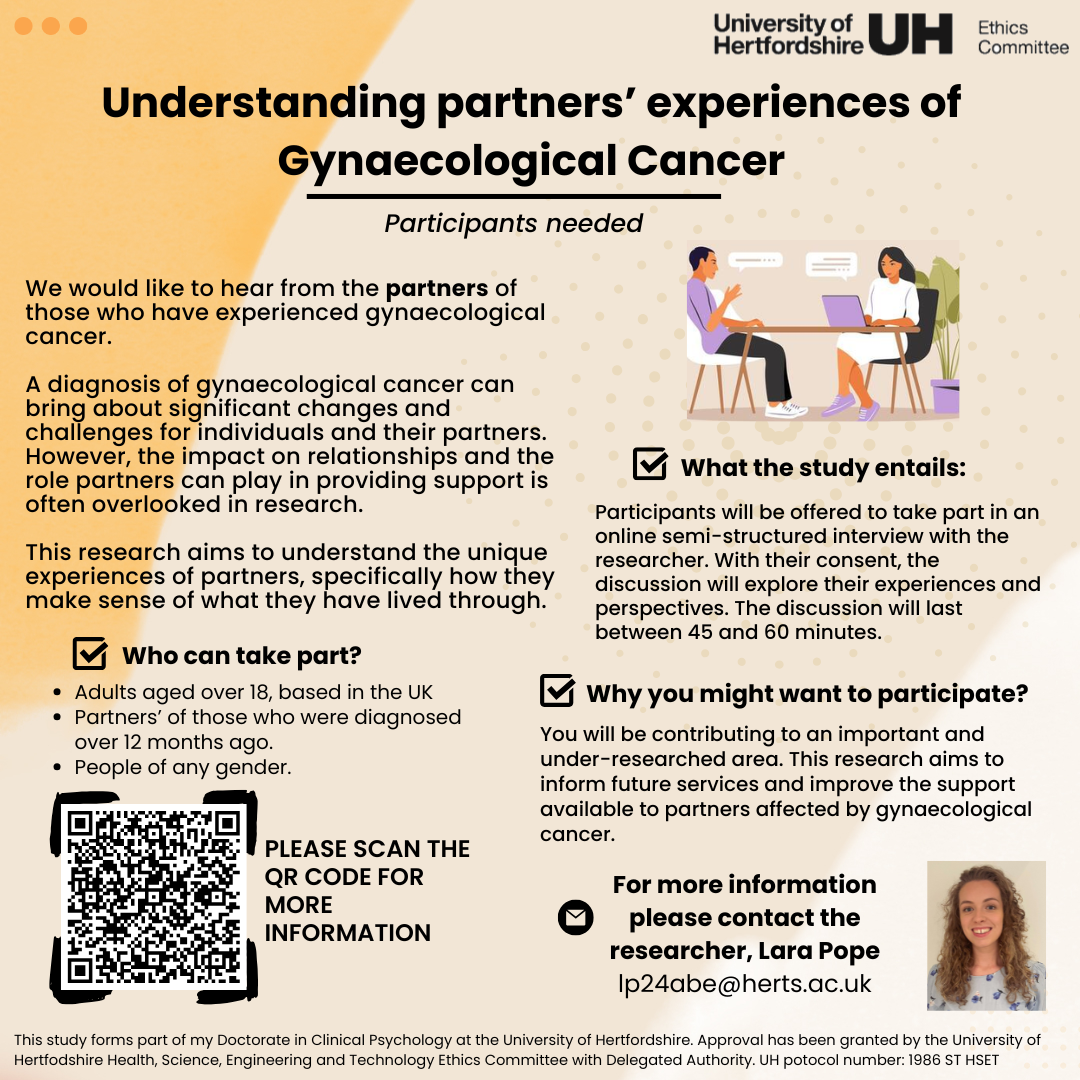
I am pleased to share a research opportunity from Lara Pope, a Doctoral Clinical Psychology student at the University of Hertfordshire, who is looking to hear from partners of people who have experienced gynaecological cancer.
As someone who campaigns for greater recognition of unpaid carers and those supporting someone affected by cancer, I know that the experiences of partners can sometimes become overshadowed by the understandable focus on the person receiving treatment.
Yet partners can experience considerable emotional, practical and relationship changes of their own.
About the research
“Exploring partners’ experience of gynaecological cancer: An Interpretive Phenomenological Analysis.”
The research aims to better understand what it is like to be the partner of someone who has experienced gynaecological cancer, including how partners navigate their own needs, relationships, identity and intimacy.
Lara is particularly keen for the research to reach people whose voices can sometimes be less visible in research, including male partners, people from Global Majority communities and LGBTQ+ communities.
Who can take part?
You may be eligible if you:
Are aged 18 or over
Live in the UK
Speak English
Are the partner of someone diagnosed with gynaecological cancer at least 12 months ago
There are some additional eligibility considerations which Lara can discuss with anyone interested in participating.
What does taking part involve?
Participants will take part in an online semi-structured interview, providing an opportunity to talk about their experiences and perspectives as a partner.
The interview will last approximately 45–90 minutes.
Participants can choose either a £20 Love2Shop voucher or have £20 donated to one of three selected cancer charities in recognition of their participation.
The importance of the research
Cancer does not only affect the person receiving the diagnosis.
Partners may find themselves providing emotional support, attending appointments, managing additional responsibilities and trying to support the person they love while also dealing with their own fears and emotions.
Research that listens directly to partners can help improve understanding of these experiences and potentially inform recommendations for services, professionals and organisations supporting families affected by cancer.
Interested in taking part?
Please see the research recruitment poster accompanying this article, including the QR code for further information.
You can also contact the researcher directly:
Lara Pope Doctoral Clinical Psychology Student University of Hertfordshire Email: lp24abe@herts.ac.uk
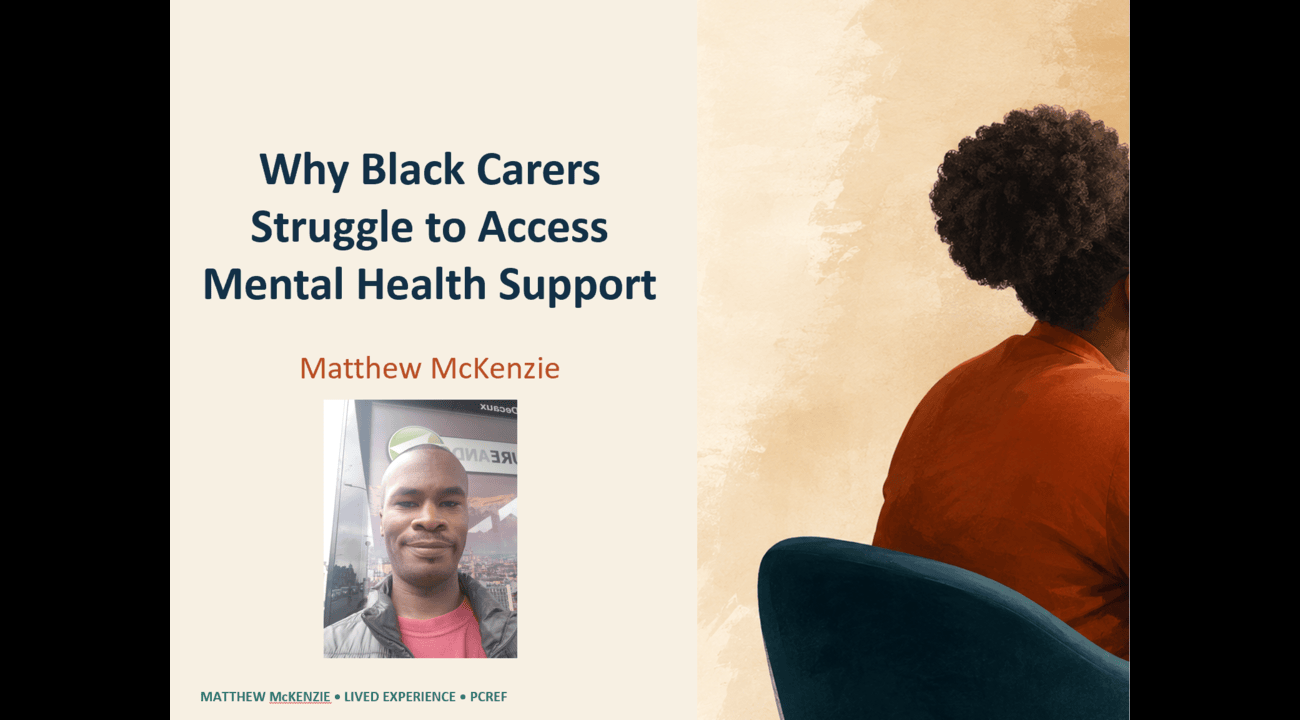
Black unpaid carers can face significant barriers when trying to access mental health support for themselves or the person they care for.
These difficulties may include long waiting times, financial pressure, cultural stigma, fear of statutory services and a shortage of professionals who understand the effects of racism, racial trauma and culturally specific caring experiences.
In my new video, I examine how misdiagnosis, over-policing and expectations that Black families should simply remain “strong” can create mistrust and discourage carers from asking for help.
Drawing on my perspective as a Black lived-experience carer, I also consider what mental health services can do differently. Genuine improvement requires culturally responsive support, greater representation, safe spaces for carers, accessible community-led services and meaningful partnership with Black carers and families.
PCREF provides an important opportunity to challenge racial inequalities, but its success will depend on whether services listen to lived experience and turn commitments into visible action.
By Matthew McKenzie – Member of Southwark Carers Strategy Working Group
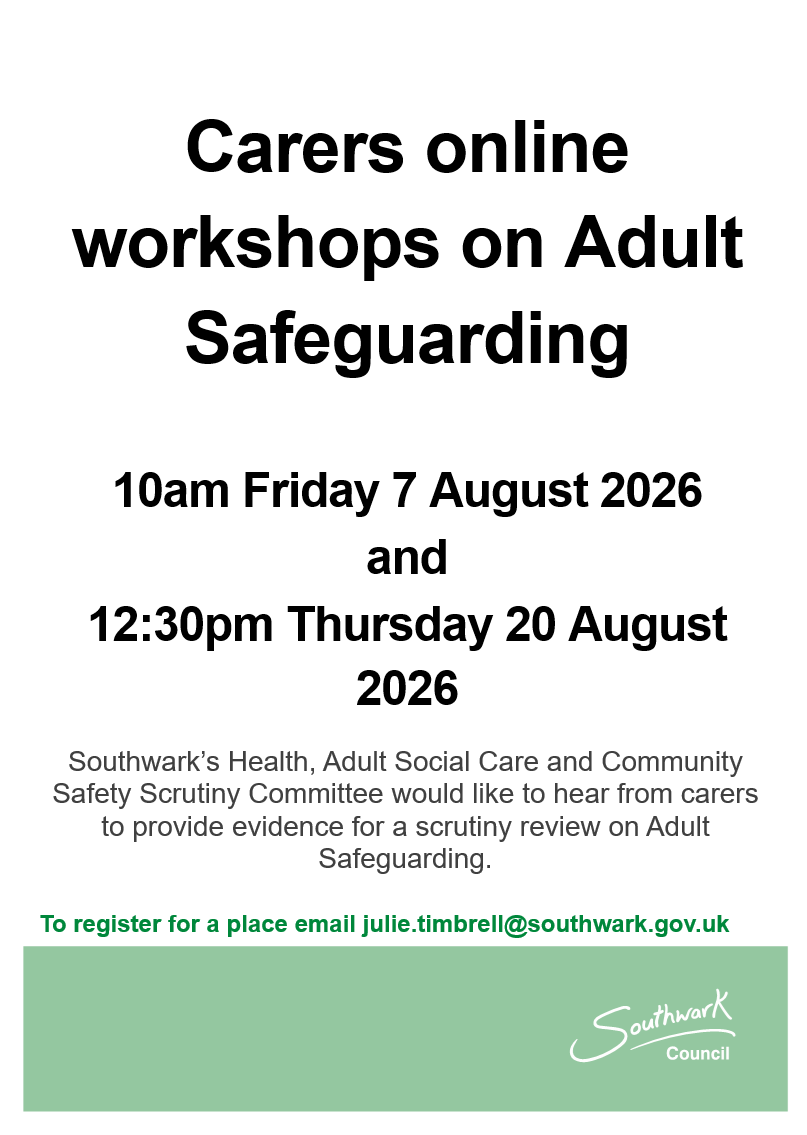
Southwark Council is inviting unpaid carers from Southwark to share their experiences and help shape its review of adult safeguarding services.
The council’s Health, Adult Social Care and Community Safety Scrutiny Commission is examining how safeguarding services can better support adults and their carers while promoting independence, dignity, choice and wellbeing.
The Commission would particularly like to hear carers’ experiences of:
Working with safeguarding and other professionals
Accessing information and support
Being included in safeguarding decisions
Preventing abuse, neglect and other forms of harm
Balancing personal safety with independence and choice
Self-neglect and hoarding
The use of technology
Communication with carers
Supporting someone living with dementia or mental ill health
Caring for an adult child or sibling with a disability
Your experiences could help the Commission identify what is working well, where improvements are needed and how carers can be more effectively recognised and involved.
Complete the carers’ survey
Unpaid carers can share their experiences through Southwark Council’s online Adult Safeguarding Review Carers’ Survey:
The survey is anonymous and will remain open until Friday 11 September 2026.
Join the online carers’ workshop
Southwark Council is also holding an online workshop where carers can discuss their experiences in greater detail.
Join the online carers’ workshop
Southwark Council is also holding an online workshop where carers can discuss their experiences in greater detail.
Date: Thursday 20 August 2026 Time: 12:30 pm Location: Online via Microsoft Teams
To request the Microsoft Teams joining details, please contact Julie Timbrell, Scrutiny Project Manager, at:
Please include “Adult Safeguarding Carers’ Workshop” in the subject line.
For safeguarding and meeting security, the direct Teams link and passcode are not being published on this website.
If you cannot attend the workshop, you can still contribute to the review by completing the anonymous survey.
Confidentiality and use of information
Taking part in the survey or workshop is voluntary.
Notes will be taken during the workshop, but participants’ comments will be anonymised before they are included in reports or presented to councillors. Individual participants will not be identified without their explicit consent.
Survey responses will also be analysed and reported anonymously. Southwark Council is interested in identifying common themes and experiences rather than identifying individual carers.
The information collected will only be used to inform the Adult Safeguarding Review and its recommendations. A report containing the Commission’s findings and recommendations will be published after the review has been completed.
By Matthew McKenzie – Cygnet PCREF Carer Lead & Carer Ambassador
Cygnet PCREF Carer Lead & Carer Ambassador
On 4 August 2026, unpaid carers, professionals and people with lived experience came together at Cygnet Churchill for the second Voices & Verses Carers Poetry Event. The purpose of the afternoon was not simply to read poetry, but to create a safe space where carers could express experiences that are often overlooked within mental health services.
The event formed part of Cygnet’s ongoing commitment to the Patient and Carer Race Equality Framework (PCREF) by exploring how creativity, culture and storytelling can strengthen co-production and improve relationships between carers and services.
By Matthew McKenzie – Chair, National Ethnic Mental Health Carers Forum
The July meeting welcomed unpaid carers, NHS organisations, universities, researchers and community groups from across England to discuss how mental health services can become more inclusive for carers from ethnic communities.
Matthew McKenzie opened the meeting by reflecting on over thirteen years of facilitating the forum and explained how its purpose has grown alongside national initiatives such as the Patient and Carer Race Equality Framework (PCREF) and the Triangle of Care. The forum continues to provide a national platform where carers can influence NHS services, hear about new research and share experiences with professionals and decision-makers.
Matthew introduced the day’s programme, which included research presentations, NHS England engagement, updates from mental health trusts and national organisations, and opportunities for carers to influence future policy
What does racial inequality in mental health really look like from the perspective of an unpaid carer?
In this powerful spoken-word poem, Matthew McKenzie explores the realities of racism, bias, exclusion, stigma, and unequal treatment experienced by many ethnic communities when accessing mental health services.
Through an A–R alphabet structure, this poem highlights why the Patient and Carer Race Equality Framework (PCREF) matters and why genuine cultural understanding, listening, and inclusion are essential to improving care.
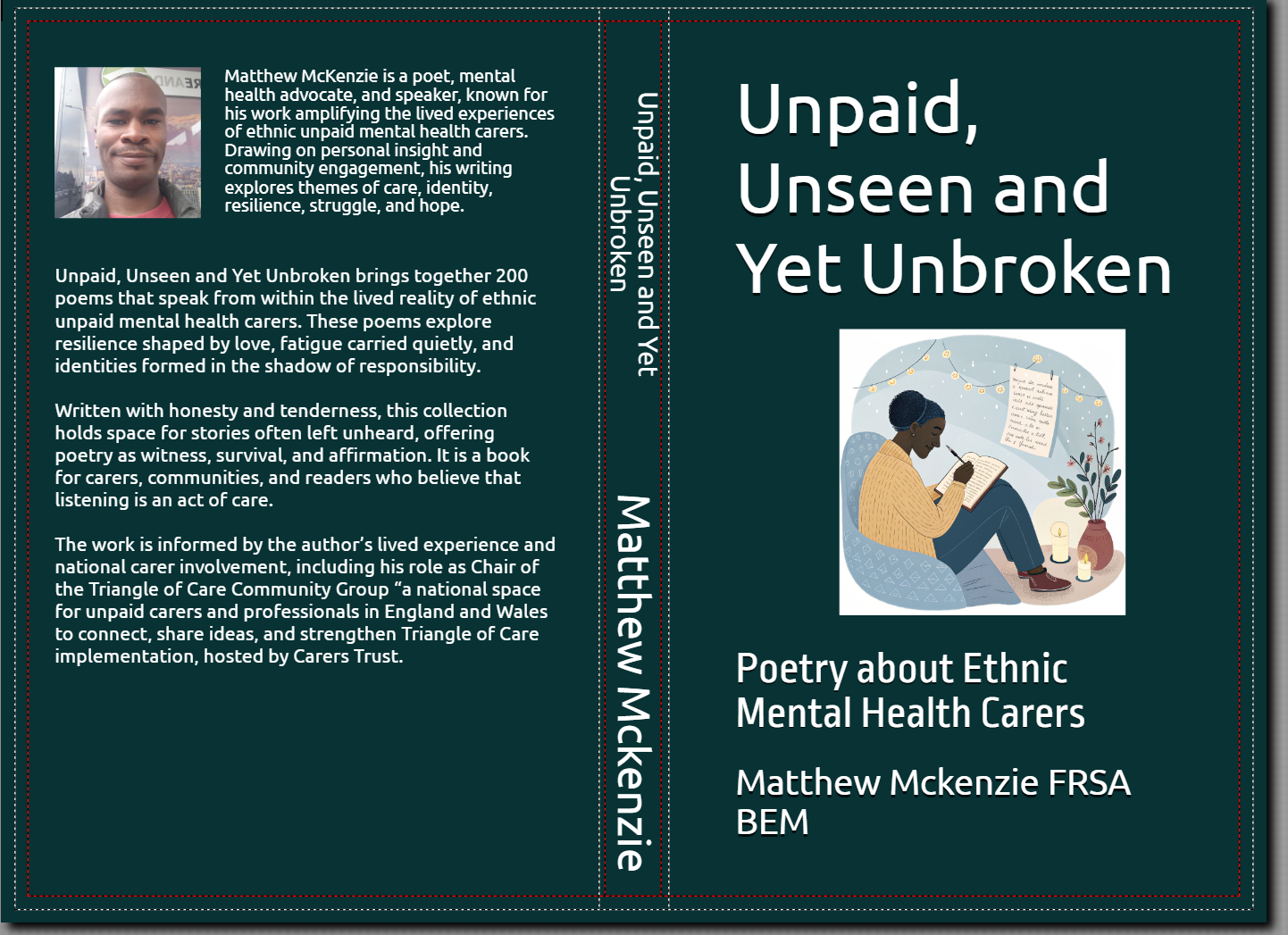
This poem is part of my 100-poem PCREF collection, Unpaid, Unseen and Yet Unbroken, giving voice to the experiences of unpaid carers supporting relatives with mental illness while challenging racial inequalities across mental health services.
By Matthew McKenzie – Chair of the South London MH carers forum
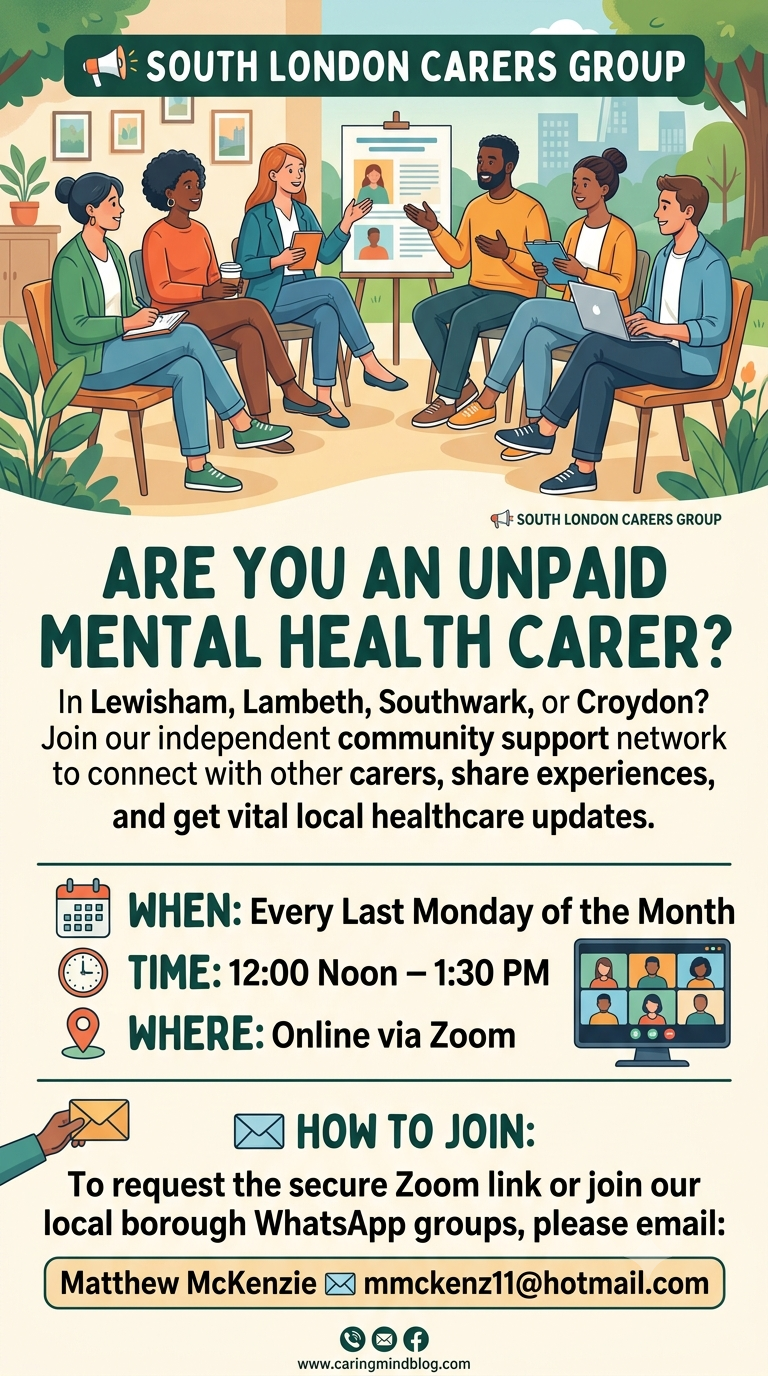
Another month has passed, and I would like to thank everyone who joined our South London Mental Health Carers Forum. It was fantastic to welcome carers, NHS professionals, voluntary sector organisations and local authority representatives from across South London to discuss issues affecting unpaid mental health carers.
As always, the forum provides a safe place where carers can raise concerns directly with decision makers, hear about new developments, share experiences and help shape improvements across mental health services.
By Matthew McKenzie – Chair of ethnic mental health carer forum.
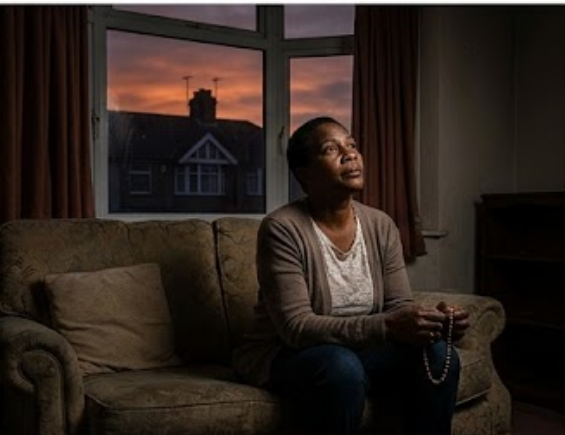
For my latest spoken word video, “Today I Prayed,” I present a piece from my PCREF poetry collection that I am working on, Unpaid, Unseen and Yet Unbroken.
Grounded in the spirit of the Patient Carer Race Equality Framework (PCREF), this poem centers on the often hidden realities faced by unpaid Black mental health carers.
The poem explores spirituality not just as a source of private comfort and endurance, but as a solitary lifeline when formal systems fail and the heavy emotional weight of duty takes its toll.
I think watching this video is an invitation to witness the quiet strength of minority carers, plus raise awareness of systemic gaps in our care frameworks.
I hope the poem ensures that these vital carer voices are finally seen, heard, and respected.
By Matthew McKenzie – Chair of Carers Hospital Discharge group
Thanks to everyone who attended our July Hospital Carer Discharge Meeting. We welcomed representatives from NHS trusts, local authorities, carers organisations, Healthwatch, and voluntary sector partners from across London. As always, the purpose of the meeting was to share developments, learn from each other’s work, and strengthen collaboration to improve hospital experiences and discharge planning for unpaid carers.
Although every organisation is at a different stage of development, one message came through very clearly: supporting unpaid carers is becoming an increasingly important priority across hospitals, councils and the NHS.
A Strong Focus on Earlier Carer Identification
One of the recurring themes throughout the meeting was the importance of identifying carers as early as possible during a patient’s hospital journey.
Many hospitals continue to recognise that carers are often identified too late—sometimes only when discharge is already taking place. Earlier identification allows staff to: